Getting the Names Right

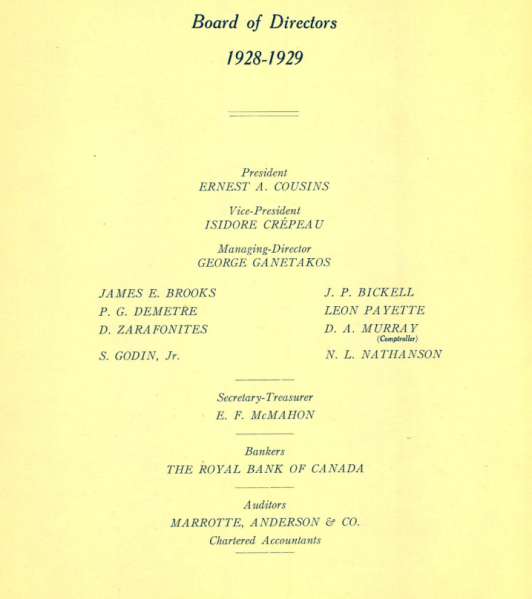
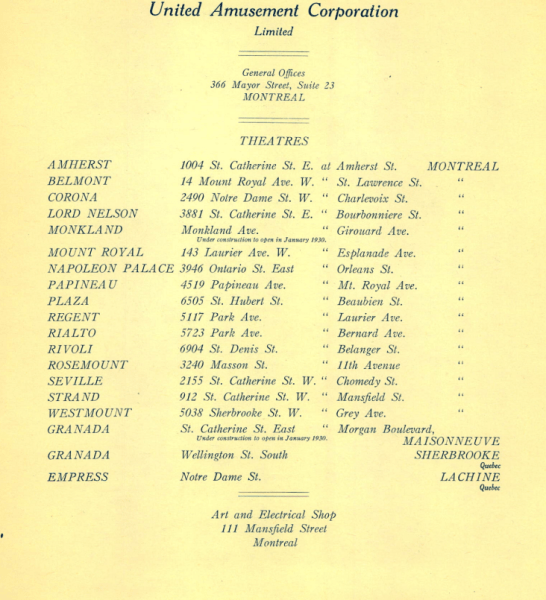
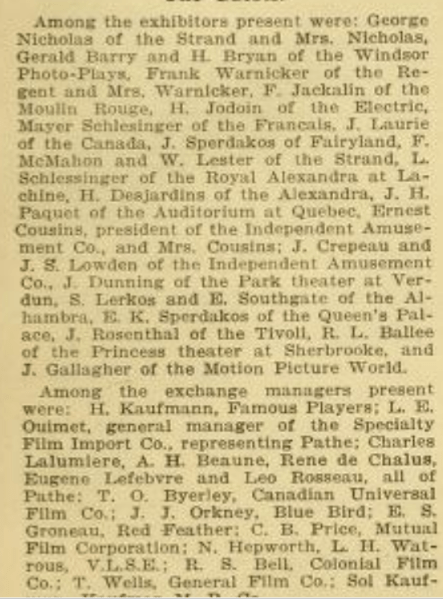
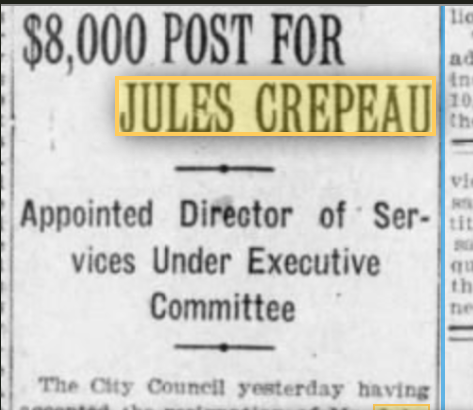
In the last mad dash to send Beads in the Necklace to print, we had to make sure that the names in the stories were right. Genealogists struggle with the difficulties of names every day.

There was the question of those pesky hyphens. In French Canada, hyphenated names are common. But not every double name takes a hyphen. Then what about apostrophes that were simply dropped?

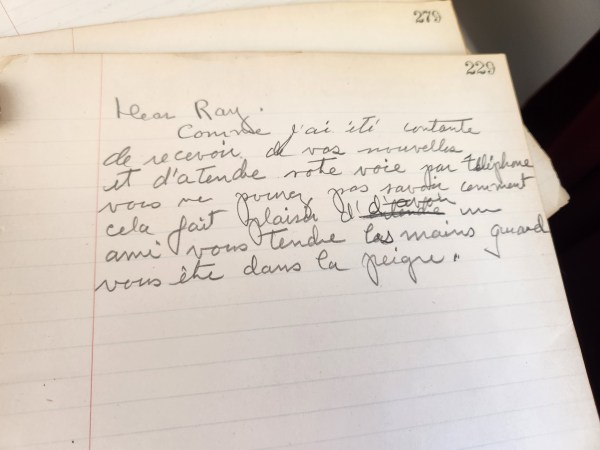
And accents. Some French names had accents and others not. There seemed to be no rhyme or reason.

Some of the people in our stories had unusual names. Hermonie? Maybe it was Harmonie? Or even Hermionie? It was Herminie. And is it Catherine or Catharine? Or Isabelle or Isabella?

And how many ways can you spell Jodouin? Each source document seemed to have a different spelling.

And then what about place names. Do we use the French place name or the anglicized place name? With or without accents?

All these variations in the names made me think of my husband’s surname. I asked him, “Why do some people in your family spell their name Delatolas as Dellatolas, with two letter ls?

He shrugged, “I dropped an “l” when I emigrated to Canada.”

“Besides, my father and my brother had already dropped an “l”. Anyway, who cares?”

“Well,” I muttered, “Genealogists care.”

French-Canadian Leadership in WWI

Most history books define the Battle of the Somme as a disaster, but French Canadians can claim it as their first military success.

It also represented the integration of a new kind of leadership in European battle tactics, one in which every soldier counted.

Both of those realities are due to the contribution of the 22nd Regiment, known colloquially as the Van Doos based on its French name “vingt-deux.” Today the unit holds an official French name, the Royal 22e Régiment, an important symbol of its identity and importance.

“It’s arguable that the tactics that the Van Doos taught the Canadians won the war,” said author and historian Desmond Morton, who had authored forty-seven books about Canada by the time he died in September 2019. “It was formed and was trained in a way that was uniquely French-Canadian. The Colonel of the Regiment was an ex-cadet of the Royal Military College…Tremblay had a different philosophy of leadership and he showed it.”

One of the most recognized leaders was Lieutenant Colonel Thomas-Louis Tremblay, who led the Van Doos during their WWI triumphs and left behind his French-language diaries to inspire followers.

Tremblay was the first to use tanks to get over and past enemy dug-outs during an artillery barrage. The tactic relied on every soldier being willing to move through active artillery and kill defenders individually in hand-to-hand combat. The brutal but effective operation enabled his unit to capture the village of Flers-Courcelette from the Germans on September 15, 1916. They held the position for two days.

The 22nd Batallion’s effectiveness in Courcelette persuaded General Sir Arthur William Currie, who was in charge of the Canadian Army, to change his thinking about Vimy Ridge. Tunnels, barbed wire and three rows of trenches protected the strategic site to such an extent that tit was considered largely impregnable by the British and French. The French-Canadian success at Courcelette made them think that maybe someone could capture the strategic site.

The following spring, the Van Doos and three other Canadian divisions moved toward the 14-km-long escarpment at 5:30 a.m. on Monday, April 9, 1917. It took four days, 3,598 deaths and 7,000 wounded men to capture the ridge.

Success was due primarily to training that ensured that every soldier knew what to do and did it, even as commanding officers died.

The Vimy capture may have relied on the Van Doo success at Courcelette, but the Van Doos themselves would never have existed without a private donation by prominent Montreal entrepreneur and philanthropist Arthur Mignault. In 1914, the head of the Franco-American Chemical Company donated $50,000 to create a regiment “composed of and officered by French Canadians.” His offer resulted in the creation of the 22nd Battalion (French Canadian) CEF on October 14, 1914. Mignault and then Opposition leader Sir Wilfred Laurier spent the next month recruiting a full contingent of more than 20,000 men who formed the bulk of Tremblay’s men.

Migneault, who made his fortune selling iron pills to women with anemia, had already enlisted with the 65th Regiment “Carabiniers Mont-Royal” five years earlier. After his 22nd Division success, he went on to subsidize the founding of two additional French-Canadian divisions, but they got folded into the 22e to replace casualties.

Migneault had hoped to be appointed to lead a battalion. Realizing that subsidizing infantry divisions wouldn’t make that happen, he decided to fund military hospitals. Just as the Van Doos were heading to war in early 1915, Mignault succeeded in encouraging the Canadian government to build a French Canadian stationary hospital near the German frontlines in Saint-Cloud. By November 1915, Mignault was on his way to France along with 100 men to set up the hospital.

Laval University followed suit with a second French Canadian Hospital, and both became so important, the French renamed part of Joinville-le-Pont near Paris the “quartier des Canadiens.”

Mignault not only realized his ambition to become a colonel, but a month before his death in 1937, the Royal Canadian Army Medical Corps promoted him to the honorary rank of Brigadier General. He was the first French Canadian to hold that rank.

Members of the Royal 22e Régiment fought in Italy and in the Pacific during World War II, in Korea, in the Gulf War, and in Afghanistan. They were also the first Regular Force regiment to mount the King’s Guard in London in 1940, and repeated the experience again for their hundredth anniversary in 2014. They also served during the Oka Crisis in 1990.

Today, the regiment forms the largest unit in the Canadian Army, with three Regular Force battalions, two Primary Reserve battalions, and a band. Its ceremonial home is La Citadelle in Quebec City, although members are stationed at Valcartier and other bases throughout Quebec.

Dad’s Stellar Career

In a previous blog entitled Dad’s Early Years the focus was on my Dad, Karl Victor Lindell, and a recollection of his childhood growing up along the shores of Lake Erie until his High School Graduation from Ashtabula Harbor High School in 1923.

Upon graduation Karl set his sights on enrolling in Michigan College of Mines in Houghton, situated in the upper Peninsula of Michigan. It was there that he spent the next few years as a student.

In 1967, Many years after his 1928 graduation, he was invited to deliver the commencement address.

Over time Michigan College of Mines, developed and later became known as Michigan Technological University.

In 1972 at Michigan Technological University Dad received the Distinguished Alumnus Award

Below is a copy of the text of the citation that outlines a summary of Dad’s stellar career.

Michigan Technological University”

Alumni Association

Distinguished Alumnus Award

Karl Victor Lindell, BS., E.M., 1928

Danville, Quebec, Canada

Most likely, it was growing up in the iron port of Ashtabula. Ohio that first stirred his interest in mining. Whatever it was that brought Karl Lindell to Michigan College of Mines in the mid-1920s, it is safe to assume that even in his wildest dreams of the future, he could not have imagined that was to unfold as a result of this decision.

Professionally, there was little doubt about his competence. Out of school less than ten years, Karl Lindell was already the assistant to the general superintendent of all International Nickel mines in Copper Cliff, Ontario. In 1945, he elected to join Canadian Johns Manville Company, and within six years, he was general manager of the Asbestos Fiber Division.

While still retaining operation of that division, he was elected chairman of the Board of Canadian Johns Manville in 1961. Six years later he was given additional responsibilities as senior vice-president and director of the parent US company.

By this time, he was world-renowned as an authority on asbestos mining and the special health hazards inherent in the industry. Even after his retirement from Johns Manville in 1970, he continues to chair one occupational and environmental health commission while serving as a consultant to another.

For his many contributions to the mining industry in his adopted country – he became a naturalized Canadian in 1939 – Karl Lindell has been honored with Doctor of Science degrees from both Laval and Sherbrooke universities. In 1967 he was invited to deliver the commencement address in Houghton and there received the Doctor of Engineering from his own alma mater. Numerous other professions and civic honors also have been awarded over the years.

It is with great pride that this Association – in consideration of the aforementioned criteria does hereby confer its highest mark of esteem upon a respected and faithful member.

In witness, there is attached hereto the Seal of the Michigan Technological University, the signature of the President, and the signature of the President of the Alumni Association.

Dated in Houghton, Michigan. This fourth day of August 1972 A.D.

His life allowed him to travel the world on behalf of the Asbestos industry; however, when he was home, he joined his sons in the sauna and enjoyed a round of golf with us.

He was a son, a brother, a husband, a father, an uncle, a grandfather, a great-grandfather, and a kind friend to all who knew him.

A Cornish Homecoming… Our Bulford Reunion: A Family Forged Online

For the numerous years I have been doing genealogy, I have found many, many family names. I have met, but only when very young, paternal family members associated with my research. My parents divorced when I was seven, and after that, I never had any further contact with the paternal side of the family.

However,  13 years ago, I was contacted via ‘Friend Reunited’, a now-defunct website, by a second cousin on my Dad’s side. Samantha was my cousin Cheryl’s daughter, and she was searching for members of the Bulford family to include in her parents’ anniversary gift of genealogy. Through Sam, I was united with Cheryl, my first cousin, and from there, I met more first cousins I had never met before.

This was SO exciting! There was Diane, my Aunt Sylvia’s daughter, Cheryl, Aunt  Florence’s daughter, Joanna, Uncle Roy’s daughter and David and Jonathan, his sons.

All familiar names, but people I had never met or even thought I would ever meet. We all contacted each other via the internet in great excitement, and exchanged the information we had all collected, and they sent me photos I had never seen, of my Dad and his family.

After numerous emails, we decided to meet in the UK when I went over for my annual holiday. As this was the paternal side of my family, we met in Cornwall, where my father and my cousins’ mothers and fathers were all born. I met, once again after 68 years, my Uncle Roy, at his apartment, where he lived with his wife, Aunt Evelyn, 90,

Uncle Roy, at that time, was 94 and the last surviving member of the 11 children born to my father’s family. He died in 2022, when he was 106 years old.

Uncle Roy and Aunt Evelyn

Uncle Roy’s sons, David and Jonathan, were there with their sister Joanna, plus Diane and Cheryl, nieces of my Dad, and suddenly, just like that, I had met five cousins!

From the left: Marian, Cheryl, Joanna and Diane

My handsome Cuz Jonathan

I had brought photos and they had some too, which we all pored over. I learned so much about the family in that short visit, to add to my family tree. First though, lunch and what better way to celebrate our ‘Cornishness’ than with a Cornish Pasty? Made by Joanna, it was delicious

A homemade local treat, the Cornish Pasty, made by Joanna

I showed David and Jonathan a treasured photo of me, aged three, which was taken by Dad on a beach in Newquay, one of the last visits to Dad’s family before the divorce.

I wondered aloud where it could have been taken.

Marian, aged three, Towan Beach, Newquay, Cornwall, England.

David took me by the hand to the balcony of Uncle Roy’s apartment and opened the door. He pointed to the beautiful beach in view, and said, ‘This is Towan Beach where your photo was taken,’ and there before me, as in my photo, was the beach and the houses on the cliff behind me, still prominent today. Then I did cry. (1)

My other handsome cuz David

Towan Beach today

The next day, we all had a family reunion Sunday lunch with wives and children, in the local pub. We reminisced, we took photos and promised to keep in touch, which we have done so every year for the last 13 years. Every year I visit the UK, we have our Bulford reunion, usually in the West Country at a local pub, and each year I find out more about my Dad’s family.

Photos, war records, marriages, deaths, and some researched information I had that my cousins did not know about were all shared via the internet.

PLUS a recently found USA Bulford branch too, which is the basis for this story.

(1) Source

A Neighbourhood of Rural Villas

In collaboration with Justin Bur

Montreal in 1832, painting by James Duncan. McCord Stewart Museum.

This view of the city of Montreal from the slope of Mount Royal was painted by artist James Duncan in 1832. In the distance, the city lay on the banks of St. Lawrence River, while in the foreground, the foot of the mountain was rural and traversed by only one road – today’s Saint-Laurent Boulevard.  

This area is now a dense neighbourhood of homes, shops and commercial buildings, but 200 years ago, it was described as a neighbourhood of rural villas. Several of those buildings belonged to my ancestors, including butcher John Clark (1767-1827) and merchant Stanley Bagg (1788-1853). These homes were all torn down years ago, but fortunately, artists and photographers captured them before they disappeared. This article tells their stories.  

Saint-Laurent Boulevard began as a country road passing through a landscape with a mix of rural functions. In the 1700s, a large tannery was located nearby, to the east along Mount Royal Avenue. Later, numerous quarries were excavated to provide the grey limestone used for much of Montreal’s Victorian architecture – churches, civic buildings, places of business and attractive houses. The Beaubien family acquired a large tract of land along the east side of the road in 1842, as well as property in what later became the municipality of Outremont. A railway line was built across the Bagg and Beaubien land in 1876, along which an industrial corridor emerged in the early 1900s.

During the lifetimes of the Clarks and Baggs, their property, on the west side of Saint-Laurent, was farmland. The soil was mostly sandy and rocky. Hay to feed cattle and horses was the main crop, but vegetables and fruit trees could be grown in fertile areas. Back from the road, rising up toward the side of the mountain, there were a handful of rural villas belonging to the Baggs and a few neighbours, including the Perrault-Nowlan and the Hall families.

Butcher John Clark, my four-times great-grandfather, was the first member of my family to live in this area. He brought his wife and young daughter to Montreal around 1797 from County Durham, in northern England, and began investing in land. In 1804, Clark purchased a farm on the west side of Saint-Laurent, and over the next few years, he added adjacent parcels of land. He called the property Mile End Farm, probably inspired by Mile End in London, England.1 His choice of name is still familiar today, as this neighbourhood is known as Mile End. In 1810, he leased the farm to American-born Phineas Bagg (c. 1751-1823) and his son Stanley,2 and they ran an establishment called the Mile End Tavern there until 1818.

Montreal Hunt Club at Mile End Road, Montreal, QC, 1859. photograph by J. Henry, MP-1978.29.8, McCord Stewart Museum. The corner of the building on the right is likely the Mile End Tavern.

After Phineas retired and Stanley moved on to other business interests, various tenants operated the Mile End Tavern. It was demolished in 1902 when the local municipality expropriated the land to widen Saint-Laurent Boulevard. New owners purchased the lot in 1905, and the following year a department store opened on the corner of Saint-Laurent and Mount Royal Avenue, where the tavern had stood for so long.3 The department store was converted into a commercial building during the Great Depression. Today, a Couche Tard convenience store and a Tim Horton’s coffee shop are on its ground floor.

By 1891, both Stanley Bagg and his son Stanley Clark Bagg had died and most of the Mile End Farm property was sold by the late Stanley Clark Bagg’s five adult children to developers McCuaig and Mainwaring.4 An economic depression and lack of basic services such as sewers and tramways delayed development for a few years. Meanwhile, the most valuable lots – the ones that faced Saint-Laurent Boulevard – were divided into five equal shares and allocated at random to the five Bagg siblings.5

Map of Mile End Farm and the locations of Mile End Tavern, John Clark’s Mile End Lodge, Stanley Bagg’s Durham House and Stanley Clark Bagg’s Fairmount Villa, prepared by Justin Bur, 2024.

John Clark’s house was not as well known as the nearby tavern. In 1815, Clark sublet a 16-acre square of land back from the Baggs, a “piece of ground on which is erected a new house of butchery called by the said John Clark, Mile End Lodge”6 – in reality, a two-storey stone house for his family. Facing south, toward the city and the river, it was located between the current Bagg and Duluth Streets, just above what was then the Montreal city limit.

After Clark’s death in 1827, his widow, Mary Mitcheson Clark, moved to a smaller house at the current northwest corner of Bagg and Clark Streets. An inscription noting that this was once the location of the Mitcheson Cottage can still be seen on the foundation of the house that stands there today,

Mrs. Mitcheson’s Cottage, watercolour painting by John Hugh Ross, Stewart Museum collection, McCord Stewart Museum, Montreal.

As for Mile End Lodge, although it remained in the hands of Clark’s descendants, no family members ever lived there again. Various tenants rented it over the years. The land around it was subdivided, with a chunk sold in 1873 and the rest in 1893, but the house itself was not sold until 1914. The badly deteriorated building was demolished soon after that, and there is now a large commercial building in that location.7

Mile End Lodge, watercolour painting by John Hugh Ross. Stewart Museum collection, McCord Stewart Museum, Montreal.

Durham House, the home of my three-times great-grandparents Stanley Bagg and Mary Ann Clark, was located south of the tavern and Mile End Lodge. John Clark purchased the property in December, 1814 and gave it to his daughter as a wedding present in 1819. Durham House was on Saint-Laurent Boulevard, at the current southwest corner of Prince Arthur. Early references describe its address as Côte à Baron.

Durham House, watercolour painting by John Hugh Ross, Stewart Museum collection, McCord Stewart Museum, Montreal.

This two-storey stone building also faced south. There was a covered well on the property, a barn and several other outbuildings. The original Durham House property measured 6 ¾ x 4 arpents, so it was a large piece of land, including property between Prince Arthur and Guilbault Streets, known as the Upper Garden.

After Stanley Bagg’s death in 1853, Durham House was briefly used as a school, then it housed a fruit store for a number of years. Meanwhile, the large property that surrounded it was one of the first to be subdivided for building lots. Stanley Clark Bagg subdivided it in 1846, and the Upper Garden was subdivided by his heirs in 1889. The house was demolished in 1928 to allow for the expansion of the modern TD Bank branch which sits on the spot today.

Stanley Bagg also purchased land near the corner of Sherbrooke Street and St. Urbain at a sheriff’s sale in 1837, and sold it to his son in 1844. Stanley Clark Bagg and his wife, Catharine Mitcheson Bagg (1822–1914), built a large house they called Fairmount Villa on that lot and raised their five children there. The house included a small chapel, while the irregularly shaped property, which extended to the boundary of the Durham House land, had a garden with lilac trees, statues and flower beds. The house was likely named after Fairmount Park in Philadelphia, where Catharine grew up.

Fairmount Villa. photograph, Bagg family collection.

Stanley Clark Bagg died in 1873, but Catharine remained at Fairmount Villa for the rest of her life. The house was sold in 1915, and it was demolished in 1949 when Saint-Urbain Street was widened.

The Fairmount property (lot 100 of the cadastre of St. Lawrence Ward) was subdivided in 1872, then redivided in 1922. In 1884, Stanley Clark Bagg’s son, Robert Stanley Bagg (1848-1912), built a house on one of the subdivided lots, at 436 (later 3470) Saint-Urbain. He and his young family moved to a bigger house in a more exclusive neighbourhood on Sherbrooke Street West a few years later, and his sister Mary Heloise Lindsay and her family lived in the house on Saint-Urbain from 1890 until 1906. The house changed street numbers several times, then changed vocations: it became part of the Herzl Jewish Hospital, was subdivided into apartments, and was finally demolished in the early 1960s.

This house on St. Urbain Street was designed for Robert Stanley Bagg by architect William McLea Walbank. When this photo was taken the building was a medical clinic known as the Herzl Dispensary.

Today, two large buildings that once housed Montreal’s school of fine arts are located on the former Fairmount property. The smaller one, of yellow brick, at 3450 Saint-Urbain, was designed by celebrated architects Omer Marchand and Ernest Cormier in 1923 for the École des beaux arts de Montréal. It will soon be home to Montreal’s new Afro-Canadian Cultural Centre.

The larger building, at 125 Sherbrooke St. W., a heritage building constructed in 1905 as the Commercial and Technical High School, later became the Marie-Claire Daveluy building of the Bibliothèque nationale du Québec (1982–1997). It has housed l’Office québécoise de la langue française since 1999. 

Notes

Built by the Sulpician priests in 1717, Saint-Laurent Boulevard was initially known as a grand chemin du Roy – Great King’s Highway. Over the years it has been known by many names, both English and French, including Chemin Saint-Laurent, St. Lawrence Street and “the Main”. Since 1905, it has been designated Boulevard Saint-Laurent.

The name Côte à Baron, or Coteau Baron, cannot be found on today’s city maps, but in the late 19th century, this was the name of a sloping stretch of Saint-Laurent Boulevard just below Sherbrooke Street and extending a short distance north of there. Côte à Baron was described as a neighbourhood of rural villas. The first-ever Lovell’s city directory for Montreal, published in 1842, listed Stanley Bagg’s home at Côte à Barron.  (https://numerique.banq.qc.ca/patrimoine/details/52327/3652365). Another building with a Côte à Baron address, at the northwest corner of Sherbrooke Street and Saint-Laurent, was an extravagant mansion nicknamed Torrance’s Folly. It was built around 1815 by businessman Thomas Torrance and sold to John Molson in 1832. A gas station is now located at that corner.

An arpent is a French unit of measurement that can refer to either area or length. It is equivalent to an acre of land, or about 58 metres in length. It has been replaced by metric measures since 1970, but can still be found in old property records.

Source of the photo of the Herzl Dispensary: The Jew in Canada: a complete record of Canadian Jewry from the days of the French régime to the present time, ed. Arthur Daniel Hart, 1926 (on BAnQ numérique).

This article is also posted on my personal family history blog, Writing Up the Ancestors. It was updated on Sept. 16, 2025 to add the photo of the Herzl Dispensary.

See also:

Janice Hamilton, “The Mile End Tavern”, Writing Up the Ancestors, October 21, 2013   https://www.writinguptheancestors.ca/2013/10/the-mile-end-tavern.html

Janice Hamilton, “John Clark, 19th Century Real Estate Visionary”, Genealogy Ensemble, May 22, 2019, https://genealogyensemble.com/2019/05/22/john-clark-19th-century-real-estate-visionary/

Janice Hamilton, “The Life and Times of Stanley Bagg, 1788-1853”, Writing Up the Ancestors, October 5, 2016, https://www.writinguptheancestors.ca/2016/10/the-life-and-times-of-stanley-bagg-1788.html

Janice Hamilton, “A Home Well Lived In”, Writing Up the Ancestors, January 21, 2014, https://www.writinguptheancestors.ca/2014/01/a-home-well-lived-in.html

Janice Hamilton, “Fairmount Villa”, Writing Up the Ancestors, Dec. 18, 2019, https://www.writinguptheancestors.ca/2019/12/fairmount-villa.html

Janice Hamilton, “Bagg Family Dispute Part 2: Stanley Clark Bagg’s Estate”, Genealogy Ensemble, Feb. 14, 2024, https://genealogyensemble.com/2024/02/14/the-bagg-family-dispute-part-2/

Janice Hamilton, “History of a Downtown Montreal Property”, Writing Up the Ancestors, Dec. 31, 2022, https://www.writinguptheancestors.ca/2022/12/history-of-a-downtown-montreal-property.html

Justin Bur, “À la recherche du cheval perdu de Stanley Bagg, et des origines du Mile End.” A la recherche du savoir: nouveaux échanges sur les collections du Musée McCord; Collecting Knowledge: New Dialogues on McCord Museum Collections. Joanne Burgess, Cynthia Cooper, Celine Widmer, Natasha Zwarich. Montreal: Éditions MultiMondes, 2015.

Mile End Memories, http://memoire.mile-end.qc.ca/en/

sources:

1.  Justin Bur, Yves Desjardins, Jean-Claude Robert, Bernard Vallée, Joshua Wolfe, Dictionnaire historique du Plateau Mont-Royal (Montreal, Éditions Écosociété, 2017), p 256.

2.  J.A. Gray, n.p. no 2874, 1810-10-17

3.  Justin Bur, Yves Desjardins, Jean-Claude Robert, Bernard Vallée, Joshua Wolfe, Dictionnaire historique du Plateau Mont-Royal (Montreal, Éditions Écosociété, 2017), p 258.

4.  William de Montmollin Marler n.p. no 17571, 1891-11-20

5.  John Fair n.p. no 3434, 1892-05-18

6.      Henry Griffin, n.p. no 931, 1815-04-15

7.   Justin Bur, Yves Desjardins, Jean-Claude Robert, Bernard Vallée, Joshua Wolfe, Dictionnaire historique du Plateau Mont-Royal (Montreal, Éditions Écosociété, 2017), p 259.

Grandfather’s Diary

The Diary

My grandfather, William Harkness Sutherland, kept a small red leather diary from January 1st, 1920, to December 31, 1924. During those five years, he regularly jotted down notes. Not his deepest thoughts or a record of history, just about his family and his life.

The Diary begins, “Thursday, January 1st 1920, “Very cold went to Monks for dinner and tea.” Minnie his wife and the children were still in Toronto for a Christmas visit to her mother and sister. When Grandfather was home alone, he was often invited out to eat as no mention is made of him preparing his own meals.

The first page of the diary

William was married with three children, lived in Westmount, Quebec, attended church regularly, worked as a civil engineer, owned a car, played golf and often visited friends for the afternoon and tea.

Donald, Bessie and Dorothy Sutherland about 1920

My father, Donald Sutherland, was two to seven years old during those years. It is interesting to see how often he and his two older sisters, Bessie and Dorothy, were sick. They had all the childhood diseases, chicken pox, measles, mumps, whooping cough, as well as colds, flu and bilious complaints that lasted many days. They also had their tonsils and adenoids removed, but they had doctors who came to their house!

According to one entry, Minnie, my grandmother, was diagnosed with tonsilitis and Donald’s sore neck became mumps as he continued to have a swollen gland. “Tuesday, March 30, 1920, Drs. Craig and Shaw saw Donald this morning and Craig says the gland must be opened. Dr. Shaw brought Dr Bourne in the afternoon and they gave Donald an anesthetic and opened it, removing quite a considerable quantity of pus.” Amy, Minnie’s sister, came down from Toronto as most of the family was sick.

A few days later, Amy also became ill, so William called in Dr. Smythe. The doctor also checked Donald’s neck, which was again inflamed. “April 4, 1920, brought Dr Smythe home with us (from church) to dress Don’s neck. It was not necessary to probe it for when the bandage came off, it discharged freely. Dr, S. pressed it firmly and Donald kicked up a great fuss.” Imagine, four doctors visited the house within a week!

The children were better during the summer. Although one time, Donald cut his foot at the cottage while swimming, but luckily, there was a doctor just across the lake. Dr. Swaine came over, sewed it up and gave Donald a dollar.

Swimming in Brome Lake

The family often went for drives all around the city. William enjoyed having a car and would pick up friends and drive them all over Montreal, as not many people had cars or could drive.

Driving on Mount Royal, Montreal

A few incidents outside the family were written about, such as when Victoria Hall burned down on March 8, 1924. Some of the family were at their new home on Arlington Ave, which was being renovated, when “About 4:15 heard fire wagons went out and saw Victoria Hall burn. Watched until 6:30 and then went home for tea.” There was mention of another fire, the burning of the Sacre Coeur Hospital, March 15, 1923. “ Fire destroyed the Hospital on Decarie Boul. All patients were taken safely out, but the building was totally destroyed. Minnie went out to see it and then called at Donnelleys.”

It was a busy time in his life. The family moved from Grosvenor to Arlington Avenue. Then they built a cottage in Dunany, near Lachute, fifty miles north of Montreal. Two hours and twenty minutes was a quick trip, although many took three to four hours to the cottage, which can now be reached in just over an hour.

Bessie, Dorothy and Donald

Grandfather enjoyed playing golf. There are many entries about his games played at different golf courses, including who he played with and how he practiced indoors in warehouses during the winter. The Dunany Country Club was his favourite, where he was one of the founding members.

What would a diary be without talking about the weather. “October 31, 1920. Oct was an exceptional month, warm, an average of 7 degrees above normal. March 31, 1923. “Coldest March on record by about 10 degrees on average, still mid winter weather.” The last entry ,”December 1924 “Weather has been very cold for three weeks. At Davidson’s for tea on the 31st.”

The last page

The diary concludes at the year’s end but since there were still many empty pages, I wonder why he stopped writing. Most likely, life got in his way. I am glad he wrote if even for a short time. By reading his diary, I learned a lot about a grandfather I never knew.

Notes:

The Diary is in the hands of the author. All the pictures are in the possession of the author.

Genealogy Rabbit Hole

Kataryna, Serf. Taras Shevchenko. (Taras Shevchenko Museum) World History .ORG Creative Commons
Yes, the street in Lasalle is named after this celebrated Ukrainian painter/poet!

Exploring your genealogy is something of a luxury. You need the knowledge to do it, the time to do it, sometimes the money to do it. And you need the ancestors to do it, that is to say ancestors who came from relatively stable, peaceful places; countries where good records were kept.

People in North America and Western Europe sometimes have this luxury, the rest of the world, well, not so much.

My ‘official’ family tree is half French Canadian and half North of England, so easy to put together. My biological tree is half French Canadian and, let’s say, something not Western European, something very, very complicated and sometimes hopelessly obscure.

On Ancestry, the record makes clear that most of my mother’s people hail from the Lachenaie seigneury, north of Montreal. That’s a very small area. There are hundreds of cousin trees to prove this.

My unknown bio-father’s side is from all around the Black Sea and Eastern Mediterranean. That’s the crux of it, anyway.

My Ancestry Ancestral regions. Not an exact science by any stretch but getting better. The Green is “French”, my Mom. 46% She has a touch British and Norway. My bio-father, a colourful mix of Germanic Europe, Anatolia and the Caucasus and Southern Italy and Eastern Mediterranean, with touches of Balkan, Greece and Albania, Eastern Europe, Persia, Romani, Mongolia, China. Some Crimean Tatars online who have done their DNA have similar mixes without German.

We’re talking an enormous area that for centuries was home to myriad populations, myriad cultures that for economic and/or political reasons moved around a lot.

On Ancestry, my mother’s side has 28,000 matches, none of them that close, but that doesn’t matter because I know who my mother is.

My bio-father’s side has but 1,800 matches, only one match at 60 centimorgans, likely a third cousin, and the rest at 20 centimorgans and below. 1

Still, using Ancestry’s various tools to analyze my paternal side’s origins, my best guess is that my bio father was half Protestant Black Sea German (maternal side) and half Pontic Greek (paternal side.)2

YourDNAPortal’s 1000 year old ethnicity estimate is bang on for my French Canadian side and it gives me 11-20 percent Crimean Tatar from the bio-father’s side!

Incredibly, it has taken me a full seven years to figure this out. I must have the equivalent of a Master’s degree in Black Sea Studies. 🙂

I won’t make fun of you if you don’t know what a “Black Sea German” is, although some of the descendants of these people now live in the Dakotas in the United States and in Western Canada.3

They were people from Baden-Wurrtemburg and Alsace (many winemakers) who took their horse drawn wagon trains to Southern Russia (sometimes by way of Galicia, that is the Poland/Ukraine border or Swabia, the Hungary/Romania border) in the late 18th century at the invitation of Catherine the Great who offered them free land, no taxes, and no conscription in order to re-populate areas formerly held by Turks. Catherine didn’t want those nasty Turks coming back. Later, Alexander I opened up Bessarabia (today’s Moldova) to Germans, offering similar incentives.

It was a difficult life (if you survived the journey) but many of these disciplined, hard-working farmers prospered – until they didn’t. Many ‘extra’ sons or cast-outs were constantly on the move looking for a benevolent, fertile piece of land to call home. Young unmarried women sometimes moved away for work.

Some Black Sea Germans, Protestant and Catholic, moved on from Southern Russia/ Bessarabia to settle in the Crimea on land once held by Tatars.4 In later years, Bessarabian German settlers spread out southward to Dobrucha in today’s Romania at the invitation of the Turks who were still in charge there. Ironically, this is where the displaced Crimean Tatars were now living.

The North American descendants of these Black Sea Germans have done a remarkable job chronicling their ancestors’ migrations and daily lives on various websites and databases. This information includes village censuses.

The most intriguing documents, I think, are the anecdotal “village histories” written down by a leading citizen and/or self-styled local historian. Apparently, there was lots of praying as these people were pious; also lots of drunken brawling, as most every town had a tavern; and lots of hardship, too, death from disease and famine, earthquakes and plagues of all kinds. Meeting your end at the bottom of a well was quite common. Hmm.

Initially, there were a handful of ‘orderly’ villages, 25 to 100 and that number grew to around two to three thousand. Although overwhelmingly populated with Germans in extended family clusters, many Besserabian villages also harboured a few Turks, Bulgarians, Romanians and Jews.

Ancestry’s Beresen and Leibmental enclaves of Black Sea Germans, covering Ukraine mostly.(Some ventured to Caucasus because they felt Mount Ararat to be the site of the Second Coming of Christ.)

Black Sea German citizens were so mobile they often named the last village in which they lived as their ‘homeland.’

Since the borders in Austria-Hungary changed so often, even an officially listed nationality like Polish or Austrian means little.

Nationality back then was very fluid.

That’s why delving into the ‘Germanic’ side of my unknown bio-father’s genealogy, although illuminating in one sense, usually sends me down a dizzying rabbit hole.5

Empire of Trebizond, Wikipedia Creative Commons. “A remote and isolated splinter of the Byzantine Empire.”10
This map goes a long way towards explaining my wonky heritage.

The Pontic Greek side is even more obscure. Pontic Greeks are people who believe they are descendants of the original Greek settlers on the Black Sea in the Classical period. 6

They practised Eastern Orthodox Christianity brought in from Byzantium at a later date, lived in vibrant port cities like Samsun and Trabzon in North Eastern Anatolia, and spoke either a form of Greek or sometimes even Turkish. They mixed up their genes with Armenians. Some dressed like Tatars. Many converted to Islam.

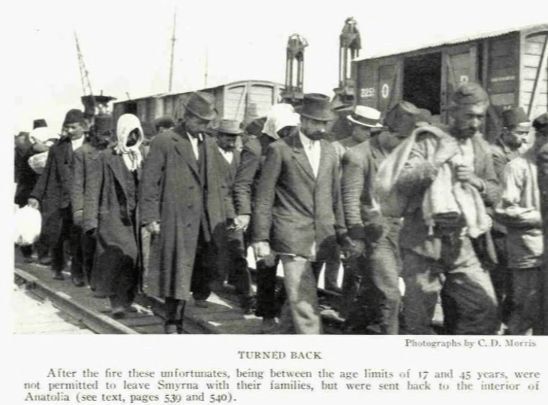
Post WWI, these Christian Greeks were forced by the Turks to leave the Pontus, as it is called, in a series of expulsions and death marches, mostly pushed to the Anatolian interior or towards the Caucasus. (This coincided with the Armenian genocide.)

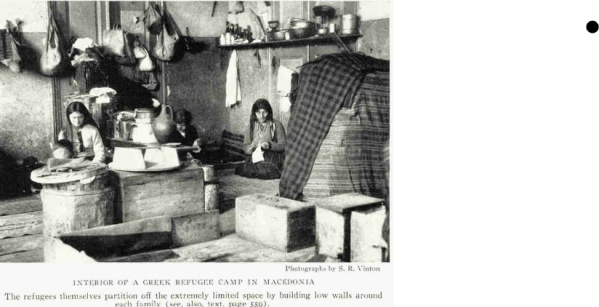
In 1923, Greeks in Turkiye (mostly Pontic) were exchanged for Muslims in Greece. These Greeks primarily went to Thessaloniki in Northern Greece.7

I know I am derived from Pontic Greeks because I have over fifty matches on Ancestry with that particular “journey.”8 Some of these matches live in Turkiye and have Turkish names and when I contact them they seem very upset to discover they are even a small part Greek. Others are merely perplexed.

Many of my Pontic cousin matches have the tell-tale suffix IDIS at the end of their surnames and identify as Greek. They live in the United States and their immediate ancestors hail from Thessaloniki or southern Russia. 6

A handful have Russian surnames.13

Southern Russia! I have a theory. My male Pontic Greek ancestor from Samsun in Northern Anatolia (where I almost certainly have antecedents) took a boat across roiling Black Sea waters to the Crimea, maybe by way of Sochi, where I have a tree match, and met up with my female Black Sea German ancestor. The mountains of southern Crimea had a climate good for growing grapes. I have many sure-fire ancestors in the village of Huffnungstal, near Odessa. Some of these Hoffs, Bollingers, Lutz’s, and Berreths went on to Crimea.

This is more than a stab in the dark. Call it an ‘educated guess.’

The essential point is this: Because of the complex history of Eastern Europe and the Black Sea area, my bio father back in 195412 Montreal may have identified as a Ukrainian (most likely) or a German or a Greek or maybe even a Turk or a Tatar. Or perhaps a Pole or a Hungarian, or even a Romanian Jew14. Or just a Canadian. His ancestors might have been Steppe nomads, serfs or slaves, farmers, vintners, blacksmiths, soldiers,sailors, shopkeepers, shipping magnates, Romani gypsies, noblemen – or all of the above.

Yes, researching genealogy is challenging for most people but next to impossible for people in my situation, with roots around the Black Sea, even if you know who your parents are.

In Soviet society, post WWII, elders kept family history and stories AWAY from their descendants rather than passing the stories on, according to an academic paper I read.9

This was for their protection.

“The less people knew about their family history the better.”

The Pontic Greek diaspora in Europe and North America now struggles to keep its cultural identity. Persons who went to Thessonaliki or other parts of Greece in the 1923 exchange were often slighted by natives and not considered ‘true’ Greeks, so they didn’t showcase their past.

The other surviving descendants of the citizens of the once dazzling Empire of Trebizond now live in Ukraine (Mariupol) and Kazakstan and Turkiye and many likely don’t know (or want to know) their ethnic heritage.

It’s no wonder I can’t figure out who my bio-father is – and probably never will. His relatives, if they exist at all, reside in places where they don’t do DNA – and sometimes for good reason. But, thanks to modern science and copious online sources, I do know an awful lot about his very mixed-up ethnic heritage.

THE END SON Кінець Das Ende Τέλος Koniec Sfârşit

Footnotes

1. I only get one or two new matches on that side a week, or maybe a month. Most are Americans or Brits with some Romani. (I’m 1 or 2 percent Romani) or distant descendants of Black Sea Germans (Eberhard from North Carolina!) and an occasional Pontic Greek.

2. I only know this because I have a twin who did his Y DNA and the one match had a Turkish name. J2A.. My 3rd cousin match, a Turkish woman, is a stand-alone match, with no mutual matches. Her ethnicity profile mirrors my bio-father’s, though, suggesting to me Crimean Tatar roots. See Note 4. Bob Dylan, apparently has a similar ancestry.

3. I am almost certainly related to the Hemmerlings of Gimli, Manitoba. Are you?

Most Black Sea Germans were repatriated to Germany or Poland during WWII. As the borders changed during the war some had to go back to Russia. A few of these Germans lobbying to return to Germany had ‘mixed marriages,’ according to records kept by the Germans. The mates were mostly Russian, but quite often Moldavian (sometimes referred to as Gagauz, a kind of Christian Turk native to Romania) and but rarely Hungarian, Polish, Bulgarian or Greek.

4. Ancestry doesn’t acknowledge Tatars or Crimean ‘journeys’ but on many other platforms the algorithms give me Crimean Mountain Tatar, at least way back. These people were a mix of Northern Italian (Genoa) Southern Italy and Greece, (Sicily), Allans (Persia) and Goths (Germany) with Nogai, as in Steppe Tatars who in turn have Central Asian and Mongolian. (I have all of these things 🙂 I have only one distant match with a tree totally from Crimea and, yes, the surnames are Tatar.

5. I have a cluster of family trees with people from a town called Hoffnungstal in Bessarabia (Odessa area). I also have a cluster in Galicia (Poland-Ukraine border)in a town called Bruckenthal. There was a trade route between these two areas and smack in the middle was a town called Botosani, Northern Romania, where I also have a tree match- a Jewish match with people who moved to Montreal. Yikes! (Any ideas? Contact me, please!)Added a week later: The immigration path of the Black Sea Germans in my trees seems to go from Baden area to Poland down to Galicia north of Lviv, around Moldova to that bit of Ukraine west of Odessa where Hoffnungstal and Kloestitz (my villages) are. The researcher says there were many long stops along the way. Works perfectly. Bruckenthal Rava Ruska is north of L’viv.

6. The Euripides play Iphigenia in Taurus speaks to this. Iphigenia, daughter of Agamemnon, is saved from death by the goddess Artemis and hidden in the land of the Taurians (Crimea). The Greeks have a long history in Russia. Rich shipping families from the Aegean ran the grain trade there in the 1800s. Many of these rich Greeks assimilated into Russian society. At the founding of Odessa, that became a bustling multicultural economic center, there were already many Greek families, who often were the wealthiest citizens there. At one point the Mayor of Odessa was a Greek.(Odessa Recollected; The Port and the People. Patricia Herlihy. 2018 Boston)

7. According to one online source, the Asia Minor and Pontus Hellenic Research Centre at Chicago, Illinois: In the city of Samsun, where I very likely have some ancestors, 72 Greek community leaders were arrested and sentenced to death in 1921. Other Greek men were killed, imprisoned or conscripted into the army and the women and children sent into exile or deeper into Turkiye where they were forced to change their Greek surnames to Turkish ones.

8. Ancestry gives me no journey on the paternal side, but there is a function that allows me to see the journeys of my paternal matches. These include: all parts of Germany; Black Sea Germans/ Leibenthal Beresen Enclaves; Pontic Greek; Eastern European Roma; North Eastern Hungary/Slovak Border. (That’s on edge of Ukraine near L’viv.) I appear to be connected to Szekelers, a sect of Hungarians who moved to Northern Romania, Bukovina.

9. A. Pahl and Thompson. 1994. Family history was dangerous even for families who left for North America.

10. https://www.grhs.org/pages/Villages A concise list of Black Sea German villages. Many descendants of Black Sea Germans and of French Canadians mixed it up in the Dakotas or Western Canada later on, so I have hundreds of distant ‘unassigned’ matches with both these heritages.

11.https://providencemag.com/2017/09/forgotten-christian-history-turkey-review-byzantiums-empire-trebizond-book-review/

12. In 1954 Crimea was returned by the Russian Soviet Socialistic Republic to the Ukraine SSR. The Russians felt that the Crimea fit more naturally with them.

13. In Family Tree’s public Pontian Greek Y database, the vast majority of subscriber surnames are Russian. This appears to show the extent these people were absorbed into Russian society.

14. MDLP algorithm, that is supposed to be best for people of my bio-father’s ancestry, is unequivocal. I am Romanian. And sometimes a Romanian Jew or Gagauz (that’s the Turkish bit). Lots of Romanian Jews immigrated to Montreal. That would mean perhaps that my closest community is not Black Sea German but Danube Swabian, Wurrtemburg Germans who lived for generations in Romania, Serbia, until expelled after WWII.

This video says genetic studies prove Pontic Greeks are descendants of Ancient Greeks. Indeed, their mountain monasteries preserved elements of Ancient Greek culture long after Byzantium died out. Also, family history information was ‘encoded’ in their dress, the fabrics and patterns of their clothings, every day and ceremonial. Now, that ‘s interesting. Because of their cohesive social system and the make up of their terrain, Pontic Greeks in North Central and Northeast Anatolia largely resisted Turkish invasions.
This book, from the University of Toronto Press, 2014 by Paul Robert Magocsi, is available on Archive.org. It contains pics of a Taurian Burial Ground 300 BC; Greek Amphitheatre; a cave village/Jewish Karaite; early 4th Century Christian Basilica; 14th Century Armenian Church; a Genoese Castle, and many mosques, attesting to the rich, complex history of the Crimea, a place still very much in the news for the usual reasons. This was the home of the sedentary TAT Tatars (as opposed to Steppe Tatars) as well as the Northern Pontic Greeks – as distinguished from the Pontic Greeks on the southern coast of the Black Sea in Northern Anatolia.

The Cipher

When I say that my grandfather, Thomas McHugh, worked as a cipher, Bletchley Park, MI5, Russian spies immediately come to mind. He was neither a Russian spy nor did he work as a cipher during the war. His employer was the Bank of Montreal, and it was his first job when he came to Canada in 1912.

The decision to immigrate to Canada was not easy for Thomas. He was in his mid-30s and already had seven children, between the ages of one and fifteen. For over 40 years, the jute manufacturers of Dundee, Scotland, had been providing employment for his parents, aunts, uncles, siblings, wife, and for him. However, by the early 1900s, he was facing a precarious future for his children.

By that time, Dundee had suffered a serious decline in the textile industry and more significantly, the jute industry. Jute was imported from India; however, the mill owners realized that it would lower production costs to open mills in India to prepare the jute and import the finished product to Scotland. Once mills were established in India, the jute production in the mills in Dundee decreased substantially.1

So when Thomas arrived in Canada, a little ahead of his wife and his children, he was eager and prepared to do any job that he could. The Bank of Montreal had its headquarters in Montreal, Quebec. At the beginning of the 20th century, the bank had significant dealings with Great Britain and there were correspondence and banking instructions back and forth between Canada and Great Britain daily. These instructions were mainly sent by telegraph overnight.  Some of these instructions were confidential, and it was preferred that they remain so. Overnight instructions reduced the number of people who would have access to them. And the time difference between Montreal and the United Kingdom meant that the banks in London and Edinburgh were open for business while Montreal was still asleep.

Thomas with Pal in Verdun

Even in those days, the banks were concerned about security, privacy and confidentiality. The banking instructions and transactions that were transmitted by telegraph were encrypted. It was the job of the cipher clerk to decipher them so that the bank staff could then ensure that the instructions were carried out as required.

To be a cipher clerk, one had to be reliable, meticulous and honest, and maintain the confidentiality of the bank’s business above all else. To decipher the information, the clerk used a cipher handbook and worked overnight, making it a difficult job for a man with a family.

So while my grandfather, the cipher, did not work in espionage, I still think that his first job in Canada was rather interesting.2

  1. Wikipedia web site, The History of Dundee, online<https://en.wikipedia.org/wiki/History_of_Dundee>, accessed February 19, 2017.
  2. McHugh, Edward. Personal knowledge. [Father of writer].

private radio inspector

The black-leather-lined plasticized bilingual identity card wacked my arm as it fell from the shelf. Until then, I had never really noticed the card among the many items my grandmother left me.

Luckily, its heavy construction protected the words on the card, which remain as legible as they were when my grandfather received it on January 4, 1936.

The Canadian federal “Department of Marine” issued the card to give my grandfather credibility as a radio inspector. It says:

“The bearer G. Arial is hereby authorized to issue and inspect private radio receiving licences in Edmonton East. He is further authorized to require the production of private radio receiving licences for inspection.”

Turns out that this little artifact hints at a short-lived controversy in Canadian history. The card expired on March 31, 1937, but it would be defunct before then.

The Department of Marine seems like an odd overseer of radio licences until you realize that early broadcasting began in the 1890s when Morse Code was used to enable ship-to-ship and ship-to-shore communication. The idea of a public broadcaster begin in May, 1907, when the Marconi station in Camperdown, Nova Scotia began broadcasting regular time signals to the public.

The “wireless telegraphy” industry continued to develop with private individuals investing in ham radios with no regulation. By June 1913, the federal government decided to regulate the industry to protect military communication.

When World War I began in August 1914, private licenses were banned altogether. Only the Marconi Wireless Telegraph Company of Canada, Ltd. kept operating during the war years, in part because it became a research arm of the military.i

After the war, the private industry blossomed, particularly in Western Canada. Many of the new broadcasters came from multiple religious communities, a situation the federal government tried to prevent by setting up a public broadcasting system through the Radio Broadcasting Act of 1932.

That act led to the establishment of a licensing commission called the Canadian Radio Broadcasting Commission under the leadership of Hector Charlesworth. Charlesworth’s group censored many religious groups and political groups, but none more than the Jehovah’s Witnesses.

Norman James Fennema described the controversy in his 2003 dissertation, Remote Control.

…in Canada we find a situation in which the original impetus for regulating radio broadcasting began with the specific aim of putting a rein on religious broadcasting. Originally directed at the radio activities of the Watchtower Bible and Tract Society, this expanded in the early 1930’s into a policy against the licensing of religious broadcasters, a policy initially justified on the basis of the scarcity of the broadcasting spectrum, but that survived the expansion of the system.ii

By 1935, Clarence Decateur Howe became both the Minister of Railways and Canals and the Minister of Marine,iii the ministry under which my grandfather’s job was created.

Howe favoured private broadcasting, and encouraged new private entities to flourish.

Prime Minister Mackenzie King preferred a public broadcast system however. In February, 1936, the Canadian Broadcasting Corporation (CBC) came into being, and my grandfather’s job ended.

Sources

i https://en.wikipedia.org/wiki/History_of_broadcasting_in_Canada, accessed May 26, 2020.

ii Fennema, Norman James. REMOTE CONTROL: A History of the Regulation of Religion in the Canadian Public Square, PhD thesis, 2003, https://dspace.library.uvic.ca/bitstream/handle/1828/10314/Fennema_Norman James_PhD_2003.pdf?sequence=1&isAllowed=y.

iii https://en.wikipedia.org/wiki/Minister_of_Transport_(Canada), accessed May 26, 2020.

Dad’s Early Years

Altonen, Karhu, Kuivinen Family reunion 1919 At the dawn of the twentieth century many of my ancestors from Finland immigrated to the United States. They settled in Ashtabula Harbor, Ohio on the shores of Lake Erie. In the above photo seated are my Karhu great-grand parents surrounded by their offspring. Directly behind my great-grandfather(in the black Jacket – seated) is my Dad, Kaarlo.

 Over the past decade a number of stories about my father’s adult life as a Professional Mining Engineer were presented on this blog. However, from his neatly organized photograph album we get a glimpse of his youth.

Kaarlo Victor Lindell was the oldest son of Johan Hjalmar Lindell, a blacksmith and Ida Susanna Karhu. He was born November 14th, 1905. The family lived on Bridge Street above grandfather’s shop. Dad was second of eight children, four girls and four boys

This is one of the earliest photos of Kaarlo pictured here with his four sisters. He was about 9 years old at the time. His brothers were born years later.

Dad would have been about 11 in this photo with his sister Leona.

Kaarlo attended Elementary School in Ashtabula Harbor.

The description says it all!

Grade 5 Class Picture and the signatures of Kaarlo’s classmates

Ashtabula Harbor High School

The Mariner – The yearbook for Ashtabula Harbor High School 1923.

Dad was on the Advertising Committee and was also involved in many of the school activities as can be seen in the following photographs.

As a youngster during his teenage years Kaarlo had “many irons in the fire”. He built a crystal radio to the delight of his family. To earn money for college he read meters and ran the movie projector in the local theatre. During the summer months he sailed the Great Lakes as an assistant cook on ore boats.

From his humble beginnings as the son of a blacksmith throughout his life he became a driving force in the mining industry and travelled the world.

***************************************************

 Part Two: will focus on his years as a student at Michigan College of Mines in Houghton, Michigan where he studied Mining Engineering.

The following stories about Dad’s career appeared in our Genealogyensemble.com blog over the past decade:

https://genealogyensemble.com/2024/05/15/honesty-pays-off/ https://genealogyensemble.com/2024/07/10/honesty-pays-off-part-2/https://genealogyensemble.com/?s=Life+Changing+Events   2023

Working together to help genealogists discover their ancestors