Dear Miss Bulford – Part Two

DEAR MISS BULFORD –  PART TWO

With much excitement, my first posting after basic training was to  RAF Halton near Wendover, Buckinghamshire, the trade training school, called the ‘Medical Training Establishment’ where I would start my training as a Nursing Assistant.  I was now known as “J2844104 LAC Bulford” (Leading Aircraft Woman) and would answer a question put to me with the following,  ‘104 LAC Bulford, Ma’am”.  In 1966  when I was 20 years old, and other girls my age were enjoying ‘Swinging London’ and pop groups, I was marching, shining shoes and making bed with perfect ‘hospital’ corners.
RAF Halton Medical Training Establishment Crest

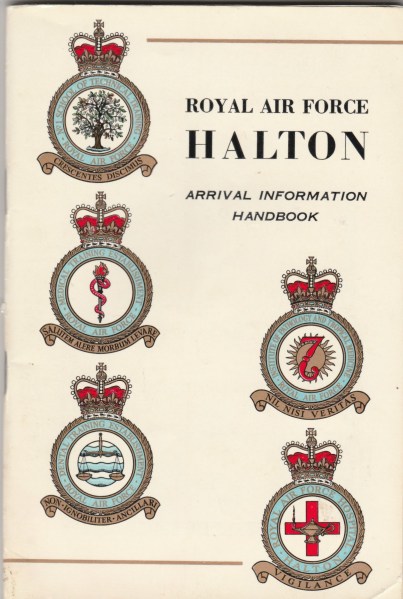
The camp I arrived at was enormous. In addition to the Medical Training Establishment (MTE) where I would do my training, RAF Halton also had on its property the Princess Mary’s Royal Air Force Hospital, the RAF Institute of Pathology and Tropical Medicine and the Dental Training Establishment, in addition, hundreds of apprentices or ‘boy’ entrants attending the No. 1 School of Technical Training learning to be aircraft technicians, electrical engineering and administration trades.

The handbook below has the crests for these various schools on the cover.  ‘Main Camp’ was where I signed in and then directed to ‘Hospital Camp’ and given an arrival information book (below) with a large map attached to find my way.
After a very long walk to my barracks,  I found the two-story red brick building named ‘Paine Barracks’.  My shared room was on the second floor and again, a long bright room with 14 beds seven on each side. The number of girls who intermittently arrived from all parts of England were all strangers to each other. They were pleasant and chatty, and, after introductions and a sizing up of one another, we started to exchange ideas about what the next stage of our life would be like.

Most of us seemed to be of the same idea;  we came from similar backgrounds after all.  We had left school at 15 years old and wanted to see life and get more education before settling down.   A Corporal arrived to show us the way to our mess hall on the main camp and we all set out for our tea.  Once more, I found the food to be very good, I suppose it does not say a lot about meals at home!   We still had to clean the large dormitory we all slept in, the bathrooms and our uniforms and shoes, but inspections were only once a month and not quite so stringent.

The following day started the next phase of my learning.   We were known as “Course 642, Medical Training Establishment”  We attended the classes every day, once again, marching to and from them.  Our tutor,  Sergeant Constantine,  (Sarge) and various other tutors were assigned different subjects but Sergeant Constantine was our main man.

Sarge taught us anatomy and physiology, first aid, infectious nursing surgical techniques removal of sutures, transfusions,  infusions vaccinations and general examinations. We learned about the body systems, body cells tissues then bones and the skull. Plus, types of wounds the composition of plasma and blood and platelets and the heart and other tutors taught us everything needed to take care of patients, such as care of their body, hair, teeth, intake of food and their general comfort.

With much hilarity, we practised giving each other first-aid, bed baths, and shampooing each others’ hair. Then fittingly,  ‘Last Offices’ were shown and practised. ‘Last Offices’ the laying out and preparation and treatment of the dead. I actually found this very interesting and enlightening, probably because my Granny whom I lived with for a few years had in a no-nonsense way had introduced me to death at a very early age. [2]

We went to the hospital wards a few times a week, to be bullied by the ‘Sisters’ – Princess Mary’s Nursing Sisters were Registered Nurses and officers  – but did they ever teach us well!

In England, in the RAF  all the Senior registered nurses were addressed as ‘Sister’. Not in a religious way, but as a formal address. In civilian hospitals, she would have been called  ‘Matron’ [1]

With our other tutors, we had to learn ‘Passive Defence’  the definition of which is ‘Any action which will reduce the effect of a nuclear biological or chemical attack’  We went into great detail about symptoms and proper treatments.  (Should we be so lucky to survive such attacks!) This was something I had never even thought about, but we still managed to fill whole exercise books of information and treatments and I found this quite scary.

One day, we were taken out to a huge field with bunkers which we were herded into. Once inside this bunker, we were told to take down a gas mask off the wall and put it on.  Sgt. Constantine then set alight a gas bomb. We were ordered to remove the gas mask hold our breath then  – Sgt. Constantine was with us –  walk in a circle three times, before exiting the door.  We did so, but not before some girls were shrieking with fear and crying to be let out! When we eventually stumbled out gasping some of the girls vomiting and with tears falling down our faces we were told this ‘exercise’ was to alert us to a gas attack. Very enlightening. These exercises, we were told, was because should such an event take place, the military would be called upon to assist civilians.

We were taught how to sterilise, prepare and layout numerous treatment trays and instruments everything in those days being metal. In a military hospital, we had reams of RAF forms to learn and ‘civilian’ forms too. Admissions were different for each. We had something called the duties of a ‘Crash Orderly’ Actions to be taken after a military of civilian plane crash, shown in my notebook, below.
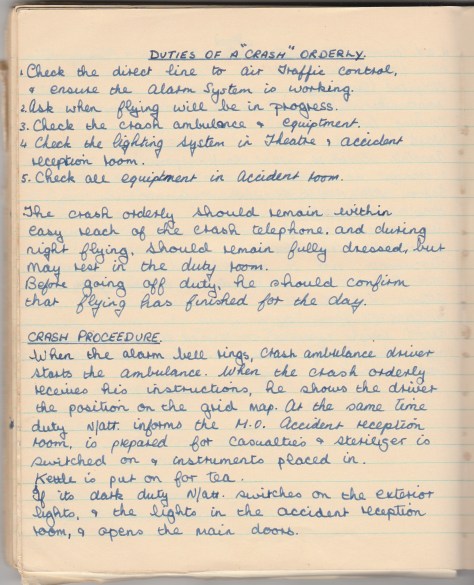
I particularly like “Kettle is put on for tea” The panacea of British life!

Many studies for the general care of a patient were performed, and one day, in class, we had a ‘mock’ plane crash alarm in the woods although, at the time, we did not know it was a ‘mock’ It was very frightening and realistic.  Everything we did was recorded in our study books, which I still have. I rooted them out to write this story and I enjoyed reading and reminiscing.  Everything we did I now realise, was extremely thorough, which I will explore in part three.

NOTES

[1] The word “matron” is derived from the Latin for “mother”, via French.  The matron was once the most senior nurse in a hospital in the  United Kingdom before ca. 1972. She was responsible for all the nurses and domestic staff, overseeing all patient care, and the efficient running of the hospital. Matrons were almost invariably female—male nurses were not at all common, especially in senior positions. They were often seen as fearsome administrators but were respected by nurses and doctors alike.

The matron usually had a very distinctive uniform, with a dark blue dress (although often of a slightly different colour from those worn by her direct subordinates, the sisters) and an elaborate headdress.

More recently, the British Government announced the return of the matron to the NHS, (National Health Services) electing to call this new breed of nurses “modern matrons,” in response to various press complaints of dirty, ineffective hospitals with poorly disciplined staff.

Dear Miss Bulford – Part One Basic Training

https://genealogyensemble.com/2020/01/02/dear-miss-bulford/#like-6570

My Brothers’ Keeper – An Early Introduction To Death

https://genealogyensemble.com/2018/01/14/my-brothers-keeper/
BAnQ Advitam

The Bibliothèque et Archives nationales du Québec (Library & National Archives of Québec, or BAnQ,) recently introduced a powerful new online search engine.  Known as Advitam, it replaces the previous search engine, Pistard. It points to documents, files, photos and other holdings in the BAnQ’s archives, some digitized, others only available in the BAnQ’s 10 branches across Quebec.

You can access this online search tool at https://advitam.banq.qc.ca/

Advitam (ad vitam means to life in Latin) offers online researchers two search options: Reherche simple (Regular online searches) and Recherche avancée (Advanced online searches.) Unless you are familiar with the French language and the way archives are organized, the regular search is probably easier to use.

Type in the name of the person, place or topic you are searching for. The results will come up in two parts: on the right are the photos, maps, documents, collections, etc. stored at the BAnQ, while on the left is a list to help you filter your results. The filter choices are written in French, but they are not difficult to figure out. If you have difficulty, try using an online translation tool such as Google Translate or DeepL.

You can also use the bar at the top left to focus on the time period you are interested in. New France existed 1604-1759, the British period was 1760-1790, and Quebec was known as Lower Canada 1791-1841.

You can also filter your searches to look for Quebec civil registers, judicial registers or notarial records. You can search for the names of cities, towns, townships, seigneuries, villages, counties and even modern-day MRCs (regional municipal regions or districts.) You can look for events (baptisms, marriages, deaths, divorces, legal proceedings, judicial inquiries and judgments, etc.) and find out about institutions such as religious orders, military regiments, government appointees, etc.

Here’s an example of how this search tool can help you find the record of an ancestor who lived in Pointe-Claire, Quebec, and who was baptized in the Catholic church there. An online search on Advitam for Pointe-Claire, (a suburban municipality on the Island of Montreal) brings 823 results addressing the city or village of Pointe-Claire from about 1713 to 2002.

The fourth result from the top refers to the Catholic Parish of Saint-Joachim-de-la-Pointe-Claire – Content 1713-1918 – CE601-S37 – Fonds Cour supérieure. District judiciaire de Montréal – État civil. BAnQ Vieux-Montréal Id 477622. This dossier addresses Parish Registers of this Catholic parish from 1713 to 1918, kept on five microfilms at BAnQ – Vieux-Montréal.

These church registers can also be found online through BAnQ Numérique – Registres de l’état civil, or on Ancestry.com, on FamilySearch.org and on Généalogie Québec, however these sources may not contain all of the church registers from 1713 to 1918. If you haven’t found your ancestor’s name elsewhere, try Advitam.

The BAnQ’s repositories are: BAnQ Vieux-Montréal, BAnQ Québec, BAnQ Gaspé,BAnQ Gatineau, BAnQ Rimouski, BAnQ Rouyn-Noranda, BAnQ Saguenay, BAnQ Sept-Îles,BAnQ Sherbrooke and BAnQ Trois-Rivières. If you do not reside in Montréal or near another BAnQ branch, try contacting the BAnQ to ask a question.

BAnQ Ask a Question  https://www.banq.qc.ca/formulaires/formulaire_reference/index.html?language_id=1

or

BAnQ Poser une question https://banq.qc.ca/formulaires/formulaire_reference/

 You can use these links to make a request for digitized material. A BAnQ clerk or librarian will help you download the material for free, but you need to facilitate the research process for the archivist. You should indicate the approximate year of an event (baptism, marriage, death) and be sure to specify the ‘’cote #’’ (dossier # or shelf #) as in the above example, 1713-1918 – CE601-S37 – ID-477622. Each file at BAnQ is identified by a similar description which can be found through your initial online search on BAnQ Advitam

 Email requests can be written in French or English, and your reply will be in the same language.

In most cases, if the above basic conditions to your request are respected, you should receive a reply within days by email. If your request is more complicated, contact the regional specialist librarian at the appropriate branch of the BAnQ.

 Please note: Due to Covid-19, all branches of the BAnQ are closed at this time. (2020-04-19)

BAnQ Vieux-Montréal 514 873-1100 – 1 800 363-9028, option 4 plus option 1 514 873-1101 # 6260 archives.montreal@banq.qc.ca

BAnQ Québec  418 643-8904 – 1 800 363-9028, option 4 plus option 2 archives.quebec@banq.qc.ca

BAnQ Gaspé  418 727-3500 plus option 6573 – 1 800 363-9028 plus option 6573  archives.gaspe@banq.qc.ca

 BAnQ Gatineau  819 568-8798 – 1 800 363-9028, option 4 plus option 7 archives.gatineau@banq.qc.ca

BAnQ Rimouski  418 727-3500 – 1 800 363-9028, option 4 plus option 3 archives.rimouski@banq.qc.ca

 BAnQ Rouyn-Noranda  819 763-3484 – 1 800 363-9028, option 4 plus option 8
archives.rouyn@banq.qc.ca

BAnQ Saguenay  418 698-3516 – 1 800 363-9028, option 4 plus option 4
archives.saguenay@banq.qc.ca

BAnQ Sept-Îles  418 964-8434 – 1 800 363-9028, option 4 plus option 9
archives.sept-iles@banq.qc.ca

BAnQ Sherbrooke  819 820-3010 – 1 800 363-9028, option 4 plus option 6
archives.sherbrooke@banq.qc.ca

BAnQ Trois-Rivières  819 371-6015 – 1 800 363-9028, option 4 plus option 5  archives.trois-rivieres@banq.qc.ca

Researched and compiled by Jacques Gagné  gagne.jacques@sympatico.ca

2020-04-16


Abandoned

My mother-in-law stood on the front porch as two women approached her from a parked car. I could see that they were speaking but I could not hear their words. One reached out to her.

Abruptly, avoiding what she must have the perceived as an embrace, Flora entered the cottage, slamming the door shut and crying, “I have no sisters!”

Flora Tremblay Tarrant did in fact once have a sister. Flora and her sister Lily were born in La Tuque in 1910 and 1912 respectively. Their mother, Mary Mercier, and her third child died during childbirth when Mary was just twenty-two.1

The girls’ father, Ligouri Tremblay, had migrated to LaTuque from the Lac St. Jean area seeking employment when the St. Maurice Industrial Co. opened a pulp and paper mill in 1908. Ligouri met and married Mary in 1909. 2

Following Mary’s death in 1914, Ligouri abandoned his young children to their grandmother, Caroline Mercier, and moved on to the pulp and paper towns of northern Ontario. Lily died of whooping cough shortly after. 3

Caroline Mercier was born Caroline Beads at Rupert House on James Bay north of La Tuque. 4 Her father, Robert Beads, was the grandson of either John or Thomas Beads, brothers from England who, in the early 1820’s, settled in the area while in the employ of the Hudson Bay Company and married into the indigenous Cree community. 5

Caroline married Joseph Mercier from Riviere Ouelle 6, a French-Canadian river-man on the St. Maurice River who delivered mail to the hinterland beyond La Tuque. Any shadow of Indian blood lay heavy over a family at that time and so it was with Caroline’s family. It took another two generations before Flora’s grandchildren would proudly proclaim native ancestry.

Flora was initially raised by her grandmother and later by Elizabeth (Lizzie), a deaf maiden aunt. Fortunately, her cousins Mary, Peggy and Grace Thompson were as close to her as any sibling would be.

When she was sixteen, Flora’s aunt heard from Ligouri. He was remarried with a young family and now wanted Flora to live with them. “You won’t leave here to be a maid and babysitter”, were evidently Lizzie’s words. She demanded that Ligouri pay the cost of Flora‘s room and board over the past twelve years. She never heard from him again. Flora would forever claim that Lizzie saved her from a fate worse than death.7

Flora married Laurence Tarrant from Bury in the Eastern Townships, a WW1 veteran who had spent three years in British hospitals recovering from his injuries (see A Soldier’s Fortunate Care). Like many Quebecers before him, he travelled to La Tuque to find work in the paper mill and settled there 8.

Flora gave birth to four children. She was widowed in 1964 at the age of 54 when her youngest child was only seven.

Ironically, following her husband’s death, Flora found work as a housekeeper and babIMG_3830 (002)ysitter at the Indian Residential School across the road from her home 9. She cared deeply for the children living far from their families and stripped of their language and culture. Likely she empathised with their feelings of abandonment.
Flora never remarried. “I’ll not wash another man’s dirty socks” were her words, perhaps a throw-back to how she believed her father treated her.  And she would never accept Ligouri’s children as her sisters.


Notes and Sources

  1. Handwritten family tree in possession of the writer.
  2. com. Quebec, Canada, Vital and Church Records (Drouin Collection), 1621-1968[database on-line]. Provo, UT, USA: Ancestry.com Operations, Inc., 20081891
  3. Handwritten family tree in possession of the writer.
  4. Census of Canada, database. Ancestry.com (ancestry.ca: accessed June 5. 2017), entry for Caroline Beads Citation Year: 1891 Census Place: Unorganized Territory, Champlain, Quebec; Roll: T-6390; Family No: 39
  5. George Robertson.” Biographical Sheets, Hudson Bay Company, www.gov.mb.ca/chc/archives/hbca/biographical/index.html. Accessed 5 June 2017
  6. Quebec, Vital and Church Records (Drouin Collection), 1621-1967
  7. Personal conversations with Flora Tarrant.
  8. Family Records and documents on file with the writer
  9. https:/www.anglican.ca/tr/histories/la-tuque-quebec/


The Protestants of Champagne-Ardenne of the 16th and 17th Centuries

Modern-day Ardennes – Aube – Marne – Haute-Marne

 Champagne-Ardenne, with its capital Troyes, was located within the northeast region of France near the borders with Belgium and Germany. This large province was first established as a territory in the 11th century. In 1284, Champagne was unified with France under the leadership of King Philippe IV.

This research guide is a comprehensive tool for researching French Protestant ancestors from this region.

Caveat: much of it is in French.

Champagne – The ancient, or pre-French Revolution, province of Champagne was subdivided into many territories; Champagne (Troyes) Rhemois (Reims) – Rethelois (Rethel including Porcien) – Perthois (Vitry-le-François) – Vallage (Joinville) – Bassigny (Val-de-Meuse) – Senonais (Sens) – Sedan (Sedan) – Tonnerrois (Tonnerre) – Chalonnais (Châlons-en-Champagne) – Barrois (Barrois-sur-Aube) – Brie Champenoise (Meaux) – Arcy (Arcy-sur-Cure) – Dieulet (Vaux-en-Dieulet) – Pays de Der (Montier-en-Der)  – Clermontois (Argonne)

Following the French Revolution, the province was divided into four départements: Ardennes – Marne – Aube – Haute-Marne.

Please note the ancient province of Ardenne (without an ‘’s’) and modern-day Ardennes (département) are basically the same region. Ardenne was located primarily in Belgium and Luxembourg, but stretched well into Germany and France (lending its name to the Département of Ardennes and the former Champagne-Ardenne.) The primary towns or cities of the Ardenne of France were La Roche-en-Ardenne, Libramont, Neufchâteau, Bouillon, Bastogne, Spa, Saint-Hubert, Chimay, Sedan, Charleville-Mézières, Givet, Revin.

(Source: Wikipedia)

Musée Protestant (France), a leading historical society in France, places modern-day Aisne within the ancient Champagne-Ardenne region. The Government of France in past centuries had placed modern-day département of Aisne within the region of Hauts-de-France – See https://genealogyensemble.com/2020/03/15/hauts-de-france-the-protestants-of-artois-calaisis-flandre-picardie-of-the-16th-and-17th-centuries/   I also added the département of Aisne to this dossier. See page 7

On pages 3, 4 and 9, I have added additional texts in regard to Protestantism in France. These resources can be accessed at various Archives départementales de France.

This region of Champagne-Ardenne was home to exceptional individuals during the 16th and 17th centuries including:

  • Françoise de Bourbon – Vendôme
  • Henri-Robert de la Marck
  • Many professors at the Académie de Sedan, a Protestant college in the city of Sedan from 1559 to 1681. There are articles on the Academy of Sedan and some of its professors on the English and French-language versions of Wikipedia, and at BnF (Bibliothèque nationale de France.

Click here to view the 43-page PDF research guide:   The Protestants of Champagne-Ardenne

Included are links to records concerning Protestants in French archives;  collections on familysearch.org; Histoire des protestants en France by Patrick Cabanel; research guide to family history in France by Gildas Bernard; towns in this region where Protestants resided between 1565-1721; Protestant church and civil registers in France;, links to the Académy de Sedan; books about the history of Protestants in this region; historical societies; online resources; BnF; archives; archives départementales; archives municipales; old Protestant newspapers; genealogy in France, regional; publishers; links to Genealogy Ensemble articles.


Continental Notes for Public Circulation

After Stanley Clark Bagg (1820-1873) and his family returned home to Montreal from a year-long trip through Europe in 1868-1869, he wrote a small book about some of the places they had visited. Published in 1870, he called it Continental Notes for Private Circulation.1 The irony is that, 150 years after this book appeared, it is far from private: it can be found in university libraries, and it is also available on the Internet.

Continental Notes highlights 20 of the places the Bagg family visited, including Paris, Venice, Strasbourg, the Rhine River, Waterloo, the ruins of Pompeii and the French Riviera.

I was excited to find a copy of this little book on an open circulation shelf at McGill University a few years ago. I had read a lot about my great-great-grandfather, but I hoped to get to know him a little better by reading his own words.

At first glance, the book seemed dry and impersonal. This was disappointing, considering that SCB and his wife, Catharine, had made the trip with his sister-in-law and five children, ranging in age from seven to 20. The trip was no doubt considered an essential part of the children’s education. Surely there must have been some surprises or amusing incidents along the way that he could have described. But SCB explained in the introduction that the book was based on his personal notes, some of which were written before they even left Montreal. And this was a man of the Victorian era who had a reputation for being conservative, at least in politics. As a member of Montreal’s elite, his writing style was no doubt appropriately reserved.2

On closer reading, however, it became clear that Continental Notes reflected his personal interests, which included history (especially the Roman Empire and the early history of Christianity) and archaeology.

Cluny Paris

The Musée de Cluny, also known as the Musée national du Moyen Âge, is in the Latin quarter of Paris. JH photo

In the two pages he wrote about Paris, he gave more space to the Hôtel de Cluny, which he called “one of the finest remains of the ancient mansions of Paris of the 16th Century” than he did to the Louvre. He added that the Palais des Thermes, once the residence of the Roman Governor of Gaul, was connected to Hôtel de Cluny and housed a collection of antiquities that was open to the public. That museum of medieval art is still there, so when my husband and I visited Paris in 2010, we visited it. One of the treasures it houses today is a famous series of tapestries, The Lady and the Unicorn.

One of the other spots SCB visited was Hyères, a town located near the Mediterranean coast of France, between Nice and Marseilles. He mentioned its warm winter climate, which may have been one of its attractions, and went on to write, “The environs of Hyères abound in vineyards and olive gardens.… This reminds me of the good Samaritan who poured oil and wine into the wounds of the man that fell among thieves. Who can walk through these pleasant vineyards without thinking of our blessed Lord when he said, ’I am the true vine, and my Father the husbandman.’”

Hyeres castle ruins
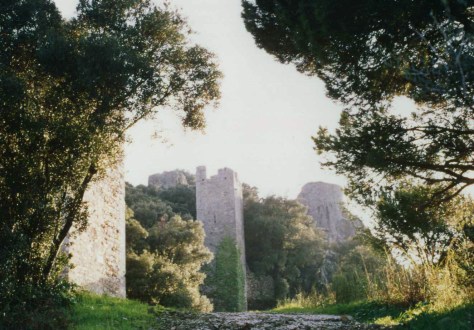
The castle ruins, Hyères. JH photo.

Forty years ago, long before I knew anything about Stanley Clark Bagg, I spent a month in Hyères, taking classes at a French language school there. Hyères was not the area’s most attractive town and I wondered what my great-great-grandfather would have found of interest there. Then it occurred to me that, besides the weather, he was probably attracted by the ruined medieval castle. SCB noted, “The ruined walls and towers of the Castle of Hyères stand on a hill above the town. It is probable that this Roman fortress dates as far back as the sixth century.” I walked up to the ruins one afternoon, but was not as excited about the castle as he was.

Many years later, I came across some notes that probably referred to that European adventure. Someone had put them in the Bagg family Bible, perhaps so they wouldn’t get lost.3 The notes reveal that the family not only visited France, Belgium, Prussia, Switzer­land, Italy and the Papal States, but also Ireland, Scotland, England.

These little reminders probably reveal as much of SCB’s attitude on the road as his book does, and most of them remain good advice 150 years later:

Do not fill trunks, nor take too many. Look after luggage.

Read up references, prepare routine, currency, etc.

Letter of introduction useful.

“A soft answer turneth wrath away.”  Keep cool, be firm, good-tempered, “polite.”

Staterooms on ships near stairs, seat at table near Captain.

Do not leave bills, business until last minute.

Be at boat or cars at least 15 min. early.

Never give up passports.

“Fee” the steward, etc. when you go on board — more attentive.

Take what clothing you may require for voyage in a carpet bag — trunk may be too large for admission to staterooms.

Seasickness: Norton’s chamomile Pills. 10[?] drops in brandy, mixed with water. Adults, children in proportion.

Deposit office for articles in all [railway] stations in Eng. Ire. Scot­land. A penny or two. Check given, office responsible for loss. Great convenience.

This article is also posted on http:writinguptheancestors.blogspot.com.

Sources:

  1. Stanley Clark Bagg, Continental Notes for Private Circulation, Montreal, printed by Daniel Rose, 1870. https://www.canadiana.ca/view/oocihm.02377/1?r=0&s=1 (accessed April 8, 2020)
  2. SCB’s most personal writing is probably his poetry. The title, Leisure Moments, seems something of a misnomer, however, given that this small collection of poems he had printed in 1871 features melancholic themes such as grief for deceased loved ones and assurances of a beautiful afterlife. Leisure moments [electronic resource] : a few poems, by Stella [i.e. Stanley Clark Bagg], Bagg, S. Clark. Montreal, 1871 https://catalog.hathitrust.org/Record/100248153 (accessed Jan. 5, 2020.)
  3. I found these notes in the family Bible at the McCord Museum, Montreal, and copied them then, but when I looked again a few years later, they were no longer there.


Letter to My Grandson

Dear Grandson,

You will be born tomorrow, April 2, 2020. At this time, Montreal has 2,097 cases of the Corona Virus (COVID-19). In Quebec, this flu virus has caused 33 deaths. 1

The World Health Organization declared COVID-19 a pandemic on March 11, 2020. Almost every country in the world is currently in some type of lockdown. As governments manoeuvre through this crisis, trying to maintain health care systems and the basic needs of their citizens, families face individual struggles.

Schools, daycares, and businesses that are not considered essential services are closed.  Public health messages tell people to stay at home, to practice social distancing, a new term that means we do not congregate and that if we do need to have contact, to maintain a two-metre distance from each other. Playgrounds, libraries, sports complexes, cinemas, theatres, and shopping centres are shut down.

But love is not cancelled. We already love you so much. Normally we would be preparing for tomorrow, planning on meeting you at the hospital, with balloons, flowers and other gifts. Right now, no visitors are allowed.

Just a month ago, in what now seems to be a carefree world, I would have been planning to greet you at home, waiting to cuddle you in my arms, and lovingly admire your every feature. At this time, we do not know when we will visit you.

A little over a hundred years ago, my family lived through the Spanish Flu of 1918 in Montreal. It must have been just as frightening as today’s health crisis. The McHughs were a large family. My grandfather, Thomas, and his wife, Elsie, had eight children living at home. Grandfather Thomas’ mother, his two brothers, and his sister’s family lived close by. Thomas and Elsie’s daughter, Anne, and her husband, Norman Smith, had their first son, Thomas, just a few months before the Spanish Flu outbreak reached Canada.  They must have been terrified.

It is estimated that 20,000 people in Montreal died of the Spanish Flu. This is out of a population of over half a million.2 Many years ago I asked my aunt why no one in the family died during the Spanish Flu and she answered that the family stayed home. Only those who worked went out. They left the house as little as possible to buy food. They didn’t go to church. The children stayed home from school. And they did not visit anyone. In light of today’s crisis, it seems like they did the right thing.

Montreal was hard hit by the Spanish flu as it was a port city.3 Like COVID19 that has today spread quickly throughout the world due to travel, the Spanish Flu also spread rapidly this way. 4

It is believed that the Spanish Flu first came to Canada in two separate occasions, both on September 13, 1918. Polish soldiers coming through the U.S. to a military training camp at Niagara-on-the-Lake arrived with the flu. The same day, a group of Catholic clergy and parishioners arrived, also from the U.S., to attend a Eucharistic Congress in Victoriaville that hosted over 25,000 participants. By Monday, some of the participants were dead and the students who attended the Congress and who were not yet ill, travelled back home across Canada, spreading the virus rapidly.5

So dear Grandson, always remember that, no matter what, love is never cancelled. And, while you will be born in a time of great turmoil, I am optimistic for your future. You are lucky that you will be a citizen of a country with responsible government. Already the crisis has shown that creative solutions to problems can be found. A coat manufacturer is retooling to produce hospital gowns. Manufacturers of auto parts are set to change production lines so that they can deliver ventilators. Many distillers are making hand sanitizers instead of spirits.6 The provincial government has indicated that it will help farms in Quebec to expand so that they can produce more. One drug store chain has donated over a million face masks to the government.7

We will get through this.

Love,

Gran


  1. Government of Quebec website, Information about the Corona Virus, https://www.quebec.ca/en/health/health-issues/a-z/2019-coronavirus/situation-coronavirus-in-quebec/#c47900, accessed April 1, 2020.


  1. Wikipedia website, Montreal, https://en.wikipedia.org/wiki/Montreal, accessed March 22, 2020, Population in Montreal in 1911 was 533,341.


  1. Government of Canada, Parks Canada website, The Spanish Flu in Canada 1918 -1920, https://www.pc.gc.ca/en/culture/clmhc-hsmbc/res/doc/information-backgrounder/espagnole-spanish, accessed March 22, 2020.


  1. Global News, D’Amore, Rachael, Here’s How the Spanish Flu is similar and different from the Corona Virus, March 21, 2020, https://globalnews.ca/news/6707118/coronavirus-spanish-flu-comparison/, accessed March 22, 2020.


  1. Canadian Geographic website, The Outbreak and its Aftermath, Mitchell, Alanna, August 23, 2018, https://www.canadiangeographic.ca/article/outbreak-and-its-aftermath, accessed March 22, 2020.


  1. Ipolitics website, Pinkerton, Charlie, March 19, 2020, Trudeau says wartime production law could be used to boost manufacturing of medical equipment, https://ipolitics.ca/2020/03/19/trudeau-says-wartime-production-law-could-be-used-to-boost-manufacturing-of-medical-equipment/, accessed March 22, 2020.


  1. Le Journal de Québec website, Gagnon, Marc-André, COVID-19 Pénurie de masques d’ici 3 à 7 jours, March 31, 2020, https://www.journaldequebec.com/2020/03/31/en-directfrancois-legault-fait-le-point-sur-la-pandemie-de-covid-19-au-quebec, accessed April 1, 2020

The Protestants of Centre – Val-de-Loire of the 16th and 17th Centuries

 Modern-day : Cher – Eure-et-Loir – Indre – Indre-et-Loir – Loiret – Loir-et-Cher

This region of central France has a rich history, especially among Catholic families. Protestantism was present here from about 1523.

On page 8 of this research guide, you will find links to four authors of special importance whose works address in part or in total the Protestant presence in Centre-Val-de-Loire during the 16th and 17th centuries. They are Patrick Cabanel, Gildas Bernard, Didier Boisson and Christian Lippold.

Other resources found in this guide include: National Library of France – guides to Huguenot family history searches in France – various archives in France – history of Protestants in France – list of books and studies of Protestantism in this region – list of historical societies – online resources including theses – libraries and archives – genealogical resources – Genealogy Ensemble links.

Click here to open this 40-page PDF research guide: The Protestants of Centre – Val de Loire of the 16th and 17th centuries

The following are French language expressions commonly found within these pages addressing an overview or content of books, essays, theses, dissertations, papers, studies, discourses in regard to the Protestants of Central France of the 16th and 17th centuries.

  • Archives des consistoires de France – Protestant archives at the Archives nationales (France) Pierrefitte-sur-Seine (Paris)
  • Assemblée de nouveaux convertis – A description of former protestant individuals who left the faith in order to join the Catholic Church – It does appear that in some rare cases, that the contrary to the above also addressed former Catholics who joined the protestant faith.
  • Assemblée protestante – Protestant church or temple
  • Assemblée de religionnaires – Protestant church or temple
  • Chapelle protestante – Protestant chapel
  • Communauté protestante – Protestant community
  • Communauté réformée – Protestant community
  • Culte protestant – Protestant faith
  • Culte réformé – Protestant faith
  • Demi-fief de Haubert – A person of the nobility (Bourgeoisie) who was the owner of a Seigniory which dates back to the Knights (Chevaliers) time period of ancient France.
  • Église réformée – Protestant Church of France
  • Exercice du culte – Liberty of action in regard to a place or places of worship
  • Familles protestantes – Protestant families
  • Familles réformées – Protestant families
  • Lieu de prière – Place of worship
  • Lieux de prière -Places of worship
  • Lieu d’exercice – Faith place name
  • Lieux d’exercice – Faith place names
  • Nouveau converti – New convert (Male)
  • Nouveaux convertis – New converts
  • Nouvelle convertie – New convert (Female)
  • Nouvelles converties – New converts
  • Placet au Roi (roi) – Written directives issued by various kings of France which reflects the will (power) of the Crown of France
  • Réformé – Protestant individual
  • Relaps – A person who no longer attend regular church services
  • Religion réformée – Protestant faith
  • Religionnaire – Protestant individual
  • Religionnaires – Protestant individuals
  • Synode – Synod
  • Synodes – Synods
  • Temple protestant – Protestant temple
  • Temple réformé – Protestant temple
  • Temples protestants – Protestant temples
  • Temples réformés – Protestant temples

Three sisters: three flu pandemics

As we go through the current pandemic, I wondered how my ancestors coped with similar pandemics in their lives. After all, including this one, Canadians have faced six flu pandemics since Confederation.1 Looking at their lives might help with what we’re dealing with now.

Turns out they faced much worse circumstances than we have so far, particularly during the Spanish flu pandemic in 1918. Few people living in Canada that year knew to limit contact until the end of the year, and the beginning of 1919. By then, most people saw someone they knew die.

The Spanish Flu killed almost as many Canadians as World War I did, but in a much shorter time.

It took four years of war to kill 51,000 Canadian soldiers and nurses.2

The Spanish Flu took only nine months to kill 50,000 Canadians during the fall of 1918 and the spring and summer of 1919. It killed my great great grandmother’s sister-in-law, Marie Amanda Gauthier Gourdinne.

Oulletteville in 1918

Mrs. Gourdinne lived in a close-knit francophone community called Ouelletteville, near Cluny, Alberta. The village stemmed from a community of 32 families who set up farms there in 1910.

A great many homesteaders from Ontario and Quebec joined them over the next decade, including my great grandmother Marie-Berthe (Martha) Charette, her two sisters, Ida and Eva, with their husbands and their brother Ernest.

Ernest, Ida, Martha, Eva


Flu Symptoms

The three sisters probably heard stories about the 1890 Russian flu pandemic from their parents, especially since their little sister Dora was born that year.

Still, nothing could match living through the fear and then reality of someone you love suffering from the disease.

At the beginning of his comprehensive tome about the Spanish Flu in Canada, researcher Mark Osborne Humphries describes the death of an 18-year-old soldier named George William F.

It wasn’t pretty.

“[George William F.] fought his symptoms for two days as he drilled, marched and played sports in the chilly autumn rain. By the 29th [of September], he had grown considerably worse and was forced into a hospital. There his condition quickly deteriorated. Within a couple of days, his breathing grew shallow and more infrequent as his pulse quickened to 112 beats per minute. His temperature climbed above 103 degrees. Blood dripped from his nose. On 4 October, doctors noted that his lips, and earlobes were beginning to turn blue from lack of oxygen. His once slight cough became ‘considerable,’ and he began to complain of chest pain. A mild flu was rapidly progressing into a severe case of pneumonia. Although his doctors still hoped for recovery, his temperature remained high. On the night of 16 October, almost three weeks after entering hospital, his breathing quickened still more, rising above fifty shallow breaths per minute. The young soldier was gasping for air but his lungs were incapable of absorbing oxygen. At five the following morning, Gunner George William F. died from complications of Spanish flu. There was little doctors could do but watch him perish.”3

It didn’t start in Spain

The Spanish Flu got its name from the newspaper reports coming out of that country, which was one of the few places on earth that didn’t censor news reports due to the war.

That fact initially led people to blame immigrants for the virus spread.

Historical research eventually found multiple trigger events on military bases instead.

Military Outbreaks

One strain began with a flu outbreak at a military base in Haskell, Kansas, for example. Researchers traced the transmission through American military camps until Polish troops brought it to Niagara-on-the-Lake in October 1918. It then spread throughout Ontario during the fall of 1918 and from there to new recruits who carried it across the country as they travelled to British Columbia to leave for Russia.4

The Spanish Flu hit Ouellettesville, Alberta on its way west. That’s where my ancestors lived.

Everyone knew everyone else in the town, and they were family, so the three sisters knew the 51-year-old Mrs. Gourdinne. Her suffering and later death must have been a shock.

I have notes from my grandmother saying “1918 was a hard year for the Gourdinne family due to the flu epidemic. Beloved grandmama died.”

Still, the three sisters out west and their family members living near Ottawa all escaped harm.

Limited Mortality from Russian Flu Exposure?

In retrospect, we know that their little sister Dora, who turned 28 in 1918, made the luckiest escape.

A study conducted by researchers in 2013 showed unusually heavy Spanish flu mortality among 28-year-olds.

“We posit that in specific instances, development of immunological memory to an influenza virus strain in early life may lead to a dysregulated immune response to antigenically novel strains encountered in later life, thereby increasing the risk of death. Exposure during critical periods of development could also create holes in the T cell repertoire and impair fetal maturation in general, thereby increasing mortality from infectious diseases later in life.”5

That process may have contributed to all the sisters’ dying soon after the second pandemic they lived through. None of them lived long after that.

Ida died of cancer in 1922.

Asian, Hong Kong and H1N1 flu pandemics

Martha and Dora were among 7,000 Canadians who succumbed to the Asian flu in 1957. My great grandmother Martha died in Edmonton on June 6. Her sister Dora died in Ottawa on October 23.

Eva moved back east to join her family in Ottawa. She survived the Asian flu to die a mere two years later.

The following pandemic, known as the Hong Kong flu, killed 4,000 Canadians in 1968, including my grandmother on my mother’s side. Agnes Maria Himphen died on October 13.

Luckily, no one I know died in the 2009 H1N1 pandemic, although the outbreak killed 428 Canadians.

With all the research efforts underway across the country, I certainly hope that we’ll discover a vaccine for the current COVID-19 soon.

I’m praying that there won’t be any more deaths.

Sources

1Dickin, Janice, Patricia G. Bailey and Erin James-Abra. “Flu” in The Canadian Encyclopedia. Published September 29, 2009; edited May 1, 2017. Accessed on March 24, 2020, https://www.thecanadianencyclopedia.ca/en/article/influenza/.

2Spanish Flu information kit for students, Ontario Archives, http://www.archives.gov.on.ca/en/education/pdf/Spanish_Flu_in_Ontario_Lesson_Kit.pdf, accessed on March 24, 2020.

3Humphries, Mark Osborne. The Last Plague: Spanish Influenza and the Politics of Public Health in Canada. University of Toronto Press, 2013, p 3.

4Mitchell, Alanna. The outbreak and its aftermath, Canadian Geographic, August 23, 2018, https://www.canadiangeographic.ca/article/outbreak-and-its-aftermath, accessed March 25, 2020.

5Gagnon, Alain, et al. “Age-Specific Mortality During the 1918 Influenza Pandemic: Unravelling the Mystery of High Young Adult Mortality.” PLoS ONE, vol. 8, no. 8, 5 Aug. 2013, p. e69586, 10.1371/journal.pone.0069586. Accessed 24 Mar. 2020.

Quebec Windmills and Seigneuries 

Find an old windmill (moulin) in Quebec and you will find a trace of an old seigneury, or estate.

In 2005, a heritage society in the Montreal suburb of Pointe Claire was looking into restoring the local windmill, built in 1710, but realized no-one had the knowledge to repair it. So, the Société pour la Sauvegarde du Patrimoine de Pointe-Claire (SSPPC) formed a partnership with Quebec’s national archives, the BAnQ Vieux-Montréal, to do some research.  A team of archivists, librarians and clerks compiled hundreds of notarial acts dealing with windmills in Nouvelle France, and in Quebec after the British Conquest of 1759.

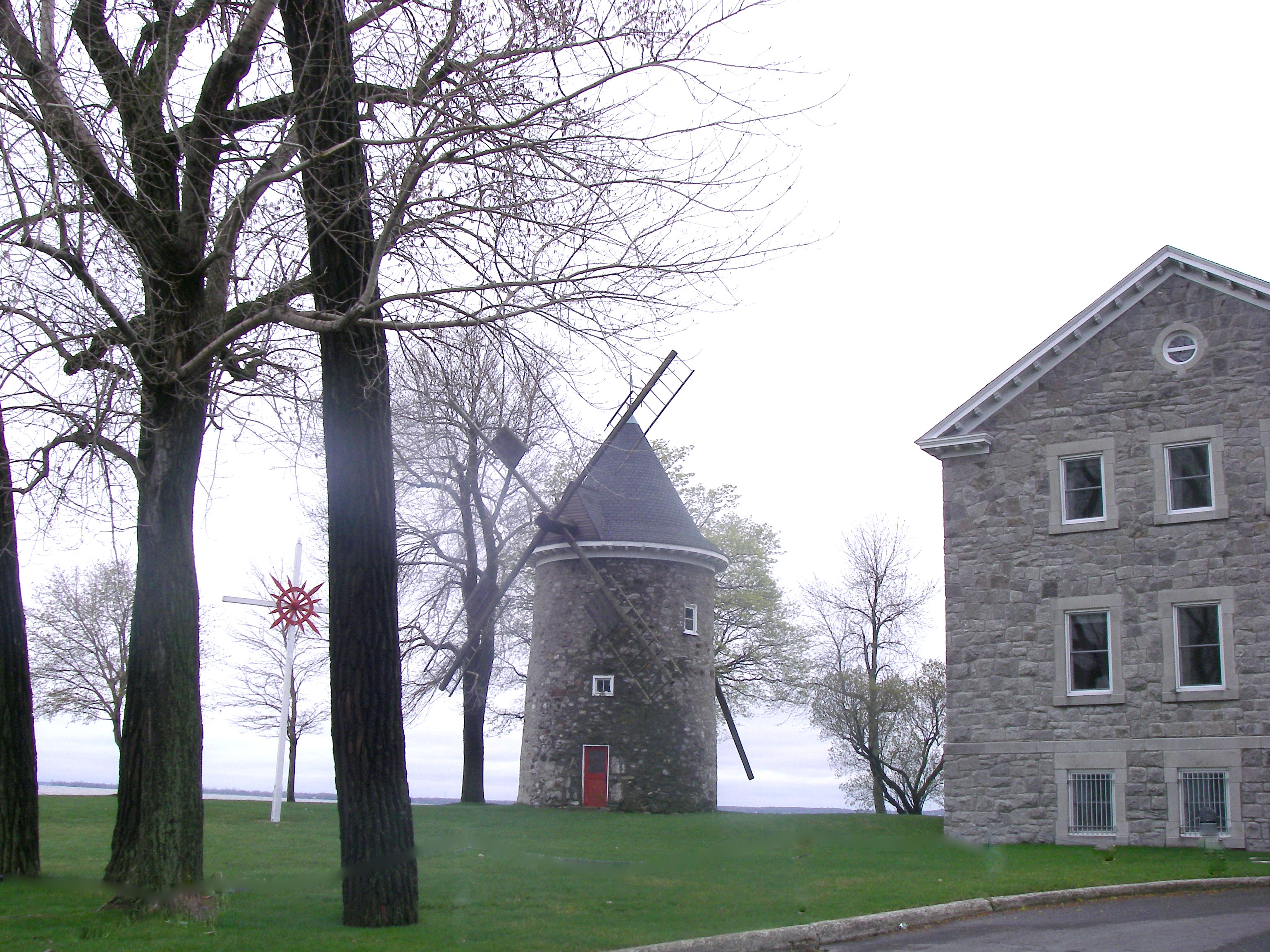
The old windmill in Pointe-Claire, overlooking Lac Saint-Louis. Claire Lindell photo.

The resulting document, “Actes notariés transcrits sur les moulins du Québec,” (see link below) reveals a great deal about the history of Quebec’s moulins-à-vent (windmills) and moulins-à-eau (watermills,) and about the seigneuries where they were located.

It includes transcriptions of acts made by notaries concerning windmills. These documents, such as leases, sales, inventories and various contracts involving millers, shine a light, not only on windmill construction, but many other aspects of their use. Some of these notarized agreements date back to the 1600s.

Until the 20th century, Quebec’s economy was based on agriculture, with corn and various grains being the most common products. Most windmills produced flour, although some powered sawmills or tanneries.

In New France, in Quebec under the British, and during the Lower Canada period, the majority of windmills were owned by the seigneurs, the owners of seigneuries, or large estates of farmland and forest. The seigneurial system of land ownership, tenancy and feudal-based obligations was officially abolished in 1854, but it took many years before it completely disappeared.

Here is the link to “Actes notariés transcrits sur les moulins du Québec” https://www.banq.qc.ca/documents/archives/genealogie/outils/moulins.pdf

Most of the transcriptions in this large PDF are in French, but you can copy and paste sections that are of interest to you and make use of online translation services such as Google Translate or DeepL.

Built around 1730, this former mill in Verchères is a museum. Joann Egar photo.

Some windmills were owned by censitaires (tenants), but these private windmill or water-powered mill operators had to pay annual fees to their seigneurs. The fees were based on the number of tonneaux (wooden barrels) of farine (flour) and grains they produced on a yearly basis.

Most windmills in New France measured their capacity of production of flour, grain and corn by the number of wooden barrels they could produce per day or week.

If you look at biographies of settlers posted on Fichier Origine (www.fichierorigine.com) or P.R.D.H. (https://www.prdh-igd.com/en/accueil) or within the René Jetté books of pioneers, you will encounter the word tonnelier, a carpenter who specialized in making wooden barrels for operators of windmills, seigneurs and farmers. Most seigneuries in New France had their own tonnelier and/or windmill operator and/or operator of a water-powered mill.

Recruiters of families from France in the 17th and 18th centuries, especially within the northwest regions of France — Normandie, Poitou, Perche, Bretagne, Maine, Aunis, Anjou, Touraine, Beauce — would always recruit one or two tonneliers and one or two operators of windmills or operators of mills powered by water among the citizens who boarded sailing ships from La Rochelle and other seaports, destined for the French colonies of America.

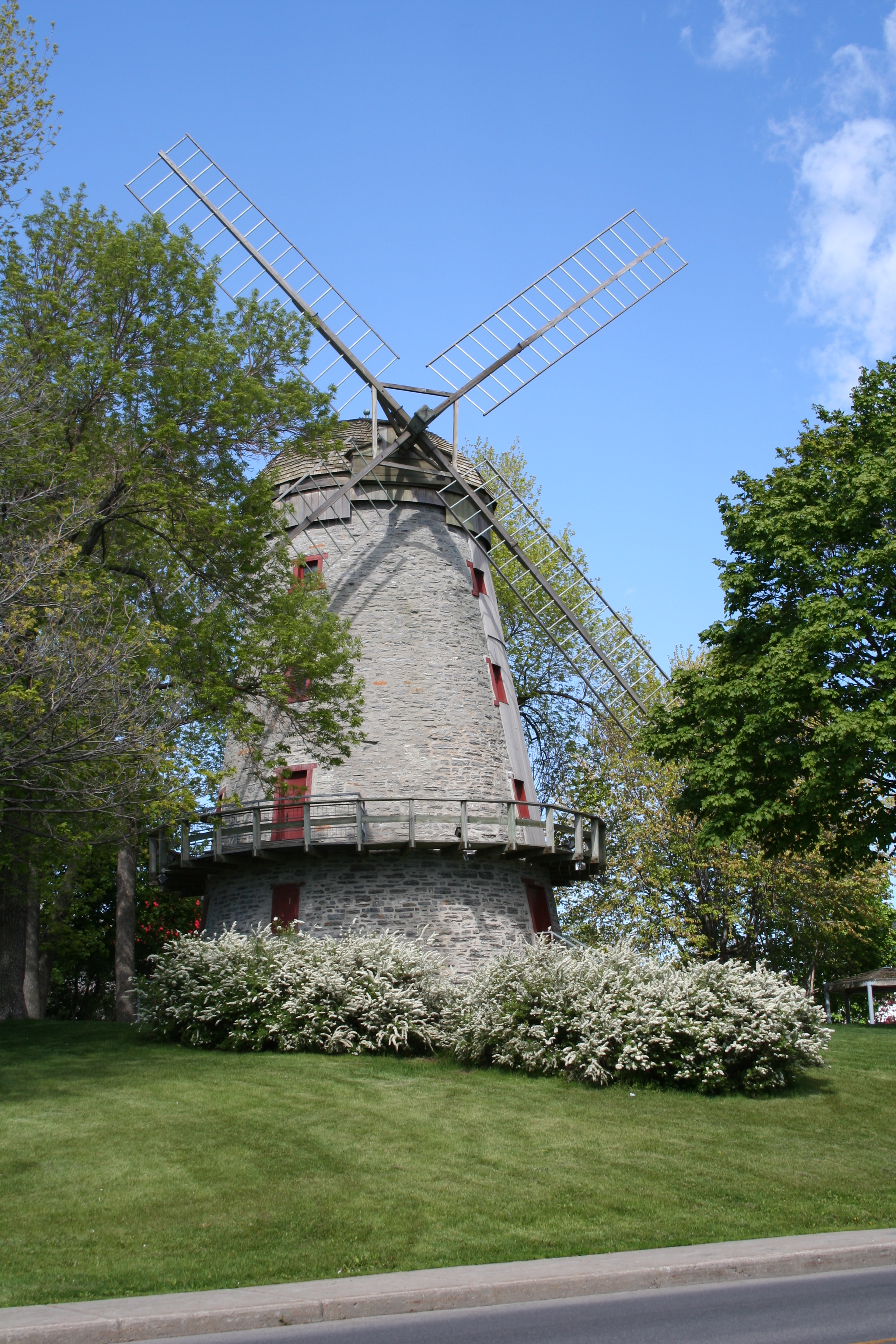
The Fleming Mill in LaSalle is designed in Anglo-Saxon style. Janice Hamilton photo.

To learn more:

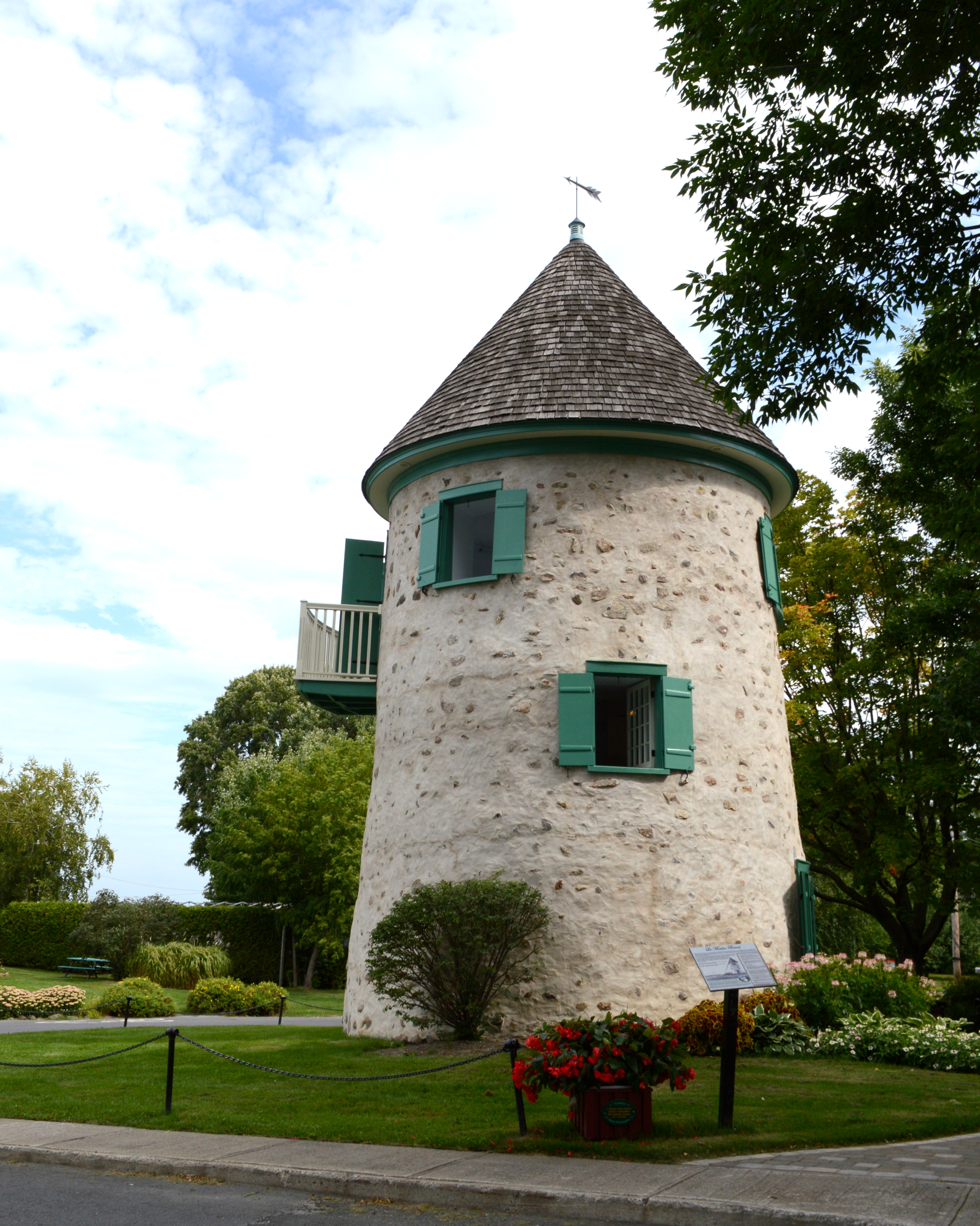
Most of the province’s many windmills have disappeared, however, several remain in the Montreal area, including in Pointe-Claire, LaSalle and on Île Perrot.

Liste des moulins à eau du Québec:  https://fr.wikipedia.org/wiki/Liste_des_moulins_%C3%A0_eau_du_Qu%C3%A9bec

This is a less extensive list of windmills in English:  https://en.wikipedia.org/wiki/List_of_windmills_in_Quebec

René Jetté, Dictionnaire généalogique des familles du Québec: des origines à 1730, Montréal: Gaetan Morin, 2003.  No longer in print but available at the BAnQ and at the Grande Bibliothèque de Montréal. Also available at many university libraries in Canada and at most French-language genealogical societies in Quebec, Ontario, and New England. Major libraries in Canada would also have a copy.

Gilles Deschênes, Quand le vent faisait tourner les moulins: Trois siècles de meunerie banale et marchande au Québec, Québec: Septentrion, 2009, https://www.septentrion.qc.ca/catalogue/quand-le-vent-faisait-tourner-les-moulins

Article on the seigneurial system in the Canadian Encyclopedia: https://www.thecanadianencyclopedia.ca/en/article/seigneurial-system


My Grandfather, North Yorkshire and Discobulus

VenusandAdonis

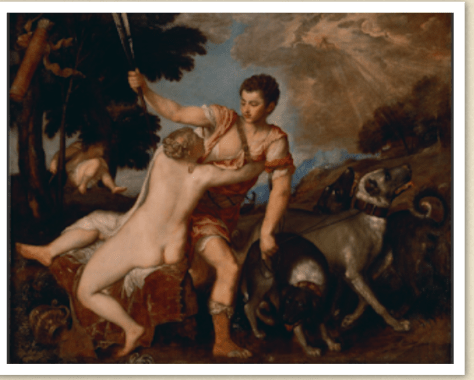
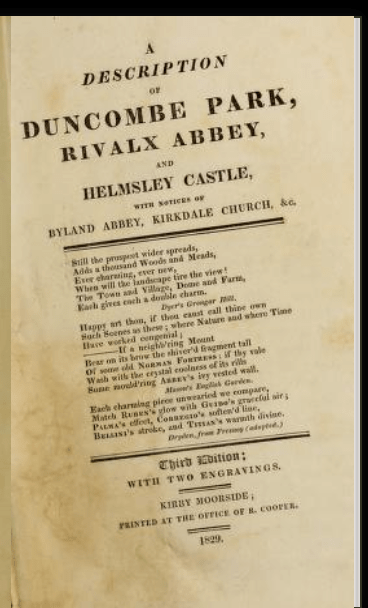
Venus and Adonis by Titian. This Renaissance painting is now at the Getty Museum in Los Angeles but it once graced the Hall of Duncombe Park in Helmsley, North Yorkshire. I know this because of a precious little volume from 1829 I found on archive.org, A Description of Duncombe Park, Rivalx Abbey and Helmsley Castle.

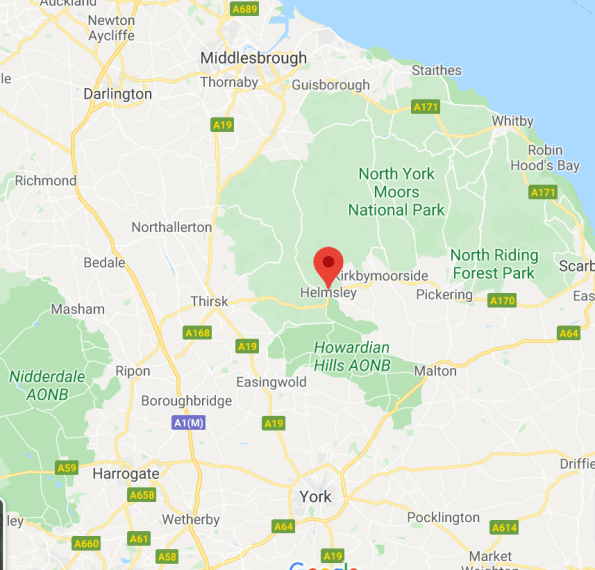
As it happens, my father’s  paternal ancestors are from Helmsley, today a picturesque market and tourist town on the River Pye in the Ryedale District.

helmsley

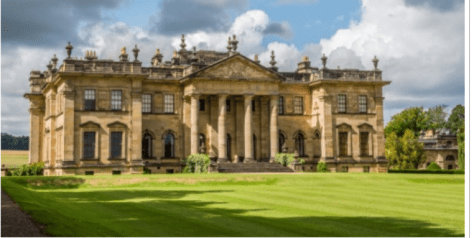
Duncombe Park  was once an imposing structure in the Doric style built in 1718 overlooking Helmsley Castle not far from Thirsk where the vet who inspired All Creatures Great and Small worked. It was the seat of the Earls of Feversham.

My grandfather, Robert Nixon (1890-1967), was born to Robert Nixon Sr. and Mary-Ellen Richardson.

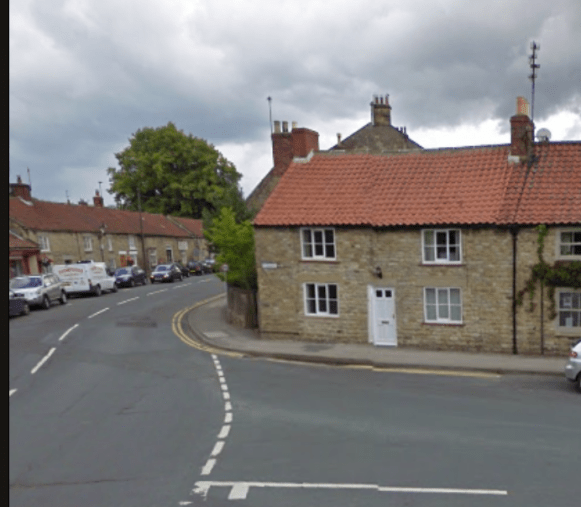
helmsleynixonhouse

This stretch of very unimposing row houses is where the Nixons lived in 1911, according to the UK Census.

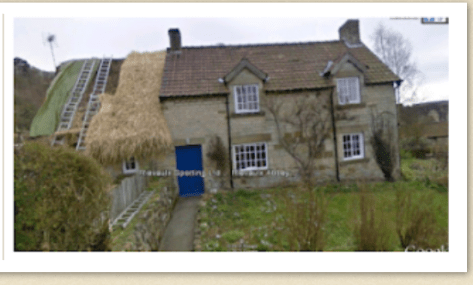
abbott'swellcottge

Mary-Ellen was from nearby Rievaulx, a village famous for its cathedral ruins. She was born in this quaint cottage, Abbot’s Well. Her dad was a tailor.

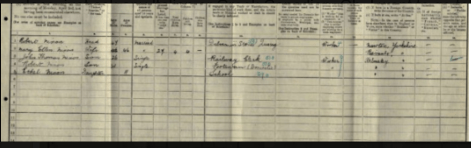
RobertCENSUS

According to this census, Robert Nixon Sr. was a delver in a quarry in Rievaulx in 1911.

The same census page says my grandfather, Robert Jr.  21,  was a footman, likely at Duncombe Park. Robert was a strapping 6 foot 4 inches tall. The gentry liked their footmen to be fine physical specimens, but this was not always a good thing if Nixon family lore can be counted upon.

According to an English ‘auntie’ of my  father’s, the daughter of ‘the local earl’ went ga-ga for young Robert back in the day, so the love-struck girl’s powerful father sent him away, far away to Malaya.

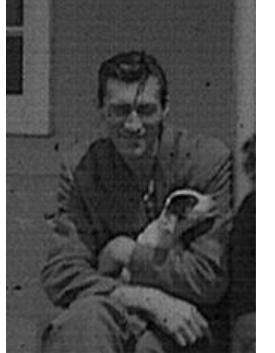
I have no picture of Robert, but I recall seeing one decades ago and he looked like my dad, Peter.  So here’s a picture of Peter in 1958 holding our new puppy, Spotty, a coonhound. My father was also 6 foot four inches tall.

father

This might be true: posts in Malaya were for the children of well-off families, not delver’s sons. However, a Nixon cousin told me his mother told him Robert got another servant pregnant. Nothing earth-shattering in that, though, is there?

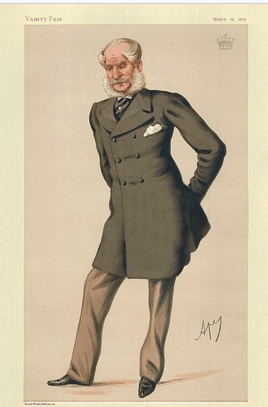
I see that the sitting Earl of Feversham had only very young children. he would die in the war and Robert Nixon Sr. would work for the trustees of the under-age Earl. This is a Vanity Fair pic of the first Earl of Feversham from Wikipedia.

Lord Feversham 1829-1915

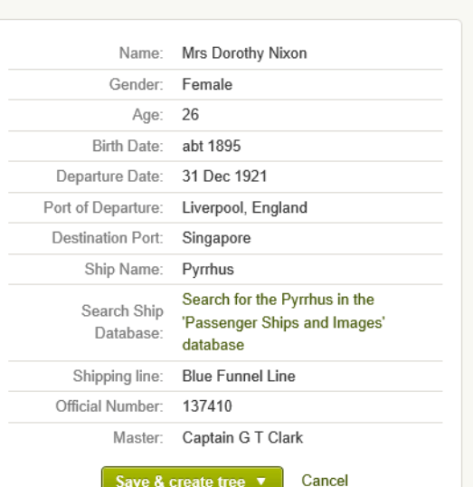
According to travel records, my grandfather, Robert,  took a boat to Malaya (willingly or unwillingly) in 1912 to work at a rubber estate in Klang, Selangor.

He returned to England after WWI to marry my grandmother, Dorothy Forster, from County Durham, whose father was an itinerant Primitive Methodist preacher posted in Helmsley between 1912 and 1914.

MRsDOROTHYNIXON

Dorothy followed him to Malaya in December, 1921 and my dad was born ten months later on October 24.  Robert later became Manager of the rubber estate.   Both my grandfather and grandmother were interned at Changi Prison during WWII.

According to the 1829 book, Duncombe Park was  home to a treasure trove of classical paintings, among them the Titian shown at top, but also a Da Vinci, a Reubens, a Rembrandt  as well as Discobulus, described as ‘the finest statue in England.’

My grandfather never did get to see these great works of art in person because most were burned in a fire in 1879.  Back then, some of these paintings were worth five thousand pounds.

The Discobulus and the DaVinci work were lost in the fire but Titian’s Venus and Adonis was saved to eventually find its way to California and the Getty Museum.

Duncombe was rebuilt in the Baroque Italianate style and used as a backdrop to the 2012 British mini-series Parade’s End, with Benedict Cumberbatch.  I love that mini-series, so it is all very appropriate.

Duncombe

Dunscombepark1

Working together to help genealogists discover their ancestors