Call Me Ismael

IMG_7917
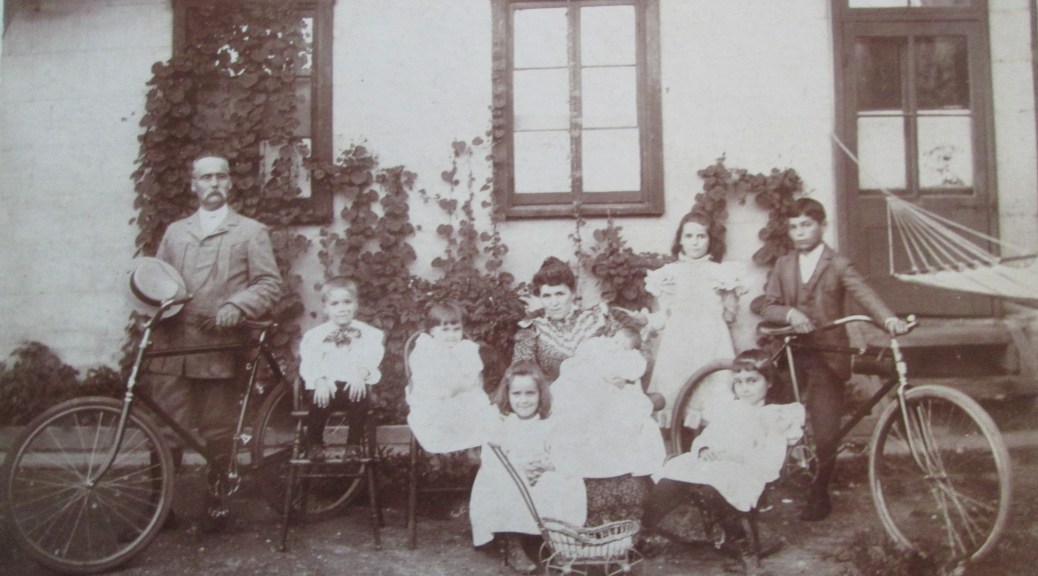
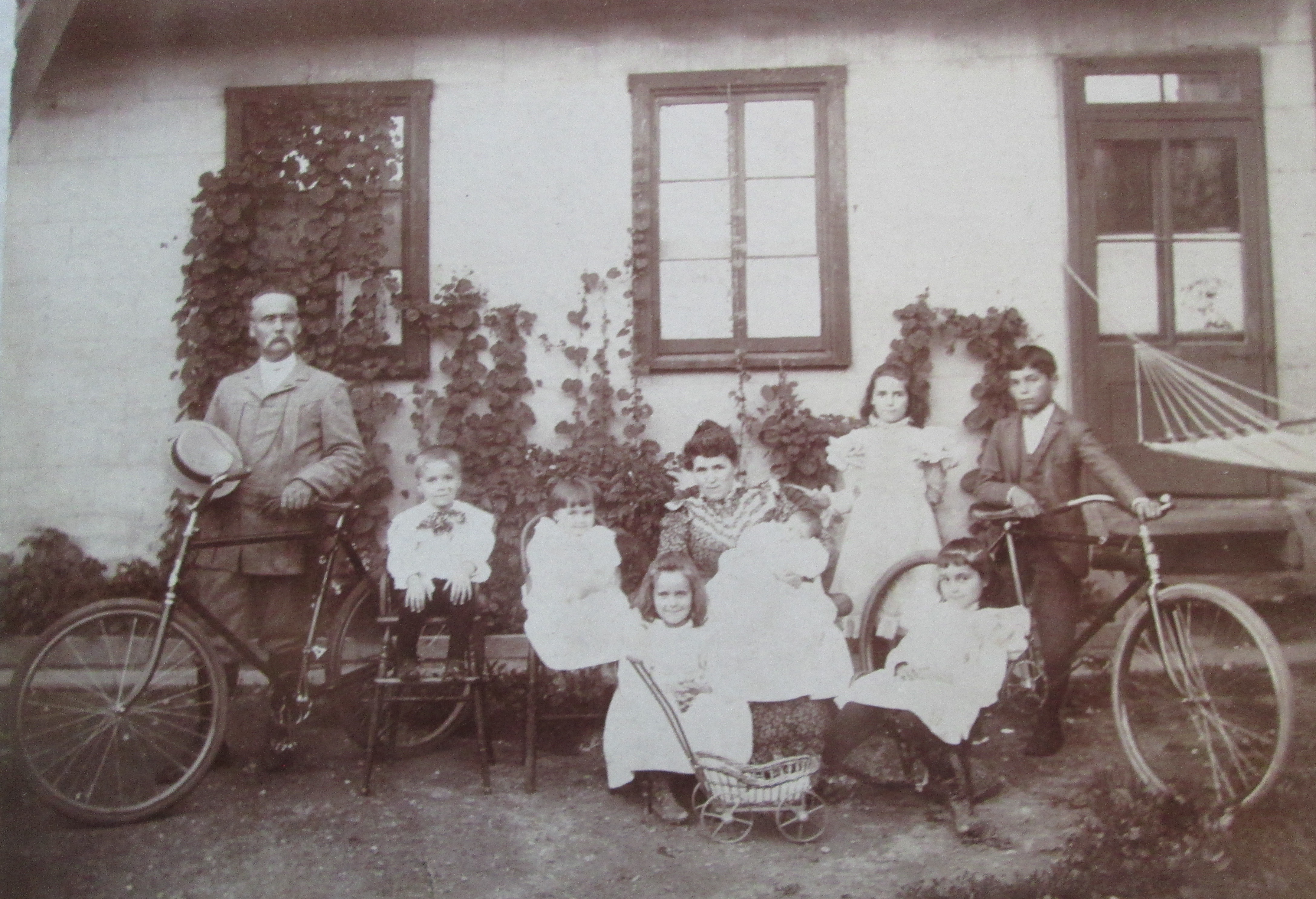
The Bruneau family in Montreal about 1899

 He arrived when the service was almost over. He walked to the pulpit and announced the last hymn “Seigneur Tu donne Ta Grace.” As the organ played he collapsed to the floor. So ended the life of Ismael Bruneau, my great grandfather.

His life began in 1852 as Ismaer Bruneau in St-Constant Quebec, just south of Montreal. Ismaer was the eleventh of thirteen children and the youngest son of Barnabé Bruneau and Sophie Prudhomme. He attended the French Protestant school in Pointe aux Trembles and one summer went to West Randolph, Vermont to work in the mills. He spent a lot of time thinking about his future. He had written for advice to the principal of the school, Dr. Tanner who encouraged him to return to his studies and take the classes for those considering the ministry.

He was not sure of that path. One day he was out walking in the woods and climbed to the top of a hill. He sat facing Canada and prayed to God about the decisions he must make. As he reported, there was a dark cloud on the horizon and a voice spoke to him as if from the sky, telling him to return home and study, then travel and spread the gospel.

Ismaer continued his studies at Pointe aux Trembles and was then admitted to the Presbyterian College in Montreal, which had begun teaching subjects in French. At this time he changed his name from Ismaer to Ismael which he thought was more biblical and added Prudhomme as a middle name in honour of his mother.

After graduating, he was sent to Saint-Anne’s Kankakee County, Illinois to work with Father Chiniquy. Father Chiniquy was a Catholic priest who had left Quebec in the wake of several scandals. His zeal for God remained intense but not his feelings for the Catholic Church, which he renounced. He made his beliefs known to his congregation and they all chose to follow him and convert to Protestantism.

One family living in Kankakee was the Girods, who had recently immigrated from Switzerland. When their daughter Ida, a teacher in Baltimore came to visit, she was introduced to their minister. Ismael had been very homesick and often wrote letters home. He began writing about the lovely woman he had met. Then in one letter, he wrote to his sister Anais, “ Wouldn’t you like to come out after the harvest and see my wife. It would be worth it for without a doubt she is one of the beauties of the world in my eyes.” Ismael and Ida were married June 12, 1886.

The Bruneaus had three children in Green Bay, Wisconsin, one in Holyoke, Massachusetts, three in Quebec City and the last three in Montreal. Ismael had wanted a biblical family, a child for each of the 12 tribes of Israel but in the end had only 10. Nine of the children survived. He continued moving and preaching, taking a charge in Cornwall, Ontario and finally in 1917 back to Quebec City.

In Quebec, he had a church in the Old City as well as a congregation in Portneuf. He would conduct the morning service, catch the train to Portneuf for an afternoon service and be back in Quebec City in time for the evening service. On January 27, 1918 the train was delayed because of a troop train. Arriving late in Quebec City he ran up the hill from the station. He entered the church before the service ended but while his spirit was still willing his heart was weak. His family suffered financial hardships after his death as there were no pensions and the Presbyterian Church sent his widow one cheque for the days he had worked that month and nothing more.

Bibliography:

Bruneau, Ida. A Short History of the Bruneau – Girod Families. 1993.

Duclos, Rieul P. Histoire Du Protestantisme Français Au Canada Et Aux États-Unis. Montreal, Canada: 1912. Print

Villard, Paul. Up to the Light: The Story of French Protestantism in Canada. Toronto: Issued for the Board of Home Missions of the United Church of Canada by the Committee on Literature, General Publicity and Missionary Education of the United Church of Canada, 1928. Print.

Here is a link to a story about Ismael’s wife Ida Girod.

https://wordpress.com/post/genealogyensemble.com/3674
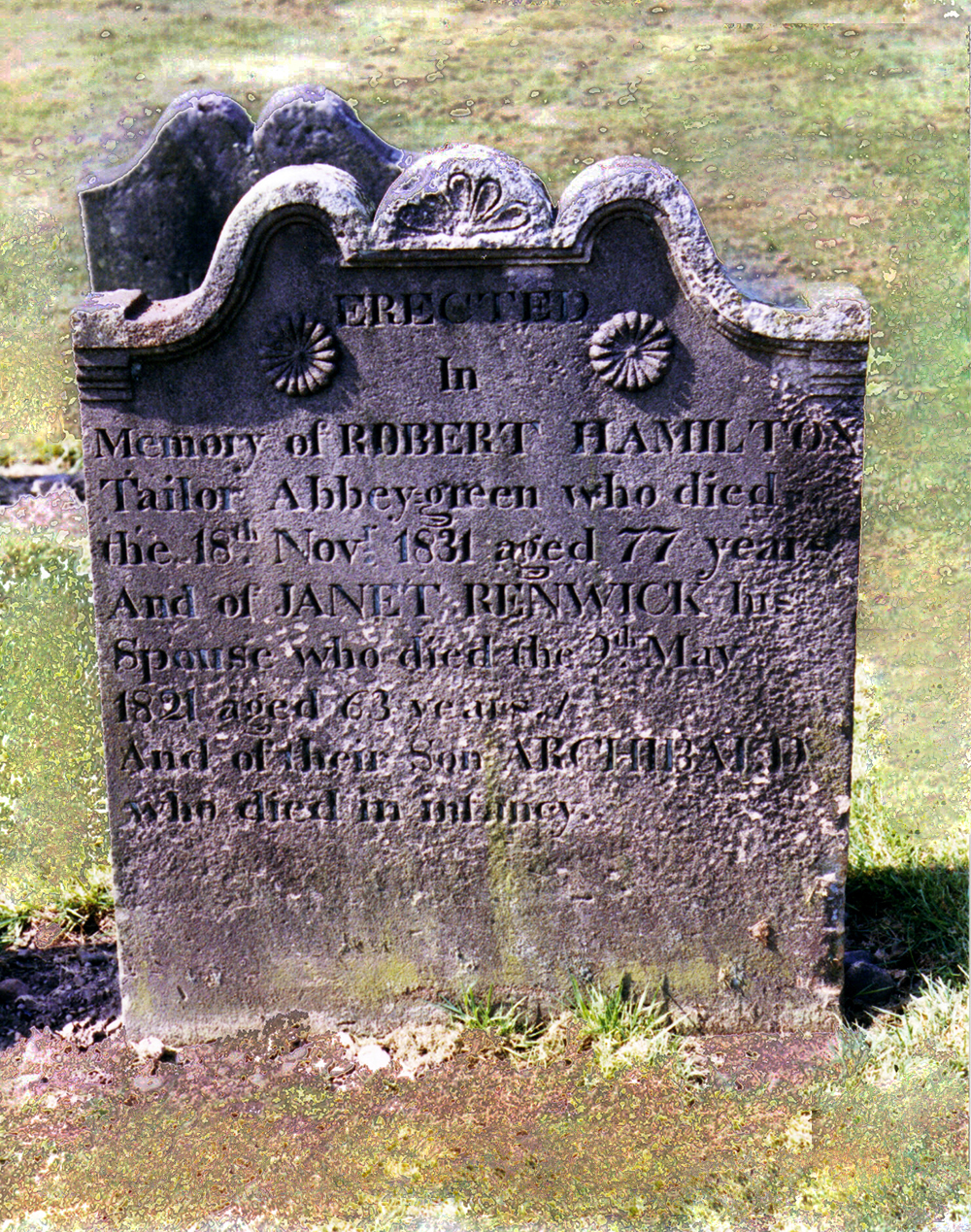
The Missing Gravestone of Robert Hamilton and Janet Renwick

Robert Hamilton & Janet Renwick Gravestone imp

Writing a family history blog is a lot of work, but the effort is rewarding in many ways. Since I started writing my own blog and contributing to http://www.genealogyensemble.com, I have heard from several relatives I never knew I had. A distant relation in Australia is helping me break through a brick wall in Ireland. A researcher in Vancouver has provided information about a great-great aunt who moved there from Montreal. And a distant cousin in Ontario forwarded some of the letters our newly immigrated Hamilton ancestors sent home to Scotland.

Another breakthrough came through the kindness of the parish archivist in Lesmahagow, Scotland, hometown of those Hamilton ancestors. He ran across the article I posted about my three-times great-great grandfather Robert Hamilton, a tailor in the town Lesmahagow near Glasgow. Robert’s son and grandchildren left Scotland in 1829 and settled as farmers in what is now Scarborough, a suburb of Toronto. Robert, an elderly widower, stayed behind and died in Lesmahagow two years later.

My uncle did some research on the family in the 1950s and copies of the documents he collected eventually made their way into my hands. One of the items I acquired was a sketch of the parish cemetery in Lesmahagow, showing the location of the grave of Robert Hamilton and his wife Janet Renwick. When my husband and I visited in 2012, there was only grass in that spot, so I was delighted when the parish archivist recently emailed me a photograph of the missing Hamilton gravestone. The photo was taken in 1999. Since then, the stone must have fallen over and been covered by dirt, or perhaps it became unstable and had to be removed for safety reasons.

The text shown in the photo says: Erected in memory of Robert Hamilton tailor of Abbey Green who died 18th Nov. 1831, aged 77 years, and of Janet Renwick, his spouse, who died 2nd May 1821, aged 63 years, and of their son Archibald, who died in infancy.

Most Scots could not afford gravestones in those days, and I am sure the Hamiltons were no different. Tailors did not make much money. This is a nice big stone, and I suspect it was erected by family members many years later, perhaps with money sent to Scotland from the farm in Canada.

Lesmahagow churchyard

See also: Robert Hamilton, Tailor of Lesmahagow, http://writinguptheancestors.blogspot.ca/2013/12/robert-hamilton-tailor-of-lesmahagow.html

This article is simultaneously posted on writinguptheancestors.blogspot.ca

American and British Isles Settlers in Western Quebec

This compilation looks at the towns and villages settled by the British and Americans in the early 1800s in what is now usually known as the Outaouais region of Quebec. This area is north of the city of Ottawa and the Ottawa River, which forms the boundary between Ontario and Quebec.

It is an area of great beauty, with ancient hills and many lakes and rivers, but its winters are long and cold. Many settlers were drawn here to work in logging, paper mills and other resource-based industries. Today the area’s population is primarily French-speaking. Most of the region remains rural, with the only large urban center being the amalgamated city of Gatineau, which includes the former city of Hull and surrounding town.

American & British Isles settlers in Western Quebec rev25 02 2016

A Small Life

I hold the documents as gently as I would the child for whom I have searched for so long. A birth certificate. A death certificate. Four days apart.

My husband knew he had a sister but that’s all he knew. The family never spoke of her and Jim grew up an only child. He did not even know his sister’s name. Thoughts of having a sister, however, evoked a tangle of fragmented memories and emotions that over the years he tried to shape into a plausible scenario. My searches on-line for a female Smith born to Jim’s parents came up empty. It was only last summer, when Jim was seventy, that a cousin found a name on a family tree she had been given: Elizabeth followed simply by a “d”. No dates. The name was enough to find the records.

Elizabeth Smith was born on December 18, 1943 to Peter Dudgeon Smith and Mary Ann Syme. She was born at home at 36 Bentinck Street in Glasgow. Bentinck is a street of tenement buildings near Kelvingrove Park. Today the area is very trendy, but during the war two families often lived in a single tenement sharing the kitchen and bathroom. Such was the case for Jim’s family. His father was in the navy and away at sea for weeks at a time. Given the cramped living quarters, it was very likely that Jim was witness to the sounds and sights of his mother’s labour and delivery, at best confusing for a two year old but likely quite terrifying. Certainly he would have seen the newborn and perhaps even held her although no picture exists today to document this event.

Elizabeth died at home between four and eight a.m. on December 23rd. I vision her mother nursing her in the middle of the night, returning her to her crib, falling back to sleep herself only to wake sometime later to find the tiny body. The cause of death was listed as congenital debility, a vague term explaining little. Was it clear at her birth that she would not live long? Was she not transferred to a hospital because nothing could be done? Or might congenital debility have been a term for what today we call Sudden Infant Death Syndrome and her death actually a shock to her parents?

Jim has a strong memory of his father being angry with his mother over the death. Was what Jim interpreted as anger actually grief? Or was it in fact anger? At what? His parent’s silence over the years is strange. Perhaps they felt Jim was too young to have remembered the event or they may have wanted to protect him from the tragedy. How much information he may have absorbed from adult conversations he overheard across the years is anyone’s guess. Collecting facts in bits and pieces without an understanding of the context would only serve to compound his confusion. He made what sense of it he could and eventually believed his sister was hit and killed by a car.

The location of Elizabeth’s grave is still not known. She is not buried with the Smiths in Greenock Cemetery. She may be with her mother’s people in Blantyre. What is known, however, is that Elizabeth lived for four days and is remembered by her big brother.

The Wyndies of Arbroath

My grandmother, Elspeth Mill Boggie Orrock was born in 1875 at 32 East Mill Wynd in Arbroath, Scotland.  She was born in the “Wyndies” of Arbroath, specifically built by the spinning mills and factories to house the handloom weavers that flocked to Arbroath from the surrounding rural parishes. “By 1875, there were 134 spinning mills and factories, factories operating 1,400 power looms and producing 450,000 yards of cloth annually.”1 Flax, jute and sail cloth were woven in these mills. Almost 5,000 people were employed in the textile industry in Arbroath at that time and about a third of them were women. 2 Sure enough, between 1851 and 1911, all of the censuses list members of my family as mill workers, jute weavers, flax dressers and doffers, and yarn bleachers.

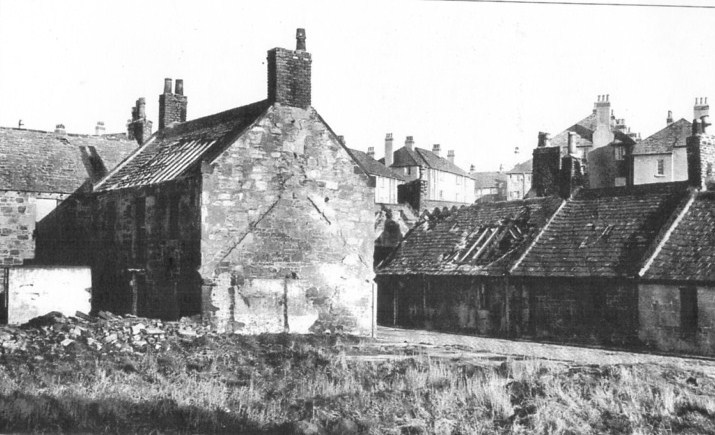
Marcol, a member of The Shoppie, a forum for life in Arbroath, posted this picture of the Wyndies on June 8, 2014.3

Marcol Wyndies

The work days in the mills would have been long, starting at 6:00 a.m. and ending at 7:30 p.m., with a half hour break for breakfast and a half hour break for dinner.  They worked six days a week and Sunday was their day of rest. The mills were kept clean and were well ventilated.  In addition, it was not unusual for the owner of the mill to provide free evening school for children working in the mills.4

By the early 1900s, Arbroath and neighbouring Dundee had suffered a serious decline in the textile industry and more significantly, the jute industry.  Jute was imported from India, however, the mill owners realized that it would significantly lower the cost of production to open mills in India to prepare the jute and import the finished product to Scotland.5 Once mills were established in India, the production of the mills in Arbroath and Dundee declined significantly.

The growth of the textile industry in Arbroath in the 1800s provided an impetus for my grandmother’s family to move into the city so that they could find steady work in the mills and provide for their family.  The decline of steady work in the textile industry in the early 1900s was the reason why my grandmother, with her husband, who had always worked in the mills, and their seven children, decided to move to Canada in 1912.

 1 http://archive.angus.gov.uk/history/features/2004-08-oldarbroath.htm

2 http://www.scottish-places.info/towns/townhistory385.html

3 http://www.theshoppie.com/arbroath/forum/topic.asp?TOPIC_ID=4108&whichpage=4

4 Factories Inquiry Commission submitted to Parliament, 1833, pages 21 to 23

5 https://en.wikipedia.org/wiki/History_of_Dundee

Congregational Churches of Lower Canada and Quebec

This compilation looks briefly at the history of the Congregational church in Quebec. Many communities in the Eastern Townships had been settled by Loyalists from the United States, and many of those people were Congregationalists. Montreal’s first Congregational church opened its doors in 1831, while Quebec City had had Congregational services since 1800. Researcher Jacques Gagné also explains where the records of these early churches might be found.

Congregationalist Churches in Quebec-1

Sister Pilgrimage

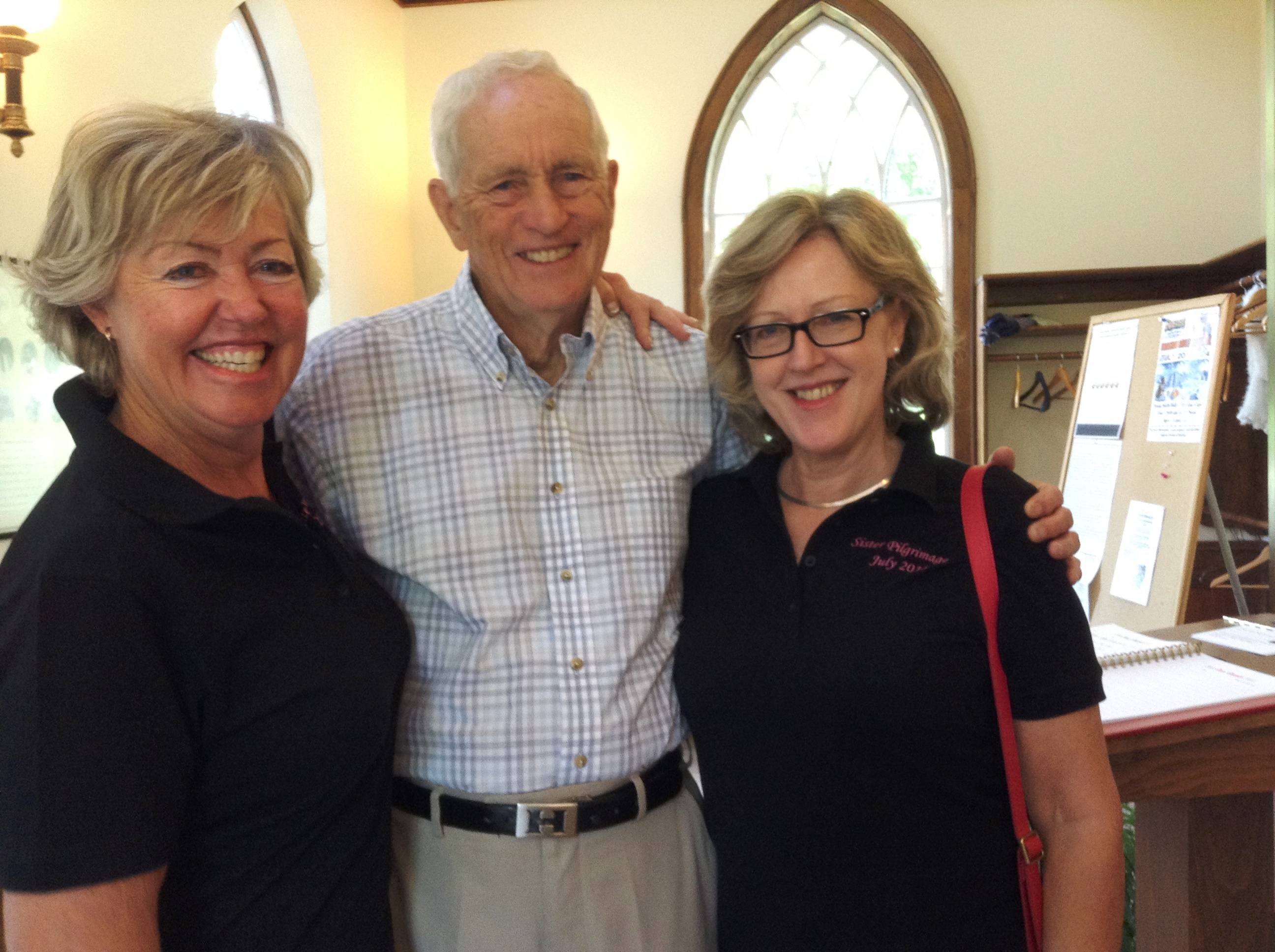
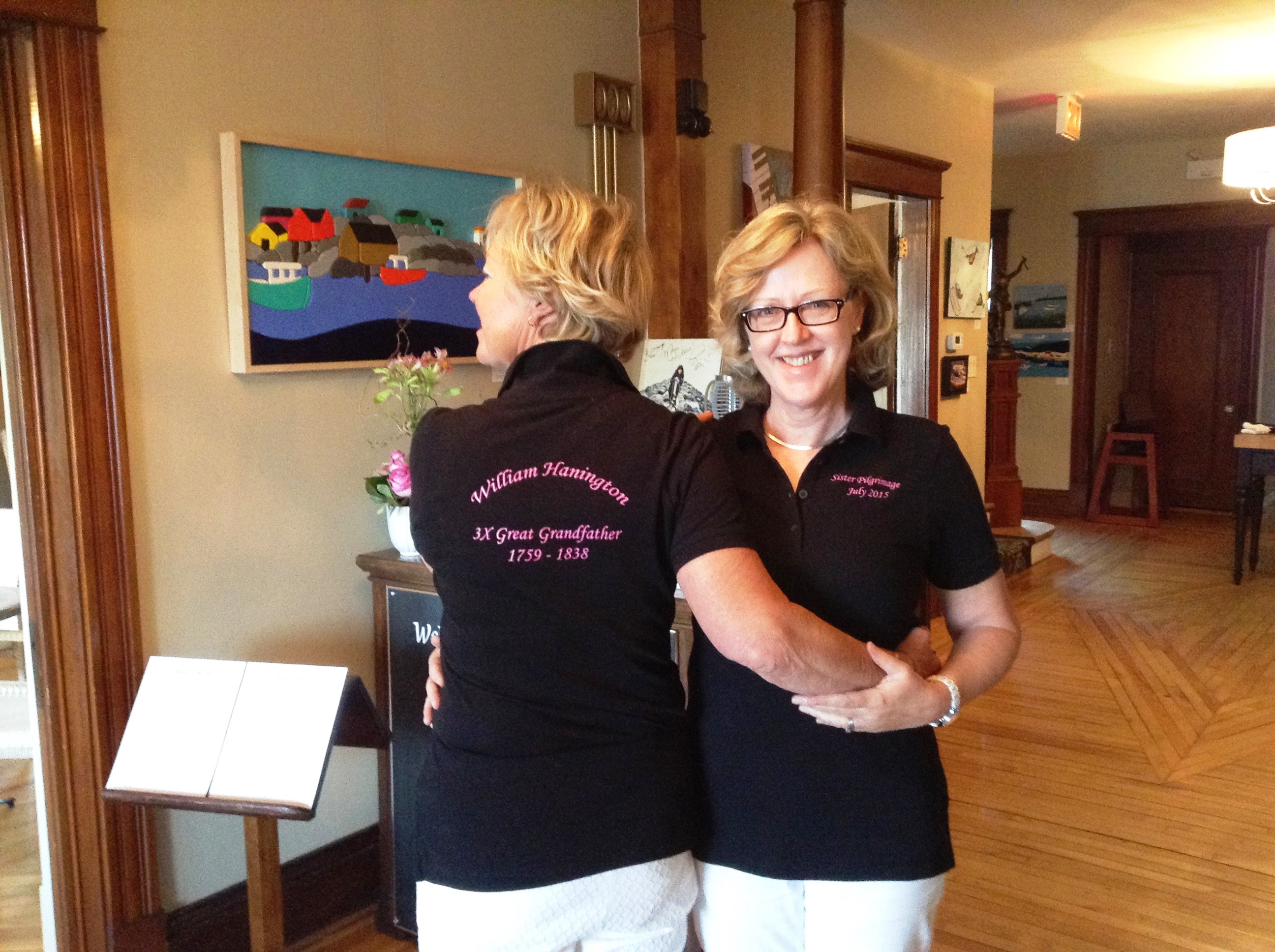
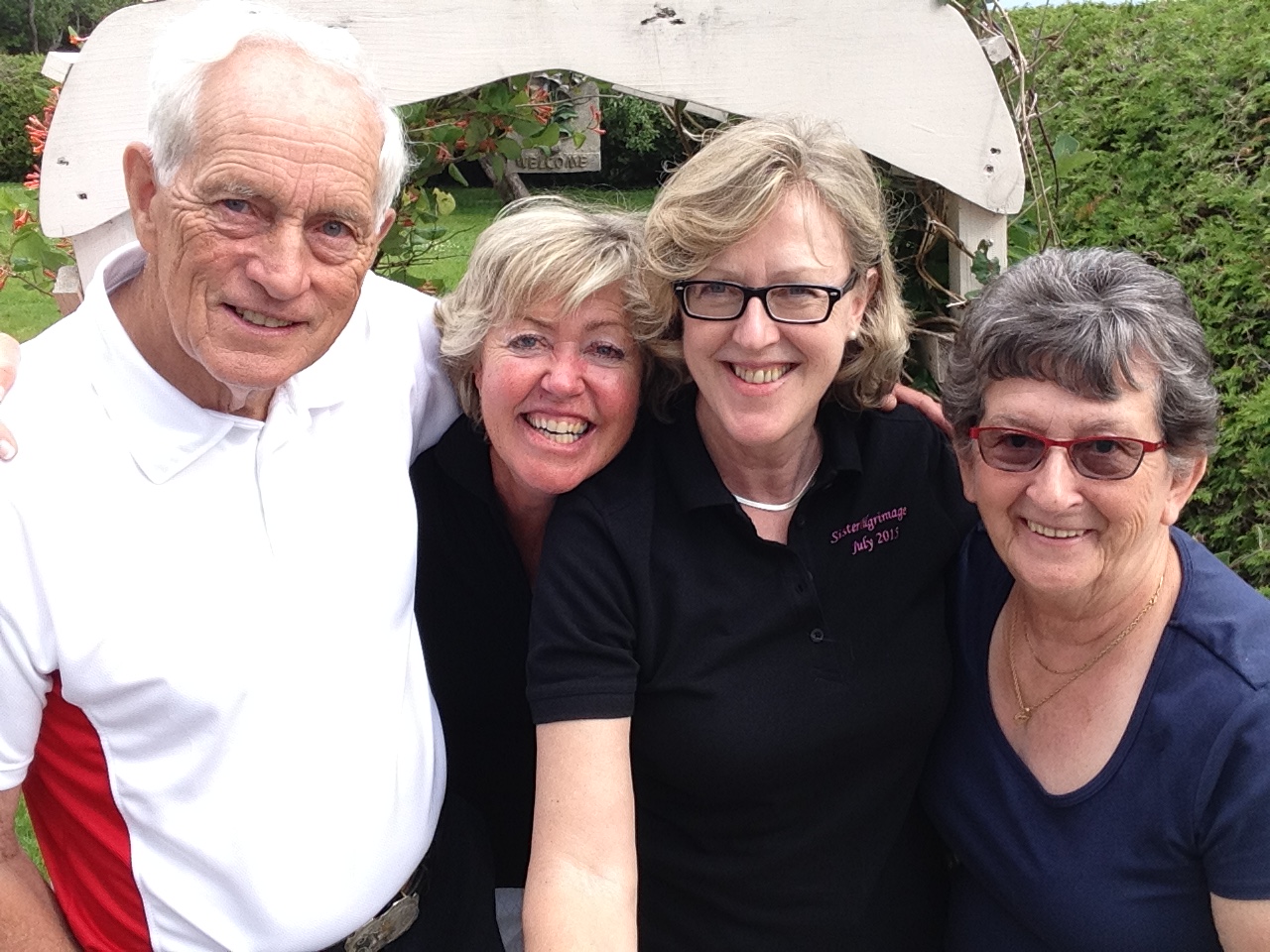
Early Sunday morning, dressed in our special t-shirts, we left in plenty of time for the morning church service at St Martin’s-in-the-Woods.  The greeter welcomed us warmly, and we asked if there might be any Haningtons at church that day.  She beckoned down the aisle to her husband who then introduced himself as Allen Hanington. 4-1StMartin-Haningtons (9) Overjoyed, we threw our arms around our surprised distant cousin and snapped a commemorative photo.  And so our journey began.

4-1StMartin-Haningtons (8)

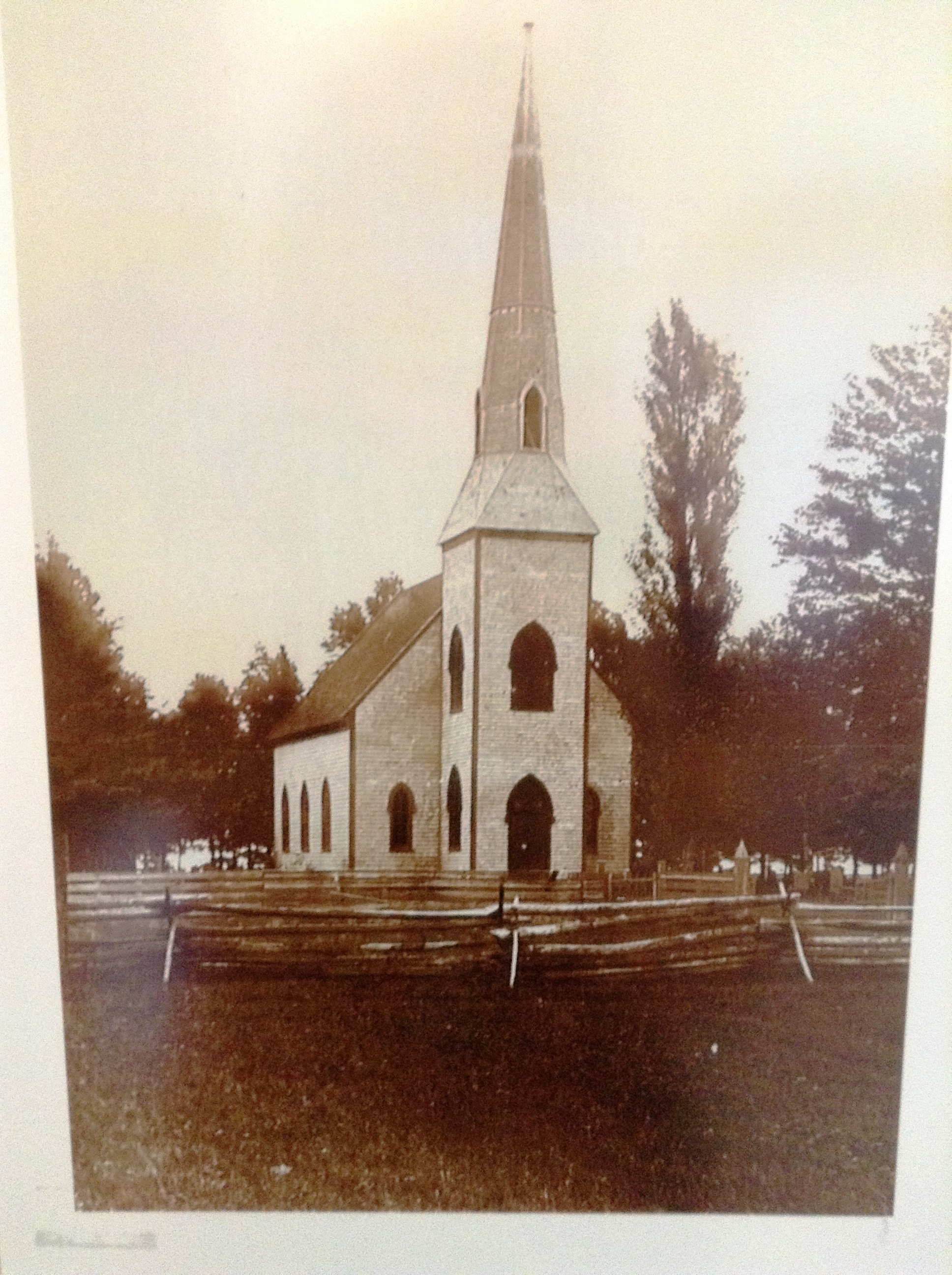
My 3x great grandfather, William Hanington, was the first English settler in Shediac, New Brunswick, in 1785.  He was an amazing fellow who emigrated from England at the age of twenty-six, built a whole community, set up lumber exports, built ships, married a PEI girl and had a family of thirteen.   Later in life, in 1823, he donated a piece of land and built St Martin’s-in-the-Woods Anglican Church, where he was buried in 1838.St Martin's in the Woods

4Shediac (23)
Front: Sister Pilgrimage July 2015 Back: William Hanington – 3x Great Grandfather 1759-1838

This past July, my sister and I decided to go on a one week “sister pilgrimage” to explore our family history in Shediac from 230 years ago.  We ordered our specialized t-shirts and planned our family-and-friends-fun-filled trip to the Maritimes. A very special trip for us both.  We hadn’t travelled together before and my sister, recently widowed, was embracing a “carpe diem” attitude.

Peggy’s Cove was our first  tourist attraction and we enjoyed a stroll around the lighthouse and its spectacular rocks overlooking the ocean. The quaint little shops were charming and the local afternoon tea was delicious.

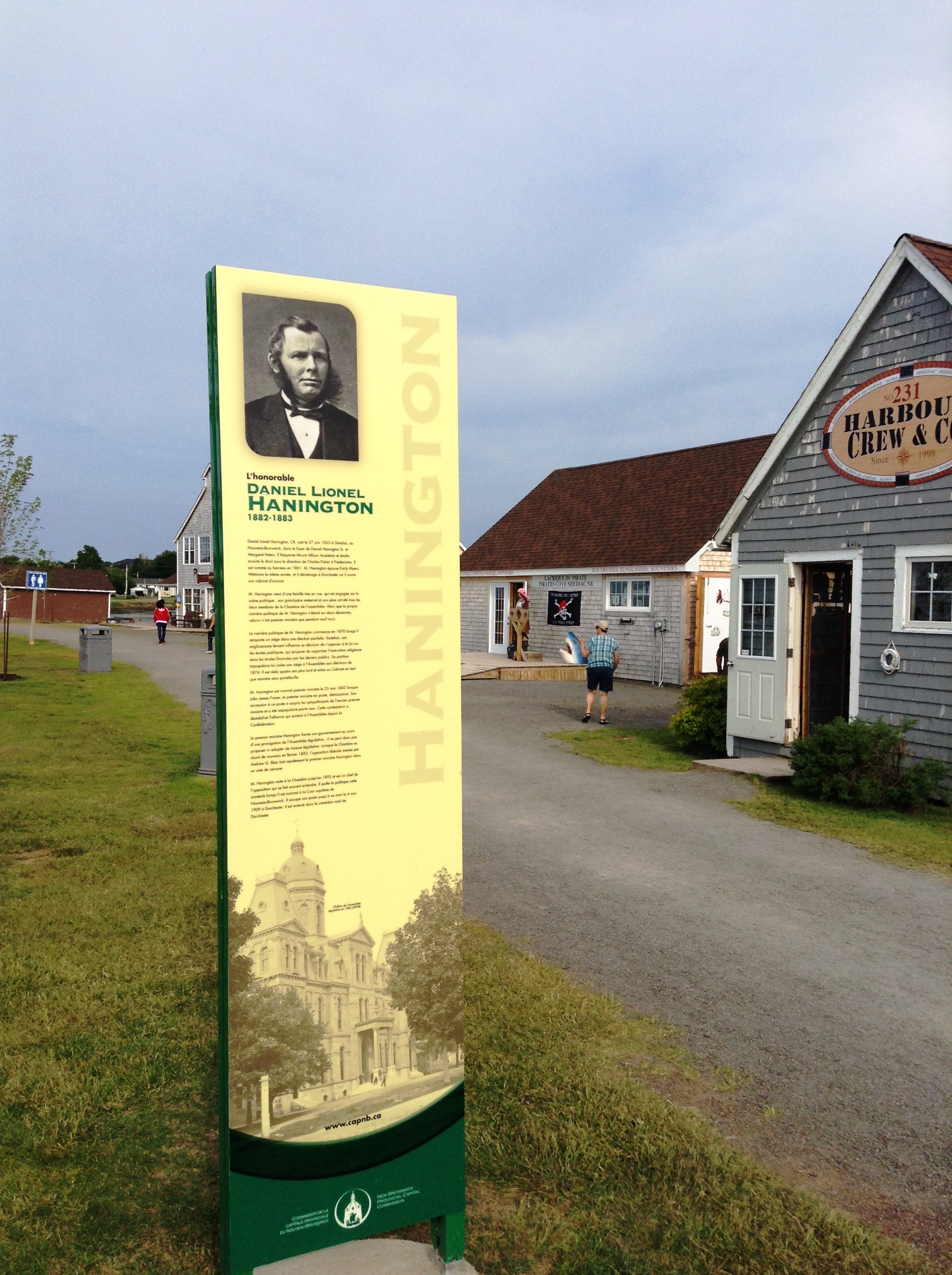
On our way to Shediac, NB, we visited my sister’s friend Helen who was new to the area and provided us with a hearty lunch.  We checked into our B&B in Shediac, and set off to explore the delightful little town.  On the waterfront, we climbed onto the famous giant lobster to pose for the ultimate tourist photo.  4Shediac (17)Afterwards, while strolling along the boardwalk, we came upon a historical monument dedicated to our 2x great grandfather Daniel Hanington, a famous politician in his time. What a terrific surprise!

6AppleBlossomCafe (4)
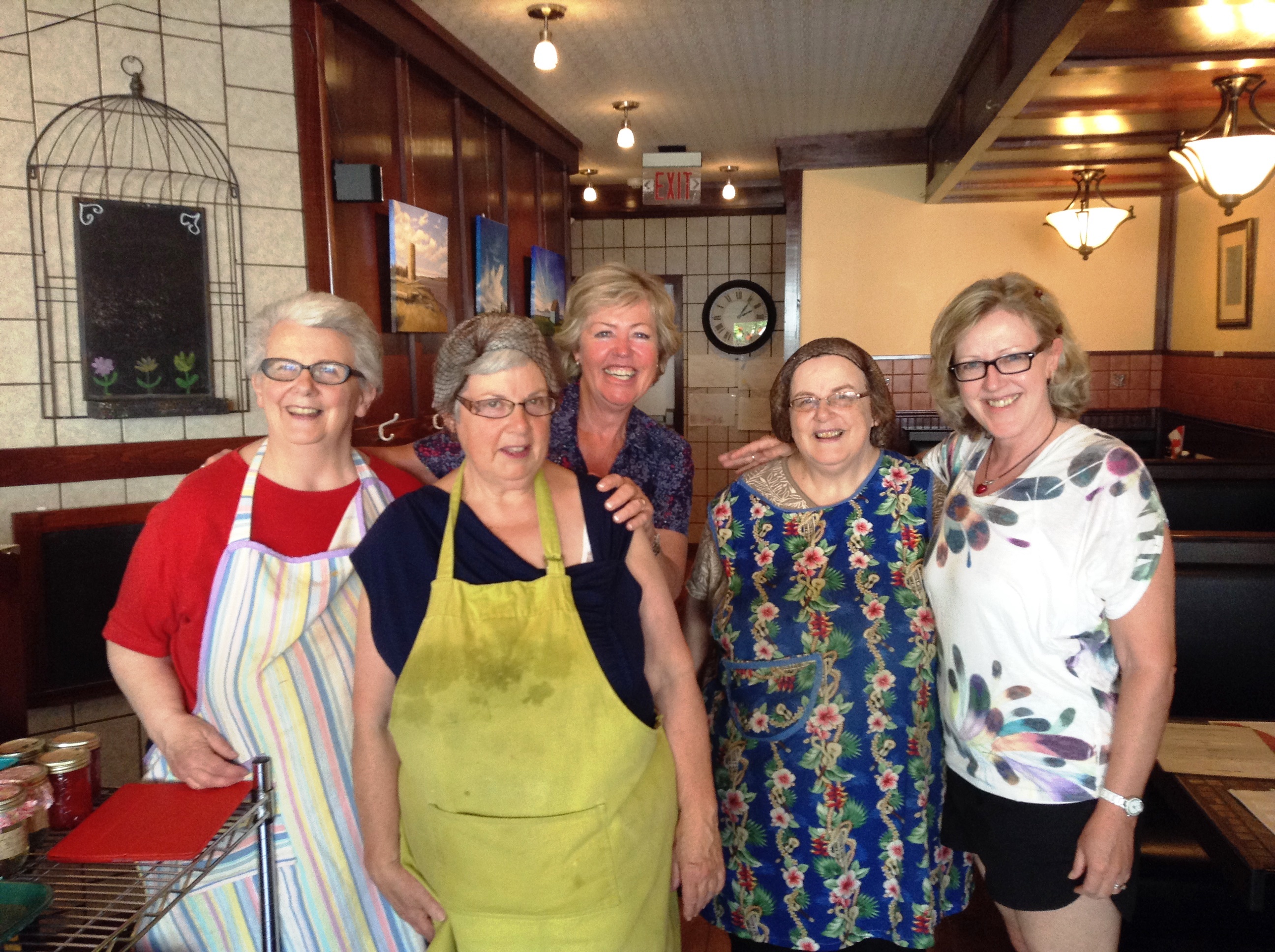
The Anglin Sisters meet the Wallace Sisters.

Hopewell Rocks was our second tourist attraction with its incredible change in tides.  That morning, we walked along the “beach”.  Then we lunched nearby at the Apple Blossom Café, run by three retired schoolteacher spinster sisters.  What a hoot they were!  After lunch, we returned to find high tide had completely transformed the whole bay.  Amazing!

The next morning, our GPS helped us find our way to tiny Clairville, NB, to visit my friends Carol and Bruce.  Their cozy place was beautifully perched up on a hill overlooking a vast field.  After a tour of their house and garden, we had a delicious lunch and then set out for Charlottetown, PEI.

While driving across the spectacular Confederation Bridge, it was difficult to imagine how William and his Indian guides paddled across the Northumberland Strait in 1792 to claim his bride in Summerside, PEI (then known as Ile-St.Jean).

We checked into our B&B in Charlottetown and headed off to meet Anne of Green Gables, our third tourist attraction.  Luckily for us, there weren’t many visitors that day and she was able to personally fill us in on all the latest town gossip.

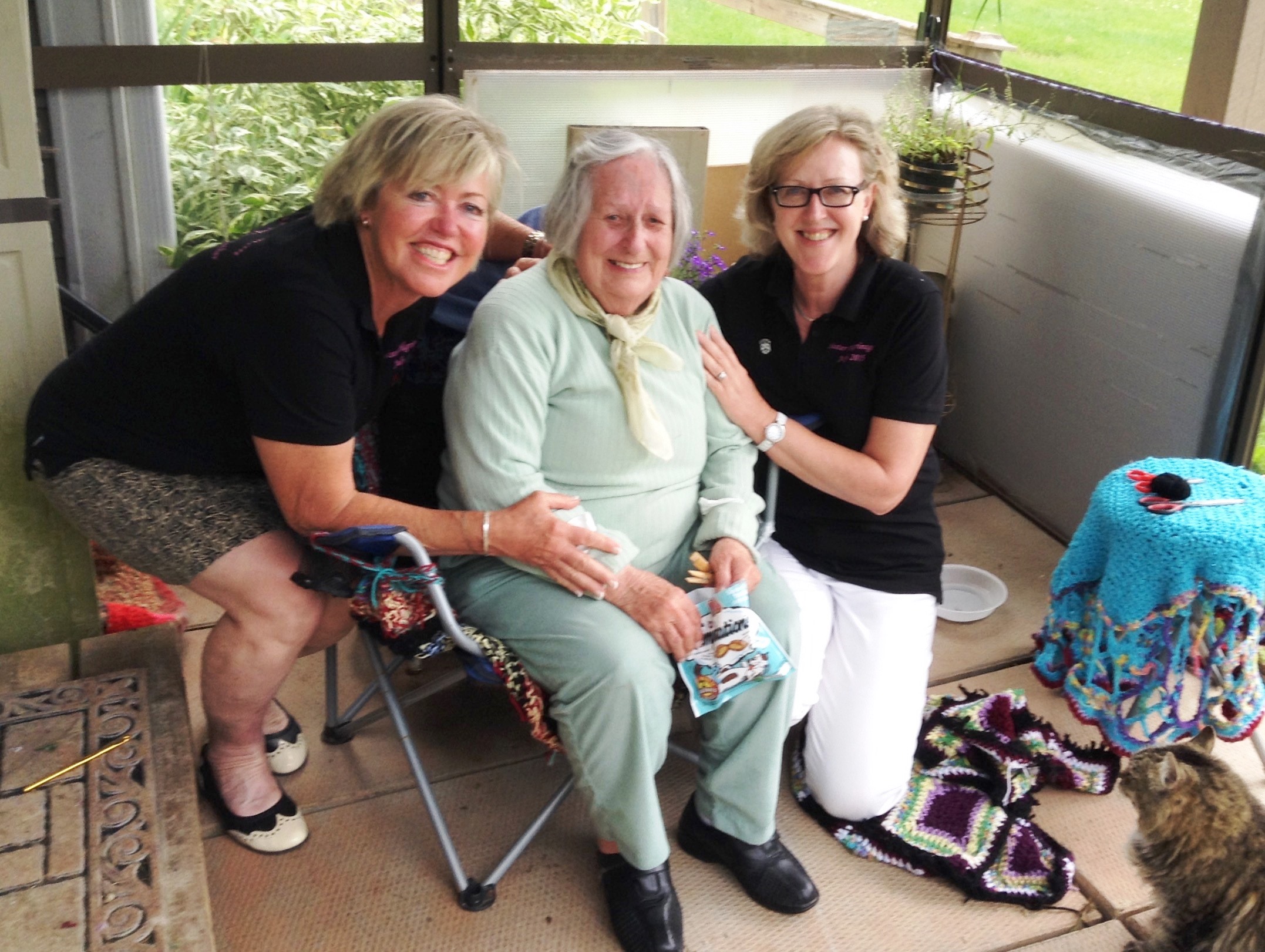
On our last day, we visited our mother’s best childhood friend. who is living with her son and family just outside Charlottetown.  Our mother passed away when we were very young, and AuntJean“Auntie Jean” has been a precious source of their childhood tales. It was such a thrill to see her again.

Later on that Sunday after the morning service at St Martin’s-in-the-Woods, we visited with Allen’s charming sister Lillian, the family historian who knew our exact location in the Hanington family tree!

And just down the lane from the church, off  Hanington Street, was our grandmother’s summer cottage.  Our grandfather, Canon Lindsay, would fill in as their pastor from time to time over the summers and several people at church that morning remembered him fondly.

Finally, as we drove down the driveway to visit with Allen and his wife Willa, there they were sitting on the porch swing waiting to welcome us into their home. 4-1StMartin-Haningtons (18)The afternoon flew by with lemonade and homemade treats and eventually we bid farewell to our cousins with heartfelt promises to keep in touch.

PS  The August 2015 family newsletter, the Hanington Herald, just arrived by mail! Included in the comments from the President’s Desk (that would be our cousin Allen!), it says: “We just experienced a lovely visit from the Anglin sisters; Lucy (Montreal) and Margaret (Ottawa) who were visiting in the area and attended morning service at St Martin’s-in-the-Woods Anglican Church on Sunday, July 5th 2015.  We had a very nice visit on Sunday afternoon.  They are descendents of Daniel Hanington.”

Our Contributors

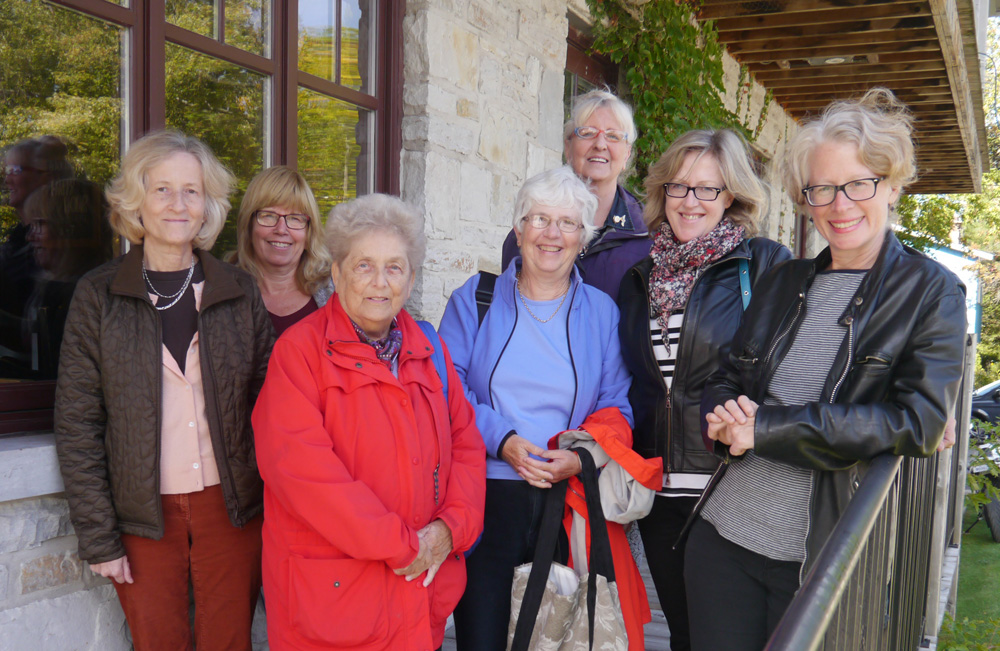
GE group2Some of the volunteers who contribute to Genealogy Ensemble got together this week to plan the blog’s schedule for the coming months. We’ll be posting our stories on Wednesdays and Jacques Gagné’s compilations will go up on Sundays, as they become available. We also hope to eventually welcome new contributors. Pictured here, left to right, are Mary Sutherland, Sandra McHugh, Claire Lindell, Janice Hamilton, Marian Bulford, Lucy Anglin and Tracey Arial.

Saddlebag Preachers of the Eastern Townships

Between 1798 and 1812, American circuit riders, or saddlebag preachers, travelled to Quebec’s Eastern Townships to serve the religious needs of the area’s settlers. Many of those settlers were Loyalists from New England, Pennsylvania and other states who had come to Canada following the American Revolution.

Most of the saddlebag preachers were Baptist, Wesleyan Methodist or Congregationalist ministers. During the summer months, they would criss-cross the villages and hamlets of Compton, Sherbrooke, Richmond, Shefford, Brome and Missisquoi counties, as well as the Upper Richelieu River Valley (St. John’s County, or St-Jean-sur-Richelieu) and the Chateauguay-Huntingdon region.

In September or October, they would go back to their own churches in Vermont, New Hampshire, New York and Massachusetts. There, they deposited the books in which they had record marriages and baptisms during their travels. Today, however, these books seem to have vanished.

In the following compilation, Montreal researcher Jacques Gagné has put together whatever information he could find about the circuit riders and their home churches. Claire Lindell has edited this compilation.

If you know anything about any of the missing records, please leave a comment or send an e-mail to genealogyensemble@gmail.com.

Saddlebag Preachers-2

A Visit to Goshen

Genealogy has taken me many places including Scotland, Philadelphia and Winnipeg. Last week my husband and I visited New York State to research my three-times great-grandmother’s family, the Thompsons. I wanted to find out whether there was a link between the 18th century Thompson family of Goshen, Orange County, New York and the John Thompson family of Sophiasburg Township, Ontario, Canada.

Orange County is located in the Hudson Valley, about 60 miles (100 km) north of New York City. It has gentle hills, historic villages and rich agricultural soil. The area was first acquired from the Munsee Indians in 1703.

New York State is not an easy place to do genealogy research, especially for this early period before there were vital records or detailed censuses. My ancestors were Presbyterians and I did not expect to find a neatly microfilmed database of church records. But the Orange County Genealogical Society (OCGS) has a research library in Goshen, staffed by a handful of knowledgeable volunteers, and an expert on the Thompson family lives nearby.

The trip was worth the effort and I came home with enough information to show that these families are related. (I’ll explain in another post.) With that link established, I can now take the male Thompson line to Ireland in 1729.

The Thompsons are confusing because there were several families of that name in Orange County during the 18th century, including individuals in every generation named John, George, William and James Thompson. There were even two George Thompsons, both born in 1719, both married to women named Elizabeth, and both died in 1782. One was a soldier in the American Revolution, the other was not, and more than one descendant has confused them.

I tried to prepare thoroughly before I left home. First, I researched my three-times great-grandmother Elizabeth “Betsey” Thompson’s siblings and children in Ontario. Their death certificates were particularly helpful since some indicated place of birth. I should have spent more time on Betsey’s father, John Thompson, his siblings, aunts and uncles and nieces and nephews. It would have been easier to sort out Goshen’s Thompson families if I had known more about them.

When we got to the OCGS, I looked through several excellent collections of research done by now-deceased Orange County genealogists. There were also several family histories of the Thompsons and four large file folders full of query letters and family group sheets submitted by members. Unfortunately, the documents in the file folders were mixed up. I suspect that, when it came to filing, the society’s volunteers had as much trouble sorting out the Thompsons as I did. I photographed all the documents I thought were relevant and brought them home for a closer look.

After lunch, we visited the person who knows the most about this family in her big old house in the countryside. Elmire Conklin’s husband was a Thompson descendant and she has been researching them for more than 35 years. She has a degree in botany, and that scientific training helped make her an excellent genealogist. In an article she wrote for the OCGS Quarterly (May, 1991), and in her correspondence with other researchers, she zeroed in on inconsistencies and proposed logical answers to some of the questions that arise about this family.

The whole experience reminded me of three things. First, we cannot just do genealogy research online. Second, we have to be grateful for the generosity and hard work of genealogists who have preceded us. Third, we have to question their work: when family stories and genealogies contain errors, those mistakes are easily passed down through the generations and they are difficult to correct.

This article has also been posted on writinguptheancestors.blogspot.ca

See also: http://writinguptheancestors.blogspot.ca/2015/05/looking-for-thompsons-of-sophiasburgh.html

Research Remarks:

The Orange County Genealogy Society website is at www.ocgsny.org/. The society does not have an e-mail address; if you want to contact them, you have to do so by snail mail. If you intend to visit, take note of the hours: the research library is only open two mornings and one full day a week.

I have several other ancestral families in New York State, so I recently joined the New York Genealogical and Biographical Society, www.ocgsny.org/. It now partners with Findmypast.com to make its records available, and The New York Researcher magazine it publishes is extremely helpful in explaining where and how to find New York records. In addition, the society recently published the must-have New York Family History Research Guide and Gazetteer.

Working together to help genealogists discover their ancestors