Illegitimate

Illegitimate
by Marian Bulford

In the March 31st 1901 UK Census Lilian Mary Symons was listed as a ‘servant girl/domestic’ in Leicester, Leicestershire in the employ of Mrs. Mary Whatnall, ‘Retired Lunatic Asylum Matron’ Mrs. Whatnall’s niece also lived in the house.¹

The 18 year old Lilian had, the previous November 25th given birth to a daughter. The father of the baby was a Royal Navy Cooper and master carpenter Thomas Bevan whom Lilian met when she was 17. They had started to court, but neither of them realised she was pregnant when Thomas left for sea. He was gone not knowing he was to be a father and Lilian had no contact with him for the next three years.

Lilian was the oldest in a family of five. Her father was a jobbing gardener and her mother a housewife so they would have had no means to take care of Lilian and another child.

How Lilian must have felt at that time, being pregnant and unmarried is not known, but I can only imagine how she would have had to approach her family and tell them. She also had to tell them that she did not know where Thomas, the father was.

Lilian’s father Thomas Symons unsuccessfully searched for Thomas and he also wrote to the Royal Navy regularly to find out the father’s whereabouts, but to no avail.²

In the 1900’s in the United Kingdom, unmarried pregnant women were often disowned by their families and the work house was the only place they could go during and after the birth of their child. There were no fees, but hard work was expected of the inmates. ³

According to my family, although Lilian was not ‘disowned’ by her family she did give birth to her baby and her child’s birth certificate states the child was born in the ‘Leicestershire Workhouse’.

In addition, the original birth certificate also had the words ‘ILLEGITIMATE’ in large letters stamped over the entire certificate. Lilian immediately tore it up and threw it away. 4

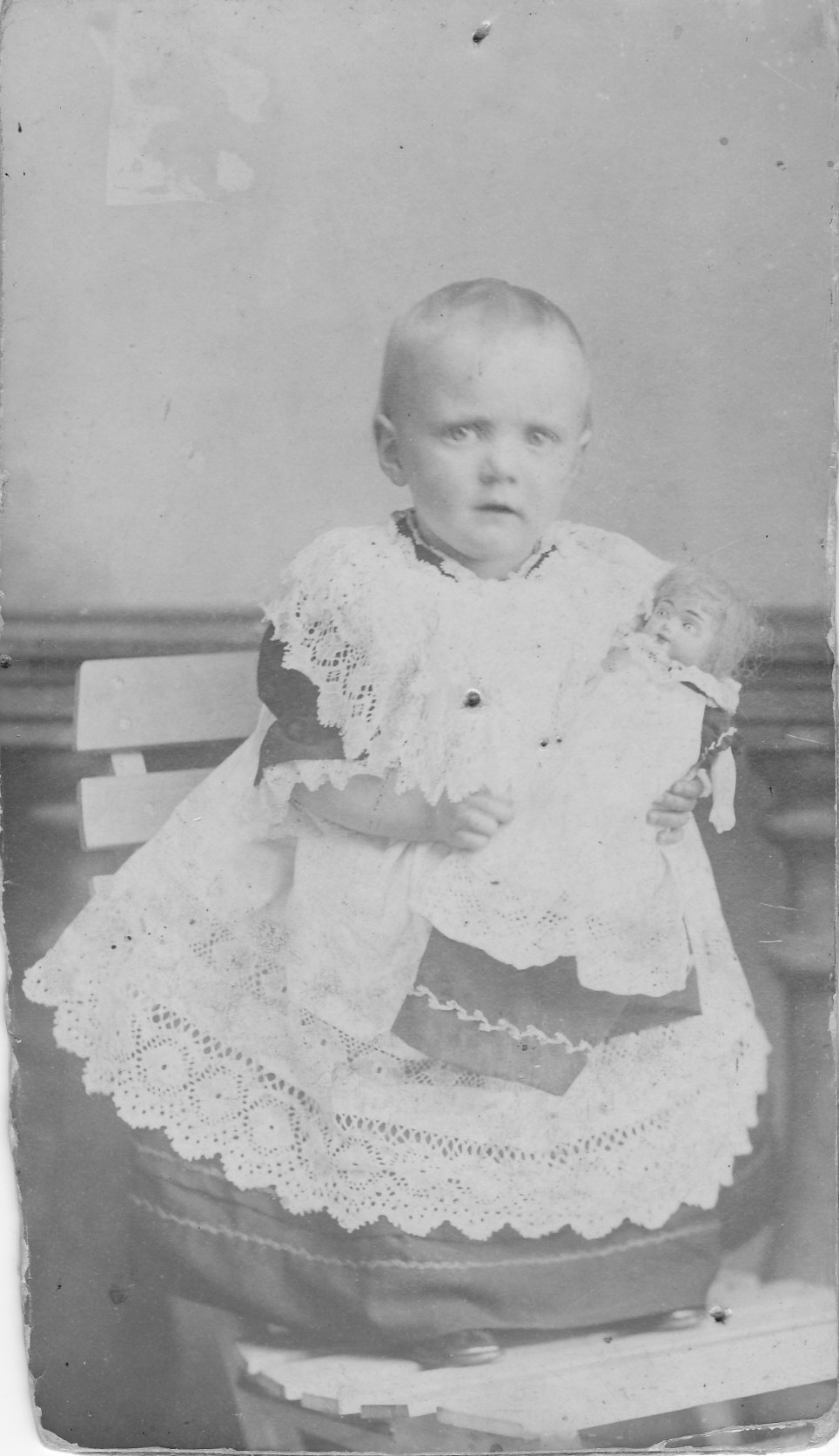
Lilian’s circumstances definitely changed, as I have a wonderful photo of the child at two years old and she is dressed in a very attractive dress with a matching dolly. These are not the usual working attire for someone living in a 1902-era work house and tape recordings of family told me her parents looked after the baby daughter and Lilian went to work for Mrs. Whatnall.

Thomas Bevan did eventually return from sea and Lilian and he got married on 25th April 1904 when the child was three and a half years old.5

In the 1911 Census 10 years later, Lilian is the ‘head’ of a household with three additional children. They lived in the Royal Navy Port of Plymouth, Devon England and Thomas was once again, back at sea.6

The couple went on to have four more children, who all lived to adulthood, including my grandmother, Edith, who had no idea she was born out of wedlock until she was 65 years old, but that is another story!

 Sources:
1 1901 UK Census at Ancestry.com
2 http://www.workhouses.org.uk/life/entry.shtml
3 Family tape recordings
4 Certified copy of a Birth Certificate, Leicestershire City Council, England
5 Registered marriages in April, May and June 1904 Leicestershire, England at Ancestry.com
6 Family tape recordings

Photos Below:

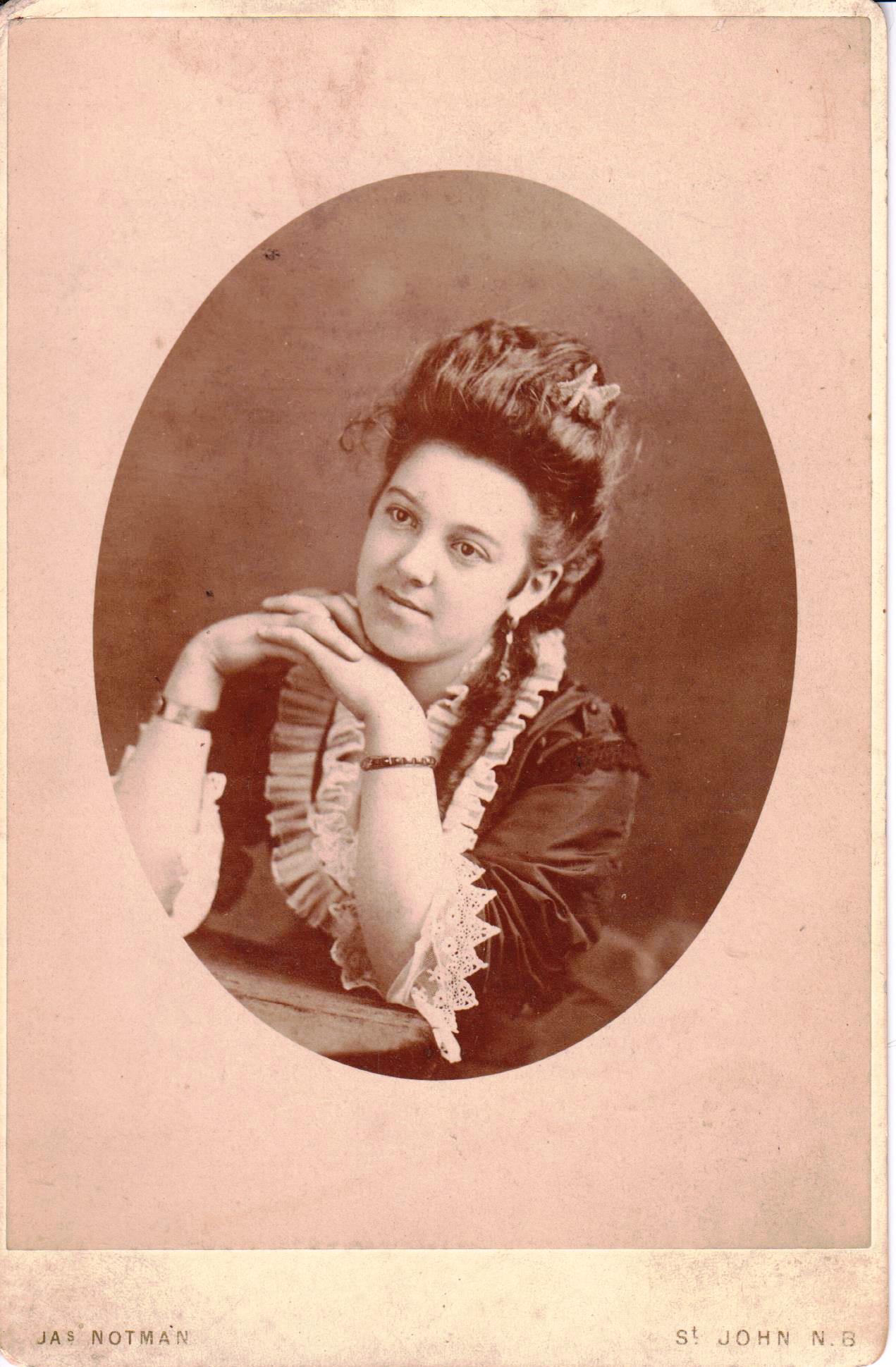
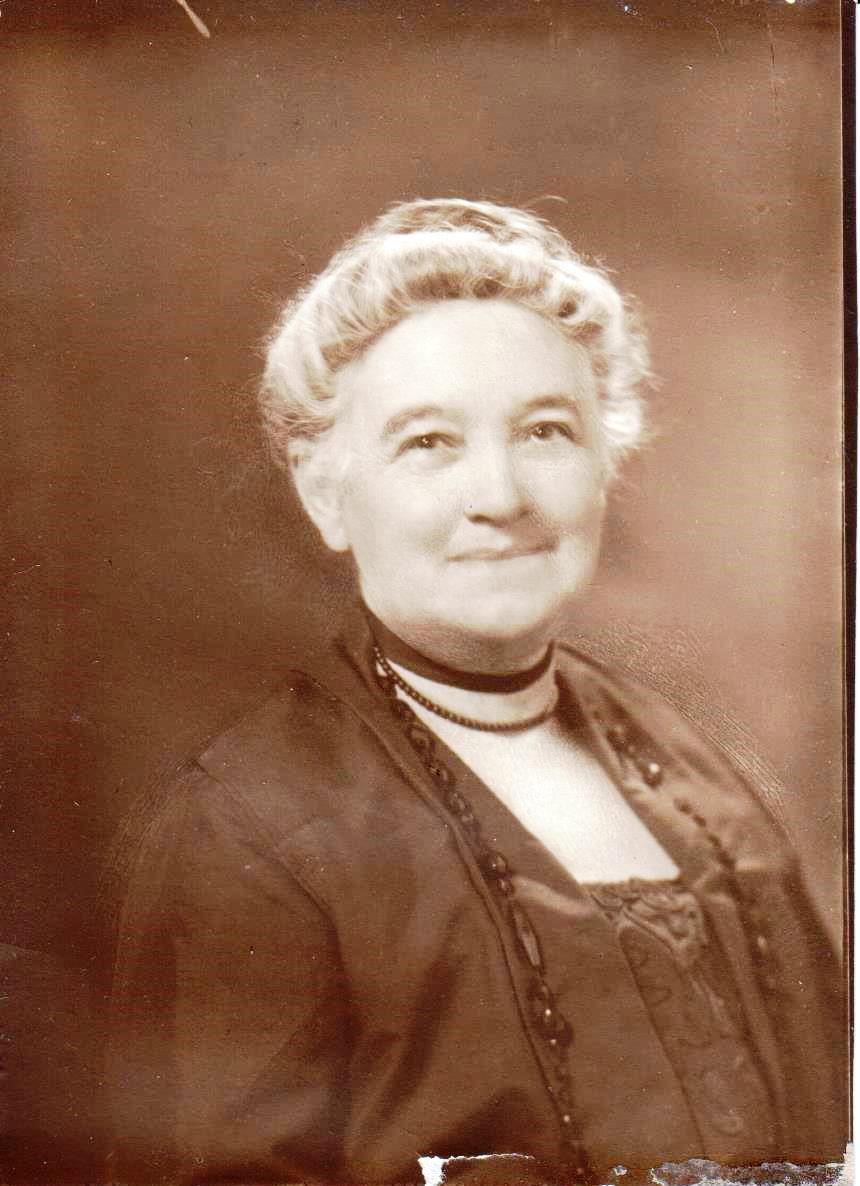
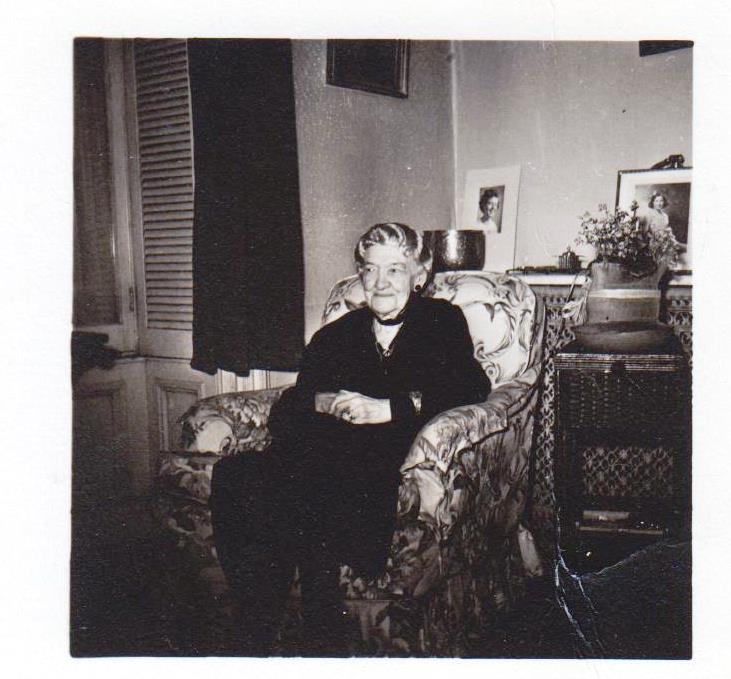
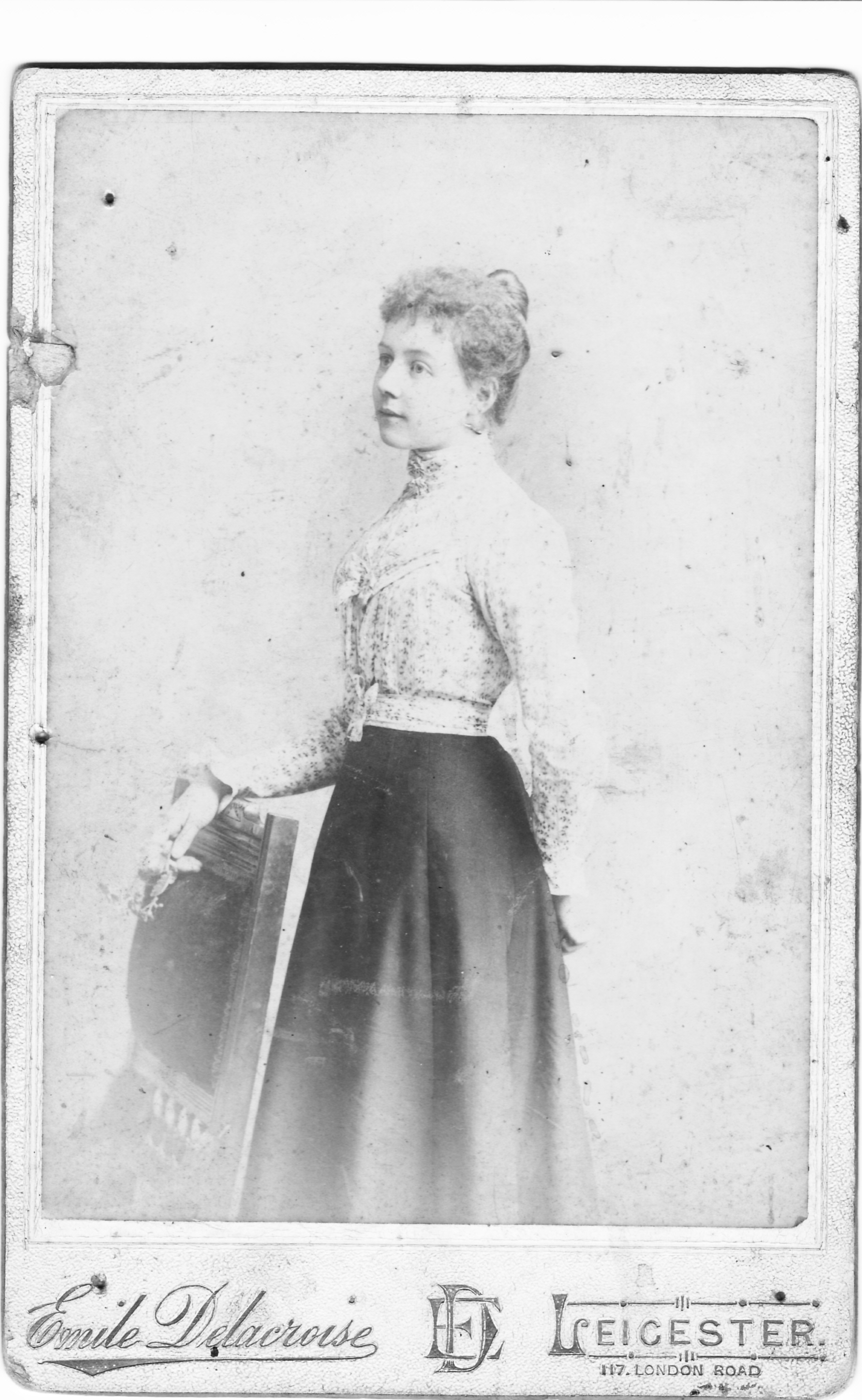
Lilian Mary Symons b. 1882

Lilian Mary Symons 1899

Edith Bevan 1902

Edith Symons Bevan 1902

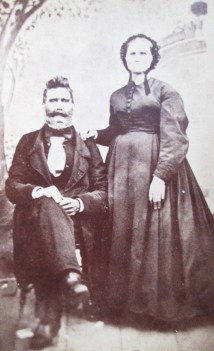
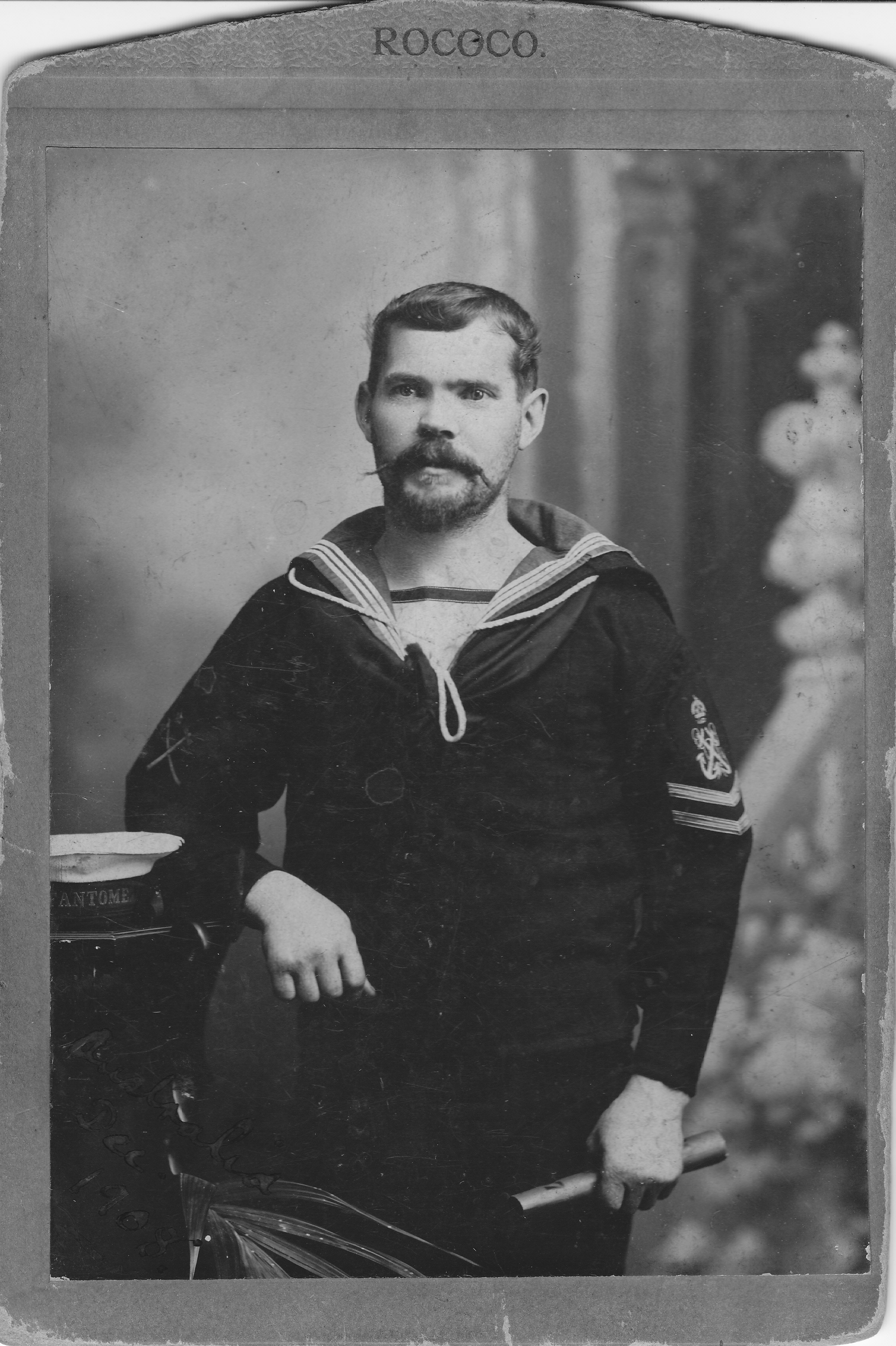
Thomas Bevan b. 1876

Thomas Bevan, RN

Australia, 1908


The Soldier’s Songs

Anyone with Irish ancestors or roots, should read this compelling and moving tribute to WWI ordinary Irish soldiers found, of all places, next door to Angela Merkel’s Berlin, Germany apartment.

http://www.irishtimes.com/culture/heritage/century/thesoldierssongs

How Now Black and White Cow. Isle of Lewis Obsessions.

This book above, The Genealogy of the Macaulays of Uig and this plaque, below,  in Hudson, Quebec, are related.

The other week, while strolling with our two dogs by the water in Hudson, Quebec, my husband and I passed another  couple walking their enormous pooch, a Newfoundlander-like dog, but one with large black and white patches.

I remarked on the unusual colouring of said canine and one of the owner’s replied, “Yes,  he’s our Jersey dog.”

I asked my husband,  “Aren’t Jersey cows brown? Those black and white cows you see everywhere are called something else. Aren’t I right?”

“Yes,” replied my husband, who grew up in the country so he knows a lot about such things. “Those black and white cows were developed by a guy from here in Hudson. There’s a plaque up on Mount Victoria? Do you want to do see?” It seems he couldn’t remember the name of the breed of cow, either.

So my husband took me to see this plaque, installed to honour the memory of a local man,Thomas Basset Macaulay, who developed a new breed of cow, the Holstein, on his experimental farm on the shores of the Ottawa River.

T.B. Macaulay, as it happens, was also the long-time President of Sun Life Insurance.

OK. So, what’s all this got to do with two-legged genealogy?

Well, the name T.B. Macaulay rang a bell with me.  I have a self-published book, The Genealogy of the Macaulays of Uig, in my house.

The book once belonged to Edith Nicholson, 1884-1977, my husband’s great aunt,a proud descendant of the Isle of Lewis Scots, those penniless crofters who were cleared from the land in the 1800’s and forced to emigrate to Canada and beyond.

My husband’s great aunt Dede, a teacher, left behind a slew of letters (from 1906 to 1936) and a few other personal possessions, including an 1888 two volume edition of Middlemarch; a yearbook from The Hostel from 1928 (that was McGill’s women’s Phys Ed residence);some yellowed newspaper clippings about the militant suffragettes; and this little genealogy volume, given to her in 1931.

The inscription reads: To Edith Nicholson, in appreciation of her connection with the Nicholson Institute of Stornoway. T.B. Macaulay.

There’s even a picture of Mr. Macaulay inside the book.

And here’s that inscription.

How well Mr. Macaulay knew my husband’s great aunt Dede, I don’t know. Edith had worked at Sun Life between 1917 and 1920, but only as a lowly stenographer in the accounting department.

After that she worked in the Registrar’s office at McGill and as a Tutor-in-Residence at the Hostel and as Assistant Warden at Royal Victoria College. In the 1930’s, Edith stepped out with Carrie Derick, the suffragist and first female full professor at McGill.

Edith’s family, from Richmond, Quebec was cash-poor but well-connected.  J.C. Sutherland, the long-time Superintendent of Protestant Education in Quebec, was a close friend. Edith’s father, Norman, had stumped for Sir Wilfrid Laurier back in the day.

But no Macaulay figures in any of the family’s 1,000 letters, although there are many mentions of Morrison’s and McLeod’s and other Isle of Lewis surnames. As far as I know from the same stash of correspondence, Edith got her job at Sun Life because the head of the Accounting Department lived beside her sister, Marion, on York Avenue in Westmount.

No, these two people didn’t have much in common, except that they were both of Isle of Lewis, Scotland, origin and they both were into genealogy big time. Somewhere along the line T.B. Macaulay learned of Miss Edith’s obsession.

Edith would visit the Hebrides homeland, herself, in 1933. She would bring back loads of information about the Nicolson Education Institute of Stornoway, a school. She was clearly proud of the connection she felt she had with this particular place. And for a few years in the 1930’s she would sign her name Edith Nicolson, without the H.

Now, that’s taking genealogy seriously!

Isle of Lewis genealogy is very well-documented on the Internet. This page leads to a story about how the Nicolsons and the Macaulays of Uig liked to feud over grazing privileges. But, of course.

Edith, second from right, in Navy League uniform, in front of Sun Life Building, 1917, during WWI.

Macaulay’s Secretary wrote the letter to Edith. It was slipped inside the book as was a genealogy of the Nicolson clan from Medieval times and later.

Presbyterian Churches of Quebec City and Montreal

While the historic populations of Quebec City and Montreal were primarily Catholic, both cities have long been home to Presbyterian congregations. The first such churches served worshippers of Scottish origins, while Americans comprised a substantial part of the Presbyterian population in Montreal.

In this compilation, researcher Jacques Gagne has briefly outlined the histories of these churches, including the dates they came into existence, some of the ministers who led them, their locations and name changes over time. Each outline includes links to sources of information about these churches and their records.

Make sure you look at the Repositories sections on pages 14 for Quebec City and 45 for Montreal, as well as the further information links for each congregation. Also, scan the table of contents thoroughly: over the years, a number of churches with the same names (for example, St. Gabriel, St. Andrews and Erskine) appeared, moved or reappeared. Finally, you may find further information on some of these churches by searching Google Books and Google Images.

Presbyterian Churches of Quebec City and Montreal

For more information on the Presbyterian archives of Canada and how to find genealogical information there, see http://www.presbyterianarchives.ca/ and http://www.presbyterianarchives.ca/Interesting%20Facts.html

Thanks to Claire Lindell for editing and formatting this compilation.

Pharmacist then Doctor

Dr. James P. Hanington (1846-1927)

James Peters Hanington (my great-grandfather), and his older brother, Thomas, could make emulsions, ointments, pills or potions for just about anything that ailed you.  They were partners in “Hanington Bros., Chemists” in Saint John, New Brunswick.  Today, they would be better known as pharmacists. According to several testimonials in the 1884 Almanac and Receipt (recipes) Book[1], they were extremely helpful in alleviating all kinds of their customers’ health problems.  Here’s an example:

Dear Sirs,                                                   Gondola Point, Clifton, Kings Co. 1878

Having been troubled for years with pains in my side and severe cough, I was tempted to try a bottle of your “JPH Cough Mixture”, and also a bottle of your “Penetrating Liniment”.  I found immediate relief.  I have used two more bottles since, and am now perfectly well.  Returning you my sincere thanks for your cheap and valuable medicine. 

Yours truly, 

Florence D. McCarthy

In 1890, the partnership was dissolved. Thomas became the local Postmaster and James moved his pregnant wife and four daughters[2] to Montreal, Quebec, where he was enrolled in Medical School at McGill University.  He was one of few of his eleven siblings to leave the province, where his grandfather was known as the first English speaking settler and founder of Shediac, New Brunswick.

The first family home in Montreal, Quebec, was at 278 St. Urbain Street[3].  The family grew to include two more daughters, one born in 1891, shortly after their arrival in Montreal and another born four years later in 1895.  Six girls!  The last one born, when her mother was 43 years old, was my grandmother, Millicent.  Could she have been the result of a special celebration once James had finally completed medical school at the ripe old age of 49?

James graduated from McGill Medical School in 1894, having completed his four year degree, which included First Class Honours in Medical Jurisprudence in his third year[4].

A few years later, he moved his family to 699 Sherbrooke Street, corner of Park Avenue[5], which was a larger home to accommodate his growing family as well as his Physician and Surgeon’s[6] office.  His office hours “8 to 10 a.m., 3 to 4 p.m., 7 to 8 p.m.” were even listed in the directory!  He was a prominent doctor in Montreal for several years.

Although he settled in Montreal, he did, however, keep a lovely old home in Shediac, New Brunswick, called “Burn Thorpe”  where his family would gather in the summers and meet up with their cousins.

JohnYoung Wawa Millicent Mrs JP Hanington DodoTootie Jenjen Dr JamesPHaningtonBurn Thorpe -2

[1] Hanington Bros’. ALMANAC and RECEIPT BOOK, 1884, Published by Hanington Bros., Chemists, Saint John, NB

[2] 1891 Canadian Census

[3] 1891 Lovell’s Street Guide

[4] McGill Medicine 1893–p.81

[5]1897-1898 Lovell’s Street Guide [6]1897-1898 Lovell’s Street Guide  Hanington Bros Almanac 1884James P HaningtonDr James P Hanington

Every Scrap of Paper

 I have stuff, lots and lots of stuff. I have letters tied with string, photographs in envelopes and albums, documents, census printouts and family trees in binders. I have boxes of stuff and filing cabinets of stuff.

One good genealogical process I hadn’t done for a while was to go back through all the information I had collected. You never know what might come out of it. As you learn more, things that meant nothing, suddenly make sense.

Recently, I looked through some binders searching for information I wanted to reference. I love looking through the stuff and reading old letters again and again. In one binder I found a piece of old paper. It looked like it came from a note book but didn’t fit the handmade one that was there. That note book belonged to my great great grandmother Susan Dodds. She married Alexander Bailey in 1843 just before they came to Canada from Ireland. It was sent to her by her sister Eliza and that is all I know about her siblings and families.

IMG_3076

The paper had a list of names and dates:

“Bob Dodd’s daughter born Oct 24 1884, Uncle Robert gied May 5 86, Mr Peil inducted buc 18 – 84, North West Rebellion was 1884, Ellin’s Bob died Dec 11, 1886 and Mary Dodds died 7, 1887.”

Who were these people and how did they connect to the family? Just looking up these dates on Family Search I found that in 1881, a Robert Dodds born about 1809 in Ireland, his son Robert and a servant Ellen Graham were all living together in Toronto. His wife Agnes had died. Robert Jr.(Bob) and Ellen Graham were married in 1883 and a daughter Gertrude was born Oct 24, 1884, also in Toronto. Gertrude appeared to be their only child. Robert senior died May 5, 1886 and then his son Bob soon followed, dying Dec 14, 1886. Both were buried in Mount Pleasant Cemetery. There was no further information on Ellen but in the 1901 census Gertrude was living with her Uncle Andrew Miller and his wife Eliza, both Irish. Was aunt Eliza, Bob Dodd’s sister? Gertrude married Samuel J Wilson and she died 18 May 1935.

I also found a Mary Dodds who died Feb 7, 1887 at 40 years of age. Was she also Bob Dodd’s sister? I confirmed all these dates in less than 30 minutes sitting in my recliner. Unfortunately, I still don’t know for sure how these people connect with Susan Dodds, but they must be related as someone, and I think it was Susan recorded these dates.

In with these family dates was the North West Rebellion 1884. This shows interest in what was happening in Canada at that time. This was the year Louis Riel was captured and hanged. I am still not sure of the meaning of Mr Peil or was it Mr Riel and Inducted buc 1884?

I also have a photo album a “Mrs Barber wanted to leave to Mrs Eagle.” Eliza Jane Bailey Eagle was Susan’s daughter. In it are pictures of a Mary Dodds, Robert Dodds and Eliza Dodds. Most of the pictures have names written underneath, probably by my grandmother Minnie Eagle Sutherland, so they are all people known to the family.

Maybe somewhere is another scrap of paper with answers to these questions.

IMG_7720 IMG_7722 IMG_7725

Bibliography:

“Canada Census, 1871,” index, FamilySearch (https://familysearch.org/pal:/MM9.1.1/M43R-1X4 : accessed 13 March 2015), Robert Dodds, St Partick’s Ward, West Toronto, Ontario, Canada; citing p. 4, line 15; Library and Archives Canada film number C-9970, Public Archives, Ottawa, Ontario; FHL microfilm 4,396,300.

“Canada Census, 1881,” index, FamilySearch (https://familysearch.org/pal:/MM9.1.1/MVFS-PXP : accessed 13 March 2015), Robert Dodds, St-John’s Ward, Toronto (City), Ontario, Canada; citing p. 152; Library and Archives Canada film number C-13246, Library and Archives Canada, Ottawa, Ontario; FHL microfilm 1,375,882.

“Ontario Marriages, 1869-1927,” index, FamilySearch (https://familysearch.org/pal:/MM9.1.1/FMJC-MZK : accessed 13 March 2015), Robert Dodds and Ellen Graham, 13 Sep 1883; citing registration 015093, Toronto, York, Ontario, Canada, Archives of Ontario, Toronto; FHL microfilm 1,869,764.

“Ontario Deaths, 1869-1937 and Overseas Deaths, 1939-1947,” index, FamilySearch (https://familysearch.org/pal:/MM9.1.1/JDG5-BNR : accessed 13 March 2015), Robert Dodds, 05 May 1886; citing Toronto, York, Ontario, yr 1886 cn 22384, Archives of Ontario, Toronto; FHL microfilm 1,853,483.

“Ontario Deaths, 1869-1937 and Overseas Deaths, 1939-1947,” index, FamilySearch (https://familysearch.org/pal:/MM9.1.1/JDR3-1XQ : accessed 13 March 2015), Mary Dodds, 07 Feb 1887; citing Toronto, York, Ontario, yr 1887 cn 19737, Archives of Ontario, Toronto; FHL microfilm 1,853,487.

Thomas Drummond, Botanist and Explorer

Among the male ancestors on my father’s side of the family were many farmers, several doctors, two carpenters, a weaver, a tailor and two botanist-explorers. These were brothers Thomas Drummond (1793-1835) and James Drummond (1787-1863), and both are remembered today through the plants that carry their names. Thomas studied plants in Scotland, western Canada and the southern United States, while James immigrated with his family to western Australia and collected plants there.

IMG_2424
Inverarity Parish Church

Thomas Drummond, baptized on 8 April, 17931 at Inverarity Parish Church, near Forfar, in southeastern Scotland, was one of four children born to Thomas Drummond and Elizabeth Nicoll. Besides brother James, there were two girls: Euphemia, and Margaret, my four-times great-grandmother, who married David Forrester and came to Canada in 1833.

Thomas and James no doubt first learned how to identify plants from their father, who was the head gardener of an estate named Fotheringham, near Forfar.

At age 20, Thomas became manager of the nursery and botanic garden at Doohillock which had belonged to the retired director of the Royal Botanic Garden in Edinburgh. During the 10 years he worked there, he became an expert on the mosses of Scotland. He also became acquainted with botanist William Hooker, who eventually became director of the Royal Botanic Garden at Kew, in London.

In 1820, Thomas married Isobel Mungo,2 and the couple eventually had three children, Ann, James and Isabella, however, a quiet family life did not suit him.

This was a period when Europeans were exploring the far-flung corners of the world and learning all about the plants and animals they found there. Many of these explorers were Scots, such as David Douglas, after whom the Douglas fir tree is named. Their job was to describe these plants in their natural habitats, identify their key features and bring home specimens and seeds.

On Hooker’s recommendation, Thomas was hired as assistant naturalist on Captain John Franklin’s second expedition to the Arctic in 1825. Rather than following the main party to the Arctic, Thomas headed west with a Hudson’s Bay Company party. In the account he wrote of his journey to the Rocky Mountains on horseback and by boat along the Saskatchewan River, he described some of the birds and animals he encountered. They included blue-beaked Ruddy Ducks, a species of flycatcher that courageously attacked larger birds, and packs of impudent Prairie Dogs.

Thomas also explained how he gathered plants. “When the boats stopped to breakfast, I immediately went on shore with my vasculum, proceeding along the banks of the river and making short excursions into the interior, taking care to join the boats, if possible, at their encampment for the night. After supper, I commenced laying down the plants gathered in the day’s excursion, changed and dried the papers of those collected previously; which operation generally occupied me until daybreak, when the boats started. I then went on board and slept until the breakfast hour, when I landed and proceeded as before. Thus I continued daily until we reached Edmonton House, a distance of about 400 miles, the vegetation having preserved much the same character all the way.”3

Thomas spent the winter alone on the shores of the Athabasca River, sheltered by a spruce-bough hut. He rejoined the brigade the next summer and spent the winter of 1826-27 at Edmonton House, where he was nearly killed by a grizzly bear. He nearly died a second time as he attempted to rejoin the Franklin group: a gale blew the small boat he was aboard far into Hudson Bay.

explorers garden
Explorers Garden, Pitlochry, Scotland

In October 1827, he finally arrived back in England, having succeeded in collecting hundreds of plants, birds and small animals during his travels. The following year, he was appointed curator of the Belfast Botanic and Horticultural Society’s garden. He returned to Scotland in 1830.

A few years later, Thomas returned to North America to continue his botanical explorations in Texas and Louisiana. There he faced floods, cholera and near-starvation. He died in Havana, Cuba in 1835, survived by his wife and children in Scotland. About a dozen plant species, including the well-known Phlox drummondii, a moss genus and a small mammal, are named after him.

This story has also been posted on writinguptheancestors.blogspot.ca

Photo credits: Janice Hamilton

Related articles: Glimpses of a Life (the story of Margaret Drummond Forrester) http://writinguptheancestors.blogspot.ca/2013/10/glimpses-of-life.html

Notes: I have never been fond of cold, wet weather or long, uncomfortable hikes in the woods, so the discovery that one of my ancestors endured these and many other hardships as a 19th century botanist and explorer came as quite a surprise. Thomas Drummond has to be one of my most interesting ancestors.

A number of articles have been written about his life, including one in the Dictionary of Canadian Biography (http://www.biographi.ca/en/bio/drummond_thomas_6E.html). My favourite, however, is “Drummond of Forfar” by Louise H.R. Meikle, Thomas’s three-times great-granddaughter. It was published in The Scots Magazine, April 2005. A portrait of Thomas Drummond can be seen at http://images.kew.org/thomas_drummond/print/4232976.html.

It is interesting to note that many articles give Thomas Drummond’s birth date as approximately 1790. Genealogy has been able to contribute to our knowledge about him by providing more precisely the dates of his baptism and marriage. We have to rely on letters written by his contemporaries regarding his death, although the exact date does not seem to have been recorded.

An article at http://www.forfarbotanists.org/thomas_drummond_detail.pdf lists many of the plants Thomas discovered. It is on the website of the Friends of the Forfar Botanists (http://www.forfarbotanists.org), an organization that has created a garden in memory of the Drummond brothers and several other local horticulturists.

Another Scottish organization that recognizes the Drummond brothers’ accomplishments is the Scottish Plant Hunters Garden in Pitlochry, Perthshire. (http://www.explorersgarden.com). Visitors to this lovely garden can see species of plants brought to England and Scotland by 19th century Scottish-born botanists such as David Douglas, David Lyall and Archibald Menzies.

Sources

  1. “Scotland, Births and Baptisms, 1564-1950,” Database, FamilySearch (https://familysearch.org/ark:/61903/1:1:XYJZ-DBX : accessed 16 June 2015), Thomas Drummond, 08 Apr 1793; citing INVERARITY AND METHY,ANGUS,SCOTLAND, reference ; FHL microfilm 993,436.
  2. “Scotland, Marriages, 1561-1910,” Database, FamilySearch (https://familysearch.org/ark:/61903/1:1:XTVL-QJS : accessed 16 June 2015), Thomas Drummond and Isobel Mungo, 18 Nov 1820; citing Forfar,Angus,Scotland, reference ; FHL microfilm 993,432.
  3. Drummond, Thomas, “Sketch of a Journey to the Rocky Mountains and to the Columbia River in North America” p. 95-96, 178-219. Botanical miscellany, Volume 1, edited by Sir William Jackson Hooker, London: John Murray, Albemarle-Street, 1830, p. 183. https://books.google.ca/books?id=8LkWAAAAYAAJ&pg=PA95&dq=Thomas+Drummond+sketch+of+a+journey+Hooker+Botanical+miscellany&hl=en&sa=X&ved=0CCEQ6AEwAWoVChMI3eblpMqUxgIVSM2ACh10DgBc#v=onepage&q=Thomas%20Drummond%20sketch%20of%20a%20journey%20Hooker%20Botanical%20miscellany&f=false

Genealogy Collections

documentfinger


Genealogical and historical societies are important resources for family history researchers looking for information about a particular location because they are great links to people who really care. Many  hold important document collections too.

Jacques Gagné’s latest compilation lists sixty-eight of the best-known Quebec organizations, with details about how to contact them and what they offer. Download the Genealogy Societies in Québec – Genealogical Collections pdf.

Also, please tell us how these organizations have helped you conduct your research. We know that many of the people who run these organizations work very hard on behalf of all of us, and we’d like to thank them for their efforts.

If you know of an organization that isn’t in this compilation, but should be, we’d love to know that too.


Baptist Churches in Quebec 1794-1967


Montreal City West Baptist Church St. Laurent, Quebec

Anyone looking for information about ancestors who were active in Baptist Churches in Quebec between 1794 and 1967 will appreciate Jacques Gagné’s latest compilation, which tells you which records exist and where you might find them.

Jacque’s compilation is divided into Quebec cities and towns, including Berthier, Sherbrooke, etc. Researchers with ancestors in Quebec can look up the town in which their ancestors lived and see how many Baptist Churches were in that town and where the records for each church were sent.

The records that still exist are divided between twelve different repositories with locations throughout Quebec, in Ontario and in the United States. Jacques provides links and addresses for each repository so that researchers can contact the repository directly to look at records online or  make arrangements for a visit.

Historian René E. S. Péron summarized the history of the Baptist religion as an introduction to the compilation so that researchers can get a sense of how decisions their ancestors made influenced the lives we live now. René’s article was posted on the blog last Thursday.

Download your copy of the entire compilation at Baptist Churches in Quebec.

Please let us know how this compilation helped you find your ancestors.


The Mysterious Charlie G: An Edwardian Era Love Tragedy

Edith and her beau circa 1909 somewhere near Potton Springs in the Eastern Townships of Quebec

Edith Nicholson (1884-1977), my husband’s Great Aunt Dede, never married. She told her nieces and nephews and great nieces and great nephews that she lost her Great Love in a hotel fire. The couple wasn’t ‘officially engaged’ but there was ‘an understanding’.

Some believed DeDe, some didn’t.

In 2004, I found 300 Nicholson family letters from the 1908-1913 period in an old trunk – and in a letter dated May 3, 1910, Edith writes of this loss to her mother, Margaret:

Your letter received this am. It was so good to hear your voice over the phone. It was quite natural. Oh, how I wish I could talk over everything with you. It seems terribly hard to think it all for the best, when there are so many that are of no use living on and others that are held in esteem cut off in a moment. One thing, I am very thankful for that he wrote me. No doubt one of the last things that he did. I can’t express my feelings. I never felt so badly in my life. But I suppose there are few who have had so pleasant a one as I have, and trouble comes to all.

So the story was true, after all!

Edith mentions many young men in her letters sent from Montreal where she was working as a teacher back to Richmond where her Mom lived. Edith often uses only initials when talking of her romantic life. Apparently, back then, courting was something to be coy about.

It took me long while to figure out but her Great Love was one Charlie Gagne, bank clerk, from Levis, Quebec. A French Canadian man, most likely. Now, that was a surprise.

It seems Edith and this Charlie had an on-again off-again relationship through 1908-1909.

Gagne is a French Canadian name but from the letters it is clear Charlie spent time around Edith’s group of Richmond Protestants. Perhaps he was a convert from Catholicism. In Montreal, Edith worked as a teacher at French Methodist Institute in Westmount, a school where Catholics, mostly French Canadians, were converted to “the Way.”

The Nicholson’s also left behind a photo album from the 1910 era. I have photographs of Edith on a country outing with a handsome young man. If this is Charlie of the May 3, 1910 letter, he is a slim, with a charming smile and a cocky attitude and he is a great dresser. Edith Nicholson would have accepted no less.

There are a few other mysterious mentions of Charlie, or Charlie G or CG in the 1909-10 letters.

In August 1909, Edith writes her Mom saying she managed to ‘show’ Charlie to her father at a train station, (it sounds like a set up) but her father was cool to her young man.

In September 1909, Edith’s mother Margaret writes her father Norman and says “Charlie has gone to Mexico. So that flirtation is over.”

In October 1909, Edith writes her Mom saying she hasn’t heard from Charlie G and that she has no intention of trying to contact him. “He could still be in Mexico, for all I know.”

In February, 1910, Edith writes that she is taking medicine, for ‘her heart has had a jolt’.

Then there’s NOTHING but that May 3 letter about Charlie’s death. Edith writes that she is looking at his picture in the Montreal Star and that “it does not do him justice.”

So I had bits and pieces of a sad love story, but I had to fill in the blanks. I couldn’t even be sure it was Charlie G. who died in the hotel fire.

One sentence in the May 3 missive was especially enigmatic. “It seems if it had only been an accident, it would be easier to understand.”

So, about 5 years ago, I skipped over to the McGill Library to check out the May 1910 Star.

Amidst the pages and pages of stories of Edward VII’s death, I found a story about a Cornwall fire, the Rossmore House Fire, where a Charlie Gagne, bank clerk from Levis, perished.   Proof at last.

Charlie had recently been transferred to the Cornwall branch from the Danville, Quebec branch, which is near Richmond, Edith’s home-base. (The February jolt!)

Only half of Charlie’s body was found at the scene and that was burned beyond recognition. There was only a tie pin to identify him.

The fire had started in a stairwell and, as a boarder who knew the hotel well, Charlie tried to use the stairway to escape the fire, as did a few other boarders, including an entire family.

Most hotel clients had been rescued by fireman at their hotel window, or had frantically jumped to safety.

There was no photograph with this Montreal Gazette newspaper article, though – so I was confused.

Then Google News archives came online and I saw that the Rossmore Fire happened on April 29!

I headed down to Concordia’s Webster Library to check out the January-April reel of the 1910 Montreal Star.

Sure enough, the Cornwall fire was front page news on April 29 as the Star was an afternoon paper.

The next day’s issue had a back of the newspaper follow up article on the fire with a photograph of Charlie Gagne, Levis-born bank teller at the Bank of Montreal.

The photo was of a sober-faced Charlie, but it was without a doubt the man of the family album.

At long last, mystery over.

Then, much later, on Ancestry.ca, I found Charlie’s name on the 1901 Census and his 1910 death certificate that claims he died accidentally in a fire. Charlie, the snappy dresser, was the son of a modiste, a widow, and he had a younger sister. And he was buried as a Roman Catholic!

Working together to help genealogists discover their ancestors