Food Rationing Post WW 2

I think queues were invented in the UK. We queued for everything and even though I was only about four-and-a-half  years old, I remember queuing with my mother. One time, when she was heavily pregnant with my brother, she sent me into the shop to keep her place, whilst she rested on the wall outside.

I marched in, went straight up to the front of the queue and stated my order…….I remember very well, the smiles and laughs, but I got my order right away and, once outside, instructions from Mum on the correct way to queue.  My Mum told me that ‘food was all we thought about’ how to get it what to make with it, how to stretch it.

We ate everything from the animal. Called ‘offal’ it included heart, kidneys, brain and stomach–all made into quite tasty dishes. I don’t know if I would have eaten the dishes, had I known what I was actually eating!

¹During rationing, 1 person’s typical weekly allowance would be: 1 fresh egg, 4 oz margarine, 4 oz bacon (about 4 rashers), 2 oz butter, 2 oz tea, 1 oz cheese and 8 oz sugar.

 Meat was allocated by price, so cheaper cuts became popular. Points could be pooled or saved to buy pulses, cereals, tinned goods, dried fruit, biscuits and jam.

We used to have a dish called ‘tripe’ boiled animal stomach with onions. Or liver and onions still popular today. If you got a tongue at the butchers you could make many meals with it. Fried, or pressed in aspic to make ‘brawn’ then cut up to make sandwiches with or add to salads.

A favourite after the Sunday roast was “bubble and squeak” which was the left-over potatoes and greens cut up small and fried to a crisp with cold meat and pickled onions, usually fed to us on Monday as the family laundry was done on that day. Corned beef hash was another dish mixed with cabbage and potato and fried.

Chitterlings (intestines) were sometimes eaten cold. Pigs trotters added to a hearty mix of vegetables made a wonderful meal with dumplings. Many people made their own blood puddings.

Gran’s beef olives was a favourite meal. That was skirt steak, when we could get it, beaten to death with a rolling-pin cut into strips and the strips stuffed with sage and onion stuffing rolled up and secured with a tooth pick and roasted for hours on end.

Dripping’ was the various fat from animals carefully preserved (no refrigeration in those days) in a crock and kept on the cold, stone floor in the larder to spread on a piece of bread sprinkled with salt – very tasty!

Most people had an allotment and grew as many veggies as possible. Wasting food was a criminal offence during the war my Gran told me. Too bad that does not apply today!

²The Ministry of Food produced leaflets and posters advising housewives to be creative and one of England’s best known cooks, Marguerite Patten gave cooking tips on the radio.

‘Mock’ recipes included ‘cream’ (margarine milk and cornflour) and ‘mock goose’ (Lentils and breadcrumbs). Powdered eggs and Spam from the US were mainstays of wartime and after. Kippers and Sprats were a fish easy to obtain in Plymouth Devon, a Royal Naval fishing city where I was born.

This is an example of a ‘Government Recipe’ taken from the book ‘Ration Book Cookery Recipes and History. Published by English Heritage, London 1985.

Mock Goose

150 g (6 oz) split red lentils

275 ml (1/2 pint) water

15 ml (1 tbls) lemon juice

salt and pepper

For the ‘stuffing’

1 large onion

50 g (2 oz) wholemeal fresh breadcrumbs

15 ml (1 tbls) fresh sage, chopped.

Cook the lentils in the water until all the water has been absorbed. Add lemon juice and season. Then make the stuffing. Sauté the onion in a little water or vegetable stock for 10 minutes. Drain, then add to the breadcrumbs. Mix in the chopped sage and mix well. Put half the lentil mixture into a non-stick ovenproof dish, spread the ‘stuffing’ on top, then top off with the remaining lentils. Put in a moderate oven until the top is crisp and golden.

I have tried this recipe, and it was really good, considering not much was in the ingredients.

Despite the stresses of wartime, it was reported that the health of the poor improved. Babies and pregnant women were allocated extra nutrients such as milk, orange juice and cod liver oil.

Post war, the orange juice we got for my baby sister was condensed in a small bottle and carefully measured out by the teaspoon and mixed with water. For all the hardships I was never hungry and I do believe that I had a healthy start to life, due to rationing.

¹ http://www.bbc.co.uk/history/topics/rationing_in_ww2

This is an interesting slide show regarding rationing.
² http://news.bbc.co.uk/today/hi/today/newsid_8511000/8511309.stm

British, Irish, Scottish, Loyalist, American, German, Scandinavian, Dutch, Huguenot Families in Lower Canada and Quebec 1760…

denbigh

Early Settlers


The following database contains information on villages and communities where families settled in Lower Canada and Quebec from 1760 onward. This document will assist researchers seeking to find the names  ( past and current )  of these settlements.

Over the years there have been many name changes in both the counties, villages and settlements. These changes are noted, giving both the original name and the current name on modern maps.

There is a  Table of Contents, along with several links to old county maps.

images

 Click the link below to open in a new window

British, Irish, Scottish, Loyalist, American, German, Scandinavian, Dutch in Quebec

Three falls from the sky

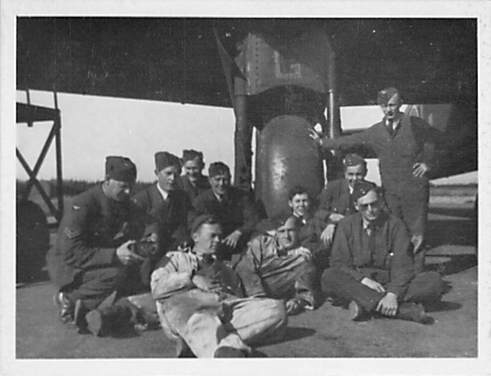
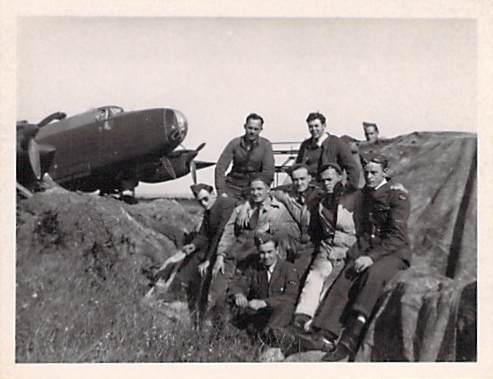
EmontonJournalNotMuchtoTellThe old Edmonton newspaper clipping doesn’t include a clear date, but was written sometime well after January 1942 and prior to September 27, 1944.

Its title “Airman Shot Down Twice But ‘Nothing Much to Tell’ emphasizes the key point of the story.

The nutgraph reads “Like nearly all of the fighting men who return after serving in battle, WO. Hurtubise had little to say about his adventures in the air.” It goes on to say:

The airman had been shot down over friendly territory. He crashlanded both times. He admitted he had been wounded slightly but said “it was nothing at all. You’d never know it now.” [1]

The soldier of few words was a distant cousin—the son of my great-grandfather’s brother and my great grandmother’s sister. His name was Paul Emile Hurtubise. At the time of the newspaper article quoted above, he served as a Warrant Officer and pilot in the Royal Air Force.

Hurtubise was interviewed for the story at his 99 Avenue home in Edmonton (address 111204). The unnamed newspaper reporter writes that Hurtubise was shot down twice in North Africa and also served in raids over Sicily and Italy.

His father Gus was still alive at the time of the article, but his mother Ida died sometime prior to the article date, but after the 1921 census .[2] There was one mention on an ancestry family tree that she died in 1922, when he was only three years old, but that isn’t yet confirmed. Another newspaper clipping in French from an unnamed and undated source cites the family as formerly living in Peace River, Alberta.

Hurtubise attended Jesuit College in Edmonton and enlisted with the air force in January 1941. After training with the air force in Ontario, he got his wings in Dunnville, Ontario and went overseas in January 1942.

At the time of the article, he had returned to Canada to serve as a flying instructor, but at some point, he went back to the front.

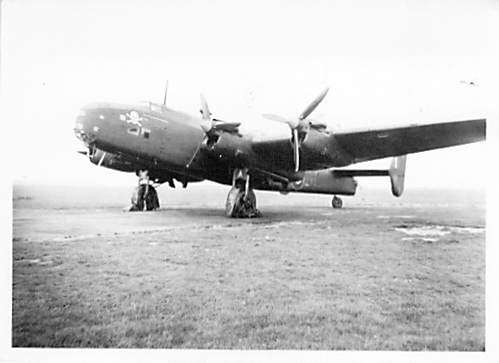
On September 27, 1944, he crashed a third time in a Spitfire NH while serving with 412 Squadron.

The third time, he died. His remains are buried in plot 2B12 in the Reichswald Forest War Cemetery in Germany.[3]  He is listed as a pilot officer in the Royal Canadian Air Force in the Service Files of the Second World War Dead.[4] He’s also commemorated on page 341 in the Second World War Book of Remembrance.

——————————————–

[1] “Airman Shot Down Twice But ‘Nothing Much to Tell’,” Edmonton Journal or Bulletin in its Forty-First Year, but the article describes January 1942 as the distant past.

[2] Alberta Province, Bow River District #2,Enumerated subdistrict 25, uncategorized district 218, section number 7, township 22, range 21, meridian 4, lines 28 to 31, family #69, page 5, Sixth Census of Canada, 1921. Ottawa, Ontario, Canada: Library and Archives Canada, 2013. Series RG31. Statistics Canada Fonds.

[3] Canadian Virtual War Memorial by Veterans Affairs Canada. (n.d.). Retrieved February 24, 2015, from http://www.veterans.gc.ca/eng/remembrance/memorials/canadian-virtual-war-memorial/detail/2055721.

[4] Library and Archives Canada, Service Files of the Second World War – War Dead, 1939-1947, RG 24, Volume 27803, Item 16884, Service number J45927.

William Hanington comes to Canada

William Hanington comes to Canada

By Lucy Hanington Anglin

The property was described as “a commodious estate upon the outskirts of the thriving town of Halifax, in the Colony of Nova Scotia”.  Imagine William’s surprise to arrive in Halifax to discover that “outskirts” meant a 200-mile hike through thick forest and deep snow!

My great-great-great grandfather, William Hanington, was born in London, England, in 1759.  He was the son of a fish dealer, trained as an apprentice to the Fishmonger’s Company and became a freeman in 1782.  In 1784, this adventurous young man purchased land in Nova Scotia from an army officer, Joseph Williams, who had been given a 5,000 acre grant as a reward for services.

After the initial shock upon arrival, he and his friend, Mr. Roberts, found an Indian guide, loaded all their worldly belongings onto a hand sled, trudged through the snow, slept in the open and finally arrived in bitterly cold Shediac in March 1785.  Mr. Roberts was so discouraged that he immediately returned to Halifax and sailed back to England on the first available ship!

William, however, was made of sturdier stuff and was delighted with it all.  There was a good size stream flowing into the bay and he had never seen such giant trees!  He was astute enough to see the lucrative possibilities for trade in lumber, fish, and furs.

Seven years after his arrival, at the age of 33, he hired a couple of Indian guides to paddle a canoe over to Ile St. Jean (now known as Prince Edward Island) where he heard there were other English settlers.  While riding along in an oxcart through St. Eleanor’s (now known as Summerside), he spotted a young lady (age 18) named Mary Darby, feeding chickens in her father’s yard.  It was love at first sight, he proposed to her on the spot and she accepted.  They married and paddled back to Shediac where they raised a large family of 13 children.  Three years later, missing the companionship of another woman, she persuaded her sister Elizabeth and husband John Welling to come over from Ile St. Jean and settle on their land – becoming the second English family in Shediac.

Within the next five years, William had eight families on his property of about one hundred acres of cleared land.  He opened a general store and dealt in fish, fur and lumber.  The furs and timber he shipped to England and the fish to Halifax and the West Indies.  He imported English goods from Halifax and West Indies products, mainly sugar, molasses and rum from St. Pierre. He also bartered with the friendly Indians for furs and helped them clear land.  Before long, a considerable village clustered about the Hanington Store – including a post office and a tavern.  William remained the leading light of the community and acted as the Collector of Customs of the port, supervisor of roads and as Justice of the Quorum (magistrate) in which capacity he married many couples.  To top it all off, in 1800, just fifteen years after his arrival from England, this remarkable young man opened a shipyard at Cocagne and built several vessels there.

Until 1823, there was no church, and William being a religious man, conducted service in his home every Sunday.  So William donated land and lumber, and oversaw the completion of St Martin-in-the-Wood, the first Protestant church.  In 1838, age 79, it only seemed fitting that William was buried in the cemetery there in the shadow of the church he founded.  A huge memorial of native freestone, complete with a secret compartment, still stands.


4-1stmartin-haningtons-81.jpg

The Coal Miners of Scotland

By Sandra McHugh

There it is in the 1881 census:  John Hunter, age 13, coal miner.  John Hunter, my great-grandfather, is the last in the line of almost three hundred years of coal miners.1 He was able to change collieries and, later in life, his job.  This was possible because, by the time he was born, the servitude of the coal miners had come to an end.

The generations of coal miners in my family can be traced back to the birth of James Hunter in 1621.  He was a coal miner, born in the town of Alloa, County of Clackmanannshire, Scotland.  Alloa nestles at the foot of the Ochil Hills and has thrived over the centuries because of its location on the Firth of Forth and the many industries that were powered by coal. Today, Alloa’s economy is based on leisure and retail. 2

Coal became an important commodity in Scotland in the 1600s. 3 The rural areas were agricultural communities and coal mining provided employment. Entire families worked in the coal mines. While some children started working in the mines as early as four years old, the usual age of employment was around eight or nine years old.  Both male and female children worked in the mines. 4

As a result of the economic importance of coal in the 1600s, new collieries opened up and, having no skilled workers, attracted workers from other collieries.  The colliery owners who lost workers petitioned Parliament to take action.

The Parliament of Scotland in 1606 passed an Act whereby coal miners were bound to the collieries’ owners:

“no person should fee, hire or conduce and salters, colliers, or coal bearers without written authority from the master whom they had last served.”

This Act effectively ensured that coal miners and their families were bound to the colliery for life.  A collier who deserted was considered to be a thief and punished accordingly. This Act also gave the coal owners and masters the powers to apprehend “vagabonds and sturdy beggars” and put them to work in the mines.  A further Act of 1641 extended those enslaved to include other workers in the mines and forced the colliers to work six days a week.5

The process of emancipation only began with the Colliers and Salters (Scotland) Act of Parliament in 1775, which defined how the colliers could be freed by age-group. Once the father of the family was freed, the entire family was freed.  But still, the process of complete freedom was only achieved with another Act of Parliament in 1799 that declared the colliers “to be free from their servitude.”6 For almost two centuries, colliers and their families had been legally bound to the colliery owners.  Even after the Act of 1799, it was common for the children of coal miners to work in the mine.  It was expected that sons and daughters would follow in their father’s footsteps, as their families needed the income that the children would bring.

In 1842, the findings of the Children’s Employment Commission outlined the dismal conditions under which children worked in the mines.  It was a shocking discovery to learn that children, as young as five or six, worked as trappers, opening and closing the ventilation in the mines, and other jobs, such as carrying coal. The conditions were deplorable and there was a public outcry. On June 22, 1842, Parliament passed the Mines and Collieries Act 1842 (c. 99) with the objective of improving employment conditions for both boys and women in the mines.  Males under the age of 10 were forbidden to be employed in the mines and boys who were not yet 13 years old were limited to 12 hours of consecutive work.  In addition, these boys could not work more than 3 days a week, nor for two consecutive days.  These rules applied even if a boy worked for different owners.  With this Act, women were also forbidden to work in the mine. Women were then employed to work at the pit head, therefore not in the mine.7 The growing public consciousness of the miners’ conditions was a significant step to ensure that mining conditions improved, that working conditions were fair, and that safety became a prority.

1 Family tree in Ancestry.  Common ancestor is William Hunter, coal miner, father of John Hunter.

2 http://en.wikipedia.org/wiki/Alloa

3 http://en.wikipedia.org/wiki/Economic_history_of_Scotland

4 https://www.museumwales.ac.uk/2191/

5 http://www.scottishmining.co.uk/8.html

6 http://www.scottishmining.co.uk/8.html

7 http://en.wikipedia.org/wiki/Mines_and_Collieries_Act_1842

Family History Writing Studio Now Open

Print

Great news for family history writers. Lynn Palermo, the creator behind the Armchair Genealogist and the annual Family History Writing Challenge has created a virtual website for all of us.

The Simcoe Ontario-based genealogist and author has just launched The Family History Writing Studio, a multi-media website with workbooks, webinars, and personal coaching from Palermo.

One can spend a lot of time floundering around trying to sort it all out,” Palermo wrote in a press release distributed earlier today. “Our goal is to help writers break it down into manageable tasks. We also want to help take the fear out of writing and provide family historians with knowledge and self-confidence.”

Her popular newsletter, “Storylines” will be relaunched as part of the Studio next month.

It will have a fresh look but with the same great how-to articles along with tips and tools to help you become a more efficient family history writer,” says the press release. “The new Storylines will reflect the popular Daily Dose newsletter from The Family History Writing Challenge. Storylines will also keep members up to date on all the newest workshops, webinars and courses coming out of the FHWriting Studio.

A series of writing courses will be launched from the studio next September.

Here is how Palermo describes the many products that form part of her studio:

Workbooks –  A series of Family History Writing e-Workbooks designed to build on one another. Each ebook looks at one aspect of writing a family history narrative. Filled with worksheets, they will help writers apply the various elements of creative nonfiction to narratives.

Webinars – On-demand webinars are designed to complement the workbooks. Lynn personally guides writers through exercises and examples to expand on the workbook content. These on-demand webinars are designed to watch over and again at your convenience.

Courses – Coming this September, a variety of online courses,  designed for writers who want to take a more in-depth look at a particular aspect of writing in a more intimate setting will begin. Lessons are delivered in a variety of formats including downloadable worksheets, workbooks, and videos. All courses include private groups and forums to bring the class together for discussions and critiques with the teacher. Classes are small to provide a more personal learning environment.

Personal Coaching – If you’re nervous about sharing in a group environment then personal coaching might be more your style. In the personal coaching section, Lynn offers a couple of options to work privately together, whether it be to brainstorm your stories or book or for a critique of your written narrative.

Writing Groups – The Family History Writing Studio is designed to meet the needs of individuals and writing groups. The Studio offers options  for small genealogical societies that cannot afford an in-house speaker or the cost of a webinar. Information for writing groups and societies can be found here.

Click here, to learn more about the inspiration behind The Family History Writing Studio.

When asked to express why she decided to launch the studio now, Palermo wrote:

Genealogists come to family history writing with a variety of skills and generally with an overwhelming fear of writing. Because there are multiple aspects to writing stories and producing a family history book, we saw a need to create educational tools to address genealogist’s  individual needs on their journey to becoming a writer.

“We also wanted to provide flexibility, because we understand that we all have busy lives and finding time to write is not an easy task to add to one’s schedule,” continued Palermo.

As one of the 1000 genealogists who participate in Palermo’s annual writing challenge, I’m very happy that she’s developing this new tool for all of us.

Congratulations on producing another great resource, Lynn.


Building the Lachine Canal

The Lachine Canal
The Lachine Canal

by Janice Hamilton

When Stanley Bagg and his business partners began excavating a canal around the Lachine Rapids near Montreal in 1821, they had to deal with more rock and water than they had bargained for.

The Lachine Rapids are a short stretch of white water and submerged rocks in the St. Lawrence River that impede shipping between the port of Montreal and the Great Lakes. According to the legislation that authorized the project, the 14.5-kilometre canal was to be five feet (1.5 metres) deep. On the surface, it was to be forty feet (12 metres) wide so that the long, narrow Durham boats that transported goods and passengers on the river could pass each other. There was to be a towpath beside the water so horses could pull the boats, since it would be impractical to use sails.

The locks were the most impressive part of the project. There was a regulating lock near the canal’s entrance at Lake St. Louis (a broad stretch of the river upstream from the rapids) to allow water into the canal. The other six locks between Lachine and the port raised and lowered boats a total of 13.7 metres. This was nothing compared with the 560-kilometre long Erie Canal, or the Welland Canal with its 90-metre drop over 42 kilometres, but what set the Lachine Canal apart was the fact that all the locks were built of stone, rather than wood, 1.8 metres thick and sealed to prevent leaks. “Nowhere else in North America, or even Britain (with one exception) had locks as large and as solidly built as those on the Lachine ever been constructed,”1 historian Gerald Tulchinksy wrote.

The main contractors, Thomas Phillips, Andrew White, Oliver Wait and Stanley Bagg, were responsible for excavating the canal. Their contract included building the locks and constructing two impressive stone bridges and numerous wooden footbridges so the farmers whose land was crossed by the canal could reach their fields. They had a separate contract to build fences which were supposed to keep grazing cows from damaging the canal banks and workers from scavenging firewood in the nearby farmers’ orchards.

The contractors subcontracted some of the work. For the rest, they hired masons, carpenters, foremen and hundreds of day labourers equipped with picks and shovels, the majority of whom were recent immigrants from Ireland. Horses helped with the heavy hauling.

As treasurer, Stanley Bagg recorded the employees’ pay and kept the account books that listed purchases such as timber and tools.

The canal was designed by Thomas Burnett, a British engineer who had canal building experience in England, but who died before this project was finished. The ten commissioners who had been named by the government to oversee the project visited the work site frequently and met with project leader Phillips whenever problems arose.

Spring flooding was the first major problem the contractors encountered, and it delayed the start of the construction season year after year. The water came mainly from the St. Lawrence River. (This is not an issue today because a dam near Cornwall, Ontario regulates the water level.) In addition, runoff from snow on the Island of Montreal collected in the low, swampy area near the canal’s route. This meant work usually could not start until July, and generally wrapped up around October. Although some work went on in winter, progress was difficult once the ground was frozen.

Soon after they started digging, the contractors discovered a huge area of hard, igneous rock that had to be blasted to make way for the canal, but the men the contractors had engaged to supply gunpowder (one of whom was Stanley Bagg’s brother, Abner,) had difficulty getting hold of it. On October 24, 1822, Abner wrote, “I have just had a most terrible letter from them [the contractors] on the subject, in which they say that no less than 400 men must stop working this day for want of gunpowder….”2

the last lock of the Lachine Canal, 1826

The delays worried the commissioners. On May 19, 1823, they formally notified the contractors “of the heavy responsibility to which they will be liable if the construction of the aforesaid [masonry] works be delayed by their default, and therefore that their utmost exertion is required to effect the rock excavation to its full depth along the middle of the canal ….”3

Another problem arose when they reached the St. Pierre River, also known as the Little River. Normally it was nothing more than a small stream, but it turned into a torrent in the spring of 1824, washing away part of the newly built canal embankment. To prevent further damage, the contractors dug a basin to accumulate some of the spring runoff. They built a tunnel for the river beneath the canal.

All these difficulties were unexpected, and costs skyrocketed. The initial estimate was 78,000 pounds; the final cost came to 107,000 pounds. When the money ran low in 1823 and the government balked at spending more, commission chairman John Richardson arranged a loan from the Bank of Montreal. Eventually, the government funding came through, but the uncertainty must have been of special concern to Bagg, the man who paid the bills.

Stanley Bagg
Stanley Bagg

Part way through the project, the commissioners persuaded the government to approve a shorter and less expensive route. The commissioners decided that the bid from Bagg and his partners for the new section of the canal and a wharf was too high, so someone else did that work.

By August 1824, 11 kilometres of the canal were finished and the waterway opened to commercial navigation as far as the fourth lock. Other builders continued working on the project into 1826, but as far as Bagg and his partners were concerned, the contract was essentially complete in 1825.

This must have been an intense period of Bagg’s life, with dawn to dusk activity during the construction season and year-round worries. He lived near Lachine in the summers since his own house was on Saint Lawrence Street, far from the work site. Furthermore, his task as treasurer must have been challenging: this was the first time such a large civilian project, with so many employees, had been undertaken in Canada.

Meanwhile, ever the entrepreneur looking for additional ways to make money, Bagg also owned a store in Lachine where employees could buy beer, rum and a few groceries. He and several partners also owned a bakery that provided bread to the workers. In addition, the contractors provided bunkhouse accommodations in Lachine for some of the day labourers.

lachine canal map1m_edited-1
the Island of Montreal showing the canal, 1834

In the end, this massive undertaking was a success. “The competence of the engineer, foremen, labourers and skilled hands in building a substantial canal is attested by the fact that it lasted more than twenty years,” observed Tulchinsky. “No major repairs or alterations were necessary and the Lachine Canal proved adequate for handling the growing volume of traffic to and from the Great Lakes region.”4 It carried thousands of new immigrants toward the interior of the continent, and commodities such as grain, flour, salted pork, ash and timber. In the summer, proud Montrealers took cruises on the canal and strolled along its banks.

Eventually, in the 1840s, a larger canal was built alongside the old one to handle the increased traffic; then the cows and orchards disappeared, and industries grew up along its banks

Stanley Bagg and his colleagues could be proud of their accomplishment, but Bagg never took on another project of this scope, working primarily as a timber merchant for the rest of his life.

For the background to this story, see http://writinguptheancestors.blogspot.ca/2015/02/stanley-bagg-and-lachine-canal-part-1_27.html

Sources

  1. Gerald Tulchinsky,“The Construction of the First Lachine Canal, 1815-1826” thesis, 1960, McGill University Department of History, Montreal, p. 77. http://www.collectionscanada.gc.ca/obj/thesescanada/vol2/QMM/TC-QMM-112940.pdf
  2. “Abner Bagg Letterbook, Oct 1821-Sept 1825” P070/A5,1, Bagg Family Fonds, McCord Museum, Montreal.
  3. “Lachine Canal Commission,1821-1842”, Library and Archives Canada, Ottawa.
  4. ibid. p. 109.

Photo credits: Janice Hamilton; John Hugh Ross, ROM 980.104.6 Royal Ontario Museum; private collection; Carte de l’île de Montréal… Iris # 0000083791, Bibliothèque et Archives nationales du Québec.

Huguenots – Index of Names

cross

The Cross of Languedoc

Part 1. 

Huguenot Trails

 Is an Index of family names appearing in “Huguenot Trails”, the official publication of the Huguenot Society of Canada, from 1968 to 2003.

“Huguenot Trails” publications are available in the periodicals section of the Quebec Family History Society in Pointe-Claire, Quebec

While many family histories are given at length, and others are mentioned only briefly.

 Part 2

 Huguenots in Nouvelle France – Québec (New France – Quebec)     1604-1763

 Family listings –  2nd compilation

Fichiers huguenots

Michel Barbeau Author, researcher, compiler and consists of

 Huguenots from France (319 pioneers)                 http://pages.infinit.net/barbeaum/fichier/

Calvinists from Switzerland (21 pioneers)    http://pages.infinit.net/barbeaum/suisses.htm

 Part 3.

 Huguenots in Nouvelle France Québec (New France Quebec1600-1765

Family listings  – 3rd compilation

 Listing of family names obtained from the writings of many authors and  Various Online Sources

Click on the links below to open in  new windows

Part 1

Trails – Family Names

Part 2.

 The Huguenots 2 in Nouvelle France

Part 3.

The Huguenots in New France #3

The Harvester Scheme and the Empire Settlement Act

By Sandra McHugh

Who would have thought that finding the immigration records of my grandparents would have led to me to learn about two British government initiatives designed to promote immigration in the 1920s?  I was looking in the Library and Archives Canada web site and found digitized records of Form 30 that recorded the entry of every immigrant between July 1921 and December 1924.1  I was thrilled to find the form that my grandfather, George Thomas Deakin, signed in August 1923, and the one that my grandmother, Grace Graham Hunter, signed in February 1924.

My grandfather’s form indicated that he came to Canada as part of the Harvester Scheme.  In 1923, Canada had a bumper wheat crop and North America could not provide the labour needed to harvest the crop.  Under the Harvester Scheme, the two major Canadian railway companies entered into an agreement with the British government to transport 12,000 workers out west where they would earn $4.00 per day plus board.  This was considered a successful scheme as 11,871 migrants went out west to work, the harvest was successfully completed, and 80% of the harvesters stayed and were considered “successfully assimilated.”2

My grandmother’s passage was paid by the Empire Settlement Act.  This Act was passed by the British Parliament in 1922 and its purpose was to provide an incentive for migrants to settle in the colonies.  Canada badly needed farm labourers and domestic workers.  At that time, the Canadian government favoured immigrants from Great Britain as a means of ensuring the predominance of British values.  In the early 1920s, it was difficult for Canada to attract immigrants from Great Britain as Britain was enjoying a period of prosperity right after World War I.  Another reason was the prohibitive cost of transatlantic transportation.  Even passage in third class would have been expensive for a farm labourer or a domestic worker.3

My grandmother came to Canada to enter into domestic service as a cook and her destination in Montreal was the government hostel.  Hostels were located in major urban areas across Canada.  These hostels were partially funded by the provinces and immigrants from Great Britain were allowed free dormitory accommodation for 24 hours after their arrival.  Young ladies were looked after by the Superintendent of the hostel and referred to a church worker.  They were also referred to Employment Services of Canada who would find them employment.4

Sources

1 Library and Archives Canada:  http://www.collectionscanada.gc.ca

2 Foster, John Elgin, 1983, The Developing West:  Essays on Canadian History in Honor of Lewis H. Thomas, University of Alberta

http://www.pier21.ca/research/immigration-history/empire-settlement-act-1922

4 Crawford, Ruth, 1924, “Canada’s Program for Assimilation”, The Rotarian, May 1924, p. 16

Searching for Ancestors in France

Many original documents of French ancestors are available online via the 92 of the 95 departmental archives in France.

To make it easy for you to use these wonderful public resources, I have compiled the links into a single pdf document, which you can download from this link: Master copy 10 12 13 Les Archives départementales en France.

Also included are maps so that you can figure out which modern department holds the historic records you need to find.


Working together to help genealogists discover their ancestors