Christmas at Aunt Eva’s

images Christmas 2


One of my fondest memories of Christmas in Gaspé  are the Christmas Eve family gatherings at Aunt Eva’s .  Each Christmas Eve the Boyle Family members (Dorothy, Emily, Eva, Ernest, Eileen, Greta, Alice and Arthur)  who happened to be in Gaspé would   meet at Eva’s home for this  annual   Christmas Eve celebration .  It was truly a family gathering because those celebrating would extend beyond the immediate family.  All nephews, nieces, cousins, girl and boy friends would be welcome as well.

As long as I can  remember this tradition was guaranteed to take place each year, come blizzard or any other natural disaster.  The only break in the tradition was when Aunt Eva passed on.  Though I believe efforts took place to revive this tradition, things were not the same.   An important ingredient was missing.  This being Eva’s love of Christmas and love for her family.   The tradition hinged around Eva.  No one could think of it taking place any where else.

 As memories go, this is one to cherish as the years pass and I am sure it gives a warm feeling to those who remember these Gaspé Christmas’s.

imagesChristmas 3

 This story, Christmas at Aunt Eva’s was written and contributed by Jim Caputo

Many thanks Jim for allowing us to share in your fond memories of Christmas in the Gaspe. Perhaps this will encourage others to think about their favourite memories of past Holiday Seasons.

ch-hollybar

Loyalist Churches in Brome-Missisquoi – Upper Richelieu Valley – South Shefford

Missisquoi 2_edited-1

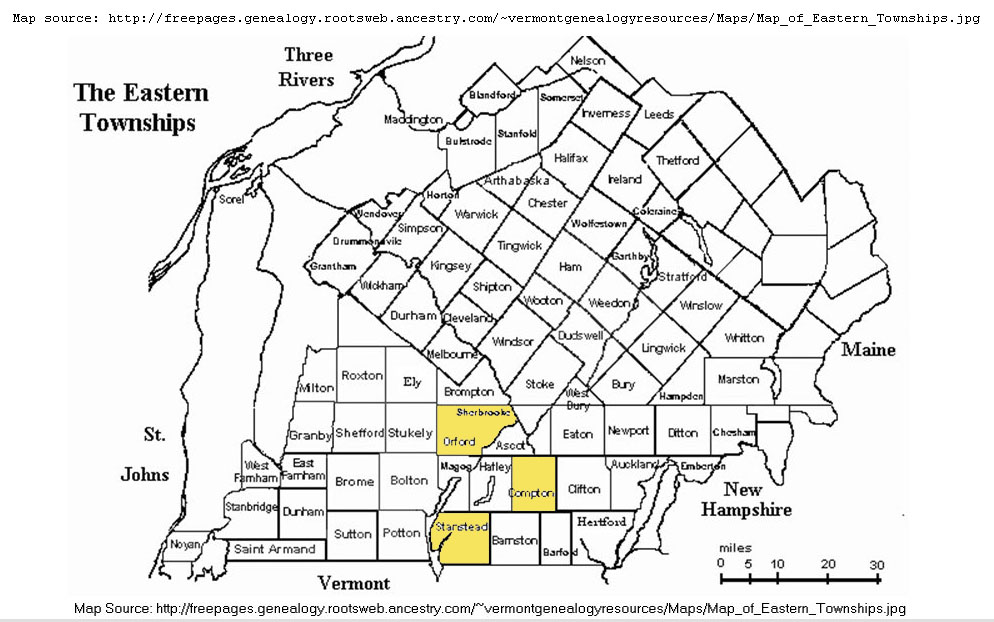
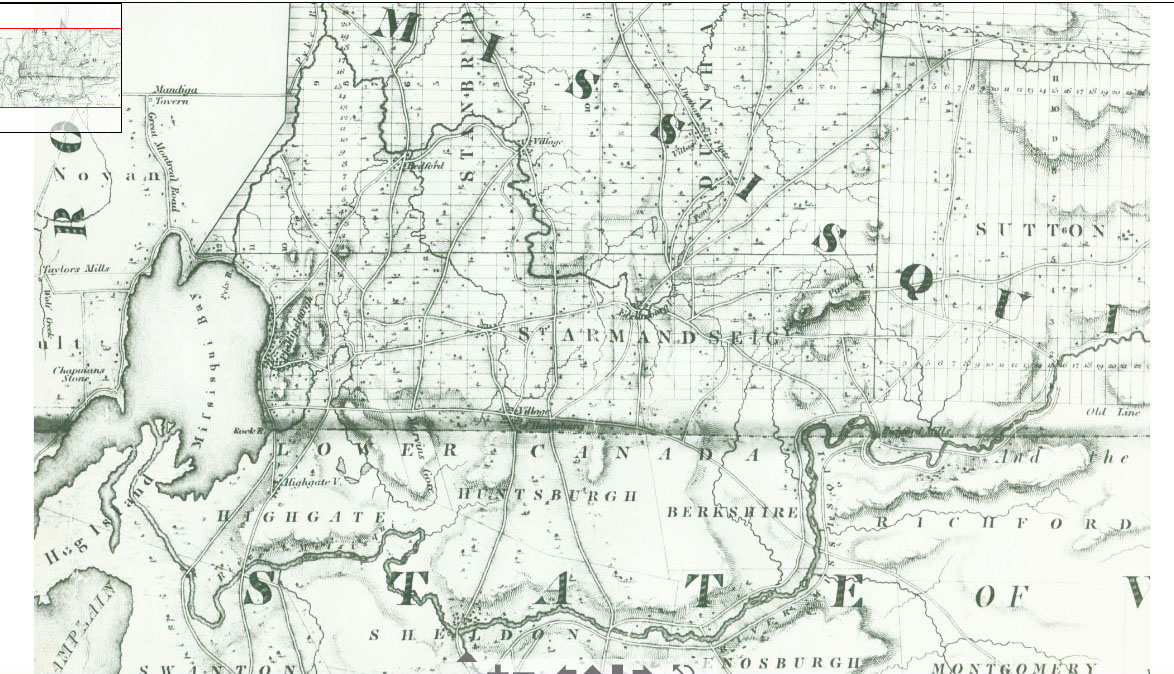
The American Revolution left  profound marks on the development of the areas of Brome-Missisquoi, the Upper Richelieu Valley and South Shefford. The Americans who wished to remain loyal to the British Crown fled the United States. These Loyalists  came from the northern states and settled very close to the border. Within a short period of time they began to develop many small communities, from Abercorn , near what is now the Vermont border to St. Armand near Missisquoi Bay..

This compilation describes the many towns and villages that emerged from the late 1780s to this day. Their churches contained documents of birth, marriages and deaths that have  been preserved and are available in various archives.

The contributions of these Loyalist can be found   throughout the area.  Many of the churches are still standing and are a tribute to their perseverance.

Click on the link: Loyalist Churches in Brome Missiquoi

Upper Richelieu Valley and South Shefford

images (1)

The Loyalist Churches of Sorel, Three Rivers, Saint Johns, Chambly and Surrounding Areas

images (1)


This compilation, prepared by Montreal genealogist Jacques Gagné, looks at the churches frequented by Loyalists who settled in three regions of Quebec in the late 18th century: Trois-Rivières (Three Rivers) and Sorel, east of Montreal on the St. Lawrence River, and Saint-Jean (St. Johns) and Chambly, south of Montreal on the Richelieu River. It outlines the histories of these churches and where to find surviving records.

Click on the link: Loyalists Churches Sorel – Three Rivers

The O’Hara Cemetery, Gaspé

clip_image002

Author: Jim Caputo

Photos: Courtesy of Jim Caputo

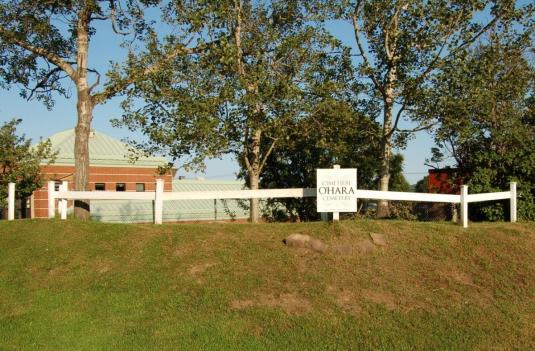
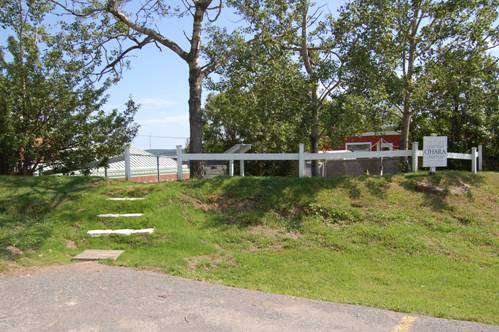
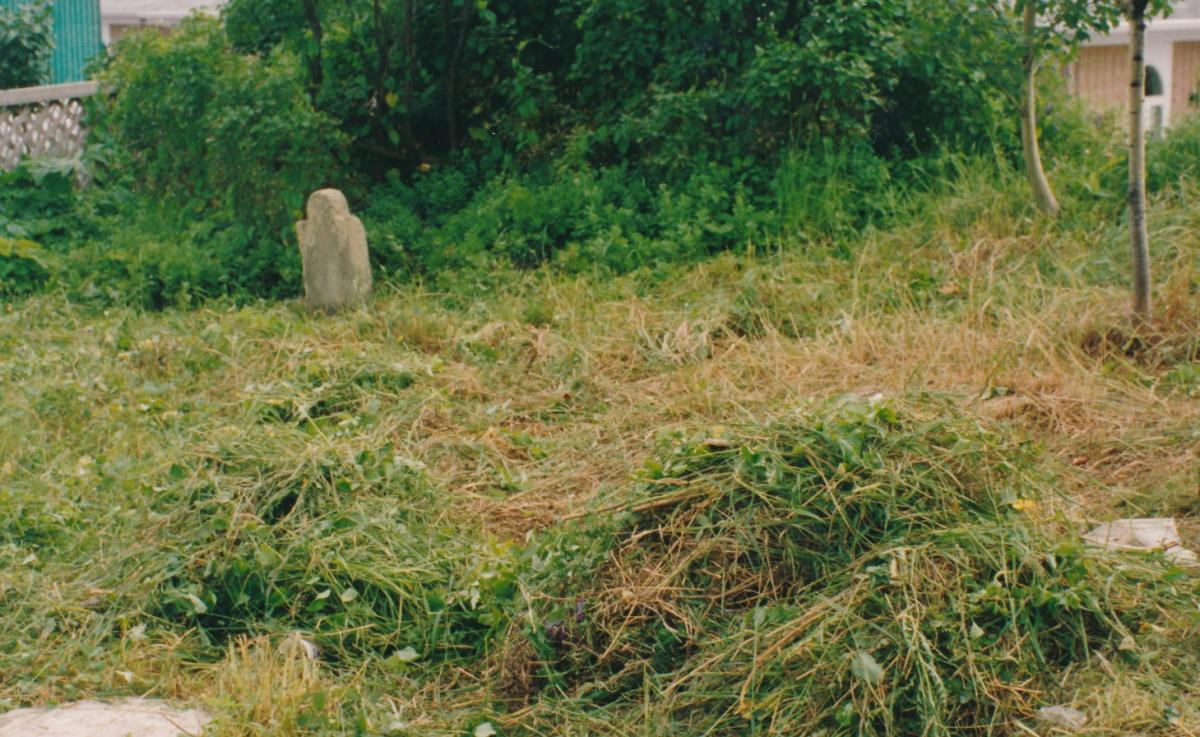
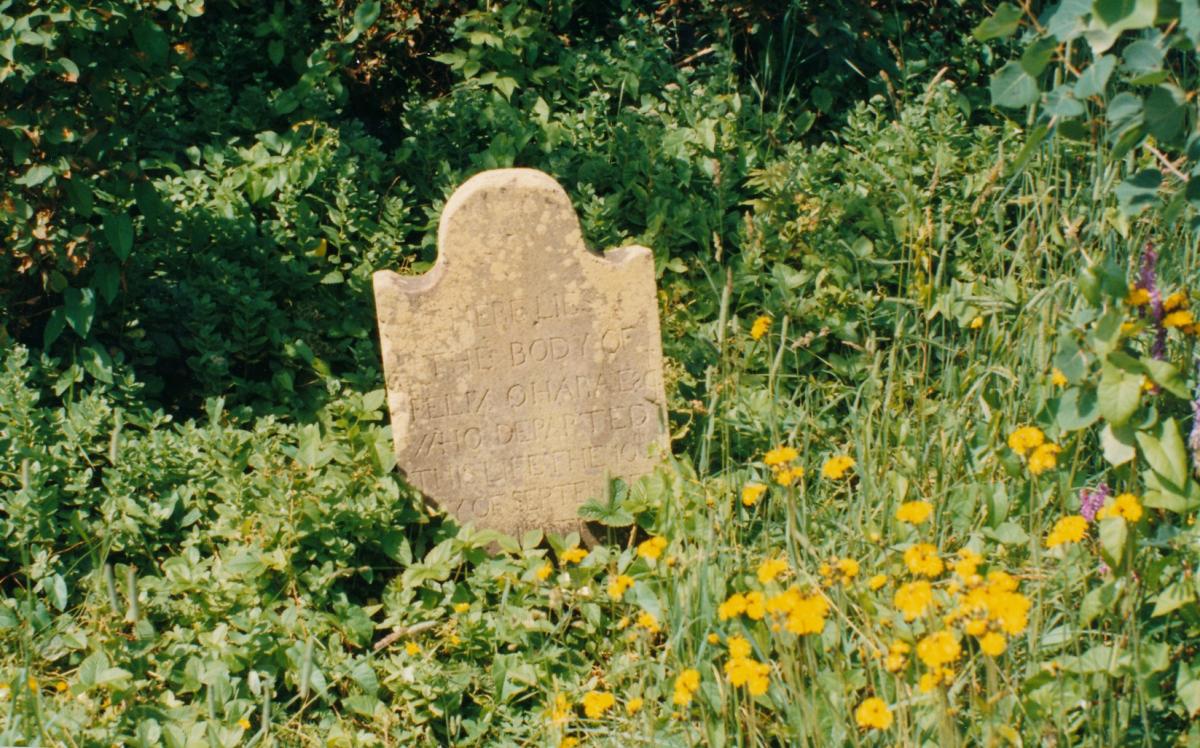
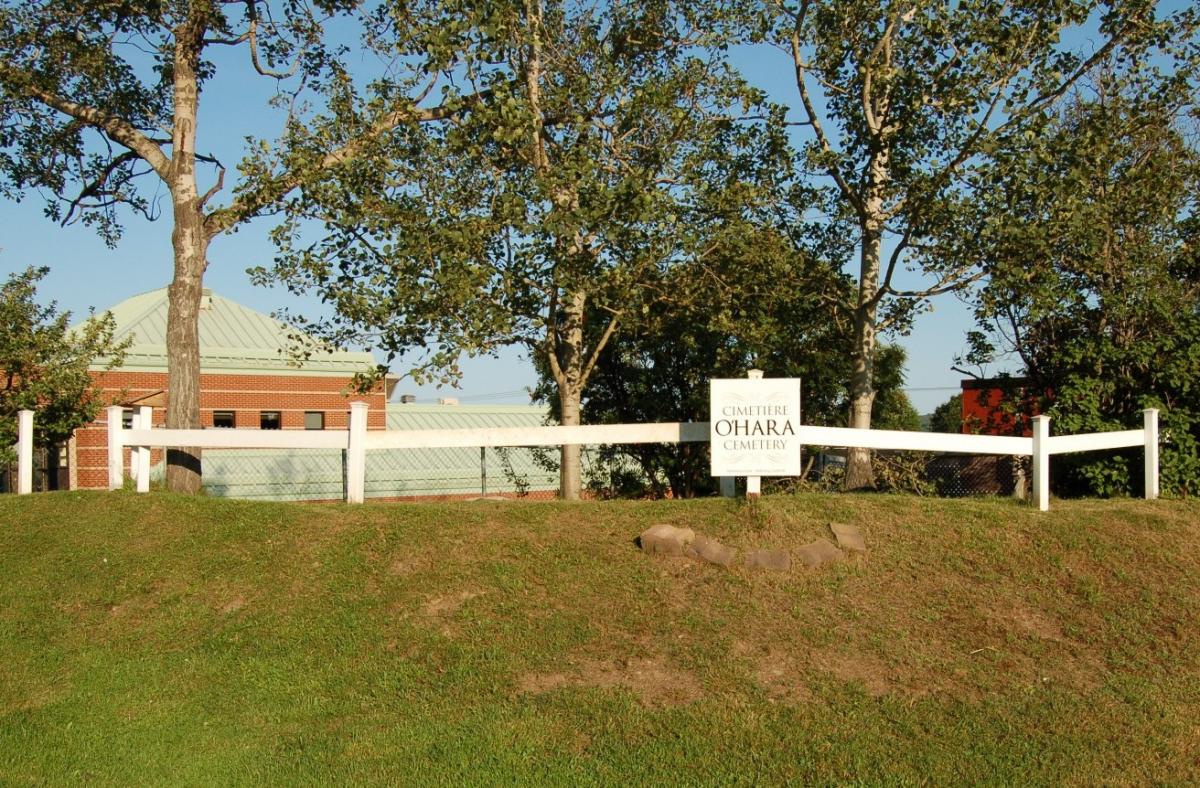
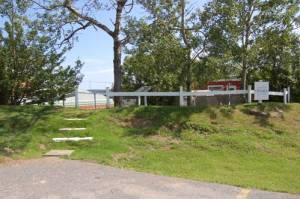
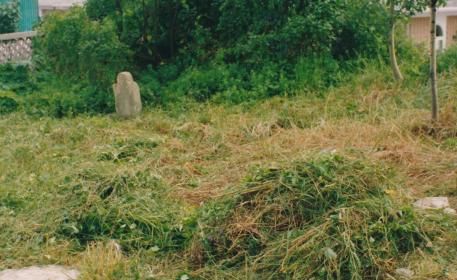
 Located in the very heart of the city of Gaspé lies an ancient burial ground — the O`Hara Cemetery. No one knows for certain how many souls were interred in this place. What is certain is that for many years the site was neglected, left to grow up in brush and weeds. Through the efforts of Heritage Gaspé/Héritage Gaspésie the area was cleaned of debris and brought to its present condition. Take the opportunity to visit the spot and view the graves of some of our early settlers and think back in time to Gaspé of yesteryear.

The O’Haras of Gaspe

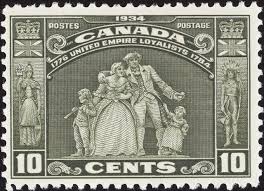
The O’Hara’s, one of the earliest settlers of the Gaspé Basin area, arrived in Gaspé in 1765. Felix, his wife Martha and family settled on land long known as O’Hara’s Point. Their other holdings included lands that make up much of the centre of present day Gaspé Village. Felix, as well as being a prosperous land owner, played a prominent role in laying the foundations of the Gaspé communities, being made a Justice of the Peace, becoming the second Collector of Customs for the port of Gaspé, and being appointed Judge of the District of Gaspé in 1777. He also helped protect the coast from attacks during the American Revolution, and at the end of hostilities helped to survey and distribute lands to the United Empire Loyalists who came to Douglastown and New Carlisle.

As well as the efforts of Felix, other members of this family also played an important role in the development of early Gaspé. Of his sons Oliver, became Collector of Customs at Carleton; Edward represented Gaspé in the first legislature of Lower Canada (Quebec), served in the British army, and was appointed the Governor of the Island of St. Lucia in the Caribbean; Henry the youngest son, was Collector of Customs for many years and was also a Justice of the Peace and surveyor; Hugh, Collector of Customs in Gaspé, through his compassionate efforts in helping immigrants sick with fever, caught the fever himself and died as a result. The O’Hara’s also supported the development of education, the establishment of Churches, and served in local militias.

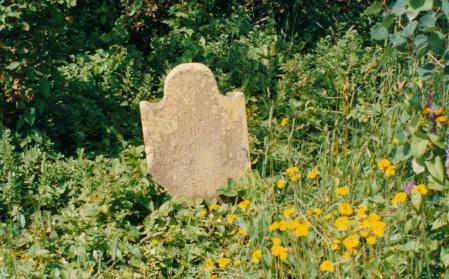
Of the original grave markers only those of Felix O’Hara (the patriarch of the O’Hara family), who died in 1805, Mary Stuart, wife of Henry O’Hara, who died in 1838, and Jane Chevalier, who died in 1848, exist today. It is believed that other members of the O’Hara family may have been buried at this site. It is also believed that others outside of the family were buried here as well.
ohara.2


ohara_0   

  ohara.3

                                                                           After the clean up.


The Loyalist Churches of the Gaspe Peninsula

images (1)

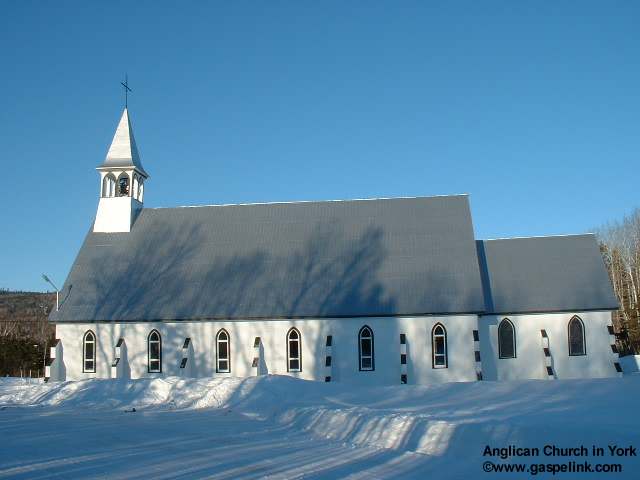
Following the War of the American Revolution, those who had remained loyal to the British felt compelled to leave the newly independent United States. While most settled in what is now Ontario, Nova Scotia and Quebec’s Eastern Townships, some moved to the Gaspé Peninsula of eastern Quebec. This is a region of interior forests and mountains and of fishing villages along the Gulf of St. Lawrence. 

The newcomers settled in towns and villages such as Matapédia, Bonaventure, Percé, Gaspé and New Carlisle. Their neighbours were of French Canadian, Acadian and Micmac ancestry, and most were Roman Catholic. The newly arrived English-speaking, Protestant Loyalists needed their own places to worship and to record their births, marriages and burials.

At first, these needs were met by Anglican, Presbyterian and Methodist missionaries, but eventually the newcomers built churches of their own. This compilation lists the churches they founded and the ministers who served the English-speaking community. It guides the genealogist to the various places where their records are kept, including government and church archives, and the library of the Quebec Family History Society.

The compilation also mentions the records of the Gaspé residents who came from Jersey and Guernsey, in the Channel Isles, and the early settlers from Scotland. The introduction pays tribute to two individuals who researched and documented the lives of the English-speaking residents of the Gaspé, Kenneth Annett and David J. McDougall, and tells researchers where to find their work.

                                                        Click the link to open in a new window:

Gaspe-Loyalist Churches

yorkchurch

The Germans in Quebec – Their Churches

Their Churches from 1759 onward

Among the Germanic people who emigrated to Québec, we find those who fought with the Imperial Army during the British Conquest of 1759 plus those who fought for the British during the wars of the American Revolution and of 1812. An appreciable number of these Germanic soldiers settled into Québec once their tours of duty were concluded. Other German  immigrants who spoke some forms of the German language originated from various principalities, dukedoms, electorates, counties, landgraviates, margraviates of Germany, but also from surrounding kingdoms such as Prussia, Silesia, Bohemia, Hungary, Poland, Austria, United Netherlands, Austrian Netherlands, Switzerland, Palatinate, Strasbourg and Luxembourg.

Hessian Soldier Illustration Click the following link                The Germans in Québec

The Europeans in Quebec and Their Churches

The Europeans in Québec                         Lower Canada and Québec

Churches of the Scandinavian, Baltic States, Germanic, Icelandic people in Montréal, Québec City, Lower St. Lawrence, Western Québec, Eastern Townships, Richelieu River Valley – The churches of immigrants from Sweden, Norway, Denmark, Finland, Estonia, Latvia. Lithuania, Iceland, Germany, the Netherlands, Belgium, Switzerland, Austria plus those from Eastern European countries – Churches which were organized in Québec from 1621 to 2005. Also included within this document you will find a number of book titles relating to the subject.

Click the link:

The Europeans in Québec

Anne Josephe Gourdine’s Journey to Canada

1901censusz000100305She celebrated the beginning of her 53rd year carefully describing her family to a census taker.

Francis McCullough arrived at their farm first thing on Monday, after her birthday the Saturday before. Surely they talked about her birthday as he carefully marked her age and date of birth?

He also marked the date of his visit, April 21, 1901. A major snowstorm that weekend brought bad weather to almost the entire continent, but if Ontario was hit, no mention appears on the census. Nor is there any break between the farms surveyed. The page began with the Taylors on Thursday and continues with the Jons, the Diottes and the Birches prior to the Hurtubises. No break appears in his trip from farm to farm day by day.

Damase Hurtubise
Damase Hurtubise

At the Hurtubise farm, McCullough took the time necessary to hand-write the dates of births for everyone. Anne Josephe and Damase housed six children then: Gustave, who was 17; Josephine, who was 15; Juliette, 13; Jean Baptiste, 12; Marie-Louise, 10 and François, the youngest at seven years old. [1]

Unfortunately, most of the pieces of paper carefully completed by McCullough were destroyed in 1955 after the Dominion Bureau of Statistics microfilmed them. Only two remain. Sometimes guesses have to be made.

Anne Joseph’s arrival in Canada, for instance, might be 1871, but the “7” isn’t clear.

Luckily, her family shows up on passenger lists for that year. Her name then was Anne Josephe Gourdine. She was 22 years old.

Her journey from Belgium to Canada began in a carriage. A train and boat trip also took place before she and her family caught the Scandinavian, a Montreal Ocean Steamship Company ship.

Anne Josephe was among 318 immigrants described in a Canadian report compiled the following year:

Mr. Berns, Canadian Government Agent, at Antwerp, in Belgium, registered 318 emigrants for Canada during the last year. The Official Reports for the past year only mention 85…Belgium emigration to Canada is by way of Antwerp, Grimsby and Liverpool. The price of passage from Antwerp to Quebec was 160 francs.[2]

There were already passengers from Ireland onboard by the time she got on in Liverpool, England. The ship sailed on August 10, but the journey was quick. It only took two weeks to arrive in Quebec City, Quebec.[3]

Anne Josephe travelled with her family to the Parish of Sainte-Angélique in Papineauville, Quebec. That’s where she met her future husband, Damase Hurtubese. They married on May 3, 1880.[4]

They were still there, in house 229 with their 2-month old daughter Marie-Louise, when the 1881 Census taker arrived.[5]


[1] Data from the Fourth Census of Canada 1901, Cumberland, page 3 from subdistrict d2, Russell, Ontario microfilm T-6494, line 21.

[2] “Immigrants to Canada.” – Report of 1872. N.p., n.d. Web. 21 Oct. 2013. http://jubilation.uwaterloo.ca/~marj/genealogy/reports/report1872.html, note: Report begins with statement “this information is taken from the Sessional Papers, 36 Victoria 1873.“

[3] Passenger Lists, 1865-1922, Library and Archives Canada, list number 77.

[4] Plaque from information compiled by Paul-André Langelier in 2000.

[5] Data from the 1881 Census, Province of Quebec, County of Mattawa, p 63.

The French Canadians in Western Canada

canewzz


The Archives nationales du Québec in Montréal on Viger Avenue are the repository of a wonderful and unique collection of books of marriages, baptisms, deaths of French Canadian families who left the Province of  Québec between 1840 and 1930 for destinations in Western Canada, especially in Alberta and Manitoba.

Monsieur Daniel Olivier,  former archivist at the Bibliothèque de la Ville de Montréal on Sherbrooke Street East, the latter no longer in operation, referred to for years as Salle Gagnon was responsible with the assistance of his associates for the acquisition of many of the books of marriages, baptisms, deaths, and burials outlined in this research guide.

Madame Estelle Brisson, former archivist at the Archives nationales du Québec on Viger Avenue East in Montréal with the assistance of her associates was also responsible for the acquisition of many of the books of marriages, baptisms, deaths, and burials outlined in this research guide compiled by Jacques Gagné.

Click on the link            The French Canadians in Western Canada

Did Louis Riel hide in my ancestor’s basement?

riel rebellion battoche

Family lore says that my ancestor Joseph Arial had many meetings with Louis Riel in the basement of a hotel he owned. The story might be about a hotel in St. Boniface that may have served as a hide-away for the Métis hero and later burned to the ground or it may be referring to a hotel owned by his son Joseph Gabriel, who ran his own hotel in Gleichan* (near Cluny), Alberta.

How does a genealogist go about proving such a story? The family legend might refer only to my great great great grandfather or his son, or it may combine the exploits of both.

My first challenge was figuring out the timing. Louis Riel was born in the Red River Valley in 1844 and was hanged for treason on November 16, 1885.[1]

Then I began searching through the names and dates of my ancestors’ lives.[2]

Joseph Arial was the first of my ancestors who left Quebec. He was born in 1812 in St. Roch and died on November 4, 1880 in St. Boniface, Manitoba, where he is buried. His wife was Julie Belleau dit LaRose who was born the year before he was. The two were married in St. Roch on September 4, 1832. St. Boniface is on the south side of the Red River, so the location is correct, although he would have been much older than Riel.

His son, Joseph Gabriel was married to Marie Sophie Bernard in St. Boniface, Manitoba on August 8, 1887. Their hotel would be too late to have anything to do with Riel. Joseph’s wife is important to my story, however, because her mother was born in 1838 in St. Anne-des-Chênes (Oak Point), just down the river from where Riel would be born six years later. Her mother, Sophie Henault Canada was also born in the Red River Valley, so there were roots that went back years. The possibility that Sophie’s parents, Charles-Henault-Canada and Marie Gris, knew Louis Riel’s parents, Julie Lagimodières and Jean-Louis Riel, who were married in the chapel of St. Boniface Cathedral on January 21, 1844 were high.

That isn’t proof though.

My next step will be to verify the guests at the marriages of Joseph Gabriel and Marie Sophie and the marriage of Julie Lagimodières and Jean-Louis Riel, but in the meantime, perhaps what happened after Riel’s death will tell us more.

So far, the only information I have comes from Fred Jones in his story called “Blackfoot Reserve. ” He speaks about Gabriel Arial running a hotel. He writes:

My first impression of Gleichen was when we arrived by way of Calgary from the Blood Reserve. We stayed in the Palace Hotel, owned by a French Canadian named Mr. Gabriel Arial, and I think he built it. Some of the Old Timers seem to think it was originally build of logs, but I had seen parts of it torn down and repaired here and there with no logs under the sheeting, but the rough boards were hand-sawn with the old, long ripsaw, and iron nails were used. The style was what you might call early Western, and no luxuries were provided. The rooms contained a bed, chair, washstand and plain dresser, a big jug full of cold water and a smaller jug, for drinking. If you needed more water you took your jug downstairs and outside, to the well. A kerosene lamp provided light.

The Arials welcomed us, and were very hospitable. So were the cockroaches and bed bugs, but that was the usual thing in any dwelling in those days. There were no insect repellents, except kerosene and pyrethrum powder and these failed to attain victory. A a standoff was the best to be hoped for, as the walls were hollow and the plaster cracked so the enemy could retreat and fight another night.

I went to school later with the Arial boys and girls. The hotel was later sold to Brosseau Brothers, and the Arials moved to Edmonton.

I think we arrived in Gleichen about 1896 or 1897, as the C.P.R. roundhouse was still there and I think it was moved to Calgary in 1898. (As I recount these many events, please consider that they happened over seventy years ago. They may be kind of sketchy and not follow in proper sequence and some that made an impression then, may not have been as important as others that might have been forgotten.)[3]

Is this Gabriel my grandfather? I don’t know for sure yet, but I think so. My grandfather was called Gabe after his father and he grew up in Edmonton. My grandmother also moved to Cluny as a child and that’s where they met. This Gabriel Arial may also have been a cousin though, so I still have much more verification to do.

[1] All the facts about Louis Riel and his life in this story come from Maggie Siggins’ book “Riel A Life of Revolution” Harper Collins, Toronto, 1994.

[2] For this part, I relied on the handwritten notes of Mary Alice Kite and my grandmother, Ann Marguerite Arial. My grandmother learned how to do genealogy from Mary Alice and she knew my great grandparents personally. She would have confirmed their parents’ and grandparents’ names with them. She also collected photos of the family, which I now have. Few of the people can be easily identified now.

[3] The Prairie Hub, by John Julius Martin, Rosebud, Alberta, The Strathmore Standard, 1967, p. 160.


*An earlier version of this story spelled Gleichen incorrectly.

Working together to help genealogists discover their ancestors