Tag Archives: Daniel Hanington Shediac

The Family Historian

Ten years ago in July 2015, my sister and I shared a “Sister Pilgrimage” to Shediac, New Brunswick, the home of our maternal ancestors. Here is a part of the story I wrote upon our return:

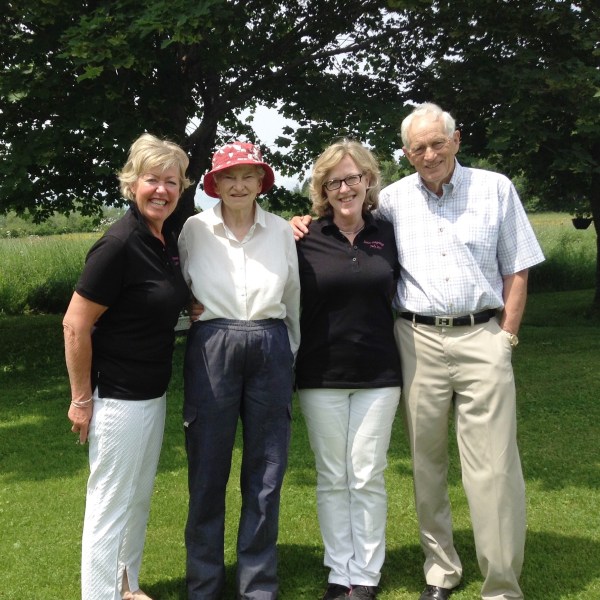
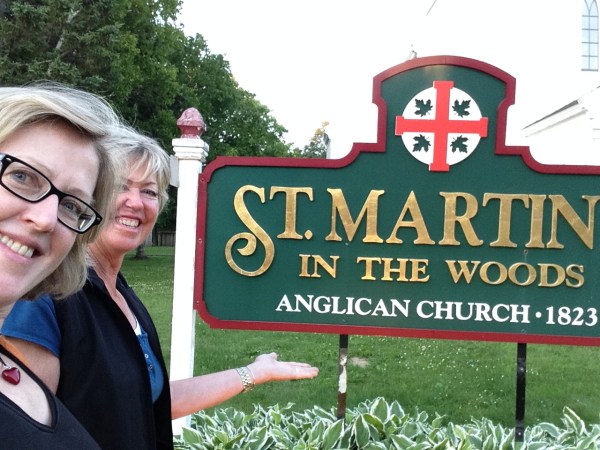
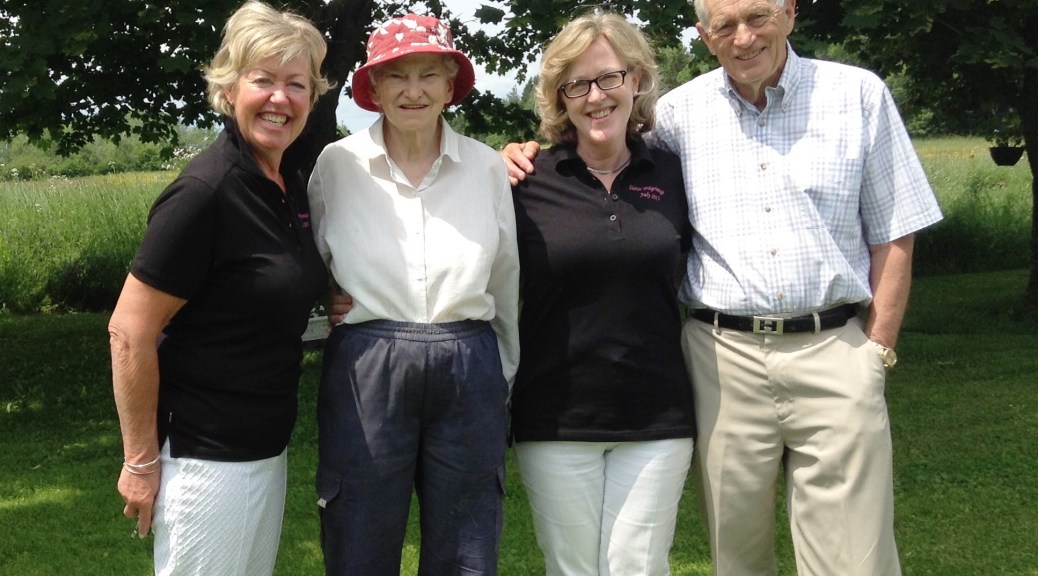
“Early Sunday morning, dressed in our special t-shirts, we left in plenty of time for the morning church service at St Martin’s-in-the-Woods.  The greeter welcomed us warmly, and we asked if there might be any Haningtons at church that day.  She beckoned down the aisle to her husband who then introduced himself as Allen Hanington.  Overjoyed, we threw our arms around our surprised distant cousin and snapped a commemorative photo.  And so our journey began.

My 3x great grandfather, William Hanington William Hanington comes to Canada, was the first English settler in Shediac, New Brunswick, in 1785.  He was an amazing fellow who emigrated from England at the age of twenty-six, built a whole community, set up lumber exports, built ships, married a PEI girl Shediac’s First English Woman Settlerand had a family of thirteen.   Later in life, in 1823, he donated a piece of land and built St Martin’s-in-the-Woods Anglican Church, where he was buried in 1838.Later on that Sunday after the morning service at St Martin’s-in-the-Woods, we visited with Allen’s charming sister Lilian, the family historian who knew our exact location in the Hanington family tree!

… PS  The August 2015 family newsletter, the Hanington Herald, just arrived by mail! Included in the comments from the President’s Desk (that would be our cousin Allen!), it says: “We just experienced a lovely visit from the Anglin sisters; Lucy (Montreal) and Margaret (Ottawa) who were visiting in the area and attended morning service at St Martin’s-in-the-Woods Anglican Church on Sunday, July 5th 2015.  We had a very nice visit on Sunday afternoon.  They are descendants of Daniel Hanington.” Roaring Dan

After the recent passing of Allen Hanington, I spoke with his sister Lilian—and it quickly became clear that her story deserved to be shared.

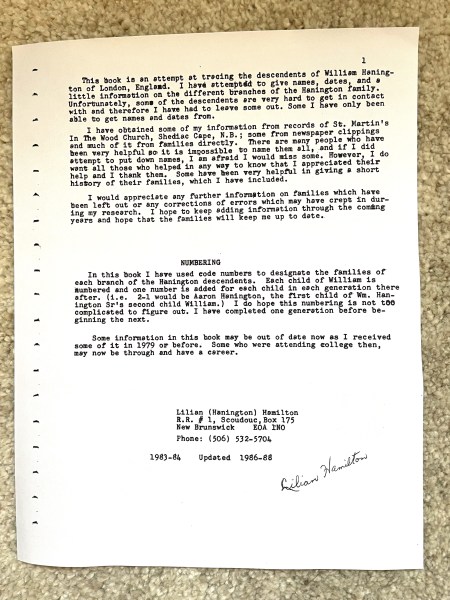
Lilian is my third cousin once removed on the Hanington side, and she’s made a lasting impact as our family historian. Her most significant legacy is the Hanington Book—a detailed 394-page family tree that she compiled and first published in 1983, then updated in 1988. Every Hanington was assigned a unique number to trace their lineage. Lilian herself is #2-4-6-10, meaning she is the 10th child of the 6th child of the 4th child of the 2nd child of our original Shediac settler, William Hanington. I now have a PDF copy of the Hanington book and happily share it with cousins near and far.
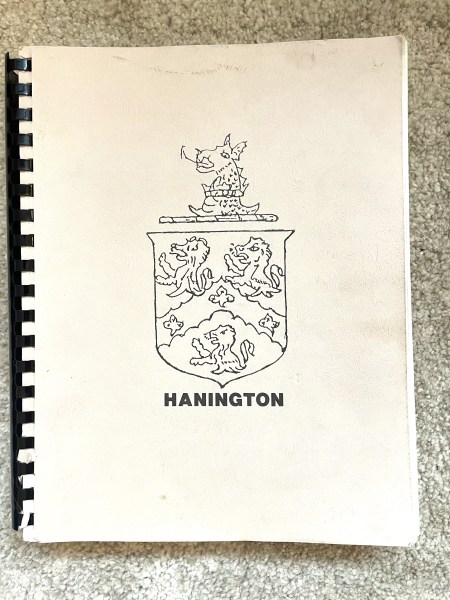
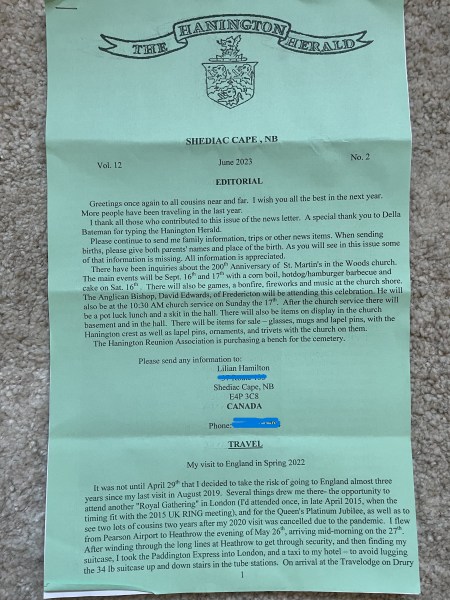
To keep the family connected, Lilian also created The Hanington Herald, an annual newsletter filled with updates on births, deaths, travels, and all things Hanington. She maintained it faithfully, offering four years of family news for the modest subscription price of just $12.
Lilian’s father, John Moore Hanington (1886–1967) ventured west from his birthplace in Shediac, N.B., in the early 1900s on a “grain excursion,” later joining the 145th Battalion in WWI, though he never served overseas. A skilled carpenter, he worked on the Scoudouc airport and maintained a thriving farm when he returned to Shediac. At one point, he had over 100 plum trees and picked more than 100 pints of raspberries in a single day. He also kept cattle, pigs, and hens for the family’s use.

His wife, Ada, came to Canada from Cheshunt, England at age 12. Together, they raised a large family—Lilian, their tenth child, was born in 1940.

Lilian attended Moncton High School, graduated from Teacher’s College in Fredericton, and taught school briefly before working at T. Eaton Co. Mail Order for 12 years. Like her father, she grew fruits and vegetables, ran a farm stand, and still maintains a huge garden. Her beautifully handwritten multi-page Christmas letters always include updates on her abundant harvest of that year.

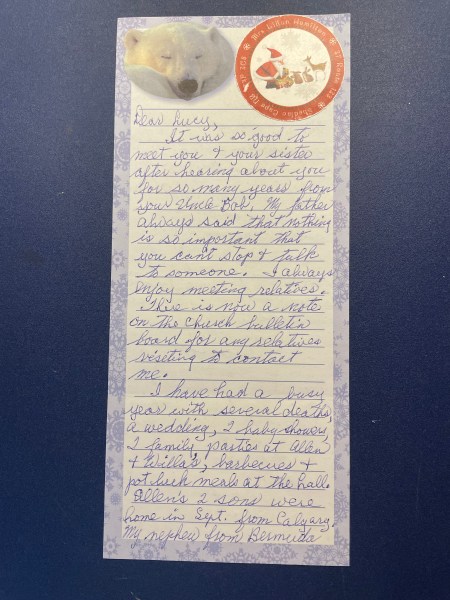
I received my first Christmas letter after we met in 2015… and now I look forward to it every year:

Christmas 2015

Dear Lucy,

It was so good to meet you & your sister after hearing about you for so long from your Uncle Bob. My father always said that nothing is so important that you can’t stop & talk to someone. I always enjoy meeting relatives. There is now a note on the church bulletin board for any relatives visiting to contact me…

My garden did well in spite of the late planting. I had peas to freeze, beans to sell, bushels of potatoes, some large carrots, cucumbers & small tomatoes to give away. I also had lots of gooseberries, pears & grapes. Allen had black currants and crab apples so I made lots of jam, jelly, preserves & marmalade. Some of which I will give as Christmas gifts. I also make dozens of cookies, many of which I give as gifts also. Easier shopping that way…

I wish you a very Merry Christmas with peace, joy, love & happiness. All the best in 2016. It was so nice to meet you. Please keep in touch.

Love,

Lilian
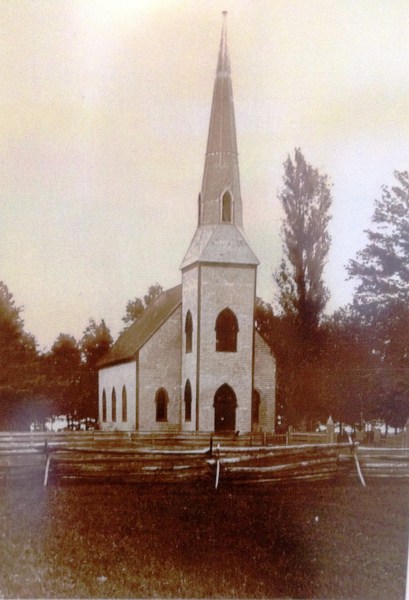
It feels fitting that I met Lilian at St. Martin’s in the Wood Anglican Church—a place deeply rooted in our family history. Built by her 2x great-grandfather (my 3x great-grandfather), the church has been a cornerstone of her life. She married Robert Hamilton there in 1967 and served faithfully for over 20 years as a Sunday school teacher, sewer, knitter, and superintendent.
In 1985, Lilian helped organize the 200th Hanington Reunion, a celebration that brought together 400 relatives for a parade and lobster dinner—honouring a legacy built on faith, hard work, and community. I only wish I had been there to witness it!

Before we ended our phone call, she fondly recalled my grandparents’ summer cottage Iona Cottage down the lane from the church and how my grandfather, an Anglican priest The Priest, would occasionally step in to lead summer Sunday services.

A natural historian and gifted storyteller, Lilian clearly inherited not only her father’s green thumb but also an extraordinary memory.

Lucy Hanington Anglin

#6-9-7-3-4
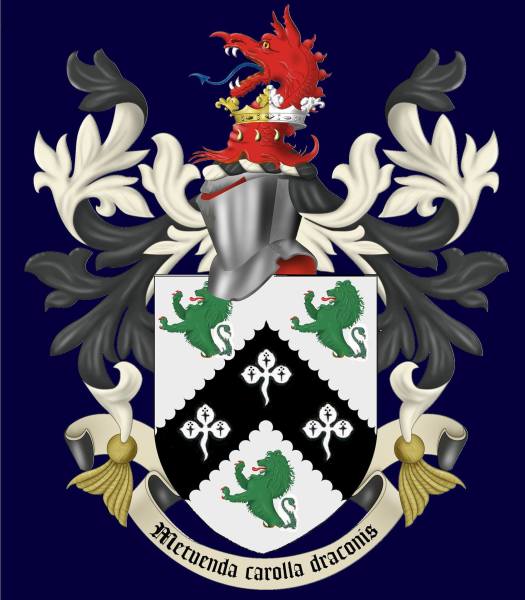
The Hanington Coat of Arms
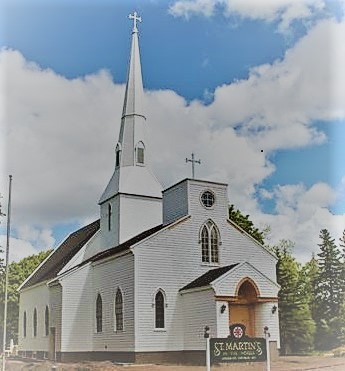
William Hanington comes to Canada in 1785

… and now his church celebrates its 200th Anniversary in 2023

(upcoming celebration details below)

The deed described the property as “a commodious estate upon the outskirts of the thriving town of Halifax, in the Colony of Nova Scotia, Canada”. Imagine William’s surprise to arrive in Halifax in February to discover that “outskirts” meant a 200-mile hike through thick forest and deep snow!

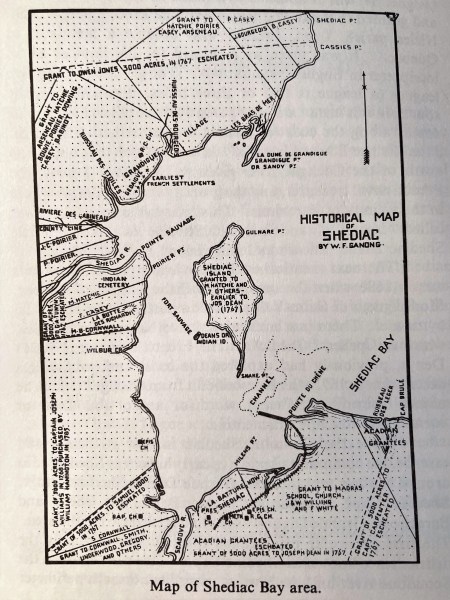
My great-great-great grandfather, William Hanington, was born in London, England, in 1759. As the son of a fish dealer, he trained as an apprentice to the Fishmonger’s Company but became a freeman in 1782. Two years later, at the age of 25, this adventurous young man paid £500 sterling for 5,000 acres of land “near” Halifax, Nova Scotia, from Captain Joseph Williams.

After the initial shock upon their arrival, William and his companion found an Indian guide, loaded all their worldly belongings onto a hand sled, trudged through the snow, slept in the open and finally arrived in bitterly cold Shediac in March 1785. His discouraged companion quickly returned to Halifax and sailed back to England on the first available ship!

Large Lower left piece of land belonged to William Hanington 1785

William, however, was obviously made of sturdier stuff and delighted by what he found! A good size stream flowed into the bay and he had never seen such giant trees! He must have pictured the lucrative possibilities for trade in lumber, fish, furs and more.

Seven years after his arrival in Shediac, at the age of 33, he hired a couple of Indian guides to paddle a canoe over to Ile St. Jean (now known as Prince Edward Island) where there were other English settlers. The Darbys were Loyalist sympathizers who escaped from the rebels in New York. While riding along in an oxcart through St. Eleanor’s (now known as Summerside), he spotted a young lady (age 18) named Mary Darby, drawing water in her father’s yard. After a brief stay with her family, William and Mary married and paddled back to Shediac where they eventually raised a large family of 13 children.

After the first three years together, they persuaded Mary’s sister Elizabeth and her husband John Welling to come over from Ile St. Jean and settle on their land – becoming the second English family in Shediac.

And in the next five years, William boasted eight families on his property of about one hundred acres of cleared land. He opened a general store and dealt in fish, fur and lumber. The furs and timber were shipped to England and the fish to Halifax and the West Indies! He imported English goods from Halifax and West Indies products – mainly sugar, molasses and rum from St. Pierre. He also bartered with the friendly Indians for furs and helped them clear land.

Before long, a considerable village clustered about the Hanington Store – including a post office and a tavern. William remained the leading figure of the community and acted as the Collector of Customs of the Port, Supervisor of Roads and Magistrate enabling him to officiate over the marriages of many couples. To top it all off, in 1800, just 15 years after his arrival from England, this remarkable young man built a shipyard 10 miles north of Shediac in Cocagne.

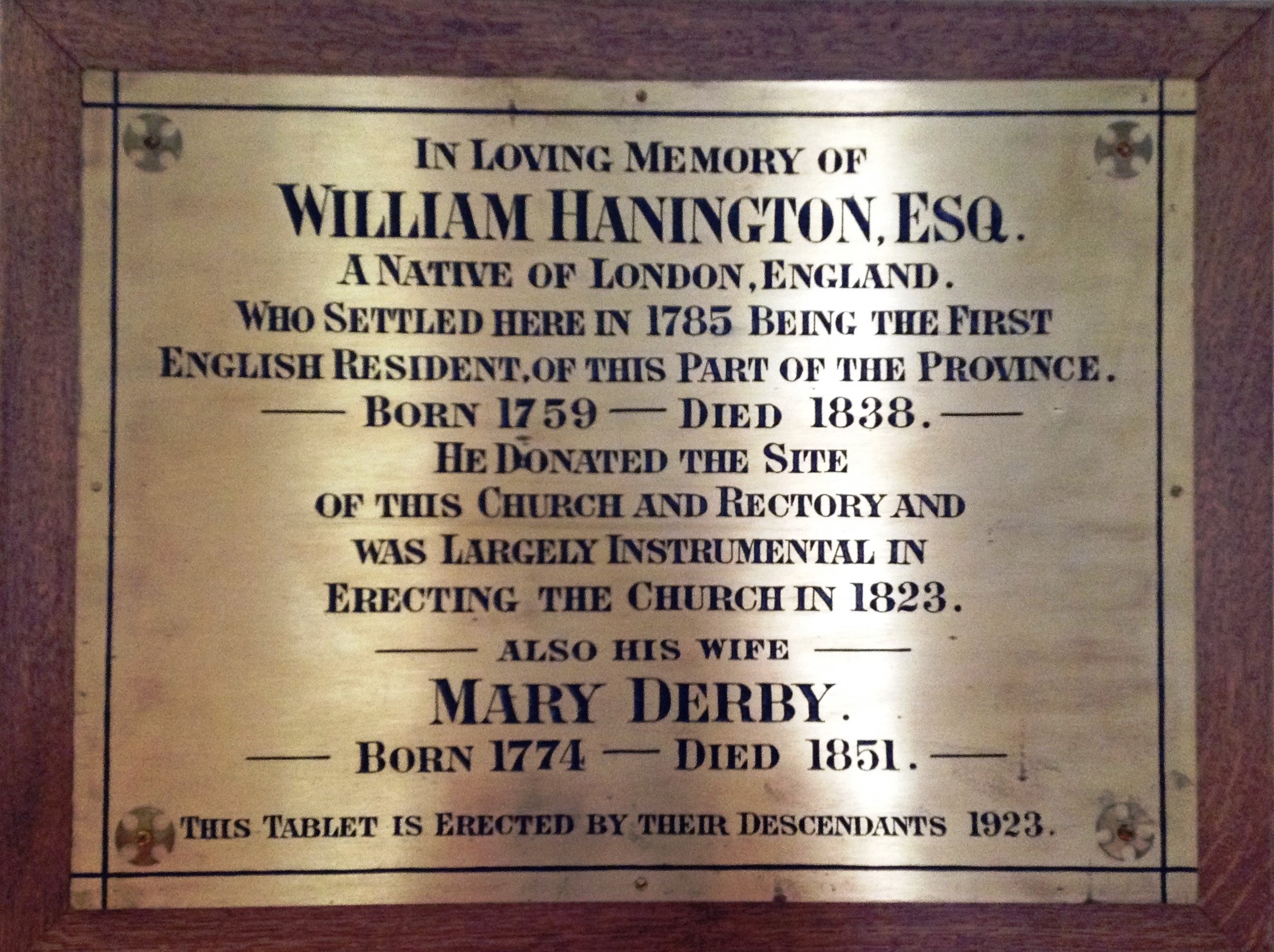
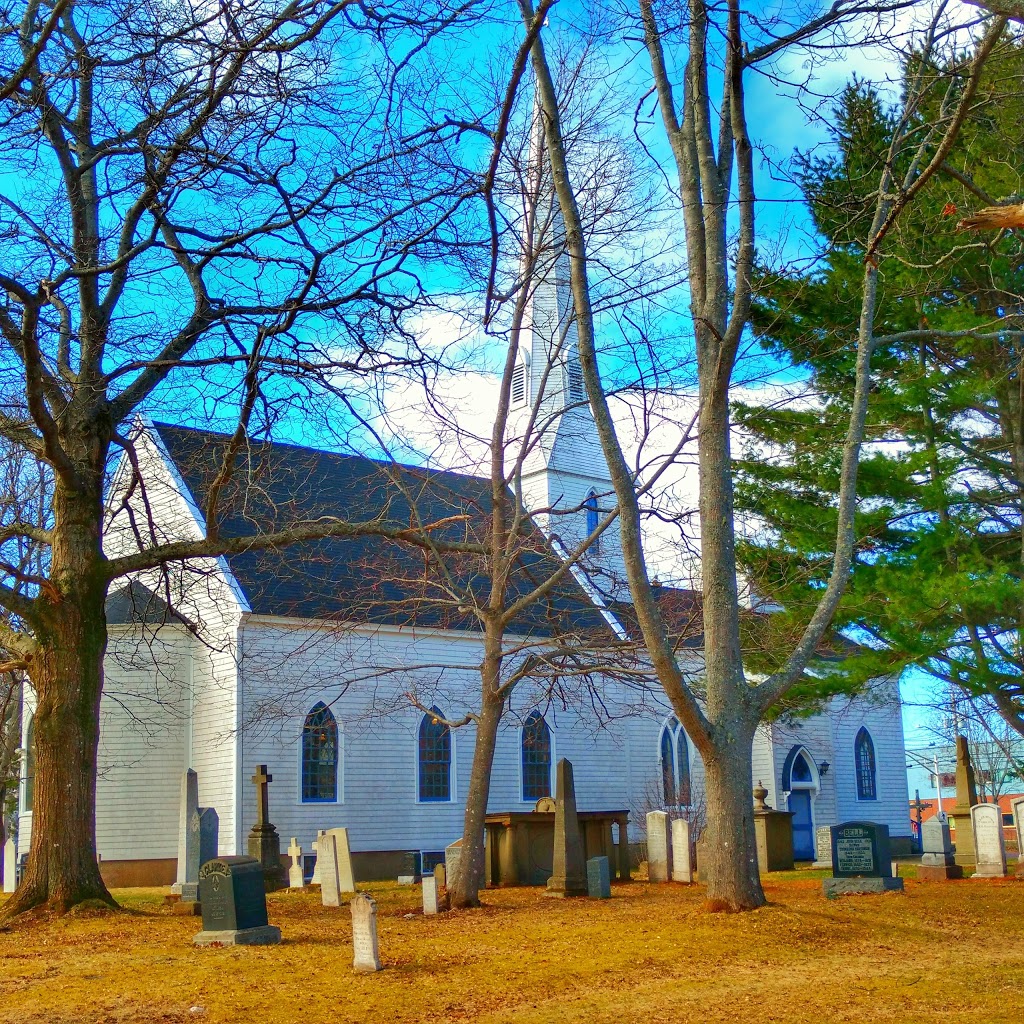
The only thing lacking in this delightful little community was a church. Until then, William being a religious man, conducted service in his home every Sunday and welcomed all to attend. Then in 1823, William donated the necessary land and lumber and oversaw the completion of St. Martin-in-the-Woods, the first Protestant church. He named it after his church in England; the famous St. Martin-in-the-Fields overlooking Trafalgar Square in London.

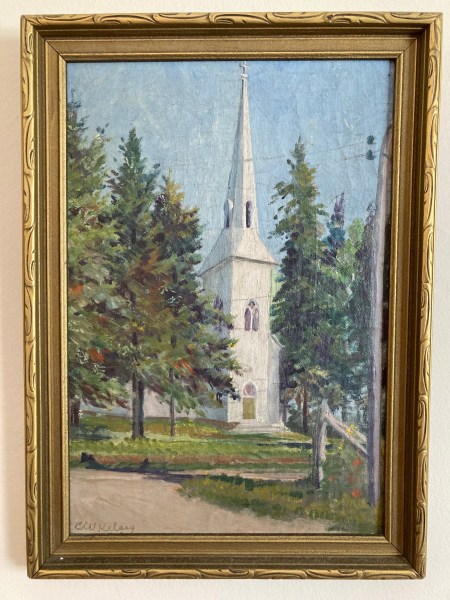
Painting of

St Martin-in-the-Woods Church

by Charles Kelsey

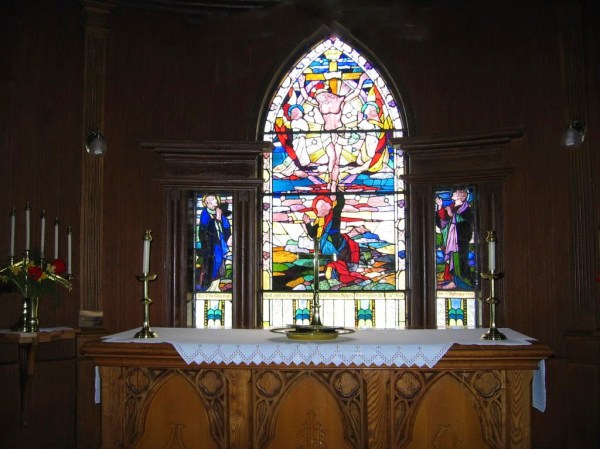
In 1934, my grandfather Canon Sydenham Lindsay (Shediac summer resident at Iona Cottage – She Owned A Cottage – with his wife Millicent Hanington and sometimes stand-in priest at the church) dedicated a large memorial stain glass window in the sanctuary to his father-in-law, Dr. James Peters Hanington (1846-1927) who was my great-grandfather and William’s grandson. The window was designed and installed by Charles W. Kelsey of Montreal and described as follows:

“The centre light of the window represents the Crucifixion, with Mary Magdalene at the foot of the cross, while the two side windows represent the Blessed Virgin Mary and Saint John the Evangelist.” (1934 – The Montreal Gazette)

Stain Glass Window in St Martin-in-the-Woods (photo credit Paul Almond)

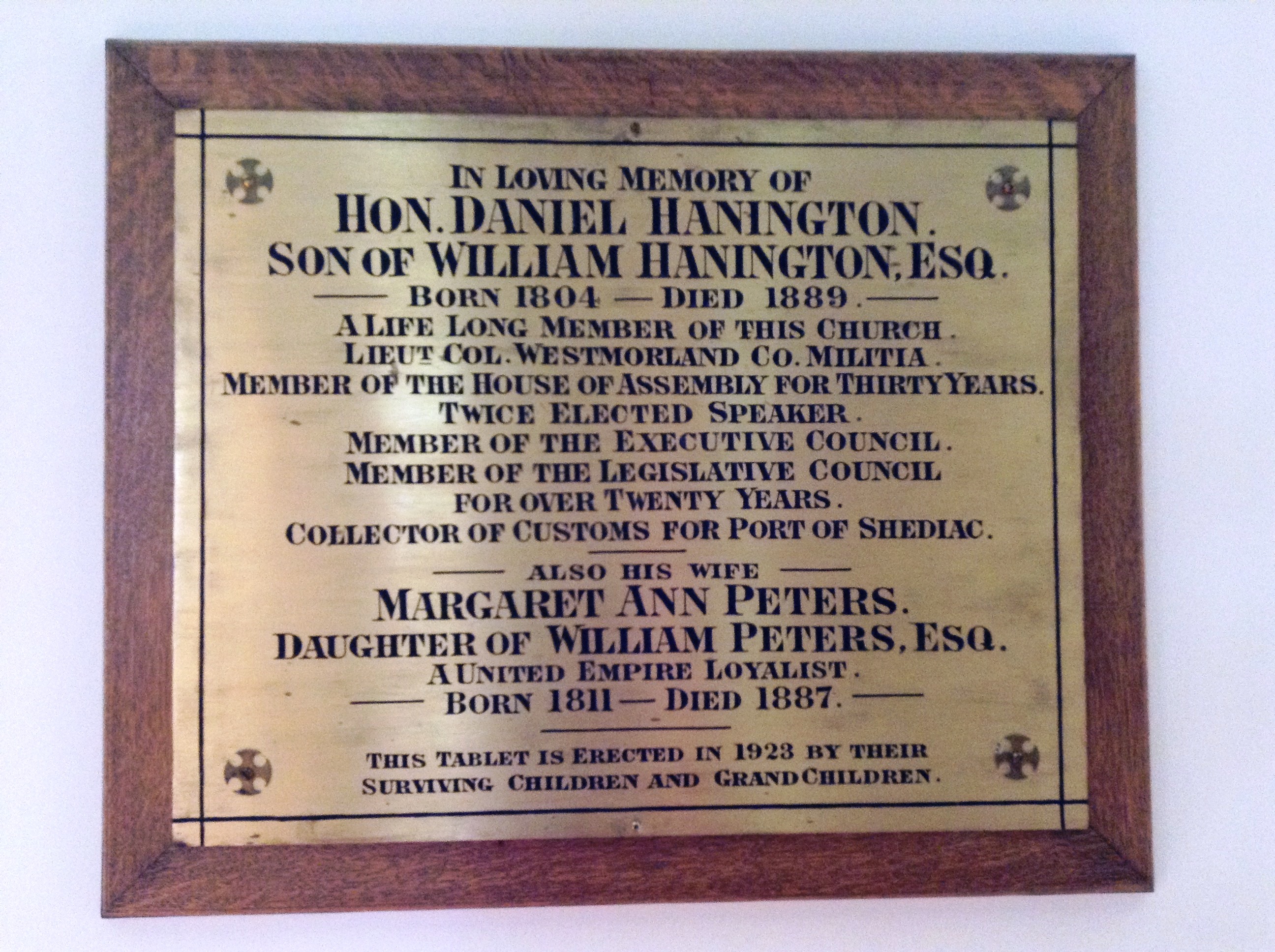
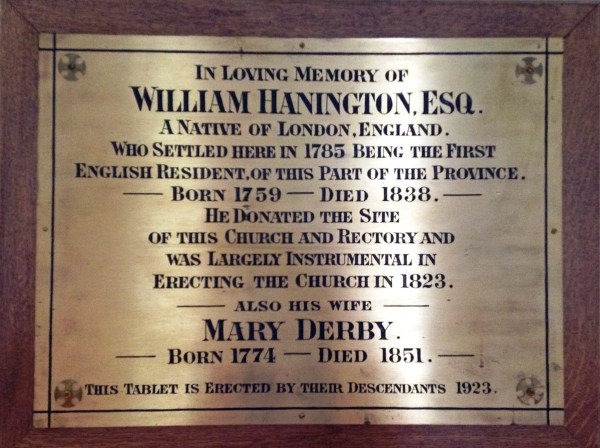
Also mounted inside on the church’s side walls are two honourary brass plaques. One in memory of William and his wife and one in memory of his son Hon. Daniel Hanington (1804-1889) and his wife Margaret Ann Peters – my great great grandparents.

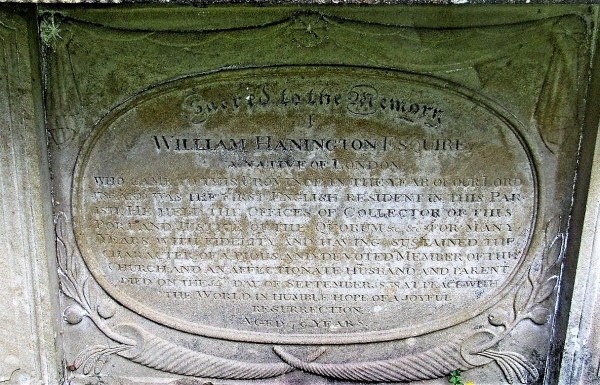
William died in 1838 at age 79. A huge memorial of native freestone marked his grave, in the cemetery beside his beloved church nestled in the community of Shediac, where he spent a lifetime building a “commodious estate” from a forest of giant trees.

Two hundred years later on this anniversary of the St. Martin-in-the-Woods church, William and Mary are lovingly encircled by the graves of several generations of their descendants.

*********************************************************************

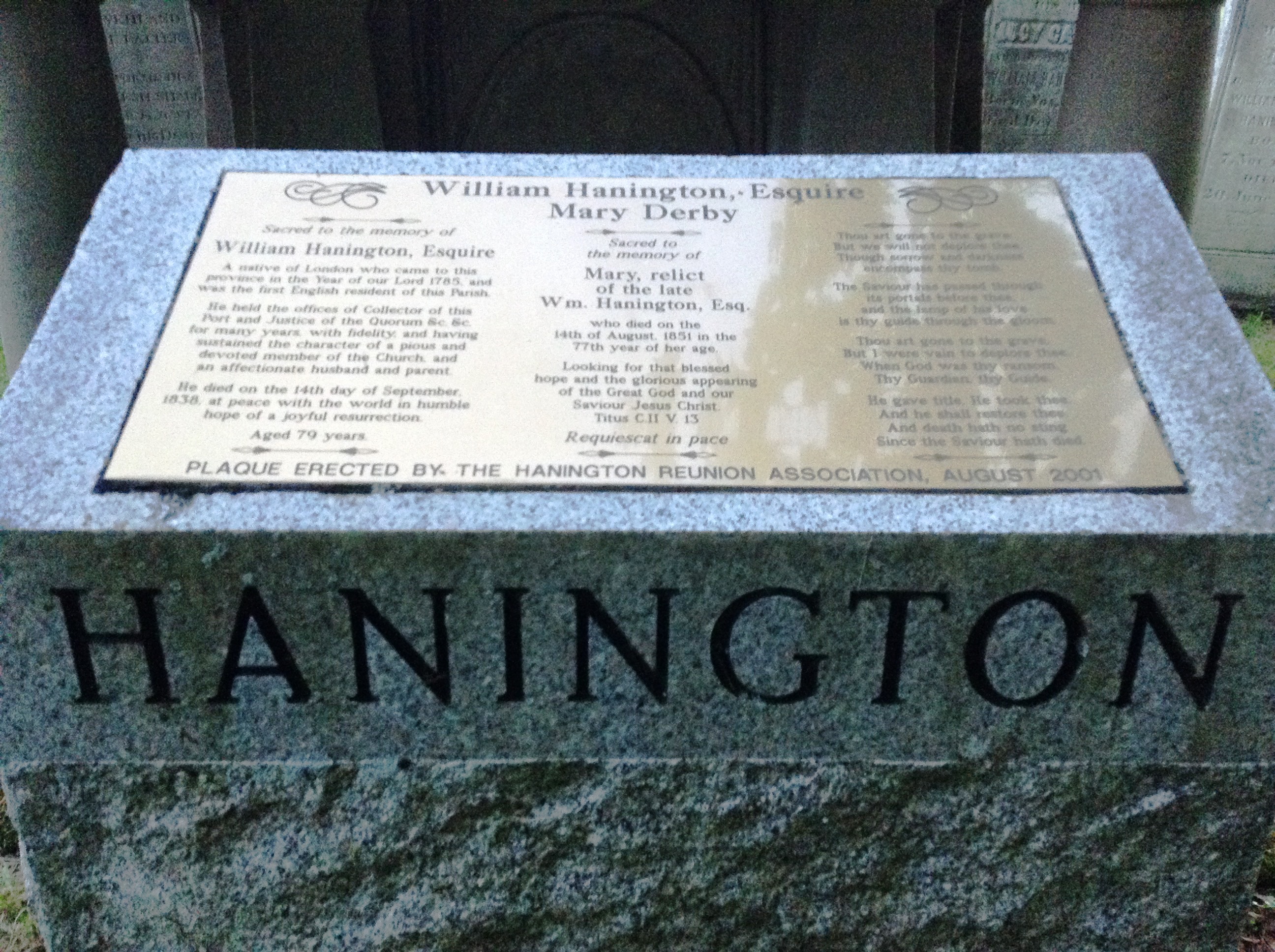
A memorial plaque to William and his wife Mary, was erected in 2001 by the Hanington Reunion Association. This year the Association will be adding a bench in the cemetery in celebration of the 200 years.

Close-up of the Headstone of William Hanington (1759-1838)

(L)Hanington Reunion Association Plaque (2001) honouring William Hanington and his wife Mary Darby and (R) photo by Scotty Horsman showing William’s large headstone at the side of the church.

In 2015, my sister and I visited the church and our ancestors in the graveyard and also enjoyed meeting some Hanington cousins as well!

Read our story here: Sister Pilgrimage

***********************************************************************

ANNIVERSARY CELEBRATION DETAILS FOR SEPT 16-17, 2023:

The main events for the 200th Anniversary will be Sept. 16th and 17th with a corn boil, hotdog/hamburger barbecue and cake on Saturday, Sept. 16th. There will also be games, a bonfire, fireworks and music at the church shore.

The Anglican Bishop, David Edwards, of Fredericton will be attending this celebration. He will also be at the 10:30 AM church service on Sunday, Sept. 17th. After the church service there will be a pot luck lunch and a skit in the hall. There will also be items on display in thechurch basement and in the hall. There will be items for sale – glasses, mugs and lapel pins, with the Hanington crest as well as lapel pins. ornaments and trivets with the church on them.

**************************************************************************

If anyone would like a PDF copy of Lilian Hamilton’s famous Hanington genealogy family tree book from 1988, please email me at anglinlucy@gmail.com

My cousin was kind enough to take the time to copy the book into PDF so that everyone can have a digital copy.

My Hanington number is 6-9-7-3-4 if anyone wants to know who I am!

“Roaring Dan”

Roaring Dan’s Dad

(edited 2026-09-14)

Politics were the game, Hanington was the name!

Daniel Hanington (1804–1889) was a man who seemed destined for politics. In 1834, at the age of 30, he was elected to the Legislative Assembly as the Member for Westmorland County, in southeastern New Brunswick. From that point on, he served almost continuously in either the Lower or Upper House until his death 55 years later—a remarkable political career that spanned the terms of twelve Lieutenant Governors. [2]

The Saint John Daily Sun summed up his career rather beautifully after his death, describing him as:

“a courteous, genial gentleman of the old school, respected by all who knew him…”

The newspaper went on to say that his election as President of the Legislative Council in February 1883 was “a fitting crown to a long and successful political career,” adding that he brought to the position an experience in politics and public affairs for which he was “absolutely without a rival among provincial public men.” [3]

But Daniel Hanington was much more than a politician.

He was born in 1804 to William Hanington and Mary Darby, who were among the first English settlers in Shediac, New Brunswick. Daniel was educated at the Sackville Grammar School and went on to become both a farmer and the Comptroller of Customs at the port of Shediac—a position he held for more than forty years. He finally retired in 1880, at the age of 76.

A Loyalist connection

Daniel’s wife, Margaret Ann Peters (1811–1887), came from a very different but equally interesting New Brunswick family. Her parents, William Peters and Charlotte Haines, had both arrived in Saint John as young children in 1783, along with their families and many other United Empire Loyalists fleeing the American Revolution.

Charlotte’s story is particularly poignant.

She came to New Brunswick with an aunt and uncle and, sadly, never saw her parents again. Family tradition tells us that when she stepped ashore at Saint John, she lost one of her little handmade slippers in the mud. The surviving slipper has been preserved and is now in the Museum in Saint John.

It is hard to imagine what that tiny object must have represented to Charlotte—and to the generations that followed her.

A father before a politician

Daniel and Margaret Ann had twelve children, although one son died as an infant. And Daniel seems to have taken his responsibilities as a father very seriously.

While his political career was flourishing, he was offered two departmental positions that would have required him to spend considerable time away from home. He turned them both down. He preferred country life and, more importantly, wanted to be there to oversee the education and training of his children.

It seems that Daniel made the right choice.

They raised an extraordinary family.

All nine of their surviving sons went on to become successful professionals or businessmen. Among them was another politician, Daniel “Roaring Dan” Hanington (1835–1909), who followed his father into public life. Their other sons included a lumber merchant, a broker, a rector, a barrister, a chemist and druggist—my great-great-grandfather, James Peters Hanington—a civil engineer, a chief surgeon and a Comptroller of Customs.

And apparently the three daughters had “done well” too. I suspect that, in the language of the nineteenth century, this probably meant that they had married men with money, good careers, or both!

Fifty years together

In 1881, Daniel and Margaret Ann celebrated their golden wedding anniversary after fifty years of marriage.

Nine of their twelve children were still living, and by then their children and immediate families had grown into an impressive clan of 73 people.

More than half of them came to the anniversary celebration.

I can only imagine what that family gathering must have been like—dozens of Haningtons and their spouses and children, all gathered to celebrate the couple at the centre of this remarkable family.

Daniel died in 1889 at the age of 85, having spent more than half a century in New Brunswick politics. His son, “Roaring Dan,” would go on to make his own considerable mark on the province.

But before there was Roaring Dan, there was Daniel Hanington—the politician, farmer, customs official and, perhaps most importantly, devoted father who chose to stay close to home and raise an extraordinary family.

Politics may have been the game, and Hanington may have been the name—but family was clearly at the heart of it all.


[1] As told by Mary Thorpe Lindsay Kerr, his great-granddaughter.

[2] The Canadian Biographical Dictionary, 1881. “Lieut.-Col. Hon. Daniel Hanington, M.L.C., Shediac, N.B.”

[3] Daily Sun, Saint John, New Brunswick.