Tag Archives: Devon

1945: A Year of Endings and Beginnings, at Home and Abroad.

As I approach my 80th birthday, I begin to think about the year I was born. What a year that was, a year of major global transitions and the historical year of my birth. I was fortunate to be born in November of that year, when most hostilities had ceased in the world and my home town.

However, the hardships in Britain and Europe were just beginning. Now, we had to think about rebuilding our shattered lands.

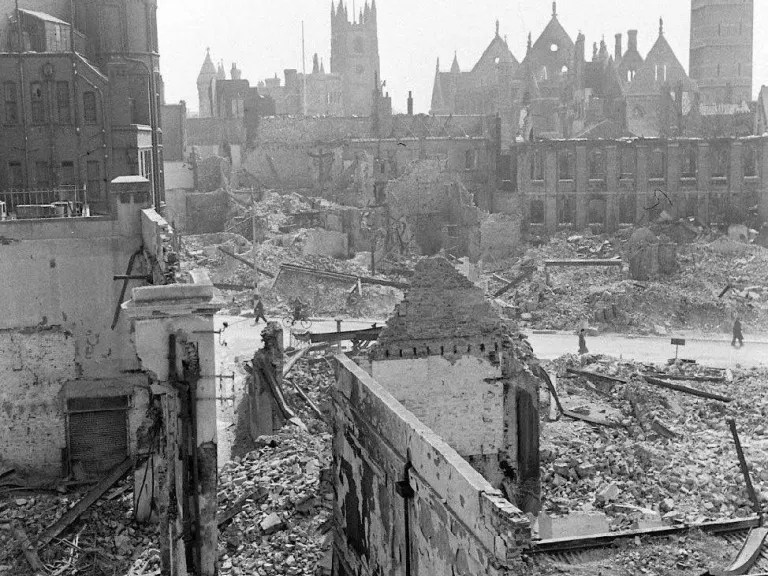
1945. Plymouth, Devon, England, after a Blitz Raid

I have an interest in the ‘Home Front’ events that occurred in Britain during the Second World War, rather than military stories. However, military stories cannot be ignored as 1945 was quite the momentous year in the military and home fronts. Here is a timeline of key events both at home and abroad that occurred in 1945.

January:

World War 2 is in its final phase, even though Germany is in retreat. The British military pressed onward in Germany and Burma. The Battle of the Bulge ended a major German offensive on the Western Front.

It was believed that Plymouth was being singled out for particularly ferocious attacks because it was home to Her Majesty’s Naval Base, Devonport, which was the largest Navy base in Western Europe and the Royal Navy’s repair and refuelling facility. The dockyard was staffed by women during the war, doing what was normally considered to be men’s work, as all the men were away fighting.

On the home front, Britain was impacted by V-2 rocket attacks.

Rationing, especially items like dried and canned fruit, was scarce. The Ministry of Food encouraged households to reduce waste and get creative with recipes. I still practice creating recipes and reducing waste to this day. This story is my 1950 Christmas with rations. Rationing in England lasted until I was 11.

https://genealogyensemble.com/2021/12/29/memories-of-a-1950-british-christmas/

February:

I was conceived!!

Allied bombers begin a major raid on the city of Dresden. Key events in February included the Yalta Conference between the Allied leaders, the beginning of the Battle of Iwo Jima and the final stages of the war in Europe.

The Soviets captured Budapest, Hungary, and also encircled Breslau, Germany (now the modern-day city of Wroclaw, Poland) as Allied forces pushed toward the Rhine in the west.

March:

The 10th British and Allied forces successfully crossed the Rhine, the first time a foreign army had crossed the Rhine since the Napoleonic era.

British forces pushed deeper into Germany with only scattered resistance.

On the 27th and 29th, the final V1 flying bomb fell on Britain.

Remarkable photo of a German V1 fully autonomous early cruise missile hitting the London area in 1945.

April:

1st The Battle of Okinawa continued for 82 days, resulting in heavy casualties for both American and Japanese forces. Japan launched ‘Kamikaze’ attacks against Allied naval forces.

Dr Fritz Klein, an SS doctor, among some of his victims, Belsen, 24 April 1945

Numerous Nazi concentration camps are liberated, revealing the full extent of the Holocaust to the world.

4th Ohrdruf concentration camp, liberated by U.S. Forces.

11th American troops discovered the Buchenwald concentration camp

15th Liberation of the Bergen-Belsen concentration camp, by the British, who found thousands of ill prisoners and corpses.

29th Dachau camp was liberated by U.S. Forces.

Also on the 29th, Adolf Hitler married Eva Braun in the underground bunker.

30th Adolf Hitler commits suicide, shooting himself at the age of 56 years old, whilst Eva Braun takes a poison pill.
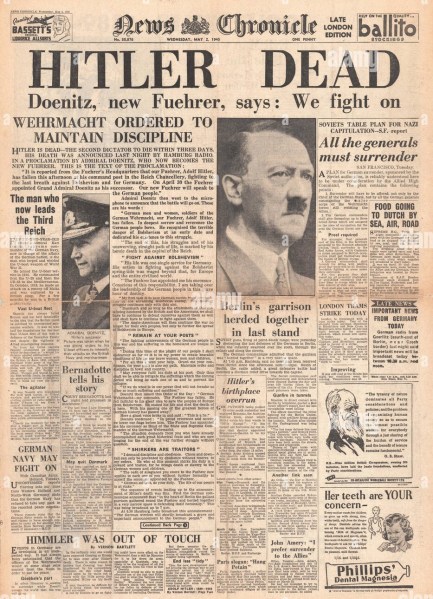
German forces, the last fighting force on the Western Front, surrendered en masse.

May:

7th Germany signs an unconditional surrender,

8th VE Day – victory in Europe – Day
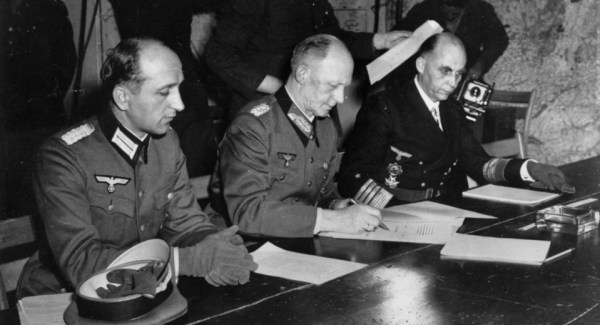
On May 7, 1945, Gen. Alfred Jodl signed the surrender of all German forces in Rheims, France. He is flanked by Wilhelm Oxenius (left) of the Luftwaffe and Hans-Georg von Friedeburg, representing Germany’s navy. | AP Photo

23rd Heinrich Himmler commits suicide while in British custody in Lüneburg, Germany.

June:

15th Wartime blackouts ended, and streetlights were turned back on.

The wartime coalition government, led by Prime Minister Winston Churchill, was dissolved, and a general election was held shortly after.

July:

The general election was scheduled to take place on the 5th of July, 1945, the first general election since 1935. However, the results were not announced until the 26th of July, 1945, to allow time for overseas military personnel’s votes to be counted. The Labour Party, led by Clement Attlee, won a landslide victory in the July 1945 election.

August:

The Family Allowances Act was passed to provide financial support to mothers.

15th was Victory over Japan – VJ – day. Celebrating Japan’s surrender after the atomic bombings of Hiroshima and Nagasaki, and the official end to over six years of global warfare
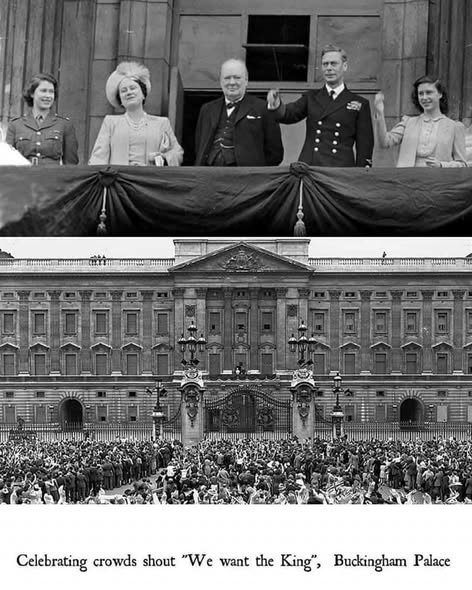
2nd Japan formally surrenders. Now, our country was focused on the return of troops, the beginning of domestic reconstruction and the promises of independence for its colonies.

September:

15th Parades were held in Britain to mark the fifth anniversary of the Royal Air Force’s victory..

16th Hong Kong was reclaimed, ending the four-year Japanese occupation.

The 17th Belsen Trial began for war crimes in Lüneburg, Germany, presided over by a British military court.

18th The Independence of India would be granted “at the earliest possible date”, was announced by Prime Minister Clement Attlee on a worldwide broadcast.

October:

Britain was now fully engaged in the complex aftermath of the Second World War, with the new Labour government pursuing major domestic reforms and the British Army dealing with global instability and the return of war prisoners.

4th An unofficial dock strike began in Britain.

7th The ocean liner SS Corfu docked at Southampton, carrying the first 1,500 prisoners of war to return from Japanese camps in the Far East. Also on the 7th, Rudolf Hess was transferred from Britain to Nuremberg, Germany, to face trial.

The 20th and the 5th Pan-African Congress were held in Manchester, where delegates from across Africa and the diaspora discussed and called for independence from colonial rule, a significant moment in the history of decolonisation.

This month was a period of substantial change as the nation grappled with domestic reconstruction, a new political direction and the challenges of managing a post-war empire and a new global order.

At the end of October, in Palestine, the Jewish Resistance Movement launched the ‘Night of Trains’, a coordinated attack on the British railway network, marking a rise in armed opposition to British authority.

November:

On the 20th, I was born at the Alexandra Maternity Home, below.
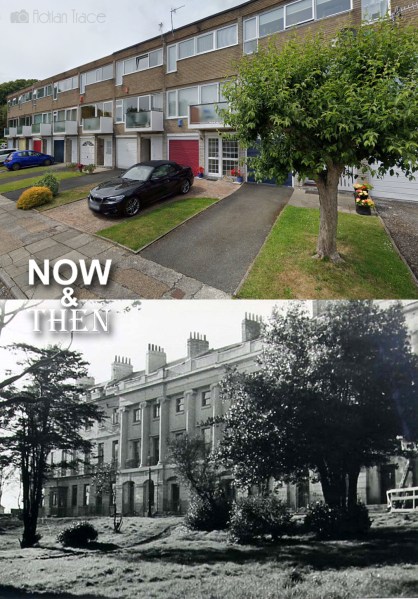
At the time, there was no National Health Service (NHS), so no free medical care. I must have been an expensive baby!

The Alex, as it was often called, admitted maternity patients for a period of not less than a fortnight. Fees were charged from 15 shillings (75P) to 42 shillings (£2.20P) per week.. These fees included nursing, food, laundry and all clothing and if necessary, the doctor’s fees. I have no idea of my weight, size or time of birth. Such things were not, unfortunately, recorded.

December:

The government announced its plan for a National Health Service (NHS) to provide free medical care.

1st British military police in occupied Germany arrested 76 Nazi industrialists.

9th, the United States granted Britain a low-interest reconstruction loan of approximately $4.4 billion (US). An additional Canadian loan was for $1.9 billion, scheduled to run for 50 years.

The final payments made in 2006, which settled the debt entirely, were for $83.25 million to the US and $22.7 million to Canada.

Throughout the rest of the year, Allied forces continued to liberate numerous concentration camps, exposing the extent of Nazi atrocities.

In 1945, post-war, Plymouth faced immense devastation from the Blitz, which had destroyed the city’s heart and left thousands homeless. Plymouth was one of the most heavily bombed British cities, due to its status as a major naval port with the large HMNB Devonport dockyard.

The city centre, two main shopping areas, almost all civic buildings, 26 schools, 41 churches, and 3,754 houses were destroyed, with a further 18,000 properties seriously damaged. Around 30,000 people were left homeless, leading to a critical shortage of accommodation. Temporary prefabricated houses were quickly erected to provide immediate shelter. I remember seeing the ‘pre-fabs’ still in use in the 1960s.

The most urgent efforts were to house the population, clear the bombed buildings – which, still, years later, were my playgrounds – and begin an ambitious pre-planned reconstruction project. All the while I was growing up, this building and planning went on. When I left Plymouth at 18, the rebuilding continued until the early 1970s.

Sources:

https://en.wikipedia.org/wiki/Battle_of_the_Bulge

https://www.thedevonseoco.co.uk/plymouth-in-the-blitz/ https://encyclopedia.ushmm.org/content/en/article/liberation-of-nazi-camps

https://www.facebook.com/photo/?fbid=779249228206828&set=gm.1467370817653042&idorvanity=1074810956909032

https://collection.nam.ac.uk/detail.php?acc=1985-11-36-334

Facebook Page: ‘Old Plymouth Society’ Post by Gloria Dixon 7 July 2021

https://www.iwm.org.uk/collections/item/object/205021954

https://www.historic-newspapers.com/en-ca/blogs/timelines/a-year-in-history-1945-timeline?country=CA
HISTORY OF MY SURNAME

Children the world over have been bullied at school and in their neighbourhoods. I was no exception. As a child in primary school, I remember kids calling me ‘Bullfrog’ which, of course, I hated!

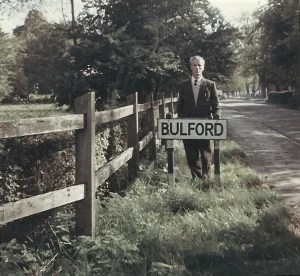
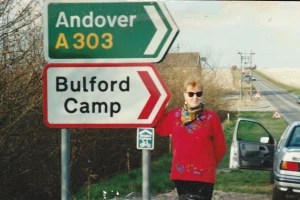
Many years later, I am researching and doing genealogy, trying to find out the origin of the name I hated as a child. I always knew there was a camp in Wiltshire, England called Bulford Camp. Family members have visited the area, especially to take photos of the area name, posing proudly next to the sign.

My Uncle Roy Bulford. Circa. 1960’s. Marian Bulford. Circa 1990’s

From a quiet country road to a major motorway

Less probably, the name may have come from a lost place called Bulford in Strensall (North Yorkshire), presumed to have been located at a ford of a river near Strensall. Yet another reason the name “Bulford” may have originated from is “Bull’s Ford”, a crossing point of the River Avon in Wiltshire, where bulls were driven across. (1)

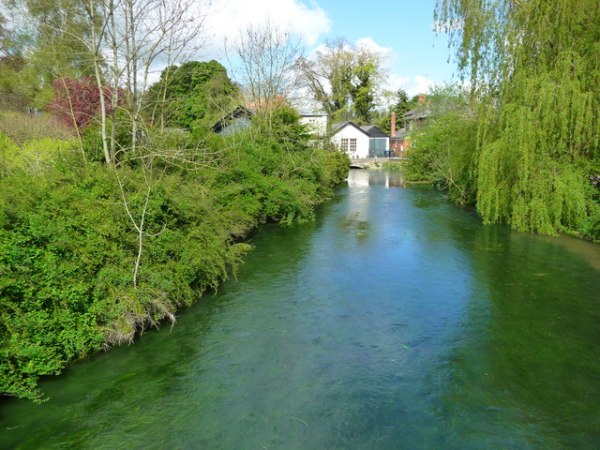
 The River Avon Meanders Through Bulford

© Copyright Chris Talbot. Licensed for reuse under this Creative Commons License.

Bulford is a village and Parish in Wiltshire, England. It is near Salisbury Plain, close to RAF Upavon, where I was posted whilst in the WRAF (Women’s Royal Air Force). The Bulford Army camp is separate from the village but within the parish. It seems the Army camp is named after the ford that gave the village of Bulford its name. ‘Bulut ieg ford‘ is from an Old English phrase which means ‘ragged robin island ford” Why could we not have picked Robinford instead of Bulford?? (2)

Bulford is recorded in the Wiltshire Charter Rolls of 1199 as Bultiford and as Bultesforda in 1270. It is then recorded as Bulteforde in the Ecclesiastical Tax Records of 1291. (3)

The village of Bulford has a history of Roman and Saxon settlements. In the 1086 Domesday Book, there were 39 households at Bulford. However, there are not actually any Bulford family names, as seen below with a page taken from the Domesday Book. Only the religious and the titled were included!

Catalogue description Place name: Bulford, Wiltshire Folio: 68v Great Domesday Book: (4)

Reference:E 31/2/1/2046
Description:Place name: Bulford, Wiltshire
Reference:E 31/2/1/2046
Description:Place name: Bulford, Wiltshire Folio: 68v Great Domesday Book Domesday place name: Boltintone People mentioned within entire folio: Abbess of St Mary of Amesbury; Abbey of Sainte-Marie of Bec; Abbey of St Mary of Amesbury; Agenulf; Alweard; Alweard the priest; Beorhtric; Canons of Church of Lisieux; Church of Brixton Deverill; Eadgifu; Earl Harold; Hugh d’Avranches, Earl of Chester; Roger de Montgomery, Earl of Shrewsbury; Edward; Father of Agenulf; Gerald the priest of Wilton; Gilbert; Godwine; Abbey of Sainte-Marie of Grestain; Hamo; Hearding; Ketil; King Edward as lord; Nuns of Abbey of St Mary of Amesbury; Osbern the priest; Osmund, thegn; Queen Matilda; Regenbald the priest; Robert, Count of Mortain; Siward; Turold; William
Date:1086
Held by:The National Archives, Kew
Legal status:Public Record(s)
Closure status:Open Document, Open Description

Surnames in England were not used before the early Middle Ages, around the 11th to 12th centuries. Before that, people were known by a single name, usually according to their physical features, occupation, or their father (patronymic). To begin with, surnames were fluid and changed over time, or as a person changed his job. For example, John Blacksmith might become John Farrier as his trade developed. As the country’s population grew, it became necessary to distinguish between people.

Surnames in England began to be used during the early Middle Ages, around the 11th to 12th centuries. Before this, people were usually known by a single name. The earliest surnames were often derived from:

  1. Occupations – for example, “Smith” (blacksmith) or “Baker.”
  2. Geographical locations – such as “London” (someone from London) or “York” (someone from York). (I feel this is probably where my surname comes from.)
  3. Patronymics – surnames based on the father’s name, like “Johnson” (son of John).
  4. Physical features – such as “Brown” (for someone with brown hair or a darker complexion). (5)

Most of my paternal Bulford family live in and around Devon and Cornwall now; however, Ancestry.com tells me that from the 1700 Census and Voter lists, there were 127 Bulford surnames in America!

One of my paternal grandfather’s brothers, George, emigrated to work in the mines in Detroit, Michigan then ended his career working for the Ford Motor Company.

In 2016, I was in touch with his granddaughter, Barbara, my second cousin, on Ancestry. She invited me to her family tree, and we exchanged much information regarding her Bulford family. We had pleasant FaceTime and email exchanges, until her too-early passing in 2020 at the age of 66 years. I wrote about her here: https://genealogyensemble.com/2021/05/12/my-american-cousin/

SOURCES

(1) (2) (3) https://en.wikipedia.org/wiki/Bulford

(4) https://opendomesday.org/place/SE6360/strensall/

The link above is to the Open Domesday Book, which also states that “Hundred of Bulford. (The next largest division from a “hundred”, and the one most recognisable today, are Shires. Devonshire, Wiltshire, Lancashire, etc). Status: No longer exists as a named location but can be identified on the ground’ There were 85 places in the ‘hundred’ of Bulford in the Domesday Book”

(5) https://www.historic-uk.com/CultureUK/Surnames/

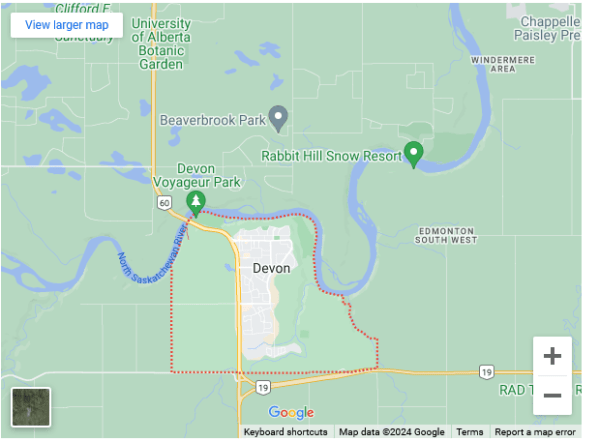
Devon, Alberta, Devon, England.

My eldest Grandson is called Devon. His full name is Devon John Charles. Named after both his grandfathers. His parents initially, wanted to name him Even. However, there is already a cousin in our family of that name. His mum suggested Devon which suited both parents.

When Devon’s family moved to Alberta, we were surprised to learn he and his family were moving to Devon, Alberta! I was keen to learn the history of Devon, Alberta and here is what I found.

Devon, Alberta Canada

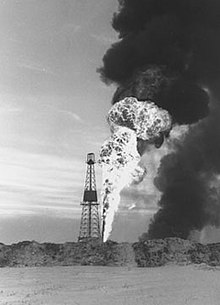
One of the largest oil discoveries in the world was discovered on February 13th 1947 (I would have been two years old). Leduc No 1 well struck oil and the new town of Devon was constructed by Imperial Oil to accommodate its workers.

Leduc Oil No. 1. Devon, Alberta Canada

The company wanted a well-planned town so Devon holds the distinction of being the first Canadian community to be approved by a regional planning commission.

The town was planned according to modern town-planning principles by the Edmonton District Planning Commission and CMHC. It was labelled “Canada’s Model Town” since it was the first municipality in Canada to be approved by a regional planning commission. The town grew extremely quickly, but because of planning controls, its development was orderly”. (1)

Devon was named after the Devonian formation seen in the strata tapped in the Leduc No. 1 oil well, which in turn is named for the county of Devon in England. Its economy is still based on the oil and gas industry; however, the addition of the Devon Coal Research Centre is helping to diversify the economy (2)

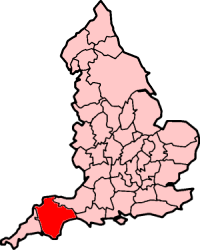
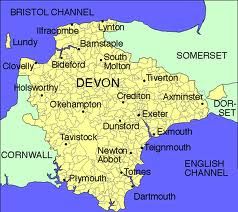
I was born in Plymouth, Devon but its history goes back millennia. Situated in South West England and bordering Cornwall, there is evidence of occupation from the Stone Age onwards. Recorded history begins in the Roman period when it was a ‘Civitas(3) meaning a social body of citizens united by law. (3) It was then a separate kingdom for centuries until it was incorporated into early England. A largely agriculture-based region, tourism is now vital.

Ancient Extent of Devon, England

The name “Devon” derives from a tribe of Celtic people who inhabited the South-West peninsula of Britain at the time of the Roman invasion.

The last time I visited Plymouth, Devon I was tickled to be able to send my grandson a letter addressed to Devon, in Devon Alberta, from Devon, England. The lady in the Post Office even pointed out how amusing that was.

(1) (2) https://www.thecanadianencyclopedia.ca/en/article/devon

(3) https://en.wikipedia.org/wiki/Civitas

BBC RADIO 4 – “This is the Shipping Forecast”

This piece of music is called “Sailing By” composed by Ronald Binge in 1963, and performed by the Alan Perry/William Gardner Orchestra, and is the version used by the BBC for its late-night early-morning shipping forecasts,

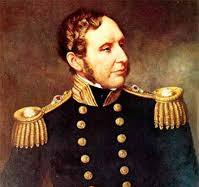
It signals the beginning of the Shipping Forecast, an important part of living on an island and it dates back over 150 years. The Shipping Forecast was established by Vice-Admiral Robert FitzRoy the first professional weather forecaster, and captain of the HMS Beagle, on which Charles Darwin sailed to South America. (1)

Vice-Admiral Robert FitzRoy.

Born 5 July 1805, Suffolk, England

Died 30 April 1865 Norwood, England.

In October 1859, the steam clipper Royal Charter was wrecked in a strong storm off Anglesey, Wales 450 people lost their lives. In response to this loss, FitzRoy introduced a warning service for shipping in February 1861, using telegraph communications.

Sadly, FitzRoy didn’t live to see his ideas become a permanent fixture of British life; he killed himself in 1865, in part because of his frustration at failing to set up a regular service. (2)

The shipping service was only discontinued during and following WW1 between 1914 and June 1921. During WW2, it was discontinued between 1939 and 1945.

The shipping forecast is heard by local fishermen all over the British Iles, Scotland Wales and further afield and Its tune is repetitive, assisting in its role of serving as a signal for sailors tuning in to be able to easily identify the radio station.

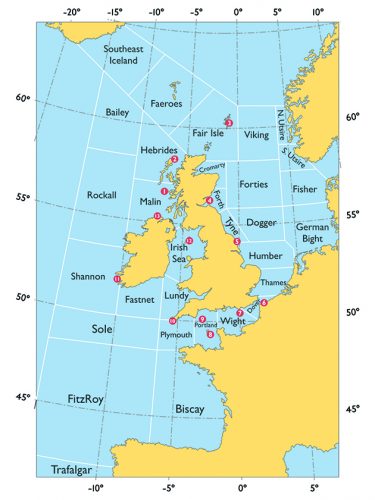
This delightful music above brings back happy memories for me, listening to the radio as a child in Plymouth Devon England, where I was born. “Dogger, Fisher, German Bight, North Utsire and South Utsire” – coastal regions near Norway – although I had no idea where these exotic names were, it was wonderful to imagine. 

Just look at some of the unusual names on the map, it was always a thrill to hear ‘Plymouth’ mentioned.

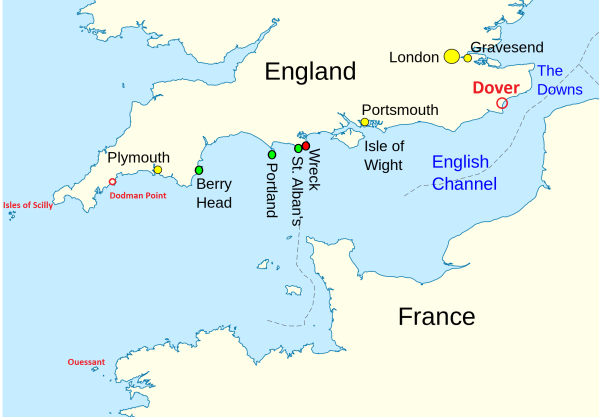
The sea areas match the forecast areas used by other North Sea countries, though some names differ. The Dutch KNMI and Norwegian counterpart, names the Forties “Fladen Ground”, while Météo-France uses “Pas-de-Calais” for Dover, “Antifer” for Wight “Casquests” for Portland and “Ouessant” or ‘Ushant” for my home town, Plymouth. Because of the unusual name for Plymouth, I also learned a fascinating piece of French history.

The Ouessant (or Ushant) is a breed of domestic sheep (Could that be a French insult?) from the island of Ouessant off the coast of Brittany but also the name of a French Submarine). Ushant is a French island at the southwestern end of the English Channel which marks the westernmost point of metropolitan France.  

It belongs to Brittany and in medieval times, Léon. In lower tiers of government, it is a commune in the Finistère department. It is the only place in Brittany, save for Brittany itself, with a separate name in English.

Even today, if I cannot sleep, I still listen to BBC Radio 4 in the early hours of the day and catch the Shipping Forecast as it lulls me to sleep.

Unfortunately, from this year, 2024, it is expected that the Shipping Forecast will no longer be broadcast on long wave (LW) due to the closure of the LW platform. This announcement was updated on the 4th of April 2023 due to the BBC amending their original announcement on the future of the LW Shipping Forecast. The LW broadcasts are expected to end in 2024, but a final decision has not yet been made. (4)

Listeners are reassured by the thought that, somewhere out at sea, British fishers are patiently waiting by their radios to find out whether there is a gale warning in Rockall or Cromarty. However, the slightly less romantic reality, according to Mike Cohen of the National Federation of Fishermen’s Organisations, is that his members have not needed Radio 4 for decades.

Modern fishers have far more accurate devices to warn them about the wind and rain: “Even the small 15-metre boats in Bridlington have satellite internet these days. I’ve had video calls from people in the middle of the sea.” (5)

Some interesting quotes below about the shipping forecast: 

“The Shipping Forecast is immensely popular with the British public; it attracts listeners in the hundreds of thousands daily – far more than actually require it.[18]

In 1995, a plan to move the late-night broadcast by 12 minutes triggered angry newspaper editorials and debates in the UK Parliament and was ultimately scrapped.[19]

Similar outcry greeted the Met Office’s decision to rename Finisterre to FitzRoy, but in that case, the decision was carried through.[20]

Peter Jefferson, who read the Forecast for 40 years until 2009, says that he received letters from listeners across the UK saying that the 0048 broadcast helped them get to sleep after a long day.[4]

The Controller of BBC Radio 4, Mark Damazer, attempted to explain its popularity: 

“It scans poetically. It’s got a rhythm of its own. It’s eccentric, it’s unique, it’s English. It’s slightly mysterious because nobody really knows where these places are. It takes you into a faraway place that you can’t really comprehend unless you’re one of these people bobbing up and down in the Channel.[18]

Zeb Soanes, a regular Shipping Forecast reader, described it thus:

“To the non-nautical, it is a nightly litany of the sea. It reinforces a sense of being islanders with a proud seafaring past. Whilst the listener is safely tucked-up in their bed, they can imagine small fishing-boats bobbing about at Plymouth or 170ft waves crashing against Rockall.[21]

….and many more here:

https://en.wikipedia.org/wiki/Shipping_Forecast

SOURCES

(1) https://en.wikipedia.org /wiki/Shipping_Forecast#Coastal_weather_stations_and_inshore_waters

(2) https://www.countrylife.co.uk/out-and-about/10-things-about-the-shipping-forecast-164341

(3) https://en.wikipedia.org/wiki/Ushant

(4) https://www.pbo.co.uk/news/no-more-shipping-forecast-on-lw-from-2024-75844

(5) https://www.theguardian.com/media/2022/jun/03/shipping-forecast-radio-4-long-wave-broadcast

The Beginnings Of The Original Plymouth, Devon England

Previously, I wrote about the ancient Plymouth Gin Distillery located in Plymouth 1 in that story, I mentioned that Plymouth had been attacked, raided and ruled by many others many times.

Here is an account of only a fraction of some of the various raids, uprisings, invaders and wars that is the tumultuous history of Plymouth.

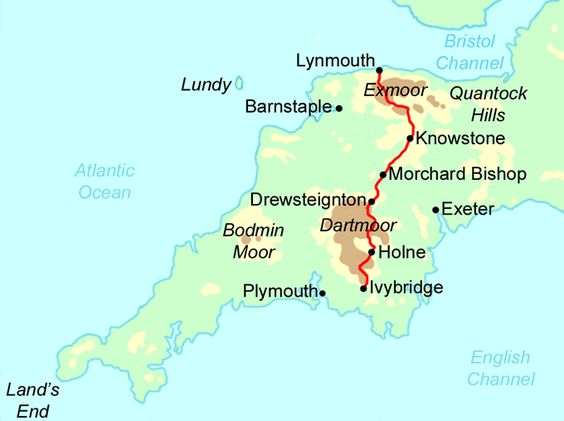
Plymouth is located in the South West Peninsula of England and consists of the counties of Cornwall, Devon, Dorset and Somerset. It is the furthest South and West of all of mainland England.

Map of The South West Peninsula

In 1866 a cave was discovered containing the bones of animals that no longer live on these islands. The bones included the lion, hyena cave bear, rhinoceros, and human remains. So man lived in this district as far back as the early stone age.

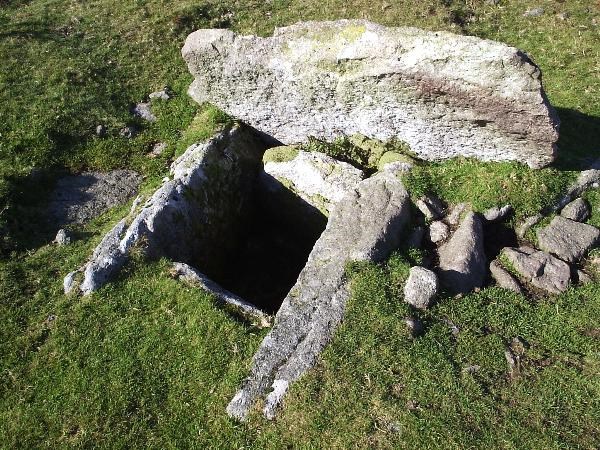
Most local finds in and around various areas of Plymouth have been of the Bronze Age, such as mirrors, daggers spearheads and coins up to 150 BC. In an area of Plymouth called Stonehouse, a burial chamber known as a kistvaen or kist was found. The name means a ‘stone chest’ 2

This is known as the Drizzlecombe Kistvaen Dartmoor, Devon

There are many kistvaens in the large area of the Dartmoor National Park just outside of Plymouth. However, the majority of the known Dartmoor kistvaens were opened at some time in the past, and whatever they used to hold is missing. The idea that ancient tombs might contain valuable items is a very old one; one of the first mentions of searching kistvaens in Devon dates back to 1324.

Location of Dartmoor National Park

We can tell that Saxons settled in the Plymouth area because of the names of places ending in ‘Ham, Ton, Leigh, Worthey and Stock. In fact by 926 AD Saxons ruled the whole of Devon. There is an unusual place name are in Plymouth that was once a Saxon lane. In the Doomsday Book of 1086, it was called Heche Bockland and the Saxons had a church there. By 1385 it was known as Ekebokland which over the centuries has evolved into ‘Eggbuckland’ which, as a child, often produced a smirk…

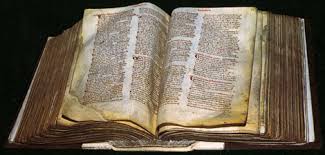
After the Normans conquered England William the 1st gave the Saxon Manors to his Norman Knights and in 1085 had a list made of all the estates in the country and this was called ‘The Domesday Survey’ – the Middle English spelling of “Doomsday Book”.

The Great Domesday Book Held at Kew Gardens, England.

By 1376 we first hear of a Mayor whose name was Maurice Bard. in 1377 the population of Plymouth was 7,000 and by this time, Plymouth was playing an important part in Naval affairs supplying ships for the fleet and was a busy port.

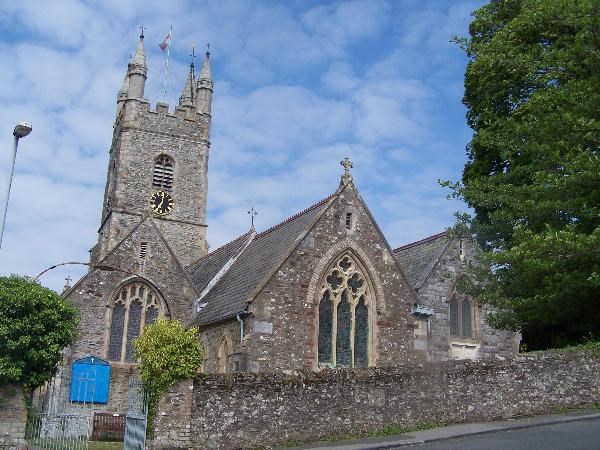
When King Henry VIII dissolved the monasteries in 1539 the priories had to surrender the tithes of Eggbuckland to the king. The present church is a stone building that dates from around 1420/30 called St. Edward. Its Parish registers date from 1653.

The Anglican church of St Edwards Church Road, Eggbuckland Plymouth Devon 3 Photography by Chris Downer

During the 14th Century, the South coast was attacked on several occasions by French pirates with many attacks on Plymouth, which caused a decline in trade and prosperity. Again, raids and attacks took place in 1377, 1400, and 1403. The most famous of all was the 1403 attack from the Bretons. They sent 30 ships and 1200 men at arms who came and anchored as the townsmen of Plymouth fired cannons at them but they landed and burnt 600 houses and plundered.

Later in the same year, an English fleet crossed to Brittany landed 4,000 men and laid waste to a large area. We seem to have had an uneasy relationship with the French ever since!

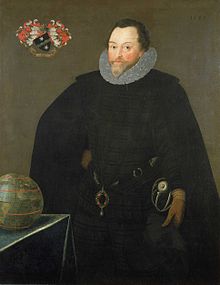
The famous seaman, Sir Francis Drake was born in 1541 near Tavistock, just outside Plymouth and was the eldest of 12 children. In 1581 Elizabeth I knighted him and the same year he was appointed Mayor of Plymouth. He was second-in-command as a Vice Admiral of the English fleet, in the victorious battle against the Spanish Armada, in 1588.

Sir Francis Drake
Portrait by Marcus Gheeraerts the Younger 1591

Early in July 1620 two vessels ‘The Mayflower’ and ‘The Speedwell’ set sail from Delfshaven in Holland. They were refugees who thought it would be safer in America. Both vessels reached Southhampton, but after leaving the Speedwell sprang a leak and they had to put into Dartmouth for repairs. Again, they set to sea but once more the Speedwell started to leak and so they put into Plymouth. On the 6th of September, 1620 the Mayflower left Plymouth with 102 pilgrims aboard and reached Cape Cod on the 9th of November 1620. The rest, as they say, is history.

In 1642 the civil war started in Plymouth. Most of the counties were Royalists whilst the towns were Parliamentarians. Plymouth, which was surrounded by Royalist country was the key to the West.

It had a harbour it was strongly walled and there was a fort on the Hoe. The word “Hoe” is derived from old English and appropriately means High Ground.

(This year, Facebook banned the word ‘Hoe” assuming it meant something else!) 4

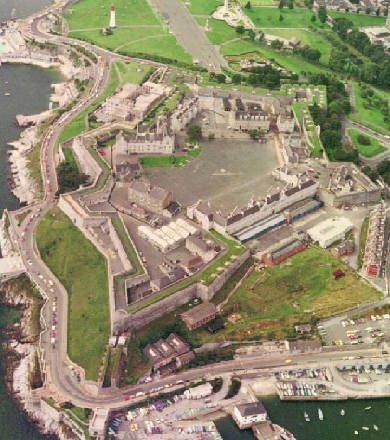
The Royal Citadel on Plymouth Hoe

The Royalists asked the whole town to surrender but they refused, and so, on Sunday, December the 3rd, there took place ‘The Sabbath Day Fight’ The townsfolk rallied from all the neighbouring strongpoints and drove the enemy down a steep hill and into a creek. The rear guard of the Royalist Cavalry was thrown into confusion and the creek was full of drowning men and horses. This was the primary battle but not the end of the siege.

At one time, the King himself came down to Plymouth with 15,000 men but still the town held out. in 1646, the siege was eventually raised. During it, 8,000 people died in Plymouth from various cases a number greater than the normal population.

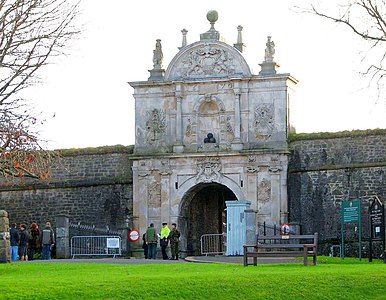
The Baroque main gate of the Royal Citadel. Note the date 1670 above the arch

Today, the following notable units are based at the Royal Citadel.

The Royal Artillery, Number 3 Commando Brigade and the 29th Commando Regiment 5

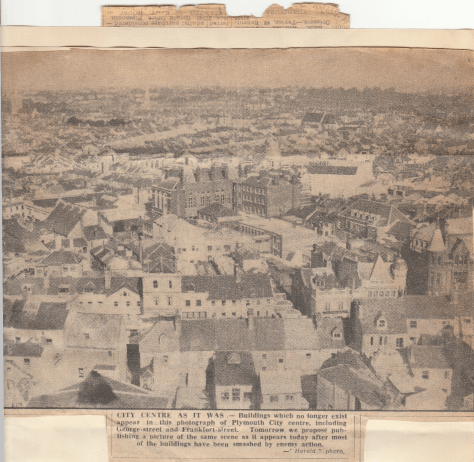
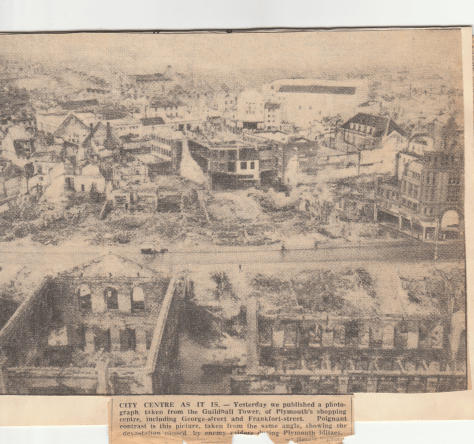
Centuries later, World War Two came to Plymouth. My grandfather saved the newspaper cuttings below. They are not too clear but give an idea of before and after a bombing raid on the city.

In the beginning, there were many small daylight raids. As the nights lengthened, these took place at night and in 1940, there were fairly heavy raids on December 29th and January 13th, 1941.

The caption reads: “The city centre as it was. Tomorrow, we propose publishing a photo of the same scene as it appears after most of the buildings have been smashed by enemy action”
The caption reads: “The City Centre as it is. Yesterday, we published a photograph taken from the Guildhall Tower of Plymouth’s shopping centre. Poignant contrast is this picture, taken from the same angle showing the destruction caused by enemy raiders during the Plymouth blitzes”

The worst raids took place in March and April 1941 and on the second of these raids in April, 106 high explosive bombs were dropped, 26 people were killed, 60 houses were completely destroyed, 400 were badly damaged and 2,000 were slightly damaged.

During those raids, the city centre was methodically destroyed in seven continuous nights of bombing. Plymouth lost all of its chief public buildings including the Guildhall, and the council chamber was wiped out.

In the last three years of the war, numerous raids were made. Plymouth lost its large stores and shops, 39 churches including its ‘Mother Church’ St. Andrews in the city centre, 20 schools, a theatre, eight cinemas, six hotels and nearly 30,000 homes completely uninhabitable and although many more raids took place, none were as bad as in 1941.

Although it took decades to rebuild today Plymouth is a vibrant holiday destination and describes itself as “Britain’s Ocean City” It has many holidaymakers visit and there is plenty to see and do. Plymouth boasts some spectacular scenery, a bustling town centre and some delicious dining options.

There is The National Marine Aquarium, The University of Plymouth, the Marine Biological Association, and the Blue Marine Foundation plus the City Centre and the Drake Mall. In addition, for any adrenaline junkie or marine life enthusiast, there are plenty of adventures to be had!

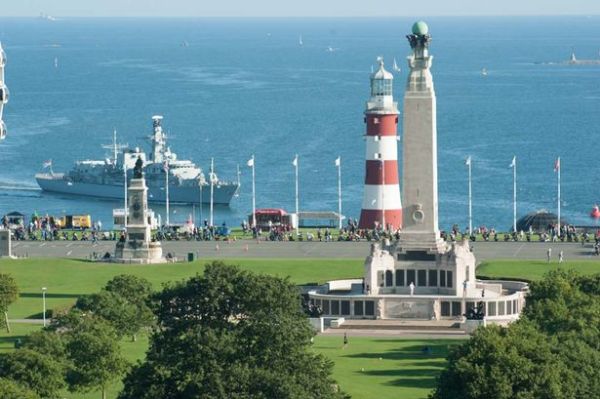
Plymouth Hoe view. with Smeaton’s Tower.

Smeaton’s Tower in this photo was built by an engineer named John Smeaton, constructed of Cornish granite and cleverly dove-tailed together. It has been a Grade 1-listed building since 1954.

It is open to visitors who can climb the 93 steps, including steep ladders, to the lantern room and observe Plymouth Sound – pictured – and the city. 6

Plymouth is now a modern city shaped by its past and steeped in history.

SOURCES

(1) https://genealogyensemble.com/2022/06/29/a-history-of-plymouth-gin/

(2) https://en.wikipedia.org/wiki/Dartmoor_kistvaens

(3) Thttps://commons.wikimedia.org/wiki/File:St_Edward%27s_Church,_Plymouth.jpg Photograph by Chris Downer

(4) https://www.plymouthherald.co.uk/news/plymouth-news/facebook-apologises-removing-posts-rude-4928078

(5) https://en.wikipedia.org/wiki/Royal_Citadel,_Plymouth

(6) https://en.wikipedia.org/wiki/Smeaton%27s_Tower

The Legend of star gazey pie

Have you ever heard of Star Gazey Pie? Me, neither, but soon after their marriage, my Dad, from Cornwall, asked my Mum, from Devon, to make him a Star Gazey pie. I think it was a sneaky request as she had absolutely no idea what he was talking about and I think he knew that!

The main ingredients are Pilchard – or Sardines – a small, tasty fish high in omega 3 oils. Today we buy them in tins, submerged in water, tomato sauce or mustard. In England, we usually serve them on hot buttered toast.

Star Gazey Pie was created in Mousehole, Cornwall UK, where ‘Mousehole’ is pronounced as ‘Mow-Zul’

A legendary character by the name Tom Bawcock appears to have been a local fisherman in the 16th century, and according to the legend one winter was extremely stormy and the fishermen could not leave the harbour to fish.

Christmas was approaching and fish was the main source of food. The villagers were facing starvation but Tom Bawcock decided to brave the storm.

He safely returned with enough fish to feed the entire village and the whole catch was baked into a pie, which was named ‘Star Gazey Pie’ in his honour, and is now a festival called “Tom Bawcock’s Eve” held on the 23rd of December. (1)

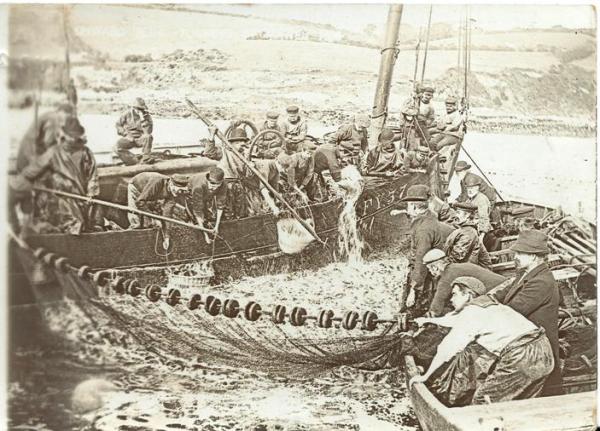
Pilchard, or sardines were fished using ‘seine nets’ all around the coastline of Cornwall and in the early days of fishing the seine nets used were large and very expensive, so they were owned only by the wealthy noblemen.

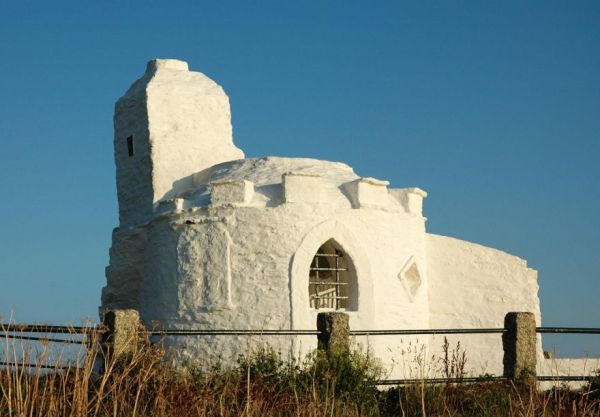
The shoals appeared in late summer and autumn in North Cornwall following warm currents and planktonic food. The shoals were so huge, the fish could be seen from the cliff tops. ‘Huers’ were employed to keep watch and when the enormous shoals were spotted the Huers would shout ‘HEVVA!’ and alert the village into action.

On Newquay’s Towan Headland, thought to have been built in the 14th century, there stands a huers hut.

This image has an empty alt attribute; its file name is heurs-hut.jpg

Huers Hut Towan Headland, Newquay, Cornwall

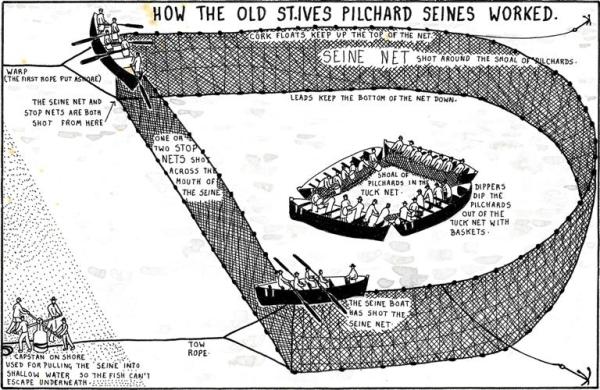
Pilchard seines nets were huge cotton nets with small mesh, in a horseshoe shape and were used in shallow waters. A cox and four oarsmen in 40 foot length rowboats, were used to set up the nets.

Then, the ‘stop net’ was set, this was a smaller wall of net, which trapped the fish in shallow water. This net would be hauled until the fish were now in a smaller, concentrated area. The fish were then scooped out of the shallow water into baskets. (See the drawing below).

This image has an empty alt attribute; its file name is diagram-st-ives-pilchard-seines-1.jpg

Drawing of seine nets (Image courtesy of John McWilliams ©)

The ‘tucking’ process was very labour intensive and fishermen, boys and women were all involved.

This image has an empty alt attribute; its file name is tucking-a-seine-copywrite-john-mcwilliams.jpg

Tucking of seine nets (Image courtesy of John McWilliams ©)

This way of fishing was used for hundreds of years until the late 1890’s when the fishing industry begun to decline. The seine nets were hugely expensive, and if a fisherman wanted to be his own boss, he used the smaller drift nets, which became the mainstay of pilchard fishing. During the First World War motors began to be installed which was safer and much more practical.

However, by the 1970’s pilchard fishing ceased in Cornwall, until the 1990’s when an enterprising skipper began experimenting with ring netting for pilchards. Others followed and once again there is a thriving industry in pilchards or, as they are now known, Cornish Sardines. (2)

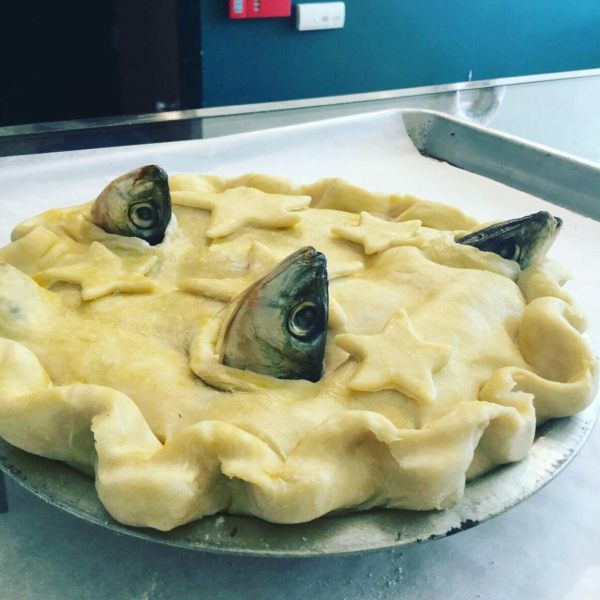
And now for the most interesting bit , a photo of an unbaked a Star Gazey Pie.….

This image has an empty alt attribute; its file name is file.jpg

Here is the recipe and how you make it; go on, have a go!

STAR GAZEY PIE

454 grams (1 pound) of shortcrust pastry.

6 pilchards – or 8 large sardines gutted and filleted BUT with their heads left on and tail fins removed.

171 grams (6 ounces) of brown breadcrumbs

1 teaspoon ground cloves

1 teaspoon allspice

Freshly ground black pepper

One small onion

1 egg

3 hard boiled eggs, chopped

4 teaspoons single cream, and 4 table spoons chopped parsley.

METHOD

Set the oven to 220 C or 425 F

Wash the fish and pat dry then open them out.

Make the stuffing with bread crumbs, cloves spice and pepper mixed with finely chopped onions bound together with beaten egg.

Fill the opened fish with stuffing. Close up, reshape and leave in a cool place.

Grease a flat pie-dish about 25.4 Cm. (10 inches) in diameter. Line with 113 grams (1/4 pound ) pastry.

Arrange the stuffed fish like the spokes of a wheel with their heads on the fin and tails in the centre. Cover with hard boiled eggs, cream parsley and pepper; finish with the rest of the pastry and pinch the two layers firmly together between the heads but roll back the pastry round the heads to reveal their eyes gazing starwards. Brush with beaten egg.

Bake for 15 minutes reduce heat to 180 C (350 F) and continue for a further 20 minutes until the pie is golden brown. (3)

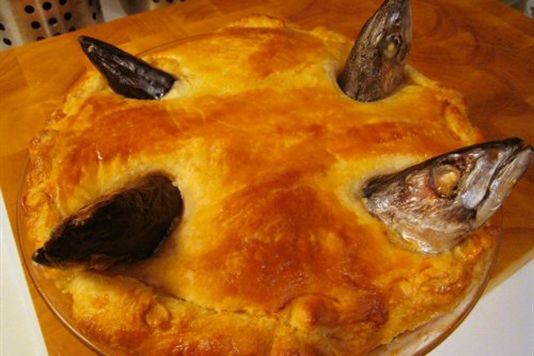
This image has an empty alt attribute; its file name is star-gazey-pie.jpg

The baked Star Gazey Pie.

And, no, I have not baked one myself, however, I think I may now have to try. However, when I asked the family, their response was not the most enthusiastic! I wonder why??

SOURCES

(1) https://en.wikipedia.org/wiki/Tom_Bawcock

(2) Drawing of seine nets Image courtesy of John McWilliams ©

(2) https://www.cornwallgoodseafoodguide.org.uk/cornish-fishing/history-of-the-cornish-fishing-industry.php

(3) ‘Favourite Cornish Recipes’ compiled by June Kittow

Below is a 1943 documentary about pilchard netting and life in Mousehole during the Great War era. (2)

Video: https://film.britishcouncil.org/resources/film-archive/coastal-village

Dear Miss Bulford – Part Four

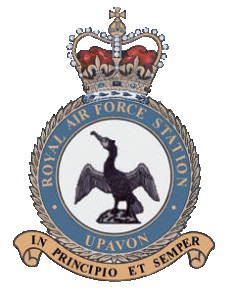
RAF Upavon Crest

In the first three parts below, of “Dear Miss Bulford” I describe my [1] entry into the WRAF – Women’s Royal Air Force, [2] the basic training [3] posting to a trade training camp, and this part four, my first posting as a trained Medical Assistant.

  1.   https://genealogyensemble.com/2020/01/02/dear-miss-bulford/

2.   https://genealogyensemble.com/2020/04/22/dear-miss-bulford-part-two/

3.  https://genealogyensemble.com/2020/04/29/__trashed-4/

Arriving in Salisbury, Wiltshire by train, I made my way to the bus station. wearing my ‘best blue’ uniform.  As I was searching for the camp bus,  two army men also in uniform approached me, and asked if I was going to RAF Upavon? [1] I said yes, so they offered me a lift in their car. They were stationed a few miles from RAF Upavon, at the Larkhill Army Garrison.  I accepted their offer. Something I now think was not too wise, but it was the 1960’s. However, they were very polite and pleasant and I enjoyed the ride to the camp. They said they often came to our mess to dance and drink so I would see them in the future,  which I did.

Arriving at RAF Upavon the Duty Officer at the main gate, directed me to the arrival office where I waited for someone to take me to my new quarters. RAF Upavon was small compared to my last posting. Only one block for the WRAF and one for the men,  each side of a parade square. From the window of my new single room-  wow! this was great- I could spot the mess hall.

The sergeant of our block, two-storied as usual but only three or four to a room, came and introduced herself, and offered to take me to the mess for tea. On the way, she told me about the SSQ (Station Sick Quarters)  I would be working at and who made up the staff. There was a  civilian Doctor, who drove up from the Upavon village each day,  a Sergeant, two Senior Aircraft men, and a civilian nurse who was retiring. I was to take her place.

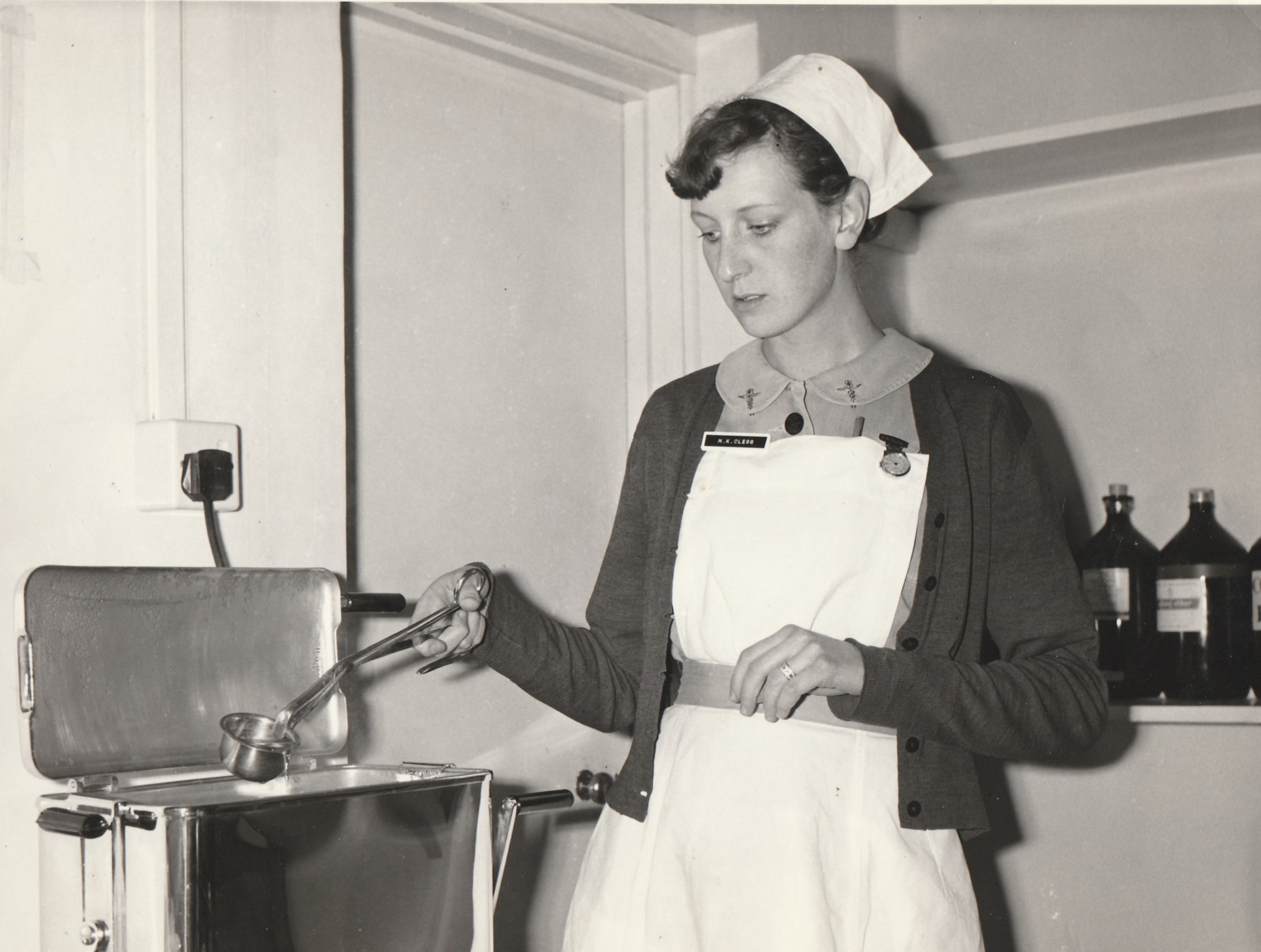
Next morning, dressed in my nurses uniform, I nervously made my way to the SSQ. I met the civilian nurse, Mrs Bowes who showed me her routine. Unlike her, I would be ‘on-call’ a shared duty with everyone else in the SSQ.  (Which was why I had the enviable single room!).

Me at RAF Upavon SSQ

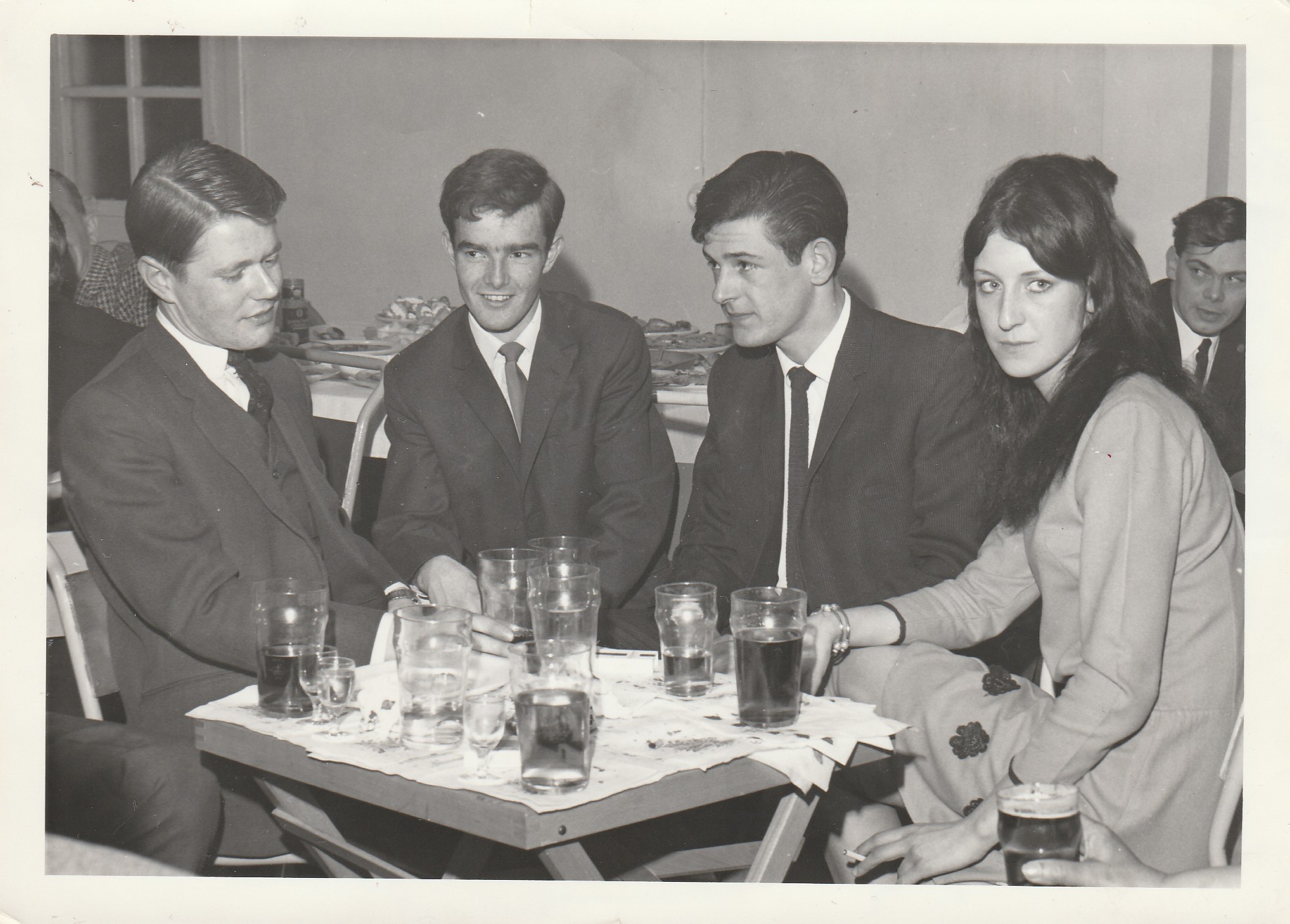
A few months after I arrived I went to the weekly ‘hop’ a Saturday night dance drinks and general fun. There, I met John, who had only just arrived on camp himself. He was an admin assistant and worked in the HQ (Headquarters) for Sir Thomas Prickett, RAF Upavon’s Commanding Officer. He walked me back to my barracks and we arranged to meet at breakfast in the mess, the next morning. We spent the weekend together, getting to know one another walking around the camp and talking about our lives so far.

Saturday night dance. John on the far left, shortly after we met, with SSQ staff Dave and Mick, and me.

On Monday morning, when I went to the waiting room, there sat John! In he went in to see the Doctor. When he came out, his medical notes said ‘Mononucleosis’ (otherwise known as the kissing disease!). We sent him to sickbay and put him on antibiotics. The male nursing assistant stayed the night with him.

After one night in sickbay, John had not improved and now had a high temperature, so he was sent to the RAF Wroughton Hospital [2] by ambulance.  I accompanied him on the ambulance trip. I told him he would be spending time in isolation at the hospital but that we could meet again when he got back to camp. We had a date that night!

Seven days later he returned to RAF Upavon and we resumed our getting to know each other routine.  We would see each other at breakfast, lunch and tea, so we got to know each other pretty quickly and very well. We would take the bus to Salisbury on Saturdays to shop and come back in time for the Saturday dance.  We babysat for the local personnel on the camp and spent our days off, together. We took leave and went to my home to visit my parents and up to Liverpool where John was born to meet his Mum.

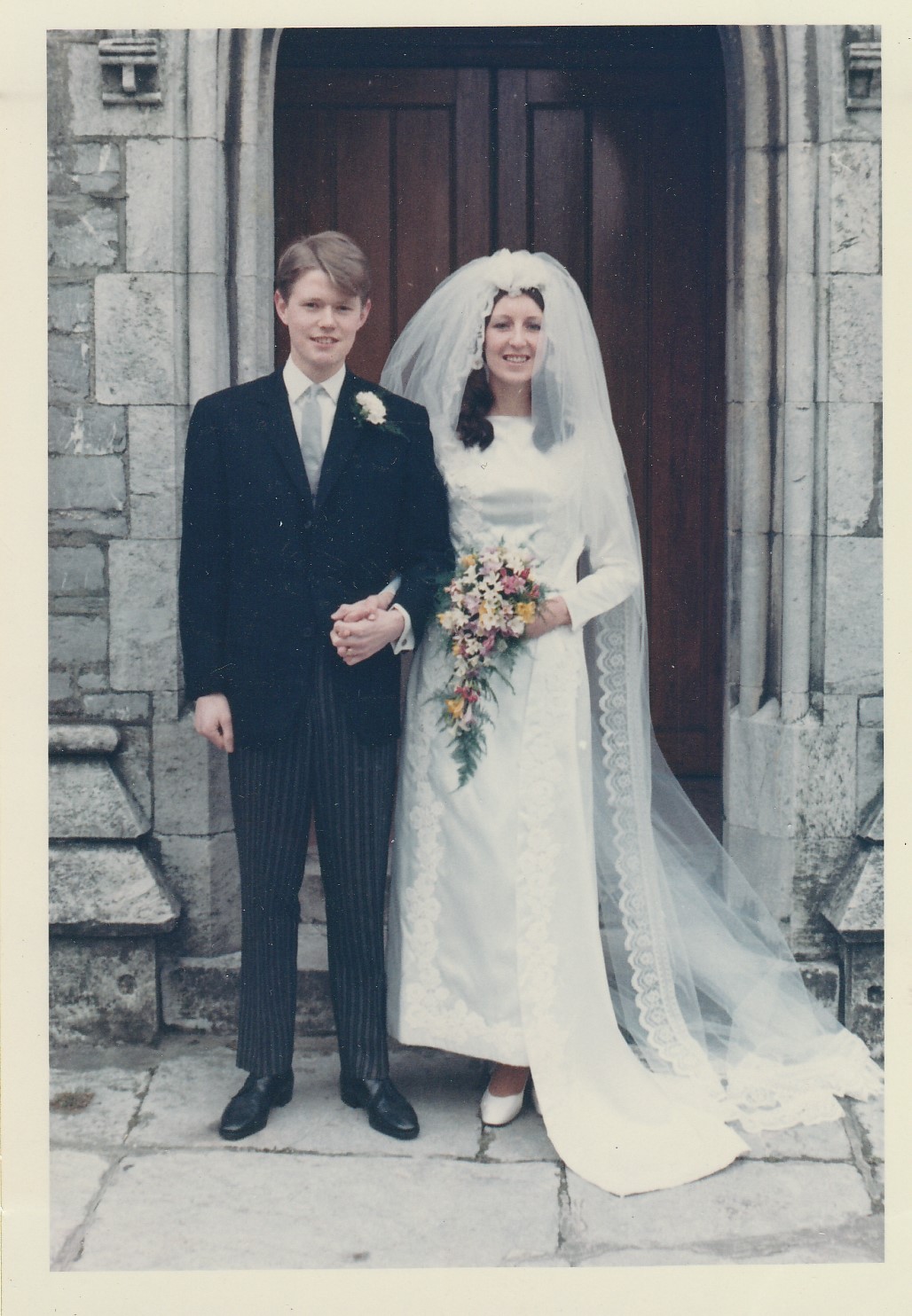
One year later, on the anniversary of the day we met, March 2nd 1965, we got married. in Plymouth Devon. John’s Commanding Officer, Sir Thomas Prickett sent us a Congratulatory Telegram, as was usual in the days of snail mail and telephones.

Wedding Day 2 March 1968

Telegram from John’s Officer In Command,  Air Marshall Sir Thomas Prickett and Lady Prickett.

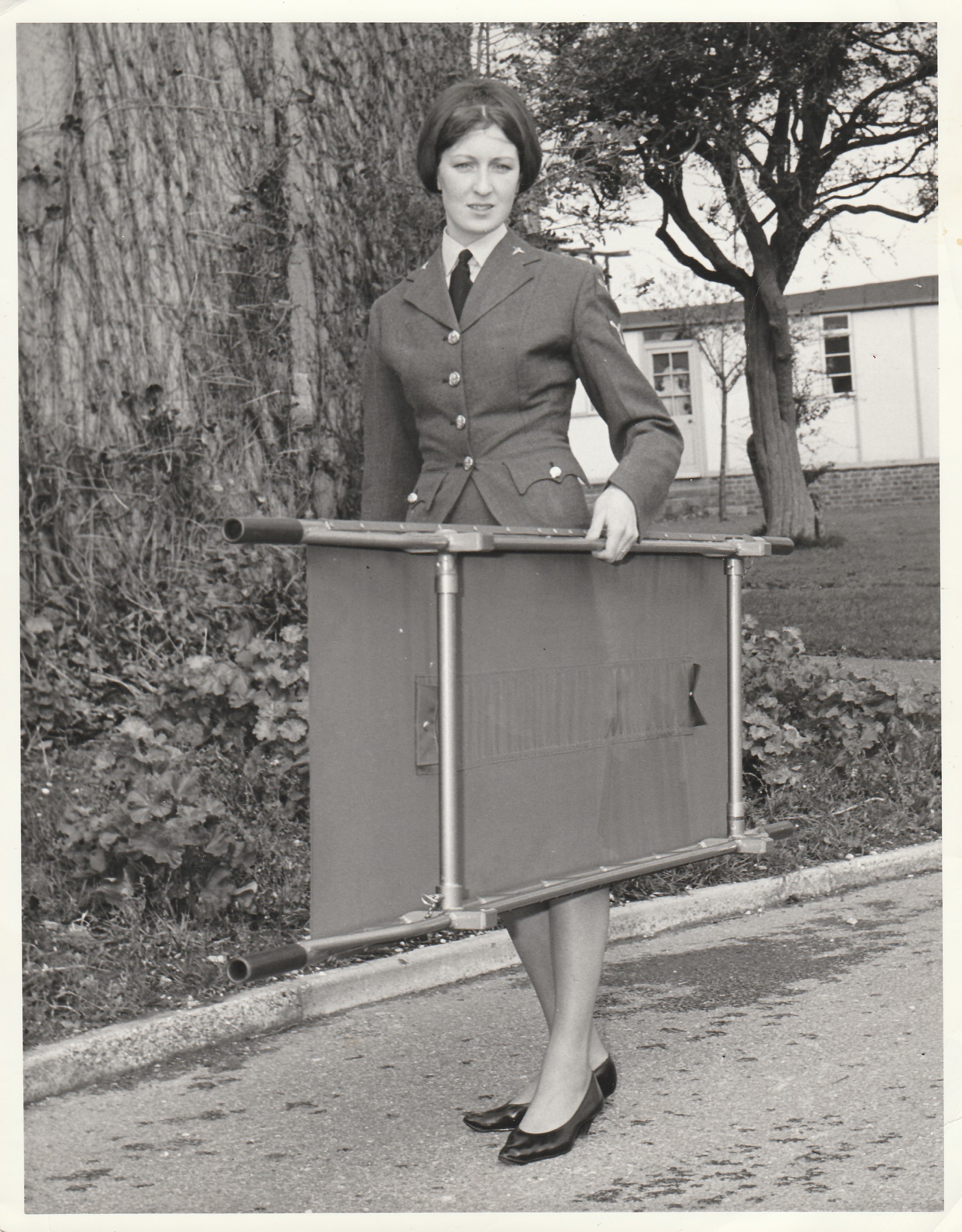
After our marriage, I stayed on in the WRAF and RAF Upavon. After all, what was I going to do in the middle of Salisbury Plain for a job? Besides, I was enjoying my life at RAF Upavon. Here, I was photographed demonstrating a new lightweight stretcher for the RAF Magazine – so light even a woman could lift it!

It was considered very unusual for me to continue in the WRAF, as most girls got married to ‘escape’ the WRAF.  However, I loved it so we applied for married quarters, completely forgetting that John was not 21 years of age yet, so he was not eligible!  Whilst I was certainly eligible being a little older than John,  nobody had ever experienced a married 22-year-old WRAF applying for married quarters before, so my request was denied. We just took in  our stride, but today I would have strongly questioned it.

So, for a few months, we lived on camp in our separate barracks and looked around for a place to rent close by. We were lucky to find ‘Dairy Cottage’ an early 19th century run-down, thatched cottage but rental affordable in the village of Upavon, just a bus ride from the camp. We lived there, for 18 happy months. We did some house painting and a few repairs on the inside. There were pheasants and various birds in the overgrown garden and we had get-togethers with our friends.

Our first home together, Dairy Cottage

The SSQ I was posted to was small and intimate and I quickly learned the routine. The staff were very helpful. I soon realised that I was the only female nurse at the camp. Soon, everyone called me Florence, as in Florence Nightingale! I was flattered. As the SSQ was right in the middle of Salisbury Plain, I was not too thrilled as I am a city girl and this place was very ‘country’.  Still, I made some great friends and soon settled in.

We treated the RAF personnel on camp and the civilians from the Village and so the daily ‘surgery’ was usually full.  We did all the necessary vaccinations for overseas postings and dealt with minor sicknesses. We took and developed x-rays and had our own dispensary, where we dispensed medicines and pills. We had a four-bed ‘sick bay’ for things like flu or contractible diseases. The RAF Hospital Wroughton was an ambulance ride away for more serious problems.

One night I was on ‘call’ and my first problem was at 9 pm. The Duty Officer called to alert me to the fact two Army men were at the guardroom, injured. I opened up the SSQ and waited for them. Both men had injuries. They had been on night manoeuvres and had fallen in the dark.  They undressed and I examined them. One had difficulty breathing so I diagnosed a fractured rib. The other man had the same problem but head scratches and a bloody nose.

As I was dressing their wounds and binding their ribs two more men showed up! At that point, I called the other two medics on camp with an urgent tannoy (public address system) message and they also arrived to assist me.  We sent them by ambulance to RAF Wroughton Hospital.

After our marriage,  John decided to change trades and become an Air Cartographer, so he was posted to RAF Northolt to learn his trade.  I tried for a posting there, but no luck. However, I did get a posting to RAF Uxbridge in the SSQ in the same area. So here we were, John at RAF Northolt and me at RAF Uxbridge! Once again we hunted for accommodation and a few months later, found a bed-sitter in Uxbridge for rent. Now, John was ‘of age’ for married quarters and entitled to payment of the rent until we could get a married quarter home at RAF Northolt. I finished my 6 happy, enjoyable years in the WRAF and found a job at a doctors office in the area until I became pregnant with the birth of our first son. This year we have been married 52 years.

Post Script:  When I told my family where I was to be posted, my Gramps told me, that in WW1, he had been at RAF Upavon for his training as an air gunner. However, HE was –  in his own words – ‘under canvas’ What a coincidence!

[1] A Short History of RAF Upavon 

The station motto was In Principio Et Semper, and translated from Latin means “In the Beginning and Always”. The station crest had a pterodactyl rising from rocks, which symbolised the station’s connection with the early days of flying, and was also a reference to the location of the station near to the ancient monument Stonehenge.

Smaller camps such as these were fully functioning  RAF Stations with small Medical Centres and a few beds plus an RAF Hospital nearby in case of emergencies. The nearest hospital to RAF Upavon was RAF Wroughton a Royal Air Force airfield near Wroughton, in Wiltshire, England, about 4 miles south of Swindon.

RAF stations in post-war England were many, and quite historical as most were built in the early 1900s. Unfortunately, most of them, have now closed or like my posting to RAF Upavon, taken over by the Army.  The station opened in 1912 and closed in 1993 when it transferred to the British Army and became known as Trenchard Lines.

[2] A Short History of RAF Wroughton

RAF Hospital Wroughton was part of the station and stood near the eastern boundary of the site, about 1 12 miles (2.4 km) west of Chiseldon. The RAF General Hospital (as it was known) opened on 14 June 1941 and by the end of March 1944, its bed capacity was 1,000. Wroughton continued as a General Hospital treating military patients, and from 1958 took NHS (National Health Service) cases as well to relieve backlogs in the Swindon area.  Following a visit to the hospital by  Princess Alexandra on 4 July 1967, the Queen conferred the prefix “Princess Alexandra’s” on the hospital on 4 October 1967.

The hospital was the primary destination for returning casualties of the Falklands War in 1982. When the hostages from Beirut were released in August 1991, Wing Commander Gordon Turnbull, a psychiatrist based at Wroughton, with his team, debriefed John McCarthy, Terry Waite and Jackie Mann and provided the counselling necessary to ease them back into freedom.  The hospital closed on 31 March 1996 as part of the Conservative Government’s defence cuts at the end of the cold war. The hospital was demolished in 2004 and the site, called Alexandra Park, used for housing and a conference centre; a memorial commemorates the former hospital.

Dear Miss Bulford …

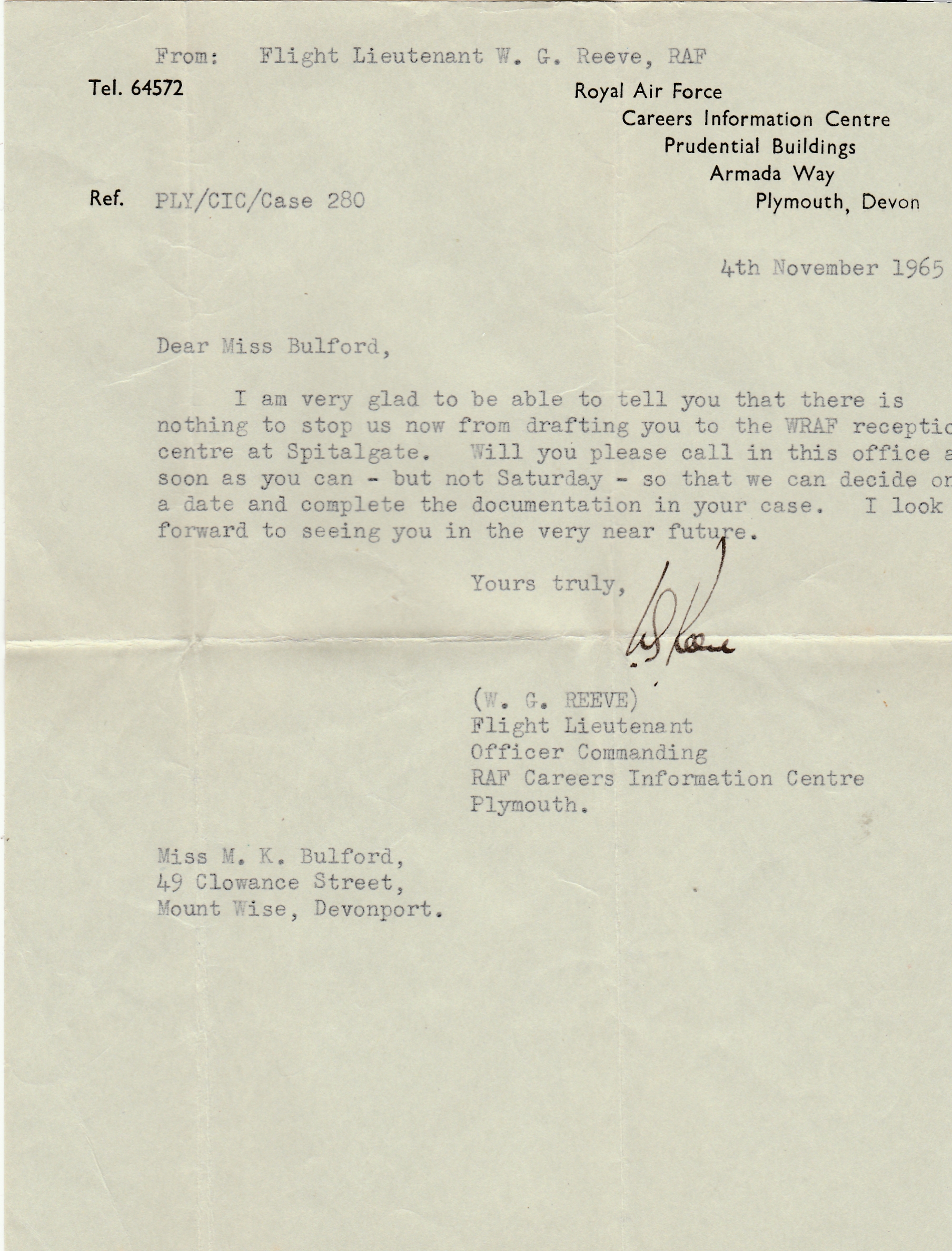
With the following letter, so begins the most exciting period of my life.

It came to a 19 year-year old me still living in Plymouth, Devon England the town of my birth. That version of me wanted something new. Having left school at 15 years and one month hardly qualified me for anything other than low-paid dead-end jobs, until, like most girls around me, marriage beckons.  Such was NOT the life I wanted, so I applied to join the Women’s Royal Air Force (WRAF). To my amazement, I got in.

Initially, it seemed a lark and a good way to show off to my friends. Still, joining up offered a chance to leave home with accommodation, a job and an ability to feed myself all at the same time. I had to take the chance!

Soon after the initial interview in Plymouth with Flight Lieutenant W. G. Reeve – above – As the letter states, my acceptance was based on passing a medical examination and a selection interview at RAF Spitalgate, In Lincolnshire. To travel there I was issued with travel documents and a kit list including an apron! Stockings! Suspender belt!.

Travel Warrant and Kit List for the journey. 

I left my home in Plymouth to Kings Cross railway station in London then a 4 and 3/4 hour journey. From there, another train from Kings Cross to Grantham, Lincolnshire railway station to join several other nervous-looking girls. We discovered a phone on the wall with the first order of our careers. It read:

“RAF SPITALGATE

NEW RECRUITS

PHONE FOR CAR”

Once on ‘camp’, our Corporal introduced herself and we were ushered into a room in a large building known as the barracks. This is where we would sleep and live together, for the next six weeks. It was a vast room with 10 beds either side spaced out with a locker and a wardrobe. Once we had deposited our luggage in our space, the Corporal took us to a cafeteria-like place called a mess for our tea and the food was really good!

The next day the medical assessments began. We had medical exams, Xrays, general fitness tests dental examinations and vaccinations. We started out with about 22 girls which whittled down to 17 after that first day. The next day, those of us who were formally accepted began our training. First, we were taught how to make a bed the RAF way, keep our ‘space’ clean and tidy enough to pass inspections every day.

Our bathrooms and toilets were at the end of the room. For many of us, this was the first experience of hot running water, baths every day plus central heating. After a few days, several of us developed sinus problems. Our bodies were used to cold houses, fires and baths only once a week.

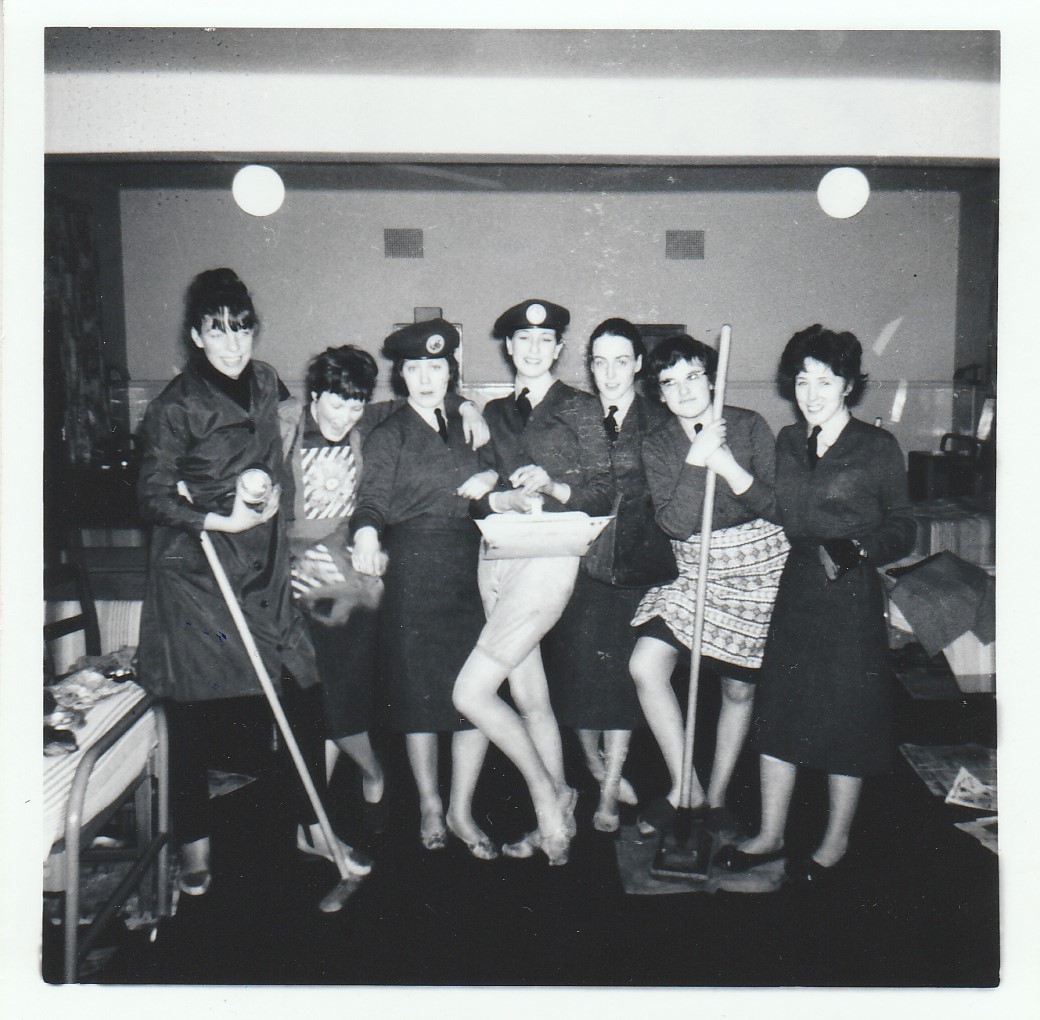
We soon developed a routine. Every Wednesday, we deep cleaned in a tradition called ‘bull night’. We pushed a large heavy flat ‘buffer’ side to side to polish the floors, A cumbersome task but good for the stomach muscles! We finished by putting newspapers on the floors because nobody was allowed to walk on those perfectly polished floors! We wanted everything shiny and bright the next morning at 6 a.m. inspection. Despite the hard work and need to adapt to new realities, we managed to have a lot of fun. 

We had parts of our uniforms issued over the next few days, including the laughable ‘passion killer’ knickers. We were each issued three pairs, pale blue, down to the knee and  I don’t think anyone wore them at all, except here, for one night only as a giggle. The photo below shows the ‘buffer’ we used to polish the floors to a high gloss. I’m the one holding the dustpan and a cigarette wearing the pale blue ‘passion killers’

For the next 6 weeks, we learned to wear our uniforms properly, tie our ties, make sure hair was off the neck and how to wear our berets and best blue hats. Most importantly, we learned how to salute an officer. That lead to discovering various badges and who to salute and who not to salute.

We were shown the NAAFI (Navy Army Air Force) shop where we were ordered to buy shoe polish, then taught how to clean our shoes to a very high gloss with spit and polish and repeated for hours on end

We learned how to march together, in order. That’s not as easy as it sounds. A few girls began as ‘camel marchers’  They were girls who just could not march at first. They tended to march with the left arm and left leg together, instead of the opposite.

We marched every day, and everywhere from day one, chanting left-right-left-right, halt out loud as we went! Each day we practised marching on the parade ground for one hour, then off to classes.

In class from 9am to 5pm we learned all about the history of the RAF, and the trades available, which uniforms to wear on which occasion (such as ‘fatigues’ and ‘best blue’) and how to keep our ‘kit’ clean. We had hygiene classes informing us how and when to brush our teeth, take a bath and keep ourselves clean. We had Pt classes to keep fit. It was exhausting and exhilarating. The morning after our first bull night, an officer inspected us the next morning with white gloves and ran her fingers along every surface. We had to stand at attention together, whilst she inspected our quarters. The first few weeks everything had to be ‘done over again’ as she ripped out sheets and blankets and shouted at us saying the beds were not made properly. She complained about the dirty surfaces and how dirty the bathrooms were. We could no nothing right those first three weeks. We had no uniforms yet, so every day we marched in ‘civilian’ clothing with just a beret on. We felt silly. 

It was a great day when we were eventually issued with our uniforms and full kit.

Our best blue uniforms at last! Me on the left.

After six weeks of basic training came our ‘Passing Out Parade’ and the next day, after our goodbyes, we were all posted to our various trade training camps, but that is another story!


Illegitimate

Illegitimate
by Marian Bulford

In the March 31st 1901 UK Census Lilian Mary Symons was listed as a ‘servant girl/domestic’ in Leicester, Leicestershire in the employ of Mrs. Mary Whatnall, ‘Retired Lunatic Asylum Matron’ Mrs. Whatnall’s niece also lived in the house.¹

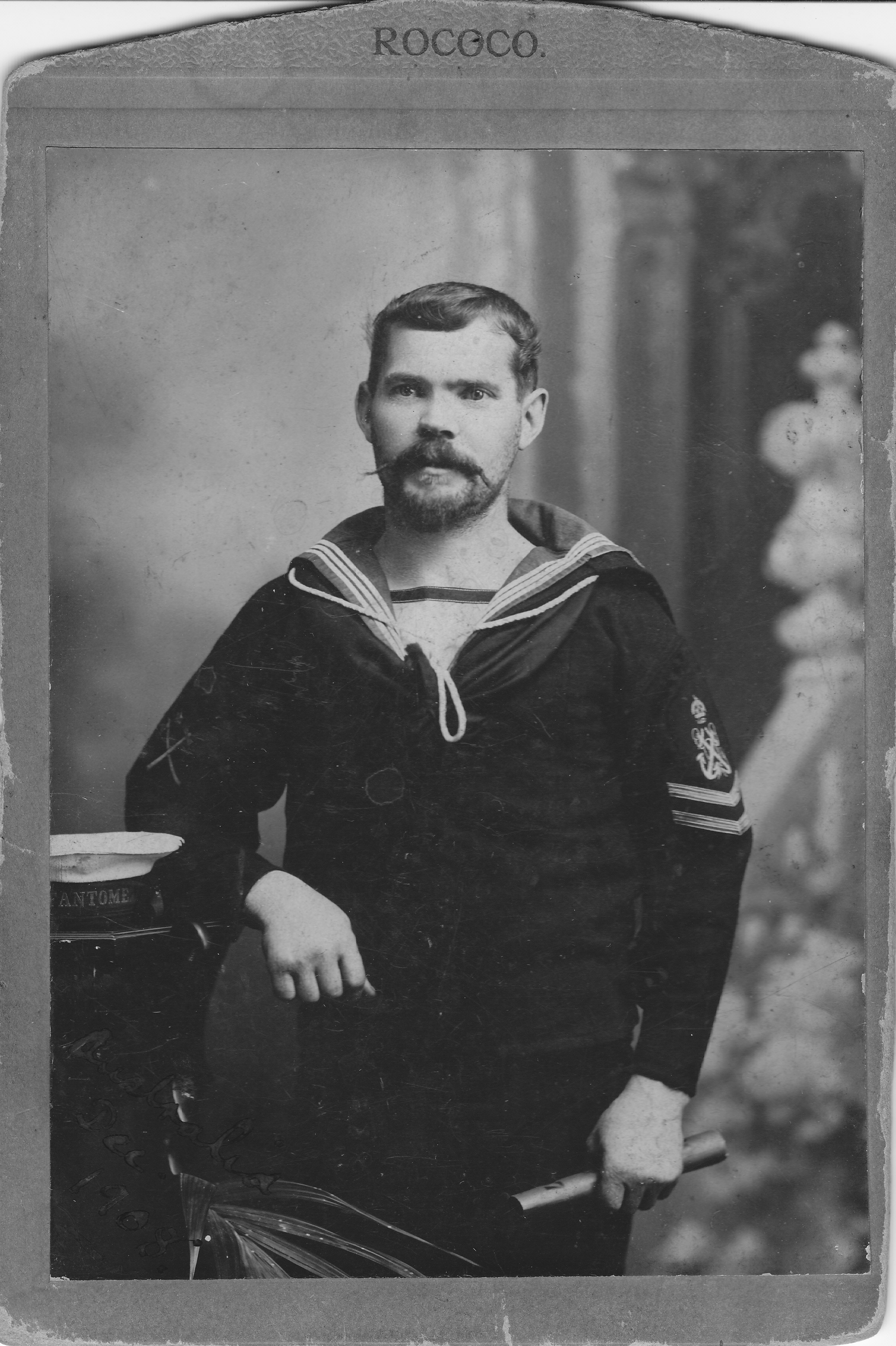
The 18 year old Lilian had, the previous November 25th given birth to a daughter. The father of the baby was a Royal Navy Cooper and master carpenter Thomas Bevan whom Lilian met when she was 17. They had started to court, but neither of them realised she was pregnant when Thomas left for sea. He was gone not knowing he was to be a father and Lilian had no contact with him for the next three years.

Lilian was the oldest in a family of five. Her father was a jobbing gardener and her mother a housewife so they would have had no means to take care of Lilian and another child.

How Lilian must have felt at that time, being pregnant and unmarried is not known, but I can only imagine how she would have had to approach her family and tell them. She also had to tell them that she did not know where Thomas, the father was.

Lilian’s father Thomas Symons unsuccessfully searched for Thomas and he also wrote to the Royal Navy regularly to find out the father’s whereabouts, but to no avail.²

In the 1900’s in the United Kingdom, unmarried pregnant women were often disowned by their families and the work house was the only place they could go during and after the birth of their child. There were no fees, but hard work was expected of the inmates. ³

According to my family, although Lilian was not ‘disowned’ by her family she did give birth to her baby and her child’s birth certificate states the child was born in the ‘Leicestershire Workhouse’.

In addition, the original birth certificate also had the words ‘ILLEGITIMATE’ in large letters stamped over the entire certificate. Lilian immediately tore it up and threw it away. 4

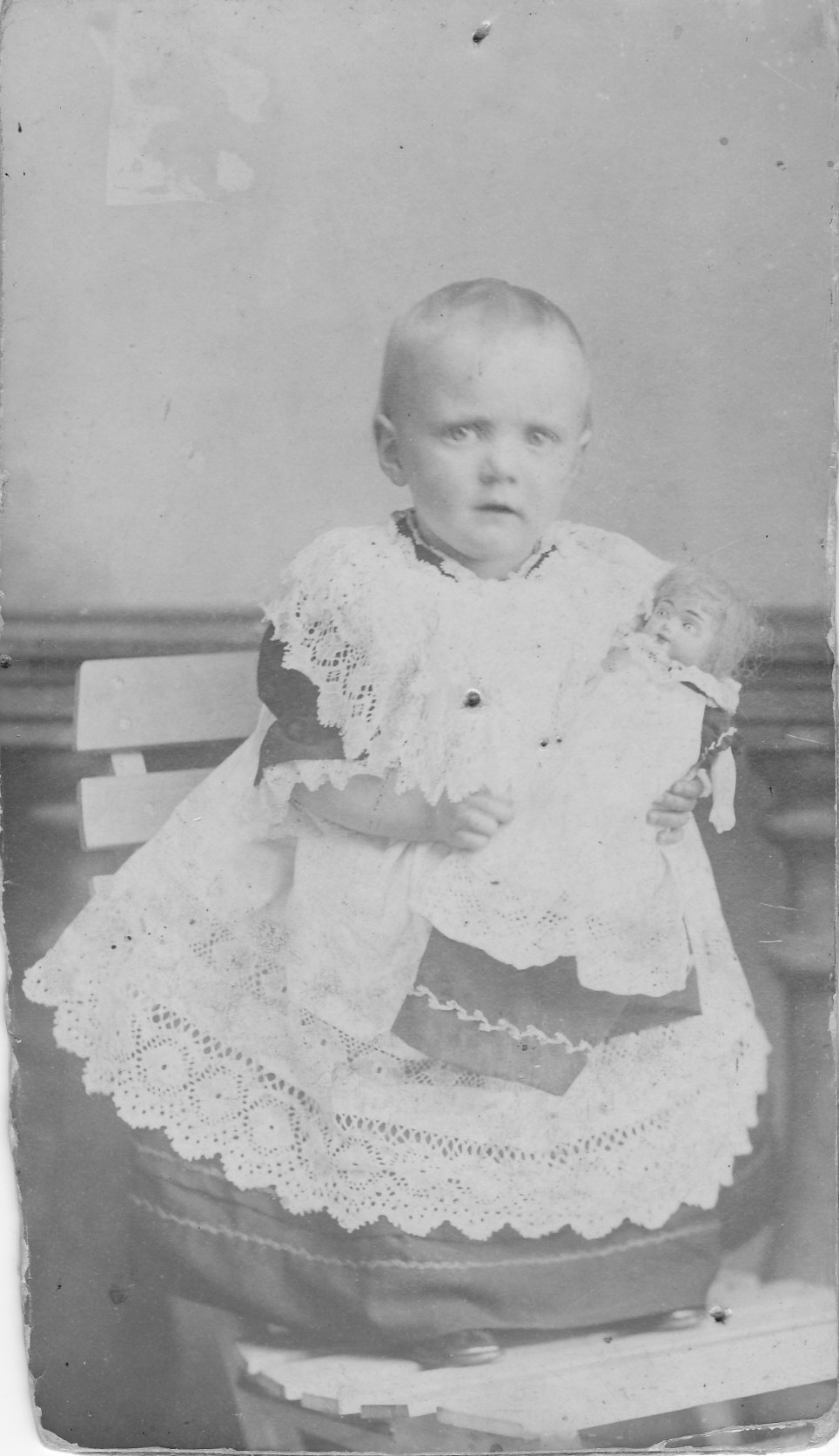
Lilian’s circumstances definitely changed, as I have a wonderful photo of the child at two years old and she is dressed in a very attractive dress with a matching dolly. These are not the usual working attire for someone living in a 1902-era work house and tape recordings of family told me her parents looked after the baby daughter and Lilian went to work for Mrs. Whatnall.

Thomas Bevan did eventually return from sea and Lilian and he got married on 25th April 1904 when the child was three and a half years old.5

In the 1911 Census 10 years later, Lilian is the ‘head’ of a household with three additional children. They lived in the Royal Navy Port of Plymouth, Devon England and Thomas was once again, back at sea.6

The couple went on to have four more children, who all lived to adulthood, including my grandmother, Edith, who had no idea she was born out of wedlock until she was 65 years old, but that is another story!

 Sources:
1 1901 UK Census at Ancestry.com
2 http://www.workhouses.org.uk/life/entry.shtml
3 Family tape recordings
4 Certified copy of a Birth Certificate, Leicestershire City Council, England
5 Registered marriages in April, May and June 1904 Leicestershire, England at Ancestry.com
6 Family tape recordings

Photos Below:

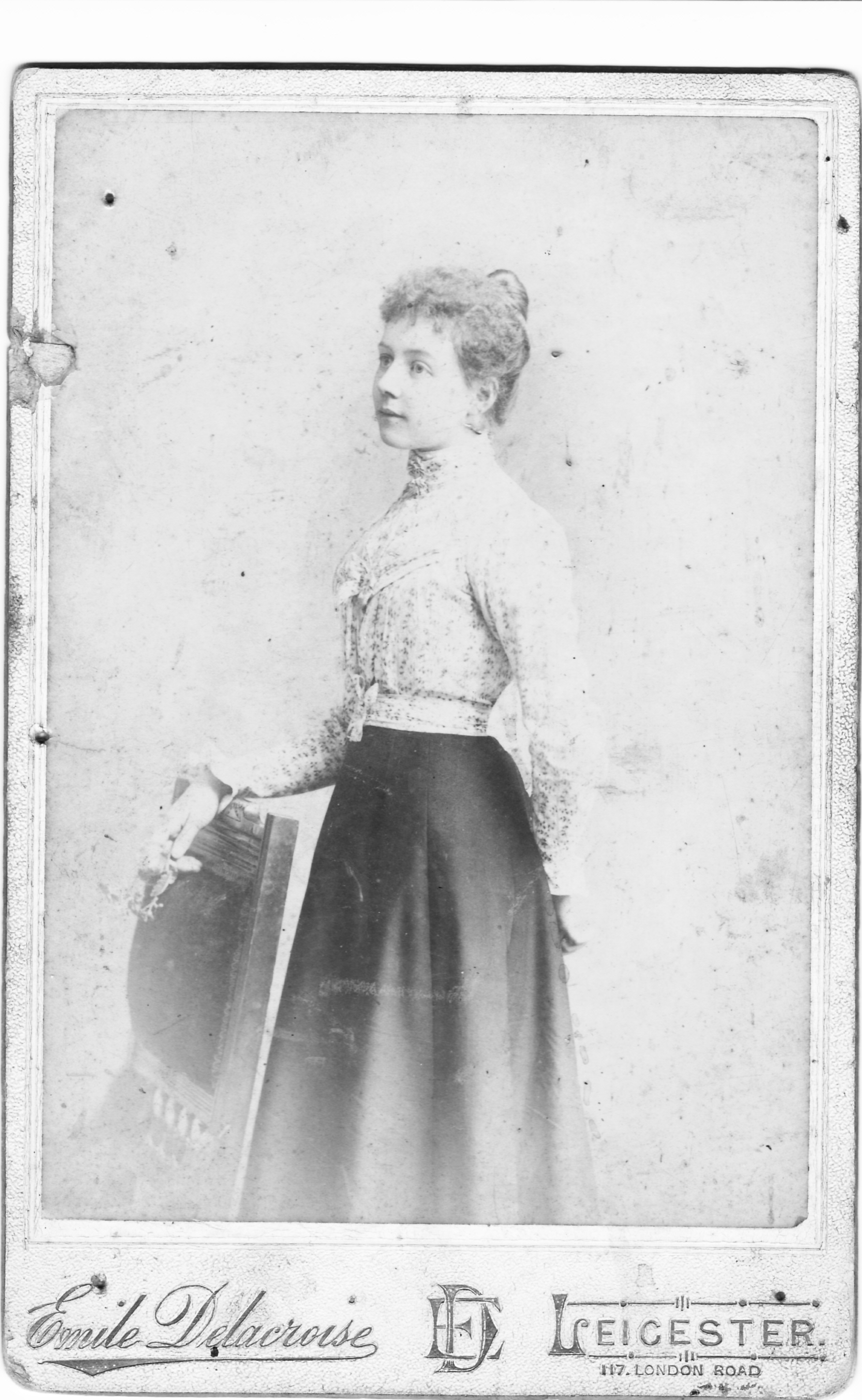
Lilian Mary Symons b. 1882

Lilian Mary Symons 1899

Edith Bevan 1902

Edith Symons Bevan 1902

Thomas Bevan b. 1876

Thomas Bevan, RN

Australia, 1908