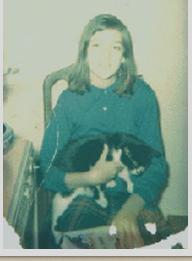
Tag Archives: Dorothy Nixon

Parallel Lives

In April, 2008 I received an unsolicited email from a Mrs. Joan Hague of Montreal with just one word in the subject line: Changi.

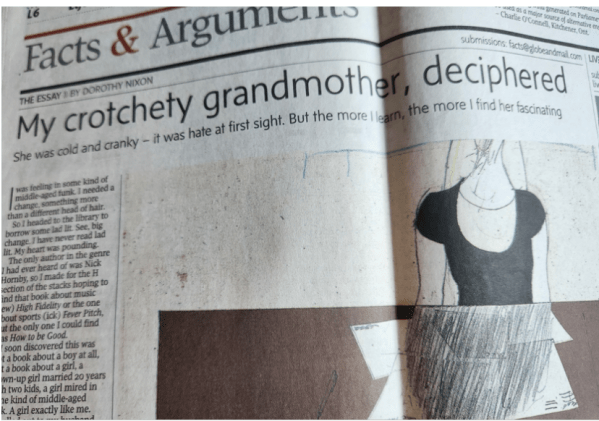
She had seen an article I had written about my grandmother  in the Facts and Arguments1section of the Globe and Mail. She wanted to tell me about her father, Thomas Kitching, who had been interned at Changi Internment Camp in Singapore during WWII, just like my grandmother Dorothy Nixon.

I visited the gracious Mrs. Hague (recently deceased at the ripe old age of 99) only to discover something extraordinary: Mrs. H. and my own father, Dorothy’s first son, Peter, had led parallel lives!

My father, Peter, was born on October 24, 1922 in Kuala Lumpur, to a Selangor planter, Robert Nixon of North Yorkshire and his wife, Dorothy Forster of  Teesdale, County Durham. Mrs. H. was born in Batu Gajah, Malaya in early November, 1922, to Thomas Kitching, the Surveyor of Singapore and his wife Nora.

As was the custom for British Colonials in the era, Mrs. H. was sent away at age six to go to school in England. She attended Harrogate Ladies’ College in North Yorkshire. My father was sent away at age five to go to a school in Maryport, Cumberland and then he went on to St. Bees prep school on the coast of Cumberland.
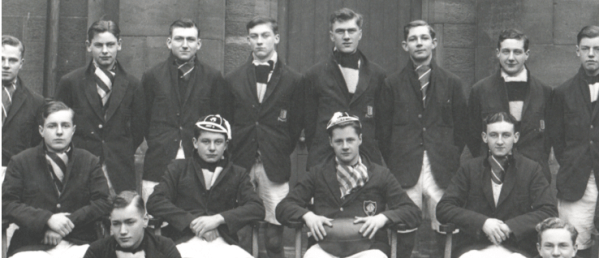
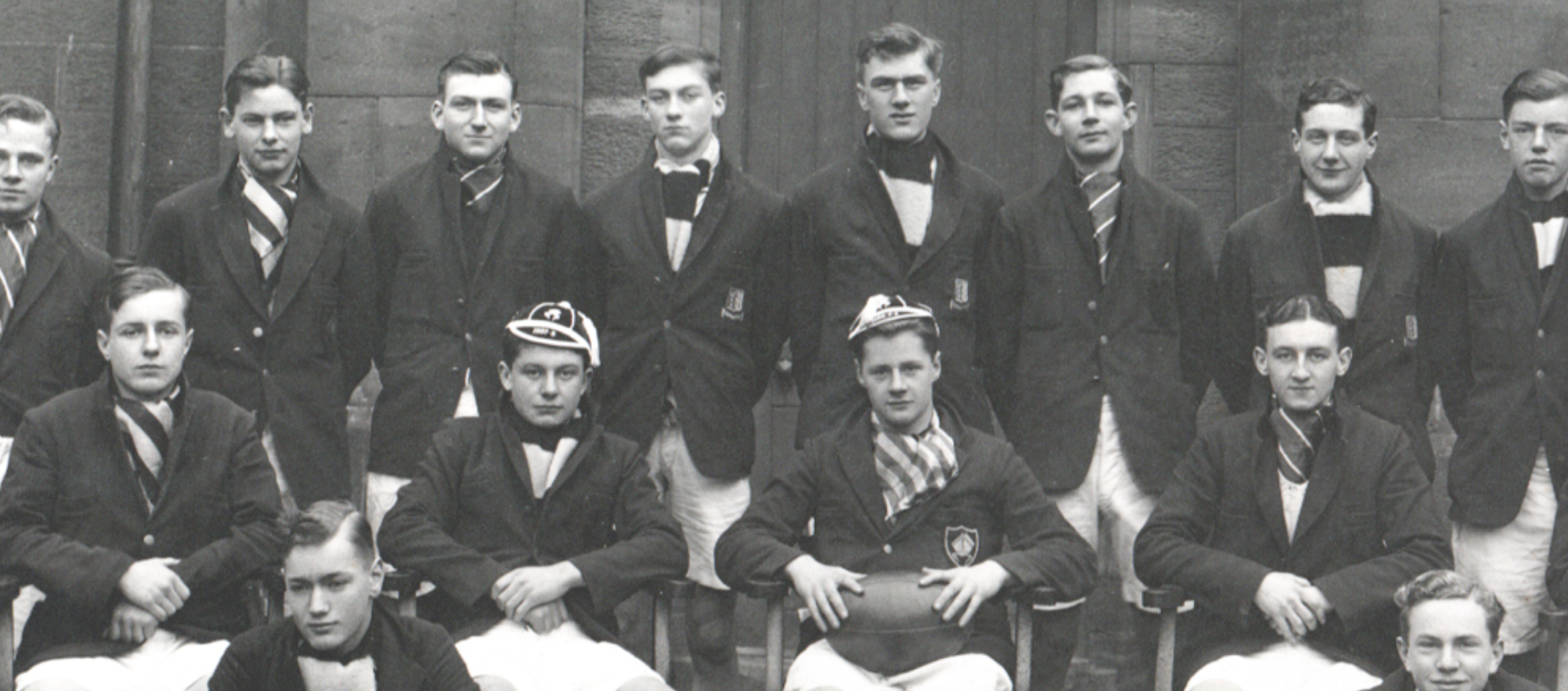
Senior Rugby St Bees School, Cumberland. My father at top, fourth from left. Courtesy St. Bees School Website.

Mrs. Hague told me she spent her holidays with a loving grandmother in Lancashire. My father and his even younger sister, Denise, were shuttled on vacations between random relatives who resented having to care for them.

Mrs. Hague’s mother, Nora, a nurse by profession, filled the void in her life with sports, golf mostly. She also scored cricket for Singapore. My grandmother, Dorothy, became the librarian at the Kuala Lumpur Book Club and she was Selangor’s official cricket scorer.
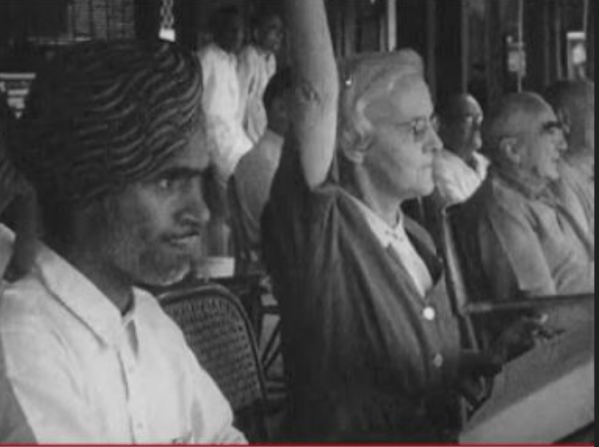
My grandmother, scoring cricket at Royal Selanor Club in K.L in 1952. Courtesy of a March of Time Newsreel. She was the ‘grand dame’ of Malayan cricket apparently. She told a reporter that she got into cricket because her husband, my grandfather, was one of the finest players in Malaya in the 1920’s and 30’s.

In 1939, when the phony war broke out in England, my father was about to go to Oxford. Mrs. H.  was in her last year at her ladies’ college. The Harrogate students were evacuated to another town. Mrs. H’s parents, in England for a time, brought her back to Singapore because they thought she would be safer. After two years at Oxford’s St Edmund Hall (where he was awarded ‘colours’ for rugby) my father signed up with the RAF and went to train in Saskatchewan, Canada.

The Japanese invaded Malaya on Boxing Day, 1942.The Japanese planes bombed “the green” at the center of KL, the site of many government buildings. My grandmother’s library building, adjacent the legendary Royal Selangor Club, was hit. During the bombing my grandmother hid under a desk. Later, she helped dig  four dead bodies from out of the rubble.

On that ominous day, Mrs. H and her mom were safely in “fortress” Singapore. They joined up as VADs, tending to the severely burned survivors of two navy ships that had been blown up by the Japanese in Singapore Harbour.  Mrs. H. had a vivid memory of unfolding the hospital cots that were all covered in a sticky goo to prevent rusting.

Kuala Lumpur soon fell. My grandmother was commanded to take a noisy, unlit night train to Singapore. Upon arriving, she immediately joined the ‘resistance’ at the Malaya Broadcasting Corporation.2
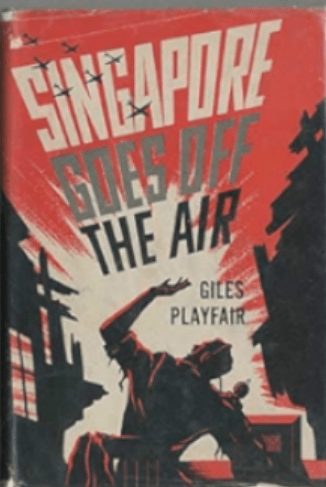
Giles Playfair, a reporter, wrote Singapore Goes off the Air in 1943, so it was likely a bit of wartime propaganda. He oft mentions my grandmother and seems to like her, but he disparages Colonial Wives as lazy and living above their station.

To everyone’s surprise and to Winston Churchill’s embarrassment Singapore soon fell as well. Mrs. H. escaped to Batavia and made it back to England but tragically Nora, her mother, took another boat, the Kuala, with 500 others including 250 women and children, and was lost at sea when her ship was bombed by the enemy.

Mrs. H. trained as a physiotherapist at St Thomas Hospital, London and volunteered at the Canadian Camp.

Mrs. H’s father, Thomas Kitching, was interned at Changi Internment Camp, as were my grandmother and grandfather, Dorothy and Robert Nixon. (Upon the fall of Singapore, Dorothy had stubbornly refused to escape to Batavia, staying instead to support wounded soldiers. A good thing, perhaps.)
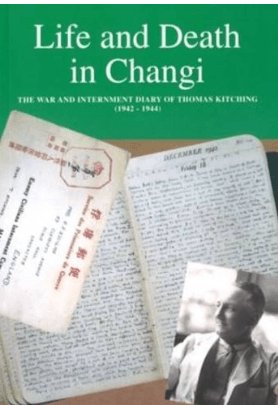
Thomas Kitching’s diary was published posthumously. Mrs. H. lent me a copy.

Kitching died of throat cancer in the men’s section of Changi prison in 1944 but he kept a diary of his time there that was later published. For a six month period my grandmother was Commandant of the Women’s Camp and according to her own unpublished memoirs she liked sneaking into the men’s camp, which was strictly against the rules, to gather information. The men had secret radio sets, you see, and she was an amateur radio enthusiast.

Malaya Straits Times 1936. The only woman among men. From what I have learned, that’s how “Granny,” educated at a co-eductional quaker school, liked it. This is why she just had to sneak into the men’s camp, a very dangerous act, I think. it certainly got her into trouble! Here she is described as Mrs. Dorothy Nixon. In those days and well into the 1960’s in newspapers in North America women were referred to as Mrs. John Smith.” They had no first names.

On October 10, 1944 many of these men and a few women were accused of spying in the infamous Double Tenth incident and taken by the Japanese Gestapo to a room in the basement of the local YMCA to be harshly interrogated, some men horribly tortured. My grandmother stayed in that stifling, bug-infested room with the crazed, half-starved men for a month, enduring a kick in the ribs on occasion, and then she was put in solitary confinement for another five months.

She survived her ordeal, but barely.

My father, meanwhile,  was posted to the Ferry Command based in Dorval, Quebec, a suburb of Montreal. A member of both the RAF and RCAF, he flew planes around the world, mostly mosquitos he told me.

A range of Mosquitos were manufactured to do everything from reconnaissance to bombing. Some were made in Downsview, Ontario. Ferrying planes from Canada to Europe was dangerous and many planes didn’t make it, but, hey, it was war.

In Montreal he met my mother, a French Canadian stenographer at RKO Radio Pictures probably at a party at the Mount Royal Hotel. They married after the war in 1949  once my father  had finished his war-shortened math degree at Oxford.
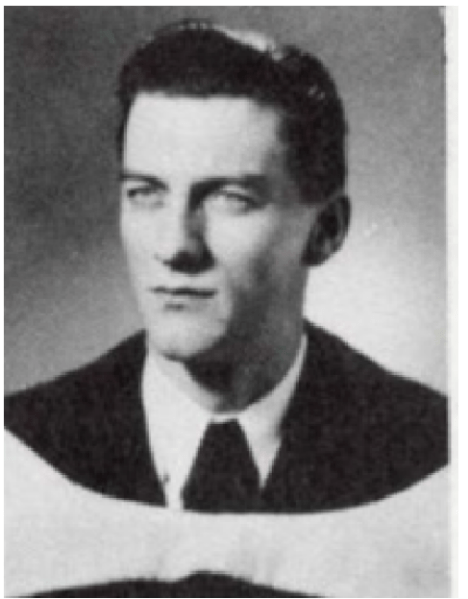
My father’s Sir George Williams grad pic, 1952, that I recently found online. Sir George Williams University night school was designed for returning soldiers, many of whom already had families.

In Montreal, my father added on a night time Commerce Degree from Sir George Williams University and a CA from McGill while working full time and raising a family.

Mrs. H. met her future husband, Mr H., the son of a prominent Westmount banker, during the war in London at a party for Canadian soldiers. The invitees brought with them a big juicy turkey apparently. The couple married in Morecambe Parish Church and moved to Montreal on the war bride scheme.

It is too bad I never got the chance to introduce Mrs. H. to my father as he succumbed to Alzheimer’s in the St. Anne de Bellevue Veteran’s Hospital in 2005. They certainly would have had a great deal to talk about!

Indeed, they may have already met. They both sent their sons to Lower Canada College on Royal Avenue in NDG in the 1960’s.

1. My Crochety Grandmother Deciphered.

2. Chronicled in a 1945 book Singapore Goes off the Air by Giles Playfair. The author wrote fondly of my grandmother, although he held the common belief (from back then) that Colonial women were indolent parvenues, ‘who would be sweeping out a four bedroom cottage back home’ were they not in Malaya attending fancy liquor-oiled soirees and waited on at home by a slew of servants.

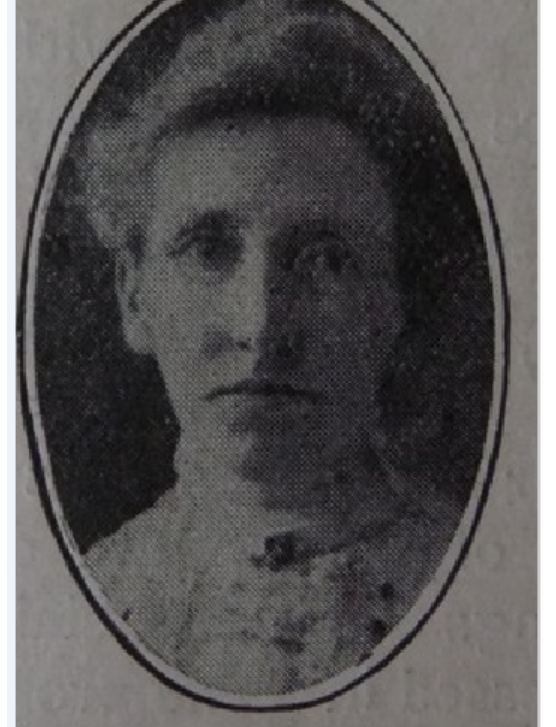
3. Joan Hague obituary, chronicling her ‘interesting’ life with portrait young and old. I wrote this piece years ago and posted it on my personal blog after passing it by Joan Hague but also added two tidbits from her online obituary: Her marriage details and her work details.LINK HERE
The Jungle Librarian

“Obviously a club does not change from a dump of second hand books to a pan-Malaysia institution without care and attention.” Malaya, 1966. British Malaysia Association. Tribute to Dorothy Nixon, former secretary of the Kuala Lumpur Book

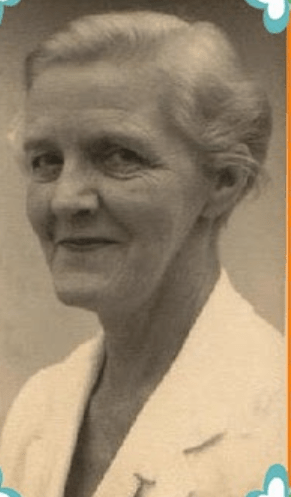
Dorothy Forster Nixon 1895-1971

One morning not long ago, I received an email from a young woman in Malaysia. She wanted to know about my grandmother, also Dorothy Nixon, who had been ‘secretary’ of the Kuala Lumpur Book Club back in the day. The woman was a librarian-in-training and she told me that “Granny” was a great inspiration to her.

I wasn’t at all surprised because about ten years earlier I had received a similar email from the former Director of the Malaysian National Library. This illustrious person was researching my grandmother’s life as a retirement project.

It seems that my County Durham born grandmother, Dorothy Forster, who moved to Malaya in 1921 to marry Yorkshireman Robert Nixon1, a rubber planter, is something of a legend in modern Malaysia, at least among librarians.

In 2003, sheer serendipity led me to start my own research into my colonial grandmother. I was a prolific freelance writer back then and it was my habit to enter my name “Dorothy Nixon” into Internet search engines to check out where my essays and articles may have landed.

On this occasion, I stumbled upon a mention of another Dorothy Nixon, my father’s mother. It was on Amazon.co.uk in a review of a book by historian Margaret Shennan about Colonial Malaya “Out in the Midday Sun”. In the book Shennan mentions my grandmother but only once and only in connection with an ugly incident at Changi internment camp during WWII. She gets her name wrong, too: Dorothy Dixon. The reviewer, a Mr. Smith, corrected this typo and described my grandmother as ‘the endlessly helpful secretary of the Kuala Lumpur Book Club.”

I had met Dorothy only once in 1967 at 12 years old when she came to visit us in Montreal. She was cranky and super-critical of all things Canadian – especially of my ‘shrill’ playmates skipping or biking out on our Snowdon area street – and we did not hit it off at all, so you can imagine how confused I was by this description of her.

So, I tracked down Mr. Smith, a former rubber planter. He told me all about the KL Book Club’s subscription arm where book-boxes were assembled and sent out to people holed up in the jungle in their far-away plantations, a service much appreciated during the 1950’s Communist Emergency.

He further described my grandmother as having a fine and nuanced understanding of literature. She always studied the members’ tastes, he said, in order to recommend books to them.

I eventually wrote a story about “Granny” that got published in the Globe and Mail. That’s how the Director knew to contact me. In return for my help this nice lady mailed me an article from the Malaysia Library Review 1952 co-written by my grandmother about history of the KLBC: “The Kuala Lumpur Book Club: A Pioneer.”

The article explains how the Book Club started out as an informal back-room book exchange for Brits and evolved over the decades into a full-fledged government funded community resource, housed in a two story air-conditioned art deco building near the famed Royal Selangor Club in Kuala Lumpur.

Between the wars there were four libraries in Malaya, including the KLBC and the Raffles Library in Singapore. Although these places were set up for Britishers, members were debating whether it was time to allow locals to join, if only government officials.

The newspaper record 2 reveals that my grandmother, who worked at the Book Club from 1937 to 1966, was instrumental in opening up the library to Asians, male and female, especially students. This is likely why she is so admired today in Malaysia.

In the 1930’s and 40’s, the KLBC had a reputation among some Colonials as a light-weight institution that provided low-brow literature to rubber planters’ wives, who were bored to death with servants to do everything and their school-age children away in England.3

Dorothy, who attended a co-educational Quaker school in England, did indeed have many Tamil and Chinese servants at her husband’s Selangor rubber estate, some of whom watched over my father until he was sent away to school in Cumberland at five years old.

She did, indeed, attend many drunken garden parties and polo matches in the 20’s and 30’s – but eventually during the Great Depression she found something more important to do. For a smidge under three decades she worked at the Book Club 7 days a week, 9 am to 7 pm. In the evening she strolled over to the Royal Selangor Club (in the company of her male friend, an eminent lawmaker) where she scored their cricket games!

Popular Australian author Di Morrissey includes a bit about my grandmother in her 2010 novel.

Today, if you google “Dorothy Nixon” and “Kuala Lumpur Book Club” many many MANY citations will come up from scholars and journalists thanking my grandmother for help researching their books.

These authors are especially grateful for access to her personal collection of Malaysiana. Apparently, my grandmother was an expert in all things Malayan, a real scholar herself who was always invited to Prime Minister Tunku Abdul Rahman’s birthday bashes, and who at mid-20th century repeatedly made the Malaysia Who’s Who.

So, not lazy at all

Video about Malaya in 1952 with images of my Grandmother scoring cricket at the end.

END

1) Men working in Malayan plantations were encouraged (forced) by their Companies to go home to find a British wife even if they were happy with other arrangements. My grandfather, Robert, found Dorothy Forster, the daughter of an itinerant Primitive Methodist Preacher who had circulated through his hometown of Helmsley, North Yorkshire in 1912-1914. When she arrived in Malaya, late 1921, Dorothy discovered Robert had an Asian ‘mistress’ as they said back then. Upon his marriage, he did not give her up,apparently. (Re: my Aunt Denise.) She got pregnant with my father immediately.

2. The Malaysia Straits Times is online with a database and many articles citing my grandmother, some with photos, most of them in connection with the Cricket. This link to an article, written in 1966, is a tribute to her work as KL Book Club Librarian and in Montreal in 1967 when she visited us she wasted no time in showing it to my mother. She was obviously in search of respect from us. Indeed, judging from her ‘diary’ searching for respect seems to have been her life’s goal.

https://eresources.nlb.gov.sg/newspapers/digitised/article/straitstimes19660514-1.2.105.12

3) British Colonial wives were much looked down up in rubber country, described as undeserving parvenus, women who would be sweeping out a three bedroom cottage back home in Somerset were they not in Malaya lazing in their airy bungalows, waited on hand-and-foot by servants. Yet, these Colonial Wives were given little to do and forbidden to meddle in local affairs in fear they would cause scandal or upset the entrenched hierarchy of the British, Malays, Chinese Tamils. The British believed it was necessary to send their children away to England as soon as possible for schooling and to avoid their contracting a tropical illness. By the time my father’s younger brother was born, he got to go to a British school in Malaya set up in the hills, considered a healthier milieu.

An earlier story on this blog about my grandmother and her internment and torture during WWI.

https://www.theglobeandmail.com/life/my-crotchety-grandmother-deciphered/article955859/

To the Lighthouse Part 11

myfatherugby

St Bees Senior Rugby XV  1939. Courtesy of St. Beghian Society website.

Read To the Lighthouse Part 1 here. What was it like to be a young man in prep school on the cusp of WWII?

I am so far ahead, now.  I can stop for a cigarette. We’re not allowed to smoke in front of the junior  students.

The  rugby match with the Geordies wears heavy on my mind, to divert from the other…  They are tough, those townies, built low to the ground, built for rugby and the claustrophobic confines of the coal mines.

I am Vice-Captain of the Senior XV, so it is a big responsibility. To lose to them would be an indignity, and yet they are so very hungry to beat us.

I draw on my unfiltered Player’s Navy Cut cigarette slowly, glacially, to try and stop time to stop thinking about my – our-  uncertain future.

But before I get two drags,  I  hear the sound of someone  huffing and puffing his way up the grassy path toward me, a small boy, a freckled red head. It’s Cowen, one of the new fellows, the asthmatic, courageously plodding toward me

I have to ditch this ciggy fast.  I toss it into the grass.

At the same time, the same grass rustles under my feet and I instinctively jerk to once side like a silly sock puppet. Did the boy see me?

Yes, he did. ‘Are you afraid of snakes?”  asks the boy, through his wheezes, in a non-judgmental matter of fact way.

I don’t answer.

“You were smart to get out of the way,” the boy persists. “It might be a poisonous adder. They can be found in a variety of habitats, including fields, meadows, hillsides and moors as well as coastal dunes.

“They have a grey or brown coloured body with a zigzag pattern along their back. Harmless grass snakes are mostly found in wetlands. They need frogs to eat.”

This Cowen boy, one of the new group from Mill Hill School in London that is being turned into a wartime hospital, is a small, copper-topped encyclopedia of nature, it seems.

“How do you know all this?” I ask Cowen. Mother’s mother is a Cowen from Bishop Auckland in Durham. The Cowans were shopkeepers, mostly. Or they worked in the lead mines in Alston, Cumberland.  Could we possibly be related? Well, we are all related around here. Especially the Border Reiving families: Forster, Nixon, Kerr, Armstrong, Bell, Johnson, Elliott, Graham, Scott.

This small wheezing boy replies, “My father told me.”

“I am afraid of snakes,” I admit to the younger boy. His naïve self-confidence has made me lower my ­­­­guard.

“But, I have good reason to be, “ I add, squinting menacingly at him.  I was born in Malaya and by the time I could walk I learned to watch out for the meter long orange necked keelbacks or die an agonizing death on the spot.” I grab my throat with both my hands and pretend to squeeze, bugging out my small blue eyes.

“I don’t know about Malayan snakes,” the boy soberly continues, unimpressed by my histrionics. I may be a member of the Shakespeare Club, but I am no accomplished thespian.

He continues.“ I know a bit about Indian snakes. I’ve heard stories.”

“Are you a child of the Raj as well?” I ask him with genuine interest.

“No, my father is a civil servant in  London. Foreign office.  But he loves the outdoors. He  takes me to Northumberland every summer on camping trips. While Mother visits her sister in Kent.”

This is getting far too personal, so I change the subject.

“Where are the others?” I ask authoritatively because I am supposed to care.

“They stopped  to raid the gulls’ nests even though I told them only a few gulls will have laid by now.  As the smallest in the group,  I knew they’d want to dangle me over the cliff to grab the eggs,  so I just kept on running. My lungs are burning.”

The boy admits this with no embarrassment, this plucky new boy with the asthma and caring father.

“We’ll never make it to the lighthouse at Whitehaven, at this rate,” I say, not that I care.

stbees

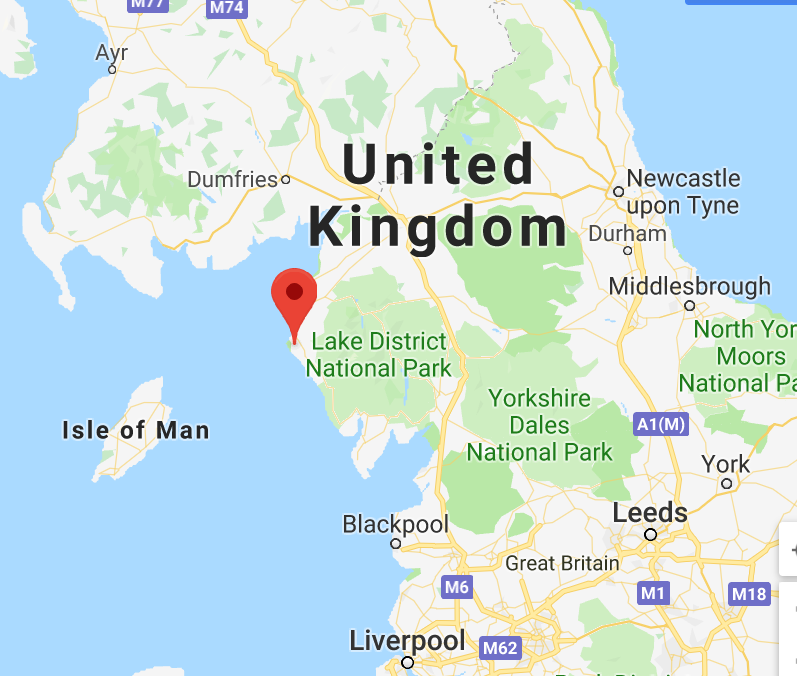
St Bees on the Coast of Cumbria.

“Too bad. I’d like to see the radar installation. If the war persists, I will likely be put in radar. I am a math’s major.”

I hardly hear him. The mere idea of fried eggs, however sketchy the source, thrills me. I am starving, what with these new war time rations.

 “It isn’t like being in  the Air Force,” he continues, “ but radar is important to catch the German subs when they attack. It’s too bad this war will be over soon, because I would like to work in radar, scanning for enemy submarines.”,

I had forgotten about the radar station at the lighthouse. I too am a math’s major destined, they tell me, for a desk job in statistics.  But I have the keen eyes and reflexes of a fighter pilot and that is where I want to end up, if I have to go. Dropping bombs on the enemy.

As if reading my mind, the boy says,

I know they say radar is for layabouts, but they’ll  never let me fly. I’m short-sighted.  “

Do you have good eyes?

“Twenty-fifteen, like Brian Sellers, the cricketer “ I say, bragging.  My long distance vision is, indeed, exceptional. Right now I can see two navy boats out on the grey waters of the Irish sea.

Warship sightings are commonplace these days.

Cowen lowers his eyes and opens up once again: “ I wish I were like you, an athletic stiff with spiffing eyesight, so I could get into the RAF and fly  exciting bombing missions.”

Here’s a boy who spends summers camping with his father, who teaches him all about snakes and nature, and he wants to be like me. I haven’t seen my father since I was five years of age – and that is a good thing from what little I remember.  My sister and I spend holidays with aunts who don’t want us around. They do it because of the money Grandmother Forster, aka Emma Cowen, left them.

Emma Cowen

Peter’s Grandmother, Emma Cowen of Bishop Aukland, Durham in 1914.

I don’t tell Copper-top this, of course. There’s a pause in the conversation. I sweep the grass with my foot for my cigarette butt – and to pretend I am not afraid of anything as insignificant as an English snake.

“Are you going to enlist in the RAF – before they conscript you?” the boy asks after a few minutes. Maybe fly bombers over in Europe? The village boys who have turned 18 are already signing up voluntarily. They want to get the best missions.

“They would, wouldn’t they?” I reply. “What else do they have to do?”

And, I tack on for no good reason, “I assure you, you do not want to be like me.”

“What?” The boy wrinkles his freckly red brow. I have confused him, this sweet naïve boy with his happy loving family.

“Well,” I change the subject. “You won’t be spending this coming summer in Northumberland with your father. They are keeping the school open for LDV training for all of us, senior and junior school. LOOK, Duck and Vanish.

“Yes, I know about Land Defense. But everyone thinks it  will be safer here. That’s why Mill Hill pupils were sent up  to St. Bees,” says Cowen.  “More boys from London are sure to arrive if the war doesn’t end soon. Their mothers will insist.”

“Do these mothers know  that  Barrow-in-Furness is just down the coast and it is a ship building port and likely to be a target of German bombs?”

I say this to scare him. I want to be cruel at this moment.  Truth be told, I resent this happy wheezy boy with the unkempt shock of red hair sticking straight out of the top of his head. War or no war, St Bees is a spartan place and is all about teaching British boys survival skills, on the rugby field mostly.  Land Defense Volunteers Training is somewhat  redundant.

But, then again, what do we schoolboys, happy ones like Cowen or unhappy ones like me, know about true survival?

stbeeshead

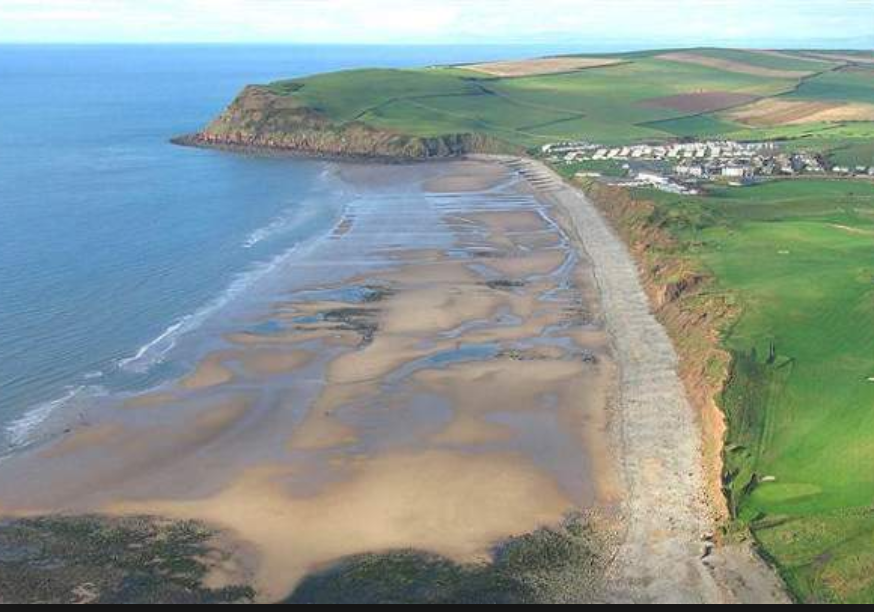
St Bees Head courtesy of visitcumbria.org


Read To the Lighhouse Part 111 here

“Piccole Donne” and Why We Write Family Stories

margMcleod
Margaret McLeod Nicholson, born 1853 in Richmond, Quebec. During the US Civil War she, too, would have been a ‘little woman.’


The first novel I ever read was Little Women by Louisa May Alcott.  I was ten or eleven years old.  I didn’t read the book in school. My mother bought it for me along with a number of Deluxe Junior Classics published by the Doubleday Company.

I can remember the look of the book: grey with a yellow spine and sketches of the four March girls in blue ink embossed on the cover. I can remember the feel of the book: the pages thick and slightly hairy, typical of Book-of-the-Month Club editions. I can remember the smell of the book: inky and acidy. It was a new book, after all. And I especially recall the thrill of opening the book, which I understood was my rite of passage into the brave new world of grown-up reading.

I loved Little Women. It changed my life as great books often do, but I can’t say the plot stayed with me. It was only recently, when I decided to learn Italian by listening to ‘easier’ audio books, that I became re-acquainted with Louisa May Alcott’s American classic. Over and over again, I listened to each delightful chapter, first in English, then in French, then in Italian. “Piccole Donne”. Superbo in any language.

It is understood that Louisa May Alcott used her own Massachusetts family as a model for Little Women, a work of fiction.  Authors often lean on real-life characters for inspiration. Who wants to read about unrealistic characters?

1967
Me at 11 with Mickey Finn, the Jr. Deluxe Big Red and very badly cut bangs courtesy of my mom.

The authors at Genealogy Ensemble are publishing a book of authentic short stories about their ancestors, Beads in a Necklace: Family Stories from Genealogy Ensemble. These stories, many of which saw first light on this blog, will soon be available in a glossy hold-in-your-hands hardcopy format.

Beads in a Necklace also includes personal essays by the nine authors, explaining how each of us was inspired to begin the long, difficult and rewarding journey of writing down our family stories.

Claire Lindell was surfing the Net, way back in its early days, when she came upon an article about her father, a pioneer in the Canadian mining industry.

Barb Angus was inspired by missed opportunities and a book called The Wolfe Pack by a McGill University author, Dr. Mildred Burns.

Lucy Anglin lost her mother very early in life and feels that her stories help honour her memory.

Janice Hamilton grew up with oil paintings of her ancestors on the walls around her.

Tracey Arial first wrote about genealogy for a classroom exercise; not a great experience, but one she looks back on with amusement.

Marian Bulford immigrated to Canada from Great Britain in 1978, but it’s her English sea-side roots that move her to write.

Mary Sutherland was inspired by her father once saying, “Find your way home,” and by some fine family heirlooms.

Sandra McHugh was inspired by her ‘two solitudes’ marriage and her Greek husband’s very different kind of family.

I myself got my start when I found 300 family letters from the 1910 period that had belonged to my husband’s ancestors from Richmond, Quebec.  I read them out loud to a good friend who said, “Ick. They sound so old-fashioned.”

But I saw something else in these letters. I saw the story of a strong matriarch and her very spirited young daughters, who had known much better financial times but were making the best it.

I saw women who were on their own, in their fine house in the good part of town, because their men-folk were far away.

I saw proud, independent women who sometimes relied on the kindness of a well-off, gentlemanly neighbour to drive them to the post office or to shovel out their walk in winter.

It was the plot of Little Women, but with characters from real-life closely related to my husband and my very own children! How could I possibly resist that?


Beads in a Necklace: family stories from Genealogy Ensemble will be launched in mid-November. A limited number of hard copies will be available for purchase, locally. 

Check back with http://www.genealogyensemble.com to find out how to buy one of these rare first editions.  An e-book  version will be available at launch, as well, with print-on-demand capability by Christmas.


pagefromCanadthenandnow

The chapter on the Laurier Era from Canada Then and Now, my fifth grade history textbook. I read this, too, back in the day, but I was not impressed.  This was a typical textbook, filled with sturdy but dull prose and employing a narrative style devoid of colour and controversy. This chapter, about a most pivotal time in history, made no mention of suffragettes and restless young women in harem pants.  In fact, there are only two women in the entire textbook: Marguerite Bourgeoys and Jeanne Mance, worthy women, no question, but only two? Beads in a Necklace showcases many of our worthy women ancestors. It’s terrific social history.