Tag Archives: fiction

To the Lighthouse Part 11

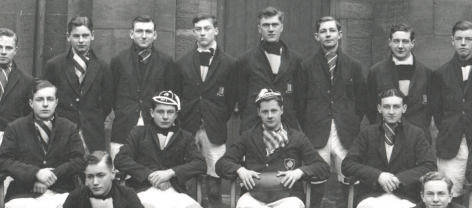
myfatherugby

St Bees Senior Rugby XV  1939. Courtesy of St. Beghian Society website.

Read To the Lighthouse Part 1 here. What was it like to be a young man in prep school on the cusp of WWII?

I am so far ahead, now.  I can stop for a cigarette. We’re not allowed to smoke in front of the junior  students.

The  rugby match with the Geordies wears heavy on my mind, to divert from the other…  They are tough, those townies, built low to the ground, built for rugby and the claustrophobic confines of the coal mines.

I am Vice-Captain of the Senior XV, so it is a big responsibility. To lose to them would be an indignity, and yet they are so very hungry to beat us.

I draw on my unfiltered Player’s Navy Cut cigarette slowly, glacially, to try and stop time to stop thinking about my – our-  uncertain future.

But before I get two drags,  I  hear the sound of someone  huffing and puffing his way up the grassy path toward me, a small boy, a freckled red head. It’s Cowen, one of the new fellows, the asthmatic, courageously plodding toward me

I have to ditch this ciggy fast.  I toss it into the grass.

At the same time, the same grass rustles under my feet and I instinctively jerk to once side like a silly sock puppet. Did the boy see me?

Yes, he did. ‘Are you afraid of snakes?”  asks the boy, through his wheezes, in a non-judgmental matter of fact way.

I don’t answer.

“You were smart to get out of the way,” the boy persists. “It might be a poisonous adder. They can be found in a variety of habitats, including fields, meadows, hillsides and moors as well as coastal dunes.

“They have a grey or brown coloured body with a zigzag pattern along their back. Harmless grass snakes are mostly found in wetlands. They need frogs to eat.”

This Cowen boy, one of the new group from Mill Hill School in London that is being turned into a wartime hospital, is a small, copper-topped encyclopedia of nature, it seems.

“How do you know all this?” I ask Cowen. Mother’s mother is a Cowen from Bishop Auckland in Durham. The Cowans were shopkeepers, mostly. Or they worked in the lead mines in Alston, Cumberland.  Could we possibly be related? Well, we are all related around here. Especially the Border Reiving families: Forster, Nixon, Kerr, Armstrong, Bell, Johnson, Elliott, Graham, Scott.

This small wheezing boy replies, “My father told me.”

“I am afraid of snakes,” I admit to the younger boy. His naïve self-confidence has made me lower my ­­­­guard.

“But, I have good reason to be, “ I add, squinting menacingly at him.  I was born in Malaya and by the time I could walk I learned to watch out for the meter long orange necked keelbacks or die an agonizing death on the spot.” I grab my throat with both my hands and pretend to squeeze, bugging out my small blue eyes.

“I don’t know about Malayan snakes,” the boy soberly continues, unimpressed by my histrionics. I may be a member of the Shakespeare Club, but I am no accomplished thespian.

He continues.“ I know a bit about Indian snakes. I’ve heard stories.”

“Are you a child of the Raj as well?” I ask him with genuine interest.

“No, my father is a civil servant in  London. Foreign office.  But he loves the outdoors. He  takes me to Northumberland every summer on camping trips. While Mother visits her sister in Kent.”

This is getting far too personal, so I change the subject.

“Where are the others?” I ask authoritatively because I am supposed to care.

“They stopped  to raid the gulls’ nests even though I told them only a few gulls will have laid by now.  As the smallest in the group,  I knew they’d want to dangle me over the cliff to grab the eggs,  so I just kept on running. My lungs are burning.”

The boy admits this with no embarrassment, this plucky new boy with the asthma and caring father.

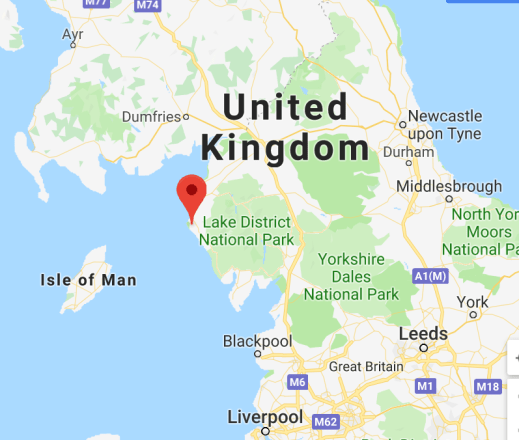
“We’ll never make it to the lighthouse at Whitehaven, at this rate,” I say, not that I care.
stbees

St Bees on the Coast of Cumbria.

“Too bad. I’d like to see the radar installation. If the war persists, I will likely be put in radar. I am a math’s major.”

I hardly hear him. The mere idea of fried eggs, however sketchy the source, thrills me. I am starving, what with these new war time rations.

 “It isn’t like being in  the Air Force,” he continues, “ but radar is important to catch the German subs when they attack. It’s too bad this war will be over soon, because I would like to work in radar, scanning for enemy submarines.”,

I had forgotten about the radar station at the lighthouse. I too am a math’s major destined, they tell me, for a desk job in statistics.  But I have the keen eyes and reflexes of a fighter pilot and that is where I want to end up, if I have to go. Dropping bombs on the enemy.

As if reading my mind, the boy says,

I know they say radar is for layabouts, but they’ll  never let me fly. I’m short-sighted.  “

Do you have good eyes?

“Twenty-fifteen, like Brian Sellers, the cricketer “ I say, bragging.  My long distance vision is, indeed, exceptional. Right now I can see two navy boats out on the grey waters of the Irish sea.

Warship sightings are commonplace these days.

Cowen lowers his eyes and opens up once again: “ I wish I were like you, an athletic stiff with spiffing eyesight, so I could get into the RAF and fly  exciting bombing missions.”

Here’s a boy who spends summers camping with his father, who teaches him all about snakes and nature, and he wants to be like me. I haven’t seen my father since I was five years of age – and that is a good thing from what little I remember.  My sister and I spend holidays with aunts who don’t want us around. They do it because of the money Grandmother Forster, aka Emma Cowen, left them.
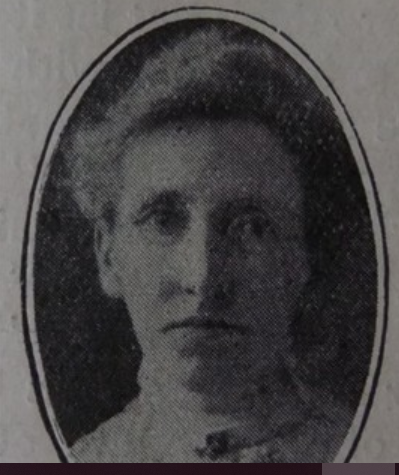
Emma Cowen

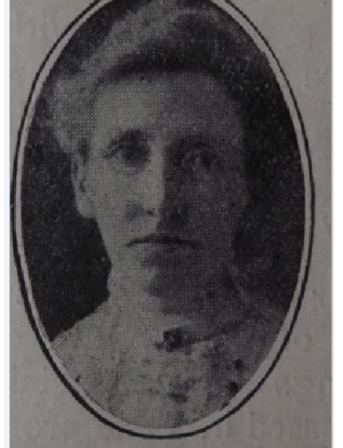
Peter’s Grandmother, Emma Cowen of Bishop Aukland, Durham in 1914.

I don’t tell Copper-top this, of course. There’s a pause in the conversation. I sweep the grass with my foot for my cigarette butt – and to pretend I am not afraid of anything as insignificant as an English snake.

“Are you going to enlist in the RAF – before they conscript you?” the boy asks after a few minutes. Maybe fly bombers over in Europe? The village boys who have turned 18 are already signing up voluntarily. They want to get the best missions.

“They would, wouldn’t they?” I reply. “What else do they have to do?”

And, I tack on for no good reason, “I assure you, you do not want to be like me.”

“What?” The boy wrinkles his freckly red brow. I have confused him, this sweet naïve boy with his happy loving family.

“Well,” I change the subject. “You won’t be spending this coming summer in Northumberland with your father. They are keeping the school open for LDV training for all of us, senior and junior school. LOOK, Duck and Vanish.

“Yes, I know about Land Defense. But everyone thinks it  will be safer here. That’s why Mill Hill pupils were sent up  to St. Bees,” says Cowen.  “More boys from London are sure to arrive if the war doesn’t end soon. Their mothers will insist.”

“Do these mothers know  that  Barrow-in-Furness is just down the coast and it is a ship building port and likely to be a target of German bombs?”

I say this to scare him. I want to be cruel at this moment.  Truth be told, I resent this happy wheezy boy with the unkempt shock of red hair sticking straight out of the top of his head. War or no war, St Bees is a spartan place and is all about teaching British boys survival skills, on the rugby field mostly.  Land Defense Volunteers Training is somewhat  redundant.

But, then again, what do we schoolboys, happy ones like Cowen or unhappy ones like me, know about true survival?

stbeeshead

St Bees Head courtesy of visitcumbria.org
 

Read To the Lighhouse Part 111 here

A Stranger in his/her Bed: An Audio Drama

Here is the first in a series of well-researched creative vignettes I am writing about my father’s side of the family, in Yorkshire and Cumberland and Malaya.

I have written AND VOICED this family story, part fiction, part fact, part family myth that explores genealogy in a different way.

Alzheimer’s runs in my father’s family. This vignette is based on a serio-comic family story about the Reverend John Forster of Knockburn, Northumberland who succumbed to that disease late in life.


Click here for a 10 minute audio of the story: A Stranger in his/her Bed

The Characters:

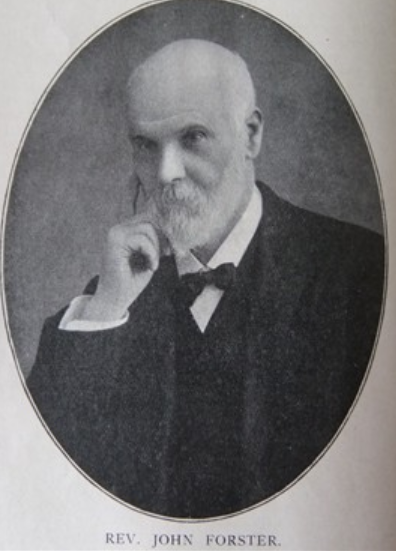
John Forster of Knockburn, Northumberland

(photos courtesy of Our Primitive Methodist Ancestors website.)

Emma Cowen of Durham, his wife.


The Places

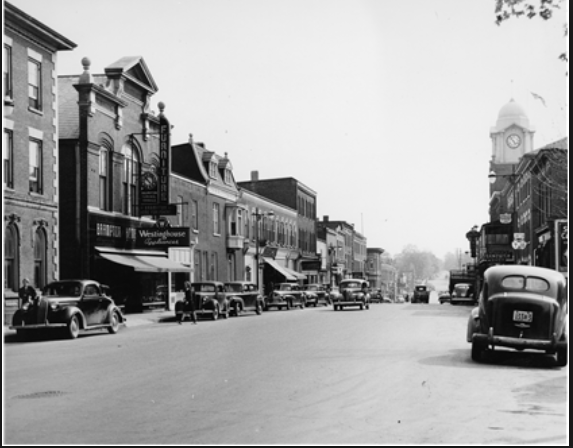
Brampton, Cumberland, 1920

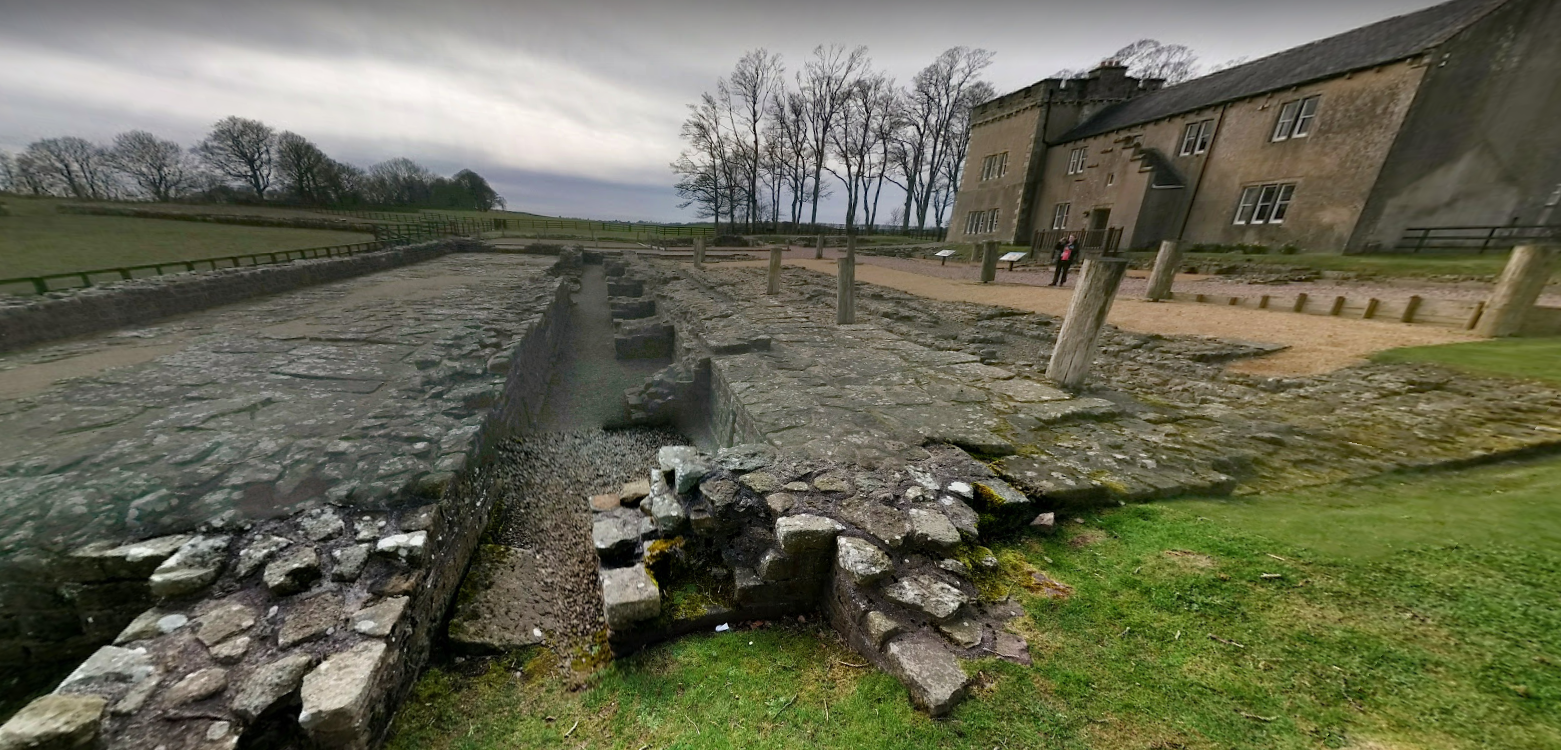
Birdoswald Roman Fort, Hadrian’s Wall Cumberland (Cumbria)

The Script

John Forster awoke one night from a rather disturbing dream, stared down upon his wife of 33 years in the bed beside him, and bellowed in his booming preacher’s voice: Old Woman, what are yee doing in my bed?

The wife was jolted awake – but she caught herself and calmly replied. I am sleeping. Well, I was sleeping.

Woman, what are you doing sleeping beside me, repeated her aged husband, punctuating his sentence with a downward stab of his spiky chin.

I am sleeping beside you because I am your wife, the old woman replied. What other reason would there be for me to be sleeping beside you?

But, you are NOT my wife, sputtered the old man, splashing his snowy white beard with little beads of saliva.

I am, most certainly, the woman replied, this time with a slight quiver in her voice.

I am EMMA Cowen of Durham, the woman you married in 1892 .  You are John Forster, former Primitive Methodist minister from Knockburn, Northumberland,  and, she added, playfully, in an effort to pacify him, author of numerous essays on politics and a lovely book of poems Pictures of Life in Verse.

I know who I am,”  the old man said, menacingly. It’s you I ‘ave me doubts about.

Emma Cowen sighed and pulled herself up in the hard-packed feather bed, battling through her many bodily aches and pains.

Her husband was suffering from a softening of the brain, so said the doctor, and this fog took over him especially bad upon waking from a sleep or sometimes even a short afternoon nap.

This episode was particularly startling though. The anger! Where did it come from?

We are married, Emma insisted, knowing full-well  it was useless to argue at these times but somehow not able to help herself.

We have three children, Nora, a concert pianist who teaches music at a girls school in Maryport, another daughter, Agnes, in Carlisle, just two streets away and Dorothy who is a planter’s wife in Kuala Lumpur, thousands of miles away.  Dorothy has two children, Peter and Denise. They go to school here in England and  they visited us in Carlisle just last summer. Do you recall?

I know who Peter and Denise are, John Forster replied, in increasing frustration, knotting his furry brow.

Peter is the soft bairn  I took to BIrdoswal Roman Fort at Hadrian’s Wall, who whimpered that he was tired before he got halfway there. And it’s not but 7 miles aft. No Border Reiver blood has he!

I repeat, it is YOU I don’t know – but  with the pitch of his voice lowering he asked, “What are you doing in my HOOS?”  This sounded more like a plea. The moonlight coming in through the window in the bare bedroom lit up the watery irises of his eyes – and  not in a comforting way.

The little girl in Emma wanted to check the corners of the room for wicked fairy-folk, malevolent gyests or mischievous boggles.
I live here, said Emma, defiantly.

But, my wife is Mary Chaytor Hall, naw Emma Cowen.  She of the strawberry blonde ringlets. She was fair, you know. Very fair. YOU ARE NOT FAIR! These four words fell like sharp knives upon Emma’s heart

How self-indulgent of her to feel this way!

She shook the feeling and said in a dull monotone, “Your first wife was Mary Chaytor Hall.  You were married six years only. She died, young. Was this the 100th time she had to explain this fact to her husband, she wondered.

Was she the daft one for attempting to knock sense back into this head?

We married in 1892, she continued. It is now 1925. So we have been married 33 years by my counting. And I’ve stood beside you, the busy wife of an itinerant preacher, moving every two years all over North Yorkshire: Carlisle, Crook, Middleton-in-Teesdale, Cockersmouth, Stanley, Helmsley, helping you prepare your sermons. Occupying the pulpit myself when you were indisposed.  Teaching Sunday School.  Tending the infirm and weary in our flock.

And so you too should be able to vote, said John, his line of thought veering into the present.  What has property got to do with it?

Yes, we worked hard for that, didn’t we, in our day. Woman suffrage.

John stared at her with vacuous blue eyes now, the silvery moonbeam having moved. Watery blue, his eyes. He blinked, once, twice, three times.
I don’t recall ye  ‘ever making sermons, woman. ” said John. “Ye didn’t have the head for it.”

Emma frowned. “I most certainly did,” she said.

And Peter was upset because you carried Denise part of the way, but made him walk,  Emma added, by way of a dig.  He is only five years old after all, just one year older than Denise.

As if things were as before and her husband could comprehend a dig when he heard one.

The dig came from her own angry place.

Who was her anger directed against?  Her husband, his first wife, God? No good place among them.

If  Mary Chaytor was the only woman he could remember, at times, would the memory of second wife, Emma Cowen, eventually fade completely from his brain and she become nothing more than a warm body in his bed?

A stranger in his bed.

She who had stood by her husband, as an undeniable equal in life and work, all of these 33 years.

Ahhhhcchhh, I don’t understand, John growled, his frustration swelling.   I don’t understand. He shook his head hard dislodging his nightcap over his right ear in comical fashion.

Emma edged an inch or two away from her husband, feeling guilty.

Then, John Forster suddenly turned away from Emma and lay back onto his hard feather pillow.

The peace and calm lasted but for a brief moment..

Henry Maine! It’s all his fault! John Forster howled, his head still attached to his pillow.

Henry Main? Who is this Henry Main? Emma asked.

He said it all come from the Romans, the Twelve Tables, but he was wrong.  It makes no sense.

Liberte, Egalite,Fraternite,. John Forster’s skinny freckled forearm shot up in the air. We must lift up our voice against classism, materialism, against selfishness in all of its forms.

Emma almost smiled. She could see him for a moment in the pulpit again, preaching to his untidy frazzled flock of North Country farmers and their wives.

My dear, dear husband, you are an unhinged filing cabinet, overturned and burst open, foolscap floating away on the capricious air currents.  I always said you were too learned for you own good. And see, it has all turned back on you, all this old knowledge swirling around in your befuddled brain. If it isn’t this Henry Main, whoever he is, it’s praise for Karl Marx. If it isn’t  about Marx, it’s critiques of St Paul or Cicero.

What er you talkin’ about, woman? Cicero is not a filing cabinet.

Emma chuckled out loud this time.

What should she do? Call for her daughter, Agnes, again? At 2  am? No, let her sleep.

She took a different tack.  Would you like to me to go outside to the pump and get yee a cup of fresh water, Emma asked John.

The doctor  had said dehydration was an enemy of old people. She started to swing her leaden legs out onto the hardwood floor but arrested them in mid air.

No, woman, it is dark outside. The wolves may be out.  I’m not wanting any wife o’ mine to put herself in danger’s way.

She did not ask which wife he was referring to, the old haggard one or the beauteous young one.  It felt good to hear her husband’s concern.

The mischievous fairy inside Emma wanted to ask “What wolves are you expecting to find in the city of Carlisle?”

But, she this time, she checked herself.  It occurred to her, that she could not go on as before.

We are both strangers to each other, now, Emma thought.

The Lord certainly does works in mysterious ways, the loyal wife whispered to the bare bedroom walls, to the  window frame with the peeling brown paint, to the pellucid moon beam bending around the frayed gray gingham curtain. She pulled her prickly woolen blanket up over her chest.

And my poems were fine, weren’t they? John Forster purred. My lyrics of uncommon charm and grace, they said.

Yes, Hinny, your poems were very, very fine.

And with that John Forster, my great grandfather, fell back to sleep. Emma Cowen, my great grandmother, adjusted the cotton nightcap to cover his bony head, as lovingly as she could muster, and steeled herself for the morning.


I wrote a story about the Border Reivers of Northern England on this blog. It can be found here.