Tag Archives: Durham

Robert Mitcheson, Philadelphia Merchant

When my English-born three-times great-grandfather Robert Mitcheson arrived in Philadelphia from the West Indies in 1817, he was a 38-year-old unattached merchant. Within two years he was married and had started a family, established a new career and was on the way to becoming an American citizen.

Robert (1779-1859) grew up in County Durham, England, where his father was a farmer and small-scale landowner. Robert became an iron manufacturer as a young man, then spent some time in the West Indies. Family stories say he was largely occupied in the West Indies trade. In 1817 he sailed from Antigua to Philadelphia with the intention of settling in the United States. He applied for naturalization – a first step towards citizenship — in July, 18201 and took an oath of citizenship on Sept. 12, 1825.
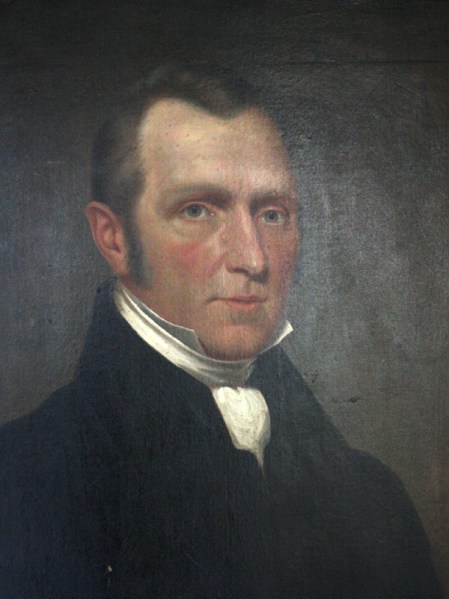
Robert Mitcheson, portrait probably painted in Philadelphia in the 1830s. Artist unknown. Bagg family collection.

Perhaps he had met his future wife, Scottish-born Mary Frances (Fanny) MacGregor, on a previous trip to the city. I have not found a record of their marriage, but it probably took place in Philadelphia. The couple’s first child, Robert McGregor Mitcheson, was born on August 15, 1818 and baptized at St. John’s Episcopal Church in north-end Philadelphia.2

In 1819 Robert was listed in a city directory as a distiller, and the following year’s directory clarified that he made brandy and cordials. The business was located at 275 North Third Street, in the Northern Liberties area of the city. The distillery continued to appear in each annual directory until 1835, when Robert was simply listed as “gentleman”, with his home address on Coates Street.

The family appeared in the U.S. census for the first time in 1830,3 living in Spring Garden, then a largely rural part of Philadelphia. Robert owned a large lot bounded by Coates (later renamed Fairmount Street) and Olive Streets, between Eleventh and Twelfth Streets. There, he and Fanny raised their five children: Robert McGregor (1818-1877), Catharine (my two-times great-grandmother, 1822-1914), Duncan (1827-1904), Joseph McGregor (1828-1886) and Mary Frances (1833-1919). Two other children, Sarah and Virginia, died as babies. Two of their sons graduated from the University of Pennsylvania. Robert M. became an Episcopal minister, and Joseph, who went by the name MacGregor J. Mitcheson, was a lawyer.
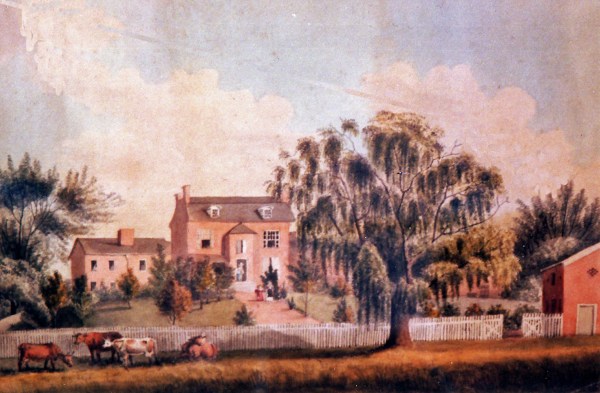
This painting of Monteith House, the family home in Spring Garden, was painted by daughter Catharine Mitcheson. Bagg family collection.

Robert never became part of city’s elite, despite his financial success. For one thing, he was a newcomer living in an old city. Founded in 1682, Philadelphia was the birthplace of the United States and many of its citizens were known as the descendants of colonial and revolutionary families. Also, Robert appears to have been a low-key person. A search for his name in local newspapers brought up only one article that named a long list of people involved in establishing a refuge for boys.

The only obituary I was able to find appeared in a Montreal newspaper, where daughter Catharine Mitcheson Bagg and her husband, Stanley Clark Bagg, lived.4 It said: “As a citizen of Philadelphia for more than 40 years, he has done much, in a quiet and unostentatious manner, for the advancement of her interests and the relief of the distressed. He enjoyed a well-earned reputation for unwavering integrity in all the transactions of his long life – prolonged almost to his 80th birthday — and his remarkable urbanity of manner which the firm, yet elastic step of his manly person, were but slightly impaired up to the period of his dissolution. He was universally respected and died serenely, with a Christian’s hope and faith.”5

Robert appears to have travelled back to England at least once, probably to visit family members and take care of some business, as he had inherited property in Durham when his father died in 1821. A land transfer document dated September 16, 1835 described him as “Robert Mitcheson, iron manufacturer, late of Swalwell, now of Philadelphia”.6 Several weeks later Robert Mitcheson, gentleman, appeared as a passenger on the Pocahontas, sailing from Liverpool to Philadelphia.7  

Perhaps he also visited his brother William, an anchor maker and ship owner in London. A short biography of his son published by the St. Andrews Society in Philadelphia described Robert as a “retired merchant and shipowner,”8 however, I cannot confirm whether Robert owned any ships or perhaps invested in his brother’s business.

After Robert left the distillery business he reinvented himself again, this time as a landlord. The city was rapidly expanding and there was a need for housing. Many people lived in boarding houses and Robert saw rents from boarders as a way to generate income for his grown children after he died. In his will, he left 14 “dwelling houses” located near his house, as well as several nearby other buildings, in trust to sons Robert M. and MacGregor J..9 They were to collect the income and pay certain sums every year to their other three siblings, and to look after repairs to the buildings.
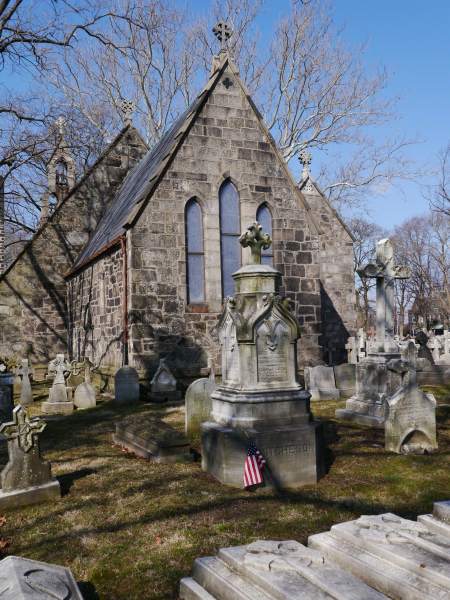
This large monument in the cemetery of St. James the Less Episcopal Church is in memory of Robert Mitcheson, his wife and several other family members. JH photo, 2013.

Robert died at age 79 and was buried in the cemetery at St. James the Less, a small, Gothic-style Episcopal church built around 1846 as a chapel of ease for wealthy families in the area. Robert is said to have helped found that church.

His story doesn’t end there, however. Sadly, his estate was the focus of a court battle that took almost 30 years to resolve, by which time both executors had also died. In addition to a dispute between the brothers, the case focused on a legal error in the way the trust was set up10 and who was to inherit the final balance of income.11  

To Learn More: Robert Mitcheson’s younger years are the subject of “A Restless Young Man,” Writing Up the Ancestors, Jan. 24, 2023, https://www.writinguptheancestors.ca/2023/01/a-restless-young-man.html. You can also search for articles about Robert’s parents and grandparents in England, his wife, sister Mary and other siblings, and some of his descendants on http://www.writinguptheancestors.ca.

Notes and Sources

1. Ancestry.com. Pennsylvania, U.S., Federal Naturalization Records, 1795-1931 [database on-line]. Original data: Naturalization Records. National Archives at Philadelphia, Philadelphia, Pennsylvania. Accessed Feb. 15, 2023.

2. I found records from St. John’s Church at the Historical Society of Pennsylvania, Philadelphia in 2013.

3. “United States Census, 1830,” database with images, FamilySearch (https://familysearch.org/ark:/61903/1:1:XH5W-MC3, accessed Feb. 16, 2023), Robt Mitchinson, Spring Garden, Philadelphia, Pennsylvania, United States; citing 323, NARA microfilm publication M19, (Washington D.C.: National Archives and Records Administration, n.d.), roll 158; FHL microfilm 20,632.

4. Stanley Clark Bagg (SCB) was Robert’s son-in-law and also his nephew: Robert’s older sister, Mary Mitcheson Clark, was SCB’s maternal grandmother.

5. Montreal Herald and Daily Commercial Gazette, 28 March 1859, p. 2, Bibliothèque et archives nationale du Québec, https://numerique.banq.qc.ca/patrimoine/details/52327/3169230, accessed Feb. 17, 2023.

6. Clayton and Gibson, Ref No. D/CG 7/379, 16 September 1835, Durham County Record Office, https://www.durham.gov.uk/recordoffice.

7. “Pennsylvania, Philadelphia Passenger Lists Index, 1800-1906,” database with images, FamilySearch (https://familysearch.org/ark:/61903/1:1:QV9Y-VXJ9, accessed Feb. 17, 2023), Robert Mitcheson, 1835; citing ship Pocahontas, NARA microfilm publication M360 (Washington, D.C.: National Archives and Records Administration, n.d.); FHL microfilm 419,525.

8. Biography of MacGregor Joseph Mitcheson in An Historical Catalogue of the St. Andrews Society of Philadelphia with Biographical Sketches of Deceased Members, 1749-1907, printed for the Society 1907; p. 287, Google Books, accessed July 19, 2013.

9. Will of Robert Mitcheson, March 5, 1859. Philadelphia County (Pennsylvania) Register of Wills, 1862-1916, Index to wills, 1682-1924. Volume 41, #105, FamilySearch, (https://www.familysearch.org/ark:/61903/3:1:3Q9M-C9B2-5S45-H?i=190&cat=353446, image 191-194, accessed Feb. 18, 2023.)

10. Mitcheson’s Estate, Orphan’s Court. Weekly Notes of Cases Argued and Determined in the Supreme Court of Pennsylvania, the County Courts of Philadelphia, and the United States District and Circuit Courts for the Eastern District of Pennsylvania by Members of the Bar. Volume XI, December 1881 to August 1882; p. 240. Philadelphia: Kay and Brother, 1882. Google Books, accessed Feb. 17, 2023.

11. Mitcheson’s Estate, Pennsylvania Court Reports, containing cases decided in the courts of the several counties of the Commonwealth of Pennsylvania, Vol. V, p. 99. Philadelphia, T. & J.W. Johnson & Co., 1888. Google Books, accessed Feb. 17, 2023.

This article is also posted on my family history blog, www.writinguptheancestors.ca
A Trip to England in 1842

When Stanley Clark Bagg (SCB) and his father, Stanley Bagg, of Montreal, visited England in 1842, they were combining business and pleasure. The business involved selling property that SCB’s maternal grandfather had owned in Durham, England, and the pleasure involved a whirlwind tour of London, Scotland, Ireland and France, as well as visits with various great-aunts and great-uncles who still lived in England.

It was a good time for a trip: SCB had just finished a four-year apprenticeship with a notary and could now practice as a notary himself. It made sense to travel before he opened his own office.

A few months after his return to Montreal, SCB wrote to his cousin in Philadelphia, outlining the trip. Unfortunately, he did not include any details or impressions of their adventures, but the list of places they visited sounds exhausting. Passenger rail services were expanding in England at the time, but much of their travel would have been done by horse-drawn coach.

Crossing the Atlantic, however, was fast. The age of the trans-Atlantic steamship had arrived in the 1830s, and SCB wrote, “We made the passage to Liverpool from Halifax in the incredible short space of nine days and six hours, which was I believe the shortest passage ever made across the Atlantic. From Liverpool we went to London, thence to Leeds, Manchester, Birmingham, York Darlington, Durham, Stockton, Sunderland, Newcastle, Shields, Tynemouth, Otterburn …. ”1

As they moved north to Scotland, they passed though many small towns, including Lesmahagow, and they explored both Glasgow and Edinburgh. On the way back to London, they stopped in Carlisle, in the north of England.

After a few days in London, they crossed the Channel to France, where they visited Boulogne, Paris, Versailles, Le Havre and several other spots before returning to London. SCB wrote, “We left London shortly afterwards for Ireland, and having visited Kingstown, Dublin and Kilmainham, returned to Liverpool, where … we embarked on board a steamship and after a boisterous passage of 14 days arrived at Boston exceedingly gratified with our tour.”2

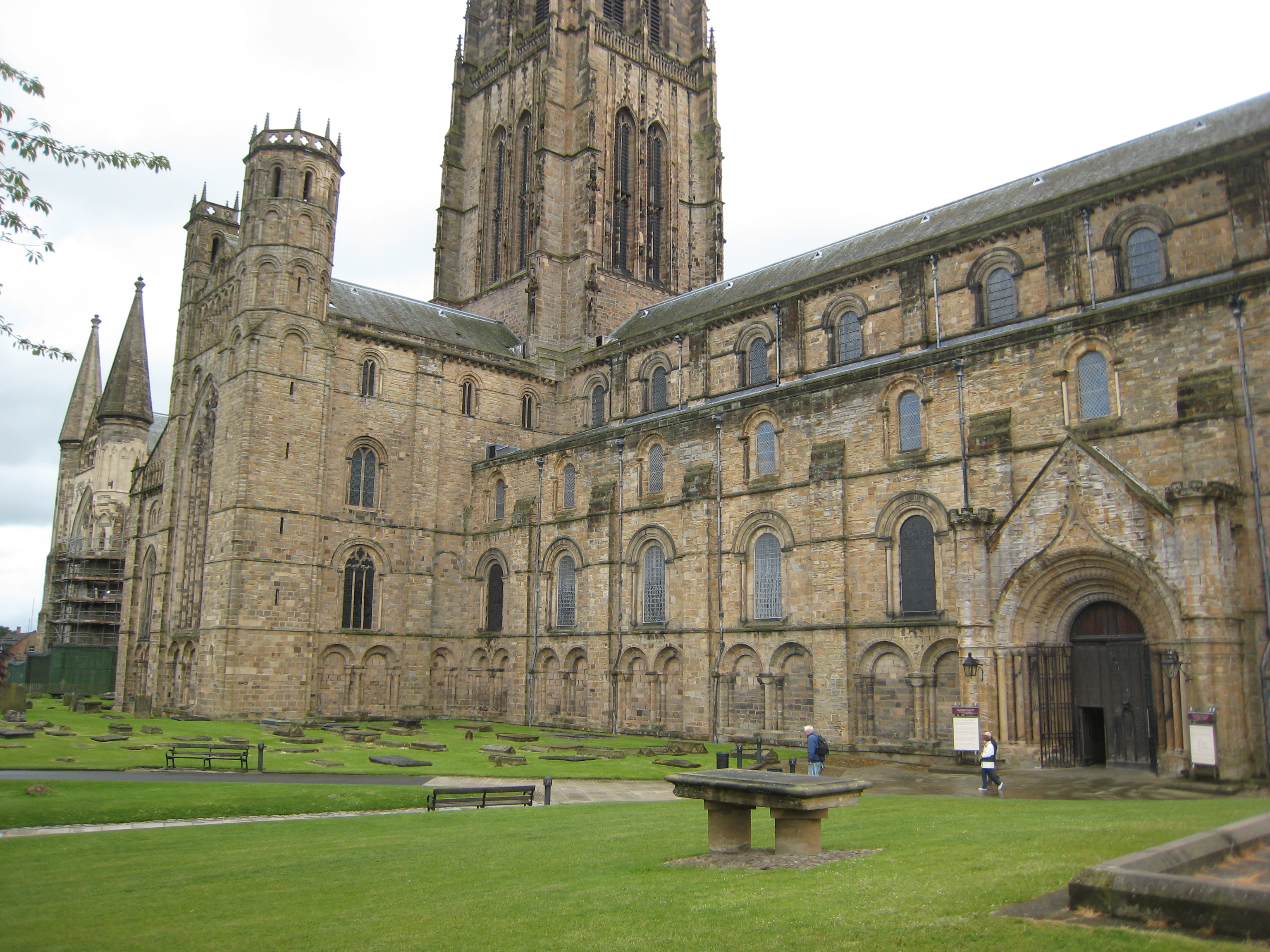
Durham Cathedral
Durham Cathedral (jh photo)

Anchor-maker William Mitcheson, brother of SCB’s grandmother Mary Mitcheson Clark, lived in London, and the Baggs visited him there. While in County Durham, they visited more Mitcheson relations, including Mrs. Dodd (Mary Mitcheson’s sister Margaret) near Ryton, and Mrs. Maugham (Mary’s sister Elizabeth) at Sunderland.

It is clear that the visit to Durham was the highlight of the trip, but not because of the business they finalized there. In fact, SCB did not mention it at all in his letter. When SCB turned 21 in December, 1841, he gained control over the properties in Montreal and Durham that he had inherited from his grandfather John Clark (1767-1827). (He was just 14 when Clark died, so his father acted as executor of the estate until SCB became an adult. The property in Durham was generating rental income, but SCB wanted to sell it. In a notarized document dated after their return to Montreal, SCB’s father listed the sales of three properties in Durham.3

Meanwhile, SCB was interested in ancient legends, old coins, Norman castles and the like, and was enthralled with Durham. More than 20 years later, he presented a lecture to the Numismatic and Antiquarian Society of Montreal on “The Antiquities and Legends of Durham.”4

He described the legend surrounding the founding of Durham city by 9th century monks. When Danes attacked England’s northeast coast, the monks fled their monastery on the Island of Lindisfarne with the miraculously well-preserved body of their former bishop. Eventually they built an abbey at the future site of Durham city and buried him there. Today, that bishop is remembered as Saint Cuthbert and pilgrims still visit the abbey church, Durham Cathedral.

In his 1866 lecture to the Numismatic Society, SCB opened up about his feelings on the trip. He recalled, “The first time I had the privilege of attending a divine service in Durham Abbey, I was enraptured with the sweet and masterly chanting, unsurpassed in the empire. My father and I obtained seats in the choir. The service was exceedingly impressive, so much so, that …. whenever the portion of the Psalter chanted upon that occasion recurs in the services of the church, it carries me back in imagination to the first service I attended in the venerable abbey of my mother’s native city.”4

This article was also published on Writinguptheancestors.blogspot.com

See also:

Janice Hamilton, “A Freehold Estate in Durham,” Writing Up the Ancestors, May 3, 2019 http://writinguptheancestors.blogspot.com/2019/05/a-freehold-estate-in-durham_92.html

Janice Hamilton, “Mary Mitcheson Clark,” Writing Up the Ancestors, May 16, 2014, http://writinguptheancestors.blogspot.com/2014/05/mary-mitcheson-clark.html

Janice Hamilton, “Mary Ann (Clark) Bagg,” Writing Up the Ancestors, Nov. 29, 2013,   http://writinguptheancestors.blogspot.com/2013/11/mary-ann-clark-bagg.html

Janice Hamilton, “The Mitcheson Family of Limehouse,” Writing Up the Ancestors, Jan. 21, 2015, http://writinguptheancestors.blogspot.com/2015/01/the-mitcheson-family-of-limehouse.html

Janice Hamilton, “Stanley Bagg’s Difficulties,” Writing Up the Ancestors, Jan. 10, 2014  http://writinguptheancestors.blogspot.com/2014/01/stanley-baggs-difficulties.html

 Sources

  1. Letter from Stanley Clark Bagg to Rev. R. M. Mitcheson, Dec. 6, 1842, probably transcribed by Stanley Bagg Lindsay; Lindsay family collection.
  2. Record in a passenger list of Stanley Bagg and S.C. Bagg travelling from Liverpool to Boston aboard the Acadia. Boston Courier (Boston, Massachusetts, Monday, Sept. 19, 1842, issue 1921;) 19th Century Newspapers Collection, special interest databases, www.americanancestors.org (accessed April 18, 2019.)
  3. Joseph-Hilarion Jobin, “Account and mortgages from Stanley Bagg Esq to Stanley Clark Bagg,” 8 October 1842, notarial act #3537, Bibliothèque et Archives nationales du Québec.
  4. Stanley Clark Bagg, “The Antiquities and Legends of Durham: a Lecture before the Numismatic and Antiquarian Society of Montreal,” p. 21, Montreal, 1866. https://archive.org/details/cihm_48731/page/n4 (accessed Dec. 27, 2019)


A Stranger in his/her Bed: An Audio Drama

Here is the first in a series of well-researched creative vignettes I am writing about my father’s side of the family, in Yorkshire and Cumberland and Malaya.

I have written AND VOICED this family story, part fiction, part fact, part family myth that explores genealogy in a different way.

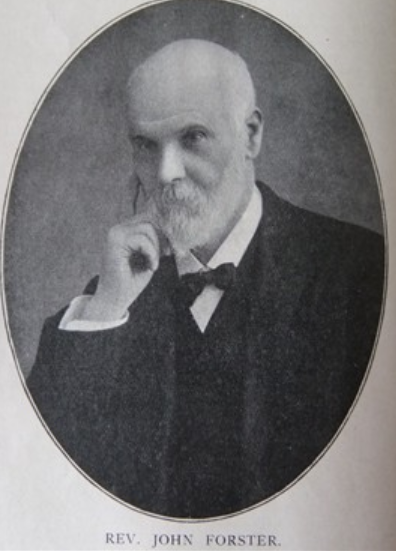
Alzheimer’s runs in my father’s family. This vignette is based on a serio-comic family story about the Reverend John Forster of Knockburn, Northumberland who succumbed to that disease late in life.


Click here for a 10 minute audio of the story: A Stranger in his/her Bed

The Characters:

John Forster of Knockburn, Northumberland

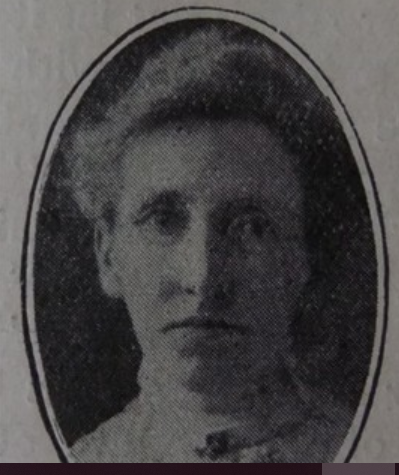
(photos courtesy of Our Primitive Methodist Ancestors website.)

Emma Cowen of Durham, his wife.


The Places

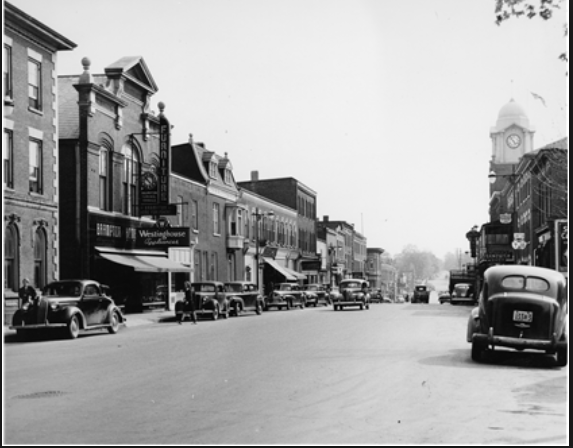
Brampton, Cumberland, 1920

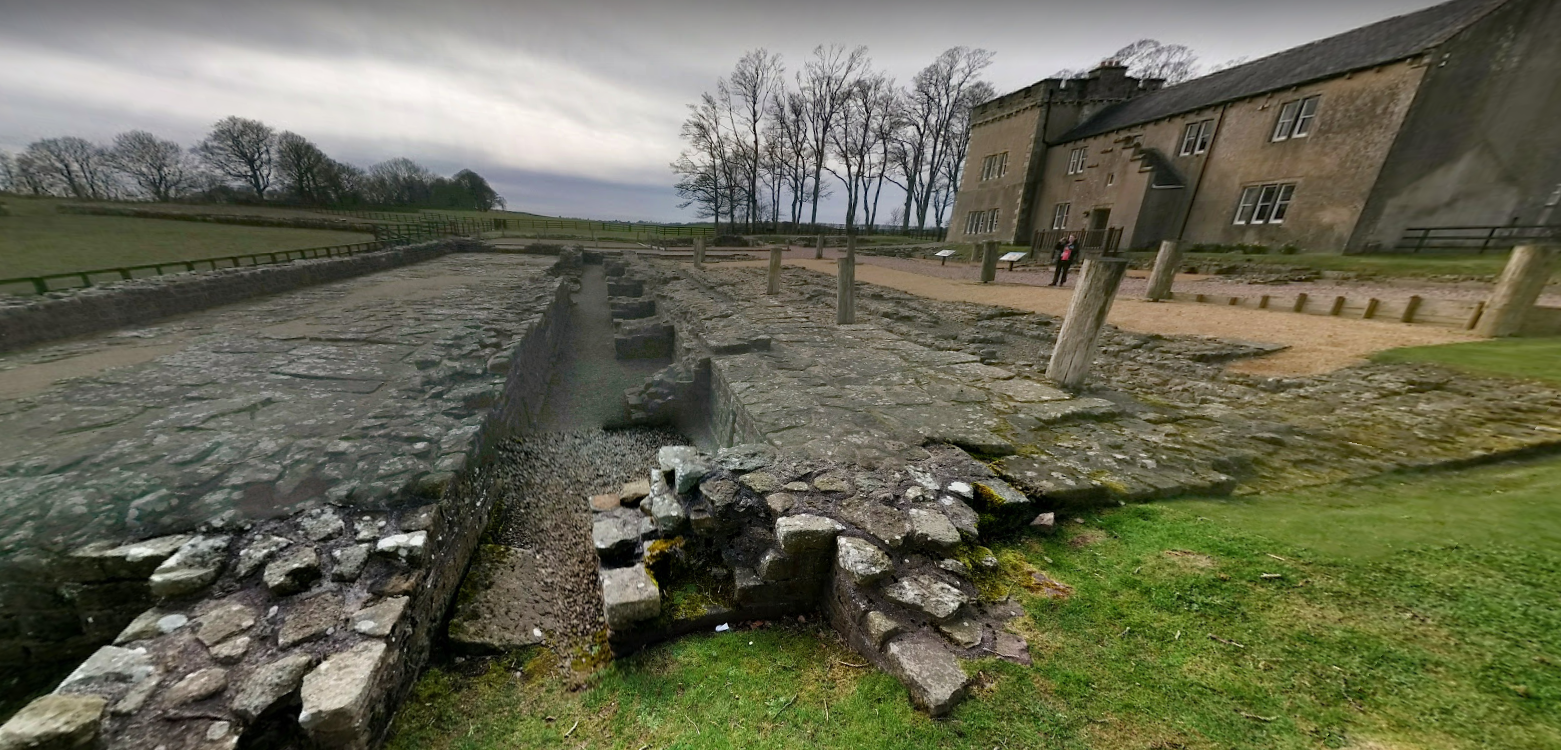
Birdoswald Roman Fort, Hadrian’s Wall Cumberland (Cumbria)

The Script

John Forster awoke one night from a rather disturbing dream, stared down upon his wife of 33 years in the bed beside him, and bellowed in his booming preacher’s voice: Old Woman, what are yee doing in my bed?

The wife was jolted awake – but she caught herself and calmly replied. I am sleeping. Well, I was sleeping.

Woman, what are you doing sleeping beside me, repeated her aged husband, punctuating his sentence with a downward stab of his spiky chin.

I am sleeping beside you because I am your wife, the old woman replied. What other reason would there be for me to be sleeping beside you?

But, you are NOT my wife, sputtered the old man, splashing his snowy white beard with little beads of saliva.

I am, most certainly, the woman replied, this time with a slight quiver in her voice.

I am EMMA Cowen of Durham, the woman you married in 1892 .  You are John Forster, former Primitive Methodist minister from Knockburn, Northumberland,  and, she added, playfully, in an effort to pacify him, author of numerous essays on politics and a lovely book of poems Pictures of Life in Verse.

I know who I am,”  the old man said, menacingly. It’s you I ‘ave me doubts about.

Emma Cowen sighed and pulled herself up in the hard-packed feather bed, battling through her many bodily aches and pains.

Her husband was suffering from a softening of the brain, so said the doctor, and this fog took over him especially bad upon waking from a sleep or sometimes even a short afternoon nap.

This episode was particularly startling though. The anger! Where did it come from?

We are married, Emma insisted, knowing full-well  it was useless to argue at these times but somehow not able to help herself.

We have three children, Nora, a concert pianist who teaches music at a girls school in Maryport, another daughter, Agnes, in Carlisle, just two streets away and Dorothy who is a planter’s wife in Kuala Lumpur, thousands of miles away.  Dorothy has two children, Peter and Denise. They go to school here in England and  they visited us in Carlisle just last summer. Do you recall?

I know who Peter and Denise are, John Forster replied, in increasing frustration, knotting his furry brow.

Peter is the soft bairn  I took to BIrdoswal Roman Fort at Hadrian’s Wall, who whimpered that he was tired before he got halfway there. And it’s not but 7 miles aft. No Border Reiver blood has he!

I repeat, it is YOU I don’t know – but  with the pitch of his voice lowering he asked, “What are you doing in my HOOS?”  This sounded more like a plea. The moonlight coming in through the window in the bare bedroom lit up the watery irises of his eyes – and  not in a comforting way.

The little girl in Emma wanted to check the corners of the room for wicked fairy-folk, malevolent gyests or mischievous boggles.
I live here, said Emma, defiantly.

But, my wife is Mary Chaytor Hall, naw Emma Cowen.  She of the strawberry blonde ringlets. She was fair, you know. Very fair. YOU ARE NOT FAIR! These four words fell like sharp knives upon Emma’s heart

How self-indulgent of her to feel this way!

She shook the feeling and said in a dull monotone, “Your first wife was Mary Chaytor Hall.  You were married six years only. She died, young. Was this the 100th time she had to explain this fact to her husband, she wondered.

Was she the daft one for attempting to knock sense back into this head?

We married in 1892, she continued. It is now 1925. So we have been married 33 years by my counting. And I’ve stood beside you, the busy wife of an itinerant preacher, moving every two years all over North Yorkshire: Carlisle, Crook, Middleton-in-Teesdale, Cockersmouth, Stanley, Helmsley, helping you prepare your sermons. Occupying the pulpit myself when you were indisposed.  Teaching Sunday School.  Tending the infirm and weary in our flock.

And so you too should be able to vote, said John, his line of thought veering into the present.  What has property got to do with it?

Yes, we worked hard for that, didn’t we, in our day. Woman suffrage.

John stared at her with vacuous blue eyes now, the silvery moonbeam having moved. Watery blue, his eyes. He blinked, once, twice, three times.
I don’t recall ye  ‘ever making sermons, woman. ” said John. “Ye didn’t have the head for it.”

Emma frowned. “I most certainly did,” she said.

And Peter was upset because you carried Denise part of the way, but made him walk,  Emma added, by way of a dig.  He is only five years old after all, just one year older than Denise.

As if things were as before and her husband could comprehend a dig when he heard one.

The dig came from her own angry place.

Who was her anger directed against?  Her husband, his first wife, God? No good place among them.

If  Mary Chaytor was the only woman he could remember, at times, would the memory of second wife, Emma Cowen, eventually fade completely from his brain and she become nothing more than a warm body in his bed?

A stranger in his bed.

She who had stood by her husband, as an undeniable equal in life and work, all of these 33 years.

Ahhhhcchhh, I don’t understand, John growled, his frustration swelling.   I don’t understand. He shook his head hard dislodging his nightcap over his right ear in comical fashion.

Emma edged an inch or two away from her husband, feeling guilty.

Then, John Forster suddenly turned away from Emma and lay back onto his hard feather pillow.

The peace and calm lasted but for a brief moment..

Henry Maine! It’s all his fault! John Forster howled, his head still attached to his pillow.

Henry Main? Who is this Henry Main? Emma asked.

He said it all come from the Romans, the Twelve Tables, but he was wrong.  It makes no sense.

Liberte, Egalite,Fraternite,. John Forster’s skinny freckled forearm shot up in the air. We must lift up our voice against classism, materialism, against selfishness in all of its forms.

Emma almost smiled. She could see him for a moment in the pulpit again, preaching to his untidy frazzled flock of North Country farmers and their wives.

My dear, dear husband, you are an unhinged filing cabinet, overturned and burst open, foolscap floating away on the capricious air currents.  I always said you were too learned for you own good. And see, it has all turned back on you, all this old knowledge swirling around in your befuddled brain. If it isn’t this Henry Main, whoever he is, it’s praise for Karl Marx. If it isn’t  about Marx, it’s critiques of St Paul or Cicero.

What er you talkin’ about, woman? Cicero is not a filing cabinet.

Emma chuckled out loud this time.

What should she do? Call for her daughter, Agnes, again? At 2  am? No, let her sleep.

She took a different tack.  Would you like to me to go outside to the pump and get yee a cup of fresh water, Emma asked John.

The doctor  had said dehydration was an enemy of old people. She started to swing her leaden legs out onto the hardwood floor but arrested them in mid air.

No, woman, it is dark outside. The wolves may be out.  I’m not wanting any wife o’ mine to put herself in danger’s way.

She did not ask which wife he was referring to, the old haggard one or the beauteous young one.  It felt good to hear her husband’s concern.

The mischievous fairy inside Emma wanted to ask “What wolves are you expecting to find in the city of Carlisle?”

But, she this time, she checked herself.  It occurred to her, that she could not go on as before.

We are both strangers to each other, now, Emma thought.

The Lord certainly does works in mysterious ways, the loyal wife whispered to the bare bedroom walls, to the  window frame with the peeling brown paint, to the pellucid moon beam bending around the frayed gray gingham curtain. She pulled her prickly woolen blanket up over her chest.

And my poems were fine, weren’t they? John Forster purred. My lyrics of uncommon charm and grace, they said.

Yes, Hinny, your poems were very, very fine.

And with that John Forster, my great grandfather, fell back to sleep. Emma Cowen, my great grandmother, adjusted the cotton nightcap to cover his bony head, as lovingly as she could muster, and steeled herself for the morning.


I wrote a story about the Border Reivers of Northern England on this blog. It can be found here.