Tag Archives: England

1945: A Year of Endings and Beginnings, at Home and Abroad.

As I approach my 80th birthday, I begin to think about the year I was born. What a year that was, a year of major global transitions and the historical year of my birth. I was fortunate to be born in November of that year, when most hostilities had ceased in the world and my home town.

However, the hardships in Britain and Europe were just beginning. Now, we had to think about rebuilding our shattered lands.

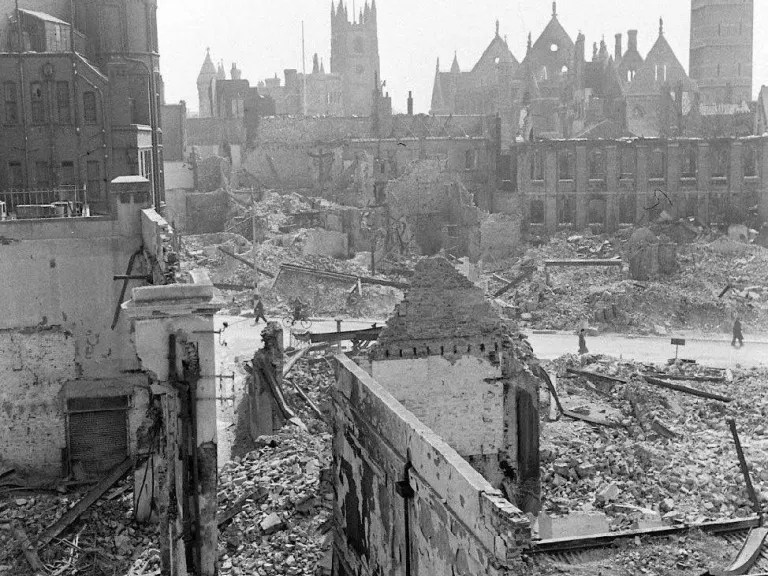
1945. Plymouth, Devon, England, after a Blitz Raid

I have an interest in the ‘Home Front’ events that occurred in Britain during the Second World War, rather than military stories. However, military stories cannot be ignored as 1945 was quite the momentous year in the military and home fronts. Here is a timeline of key events both at home and abroad that occurred in 1945.

January:

World War 2 is in its final phase, even though Germany is in retreat. The British military pressed onward in Germany and Burma. The Battle of the Bulge ended a major German offensive on the Western Front.

It was believed that Plymouth was being singled out for particularly ferocious attacks because it was home to Her Majesty’s Naval Base, Devonport, which was the largest Navy base in Western Europe and the Royal Navy’s repair and refuelling facility. The dockyard was staffed by women during the war, doing what was normally considered to be men’s work, as all the men were away fighting.

On the home front, Britain was impacted by V-2 rocket attacks.

Rationing, especially items like dried and canned fruit, was scarce. The Ministry of Food encouraged households to reduce waste and get creative with recipes. I still practice creating recipes and reducing waste to this day. This story is my 1950 Christmas with rations. Rationing in England lasted until I was 11.

https://genealogyensemble.com/2021/12/29/memories-of-a-1950-british-christmas/

February:

I was conceived!!

Allied bombers begin a major raid on the city of Dresden. Key events in February included the Yalta Conference between the Allied leaders, the beginning of the Battle of Iwo Jima and the final stages of the war in Europe.

The Soviets captured Budapest, Hungary, and also encircled Breslau, Germany (now the modern-day city of Wroclaw, Poland) as Allied forces pushed toward the Rhine in the west.

March:

The 10th British and Allied forces successfully crossed the Rhine, the first time a foreign army had crossed the Rhine since the Napoleonic era.

British forces pushed deeper into Germany with only scattered resistance.

On the 27th and 29th, the final V1 flying bomb fell on Britain.

Remarkable photo of a German V1 fully autonomous early cruise missile hitting the London area in 1945.

April:

1st The Battle of Okinawa continued for 82 days, resulting in heavy casualties for both American and Japanese forces. Japan launched ‘Kamikaze’ attacks against Allied naval forces.

Dr Fritz Klein, an SS doctor, among some of his victims, Belsen, 24 April 1945

Numerous Nazi concentration camps are liberated, revealing the full extent of the Holocaust to the world.

4th Ohrdruf concentration camp, liberated by U.S. Forces.

11th American troops discovered the Buchenwald concentration camp

15th Liberation of the Bergen-Belsen concentration camp, by the British, who found thousands of ill prisoners and corpses.

29th Dachau camp was liberated by U.S. Forces.

Also on the 29th, Adolf Hitler married Eva Braun in the underground bunker.

30th Adolf Hitler commits suicide, shooting himself at the age of 56 years old, whilst Eva Braun takes a poison pill.
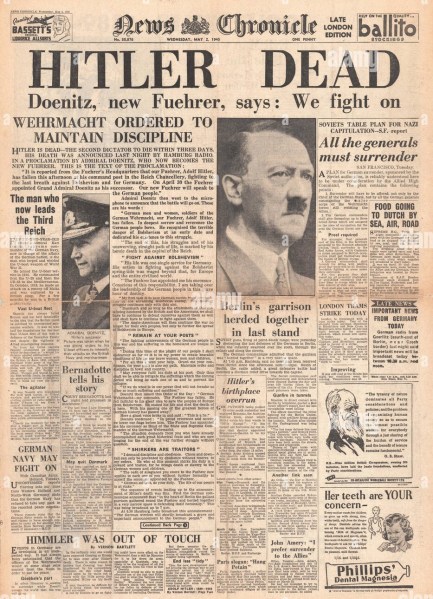
German forces, the last fighting force on the Western Front, surrendered en masse.

May:

7th Germany signs an unconditional surrender,

8th VE Day – victory in Europe – Day
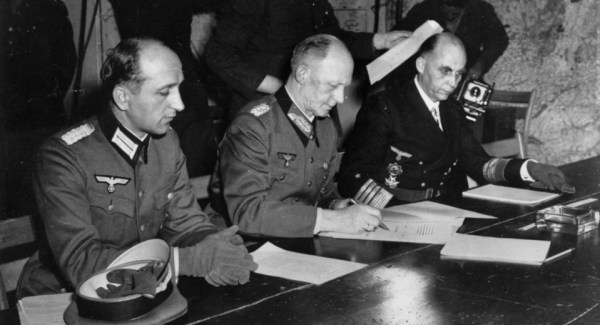
On May 7, 1945, Gen. Alfred Jodl signed the surrender of all German forces in Rheims, France. He is flanked by Wilhelm Oxenius (left) of the Luftwaffe and Hans-Georg von Friedeburg, representing Germany’s navy. | AP Photo

23rd Heinrich Himmler commits suicide while in British custody in Lüneburg, Germany.

June:

15th Wartime blackouts ended, and streetlights were turned back on.

The wartime coalition government, led by Prime Minister Winston Churchill, was dissolved, and a general election was held shortly after.

July:

The general election was scheduled to take place on the 5th of July, 1945, the first general election since 1935. However, the results were not announced until the 26th of July, 1945, to allow time for overseas military personnel’s votes to be counted. The Labour Party, led by Clement Attlee, won a landslide victory in the July 1945 election.

August:

The Family Allowances Act was passed to provide financial support to mothers.

15th was Victory over Japan – VJ – day. Celebrating Japan’s surrender after the atomic bombings of Hiroshima and Nagasaki, and the official end to over six years of global warfare
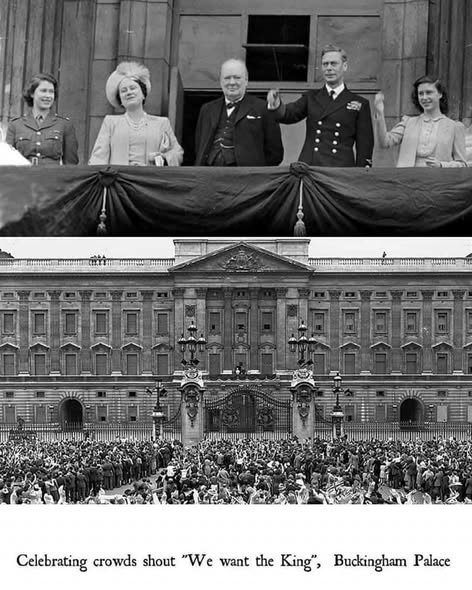
2nd Japan formally surrenders. Now, our country was focused on the return of troops, the beginning of domestic reconstruction and the promises of independence for its colonies.

September:

15th Parades were held in Britain to mark the fifth anniversary of the Royal Air Force’s victory..

16th Hong Kong was reclaimed, ending the four-year Japanese occupation.

The 17th Belsen Trial began for war crimes in Lüneburg, Germany, presided over by a British military court.

18th The Independence of India would be granted “at the earliest possible date”, was announced by Prime Minister Clement Attlee on a worldwide broadcast.

October:

Britain was now fully engaged in the complex aftermath of the Second World War, with the new Labour government pursuing major domestic reforms and the British Army dealing with global instability and the return of war prisoners.

4th An unofficial dock strike began in Britain.

7th The ocean liner SS Corfu docked at Southampton, carrying the first 1,500 prisoners of war to return from Japanese camps in the Far East. Also on the 7th, Rudolf Hess was transferred from Britain to Nuremberg, Germany, to face trial.

The 20th and the 5th Pan-African Congress were held in Manchester, where delegates from across Africa and the diaspora discussed and called for independence from colonial rule, a significant moment in the history of decolonisation.

This month was a period of substantial change as the nation grappled with domestic reconstruction, a new political direction and the challenges of managing a post-war empire and a new global order.

At the end of October, in Palestine, the Jewish Resistance Movement launched the ‘Night of Trains’, a coordinated attack on the British railway network, marking a rise in armed opposition to British authority.

November:

On the 20th, I was born at the Alexandra Maternity Home, below.
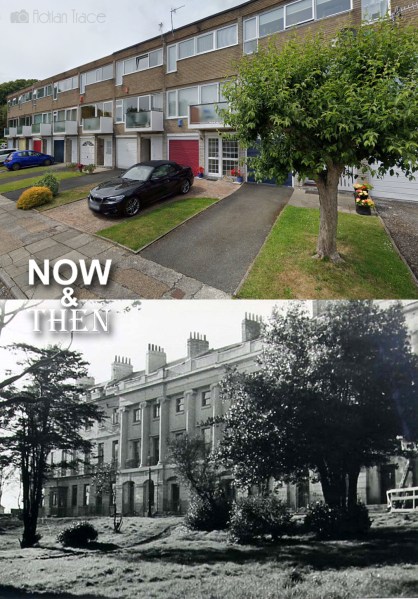
At the time, there was no National Health Service (NHS), so no free medical care. I must have been an expensive baby!

The Alex, as it was often called, admitted maternity patients for a period of not less than a fortnight. Fees were charged from 15 shillings (75P) to 42 shillings (£2.20P) per week.. These fees included nursing, food, laundry and all clothing and if necessary, the doctor’s fees. I have no idea of my weight, size or time of birth. Such things were not, unfortunately, recorded.

December:

The government announced its plan for a National Health Service (NHS) to provide free medical care.

1st British military police in occupied Germany arrested 76 Nazi industrialists.

9th, the United States granted Britain a low-interest reconstruction loan of approximately $4.4 billion (US). An additional Canadian loan was for $1.9 billion, scheduled to run for 50 years.

The final payments made in 2006, which settled the debt entirely, were for $83.25 million to the US and $22.7 million to Canada.

Throughout the rest of the year, Allied forces continued to liberate numerous concentration camps, exposing the extent of Nazi atrocities.

In 1945, post-war, Plymouth faced immense devastation from the Blitz, which had destroyed the city’s heart and left thousands homeless. Plymouth was one of the most heavily bombed British cities, due to its status as a major naval port with the large HMNB Devonport dockyard.

The city centre, two main shopping areas, almost all civic buildings, 26 schools, 41 churches, and 3,754 houses were destroyed, with a further 18,000 properties seriously damaged. Around 30,000 people were left homeless, leading to a critical shortage of accommodation. Temporary prefabricated houses were quickly erected to provide immediate shelter. I remember seeing the ‘pre-fabs’ still in use in the 1960s.

The most urgent efforts were to house the population, clear the bombed buildings – which, still, years later, were my playgrounds – and begin an ambitious pre-planned reconstruction project. All the while I was growing up, this building and planning went on. When I left Plymouth at 18, the rebuilding continued until the early 1970s.

Sources:

https://en.wikipedia.org/wiki/Battle_of_the_Bulge

https://www.thedevonseoco.co.uk/plymouth-in-the-blitz/ https://encyclopedia.ushmm.org/content/en/article/liberation-of-nazi-camps

https://www.facebook.com/photo/?fbid=779249228206828&set=gm.1467370817653042&idorvanity=1074810956909032

https://collection.nam.ac.uk/detail.php?acc=1985-11-36-334

Facebook Page: ‘Old Plymouth Society’ Post by Gloria Dixon 7 July 2021

https://www.iwm.org.uk/collections/item/object/205021954

https://www.historic-newspapers.com/en-ca/blogs/timelines/a-year-in-history-1945-timeline?country=CA

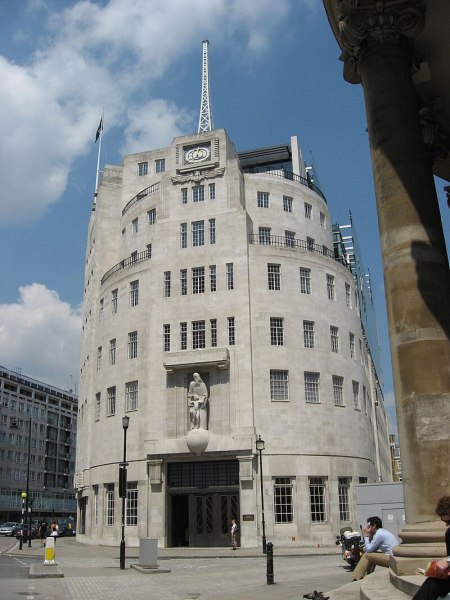
The BBC – British Broadcasting Company

While my youngest son’s 20-year career at the BBC’s flagship programme, the BBC World Service, is a source of personal pride, this story delves into the rich history of this iconic British institution. For me, as we observed the 80th anniversary of VE (Victory in Europe) Day, on the 8th of May, 2025, the story felt both poignant and emotional.

THE BBC’s BUSH HOUSE 1928 – 2012

Bush House was restored after being bombed twice during WWII

First known as the BBC Empire Service, the World Service was launched on the 19th of December 1932 as a shortwave service aimed at English speakers across the British Empire. The BBC World Service is the international broadcasting service owned and operated by the British Broadcasting Corporation. Its goal is to provide impartial and accurate news to global audiences through 42 language services.

When I was growing up in post-war England in the early 1950’s not many people had television, so the radio was my first contact with entertainment. The radio played in the background all day long. There were talks, songs, comic shows, classical music, and the hourly world news.

Saturday mornings, we had Uncle Mac, a show especially for children. Uncle Mac read stories, played songs, and greeted children when they got home from school. Uncle Mac was played by Derek Ivor Breashur McCulloch, OBE (1897 – 1967), who was born in my hometown, Plymouth, Devon. He was a radio producer and presenter and the head of children’s broadcasting for the BBC from 1933 until 1951. He became known as Uncle Mac on Children’s Hour and Children’s Favourites. (1)

The BBC, originally known as the British Broadcasting Company, first began broadcasting on the 18th of October, 1922. Its first broadcasts were made from London. Broadcasts began in November from Birmingham and Manchester, and in December from Newcastle upon Tyne. In Plymouth, the first broadcast was heard in March 1925.

The BBC began daily broadcasting in Marconi’s London studio, 2LO, in the Strand, on the 14th of November, 1922. The majority of the BBC’s existing radio stations formed the BBC National Programme and the BBC Regional Programmes. Throughout the 1920’s many firsts were added as the BBC began broadcasting from studios all over England and Scotland. (2)

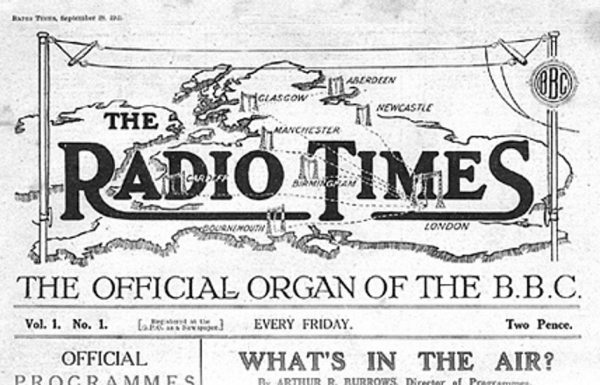
By September 1923, the first edition of ‘Radio Times’ was produced, listing the few programmes available. When I grew older, I found the Radio Times a great read, as it included not only programme times, but gossip about the actors. Below is an early addition of the BBC’s “official organ’

THE RADIO TIMES – THE OFFICIAL ORGAN OF THE BBC

A few notable programmes included the first Scottish Gaelic broadcast, heard on the 2nd of December, 1923, and the opening, by King George, of the British Empire Exhibition at Wembley Stadium, in April, 1924.
IN 1925, the six electronically generated ‘pips’ to indicate the Greenwich Time Signal (GTS) – now, GMT (Greenwich Mean Time) – were heard for the first time. These pips were invented by the Astronomer Sir Frank Watson Dyson (No relation to Sir James Dyson, inventor of the Dyson vacuum cleaners) and John Reith, the Director General of the BBC.

The majority of the BBC’s existing radio stations formed the BBC National Programmes and the BBC Regional Programmes. Through the 1920s, many ‘firsts’ were added as the BBC broadcast from studios all over England and Scotland.

In September 1939, the fledgling BBC Television Service was suspended, around 20 minutes after the conclusion of a Mickey Mouse cartoon, owing to the imminent outbreak of World War II. There were fears that the VHF transmissions from Alexander Palace would act as perfect guidance beams for enemy bombers attempting to locate central London.

For me, the most interesting part of BBC history was the war era, beginning on the 3rd of September, 1939, when Britain declared war on Hitler’s Germany. In the fight against fascism, broadcasting played a starring role as informant, morale-booster, entertainer and propaganda weapon. For the public, BBC radio provided a constant and reliable source of information about the war’s progress. The BBC also broadcast to occupied Europe, providing moral support to the resistance. (3)

On the radio, National and Regional Programmes were combined to form a single Home Service. Additionally, the service’s technicians and engineers were needed for such war efforts as the development of radar.

The wartime BBC was involved in a range of top-secret activities, working closely with the intelligence agencies and military and the BBC played an important part in WWII, frequently transmitting secret words, music and coded messages to the French underground.

For example, to indicate the start of D-Day, the operation was given the code name “Overlord” and the BBC’s Radio Londres signalled to the French Resistance with the opening lines of the 1866 Verlaine poem “Chanson d’Automne” The first three lines of the poem, “Les sanglots longs / des violons / de l’automne” (“The long sobs of autumn’s violins”), would mean that Operation Overlord was to start within two weeks. These lines were broadcast on 1 June 1944.

The next set of lines, “Blessent mon coeur / d’une langueur / monotone” (“wound my heart with a monotonous languor”), meant that it would start within 48 hours and that the resistance should begin sabotage operations, especially on the French railroad system; these lines were broadcast on 5 June at 23:15.

The coded messages can be heard below in this video.

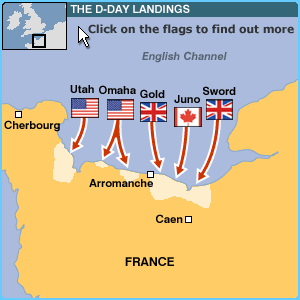
Operation Overlord, launched on June 6, 1944, D-Day, was the Allied invasion of Normandy, France. This large-scale amphibious operation aimed to liberate Western Europe from Nazi control. It involved massive land, air and sea assaults, with nearly 160,000 troops crossing the English Channel. The assault targeted five beaches in Normandy: Utah, Omaha, Gold, Juno, and Sword. It was the largest amphibious invasion in military history.

THE BEACHES OF NORMANDY, FRANCE

Today, I regularly listen to the BBC World Service, Radio 4 and Radio 4 Extra, which repeat programmes from the early 1950s to the 2000s, bringing back nostalgic memories of ‘home’.

SOURCES

(1) https://en.wikipedia.org/wiki/Derek_McCulloch

(2) https://www.bbc.com/historyofthebbc/timelines

(3) https://www.bbc.com/historyofthebbc/100-voices/ww2/secret-war(2

(4) https://orwellinstitute.com/orwell-bbc.html source for the Orwell photo

THE BBC TODAY

The BBC Home Service ended on September 30, 1967, when it was replaced by BBC Radio 4. The first broadcast on Radio 4 was “Farming Today”.

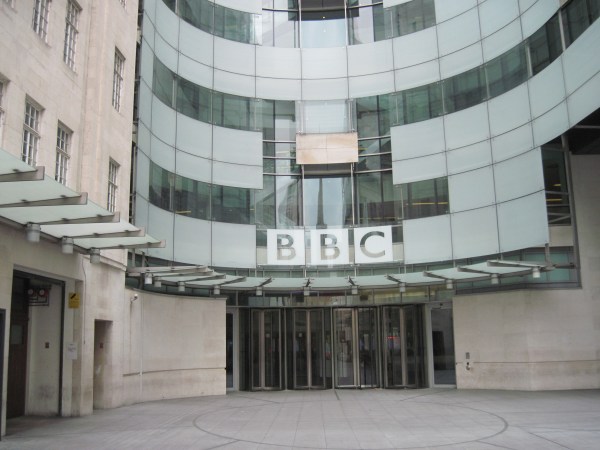
BBC HOUSE TODAY

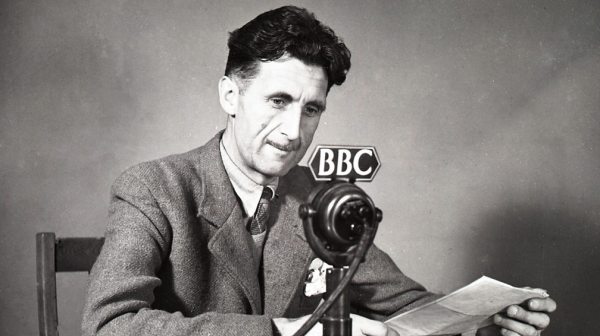
The famous writer of 1984 and Animal Farm worked in the Empire Service of the BBC from 1941 to 1943.

George Orwell at the BBC in 1943.

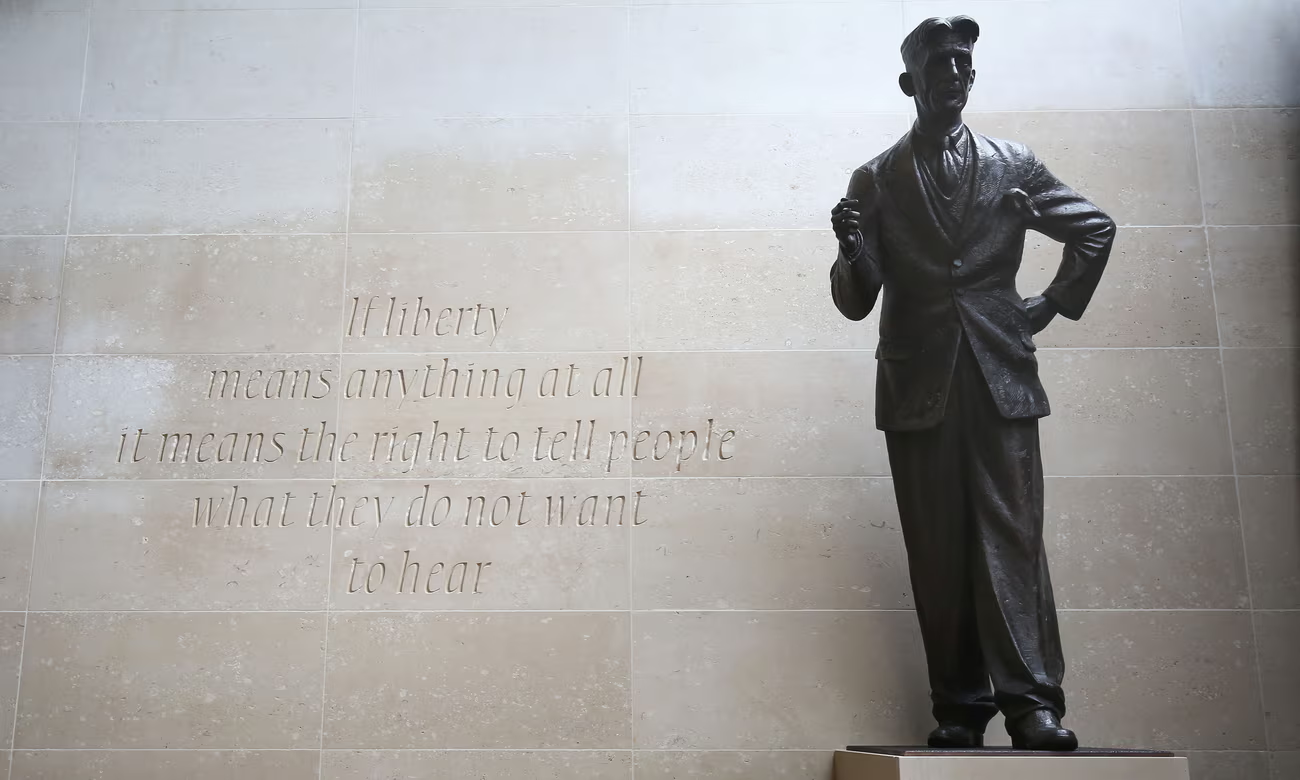
Outside the new BBC building in London stands a statue of George Orwell, and behind him these words:

“If liberty means anything at all, it means the right to tell people what they do not want to hear.”

The head of BBC history, Robert Seatter, said of Orwell and the statue that “He reputedly based his notorious Room 101 from Nineteen Eighty-Four on a room he had worked in whilst at the BBC, but here he will stand in the fresh air reminding people of the value of journalism in holding authority to account”. (4)

Part Two of Remembering Great-Grand Uncle Arthur Symons – The Price of Survival

This is part two of my Great-Grand Uncle Arthur Symons’s experiences in WWI. Arthur emigrated to Canada in 1901, arriving in Halifax, Nova Scotia, on the SS Soman. (1)

When WWI broke out, Uncle Arthur enlisted in the 56th Battalion Canadian Over-Seas Expeditionary Force in 1915 in Calgary. He was then shipped back home to the UK to train. While there, he visited his sister Lilian and her daughter Edith, my Grandmother.

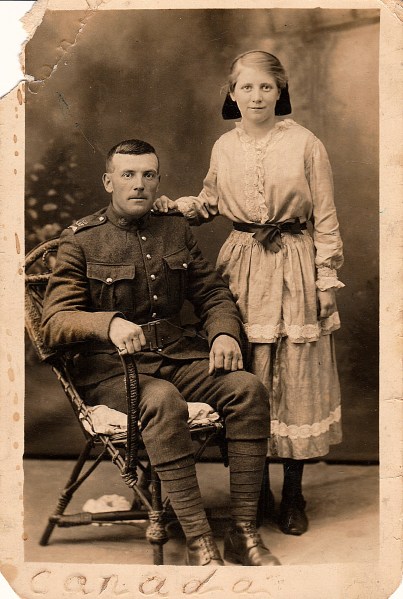
Arthur Symons with Edith Bevan his niece, my Granny.

Granny was 15 years old.

At Salisbury, Wiltshire, England, the Canadians trained for four months, most of it in terrible mud, as England experienced one of its wettest winters in decades. While most troops stood up well to the awful conditions, Canadian equipment did not. Much of it was soon discarded in favour of British types. The Canadians learned basic soldiering in England after a hasty mobilization and a difficult, uncomfortable winter. Their real training would come at the front.

After training, Arthur was sent to France and later Belgium. At the Third Battle of Ypres, better known as Passchendaele, the troops fought there from July to November 1917. Both sides suffered appalling conditions and heavy casualties. “The name Passchendaele has become synonymous with mud, blood and futility”. Arthur was wounded in 1917 at Passchendaele. (2)

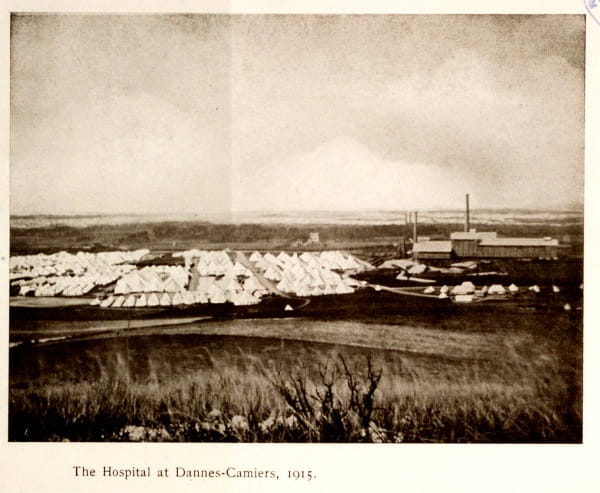
The Government of Canada Library and Archives search had Arthur’s Attestation Papers and detailed medical treatments at “No. 4 General Hospital Dannes Camiers” (2) among many other hospital visits.

Searching for Dannes Camiers Hospital, led me to the Royal College of Surgeons of England and the following information. (2)

Shortly after the war broke out, McGill University organised the ‘No. 3 Canadian General Hospital’ to serve in France. The hospital was established at Dannes Camiers in the Pas-de-Calais area on 19th June 1915 under canvas. A staff of 35 Officers, 73 Nursing Sisters and 190 rank and file. Life under canvas that cold wet November was tough, with deep mud, storms, frost and collapsing tents. The conditions so undermined the health of one Lieutenant Colonel Yates that he was invalided to England where he died the following year.

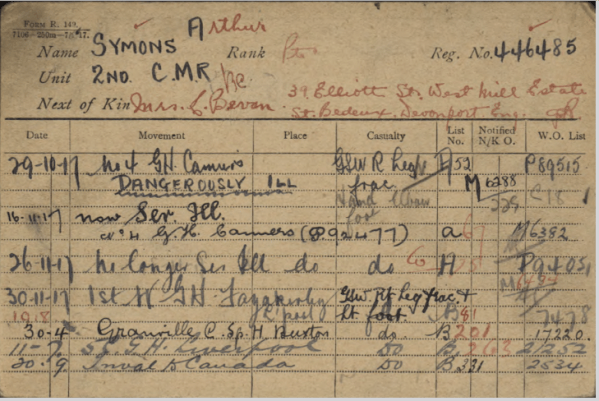
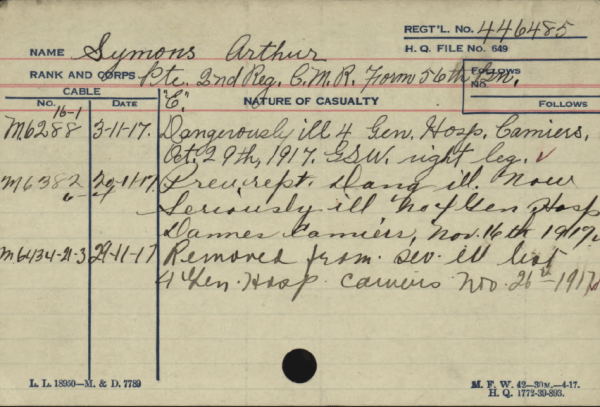
Arthur’s admission to the Dannes Camiers Hospital was on the 29th of October 1917. The first line of his medical records states he is ‘Dangerously ill’ with GSW (gunshot wounds) R. Leg fracture and left foot.

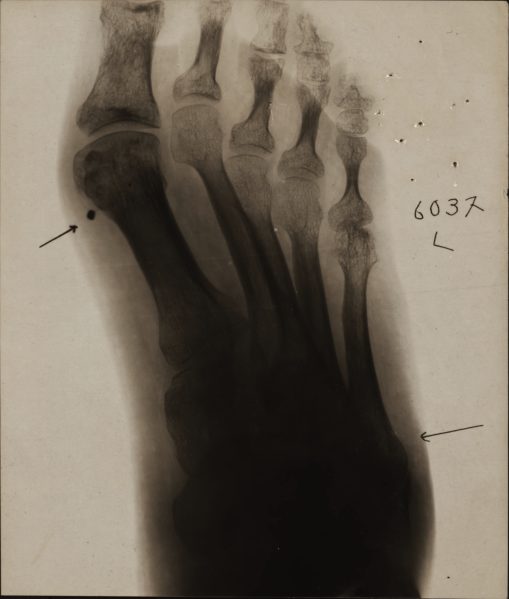
By the 16th of November, Arthur is now ‘seriously ill’ There follows 99 pages – starting with his Attestation Paper – then very detailed treatments and x-rays from various hospitals in France, England and Alberta, Canada. It makes for fascinating reading.

Three pages from Arthur’s 99 pages of hospital notes and X-rays.

On the 30 of November 1917, Arthur was transferred to the 1st West General Hospital Fazakerly, Liverpool England. After 5 months of treatment, Arthur was again moved to the Canadian Special Hospital Buxton, Derbyshire, England.

NOTE: Amongst the patients at Buxton, was Frederick G Banting, who would return to Canada after the war to continue research into diabetes and the use of insulin in its treatment, for which he was awarded the Nobel prize. (3)

His last transfer was on July 11, 1918, to the 5th Canadian General Kirkdale, Liverpool, England.

Eventually, on the 20th of September, 1918, Arthur was Invalided to Canada. He was sent to the Ogden military convalescent hospital in Calgary, Alberta. A short visit to the Calgary General Hospital, then back to Ogden.

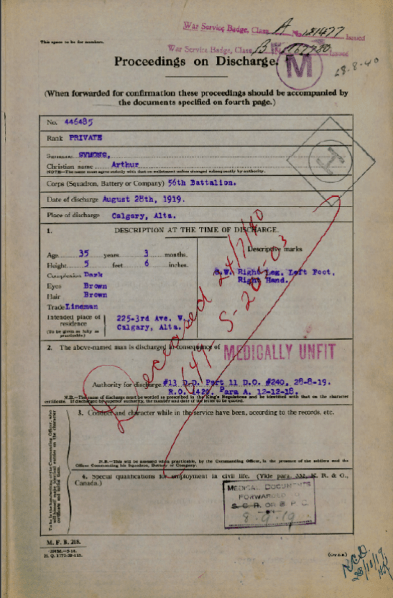
Finally, after nearly 2 years at 5 different hospitals, Arthur was sent to the Banff Rest Camp, and discharged on August 28, 1919, medically unfit for further service. He was 35 years old.

Arthur went on to marry and have two children and was employed in the Civil Service

This rather poignant note dashed across his discharge papers state ‘Deceased 24/7/40’

Excerpt from The Calgary Herald, July 26, 1940, page 2
Arthur Symons, 54, of 2409 Centre Street South, died in hospital here Wednesday afternoon. Born in Leicester, England, he came to Calgary 32 years ago and was employed in the civil service for 17 years. He is survived by his wife, Catherine, one son, Arthur, and one daughter, Dorothy.
Alberta Death Reg. #1940-08-201498

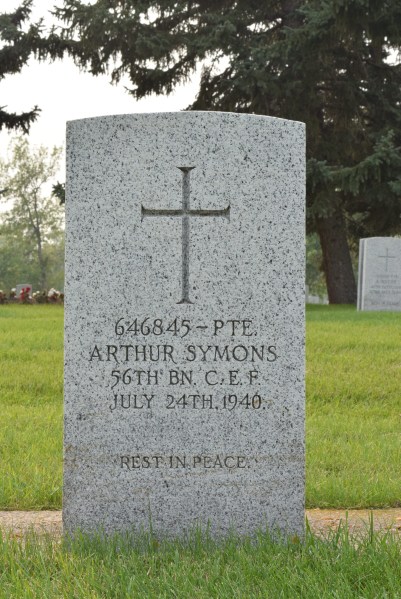
Great-Grand Uncle Arthur Symons is buried in Burnsland Cemetary, Calgary Alberta, Canada. (Photo credit Ron Reine)

RIP Uncle Arthur.

Part 1 of Great-Grand-Uncle Arthur’s experiences in WW1:

(1) https://genealogyensemble.com/2024/11/11/remembering-great-grand-uncle/

(2) https://www.rcseng.ac.uk/library-and-publications/library/blog/we-will-remember-them-no-3-canadian-general-hospital/

(3) https://buxtonmuseumandartgallery.wordpress.com/2019/12/13/canadian-red-cross-special-hospital-buxton-1915-1919/

(4) Dr. Frederick Banting

REMEMBERING GREAT-GRAND-UNCLE

Arthur Symons, Private, 56th Battalion, Canadian Over-Seas Expeditionary Forces.

I once had a great-granduncle, Arthur. Until I started doing Genealogy, I had no idea there was such a title, but there it is, and I had one.

Of course, I never met him, but, as it is Remembrance Day I wanted him to be remembered.

My Granny’s mother, Lilian, had a family of five siblings, and Arthur was her younger brother. He was four years younger than her. Granny told me that Arthur immigrated to Canada in the early 1900s.

Despite many searches. I could find no information on his immigration. However, months after I started my research, I came across a border crossing Manifest from Canada to Sweetgrass, Montana.

It had all the information I had been searching for!

At this point, I was not sure he was even married, but the info on the border crossing gave me missing details and Arthur was beginning to become a real person.

The Manifest stated Arthur was 50 years old, accompanied by his wife, Catherine, son Alexander, and daughter Dorothy. It was dated the 18th of July, 1936. The family were visiting Yellowstone Park and Glacier Park. it gave Arthur’s address in Calgary, Alberta and his occupation as a Postal Porter. (1) It stated that he arrived in Canada at Halifax, Nova Scotia on the 19th of March, 1901 on the SS. Soman.

I haven’t yet found the passenger list for the SS Soman, but I keep looking.

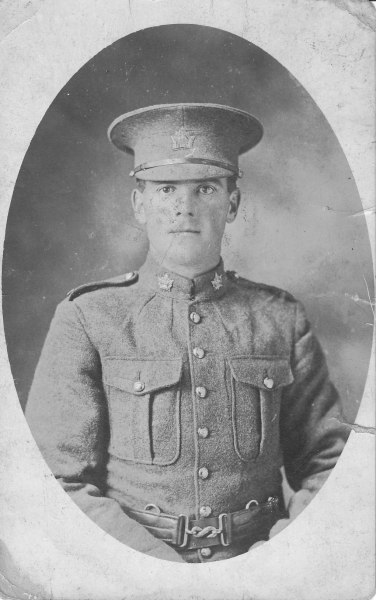
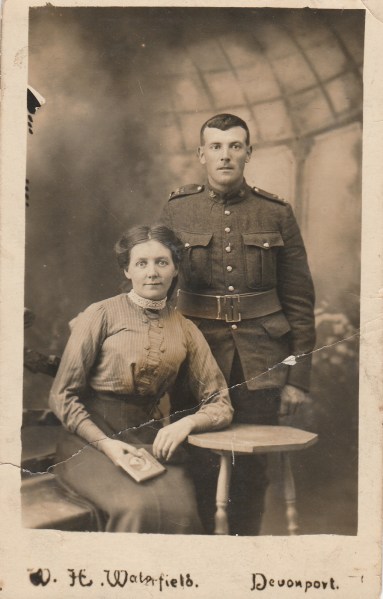
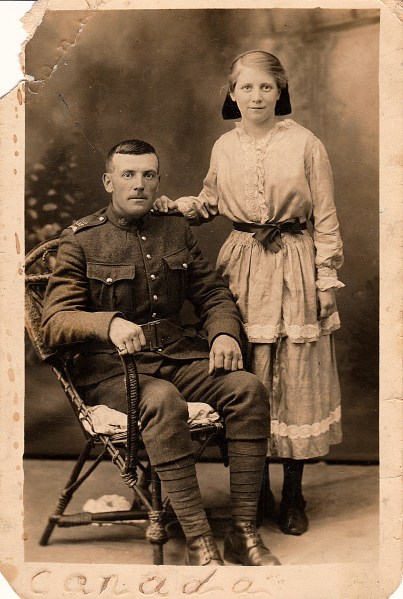
When WWI broke out, he enlisted in the 56th Battalion Canadian Over-Seas Expeditionary Forces on May 3, 1915, in Calgary, Alberta. He was shipped back to the UK for training. While ‘back home’, he visited his sister Lilian – my great-grandmother – and had these photos taken with his sister and my Granny, Edith Bevan O’Bray.

Arthur Symons with his sister Lilian Symons Bevan. C. 1914-18

Arthur Symons with my Granny, Edith Bevan C. 1914-18.

Arthur Symons was born in Leicester, Leicestershire, England, in 1886. His siblings were Lilian Mary Symons—my great-grandmother; Thomas, who died in infancy; Arthur, Olive, and Ada, who was my Gran’s favourite Aunt, and only two years older than her.

Aunt Ada was also my Godmother. Together, they joined the WRNS (Women’s Royal Naval Service) in 1918 (2)

Great-grand-uncle Arthur fought at the Battle of Passchendaele and was severely wounded in the right leg, right hand and left foot. He was transferred to the Granville Special Hospital, located in Ramsgate, Kent, England. An orthopaedic facility to treat soldiers with damaged limbs. Later because of air raids on the Kent coast, the hospital was moved to Buxton. He was medically discharged on 28th August 1919.

In part Two, I will explore his stay in the Granville Special Hospital for Canadian troops. The first line of his medical records, dated November 29, 1917, stated he was “Dangerously ill.”

(1) Canadian Postal Porter – Porter – Worker having manual handling duties, typically at a large sorting office or railway station in London. Tasks included the loading, unloading, segregation and transfer of mailbags or other containers. Porters were also employed at some other locations, such as the PO Savings Bank.

(2) Granny and her Aunt in the Women’s Royal Naval Service.

Devon, Alberta, Devon, England.

My eldest Grandson is called Devon. His full name is Devon John Charles. Named after both his grandfathers. His parents initially, wanted to name him Even. However, there is already a cousin in our family of that name. His mum suggested Devon which suited both parents.

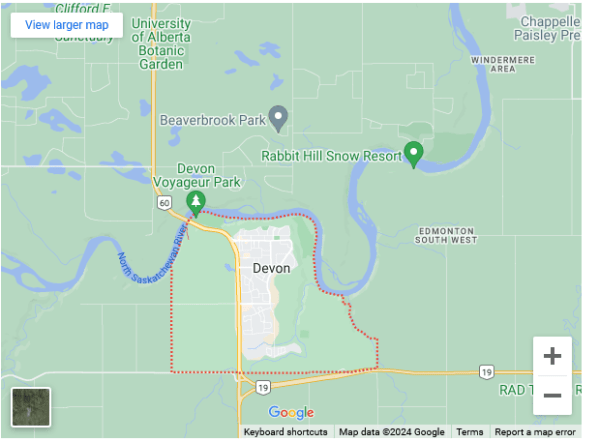
When Devon’s family moved to Alberta, we were surprised to learn he and his family were moving to Devon, Alberta! I was keen to learn the history of Devon, Alberta and here is what I found.

Devon, Alberta Canada

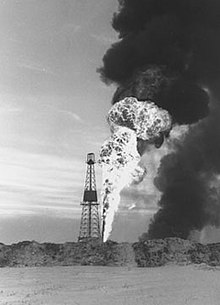
One of the largest oil discoveries in the world was discovered on February 13th 1947 (I would have been two years old). Leduc No 1 well struck oil and the new town of Devon was constructed by Imperial Oil to accommodate its workers.

Leduc Oil No. 1. Devon, Alberta Canada

The company wanted a well-planned town so Devon holds the distinction of being the first Canadian community to be approved by a regional planning commission.

The town was planned according to modern town-planning principles by the Edmonton District Planning Commission and CMHC. It was labelled “Canada’s Model Town” since it was the first municipality in Canada to be approved by a regional planning commission. The town grew extremely quickly, but because of planning controls, its development was orderly”. (1)

Devon was named after the Devonian formation seen in the strata tapped in the Leduc No. 1 oil well, which in turn is named for the county of Devon in England. Its economy is still based on the oil and gas industry; however, the addition of the Devon Coal Research Centre is helping to diversify the economy (2)

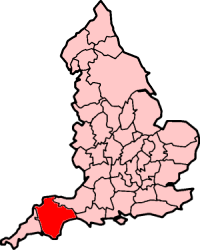
I was born in Plymouth, Devon but its history goes back millennia. Situated in South West England and bordering Cornwall, there is evidence of occupation from the Stone Age onwards. Recorded history begins in the Roman period when it was a ‘Civitas(3) meaning a social body of citizens united by law. (3) It was then a separate kingdom for centuries until it was incorporated into early England. A largely agriculture-based region, tourism is now vital.

Ancient Extent of Devon, England

The name “Devon” derives from a tribe of Celtic people who inhabited the South-West peninsula of Britain at the time of the Roman invasion.

The last time I visited Plymouth, Devon I was tickled to be able to send my grandson a letter addressed to Devon, in Devon Alberta, from Devon, England. The lady in the Post Office even pointed out how amusing that was.

(1) (2) https://www.thecanadianencyclopedia.ca/en/article/devon

(3) https://en.wikipedia.org/wiki/Civitas

The Making of a Canadian Artist

JULIUS GRIFFITH
RCA, OSA, CSPWC, CSGA
(1912-1997)

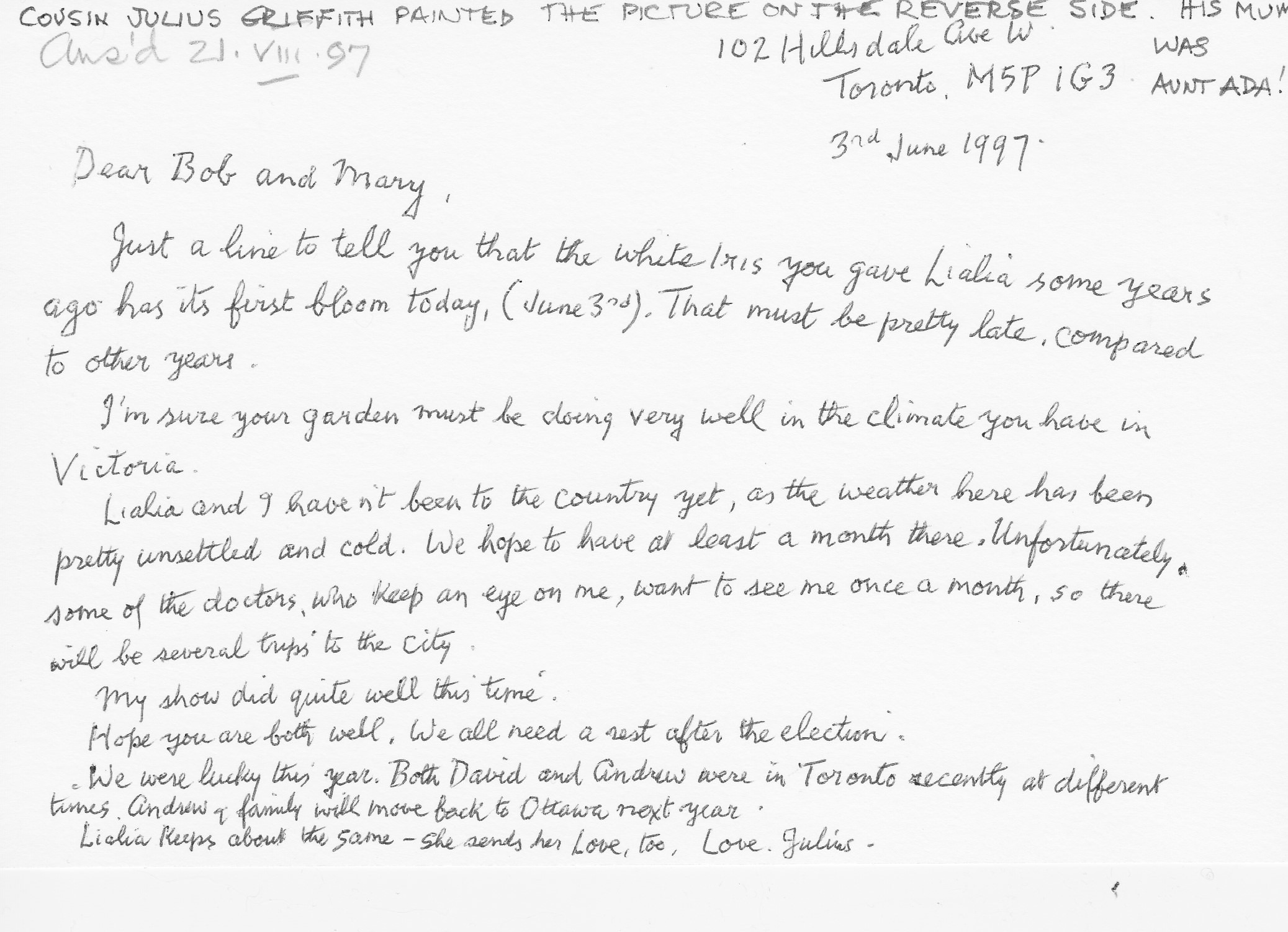
My collection of genealogy treasures includes two picture postcards sent to my Aunt Mary by her talented artist cousin, Julius Griffith, prior to his death in November 1997.

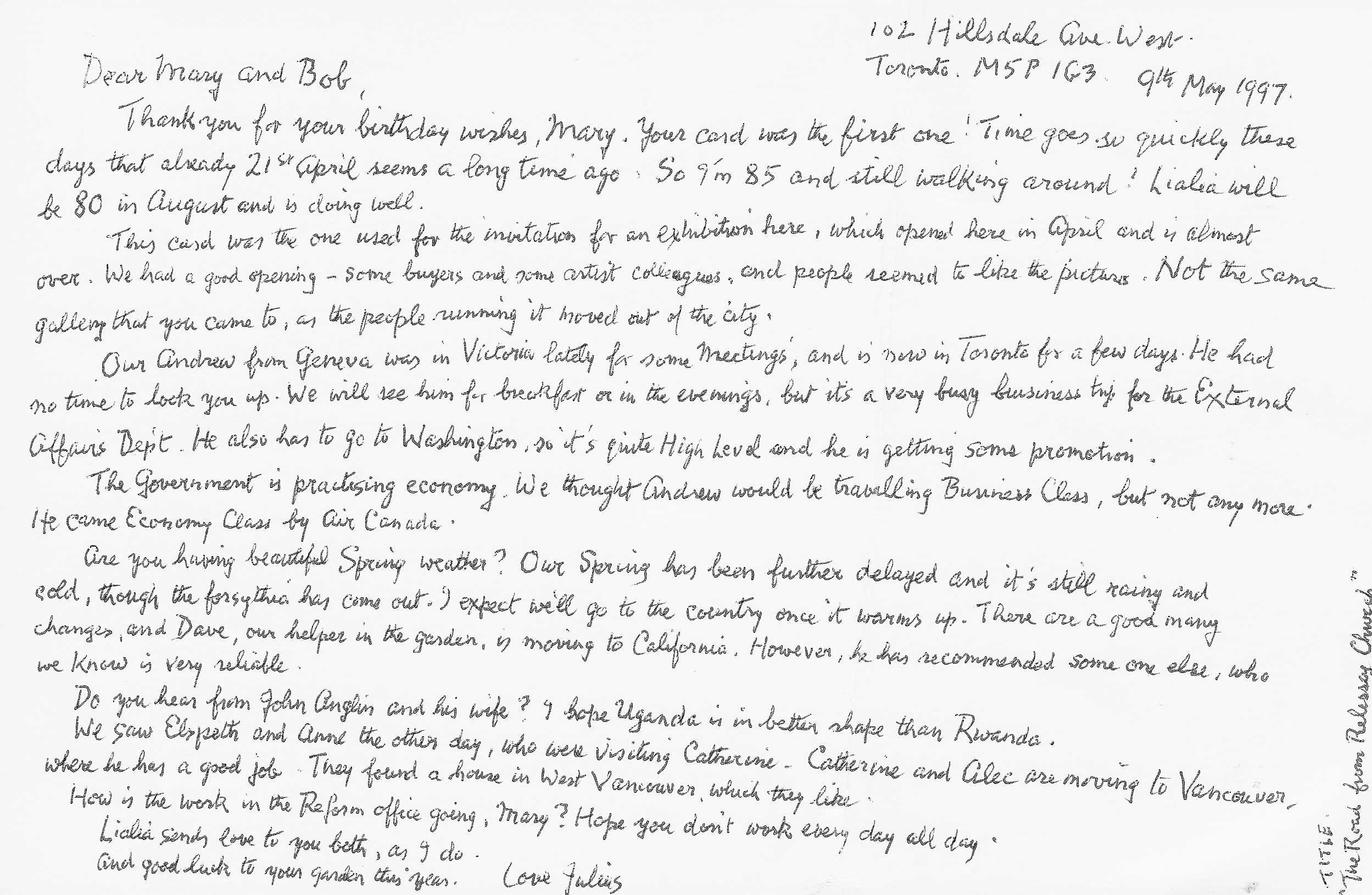
His meticulous handwriting described that day’s garden blooms, commented on the recent election, provided a short health update, news of a son moving back to Ottawa with his family and Lialia sending her love. At the very end, he writes “my show did quite well this time.”

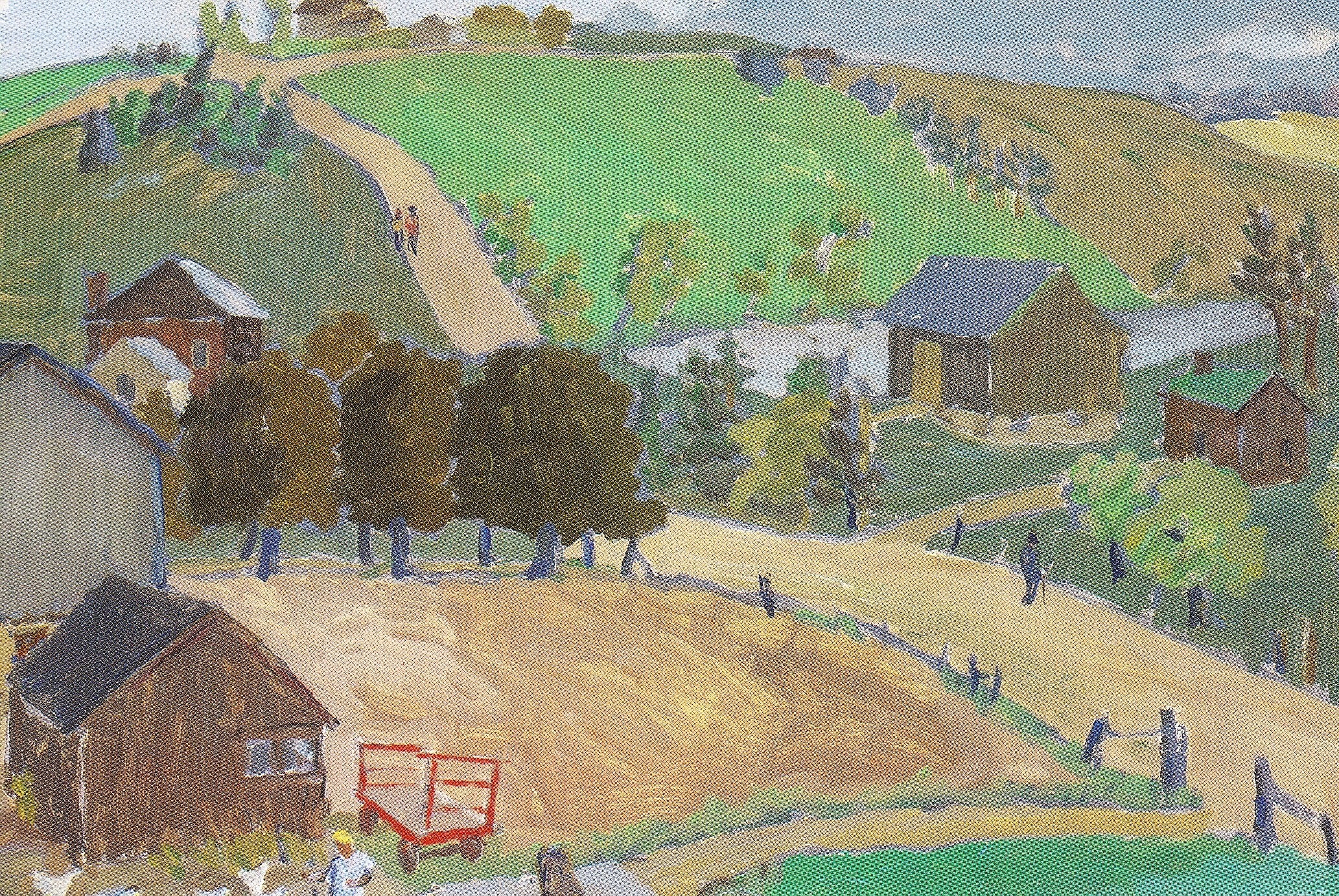
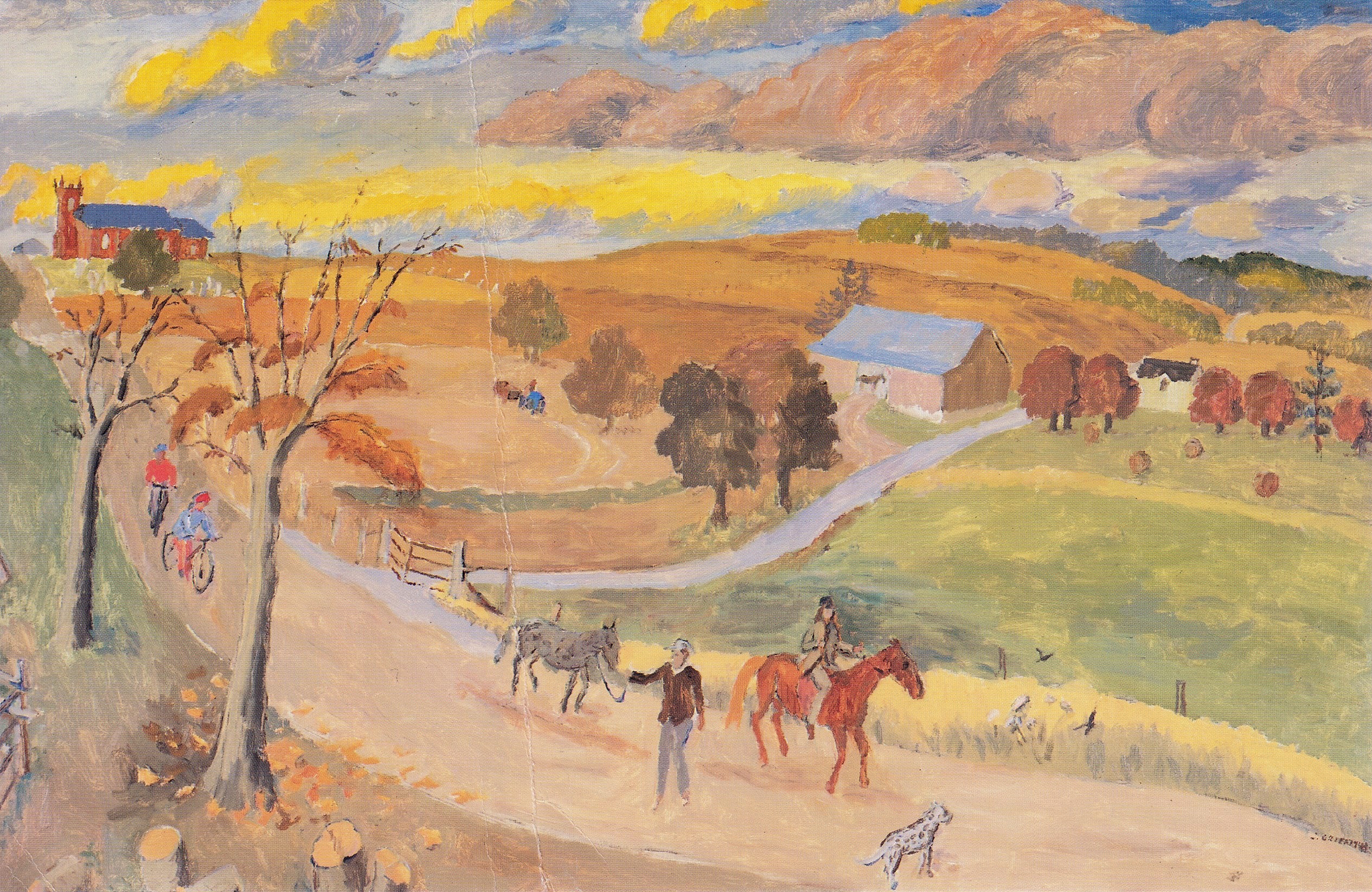
“The Road between Allen’s Farms”

And so it should have. Her cousin, Julius Edward Griffith (1912-1997) was a successful enough painter in watercolour that the members of the Canadian Society of Painters in Water Colours (CSPW), voted for him to be included as a member. Co-founded by a group of prestigious painters including Group of Seven artists A.J. Casson and Franklin Carmichael in 1925, the association continues to exist and has a storied history. For their Diamond Jubilee in 1985, they selected 60 paintings, including one from cousin Julius, and gave them to Her Majesty Queen Elizabeth II. The Queen formally exhibited the collection in Windsor Castle’s Drawing Gallery in 19861.

One of my two postcards could be a replica of his circa 1982 painting presented to the Queen, which was called “The Empty Farmhouse.” The official description describes it as a “watercolour view across fields of a square farmhouse with four windows, surrounded by trees.”

Julius Edward Griffith (1912-1997) was a successful painter in watercolour and oils, a graphic artist, an illustrator, a fine print maker and an art teacher.

As the only child of Katharine Ada Lindsay and Julius Henry Griffith, and born in Vancouver, British Columbia, Julius relished his grandfather Lindsay’s extensive art collection when he visited with him in Montreal, Quebec. Thus began his art education.

Julius Griffith – 1920

When Julius finished High School at 16, he was too young to attend the Royal Military College, as was his father’s family tradition. Instead, he studied at the Vancouver School of Art (Now Emily Carr University of Art + Design)under Charles H. Scott, F.H. Varley and J.W.G. MacDonald (two of which were Canada’s famous Group of Seven artists2). What a fantastic start to his artistic career! At the same time, he also learned block printing techniques from American artist Bruce Inverarity3 who lived in Vancouver at that time. Julius was immediately drawn to block printing because he enjoyed black and white contrast.

A few years later, he moved to England with his parents and studied at the Slade School of Art4 in London and continued his studies at the Central School of Arts & Crafts with Noel Rooke5 learning the technique of wood carving.

At age 21, Julius returned to Vancouver during the Depression hoping to get any kind of work as an artist. And he did! The owner of the Vancouver Sun newspaper commissioned him to paint two murals on the walls of his building and different groups of people were invited to watch his progress. Among these groups were his previous art teachers, Fred Varley and Jock Macdonald and their students at the time. He must have been so pleased at this role reversal!

In 1938, near the end of his fourth year back in England at the Royal College of Art6, he returned to Vancouver to see his father just before he died. After his father’s death, WWII interrupted Julius’ studies but he returned to England with his mother at that time as he wanted to serve.

During the war he worked with the “Air-raid Precautions” for a time and eventually joined the Red Cross. He worked in a country-house hospital in Sussex and, with so little to do, Julius taught art and learned to speak Russian.

What a serendipitous decision! He fell in love with his teacher – nurse Lialia Oralevs originally from Latvia – and they married quietly a couple of years later before the end of the war.

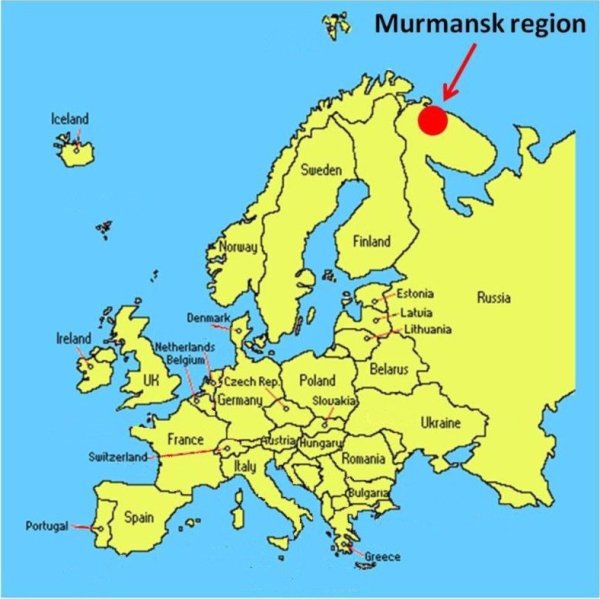
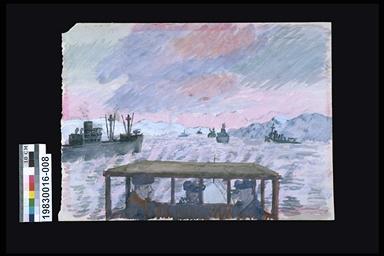
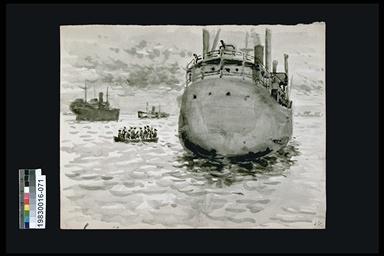
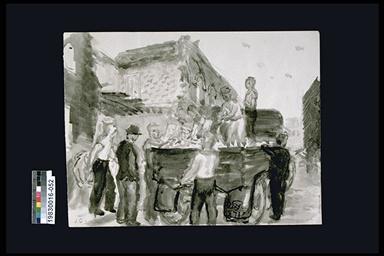
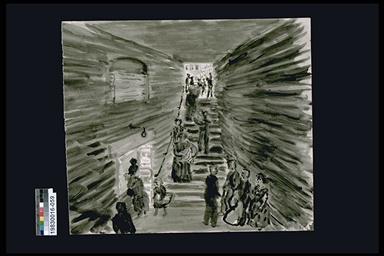
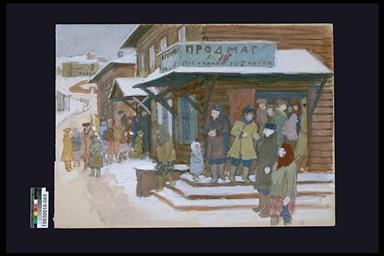
After learning to speak Russian, Julius presented himself in London to the Royal British Navy, passed an oral Russian test and worked as an interpreter under the rank of Sub-Lieutenant stationed in Murmansk7 and Archangel until the end of the war.

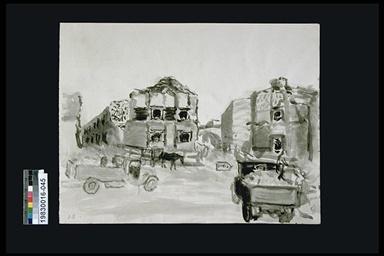
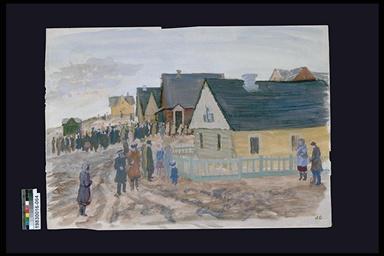
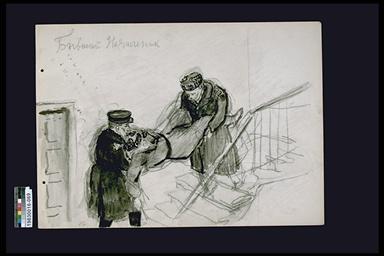
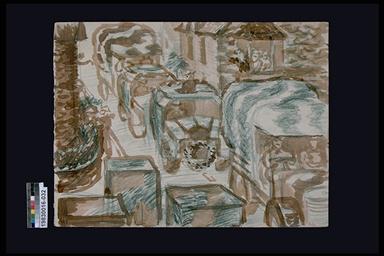
While in Russia, Julius would sketch scenes from memory in the privacy of his room at night and only after his 30-year oath of secrecy expired did he show them to the Canadian War Museum8. They purchased 90 of these drawings and The British War Artists Collection acquired several as well.

After the war, Julius and Lialia returned permanently to Canada. Julius quickly earned a degree at age 34 which enabled him to teach art and support his wife and four sons while continuing to pursue his passion as a graphic artist and wood engraver. Julius taught art in many of the top schools in Toronto – the Western Technical School, Artists’ Workshop, Ryerson Polytechnic Institute, Ontario College of Art, and at Central Technical School.

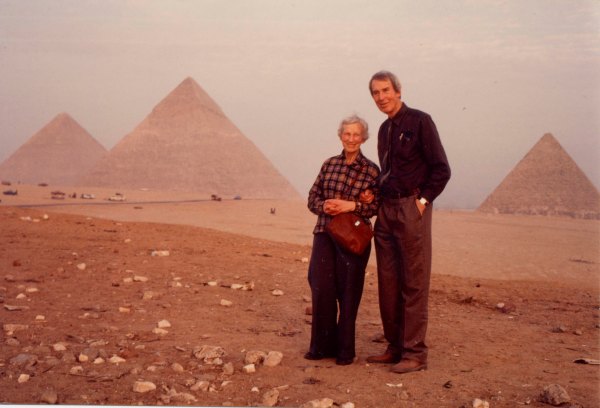
Although I never met Julius, I understand that they made quite the impressive pair with Julius at 6 feet 4 inches towering over five foot Lialia. Not surprisingly, “Julius seemed to develop a slight lilt to the left in later years, probably because he would put is left hand on Lialia’s shoulder and lean to hear or speak to her.” This 1985 photo taken during a trip to Egypt illustrates this charming pose.

Julius and Lialia – 1985 (courtesy of Lorne Griffith)

On the other postcard that he sent to my Aunt Mary in 1997, he wrote “This card was the one used for the invitation for an exhibition here, which opened in April and is almost over. We had a good opening – some buyers and some artist colleagues, and other people seemed to like the pictures.”

” The Road from Relessey Church”

Although I don’t have any of Julius’ original paintings, his two picture postcards with his personal handwritten messages are real treasures to me.

NOTE:

Julius’ work is displayed in the collections of the National Gallery of Canada, Canadian War Museum, Imperial War Museum (London), Art Gallery of Ontario, Toronto City Archives, Toronto Public Library, Art Gallery of Hamilton, McMaster University (Hamilton), Carleton University (Ottawa), Glenbow Museum (Calgary), Art Gallery of Greater Victoria (British Columbia), and numerous corporate and private collections.

1https://www.rct.uk/collection/926180/the-empty-farmhouse (as referenced 2023-06-02)

2https://wiki2.org/en/Group_of_Seven_(artists) (as referenced 2023-06-02)

3https://www.fecklesscollection.ca/robert-inverarity/ (as referenced 2023-06-02)

4https://wiki2.org/en/Slade_School_of_Fine_Art (as referenced 2023-06-02)

5https://wiki2.org/en/Noel_Rooke (as referenced 2023-06-02)

6https://wiki2.org/en/Royal_College_of_Art (as referenced 2023-06-02)

7https://wiki2.org/en/Arctic_convoys_of_World_War_II (as referenced 2023-06-02)

8https://www.warmuseum.ca/collections/?type=all&q1=all%3A%3A_contains%3A%3Ajulius%20griffith%20art&sort=title&order=asc&view=grid&size=24&page=1 (Julius Griffith’s 24 paintings

– as referenced 2023-06-02)

Harry’s Story

I never met Harry Jolliffe. I never even knew Harry Jolliffe. So, why a story about an unknown man?

We met Hazel and Roger 35 years ago when they would regularly visit us as friends from our church until they moved from Beaconsfield to Salt Lake City, Utah to be with the family. As we are all British we have had a very comfortable friendship over all these years. We now keep in touch via FaceTime. During the last call, we got on to the subject of families and the Mormon practice of marriage being for the eternities and not ‘Till death do us part’.

In The Church of Jesus Christ of Latter-day Saints, the word sealing refers to the joining together of a man and a woman and their children for eternity. This sealing can be performed only in a temple by a man who has the priesthood, or the authority from God. (1)

Roger then told us a story about a conversation he had with a church member, Harry Jolliffe, back in England in 1975, which has haunted him ever since. I was so fascinated by Roger’s story I felt I had to write it down.

Our friends went to Harry Jolliffe’s home as a representative of their church in 1975, to establish if there were any needs. Harry was 79 years old and had only joined the church 3 months prior. He lived on his own and was still grieving the loss of his wife who had passed away the year before. Roger and his family had only been in the church for a year themselves and knew the challenges of embracing a new faith and wondered what had inspired Harry to join, particularly at his age. Harry then told Roger the harrowing story of his time in a Japanese prisoner-of-war camp

Although captured in Singapore – see below – I cannot read Japanese for the camp Harry was at or of him being sent to any other of the numerous Japanese POW camps on the island of Singapore.

Harry had joined the regular army in the early 1930s and rose to the rank of Warrant Officer in physical training. He was serving in Singapore when the war broke out with Japan. Harry, along with thousands of troops and civilians were swept up and captured.

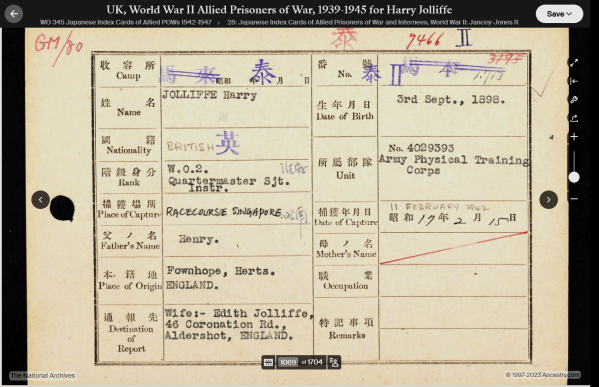
Below is Harry’s record of his capture at the Racecourse, Singapore, on the 11th of February, 1942. (2)

Harry’s Japanese Index Card of Allied POW 1942 – 1947

After his capture, Harry was then imprisoned in a very squalid Japanese prisoner-of-war camp where both British and Australian troops were prisoners. Starved and ill-treated, many died of neglect, abuse or forced labour.

However, because Harry was physically fit he was used as a boxing opponent for the prison guards to spar with and humiliate in front of their comrades and all the other prisoners. He was given slightly better food in order to keep him fit but was warned to always lose each fight so that the Japanese soldiers would not lose face.

While in the camp Harry became gravely ill and was so sick he went to the hut of an Australian prisoner who was a Doctor. This Doctor had previously removed his own appendix with no anaesthetic or suturing material. The Doctor told Harry, that he thought it may have been a gallbladder infection and to come back the next day. Harry returned the next day, with a fever, and feeling much worse.

The Doctor told him the gallbladder had to come out or Harry would die. As he said these words, four burly prisoners entered the room and held Harry down. The Doctor made the first incision. Harry fainted. When he came to, he looked down and saw all his organs displayed on his stomach, and he fainted again. He came to in his hut, his wound had been sutured with string!

He was at least still alive thanks to the skill of the unknown heroic Australian Doctor. He was weak, and all his fellow prisoners had to feed him, was rice water. Harry wanted to die and end his misery.

That night, Harry had a fevered dream. He was walking up the street to his home, in England. He opened the gate and knocked on the door. Harry’s wife, Edith said ” Oh! Harry! We missed you so much and we need you!’ Harry awoke and immediately felt a very strong will to live and survive. Singapore was liberated by Australian and US forces in 1945, as the war in the Pacific turned in favour of the Allies, and the prisoners were freed. Harry went home to England, via Southampton, where his wife, Edith, met the ship.

She rushed into his arms, and said “Before you say another word, what happened to you, on this date?” Edith continued ” I had a very vivid experience, I heard a knock on the door, and when I opened it, there you were! I thought I was dreaming but you disappeared as I opened my arms to you! I was fully awake. What happened, Harry”? So, Harry related the story, that on that date a gall bladder operation had been performed on him, and he nearly died, but he believed he survived because of that dream.

To our friends, he said “You asked me why I joined the church. The feeling I had during that dream, which stuck with me all my life, was the same feeling I felt when the missionaries were teaching me about the gospel of Jesus Christ”

He had such a strong desire to listen to these young missionaries and when they mentioned that he could be sealed to his wife for eternity, he readily accepted their teachings. Unfortunately, Harry never lived long enough to carry out his wishes to be sealed for eternity to Edith.

Roger believes the story has haunted him all these years because he is meant to do the sealing of Harry and Edith, vicariously. This is the purpose of the Latter-Day Saints temples, to seal together a family for eternity. Our friends have now done the sealing for Harry and Edith.

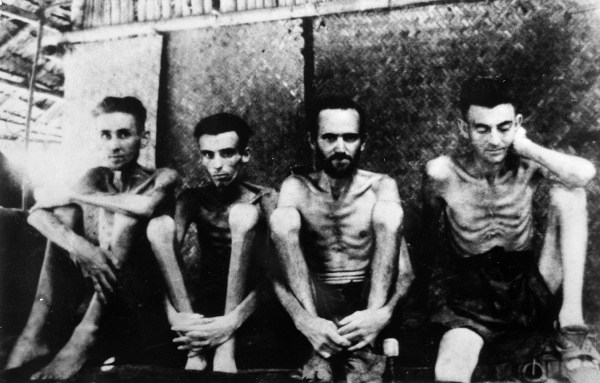
Below is a photo of British Prisoners of War after liberation in Singapore.

L0025435 Prisoners in Changi Jail, Singapore. Credit: Wellcome Library, London. Wellcome Images images@wellcome.ac.uk http://wellcomeimages.org Photograph of four skeletal soldiers. Photograph circa 1943 Published: – Copyrighted work available under Creative Commons Attribution only licence CC BY 4.0 http://creativecommons.org/licenses/by/4.0/

So, not only is Harry’s story inspiring in a spiritual sense, but also a reminder of the bravery of all those prisoners and civilians who endured the most wretched of circumstances.

I am grateful that Roger shared this story with me, thank you.

SOURCES

(1) https://newsroom.churchofjesuschrist.org/article/sealing

(2) https://en.wikipedia.org/wiki/Fall_of_Singapore

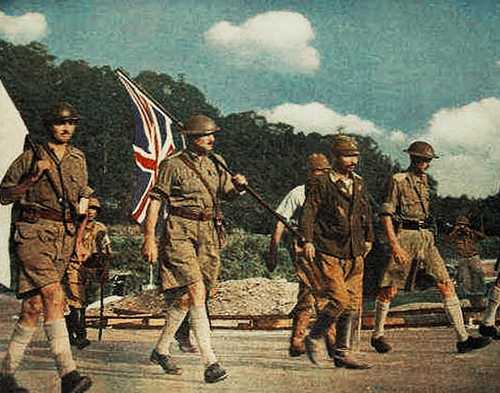
The Surrender of Singapore 1942

Lieutenant-General Arthur Ernest Percival, led by a Japanese officer, walks under a flag of truce to negotiate the capitulation of Allied forces in Singapore, on 15 February 1942. It was the largest surrender of British-led forces in history.

The Meter Man

Lately, we have been reading about the rising costs of heating and fuel around the world which reminded me of childhood memories of the ‘Meter Man’

The main power we used when I was a child was coal and gas. Our electricity meter was in the cupboard, under the stairs, similar to Harry Potters’s bedroom. The cupboard was a tiny addition just enough room to hold the meter. The only time it was opened was to insert a shilling for an allotted amount of electricity and gas. However, we usually packed it full until someone forgot and, we are all watching the telly, when….a blackout! Everything electric shut off.

Everyone I knew had a meter there were no monthly electricity bills at least not for our working-class family. We all had a handy supply of shillings ‘for the meter’ a kind of ‘pay as you go’ system.

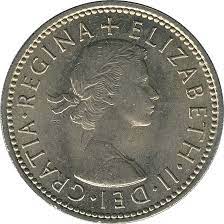
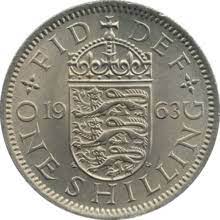
The British Shilling

For some strange reason, we did not have any torches – or a flashlight as you call them here. Instead, we would scramble around in the dark, to the cupboard under the stairs to find a shilling, – usually piled on the top of the meter, thank goodness – hastily shoving it in the meter or ‘feeding’ it as we used to say, and everything lit up again and back to the programme on the telly.

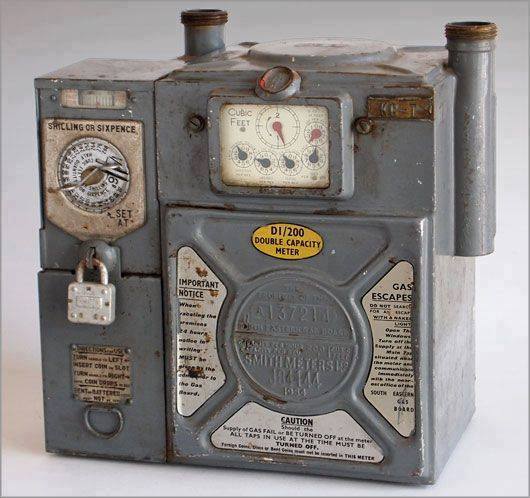
An Old Shilling Meter Of The Type We Used

Once a month, the ‘meter man’ would come, open the meter with his special key and sit in the kitchen with a cuppa and count out the shillings in the meter, calculate what we owed and then leave a pile of shillings for us. That rebate at the end of the month was a godsend we would pack the meter until you could not get any more in. Sometimes, though, we forgot to feed the meter, hence the blackouts!

There is an old 1966 movie called ‘Funeral In Berlin with Michael Caine as British Spy Harry Palmer. Palmer goes to someone’s flat in London and the man there asks him for a shilling to put in the gas meter or no heat or electricity and no cup of tea.

Arriving in Canada in 1979, was a shock to see the waste of electricity, water, and all the sources that as a child were drilled into us NOT to waste. The first thing we noticed downtown was all the offices ablaze late at night.

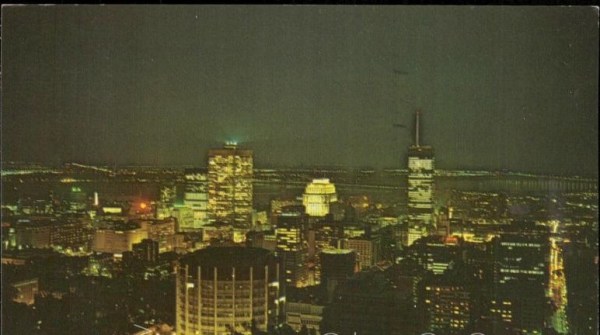
Montréal From Mount Royal, Pre-1970

Not to say that we in England did not leave lights on at night, but they were street lamps and certainly not office lights left on all night. Even the Christmas decorations were turned off after midnight. However, as the capital city, London was the biggest culprit, with Piccadilly Circus ablaze with advertisements at night.

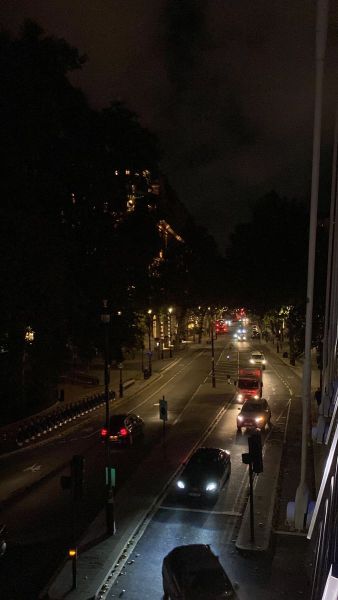
The Outskirts of London at night

I have to say, that even when I was a child, we were ALL very careful about heat and not wasting it. The usual cry when we left a door open or failed to close a window ‘Shut that door! Were you born in a barn?! We had curtains up inside the front door and long slinky ‘sausages’ made from one old nylon stocking and stuffed with rags, on the floor of each door to keep the draughts out.

British homes were never really insulated well. In fact, they still are not. My son’s home in London built in the late 1800s has stone blocks with ‘air spaces’ in between for ‘airflow’ because of the humidity! He is just as vigilant about keeping an eye on the meters as we were. We taught him well. I just hope that the so-called ‘new builds’ in England, are better insulated. If not all the heat just goes out the walls and up the chimney.

Houses in the UK were and are not ever, really warm and cosy as they are here, in Canada, even with the addition of central heating which is strictly regulated or timed, as Hydro Quebec is urging us to do now, to come on in the morning as we get up, turn off as we leave and on again at night.

Today, it is a case of ‘been there, done that’ and still we do it. Old habits die hard. Although now we are retired we keep the heating on at a nice comfortable 21C and during the Summer, the A/C is on ALL DAY!! Gasp! My husband still patrols the timers though…

I have to wonder, how we are going to cope in the future with climate change and fuel prices soaring. How will North America manage? Will we be bringing back the old meters? Only time will tell.

During research for this article, it would appear that in England, pre-paid meters are indeed now being used again. Called smart meters they can be paid with a credit card, as defaulting on monthly billing payments seem to be on the rise.

The RAF Administrative Apprentice

The internet and social media have changed our lives, allowing us to connect to new friends and reconnect to old ones to celebrate our victories and lives. I recently experienced this first-hand.

Last September, I received, out of the blue, an email message from a complete stranger because he read a few of my stories on Genealogyensemble.com about my time in the Women’s Royal Air Force (WRAF).

George Cook, an archivist for the Trenchard Museum, which is based at RAF Halton was gathering information on the MTE – Medical Training Establishment – and happened upon the story of my time there. He recognised the man in one of my photos that went with the story.

“Purely by chance, I had the opportunity to read “Dear Miss Bulford” and I was compelled to follow up on Marian’s story of life in the RAF in the 1960s,” he said in his email.

‘You will appreciate my surprise when on reading part 4, I recognised the young gentleman who became her husband. John and I joined the RAF in September 1964 as admin apprentices at RAF Hereford. Not only did we do our square bashing together for 12 months but we were both posted to RAF North Luffenham in Rutland in 1965”

So, of course, I had to find out more. Let’s begin at the beginning of this intriguing tale, as told to me by George in his letter and by my very surprised husband.

At the end of August 1964, my husband John Clegg was only 16 years old. He says he remembers standing on Liverpool Station on Lime Street England, waiting for a train to Herefordshire. He had left school in July 1964 and was headed off to join the Royal Air Force at RAF Hereford to enter a one-year Administrative Apprentice training course as part of the 301st cohort known as an ‘entry’ (1)

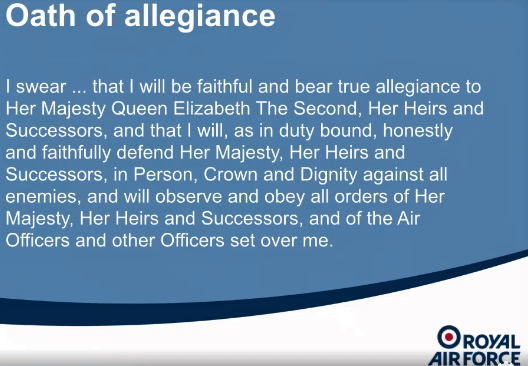
A week later, on the 2nd of September 1964, he took the Oath of Allegiance to Her Majesty the Queen.

The Oath of Allegiance

This committed him to serve 12 years in the RAF. One small point not clearly explained to an eager 16-year-old was that his 12 years of service wouldn’t start until his 18th birthday, meaning that the RAF had him for two extra years (14 in total)!

The boys in the administrative programme numbered approximately 40 per entry and were divided up into two dormitories of 20 per room. The training period consisted of daily classes for administrative procedures which would, on successful completion, quality John as an Administrative Secretarial Clerk. In addition, he learned personal discipline and stories about life in the RAF, including its history.

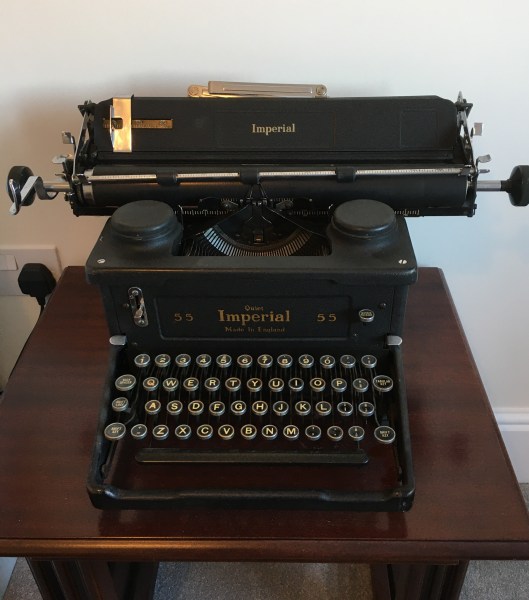
At that time, students were also taught to type on mechanical typewriters. John says that that training prepared him for the future introduction of computers John can still type 55 words a minute, the speed the boys were trained to do. George sent us this photograph of the typewriter they learned on.

The Typewriter the Apprentices Trained On


George Cook also apprenticed at RAF Hereford and he and my husband were alphabetical order billeting, which meant they ended up in the same room. They became friends.

John remembers George as a wonderful artist. He told me, that one drawing, in particular, stood out. It was a haze of charcoal until you stepped back and there appeared the face of Dusty Springfield a very popular singer in the England of the 1960s. John always remembered that drawing and the quiet talent that was often on display from George.

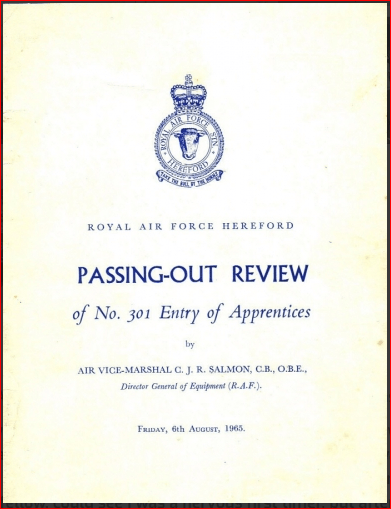
Whilst there, John and George made many friends with boys from different parts of the UK and from different backgrounds. After a year of close contact and demanding discipline, they forged friendships and operated as a group. At the end of the year-long course, trainees graduated as Senior Aircraftmen and had their passing out parade then they were posted to their stations where they became part of an administration team. Afterwards, they were to be posted to different parts of the country. Many never saw each other again, but that’s not what happened with John and George.

Invitation To The Passing Out Review.


Instead, they got their first posting together to RAF North Luffenham in Rutland. This area is very ancient and first mentioned as a separate county in 1159, but as late as the 14th century referred to as the “Soke’ of Rutland’, and in the Domesday Book as “A detached landlocked part of Nottinghamshire” (2)
George was in the Station Sick Quarters teaching the Nursing Attendants to type, whilst John’s first assignment at North Luffenham was as a clerk in the Motor Transport section and later to the Ground Radio Servicing Centre. They were responsible for the reparation of Radar and Radio facilities in the UK. At a later point, he worked in the General Office and helped prepare airmen for overseas posting.


After a few years at RAF North Luffenham, John applied for a position on VIP duties, as a clerk on the staff of the Air Officer Commander in Chief at RAF Upavon in Wiltshire England where, shortly after his arrival, he met…….me!


**(Read my adventures and how I later met my husband of 53 years at RAF Upavon  below)


Fast forward 60+ years and George read my story about my time in the RAF. Here’s what he told me about his experience

“During the 2 years there, I also worked in the Station Sick Quarters as the admin support to help the Nursing Attendants learn how to type at the mind-boggling speed of 15 wpm! We went our separate ways when I was posted to Singapore in 1968 but I do recall being told that John had re-mustered in the trade of air cartographer and was serving at AIDU RAF Northolt.

So, how did I come to read Marian’s stories? I work as a volunteer at the Trenchard Museum RAF Halton as an archivist and one of my tasks is to look into the history of the station.

Most people associate the station as the home of Number 1 School of Technical Training and the Trenchard Brats, young engineering apprentices who entered into a 3-year apprentice scheme set up by Lord Trenchard in 1922. What many people seem to overlook is the amazing medical history of the unit particularly the hospital, Institute of Pathology and Tropical Medicine and of course the Medical Training Establishment (MTE) Marian refers to.
Marian, I loved your stories and you have made an old man very happy learning of my old pal John. I hope that you are both well particularly in these troubled times”


I read his email with great excitement. I called my husband to come and read THIS!!!

When he read it he could not believe it was from the same George whom he knew all those years ago when they served together as Administrative Apprentices.

George Cook is now a volunteer Archivist at the Trenchard Museum at RAF Halton and also assists with the guided tours of the Halton House Officers’ Mess. (3) (4)

An exchange of emails reveals that George has led a full and varied career in various positions of leadership in the RAF. John served 12 years and then served many years in the airline industry in Genéva, Switzerland and Montréal, Canada where we now reside.

How amazing is the speed of technology the internet and social media? I will always be grateful that it allowed George to read my stories, and John to reconnect with his friend after so many years.

SOURCES 
(1) https://rafadappassn.org/the-raf-administrative-apprentice-scheme/
(2) https://en.wikipedia.org/wiki/History_of_Rutland
(3)https://www.trenchardmuseum.org.uk/
(4) https://www.forces-war-records.co.uk/units/595/raf-halton

Four stories of my adventures in the WRAF – Women’s Royal Air Force.
Part 1 https://genealogyensemble.com/2020/01/02/dear-miss-bulford/
Part 2 https://genealogyensemble.com/2020/04/22/dear-miss-bulford-part-two/
Part 3 https://genealogyensemble.com/2020/04/29/__trashed-4/
Part 4 https://genealogyensemble.com/2020/07/01/dear-miss-bulford-part-four/

The 106 Year Old Postcard

So, just who was the mystery man who sent my Gran a postcard in 1915?  For many years, I have held in a box of family history memorabilia a small item – a postcard.

Life, (bringing up children, and work), prevented me from finding out more about this postcard before now- sent by a stranger to my Gran who, born in 1900 was just 15 years old.  Who was this mystery man, I wondered? Now, in the second year of the COVID-19 pandemic, I have no excuse and plenty of lockdown time.

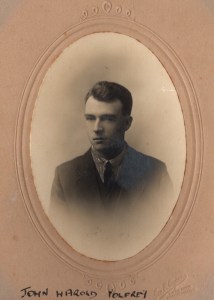
I had often looked at this flimsy piece of history over the years and wondered… And so, at last, I started my research into Pvt. John Harold Polfrey.

As it happens, all the information I needed was on the postcard that my maternal Gran, Edith Bevan had received  106 years ago.

World War 1 was in its second year and during this  ‘War to end all Wars’ citizens, even children, were asked to send to the soldiers at the front gift parcels of random gifts. So, Edith had sent a gift parcel of cigarettes and tobacco to an anonymous soldier serving with the British Expeditionary Force.

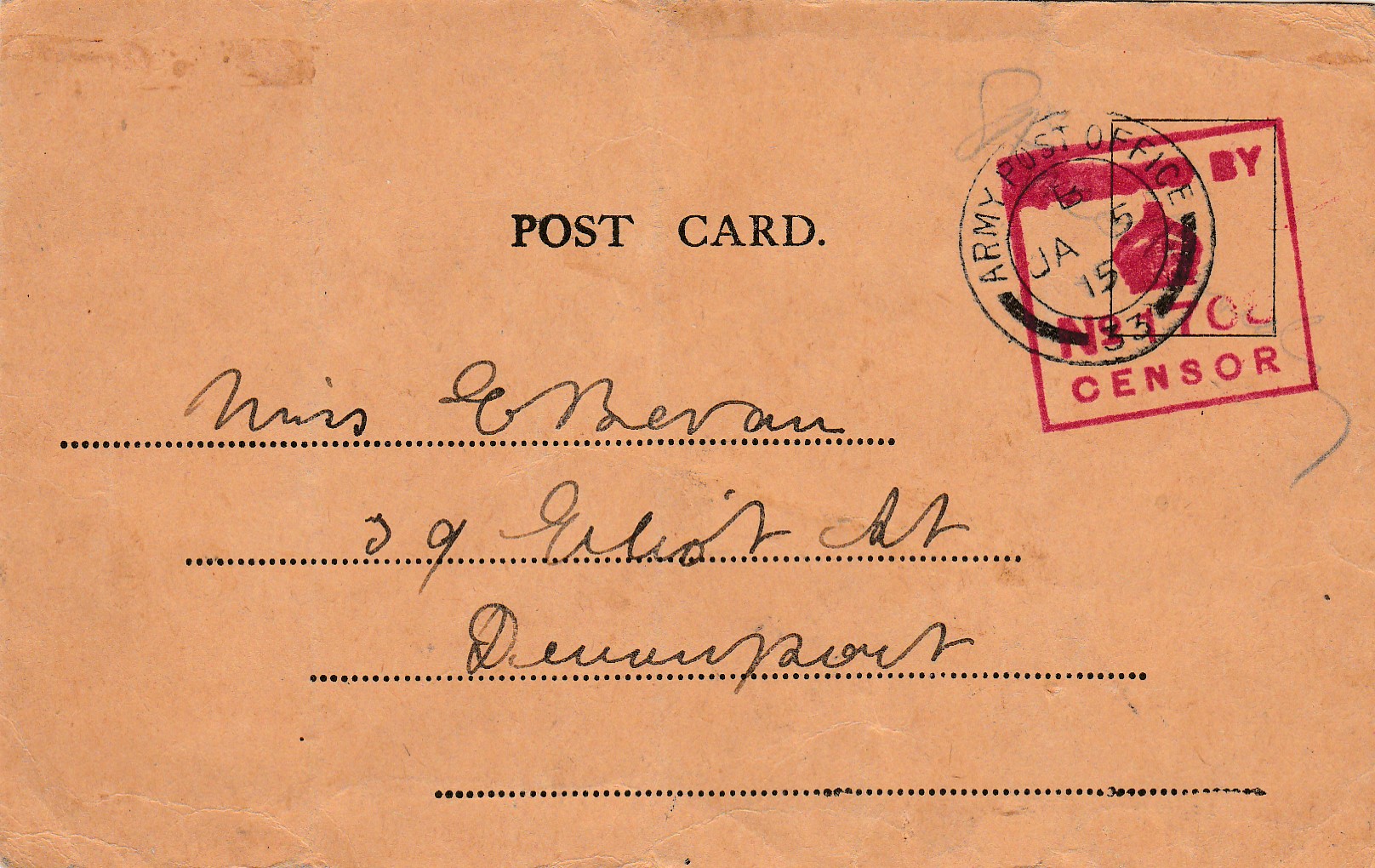
In due course, Gran received a reply to her gift.  It was written in pencil on a flimsy khaki coloured postcard addressed to:

Miss E. Bevan,  29 Elliot St.  Devonport.

No County or Country was added but the county was Devon, in England and on the front of the Post Card, is the Censor’s stamp. The first word is blurred, but I assume it reads ‘READ by the censor. There is no stamp, but it is francked [1]  ‘Army Post Office 33’ and the date is 5th Jan 1915.


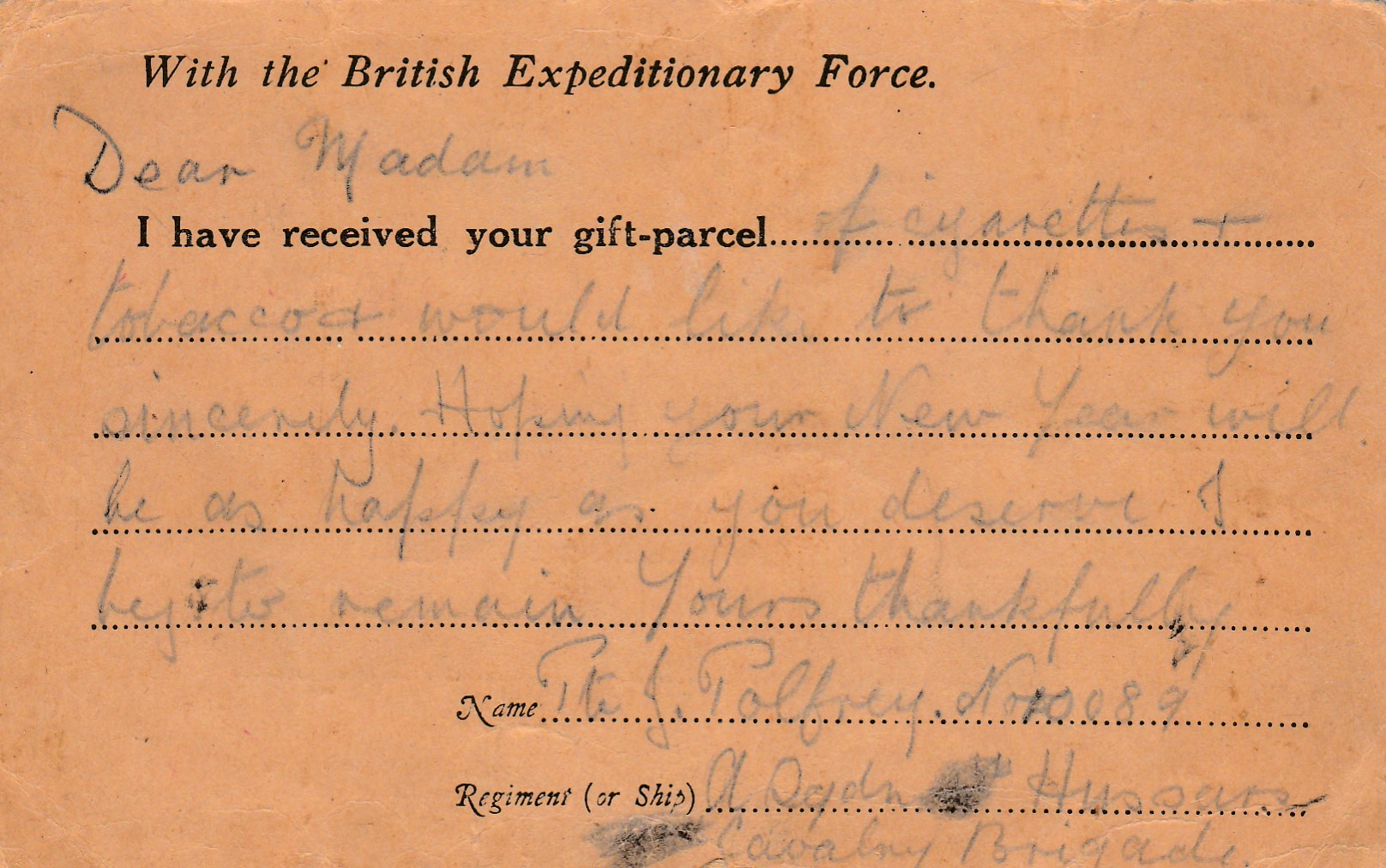
The message reads:  ‘Dear Madam, I have received your gift parcel of cigarettes and tobacco and would like to thank you sincerely. Hoping your New Year will be as happy as you deserve, I beg to remain yours thankfully

Name: Pte. J. Polfrey No. 10089

Regiment (or ship) A Sqdn. ? Hussars? Calvary Brigade

Black dots can be seen on the postcard, and I believe these are the censor blacking out the number of the Hussars and Calvary Brigade, so you would not know where the soldier was serving.  After scanning the postcard and editing with the photos, I think the numbers are 4th Hussars and 2nd Cavalry.  I thought his name was PALFREY but again, with today’s photo scan software, I was able to read it as POLFREY.

John H. Polfrey was born in Fulham, in the southwest of London, England on the 5th of July, 1894 and enlisted on 20th May 1913. He would have been about 19 years old.

He joined the 2nd Cavalry Depot, 4th Hussars (The Queen’s Own).

The 4th Queen’s Own Hussars was a cavalry regiment in the British Army. First raised in 1685 it saw service for three centuries, including the First World War and the Second World War. The Colonel-in chief was Sir Winston Churchill.  The 4th Hussars deployed from Ireland to the Western Front in 1914, remaining there for the entire First World War (1914-18).

They took part in the Retreat from Mons, the First and Second Battles of Ypres (1914 and 1915) and several other engagements. In 1958 the 4th amalgamated with the 8th King’s Royal Irish Hussars and became The Queen’s Royal Irish Hussars. [2]

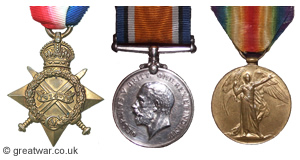
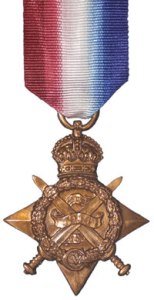
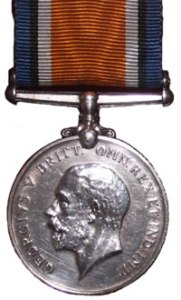
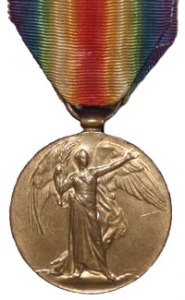
Pvt. John Polfrey would have seen a great deal of action in his young life and was awarded three medals for his services. The 1914-15 Star (or Silver War Badge),  The British War Medal, and the Victory Medal These three medals are also known as ‘The Trio’ **

1914-1915 Star (Silver War Badge)

This collection includes records of British soldiers who survived World War I and were discharged from the ranks for honourable reasons of illness or injury. In September 1916 such men were honoured by King George V with the institution of a special award, the Silver War Badge.  Also known as the Mons Star, the medal is a bronze star with a red, white and blue ribbon, reflecting the French Tricolore. It was issued to British forces who had served in France or Belgium from 5 August 1914 (the declaration of war) to midnight 22 November 1914 (the end of the First Battle of Ypres).   [3] [4]
 
The British War Medal:
The silver or bronze medal was awarded to officers and men of the British and Imperial Forces. [3]
 
The Victory Medal:

The British version depicts the winged figure of Victory on the front of the medal and on the back, it says ‘The Great War for Civilisation 1914-1919’.  To qualify, an individual had to have entered a theatre of war (an area of active fighting), not just served overseas. Their service number, rank, name and unit were impressed on the rim. [3]

 
Some men sent home after sickness or injury came under the close scrutiny of the public since many were perceived to be shying away from their duties to the country and were treated with contempt and sometimes violence.
 
The 1914-1915 Star (Silver War Badge, that Pvt. Polfrey was awarded) was intended to be worn with civilian clothes.  It had been the practice of some women in England to send white feathers, a traditional symbol of cowardice within the British Empire, in an attempt to humiliate men, not in uniform.  [4]


Pvt. Polfrey was discharged on 11 December 1917 and although I searched,  I could not access the reason for his discharge, although receiving the British War Medal meant that he was “discharged from the ranks for honourable reasons of illness or injury”.  So, I concluded the records possibly could have been burnt in the London Blitz of WW2.

After the War in the 1939 Register of England and Wales Mr Polfrey was living in Uxbridge, Middlesex, England, (where, coincidentally, I was posted as a Medic to RAF Uxbridge, Uxbridge, Middlesex in the 1960s). His occupation was a Catering Manager.

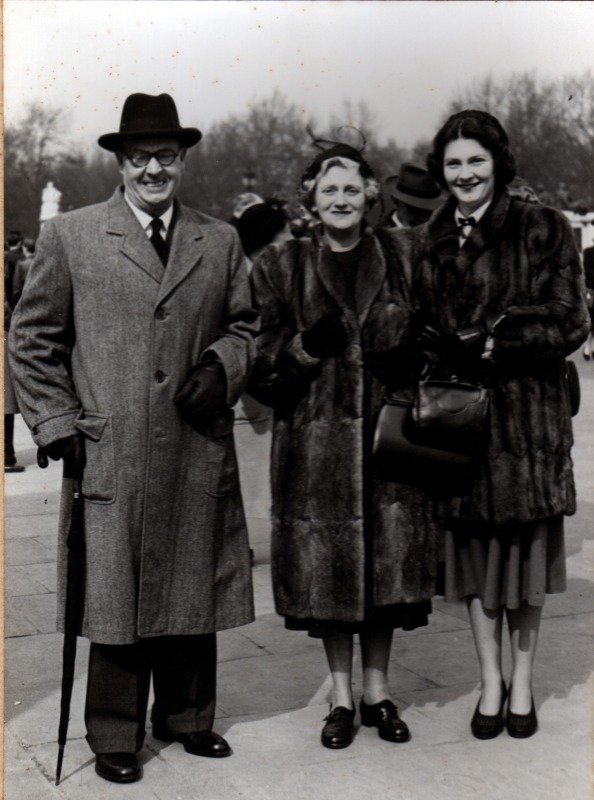
In addition, on the My Heritage site, there is a family photo of Mr Polfrey, with the caption ‘Pop receiving the OBE with his wife and daughter’ there is no date, but it looks to be the mid-1950’s. I was curious as to what Mr Polfrey had received the Order of the British Empire Medal for, so further searching provided the following information.
 
“1952 New Year Honours (section Officers {OBE]  John Harold Polfrey, lately Catering Manager, Festival of Britain”. [5]
 

After 14 years of war rationing, which did not end until  4th July 1954, the Festival of Britain opened six years after WW2, on the 4th of May 1951. It celebrated the inventiveness and genius of British scientists and technologists probably in an effort to allow the citizens of Britain to feel that life was going to be better. [6]

What a valuable member of society Mr Polfrey proved to be!

Mr Polfrey died at the age of 92 in May 1986 in Torbay, Devon England, my home county.

RIP Mr Polfrey.

Notes

[1]  https://www.britannica.com/topic/franking

Franking, a term used for the right of sending Letters or postal packages free of charge. The word is derived from the French affranchir (“free”). The privilege was claimed by the British House of Commons in 1660 in ‘A bill for erecting and establishing a Post Office,” their demand being that all letters addressed to or sent by members during the session should be carried free.  https://www.britannica.com/topic/frankin

[2] www.nam.ac.uk/explore/4th-queens-own-hussars

[3 ] https://www.iwm.org.uk/history/first-world-war-service-medals

[4]  https://www.forces-war-records.co.uk/blog/2015/12/10/the-silver-war-badge-and-kings-certificate-of-discharge

[6] https://en.wikipedia.org/wiki/Festival_of_Britain

** Acknowledgements

Image of Silver War Badge courtesy of Martin Fore.   greatwar.co.uk/index.htm

https://www.researchingww1.co.uk/ww1-wound-stripes

*** All photos with permission of the Polfrey Family.

An additional informative link:

https://www.researchingww1.co.uk/ww1-wound-stripes