Tag Archives: French Protestant

A Little About Helene Bruneau

Helene in New York City

I have written stories about twelve of Barnabé Bruneau and Marie Sophie Prudhomme’s thirteen children. That just leaves Helene (1849 -1929). Helene was child number nine or perhaps number ten. I just realized that she and Selene Joseph were the second set of twins in the family. They were born on December 20, 1849.

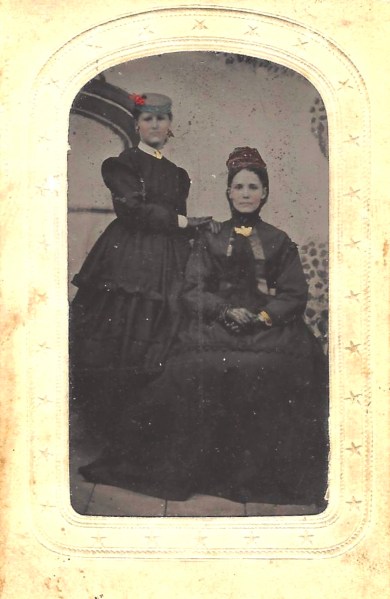
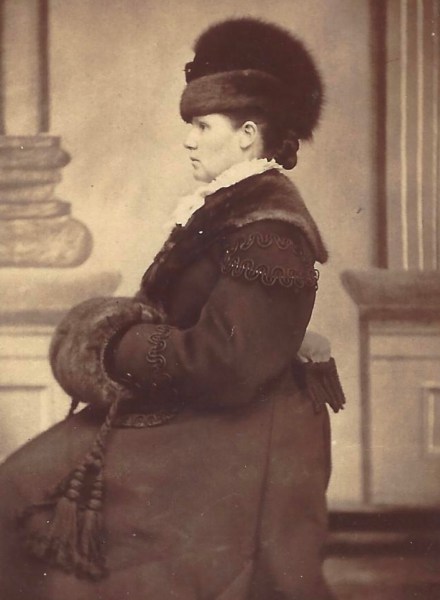
I haven’t found much information about Helene other than she appeared to be a devoted wife and mother. She married at twenty-six but before, had spent some time in New York City as photographs can attest. Was she also a French teacher or governess like her sisters?
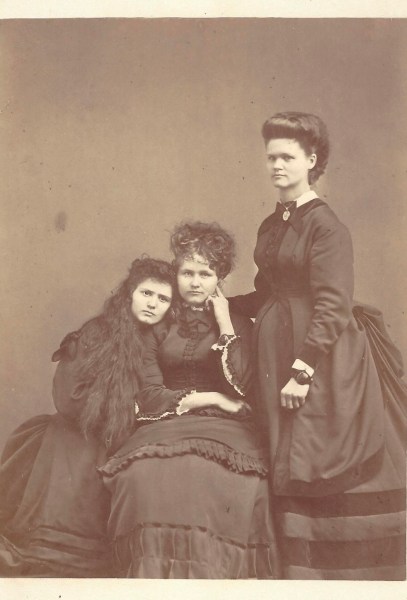
Sophie, Helene and Matilde Bruneau, New York City

Helene married Célestin Pépin dit Lachance ( known as Lachance). He was born in Joliette (1847-1915) to Celestin Lachance and Elisabeth Payette. His parents converted to Protestantism in 1852 when he was a young child. He attended the l’Institute Evangelique Francais de Pointe-aux-Trembles. After he graduated, he became a Colporteur for two years for the French Canadian Missionary Society. He had aspirations of becoming a minister
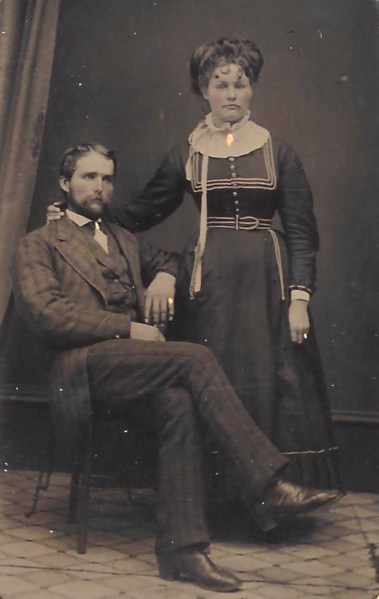
Celestin & Helene Lachance

In 19th century America, the word colporteur (the borrowing of a French word meaning “peddler”) came to be used for door-to-door peddlers of religious books and tracts and is still used today. The Missionary Society trained the colporteurs and future pastors as there wasn’t a French Protestant seminary. Celestin abandoned his studies in 1867, possibly because he had tuberculosis and his doctor recommended he only work outside in the fresh air. If he did have TB, the fresh air did him good as he lived almost another 50 years. He worked all over Quebec in the logging and forestry industry. Helene accompanied him everywhere during their marriage.
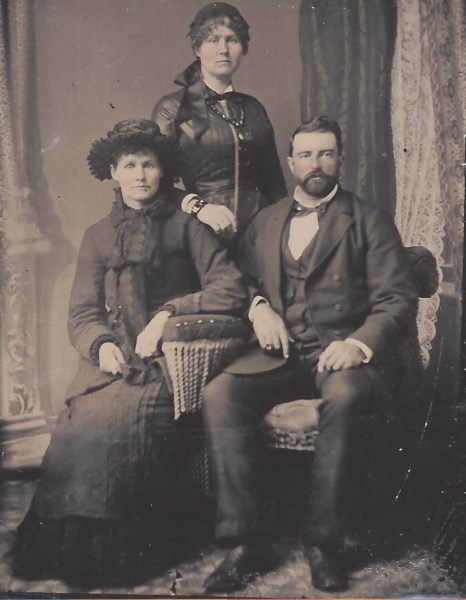
Helene & Celestin Lachance and Helen’s sister Anais

Although he gave up missionary work he remained a religious Presbyterian the rest of his life. He read the Bible every morning and night. During his last illness, he read the whole Bible twice in nine months. 

Helene was originally a Baptist as her parents also converted to Protestantism when she was a child. She is later recorded as being a Presbyterian.

Celestin and Helene had only one daughter, Helene Marie Antoinette (1876 – 1916). This curly-haired child grew up but never married. She attended Royal Arthur School in Montreal. Antoinette attended English schools because the family was Protestant, so she couldn’t attend French Catholic schools. In 1892, she won the prize in French for second intermediate girls, besting Nellie Wilson, who won the awards for most of the other subjects. She didn’t have Antoinette’s advantage of a French background. At the closing of the ceremony, the commissioner said, “It was well to be clever but still better to be good.” Antoinette died at only forty years of age. She lived with her parents her whole life and never seemed to have an occupation.
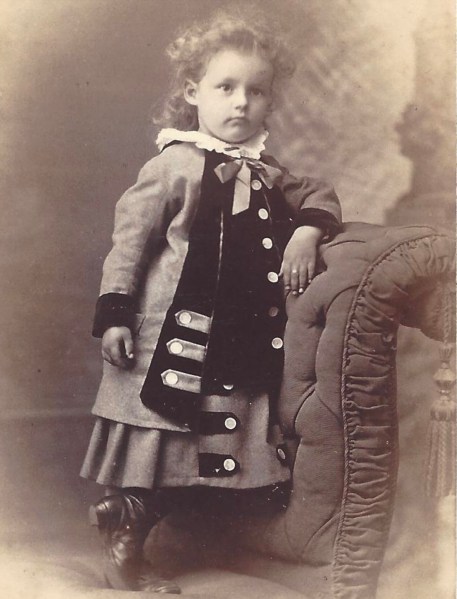
Antoinette Lachance

After Celestin and Antoinette died, Helene lived in Verdun, Quebec until her death, on June 4, 1929. The family is buried in Mont-Royal cemetery in Montreal along with Helene’s brother Napoleon.
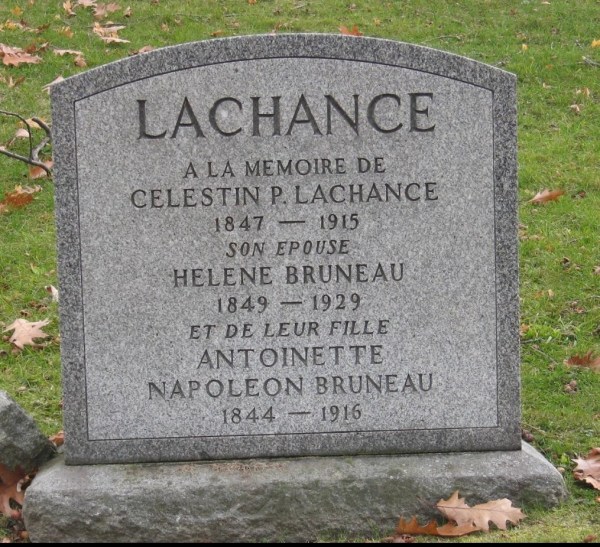
Mount Royal Cemetery Montreal

Notes:

In the back of the little photo album in a list of the children, it actually said twins, which had never registered with me. 
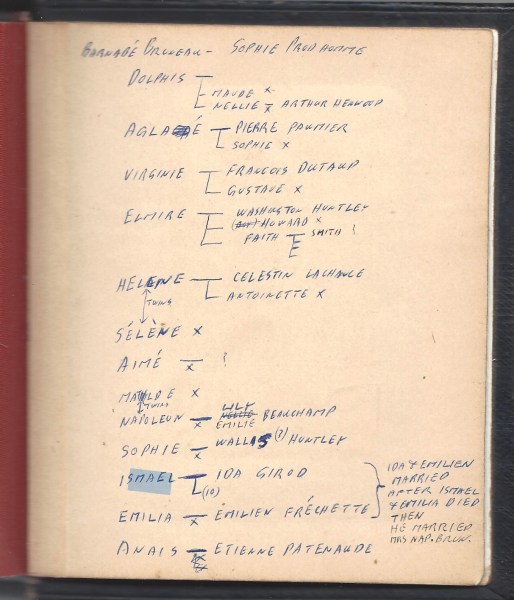
Back page of photo album

1871 Census: Celestin was 22 and living with his parents and sibling in St Charles Borromée, Joliette, Quebec. Year: 1871; Census Place: St Charles Borromée, Joliette, Quebec; Roll: C-10036; Page: 15

Helene and Celestin were married in 1875 and recorded as French Evangelicals.

Antoinette was born in October 2, 1876 and baptized at 9 years old in 1885.

According to Find a Grave: her full name was Helene Marie Antoinette Lachance born in St Constant Quebec.Ancestry.com. Canada, Find a Grave® Index, 1600s-Current [database on-line]. Lehi, UT, USA: Ancestry.com Operations, Inc., 2012.Original data: Find a Grave. Find a Grave®. http://www.findagrave.com/cgi-bin/fg.cgi accessed August 28, 2024.

1891 Census: The Lachances were living in Ste. Conegonde Hochelaga, Quebec. Celestin was a Commis au Bois, a wood clerk, Helene was a wife and both members of the Free Church. 

Year: 1891: Census Place: Ste Cunégonde Town, Hochelaga, Quebec, Canada; Roll: T-6396; Family No: 227Ancestry.com. 1891 Census of Canada [database on-line]. Lehi, UT, USA: Ancestry.com Operations Inc, 2008. Aug 28, 2024.

1901 Census: Celestine, Helene and Antoinettte (Marie-A ) were living in Ottawa, where Celestin was listed as a foreman and Antoinette, had no occupation. Year: 1901; Census Place: Ottawa (City/Cité) Dalhousie (Ward/Quartier), Ottawa (City/Cité), Ontario; Page: 19; Family No:189 Source InformationAncestry.com. 1901 Census of Canada [database on-line]. Lehi, UT, USA: Ancestry.com Operations Inc, 2006. Aug 28, 2024.

Montreal Star: Royal Arthur Closing Exercises, June 22, 1892 Wednesday, pg. 3. Newspapers.com accessed Sept 9, 2024.

Le Devoir: Celestin Lachance obituary, March 26, 1915 pg 2. Newspapers.com accessed September 9, 2024

Montreal Star Obituary: Helene Lachance, June 6, 1929 page 11. Accessed Oct 22, 2024.

Jean-Louis Lalonde: Lachance, Celestin (1849-1915) SHPFQ Societe d’Histoire du Protestantisme Franco-Quebecois. Octobre 12, 2020.

All the photographs are family photos in the hands of the author.
Her Name was Aglae

Aglae Bruneau Paumier

What is in a name? Aglae Bruneau (1837 – 1906) was the oldest of 13 children in my great-grandfather’s family. How did her parents Barnabe Bruneau and Sophie Marie Prud’homme come up with that name? Aglae is a name of Greek origin meaning splendour, brilliance and the shining one. She was one of Zeus’s three daughters, with her sisters Euphrosyne and Thalia known as the three graces. Apparently, it is not as strange a name as I thought, as the BAnQ (Bibliothèque et Archives nationales du Québec) website has many references to Aglaes even other Aglae Bruneaus.

Aglae seated and her youngest sister Anais

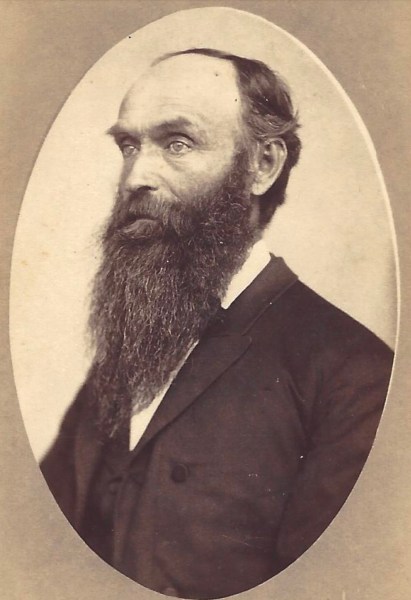
Aglae was born on her parent’s farm in St. Constant, Quebec. The family was Catholic as recorded in the 1851 census but converted to Protestantism soon after. Aglae married Pierre Charles Paumier (1828 – 1914) in the First Baptist Church in Montreal in 1860. He was born in France and immigrated to the United States in 1856. He had a farm in Mooers Forks, New York close to the Quebec border. It is possible that they met at religious services held at the Felleur Institute in Grande Ligne, Quebec as French Protestants often moved back and forth across the border for religious events.

Pierre Charles Paumier

On many of the US census, Pierre Paumier is listed as a farmer but was he originally a Baptist minister from France? My great uncle, Sydney Bruneau, wrote in his recollections “One of my aunts had married a Baptist minister from France, a man who made no secret of loving his pipe and his homemade brew of well-fermented cider, to the no small scandal of his congregation. When he was informed of complaints which had reached the higher authorities, he lost no time in preaching his farewell sermon, flaying his listeners without mercy for their narrowness of mind and their intolerance of the harmless pleasures of life, and retired to a farm where he grew his own tobacco and lived to a ripe old age.” 

Like many of Aglae’s siblings, they only had one child Sophie F. Paumier. The family continued to live on their farm which Pierre owned outright and Aglae “kept house” until she died in 1906.

It appears that after Aglae died Sophie and her father sold the farm, packed up and moved to California, as they were living in Los Angeles according to the 1910 census. Two of Aglae’s sisters had also moved west to California. Pierre owned the house and neither he nor his daughter had an occupation listed so he continued to be a man of some means. In some directories, he is listed as Rev. Peter Pomier. Sophie died in LA only five years after her father.

The name Aglae has not been used again in our family. Aglae herself called her daughter Sophie after her mother rather than naming her after another Greek goddess.

Notes:

Census of 1851 (Canada East, Canada West, New Brunswick and Nova Scotia) for Image No.: e002302444 Archives Canada.

“United States Census, 1870”, , FamilySearch(https://www.familysearch.org/ark:/61903/1:1:M8FF-5DS : Tue Mar 05 04:26:42 UTC 2024), Entry for Peter Pa?mier and Aglae Pa?mier 1870.

“United States Census, 1900”, , FamilySearch(https://www.familysearch.org/ark:/61903/1:1:MS65-NLR : Thu Apr 11 19:59:05 UTC 2024), Entry for Charles Paumier and Aglaia Paumier, 1900.

1910 Census: “United States Census, 1910”, , FamilySearch(https://www.familysearch.org/ark:/61903/1:1:MV2R-4HP : Sun Mar 10 05:36:01 UTC 2024), Entry for P C Paumier and S F Paumier, 1910.

Bruneau A. Sydney. Walking With God in Dequen. Page 6. A memoir of his early childhood through the summer of 1910. Written by A. Sydney Bruneau in the late 1960s and transscribed by his granddaughter Virginia Greene, in January 2017. The author has a copy.

Tobacco was grown in Upstate New York and in Quebec and Ontario in the mid to late 1800’s. This shade tobacco was used commercially as cigar wrappers.

The Protestants of Centre – Val-de-Loire of the 16th and 17th Centuries

 Modern-day : Cher – Eure-et-Loir – Indre – Indre-et-Loir – Loiret – Loir-et-Cher

This region of central France has a rich history, especially among Catholic families. Protestantism was present here from about 1523.

On page 8 of this research guide, you will find links to four authors of special importance whose works address in part or in total the Protestant presence in Centre-Val-de-Loire during the 16th and 17th centuries. They are Patrick Cabanel, Gildas Bernard, Didier Boisson and Christian Lippold.

Other resources found in this guide include: National Library of France – guides to Huguenot family history searches in France – various archives in France – history of Protestants in France – list of books and studies of Protestantism in this region – list of historical societies – online resources including theses – libraries and archives – genealogical resources – Genealogy Ensemble links.

Click here to open this 40-page PDF research guide: The Protestants of Centre – Val de Loire of the 16th and 17th centuries

The following are French language expressions commonly found within these pages addressing an overview or content of books, essays, theses, dissertations, papers, studies, discourses in regard to the Protestants of Central France of the 16th and 17th centuries.

  • Archives des consistoires de France – Protestant archives at the Archives nationales (France) Pierrefitte-sur-Seine (Paris)
  • Assemblée de nouveaux convertis – A description of former protestant individuals who left the faith in order to join the Catholic Church – It does appear that in some rare cases, that the contrary to the above also addressed former Catholics who joined the protestant faith.
  • Assemblée protestante – Protestant church or temple
  • Assemblée de religionnaires – Protestant church or temple
  • Chapelle protestante – Protestant chapel
  • Communauté protestante – Protestant community
  • Communauté réformée – Protestant community
  • Culte protestant – Protestant faith
  • Culte réformé – Protestant faith
  • Demi-fief de Haubert – A person of the nobility (Bourgeoisie) who was the owner of a Seigniory which dates back to the Knights (Chevaliers) time period of ancient France.
  • Église réformée – Protestant Church of France
  • Exercice du culte – Liberty of action in regard to a place or places of worship
  • Familles protestantes – Protestant families
  • Familles réformées – Protestant families
  • Lieu de prière – Place of worship
  • Lieux de prière -Places of worship
  • Lieu d’exercice – Faith place name
  • Lieux d’exercice – Faith place names
  • Nouveau converti – New convert (Male)
  • Nouveaux convertis – New converts
  • Nouvelle convertie – New convert (Female)
  • Nouvelles converties – New converts
  • Placet au Roi (roi) – Written directives issued by various kings of France which reflects the will (power) of the Crown of France
  • Réformé – Protestant individual
  • Relaps – A person who no longer attend regular church services
  • Religion réformée – Protestant faith
  • Religionnaire – Protestant individual
  • Religionnaires – Protestant individuals
  • Synode – Synod
  • Synodes – Synods
  • Temple protestant – Protestant temple
  • Temple réformé – Protestant temple
  • Temples protestants – Protestant temples
  • Temples réformés – Protestant temples

Beatrice Bruneau Quiet Perseverance

IMG_0047
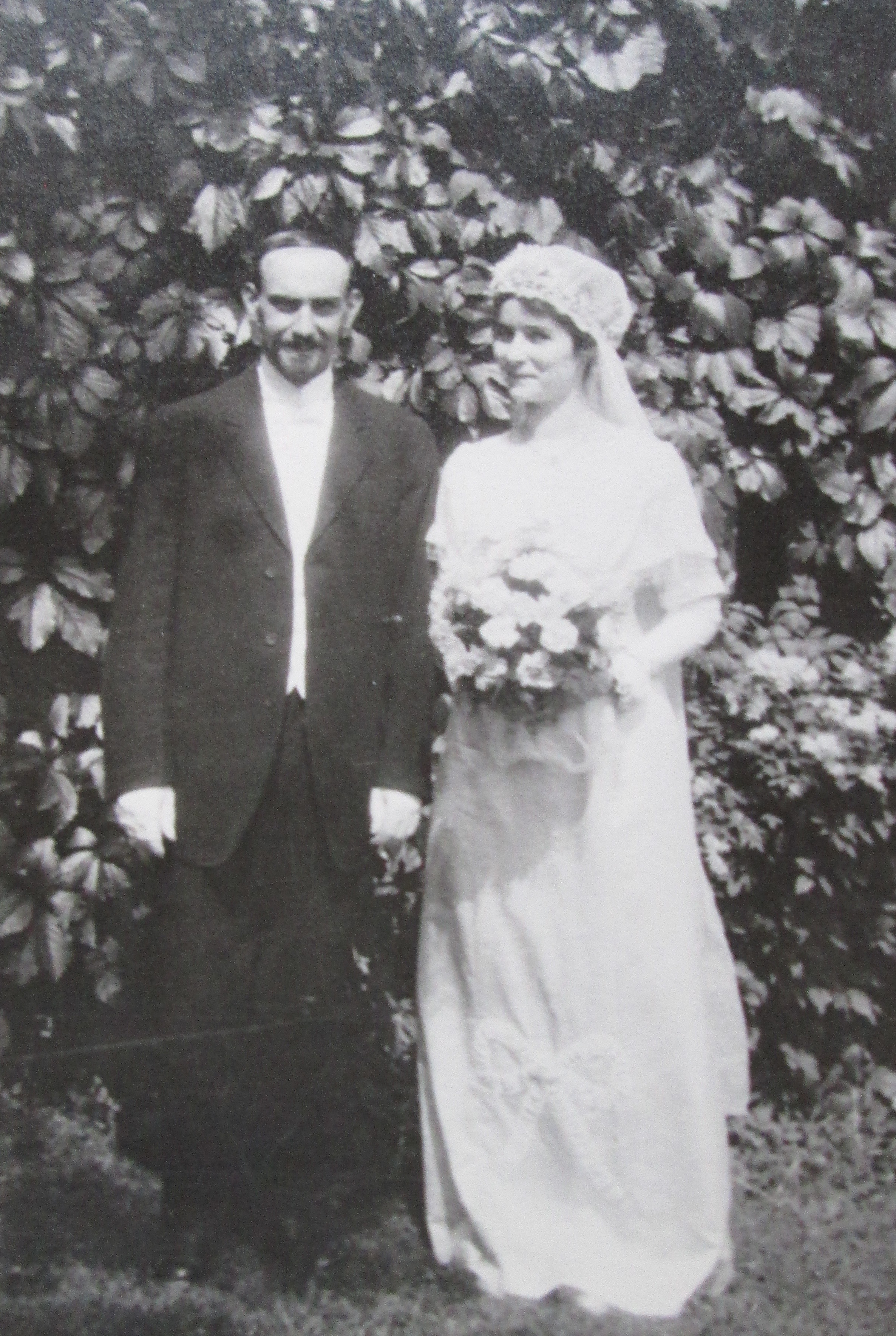
Rene Raguin & Beatrice Bruneau Wedding Day 1912

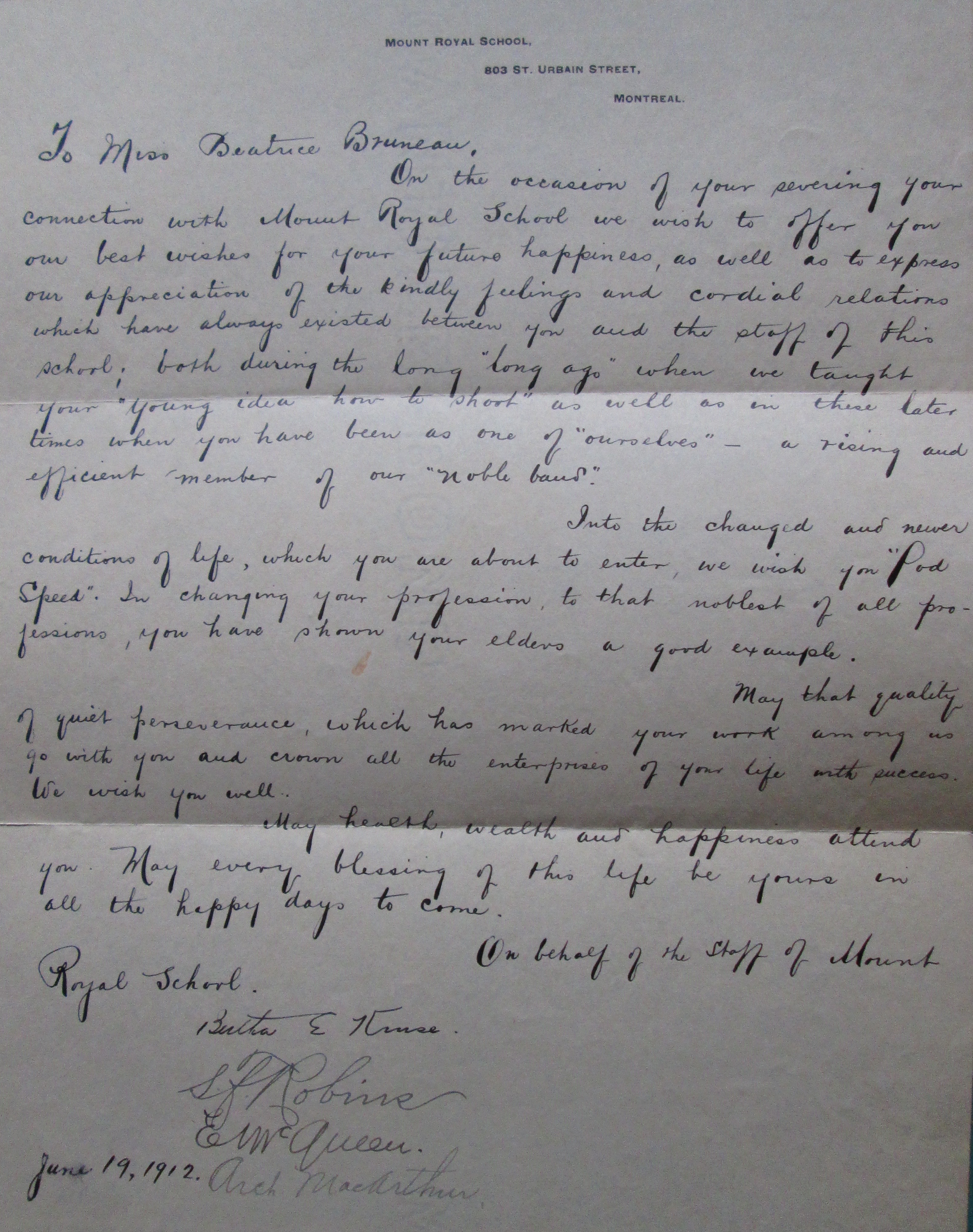
I am always looking through my files, searching for something I knew I had. Recently, I came upon a letter addressed to Miss C. Beatrice Bruneau, my grandmother.

“ In changing your profession to that noblest of all professions you have shown your elders a good example.” She left teaching to get married. “May that quality of quiet perseverance, which has marked your work among us go with you and crown all the enterprises of your life with success.” This one sheet of paper indicated a lot about her.

She was definitely my quiet grandmother, sweet and gentle. Grannie never raised her voice although sometimes she used firm words. My sister thought she had eyes in the back of her head, behind the two buns she always wore, so we couldn’t get away with anything. She always kept her hands busy, knitting socks or crocheting fancy potholders.

Although of French Canadian descent, Cecile Beatrice Bruneau (1889- 1967 ) was born in Green Bay Wisconsin. There, her father Ismael Bruneau, a French Presbyterian Minister, served a congregation of Swiss Protestants. Her mother Ida Girod, from the French part of Switzerland, had taught school in Baltimore, Maryland before getting married.

French Protestants were few and far between so the family moved a lot, from Wisconsin to Holyoke, Massachusetts, to Quebec City, and then Montreal.

IMG_0048
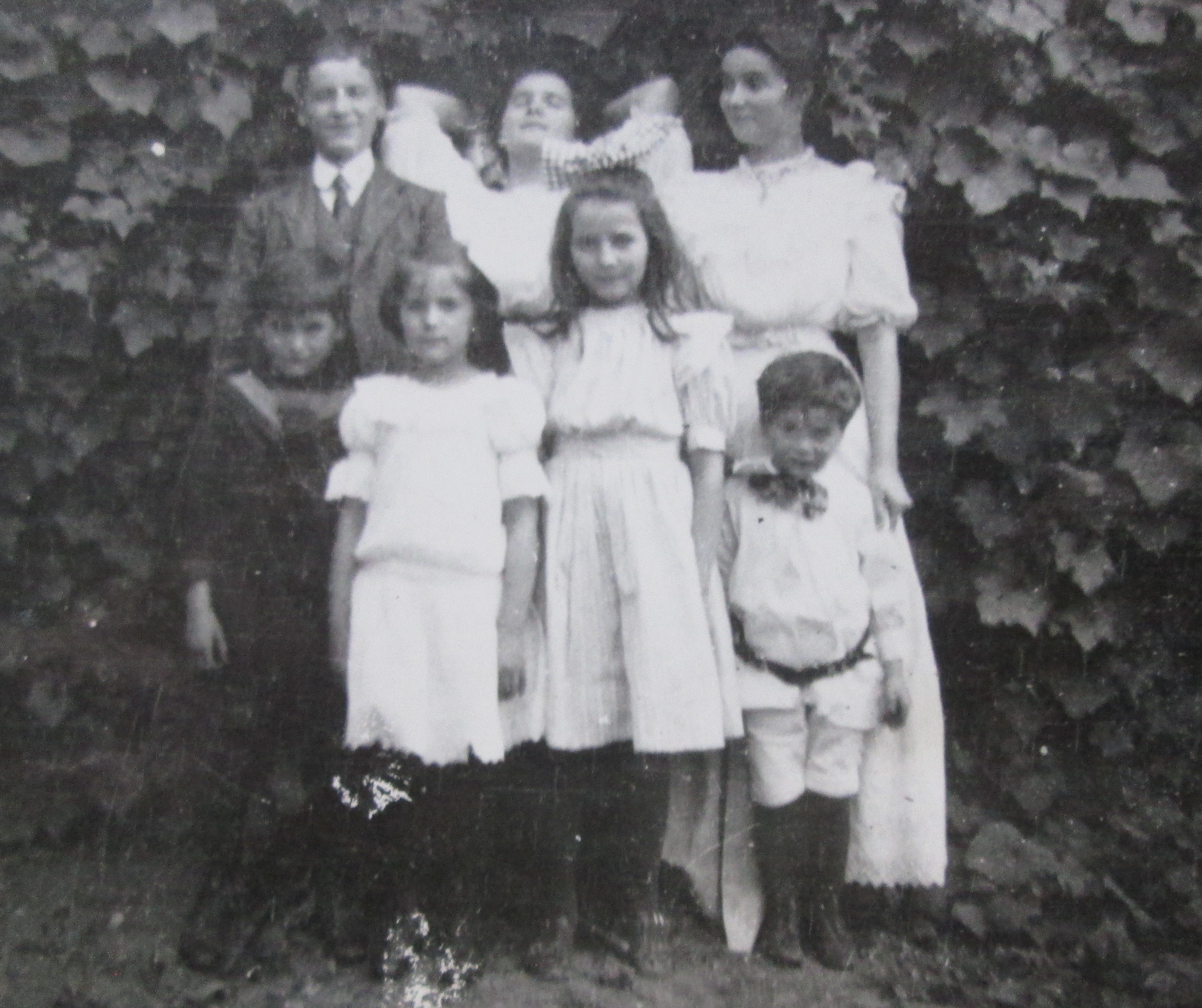
Some of the Bruneau Children; Sydney, Helvetia, Beatrice, Herbert, Renee, Edmee, and Gerald – Montreal 1907.

My grandmother did most of her schooling in Montreal. The family lived over the French Presbyterian Mission on Dufferin St (now De La Roche). The Mission was just north of La Fontaine Park, between Marie Anne and Mount Royal in an area now known as Le Plateau-Mont-Royal.

Beatrice, the oldest girl didn’t have an easy life, being a minister’s daughter, one of nine children and protestant in a catholic province. A minister didn’t make much money and the family relied on handouts from the church community. Two other protestant families lived on the block and according to her brother Sydney that marked them as an “unloved minority.” The sisters played happily with the neighbours but Sydney had a hard time. Small in stature the bullies followed him around.

There were no French Protestant schools available to them. The Catholics refused to have any Protestants in their schools and so English was the language of their schooling. After attending Mount Royal elementary school Beatrice went to The High School of Montreal. The five eldest children all earned scholarships from the lower schools so their parents didn’t have to pay fees.

The Bruneau children all received a good education. Beatrice went on to McGill’s Normal School, the Teacher’s College, where she received her teaching diploma. This program later moved from the downtown campus to MacDonald College in Saint Anne de Bellevue. She came 23rd out of 61 students and won the Superintendent’s prize in French. She received elementary and first-grade staff certificates and passed in cardboard work. Beatrice later earned her French Specialist certificate from the Protestant School Board. At that time, as they could only hire Protestants to teach in their schools, native French speakers had no problem finding a position. In 1907 Beatrice was hired by the Protestant Commissioners as a teacher without experience.

When Ismael and Ida made another move, this time to Cornwall, Ontario, Beatrice and two sisters, Herminie and Helvetia stayed in Montreal teaching in public schools. They all gladly left the crowded quarters over the mission hall to lodge with a fellow minister, a friend of their father’s.

The 1912 letter indicated that Beatrice had been teaching at Mount Royal School on St Urbain Street in Montreal, the same school she had attended. Her teaching career lasted only five years. She married Rene Raguin that July and never taught again. She quietly persevered in her family life looking after her husband and raising their five children.

IMG_0049

Notes:

Grannie told us one joke. I now realize it was connected to the area where she grew up. A woman was riding the bus up St Lawrence Blvd. The driver called out Rachel, the bus stopped and a woman got off. He then called out Marie Anne and another woman got off. The woman then went up to the driver and said my name is Suzanne, when do I get off?

Walking with God in Duquen, A. Sydney Bruneau 1960s, transcribed by his granddaughter Virginia Greene in 2017. A copy with the author.

The Gazette, Montreal Quebec, Canada. May 29, 1907, page 8. Downloaded Nov 16, 2019.

The Gazette, Montreal, Quebec, Canada. June 14, 1907, Page 12. Downloaded Nov 16, 2019.

Cardboard Work was part of the manual dexterity training in elementary schools. The children used cardboard to make boxes and made other things of raffia and plastic material while the high school students did woodwork and metalwork.

There is a church structure on De La Roche between Mount Royal and Marie Anne. According to the Montreal Tax role it was built about 1912, so after the Bruneaus left. It is now two residences.

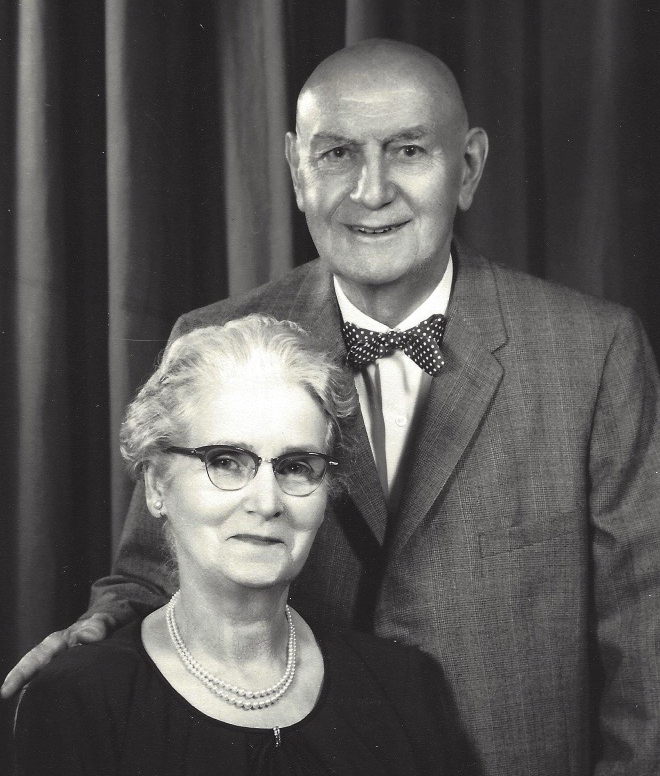
Rene & Beatrice 1961
Beatrice & Rene Raguin 50th Anniversary 1962

For a story about Beatrice’s father Ismael Bruneau see: https://wordpress.com/post/genealogyensemble.com/1237

For a story about Ida Girod, Beatrice’s mother see: https://wordpress.com/post/genealogyensemble.com/3674

Safe Passage

img_0399

René Emile Raguin, my grandfather, was the last of my relatives to arrive in Canada. He was the only one to return home after he emigrated. His family, originally from Doubs, France, moved to Fleurier, Switzerland soon after he was born.

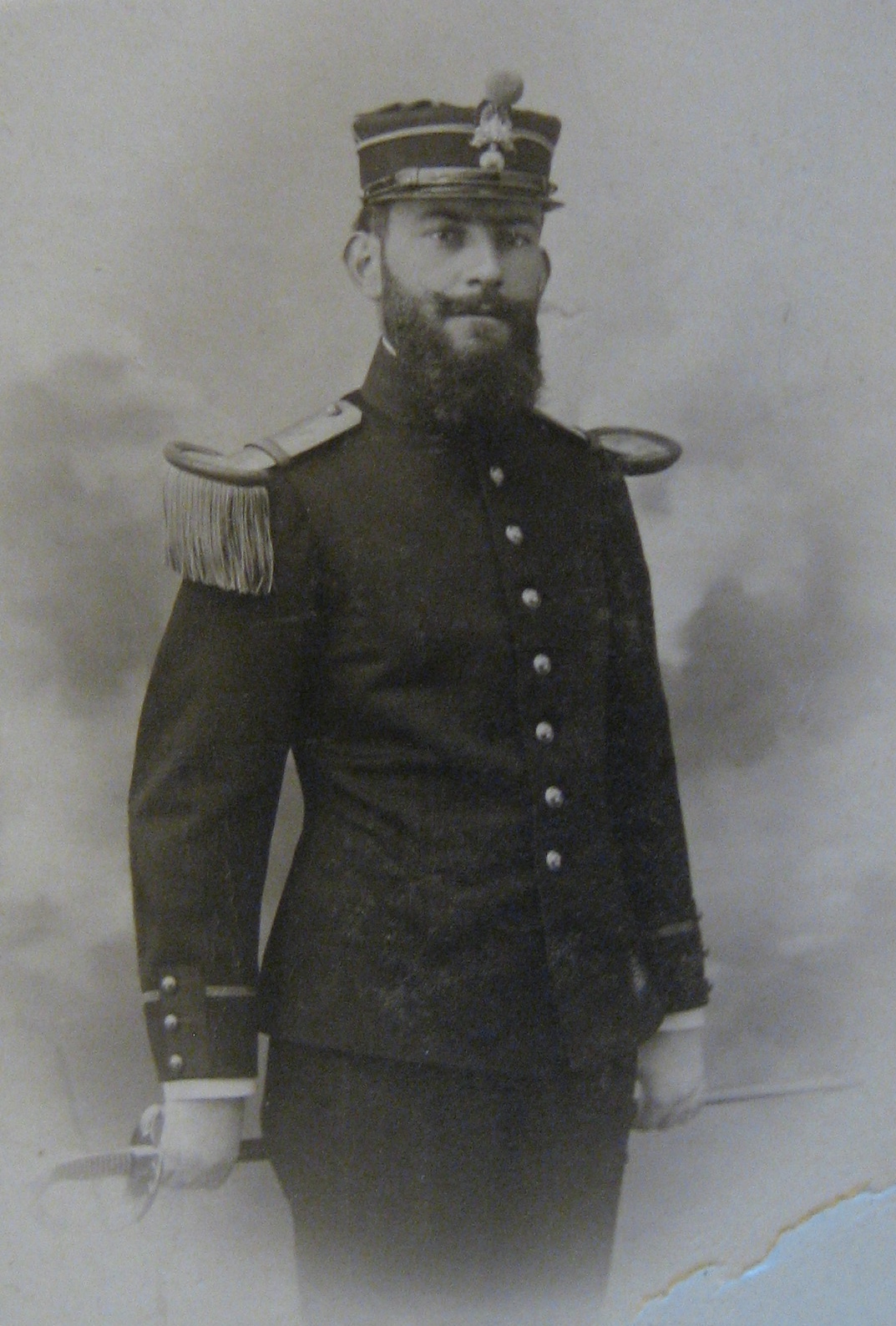
He arrived in Canada aboard an Allen Line steamship, the Lake Erie and so didn’t have to endure a long voyage on a sailing ship. It was 1910 and he was 23 years old. He had been a Lieutenant in the French army. His father was French and as the son, even though he lived in Switzerland, he had to do his service. He had also trained as a teacher but there were no jobs in Switzerland, so he was fortunate to find a job at the French Protestant school in Pointes aux Trembles, Quebec.

René was a dapper little man with a full beard and moustache. He was sure he was going to be a hit with Canadian girls although his landlady told him they didn’t like men with a lot of facial hair. The morning after meeting Beatrice Bruneau and her sisters, he came downstairs with only a goatee! In later years he only had a small moustache but with a completely shaved head.

René and Beatrice were married in 1912 in Cornwall, Ontario by Beatrice’s father, Reverend Ismael P. Bruneau. Their first daughter Aline Marguerite was born in May 1913. The next summer they sailed to Europe to show off Aline to Rene’s family. Rene enjoyed the voyage, walking on deck with his little daughter, but Beatrice, pregnant with their second child Robert, suffered from seasickness and was mostly invisible. Rene was very happy chatting with all the other passengers who wondered about the little girl’s mother.

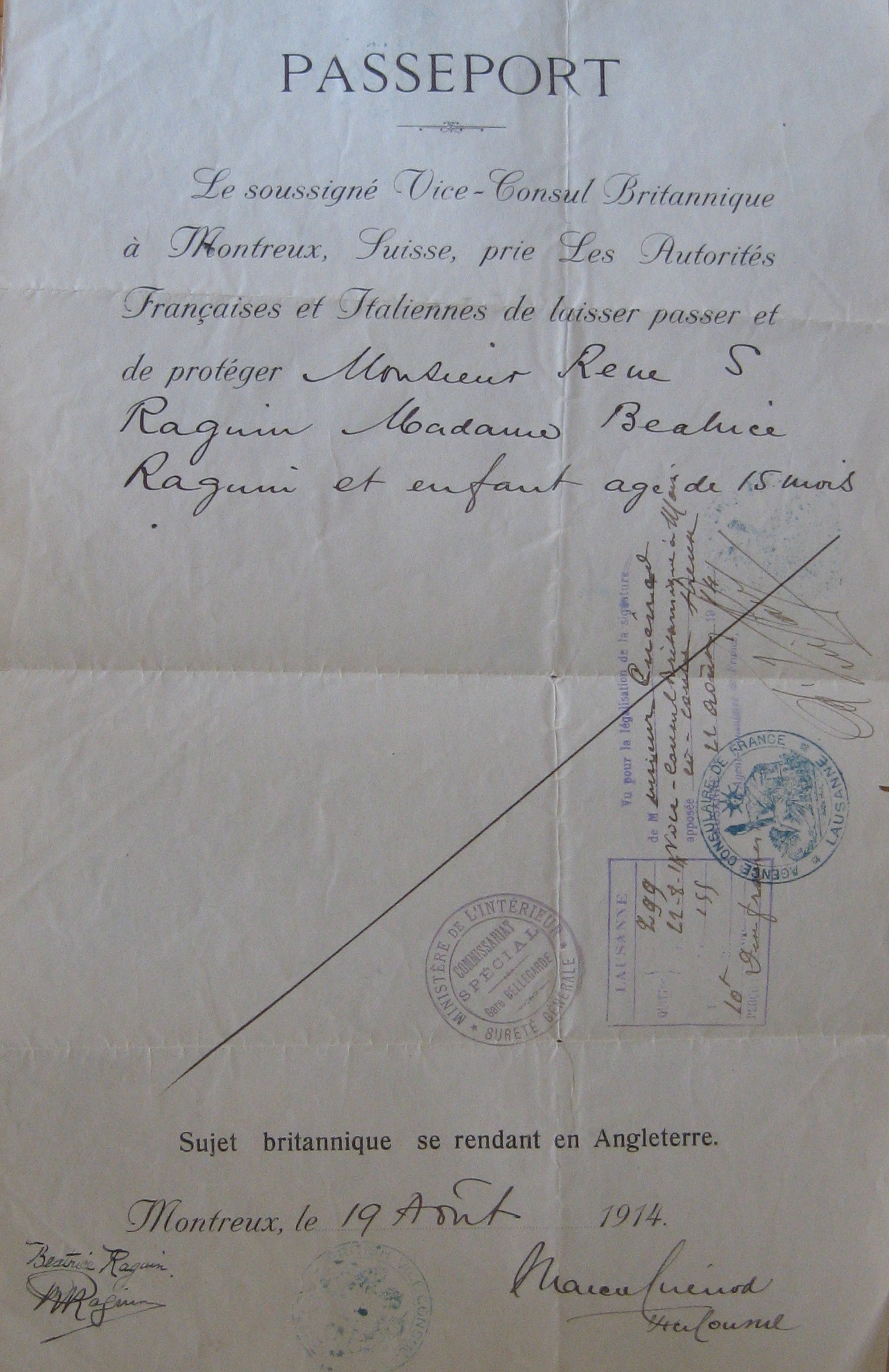
They were having a wonderful time in Fleurier, visiting Rene’s parents, Joseph Marie and Rosina Steinman Raguin and his sister Bluette, when Archduke Franz Ferdinand was assassinated and World War I began. When England declared war on Germany on August 4, 1914, returning to Canada as quickly as possible became a priority. As Rene had become a Canadian/British citizen in 1913, they appealed to the British Government and received a document of safe passage through both France and Italy to return to England. They made a quick journey by train from Switzerland to Le Havre, France taking what they could easily carry and leaving their trunk behind.

They made it safely back to Canada where René was then the principal of De La Salle Academy in Trois Rivieres, Quebec. The school administration had been worried he wouldn’t return for the beginning of the school year. He used his story to raise money during the war, for the Canadian Patriotic Fund. 

Robert was born in December followed by Arthur, Dorothy and Madeleine. René continued teaching and finished his career as a French teacher at Baron Byng High School in Montreal. They spent summers in Dunany north of Montreal where he enjoyed golf and socializing and winters in Montreal where he curled and socialized. He and Beatrice didn’t travel very much, just one train trip to Vancouver to visit their son Robert. They never returned to Europe, never again saw any of Rene’s family or their trunk.

img_0364

Notes:

Rutherdale, Robert. Hometown Horizons: Local Responses to Canada’s Great War. Vancouver: University of British Columbia, 2004. Print.

Anecdotes personally communicated to the author by Aline Raguin Allchurch in 2003.

Passeport; original document in possession of author.

Rene’s British /Canadian Naturalization Certificate was in his possession in Europe to obtain his Passport but the document was later lost as it was replaced in 1916. Libraries and Archives Canada: Citizenship Registration Records for Montreal Circuit Court 1851-1945.

Military documents in possession of the author.

Aline in Switzerland

French Protestant Churches in Quebec

Among the first European settlers who came to Quebec in the 1600s were some 300 Protestants, most of them fleeing religious persecution in France. If they hoped to find religious freedom on this side of the Atlantic, they were disappointed: the Catholic Church controlled all religious matters in New France and Protestants could not even baptize their children or buy land.

Many quietly gave in and became Catholic, and families forgot that their ancestors had been Calvinists or Huguenots. Those who maintained or adopted Protestant beliefs were discriminated against by both their English-speaking neighbours and by French-speaking Roman Catholics. Many of them left Quebec. For those who remained, their churches became the centers of their lives.

This compilation includes a list of books and articles about the history of French-speaking Protestants in Quebec and a list of Protestant churches, chapels and missions in Quebec since 1600. It tells you where to find the records of these institutions and how to contact the archives of the Anglicans, Presbyterians and other denominations.

French Protestant Churches in Quebec)