
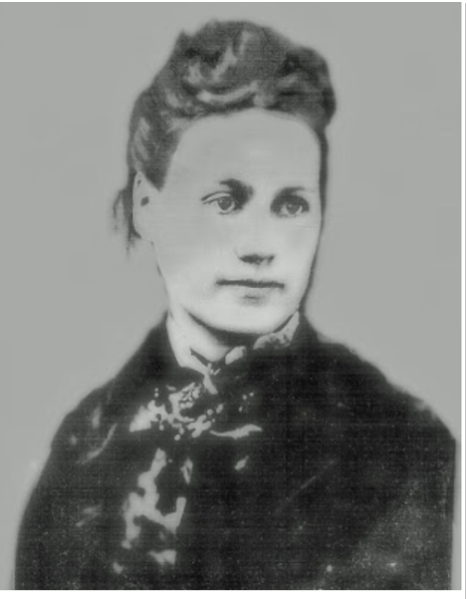
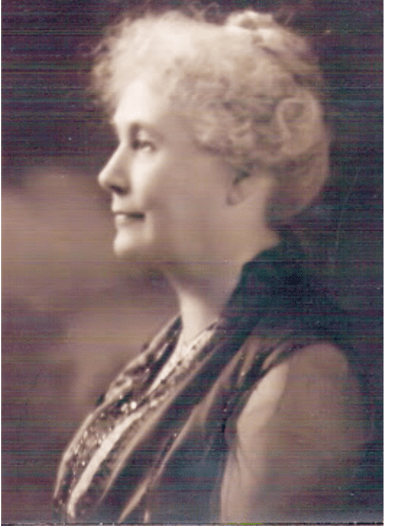
The above picture is a digital reproduction of a tintype or daguerreotype portrait of Sarah Marion McLean, my husband’s great great grandmother, taken (most probably) around the time of her marriage in 1849 in Flodden, Quebec. I scanned the metal photograph to computer over 10 years ago.
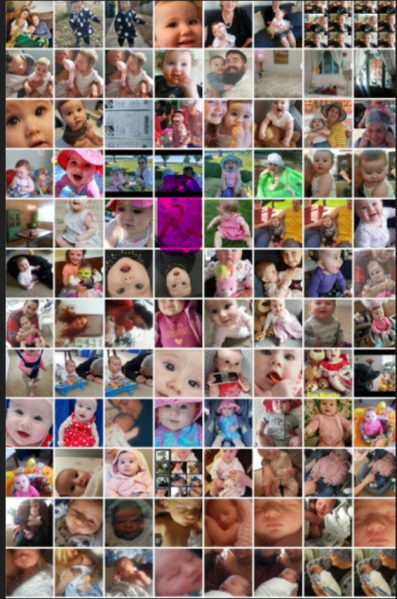
The pic above is composite montage of Sarah’s 4 times great granddaughter, Nora, my granddaughter born 2018, stored on my cellphone. The collage consists of photos snapped from the moment of her birth until her 1st birthday. These pics are but a fraction of the pictures existing of Mademoiselle Nora, now 4 years old, on various cellphones belonging to family.
I have in my possession only two other photos of Nora’s 4x great granny, Sarah, one where she stands beside her seated husband (Isle of Lewisman John Mcleod ) looking very pregnant. Another cardboard studio photo of her is from her final year. At the back of the photograph someone wrote in her name and dates. Sarah Marion McLean McLeod 1825-1912. She may actually be dead in the photo.
Unfortunately, I have misplaced the metallic originals, so I can’t test whether they are daguerreotypes or tintypes. (Tintypes are slightly magnetic.) They must be in a box somewhere in the garage with the other ‘important’ family photos I am missing. I mean, it has to be, right? I would never have thrown out such precious mementos.
The Macleods emigrated to Quebec in 1838, before so many others in their clan were pushed out in the infamous ‘clearances.’ Sarah Maclean from Coll arrived in Quebec a little later, after her parents and two brothers died back home. She had a sister in the province. Sarah, who was born at the height of the Industrial Revolution, led a long life in southern Quebec before passing away just as the motor car was making life in the Eastern Townships much more exciting. Too bad. Apparently, she loved to travel about.
Sarah is oft mentioned in family letters I have on hand from the 1908-1913 period. The family is feuding over her care in old age. Apparently, she speaks only ‘the Gaelic.’
A few years ago, I digitally enhanced her portrait. There was a white ‘hole’ in her forehead. I scanned the dag/tintype into the computer (afraid that any residue from harsh chemicals on the photo might be harmful to me) and filled in the hole using Photoshop.
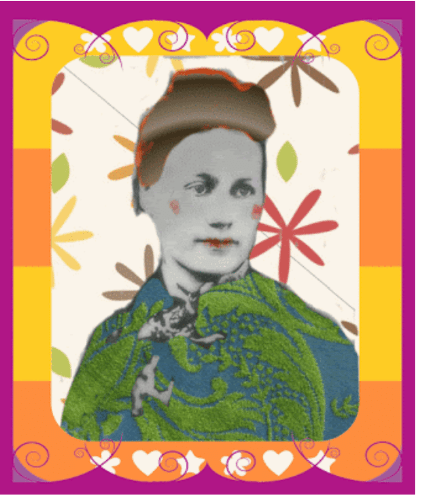
Later on I embellished the photo of this Scottish ancestor whose face has passed down through the generations.
So, in the almost 200 years between the births of Sarah and Nora, the photographic world has gone from solid metal daguerreotype to a multiverse of ephemeral digital media – with the act of taking photographs becoming progressively easier.
Photographers in the Victorian Age were well-heeled trailblazers and techno-enthusiasts in possession of a great deal of very expensive -and very cumbersome – equipment. Today taking pictures is, no, exaggeration, mere child’s play. Nora is already pretty adept with a cellphone. I imagine in a very few years she’ll be taking candid photos of me as I crawl out of bed and creating instant animations with my dishevelled image and posting them online. Well, she already is.
Sarah Marion McLean McLeod saw great advances in photography within her very own lifetime.
Although I have only three photographs of Sarah, I have many more of her daughter, Margaret McLeod Nicholson, my husband’s great grandmother 1853-1942 , perhaps 15 in total, and even more, around 75, of her granddaughter Marion Nicholson Blair, my husband’s grandmother, 1887-1947.
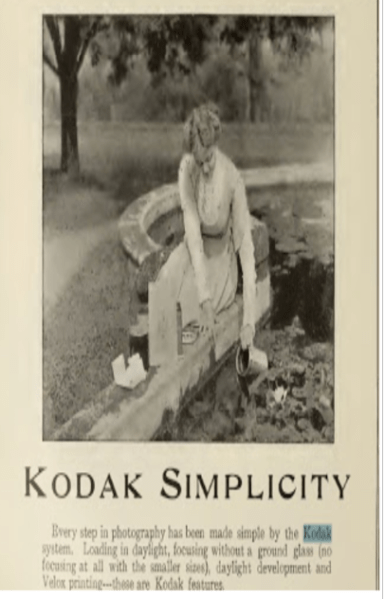
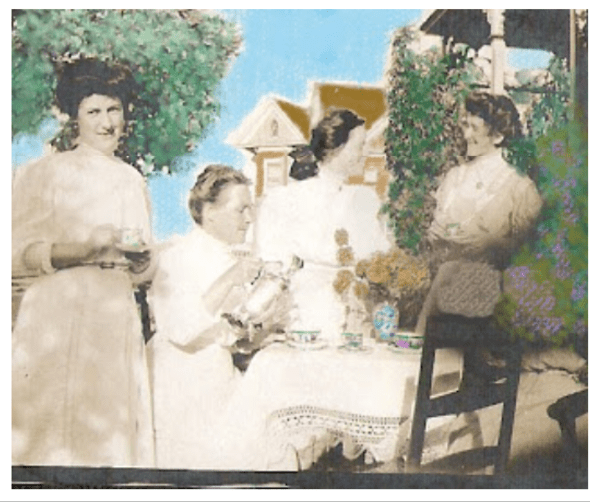
According to her 1906 diary, Marion Nicholson (my husband’s grandmother) who was a teacher liked ‘to fool around taking Kodaks’ during her summer vacations. The Nicholson likely purchased their camera at Sutherland’s drug store in their home town of Richmond.
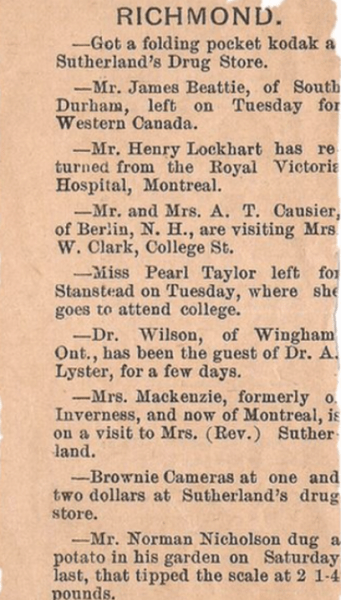
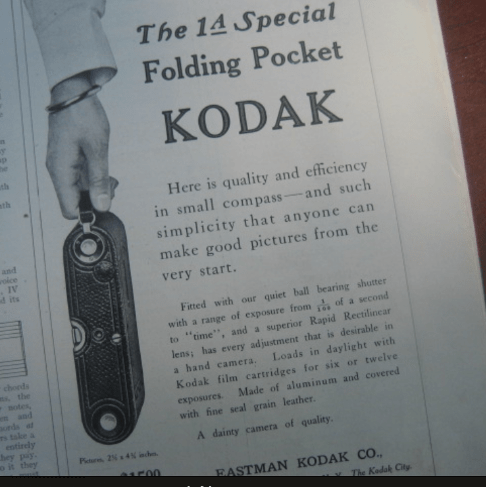
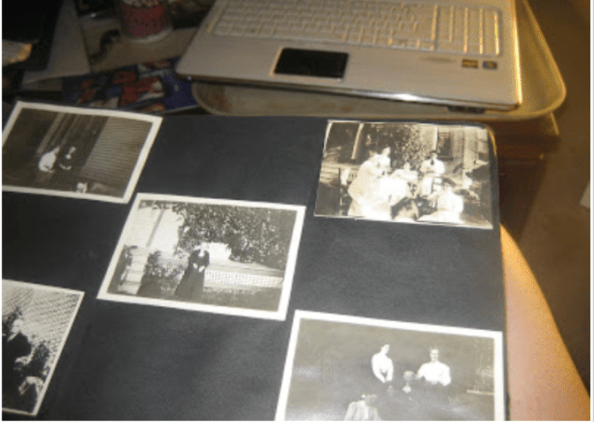
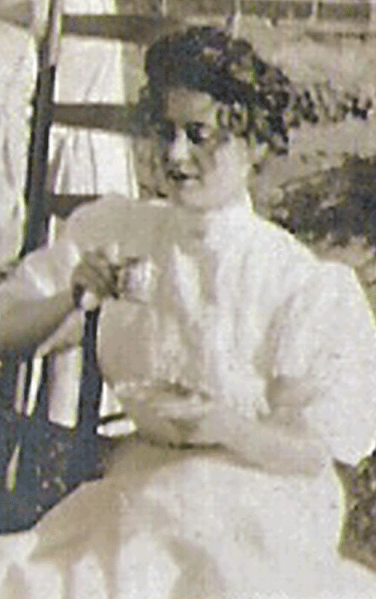
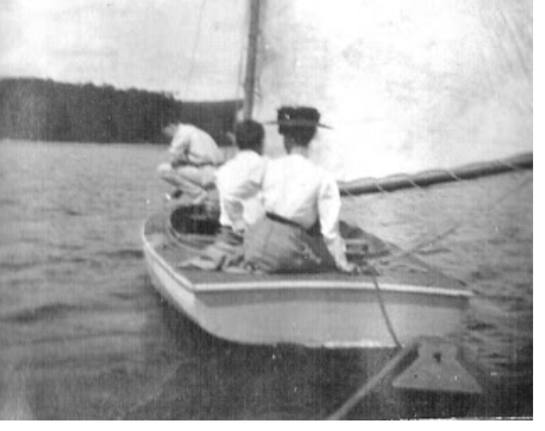
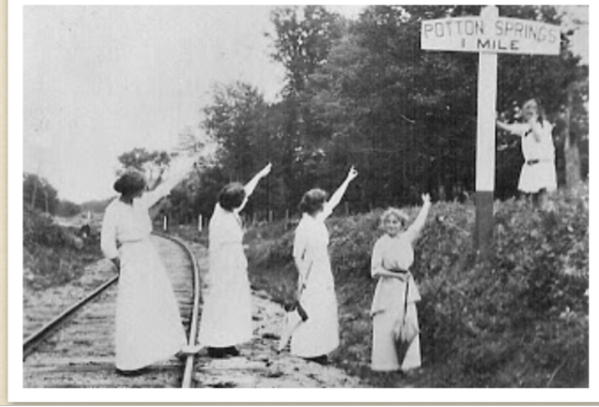
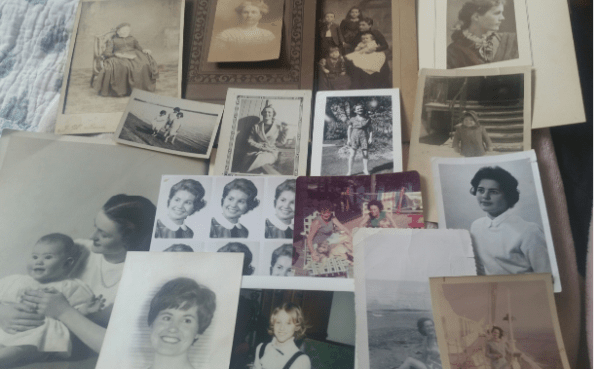
And the family photographs just keep on coming throughout the 20th century. There was that first decade, the era of shirtwaists and silly-looking BIG hats; then the roaring twenties with Sarah’s descendants in home-made flapper dresses sporting crude bobs; then the 30s with the Nicholson women wearing tonnes of movie star makeup to emulate their favourite big screen thespians; then the 40’s with the women in suits with big shoulders or, yes, even military garb; the 50’s ladies in A-line floral sun dresses sporting wing-tipped sunglasses; the 60’s gals reclining in frilly one piece bathing suits at the cottage, all puffing on cigarettes.
Nora will likely have thousands and thousands of photos taken of her in her lifetime. Still, I wonder, will any of these photographs be accessible to HER four times great granddaughter? Or will they have vanished over the years into the Cloud? I have already lost many many valued pics and videos when my ‘ancient” Note 2 suddenly expired.
Should I, as the family genealogist, be printing out all of the best photos on glossy paper with a colour printer with permanent ink, putting them into a giant album – a real album – for these future generations? (Always making sure to put names and birth dates to the pictures.)
(This would be an extremely costly proposition considering the price of colour ink.)
Or, do I merely create an enormous virtual album and put it on a key and into the safety deposit box and hope against hope that it won’t be casually tossed out one day – and that the info on the key will remain accessible?
Maybe all that will be left of the bazillions of photos of Nora, my granddaughter, will be on novelty items like coffee cups and calendars given to me each Christmas.
Or perhaps her image will exist only on this blog post, ready to be extracted from the ether in 2300 by some self-styled cyber-archaeologist.
I’m no fortune teller but I can hazard a good guess…but, first, I have to find that box of precious old photos down in the garage.
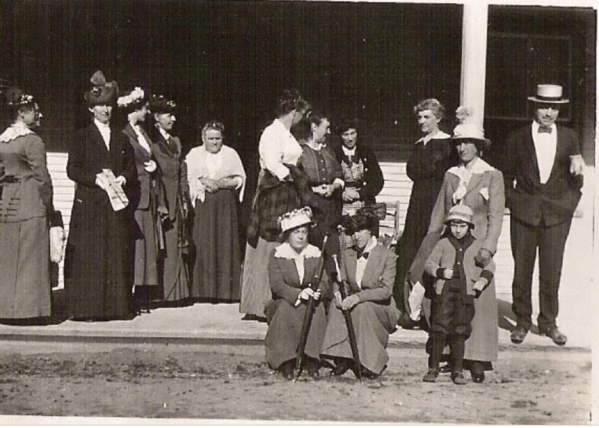
Years ago I wrote an essay for the Globe and Mail on the same topic. It was very well received and often reprinted. Gone with the WIndows.

