Tag Archives: Sarah Jane McHugh

The Fuller Brush Salesman

The advertisement in the February 24, 1928 edition of the Montreal Star called for three reliable men to apply for a special sales campaign for the Fuller Brush Company.

My dad, Edward McHugh, probably answered an advertisement similar to this one when he finished school in the late 1920s. He worked as a Fuller Brush salesman for two years in Montreal. Alfred Fuller founded the Fuller Brush Company in 1906. The company produced good quality brushes and increased its sales force by advertising for salesmen. But the secret of its selling success was that each salesman (they preferred men in those days) had to sign a pledge in which they promised that “I will be courteous; I will be kind; I will be sincere; I will be helpful.”1

The salesmen left cards like this one when no one was home:
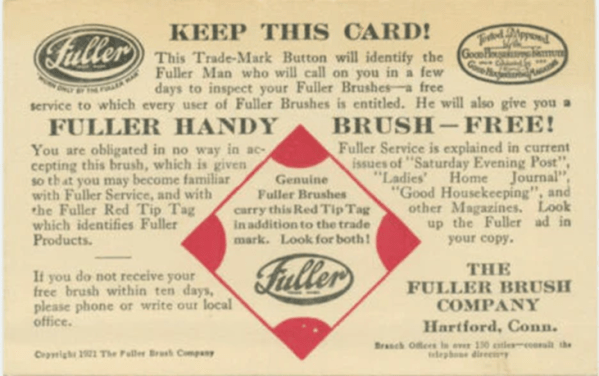
Image courtesy of the Fuller Brush Co., https://fuller.com/pages/fuller-brush-history, accessed March 13, 2024
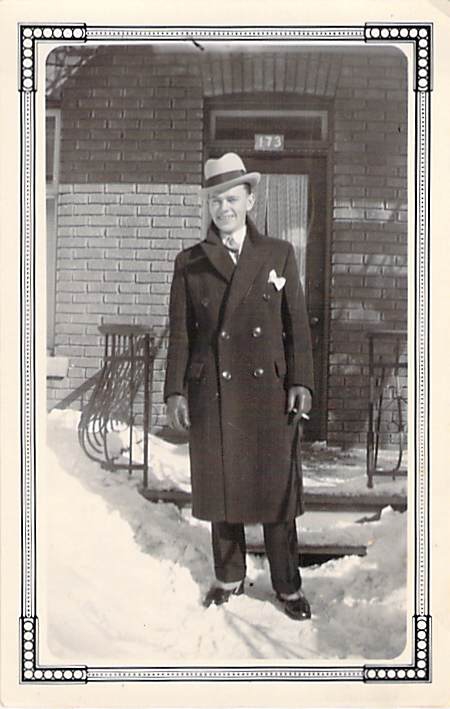
Edward McHugh

As you can see in the above picture, my dad was a snazzy dresser. Knowing him, he probably took a lot of care with his appearance when he was out selling brushes. I remember him polishing his shoes every morning before going to work.

I assume that he succeeded fairly well at selling Fuller Brushes.2 But he must have been restless and in search of adventure because he left Montreal after just two years of selling brushes. Just travelling to Bermuda would have been quite an adventure in itself. He would have started his trip by going to New York City by train where he would then take an ocean liner. The Furness Bermuda Line and operated regular passenger and mail service between New York and Hamilton, Bermuda at the time.3

Edward must have encountered some challenges selling Fuller Brushes in Bermuda as he ended up working as a bell hop in a hotel that catered to rich patrons from the U.S. and Canada. The tips he earned helped him pay for business college when he returned home to Montreal.4

The Princess Hotel, Hamilton, Bermuda5

By the time Dad completed his business and accounting courses, Canada was in the Great Depression. He again got itchy feet again and moved to Drummondville, Quebec with his older brother, Thomas McHugh, his sister, Sarah Jane McHugh, and her husband, Jack Day. In Drummondville, he did not work as a Fuller Brush salesman, a bell hop, or in business or accounting. He apprenticed as an electrician at the Celanese and worked there for eight years until 1940, when he enrolled in the Royal Canadian Air Force as an aircraft mechanic at the outset of World War II. The RCAF trained my dad in aircraft hydraulics and he was assigned to Bomber Command stationed in Yorkshire, England, for the remainder of the war.6

It is no surprise that Dad did not become an aircraft mechanic after the war. He loved being an electrician and his started his own electrical company, Provincial Engineering. He eventually sold his portion of the business. I remember him saying, “the boss always gets paid last.” After that, he joined a firm and worked in a supervisory capacity on the electrification of towns in regional Quebec such as Sept-Iles and Chibougamau.

Dad was curious and loved trying new things. He never backed down from a challenge.

When my dad retired, he and my mom travelled to Bermuda regularly for their winter getaways. He must have enjoyed going back and perhaps even having a meal or two at the hotel he worked at when he was a young bell hop.

  1. Fuller Brush Company website, History of the Fuller Brush Company, https://fuller.com/pages/fuller-brush-history, accessed 20 February 2024
  2. Library and Archives Canada, Military records, Edward McHugh
  3. Wikipedia, Furness – Bermuda Line, https://en.wikipedia.org/wiki/Furness_Bermuda_Line, accessed 26 February 2024
  4. Library and Archives Canada, Military records, Edward McHugh
  5. Historic Hotels of the World, Hamilton Princess, Hamilton, Bermuda, https://www.historichotelsthenandnow.com/princesshamilton.html, accessed 26 February 2024
  6. Library and Archives Canada, Military records, Edward McHugh
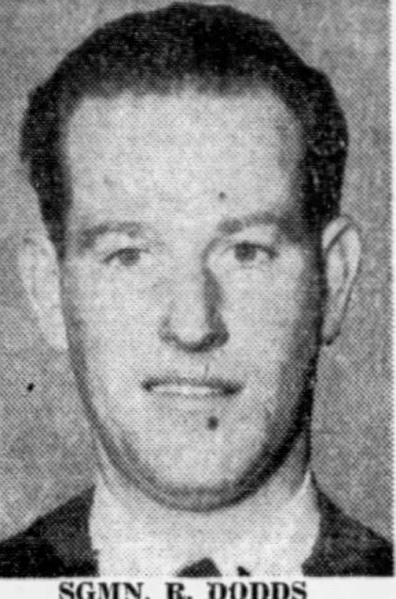
Ralph Dodds, Signalman, Royal Canadian Navy

My aunt, Sarah Jane McHugh, was delighted to host the linen shower to celebrate her daughter, Dawna Day’s upcoming marriage to Ralph Dodds. The happy couple announced their engagement in October 1947. Ralph had recently been discharged after serving in the Royal Canadian Navy for over six years.  The couple’s wedding would take place in Vancouver, Ralph’s home town. Dawna was from Montreal.

Ralph was just 20 when he started his navy career in Esquimalt, British Columbia in 1939.1 With the advent of World War II, the Esquimalt Navy base became the largest naval training center in western Canada. 2 Ralph Dodds trained to become a signalman would have learned all aspects of military communications in the Canadian Navy. He would have used semaphore flags, read and transmitted morse code messages, and assured radio communications.3 During his training, Ralph would not have predicted that he would participate in the sinking of a German U-boat during the Battle of the Atlantic, that he would be on a destroyer that participated in a sea fight on D-Day, or that the destroyer he was on would be shipwrecked off the coast of Iceland.

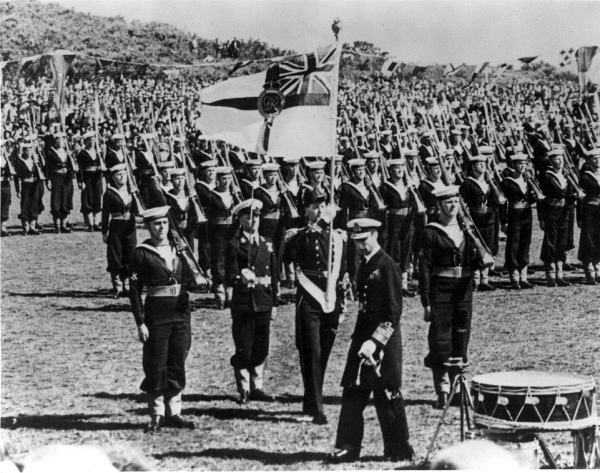
King George VI presents the King’s Colours to the Royal Canadian Navy at Beacon Hill Park, Victoria, 1939. Photo: CFB Esquimalt Naval and Military Museum collection

While Ralph was assigned to a naval station, and to a corvette (small destroyer), for most of his naval career, he was assigned to the HMCS Skeena.

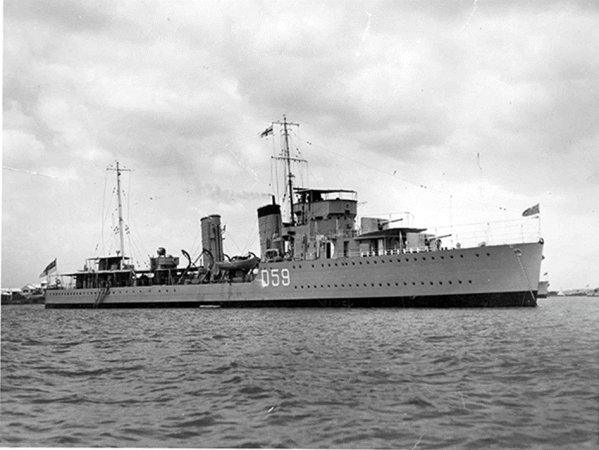
HMCS Skeena, D59, Government of Canada website, Ships’ histories

The HMCS Skeena was commissioned in 1931 in Portsmouth, U.K. and was one of the first two ships built to Canadian order. With the outbreak of the war, the Skeena initially performed domestic escort duties. In May 1940, she was sent to Plymouth, U.K. and became part of the Western Approaches Command, taking part in the evacuation of France and escorting convoys in British waters. She was later assigned to continuous convoy duty.

During one of its escort duties in the Atlantic, the Skeena destroyed U-boat U-588. This happened during ON-115 (ON means Outbound to North America).  There were twelve escort ships for a trade convoy of 43 merchant ships that left Liverpool on July 12, 1942. On July 29, seven U-boats of the Wolfpack Wolf had spotted them. This Wolfpack was quickly joined by another six U-boats of the Wolfpack Pirat. The Wolf Pack tactic, or the “Rudeltaktik,” was devised to attack the Allied convoy system by forming into position effecting a massed organized attack.4 This particular battle resulted in the loss of three of the ships in the convoy and significant damage to two of the ships in the convoy. One of the damaged ships returned to the U.K. and one was escorted to St. John’s, Newfoundland. The Skeena, on which Ralph was a signalman, and the HMCS Wetaskiwin, an escort corvette, destroyed U-boat 588 with depth charges (antisubmarine missiles) on July 31. The hostilities lasted until August 3 when the U-boats lost contact with the convoy due to misty weather. The convoy with the remaining ships reached Boston on August 8, 1942.5

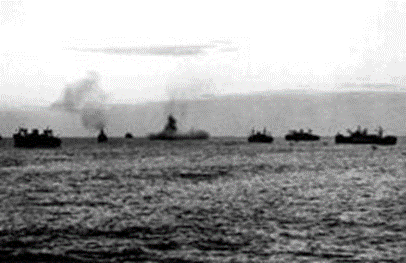
The sinking of American freighters, Edward Rutledge, Tasker H. Bliss and Hugh L. Scott at Fedala Roads, November 12, 1942
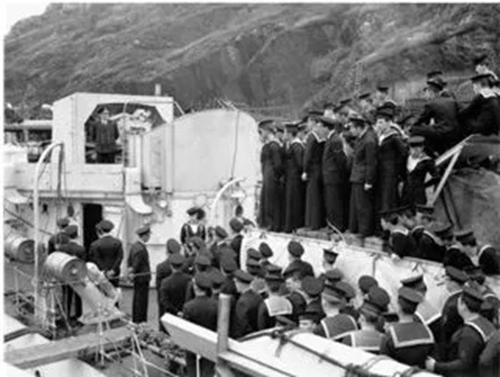
Commodore Leonard Murray congratulating the ship’s companies of HMCS Skeena and HMCS Wetaskiwin for sinking the German submarine U-588 on 31 July 1942. St. John’s, Newfoundland, Aug. 4, 1942. (NAC PA-115347)

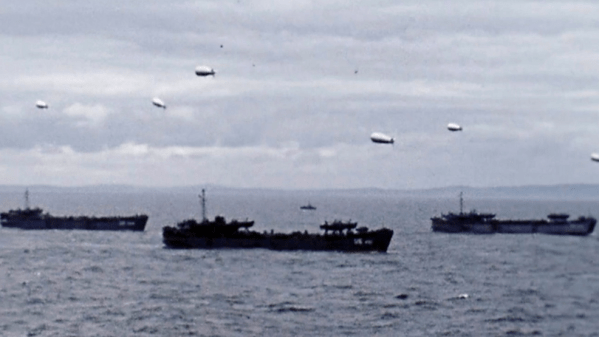
The Skeena also participated in a hot sea fight in the Channel on D-Day. The Skeena’s assignment was to prevent enemy U-boats from attacking Allied ships while the Invasion of France was being carried out.

“Torpedoes were shooting about in the Channel and missed the Skeena by only a matter of feet,” said Ralph in an interview he gave to the Vancouver Sun.

The destroyer also had to contend with German Dorniers (bombers) that were bombing the destroyers in the Channel. One of the aerial missiles fell so close to the Skeena that shrapnel was later found on the deck.6

Ships and blimps sit off the coast of France on D-Day, June 6, 1944. War Footage From the George Stevens Collection at the Library of Congress

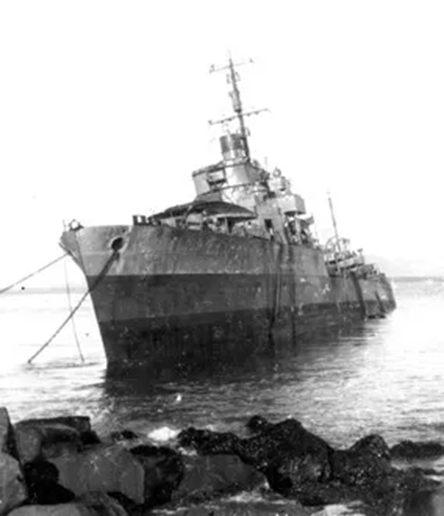
After five years of war, the HMCS Skeena met her end as she sheltered from a violent gale with 15-metre waves off the coast of Iceland, at Videy Island on October 24, 1944. Even though the crew had thrown out a second anchor to secure the ship, the Skeena smashed into the rocks. When the crew abandoned ship, the men were unable to hold the lines. Some crew members were smashed into the rocks, while others were tossed into the sea. Fifteen sailors died.7 Ralph Dodds survived.

HMCS Skeena aground on Videy Island. (Image Source: http://www.forposterityssake.ca/Navy/HMCS_SKEENA_D59.htm#Photos)
  1. Vancouver Sun, D-Day Fight in Channel Recalled by B.C. Sailor, 13 December 1944.
  2. Vance, Emily. Capital Daily, How Canada’s Pacific Fleet Shaped Greater Victoria Over Two Centuries, 1 May 2021, https://www.capitaldaily.ca/news/canadas-pacific-fleet-greater-victoria-two-centuries, accessed 24 July 2023.
  3. Wikipedia, Signaller, https://en.wikipedia.org/wiki/Signaller, accessed 24 July 2023.
  4. Uboataces, German U-Boat, U-Boat Tactics, The Wolf Pack, http://www.uboataces.com/tactics-wolfpack.shtml, accessed 31 July 2023.
  5. Wikipedia, Convoy ON115, https://en.wikipedia.org/wiki/Convoy_ON_115, accessed 26 July 2023.
  6. Vancouver Sun, D-Day Fight in Channel Recalled by B.C. Sailor, 13 December 1944.
  7. Military History Now, HMCS Skeena – Meet One of the Toughest Warships of the Battle of the Atlantic, 12 November 2020, https://militaryhistorynow.com/2020/11/12/hmcs-skeena-meet-one-of-the-toughest-warships-of-the-battle-of-the-atlantic/, accessed 2 August 2023.

Love in the Jute Factory

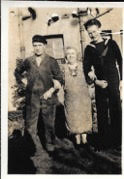
Sarah Jane McHugh was the only member of her family who stayed behind in Scotland. I believe she must have stayed to be with her sweetheart, Thomas Adams.

In 1911, Sarah’s sister, Mary McHugh, was ready for adventure. She decided to leave Dundee, Scotland and set out for Canada on her own to work as a domestic. Mary arrived in Montreal in the summer of 1911.1 She must have liked her new home because her widowed mother, Sarah McLaughlin, and her three brothers, Thomas, Edward, and Francis, followed in May 1912.2 Thomas’ wife, Elsie Orrock and their seven children, Annie, Elsie, Sarah, Thomas, Francis, Mary and Adam also came later that year.3

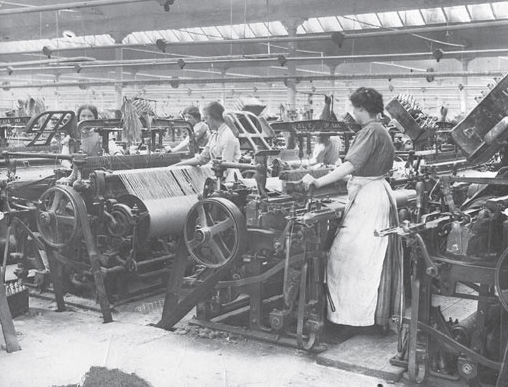
But Sarah? Sarah, a young woman of 24, stayed behind in Dundee. The McHughs had been workers in the jute factories of Dundee for three generations. When the McHughs left for Canada, leaving behind Sarah, the jute mills were the biggest employer in the city. Almost half the city worked in the jute industry. 4 But the working conditions were difficult. The wages were lower for women and children than for men. The constant noise from the machines was deafening and the dust damaged the lungs. Wages in Dundee were the lowest in the country and Dundee had the highest cost of living, possibly due to the pressure on housing, caused by overcrowding. Mill workers had a bleak future ahead of them.5 Only a compelling reason could make Sarah stay and that reason must have been Thomas.

OpenLearn, Open University, Photo courtesy of University of Dundee Archive Services 6

Sarah and Thomas probably met at mill where they worked. As they lived close to each other, they would have worked at the same mill.7 Both Sarah and Thomas would have started working in the mills as soon as they finished school, at age 13. Although it was not uncommon for younger children to work alongside their mothers. Children under nine worked as pickers, cleaning the dust from beneath the machines.8

But Sarah and Thomas did not work in the mills all their lives. By the time they were in their mid twenties and Sarah’s family had left to settle in Canada, Thomas and Sarah had also moved away from Dundee to Glasgow. Glasgow is about 130 km from Dundee, so this would have been quite a move. It is probable that Thomas went first as his parents and siblings also moved to Glasgow. 9

From left to right, Thomas Adams, Sarah Jane McHugh, Ronald Maddocks (cousin)

  1. Ancestry, Canada, Arriving Passenger Lists, 1865-1935, Library and Archives Canada, Mary Ann McHugh, The Grampion, July 1911.
  2. Ancestry, Canada, Arriving Passenger Lists, 1865-1935, Library and Archives Canada, Thomas McHugh, The Grampion, May 21, 1912.
  3. Ancestry, Canada, Arriving Passenger Lists, 1865-1935, Library and Archives Canada, Elsie McHugh, The Grampion, October 1912.
  4. Dundee and the Jute Industry, Natural Bag Co. website, https://naturalbagcompany.co.uk/jute-news/dundee-and-the-jute-industry/, accessed February 23, 2021.
  5. Dundee History Archive, Workers of the mills, September 16, 2014, https://www.ddtours.co.uk/archive/workers-of-the-mills/#:~:text=Constant%20noise%20from%20the%20machines,breathing%20problems%20were%20also%20common, accessed February 23, 2021.
  6. OpenLearn, Dundee, jute, and empire, https://www.open.edu/openlearn/history-the-arts/history/dundee-jute-and-empire/content-section-5.2, accessed March 3, 2021.
  7. Scotland’s Places, Ordnance Survey Name Books, Watsons Lane, https://scotlandsplaces.gov.uk/digital-volumes/ordnance-survey-name-books/forfarshire-angus-os-name-books-1857-1861/forfar-angus-volume-34/20, accessed February 23, 2021, and Taits Lane, https://scotlandsplaces.gov.uk/digital-volumes/ordnance-survey-name-books/forfarshire-angus-os-name-books-1857-1861/forfar-angus-volume-33/8, accessed February 23, 2021.
  8. Verdant Works web site, Dundee Industrial Heritage Ltd., Working in the Mills,https://www.verdantworks.co.uk/exploration-article/working-in-the-mills/, accessed March 3, 2021.
  9. Scotland’s People, Death registers, Thomas Adam (father of Thomas), accessed February 23, 2021.
  10. Scotland’s People, Marriage registers, Sarah McHugh and Thomas Adam, January 1, 1915. Thomas is a railway engine driver and both Sarah and Thomas are living with Thomas’ widowed mother in the Possilpark District of Glasgow City, accessed August 21, 2019.
  11. Family Search, History of the Railways, https://www.familysearch.org/wiki/en/England_Occupations_Railway_Employees_(National_Institute), accessed February 23, 2021.
  12. Scotland’s People, Statutory Births, Sarah Jane McHugh, accessed August 20, 2019.
  13. Scotland’s People, Statutory Deaths, Adams, Thomas, accessed February 2, 2021.

Discovery and Imagination

Historical walking tours are a great way to walk in your ancestors’ footsteps. Even if you know a lot about the place your ancestors lived, you are sure to learn a few new facts. I recently visited Drummondville, where my dad, Edward McHugh, lived for eight years during the Great Depression. He, as well as his brother, Thomas, and his sister, Sarah Jane, had gone to Drummondville in 1933 after being out of work in Montreal. They were employed by the Celanese, one of the biggest employers in Quebec during the 1930s. The Celanese was a textile plant and my dad worked in the Silk Factory as an electrician. The Celanese plant in Drummondville was one of the main reasons why Drummondville hardly felt the effects of the Great Depression.

The walking tour I went on was a free tour offered by the Société d’histoire de Drummond (historical society of Drummondville).1 The tour started at Parc Woodyatt, named after James Blain Woodyatt, Director General and member of the Board of Directors of Southern Canada Power. Southern Canada Power built, owned and operated the hydroelectric complex In Drummondville. The public park Woodyatt opened in 1930 and included sports facilities such as a pool, a skating rink and tennis courts.2

My dad, who loved to skate and swim and was an avid tennis player, would have gone to this park regularly.

My dad also loved to go to the theatre and I can easily imagine him spending his Saturday evenings at the Théâtre Capitol, built in 1937. He would have been excited when the theatre opened. This lovely art deco building is currently a multi-screen cinema complex.

Across from the town square is the impressive Roman Catholic Basilica Saint- Frédéric. When the McHugh siblings lived in Drummondville in the 1930s, this church was not yet a basilica. The first church was a chapel built in 1822 and demolished in 1879 as it became too small to accommodate the parishioners. The second church was situated where the Saint-Frédéric Park is now, just in front of the current church. The second church burnt down in 1899. The third church, built at the church’s current location, was completed in 1907 and was the victim of arson in 1921. The fourth church is the one currently standing and it was completed in 1922. It is truly magnificent. It was named a minor basilica by Pope Francis in 2015.4

Image result for eglise saint frederic drummondville

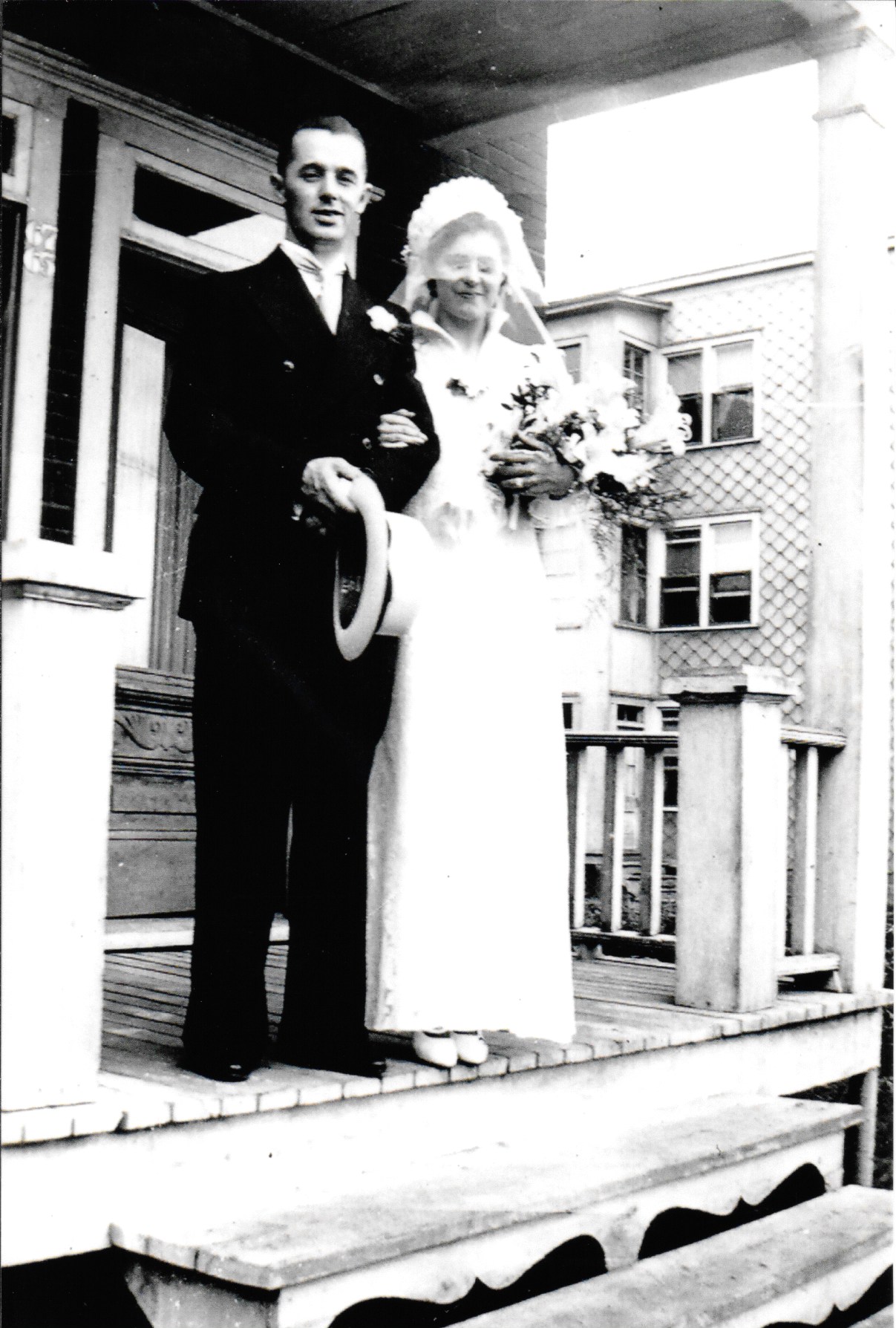
In 1937, my uncle Thomas McHugh and Simone Cloutier, a young lady from Drummondville, were married in Saint-Frédéric.5  A Casavant organ, built in 1930, would have played at their wedding. Fourteen Stations of the Cross grace the church. Stained glass windows represent the life of Saint-Frédéric, an archbishop in France.6 The McHugh family was a large one, with nine siblings. They would probably have all attended the wedding, and would have most likely travelled from Montreal by train.

McHugh, Thomas with Simone Cloutier (maybe)

Sadly, they returned to visit this magnificent church less than one year later. Thomas McHugh died of an illness in the hospital.7 My father, along with his other brothers, signed the register as pallbearers.8 Thomas McHugh is buried in the Saint-Frédéric cemetery on Saint-Joseph Boulevard, not very far from the church.

From the outside I saw the Hôpital Sainte-Croix where, sadly, my uncle would have died. The current site of this hospital was founded in 1927 and, at the time of my uncle’s death, had 18 beds and one operating room. It was run by the Soeurs de la Présentation de Marie. 9

We finished our day by driving through the working class district of Drummondville where the workers of the Celanese lived. I know my dad lived on the top floor of a duplex. He had no car so he would have lived in walking distance from work.

It was truly a day of discovery and imagination.


  1. A sincere thank you to the Société d’histoire de Drummond for this walking tour and for all of the valuable work that they do to preserve the history of Drummondville.
  2. Société d’histoire de Drummond
  3. Société d’histoire de Drummond
  4. Société d’histoire de Drummond
  5. Registration of the marriage of Thomas McHugh and Simone Cloutier, July 17, 1937, Paroisse Saint-Frédéric de Drummond, Registres photographiés au Registres de Arthabaska
  6. Church pamphlet entitled Guide – Visite et histoire de la Basilique Saint-Frédéric de Drummondville
  7. The Drummondville Statesman, “Thomas McHugh Passes Away,” May 27, 1938, accessed March 19, 2016
  8. Registration of the death of Thomas McHugh, May 25, 1938, Paroisse Saint-Frédéric de Drummond, Registres photographiés au Registres de Arthabaska
  9. Société d’histoire de Drummond

The Canadian Celanese and the Great Depression

“Damn!” My dad, Edward McHugh, cursed to himself. He thought ruefully that his great idea to change his job ten months ago did not work out very well. His first job after school was in the office of Henry Birks & Sons. While he was working there, he decided to take a bookkeeping class at night at Sullivan College and the A.R. Whittell Can Company thought that he showed initiative, was a snappy dresser, and would make a good salesperson. So they hired him. It was now 1931 and he had just been laid off because sales were dropping.1

McHugh, Ed Verdun

Edward McHugh in Verdun, Quebec, in the 1930s

Now what? Edward knew that the prospects of getting a job were bleak. Luckily Edward still lived at home with his parents and his father was a foreman at the Atlas Absestos Company.2 Still, it was worrisome.

It would be two years before Edward would find employment. He spent many evenings with his brothers and sisters, playing cards. During these evenings, their supper was sandwiches, made out of a loaf of white bread, some butter, and one can of salmon. 3

Maybe the idea to go altogether to Drummondville was hatched at one of the card parties. In any event, in 1933, in the depth of the Depression, the McHugh siblings, Edward, Thomas, Sarah Jane, and Sarah’s husband Jack, decided to move to Drummondville, Quebec to find work.

At that time and even though Quebec was hard hit by the Depression, the Canadian Celanese Company in Drummondville was a significant employer in the province, with 1,757 employees. The picture below shows the employees of the Canadian Celanese Company in that year.4

Celanese 1931

Moving to Drummondville would have been equivalent to immigrating to a new country. None of the members of the family would have had an automobile so the trip from Montreal to Drummondville would have had to be by train. As with many immigrants, their motives were financial.

As far as I know, they were all employed by the Canadian Celanese Company. The Celanese Corporation was founded in 1915 by two Swiss chemists, Camille and Henri Dreyfus and enjoyed significant success during WWI because of its development of synthetic fiber. The Canadian plant was built in 1926 in Drummondville. This location was chosen due to its proximity to a large expanse of forest, it was close to Montreal that was the centre of the textile industry at the time, and inexpensive hydro power  supplied by Southern Canadian Power was available.5

This picture of the Celanese, taken in the 1920s, shows that it was a significant manufacturing plant: 6

Celanese 1920s

My dad was hired as an electrician and worked in what was called the silk factory.7 The Celanese required electricians to work full time to ensure that the machines were never idle.

My dad and his siblings settled in and made a life in Drummondville. Both my dad and his brother, Thomas, played on the Celanese football team.8 Thomas married Simone Cloutier in 1937 and then died a year later in 1938 of an illness. Thomas is buried in the cemetery of the St. Frederic Church in Drummondville.9

Edward continued to work for the Celanese until the outbreak of the war. He signed up for duty in August 1940 at the Ste. Hyacinthe recruiting centre. The Celanese agreed to hire him once the war had finished but he did not go back.10

  1. Military records from WWII, Edward McHugh, Royal Canadian Air Force Attestation Paper. This information was in his employment records. It states that he left Henry Birks and Sons for a better job and that he was let go from A.R. Whittell because of lack of work.
  2. Although Thomas McHugh, Edward’s father, was deceased when the RCAF Attestation Paper was filled out, Thomas’ job at his death was noted. It is an assumption that he was working there in 1933. There is no indication that he was out of work during the Depression.
  3. As told to the author by her aunt, Elsie McHugh.
  4. The Ministry of Patrimoine Culturel, Province of Québec, http://www.patrimoine-culturel.gouv.qc.ca/rpcq/detail.do?methode=consulter&id=14311&type=pge#.W6gnEWhKiUk, accessed September 23, 2018.
  5. Ibid.
  6. Eastern Townships Archives Portal, https://www.townshipsarchives.ca/canadian-celanese-ltd 192?, accessed September 24, 2018.
  7. Military records from WWII, Edward McHugh, Royal Canadian Air Force Attestation Paper.
  8. Death of Thomas McHugh, “The Drummondville Spokesman,” “Thomas McHugh Passes Away,”May 27, 1938, accessed March 19, 2015. This article states that Thomas McHugh was on the Celanese football team. It is assumed that Edward was also on that team as his Attestation Paper said that he played football extensively.
  9. Marriage and death certificates of Thomas McHugh. Drouin Collection. St. Frederic Parish, Drummondville, Quebec.
  10. Military records from WWII, Edward McHugh, Royal Canadian Air Force Attestation Paper.