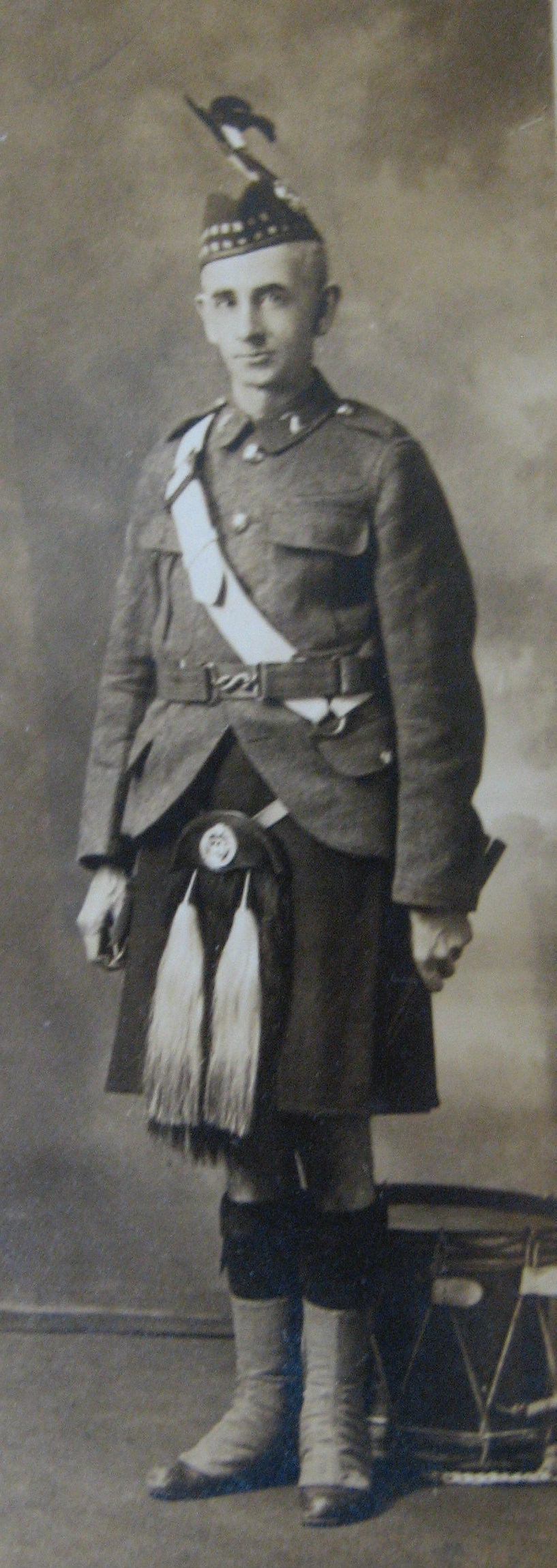
Tag Archives: Sutherland

Grandfather’s Diary

The Diary

My grandfather, William Harkness Sutherland, kept a small red leather diary from January 1st, 1920, to December 31, 1924. During those five years, he regularly jotted down notes. Not his deepest thoughts or a record of history, just about his family and his life.

The Diary begins, “Thursday, January 1st 1920, “Very cold went to Monks for dinner and tea.” Minnie his wife and the children were still in Toronto for a Christmas visit to her mother and sister. When Grandfather was home alone, he was often invited out to eat as no mention is made of him preparing his own meals.

The first page of the diary

William was married with three children, lived in Westmount, Quebec, attended church regularly, worked as a civil engineer, owned a car, played golf and often visited friends for the afternoon and tea.

Donald, Bessie and Dorothy Sutherland about 1920

My father, Donald Sutherland, was two to seven years old during those years. It is interesting to see how often he and his two older sisters, Bessie and Dorothy, were sick. They had all the childhood diseases, chicken pox, measles, mumps, whooping cough, as well as colds, flu and bilious complaints that lasted many days. They also had their tonsils and adenoids removed, but they had doctors who came to their house!

According to one entry, Minnie, my grandmother, was diagnosed with tonsilitis and Donald’s sore neck became mumps as he continued to have a swollen gland. “Tuesday, March 30, 1920, Drs. Craig and Shaw saw Donald this morning and Craig says the gland must be opened. Dr. Shaw brought Dr Bourne in the afternoon and they gave Donald an anesthetic and opened it, removing quite a considerable quantity of pus.” Amy, Minnie’s sister, came down from Toronto as most of the family was sick.

A few days later, Amy also became ill, so William called in Dr. Smythe. The doctor also checked Donald’s neck, which was again inflamed. “April 4, 1920, brought Dr Smythe home with us (from church) to dress Don’s neck. It was not necessary to probe it for when the bandage came off, it discharged freely. Dr, S. pressed it firmly and Donald kicked up a great fuss.” Imagine, four doctors visited the house within a week!

The children were better during the summer. Although one time, Donald cut his foot at the cottage while swimming, but luckily, there was a doctor just across the lake. Dr. Swaine came over, sewed it up and gave Donald a dollar.

Swimming in Brome Lake

The family often went for drives all around the city. William enjoyed having a car and would pick up friends and drive them all over Montreal, as not many people had cars or could drive.

Driving on Mount Royal, Montreal

A few incidents outside the family were written about, such as when Victoria Hall burned down on March 8, 1924. Some of the family were at their new home on Arlington Ave, which was being renovated, when “About 4:15 heard fire wagons went out and saw Victoria Hall burn. Watched until 6:30 and then went home for tea.” There was mention of another fire, the burning of the Sacre Coeur Hospital, March 15, 1923. “ Fire destroyed the Hospital on Decarie Boul. All patients were taken safely out, but the building was totally destroyed. Minnie went out to see it and then called at Donnelleys.”

It was a busy time in his life. The family moved from Grosvenor to Arlington Avenue. Then they built a cottage in Dunany, near Lachute, fifty miles north of Montreal. Two hours and twenty minutes was a quick trip, although many took three to four hours to the cottage, which can now be reached in just over an hour.
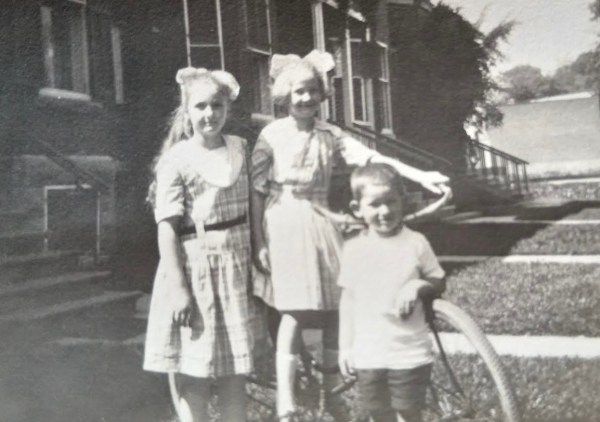
Bessie, Dorothy and Donald

Grandfather enjoyed playing golf. There are many entries about his games played at different golf courses, including who he played with and how he practiced indoors in warehouses during the winter. The Dunany Country Club was his favourite, where he was one of the founding members.

What would a diary be without talking about the weather. “October 31, 1920. Oct was an exceptional month, warm, an average of 7 degrees above normal. March 31, 1923. “Coldest March on record by about 10 degrees on average, still mid winter weather.” The last entry ,”December 1924 “Weather has been very cold for three weeks. At Davidson’s for tea on the 31st.”
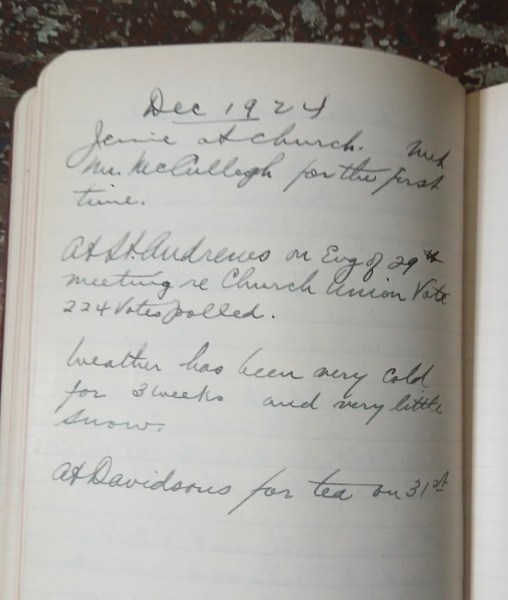
The last page

The diary concludes at the year’s end but since there were still many empty pages, I wonder why he stopped writing. Most likely, life got in his way. I am glad he wrote if even for a short time. By reading his diary, I learned a lot about a grandfather I never knew.

Notes:

The Diary is in the hands of the author. All the pictures are in the possession of the author.
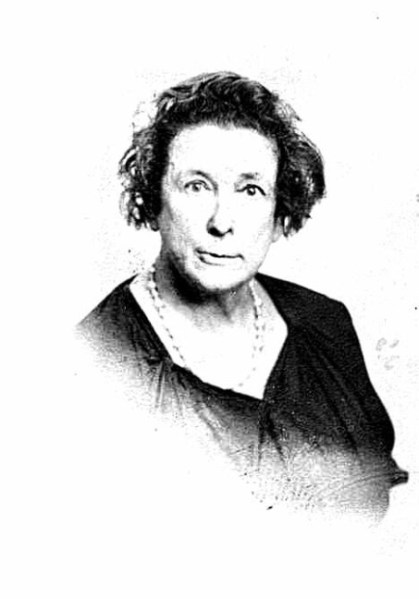
A Picture of Annie

For many of my ancestors, I have a name, a date of birth and sometimes a death date. That doesn’t tell you much about their lives, who they were or what they looked like. Who resembles them? Having a picture that you can document of them is a treasure. I still have many images of unidentified people. Some you can guess at but still you aren’t sure.

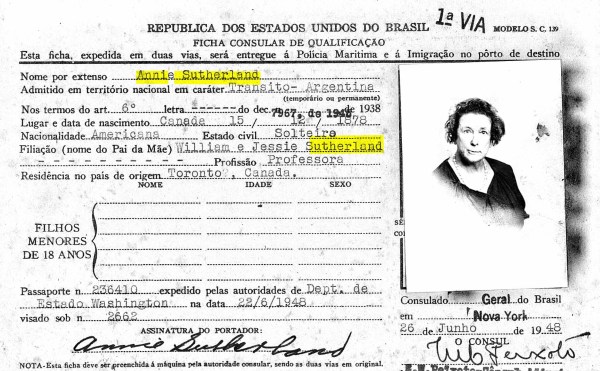
I have no pictures of Annie Sutherland (1878-1953) or much information about her except for one entry in my grandfather William Harkness Sutherland’s diary, “ Annie visiting from New York”. Annie was his first cousin, the daughter of his uncle William Sutherland and Jessie Johnston.

I thought I would try again to find Annie after researching her brother William. Annie is not a unique name so I didn’t have many expectations when I entered her name, birth year, and parent’s names in Ancestry. Up popped her visa for entry into Brazil in 1948! This document had her date of birth, her nationality, her parent’s names, her occupation and her picture! There she was for all to see at 69 years of age.

Annie Sutherland disappeared from Canadian records after the 1901 census when she was living with her parents at 21 Rose Ave along with her sisters Agnes, Isabel and Jessie and her brother Davison. 

Single women at the turn of the century had few career choices open to them, one being a teacher. Annie and two of her sisters taught school. I imagine Annie wanted a little excitement in her life, so she immigrated to New York City in 1902 and moved in with her brother William. She continued to teach school.

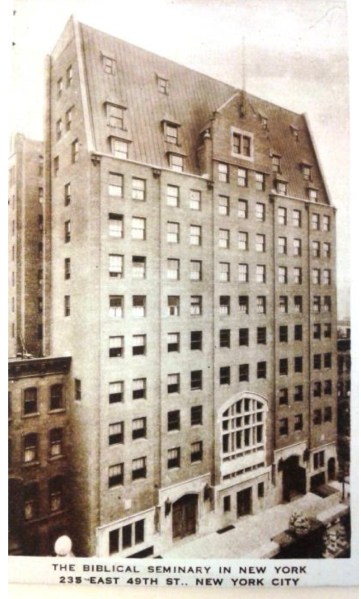
She originally taught at regular public schools. Religion was important in the family, like many Scottish Presbyterians at the time. They attended services regularly and were involved in the church life. The males, like my grandfather, were encouraged to become ministers but none had the calling. So, it is not surprising that at some point Annie began teaching at the Biblical Seminary of New York (which became the New York Theological Seminary). 

Wilbert White founded the Prostatant nondenominational school to train Bible teachers, missionaries and YMCA (Young Mens Christian Association) workers. This was a ministry for the “real world” with the Bible being the centre of the curriculum. Women formed a large part of the diverse cultural student body and the staff. In 1921 the school moved downtown to East 49th Street. There, in a nine-story building, students, staff and other borders lived together. Annie lived at the school and according to the 1940 census was a teacher making $4,764 a year, a large salary for anyone at the time.

Teachers have the advantage of summers off, and Annie Sutherland travelled the world. While she taught others to be missionaries, perhaps she did missionary work herself during her vacations. She can be found on many ship manifests as she sailed to Brazil, Argentina, Mexico, England, France and the Mediterranean, being away for two months at a time.

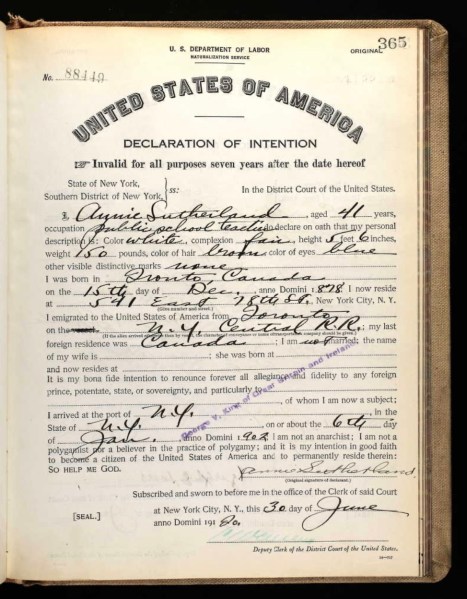
She, like her brother, decided to become an American citizen. She filed her declaration of intention in 1920, which included her renouncing her allegiance to George the V, King of Great Britain and Ireland. She received her naturalizing certificate five years later.

I last found her alive in New York City in 1950, living at the Prince George Hotel, having returned from another trip.

There is an Annie Sutherland buried in Mount Pleasant Cemetery in Toronto, who died in 1953 at 74 years of age. Is that Annie’s final resting place? Did she eventually return home from her travels?

Notes:

“Rio de Janeiro Brazil, Immigration Cards, 1900-1965”. Family Search, Salt Lake City, Utah, 2013. Index entries derived from digital copies of original and compiled records. Accessed on Ancestry March 10, 2020. 

Mount Pleasant Cemetery: Annie Sutherland age 74 died 1953. Land, Section 33 lot 2650. accessed October 18, 2024.

New York Theological Seminary Records 1895-2005-https://library.columbia.edu/content/dam/libraryweb/locations/burke/fa/misc/ldpd_11693150.pdf

Year: 1901; Census Place: 
Toronto (Centre) (City/Cité) Ward/Quartier No 3, Toronto (Centre) (City/Cité), Ontario; Page: 2; Family No: 17 Ancestry.com. 
1901 Census of Canada [database on-line]. Lehi, UT, USA: Ancestry.com Operations Inc, 2006. Original data: Library and Archives Canada. 
Census of Canada, 1901. Ottawa, Ontario, Canada:

Year: 1940; Census Place: New York, New York, New York; Roll: 
m-t0627-02648; Page: 61A; Enumeration District: 31-1008 Ancestry.com. 1940 United States Federal Census [database on-line]. Provo, UT, USA: Ancestry.com Operations, Inc., 2012.

The National Archives at Philadelphia; Philadelphia, PA; NAI Title: 
Declarations of Intention For Citizenship, 1/19/1842 – 10/29/1959; NAI Number: 4713410; Record Group Title: 
Records of District Courts of the United States, 1685-2009; Record Group Number: 21 Ancestry.com. New York, U.S., State and Federal Naturalization Records, 1794-1943 [database on-line]. Lehi, UT, USA: Ancestry.com Operations, Inc., 2013.

More William Sutherlands

There are many William Sutherlands in my family. My great-great-grandfather William Sutherland ( 1816-1887) son of William Sutherland (1749-1840) came to Canada in 1845 with his wife Elizabeth Mowat. They followed the Scottish naming pattern of calling the first son after the husband’s father so his eldest son was William and then his eldest son was also William.

My grandfather, son of Donald was also named William. He thought the family had way too many Williams, Willies, Wills and even a Bill so he took the second name, Harkness, after his mother. There was just one mention of his first cousins, William Sutherland and his sister Annie in my grandfather’s diary. “Went to Rose Ave, Annie was there from N.Y. but Willie away in Florida.” That’s all I knew.

Luckily, cousin William also seemed to have added a middle name maybe Everard or Ewart. So instead of the thousands of William Sutherlands, he can be found as William Everard or William E Sutherland.

William first crossed the border into the United States in 1889 when he was just 16. He probably went for a job or maybe an adventure. He was born in Mildmay, Bruce County, Ontario. His grandfather and then his father owned the family farm which his father sold and moved the family to Toronto when he was a child.

William is then found in New York City, where his sister Annie later joins him.

William married Ida Priscilla Sterne in New York in 1913. Priscilla was also a Canadian from Carrick, Bruce County. She and William must have known each other growing up. Priscilla immigrated to the US by herself in 1899. She was a milliner and had her own business making hats. After her father’s death in 1905, her mother came to the US, along with a sister and a brother.

The couple didn’t have any children, having married later in life. William was 39 and Priscilla 35.

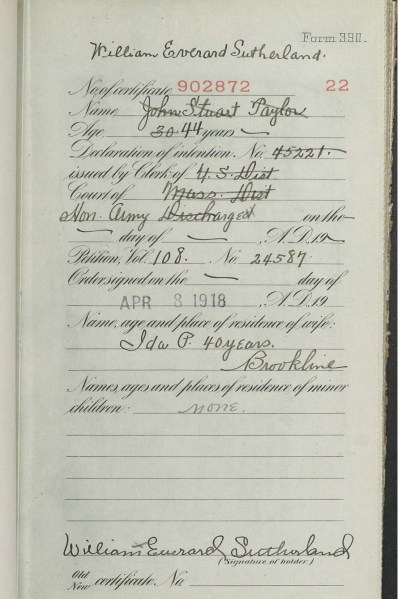
William became a naturalized American in April 1918 through the Alien Soldier’s Naturalization Act. He joined the US Army in 1899 during the Spanish-American war. Any alien who enlists in the US armed forces and is honourably discharged could apply for citizenship without a previous declaration of intention and with only one year of residence. His proof of service and discharge is the strangest document I have ever seen. It had a name crossed out and William Everard Sutherland written above. Other information was also crossed out. This document was accepted as there is a copy of his Naturalization certificate. I don’t know why he never made a declaration of intention as he had been in the US for almost 40 years. Priscilla also became an American.

This was the proof that he was honorably discharged from the US Army which allowed him to become a Naturalized US citizen under the Alien Soldiers Naturalization Act; Section 2166.

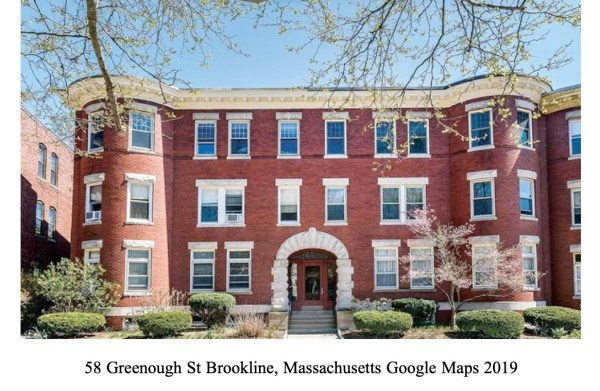
Around 1917, he and Priscilla moved to Brookline Massachusetts, They lived at 58 Greenough Street. A three story apartment (now condo) building is at that address according to Google maps. It is a very nice red brick building with bay windows. The condos now sell for a million dollars. The couple had done well as Priscilla was no longer working and William was the boss working in construction as an electrician. They even had room for Priscilla’s mother to spend time with them.

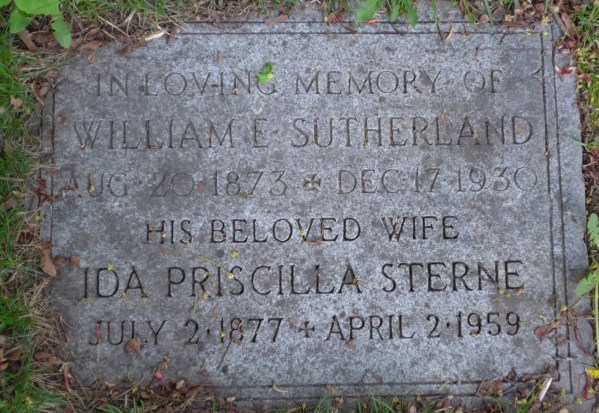
They finally ended up in Florida, around Miami and Palm Beach. William was president of a building company so they were not early retirees. He later had health problems, stopped working and applied for an invalid’s pension from the US Army. When William died of heart disease in 1930 his body was sent back to Canada for burial. Priscilla applied for a widow’s pension and continued to live in Palm Beach until her death 29 years later. Her body was also returned to Canada and is buried with her husband in Toronto’s Mount Pleasant Cemetery.

Now I have to find his sister Annie.

Notes:

William’s parents William Sutherland and Jessie Johnson lived at 21 Rose Ave in Toronto. His siblings, Agnes, Isabel, Jessie and Davison were all living at home in the 1920s.

William H. Sutherland’s diary 1920-1924 in the hands of the author.

William registered for the draft during the First World War even though he was 45 years old. I don’t think he served again, as the war ended less than three months later.

My grandfather William Harkness Sutherland called his only son Donald after his father but added William as a second name!

Year: 1910; Census Place: Boston Ward 24, Suffolk, Massachusetts; Roll: T624_625; Page: 13a; Enumeration District: 1634; FHL microfilm: 1374638Ancestry.com. 1910 United States Federal Census [database on-line]. Lehi, UT, USA: Ancestry.com Operations Inc, 2006. Mar 20, 2020.

Year: 1920; Census Place: Brookline, Norfolk, Massachusetts; Roll: T625_721; Page: 4A; Enumeration District: 172 Ancestry.com. 1920 United States Federal Census [database on-line]. Provo, UT, USA: Ancestry.com Operations, Inc., 2010. Images reproduced by FamilySearch.

Ancestry.com. U.S., City Directories, 1822-1995 [database on-line]. New York City 1922. Lehi, UT, USA: Ancestry.com Operations, Inc., 2011.

National Archives and Records Administration (NARA); Washington, D.C.; Index to Naturalization Petitions and Records of the U.S. District Court, 1906-1966, and the U.S. Circuit Court, 1906-1911, for the District of Massachusetts; Microfilm Serial: M1545; Microfilm Roll: 24Ancestry.com. U.S. Naturalization Records Indexes, 1794-1995 [database on-line]. Provo, UT, USA: Ancestry.com Operations, Inc., 2007. Accessed March 20, 2020.

National Archives and Records Administration (NARA); Washington D.C.; NAI Number: M1368Ancestry.com. Massachusetts, State and Federal Naturalization Records, 1798-1950 [database on-line]. Provo, UT, USA: Ancestry.com Operations, Inc., 2011. accessed March 20, 2020.

New England Historic Genealogical Society; Boston, Massachusetts; Massachusetts Vital Records, Marriage Record 1911–1915; Volume: 621 accessed on Ancestry March 20, 2020. 

James Sutherland Music Man

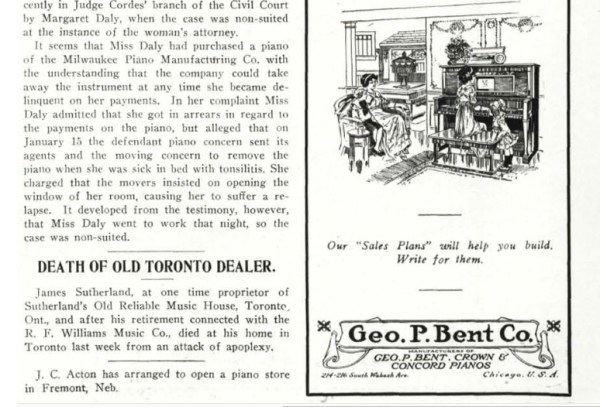
James Sutherland’s death from apoplexy (cerebral hemorrhage) was noted in The Music Trade Review published in New York in 1915. The Sutherlands were not known for their musical abilities so discovering that James had been the well known proprietor of Sutherland’s Old Reliable Music House in Toronto, was a surprise.

Music Trade Review 1915

James was born in Toronto in 1850. He moved with his parents, William Sutherland and Elizabeth Mowat to West Gwilliambury and then to Carrick, Ontario where his father had obtained crown land. He worked on the family farm and attended school until 1867, when he returned to Toronto. He was seventeen and lived by himself in a boarding house.

His brothers William and Donald, soon followed him to Toronto. All the Sutherlands, it seems, preferred being merchants to farmers. He and Donald were first book sellers. There was no mention of a music store until 1884. The store was then situated at 292 Yonge Street and perhaps a complement to Donald and William’s book store, Sutherland’s Dominion Book Store at number 286. In the late 1800s, music stores sold mostly sheet music rather than instruments. They sold some pianos but they were not an everyday purchase. In the early 1900s, gramophones became popular and so stores also sold the wax coated cylinders and vinyl discs.

James married Elizabeth Bridge in 1882. He was 32 and she only 17. She wasn’t a Toronto girl but from back home, born and raised in the Carrick, Ontario area. They had four children; sons James Russell, Alexander Uziel, Neill Clarence and a daughter Verney. James, according to his obituary, was an upstanding citizen and business man as his memberships show. He was a member of Knox Presbyterian Church, the Yonge St Mission and the Order of the Canadian Home Circles.

He died in 1915 at 65 years of age and his wife Elizabeth not long after, in 1921. They were buried in Mount Pleasant Cemetery but not in the same plot. They are both lying in adult single graves.

With three sons, I was hoping to find a living relative with the Sutherland name. The eldest son, James Russel married Laura Bansley in 1914. He died of influenza in 1918. They had no children.

Alexander married Florence Petherbridge in 1915. He was an electrician and signed up for military service during WWI. He survived the war but like his brother died of influenza, in 1919. Florence then went back to live with her parents, Charles and Elizabeth Petherbridge taking baby Douglas with her. Twenty years later Douglas visited a friend in the US. His border crossing is the only further mention of him.

Neill Sutherland married Mabel Ashby July 9, 1926. His marriage certificate listed him as a 22 year old chauffeur and she was a 16 year old spinster. John their son, born in September 1926 unfortunately died in July 1927. I have not found any other children.

Daughter Verney born in 1891 leaves even less of a trail. She only appears in two census and her father’s 1915 obituary. Her name is spelled many different ways on the documents. While I would like to find out more about her she would not leave Sutherland named descendants.

I still find the Music Store a strange occupation for James. His brother Donald left a Presbyterian church when they were considering buying an organ as he felt the human voice was all that was needed to praise God. I wonder what he thought about his brother selling gramophones? At least he didn’t sell on Sunday.

Notes:

The Music Trade Review Vol LX No. 15 April 10, New York 1915

Toronto City Directories 1879 – 1915.

Toronto Daily Star: Obituary Mr James Sutherland. Page 11. Friday March 25, 1915.

Ancestry.com. 1871-1921 Census of Canada [database on-line]. Provo, UT, USA: Ancestry.com Operations Inc, 2013.

Ontario, Toronto Trust Cemeteries, 1826-1989,” database with images, FamilySearch (https://familiarization/ark:/61903/1:1:2763-347 : accessed 18 May 2016), James Sutherland, 30 Apr 1915; citing Toronto, Ontario, Canada, section and lot Adult Single Grave 8 4954, line 33082, volume Volume 03, 1908-1919, Toronto Trust Cemeteries, Toronto; FHL microfilm 1,617,217.

Ontario, Toronto Trust Cemeteries, 1826-1989,” database with images, FamilySearch (https://familysearch.org/ark:/61903/1:1:2763-8FM : accessed 18 May 2016), James Russell Sutherland, 14 Dec 1918; citing Toronto, Ontario, Canada, section and lot Adult Single Grave 8 4954, line 38164, volume Volume 03, 1908-1919, Toronto Trust Cemeteries, Toronto; FHL microfilm 1,617,217.

Ontario, Toronto Trust Cemeteries, 1826-1989,” database with images, FamilySearch (https://familysearch.org/ark:/61903/1:1:2763-683 : accessed 18 May 2016), Alexander U Sutherland, 19 May 1919; citing Toronto, Ontario, Canada, section and lot Adult Single Grave 8 5404, line 38405, volume Volume 03, 1908-1919, Toronto Trust Cemeteries, Toronto; FHL microfilm 1,617,217.

Ontario, Toronto Trust Cemeteries, 1826-1989,” index and images, FamilySearch (https://familysearch.org/pal:/MM9.1.1/2763-JZH : accessed 05 Dec 2014), Elizabeth Sutherland, 23 Feb 1921; citing Toronto, Ontario, Canada, section and lot Adult Single Grave 8 5404, line 41137, volume Volume 04, 1920-1931, Toronto Trust Cemeteries, Toronto; FHL microfilm 001617217.

Single graves aren’t necessarily single, as James and James Russel were buried in the same adult single grave and Alexander and his mother Elizabeth were also buried in another adult single grave.

Douglas Sutherland gave his Aunt Kate Petherbridge as his Canadian contact when he crossed the US border in 1938. Kate had visited her sister Florence Hatler, who I assume had remarried, in Detroit Michigan in 1928.

Living in Westmount

One Sunday after the service at St. Andrew’s United Church, Westmount, a friend of my mother’s commented on an article in the Westmount Examiner. My mother said she didn’t read that paper as she’d never lived in Westmount. “Yes you did dear,” my father replied, “but you didn’t like it!”

img_0198

My parents, Donald William Sutherland and Dorothy Isabel Raguin were married on June 25, 1948. The recent war and the return of the soldiers made finding apartments very difficult. That summer they lived in Dorothy’s family home on Woodbury Ave in Outremont. Her parents, Beatrice and René Raguin were spending the summer at their cottage in Dunany, north of Montreal. Come fall and the return of the Raguins, there was no room for them there so they moved in with Donald’s mother, Minnie Eagle Sutherland and his sister, Dorothy on Arlington Avenue in Westmount.

IMG_0199

My mother found it difficult being a new bride and living with her mother-in-law. She didn’t have much to do. Two women came in to do the housework. Mrs Mikalachki did the heavy work and Mrs Boutilier the light cleaning and ironing. When Mom tried to do things for her husband she came up against Minnie Sutherland, a proud, willful woman who wanted all things done her way. Dorothy had been a Wren during the war and worked as a sick berth attendant in Halifax, Nova Scotia.  On leaving the navy, she renewed her teaching certificate and taught at Iona School in Montreal up until the day of her marriage. Sitting around listening to her mother-in-law tell her how things should be done wasn’t making her happy. She certainly didn’t want to start a family living there.

Luckily, one of her husband’s friends had an apartment on Maplewood (now Edouard Montpetit). He and his wife had bought a house and offered to have the apartment lease transferred to Dorothy and Don. My mother was thrilled with her own place but my father hated paying rent. My sister, Elizabeth Anne was born there and it was up to my mother to push the baby carriage to the post office to pay the monthly rent.

In the early fifties, the construction of new houses increased so my parents looked for a home to buy. What had been farmland and apple orchards in western Notre Dame de Grace were now streets with semi-detached brick houses. The show house on Cumberland Avenue, little longer and wider than others on the street was the one my father wanted. It had three bedrooms, a large basement and a good-sized backyard. The house was purchased on February 21, 1951, my sister’s first birthday. It was bought for $19,000 with a small mortgage. My father hated the mortgage payments and paid it off as quickly as he could.

One child soon became four with the births of Mary Ellen, Donald John and Dorothy Jean. The house became too small. My parents considered moving, although they liked the area. They looked at houses in the West Island of Montreal, but none were just what they wanted. So, in 1960 they had an addition built onto their house. A bedroom, bathroom and den were built over the garage and the kitchen was enlarged, including a laundry room.

unnamed-4

In the mid-sixties, it became apparent that both grandmothers would soon need help. My parents considered buying a bigger house with a grannie suite, so both grandmothers could live with the family. This time they did look at houses in Westmount. My maternal grandmother lived with us for a short while but in the end, we didn’t need to move as both grandmothers died in 1967.

My mother continued to live in the house after my father died. She went into a residence in NDG in 2011 where she died in 2017 and never moved back to Westmount.


Notes:

This Sunday was mother’s Day  and May 11, 2020, would have been my mother’s 98th birthday so I posted this story as a remembrance of her.

My mother’s story of serving as a Wren https://wordpress.com/block-editor/post/genealogyensemble.com/4470

Personal recollections by Dorothy and Donald Sutherland told to the author.

One house in Pointe-Claire had a large closet with sliding doors in the upstairs hall where two little girls put their dolls during the visit and forgot them. The agent returned to look for them but they were gone and never seen again.

Golf in Dunany

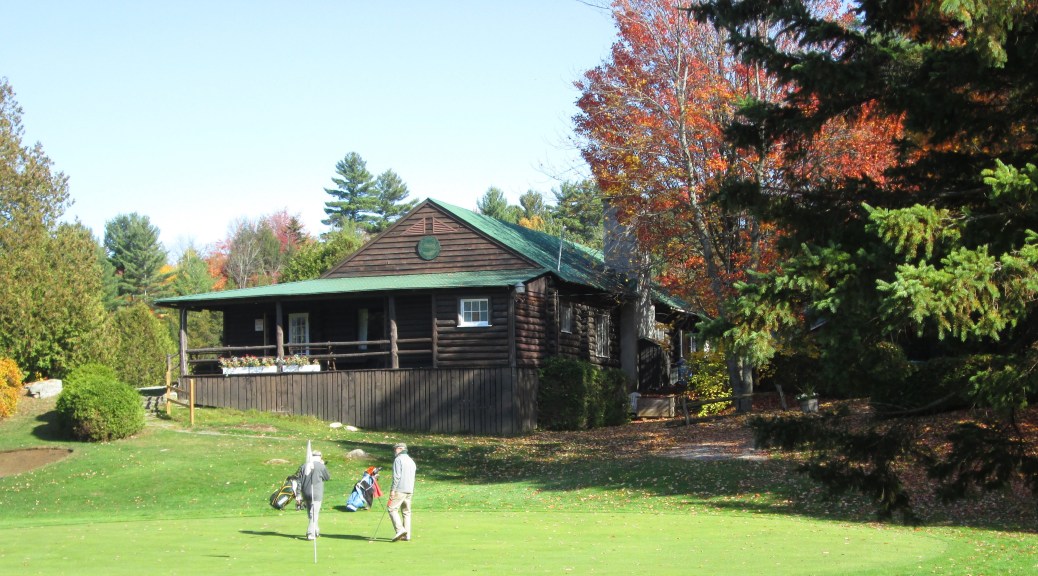
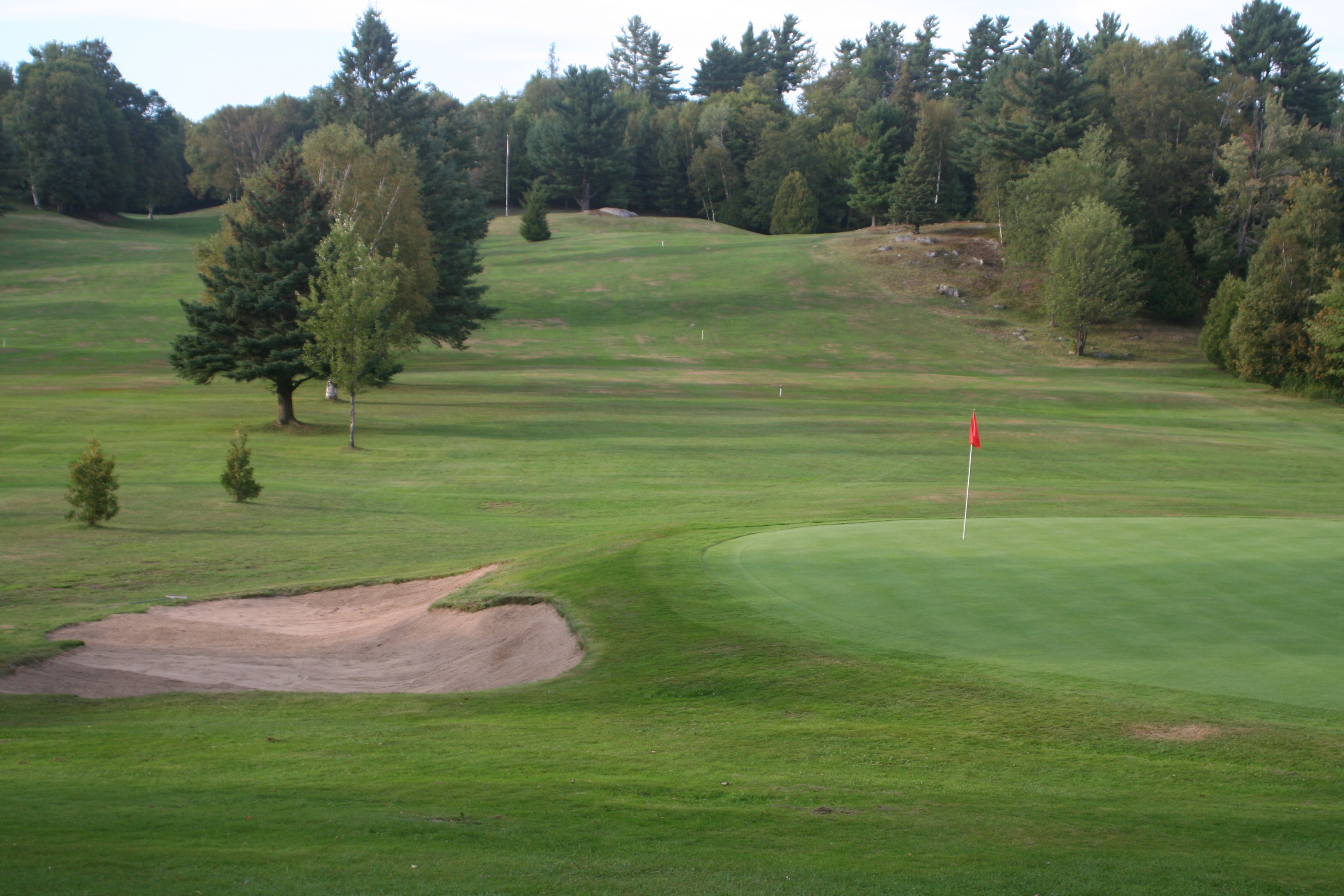
The Dunany Country Club will be celebrating its 100th Anniversary in 2022. This nine-hole golf club, located north-west of Montreal in the lower Laurentians, near Lachute, has been of prime importance to my family and our history. My parents met in Dunany.

The Dunany area was settled in the mid-1800s by the Irish. These immigrants tried to farm the rocky Laurentian Shield carving small farms out of the forests. The area had already been logged but still, trees were everywhere. Small patches of land were cleared but it was subsistence farming at best. A post office was established in 1853 and it was called Dunany. The name came from a point of land in County Louth, on the east coast of Ireland. The four small lakes brought fishermen and cottagers to the area early in the 20th century.

My paternal grandparents, William and Minnie Sutherland first travelled to Dunany to visit friends, the McRobies. The long journey from Montreal, needed a car, train and horse and cart to complete, so one stayed a few days. Grandfather Sutherland enjoyed the country and so he bought some property and built a cottage on Boyd Lake. For them, it remained a long journey but he was said to be the first person to drive a car in from Lachute.

No one thought about golf until Katherine “Kit” McRobie challenged a friend to a game around the pastures and fields and so golf came to Dunany. A group of 20 people, including my grandfather, contributed money to buy land and in 1922 the Dunany Country Club was born.

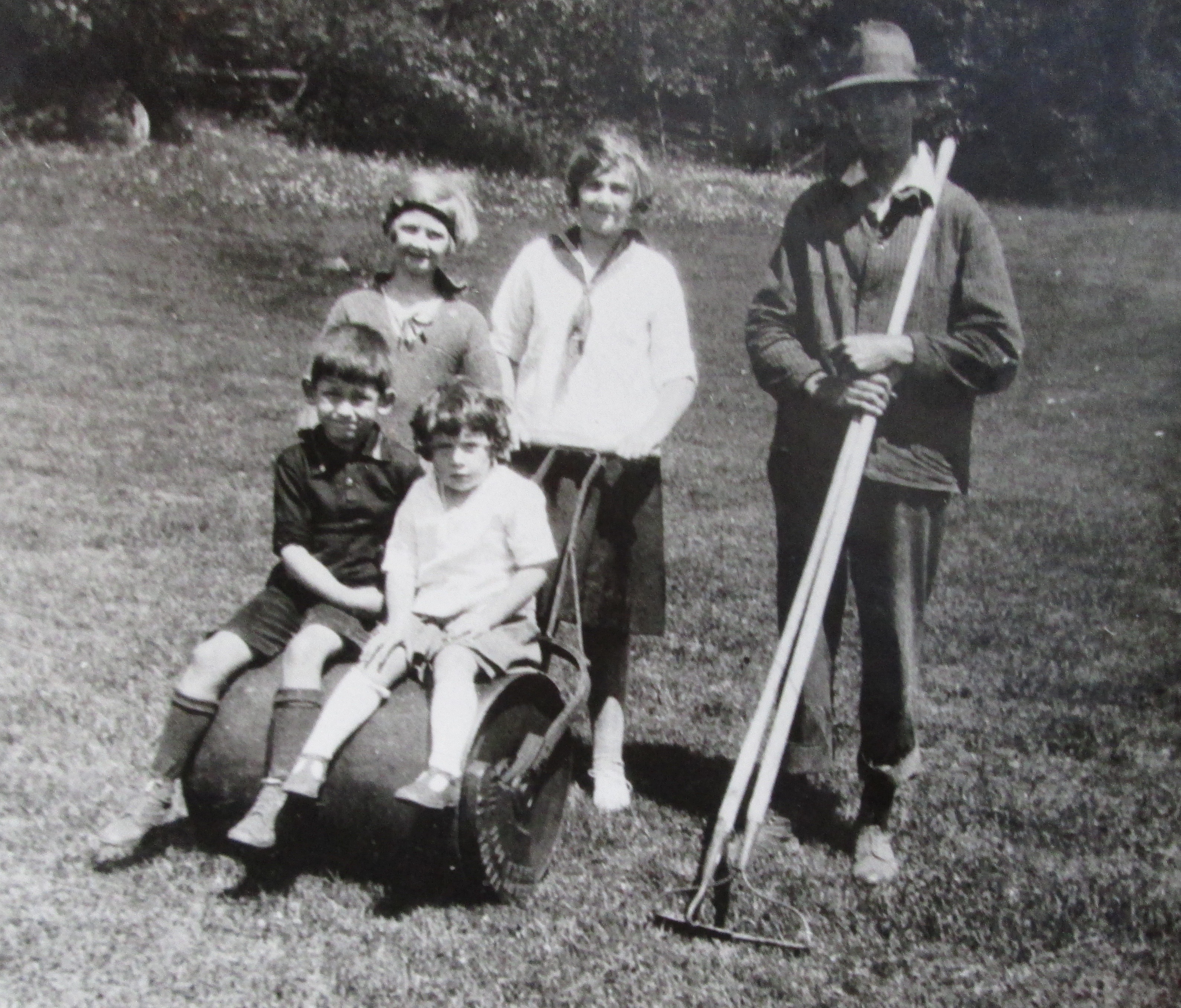
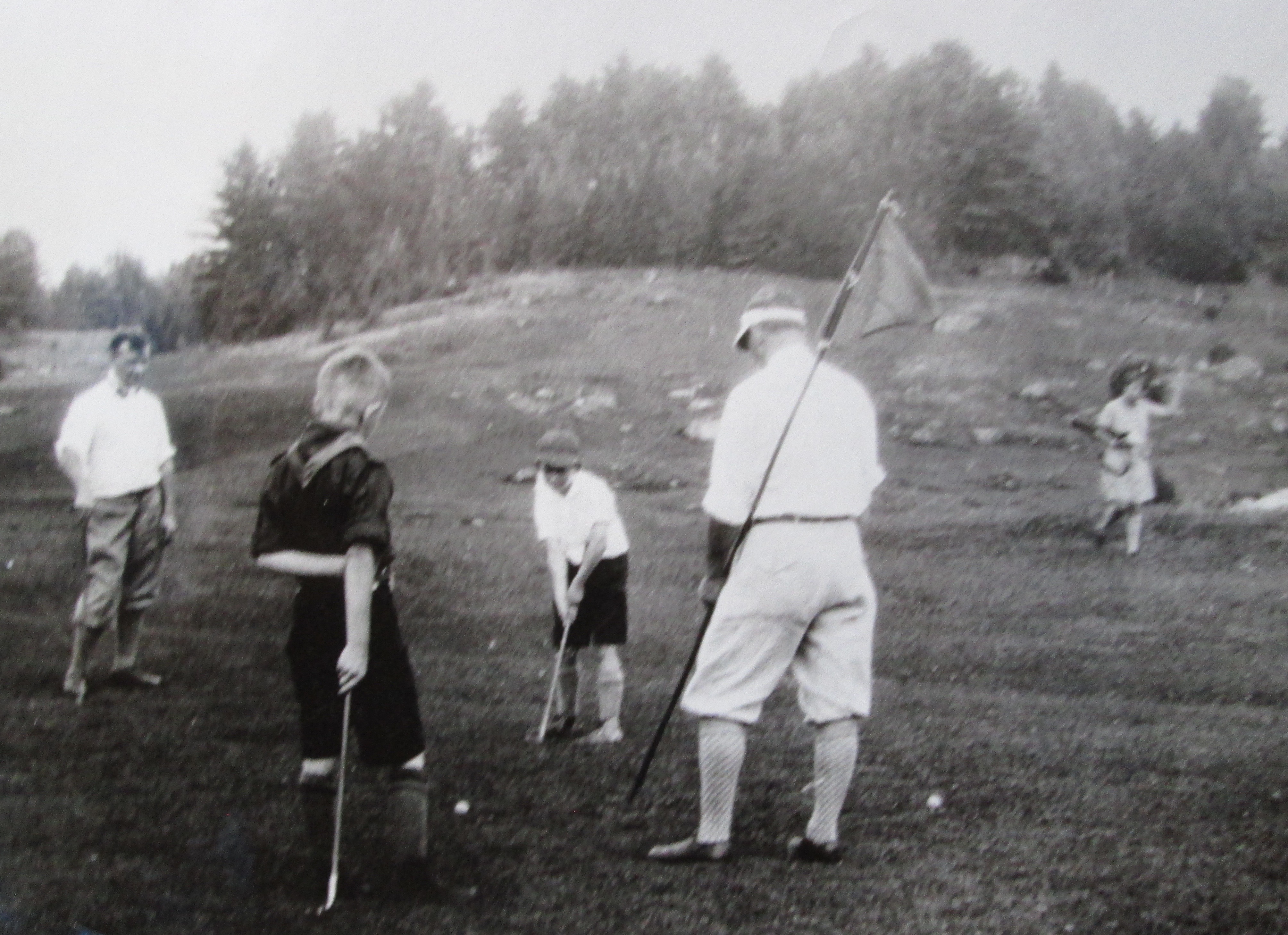
IMG_0124
Wilson Sutherland putting on a sand green 1924

IMG_0130
Golf course equipment circa 1925

IMG_0128
Rocks and Rough Greens 1927

When my maternal grandfather Rene Raguin was interested in buying a country house in 1931, he too looked in Dunany. He knew of the area because his wife’s sister, lived in Lachute and she and her husband had a place at Lake Louisa, near Dunany. One evening, the Sutherlands visited the Raguins at their new cottage as Mrs Raguin and Mrs Sutherland knew each other from the United Church Women’s group. My mother was ten and she and her sister were sent to bed but spied on the visitors and their 15-year-old son Donald. With the age difference, Dorothy and Donald didn’t see much of each other until they met again after the war at a dance at the clubhouse. Two years later they married.

Everybody in the families at least tried golf. My grandmothers were not taken by the game but most other family members persevered. Some actually became very good players. The rough pastures and sand greens gradually evolved to smoother fairways and grass greens. The course grew from a couple of holes to a full nine. The layout of the course kept evolving. Then even sand traps were added. The trees have grown and some fixture trees have had to be cut down. The fairways are still not perfect but it is a country course played with preferred lies.

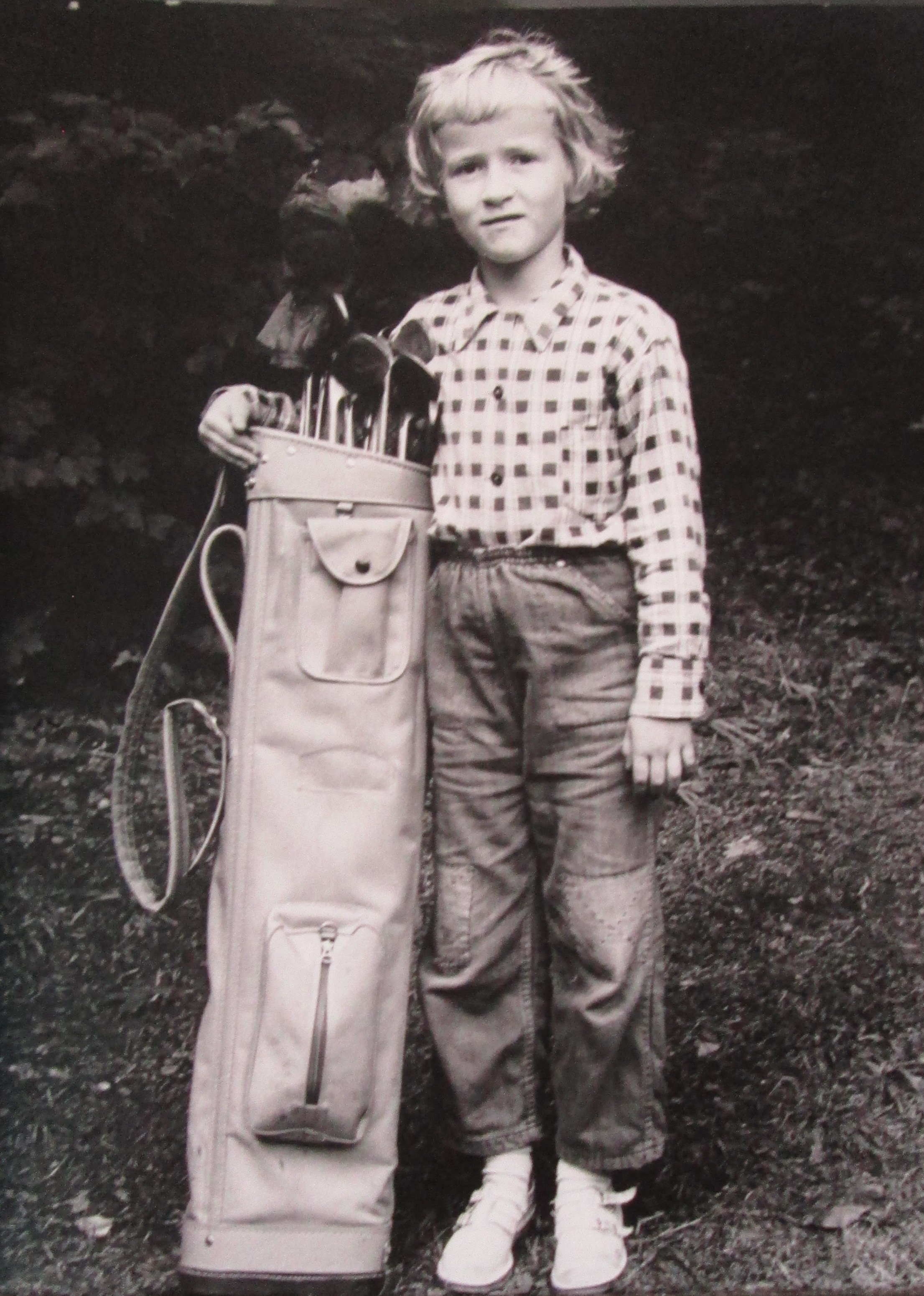
IMG_0123
The Golfer 1959

My father always lamented that he didn’t have proper lessons as his father taught him so he made sure we all had lessons with the visiting pro. My mother often took the four children over to the club so she could play. The well-behaved children could hit balls while those misbehaving had to sit on a bench and wait for the hole to be completed.

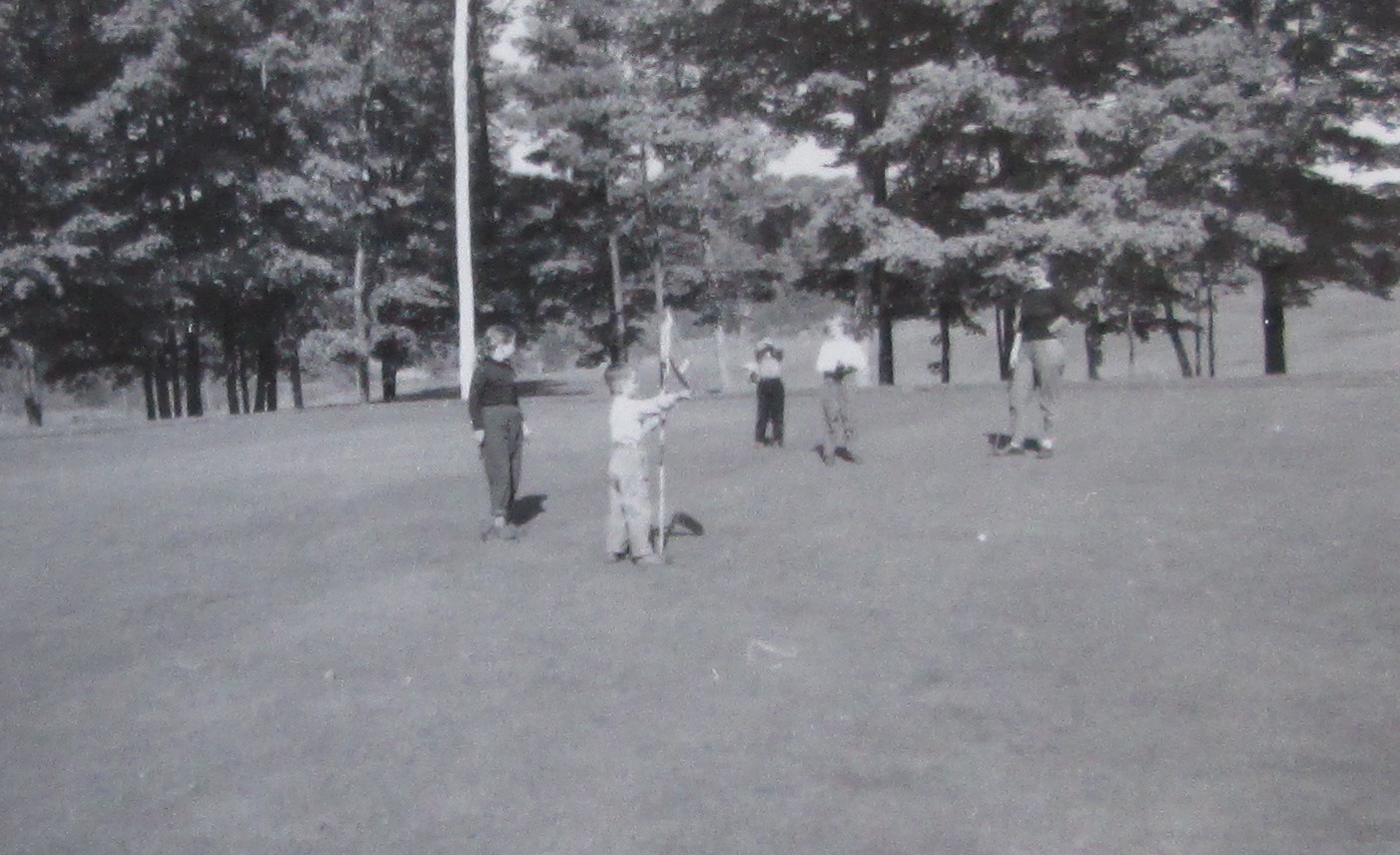
IMG_4908
The Sutherlands on the 1st green 1960

Four members of the family have had holes-in-one at Dunany. William Sutherland aced a hole that is no longer in play. He stationed his brother on a hill with a view of the green so he wouldn’t lose his ball and after he hit, all Wilson said was, “It’s in.” Isn’t that the point of the game! My mother Dorothy’s ball went into the hole after my father said, “Your mother just doesn’t hit the ball like she used to.” Her ball landed at the side of the green, bounced on and rolled in. My brother Don and I have also each aced a hole.

There are many trophies played for at the club. The Sutherlands have won a number. The Parkes Culross trophy is one that many family members have won. It is a low net competition played for on Labour Day weekend. Eight family members have their names engraved on this trophy.

The club continues to be the centre of the community. There are now plans for the log clubhouse to be renovated. Those who don’t play golf still attend the many functions, from dinners and bridge to music fests and art shows, sports nights and other junior activities. Mine isn’t the only family who found love in Dunany and so most people are related to somebody. Children who grew up and moved away have now returned and bought their own cottages. When you meet someone new you ask, “Whose house do you live in?” They think it is theirs but the spirit of all the old Dunanyites lives on.

IMG_3365
9th Green Grass & Sandtrap 2011

Notes:

Hammond Eleanor Hamilton, A History of Dunany. Printed in Canada by Zippy Print, Brockville, Ontario. 1990.

Eric Dauber, The Story of the Dunany Country Club, 1967.

Beth Sutherland Van Loben Sels, As I Remember Dunany.

Family winners of the Parkes Culross are Rene Raguin, Dorothy A. Sutherland, Donald W. Sutherland, Mary Sutherland, Donald J. Sutherland, Dorothy I. Sutherland, Sharon Leslie and Scott Ritchie.

Thirteen Children

When I first became interested in genealogy I knew very little, especially on my Sutherland side. A query I posted on Roots Web and a reply from Carol McIntosh Small opened the door to a flood of information, pictures and a number of third and fourth cousins. The cousins all wanted to know, “Who was your William Sutherland’s father?”

One cousin had heard stories that William Sutherland, born about 1750 in Scotland, had 13 children. They had only been able to find seven children from William and his wife Catherine Mackay. My William appeared to be his grandson, with his parents being another William Sutherland and Christina McLeod. He was thought to be one of six children. Then, we all received an email saying, “Guess what?” There was only one William Sutherland and he had two wives, hence the possible 13 children.

If one just looked at birth dates, William wouldn’t be expected to have fathered these 13 children. The first was born about 1779 and the last around 1827. In fact, William was around sixty when he married Christina McLeod and started his second family. He was almost eighty when his last child was born!

Unfortunately, before his second family was grown, William, old and frail was unable to work. His mind went and he couldn’t manage his affairs. He had been a stone mason and had worked the land in Inchverry as a tenant for more than 50 years. He was behind on his rent and was to be expelled from his land and removed from his cottage.

In April of 1833, his wife Christina, with the help of Rev H. McKenzie sent a petition for the consideration of the Duchess of Sutherland, pleading for time to catch up on the arrears. It stated, that if they were removed from their home, she and her young children would be forced to beg to survive.

William had always been an industrious and honest man who had never been in debt. Not only had he raised the seven children from his previous marriage, who were all educated and in various trades, but he had also raised many of his brothers and sisters after their parents died. They were now in other parts of the world and either could not help or were “forgetful of their duty”. Christina had expected to receive help from William’s brothers in Aberdeen and his son by his first marriage in England but no help arrived.

There was another petition, August 14, 1834, stating that their oldest son William, now 17, was finishing his apprenticeship as a shoemaker in Inverness. He would begin working in Tongue in the summer of 1836. As everyone needed shoes and he was a sober and hard working fellow, he would probably do well and would be able to support the family, manage the lot and pay the rent. In the meantime, they hoped the Duchess would allow them to remain on the land and to keep a little summer meal.

The Duchess responded August 20, 1834, “The petitioner’s arrears will be given up upon condition of the petitioner’s son assisting him in the future.” Their son William did looked after the family until he left for Canada in 1845. His younger brother Donald, then also a shoemaker was left in charge.

Further research by the cousins turned up two more children born to William and Christina. Although a William wasn’t a child of William and Catherine there was a John so the 13 children have become 15.

Notes:

National Library of Scotland, Edinburgh: Sutherland Estate Papers, Dep. 313/2461    Papers found by Margaret Walker and passed on to the cousins..

Small, Carol A. The McIntoshes of Inchverry. Denfield, Ont.: Maple Hurst, 2008. Print.

Personal communications from Karen Sutherland Pahia, Nancy Sutherland Grieg, Carol McIntosh Small and Paul Worth.

WILLIAM SUTHERLAND was born abt. 1750 in Tongue, Sutherlandshire, Scotland. He married CATHERINE MACKAY. She was born abt. 1755. He then married CHRISTINA MCLEOD. She was born in Tongue, Sutherland, Scotland.

Children of WILLIAM SUTHERLAND and CATHERINE MACKAY are:

 JOHN SUTHERLAND, b 1779

 MARGARET SUTHERLAND, b. Abt. 1783; d. April 06, 1873, Tongue Sutherland Scotland.

ELIZABETH SUTHERLAND, b. Abt. 1789.

GEORGE SUTHERLAND, b. Abt. 1790; d. Bef. 1851.

HELEN SUTHERLAND, b. Abt. 1794; d. June 04, 1846, Mt. Thom, Pictou Co., Nova Scotia, Canada.

BARBARA SUTHERLAND, b. July 04, 1794.

GRACE ANN SUTHERLAND, b. January 05, 1800; d. September 12, 1889, Strangeways, Australia

Children of WILLIAM SUTHERLAND and CHRISTINA MCLEOD are:

CATHERINE SUTHERLAND, b. Abt. 1810, Tongue Sutherland Scotland: d. January 23, 1858, Rhitongue, Tongue, Sutherland, Scotland.

ISABELLA SUTHERLAND, b. Abt. 1814, Tongue Sutherland Scotland; d. June 22, 1897, Heddon Bush District, Southland, New Zealand.

WILLIAM SUTHERLAND, b. 1816, Sutherlandshire, Scotland; d. August 12, 1887, Toronto, Ontario, Canada.

JOHAN SUTHERLAND, b. Abt. 1818; d. November 12, 1901.

HUGHINA SUTHERLAND, b. Abt. 1820; d. August 09, 1909, Inverpolly, Ross and Cromarty, Scotland.

JANET “JESSIE” SUTHERLAND, b. Abt. 1825, Tongue, Sutherland, Scotland: d. March 20, 1924, Ullapool, Lochbroom, Ross and Cromarty, Scotland.

DONALD SUTHERLAND, b. Abt. 1826, Brae Tongue Sutherland Scotland; d. May 04, 1895, Brae Tongue Sutherland Scotland.

ROBERTINA SUTHERLAND, b. Aft. 1827, Tongue Sutherland Scotland: d. June 25, 1917, Coldbackie, Tongue, Sutherland, Scotland.

His son William was my great great grandfather. A story about William’s wife Elizabeth Mowat, can be found at https://wordpress.com/post/genealogyensemble.com/3293


Further Information is Being Withheld

Davison Sutherland, my grandfather’s cousin’s life was entwined with the city of Toronto. He was born there, went to Jarvis Collegiate, obtained an engineering degree from the University of Toronto and then worked for the city his whole career.

“Dave Sutherland – born A.D. 1887 and still existent. Owing to the fact that a complete biography is being compiled against the day of his demise, further information is being withheld.”

This, his biography in the Torontoensis 1913, the University of Toronto Yearbook showed a quirky sense of humour.

Davison served in the military during World War One. He signed up in 1916 as a Lieutenant in the 208th Canadian Irish Battalion but later that year resigned his commission and sailed to England to join the Royal Flying Corps (RFC). He served in battle from Nieuport to Dixmude in Belgium and Arras to St Quentin in France with the 24th Squadron of the RFC, 14th wing. He was also an instructor in aerial fighting until 1918 and was discharged February 1919 with the rank of Captain.

He was the youngest surviving son of William Sutherland and Jessie Johnston. His father died in 1914 and his mother in 1916. He was then the man of the house, 21 Rose Street, Toronto. He lived there with his maiden sisters except during his service in WWI. Agnes died in 1920, Isabel in 1924 and Jessie left when she married Howard Reive in 1925. A fourth sister Annie, had moved to the United States as had his older brother William. Mowat, the youngest died as a baby.

Davison was 40 and finally free of family obligations when he married Edna Michel and soon had two children, Barbara and William Davison.

He worked for the city of Toronto as a roadway engineer, a city manager and from 1946 as deputy city engineer. His expertise was called upon when the rivers flooded and the roads and bridges were at risk or when water mains burst. He was known as a conscientious, faithful employee and one of the most reliable and respected civil servants. He would often get out of bed in the middle of the night to turn on the water for a pensioner or to help other people in distress.

In 1957 he was acting chief engineer. The Mayor, Nathan Phillips, did not want him promoted to Chief Engineer as he was due to retire in October, only six month away. The Mayor thought that an increase in salary and the resulting pension increase ( $15 per year) for a 40-year employee was unjustified. It would be a needless spending of taxpayers money. The board initially voted down the promotion and the Toronto Star said it was because of a vendetta between Mayor Nathan Phillips and Controller Jean Newman, with Davison, a pawn. He did though get promoted. Then in May 1957, all department chiefs got a 10% raise and it was recorded that Davison Sutherland’s salary went from $12,400 to $13,600. Concern about the extra cost of his pension to the city taxpayers became a moot point as he died before his retirement date.

His obituary in the paper July 7, 1957, was not very long and so, much information about Davison and his life is still being withheld.

Notes:

“Eastern Ave. Crossings Called Most Dangerous.” Toronto Daily Star 12 Mar. 1957: 21. Print.

“Needless Spending of Taxpayer Money.” Toronto Daily Star 1 May 1957: 4. Print.

“Charge Philips Brand Vendetta against Jean Making Goat of Worker.” Toronto Daily Star 2 May 1957: 1. Print.

“Dave Sutherland City Engineer Dies.” Toronto Daily Star 8 July 1957: 8. Print.

Davison Sutherland.” Roll of Service, University of Toronto Archives January 14, 1920.

Torontonensis 1913 Yearbook pg. 161 https://archive.org/details/torontonensis13univ

He Couldn’t Serve

IMG_9105

If you weren’t in uniform you weren’t doing your part.” This was a quote from a veteran on Remembrance Day 2017.

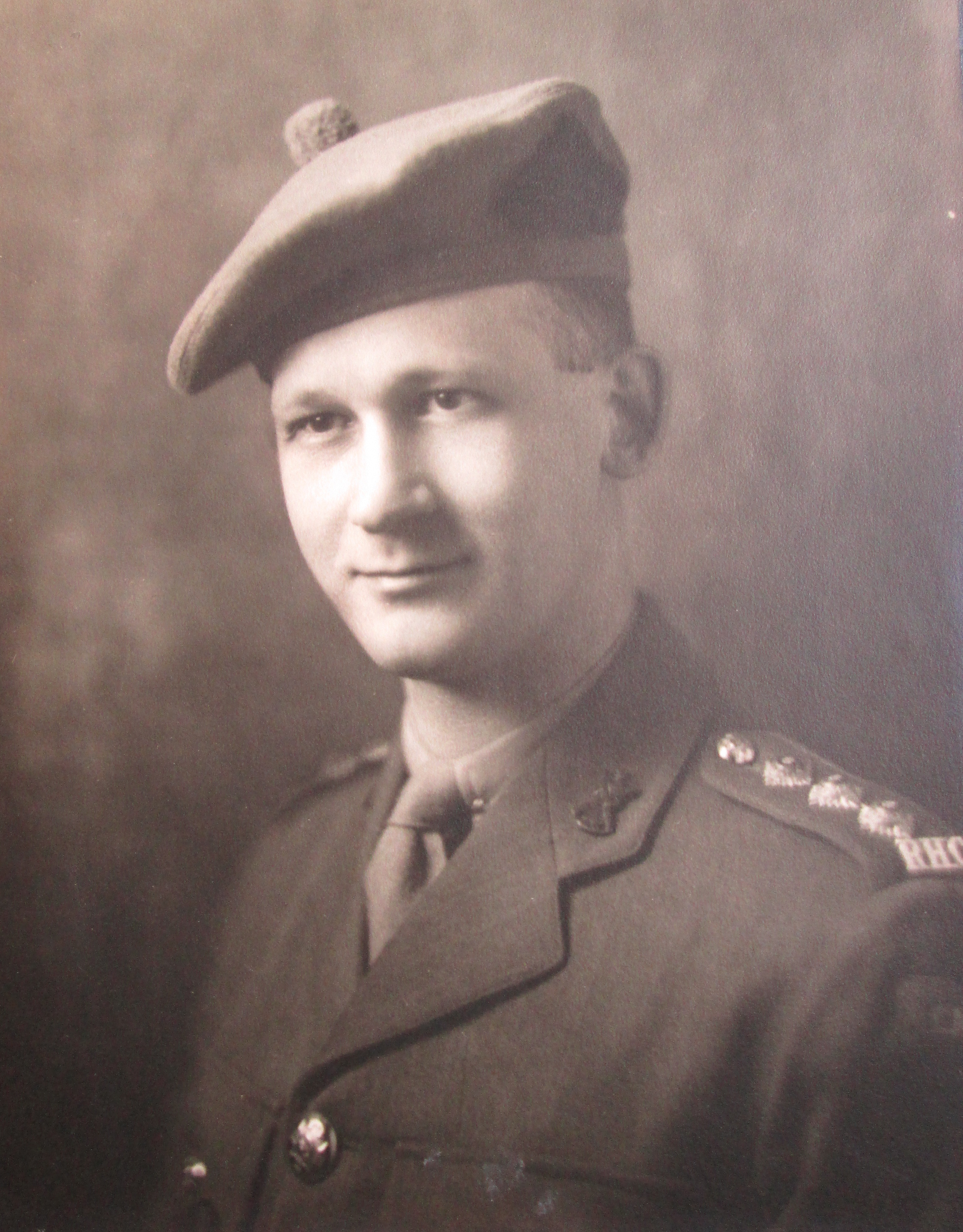
My father, Donald Sutherland volunteered for service at the beginning of WWII but was twice rejected for medical reasons. He had to sit out the war working as an accountant and serving in the Blackwatch reserve.

“ Dear Mother, I had my medical test today. It went fairly satisfactorily except that as usual, my heart was a little fast and I have to go in again Thursday am to have a recheck. They do everything under the sun to you and it takes about an hour and a half. Everything else went well and I suppose I’ll be accepted if my heart steadies down next time. I am supposed to go to bed very early on Wednesday night to soothe my nerves. I just expected to have the interview today but they buzzed me right through the whole works, Love Don”

Donald graduated from McGill University in the spring of 1939. He had just turned 22 and he and all his classmates expected to find jobs and begin their adult lives but war was on the horizon. Germany invaded Poland on September 1, 1939, three days later Britain declared war on Germany, followed by Canada a week later. Personal lives were put on hold as young men volunteered for military service.

With his new commerce degree, my father had begun working for Ritchie Brown and Company as an auditor  Once war was declared, he signed up for the McGill Canadian Officers Training Corp (C.O.T.C.). The McGill C.O.T.C. was quickly expanded from 125 to more than 1,400 cadets and 50 instructors. The need for a drill hall spurred the construction of the Arthur Currie Gymnasium. New recruits were trained in map reading, military law, organization, administration and upon completion sent to a branch of service in which they could best contribute their talents and skills.  

In August of 1940, he registered with the Dominion of Canada National Registration Regulations expecting he would soon be in military service. He went in for his medical examination without a thought and was rejected. He later tried again.

Twice he received a certificate of rejection from the Canadian Army. The doctors said he was not able to do strenuous work because of his high blood pressure and mitral valve insufficiency. He also received a rejection notice from the Airforce because that application wasn’t completed.

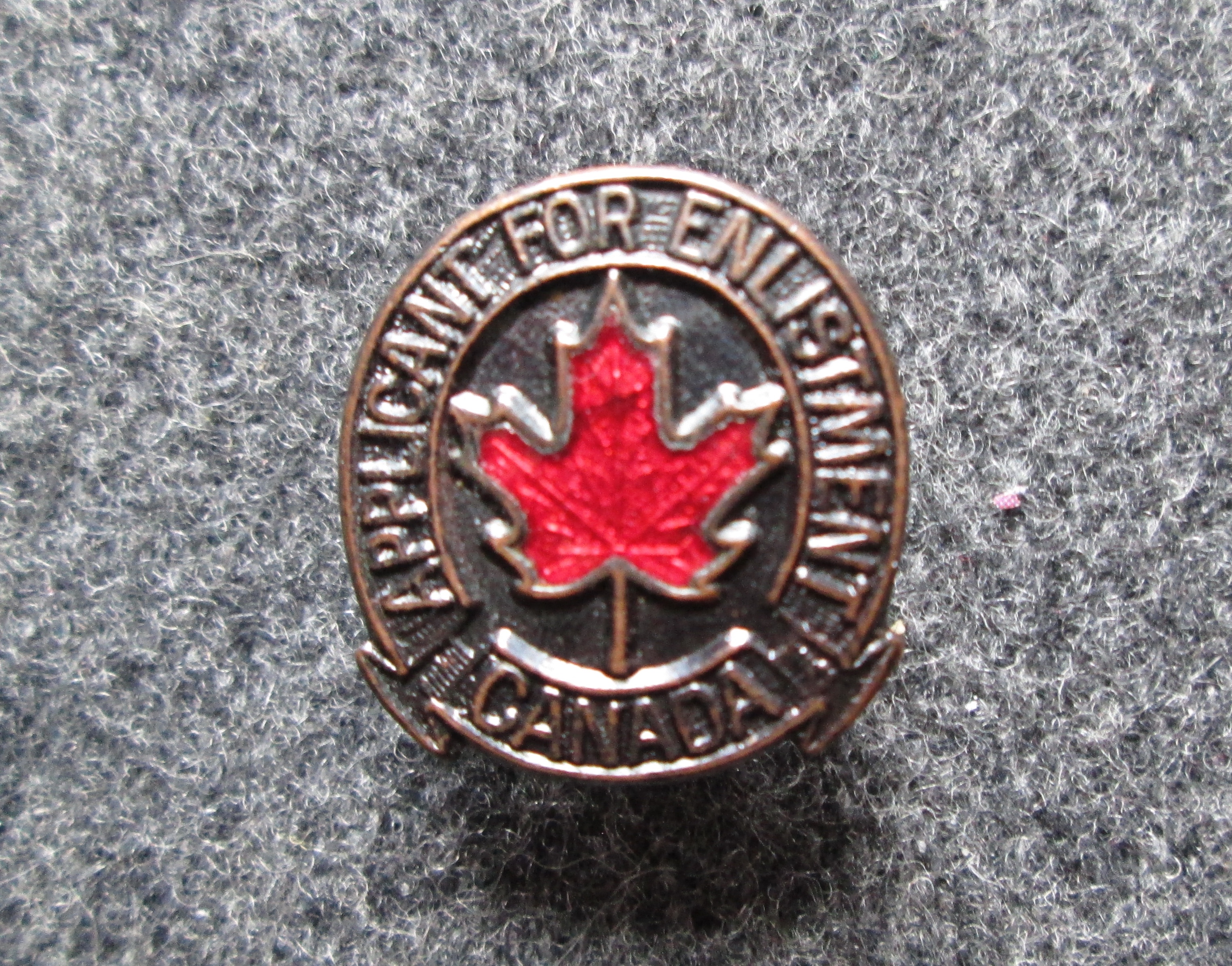
With his second rejection letter from the army came an Applicant for Enlistment badge and card to identify him as an applicant who had failed to meet the minimum medical standards. The lapel badge was to be worn to show the public he had volunteered.

IMG_9118
Applicant for Enlistment Lapel Pin


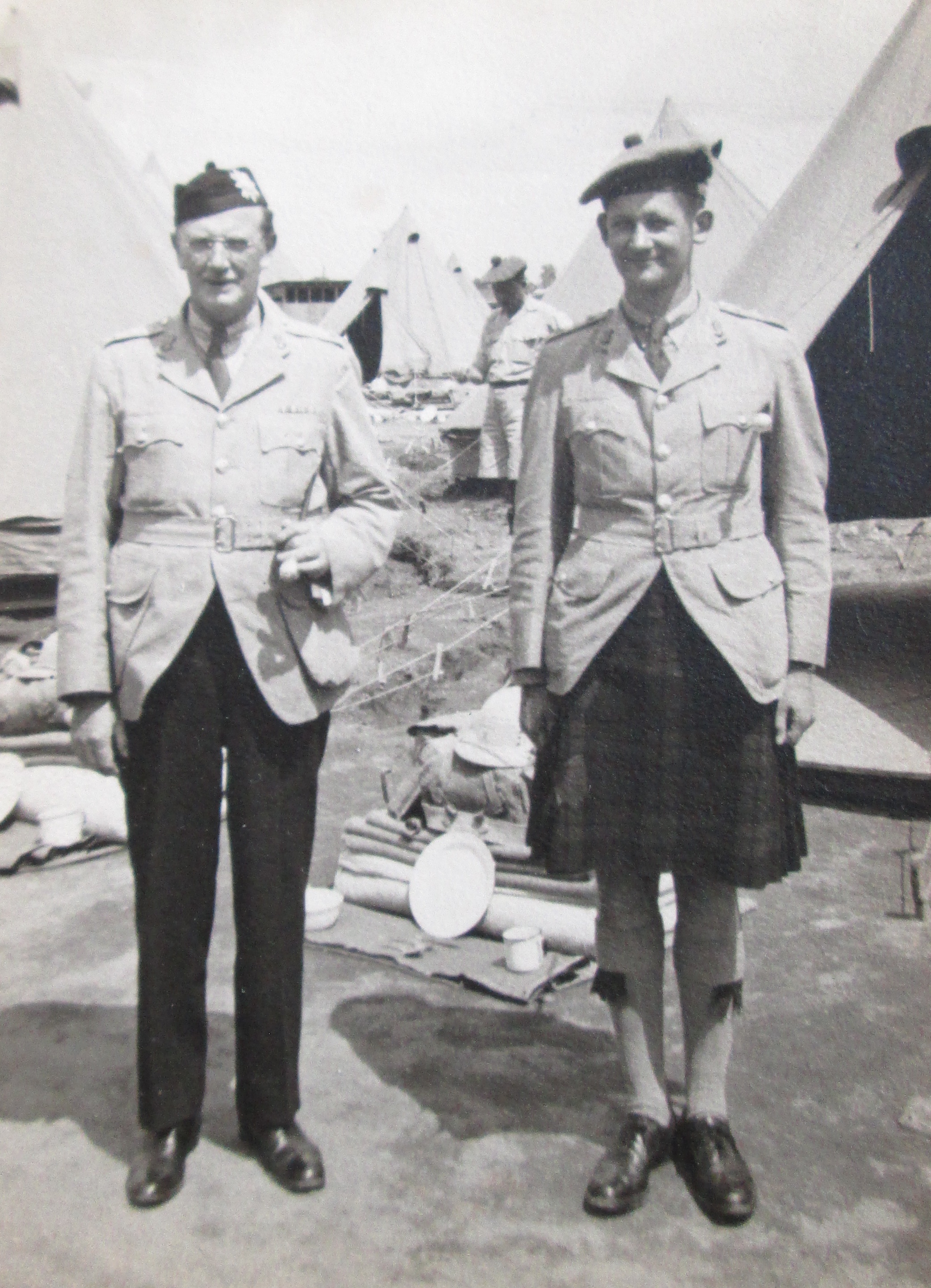
He served in the Black Watch Reserve to the end of the war. As a reservist, he was a part-time soldier while he continued at his day job. He trained raw recruits at camps in Mount Bruno and Farnham, Quebec and garnered high praise from his commanding officer. The battalion’s modified trooping of the colours was written up in the Montreal Gazette, pointing out Lt. D.N. Gatehouse and Lt. D. Sutherland, bearing the flags.

IMG_9095
Commanding Officier & Donald Sutherland Black Watch Camp, Mount Bruno, Quebec  1941


I can only imagine how my father felt, staying home, receiving letters from all his friends serving overseas, while he travelled in Canada auditing company books and marched in Montreal.

Notes:

2017 was the 100th Anniversary of my father’s birth and in his memory, I wrote this story. This is a companion piece to my mother Dorothy Raguin’s war service https://wordpress.com/post/genealogyensemble.com/4470

Letter from Donald Sutherland to his mother Minnie Eagle Sutherland July 28, 1942.

Letter from Major D.L.Carstairs to Lt Gatehouse and Lt. Sutherland July 19, 1942.

Black Watch Stages Colourful Ceremony – The Gazette, Montreal July 20, 1942. The full trooping of the colours was not done in wartime. According to other newspaper clippings my grandmother saved, he marched in a number of parades and ceremonies.

Served under Lieut Col. H.A. Johnston 4th (Reserve) Battalion of the Black Watch.

Here is a link to my mother Dorothy Raguin’s war years.

https://wordpress.com/post/genealogyensemble.com/4470

Mother-in-Law!

IMG_0414
John Sutherland

My great grandfather Donald Sutherland’s brother John was the only sibling I ever heard the family talk about. There were stories, but never any mention of a wife or children so I assumed he never married. I have recently discovered that not only was he married, but he was married twice and the second time to his mother-in-law!

Both my father and my Aunt remembered him as a slim and wiry old fellow, with a shock of white hair parted in the middle. He was hard of hearing but very chatty, unlike many of the other relatives. Words he had encountered since his deafness and had never heard distinctly, he pronounced according to some vague approximation. He drove a Ford sedan, which he referred to as his “sweden”.

I had trouble finding information on John Sutherland. I haven’t yet found his birth certificate and only know his approximate birth year (1864), from an early census. There are a lot of John Sutherlands and so no unusual name to help. The first information I found was his marriage in 1900 to a Mary Jane Gibson, which showed his parents to be William Sutherland and Elizabeth Mowat. I then found them on the 1911 census, Mary G with a Gertrude Sutherland 24 and Roy Sutherland 20. Whose children were they as they were born well before this marriage? Gertrude’s birth certificate from 1887 showed her mother was Elizabeth Gibson as did Roy’s in 1891. I then found Elizabeth’s birth certificate which stated her mother was Mary Jane Ramsey and at Elizabeth’s death she was the wife of John Sutherland.

John had married Elizabeth Gibson the daughter of William Gibson and Mary Jane Ramsey about 1886 and they moved in with her widowed mother. There, their two children were born.

In 1899 Elizabeth died of tuberculosis after several years struggling with the disease, leaving John with two young children. Perhaps it wasn’t seemly for her husband to continue to live with her mother but he needed help raising his children, so on March 9, 1900, he married his mother-in-law. At that time he was 37 and she was 49. In the 1901 census Mary Jane was still listed as the head of the household and John and his children as lodgers, but in 1911 she is the wife, Mary Jane Sutherland.

Interestingly, when his son Roy joined the army in 1918 he gave his next of kin as Mary Jane Gibson, his grandmother. Many questions can be raised about John and Mary Jane’s relationship. Was it merely a marriage of convenience or did they find love living closely together for years?

I have not found a record of either his death or Mary Jane’s. Although he lived for many years in Davisville on Merton Street, which borders on Mount Pleasant Cemetery, I haven’t been able to find if this is his final resting place. Most of his family members are buried in this cemetery. Elizabeth was buried in her father’s plot in the Toronto Necropolis, but John doesn’t appear to be there either. Are John and Mary Jane buried together somewhere, together through eternity?

Notes:

Small, Carol A. The McIntoshes of Inchverry. Denfield, Ont.: Maple Hurst, 2008. Print.

Elizabeth’s death Source Citation: Archives of Ontario; Series: MS935; Reel: 95.

Canada Census, 1901″, index, FamilySearch (https://familysearch.org/pal:/MM9.1.1/KHG1-YKN : accessed 12 Mar 2014), John Sutherland in an entry for Mary J Gibson, 1901.

Canada Census 1911″, index, FamilySearch (https://familysearch.org/pal:/MM9.1.1/27XF-XQY : (accessed 10 January 2015), John Sutherland, 1911.

Elizabeth Van Loben Sels, personal recollections sent to her brother Donald Sutherland abt. 1980.

“Canada, Marriages, 1661-1949,” index, FamilySearch (https://familysearch.org/pal:/MM9.1.1/F2KB-76N : (accessed 6 December 2014), John Sutherland and Mary J. Gibson, 09 Mar 1900; citing Toronto, York, Ontario, Canada, reference 44; FHL microfilm 230,899.

“Ontario, Toronto Trust Cemeteries, 1826-1989,” index and images, FamilySearch (https://familysearch.org/pal:/MM9.1.1/KH6H-8QC : (accessed 5 December 2014), Elizabeth Sutherland, 20 Nov 1899; citing Toronto, Ontario, Canada, section and lot I 62, line 27564, volume Volume 08, 1891-1900, Toronto Trust Cemeteries, Toronto; FHL microfilm 1,617,041.