All posts by Lucy H. Anglin

I am an artist and a writer.

Dear Uncle Bill

Dear Uncle Bill,

While rummaging through the Dusty Old Boxes containing family memorabilia, I came upon letters written by you to your only brother, my father, Tom.  There were also letters written to your sweetheart during WWII while you were stationed in England serving with the RCAF. So I thought the best way to remember you would be in the form of a letter.

Please allow me to introduce myself. My name is Lucy and I am one of your nieces.

Our paths never crossed.  I was only born in 1957 and you died in 1943. Your brother had seven children.  I was his fourth.  His eldest son, born in 1949, was named after you – William Sherron Anglin II.

While staying with my family in England in 2016, I visited you in person at your last known address:  Runnymede Memorial[1], Panel 179, Surrey, UK.  My grandchildren, who always enjoy a challenge, accompanied me in my search to find you. It didn’t take them long to find your panel and you – or your name, that is – inscribed on one of several stone walls, along with 20,000 other airmen,  at this dedicated memorial building on Cooper’s Hill overlooking the Thames River.

Your name was too high up for the children to touch but I brushed my fingers lovingly over your name and told you we were there. I am quite sure you knew it. You had an interest in mental telepathy, as did your grandfather, and his story was documented in the family boxes as well.  (Surgeon and Mentalist)

Throughout your letters to Tom, along with childhood memories, you shared and referred to an interest in The Rosicrucian Order which “is a community of mystics who study and practice the metaphysical laws governing the universe”.[2]

You maintained the belief in an ability to “project” yourself and to send mental messages. I can only guess that a feeling of closeness to your brother by any means must have consoled you greatly while away at war in England.

In your letters to your sweetheart, you described England in general (with the usual complaints about the rainy weather), your life with the RCAF, weekend leaves to Scotland and dances in the mess hall “wishing you were there”.  Although I don’t have her letters in response, I am sure you took great comfort in hearing from her.

You were sent on a training course at the end of May 1943 and, while away, your crew went on a mission without you – never to return. In the last letter to your girl, you confided that you were feeling “depressed” at their loss.  On the very next mission, you went missing as well.

Last picture of Uncle William
Last picture of Uncle Bill (far left) – 1943

Not long afterwards, your sweetheart sent a bundle of your cherished letters, wrapped in a bow, to your mother and wrote “I know I want to forget as soon as I am able, everything – and so I am sending you the few letters I had saved from those Bill sent me from England.  I hope that you would rather have them, than not … perhaps they will make you glad to have something more – to know something else of Bill’s life in England … rather than rake up memories you are trying to forget. For while I want to forget, I feel so sure that you will want to remember.”

Your mother never gave up hope that you would return one day.

Wendling & Josephine Anglin and sons Bill and Tom (1940)

Bill, Wendling  (the stock broker), Josephine, Tom and family dog (1940).

The abundant number of photos found with the letters in these boxes show your 27 years filled with family times – gatherings, annual trips, formal portraits, a few pets and a full life.

You will not be forgotten.

Lovingly,

Your niece Lucy

Note:

http://www.aircrewremembered.com/richmond-bruce.html

William Sherron Anglin was an Air/Gunner and Warrants Officer II with the 429 Squadron flying in a Wellington X bomber, Serial no. HZ471.

Reason for Loss:

Took off from R.A.F. East Moor, North Yorkshire at 22.36 hrs joining 719 aircraft attacking the town of Wuppertal, the home of the Goldchmitt firm which produced Tego-Film, a wood adhesive used in the production of the HE162 and TA154 (aircraft).  Around 1000 acres was destroyed in the firestorm that followed – 211 industrial buildings and nearly 4,000 houses were totally destroyed. A figure of 3,400 fatalities on the ground has been recorded. Bomber command did not escape lightly on this operation losing some 36 aircraft.

It is thought “probable” that HZ471 was shot down by Lt. Rolf Bussmann, flying out of Venlo airfield, and attacking this Wellington at 3,700 meters with the aircraft falling into the sea off Vlissingen.

429 Squadron possible loss area

[1] https://wiki2.org/en/Runnymede as at November 19, 2017

[2] https://www.rosicrucian.org/ as at November 19, 2017.

The Family Historian

Ten years ago in July 2015, my sister and I shared a “Sister Pilgrimage” to Shediac, New Brunswick, the home of our maternal ancestors. Here is a part of the story I wrote upon our return:

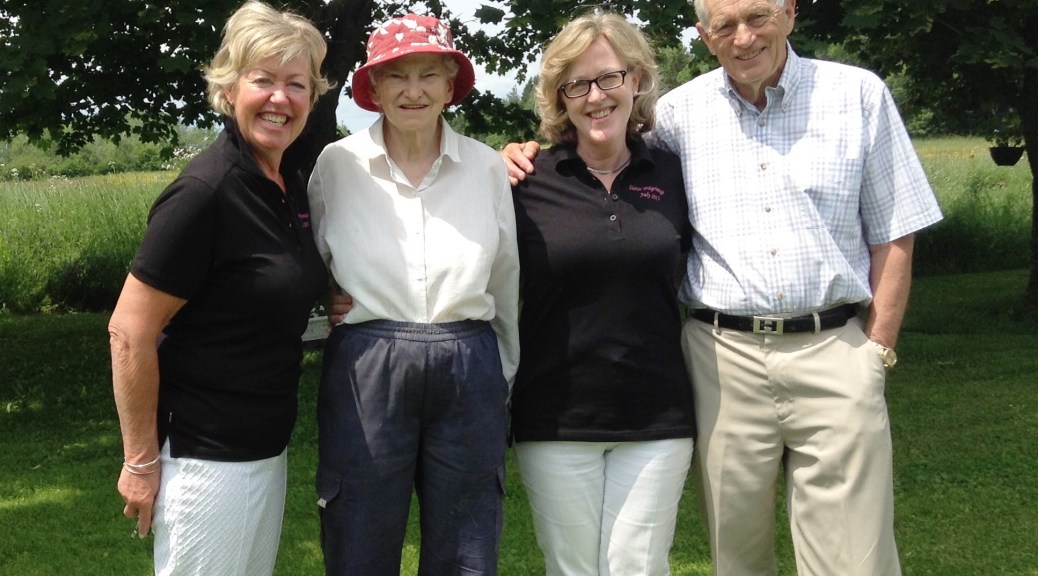
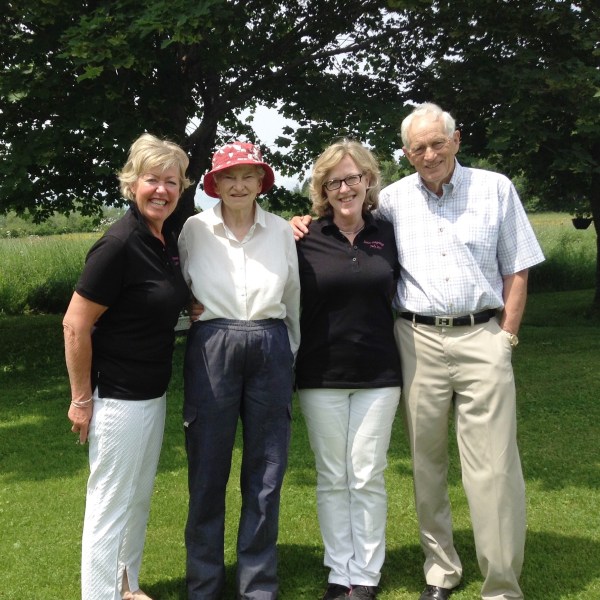
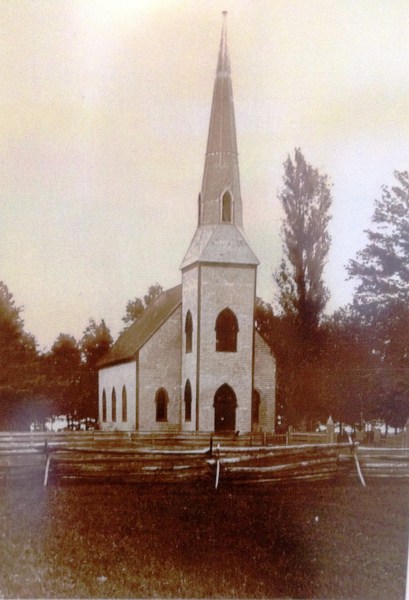
Early Sunday morning, dressed in our special t-shirts, we left in plenty of time for the morning church service at St Martin’s-in-the-Woods.  The greeter welcomed us warmly, and we asked if there might be any Haningtons at church that day.  She beckoned down the aisle to her husband who then introduced himself as Allen Hanington.  Overjoyed, we threw our arms around our surprised distant cousin and snapped a commemorative photo.  And so our journey began.

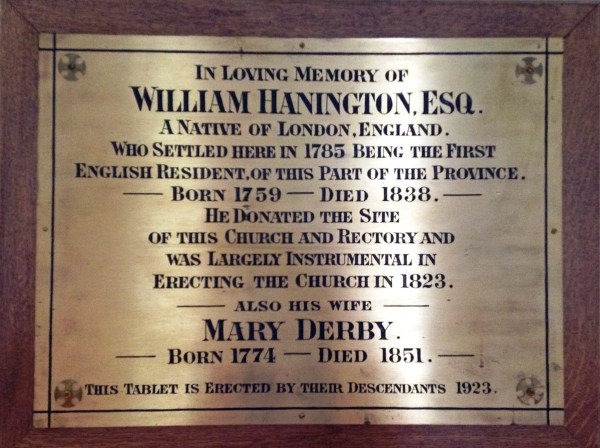
My 3x great grandfather, William Hanington William Hanington comes to Canada, was the first English settler in Shediac, New Brunswick, in 1785.  He was an amazing fellow who emigrated from England at the age of twenty-six, built a whole community, set up lumber exports, built ships, married a PEI girl Shediac’s First English Woman Settlerand had a family of thirteen.   Later in life, in 1823, he donated a piece of land and built St Martin’s-in-the-Woods Anglican Church, where he was buried in 1838.Later on that Sunday after the morning service at St Martin’s-in-the-Woods, we visited with Allen’s charming sister Lilian, the family historian who knew our exact location in the Hanington family tree!

… PS  The August 2015 family newsletter, the Hanington Herald, just arrived by mail! Included in the comments from the President’s Desk (that would be our cousin Allen!), it says: “We just experienced a lovely visit from the Anglin sisters; Lucy (Montreal) and Margaret (Ottawa) who were visiting in the area and attended morning service at St Martin’s-in-the-Woods Anglican Church on Sunday, July 5th 2015.  We had a very nice visit on Sunday afternoon.  They are descendants of Daniel Hanington.” Roaring Dan

After the recent passing of Allen Hanington, I spoke with his sister Lilian—and it quickly became clear that her story deserved to be shared.

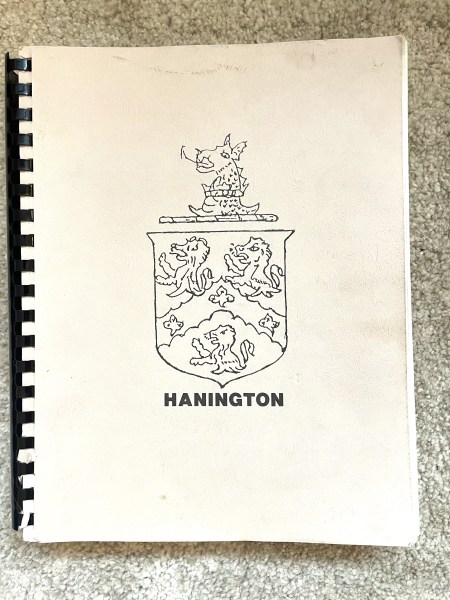
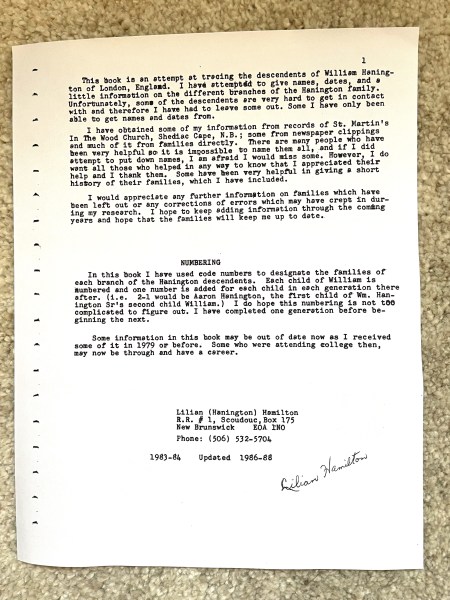
Lilian is my third cousin once removed on the Hanington side, and she’s made a lasting impact as our family historian. Her most significant legacy is the Hanington Book—a detailed 394-page family tree that she compiled and first published in 1983, then updated in 1988. Every Hanington was assigned a unique number to trace their lineage. Lilian herself is #2-4-6-10, meaning she is the 10th child of the 6th child of the 4th child of the 2nd child of our original Shediac settler, William Hanington. I now have a PDF copy of the Hanington book and happily share it with cousins near and far.

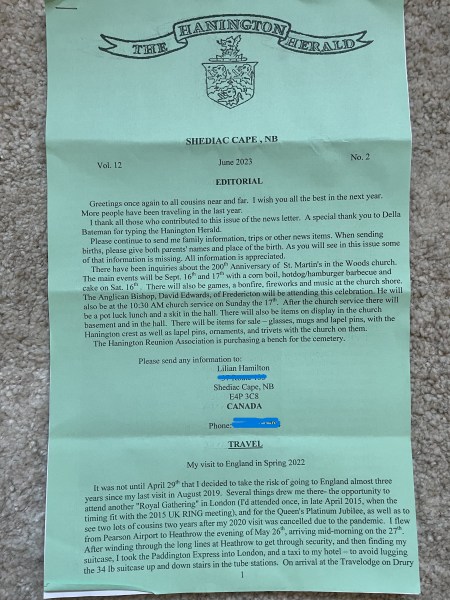
To keep the family connected, Lilian also created The Hanington Herald, an annual newsletter filled with updates on births, deaths, travels, and all things Hanington. She maintained it faithfully, offering four years of family news for the modest subscription price of just $12.

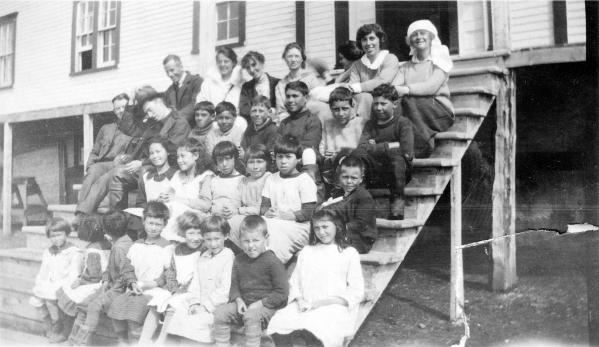
Lilian’s father, John Moore Hanington (1886–1967) ventured west from his birthplace in Shediac, N.B., in the early 1900s on a “grain excursion,” later joining the 145th Battalion in WWI, though he never served overseas. A skilled carpenter, he worked on the Scoudouc airport and maintained a thriving farm when he returned to Shediac. At one point, he had over 100 plum trees and picked more than 100 pints of raspberries in a single day. He also kept cattle, pigs, and hens for the family’s use.
His wife, Ada, came to Canada from Cheshunt, England at age 12. Together, they raised a large family—Lilian, their tenth child, was born in 1940.

Lilian attended Moncton High School, graduated from Teacher’s College in Fredericton, and taught school briefly before working at T. Eaton Co. Mail Order for 12 years. Like her father, she grew fruits and vegetables, ran a farm stand, and still maintains a huge garden. Her beautifully handwritten multi-page Christmas letters always include updates on her abundant harvest of that year.

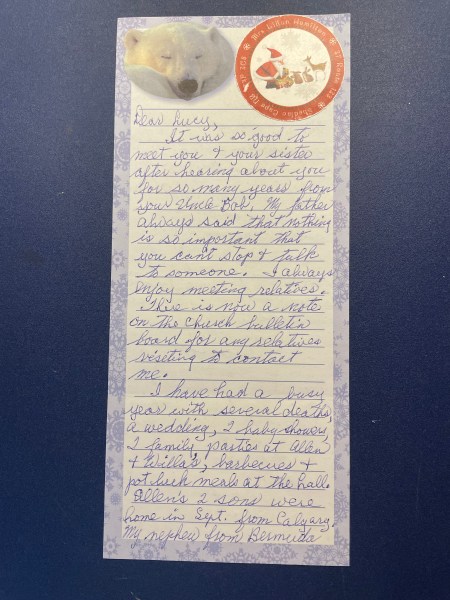
I received my first Christmas letter after we met in 2015… and now I look forward to it every year:

Christmas 2015

Dear Lucy,

It was so good to meet you & your sister after hearing about you for so long from your Uncle Bob. My father always said that nothing is so important that you can’t stop & talk to someone. I always enjoy meeting relatives. There is now a note on the church bulletin board for any relatives visiting to contact me…

My garden did well in spite of the late planting. I had peas to freeze, beans to sell, bushels of potatoes, some large carrots, cucumbers & small tomatoes to give away. I also had lots of gooseberries, pears & grapes. Allen had black currants and crab apples so I made lots of jam, jelly, preserves & marmalade. Some of which I will give as Christmas gifts. I also make dozens of cookies, many of which I give as gifts also. Easier shopping that way…

I wish you a very Merry Christmas with peace, joy, love & happiness. All the best in 2016. It was so nice to meet you. Please keep in touch.

Love,

Lilian

It feels fitting that I met Lilian at St. Martin’s in the Wood Anglican Church—a place deeply rooted in our family history. Built by her 2x great-grandfather (my 3x great-grandfather), the church has been a cornerstone of her life. She married Robert Hamilton there in 1967 and served faithfully for over 20 years as a Sunday school teacher, sewer, knitter, and superintendent.

In 1985, Lilian helped organize the 200th Hanington Reunion, a celebration that brought together 400 relatives for a parade and lobster dinner—honouring a legacy built on faith, hard work, and community. I only wish I had been there to witness it!

Before we ended our phone call, she fondly recalled my grandparents’ summer cottage Iona Cottage down the lane from the church and how my grandfather, an Anglican priest The Priest, would occasionally step in to lead summer Sunday services.

A natural historian and gifted storyteller, Lilian clearly inherited not only her father’s green thumb but also an extraordinary memory.

Lucy Hanington Anglin

#6-9-7-3-4

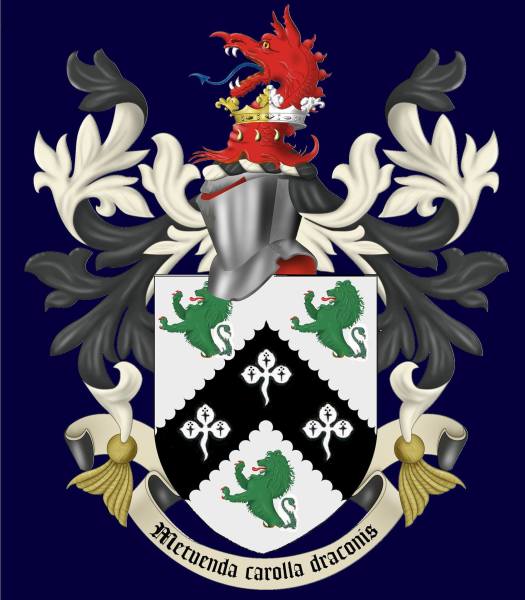
The Hanington Coat of Arms

Miss Lindsay’s Curtain Call (updated)
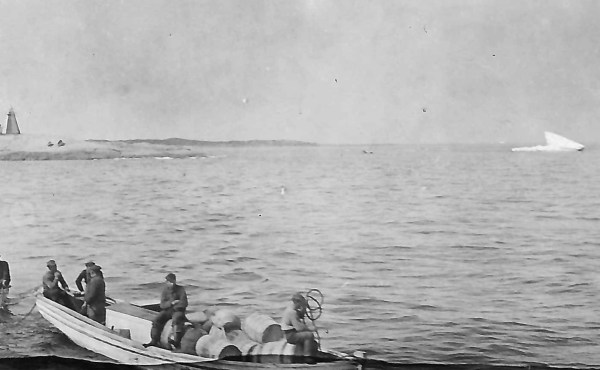
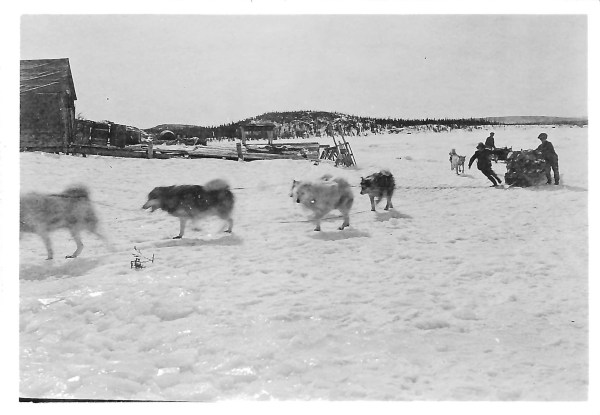
(Correction: I have been informed that is more likely that Reverend Henry Gordon took these photos, developed them and gave them to Miss Lindsay. The dog team photo would have been taken by Rev. Gordon during the winter and the fishermen in the boat must be south of Cartwright due to the lighthouse.)

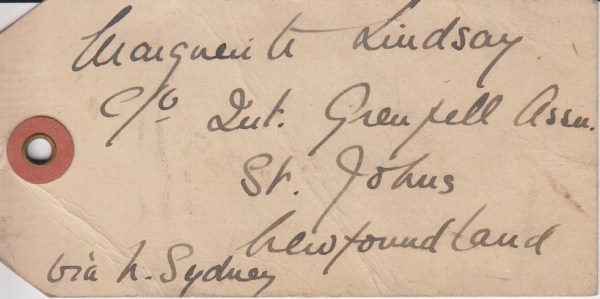
Miss Lindsay’s baggage tag- June 1922

Just over 100 years ago, my great-aunt volunteered as a summer teacher with the Grenfell Mission in Cartwright, Labrador, under Henry Gordon. In August 1922, just days before she was due to return home to Montreal, Quebec, she disappeared. Her body was found four months later, in December 1922, with a bullet through her heart.

I already wrote and published her story in seven parts (links below) and thought I had gleaned every bit of information possible from my “dusty old boxes.” But our ancestors want their story told and my great-aunt, Marguerite Lindsay (1896-1922), had quite a blockbuster to tell. Perhaps it was she who “tweaked” my cousin to finally look into his unopened boxes of family papers and memorabilia.

You can’t possibly imagine my excitement when I received his email:

Hi Lucy,

Apologies for taking so long to get to this. I attach scans of the small

black-and-white prints of Labrador scenes that I found in the box of

clippings and photos. I assume that this is from when Stanley (sic) visited

the area after Marguerite’s death but don’t know for sure. Only two had

writing on the back – the dog team at rest and the school house. I

scanned those too in case you recognize the writing.

Lots of love!

Doug”

Eureka!

It appears that Miss Lindsay had access to a camera while she was there! And yes indeed I recognized her handwriting! It matched the writing on the tag on her baggage that accompanied her when she travelled to Labrador in June 1922. She went there to look after the youngest students (orphaned by the Spanish Flu epidemic) along with another volunteer, Anne Stiles from Boston, while their regular teacher took their summer break. Between the two of them, they oversaw all the children’s lessons, meals and activities.

A few days before she disappeared that August, she mailed a letter to her brother Stanley in Montreal. That precious last letter shared a long and loving detailed description of her life in Cartwright. The five newly discovered photos seem to match several parts in her last letter.

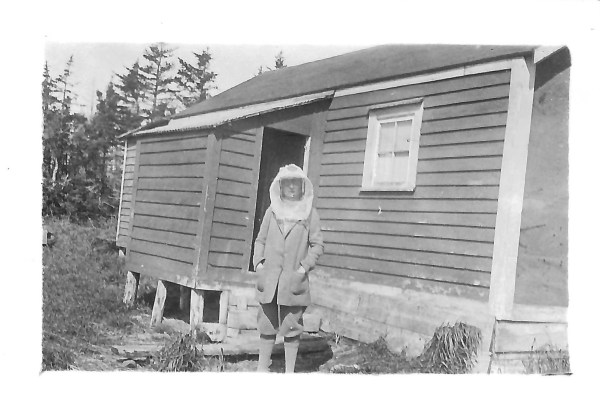
1. The first photo is of Marguerite wearing a hat she fabricated to protect her from all the bugs. The cabin in the background was a family home as she shared a room with Anne Stiles in the school dormitory that summer. This photo along with the commentary in her letter helps me imagine being there myself.

Miss Lindsay wearing her bug hat outside a family home beside the school in Muddy Bay

It is really cold here and foggy quite often, but very bracing, and I like it much better than heat; also when it is cold, there are no flies, and that means a great deal. I could compete with Sir Harry Johnson’s bugs in Africa, and match about even. The mosquitoes just swarm: at first you think it is fog or haze, lying low over the marshes, till you try and walk through them. We bathe in citronella. About 50 of them were getting free transportation on different portions of my anatomy, and I remarked to one of the natives, that the mosquitoes were bad; at which he laughed, and said to wait till they hid the sun, then I would call them bad.

The children are terribly bitten, and wail all night when they are extra bad. Well, there is a species of black fly, and their team work with the mosquito is extraordinary. They don’t bother to pierce your epidermis for themselves, but follow exactly in the footsteps of the mosquitoes, and they hurt. I could hardly turn my head for a day, the back of my neck was so bitten. I may have mentioned that there are no such things as screens on our windows; but we put up some surgical dressings, and tacked the gauze up as a slight protection. As little extras there are deer flies, flying ants and sand flies.


2. The second photo represents not only the local day-to-day fishing activities but other adventures like the exciting one she described in her letter.

Local fishermen in boat with Iceberg, south of Cartwright (there were no lighthouses near Cartwright)

It would be a great help if we had ice; but none comes up the bay. Some of the men tried to capture a young iceberg, and tow it home from the outside coast—behind the motor boat, but the friction of the rope wore through the ice, so it never arrived. Last Wednesday, Mr. Gordon told us we had been working so hard, we had better take a day off, and go up the bay with one of the fishermen, on an expedition for wood. We started off in a motor boat, towing an empty scow: just Anne and I, four boys of about 12, and the fisherman.

It was a perfect warm sunny afternoon, and Anne and I were almost asleep on the sloping bow of the boat, when we came around the point into a heavy wind and all but rolled off. It blew up very strongly, and Anne and I and the boys got into the very bottom of the boat, under our rugs for warmth. I was wearing everything I possessed; about what I wear for skiing. The fisherman was having a very hard time with the scow. It looked once or twice as though water would come down on our heads, when our boat got between the waves and it rested on the crest.

It took us over three hours to reach our destination – the point at White Bear river. There we went up to the warm cottage of some very kind fisher-folk, just as it started to pour, and thunder and lightning. We had expected to sleep on the floor, so had brought rugs; but Anne and I were given a bunk in a room about the size of a dugout, which was really comfortable after we had skillfully removed a pane of glass with a knife, the window being purely for ornament. They provided us with a feather bed in the bunk and warm dry rugs and fed us with smoked salmon and caribou meat. It was loads of fun.


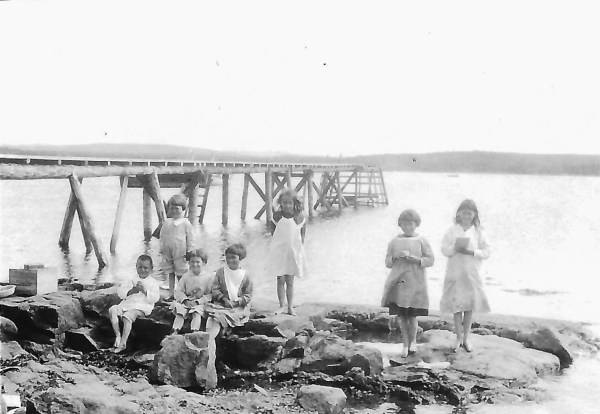
3. The third photo shows the eager faces of a few of her students by the water’s edge hoping for a swim with Miss Lindsay that afternoon.

Some of Miss Lindsay’s summer pupils waiting for a swim

We are teaching the children to swim; the water is not so cold as you might think. There are some perfect walks around; nowhere are the trees too thick to push through; so though we have got lost once or twice, it is never for long. It is rather fun climbing the mountains; your feet get drenched, in the marsh, but we are used to that now. You would be amused to see me giving the children drill, and getting them to breathe through their noses.

We are going across the bay to hold nutrition classes, and persuade them to order whole wheat flour, instead of white.


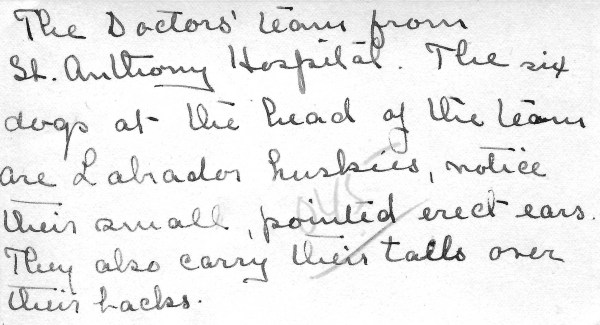
4. The fourth photo is of a dog and sled team. According to her note on the back, it belonged to the Doctor from St. Anthony (about 570km away). She noted that two Labrador Huskies lead the team and made special mention of their curled tails and pointed ears.

Local dog and sled team delivering wood in the winter time to the public school in Muddy Bay with a handwritten note on the back


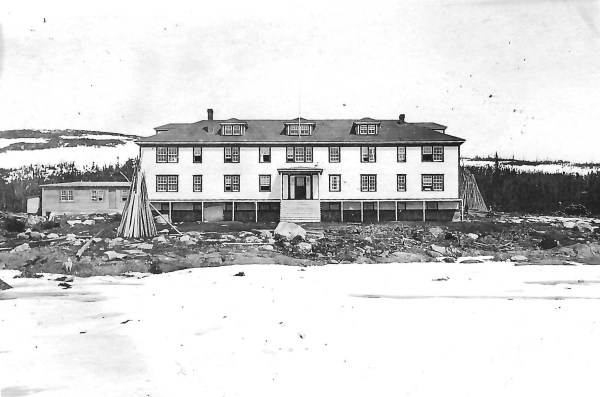
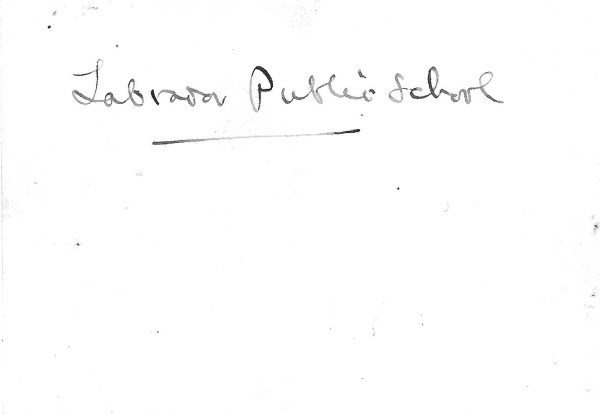
5. The fifth and final photo is of the newly constructed Labrador Public School in Muddy Bay, near Cartwright, which later burned down. The school in Cartwright today was named after her superior: The Henry Gordon Academy. To this day, the children are told Miss Lindsay’s story. Her handwritten note on the reverse side of this photo makes it that much more special for me.

Labrador Public School in Muddy Bay with handwritten note on the back.


I am so delighted about the recent discovery of these photos and very grateful to my cousin for finding these gems! I remain eagerly optimistic for more of Miss Lindsay’s undiscovered treasures to appear someday!

Miss Lindsay – Part 1

Miss Lindsay – Part 2

Miss Lindsay – Part 3

Miss Lindsay – The Early Years

Miss Lindsay’s Last Letter

how i came to write miss lindsay’s tale

The Mothering Bureau

Dusty Old Boxes

Not Just A Kingston Girl

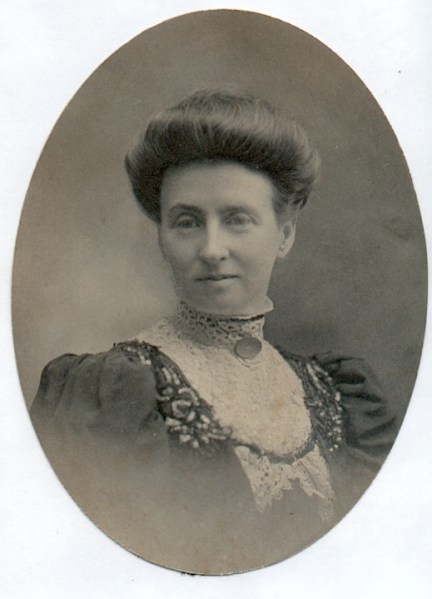
My great-grandparents, Harriet Eva Gould and William Gardiner (WG) Anglin shared 48 years of marriage together, and their lives exemplify the saying “Behind every great man is a great woman.” In many cases, when we look into our family history, finding information about our female ancestors can be tough. After they marry, their maiden names are often forgotten, their careers aren’t recorded, and their lives tend to be defined by their roles as wives, mothers and community participants. Such was the case for Harriet too, as is clear from her obituary.

Mrs. Harriet Anglin – there passed away at her home on 52 Earl Street, on Saturday evening, Mrs. Anglin wife of Dr. W.G. Anglin, deceased, who was before her marriage Harriet Eva Gould, had lived in Kingston since her girlhood days. For the past year and a half, she had been ill. Mrs. Anglin who was of retiring nature, was most widely known through her membership in Sydenham Street United Church.

Surviving her are two sons, Douglas Anglin of Anglin-Norcross Construction Company, Montreal, and Wendling Anglin of the Johnston and Ward firm, Montreal; also three daughters Mrs. McLaren Ewert of Moosejaw, Sask.; Mrs. R. M. Horsey of Montreal and Miss Mary Anglin, secretary to the Principal of Queen’s University; also one sister, Mrs. John Hunter of Goderich and three brothers, George, Harry and William Gould. Ten grandchildren also survive.

Prior to meeting each other, Harriet and WG gained experiences that would serve them well when they married.

Harriet Joins Kingston Society

For the first decade of her life, Harriet grew up as the eldest child of William Gould and Mary Wartman in Ancaster, Ontario. When she was about 11 years old, according to the 1871 census, her parents sent her to Kingston, Ontario, to live with her mother’s sister Susanna, who was married to a wealthy businessman named James Richardson. It’s not clear why they made this decision, but it’s believed that the Gould family couldn’t support all their children. At the same time, Aunt Susanna, who had only sons, longed for a daughter. 

The arrangement worked well for everyone: Harriet was raised in a comfortable home and Aunt Susanna got the daughter she always wanted. While living with her aunt, Harriet received a good education and was introduced to Kingston society. She became known for her connections to the prominent Richardson family and her Loyalist heritage through her mother’s side. This social standing would play a part in her future, especially when she married.

William Gardiner (WG) Becomes a Surgeon

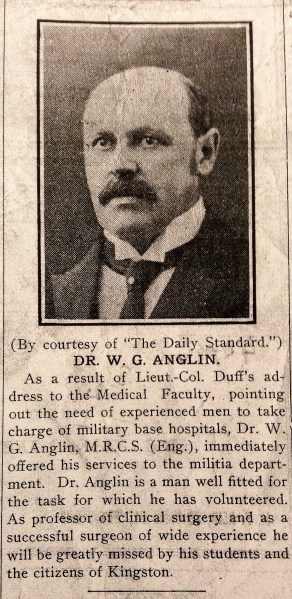
Before their marriage in 1886, WG went to Edinburgh, Scotland, where he learned new surgical techniques from Dr. James Lister, a pioneer in antiseptic surgery. After his return and marriage to Harriet, WG was invited to teach at Queen’s Women’s Medical College. Surgeon and Mentalist

Career and Family Life

WG’s skill and dedication quickly earned him a spot on the prestigious faculty at Queen’s University. By 1887, he was appointed as a Professor of Pathology and head of the Clinical Surgery department. He shared the groundbreaking techniques he had learned in Edinburgh with his students, shaping the future of surgery in Canada. 

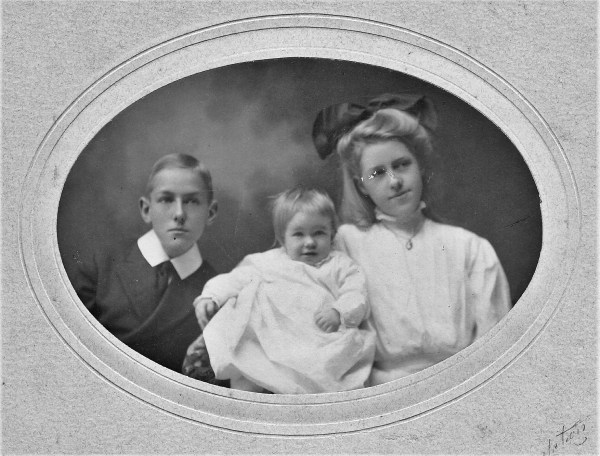
He and Harriet had their first daughter, Mary (1888-1979), that same year. In the following years came Susan (1889–1982), Douglas (1890–1955), Wendling (1892–1955) The Stock Broker, and Ruth (1895–1976). It’s believed that Mary and Susan were named after Harriet’s Aunt Susanna.

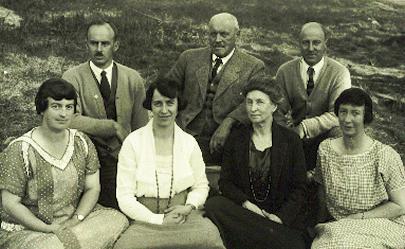
1923 – Douglas, WG, Wendling, Susan, Ruth, Harriet, Mary

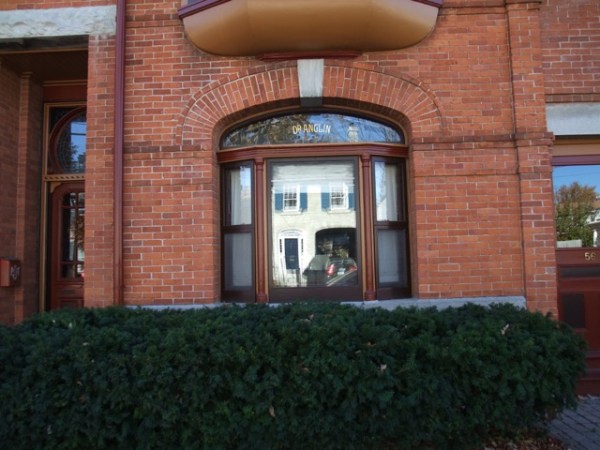
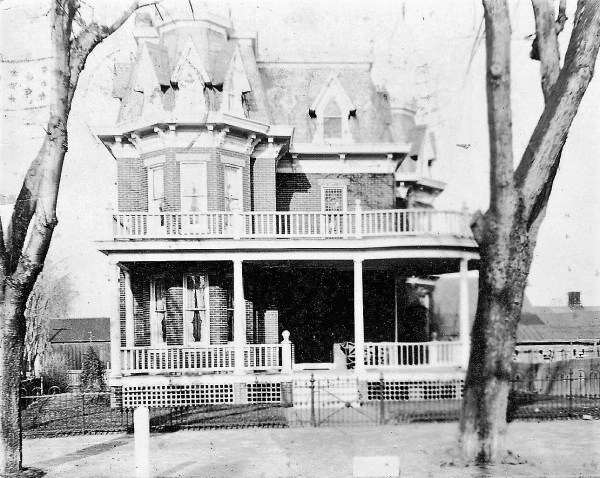
Throughout these years, W.G. ran a private medical practice from their home on Earl Street, which allowed him to spend time with the family. His name was even etched in stained glass in the window of their office building.

52 Earl Street with “Dr. Anglin” etched in top glass


Going to War

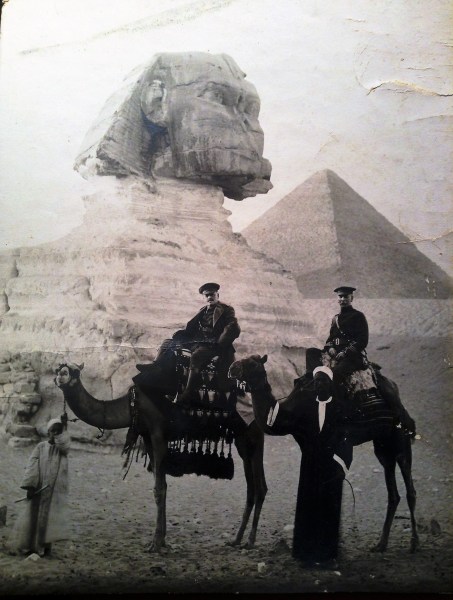
In 1915, WG left his teaching job and volunteered to go to Cairo, Egypt, with the Queen’s Stationary Hospital at 59 years old, in response to a plea from Lieutenant Colonel H.R. Duff, who needed someone with “experience and wisdom.” He caught Malta Fever and had to return to Canada a year later. Although he recovered a bit, the illness affected his health for the rest of his life. Duff, however, died of pneumonia in Cairo.

1915 – Cairo, Egypt, WG on the left camel

Community Leaders

After the war, WG continued working in medicine on a limited basis and served as an examiner for the Canadian Pension Board. He also worked at Kingston Penitentiary, where he introduced medical and administrative improvements and treated the inmates with dignity until he retired in 1928. 

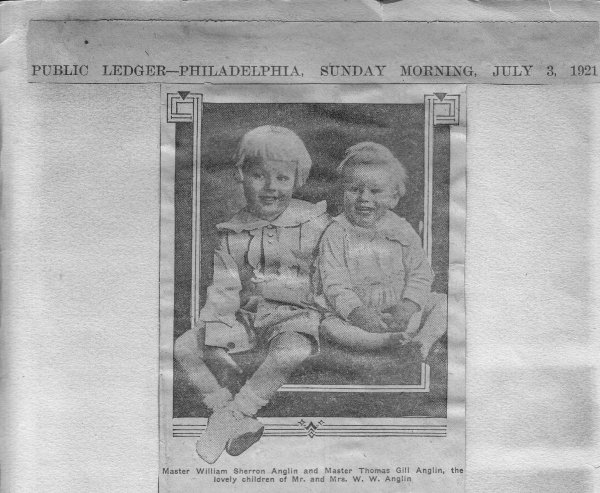
Harriet remained dedicated to her children, their families and her church. As a proud grandmother, she tucked a newspaper clipping of a photo of my father and his brother into a random book where it slipped out 90 years later into the hands of a distant cousin who then made contact with me!

1921 newspaper clipping of my Uncle Bill and my father Tom Social Media – Then and Now

In their later years, Harriet and WG were well-respected members of their Kingston community until he died in 1934. She died only two years later and they are now buried together in the Anglin plot at Cataraqui Cemetery.

Philadelphia Story

After my great grandfather retired from a successful 40-year career in the wholesale food business, he took an active interest in the stock market and managed his own investments during the time of the Great Stock Market Crash of 1929. Would he lose his life savings like so many unfortunate others at the time?

In a letter to his eldest daughter Josephine, my grandmother, dated June 2, 1932, he wrote:

“…if we could get rid of a lot of these Rotten Banks and Stock Market thieves the world would come around all right in no time. A person has no show with that New York Stock Exchange. Just a lot of crooks and I don’t think these common stocks have any value at all, not worth the paper they are written on, most of them, but all this will come (out) all right but people have got to lose a lot of money and that’s that.”

William Thomson Sherron (1863-1932) was born in Salem, New Jersey, the son of Albert Wood Sherron and Eveline Stokes Gaunt Githens. His wife, Gertrude Gill, (1869-1940), born in Philadelphia, was the daughter of Thomas Reeves Gill and Josephine Love.

In November 1891, William and his bride settled in their new family home at 100 W. Broadway, Salem, New Jersey, where they stayed for the next twenty years. This beautifully refurbished Queen Anne style Victorian house still proudly stands today.

(Their first home -100 W. Broadway, Salem, New Jersey)

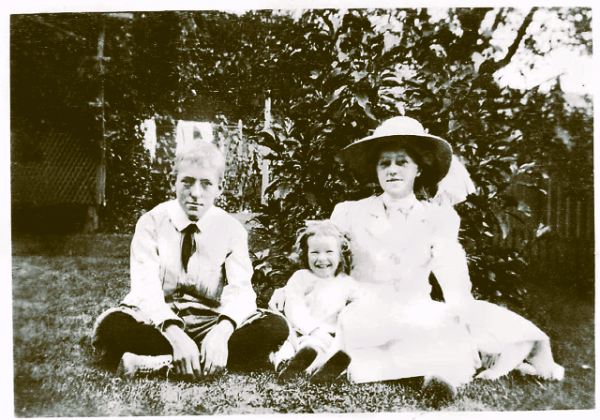
The couple had three children – Josephine (1893-1964) Social Media – Then and Now, Roger (1895-1963) Sherron and his Texas Betty and Alberta (1906-1992) Elopement … or not?. Josephine, my grandmother, her stockbroker husband and their two sons eventually settled in Montreal, Quebec. Their son Roger had mental health issues and lived with them until their deaths. Alberta married very young, had a son nine months later and remarried happily a while after that and had three more children.

(Roger, Alberta and Josephine Sherron – 1906)

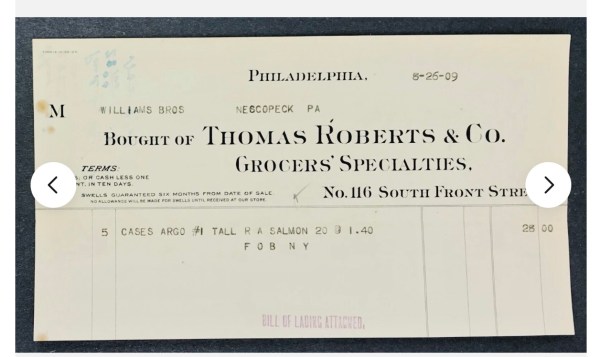
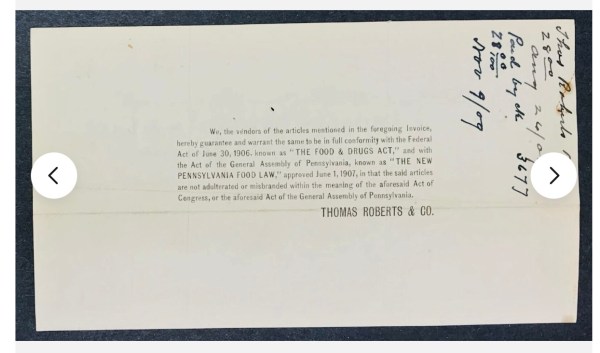
William first worked for Thomas Roberts & Co. in the wholesale grocery business for 25 years in Philadelphia before going into the same business for himself in 1905 at the age of 42. He opened his own office at no. 37 South Front Street, Philadelphia, about a half mile from their new home at 261 W. Harvey where they lived for the another twenty years.

(Invoice – front and back from the grocery wholesale business)

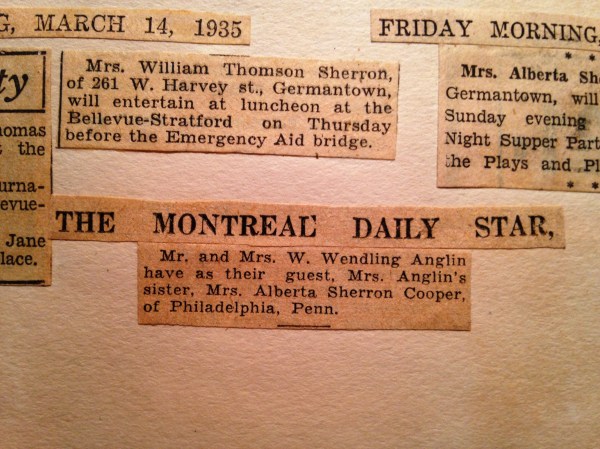
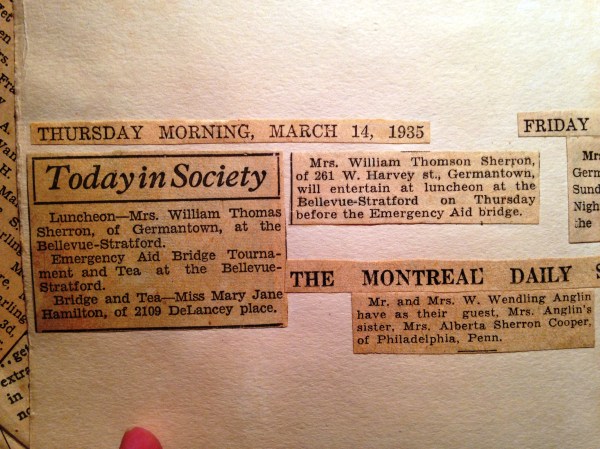
His wife and daughters took an active role the local Germantown social scene. Their endless teas, luncheons, bridge parties and charity fundraisers were regularly featured in the social pages of the local newspaper.

(Gertrude Sherron and her daughters in the Society Pages)

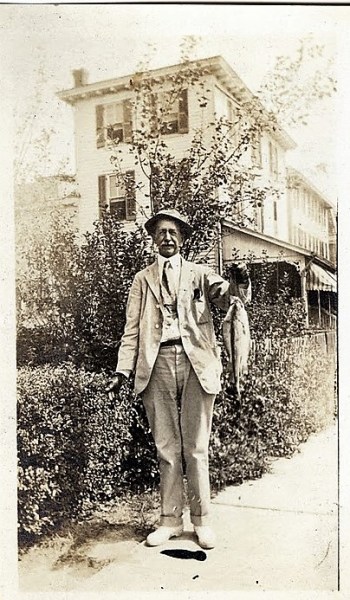
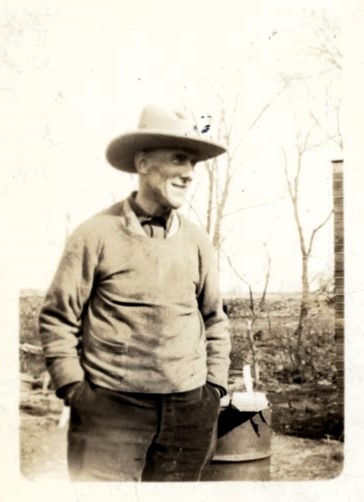
Along with the usual collection of family posed photographs in my dusty old boxes, I found a delightful photo of 55-year old William. He is holding up a string of sizable fish, possibly bass, outside “the Windsor Avenue cottage” (which looks more like an old country inn). He is wearing a light coloured baggy jacket and matching pants with a proper shirt and tie, white shoes and a floppy “fishing” hat. The smile on his face reflects pure joy for the day’s “catch”.

(William and his catch of the day!)

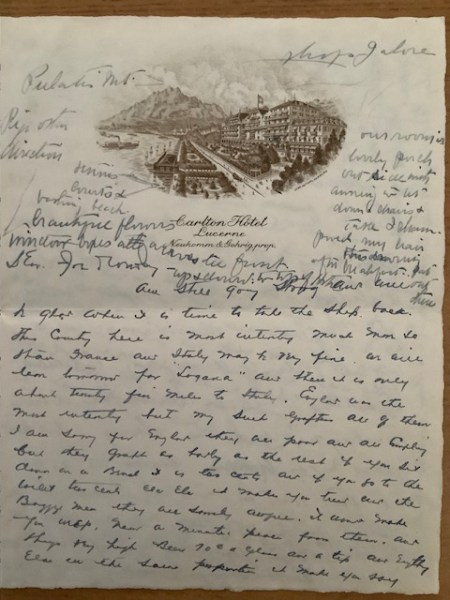
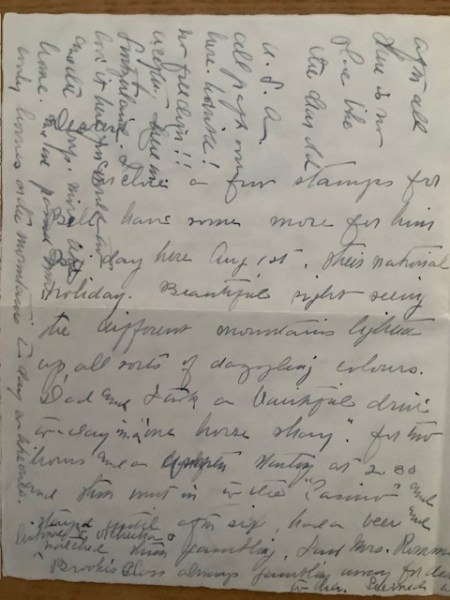
In 1930, just a couple of years before William’s death, the couple enjoyed an extended trip to Europe. They stayed at the famous luxurious Carlton Hotel in Lucerne while visiting Switzerland and I have the note sent to their daughter Josephine. William began the correspondence writing at a slant that became a little more difficult to maintain as he ran out of room on the notepaper. Then Gertrude took over filling every remaining inch of the note – to the bottom, up the sides and finishing up at the top of the page! Nevertheless, I could just barely make out from their undecipherable scrawls that they “adored Switzerland”, the hotel was “a dream” and “Interlaken was perfect”. As for Paris, Gertrude didn’t mince words when she exclaimed “Paris is a horribly dirty city.” However, she “loved London” and thought the people dressed “heaps better than in Paris.” At one point in the note, William generously invited their daughter to join them and wrote “I will pay the fare.”

(Excerpt of their note to their daughter Josephine)

So, it seems that William didn’t lose his money in the stock market after all, and had plenty to splurge on a once-in-a-lifetime trip to Europe with his wife.

The Needlework Sampler

Edited 2024-09-09

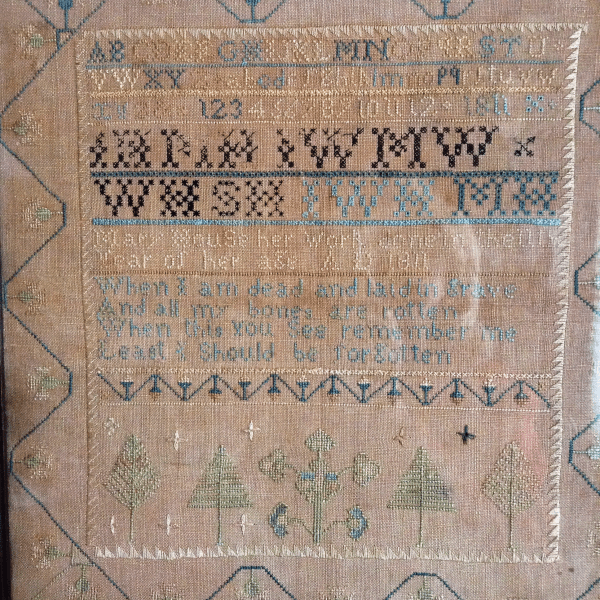
(I am very fortunate to have my 3x great grandmother’s needlework sampler hanging on my wall.)

I can hardly contain my excitement! Mother says it is time that I learn my stitches and embroider my very own sampler. And I am only ten years of age! 

What a shame, though, that I must complete my daily chores before I am allowed to work on my sampler!  I wish my little brother would help out a bit more.  However, I must remember that Mother and Father work so very hard and we must do our part without complaint.

Creating the border around the outside edge has been excellent practice getting used to the needle and thread.  I have quickly mastered this simple first stitch.  Oh, how I love the stiffness of the cotton fabric! The silk threads feel heavenly but are annoying when they get tangle too easily. And it’s a shame that their colours aren’t somewhat brighter. Mother says the important thing is to learn the stitches and never mind complaining about the rest.  She has many to teach me  – the cross-stitch, the slipstitch, the whip stitch, the satin stitch and eventually the French knot!

Sometimes it’s difficult to pay attention during my classes at school.  The headmaster tells us that James Madison is our President and that we have 15 stars and 15 stripes on our flag which represent all our states.  The British are restricting our local trade and making our young American men join their Royal Navy which doesn’t seem fair.  And what about the Indians…is America ours or theirs?  It’s very hard to concentrate and be a good pupil when I’d rather work on my sampler!

I’ve started sewing my alphabet letters now.  Capitals first and then the lower case ones.  They are quite tricky and take a lot of patience.  Oh, how I wish I had more patience!  But Mother says that I am doing very well and that some girls are two or three years older than I am before they begin their samplers.

The other day, my brother put a huge beetle in my sewing basket!  Ewww! Why do boys have to be so silly? Maybe if he did more chores, he wouldn’t have time for pranks!

Numbers are wonderful. Stitching twelve numbers is much simpler than all those upper case and lower case alphabet letters!

It’s hard to believe the number of stitches that I’ve already completed  when there so are many more to go.  Much patience is needed.

…and less chores!  Just think how quickly I could finish my sampler if I didn’t have my daily chores!

Hurry! The daylight won’t last much longer and it’s too difficult to see my stitching by candle light.

I am focusing on stitching my name now.  I like my name.  Mary House.  It looks and sounds very neat and tidy – like a row of my very best stitching.

Beside my name, I am now slipstitching the date.  It takes quite a while to create a sampler so the only the year is sown in: “my eleventh year” and 1811 A.D.  “My eleventh year” sounds so much grander than “ten years old”.  I know A.D. stands for the number of years since the death of Jesus.  Ah! Maybe I should pray for more patience.

My stitches are improving and I haven’t had to undo as many lately.  Undoing stitches is almost worse than doing chores!

Now I am working on the short poem and it is as follows:

                          When I am dead and laid in grave

                          And all my bones are rotten

                          When this you see remember me

                          Lest I should be forgotten

I wonder who wrote this poem.  It makes me sad.  And can you imagine someone admiring my sampler after I die?

At last I am finished my sampler!  Mother praised me saying that I did a very fine job indeed.  I am thrilled with it and very proud of myself. I will store it safely under my bed until I grow up.

NOTES:

 Mary was my 3x great grandmother. She died in 1830 at 29 years old.  Her sampler hangs proudly in our home.  She is not forgotten! 

The excerpt is a verse from the famous poem “To His coy Mistress” by Andrew Marvell (1621-1678)

Sherron and his Texas Betty

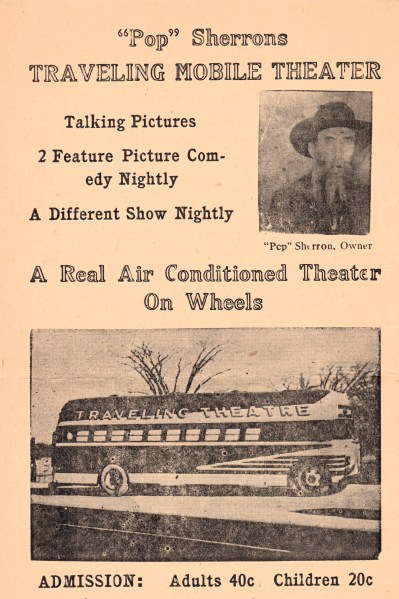
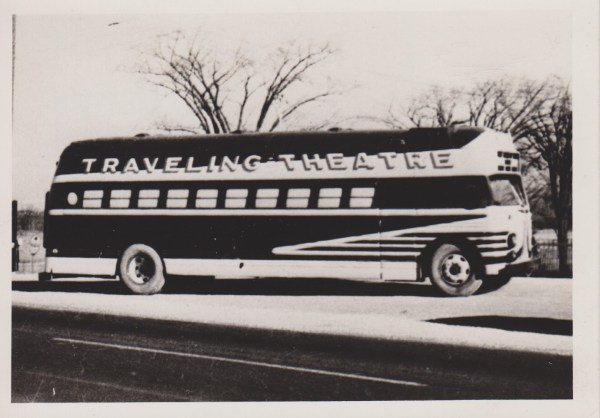
“Pop” Sherron and “Texas Betty” (his air-conditioned travelling mobile theatre bus) must have been a welcome sight whenever they pulled into small towns in and around Phoenix, Arizona, in the 1940’s.

Sherron, my great-uncle, charged admissions of 40 cents per adult and 20 cents per child to enjoy “two feature picture comedies nightly” and “a different show nightly” on his travelling mobile theatre bus.

Sherron’s Advertisement Flyer

Roger Sherron (1895-1963) was a somewhat “reclusive” man or what one might consider a “hermit” and, according to a phone conversation with his nephew, his own family labelled him as “odd.” These opinions were supported on his WW1 registration (and rejection) in 1917 (age 22) with “arrested development mentally” entered by hand in the exemption section by officials.

Fortunately, we have come to better identify and understand mental conditions nowadays.

The Sherron family belonged to Philadelphia’s high society. Roger’s father owned and operated a wholesale grocery business while his mother and two sisters were frequently featured in the society pages of the local newspapers with their luncheons, tea parties, bridge games, fundraisers and such. This was not Roger’s “cup of tea” so to speak.

Roger, Alberta and Josephine Sherron (my grandmother) – 1906

Young Roger briefly attended the Wenonah Military Academy in New Jersey, a private secondary school “where a diploma entitled the graduate admission to West Point, Annapolis, or one of the best colleges or universities in the country, usually without qualifying tests.” He left school before he finished his studies but luckily could read and write by then even if his handwriting remained somewhat childish.

According to the censuses, Roger sometimes worked at odd jobs (in 1920 – grocery sales at age 25 and in 1930 – game warden for the State Government at age 35) but otherwise he was listed as “unemployed.”

Roger and his sisters Alberta and Josephine circa 1910

He never married, living with his parents in Philadelphia until 1940 when his mother died. His father passed away in 1932. His younger sister Alberta also remained nearby with her family but his older sister Josephine (my grandmother) moved to Montreal, Quebec, with her stockbroker husband, Wendling Anglin, and her two sons (my father, Tom, and his brother Bill).

Roger was 44 years old when his mother died, alone in the world for the first time and without a place to live.

Roger and his nephew Donnie – 1932 – visiting his sister Alberta after his father died

Sometime, after the death of his mother, he moved west to a very different world and a warmer climate.

Once in Arizona in 1942, at 47 years old, and possibly homeless and jobless, he tried yet again to enlist with the WWII Draft. According to the registration form, he stood at 5’7” tall and 125 lbs with tattoos on his left arm. Unsurprisingly, Uncle Sam didn’t accept him this time either.

He must have inherited some money from his parents’ estate because this is where he acquired a retrofitted theatre bus he named “Texas Betty” which enabled him to start a rather unique business and support himself. At some point, it appears he might have attempted to expand his business as I have a piece of printed letterhead stating:

POP SHERRON’S FAMILY

Travelling Amusement Center and Big Free Circus

In Route – Pop Roger Sherron

Texas Betty Sherron

Owners

Texas Betty

Again, according to my phone conversation with his nephew, Roger’s home in Phoenix was just “a shack.” He lived in the Hispanic part of town and it is likely the entire neighbourhood consisted of similar housing.

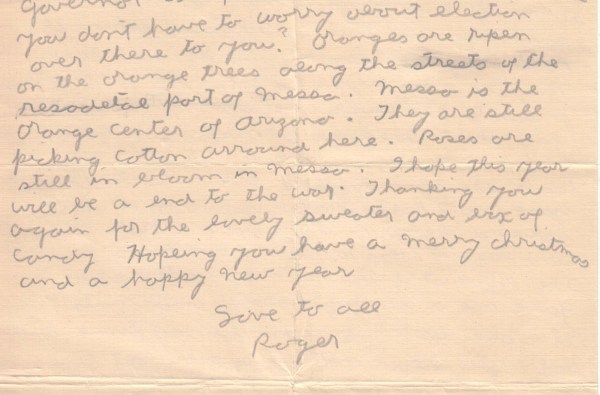
At the age of 50, some six years after he left Philadelphia, he wrote a Christmas letter to his older sister Josephine from Tempe, Arizona, which is half way between Phoenix and Mesa. He settled in this new community (and dare I say new family) who it seems wholeheartedly accepted him.

“I spent Christmas eve with some Spanish friends five houses down the road. They had tamales and Spanish food. They are nice people.”

“I got a lot of Christmas presents. The people next door gave me a fine shirt. The people three houses down gave me some handkerchiefs, a Coke, a comb, pen and ink and envelopes…the Spanish fellow who owns the store gave me a big bag of candy and nuts.”

“The television has come here now. The people next door have a fine set. It don’t hurt your eyes or nothing. Down at the bus station at Mesa, they have a set but it hurts your eyes.”

His neighbours might have struggled but they were rich in love and support for one another.

The letter continued with what might seem like “odd ball” concerns about the ongoing war, the atomic bomb and politics:

“I think the country will go Republican next election. I hope so. People are getting tired of this New Deal bussiness (sp). The Republicans will jump right in and fight Rushea (sp) and China. Lots of Chinese arround (sp) here in Phoenix and Mesa. They are aloude (sp) to run loose. They ought to put them in camps till after the war.”

Paranoia? No, just a typical American way of thinking at the time.

Roger, revealing his good prep school manners and poetic side, continued with a lovely description of his immediate surroundings: “Oranges ripen on the orange trees along the streets of the resodental (sp) part of Mesa. Mesa is the orange center of Arizona. They are still picking cotton arround (sp) here. Roses are still in bloom in Mesa.”

His letter ended with hope the war would end soon, another thank you for the gifts of a sweater and box of candy, and finally Roger wished his sister well and sent his “love to all.”


Roger died of a heart condition in 1963 at the age of 68. So he spent
the last 20 years of his life in the Arizona desert with his one-of-a-kind air-conditioned cinema bus Texas Betty and his kind-hearted friends, no longer considered a hermit, reclusive or even odd.

Sherron in the Pocono Mountains, Pennsylvania in 1939

Elopement … or not?

Social Media – Then and Now

Elopement … or not?

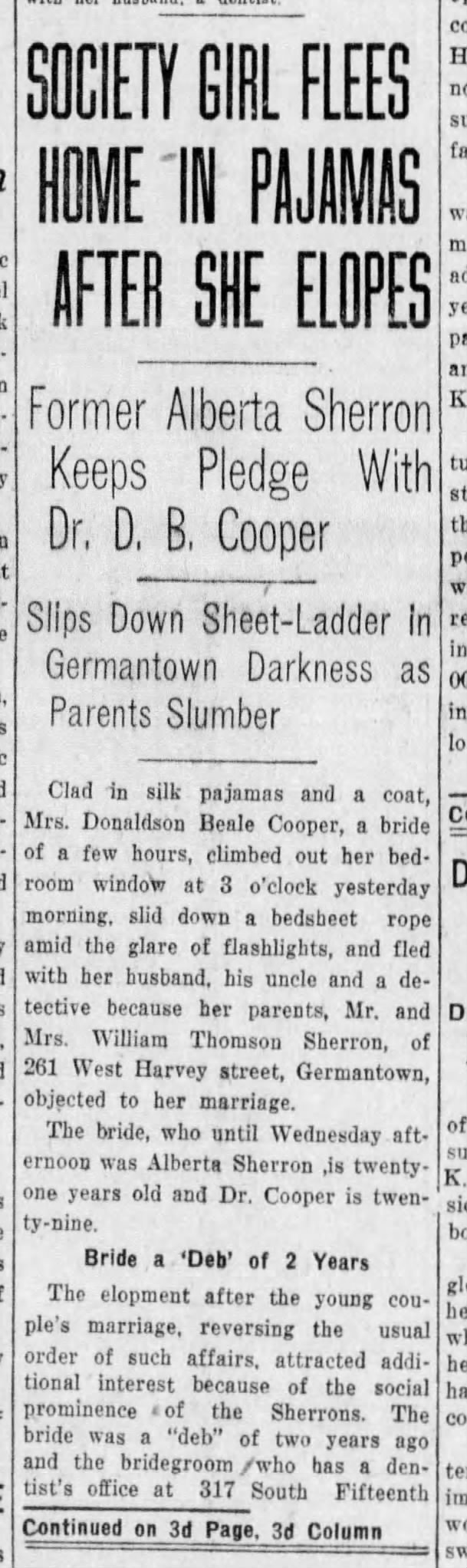
– “Society Woman flees home in pyjamas after she elopes”

– “Former Alberta Sherron keeps pledge with Dr. D.B. Cooper”

– “Slips down sheet ladder in Germantown darkness as parents slumber”

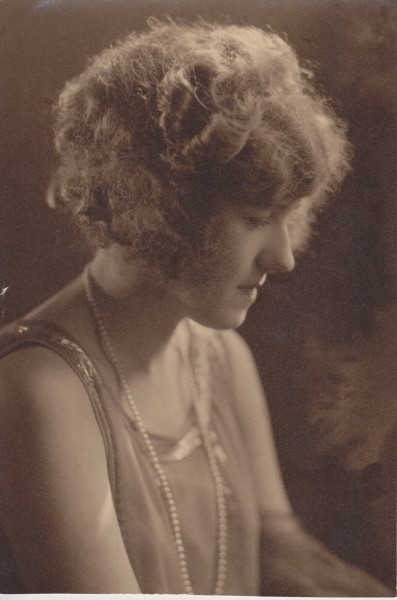
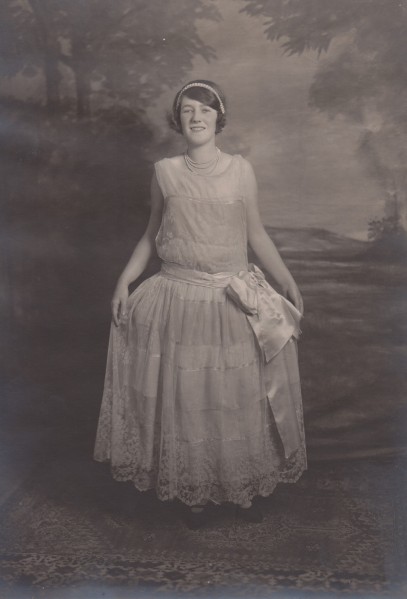
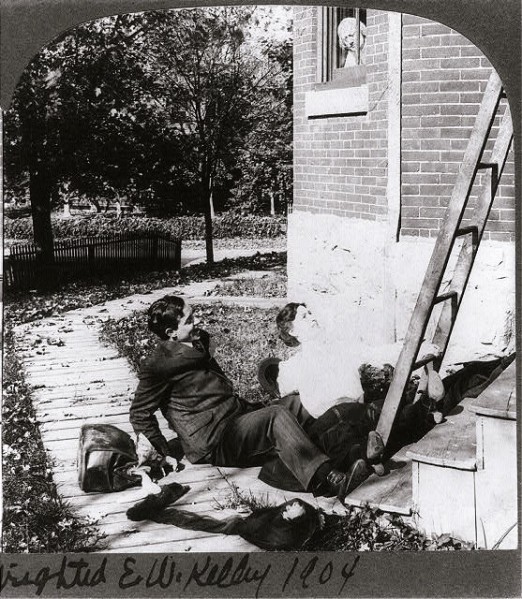
The Philadelphia Inquirer dated November 18, 1927, covered my great-aunt’s private life in great gossipy detail for its hungry readers. Alberta Sherron (1906-1992), my grandmother’s younger sister by 13 years, was just a girl in love at 21. Her 29-year old dentist boyfriend must have been equally enamoured as they couldn’t wait for the expected high society wedding that their well established families would have insisted upon.

Alberta graduated from Miss Irwin’s School1 and made her debut at the Acorn Club2 two seasons before her wedding. On her paternal side, she descended directly from Sir John of Gaunt, Duke of Lancaster, and on her maternal side, she descended from Sir Anthony Loupe, who was knighted under Mary, Queen of Scots3, in the mid-sixteenth century.

Donald Cooper’s grandfather was the late Senator Thomas V. Cooper of Media. On his paternal side, the groom descended from Andrew Griscom, who came to the USA with William Penn in 1682, and maternally from Richard Sanger, the Puritan, who settled in Massachussetts in 1632.

Unbeknownst to the both sets of parents, the wedding took place at the Church of the Holy Trinity4 on the Wednesday afternoon of November 16, 1927, with Reverend Dr. Floyd W. Tomkins5 officiating. It was a simple ceremony with only a few friends invited.

According to the Philadelphia Inquirer – “The bride was a “debutante” two years ago and the bridegroom who has a dentist’s office at 317 South 15th Street, is a graduate of the Germantown Friend’s School6 and the University of Pennsylvania – where he was president of the senior class – and is a former instructor in bacteriology at the Evans Institute of the University of Pennsylvania.”

After the wedding, Alberta returned home to her family as usual and prepared for her “elopement” that evening.

I don’t think the tabloids could resist using the word “elopement” in their sensational coverage of the events that took place that evening (given that the marriage had already taken place) and how did they even know the details? What a great “tip-off”! The couple went the extra mile (an added bonus for the paper) when she climbed out her window and descended using a knotted sheet instead of the traditional ladder.

(“Elopement-A Hasty Descent” by E.W. Kelley)

According to the newspaper, the couple left a note for her parents to find in the mailbox the next morning after “she eloped with her new husband.” Her parents, when interviewed, flatly denied ever locking their daughter in her room nor did they object to her marrying Dr. Cooper. That stopped any rumour that they had some young millionaire in mind for their daughter to marry. They finished their comment saying that they think the couple will be very happy and “Dr. Cooper is a fine young man.”

Thankfully, the destination of their month long honeymoon remained a mystery to all. And, nine months later, Donalson Beale Cooper, Jr. was born!

Alberta Sherron Cooper (24) and her son Donald (2-1/2) – 1931

Unfortunately, the marriage didn’t last and Donald remarried nine years later in 1936 and then so did Alberta in 1938.

By the time Alberta married her second husband, Bruce Lewis (1903-1971) in 1938, her son Donald was already 10 years old. Alberta and Bruce had three more children together – two daughters and a son. The last one born in 1950 when Alberta was 44 years old! Donald and his younger brother were 22 years apart.

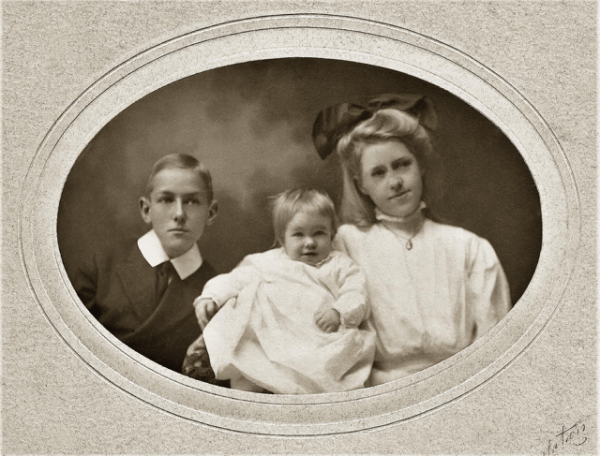
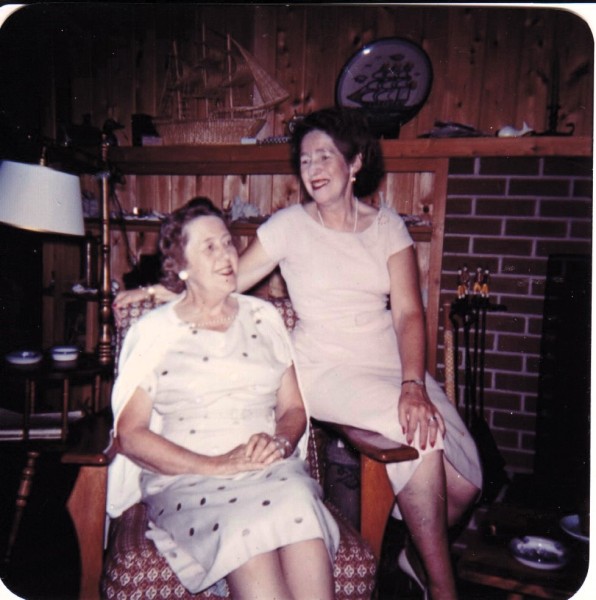
My grandmother Josephine and her younger sister Alberta.

My grandmother Josephine (left) and her younger sister Alberta.

1https://www.agnesirwin.org/about

2https://www.acornclub.org/

3https://wiki2.org/en/Mary,_Queen_of_Scots

4https://wiki2.org/en/Church_of_the_Holy_Trinity,_Philadelphia

5https://wiki2.org/en/Floyd_W._Tomkins

6https://www.germantownfriends.org/about-us

Finding the Family Farm in Ireland

On a recent family trip to Cork, Ireland, we detoured briefly looking for the Anglin Family farmhouse ruins from the early 1800’s. Several Anglin cousins over the years recorded and shared their trips so that with copious precious notes in hand we thought we were well equipped for our adventure!

An Anglin letter from 1963 pinpointed the location of the family home somewhere between Farranmareen in the north and Rushfield (one kilometre further south) “near Bandon” just 36 kilometres west of Cork. We looked up the two geographic latitude and longitude (GPS) coordinates for the two markers so … how hard could it be?

All eyes were focused left and right as we drove the kilometre between the two points. Alas! Nothing to see but green fields everywhere and a scattering of houses. Where were the signs with “The Anglin Farm was HERE”?

Upon reaching Rushfield, my notes referred to a chapel not far from a farmhouse on the corner. Spying a farmhouse nearby, we made our way through the barking dogs and knocked on the door, but no one answered. We persevered as there was a vehicle in the driveway and a huge transport truck parked nearby. Another knock. Suddenly a farmer walked around from the side of the house munching on a bit of lunch.

I introduced myself as an Anglin and referred to the cousins over the years who had made the same pilgrimage. The farmer looked puzzled. So I inquired about the whereabouts of the Rushfield Chapel to which in reply he pointed to some ruins across the road that barely even looked like a building anymore. Disappointed but refusing to give up, I checked my notes and inquired if he knew a Mr. Shorten who was helpful to my cousin in 1963. He smiled and introduced himself as … Mr. Shorten!

Rushfield Chapel ruins

This Mr. Shorten didn’t recognize the Anglin name (it must have been his father in 1963) but guessed where the Anglin farm might have been. Back up the road to Farranmarren we drove to knock on a few more doors. The next stop was a bungalow with another barking dog. A middle-aged lady came to the end of the drive and thought the Anglin farm might have been in the field beside her. However, she suggested that her elderly neighbour across the road might know more and brought me to meet her.

“Looking for the farm some years ago, with my wife and two Anglin cousins, we could not find any buildings. But we knocked on a door at a corner where you leave the main road. The door was answered by an older lady whose maiden name turned out to be Duke. She gave us tea and said that our Anglin ancestors operated mixed farming and would have been comfortable during the famine.” (Perry Anglin)

After a brief introduction, I couldn’t resist asking her: “Is your maiden name ‘Duke’ by any chance?” Well her eyes lit up and she smiled saying: “Yes!” My great great grandfather William’s oldest brother John Anglin married Sarah Duke in 1836 in Cork. I was speaking with my (very) distant cousin!

William and John’s parents, Robert Anglin and Sarah Whelpley, had four sons and one daughter. All four sons emigrated to Kingston, Ontario, one by one, with my great great grandfather William (the youngest son) leaving Ireland in 1843 just before the Great Famine. John eventually joined the others in Kingston but only after the death of their parents. Their sister emigrated to the States possibly not wanting to stop in Kingston to care for four brothers!

William married Mary Gardiner in 1847 in Kingston and had two daughters (both died young) and two sons (William and James) who both became doctors and surgeons.

It appears likely that over the years Mother Nature reclaimed the Anglin Family farm with its defining stone walls having disappeared completely beneath the greenery. However, I can attest to the fact that the view described by my cousin remains the same:

“It is a stunning view from the farm down into the Bandon River and beyond to a coastal range tinted mauve in the distance.”

I would like to finish my little story by sharing some helpful information with my Anglin cousins! Here are the GPS coordinates of the Anglin Family farm: 51°47’00.3″N 8°56’09.8″W

https://genealogyensemble.com/2017/02/01/the-anglin-brothers/: Finding the Family Farm in Ireland https://genealogyensemble.com/2016/07/13/surgeon-and-mentalist/: Finding the Family Farm in Ireland

Railway Man, Family Man

James Cecil Hunt (1879-1937) worked a 30-year career as a Locomotive Engineer in Manitoba, Canada. He left his birthplace in Owen Sound, Ontario, at the age of 22, and headed west to Port Arthur (now Thunder Bay), Ontario. There he met and married Cassie (Catherine Elizabeth Grummett 1884-1966), a glamorous Winnipeg girl, at the age of 28. They raised their five children in Brandon, Manitoba, and eventually moved back to Winnipeg where they bought a house and stayed the rest of his life.

His first job as a “labourer” according to the 1901 Census might have been with the Canadian Northern Railway (CNoR). “The Canadian Northern Railway was incorporated (1899) as a result of the amalgamation of two small Manitoba branch lines. It was built up over the next 20 years by its principal promoters, William Mackenzie and Donald Mann, to become a 16,093 km transcontinental railway system.”

However, the competition with their transcontinental rivals proved to be insurmountable and Mackenzie and Mann were forced out of the company, which then became one of the first major components of the soon publicly owned Canadian National Railways (CNR).1

Cecil Hunt (second from the left) and other locomotive engineers posing in front of a First Class car.

After 18 years working up the CNoR ladder, Cecil’s career as a Locomotive Engineer began shortly after the June 1919 incorporation of the CNR, which then consisted of several other bankrupt railways belonging to the Canadian government.2 The CNR is the longest railway system in North America, controlling more than 31,000 km of track in Canada and the United States. It is the only transcontinental rail network in North America, connecting to three coasts: Atlantic, Pacific and the Gulf of Mexico.3

As a Locomotive Engineer, Cecil would have operated and controlled a locomotive engine (No. 73083.5 to be exact) that powered the train on railways. His responsibilities would have included controlling the speed, acceleration, and braking to ensure smooth and timely journeys as well as a thorough knowledge of the entire railway system, signals, and track conditions, all while adhering to strict safety regulations and protocols.4

  • Cecil and children Allan, Lyndon, Holman and Beatrice circa 1916
  • Cecil’s CNR Steam Engine no. 7308 (scrapped in November 1951)

According to the 1931 Census, Cecil at age 52 owned a three-story eight room stucco house at 588 Warsaw Avenue, in Winnipeg not far from the Red River, and made an annual salary of $3,200 ($65,000 in today’s dollars). Locomotive engineers easily make double that today.5

Cecil had obviously done well for himself since ten years before becoming a proud homeowner, he already owned a Model T Ford which, according to this photo, the whole family enjoyed!

Cecil, Sydney, Cassie, Beatrice, Holman, Lyndon and Allan (my husband’s father) circa 1920

Although, travel by car did not become common until the mid-1920’s, most people could take the “beach train” for their excursions to the famous nearby Winnipeg Beach. By 1912, ten trains took 40,000 vacationers to the beach each weekend.5.5

Winnipeg Beach had developed into an impressive amusement park – complete with a roller coaster, merry-go-round, and “moving picture house”. Over the years, more attractions were added, including bumper cars and an airplane ride. All this as well as the very popular dance pavilion and multiple arcades along the boardwalk. The “Moonlight Special” provided a round trip by train for 50 cents and a night of dancing could be purchased for another nickel. It is rumoured that “many generations of people owe their existence to the fact that their parents, grandparents or great-grandparents met on the ‘Moonlight’.”6

Winnipeg Beach: L to R – Beatrice, Sydney, Cecil, Cassie, Allan, Lyndon and Holman (notice the locker keys pinned to their bathing suits!)

In May 1937, Cecil and Cassie attended their son Allan’s wedding to Agnes Kirk (my husband’s parents). Allan worked his whole life in aviation with several airlines culminating in a 37-year career with Trans-Canada Airlines (which later became Air Canada) and my husband also had a 30-year career with Air Canada. Three generations of Hunts working in national transportation!

Shortly after that May wedding, Cecil suffered heart failure and Cassie nursed him at home until November when he died at age 58. The “weak heart” gene plagued all the Hunt men and continues to do so even to this day.

Tall stylish Cassie, however, lived almost another 30 years, and as a CNR widow, travelled with her train pass visiting her family from coast-to-coast every few years. After Cecil’s death, she lived for a while with her son Holman in the Slate River district near Thunder Bay, and then with her daughter Beatrice in Richmond, British Columbia until she died at the age of 82. Her obituary pays tribute to her lifelong commitment to the Order of the Eastern Star (part of the Masonic Family) both in Winnipeg and in Richmond.

Cassie and her two sons Allan and Sydney

The glimpse into the life of any ancestor makes writing about genealogy so gratifying … and the best part about this story is my husband getting to know a little about the grandfather he never met.

Please read my story about my husband and his father Allan Hunt:

Like Father, Like Son

1https://www.thecanadianencyclopedia.ca/en/article/canadian-northern-railway

2https://wiki2.org/en/Canadian_National_Railway

3https://www.thecanadianencyclopedia.ca/en/article/canadian-national-railways

3.5http://www.trainweb.org/j.dimech/roster/060ros.html#O-15-b

4https://www.careerexplorer.com/careers/locomotive-engineer/

5https://www.payscale.com/research/CA/Job=Locomotive_Engineer/Salary

5.5https://winnipegbeach.ca/p/our-history

6 Memories of the Moonlight Special and the Grand Beach Train Era – Barbara Lange