All posts by Claire Lindell

Claire Lindell is a retired school teacher with an interest in French-Canadian and Finnish genealogy.

The Thunderbird

by Claire Lindell

Every year, even after all these years when the Feast of the Annunciation draws near, my memory is flooded with the events that transpired more than fifty years ago. Decisions that would change my life seem to come to the forefront of my mind.  I think back to that weekend.

Early on the bright spring Thursday morning of March 25th, 1965  the chauffeur driven car pulled up beside the convent. My father walked up to the front door and welcomed me with opened  arms. He had come to bring me home.

For almost six years Joan of Arc House had been my convent home. Taking the Holy Habit, becoming a bride of Christ,  two years in the Novitiate, studying theology, teaching Kindergarten, daily prayers and community living were the  way of life. Leaving  all this behind was not an easy decision.

We set out on the  long drive from Ottawa to Asbestos. We had much to talk about, but to this day I can not for the life of me remember any of our conversation. Heading in to the unknown can be rather daunting. There was a great deal to ponder.

Mom was waiting for us at home. The following day, Friday morning, she took me to the hairdresser to have my hair cut and permed. It was in dire need of something. I had worn a veil while a nun and “one’s crowning glory” was not a priority under a veil! I came away from there somewhat transformed and ready to face the challenges that lay ahead. That afternoon we  drove to Richmond where I signed a contract to begin teaching Grade One beginning the following Monday morning. Arrangements had been made earlier when a friend knew I was leaving the convent and they needed a teacher at her school.

The weekend flew by as I tried to come to grips with my new surroundings, not to say anything about a new look! Life was so different. No bells. No prayers. No meals in silence. No community time.

Monday morning arrived and my Dad suggested I use his  car to drive the fifteen miles to Richmond until I could buy my own. His  car was a 1962  white Ford Thunderbird convertible with bright red leather interior! It was a very snazzy sports car for an ex-nun to be driving. It was a perfect way to get back in to “the real world” and forge ahead on to the next chapter.
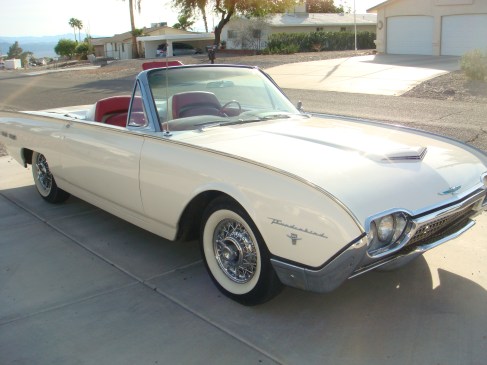
T-Bird

That Monday morning I could only chuckle to myself wondering what my new colleagues were thinking when they saw this “to die for car” pull in to  the parking lot and out I came, the new teacher, an ex-nun  who was the driver of the Thunderbird convertible! Can you imagine?

Since that day in 1965 life has been good and there have never been any regrets about the decisions made. Within two weeks I had my own car and I can assure you, it was nothing like that 1962 white Ford Thunderbird with the beautiful red leather interior!
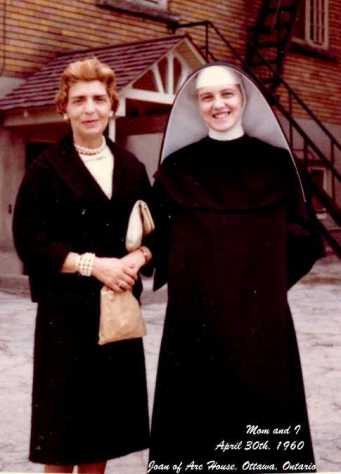
Me and my Mom   on Holy Habit Day

April 30th, 1960
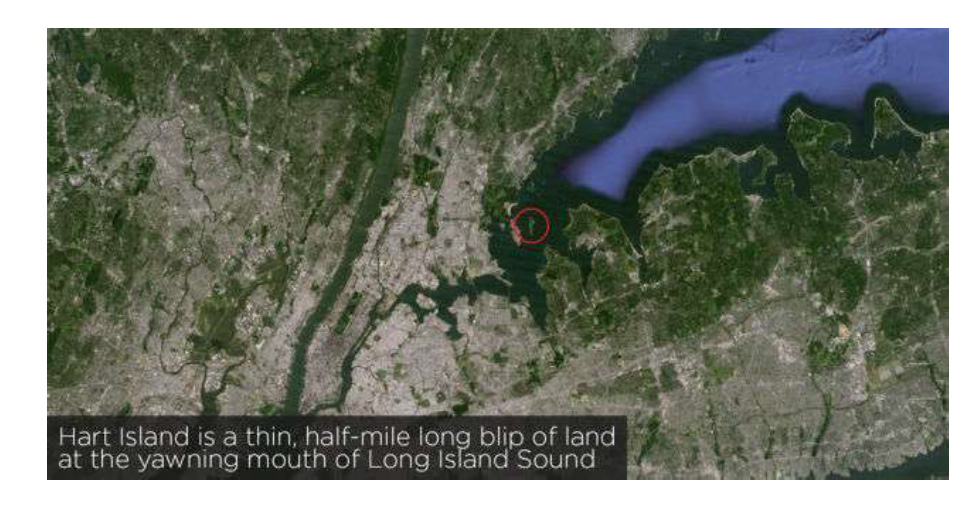
Hart Island

This article is a follow-up to a recent blog entitled “Harbour Lights”.

Harbour Lights

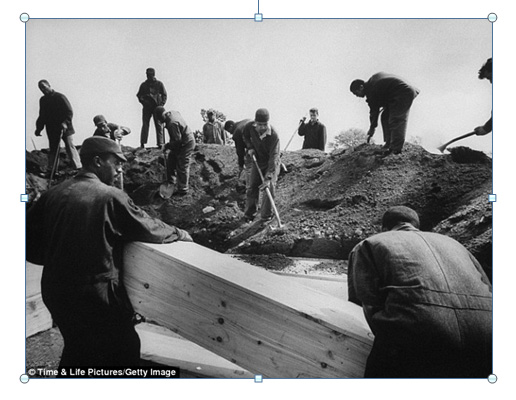
It was noted  that Alpo Hjalmar Lindell had died in the Bowery in New York City and was buried on Hart Island, a Potter’s field. Here is a brief summary of Hart Island.

Hart Island

Hart Island 1

A 101 acre potter’s field

Under the jurisdiction of New York City

Largest tax-funded cemetery in the world

Records are found on microfilms in the Municipal Archives in Manhattan

More than one million dead are buried there

Approximately 1,500 burials a year

One third of the burials are infants

Dead are buried in pine boxes in trenches


Hart Island 2

Babies are placed in various sized coffins and stacked five coffins high

Adults are stacked three coffins high in two rows and 25 across

Trenches were used to facilitate disinterment

Ceremonies have not been conducted at the burial site since 1950

No individual markers are set

Currently historic buildings are being torn down to make room for new Mass burials that are conducted by Riker’s Island inmates who are paid 50 cents an hour

Burials are of those people who could not afford private burials

Those unclaimed within a two week period by relatives were also buried there

Burial records are currently kept within the prison system

New York City Department of Corrections created a searchable database starting in 1977

It is not possible to visit the actual grave where a loved one may be buried

There is one ferry to the island every month, other than the ferry used to transport prisoners from Riker’s Island who work at Hart Island

April 30, 2012 jurisdiction of Hart Island was transferred to the New York City Department of Parks and Recreation from the Department of Corrections


Hart Island 3

In 2008 a Freedom of Information Act request for 50,000 burial records was granted to the Hart Island Project.

“Since 1994, The Hart Island Project has independently assisted families in obtaining copies of public burial records. The group also helps people track down loved ones and negotiate visits. An ecumenical group named the Interfaith Friends of Potter’s Field has intermittently conducted memorial services on the island.”

Visit the following websites :

https://www.hartisland.net/        a video clip

https://www.hartisland.net/burial records/search/plot=317


Source for the above information:

Hart Island, New York    From Wikipedia, the free encyclopedia


Further Reading:

  • Visiting the Island of the Dead A Rare Visit to New York’s Potter’s Field on Hart Island

                By COREY KILGANNONNOV. 15, 2013   The New York Times


  • Is your family member buried on Hart Island, off the coast of New York? Sorry, you can’t visit

            PRI’s The World  February 17, 2015 · 1:45 PM EST

Reporter Alina Simone 


Harbour Lights

by Claire Lindell

In the early half of the twentieth century Ashtabula Harbor, Ohio was a thriving port on Lake Erie. The Great Lakes were humming with cargo ships, barges and freighters moving slowly up and down the waterway delivering supplies.

One evening a young man of twenty or so stood on the shore and pondered his future. He was certain about one thing. He did not want to remain in the Harbor and become a dock worker like several of his uncles. He yearned to see what lay beyond. Where were all these ships going? What would it be like to live and work aboard ship? Where would it take him? His whole life lay ahead of him.

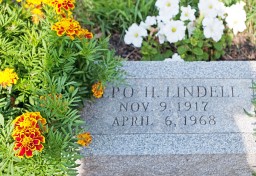
Alpo Hjalmar Lindell was the seventh child of eight children, born on November 9, 1917 to Johan Hjalmar Lindell, the Harbor blacksmith and Court interpreter. His mother, Ida Susanna Karhu, was a local activist in the Temperance Movement.

Alpo decided to become a merchant marine and fulfill his dreams The job description  stated clearly that it was an arduous, tedious and strenuous occupation. Seaman worked long lonely hours swabbing decks, lifting heavy cargo, polishing brass. They were the custodians of the ship. Their responsibility was to see that everything aboard remained in “ship shape”.

       P4_AUX_174_256           Cletus Schneider

Click to open a new window to view a current job description:

Job Description

which is not that much different than it would have been back in the 40s, 50s and 60s.

The first indication that Alpo became a merchant marine was  on September 12, 1944 . His name appears on a departure Passenger List in the Panama Canal, Cristobal Canal Zone. He was twenty-six years old.

Later at the age of thirty-one he is on an Immigration and Emigration List leaving Copenhagen, Denmark on June 18, 1948, destination, New York City.

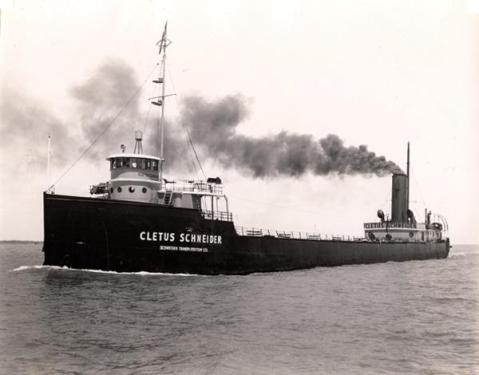
A third document  showed that in 1950 he was working much closer to home on board the “Cletus Schneider”, a long sleek freighter on the Great Lakes as third Assistant Engineer.

tn_image (1)

Cletus Scneider on the Great Lakes

Information about Alpo  between 1950 and the middle 60s is mostly hearsay. We do know he continued to work as a merchant marine.

Over the years he fulfilled his dreams. After more than twenty years as a seaman he could no longer  do the demanding work. He settled in New York City, a city he knew well.

In New York City he would occasionally have a short visit  with  one  of his older brothers who visited the city regularly on company business.  They would meet and chat briefly at Grand Central Station. Alpo would leave with a few extra dollars in his pocket and make his way back to the Bowery.

It was shortly after such an occasion on April 6th, 1968 that perhaps he flashed money, settled debts,  or paid a round for his ‘friends’ that he was rolled and later found dead. He was only fifty years old! A broken man.

At the time of Alpo’s death the authorities could not locate any family members. He was buried on Hart Island in a pauper’s grave.

Shortly thereafter, his brother was made aware of Alpo’s tragic death. The brother had the body exhumed and brought back to Ashtabula where he was given a proper burial. He lies in Edgewood Cemetery close to his parents.

That brother was my father.

We are all our brothers’ keepers.

Alpo Lindell Ashtabula Ohio

Sources: found on Ancestry

1920 United States Federal Census CENSUS & VOTER LISTS

1930 United States Federal Census CENSUS & VOTER LISTS

1940 United States Federal Census CENSUS & VOTER LISTS    Click to view

New Orleans, Passenger Lists, 1813-1945 IMMIGRATION & TRAVEL

New York, Passenger Lists, 1820-1957 IMMIGRATION & TRAVEL

U.S. City Directories, 1821-1989 SCHOOLS, DIRECTORIES & CHURCH HISTORIES


Note: Alpo’s older brother, Karl,   left home to study when Alpo was only six years old. They hardly knew each other and their paths did not cross for many years. Karl moved to Canada and became a successful Mining Engineer.

Christmas at Aunt Eva’s

images Christmas 2


One of my fondest memories of Christmas in Gaspé  are the Christmas Eve family gatherings at Aunt Eva’s .  Each Christmas Eve the Boyle Family members (Dorothy, Emily, Eva, Ernest, Eileen, Greta, Alice and Arthur)  who happened to be in Gaspé would   meet at Eva’s home for this  annual   Christmas Eve celebration .  It was truly a family gathering because those celebrating would extend beyond the immediate family.  All nephews, nieces, cousins, girl and boy friends would be welcome as well.

As long as I can  remember this tradition was guaranteed to take place each year, come blizzard or any other natural disaster.  The only break in the tradition was when Aunt Eva passed on.  Though I believe efforts took place to revive this tradition, things were not the same.   An important ingredient was missing.  This being Eva’s love of Christmas and love for her family.   The tradition hinged around Eva.  No one could think of it taking place any where else.

 As memories go, this is one to cherish as the years pass and I am sure it gives a warm feeling to those who remember these Gaspé Christmas’s.

imagesChristmas 3

 This story, Christmas at Aunt Eva’s was written and contributed by Jim Caputo

Many thanks Jim for allowing us to share in your fond memories of Christmas in the Gaspe. Perhaps this will encourage others to think about their favourite memories of past Holiday Seasons.

ch-hollybar

The O’Hara Cemetery, Gaspé

clip_image002

Author: Jim Caputo

Photos: Courtesy of Jim Caputo

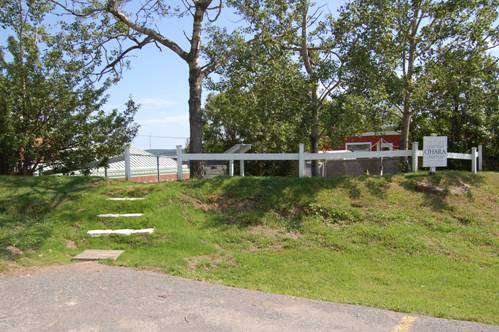
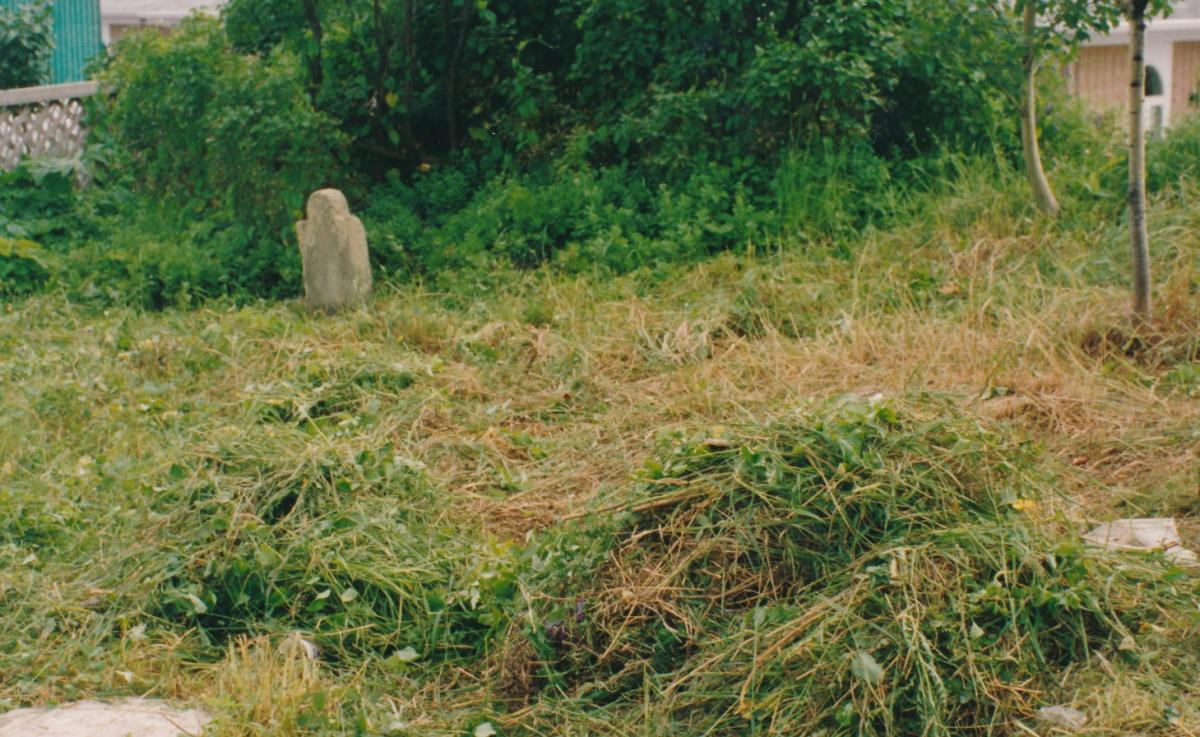
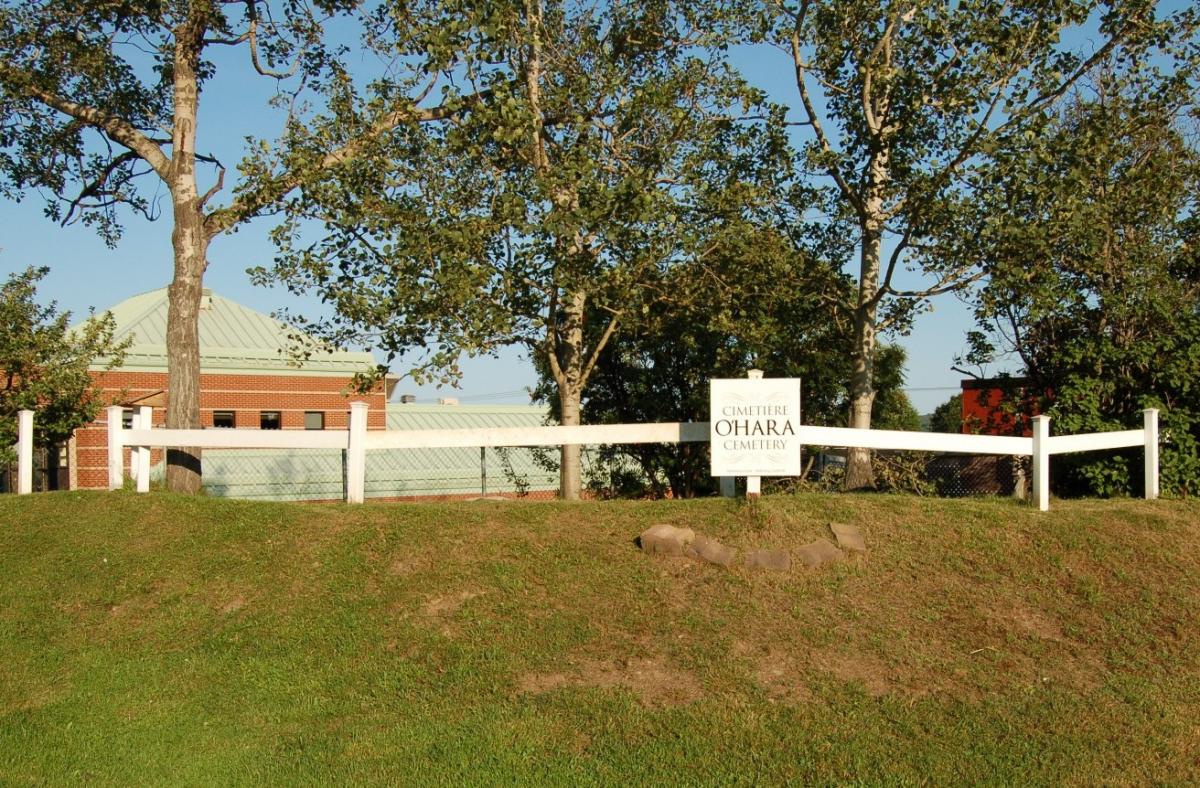
 Located in the very heart of the city of Gaspé lies an ancient burial ground — the O`Hara Cemetery. No one knows for certain how many souls were interred in this place. What is certain is that for many years the site was neglected, left to grow up in brush and weeds. Through the efforts of Heritage Gaspé/Héritage Gaspésie the area was cleaned of debris and brought to its present condition. Take the opportunity to visit the spot and view the graves of some of our early settlers and think back in time to Gaspé of yesteryear.

The O’Haras of Gaspe

The O’Hara’s, one of the earliest settlers of the Gaspé Basin area, arrived in Gaspé in 1765. Felix, his wife Martha and family settled on land long known as O’Hara’s Point. Their other holdings included lands that make up much of the centre of present day Gaspé Village. Felix, as well as being a prosperous land owner, played a prominent role in laying the foundations of the Gaspé communities, being made a Justice of the Peace, becoming the second Collector of Customs for the port of Gaspé, and being appointed Judge of the District of Gaspé in 1777. He also helped protect the coast from attacks during the American Revolution, and at the end of hostilities helped to survey and distribute lands to the United Empire Loyalists who came to Douglastown and New Carlisle.

As well as the efforts of Felix, other members of this family also played an important role in the development of early Gaspé. Of his sons Oliver, became Collector of Customs at Carleton; Edward represented Gaspé in the first legislature of Lower Canada (Quebec), served in the British army, and was appointed the Governor of the Island of St. Lucia in the Caribbean; Henry the youngest son, was Collector of Customs for many years and was also a Justice of the Peace and surveyor; Hugh, Collector of Customs in Gaspé, through his compassionate efforts in helping immigrants sick with fever, caught the fever himself and died as a result. The O’Hara’s also supported the development of education, the establishment of Churches, and served in local militias.

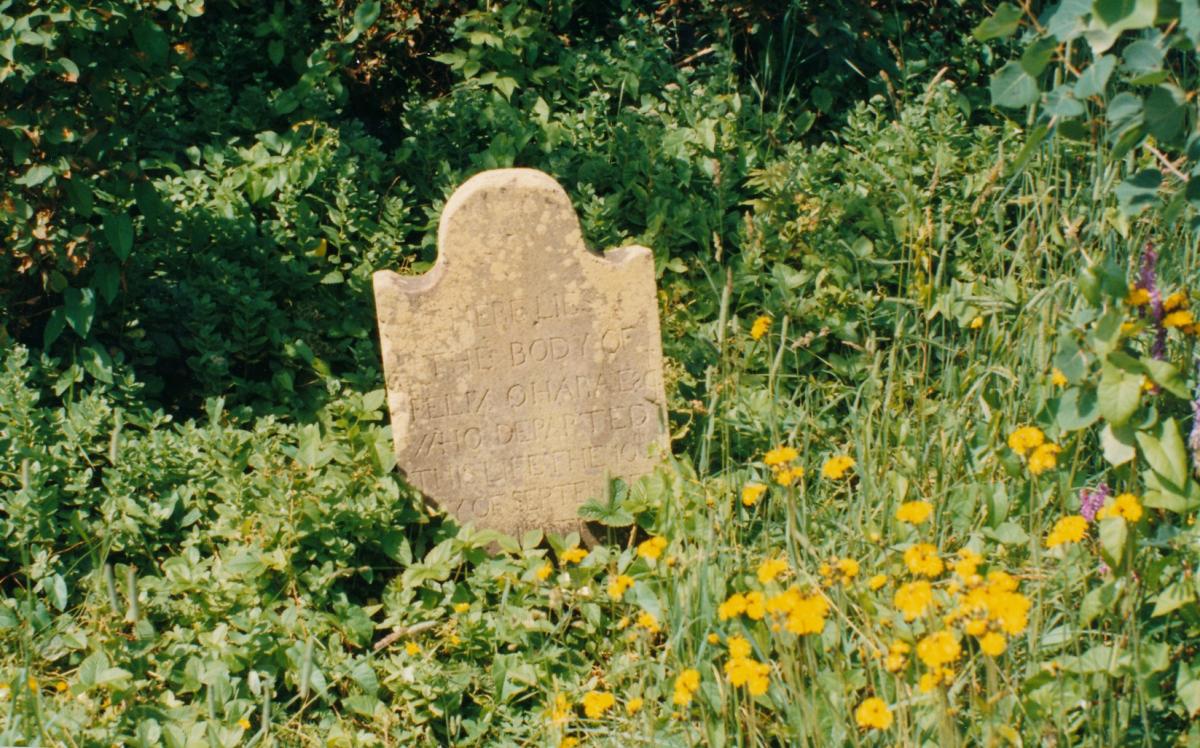
Of the original grave markers only those of Felix O’Hara (the patriarch of the O’Hara family), who died in 1805, Mary Stuart, wife of Henry O’Hara, who died in 1838, and Jane Chevalier, who died in 1848, exist today. It is believed that other members of the O’Hara family may have been buried at this site. It is also believed that others outside of the family were buried here as well.

ohara.2


ohara_0   

  ohara.3

                                                                           After the clean up.


The Pitfalls of a Neophyte Genealogist

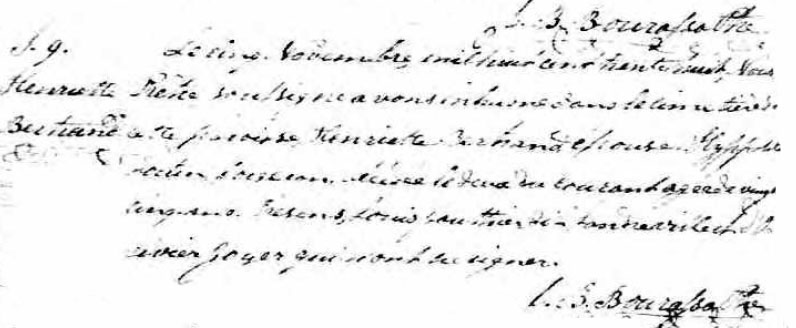
Who was my third grandmother? Which one of these women married Moyse Hypolite  Fortin? Were they cousins? Were there mistakes in the information I was finding? I needed answers.

Genealogy requires exact details and facts in order to get the story right. As a new genealogist I learned this very quickly.

In the case of my third great grandmother there were conflicting reports. One day I would find Henriette Bertrand in Ile Perrot and then later find an Henriette Bertrand in Vaudreuil. The dates varied by only two years and they fit in with the time frame of my third great grandfather.

The two communities are very close to one another, a matter of only a few kilometers.

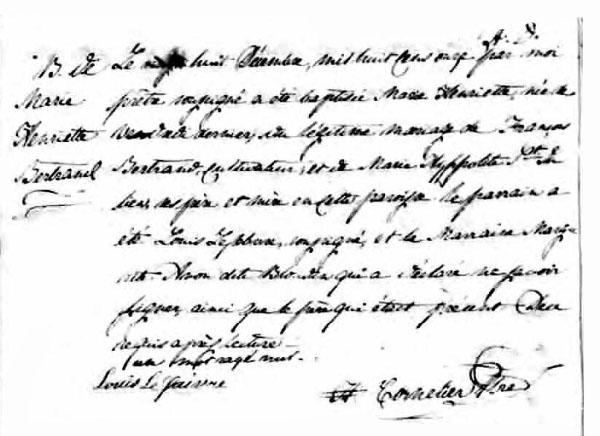
It soon became apparent that there were in fact two Henriettes. I found the baptismal  document on line for Henriette 2. The discovery made me realize that perhaps I had been researching the wrong person.

At this point I needed clarification. I made a visit to Centre d’histoire La Presqu’íle in Vaudreuil and was able with the help of the archivist learn for certain which of the Henriettes was the correct one. Now I had what appeared to be a monumental task ahead. Research had  been done for Henriette 1 thinking she was the right person.  Now, this lineage was of little value as she was not one of my ancestors. This meant  starting over with Henriette 2 and tracing her line.

The archivist was very helpful finding documentation and pointing out the right direction to proceed.

This was indeed a valuable lesson and I am grateful having  learned it early on in my research. It has constantly been a reminder that before making the next move, make certain you have as many exact verified facts as possible  about the particular person you are researching. That way you can avoid  mistakes.

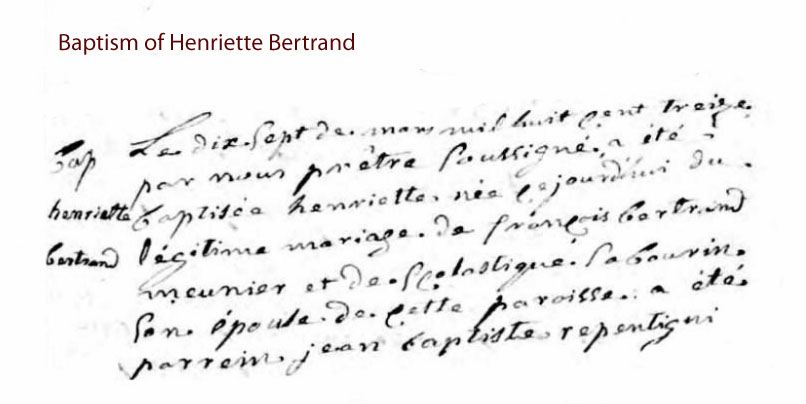
The following two documents were found on Ancestry-Drouin Collection

Baptism:

Baptism Henriette Bertrand

Burial

burial

Registres paroissiaux et Actes d’état civil du Québec (Collection Drouin), 1621 à 1967

Name: Henriette Bertrand
Event: Enterrement (Burial)
Burial Year: 1815-1900
Burial Location: Montebello, Québec (Quebec)

Source Information:

Ancestry.com. Quebec, Vital and Church Records (Drouin Collection), 1621-1967 [database on-line]. Provo, UT, USA: Ancestry.com Operations

Inc, 2008.

Original data: Gabriel Drouin, comp. Drouin Collection. Montreal, Quebec, Canada: Institut Généalogique Drouin.

Comparison of data for the two Henriettes

Henriette Bertrand   1                                                                    Henriette Bertrand 2

Born:  December 28, 1811 in Vaudreuil                                  Born March 7, 1813 in Ile Perrot

—————————————                                                       Died November 5, 1838

Mother:  Apoline St. Julien                                                           Mother:  Scholastique Sabourin

Born: Nov 6. 1783 in Vaudreuil                                                 Born:  1789 in Rigaud

Died:  Aug 2, 1834 in Vaudreuil                                                 Died:  July 28 1821 in Rigaud

—————————————                                                       Married: September 12 1831 in Montebello

Father:  Francois Vital Bertrand                                                  Father: Francois Joseph Bertrand

Born:  Jan 4, 1780 in Vaudreuil                                                   Born 1784

Died:  July 11, 1859 in St. Joeph du lac                                      Died:  1832 in Ste Justine de Newton

In 1832 Henriette  2   married Moyse Hypolite Fortin, my third great grandfather. She died November 5, 1838 at the age of twenty-five  in Montebello,  having given him a daughter, Leocadie Fortin, my great-grandmother and a son, Louis.


               Centre d’histoire La Presqu’íle

Achives regionales de Vaudreuil Soulanges

431 BC St. Charles

Vaudreuil-Dorion J7V 2N3

http://www.chlapresquile.qc.ca

Life Decisions

A simple act followed by a statement can be life-changing. Such was the case for Kaarlo.

Several  years of study at Michigan College of Mines in Houghton, Michigan had prepared Kaarlo, a young Finnish boy from Ashtabula, Ohio  for a career in the mining industry. He had worked as a cook on the ore boats on the Great Lakes and knew he wanted something more fulfilling, much as he loved sailing the lakes.

In 1928 he graduated with a degree in Mining  Engineering. There was a job waiting for him at  Royal Tiger Gold Mines in Breckenridge, Colorado. He packed his Model T Ford and set out for the west with high hopes and dreams of creating a good life, doing something he truly enjoyed.

It wasn’t long after arriving at the mines that he found the owner-manager tampering with the assays (the device used to measure gold). Once the owner realized that the young man was aware of his actions, he ordered him to be “out of town by sundown!”.  Kaarlo didn’t back down and stated that he would leave as soon as he could get his car on a railroad car to carry it  over the mountains.

Dreams of working in the gold mines were crushed. Being young and a go-getter,  he immediately contacted the College to see if they knew of any openings for newly graduated engineers. They responded that there were openings in Canada in the nickel mines in Copper Cliff, Ontario.  It was time to head north.

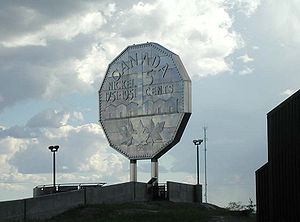
300px-BigNickel

                                    The Big Nickel in CopperCliff, Ontario,  now part of Greater Sudbury

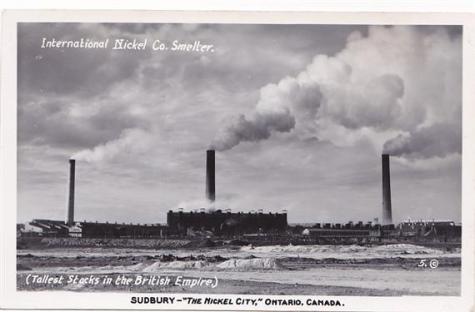
Kaarlo Victor Lindell crossed in to Canada on the 31st of January 1929 at Bridgeburg, Ontario1 with hopes and dreams of a rewarding career and a new challenge. He found a room in a boarding house and began working for the  International Nickel  Company(INCO) and never looked back. He spoke Finnish and soon made friends with his coworkers, among them many Finns. His employer took advantage of his knowledge of Finnish and in 1934 was sent to Northern Finland where he was actively involved in opening a nickel mine in Petsamo. In 1939 that part of Finland was seized by the Russians.

Along the way he met a pert, pretty, vivacious young lady, named Estelle (Esty) and sought her hand. They were married on September 6th 1930 in Sudbury. In the meantime Kaarlo had legally changed his name to Karl and took religious instruction in the Catholic faith having been a Lutheran all his life.

In 1939 with WW11 on the horizon Karl wanted to serve his new country. He became a naturalized citizen on the 8th of August 19392, however, with four children and a fifth on the way,  (me) his services were needed in the nickel  industry. He remained at work for INCO. Nickel production was crucial for ammunition during the war years.

7f8387d73db3917a06b23e636e118174

Royal Tiger Gold Mines thrived from 1918 and into the 1930s, however, it declared bankruptcy in 1938 and in 1973 the town and all the buildings in it were torched to keep the “hippies” from squatting.

Northern Ontario, on the other hand has over time developed  and prospered.

It is interesting to speculate how Kaarlo’s life might have been, especially  if he had stayed in Colorado?


I would not be here to tell the story!


FamilySearch indexing – How you can become involved

The following article was written for Genealogy Ensemble by Marian Bulford, a genealogist from the West Island of Montreal who has been indexing for many years. She gives us valuable insight about indexing and how we all benefit from the contributions of those who index the records we use in our genealogical pursuits.

Indexing is the data entry of human records worldwide in any language you choose. If you can type, then you can index, so why not get started today?!

Keyboard01_MicrosoftThe FamilySearch website has provided a way for anyone with an internet connection to assist in the monumental task of indexing world genealogical records. It is run by the Church of Jesus Christ of Latter-day Saints, more commonly known as The Mormons.

The Church of Jesus Christ of Latter-day Saints is in the process of digitizing the bulk of their genealogical records, as well as partnering with genealogical societies and other groups to digitize other records of genealogical value. Most of the websites today have obtained their records from this church.

As indexing is entered, the records are checked and arbitrated a few times. Then these digitized records are uploaded to the online FamilySearch Indexing project site for anyone, including you, to view free of charge.

Easy to download software and index
The indexing software is free and easy to download, and the online tutorials should get you started quickly. There is also an online help desk if you have questions.

You do not have to be a church member to index or search this free website. To start, simply go to the website link here. It takes only a few minutes to download your selected batch of records — in any language and in any part of the world you choose — and transcribe the entries using the provided software you will find on the web page.

Alternatively, if you just want to research a wonderful database for free with no obligation or fees, go to https://familysearch.org.

If you volunteer to index for FamilySearch, just remember, you are helping to add millions of data for us genealogists to find plus, as a side benefit, indexing can help you become a better researcher as you become more familiar with the wide variety of historical documents available to you and the type of information each contains. You can choose a beginner, intermediate, or advanced batch to index.

Where to start?
Indexing consists of births, deaths, marriages, banns, obituaries, christenings, or baptisms. In addition, there are historical records consisting of many other interesting items worldwide. For instance, how about indexing the following databases?

  • France, Diocèse de Coutances et Avranches – Registres Paroissiau from 1796 to 1880
  • UK Sussex Church of England Parish Records from 1538 to 1910
  • US Louisiana WW2 Draft Registration cards from 1940 to 1945
  • South African Free State, Estate Files from 1951 to 1980
  • Polska, Radom Roman Catholic Church Books from 1733 to 1868
  • Brazil, Pernambuco Recife Registro Civil from 1900 to 1920

All of the above databases, and many more, now await us to index them and provide a name or a lead for someone who is searching for their ancestors.

To help you through the indexing process, there are Help fields on the right of every batch you download. You never know, you may even come across some of your family names whilst indexing.

Once records have been indexed through FamilySearch Indexing, the new indices (and sometimes the document images) are posted online for free access at FamilySearch.

How I started
Because I am originally from the UK, I usually go to the UK batches for my indexing as I love history and I find so much of interest there, but I also like to mix it up and, as long as it is in English, I will index it.

Last year, I helped index the US 1940 Census. (As you well know, the census is usually the first place we go to find an ancestor’s name.) That monumental task was also completed well within the time range expected and up and running far sooner than anticipated.

Tremendous response to call for volunteers last month
Last month the FamilySearch website asked for volunteers for two days of indexing by asking everyone you know to join in. This, in part, is their response after that weekend. “We hoped to have an unprecedented 50,000 contributors in a 24-hour period. FamilySearch volunteers excelled, surpassing that goal by 16,511! That’s right—66,511 participants in one day! Incredible! We are grateful for the patience and persistence of many volunteers who faced technical difficulties due to an overwhelming response.” To read more, visit the blog post, FamilySearch Volunteers Set Historic Record.

According to some sources, volunteers participating in online indexing projects are adding over a million names a day in total.

Once records have been indexed through FamilySearch Indexing, the new indices (and sometimes the document images) are posted online for free access at FamilySearch Record Search.

So, log on and go see what you get back for a few hours, or even minutes, of indexing. Why not try a test drive on the above links and be part of the many people proud to add to the billions of records that amateur and professional genealogists like us search for daily.

Life in New France Was Fraught with Danger

Montreal,  originally known as Ville Marie was founded in 1642 by Paul Chomedy Sieur de Maisonneuve. At the time there were very few inhabitants. Within the next several years ships arrived and the population grew.

In 1663 the company of Saint Sulpice became the owner of the Montreal Island. They built their Seminary in 1684 and starting in 1685 Montreal became more and more of a military stronghold surrounded by a wooden palisade

In 1665 my 7th great Grandfather Claude Jodouin, born in Poitiers, France,  arrived in Ville Marie,  New France. He was a master carpenter and worked for the Sulpicians. Shortly after his arrival1 on March 22,1666 in Notre Dame Church he married Anne Thomas, a King’s daughter. Over the years they had ten children.

Saint-Henri  des Tanneries  was an non-populated wooded area far removed from the walled section of the settlement which is now referred to as Old Montreal. There the workers would tan hides. The odor from the tasks was most unpleasant, to the point of being quite unbearable. This was the reason for establishing the tanneries far from the population. The area today still bears the name Saint Henri.

While working at the tannery Claude Jodouin’s life came to a fateful end. He was fifty years old.

In the Bulletin des Recherches Historiques2 the following describes his death.

“Le sudit document nous apprend encore que, le 16 octobre 1686, un charpentier nomme Claude Jaudouin employe a la tannerie fut inopinement tue par un autre ouvrier. Nicolas Martin dit Jolycoeur. Celui-ci, ignorant que son compagnon etait au bois entendant un froisement de branches imagina qu’un ours venait a lui. Pris de peur, il dechargea son fusil dans la direction de bruit avec le regrettable resultat que l’on sait.”

Translation:        It was in a wooded section outside the tannery, that a fellow worker thought he heard a bear rustling in the bushes, took aim and shot. So ended the life of Claude Jodouin, the master carpenter.

In the Dictionnaires de genealogies des familles du Quebec3  it indicates that Claude Jodouin was killed accidentally. Little did I know that my first trip to La societe de genealogie canadienne francaise in the east end of Montreal would reveal the manner in which he died.

Anne, Claude’s wife was still a young woman with the responsibility of their ten children.  From all accounts she was sought after by many eligible bachelors. Within a short period of time she remarried.4

Sources:

1      POULIN, JOSEPH-PHILIPPE. “Premiers colons du debut de la colonie jusqu’en 1700.” In Programme Souvenir, Sixieme Congres de la Societe Genealogique Canadienne Francaise, Quebec (Oct. 8-10, 1960), pp. 13-22.  Arrival


1      L’Abbe D Tanguay, ADS, Dictionnaire Genealogique des Familles Canadiennes Depuis la Fondation de la Colonie Jusqu’a Nos Jours, Cinquieme Volume, Depuis 1608 jusqu’a 1700, Eusebe Senecal, 1888.

2       Bulletin des Recherches Historiques Vol 41: p 39

3      Dictionnaire degenealogie des familles du Quebec, Jette

4       Ibid

http://www.memorablemontreal.com › accessibleQA

http://en.wikipedia.org/wiki/Timeline_of_Montreal_history