The following database: New France Hospitals / Nouvelle-France Hôpitaux details the lives of 207 surgeons, doctors, nurses, and apothecaries.
The sources in order of importance;
BAnQ Numérique
BAnQ Advitam
BAnQ Advitam-Numérique
Archives de la Nouvelle-France – Library Archives Canada / Bibliothèque Archives du Canada
ANOM- Archives nationales d’outre-mer (France)
Biographi.ca
Fichier Origine
BnF Gallica – Bibliothèque nationale de France (Paris)
Gisèle Monarque, historian and genealogist
Maud E. Abbott, historian
Raymond Douville, historian
Marcel J. Rhéault, historian
Maria Mondoux, historian
Renald Lessard, historian and archivist
Including references to books as noted within the database.
Among the three major hospitals in New France (Nouvelle-France); Hôpital Hôtel Dieu de Québec, Hôpital Hôtel-Dieu de Montréal, Hôpital Hôtel-Dieu de Trois-Rivières, the one with the worst surviving original documents is the Hôtel Dieu de Montréal as it was destroyed by fire on three occasions : 1695, 1721, 1734.
The following database contains information about the province of Quebec from the time of the 1759 British Conquest at the Plains of Abraham in Quebec City until Confederation.
Consisting of :
Information about the key players and the implementaion of the Quebec Act of 1774.
A link to a copy of the Quebec Act.
Authors who wrote biographical sketches about those whomade a difference., those who wanted to have an inclusive society in 1759 in British Quebec and those who did not.
Authors who wrote historical accounts, immigration of those seeking a better future and the consequences of the Quebec Act of 1774.
Rev. John Ogilvie’s Baptismal and Marriage Records
Montreal
The following database consists of extensive records of baptisms, marriages, and deaths by the Reverend John Ogilvie and Ministers at the Garrison Anglican Chuch in Montreal, Quebec City, Trois Rivieres, and Sorel.
A list of Protestant Cemeteries is included, followed by numerous authors who have written about the lives of Ministers and Governors of the time.
Notaries of Quebec Appointed by the Governors of Quebec 1760-1789at the beginning of the British Regime.
Definition: Notarial records are private agreements (contracts), written by notaries, who are considered legal professionals. This collection consists of notarial records for Quebec from the years 1637 to 1935. Each notary set up practice and kept sets of records for documents they created. Ancestry.ca
Notaries This database lists the notaries appointed in the following
Districts of Quebec – Montreal -Trois-Rivieres – Joliette – Kamouraska – Montmagny – Richelieu – Saguenay – Saint Hyacinthe – Terrebonne
Authors Numerous authors have written about these notaries and indicated the sources where their documents can be found and researched on various websites.
This database has focused on the availability of the greater portion of these documents that are located at BanQ Numerique These are indicated at the end of the link: ex: Doc online.
Click the link below to access the database and open in a new window.
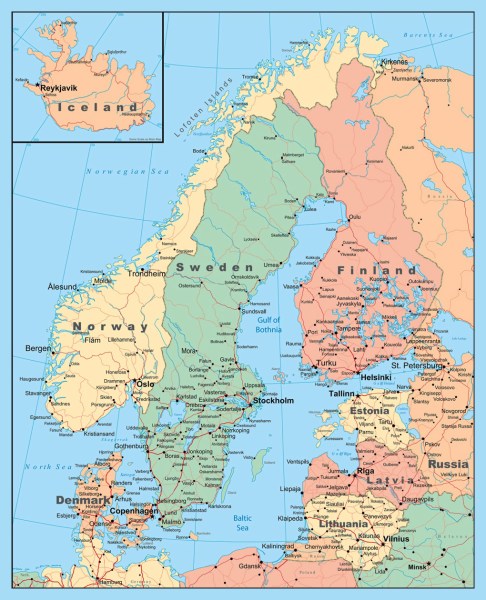
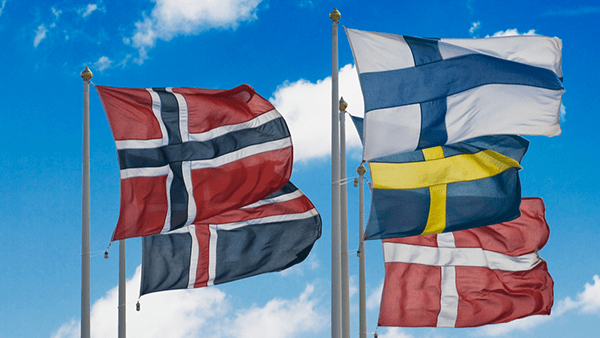
Norway – Sweden – Finland – Denmark – Iceland – Estonia – Latvia & Lithuania
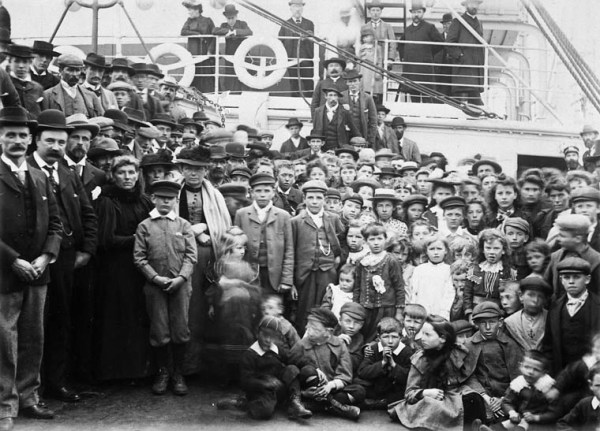
Coming to Canada
Norway
The offer of Canadian land parcels to settlers in the 1890s attracted Norwegians to come to Canada. Before that time, Norwegians would cross the Atlantic Ocean, land in Quebec City, then migrate south to the United States. As the American Midwest and Northwest became more populated, and immigration policies more restrictive, the Canadian Prairies became the next destination for many Norwegians.
Sweden
Swedish immigration to Canada began in the 1870s with the first rural Swedish colony, Scandinavia, near the town of Erickson in Manitoba. Originally named New Sweden, Scandinavia was established by three men who organized dwellings to house the first settlers.
Like their Scandinavian counterparts, Swedish immigrants first arrived and settled in the United States and then travelled north to settle in Canada. A large influx of Swedish immigrants from the states of Minnesota and North Dakota migrated to the Canadian Prairie provinces in the 1920s.
Finland
It is very difficult to determine the exact date of arrival of the first Finnish settler to Canada. However, Finns began settling in large numbers in the 1880s. During this period, many Finns who had arrived in the United States in the 1860s crossed the border into Canada. By 1890, many communities of Finnish Canadians had formed. The largest of those communities were Nanaimo, British Columbia; New Finland, Saskatchewan; Port Arthur, Toronto, and Sault Ste. Marie in Ontario.
Denmark
Although there are early accounts of Danes working as trappers in Canada, little documentation exists that describes their experiences. By the 1860s, political unrest, religious divide, and the promise of a better life in America, all contributed to the migration of Danish people to Canada and the United States.
Iceland
Leif Eriksson was the first Icelander to set foot in what would become Canada. Wineland, the first settlement of Icelandic origin, was established in 1003, and Snorri Þorfinnsson is the first known European born in L’Anse aux Meadows, Newfoundland.
In 1872, Sigtryggur Jonasson traveled to the Muskoka region of Ontario and a group of 100 Icelanders later joined him there. Not satisfied with their settling attempts in Ontario, the Icelanders moved west to Manitoba and established the first lasting Icelandic colony on the continent.
Estonia
From 1900 to 1944, fewer than 3000 Estonians immigrated to Canada. Approximately 72, 000 Estonian political refugees fled to Sweden and Germany in 1944 to escape Russian communism. Of these, nearly 14, 000 immigrated to Canada between 1946 and 1955
Approximately 72, 000 Estonian political refugees fled to Sweden and Germany in 1944 to escape Russian communism. Of these, nearly 14, 000 immigrated to Canada between 1946 and 1955. Balts, mostly Estonians, Latvians, and Lithuanians, were among the first displaced persons selected by Canadian immigration during the Second World War (WWII).
Lithuania
Lithuania is a small country on the southeastern coast of the Baltic Sea. The first recorded Lithuanian immigrants to Canada were soldiers serving in the British army in the early 19th century. The 2016 census reported 59, 285 people of Lithuanian origin in Canada (11, 185 single and 48, 100 multiple responses). At the end of the 19th century and the beginning of the 20th, many Lithuanians, fleeing Tsarist police or to improve their livelihoods, immigrated to Canada and settled in Nova Scotia, Ontario,and western Canada
Latvia Between 1921 and 1945, 409 Latvians arrived to Canada, although in the 1941 census listed 975 people claimed Latvian origin. After the Second World War in 1947, many Latvians moved to Canada as war refugees. This migration, which accounted for 92% of Latvians who immigrated to the country between 1921 and 1965, ended in 1957. Many of these Latvians worked in the agricultural areas during their first years in Canada, but soon settled in cities. By 1961, only 10% of those immigrants lived in rural zones and farms (6% in rural areas and 4% on farms). The majority of Latvian immigrants in Canada in 1991 were women, 775 more women than men.[1 Information : Library and Archives Canada
Background Information pertaining toScottish Settlers in Canada
Scots began arriving to Canada as early as the early seventeenth century. Sir William Alexander obtained permission from King James I to establish a Scottish settlement in 1622 named New Scotland or Nova Scotia. The colony failed to flourish, however, and few families settled in Canada before the British conquest in 1759. The majority of these early Scottish settlers were Roman Catholics seeking political and religious refuge, fur traders with the Hudson’s Bay Company, merchants and disbanded soldiers.
After this early period there were also a number of Highland farmers who emigrated from Scotland after being ejected from their land to make way for sheep grazing. The primary destinations for these early settlers were agricultural communities in Upper Canada, Prince Edward Island and Nova Scotia. Cape Breton Island had a significant Scottish population, Gaelic being the only language spoken there. Scottish Loyalists arrived in Canada from the United States in 1783 and settled mainly in Glengarry, Upper Canada, and Nova Scotia. Lord Selkirk also settled over 800 Scottish migrants in Prince Edward Island in 1803 and placed many others in his Red River settlement in Manitoba in 1812. By 1815, there were already more than 15,000 Scots living in Canada.
Between 1815 and 1870, over 170,000 Scots immigrated, with increasing numbers settling in Quebec and Ontario, notably in Lanark County. They were a widely-varied group, including Highlanders and Lowlanders, farmers, teachers, merchants, clergymen and servants. Many were Presbyterian and English speaking. Many Scots were encouraged and supported by the British government and private companies in their effort to emigrate.
Scottish immigration to Canada continued into the twentieth century and increased the Scottish population to over 1 million by 1930. Most of these later Scottish migrants were farmers and farm labourers coming from the Lowland regions, while fewer Highlanders emigrated during that period. There were also many more industrial workers coming after 1900, many in the iron and steel industries. The primary destination for this later settlement of Scots was western Canada, with Manitoba receiving the largest numbers.
After the First World War, many Scots were able to gain passage to Canada under the Empire Settlement Act. Immigration from Scotland to Canada continued in large numbers throughout the twentieth century and between 1945 and 1993 approximately 260,000 settled in Canada. Today, there are approximately 4 million Canadians of Scottish heritage.
British Wesleyan Methodist Church,American Congregational Church,and Other Protestant Denominations During the Lower Canada Period at BAnQ.
St. James Anglican Church – Three Rrivers – Originally built in the mid 1700’s as a Recollet MissionSaint James Anglican Church Three Rivers where the congregation has been worshipping since 1823.
The following database contains books written by numerous authors who have penned books, essays, treatises, dissertations, theses, studies, abstracts, and papers. within the libraries of genealogy societies and at BenQ. These documents may be accessed online and downloaded.
On pages, 69, 70, 71 are listed the leading repositories of Protestant Church Registers in Quebec, Many Protestant Registers cannot be accessed at BAnQ Numérique, Ancestry.ca, Genealogy Quebec (Drouin Institute Online), FamilySearch.org. Very few Protestant Church Registers (baptism, marriage, death) survived during a period of time in New France However, it is possible that Notarial Records may shed light on Protestant families prior to 1759.
The Notaries who began their careers from 1760 to 1791
The Notaries who began their careers during the French regime of Nouvelle-France (New France) and were reappointed by the British governors and administrators after 1759.
Note that BAnQ keeps adding new online search engines which did not exist about two years back, such as :
BAnQ Advitam-Numérique
BAnQ Archives
BAnQ Advitam-Numérique in regard to notaries and their dossiers is a regrouping of Notarial Acts which previously were only available within the 10 repositories of the Archives nationales du Québec across the province in the form of :
Microfilms
Original Minutiers (Notarial books)
Or as in-house digitized dossiers which could only be accessed within the 10 libraries of BAnQ across the province on dedicated computers
The first clerk of New France, Jean Nicolas, was appointed by Samuel de Champlain in 1621. Since France would not send notaries to the colony, men who knew how to write and had an ”honourable” reputation were allowed to practice the profession . Only from 1647 onwards were colonial authorities, then referred to as the Council of New France (a body consisting of the Governor General, the Jesuit superior, and the Governor of Montreal), mandated by the King to appoint a secretary that could act as notary. Guillaume Audouart, also known as St-Germain, hence became the recipient of the first official commission granting the title of notary. It would take the establishment of royal justice in New France and the creation of the Conseil Souverain (Conseil supérieur de Québec) in 1663 for the notarial profession to be officially recognized. One of the main assignments of the Council was to appoint the bailiffs, clerks and notaries. And so it was that in 1663, the first royal notary of New France, Jean Gloria, was appointed in Quebec City.
Characteristics of notarial records
A notarial record is a deed written by a public officer recognized by the State and commissioned to that effect within his territorial jurisdiction. Notarial archives are the most searched genealogy and family history source in Québec, after registers of civil status and censuses, because of:
the quality and accuracy of the information they contain;
the breadth of their content which relates to all aspects of life in society;
their nearly complete nature, since almost all registries have been preserved and relatively few records have been lost (e.g. several notarial records from the Outaouais region were destroyed in the Great Hull Fire of 1900);
their standardized content in accordance with templates drawn from manuals such as Le parfait notaire by Ferrière;
the fact that most records preserved by BAnQ have been microfilmed and digitized allowing for greater accessibility; only non-probated wills written after 1920 cannot be viewed;
the Parchemin database (developed by the Société Archiv-Histo) for the pre-1799 period;
the reassuring nature of the source for the reason that notaries bestow authenticity to the records they execute (regarding the date, content, signature, and so on).
For genealogists, notarial records can offset the loss or destruction of registers of civil status. In some cases, notarial records are the only documents that can confirm the kinship of an individual.
Notarial archives are very useful for non-genealogical research, including:
to present a property title or to defend a right;
for any research related to history, especially for any research related to local, regional, and family history.
The database below consists of the practices of the notaries of New France.







 Genealogy Ensemble