Category Archives: Quebec

Popular Early Notaries in Quebec

If you are looking for the notaries who prepared documents such as leases, wills and business agreements for your ancestors, the best place to start might be the notaries with the biggest practices. The notaries listed below are the notaries with the largest clientele in New France & Quebec under the British.

I have reviewed 551 notaries and I have selected, by judicial districts, the notaries with the largest number of notarial acts (minutiers) written.

The notarial acts of the notaries listed below are available on microfilm at the Bibliothèque et Archives nationales du Québec (BAnQ) in old Montreal, or the BAnQ in Quebec City, or branches of the BAnQ in Sherbrooke, Gatineau or Trois-Rivières. Check before you visit. Meanwhile, more and more acts are being digitized and can be found online on the BAnQ’s website, on Familysearch.org or on Ancestry.ca.

Their clients were varied. Prior to 1760, they included primarily French Canadian and Acadian families. After the British Conquest, they included French Canadians and British, Scottish, Irish families and soldiers, Americans, Loyalists, Germanic soldiers and their families, Dutch Loyalists and Scandinavians & Baltic States immigrants.

Montreal Judicial District

>> Antoine Adhémar dit Saint-Martin 1677-1714 – 13 microfilms

>> Michel Lepailleur & François Lepailleur dit LaFerté – 1700-1739 – 14 microfilms

>> Jean-Baptiste Adhémar dit Saint-Martin – 1714-1754 – 10 microfilms

>> Charles-François Coron – 1734-1767 – 10 microfilms

>> Simon Sanguinet Senior & Junior – 1734-1786 – 13 microfilms

>> François Simonnet – 1737-1778 – 12 microfilms

>> Antoine Foucher – 1746-1800 – 13 microfilms

>> Jean-Baptiste Daguilhe – 1749-1783 – 10 microfilms

>> Joseph Lalanne & Pierre Lalanne – 1752-1792 – 12 microfilms

>> Pierre de Méru Panet & Pierre-Louis Panet – 1755-1783 – 10 microfilms –

>> François Leguay Senior & Junior – 1770-1807 – 10 microfilms

>> Edward William Gray & Jonathan Abraham Gray – 1777-1812 – 12 microfilms

>> Joseph Papineau – 1780-1841 – 11 microfilms

>> Edme Henry – 1783-1831 – 10 microfilms

>> Louis Chaboillez – 1787-18213 – 21 microfilms

>> Peter Lukin Senior & Junior – 1790-1837 – 10 microfilms

>> Jean Mondelet – 1794-1842 – 11 microfilms

>> Pierre Lanctot – 1809-1850 – 12 microfilms

Quebec City Judicial District

>> Gilles Rageot & François Rageot & Charles Rageot – 1666-1753 – 10 microfilms

>> Edme Jacob, Étienne Jacob, Joseph Jacob – 1680-1750 – 12 microfilms

>> Louis Chamballon – 1692-1716 – 15 microfilms

>> André Genest 1738-1783 – 13 microfilms

>> Jean Antoine Panet & & Jean-Baptiste Panet & Jean-Claude Panet – 1744-1783 – 20 microfilms

>> Antoine Crespin – 1748-1782 – 12 microfilms

>> Charles Voyer & Jacques Voyer – 1787-1842 – 14 microfilms

>> François-Xavier Larue Senior & Junior – 1788-1865 – 17 microfilms

>> Roger Lelièvre – 1793-1847 – 27 microfilms

>> Barthélemy Faribault – 1796-1821 – 23 microfilms

>> Louis Guay – 1806-1843 – 12 microfilms

Trois-Rivières Judicial District

>> Jean-Baptiste Badeau – 1765-1796 – 12 microfilms

>> Antoine Gagnon – 1792-1824 – 12 microfilms

>> Joseph Badeau – 1798-1835 – 21 microofilms

Richelieu Judicial District (Richelieu River Valley)

>> Henry Crebassa – Richelieu – 1795-1843 – 16 microfilms

Beauce Judicial District

>> John Walsh – 1803-1845 – 10 microfilms

>> Jean-Baptiste Bonneville – 1819-1871 – 12 microfilms

>> Jean-Olivier Arcand – 1832-1868 – 16 microfilms

Iberville Judicial District (Richelieu River Valley)

>> François Médard Pétrimoux – 1798-1849 – 13 microfilms

>> Louis Decoigne Senior & Junior – 1807-1857 – 15 microfilms

>> Laurent Archambault – 1820-1859 – 13 microfilms

Montmagny Judicial District (Lower St. Lawrence)

>> Nicolas-Charles–Louis Lévesque – 1752-1795 – 10 microfilms

>> Augustin Larue & Abraham Larue – 1804-1847 – 20 microfilms

Kamourasksa Judicial District (Lower St. Lawrence)

>> Louis Cazes – 1780-1798 – 10 microfilms

>> Augustin Dionne – 1797-1821 – 12 microfilms

Beauharnois Judicial District – (North of New York State)

Louis Sarault – 1805-1861 – 11 microfilms

Godfroi Chagnon – 1825-1862 – 11 microfilms

St. Hyacinthe Judicial District

>> Pierre-Paul Dutalmé – 1798-1821 – 10 microfilms

Charlevoix (St. Lawrence’s North Shore)

>> Charles-Pierre Huot – 1817 -1865 – 11 microfilms

Joliette Judicial District

>> Louis Raymond – 1796-1829 – 14 microfilms


Royal Notaries of New France and in Quebec under the British

For family researchers looking for ancestors in Quebec, notarial acts are much more than marriage contracts or wills. A notarial act can offer a detailed overview of all the members of a particular family through documents such as notarized after-death inventories.

In order to pinpoint where and when an ancestor settled within a particular region of Quebec, notarized land grants and land purchases, sales and leases can provide family lineage researchers with answers to their research stumbling blocks.

If your ancestor was a business person, notarial acts can describe the types of business activities your ancestor carried on, and the names of his partners or competitors.

All types of transactions that seigneurs carried on with their tenants in New France, between 1612 to 1760, and under British rule, from 1760 to 1854, were recorded by notaries. These records are a must for those with ancestors in rural districts of New France and British Quebec up to 1854.

In order to find the notarial documents relevant to your family’s activities, you first need to know the name of the notary who prepared these documents. Unless the notary’s acts have been digitized, you will need to scroll through his index to find the dates and act numbers so you can find the documents themselves.

In New France, there were three types of notaries: public notaries, also referred to as regular notaries; seigneurial notaries, appointed by the owners of vast territories called seigneuries; and royal notaries. In most cases, royal notaries were well-educated individuals who were considered to be of high integrity, and to have exemplary behaviour in family relationships and with business associates.

This is the group of notaries we wish to introduce to family history researchers in Canada and in the United States.

Royal notaries were appointed by representatives of the French Crown in New France, known as indendants. An intendant was an administrator appointed by either Louis XIII, Louis XIV or Louis XV, kings of France from 1621 to 1760, and by the kings of England during the reigns of George III and George IV.

The French intendants who appointed royal notaries were Louis Robert (1663-1665), Jean Talon (1665-1668 & 1670-1672), Jacques Duchesneau (1675-1682), Jacques de Meules (1682-1686), Jean de Champigny (1686-1702), François de Beauharnais (1702-1705), Jacques Rondot (1705-1711), Michel Bégon (1712-1726), Claude Thomas Dupuy (1726-1728), Gilles Hocquart (1731-1748) and François Bigot (1748-1760).

Following the British conquest of 1759 at the Plains of Abraham in Quebec, the authorities who appointed royal notaries in British Quebec were: Governor James Murray (1760-1768), Lieutenant Governor in Montreal Thomas Gage (1760-1763), Lieutenant Governor in Trois-Rivières Ralph Burton (1760-1766 and 1763-1766 in Montreal), Governor Guy Carleton (1768-1770 & 1774-1778 & 1786-1796), Lieutenant Governor Hector de Cramahé (1770-1774) and Governor Frederick Haldimand (1778-1784).

One of the best experts on royal notaries was André Vachon, a university professor, author and archivist. Born in Quebec City in 1933, he was archivist at the Archives de la Province de Québec (the precursor of the Archives nationales du Québec) from 1956 to 1961. For nine years, he was a professor at Université Laval and Université de Sherbrooke, and from 1971 to 1976, he was curator at the Archives nationales du Québec. He was also historian and managing director of Les Presses de l’Université Laval.

From 1967 onward, Vachon wrote 15 books, one of which should be considered of exceptional value to family lineage researchers. It is called L’Histoire du Notariat Canadien (The history of the Notaries in Canada)

In addition, Vachon contributed a series of excellent articles that were published over many years by the Revue d’histoire de l’Amérique française. These are available online through Erudit, the largest French-language research platform in North America. Many of his texts addressed the subject of notaries in New France from 1621 to 1759, as well as notaries under the British regime.

For more details on Vachon’s career and the Andre Vachon Fonds at the Bibliothèque et Archives nationales du Québec, see http://pistard.banq.qc.ca/unite_chercheurs/description_fonds?p_anqsid=201402101331371539&p_centre=03Q&p_classe=P&p_fonds=840&p_numunide=835866

The following articles, researched and compiled by Vachon and his associates, describe most of the royal notaries of New France and those who served as royal notaries under the British regime in Québec.

https://www.erudit.org/revue/haf/1955/v9/n3/301728ar.pdf

https://www.erudit.org/revue/haf/1956/v9/n4/301791ar.pdf

https://www.erudit.org/revue/haf/1957/v11/n1/301806ar.pdf

https://www.erudit.org/revue/cd/2013/v54/n1/1014289ar.pdf

https://www.erudit.org/revue/haf/1957/v11/n2/301835ar.pdf

https://www.erudit.org/revue/haf/1957/v11/n1/301806ar.pdf

If you want to find out which notaries served your ancestors in Quebec, the websites of Parchemin (Archiv-Histo) and of the Bibliothèque et Archives nationales du Québec (BAnQ) are the best places to look. These sites list notaries who were described as royal notaries or as public notaries (regular notaries) or as seigniorial notaries.

Archiv-Histo (Parchemin) (https://archiv-histo.com/assets/publications/2015-Notaires-liste-Chrono-Tablo.pdf ) provides a research tool on the notaries who served in New France. There were 206 notaries working in New France from 1634 to 1759, and 2,086 notaries served in Quebec from 1760 to 1899.

 Bibliothèque Archives nationales du Québec (BAnQ) (http://bibnum2.banq.qc.ca/bna/notaires/) offers readers a tool to research notaries by regions of Québec who served during the 19th century and a few within the 18th century in all regions of Quebec. These regions can be found on the left side of the front page under the heading of Par region.

These regions were:

>> Montreal Region

Island of Montreal plus Saint-Hyacinthe – Richelieu River Valley – Iberville – Joliette – Terrebonne – Beauharnois – Longueil – Laval – Labelle – Bedford

>> Quebec City Region

City of Québec plus Montmagny – Saguenay – Beauce

>> Central Region of Quebec (Mauricie et Centre du Québec)

City of Trois-Rivières plus Arthabaska County – Drummond County – St. Maurice County

>> Eastern Townships (Estrie)

City of Sherbrooke plus St. Francis Judicial District (Sherbrooke, Stanstead, Richmond, Compton, Wolfe Counties) – Bedford Judicial District (Missisquoi, Brome, Shefford,Counties plus the Upper Richelieu River Valley (Missisquoi Bay)) – Megantic County

>> Western Quebec (Outaouais)

District of Hull-Gatineau plus Gatineau County – Pontiac County – Labelle County – Papineau County under Hull-Gatineau District

>> Lower St. Lawrence (Bas-Saint-Laurent)

Regions of Rimouski and Rivière-du-Loup plus Kamouraska District, Gaspé County, Bonaventure County

>> Saguenay – Lac-St-Jean

Regions of Chicoutimi (Saguenay today) plus Roberval, Alma

>> North Western Quebec (Abitibi-Témiscamingue-Nord-du-Québec)

Abitibi County, Témiscamingue County

>> St. Lawrence Lower & Upper North Shores

Baie-Comeau & Sept-Iles regions from Tadoussac to the Labrador Border along the north shore of the St. Lawrence River

Please note: All articles by André Vachon and his associates on the Érudit site, as well as the content of Parchemin (Archiv-Histo) and of the BAnQ are in the French language only. Try using Google Translate, or another online translation service.

See also:

Jacques Gagné, “Finding Quebec’s Early Notarial Records,” Genealogy Ensemble, Jan.1, 2017, https://genealogyensemble.com/2017/01/01/finding-quebecs-early-notarial-records/

Jacques Gagné, “Notaries of Lower Canada, 1760-1848,” Genealogy Ensemble, April 29, 2018, https://genealogyensemble.com/2018/04/29/notaries-of-lower-canada-1760-1848/

Compiled by Jacques Gagné

gagne.jacques@sympatico.ca 


Grosse Île and the Irish

Thousands of Irish immigrants came to Canada, especially in the 1800s. They came by ship, travelling up the St. Lawrence River to Quebec City, but many got sick and some died during the long voyage across the Atlantic.

After a cholera epidemic swept England in 1831, a quarantine station was built on Grosse ÎIe, an island in the St. Lawrence downriver from Quebec City. All ships were required to stop there so passengers could be checked by doctors to ensure they were not sick. Government authorities did not want people to bring disease to the busy port cities of Quebec City and Montreal.

The worst years were between 1845 and 1849, when the terrible potato famine hit Ireland. Many of those who fled Ireland, optimistic about starting new lives in North America, never made it. Most of them succumbed to typhus, a disease caused by bacteria carried by fleas and lice. More than 7,000 people are buried in three large cemeteries on Grosse Île.

The quarantine station continued from 1832 until 1937. Today, Parks Canada runs Grosse Île and the Irish Memorial National Historic Site. This moving historic site, including several buildings and cemeteries, is open to visitors from the beginning of May until mid-October. See https://www.pc.gc.ca/en/lhn-nhs/qc/grosseile/index.

There are a number of books about this place and the tragic events that happened there. One of the most moving volumes I have read is Eyewitness, Grosse Isle, 1847 (note the alternative spelling), by  Marianna O’Gallagher & Rose Masson Dompierre, published in 1995 by Livres Carraig Books of Ste-Foy, Québec. You may be able to find it in a library or online.

This superb book begins with a map of Ireland indicating the places that sent 10 or more ships to Quebec in 1847 with Irish immigrants: 53 ships from Limerick, 33 from Cork, 32 from Belfast, 27 from Dublin, 27 from Sligo and 18 from Londonderry.

The authors got the idea for this book after reading letters that the chaplains of the quarantine station wrote to their superiors during the summer of 1847. The authors wrote, “In order to present a full portrait of the dramatic events that unfolded at Grosse Isle, and in order to distinguish between myth and reality, this book will be the forum where eyewitnesses speak. The priests’ letters, little known until today, but which are very significant, contain descriptions of everyday occurrences, prevailing conditions at ‘the Quarantine’ in 1847. The situation proved to be dramatic and arduous, and the missionaries, faced with the spiritual and physical needs of the immigrants, felt powerless and besieged. Very soon their letters elicited response from many quarters.”

For example, Rev. Armine W. Mountain, Church of England, Acting Chaplain Quarantine Station, wrote:

Buried: Meek, Catherine, daughter of James Meek, mason, late of the parish of Whiteburn, County Linlithgow, Scotland, and of France, by her maiden name Somerville, his wife, aged two years, died on the twenty-second and was buried on the twenty-fourth day of May in the year of our Lord one thousand eight hundred and forty-seven, by me – Armine W. Mountain – Present: Robert Armstrong, Joh X. Armstrong.

Rev. Charles Morice, Catholic Priest, Officiating Chaplain Grosse Isle, wrote:

Buried: Heatherington, Taylor, Craig, White, McCray, McCray, Smyth

Hugh Heatherington, aged forty, from Ship Dykes

Margaret Taylor, aged twenty three per ship Maria Soames

Elizabeth White, age sixty-three from ship Emigrant

Margaret McKay, age forty two years per ship Eliza

Alexander McKay, age fifty-two per ship Eliza

Robert Smyth, age two years per Sir Henry Pottinger died sixth October. All died, except the last, on the seventh of October and were buried on the evening of the same day in the year of our Lord one thousand Eight hundred and forty-seven by me – Charles Morice – Present: John Fitzgerald, Patrick Dolan

 https://www.amazon.ca/Eyewitness-Grosse-Isle-Marianna-OGallagher/dp/096908059X

Other suggested reading:

John Boileau, “The Dead of Grosse Île,” Legion: Canada’s Military History Magazine, March 1, 2006, https://legionmagazine.com/en/2006/03/the-dead-of-grosse-ile/

You can read a list of some of those who died on Grosse Île at https://www.pc.gc.ca/en/lhn-nhs/qc/grosseile/decouvrir-discover/natcul4.

To search Library and Archives Canada’s records, see “Immigrants at Grosse Ile Quarantine Station, 1832-1937,” https://www.bac-lac.gc.ca/eng/discover/immigration/immigration-records/immigrants-grosse-ile-1832-1937/Pages/immigrants-grosse-ile.aspx

Aunt Madge’s Quilt

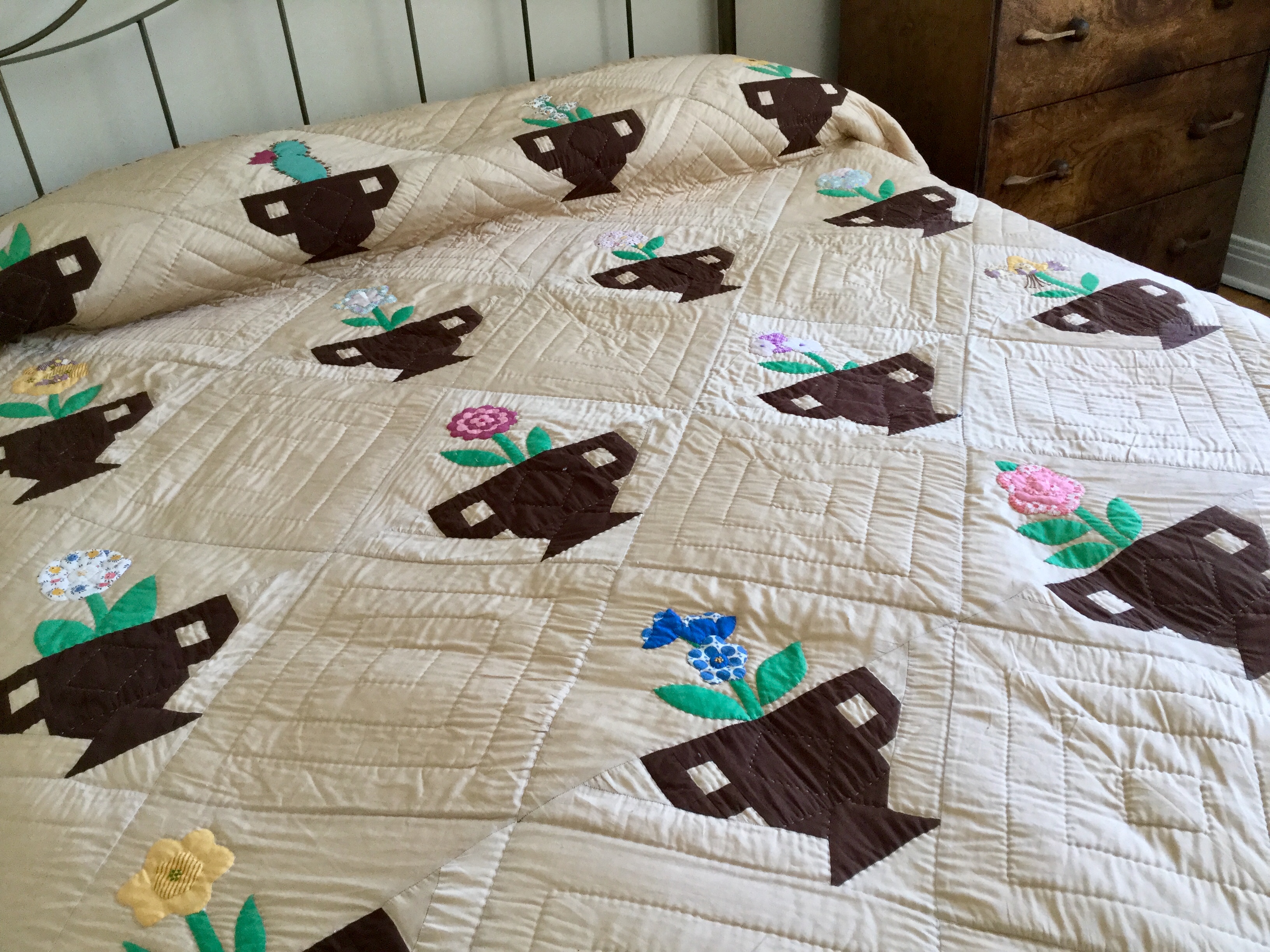
IMG_3441

The incomplete quilt, carefully wrapped in tissue paper, had been shunted from pillar to post for almost eighty years during the many household moves my parents made. Rarely did it see the light of day, stuffed away as it was in linen closets and basement trunks, so none of the colours faded. My mother could quilt but she never finished it. Perhaps she felt the memories would be too painful. Mum finally gifted it to me during one of her downsizing periods. I couldn’t quilt but I did collect antique linens. Once again it was stored away in a box.

With the quilt came the story of its beginning. I remember few of the details and my mother is no longer here for me to ask. It was evidently begun by Madge, my mother’s oldest sister. My mother and my Aunt Vi helped her. There were two Violets in the family, a sister and a sister-in- law, but whether one or both helped is unclear.

I never knew my Aunt Madge. She died in 1941 before I was born. I. heard the tragic story again and again growing up. She was only thirty-nine and left behind two small boys, boys I finally met when we were adults.

Madge, born in 1902, was the first of George and Isabella Willett’s seven children to leave the farm overlooking the Chaleur Bay on the Gaspe Coast. She earned a teaching certificate at MacDonald College in Montreal and took her first job in Abbottsford in Quebec’s Eastern Townships. There she met Albert Whitney, an apple farmer. They married in 1934 and she happily settled into a familiar life as a farmer’s wife. The family quickly grew with the births of my cousins, David and Paige.

Then illness struck. Madge was diagnosed with cancer. My mother, now a surgical nurse working at the Veteran’s Hospital in Ste. Anne de Bellevue, traveled to Abbottsford on her days off to help with her sister’s care and with the two lively boys. Both Violets were also living in Montreal and they too were able to help. During this time, the last months of Madge’s life, they worked on the quilt together, faithful doulas accompanying her on her final journey.

Today the quilt has been completed. Two women from the Victoria Quilts branch in the Laurentian Mountains village of Arundel did the work. The Victoria Quilts organization makes beautiful lap quilts and gives them to cancer patients to keep them warm during their chemotherapy. Elizabeth Wood selected and purchased the backing and border fabric along with the batting. Pat Thomas did the hours of hand quilting. She claimed that the original stitches on the quilt were the tiniest she had ever seen and said she did her very best to match them.

The quilt fits the queen size bed in our guest room. The simple motif, repeated twenty times, is a flower pot made of brown triangles pieced together and appliqued to a beige background. Each pot holds a single brightly coloured flower with green leaves, all pieced and then appliqued. It has a modern, stylized look yet with a feeling of fresh growth.

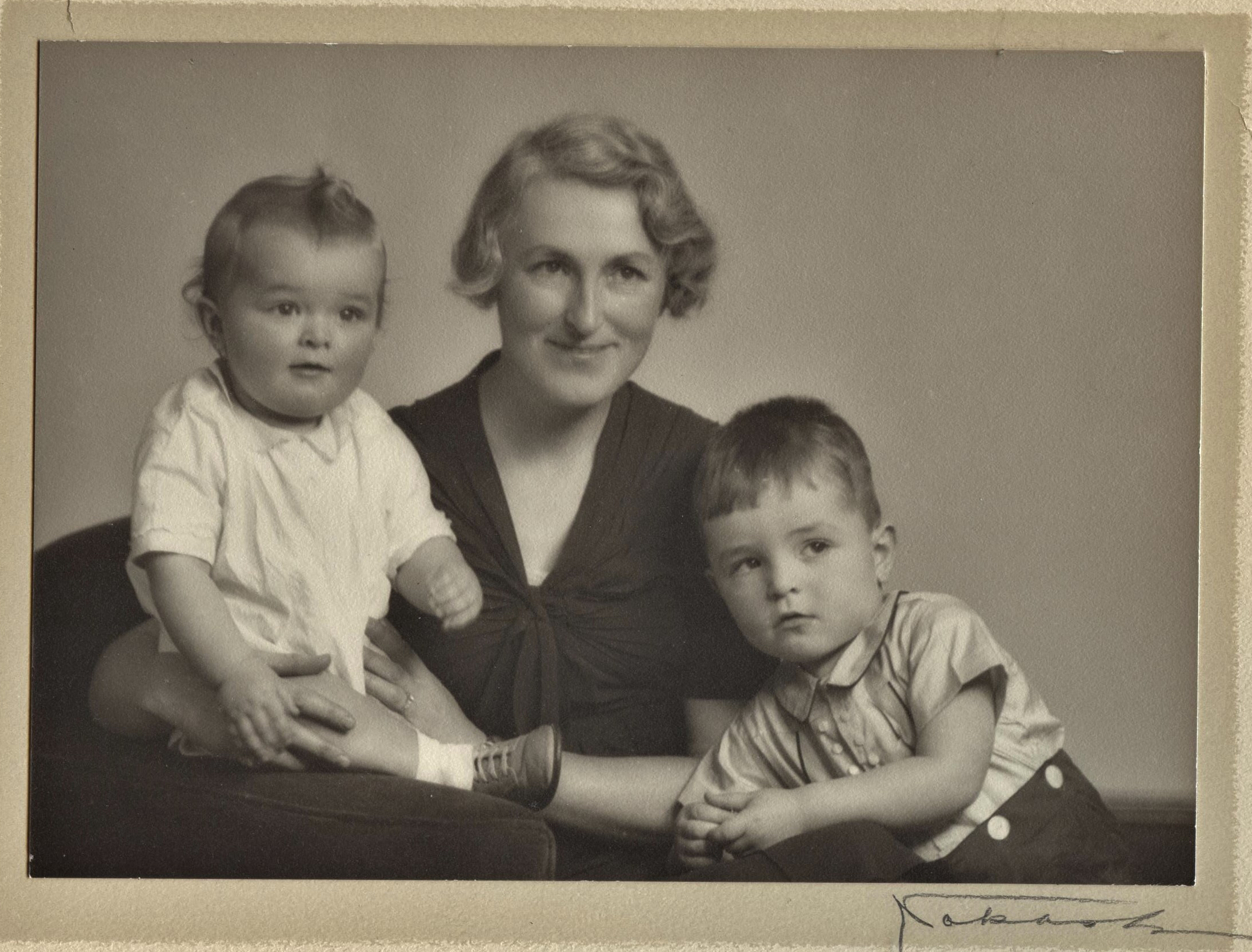
Aunt Madge 001 (2)


Irish Catholic Churches in Montreal

Every year, the city of Montreal hosts a huge St. Patrick’s Day parade that brings people by the thousands to the downtown streets to celebrate their real or imagined Irish heritage. In fact, many Montrealers do have Irish roots that go back centuries.

In 1700, around 130 of the 2,500 families in New France, or roughly 5%, were Irish, and there was massive immigration from Ireland to North America between 1816 and 1860. By 1871, the Irish were the second largest ethnic group in Canada after the French.

The year 1847 was a tragic one as the Irish fled poverty and starvation in their homeland and died of disease before they arrived in Canada. Almost 3900 are buried at Grosse Île, an island in the St. Lawrence River northeast of Quebec City; another 5,000 are buried at the so-called fever sheds near the Montreal waterfront. Many children who became orphans at this time were adopted by French families, but kept their Irish names.

The early Irish of Montreal resided in the central part of the city. Over time, they moved westward, eastward and northward into Saint Ann’s, Saint Mary’s, Saint Antoine’s, Saint James’, Saint Lawrence’s and Saint Louis Wards. They were the primary residents in districts such as Griffintown, Point-St-Charles, St. Henry, Verdun and Ville Émard. Other Irish families eventually moved east into the Rosemount and Hochelaga districts.

Prior to the establishment of St-Patrick’s church in 1847 and St-Ann in 1854, the main churches of the Irish in Montreal were Notre Dame de Bon Secours, the Church of the Récollet Fathers and Notre Dame Basilica.

When I identify a church as being Irish Catholic in this research guide, I do not mean to imply that parishioners were mostly of Irish descent. It does suggest that, at one point in time, a minimum of 10% of the acts of baptism, marriage and death records addressed Irish immigrants or their descendants.

Especially during the early years, acts of baptism, marriage and death that took place at most of the smaller parishes in the Montreal region were registered in the records of Notre-Dame Church. For example, a baptism or marriage might have been held in Griffintown, but the act would have been included in the Notre-Dame-de-Montréal records.

The attached research guide lists the churches in which the Irish presence was appreciable, or parishes that were inaugurated by members of the Irish community. The years in brackets reflect the year I was able to ascertain as being the beginning of the Irish-Scottish-British presence in these Catholic churches. I reached my conclusions following several years of research on more than 3,000 books addressing marriages and baptisms at the Archives nationales du Québec (BAnQ) in Old Montreal.

This research guide includes descriptions of the parishes where Irish Catholics attended church in the Montreal region, as well as a list of the cemeteries where many of them were buried. It also includes a list of recommended books and articles, and a list of repositories including archives and museums, online resources and other local sources of information. It is part of a series of research guides to Irish family history resources across the province of Quebec.

To access the PDF research guide to Irish Catholic Churches of Montreal, click on the link:

Irish Catholic Churches in Montreal from 1815

Irish Catholic Churches of Arthabaska, Compton, Frontenac, Mégantic, Wolfe Counties, Quebec

The research guide below is part of a series of seven compilations designed to help you find your Irish immigrant ancestors in mostly French-speaking Quebec. It explores Arthabaska, Compton, Frontenac, Megantic and Wolfe counties, the most easterly of the province’s Eastern Townships.

Few Irish people came to this primarily rural area until the late 1800s. The earliest church record I was able to trace in regard to the Irish of these counties was 1829, within the parish of Saint-Jacques in the then village of Leeds, Megantic County.

Parish records can help you find traces of the Irish setters who came to North America by the tens of thousands during the first half of the 19th century. Please note: The inclusion of an Irish Catholic churches in this research guide does not imply that parishioners were mostly of Irish descent, but implies that at one point in time, a minimum of 10% of the acts of baptism, marriage, death addressed Irish immigrants or their descendants.

A good place to start looking for English-speaking settlers in the Eastern Townships is the Eastern Townships Resource Centre, http://www.etrc.ca/. The Eastern Townships Resource Centre preserves the documentary heritage of the Eastern Townships and serves as an archival expertise resource for local heritage organizations. While its Archives Department concentrates on the acquisition of private archives related to the English-speaking community, the Centre’s mission, mandate and on-going activities are meant to be inclusive of all communities present in the Eastern Townships.

Thousands of documents such as diaries, letters, minute books, photographs, postcards, maps, plans and audio-visual material are made available to researchers. Assistance is also provided to genealogists tracing their family roots. You will find contact information for this organization at the end of the PDF research guide below.

Another research guide I prepared a few years ago may also be helpful to your search. See “British, Irish, Scottish, Loyalist, American, German, Scandinavian, Dutch and Huguenot families in Lower Canada and Québec” by Jacques Gagne, https://genealogyensemble.com/wp-content/uploads/2015/04/british-irish-scottish-loyalist-american-german-scandinavian-dutch-in-quebec2.pdf

townships map

This guide mentions a number of books about Quebec’s large Irish population. Two additional articles of interest are, “Pioneer English Catholics in the Eastern Townships” by T.J. Walsh, http://www.cchahistory.ca/journal/CCHA1939-40/Walsh.html  and “A.C. Buchanan and the Megantic Experiment: Promoting British Colonization in Lower Canada” by J.I. Little, https://hssh.journals.yorku.ca/index.php/hssh/article/viewFile/40265/36450

The attached research guide is an expanded and improved version of a similar guide I posted on Genealogy Ensemble in 2014. It includes a detailed list of the Catholic parish churches in these five counties where people with Irish names worshiped. It also includes links to help you find the cemeteries where they were buried, a recommended reading list and a list of archives and other repositories where further records can be found.

Click on the link to open the PDF:  Irish Catholic Churches of Arthabaska, Compton, Megantic, Frontenac, Wolfe counties


Irish Catholic Churches in Rural Quebec: Bagot, Brome, Missisquoi, Shefford Counties

Between 1815 and 1837, an estimated 200,000 Irish immigrants arrived at the Port of Quebec. Many continued on to the United States or Upper Canada, but some settled in Quebec’s Eastern Townships. This research guide is designed to help you find Irish Catholic ancestors who lived in the Eastern Townships counties of Bagot, Brome, Missisquoi and Shefford.

Please note: When I identify a church as being an Irish Catholic Church in this research guide, I do not mean to imply that parishioners were mostly from of Irish descent. Rather, I mean that, at one point in time, at least 10 percent of the acts of baptism, marriage and death within a particular parish addressed Irish immigrants or their descendants.

If you are researching ancestors in this region, you may find the Eastern Townships Resource Centre (ERTC), http://www.etrc.ca/ to be helpful. For more than 30 years, the ETRC has been preserving the documentary heritage of the Eastern Townships and serving as an archival expertise resource for local heritage organizations.

The ETRC Archives preserves collections that illustrate the development of the Eastern Townships’ English-speaking community. Thousands of documents such as diaries, letters, minute books, photographs, postcards, maps, plans and audio-visual material are made available to researchers, and assistance is also provided to genealogists tracing their family roots.

The research guide attached below includes brief histories of the Catholic churches attended by Irish Catholics in these four counties, a list of cemeteries where these people may have been buried, a list of books and articles about the Irish in Quebec, and a list of website and archives you may find useful.

It is an expanded and updated version of a guide to Irish Catholic churches in Quebec posted to Genealogy Ensemble in 2014. Other similar guides that have been posted over recent weeks explore the Irish Catholic churches in Lanaudière, in Quebec City, and in other Eastern Townships counties, with more research guides covering other regions of Quebec to come soon.

Click on the link below to view a PDF of the research guide Irish Catholic Churches in Bagot, Brome, Missisquoi and Shefford Counties:

Irish Catholic Churches in Bagot, Brome, Missisquoi, Shefford Counties


Biology and Ambition

marioncanoing

Marion canoeing circa 1907

Marion Nicholson, first year teacher at Sherbrooke High School in 1906-07, is serious about having a career. She is not focused, like so many of her colleagues, on finding a husband or ‘a pupil of one’ as soon possible. Or so she says in her letters home to her mom.

However, Marion’s “strictly private’ pocket diary  from 1907 suggests something else: that the young Richmond-born woman is very much torn between her biology and her ambition. In this little brown journal, eighteen year old Marion often comes off like a flighty Scarlett O’Hara type.

January 12: “Went to a card party and dance at Mrs. Griggs’. Had a grand time. Played cards with Mr. Watson, danced with Mr. Avery, had supper with Mr. Davidson and Mr. Sampson came home with me.” Marion even reflects on this coquettish behavior in a February 19th entry: “I believe I think too much of boys and am a flirt.”

Marion’s busy social life centers around skating parties at a Sherbrooke rink where she obliges many potential suitors – and turns down some others.

That Edwardian winter there are two young men fighting over the ultimate privilege to take Marion home from the ice rink, or the snow shoe club or the local youth hangout: Monty and Gordon.  It does get complicated.

Here’s the entry for January 28: “I slighted Monty by taking off my skates before his turn. He was quite huffy. I guess I will have to go skating with him tomorrow instead of driving with Gordon.”

For Feb 3: “Went to the theatre with Monty. I did not tell Gordon. Gordon was there by himself. He did not look our way the whole time.”

Eventually, this juggling act becomes too much for Marion. “I have decided who I like best and G is the one. I am tired of having two.”

In the spring of 1907, Gordon takes Marion canoeing.  The couple gets caught in a storm on the river and has to take shelter on shore. How romantic!  How promising!

By the time June rolls around,  Marion is getting anxious for the school year to end. It isn’t her work. She is exhausted from all the late nights and ‘dissipation’, as she refers to it in her diary. She returns to Richmond, 30 miles away, to spend the summer with her Mom and sisters.  Here, her social activities center on family friends: the Pepplars, the Clevelands, the McCoys, the Sutherlands and the Crombies.  In 1907, Richmond is a town without any eligible young men. They have all moved away to find jobs.

Marion helps support the family, so she isn’t expected to do work around the house. Most days she is bored silly.  She often sleeps in until noon. She sometimes spends afternoons taking ‘crazy’ photos with her Kodak.

Marion gets down on herself for this: “I think I am about the laziest person alive. All I have the gumption to do is sit and dream of what I would do if I tried. I have wasted two weeks of my vacation doing nothing, when I could have been practicing music or sewing. I hope I improve.”

In Richmond, Marion can go to church, twice a day if she wants. There are frequent afternoon teas hosted by society matrons, daily walks downtown to the mail to see if Gordon has written her, ice cream socials, croquet, tennis, strawberrying and country drives to places like Windsor and Kingsbury by horse drawn carriage.

Town tycoon Mr. Wales is the only Richmond citizen who has an automobile, but that will soon change.

Yes, it is the summer of 1907 (a year on the cusp of some game-changing technological changes)  and the living is far too easy for Miss Marion Annie Nicholson, an energetic young woman who, one day, will lead the PAPT teachers union while supporting four children as a single mom.

According to Marion’s 1907 diary, the most interesting thing to happen to her that summer is when some kittens get into the barn.­­

Oh, and there’s this entry for July 13th :“Lily Lyper nearly murdered. Great excitement.”

Even sleepy Richmond, Quebec had its share of scandals 100 plus years ago.

Mariaon1906sherbrooke

Marion, seated bottom and other Sherbrooke High Teachers 1906

tighsolas

Marion and beau in front of Tighsolas, their house in Richmond, Quebec

Afterward: (added March 14)

Marion did not see much more of Gordon, the son of a wealthy Sherbrooke merchant who would  be making a very good salary, 3,000 a year, in 1911 at the age of 26, this according to the Census.

Gordon married a friend of Marion’s, it seems.  In 1913, Marion married Hugh Blair, the son of a prosperous Three Rivers lumber merchant,  although his parents did not favour the marriage because by that time the Nicholsons were broke.

Marion’s in-laws did not attend the October wedding at the Nicholson residence on Dufferin in Richmond. Marion’s marriage contract was a nasty piece of work  saying she got nothing but the furniture should the marriage break up FOR ANY REASON.

As it happens, Hugh died in 1927. Marion was left high and dry cut out of the Blair family business, so she rolled up her sleeves and went back to work becoming a Master Teacher and WWII era President of the Provincial Association of Protestant teachers in Quebec.

She never re-married, despite having many suitors, such was her sex appeal even in old age. She died of a heart attack in 1948, a few months after representing the Canadian Teachers Association at an UNICEF education conference in Sevres, France. The Editor of the Montreal Gazette (another admirer apparently) wrote her an editorial page eulogy: “With the death of Marian A N Blair, education in Quebec, indeed the entire nation, has suffered  a serious loss. ”

In the end, Marion did have it all, love, work and family. It just came with some major trials and tribulations. Apparently, she never complained.

Irish Catholic Churches in the Eastern Townships of Quebec

Drummond, Richmond, Sherbrooke, Stanstead Counties

Introduction

From 1815 to 1824, an estimated 50,000 Irish immigrants arrived at the Port of Quebec, and 150,000 more arrived between 1829 and 1837. Many kept going, settling in the United States or Upper Canada, but some moved into the rolling hills of Quebec’s Eastern Townships. The region, which is often known by its French name, l’Estrie or Cantons de l’Est, includes Drummond, Richmond, Sherbrooke and Stanstead counties.

In order to determine where Irish Catholic immigrants settled in Quebec, I reviewed hundreds of books of marriages, baptisms and deaths in Catholic parishes of Quebec. These books are kept at the Bibliothèque Archives nationales du Québec in Montreal (BAnQ Vieux-Montréal). I also reviewed microfilms there. I did most of this work between 2006 and 2009, and carried out a further review in 2014.

Please note: When I identify a church as being an Irish Catholic Church in this research guide, I do not mean to imply that parishioners were mostly of Irish descent. Rather, I mean that, at one point in time, at least 10 percent of the acts of baptism, marriage and death within a particular parish addressed Irish immigrants or their descendants.

townships map

If you are exploring your family’s history in the Eastern Townships, you may find useful material at the Eastern Townships Resource Centre (ERTC) in Lennoxville, http://www.etrc.ca/ For over 30 years, the ETRC has been a center for the study of the Eastern Townships of Quebec. The ERTC preserves the documentary heritage of the Eastern Townships and serves as a resource for local heritage organizations.

The ETRC Archives preserves and gives access to collections that illustrate the development of the Eastern Townships’ English-speaking community. Thousands of documents, such as diaries, letters, minute books, photographs, postcards, maps, plans and audio-visual material, are made available to researchers. It also provides assistance to genealogists tracing their family roots. You can find out how to contact the ERTC at the end of this research guide.

The guide includes a brief description of the churches in Drummond, Richmond, Sherbrooke and Stanstead counties that the Irish settlers attended, a list of the cemeteries where many of them were buried, a list of authors, articles and books on the Irish communities of the region, a list of repositories and archives where the records relevant to these communities are kept, and websites that may be of use to family history researchers. I will cover other Eastern Townships region counties in separate posts on Genealogy Ensemble.

To explore the PDF covering the Irish Catholic Churches of Drummond, Richmond, Sherbrooke and Stanstead Counties, click on the link:

Irish Catholic Churches in Quebec’s Eastern Townships

The Decaries and the Prud’hommes

I have driven along Cote St Antoine thousands of times, through Westmount and NDG, without realizing my ancestors in the 17th, 18th and 19th centuries also used the same route.

When researching one’s ancestors it is nice to find out where they lived, which city, town or area. In my case, the Decaries and the Prud’hommes can be located by the streets that bear their names. They farmed land in what is now the Notre Dames de Grace (NDG) section of Montreal. The Decaries have a boulevard and an expressway named after them. Prudhomme Ave is only four blocks long just west of Decarie and the street jigs and jags.

Jean Decarie dit Le Houx and Louis Prud’homme, two of my seven times great grandfathers, were some of the early settlers in Nouvelle France. They first obtained land in Ville-Marie as their names are on plots of a 1663 map.

Jean Decarie arrived from France before 1650. He was a stone mason and started quarries. He married Michelle Artus in 1654, after meeting her in Quebec City while there buying supplies. She had just arrived from France. By 1729 they are said to have had 82 descendants.

Louis Prud’homme was a brewer and a captain in the Montreal militia. He was another early inhabitant of Montreal as he married Roberte Gadois there in 1650. He was elected as one of the first wardens by the Sulpicians for the parish of Notre Dame.

The Decaries and Prud’hommes were two of 13 families granted land by the Sulpicians along Cote Saint-Antoine. Jean Decarie bought the first strip of land, concession 615 in 1675. These early roads allowed settlers to move away from the original walled city. The land grants were from the St Pierre River north to the mountain. The men began working the land while still living in Ville-Marie. They all had trades which allowed them to survive while they cleared the land, built houses and began farming. They were neighbours, friends and many intermarriages made them families.

For a time, the area was known as the “Haute Folie,” as those who lived there were fools to have left the safety of the walled city but these families continued to live in the same area for more than two centuries.

The land was on the south side on Mount Royal’s western summit (Westmount Mountain). It was good land for farming with many streams and wonderful views down to the St Lawrence River. They built their houses close to the roads and out of the wind,  not for the views.

The Decaries and the Prud’hommes became successful farmers whose land was passed from father to son and sometimes even to a daughter. In the 1731 survey, their farms were well developed and affluent with a house, barn and stable on all their properties. The Decaries were known for their melons. Musk or Mush melons, also known as Montreal melons, thrived in the perfect conditions of the area. There were also orchards covering much of the properties. Apple trees were common but also cherry, peach, plum and other tender fruit trees survived in the microclimate of the south facing ravines.

Intermarriages continued. My two-time great grandmother Sophie Marie Prud’homme (1812-1892) who married Barnabé Bruneau was the daughter of Jeramie Prud’homme (1766-1846) and Marie Louise Decarie (1769 -1855)

As the city grew, many of the farms were sub-divided and single family homes were built. Not all the owners were happy to sell their land. Although the Prud’hommes had earlier sold land to the church to build Église de Notre Dame de Toutes Grâces. Leon Prud’homme tried to fight expropriation of some of his lands by the Atlantic Railway. It was said to be “the most beautiful orchards in the country,” but the rail line was built. The first Decarie house was sold and demolished in 1912 by the Canadian Pacific Railway Company to build a roundhouse.

After more than 200 years the farms were gone.

My great uncle, Sydney Bruneau, used to walk with his children around eastern NDG and tell them that they were walking on their ancestors land, and they were!


For a story about Sophie Marie Prud’homme and her husband Barnabe Bruneau https://wordpress.com/post/genealogyensemble.com/1040


References:

The Settlement and Rural Domestic Architecture of Cote Saint-Antoine, 1675-1874. Masters thesis by Janet S. MacKinnon 2004. Faculty of Urban Planning, University of Montreal, Montreal, Quebec. https://core.ac.uk/download/pdf/80345357.pdf/

https://www.nosorigines.qc.ca/genealogie.aspx?lng=fr accessed Nov 9 2018.

Dictionary of Canadian Biography accessed Nov 9, 2018. http://www.biographi.ca/en/bio/prud_homme_louis_1E.html

La Patrie, 6 October 1888, page 6.

Notes:

The 13 original settlers were Jean Decarie, Louis Prudhomme, Marin Hurtubise, Jean Leduc, Rene Bouchard dit Lavallee, Joseph Chevaudier dit Lepine, Jean Cousineau, Honore Dasny, Jean Deroches, Simon Guillory, Louis Langevin dit Lacroix, Pierre Verrier dit LaSolaye and Antoine Boudria.

Two Decarie houses remain today, one at 39 Cote St Antoine and the other the “Pink” house at 5138 Cote Sainte-Antoine. The Prud’homme’s house at 967 Girouard near Rue St Jacques is also still standing. It was the first farm along Upper Lachine Road. The other house we can see today is the Hurtubise house at 563 Cote St Antoine. Marie Hurtubise married Paul Decarie in 1686.

Another Prud’homme house stood until around 1900 though then it was known as the Saint-Germain house, originally ceded to Francois Prud’homme in 1708. In 1892 the property was subdivided into 68 lots on each side of Lansdowne Ave above Cote Saint-Antoine. There was another Decarie property that stood until 1912. It was on the property first purchased by Jean Decarie dit Lehoux in 1675 but likely built by his grandson Joseph.

My grandfather, William H Sutherland was looking for a solid stone house before he bought 28 Arlington Avenue in 1922. According to his daughter, “his first choice at that time was a detached stone house on Cote St. Antoine Road but it wasn’t available; it has since become a historical monument.” Was that the Hurtubise house?

I wondered what Janet MacKinnon was doing now after this very detailed thesis and found she had unfortunately died Feb 4, 2011, in Montreal, at 54 years of age. Thank you Janet for your informative thesis.