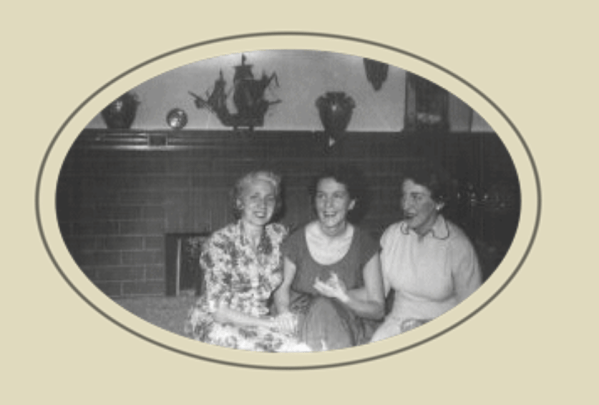
Some branches of family trees flourish while others wither and die out. I have traced one branch of my tree back to Pierre Gadois and Louise Mauger, two of my one thousand and twenty four 8th great-grandparents who arrived in Quebec in 1636. This couple has many thousands of descendants alive today, probably even more. But even though some of my great-grandparents had many children there aren’t the expected number of cousins. I have only seven first cousins while a friend says she has more than fifty. My granddaughter has only two so far.
Barnabé Bruneau and Sophie Marie Prudhomme my two-times great-grandparents had 13 children. They all survived to adulthood. One would have expected that they would all marry and have a number of children. Even if they each had only four children, that would be 52 cousins but that is not what happened.
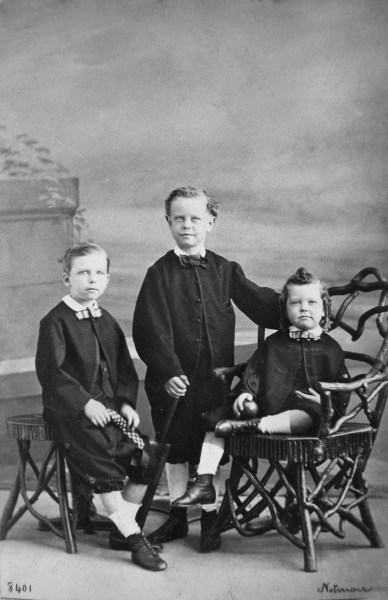
Barnabe & Sophie Marie Bruneau
These 13 siblings only had 17 children with 10 of the children born to Ismael Bruneau and Ida Girod. Seven of their ten children have descendants alive today. I haven’t counted up how many relatives this is but quite a number. It is hard to keep track of your second and third cousins and those once removed as they marry and have children.
When my great uncle Herbert Bruneau, Ismael’s son, drew up a family tree in the 1960s, he wasn’t able to find a record of any of his cousin’s children. He thought that he and his sibling’s descendants were the only branches.
When I had my DNA analyzed by Ancestry, one of my matches, “Shedmore” rang a bell. Ancestry said he was a 4th – 6th cousin but in fact, his great-grandmother Elmire Bruneau was my great-grandfather Ismael’s sister and so we are third cousins. The tree did have another branch.
Elmire Bruneau Huntley
Elmire, born in St-Constant, Quebec, immigrated to the United States in 1864 and worked in New York City as a French governess. She is said to have met Andrew Washington Huntley around 1867 in the choir of the Plymouth Church in Brooklyn Heights. His family lived in Mooers, New York. He was a veteran of the Civil War having served in a number of units from 1862-1865. This couple moved many times during their marriage according to census records. First to Wells, Minnesota, then to Bridport, Vermont to farm, then Chicago, Illinois where he was a ticket agent on the Electric Railroad and finally to Los Angeles, California. Elmire died there in 1922. Her body accompanied by her daughter Faith, went by train back to Bridport, Vermont where she was buried beside her son Howard.
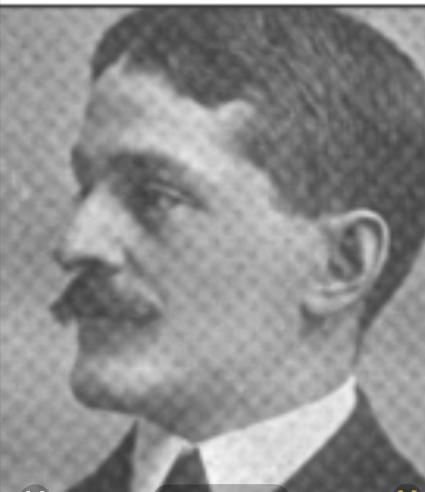
Andrew Washington Huntley
Howard died at 18 without children. It was her daughter Faith, who married Smith C. Shedrick and had four children, Etta Elmere, Howard S., Helena F. and Howard H. who kept the family tree growing. “Shedmore” turned out to be Etta’s son. He does not have any children but his brother had three children, five grandchildren and some great-grandchildren so Elmire’s Bruneau line lives on. Both Helena and Howard also married so there might be even more twigs on those branches.
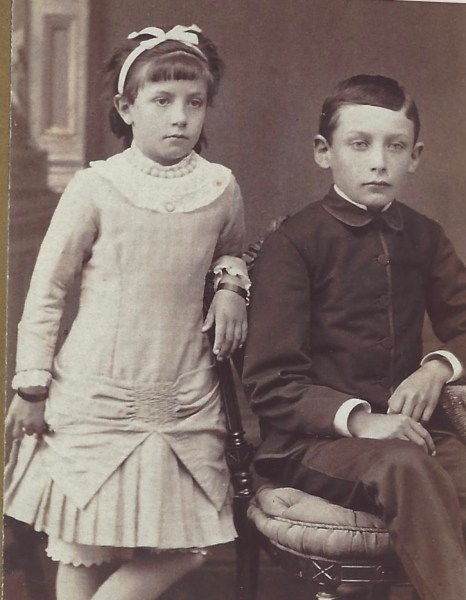
Faith and Howard Huntley
It is nice to have cousins. Some might not be close but you do have a family connection. Reach out to your cousins, you never know who you will find or what they may know.
Notes:
All photographs are from Ismael Bruneau and Ida Girod’s albums in the possession of the author.
Year: 1870; Census Place: Clark or Wells, Faribault, Minnesota; Roll: T132_3; Page: 1440 Ancestry.com. 1870 United States Federal Census [database on-line]. Lehi, UT, USA: Ancestry.com Operations, Inc., 2009. Images reproduced by FamilySearch.Accessed Nov 22, 2021.
Year: 1900; Census Place: Chicago Ward 21, Cook, Illinois; Roll: 271; Page: 17; Enumeration District: 0638 Ancestry.com. 1900 United States Federal Census [database on-line]. Lehi, UT, USA: Ancestry.com Operations Inc, 2004. Accessed Mar 29, 2022.
Year: 1910; Census Place: Oak Park, Cook, Illinois; Roll: T624_239; Page: 21b; Enumeration District: 0077; FHL microfilm: 1374252 Ancestry.com. 1910 United States Federal Census [database on-line]. Lehi, UT, USA: Ancestry.com Operations Inc, 2006. AccessedNov 22, 2021.
Year: 1920; Census Place: Los Angeles Assembly District 73, Los Angeles, California; Roll: T625_114; Page: 17A; Enumeration District: 393 Ancestry.com. 1920 United States Federal Census [database on-line]. Provo, UT, USA: Ancestry.com Operations, Inc., 2010. Images reproduced by FamilySearch. Accessed Nov 22, 2021.
“Obviously a club does not change from a dump of second hand books to a pan-Malaysia institution without care and attention.” Malaya, 1966. British Malaysia Association. Tribute to Dorothy Nixon, former secretary of the Kuala Lumpur Book
Dorothy Forster Nixon 1895-1971
One morning not long ago, I received an email from a young woman in Malaysia. She wanted to know about my grandmother, also Dorothy Nixon, who had been ‘secretary’ of the Kuala Lumpur Book Club back in the day. The woman was a librarian-in-training and she told me that “Granny” was a great inspiration to her.
I wasn’t at all surprised because about ten years earlier I had received a similar email from the former Director of the Malaysian National Library. This illustrious person was researching my grandmother’s life as a retirement project.
It seems that my County Durham born grandmother, Dorothy Forster, who moved to Malaya in 1921 to marry Yorkshireman Robert Nixon1, a rubber planter, is something of a legend in modern Malaysia, at least among librarians.
In 2003, sheer serendipity led me to start my own research into my colonial grandmother. I was a prolific freelance writer back then and it was my habit to enter my name “Dorothy Nixon” into Internet search engines to check out where my essays and articles may have landed.
On this occasion, I stumbled upon a mention of another Dorothy Nixon, my father’s mother. It was on Amazon.co.uk in a review of a book by historian Margaret Shennan about Colonial Malaya “Out in the Midday Sun”. In the book Shennan mentions my grandmother but only once and only in connection with an ugly incident at Changi internment camp during WWII. She gets her name wrong, too: Dorothy Dixon. The reviewer, a Mr. Smith, corrected this typo and described my grandmother as ‘the endlessly helpful secretary of the Kuala Lumpur Book Club.”
I had met Dorothy only once in 1967 at 12 years old when she came to visit us in Montreal. She was cranky and super-critical of all things Canadian – especially of my ‘shrill’ playmates skipping or biking out on our Snowdon area street – and we did not hit it off at all, so you can imagine how confused I was by this description of her.
So, I tracked down Mr. Smith, a former rubber planter. He told me all about the KL Book Club’s subscription arm where book-boxes were assembled and sent out to people holed up in the jungle in their far-away plantations, a service much appreciated during the 1950’s Communist Emergency.
He further described my grandmother as having a fine and nuanced understanding of literature. She always studied the members’ tastes, he said, in order to recommend books to them.
I eventually wrote a story about “Granny” that got published in the Globe and Mail. That’s how the Director knew to contact me. In return for my help this nice lady mailed me an article from the Malaysia Library Review 1952 co-written by my grandmother about history of the KLBC: “The Kuala Lumpur Book Club: A Pioneer.”
The article explains how the Book Club started out as an informal back-room book exchange for Brits and evolved over the decades into a full-fledged government funded community resource, housed in a two story air-conditioned art deco building near the famed Royal Selangor Club in Kuala Lumpur.
Between the wars there were four libraries in Malaya, including the KLBC and the Raffles Library in Singapore. Although these places were set up for Britishers, members were debating whether it was time to allow locals to join, if only government officials.
The newspaper record 2 reveals that my grandmother, who worked at the Book Club from 1937 to 1966, was instrumental in opening up the library to Asians, male and female, especially students. This is likely why she is so admired today in Malaysia.
In the 1930’s and 40’s, the KLBC had a reputation among some Colonials as a light-weight institution that provided low-brow literature to rubber planters’ wives, who were bored to death with servants to do everything and their school-age children away in England.3
Dorothy, who attended a co-educational Quaker school in England, did indeed have many Tamil and Chinese servants at her husband’s Selangor rubber estate, some of whom watched over my father until he was sent away to school in Cumberland at five years old.
She did, indeed, attend many drunken garden parties and polo matches in the 20’s and 30’s – but eventually during the Great Depression she found something more important to do. For a smidge under three decades she worked at the Book Club 7 days a week, 9 am to 7 pm. In the evening she strolled over to the Royal Selangor Club (in the company of her male friend, an eminent lawmaker) where she scored their cricket games!
Popular Australian author Di Morrissey includes a bit about my grandmother in her 2010 novel.
Today, if you google “Dorothy Nixon” and “Kuala Lumpur Book Club” many many MANY citations will come up from scholars and journalists thanking my grandmother for help researching their books.
These authors are especially grateful for access to her personal collection of Malaysiana. Apparently, my grandmother was an expert in all things Malayan, a real scholar herself who was always invited to Prime Minister Tunku Abdul Rahman’s birthday bashes, and who at mid-20th century repeatedly made the Malaysia Who’s Who.
So, not lazy at all
Video about Malaya in 1952 with images of my Grandmother scoring cricket at the end.
END
1) Men working in Malayan plantations were encouraged (forced) by their Companies to go home to find a British wife even if they were happy with other arrangements. My grandfather, Robert, found Dorothy Forster, the daughter of an itinerant Primitive Methodist Preacher who had circulated through his hometown of Helmsley, North Yorkshire in 1912-1914. When she arrived in Malaya, late 1921, Dorothy discovered Robert had an Asian ‘mistress’ as they said back then. Upon his marriage, he did not give her up,apparently. (Re: my Aunt Denise.) She got pregnant with my father immediately.
2. The Malaysia Straits Times is online with a database and many articles citing my grandmother, some with photos, most of them in connection with the Cricket. This link to an article, written in 1966, is a tribute to her work as KL Book Club Librarian and in Montreal in 1967 when she visited us she wasted no time in showing it to my mother. She was obviously in search of respect from us. Indeed, judging from her ‘diary’ searching for respect seems to have been her life’s goal.
3) British Colonial wives were much looked down up in rubber country, described as undeserving parvenus, women who would be sweeping out a three bedroom cottage back home in Somerset were they not in Malaya lazing in their airy bungalows, waited on hand-and-foot by servants. Yet, these Colonial Wives were given little to do and forbidden to meddle in local affairs in fear they would cause scandal or upset the entrenched hierarchy of the British, Malays, Chinese Tamils. The British believed it was necessary to send their children away to England as soon as possible for schooling and to avoid their contracting a tropical illness. By the time my father’s younger brother was born, he got to go to a British school in Malaya set up in the hills, considered a healthier milieu.
with research from the Riverside Historical Society
updated Nov. 11, 2024
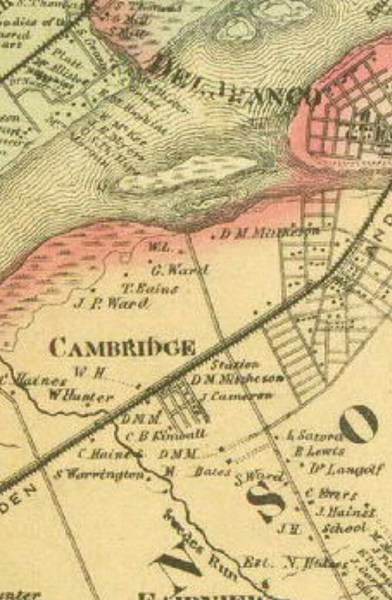
The New Map of the Consolidated City of Philadelphia, published in 1855 by R.L. Barnes. In 1854, various small, incorporated towns located outside the original old City of Philadelphia became incorporated into the City of Philadelphia. Now Philadelphia was not only a city but also known as the County of Philadelphia. Image courtesy RHS (see note below)
Occasionally someone who knows more about one of my ancestors than I do finds my family history blog and gets in touch. That is what happened this summer when Herman Maurer, a member of the Riverside Historical Society in New Jersey, reached out to tell me that my ancestor had founded his town.
Three years ago, Herman wrote a book called Progress to Riverside: A Story of Our Town’s Past to mark Riverside Township’s 125th anniversary. In the course of his research, he ran across 19th century Philadelphia real estate agent Duncan M. Mitcheson.1
Riverside, New Jersey is a suburban township located across the Delaware River from Philadelphia. In the early 1850s, Duncan and his brother McGregor J. Mitcheson purchased property next to Riverside and subdivided it into cottage lots. This area became the village of Cambridge. Duncan planned the street layout, including today’s busy Chester Avenue, Front Street, Brown, Main and Arch Streets still carry the names that Duncan chose 170 years ago.
Numerous Cambridge deed transfers recorded in the local county clerk’s office between the 1850s and mid-1880s, with the signatures of both Mitcheson brothers on them, convinced Herman that Duncan and his brother McGregor were the primary developers of the village of Cambridge.
This was a surprise to me since I knew very little about Duncan. Now it became clear that he was a successful businessman who embraced modern ideas at a time of rapid changes in society.
Duncan McGregor Mitcheson (1827-1904) was the middle child of Robert Mitcheson and Mary Frances McGregor. Born in northern England and in Scotland, they were married in Philadelphia around 1818. Duncan’s older sister, Catharine Mitcheson Bagg, was my two-times great-grandmother.
The Mitcheson family lived in Spring Garden, in the northern part of Philadelphia. The family’s home was large and, after their parents died around 1860, Duncan’s older brother, Reverend Robert M. Mitcheson, and his wife and children lived there. Duncan lived with them until Robert died in 1877. In the 1880 census, when he was age 53, Duncan appears to have been staying in a rooming house. Later Philadelphia city directories show that he lived on Spruce Street, near the old part of the city, and had an office nearby on Walnut Street. He never married. Like his two brothers, Duncan attended the University of Pennsylvania, but unlike them, he did not graduate.3 He dropped out in 1842, at the end of his second year. University attendance was rare then: there were only 26 students, all male, in Duncan’s freshman class.
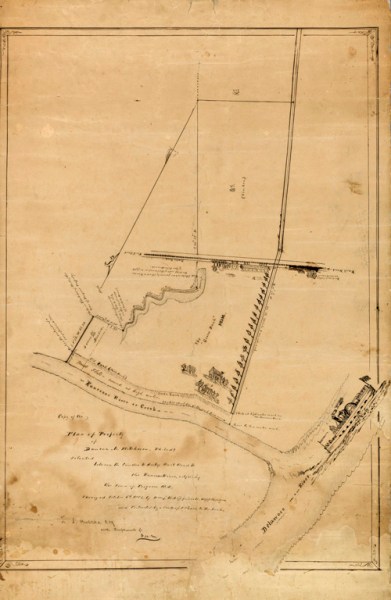
Map, dated Oct. 6, 1853, showing Duncan’s Green Bank Farm overlooking Roncocas Creek and the Delaware River. Duncan sent this map to another Philadelphia real estate developer, Samuel Bechtold Jr., as a complimentary copy. Bechtold was the developer of Progress (now known as Riverside). This map has recently been conserved.
Duncan began his career as a merchant, but an 1861 Pennsylvania business directory identified him as a conveyancer: someone who draws up deeds and leases for property transfers. He was listed as a real estate agent for most of his career.
The Riverside Historical Society’s research revealed that Duncan invested $5000 in land in New Jersey, with an initial purchase of 80 acres, in 1853. He and his brother then formed a real estate partnership to develop the village of Cambridge. An advertisement for these building lots appeared in the Philadelphia newspaper Public Ledger on March 24, 1853. The lots were “located on the Camden and Amboy Railroad, about one mile below Rancocas Creek and the Town of Progress and within a quarter of a mile of the River Delaware, upon a very healthy, dry and level site that will require no filling up, nor grading and can be reached in about half an hour from the Walnut Street Wharf.”
The lots were advertised at the “remarkably low rates” of $25 and $30 each. The $30 lots were 20 feet by 100 feet, while the $25 lots were slightly smaller. A few larger lots were available at $60 and $100 each.
On November 4, 1854, another ad in the Public Ledger noted that the Cambridge lots were near the water, opposite the splendid riverside mansions of Philadelphia’s 23rd Ward. Duncan also reassured potential buyers that the lots were a safe investment. “From the continued increase of the population of Philadelphia, and the consequent increased demand for Houses and Lots, and as well as from the fact that thousands now living in this city could not only have more room, enjoy better health, but live less expensively at Cambridge.”
Duncan also owned farmland on three sides of Cambridge, and he was one of the larger landowners in the town of Progress in the 1850s. In January, 1854 he purchased 180 acres of vacant land for $15,000. That property, located between Rancocas Creek, the railroad, Chester Avenue and Tar Kiln Run, was known as Green Bank Farm, or Duncan M. Mitcheson’s Model Farm.
This was a period of technological and scientific innovation. The Great Exhibition, held in London, England in 1851, had showcased developments in many fields, including agriculture. These advances were badly needed: food production had to become more efficient to feed growing urban populations. Duncan’s model farm may have featured agricultural innovations such as a McCormick reaper that could rapidly harvest large quantities of crops. And perhaps Duncan was a member of the Model Farm Association, formed in 1860 to establish a model farm, botanic garden and agricultural school in Pennsylvania.
In the spring of 1854, Duncan purchased another 80 acres of vacant land for $6000, extending Green Bank Farm past the railroad tracks. In addition, he, or possibly his brother, owned a nearby property named Rob Roy Farm, after the famous Scottish outlaw and folk hero Rob Roy McGregor.
How the Mitcheson brothers acquired the funds to buy so much land is not known, but their father owned properties in England and in Philadelphia. Robert Mitcheson senior died in 1859 and in his will, he forgave an $8000 mortgage he held on Duncan’s farm.
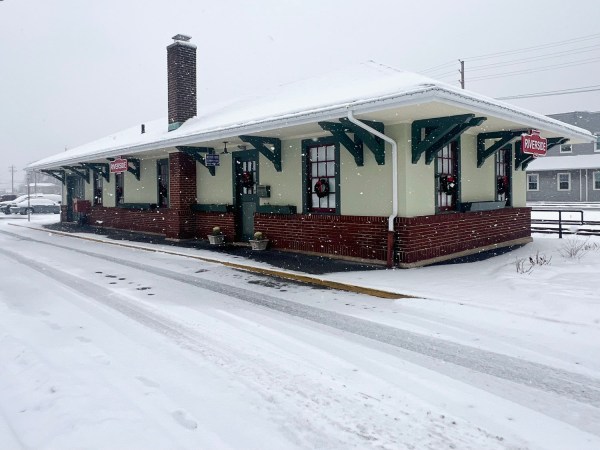
Riverside Train Station. photo by Herman Maurer
In 1859, the Drake Well, the first commercial oil well in the U.S., was drilled in north-western Pennsylvania. That well sparked the first petroleum boom in the United States, creating a wave of investment in drilling, refining and marketing. Duncan saw an opportunity to make money. In February, 1865 he placed the following ad in the Philadelphia Inquirer: “OIL LANDS FOR SALE—located in Venango and Clarion Counties (Pennsylvania). Companies are about to be formed, secure choice lands by addressing or writing to: Duncan M. Mitcheson, real estate office at the northeast corner of Fourth and Walnut Streets, Philadelphia. Also 1,000, 20,000 and 50,000 acres in West Virginia.”
He placed another ad a month later: “CHOICE Oil Tract…Eighty Acres. For sale in fee simple lots situated on the Bennyhoff Creek, Venango County, of which the greater part is boring grounds. This eighty-acre tract will be divided to suit and sold fee simple, with unquestionable titles…”
In July, 1866 Duncan advertised another speculative deal in the Philadelphia Inquirer: 1250 interests, valued at $100 each, in The Virginia Gold Mining Company of Colorado. The company’s property was located near Central City, Colorado, founded in 1859 during the Pike’s Peak Gold Rush.
In 1893, when he was 70 years old, Duncan sold almost 1000 vacant building lots in Cambridge for the sum of one dollar to his deceased brother McGregor’s two grown children, Joseph McGregor Mitcheson and Mary Frances Mitcheson. During the first two decades of the 20th century, they sold many of the Cambridge properties to families who had recently emigrated from Poland.
Joseph, a bachelor, was a Philadelphia lawyer and a commander in the U.S. naval reserve. Mary Frances married accountant Arthur L. Nunns in 1904. The couple were childless and when she died in 1959, at age 84, she gave a million dollars to the Protestant Episcopal Diocese of Pennsylvania. It was the largest bequest it had ever received.4 During my 2013 visit to Philadelphia, the head of St. James School, a tuition-free, private Episcopalian middle school, told me that gift Is still benefiting the community.
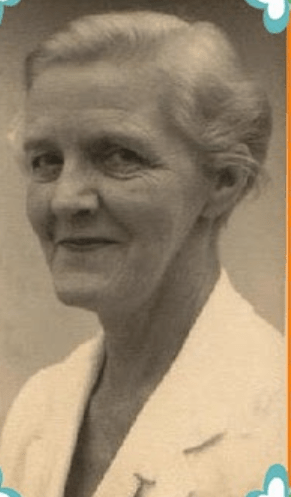
As for Duncan, the 1900 census showed that he had retired. He died in 1904 and was buried, along with his parents and other family members, at St. James the Less Episcopal Church Cemetery in Philadelphia.
Note: The images of both maps were provided by the Riverside Historical Society. The Green Bank Farm map was recently conserved through a 2023 grant funded by the Burlington County Board of Commissioners.
Herman Maurer, Progress to Riverside: A Story of Our Town’s Past, Riverside Historical Society Inc. 2020, p. 13.
Philadelphia, Pennsylvania, City Directory 1889, entry for Mitcheson, Duncan M., Ancestry.com, citing U.S. City Directories, 1822-1995 (online database), accessed Oct. 1, 2024.
University of Pennsylvania, 1894. entry for Duncan MacGregor Mitcheson. Ancestry.com, citing US. College Student Lists, 1763-1924 (online database), accessed Oct. 1, 2024.
My family history includes, like most peoples’ history, twists and turns and coincidences that sometimes defy belief. In the 1970s, my family and I were living in Geneva, Switzerland, when we had a visit from the ‘Mormons’ doing their proselytizing door to door. Because we were in a non-English speaking environment and they were from the USA, we invited them in. Over the course of a few months, we became great friends and we decided to explore the church’s history with them.
One day, whilst talking to them, they mentioned Salt Lake City as the ‘Zion’ of the church, and how the early Pioneers had left their homes and families to trek across the US to get to Salt Lake City, Utah. That name Salt Lake City brought back a memory. When I was 11 years old, I lived with my Grandparents for a few years and my Grandfather used to ask me to go to the post office to post his letter to a Salt Lake City address. I remember it so well because in the 1950s Air Mail letters were treated differently from normal mail, and I had to have this important missive weighed and stamped before it could be posted, so it made quite an impression. I remember thinking ‘where was Salt Lake City, and why and who was my Grandfather writing to? Of course, by the time I arrived home again, the questions were forgotten.
Now, years later in the 1970’s the question arose again, so I called my Grandfather Percival Victor O’Bray (The English branch spells it with an apostrophe unlike the USA branch which spells it without) and asked him about the letters and to whom he had been writing.
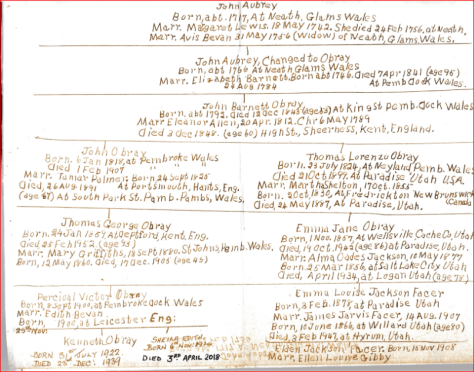
He replied ‘Well, you know the Americans, they are always doing their genealogy and one day, I received this letter from a lady, telling me I was related to her, I was a distant third cousin’ I questioned him further and he said they had corresponded for a number of years, and at one point, she had sent him a ‘Family Tree’ all handwritten then, of course, and started in 1717 to my grandfather’s day. I was very excited by this and asked him, if, when we next came home could I see the ‘Family Tree and read the letters. He replied that I could have the letters and the Family Tree, he had no further use for them, and he would post them to me.
The Family Tree was sent to my Gramps by his third cousin Ellen Louise Gibby Facer in Utah in the early 1950s.
Starting Family Genealogy
I think that started my interest in genealogy and research. The next time I went ‘home’ I questioned my grandparents and family at length, recorded their voices and wrote out the names and birth dates of the family. My Grandparents – who threw nothing out – gave me some marvellous 1800s photos of family members. On the back, I wrote who these people were, most important because shortly after that, we moved to Canada, and genealogy was put on the back burner in a box, for a number of years.
32 years later a renewed interest came when we met some UK friends again, and members of the Church of Latter Day Saints or Mormons. We talked about genealogy, but with young families and busy lives, that was all we did, talked about it, but, never really did any more research. About 8 years ago, we decided the time had come, and we met and researched together. Our friends invited us to their church’s “Centre of Family History” in LaSalle, Quebec, Canada to do some real research with them.
Finding Family Skeletons
I found the Family History Centre a wonderful place. Free to anyone at certain times it has most of the current genealogy websites online open for free. Books, microfiche and copies of records can be researched, with help from church members if needed. It was a quiet peaceful place and we got to spend some time with friends, have lunch and do some family history together. Our friends were a great help, as the Church recommends that its members do family history so they are very experienced. I recalled all the information I had amassed in the 1970s and had no idea how to put it all together. Now I had a chance to do that. I was pleased with how I had named all the photos as it was a wonderful tool to enable me to search online for family members.
I decided to start with the mysterious ‘Family Tree’ from the USA. It was so exciting to be able to put in full names, birth dates and areas to search. I was grateful to the previous Missionaries who advised us to label and date all information as we received it. A really great tip!
My Grandfather was born in Pembroke Dock, Wales and his Great-Grandfather had, as was usual, a large family. Two of those sons, my Grandfathers’ Uncles, Thomas and Samuel OBray became Mormons and left Wales for ‘Zion’ Salt Lake City in 1854.
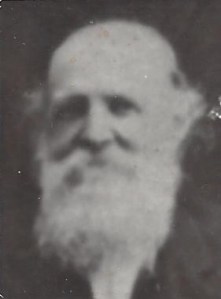
This photo, which appears all over FamilySearch.org, was included in letters to my Gramps from his third cousin in Utah.
Samuel William OBray
(Portrait found on Familysearch.org)
That was a surprise for me, considering the friends and interest I have had in the church over the years, a case of my Great Uncles having “been there, done that’ so I was able to trace their long and arduous journey across the plains to Utah through Mormon church records. Our friends were very excited for us, as this was a great honour in the history of the church, to have family that had made the arduous and terrible trip to reach their ‘Zion’.
Further Research
Through the Welsh Mormon History page, on FamilySearch.org I found that Thomas, was born in Wales in 1824 and he joined the Mormon church when he was 13 years old. Eight years later, he began to preach the gospel in England then Italy, France and Germany. Later, he went to Norway and Denmark. In Malta, he raised up a church branch. In 1854 Thomas emigrated to the US. The ship stopped in New Brunswick, Canada and picked up another family. Thomas joined that family and met Louisa. They continued the journey on their way to St. Louis Missouri to pick up supplies, wagons, food, and animals for the three-month journey across the plains of the United States.
In June at Fort Leavenworth, Kansas Thomas and Louisa were married. During that journey, with her brother Albert and her sister Martha, Louisa died of cholera and was buried en route to Salt Lake City on the plains, in an unmarked grave, a bride of three weeks. Thomas continued on with the family and arrived in Salt Lake City in September 1854.
A Few Surprises
In October 1854, Thomas married Louisa’s sister, Martha. Five children were born to Thomas and Martha. In 1857 Thomas married Carolyn and had 9 children with her. In 1864 Thomas married Ruth and they had 14 children together. The women and children, according to Censuses of the time, lived together in separate houses and were called ‘Housekeepers” Thomas lived with Martha and their children.
Altogether Thomas had 28 children and yes, my Great Grand Uncle had ‘plural marriages’! At that time, it was a tenet of the Church. Martha died in 1887 and a year after her death Thomas was sentenced to the Utah penitentiary for 11 months for ‘Unlawful cohabitation. He was sentenced a second time a year later and served from April to August 1890.
Following a revelation to the church Prophet, the practice of plural marriage was instituted among Church members in the early 1840s however; from the 1860s to the 1880s, the United States government passed laws to make this religious practice illegal. These laws were eventually upheld by the U.S. Supreme Court. At that time, the President of the church, Wilford Woodruff issued a Manifesto, which was accepted by the Church as authoritative and binding on October 6, 1890. This led to the end of the practice of plural marriage in the Church.
Decedents Of The Family
My Great Grand Uncle was asked by the church to explore further land outside of Salt Lake City and to build other settlements, and so he moved his families to ‘Cache’ (secret) County and founded a small place called “Paradise’ just outside of Salt Lake City. Thomas homesteaded the site where the church farm is now located.
In 2014, I visited this small town. It was full of my ancestors. Even the local cafe knew the name of my Grandfather and his Uncles. The Paradise Cemetery was a beautiful place, calm and serene and I found my Uncles and their families. It may sound strange, but I ‘introduced’ myself to them, and told them of their ancestor who wrote to my Grandfather, all those years ago, and how I now ended up here, in Paradise. I hope to go back again one day.
The cemetery contained all of the family who were ‘Pioneers’ and had crossed the plains to get to ‘Zion’ It was very moving to see my two Grand Uncles with special plates affixed to their memorial stones to indicate that they were original Pioneers. Great Grand Uncle Thomas died in Paradise, Utah on 21st October 1899 and Great Grand Uncle Samuel died in Paradise, Utah on 5th June 1910.
Meanwhile, I continue my research and find surprises every day. I would love to contact any members of Ellen Louise Gibby Facer’s family. She, who wrote to my Gramps, all those years ago! I still have her letters and Christmas cards.
Charlotte Haines (1773-1851) was only ten years old when the breakaway 13 colonies won the War of Independence in April 1783. Those residing in the new United States of America, who had remained loyal to the British Crown, were persecuted and forced out of their homes and their belongings seized. Chaos reigned everywhere and families were torn apart.
One fateful day around this time, young Charlotte sneaked away to visit her British Loyalist cousins, against the expressed wishes of her American Patriot stepfatheri. Upon her return, standing outside the front door, he refused her entry back into the family home.
Charlotte was my three-times great-grandmother. Her daughter Margaret Ann Peters married Daniel Hanington and their son James Peters Hanington was my grandmother’s father.
The British government came to the aid of these Loyalists and arranged for transportation for those who wished to leave the new America. Charlotte’s grandparents, Gilbert and Anna Pugsley, rescued young Charlotte and her brother David. Together they sailed from New York for ten days on the “Jason”ii, with 124 other “refugees” as part of the final large scale evacuation and landed in New Brunswick (then still part of Nova Scotia) in October 1783…just in time for the brutally cold winter.
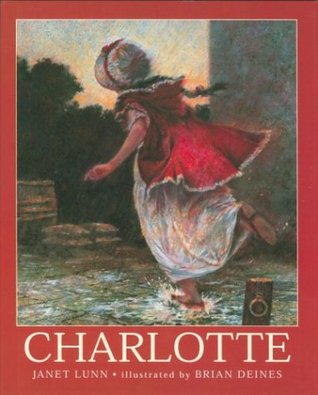
Charlotte has been the favourite subject of a couple of books and several folktales. She warranted her own chapter in “Pioneer Profiles of New Brunswick Settlers”iii and is the main character in a children’s book titled “Charlotte”iv. One folktale claimed that she was the first Loyalist to set foot ashore (not true) and in doing so, she lost her “slipper” in the mud (possibly). The matching slipper (unlikely) was donated to the New Brunswick Museum years later, however, it looks somewhat too big and stylish for a ten-year old girl. But they make wonderful stories and fully recognize young Charlotte as one of the first “petticoat pioneers” of New Brunswick.
Children’s story about Charlotte Haines by Janet Lunn
Fourteen thousand Loyalists established a new settlement in 1783 along the St. John River and shortly afterwards they petitioned for their own colony. In 1784, Great Britain granted their request and divided Nova Scotia into two — New Brunswick and Nova Scotia. The Loyalists, who made up 90 percent of the population of New Brunswick, became a separate colony with its capital, Fredericton, 90 miles upriver from Saint John.
The Loyalists and their children were entitled to free land once they provided the necessary proof. Charlotte, as the biological daughter of John Haines, a Loyalist on record, appears in 1786 documentation as one of the grantees of 84 lots on Long Island, Queen’s County, along with several other prominent Loyalists – although she was only 13 at the time. I can imagine her grandfather Pugsley nodding discreetly in her direction as he looked after her interests.
For their first three years, the British provided the Loyalists with a few simple tools, blankets, material for clothing and seeds for wheat, peas, corn and potatoes. The rations of basic food supplied by the British supplemented the abundance of game and fish available to them in the forest and streams. Most lived in tents on dirt floors until they were able to build primitive log cabins. Tree by tree, stump by stump, the fertile uplands were cleared to widen the fields making them ready for crops.
The Loyalists kept meaningful social contacts through various community events. Neighbours organized “frolics” whereby the men would work together to clear land, move rocks, build a barn or complete some other task which proved impossible for one or two people. At the same time, the women prepared meals and the children had a chance to play with friends. Women also held their own frolics to make quilts, card wool or shell corn. These Loyalist neighbours were dependent on one another in times of sickness, accidents and childbirth and supported one another at gatherings for weddings, funerals and church services.
Perhaps Charlotte met her future husband at one of these popular frolics. At 17, Charlotte married William Peters (also from a United Empire Loyalist family) in 1791 in Gagetown. Soon afterwards, the happy couple moved downriver, settled in Hampstead and built a home where the St. John River widens to a magnificent view.
At that time, there existed only ten miles of roadway in the whole province and another 20 years would pass before there would be an 82-mile long road linking Fredericton and Saint John. However, in the meantime, the river served as a “highway” enabling the transport of passengers and necessary goods between the two cities.
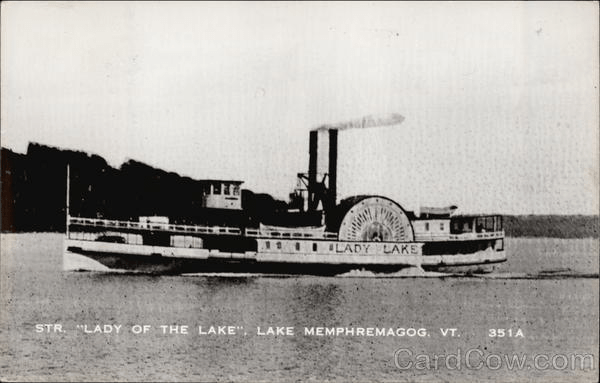
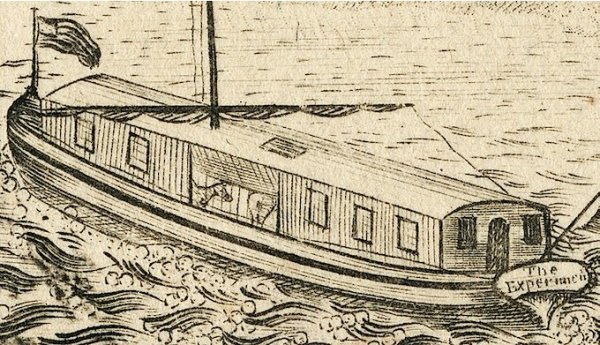
When the steamboats first chugged noisily up the river in 1816, William decided to compete with them and he built a 100-foot long side wheeler powered by 12 horses walking up and down the deck and propelling the boat along.
A drawing of The Experiment – an example of another horse powered side wheeler.
William actively pursued his interest in politics, and as the first representative of Queen’s County in the New Brunswick Legislature, he spent a lot of time in Fredericton (50 miles away) attending the sessions of Parliament.
Meanwhile, back home, Charlotte managed their entire land-holding on her own. Eventually they had 15 children, five sons and ten daughters. She bore her last child at 50 years old according to the baptismal certificate. They all survived except their son John who drowned at 21 attempting to save another man’s life.
Not only did she clothe, feed and care for them all (including the servants) but also provided much of their early education as well. On Saturday evenings in the summer, the fiddlers would play rollicking tunes and the tapping of dancing feet could be heard in big houses and cabins alike. When winter shut down the fields, and with food plentifully stored in the cellar, the spinning wheels would begin to hum during those coldest months.
By the time William died in 1836, they had recently relocated to Woodstock (100 miles upriver from Hampstead) with two of their younger children, James and Caroline. Their older children were married with homes of their own scattered along the St. John River Valley. Around this time, she wrote a letterv to her daughter Susan, Mrs. Thomas Tilley:
I take my pen to address a few lines to you to inquire after the health of you and all of your family. The grate distance we are from you prevents me from hearing. You heard of the death of your Father at Woodstock.
Charlotte described William’s death in some detail and then continued:
I hop [sic] this may find you all well. I am not well. My head troubles me very much. There is not one day that it don’t ake [sic] so that I cant hardly stir. My cough is something better. James and Caroline is well and harty [sic] and quite contented hear. I like the place and if your Father has lived and been hear to see to it we might have made a good living. It is pleasant and a good place for business but we must try to due the best we can. The place is out of repair and soon would have been a common if we had not come hear. I should be glad if my friends was near to us. I don’t know as ever I shall see you all again. I thought to have gon [sic]to see you all before I came up hear but I was so sick that I could not go down to see you. James and Caroline wishes to be remembered to you and all the family. I desire to be remembered to Thomas and the children and tel them I should be glad to see them and you. Give my love to all inquiring friends and except a share for yourself. This from you afectionet [sic] Mother, Charlotte Peters
Although she had her share of aches and pains at that time, she lived another 15 years and ultimately enjoyed the blessing of 111 grandchildren.
She had a powerful influence over all her family for she believed that their heritage carried a great responsibility to others. When the grandchildren would visit, her graceful hands were always busy winding yarn or knitting a sock while patiently answering their questions and reciting passages from the bible.
One of her grandchildren, Samuel Leonard Tilley, later known as Sir Leonard, served as Premier of New Brunswick and went on to became one of the Fathers of Confederation.
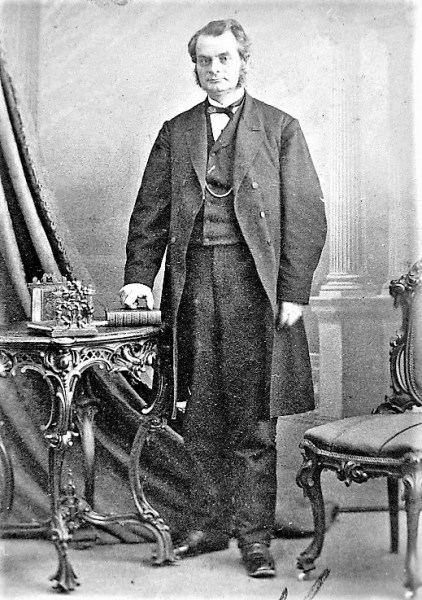
Sir Samuel Leonard Tilley 1864
A common tale states that Tilley proposed the term “Dominion” in Canada’s name, at the London conference in 1866, which he gleaned from Psalm 72:8 – “He shall have dominion also from sea to sea, and from the river unto the ends of the earth”. Ultimately, as Minister of Finance in the federal government, he was also instrumental in seeing the transcontinental railway completed.vi
Young Charlotte Haines might have felt all alone in the world at age ten but, when she died 68 years later, the epitaph on her tombstone proclaimed her legacy: “…Lamented by a large circle of descendants and friends by whom she was universally beloved and respected.”
The gravestone of Charlotte Haines Peters and family – St.John’s Anglican Church, Gagetown, Queens County, New Brunswick
Charlotte’s daughter Margaret Ann Peters and her husband Daniel Hanington “Roaring Dan” (my great great grandparents).
Notes:
iCharlotte’s mother, Miss Pugsley, died when she was very young. Charlotte’s father remarried Sarah Haight before he died. Then Sarah remarried Stephen Haviland who was Charlotte’s stepmother’s husband (step step father?)
In the Jodouin family of 9 children, six girls, and three boys the names were:
Alice, Aline, Arthur, Eugene, Adele, Lucille, Emile, Estelle and Louise.
A number of them were named after relatives
Three of those names began with the same sounding A! Sometimes Mom would go through the entire list of her children before finding the one she wanted to address! Perhaps Granny had the same situation. In any case, my Aunt Adele became known as “Ted” even though she was very feminine and truly a fashion plate, always dressed ”to the nines”.
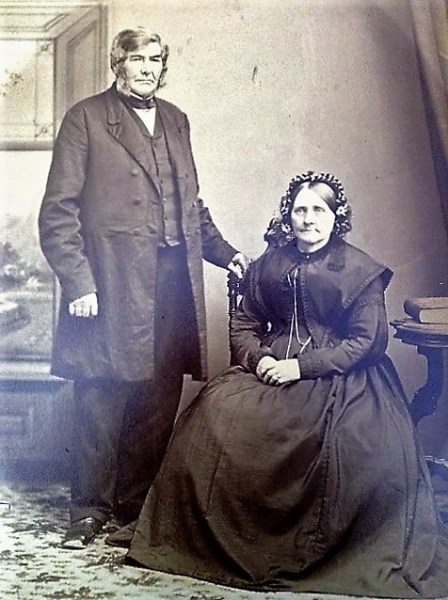
Aunt Ted, ?, Granpa, Luce, Mom, and Granny Jodouin
For many years I wondered how she received the nickname. It seems that she looked like a little teddy bear with her big brown eyes and thus she became affectionately known as Ted. The name stayed with her all her life. She was “Aunt Ted!”
Marie Adele Jodouin was born in Sudbury, Ontario, during the Holiday season, on December 28, 1901. She was the fifth child of Louis and Louisa Jodouin.
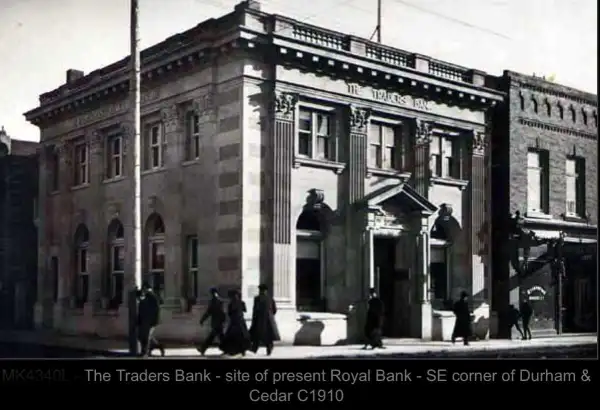
The Royal Bank on Durham Street in downtown Sudbury
She worked as a Secretary to the Manager at the Royal Bank in Sudbury.
To this day, fond memories of bygone visits either to Sudbury or Asbestos still come to mind.
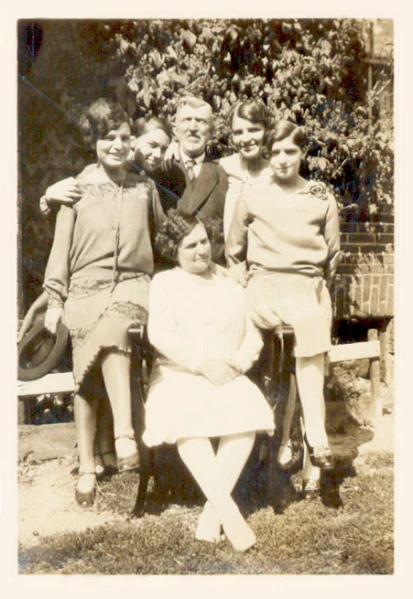
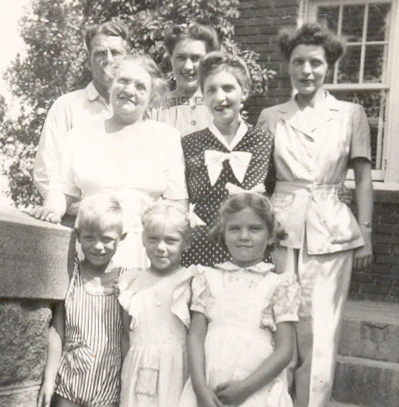
Back row: Uncle Leo and Aunt Dickie-Middle Row: Granny Jodouin, Mom, Aunt Ted – Front: Paul, Claire, and Denise – Dad took the photograph.
One of those visits occurred in the summer of 1946. Our family had moved from Sudbury to Asbestos, Quebec in the fall of 1945. We all missed our northern relatives, especially Mom. Granny, Aunt Ted, Aunt Dickie (Louise), Uncle Leo, and Cousin Denise arrived in the Packard driven by Aunt Ted. They were welcomed with open arms. Mom was in seventh heaven seeing her family. Their visit was the highlight of that summer.
When Grandpa Jodouin passed away in 1943 they sold the family home on Elm Street and built a small bungalow on John Street just around the corner from Aunt Dickie and Uncle Leo. In their new home, Granny had her Baby Grand piano as the centerpiece in their living room. The last memory of Granny etched in my mind was in 1948 when we were heading home to Asbestos. She sat down and played “Say Aurevoir But Not Goodbye”. She died in May of 1950.
Over the years there have been many visits back and forth to Sudbury. One of them happened in the summer of 1951 while spending several weeks with Aunt Ted in her home on John Street. During that time, she trotted me off to the dentist. He decided that the tooth growing off-kilter in my lower palette needed to be removed! That is something one does not forget. It is often a reminder of my caring aunt.
“Do you have a special aunt among your relatives?”
Years later, around 1955, Aunt Ted made another trip to our home in Asbestos. It would be the last time she visited us. Each one of her visits over the years has become more meaningful, and I realize just how much she was an influence in my life, and for that, I am truly grateful.
John, Claire, Aunt Ted, and Paul – Dad most likely took the photograph.
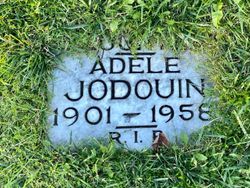
Aunt Ted passed away quietly at the age of fifty-five during the summer of 1958. I was deeply saddened and, for reasons unknown to me, did not attend her funeral. She is buried in LaSalle cemetery next to Granny, Grandpa Jodouin, and my parents.
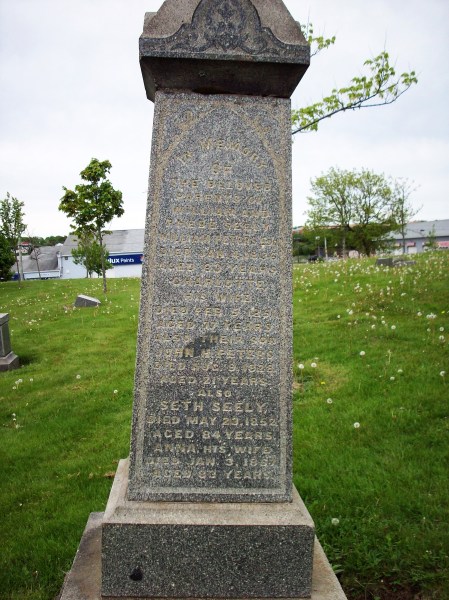
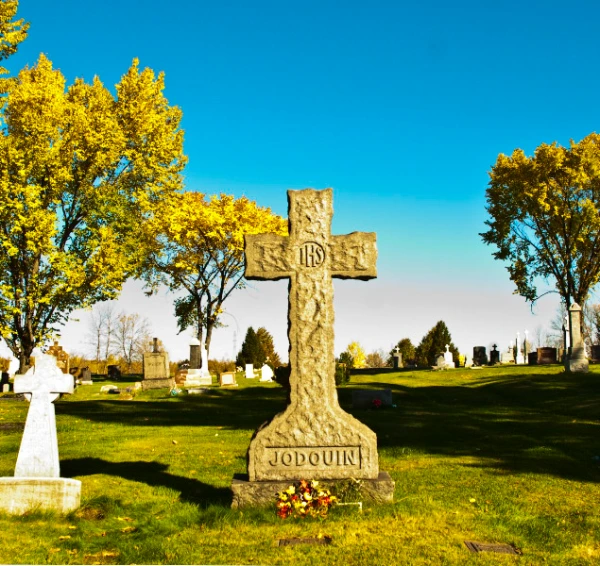
Alas! Over time the ground around the tombstone had shifted and unfortunately, it became necessary to lower the impressive towering granite tombstone. It is no longer the marker it once was.
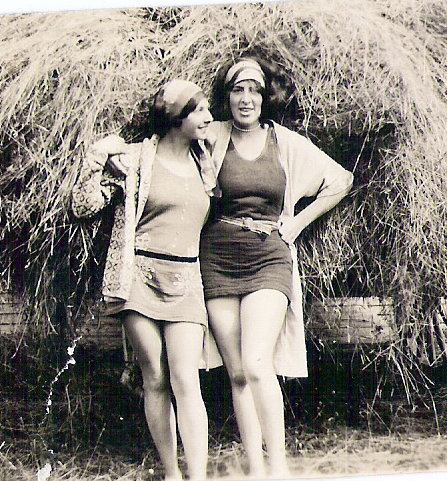
My Aunts Flo and Cecile, circa 1930, in what I assume are bathing suits maybe at Old Orchard Beach Maine where the family vacationed.
It was 1962 or so and my mom, twin brother and I had taken a bus from Old Orchard Beach to Ogunquit, Maine to visit my Aunt Cecile, who was on vacation at the same time as us.
As my brother and I crawled over the jagged and slippery shoreline in front of her hotel we openly wondered why anyone in their right mind would want to vacation in this spot. It was all rocks!
Well, much time has passed and my husband and I love to spend time at picturesque Perkin’s Cove on our short trips to Maine in the spring or fall.
On one such weekend visit, I recall the owners of our b-n-b telling us about pre-WWII Ogunquit: it had once been a bohemian artist’s colony with open air classes and nude models posing on the Marginal Way.
An artist’s colony! Now that explains it. My Aunt Cecile was an artist and a good one at that – but a bohemian, never! I remember her only as sober and serious – and seriously pious. Children were a foreign country to her and her main ambition with regards to me was to convert me to Roman Catholicism.
Marie-Catherine Cecile Crepeau was born in Montreal 1909 to Jules Crepeau and Maria Roy, my grandparents. She had an older brother and sister, Louis and Alice and in 1914 or so another girl her age, Florida, was plucked off the scruffy streets of south central Montreal and brought into the family fold. My mother would appear much later in 1921.
Cecile contracted scarlet fever as a child and suffered severe heart damage. According to her sisters, she was ‘babied’ for most of her childhood, not asked to do very much.
So, it seems she learned to paint.
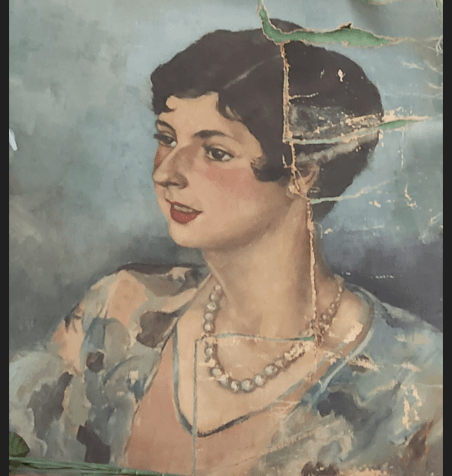
This battered canvas of young Flo is the only one of Cecile’s that I own. It was painted in 1927 when both Cecile and Flo were 18. It is pretty accomplished for so young an artist, I think.
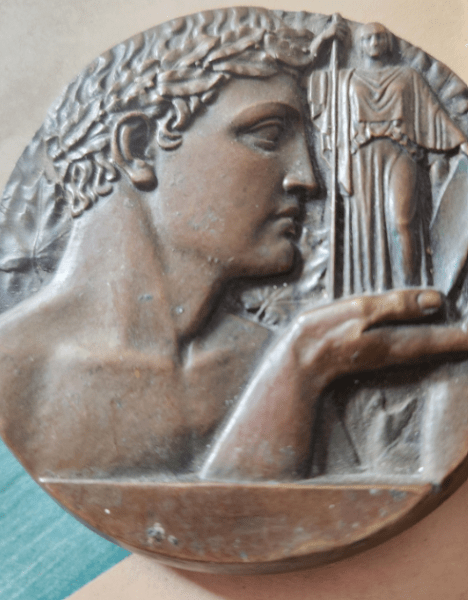
Indeed, in a few years later Cecile would be accepted into the Beaux-Arts in Montreal (perhaps using this portrait in a portfolio) and she would win the first prize for oil painting (considered very much a male domain) in 1937.
I have the medal somewhere and I found this tidbit from a tabloid called “L’illustre” describing the 1937 Beaux-Art exhibition: “Although the Hall of Paintings has little that is very striking, Therese Boucher’s “Reclining Man’ is vigorously treated. Among the angels, Cecile Crepeau’s is most alluring, in large part because of the curious golden tonality of the ensemble. Her study of a face, placed to the right of the entrance, has life and sincerity, despite some weaknesses. Her blue vase beside a pewter bowl also merits a mention. The female nudes are unimpressive.”
The angel picture I remember well. It loomed over Cecile’s living room and, yes, it was very golden. Another tall tall wall hanging I remember was an oil painting of a statue of St John the Baptist holding his own very hairy head.
I don’t recall the still life mentioned in the newspaper article, but I wish she had put some pretty vases behind Aunt Flo in my painting. It seems unfinished somehow.
The gorgeous and heavy ‘gold’ medal. I wish
My aunt was ‘a perfectionist’ (who suffered migraines for it) said my mother, which might account for why she created so few completed canvases..
Again, according to my mother, a teacher at the Beaux-Arts told her she had the technique but to be a superior artist but she had to ‘live a little.” (I wonder if the teacher was hitting on her.)
In the 1940’s, Cecile is listed in Lovell’s Directory as “housekeeper’ at my widowed grandmother’s Oxford Avenue flat. My mother is working as a stenographer at RKO Motion Pictures just down the street and my Aunt Flo as a greeter at Henry Morgan’s department store downtown. They are providing the financial support. My grandfather, former Director of City Services, had died under mysterious circumstances in 1938.
My brother and aunts in Cecile’s garden on Beaconsfield Avenue. It was lined with statuesque poplars and showcased an ornate wrought iron and marble birdbath! 1956 or so.
In 1951 my grandmother passed away. My mother had already married and moved a short distance way. Flo, too, would soon marry, leaving Cecile to figure out what to do with the rest of her life.
The story goes Cecile tried to became a nun but was turned down ‘due to her bad heart.’ Instead, she married a friend’s father, Amedee Buteau, a retired professor almost 30 years her senior. 1They would take a lower duplex apartment in NDG, filling it with my grandparents’ elegant furnishings. It was a marriage of convenience, no doubt, but it worked.
In the 1960’s, I just loved visiting Cecile’s home. Unlike our dingy and unadorned upper duplex apartment not far away, Cecile’s home was spic-n-span, every surface polished to a high sheen. There was no TV blaring Bonanza or Star Trek, just a giant grandfather clock solemnly marking each quarter hour with a click and a ping. The place felt like a museum with all the curio cabinets filled with so many intriguing things.
1955, My mom with her sisters.
And mixed in with the fin-de-siecle family treasures were her many multi-media artworks: sculptures, ceramics, watercolours. There were quite a few confusing (to me) religious subjects like bleeding hearts but also some adorable cherubim and many nature studies especially of flowers, birds and butterflies. Indeed, Cecile painted an immense peacock in full display on a wooden blind on the wall behind her bed. The tension between Eros and Thanatos in her beautiful Beaconsfield Avenue abode was quite evident to me, even as a child.
My mother had a very choppy relationship with her sister Cecile so even though we lived but a short bus ride away we didn’t visit her that often. – and I don’t recall her ever visiting us. Cecile’s hair went from red to grey between 1960’s visits I recall.
On at least one occasion I was sent on a sleepover. My aunt was awkward with me and I was determined not to like her, probably picking up on my mom’s vibes. It didn’t help that Cecile brought me to a scary Latin mass at Notre Dame Cathedral, pinning a silly handkerchief to the top of my head. Unfortunately, she did no art with me. Too messy I guess. Too bad as she was a wizard with pastels.
Cecile passed away in 1974 a year or two before her aged spouse. She was 65. My mother sobbed with grief at her passing. “You were always fighting with her,” I recall saying to my mom. “So why are you crying so much?” How naive of me.
All of the family heirlooms fell into the hands of ‘strangers’ upsetting my mother, but one lost canvas pained her in particular. “It was Cecile’s best painting,” she said, “of Alice putting a flower in Florida’s hair before a dance.”
Classic! I can hardly blame my mother for coveting that particular oil painting, one that involved all of her sisters: I wonder who owns it now.
Mon Oncle Amedee was so comically vague in his dotage, seated in his armchair snoozing away with an upside down Le Devoir newspaper folded onto his lap, we children assumed he was expert in some airy-fairy field like ancient philosophy. But, no, quite the opposite. A short search on the Web reveals that in the 1920’s Amadee was a civil engineer, Dean of a Technical College and expert in technical education giving lectures, meeting with policy makers, even writing a book.
The night St. Andrews United Church, Westmount was razed by fire in 1965, I was thirteen. The whole sanctuary gone. Stained glass windows, memorials to many, melted, the organ burned and the small tower toppled. Charred red bricks littered Staunton Street. Only the tall tower and walls remained of the 57-year-old church.
Montreal Star Aug 4, 1965
This devastating fire occurred, even though the church sat just across the street from the Westmount fire station. The caretaker lived in the back of the building and when he smelled smoke in the afternoon, he went across the street to the fire station. The firemen looked through the whole church without finding anything amiss. They closed the fire doors to the Sunday School and left. Around midnight the church was engulfed in flames and all the firemen in the city couldn’t save the building. It was determined that the fire started in the basement under the sanctuary and hidden there, smouldered for hours. The minister, Reverend D.M. Grant holidaying in Nova Scotia was awakened with a telegram saying his church was burning.
My family was not some of the early Westmount Presbyterians who worshiped in the Mission School from 1869 until 1886. They weren’t even members when a small frame church, Melville Presbyterian, was built on the corner of Cote St Antoine and Stanton St.
Church with an addition
According to the booklets written for the Church’s golden and diamond Jubilees, St Andrew’s Church in Westmount was formally founded in 1900. “A difference of opinion caused the division of the members. One group retained the name of Melville Presbyterian Church and moved to Melville Ave where they built a new church. The other group, retained the present church site and became St Andrew’s Church.” In the newspapers of the day I found the reason for the split, alcohol consumption! When Rev. T. W. Winfield was hired, “a promise was extracted from the Reverend gentleman that he would refrain from intoxicating liquors while pastor of Melville Church.” Some members accused him of breaking that promise. The minority moved with the Minister and took the Melville name while the majority stayed in the building and chose the new name St Andrews Presbyterian.
This congregation continued to grow, so in 1908 the red brick church was built. The large sanctuary, surrounded on three sides with balconies held 1100 worshipers. There was a rose window over the front doors and many other stained glass windows on the side walls. It was one of the Presbyterian churches that united with the Methodists and the Congregationalists in 1925 and became St. Andrews United Church.
St Andrew’s Church 1908-1965
I spent many hours in St Andrews Church growing up, as did my father. My grandparents joined the church when they moved from Chomedy Street to Grosvenor Ave in 1912. My grandfather, William Sutherland was a church elder and later so were both my parents. My grandmother Minnie Eagle Sutherland was very involved in church life being president of the Women’s Missionary Society and the Women’s Christian Temperance Union. My mother taught Sunday School and was the head of the Primary department for many years.
Church Interior photo by Alfred Peter Jorbes
We went to Church and Sunday School every week and won prizes for attendance. It was a church of many staircases. The hall behind the church had three sets and before and after church children would run around, up and down the stairs and through the halls. A back staircase off the kindergarten room led down to the basement. It was dark and gloomy and we would only venture down a few stairs before running somewhere else.
I remember Christmas pageants with Roman soldiers in costumes, clanking down the aisle with swords, helmets and leather skirts. I so admired the angels in their light blue satin dresses with wings that I wished I could be one. I was promised I could be an angel the next time they had a pageant but before that happened, the church burned including all the costumes stored in the basement.
After the fire, the Church was rebuilt although with some controversy and another split. Some of the congregation left because they thought the million-dollar insurance money should be put to better use than having three underused United Churches in Westmount. They were out-voted and the new modern church opened in October 1967. It only held 500 people.
The rebuilt Church 1967
The congregation continued to age, fewer young families joined and people such as myself attended irregularly. St Andrews and Dominion Douglas United, amalgamated in 1985. The committee discussed which church to keep. Dominion Douglas, an old stone church on The Boulevard became the new home with the St Andrew’s congregation moving up the hill. Selwyn House School, across the street, bought St. Andrews. for their expansion. The chapel, including stain glass windows was deconstructed and rebuilt in the Dominion Douglas basement. In 2004 Erskine American United Church, on Sherbrooke Street joined St. Andrews-Dominion Douglas and another name was needed. The congregation became Mountainside United Church.
In less than twenty years Mountainside United Church became impossible to maintain and heat with a diminishing congregation. That building was sold to a developer and the congregation moved to the Birks Chapel on the McGill Campus. I have not attended a service there.
References:
Church Fire: The Montreal Star; Aug 4, 1965 page 3. Downloaded from newspapers.com Dec 29, 2022.
Westmount Mayor Praises Firemen: Montreal Star; August 10, 1965 page 6. Accessed from Newspapers.comDecember 29, 2022
Rising from its Ashes: Montreal Star; June 3, 1967 page 58 Accessed from Newspapers.com December 29, 2022.
Melville Church Difficulty: Montreal Gazette; 28, March 1900 page 10. Accesses from Newspaper.com January 25, 2023.
Date of Separation: Montreal Star; 12 May 1900 page 10. Accessed from Newspapers.com January 26, 2023.
St Andrew,s Church Golden Jubilee Celebration Bulletin November 5th to 12th 1950. IN the hands of the author.
Our Heritage St Andrew’s Church Diamond Jubilee 1900-1960 booklet. In the hands of the author.
Notes:
The back annex which housed the Sunday school was saved by the fire doors. Books and papers recovered from the Sunday school were stored in our basement for a time but they continued to smell of smoke and were later discarded. The manse next door was also saved but torn down for the new church.
After the church fire may local churches and synagogues offered the congregation space to worship including Melville Presbyterian Church. I went to confirmation classes at Melville but we had Sunday services in the auditorium of Westmount High School.
Melville Presbyterian Church was built on Elgin Avenue later changed to Melville Avenue, facing Westmount Park. It is now Holy Trinity Serbian Orthodox Church. After the founding of the United Church in 1925, Melville Presbyterian Church amalgamated with Westmount Methodist to form Westmount Park-Melville United Church. The combined congregation worshipped in the Melville Church building for two years, until it was sold [back] to former members who remained with the Presbyterian Church. Victoria Hall served as a temporary site while the new Westmount Park-Melville Church, which is now known as the Westmount Park United Church was built on the western edge of Westmount Park.
Relating this to my husband, John, he mentioned a memory of his maternal Uncle Ben and his Uncles’ time as a POW in Japan.
It was all second-hand because Benjamin Ronald Hughes died the year my husband was born, in 1948. However, John did have stories from his Mum, about her brother. According to her Uncle Ben suffered terribly during his 3 years as a prisoner.
Ben was born on the 27th of March 1910 the only boy in the family of six in the Toxteth area of Liverpool, Lancashire. His occupation was a messenger. That could have been for the Post Office delivering telegrams or perhaps riding a bicycle delivering groceries and goods.
When Uncle Ben was 15 years old, he joined the Royal Navy as a second-class boy entrant. When he reached 18 years old, in 1929 he was by then a Boy First Class and volunteered again, as an adult Able Seaman, and was posted to HMS Egmont II on 25 September 1931.
During his service, Uncle Ben served on 15 various Royal Navy ships. War was declared on the 1st of September 1939. On the 1st of March 1942, after three years of fighting, Uncle Ben was reported missing to his family. He was listed as a prisoner of war, by the Japanese. When captured and according to his Japanese POW file below, he was on HMS Encounter which had picked up allies from Malaysia and was scuttled (sunk) by her own crew, after being damaged by gunfire from heavy Japanese heavy cruisers in the Java Sea.(1)
Whilst researching I managed to find Ben’s Japanese POW information. There was not much on it, and I don’t read Japanese. I wanted to find the name of his camp and what he would have laboured at.
Eventually, I found that he was a POW in Fukuoka- Camp 26 prisoner number 51. The link(2) lists all the prisoners with information on nationality, name, age, and home address. it does make for interesting reading. There were British, Australian and two Dutch prisoners. The servicemen listed were Royal Navy and Army. ALL the men apart from eleven who had obvious illnesses, were listed as ‘Healthy’. The camp prisoners were used for labour in mines in this particular area of Japan.
The first pages of prisoners’ information.
At the war’s end, in 945, Uncle Ben was in the Royal Naval Hospital Chatham, in Kent. It states on his Service Record that he was Invalided out of the Royal Navy from RN Hospital Chatham on the 7th of August 1946. He would have spent time recovering from his terrible experiences.
He was granted a war gratuity and a medal. Later, on the 25th of January 1946. Benjamin Ronald Hughes is ‘Mentioned in Dispatches in the London Gazette. It reads as follows.
“Able Seaman. Benjamin Ronald HUGHES, C/J. 114923. For bravery, endurance and marked devotion to duty whilst serving in H.M> ships Kuda, Isis, Scorpion and Sultan and H.M. M. MXS, 310 and 1062 during the withdrawal of troops from Sungai Punggor and in the harassing of the advancing Japanese in Malay, December 1941 – January 1942“.
My mother-in-law told her son John, that when Uncle Ben returned to his home in Liverpool he was a wreck. Emaciated, haunted, ill and looking twice his age. He was 36 years old. Uncle Ben did not live long to enjoy life and died in 1948 at the age of 38. Because of his young age, a Post Mortem was performed and he was found to have died of bacterial endocarditis. RIP Uncle Ben.
This ‘Ghost’ photo of Ben with his wife, Jessie, is the only photo we have.
Keisen Yoshikuma Coal Mine Branch Camp (Fukuoka 26-B) Established as Fukuoka No.26 Branch Camp at Yoshikuma Coal Mine in Keisen-cho, Kaho-gun, Fukuoka Prefecture on May 10, 1945.
The POWs were used for mine labour by Aso Mining Company. The son and heir Taro Aso was a past President of Japan in 2008 and the controversy surrounding his family’s use of Korean and Allied POW labour clouded his term of office.
During the “White Rice Period”, lasting from January to October 1942, Allied prisoners were granted a maximum of ten ounces of rice per day, in addition to two ounces of rancid pork and four ounces of fish monthly. This official figure was often larger than that provided, with theft by Japanese soldiers, themselves suffering from starvation towards the latter days of the war, commonplace within the camps. Red Cross parcels, containing necessary essentials, were accepted by the Japanese authorities, but rather than being redistributed among the prisoners were kept by the Japanese soldiers themselves.
… and now his church celebrates its 200th Anniversary in 2023
(upcoming celebration details below)
The deed described the property as “a commodious estate upon the outskirts of the thriving town of Halifax, in the Colony of Nova Scotia, Canada”. Imagine William’s surprise to arrive in Halifax in February to discover that “outskirts” meant a 200-mile hike through thick forest and deep snow!
My great-great-great grandfather, William Hanington, was born in London, England, in 1759. As the son of a fish dealer, he trained as an apprentice to the Fishmonger’s Company but became a freeman in 1782. Two years later, at the age of 25, this adventurous young man paid £500 sterling for 5,000 acres of land “near” Halifax, Nova Scotia, from Captain Joseph Williams.
After the initial shock upon their arrival, William and his companion found an Indian guide, loaded all their worldly belongings onto a hand sled, trudged through the snow, slept in the open and finally arrived in bitterly cold Shediac in March 1785. His discouraged companion quickly returned to Halifax and sailed back to England on the first available ship!
Large Lower left piece of land belonged to William Hanington 1785
William, however, was obviously made of sturdier stuff and delighted by what he found! A good size stream flowed into the bay and he had never seen such giant trees! He must have pictured the lucrative possibilities for trade in lumber, fish, furs and more.
Seven years after his arrival in Shediac, at the age of 33, he hired a couple of Indian guides to paddle a canoe over to Ile St. Jean (now known as Prince Edward Island) where there were other English settlers. The Darbys were Loyalist sympathizers who escaped from the rebels in New York. While riding along in an oxcart through St. Eleanor’s (now known as Summerside), he spotted a young lady (age 18) named Mary Darby, drawing water in her father’s yard. After a brief stay with her family, William and Mary married and paddled back to Shediac where they eventually raised a large family of 13 children.
After the first three years together, they persuaded Mary’s sister Elizabeth and her husband John Welling to come over from Ile St. Jean and settle on their land – becoming the second English family in Shediac.
And in the next five years, William boasted eight families on his property of about one hundred acres of cleared land. He opened a general store and dealt in fish, fur and lumber. The furs and timber were shipped to England and the fish to Halifax and the West Indies! He imported English goods from Halifax and West Indies products – mainly sugar, molasses and rum from St. Pierre. He also bartered with the friendly Indians for furs and helped them clear land.
Before long, a considerable village clustered about the Hanington Store – including a post office and a tavern. William remained the leading figure of the community and acted as the Collector of Customs of the Port, Supervisor of Roads and Magistrate enabling him to officiate over the marriages of many couples. To top it all off, in 1800, just 15 years after his arrival from England, this remarkable young man built a shipyard 10 miles north of Shediac in Cocagne.
The only thing lacking in this delightful little community was a church. Until then, William being a religious man, conducted service in his home every Sunday and welcomed all to attend. Then in 1823, William donated the necessary land and lumber and oversaw the completion of St. Martin-in-the-Woods, the first Protestant church. He named it after his church in England; the famous St. Martin-in-the-Fields overlooking Trafalgar Square in London.
Painting of
St Martin-in-the-Woods Church
by Charles Kelsey
In 1934, my grandfather Canon Sydenham Lindsay (Shediac summer resident at Iona Cottage – She Owned A Cottage – with his wife Millicent Hanington and sometimes stand-in priest at the church) dedicated a large memorial stain glass window in the sanctuary to his father-in-law, Dr. James Peters Hanington (1846-1927) who was my great-grandfather and William’s grandson. The window was designed and installed by Charles W. Kelsey of Montreal and described as follows:
“The centre light of the window represents the Crucifixion, with Mary Magdalene at the foot of the cross, while the two side windows represent the Blessed Virgin Mary and Saint John the Evangelist.” (1934 – The Montreal Gazette)
Stain Glass Window in St Martin-in-the-Woods (photo credit Paul Almond)
Also mounted inside on the church’s side walls are two honourary brass plaques. One in memory of William and his wife and one in memory of his son Hon. Daniel Hanington (1804-1889) and his wife Margaret Ann Peters – my great great grandparents.
William died in 1838 at age 79. A huge memorial of native freestone marked his grave, in the cemetery beside his beloved church nestled in the community of Shediac, where he spent a lifetime building a “commodious estate” from a forest of giant trees.
Two hundred years later on this anniversary of the St. Martin-in-the-Woods church, William and Mary are lovingly encircled by the graves of several generations of their descendants.
A memorial plaque to William and his wife Mary, was erected in 2001 by the Hanington Reunion Association. This year the Association will be adding a bench in the cemetery in celebration of the 200 years.
Close-up of theHeadstone of William Hanington (1759-1838)
(L)Hanington Reunion Association Plaque (2001) honouring William Hanington and his wife Mary Darby and (R) photo by Scotty Horsman showing William’s large headstone at the side of the church.
In 2015, my sister and I visited the church and our ancestors in the graveyard and also enjoyed meeting some Hanington cousins as well!
ANNIVERSARY CELEBRATION DETAILS FOR SEPT 16-17, 2023:
The main events for the 200th Anniversary will be Sept. 16th and 17th with a corn boil, hotdog/hamburger barbecue and cake on Saturday, Sept. 16th. There will also be games, a bonfire, fireworks and music at the church shore.
The Anglican Bishop, David Edwards, of Fredericton will be attending this celebration. He will also be at the 10:30 AM church service on Sunday, Sept. 17th. After the church service there will be a pot luck lunch and a skit in the hall. There will also be items on display in thechurch basement and in the hall. There will be items for sale – glasses, mugs and lapel pins, with the Hanington crest as well as lapel pins. ornaments and trivets with the church on them.