Category Archives: Great Britain

Plymouth Navy Days

by Marian Bulford

Our group or ‘gang’ never went out with the local lads. Every Saturday night we went dancing at the NAAFI and met up with the young sailors from all over the British Isles who were stationed in Devonport. The NAAFI was a huge social club ….
It was always with the young sailors stationed in Devonport, from all over the British Isles that we met every Saturday night when we all went dancing at the NAAFI – the Navy Army Air Force Institute – a social club for all the services and service families situated in the centre of Plymouth and covered a whole city block. At one end, it was a hotel for service families and the other end was a restaurant three bars and a huge dance floor.

I was an excited 16 year old, with the whole world in front of me. Plymouth Devon, in the UK was my home town.

It was a naval port and had been for centuries. Who has not heard of Sir Frances Drake, the celebrated Tudor seafarer, famous for circumnavigating the world on the Golden Hind and fighting the Spanish Armada? Or the Mayflower, the tiny ship that transported the first English Separatists, known today as the Pilgrims, from Plymouth to the New World in 1620? [1]

Most of my family on both mother and father’s side, were Royal or Merchant Navy and had lived in or around the areas for centuries the same places I lived as a teenager.

Ships of all sizes were always in and out of Devonport, the area I lived in and when a ship arrived ‘home’ there was much celebration in the local pubs and dance halls. This was my town and I loved it.

It was also a very popular summer holiday area with lovely hotels and guest houses. This area of Devon was described as the ‘Riviera of the South’ we even had our own palm trees.

This poster shows ‘Plymouth Sound’ and ‘Drake’s Island ‘ in the background, the beautiful Tinside Art Deco Lido Pool and of course, the sailors. I could have been one of those girls in the poster……
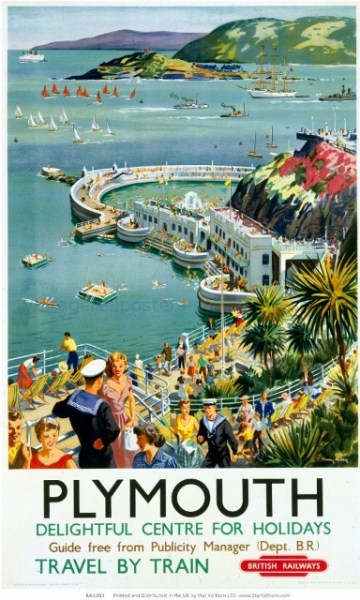
Holiday Poster

Over the last year, my 16 year old school friends and I had built up a close group of boy sailors, ‘Matelot’s’ as we called them, the young 15 to 16 year old Navy boys learning their trades as apprentices on board various ships at the Devonport Dockyard, where many of my ancestors had worked over the centuries.
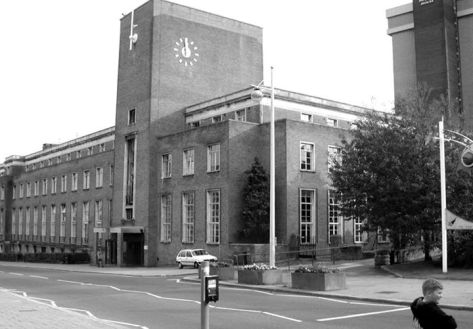
NAAAFI Building, Plymouth Devon c. 1961

The Plymouth NAAFI Club

We were all very excited in 1961 because the NATO [2] fleet arrived in Plymouth!
About 15 foreign ships would be arriving and the population would swell. The local population was pleased as money would be made and our group noticed a lot of ‘strangers’ in town when the fleet arrived. Lots of ‘ladies’ from London arrived, or ‘unfortunates’ as my Gran called them, and they stood out because of their accents.

Many foreign languages were also heard in the streets of Plymouth, some I was only hearing for the first time, and we tried to communicate with some of the sailors with lots of miming laughing and hand waving.

The biggest ship in town was a United States Aircraft carrier, USS Wasp, which caused great excitement: it was as big as a small town.

But imagine our reaction on the following Saturday, when we went to our usual dance at the NAAFI and saw our very first black men in the flesh AND they were doing the twist, the dance craze at the time!

We had never seen black people before, there were none in our part of England, and especially not ones doing the twist! Boy, they were ever good! Not a patch on us or the local sailors and we could not wait to copy them. But that is another story….

[1] https://en.wikipedia.org/wiki/Mayflower

[2] NATO Fleet: Belgium, Canada, Denmark, France, Iceland, Italy, Luxembourg, the
Netherlands, Norway, Portugal, the United Kingdom, and the United States. In 1952,
Greece and Turkey became members of the Alliance, joined later by West Germany.
Save

Hogmanay

By Sandra McHugh

The Scots call the New Year’s Eve celebration Hogmanay.1 Hogmanay is part of my family’s history.

My grandfather, Thomas McHugh, came to Canada from Scotland with his family in 1912.  The family maintained the Scottish traditions and they celebrated Hogmanay.  My father, Edward McHugh, was usually the “first-footer.” This means that he was the first one to step across the threshold after midnight, bearing gifts.  Traditionally, to ensure good luck, the first-footer is a tall and dark haired male.  Fair haired first-footers were not welcome, as it is believed that fair-haired first-footers were associated with the Viking invasions.2 My father brought gifts of coal and a herring, but some of the other traditional gifts include shortbread, a black bun, and whiskey to toast the new year.3

There are a few theories about the origin of the word Hogmanay.  The Scandinavian word for the feast preceding Yule was Hoggonott. The Flemish words hoog min dag mean great love day. Some believe that the origin of the word Hogmanay can be traced back to the Anglo-Saxon Haleg monath or Holy Month or the Gaelic words for new morning, oge maidne. Many believe that the source is French, homme est né for man is born. In France, the last day of the year when gifts were exchanged, was called aguillaneuf and in Normandy, this was called hoguignetes.4

Hogmanay is an important celebration in Scotland.  It is believed that this festival was first brought to Scotland by the Vikings for whom the passing of the shortest day of the year, the winter solstice, was an event to be celebrated.5 The importance of Hogmanay took on an even greater significance because Christmas was banned in Scotland for about 400 years.  A 1640 Act of the Parliament of Scotland abolished the “Yule vacation and observation thereof in time coming.”6 This Act of Parliament reflected the changing attitudes towards the Christmas Feast Days during the Reformation. Christmas Day only became a public holiday in 1958 and Boxing Day in 1974 .7

The partying and hospitality that goes on at Hogmanay is a way of wishing family, friends, and strangers a Guid New Year.  The old is swept out, sometimes literally by giving the home a good cleaning, and by clearing up any debts before the bells ring at midnight.8

I wish you all a very Guid New Year.

Sources

1 http://www.scotland.org/features/hogmanay-top-facts

2 Idem

3 Idem

4 http://www.rampantscotland.com/know/blknow12.htm

5 Idem

6 https://en.wikipedia.org/wiki/Christmas_in_Scotland

7 Idem

8 Idem

The Wyndies of Arbroath

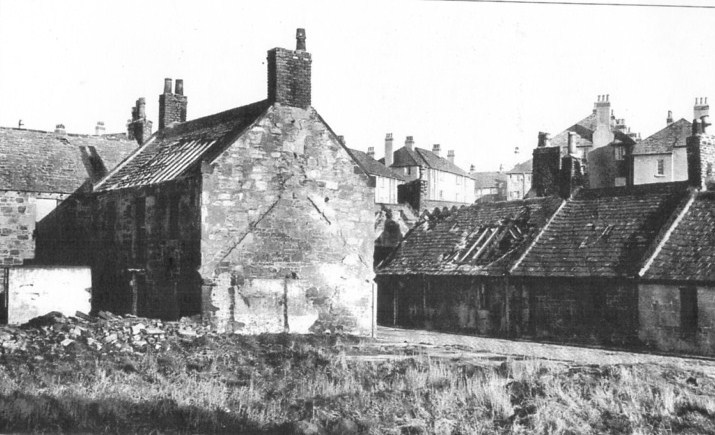
My grandmother, Elspeth Mill Boggie Orrock was born in 1875 at 32 East Mill Wynd in Arbroath, Scotland.  She was born in the “Wyndies” of Arbroath, specifically built by the spinning mills and factories to house the handloom weavers that flocked to Arbroath from the surrounding rural parishes. “By 1875, there were 134 spinning mills and factories, factories operating 1,400 power looms and producing 450,000 yards of cloth annually.”1 Flax, jute and sail cloth were woven in these mills. Almost 5,000 people were employed in the textile industry in Arbroath at that time and about a third of them were women. 2 Sure enough, between 1851 and 1911, all of the censuses list members of my family as mill workers, jute weavers, flax dressers and doffers, and yarn bleachers.

Marcol, a member of The Shoppie, a forum for life in Arbroath, posted this picture of the Wyndies on June 8, 2014.3

Marcol Wyndies

The work days in the mills would have been long, starting at 6:00 a.m. and ending at 7:30 p.m., with a half hour break for breakfast and a half hour break for dinner.  They worked six days a week and Sunday was their day of rest. The mills were kept clean and were well ventilated.  In addition, it was not unusual for the owner of the mill to provide free evening school for children working in the mills.4

By the early 1900s, Arbroath and neighbouring Dundee had suffered a serious decline in the textile industry and more significantly, the jute industry.  Jute was imported from India, however, the mill owners realized that it would significantly lower the cost of production to open mills in India to prepare the jute and import the finished product to Scotland.5 Once mills were established in India, the production of the mills in Arbroath and Dundee declined significantly.

The growth of the textile industry in Arbroath in the 1800s provided an impetus for my grandmother’s family to move into the city so that they could find steady work in the mills and provide for their family.  The decline of steady work in the textile industry in the early 1900s was the reason why my grandmother, with her husband, who had always worked in the mills, and their seven children, decided to move to Canada in 1912.

 1 http://archive.angus.gov.uk/history/features/2004-08-oldarbroath.htm

2 http://www.scottish-places.info/towns/townhistory385.html

3 http://www.theshoppie.com/arbroath/forum/topic.asp?TOPIC_ID=4108&whichpage=4

4 Factories Inquiry Commission submitted to Parliament, 1833, pages 21 to 23

5 https://en.wikipedia.org/wiki/History_of_Dundee

RCAF Iroquois Squadron 431

By Sandra McHugh

In World War II, RCAF Iroquois Squadron 431 executed 2,584 sorties, dropped 14,004 tons of bombs, lost 72 aircraft, and suffered 490 aircrew causalities, including 313 deaths, and 14 operational personnel deaths.1 My father, Edward McHugh, was part of the ground crew of this squadron.  He was an electrician by trade and when he enlisted during the summer of 1940, it was determined that the RCAF needed aircraft electricians. He began his training in Canada as part of the British Commonwealth Air Training Program (BCATP). Prime Minister William Lyon Mackenzie King had agreed that Canada would manage the BCATP at 231 facilities across Canada, mainly at air bases.2

Great Britain’s Royal Air Force’s Bomber Command was formed on July 14, 1936 and became part of the air defence of the country.  It was made up of groups and the Canadians were included in these groups. Group 6 was established on January 1, 1943 and was entirely made up of Canadian squadrons. At its peak, there were 14 squadrons belonging to group 6, including Iroquois Squadron 431.3

Squadron 431 operated Wellington X, Halifax V, and Lancaster X aircraft.  The Halifax and Lancaster aircraft had higher speed and greater bomb loads than earlier aircraft.4 The Canadian squadrons were stationed in Burn, Tholthorpe, and Croft, Yorkshire, allowing them to make sorties out across the English Channel, out into the North Sea, and into mainland Europe. Their targets included military targets, U boats, industrial centres, and Nazi occupied territories. The battle honours of Squadron 431 include the English Channel and North Sea, the Baltic, Fortress Europe (areas occupied by Nazi Germany), France and Germany (1944-45), ports in the Bay of Biscay, the Ruhr valley, Berlin, German Ports, Normandy, and the Rhine.5

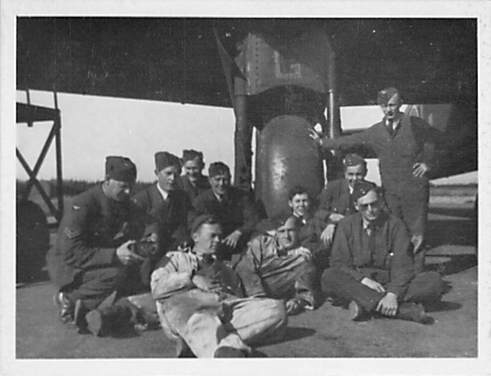
My father almost never spoke about the war.  Despite the camaraderie and deep friendships he forged during his time of service, it was a dark period of his life and he wanted to forget about it. The few times he spoke of it, he mentioned the busy work leading up to a mission, whereby the ground crew would be working intensely to ensure that everything was the best it could be.  Each person was acutely aware that a small detail could mean the difference between life and death.  Each team of the ground crew was assigned to one bomber and they would wait for their bomber to come back after the mission.  Sometimes the bay remained empty and the bomber never came back.  My father never got over the pain of waiting for a bomber that would not return.

Sources

A special thanks to W.E. Huron for his publication about Squadron 431: The History of 431 R.C.A.F. Squadron and more, 1942-1945: Burn, Tholthorpe, Croft

1 Heron, W.E., A Yorkshire Squadron, the History of 431 R.C.A.F. Squadron and more, 1942–1945: Burn, Tholthorpe, Croft, General Store Publishing House, 2009, p. 8

2http://en.wikipedia.org/wiki/List_of_British_Commonwealth_Air_Training_Plan_facilities_in_Canada

3 Heron, W.E., A Yorkshire Squadron, the History of 431 R.C.A.F. Squadron and more, 1942–1945: Burn, Tholthorpe, Croft, General Store Publishing House, 2009, pages 3 and 4

4 http://en.wikipedia.org/wiki/RAF_Bomber_Command

5 Heron, W.E., A Yorkshire Squadron, the History of 431 R.C.A.F. Squadron and more, 1942–1945: Burn, Tholthorpe, Croft, General Store Publishing House, 2009, p. 8

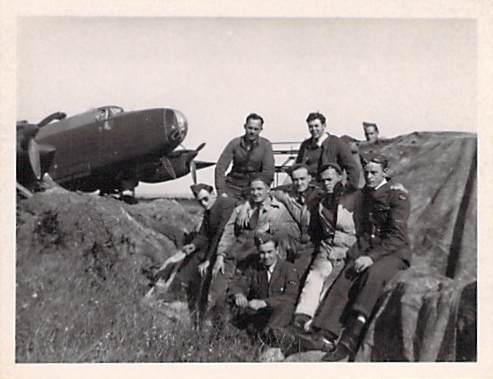
Ground crew. Edward McHugh, wearing overalls, is in the front.
Ground crew.
Ground crew.
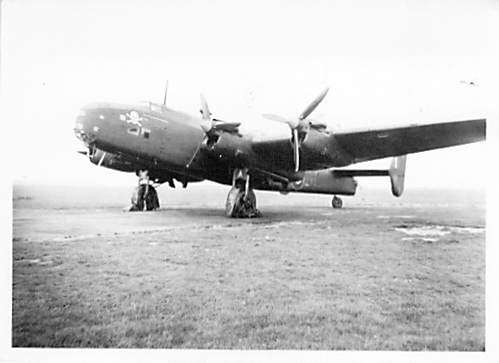
Bomber
Bomber

The Harvester Scheme and the Empire Settlement Act

By Sandra McHugh

Who would have thought that finding the immigration records of my grandparents would have led to me to learn about two British government initiatives designed to promote immigration in the 1920s?  I was looking in the Library and Archives Canada web site and found digitized records of Form 30 that recorded the entry of every immigrant between July 1921 and December 1924.1  I was thrilled to find the form that my grandfather, George Thomas Deakin, signed in August 1923, and the one that my grandmother, Grace Graham Hunter, signed in February 1924.

My grandfather’s form indicated that he came to Canada as part of the Harvester Scheme.  In 1923, Canada had a bumper wheat crop and North America could not provide the labour needed to harvest the crop.  Under the Harvester Scheme, the two major Canadian railway companies entered into an agreement with the British government to transport 12,000 workers out west where they would earn $4.00 per day plus board.  This was considered a successful scheme as 11,871 migrants went out west to work, the harvest was successfully completed, and 80% of the harvesters stayed and were considered “successfully assimilated.”2

My grandmother’s passage was paid by the Empire Settlement Act.  This Act was passed by the British Parliament in 1922 and its purpose was to provide an incentive for migrants to settle in the colonies.  Canada badly needed farm labourers and domestic workers.  At that time, the Canadian government favoured immigrants from Great Britain as a means of ensuring the predominance of British values.  In the early 1920s, it was difficult for Canada to attract immigrants from Great Britain as Britain was enjoying a period of prosperity right after World War I.  Another reason was the prohibitive cost of transatlantic transportation.  Even passage in third class would have been expensive for a farm labourer or a domestic worker.3

My grandmother came to Canada to enter into domestic service as a cook and her destination in Montreal was the government hostel.  Hostels were located in major urban areas across Canada.  These hostels were partially funded by the provinces and immigrants from Great Britain were allowed free dormitory accommodation for 24 hours after their arrival.  Young ladies were looked after by the Superintendent of the hostel and referred to a church worker.  They were also referred to Employment Services of Canada who would find them employment.4

Sources

1 Library and Archives Canada:  http://www.collectionscanada.gc.ca

2 Foster, John Elgin, 1983, The Developing West:  Essays on Canadian History in Honor of Lewis H. Thomas, University of Alberta

3  http://www.pier21.ca/research/immigration-history/empire-settlement-act-1922

4 Crawford, Ruth, 1924, “Canada’s Program for Assimilation”, The Rotarian, May 1924, p. 16

Visiter le Londres de Shakespeare

London in 1561.  Go see this amazing map at Agas map, university of Victoria:  it is a bird’s eyeview of the city, first printed on wooden blocks.  I heard about it on the French CBC radio show, La tête ailleurs.


J’écoutais La tête ailleurs le dimanche 23 février 2014 comme chaque dimanche, à la radio 95.1 fm radio-canada première.  J’ai été très intéressée lorsqu’ils ont parlé de cette carte,imprimée sur des blocs de bois

Détail de la carte d'Agas montrant Londres vers 1561
Détail de la carte d’Agas montrant Londres vers 1561     Photo : Université de Victoria

Une carte de Londres datant de 1561 permet aux internautes de visiter la ville au temps de Shakespeare grâce à Janelle Jenstad, de l’Université de Victoria, en Colombie-Britannique. Notre collaborateur Thomas Leblanc présente cette étonnante expérience dans sa chronique « Le cartographe amateur ».

Dans ses cours sur la littérature anglaise, Janelle Jenstad utilise cette carte de Londres, appeléeCivitas Londinum ou carte d’Agas, pour faire voyager ses étudiants dans les rues, les tavernes, les églises, les cafés et les théâtres du 16e siècle. Ces lieux ont presque tous disparu à la suite du grand incendie de 1666.

La carte d’Agas – Université de Victoria