In the 1871 census in the United Kingdom, categories of disability were added to the census questions. These categories included the deaf and dumb, blind, imbecile or idiot, and lunatic.1 Imbecile, idiot, and lunatic are pejorative terms today but in the 19th century, they were medical terms used to indicate mental health conditions. Idiots and imbeciles had learning disabilities. Lunacy was a term used broadly to denote anyone with a mental illness.2
James Kinnear Orrock, my 2X great-uncle, was committed to the Dundee Royal Lunatic Asylum on December 9, 1888. Superintendent James Rorie declared that he was a pauper and that he was delusional. James’ mother, Mary Watson, my 2X great-grandmother, requested that he be committed.4 Not unlike today, the police were involved. A constable declared that he had been violent and incoherent. It is obvious from the notice of admissions that James was experiencing psychotic episodes.
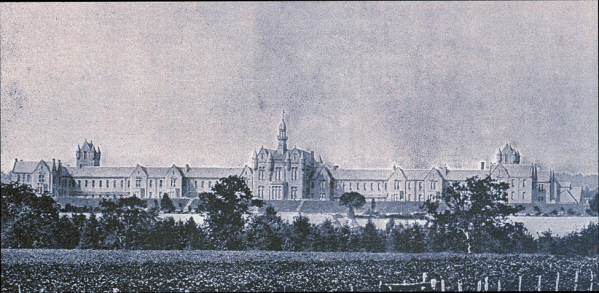
Westgreen Asylum, Liff, Dundee, Scotland in 1897, Westgreen Asylum, Liff, Dundee, Scotland in 1897
James was just 30 when he was admitted to the asylum. Sadly, he remained there until his death in 1930 when he was 72.5 It is distressing that he lived in this institution more than half his life. While little was known about mental illness at the time, the asylum offered the patients safety and hope. Specialist registrar Amy Macaskill states “What is clear is that they wanted to offer a degree of care and protection and containment for people who were causing difficulty at home and were in some level of distress.”6 The asylums cared for people who were depressed, anxious, delusional, as well as those suffering from other conditions such as epilepsy, alcoholism, and syphilis.7
The Dundee Royal Lunatic Asylum had separate quarters for men and women. The pauper wards for men each had a day room, with a number of single rooms with windows overlooking the airing court. The windows provided the only ventilation. The rooms were not heated but there were open fire places in the corridors. There were weaver shops in a separate building where some patients made packing cloth. Male patients also did stone breaking and some worked on the grounds. They were paid with tobacco and beer. There was a billiard room and dancing parties for the patients, attended by both men and women. A chaplain provided services on Sundays.8
When James was admitted, he was certified a pauper lunatic. This certification gave him access to psychiatric care, but it does not necessarily mean that he was a pauper. His admission records indicate that he was a seaman and he could have been gainfully employed. The Board of Governors of the asylums assessed each patient’s finances. If any financial assistance was required, then the patient was declared a pauper. If the patient or their family was assessed as being able to entirely finance their own care, they were classified as private patients. Private patients benefitted from better food, were able to wear their own clothes, and could be discharged if the person paying for their care wanted their discharge. Unfortunately, while a technical and legal label, the term “pauper lunatic” carried a stigma and deterred people from seeking help.9
We have come a long way in our care for those suffering from mental illness since the 19th century. The Lunacy (Scotland) Act 1857 formed mental health law in Scotland from 1857 until 1913. Its purpose was to provide official oversight of mental health institutions and to ensure that they were adequately funded.10
Genealogy Ensemble, ( https://www.genealogyensemble.com) our collaborative blog began almost a decade ago. To this day it is still going strong. Nine ladies and one gentleman participate regularly. We, ladies, write stories about our ancestors, while our friend, Jacques Gagne, compiler and researcher prepares informative databases for posting on our blog.
The ladies meet once a month during the school year to discuss our stories. Over the years as our blog has grown with our published stories, we have come to realize that there are several among us who have common ancestors. Janice Hamilton and Lucy Anglin are cousins, Barb Angus and Sandra McHugh have ancestors in Scotland and Marian Bulford writes about hers in the United Kingdom. Dorothy Nixon, Mary Sutherland, Tracey Arial, and I, along with Jacques Gagne have French Canadian ancestors. Great diversity!
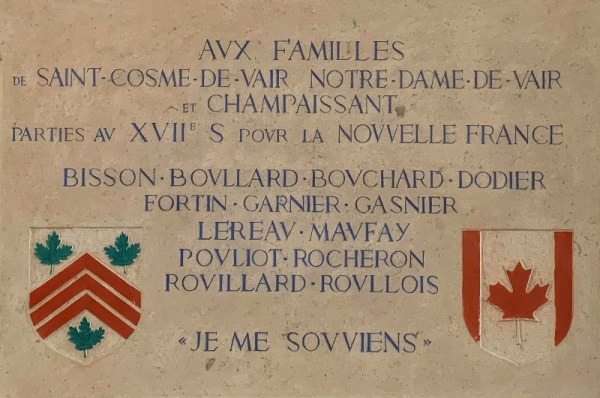
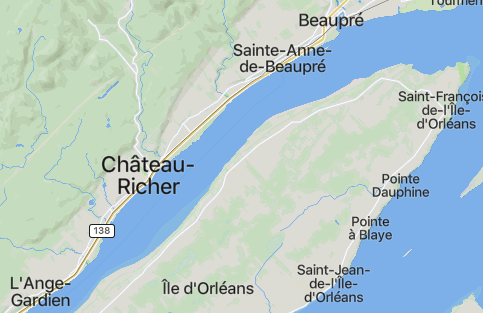
Jacques and I have discussed our ancestors knowing that they came to New France within a few years of each other and settled in the Sainte Anne de Beaupre area.
Initially, being a neophyte writer, and researcher, better skills were required, and completing the branches of our family trees was needed before tackling the relationship between Jacques’ ancestors and mine.
”That time has come”.“
Yes!” We are related going back more than 372 years when Julien Fortin, my 7th great-grandfather, a butcher, who in 1651, followed in the footsteps of Louis Gagne, the baker, Jacques’ great-grandfather who sailed to the New World in 1644 and settled in New France. Both men had occupations that would be welcomed in small communities.
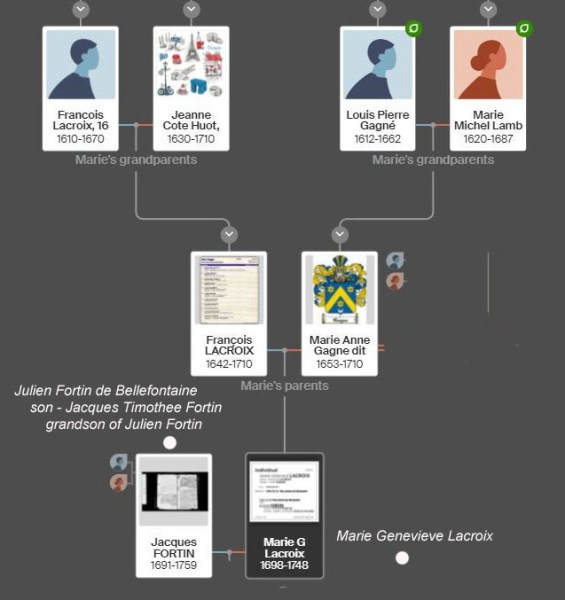
The following graphics and details below tell the story of our ancestors; Jacques’ and mine. I have chosen to use the graphics from my private Ancestry.ca family tree to indicate these connections.
The stories of our 7th Great Grandfathers and their families are intertwined.
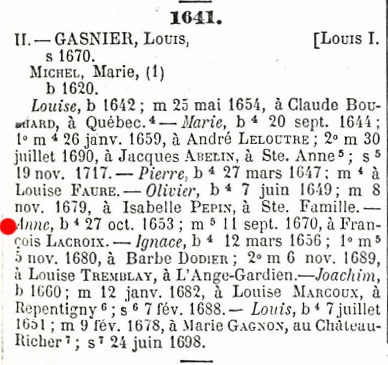
Louis Gagné, his wife Marie Michel, and their daughter Anne Gagné
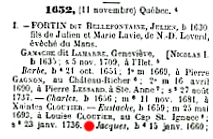
Julien Fortin de Bellefontaine, his wife Geneviève Gamache, and their grandson Jacques Fortin
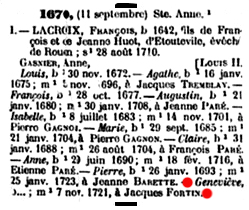
Francois Lacroix, his wife Jeanne Huot, and their son Francois Normand Lacroix
Louis Gagné, Marie, Michel, Julien Fortin, Genevieve Gamache, Francois Lacroix, Jeanne Huot, and their son, Francois Normand were born in France.
The others were born when their families arrived in New France.
Louis Gagné married Marie Michel in France and arrived here in 1644.
In 1651 Julien Fortin arrived and in 1652, married Geneviève Gamaache “ une fille a marier’ who had arrived with her brother, Nicolas Gamache.
Louis Gagné and Julien Fortin along the way eventually found themselves and their families living around Chateau Richer and Saint Anne de Beaupre, east of Quebec City. Both families owned land along the shore of the St. Lawrence River.
GAGNE
FORTIN
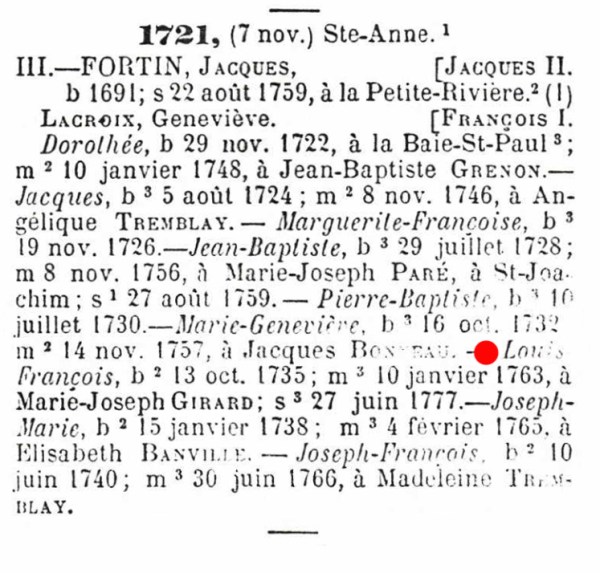
Jacques Fortin is the son of Jacques Timothee Fortin and the grandson of Julien Fortin and Geneviève Gamache.
LACROIX
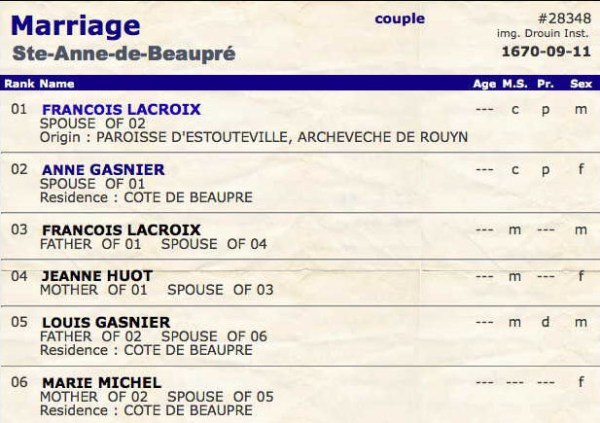
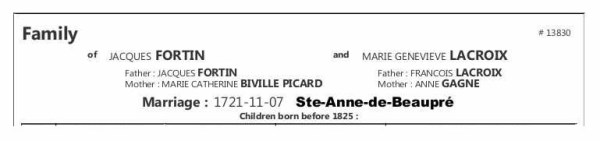
MARRIAGES
François Lacroix was a “domestique.” Servants working in a home, agricultural servants and personal servants.
Any person at the service of another, without specifics. François Lacroix was employed as a domestic for Pierre Gagnon.
Genevieve Lacroix was the daughter of François Lacroix and Anne Gagné.
Louis François Fortin is the son of Jacques Fortin and Geneviève Lacroix
Continuing the relationship chart to the Author
François Xavier Fortin – 3rd gg Montebello, Quebec
Moyse Hypolite Fortin – 2nd gg Rigaud, Quebec
François Evariste Fortin – 1st gg Pembroke, Ontario
Louise Seraphina Fortin’s – my grandmother, Louis Joseph Jodouin – my grandfather Sudbury, Ontario
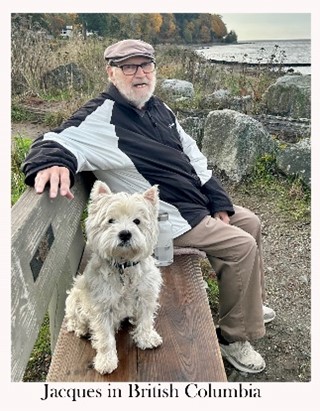
Dedicated to our good friend, Jacques Gagné who has recently moved to British Columbia to be near family. He will continue to grace our blog with his databases. We at Genealogy Ensemble wish him well.
Some branches of family trees flourish while others wither and die out. I have traced one branch of my tree back to Pierre Gadois and Louise Mauger, two of my one thousand and twenty four 8th great-grandparents who arrived in Quebec in 1636. This couple has many thousands of descendants alive today, probably even more. But even though some of my great-grandparents had many children there aren’t the expected number of cousins. I have only seven first cousins while a friend says she has more than fifty. My granddaughter has only two so far.
Barnabé Bruneau and Sophie Marie Prudhomme my two-times great-grandparents had 13 children. They all survived to adulthood. One would have expected that they would all marry and have a number of children. Even if they each had only four children, that would be 52 cousins but that is not what happened.
Barnabe & Sophie Marie Bruneau
These 13 siblings only had 17 children with 10 of the children born to Ismael Bruneau and Ida Girod. Seven of their ten children have descendants alive today. I haven’t counted up how many relatives this is but quite a number. It is hard to keep track of your second and third cousins and those once removed as they marry and have children.
When my great uncle Herbert Bruneau, Ismael’s son, drew up a family tree in the 1960s, he wasn’t able to find a record of any of his cousin’s children. He thought that he and his sibling’s descendants were the only branches.
When I had my DNA analyzed by Ancestry, one of my matches, “Shedmore” rang a bell. Ancestry said he was a 4th – 6th cousin but in fact, his great-grandmother Elmire Bruneau was my great-grandfather Ismael’s sister and so we are third cousins. The tree did have another branch.
Elmire Bruneau Huntley
Elmire, born in St-Constant, Quebec, immigrated to the United States in 1864 and worked in New York City as a French governess. She is said to have met Andrew Washington Huntley around 1867 in the choir of the Plymouth Church in Brooklyn Heights. His family lived in Mooers, New York. He was a veteran of the Civil War having served in a number of units from 1862-1865. This couple moved many times during their marriage according to census records. First to Wells, Minnesota, then to Bridport, Vermont to farm, then Chicago, Illinois where he was a ticket agent on the Electric Railroad and finally to Los Angeles, California. Elmire died there in 1922. Her body accompanied by her daughter Faith, went by train back to Bridport, Vermont where she was buried beside her son Howard.
Andrew Washington Huntley
Howard died at 18 without children. It was her daughter Faith, who married Smith C. Shedrick and had four children, Etta Elmere, Howard S., Helena F. and Howard H. who kept the family tree growing. “Shedmore” turned out to be Etta’s son. He does not have any children but his brother had three children, five grandchildren and some great-grandchildren so Elmire’s Bruneau line lives on. Both Helena and Howard also married so there might be even more twigs on those branches.
Faith and Howard Huntley
It is nice to have cousins. Some might not be close but you do have a family connection. Reach out to your cousins, you never know who you will find or what they may know.
Notes:
All photographs are from Ismael Bruneau and Ida Girod’s albums in the possession of the author.
Year: 1870; Census Place: Clark or Wells, Faribault, Minnesota; Roll: T132_3; Page: 1440 Ancestry.com. 1870 United States Federal Census [database on-line]. Lehi, UT, USA: Ancestry.com Operations, Inc., 2009. Images reproduced by FamilySearch.Accessed Nov 22, 2021.
Year: 1900; Census Place: Chicago Ward 21, Cook, Illinois; Roll: 271; Page: 17; Enumeration District: 0638 Ancestry.com. 1900 United States Federal Census [database on-line]. Lehi, UT, USA: Ancestry.com Operations Inc, 2004. Accessed Mar 29, 2022.
Year: 1910; Census Place: Oak Park, Cook, Illinois; Roll: T624_239; Page: 21b; Enumeration District: 0077; FHL microfilm: 1374252 Ancestry.com. 1910 United States Federal Census [database on-line]. Lehi, UT, USA: Ancestry.com Operations Inc, 2006. AccessedNov 22, 2021.
Year: 1920; Census Place: Los Angeles Assembly District 73, Los Angeles, California; Roll: T625_114; Page: 17A; Enumeration District: 393 Ancestry.com. 1920 United States Federal Census [database on-line]. Provo, UT, USA: Ancestry.com Operations, Inc., 2010. Images reproduced by FamilySearch. Accessed Nov 22, 2021.
“Obviously a club does not change from a dump of second hand books to a pan-Malaysia institution without care and attention.” Malaya, 1966. British Malaysia Association. Tribute to Dorothy Nixon, former secretary of the Kuala Lumpur Book
Dorothy Forster Nixon 1895-1971
One morning not long ago, I received an email from a young woman in Malaysia. She wanted to know about my grandmother, also Dorothy Nixon, who had been ‘secretary’ of the Kuala Lumpur Book Club back in the day. The woman was a librarian-in-training and she told me that “Granny” was a great inspiration to her.
I wasn’t at all surprised because about ten years earlier I had received a similar email from the former Director of the Malaysian National Library. This illustrious person was researching my grandmother’s life as a retirement project.
It seems that my County Durham born grandmother, Dorothy Forster, who moved to Malaya in 1921 to marry Yorkshireman Robert Nixon1, a rubber planter, is something of a legend in modern Malaysia, at least among librarians.
In 2003, sheer serendipity led me to start my own research into my colonial grandmother. I was a prolific freelance writer back then and it was my habit to enter my name “Dorothy Nixon” into Internet search engines to check out where my essays and articles may have landed.
On this occasion, I stumbled upon a mention of another Dorothy Nixon, my father’s mother. It was on Amazon.co.uk in a review of a book by historian Margaret Shennan about Colonial Malaya “Out in the Midday Sun”. In the book Shennan mentions my grandmother but only once and only in connection with an ugly incident at Changi internment camp during WWII. She gets her name wrong, too: Dorothy Dixon. The reviewer, a Mr. Smith, corrected this typo and described my grandmother as ‘the endlessly helpful secretary of the Kuala Lumpur Book Club.”
I had met Dorothy only once in 1967 at 12 years old when she came to visit us in Montreal. She was cranky and super-critical of all things Canadian – especially of my ‘shrill’ playmates skipping or biking out on our Snowdon area street – and we did not hit it off at all, so you can imagine how confused I was by this description of her.
So, I tracked down Mr. Smith, a former rubber planter. He told me all about the KL Book Club’s subscription arm where book-boxes were assembled and sent out to people holed up in the jungle in their far-away plantations, a service much appreciated during the 1950’s Communist Emergency.
He further described my grandmother as having a fine and nuanced understanding of literature. She always studied the members’ tastes, he said, in order to recommend books to them.
I eventually wrote a story about “Granny” that got published in the Globe and Mail. That’s how the Director knew to contact me. In return for my help this nice lady mailed me an article from the Malaysia Library Review 1952 co-written by my grandmother about history of the KLBC: “The Kuala Lumpur Book Club: A Pioneer.”
The article explains how the Book Club started out as an informal back-room book exchange for Brits and evolved over the decades into a full-fledged government funded community resource, housed in a two story air-conditioned art deco building near the famed Royal Selangor Club in Kuala Lumpur.
Between the wars there were four libraries in Malaya, including the KLBC and the Raffles Library in Singapore. Although these places were set up for Britishers, members were debating whether it was time to allow locals to join, if only government officials.
The newspaper record 2 reveals that my grandmother, who worked at the Book Club from 1937 to 1966, was instrumental in opening up the library to Asians, male and female, especially students. This is likely why she is so admired today in Malaysia.
In the 1930’s and 40’s, the KLBC had a reputation among some Colonials as a light-weight institution that provided low-brow literature to rubber planters’ wives, who were bored to death with servants to do everything and their school-age children away in England.3
Dorothy, who attended a co-educational Quaker school in England, did indeed have many Tamil and Chinese servants at her husband’s Selangor rubber estate, some of whom watched over my father until he was sent away to school in Cumberland at five years old.
She did, indeed, attend many drunken garden parties and polo matches in the 20’s and 30’s – but eventually during the Great Depression she found something more important to do. For a smidge under three decades she worked at the Book Club 7 days a week, 9 am to 7 pm. In the evening she strolled over to the Royal Selangor Club (in the company of her male friend, an eminent lawmaker) where she scored their cricket games!
Popular Australian author Di Morrissey includes a bit about my grandmother in her 2010 novel.
Today, if you google “Dorothy Nixon” and “Kuala Lumpur Book Club” many many MANY citations will come up from scholars and journalists thanking my grandmother for help researching their books.
These authors are especially grateful for access to her personal collection of Malaysiana. Apparently, my grandmother was an expert in all things Malayan, a real scholar herself who was always invited to Prime Minister Tunku Abdul Rahman’s birthday bashes, and who at mid-20th century repeatedly made the Malaysia Who’s Who.
So, not lazy at all
Video about Malaya in 1952 with images of my Grandmother scoring cricket at the end.
END
1) Men working in Malayan plantations were encouraged (forced) by their Companies to go home to find a British wife even if they were happy with other arrangements. My grandfather, Robert, found Dorothy Forster, the daughter of an itinerant Primitive Methodist Preacher who had circulated through his hometown of Helmsley, North Yorkshire in 1912-1914. When she arrived in Malaya, late 1921, Dorothy discovered Robert had an Asian ‘mistress’ as they said back then. Upon his marriage, he did not give her up,apparently. (Re: my Aunt Denise.) She got pregnant with my father immediately.
2. The Malaysia Straits Times is online with a database and many articles citing my grandmother, some with photos, most of them in connection with the Cricket. This link to an article, written in 1966, is a tribute to her work as KL Book Club Librarian and in Montreal in 1967 when she visited us she wasted no time in showing it to my mother. She was obviously in search of respect from us. Indeed, judging from her ‘diary’ searching for respect seems to have been her life’s goal.
3) British Colonial wives were much looked down up in rubber country, described as undeserving parvenus, women who would be sweeping out a three bedroom cottage back home in Somerset were they not in Malaya lazing in their airy bungalows, waited on hand-and-foot by servants. Yet, these Colonial Wives were given little to do and forbidden to meddle in local affairs in fear they would cause scandal or upset the entrenched hierarchy of the British, Malays, Chinese Tamils. The British believed it was necessary to send their children away to England as soon as possible for schooling and to avoid their contracting a tropical illness. By the time my father’s younger brother was born, he got to go to a British school in Malaya set up in the hills, considered a healthier milieu.
with research from the Riverside Historical Society
updated Nov. 11, 2024
The New Map of the Consolidated City of Philadelphia, published in 1855 by R.L. Barnes. In 1854, various small, incorporated towns located outside the original old City of Philadelphia became incorporated into the City of Philadelphia. Now Philadelphia was not only a city but also known as the County of Philadelphia. Image courtesy RHS (see note below)
Occasionally someone who knows more about one of my ancestors than I do finds my family history blog and gets in touch. That is what happened this summer when Herman Maurer, a member of the Riverside Historical Society in New Jersey, reached out to tell me that my ancestor had founded his town.
Three years ago, Herman wrote a book called Progress to Riverside: A Story of Our Town’s Past to mark Riverside Township’s 125th anniversary. In the course of his research, he ran across 19th century Philadelphia real estate agent Duncan M. Mitcheson.1
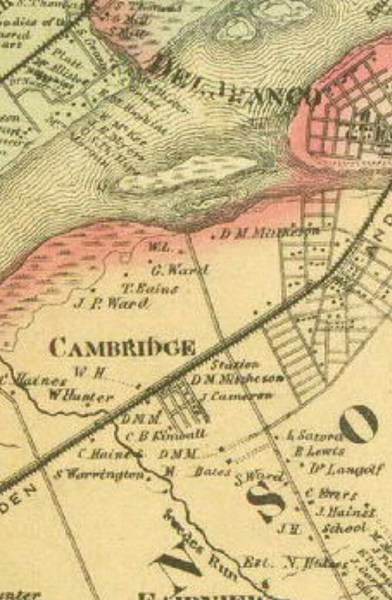
Riverside, New Jersey is a suburban township located across the Delaware River from Philadelphia. In the early 1850s, Duncan and his brother McGregor J. Mitcheson purchased property next to Riverside and subdivided it into cottage lots. This area became the village of Cambridge. Duncan planned the street layout, including today’s busy Chester Avenue, Front Street, Brown, Main and Arch Streets still carry the names that Duncan chose 170 years ago.
Numerous Cambridge deed transfers recorded in the local county clerk’s office between the 1850s and mid-1880s, with the signatures of both Mitcheson brothers on them, convinced Herman that Duncan and his brother McGregor were the primary developers of the village of Cambridge.
This was a surprise to me since I knew very little about Duncan. Now it became clear that he was a successful businessman who embraced modern ideas at a time of rapid changes in society.
Duncan McGregor Mitcheson (1827-1904) was the middle child of Robert Mitcheson and Mary Frances McGregor. Born in northern England and in Scotland, they were married in Philadelphia around 1818. Duncan’s older sister, Catharine Mitcheson Bagg, was my two-times great-grandmother.
The Mitcheson family lived in Spring Garden, in the northern part of Philadelphia. The family’s home was large and, after their parents died around 1860, Duncan’s older brother, Reverend Robert M. Mitcheson, and his wife and children lived there. Duncan lived with them until Robert died in 1877. In the 1880 census, when he was age 53, Duncan appears to have been staying in a rooming house. Later Philadelphia city directories show that he lived on Spruce Street, near the old part of the city, and had an office nearby on Walnut Street. He never married. Like his two brothers, Duncan attended the University of Pennsylvania, but unlike them, he did not graduate.3 He dropped out in 1842, at the end of his second year. University attendance was rare then: there were only 26 students, all male, in Duncan’s freshman class.
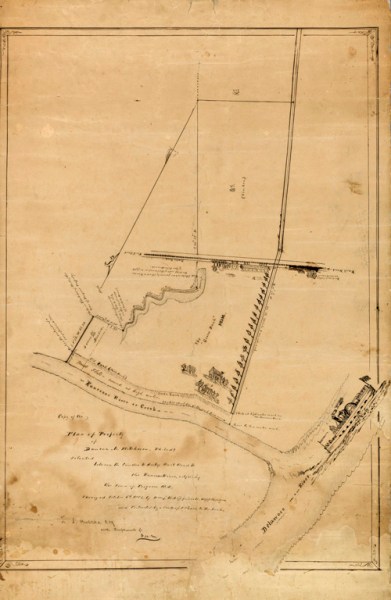
Map, dated Oct. 6, 1853, showing Duncan’s Green Bank Farm overlooking Roncocas Creek and the Delaware River. Duncan sent this map to another Philadelphia real estate developer, Samuel Bechtold Jr., as a complimentary copy. Bechtold was the developer of Progress (now known as Riverside). This map has recently been conserved.
Duncan began his career as a merchant, but an 1861 Pennsylvania business directory identified him as a conveyancer: someone who draws up deeds and leases for property transfers. He was listed as a real estate agent for most of his career.
The Riverside Historical Society’s research revealed that Duncan invested $5000 in land in New Jersey, with an initial purchase of 80 acres, in 1853. He and his brother then formed a real estate partnership to develop the village of Cambridge. An advertisement for these building lots appeared in the Philadelphia newspaper Public Ledger on March 24, 1853. The lots were “located on the Camden and Amboy Railroad, about one mile below Rancocas Creek and the Town of Progress and within a quarter of a mile of the River Delaware, upon a very healthy, dry and level site that will require no filling up, nor grading and can be reached in about half an hour from the Walnut Street Wharf.”
The lots were advertised at the “remarkably low rates” of $25 and $30 each. The $30 lots were 20 feet by 100 feet, while the $25 lots were slightly smaller. A few larger lots were available at $60 and $100 each.
On November 4, 1854, another ad in the Public Ledger noted that the Cambridge lots were near the water, opposite the splendid riverside mansions of Philadelphia’s 23rd Ward. Duncan also reassured potential buyers that the lots were a safe investment. “From the continued increase of the population of Philadelphia, and the consequent increased demand for Houses and Lots, and as well as from the fact that thousands now living in this city could not only have more room, enjoy better health, but live less expensively at Cambridge.”
Duncan also owned farmland on three sides of Cambridge, and he was one of the larger landowners in the town of Progress in the 1850s. In January, 1854 he purchased 180 acres of vacant land for $15,000. That property, located between Rancocas Creek, the railroad, Chester Avenue and Tar Kiln Run, was known as Green Bank Farm, or Duncan M. Mitcheson’s Model Farm.
This was a period of technological and scientific innovation. The Great Exhibition, held in London, England in 1851, had showcased developments in many fields, including agriculture. These advances were badly needed: food production had to become more efficient to feed growing urban populations. Duncan’s model farm may have featured agricultural innovations such as a McCormick reaper that could rapidly harvest large quantities of crops. And perhaps Duncan was a member of the Model Farm Association, formed in 1860 to establish a model farm, botanic garden and agricultural school in Pennsylvania.
In the spring of 1854, Duncan purchased another 80 acres of vacant land for $6000, extending Green Bank Farm past the railroad tracks. In addition, he, or possibly his brother, owned a nearby property named Rob Roy Farm, after the famous Scottish outlaw and folk hero Rob Roy McGregor.
How the Mitcheson brothers acquired the funds to buy so much land is not known, but their father owned properties in England and in Philadelphia. Robert Mitcheson senior died in 1859 and in his will, he forgave an $8000 mortgage he held on Duncan’s farm.
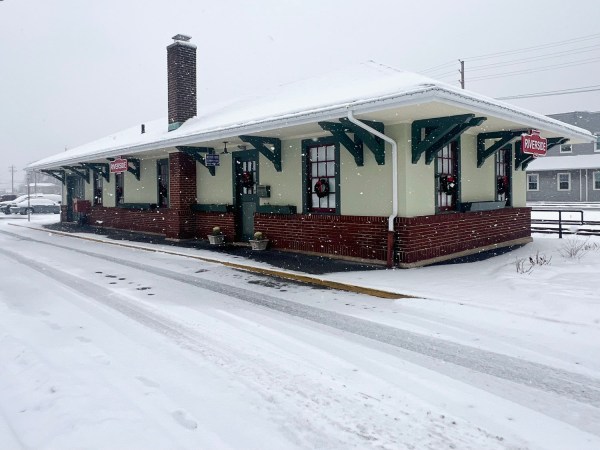
Riverside Train Station. photo by Herman Maurer
In 1859, the Drake Well, the first commercial oil well in the U.S., was drilled in north-western Pennsylvania. That well sparked the first petroleum boom in the United States, creating a wave of investment in drilling, refining and marketing. Duncan saw an opportunity to make money. In February, 1865 he placed the following ad in the Philadelphia Inquirer: “OIL LANDS FOR SALE—located in Venango and Clarion Counties (Pennsylvania). Companies are about to be formed, secure choice lands by addressing or writing to: Duncan M. Mitcheson, real estate office at the northeast corner of Fourth and Walnut Streets, Philadelphia. Also 1,000, 20,000 and 50,000 acres in West Virginia.”
He placed another ad a month later: “CHOICE Oil Tract…Eighty Acres. For sale in fee simple lots situated on the Bennyhoff Creek, Venango County, of which the greater part is boring grounds. This eighty-acre tract will be divided to suit and sold fee simple, with unquestionable titles…”
In July, 1866 Duncan advertised another speculative deal in the Philadelphia Inquirer: 1250 interests, valued at $100 each, in The Virginia Gold Mining Company of Colorado. The company’s property was located near Central City, Colorado, founded in 1859 during the Pike’s Peak Gold Rush.
In 1893, when he was 70 years old, Duncan sold almost 1000 vacant building lots in Cambridge for the sum of one dollar to his deceased brother McGregor’s two grown children, Joseph McGregor Mitcheson and Mary Frances Mitcheson. During the first two decades of the 20th century, they sold many of the Cambridge properties to families who had recently emigrated from Poland.
Joseph, a bachelor, was a Philadelphia lawyer and a commander in the U.S. naval reserve. Mary Frances married accountant Arthur L. Nunns in 1904. The couple were childless and when she died in 1959, at age 84, she gave a million dollars to the Protestant Episcopal Diocese of Pennsylvania. It was the largest bequest it had ever received.4 During my 2013 visit to Philadelphia, the head of St. James School, a tuition-free, private Episcopalian middle school, told me that gift Is still benefiting the community.
As for Duncan, the 1900 census showed that he had retired. He died in 1904 and was buried, along with his parents and other family members, at St. James the Less Episcopal Church Cemetery in Philadelphia.
Note: The images of both maps were provided by the Riverside Historical Society. The Green Bank Farm map was recently conserved through a 2023 grant funded by the Burlington County Board of Commissioners.
Herman Maurer, Progress to Riverside: A Story of Our Town’s Past, Riverside Historical Society Inc. 2020, p. 13.
Philadelphia, Pennsylvania, City Directory 1889, entry for Mitcheson, Duncan M., Ancestry.com, citing U.S. City Directories, 1822-1995 (online database), accessed Oct. 1, 2024.
University of Pennsylvania, 1894. entry for Duncan MacGregor Mitcheson. Ancestry.com, citing US. College Student Lists, 1763-1924 (online database), accessed Oct. 1, 2024.
My family history includes, like most peoples’ history, twists and turns and coincidences that sometimes defy belief. In the 1970s, my family and I were living in Geneva, Switzerland, when we had a visit from the ‘Mormons’ doing their proselytizing door to door. Because we were in a non-English speaking environment and they were from the USA, we invited them in. Over the course of a few months, we became great friends and we decided to explore the church’s history with them.
One day, whilst talking to them, they mentioned Salt Lake City as the ‘Zion’ of the church, and how the early Pioneers had left their homes and families to trek across the US to get to Salt Lake City, Utah. That name Salt Lake City brought back a memory. When I was 11 years old, I lived with my Grandparents for a few years and my Grandfather used to ask me to go to the post office to post his letter to a Salt Lake City address. I remember it so well because in the 1950s Air Mail letters were treated differently from normal mail, and I had to have this important missive weighed and stamped before it could be posted, so it made quite an impression. I remember thinking ‘where was Salt Lake City, and why and who was my Grandfather writing to? Of course, by the time I arrived home again, the questions were forgotten.
Now, years later in the 1970’s the question arose again, so I called my Grandfather Percival Victor O’Bray (The English branch spells it with an apostrophe unlike the USA branch which spells it without) and asked him about the letters and to whom he had been writing.
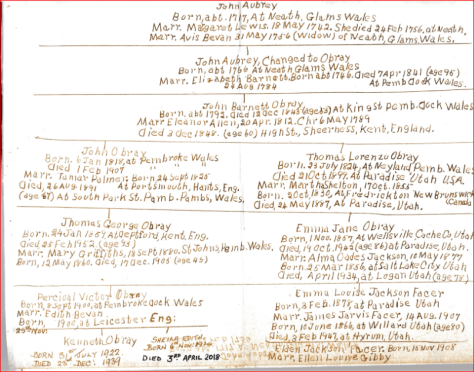
He replied ‘Well, you know the Americans, they are always doing their genealogy and one day, I received this letter from a lady, telling me I was related to her, I was a distant third cousin’ I questioned him further and he said they had corresponded for a number of years, and at one point, she had sent him a ‘Family Tree’ all handwritten then, of course, and started in 1717 to my grandfather’s day. I was very excited by this and asked him, if, when we next came home could I see the ‘Family Tree and read the letters. He replied that I could have the letters and the Family Tree, he had no further use for them, and he would post them to me.
The Family Tree was sent to my Gramps by his third cousin Ellen Louise Gibby Facer in Utah in the early 1950s.
Starting Family Genealogy
I think that started my interest in genealogy and research. The next time I went ‘home’ I questioned my grandparents and family at length, recorded their voices and wrote out the names and birth dates of the family. My Grandparents – who threw nothing out – gave me some marvellous 1800s photos of family members. On the back, I wrote who these people were, most important because shortly after that, we moved to Canada, and genealogy was put on the back burner in a box, for a number of years.
32 years later a renewed interest came when we met some UK friends again, and members of the Church of Latter Day Saints or Mormons. We talked about genealogy, but with young families and busy lives, that was all we did, talked about it, but, never really did any more research. About 8 years ago, we decided the time had come, and we met and researched together. Our friends invited us to their church’s “Centre of Family History” in LaSalle, Quebec, Canada to do some real research with them.
Finding Family Skeletons
I found the Family History Centre a wonderful place. Free to anyone at certain times it has most of the current genealogy websites online open for free. Books, microfiche and copies of records can be researched, with help from church members if needed. It was a quiet peaceful place and we got to spend some time with friends, have lunch and do some family history together. Our friends were a great help, as the Church recommends that its members do family history so they are very experienced. I recalled all the information I had amassed in the 1970s and had no idea how to put it all together. Now I had a chance to do that. I was pleased with how I had named all the photos as it was a wonderful tool to enable me to search online for family members.
I decided to start with the mysterious ‘Family Tree’ from the USA. It was so exciting to be able to put in full names, birth dates and areas to search. I was grateful to the previous Missionaries who advised us to label and date all information as we received it. A really great tip!
My Grandfather was born in Pembroke Dock, Wales and his Great-Grandfather had, as was usual, a large family. Two of those sons, my Grandfathers’ Uncles, Thomas and Samuel OBray became Mormons and left Wales for ‘Zion’ Salt Lake City in 1854.
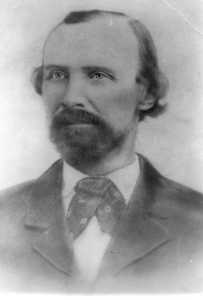
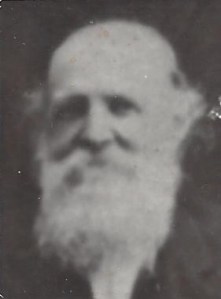
This photo, which appears all over FamilySearch.org, was included in letters to my Gramps from his third cousin in Utah.
Samuel William OBray
(Portrait found on Familysearch.org)
That was a surprise for me, considering the friends and interest I have had in the church over the years, a case of my Great Uncles having “been there, done that’ so I was able to trace their long and arduous journey across the plains to Utah through Mormon church records. Our friends were very excited for us, as this was a great honour in the history of the church, to have family that had made the arduous and terrible trip to reach their ‘Zion’.
Further Research
Through the Welsh Mormon History page, on FamilySearch.org I found that Thomas, was born in Wales in 1824 and he joined the Mormon church when he was 13 years old. Eight years later, he began to preach the gospel in England then Italy, France and Germany. Later, he went to Norway and Denmark. In Malta, he raised up a church branch. In 1854 Thomas emigrated to the US. The ship stopped in New Brunswick, Canada and picked up another family. Thomas joined that family and met Louisa. They continued the journey on their way to St. Louis Missouri to pick up supplies, wagons, food, and animals for the three-month journey across the plains of the United States.
In June at Fort Leavenworth, Kansas Thomas and Louisa were married. During that journey, with her brother Albert and her sister Martha, Louisa died of cholera and was buried en route to Salt Lake City on the plains, in an unmarked grave, a bride of three weeks. Thomas continued on with the family and arrived in Salt Lake City in September 1854.
A Few Surprises
In October 1854, Thomas married Louisa’s sister, Martha. Five children were born to Thomas and Martha. In 1857 Thomas married Carolyn and had 9 children with her. In 1864 Thomas married Ruth and they had 14 children together. The women and children, according to Censuses of the time, lived together in separate houses and were called ‘Housekeepers” Thomas lived with Martha and their children.
Altogether Thomas had 28 children and yes, my Great Grand Uncle had ‘plural marriages’! At that time, it was a tenet of the Church. Martha died in 1887 and a year after her death Thomas was sentenced to the Utah penitentiary for 11 months for ‘Unlawful cohabitation. He was sentenced a second time a year later and served from April to August 1890.
Following a revelation to the church Prophet, the practice of plural marriage was instituted among Church members in the early 1840s however; from the 1860s to the 1880s, the United States government passed laws to make this religious practice illegal. These laws were eventually upheld by the U.S. Supreme Court. At that time, the President of the church, Wilford Woodruff issued a Manifesto, which was accepted by the Church as authoritative and binding on October 6, 1890. This led to the end of the practice of plural marriage in the Church.
Decedents Of The Family
My Great Grand Uncle was asked by the church to explore further land outside of Salt Lake City and to build other settlements, and so he moved his families to ‘Cache’ (secret) County and founded a small place called “Paradise’ just outside of Salt Lake City. Thomas homesteaded the site where the church farm is now located.
In 2014, I visited this small town. It was full of my ancestors. Even the local cafe knew the name of my Grandfather and his Uncles. The Paradise Cemetery was a beautiful place, calm and serene and I found my Uncles and their families. It may sound strange, but I ‘introduced’ myself to them, and told them of their ancestor who wrote to my Grandfather, all those years ago, and how I now ended up here, in Paradise. I hope to go back again one day.
The cemetery contained all of the family who were ‘Pioneers’ and had crossed the plains to get to ‘Zion’ It was very moving to see my two Grand Uncles with special plates affixed to their memorial stones to indicate that they were original Pioneers. Great Grand Uncle Thomas died in Paradise, Utah on 21st October 1899 and Great Grand Uncle Samuel died in Paradise, Utah on 5th June 1910.
Meanwhile, I continue my research and find surprises every day. I would love to contact any members of Ellen Louise Gibby Facer’s family. She, who wrote to my Gramps, all those years ago! I still have her letters and Christmas cards.
My father, Edward McHugh, didn’t really talk about his family’s trip of a lifetime. After all, Dad wasn’t even born yet. But it must have been discussed by everyone when he was a boy. In 1911, the first member of the family, Mary Ann McHugh, moved from Dundee, Scotland to Montreal.
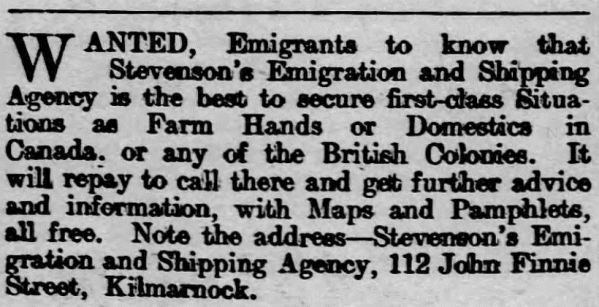
At the time, booking agents in the United Kingdom advertised and recruited potential immigrants to Canada. There was an acute need of domestic help and agricultural workers. Between 1890 and 1920, Canada experienced its third wave of immigration and its peak was between 1911 and 1913, just before World War I.1 The following type of advertisement was common in the newspapers.2
Booking agent advertisement
Maybe one of these advertisements gave the McHugh family the idea to emigrate to Canada. Or maybe Mary was ready for an adventure. She was just 21 when she disembarked from the SS Grampian that had left Glasgow on June 24, 1911 and arrived in Quebec City on July 9, 1911. She would have had a medical exam when she arrived to ensure that she was in good health and did not have an infectious disease. Conditions for immigration to the colonies were well known in the United Kingdom. The February 11, 1911 edition of the Hamilton Observer, in its article, Canadian Notes, People Prohibited, details the reason some potential immigrants could expect to be refused by Canada. The article explains the booking agent’s liability for the immigrants that arrived in Canada for a period of three years following their arrival:
“The following classes of people are prohibited from landing … feeble minded, idiotic, insane, or who have been insane within five years, afflicted with any loathsome, contagious, or infectious disease; anyone who is a pauper, who is destitute, who is a professional beggar or vagrant.”3
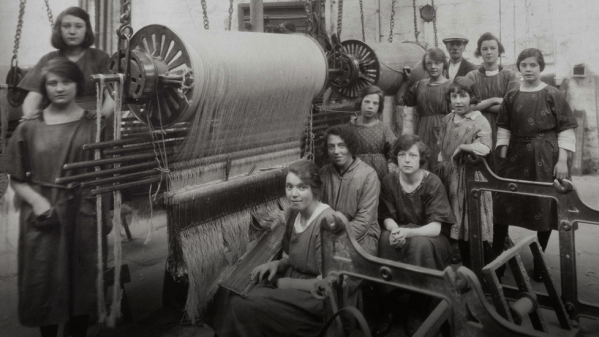
All of the members of the McHugh family worked in the jute mills in Dundee. The 1911 census indicates Mary was a jute weaver, which probably meant that she operated a jute weaving machine.4 She lived with her mother, Sarah Jane McLaughlin, and her brothers, Edward and Francis. They lived at 1 Tait Lane, Dundee. Her other brother, Thomas, my grandfather, lived with his wife and seven children at 9 Tait Lane.
The picture below shows the jute weaving machine.5
Mary must have been satisfied with her new life in Montreal, Quebec. Within a year, her mother and her two brothers, along with my grandfather, had followed her to Canada. Six months later, my grandmother, Elsie Orrock, and her seven children joined her husband, Thomas, in Montreal.
The McHughs lived close together in Dundee and they also lived close together in Verdun, Quebec. While I will never know for sure why they decided to emigrate, I can guess that they wanted a life that was not as hard as the one working in the jute mills. There are a few clues that this was not a spur of a moment decision but a planned family decision.
Mary left first and, if it did not suit her to live in Canada, she would have been able to easily return to Dundee. Her mother and brothers were still there. By the time her mother emigrated, along with her three sons, they arrived with $150 CAD, about $4,750 in today’s dollars. Browsing through the passenger lists, I can see that they had a lot more money than many of their fellow passengers. 6 They were not a rich family, so this amount of money would have taken some time to save up.
Coincidentally my grandfather joined the Freemasons in 1910 and achieved a Master Mason diploma and a Mark Mason diploma.7 By that time, he already had six children. He worked long hours in the jute mill, including Saturdays. Why would he join the masons when he was already a very busy man providing for his family, plus taking care of his widowed mother, and his siblings who still lived at home? There is no evidence that he ever joined the masons when he arrived in Canada. I believe that it is possible that he joined the masons to in case he needed the contacts to find employment. As he quickly found work, his busy family life prevented him from pursuing his membership in the masons.
Only one of my grandfather’s siblings stayed in Scotland, Sarah Jane McHugh. She was not living with the other McHughs at the time of the 1911 census. But she remained close to the family. Surprisingly, she travelled to Montreal to be a witness at her brother’s wedding at the Notre Dame Basilica in Montreal on May 8, 1913.8 That would have been quite a trip for Sarah Jane to make.
Charlotte Haines (1773-1851) was only ten years old when the breakaway 13 colonies won the War of Independence in April 1783. Those residing in the new United States of America, who had remained loyal to the British Crown, were persecuted and forced out of their homes and their belongings seized. Chaos reigned everywhere and families were torn apart.
One fateful day around this time, young Charlotte sneaked away to visit her British Loyalist cousins, against the expressed wishes of her American Patriot stepfatheri. Upon her return, standing outside the front door, he refused her entry back into the family home.
Charlotte was my three-times great-grandmother. Her daughter Margaret Ann Peters married Daniel Hanington and their son James Peters Hanington was my grandmother’s father.
The British government came to the aid of these Loyalists and arranged for transportation for those who wished to leave the new America. Charlotte’s grandparents, Gilbert and Anna Pugsley, rescued young Charlotte and her brother David. Together they sailed from New York for ten days on the “Jason”ii, with 124 other “refugees” as part of the final large scale evacuation and landed in New Brunswick (then still part of Nova Scotia) in October 1783…just in time for the brutally cold winter.
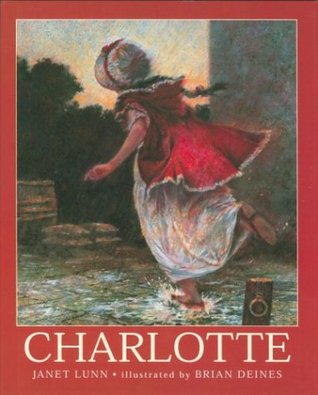
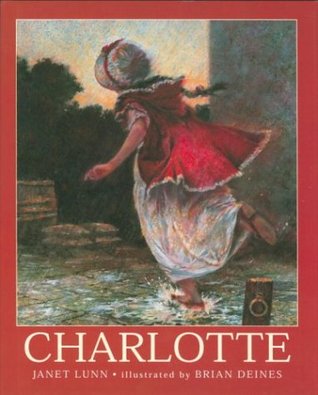
Charlotte has been the favourite subject of a couple of books and several folktales. She warranted her own chapter in “Pioneer Profiles of New Brunswick Settlers”iii and is the main character in a children’s book titled “Charlotte”iv. One folktale claimed that she was the first Loyalist to set foot ashore (not true) and in doing so, she lost her “slipper” in the mud (possibly). The matching slipper (unlikely) was donated to the New Brunswick Museum years later, however, it looks somewhat too big and stylish for a ten-year old girl. But they make wonderful stories and fully recognize young Charlotte as one of the first “petticoat pioneers” of New Brunswick.
Children’s story about Charlotte Haines by Janet Lunn
Fourteen thousand Loyalists established a new settlement in 1783 along the St. John River and shortly afterwards they petitioned for their own colony. In 1784, Great Britain granted their request and divided Nova Scotia into two — New Brunswick and Nova Scotia. The Loyalists, who made up 90 percent of the population of New Brunswick, became a separate colony with its capital, Fredericton, 90 miles upriver from Saint John.
The Loyalists and their children were entitled to free land once they provided the necessary proof. Charlotte, as the biological daughter of John Haines, a Loyalist on record, appears in 1786 documentation as one of the grantees of 84 lots on Long Island, Queen’s County, along with several other prominent Loyalists – although she was only 13 at the time. I can imagine her grandfather Pugsley nodding discreetly in her direction as he looked after her interests.
For their first three years, the British provided the Loyalists with a few simple tools, blankets, material for clothing and seeds for wheat, peas, corn and potatoes. The rations of basic food supplied by the British supplemented the abundance of game and fish available to them in the forest and streams. Most lived in tents on dirt floors until they were able to build primitive log cabins. Tree by tree, stump by stump, the fertile uplands were cleared to widen the fields making them ready for crops.
The Loyalists kept meaningful social contacts through various community events. Neighbours organized “frolics” whereby the men would work together to clear land, move rocks, build a barn or complete some other task which proved impossible for one or two people. At the same time, the women prepared meals and the children had a chance to play with friends. Women also held their own frolics to make quilts, card wool or shell corn. These Loyalist neighbours were dependent on one another in times of sickness, accidents and childbirth and supported one another at gatherings for weddings, funerals and church services.
Perhaps Charlotte met her future husband at one of these popular frolics. At 17, Charlotte married William Peters (also from a United Empire Loyalist family) in 1791 in Gagetown. Soon afterwards, the happy couple moved downriver, settled in Hampstead and built a home where the St. John River widens to a magnificent view.
At that time, there existed only ten miles of roadway in the whole province and another 20 years would pass before there would be an 82-mile long road linking Fredericton and Saint John. However, in the meantime, the river served as a “highway” enabling the transport of passengers and necessary goods between the two cities.
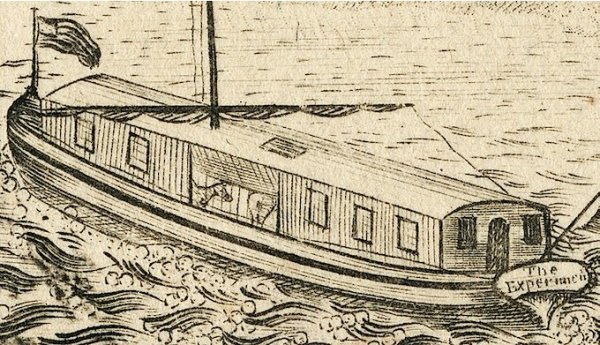
When the steamboats first chugged noisily up the river in 1816, William decided to compete with them and he built a 100-foot long side wheeler powered by 12 horses walking up and down the deck and propelling the boat along.
A drawing of The Experiment – an example of another horse powered side wheeler.
William actively pursued his interest in politics, and as the first representative of Queen’s County in the New Brunswick Legislature, he spent a lot of time in Fredericton (50 miles away) attending the sessions of Parliament.
Meanwhile, back home, Charlotte managed their entire land-holding on her own. Eventually they had 15 children, five sons and ten daughters. She bore her last child at 50 years old according to the baptismal certificate. They all survived except their son John who drowned at 21 attempting to save another man’s life.
Not only did she clothe, feed and care for them all (including the servants) but also provided much of their early education as well. On Saturday evenings in the summer, the fiddlers would play rollicking tunes and the tapping of dancing feet could be heard in big houses and cabins alike. When winter shut down the fields, and with food plentifully stored in the cellar, the spinning wheels would begin to hum during those coldest months.
By the time William died in 1836, they had recently relocated to Woodstock (100 miles upriver from Hampstead) with two of their younger children, James and Caroline. Their older children were married with homes of their own scattered along the St. John River Valley. Around this time, she wrote a letterv to her daughter Susan, Mrs. Thomas Tilley:
I take my pen to address a few lines to you to inquire after the health of you and all of your family. The grate distance we are from you prevents me from hearing. You heard of the death of your Father at Woodstock.
Charlotte described William’s death in some detail and then continued:
I hop [sic] this may find you all well. I am not well. My head troubles me very much. There is not one day that it don’t ake [sic] so that I cant hardly stir. My cough is something better. James and Caroline is well and harty [sic] and quite contented hear. I like the place and if your Father has lived and been hear to see to it we might have made a good living. It is pleasant and a good place for business but we must try to due the best we can. The place is out of repair and soon would have been a common if we had not come hear. I should be glad if my friends was near to us. I don’t know as ever I shall see you all again. I thought to have gon [sic]to see you all before I came up hear but I was so sick that I could not go down to see you. James and Caroline wishes to be remembered to you and all the family. I desire to be remembered to Thomas and the children and tel them I should be glad to see them and you. Give my love to all inquiring friends and except a share for yourself. This from you afectionet [sic] Mother, Charlotte Peters
Although she had her share of aches and pains at that time, she lived another 15 years and ultimately enjoyed the blessing of 111 grandchildren.
She had a powerful influence over all her family for she believed that their heritage carried a great responsibility to others. When the grandchildren would visit, her graceful hands were always busy winding yarn or knitting a sock while patiently answering their questions and reciting passages from the bible.
One of her grandchildren, Samuel Leonard Tilley, later known as Sir Leonard, served as Premier of New Brunswick and went on to became one of the Fathers of Confederation.
Sir Samuel Leonard Tilley 1864
A common tale states that Tilley proposed the term “Dominion” in Canada’s name, at the London conference in 1866, which he gleaned from Psalm 72:8 – “He shall have dominion also from sea to sea, and from the river unto the ends of the earth”. Ultimately, as Minister of Finance in the federal government, he was also instrumental in seeing the transcontinental railway completed.vi
Young Charlotte Haines might have felt all alone in the world at age ten but, when she died 68 years later, the epitaph on her tombstone proclaimed her legacy: “…Lamented by a large circle of descendants and friends by whom she was universally beloved and respected.”
The gravestone of Charlotte Haines Peters and family – St.John’s Anglican Church, Gagetown, Queens County, New Brunswick
Charlotte’s daughter Margaret Ann Peters and her husband Daniel Hanington “Roaring Dan” (my great great grandparents).
Notes:
iCharlotte’s mother, Miss Pugsley, died when she was very young. Charlotte’s father remarried Sarah Haight before he died. Then Sarah remarried Stephen Haviland who was Charlotte’s stepmother’s husband (step step father?)
In the Jodouin family of 9 children, six girls, and three boys the names were:
Alice, Aline, Arthur, Eugene, Adele, Lucille, Emile, Estelle and Louise.
A number of them were named after relatives
Three of those names began with the same sounding A! Sometimes Mom would go through the entire list of her children before finding the one she wanted to address! Perhaps Granny had the same situation. In any case, my Aunt Adele became known as “Ted” even though she was very feminine and truly a fashion plate, always dressed ”to the nines”.
Aunt Ted, ?, Granpa, Luce, Mom, and Granny Jodouin
For many years I wondered how she received the nickname. It seems that she looked like a little teddy bear with her big brown eyes and thus she became affectionately known as Ted. The name stayed with her all her life. She was “Aunt Ted!”
Marie Adele Jodouin was born in Sudbury, Ontario, during the Holiday season, on December 28, 1901. She was the fifth child of Louis and Louisa Jodouin.
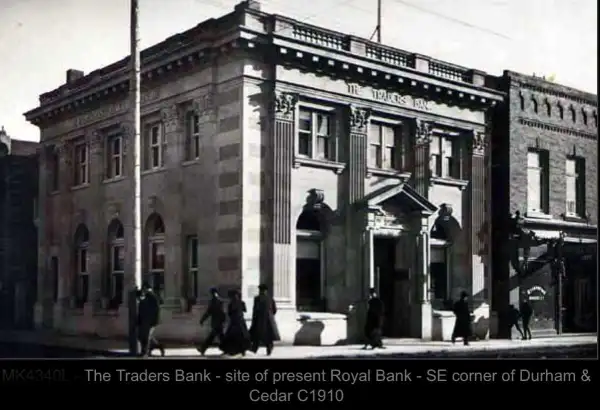
The Royal Bank on Durham Street in downtown Sudbury
She worked as a Secretary to the Manager at the Royal Bank in Sudbury.
To this day, fond memories of bygone visits either to Sudbury or Asbestos still come to mind.
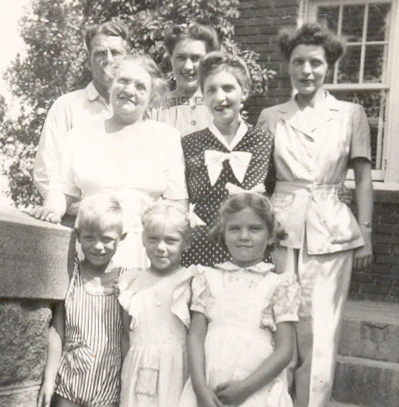
Back row: Uncle Leo and Aunt Dickie-Middle Row: Granny Jodouin, Mom, Aunt Ted – Front: Paul, Claire, and Denise – Dad took the photograph.
One of those visits occurred in the summer of 1946. Our family had moved from Sudbury to Asbestos, Quebec in the fall of 1945. We all missed our northern relatives, especially Mom. Granny, Aunt Ted, Aunt Dickie (Louise), Uncle Leo, and Cousin Denise arrived in the Packard driven by Aunt Ted. They were welcomed with open arms. Mom was in seventh heaven seeing her family. Their visit was the highlight of that summer.
When Grandpa Jodouin passed away in 1943 they sold the family home on Elm Street and built a small bungalow on John Street just around the corner from Aunt Dickie and Uncle Leo. In their new home, Granny had her Baby Grand piano as the centerpiece in their living room. The last memory of Granny etched in my mind was in 1948 when we were heading home to Asbestos. She sat down and played “Say Aurevoir But Not Goodbye”. She died in May of 1950.
Over the years there have been many visits back and forth to Sudbury. One of them happened in the summer of 1951 while spending several weeks with Aunt Ted in her home on John Street. During that time, she trotted me off to the dentist. He decided that the tooth growing off-kilter in my lower palette needed to be removed! That is something one does not forget. It is often a reminder of my caring aunt.
“Do you have a special aunt among your relatives?”
Years later, around 1955, Aunt Ted made another trip to our home in Asbestos. It would be the last time she visited us. Each one of her visits over the years has become more meaningful, and I realize just how much she was an influence in my life, and for that, I am truly grateful.
John, Claire, Aunt Ted, and Paul – Dad most likely took the photograph.
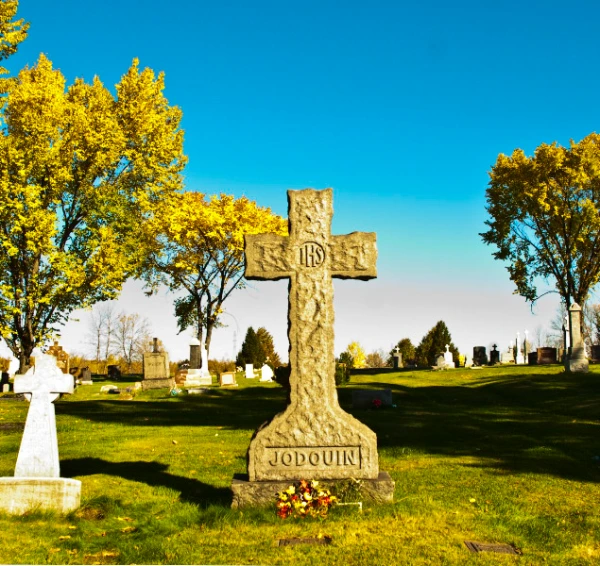
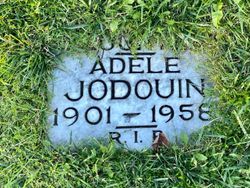
Aunt Ted passed away quietly at the age of fifty-five during the summer of 1958. I was deeply saddened and, for reasons unknown to me, did not attend her funeral. She is buried in LaSalle cemetery next to Granny, Grandpa Jodouin, and my parents.
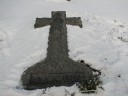
Alas! Over time the ground around the tombstone had shifted and unfortunately, it became necessary to lower the impressive towering granite tombstone. It is no longer the marker it once was.
I was a journalist and magazine writer for many years, and I have written dozens of articles about my ancestors, but none of these projects has been as well received as the small book I recently co-edited about the small coastal community where I spend my summers.
Biddeford Pool, Maine has been welcoming summer residents for several generations. My mother came here as a child, and I have summered here since I was four. Now, only a few long-lived members of my mother’s generation are still with us, and stories from the past are disappearing.
So in 2019, inspired by the success of my family history blog, I started a blog about the Pool’s summer community. I wrote some of the articles, but the main goal was for people to write their own stories. My friend Dabney described the Sunday mornings of her childhood when everyone went to church wearing their Sunday best, then returned home to enjoy roast beef or fried chicken for lunch. Jesse told readers what he learned about life while racing his sailboat in the mid-1960s. Lisa recalled the 1950s when Mr. Anderson, dressed in a summer suit and straw hat, delighted the neighbourhood children by taking out his false teeth and giving them a toothless smile.
These were great stories, but the blog was a failure. Nobody noticed the publicity flyers I made up, and the posts were not frequent enough to land on people’s radar. When one friend asked, “what is a blog?” I knew the project was doomed.
Upon our return to Maine in 2022, after a two-year absence due to Covid, I asked some friends what they thought I should do with the blog: delete it as a failed experiment, try to revive it, or turn it into a book? We decided on a book. We included all the articles from the blog and added many new stories.
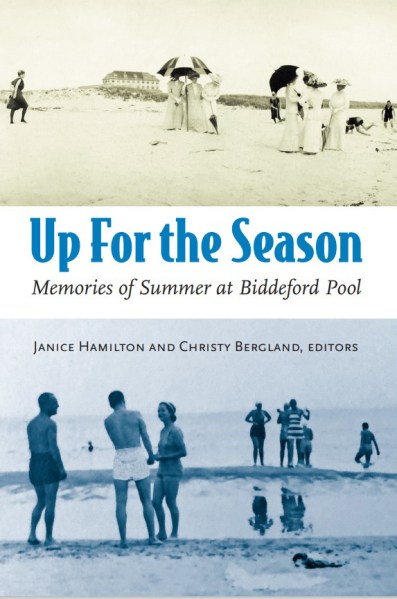
The book is called, Up for the Season: Memories of Summer at Biddeford Pool, edited by myself and Christy Bergland, an artist from Baltimore whose grandfather first came to the Pool as the summer doctor in 1907. The title is a quote attributed to a local lobster fisherman who knew many of the summer residents in the 1950s. When he saw a cottager for the first time each summer, he would ask, “Up for the season?”
co-editors Janice Hamilton, left, and Christy Bergland, right. photo by Richard Levy
The theme of the book is, when and why did your family first start coming to Biddeford Pool? It turns out that many of the men who started coming to the Pool in the late 1800s and early 1900s lived and worked together in mid-western cities such as Cincinnati and St. Louis, and they recommended it to their friends as a good place to bring their families.
The book is probably a hit for several reasons. First, people love to hear these stories about the days when men wore tuxedos to the annual Labour Day dance at the golf club and children got their first taste of freedom as they explored this safe little peninsula. unsupervised by parents.
The quality of the writing is another reason. While most of the contributors are not professional writers, they are nevertheless gifted storytellers. Eagles Nest, a turreted house overlooking the rocky shore, came to life when LeeLee mentioned the seagull who arrives for cocktails on the porch. This was a perfect example of “show, don’t tell.”
For me, putting this project together was a lot of fun because it was a group effort. Christy and several other friends helped with all the important decisions, such as the title choice.
A fun book launch. photo by Harold Rosenberg.
We hired a copy editor to catch the typos and a book designer to do the layout. The printing was done by Rapido Books, a Montreal printing company that I had previously used for a family history book. They shipped two boxes of 50 books seamlessly across the border, and they have an online bookstore for print-on-demand copies. Over the course of this summer, Christy and Mary handled the book sales and accounting with Jo’s assistance. As of the end of August, we have sold more than 100 copies and accumulated a profit of several hundred dollars that we donated to the Biddeford Pool Community Center.
Marketing in a small community where everyone knows everyone is not complicated. We put up posters in key locations advertising an early July book launch, and an announcement appeared in the Community Center newsletter. The launch, held at Lisa’s old shingled family cottage by the bay, was an overwhelming success. We also held a smaller event at the end of the summer where several of the authors read their stories aloud.
Today, many family historians are taking the next step beyond researching their ancestors’ BMDs , and they are writing about their families. Writing about the individuals, families and businesses in a community is not very different from writing about ancestors, and the sources of information — interviews, newspaper articles, city directories, census data and so on – are also the same.
Now that Up for the Season has been so well received, we are hoping that people will be inspired to start writing volume two. Many stories are waiting to be told.















![Handcart Pioneers Postcard pg. 1 - 1939_thumb[1]](https://genealogyensemble.com/wp-content/uploads/2014/09/handcart-pioneers-postcard-pg-1-1939_thumb1.jpg)
![Handcart Pioneers Postcard pg. 2 - 1939_thumb[2]](https://genealogyensemble.com/wp-content/uploads/2014/09/handcart-pioneers-postcard-pg-2-1939_thumb2.jpg)


 Genealogy Ensemble