Quebec Windmills and Seigneuries 

Find an old windmill (moulin) in Quebec and you will find a trace of an old seigneury, or estate.

In 2005, a heritage society in the Montreal suburb of Pointe Claire was looking into restoring the local windmill, built in 1710, but realized no-one had the knowledge to repair it. So, the Société pour la Sauvegarde du Patrimoine de Pointe-Claire (SSPPC) formed a partnership with Quebec’s national archives, the BAnQ Vieux-Montréal, to do some research.  A team of archivists, librarians and clerks compiled hundreds of notarial acts dealing with windmills in Nouvelle France, and in Quebec after the British Conquest of 1759.
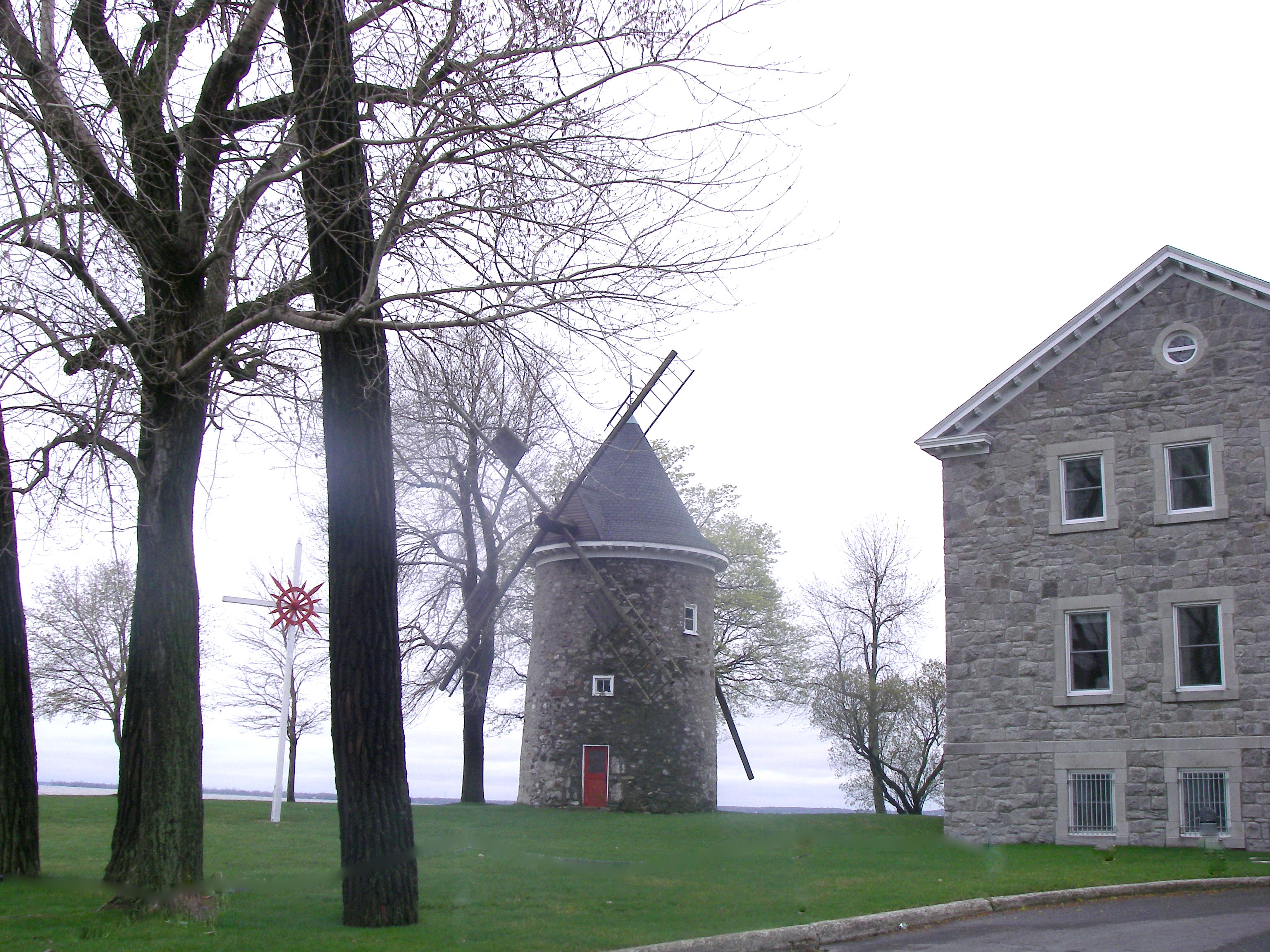
The old windmill in Pointe-Claire, overlooking Lac Saint-Louis. Claire Lindell photo.

The resulting document, “Actes notariés transcrits sur les moulins du Québec,” (see link below) reveals a great deal about the history of Quebec’s moulins-à-vent (windmills) and moulins-à-eau (watermills,) and about the seigneuries where they were located.

It includes transcriptions of acts made by notaries concerning windmills. These documents, such as leases, sales, inventories and various contracts involving millers, shine a light, not only on windmill construction, but many other aspects of their use. Some of these notarized agreements date back to the 1600s.

Until the 20th century, Quebec’s economy was based on agriculture, with corn and various grains being the most common products. Most windmills produced flour, although some powered sawmills or tanneries.

In New France, in Quebec under the British, and during the Lower Canada period, the majority of windmills were owned by the seigneurs, the owners of seigneuries, or large estates of farmland and forest. The seigneurial system of land ownership, tenancy and feudal-based obligations was officially abolished in 1854, but it took many years before it completely disappeared.

Here is the link to “Actes notariés transcrits sur les moulins du Québec” https://www.banq.qc.ca/documents/archives/genealogie/outils/moulins.pdf

Most of the transcriptions in this large PDF are in French, but you can copy and paste sections that are of interest to you and make use of online translation services such as Google Translate or DeepL.
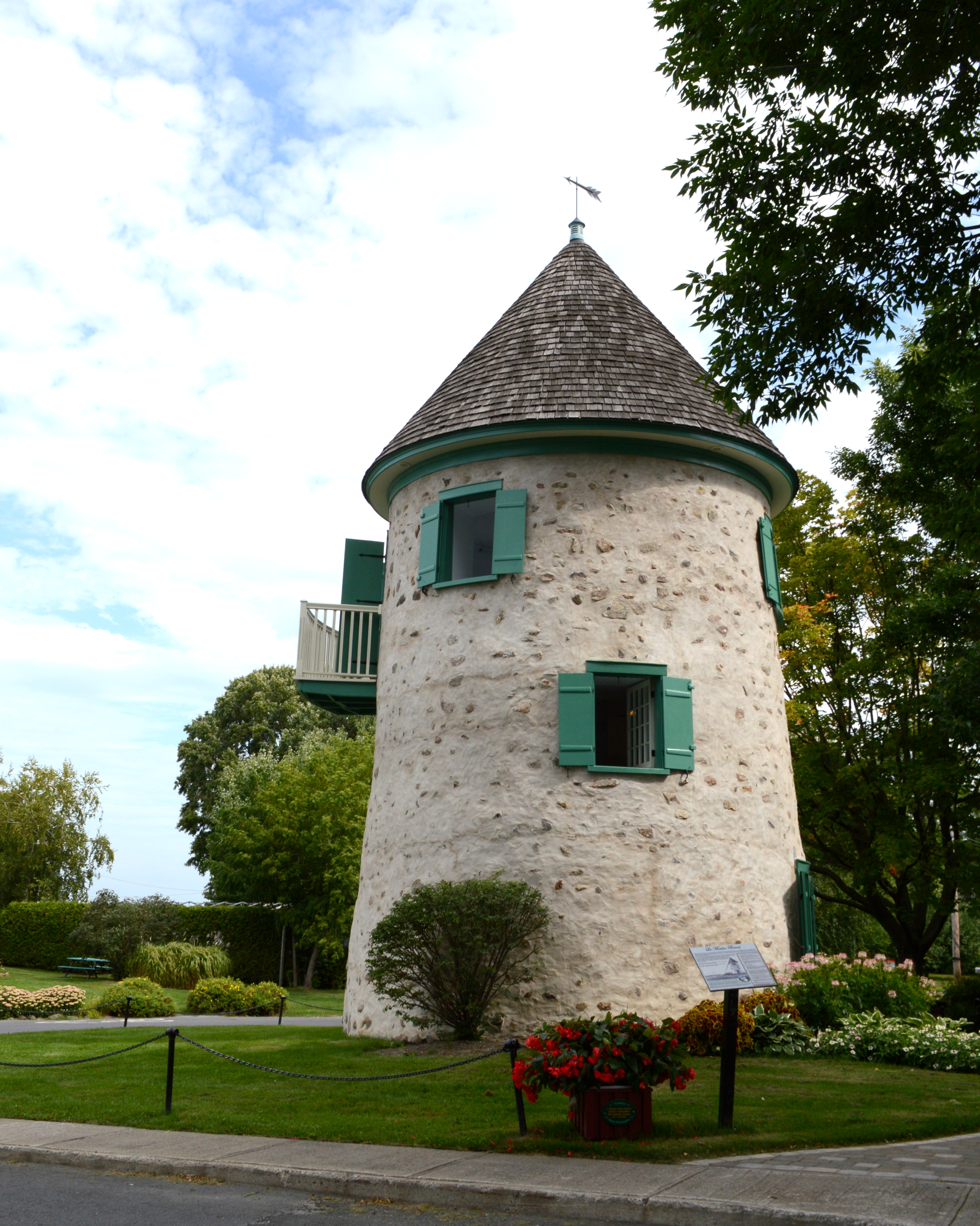
Built around 1730, this former mill in Verchères is a museum. Joann Egar photo.

Some windmills were owned by censitaires (tenants), but these private windmill or water-powered mill operators had to pay annual fees to their seigneurs. The fees were based on the number of tonneaux (wooden barrels) of farine (flour) and grains they produced on a yearly basis.

Most windmills in New France measured their capacity of production of flour, grain and corn by the number of wooden barrels they could produce per day or week.

If you look at biographies of settlers posted on Fichier Origine (www.fichierorigine.com) or P.R.D.H. (https://www.prdh-igd.com/en/accueil) or within the René Jetté books of pioneers, you will encounter the word tonnelier, a carpenter who specialized in making wooden barrels for operators of windmills, seigneurs and farmers. Most seigneuries in New France had their own tonnelier and/or windmill operator and/or operator of a water-powered mill.

Recruiters of families from France in the 17th and 18th centuries, especially within the northwest regions of France — Normandie, Poitou, Perche, Bretagne, Maine, Aunis, Anjou, Touraine, Beauce — would always recruit one or two tonneliers and one or two operators of windmills or operators of mills powered by water among the citizens who boarded sailing ships from La Rochelle and other seaports, destined for the French colonies of America.
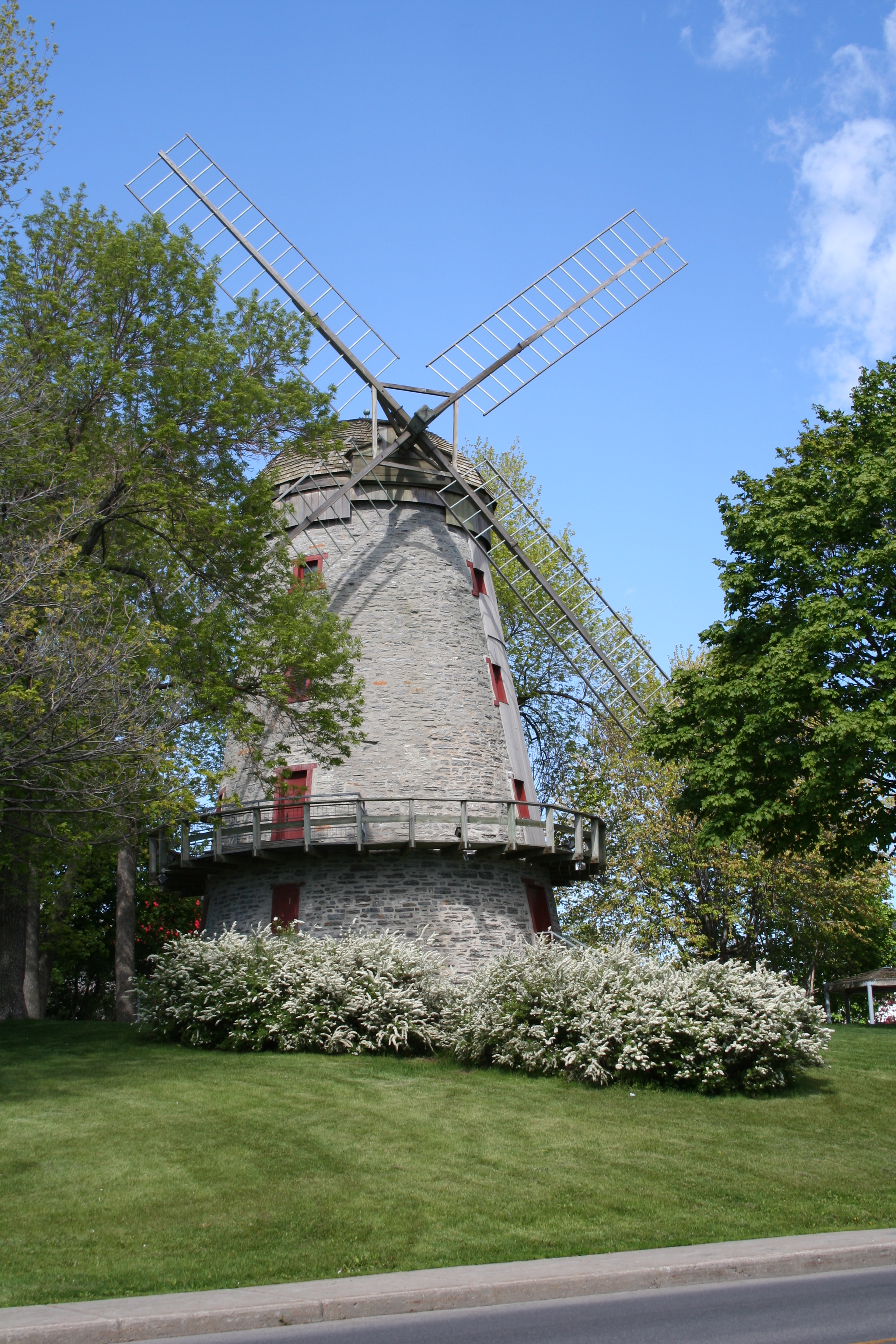
The Fleming Mill in LaSalle is designed in Anglo-Saxon style. Janice Hamilton photo.

To learn more:

Most of the province’s many windmills have disappeared, however, several remain in the Montreal area, including in Pointe-Claire, LaSalle and on Île Perrot.

Liste des moulins à eau du Québec:  https://fr.wikipedia.org/wiki/Liste_des_moulins_%C3%A0_eau_du_Qu%C3%A9bec

This is a less extensive list of windmills in English:  https://en.wikipedia.org/wiki/List_of_windmills_in_Quebec

René Jetté, Dictionnaire généalogique des familles du Québec: des origines à 1730, Montréal: Gaetan Morin, 2003.  No longer in print but available at the BAnQ and at the Grande Bibliothèque de Montréal. Also available at many university libraries in Canada and at most French-language genealogical societies in Quebec, Ontario, and New England. Major libraries in Canada would also have a copy.

Gilles Deschênes, Quand le vent faisait tourner les moulins: Trois siècles de meunerie banale et marchande au Québec, Québec: Septentrion, 2009, https://www.septentrion.qc.ca/catalogue/quand-le-vent-faisait-tourner-les-moulins

Article on the seigneurial system in the Canadian Encyclopedia: https://www.thecanadianencyclopedia.ca/en/article/seigneurial-system


My Grandfather, North Yorkshire and Discobulus

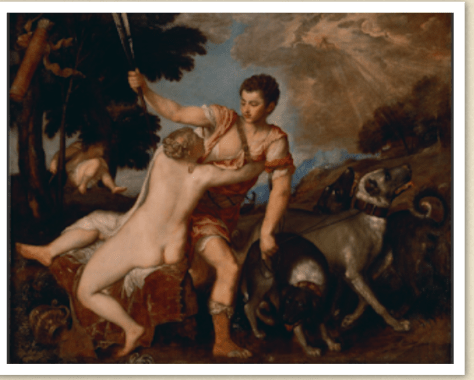
VenusandAdonis

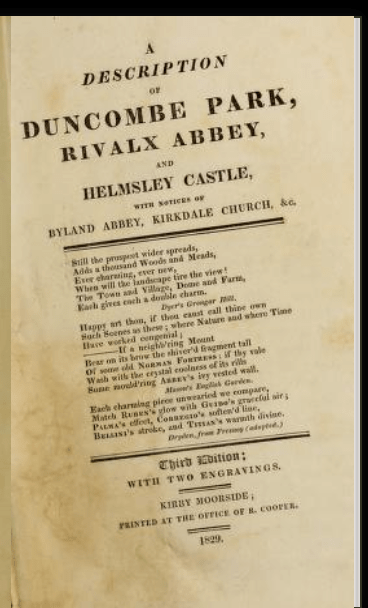
Venus and Adonis by Titian. This Renaissance painting is now at the Getty Museum in Los Angeles but it once graced the Hall of Duncombe Park in Helmsley, North Yorkshire. I know this because of a precious little volume from 1829 I found on archive.org, A Description of Duncombe Park, Rivalx Abbey and Helmsley Castle.

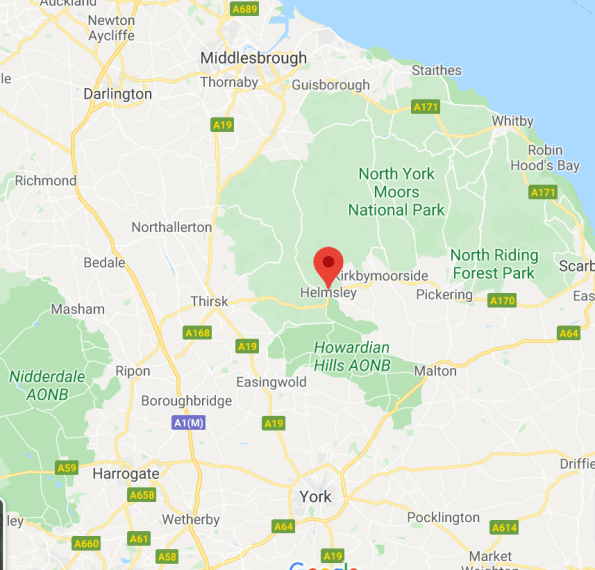
As it happens, my father’s  paternal ancestors are from Helmsley, today a picturesque market and tourist town on the River Pye in the Ryedale District.

helmsley

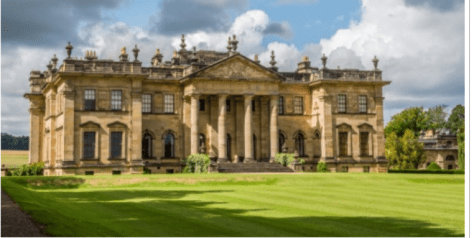
Duncombe Park  was once an imposing structure in the Doric style built in 1718 overlooking Helmsley Castle not far from Thirsk where the vet who inspired All Creatures Great and Small worked. It was the seat of the Earls of Feversham.

My grandfather, Robert Nixon (1890-1967), was born to Robert Nixon Sr. and Mary-Ellen Richardson.

helmsleynixonhouse

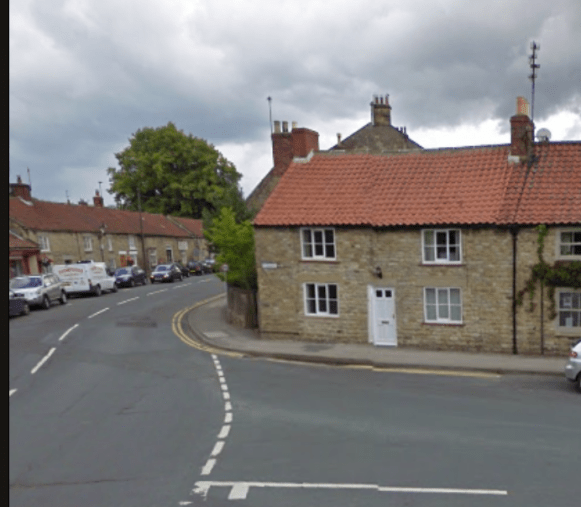
This stretch of very unimposing row houses is where the Nixons lived in 1911, according to the UK Census.

abbott'swellcottge

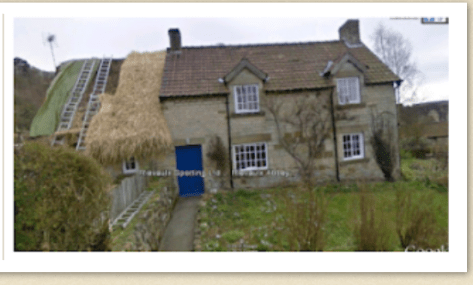
Mary-Ellen was from nearby Rievaulx, a village famous for its cathedral ruins. She was born in this quaint cottage, Abbot’s Well. Her dad was a tailor.

RobertCENSUS

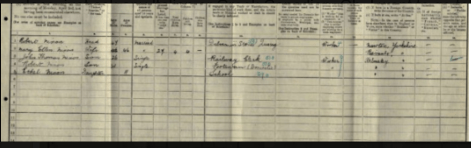
According to this census, Robert Nixon Sr. was a delver in a quarry in Rievaulx in 1911.

The same census page says my grandfather, Robert Jr.  21,  was a footman, likely at Duncombe Park. Robert was a strapping 6 foot 4 inches tall. The gentry liked their footmen to be fine physical specimens, but this was not always a good thing if Nixon family lore can be counted upon.

According to an English ‘auntie’ of my  father’s, the daughter of ‘the local earl’ went ga-ga for young Robert back in the day, so the love-struck girl’s powerful father sent him away, far away to Malaya.

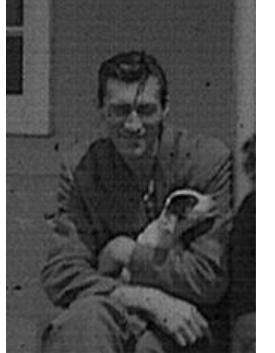
I have no picture of Robert, but I recall seeing one decades ago and he looked like my dad, Peter.  So here’s a picture of Peter in 1958 holding our new puppy, Spotty, a coonhound. My father was also 6 foot four inches tall.

father

This might be true: posts in Malaya were for the children of well-off families, not delver’s sons. However, a Nixon cousin told me his mother told him Robert got another servant pregnant. Nothing earth-shattering in that, though, is there?

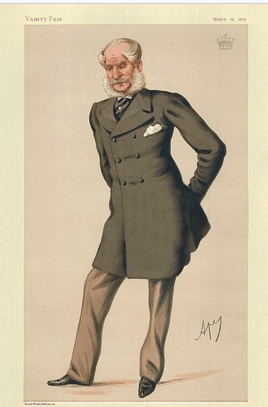
I see that the sitting Earl of Feversham had only very young children. he would die in the war and Robert Nixon Sr. would work for the trustees of the under-age Earl. This is a Vanity Fair pic of the first Earl of Feversham from Wikipedia.

Lord Feversham 1829-1915

According to travel records, my grandfather, Robert,  took a boat to Malaya (willingly or unwillingly) in 1912 to work at a rubber estate in Klang, Selangor.

He returned to England after WWI to marry my grandmother, Dorothy Forster, from County Durham, whose father was an itinerant Primitive Methodist preacher posted in Helmsley between 1912 and 1914.

MRsDOROTHYNIXON

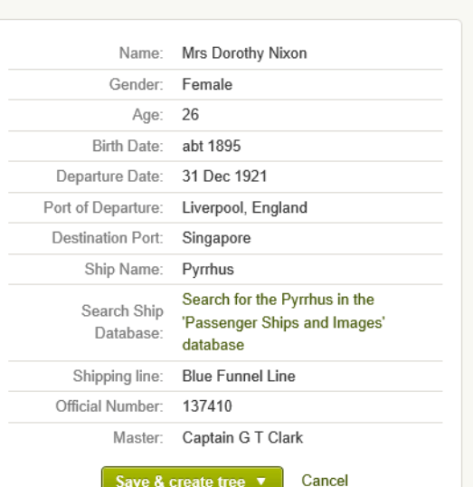
Dorothy followed him to Malaya in December, 1921 and my dad was born ten months later on October 24.  Robert later became Manager of the rubber estate.   Both my grandfather and grandmother were interned at Changi Prison during WWII.

According to the 1829 book, Duncombe Park was  home to a treasure trove of classical paintings, among them the Titian shown at top, but also a Da Vinci, a Reubens, a Rembrandt  as well as Discobulus, described as ‘the finest statue in England.’

My grandfather never did get to see these great works of art in person because most were burned in a fire in 1879.  Back then, some of these paintings were worth five thousand pounds.

The Discobulus and the DaVinci work were lost in the fire but Titian’s Venus and Adonis was saved to eventually find its way to California and the Getty Museum.

Duncombe was rebuilt in the Baroque Italianate style and used as a backdrop to the 2012 British mini-series Parade’s End, with Benedict Cumberbatch.  I love that mini-series, so it is all very appropriate.

Duncombe

Dunscombepark1

Hauts-de-France – The Protestants of Artois, Calaisis, Flandre, Picardie of the 16th and 17th centuries

The authors selected for this research guide have researched and compiled books, theses, essays, papers and studies about the Protestant families of the 16th and 17th centuries within the Hauts-de-France region, in the country’s north.

In truth, very few French Canadians or Acadians originated from the Hauts-de-France.  The highly precise Fichier Origine (https://www.fichierorigine.com/) database of pioneers who immigrated to the French colony of Nouvelle-France lists 63 pioneers from modern-day département of the Somme,  53 from the Aisne, 35 from the Oise, 32 from the Pas-de-Calais and 21 from the département du Nord.

On the other hand, Alain Jobin, in an article published in Revue du Nord, indicates that in 1685, 2,700 Protestants left the region of Calaisis and the region of the Pays reconquis (reconquered regions from the British and the Spanish) destined for London, England and the Netherlands – see:

Alain Jobin, “Le protestantisme en Calaisis aux XVIe-XVIIe siècles,” Revue du Nord, volume LXXX, July-Dec. 1998, p. 599-618, on Persée, https://www.persee.fr/doc/rnord_0035-2624_1998_num_80_326_2875

People with Protestant ancestors from the region of Hauts-de-France who settled in London, England around 1685 should look into the records of the local Threadneedle Street Church, where most of the communities of the French and Walloon in England worshipped.  The region of Wallonie in present-day Belgium is located a few miles from the Hauts-de-France.

In 1685, present-day Belgium was part of the Netherlands. From about 1648 onwards, the southern region of the Netherlands was part of the Prince-Bishopric of Liège district.

Link to the 37-page research guide PDF:

The Protestants of Artois, Flandre, Picardie

Most of these resources are in French, but you can get help from an on-line translation tool such as Google Translate or DeepL.

To learn more about Protestant records in France, see the introductions to these recent research guides on Genealogy Ensemble:

Jacques Gagné,  March 2, 2020, “Protestants of  Anjou, Beauce, Bretagne, Perche, Poitou, Touraine of the 16th and 17th Centuries»  https://genealogyensemble.com/2020/03/02/the-protestants-of-anjou-beauce-bretagne-maine-normandie-perche-poitou-touraine-of-the-16th-and-17th-centuries/

Jacques Gagné, Feb. 16, 2020, “Protestants of  Alsace-Lorraine of the 16th and 17th Centuries»  https://genealogyensemble.com/2020/02/16/the-protestants-of-alsace-lorraine-of-the-16th-and-17th-centuries/

Jacques Gagné,  Jan. 19, 2020, “Protestants of Paris in the 16th and 17th Centuries»  https://genealogyensemble.com/2020/01/19/the-protestants-of-paris-in-the-16th-and-17th-centuries/

See also

Jacques Gagné, May 20, 2018, «How to Search for Huguenot Ancestors in France,» https://genealogyensemble.com/2018/05/20/how-to-search-for-huguenot-ancestors-in-france/

Jacques Gagné, June 3, 2018, «Huguenot Family Lineage Searches,»  https://genealogyensemble.com/2018/06/03/huguenot-family-lineage-searches/

Jacques Gagné, May 13, 2018, «Researching Your French Ancestors Online,» (the attached updated PDF describes how to research in the Archives départementales de France, the country’s 95 regional archives)  https://genealogyensemble.com/2018/05/13/researching-your-french-ancestors-online/

Jacques Gagné, Jan. 27, 2019, «The National Archives of France, » https://genealogyensemble.com/2019/01/27/the-national-archives-of-france/

Jacques Gagné, Dec. 16, 2018, «BNF Gallica» (Bibliothèque nationale de France) https://genealogyensemble.com/2018/12/16/bnf-gallica/

Jacques Gagné,  Sept. 23, 2018, «Finding Ancestors in French Municipal Archives» https://genealogyensemble.com/2018/09/23/finding-ancestors-in-french-municipal-archives/


Allegiances

Allegiances were not among his strongest traits. In today’s world he might be recognized as the first great Canadian entrepreneur. He was named “a person of National Historic Significance by the Canadian Government”. 1 His remarkable achievements exploring New France, in the mid 1600s led to the growth and development of the fur trade. He was a co-founder and received the charter for the Hudson Bay Company from the King of England, Charles II in 1670. These were great accomplishments.

These titles belong to Pierre Esprit Radisson. He was born in France about 1640, the third child of Pierre Esprit Radisson, my ninth great grandfather and Madeleine Henault. At a young age, Pierre arrived in New France in 1651.  His sisters, Francoise, Elizabeth and step-sister, Marguerite had settled in Trois Rivieres in 1646.

I am proud to call him my eighth Great Uncle.

Radisson’s life was tumultuous. Early on he was captured by Indians and lived with them for two years. He escaped and was again captured. During captivity he learned their language and the skills required to survive in the woods.

His family thought they would never see him again.

Much has been written about Radisson and his brother-in-law, Medard Chouart Des Groseilliers and their explorations of the Great Lakes and later, the far north where they were trading furs.

Very little is known about his personal life. He spent time in Three Rivers, his “home base” when he was not on one of his four lengthy journeys.

From writings about Radisson it appears he married three times and fathered nine children.

Throughout his fur trading days, his various alliances with the French, the English and Indian tribes were a cause for concern.

He had one allegiance. Do what was in his own best interest.

In researching and preparing for this story about this famous explorer there were many areas of interest. Two stood out. The first was his manuscript, the second his relationship with the Hudson Bay Company.

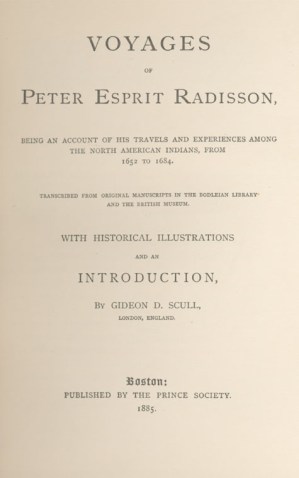
His manuscript entitled “Voyages of Peter Esprit Radisson is in the Bodleian Library and the British Museum in London, England.2

The manuscript is written in English and is considered the first descriptive document of explorations beyond the St. Lawrence River. He wrote about the four journeys taken with his brother-in-law, Medard Chouart Des Groseilliers.

For two hundred years his writing had not been seen. They were brought to light in 1885.

Archivists and Paleographers examined the manuscripts to establish their authenticity and to determine if Radisson was the author. The quality of the paper was examined, the handwriting was compared and scrutinzed to determine if the documents were written by one person or several. After considerable debate they were  found to be the writings of Radisson, in his rather fractured English.3

Below is an excerpt from the manuscript that gives the reader some insight into the manner these daring adventurous men were treated by the authorities.

“The Governor was greatly displeased at the disobedience of Radisson and his brother-in-law in going on their last voyage without his permission. On their return, the narrative states, “he made my brother prisoner for not having obeyed his orders; he fines us L. 4,000 to make a fort at the three rivers, telling us for all manner of satisfaction that he would give us leave to put our coat of armes upon it; and moreover L. 6,000 for the country, saying that wee should not take it so strangely and so bad, being wee were inhabitants and did intend to finish our days in the same country with our relations and friends…. Seeing ourselves so wronged, my brother did resolve to go and demand justice in France. “Failing to get restitution, they resolved to go over to the English. They went early in 1665 to Port Royal, Nova Scotia, and from thence to New England, where they engaged an English or New England ship for a trading adventure into Hudson’s Straits in 61 deg. north.”4

In the mid 1600’s in New France, the fur trade was a highly competitive business and both the French, and the English were vying for furs. Alliances were formed. It is with these alliances that Radisson had difficulty, especially after the French confiscated their furs and Des Groseilliers was imprisoned for a time. The men were fined by the French Governor. They decided to seek assistance from the British. They experienced success and were able to pursue their dream of reaching Hudson Bay.

In the manuscript excerpt below Radisson’s negotiating skills were of great importance in the success of their endeavours.

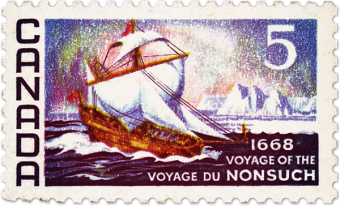
“To Des Groseilliers and Radisson must be given the credit of originating the idea of forming a settlement at Hudson’s Bay, out of which grew the profitable organization of the Hudson’s Bay Company. They obtained through the English Ambassador to France an interview with Prince Rupert, and laid before him their plans, which had been before presented to the leading merchants of Canada and the French Court. Prince Rupert at once foresaw the value of such an enterprise, and aided them in procuring the required assistance from several noblemen and gentlemen, to fit out in 1667 two ships from London, the “Eagle,”…., and the “Nonsuch,” ketch, ….”.5


With the financial assistance of Prince Rupert, the cousin of Charles II, King of England. They were given ships and supplies for the voyage. The first ship “Nonsuch”, with Des Groseilliers’ on board completed the voyage, while Radisson’s ship was not as fortunate. He was unable to reach Hudson Bay. The first ship returned laden with furs. This was a major success for both Radisson and DesGroseilliers. The accomplishment led to what was later known as the establishment by the British as Rupert’s Land. A large area where these fur traders could hunt for the much-desired beaver pelts.

Charles II of England granted a charter to the Hudson Bay Company May 2nd, 1670 and Radisson and DesGroseilliers were named co-founders. 5

This year (2020) the Company  is celebrating their 350th year.

The persistence and bravado of these two explorers were recognized long after their demise. Their names live on through the manuscripts and this famous company.

Pierre Esprit Radisson, my eighth great uncle’s contribution to the development of our country was worthy of the title bestowed upon him as a National Historic Significant figure.

Sources:

1.https://en.wikipedia.org/wiki/Persons_of_National_Historic_Significance.

2.https://archivaria.ca/index.php/archivaria/article/viewFile/12836/14054 Who Was the Scribe of the Radisson Manuscript?, GERMAINE WARKENTIN

3. www.gutenberg.org/cache/epub/6913/pg6913-images.html The Project Gutenberg EBook of Voyages of Peter Esprit Radisson by Peter Esprit Radisson
introduction by Gideon D. Scull, London England, Boston, The Prince Society, 1885, n

4. Ibid.

5. https://web2.uvcs.uvic.ca/courses/lawdemo/DOCS/RC1670.htm The Royal Chyarter for incorporating The Hudson’s Bay Company, A.D. 1670.

References:
https://www.thecanadianencyclopedia.ca/en/article/pierre-esprit-radisson

https://archivaria.ca/index.php/archivaria/article/viewFile/12836/14054 Who Was the Scribe of the Radisson Manuscript?, GERMAINE WARKENTIN

https://www.cbc.ca/history/EPCONTENTSE1EP6CH1PA3LE.html
Videos – The Business of Fur- Radisson and Des Groseilliers, The Business of Fur- The Fashion of Fur, The Business of Fur -New Lands for Trade, The Business of Fur- Hudson’s Bay Company Beginning

https://www.encyclopedia.com/

https://www.historymuseum.ca/virtual-museum-of-new-france/the-explorers/pierre-esprit-radisson-1659-1660/

Note:
www.gutenberg.org/cache/epub/6913/pg6913-images.html The Project Gutenberg EBook of Voyages of Peter Esprit Radisson by Peter Esprit Radisson
introduction by Gideon D. Scull, London England, Boston, The Prince Society, 1885,
Copyright laws are changing all over the world. Be sure to check the copyright laws for your country before downloading or redistributing this or any other Project Gutenberg eBook

Golf in Dunany

The Dunany Country Club will be celebrating its 100th Anniversary in 2022. This nine-hole golf club, located north-west of Montreal in the lower Laurentians, near Lachute, has been of prime importance to my family and our history. My parents met in Dunany.

The Dunany area was settled in the mid-1800s by the Irish. These immigrants tried to farm the rocky Laurentian Shield carving small farms out of the forests. The area had already been logged but still, trees were everywhere. Small patches of land were cleared but it was subsistence farming at best. A post office was established in 1853 and it was called Dunany. The name came from a point of land in County Louth, on the east coast of Ireland. The four small lakes brought fishermen and cottagers to the area early in the 20th century.

My paternal grandparents, William and Minnie Sutherland first travelled to Dunany to visit friends, the McRobies. The long journey from Montreal, needed a car, train and horse and cart to complete, so one stayed a few days. Grandfather Sutherland enjoyed the country and so he bought some property and built a cottage on Boyd Lake. For them, it remained a long journey but he was said to be the first person to drive a car in from Lachute.

No one thought about golf until Katherine “Kit” McRobie challenged a friend to a game around the pastures and fields and so golf came to Dunany. A group of 20 people, including my grandfather, contributed money to buy land and in 1922 the Dunany Country Club was born.

IMG_0124
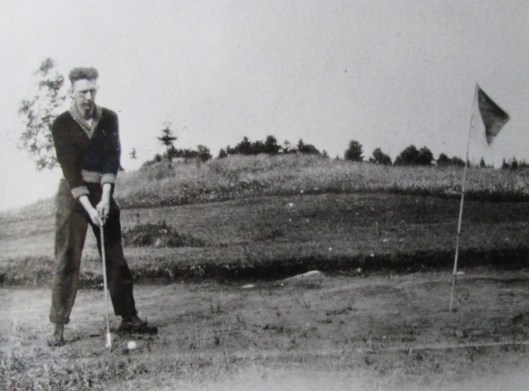
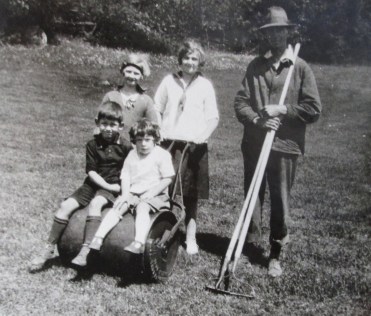
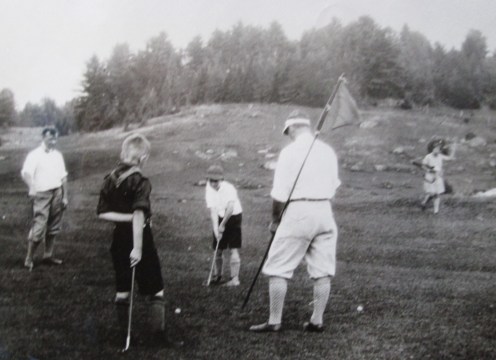
Wilson Sutherland putting on a sand green 1924
IMG_0130
Golf course equipment circa 1925
IMG_0128
Rocks and Rough Greens 1927

When my maternal grandfather Rene Raguin was interested in buying a country house in 1931, he too looked in Dunany. He knew of the area because his wife’s sister, lived in Lachute and she and her husband had a place at Lake Louisa, near Dunany. One evening, the Sutherlands visited the Raguins at their new cottage as Mrs Raguin and Mrs Sutherland knew each other from the United Church Women’s group. My mother was ten and she and her sister were sent to bed but spied on the visitors and their 15-year-old son Donald. With the age difference, Dorothy and Donald didn’t see much of each other until they met again after the war at a dance at the clubhouse. Two years later they married.

Everybody in the families at least tried golf. My grandmothers were not taken by the game but most other family members persevered. Some actually became very good players. The rough pastures and sand greens gradually evolved to smoother fairways and grass greens. The course grew from a couple of holes to a full nine. The layout of the course kept evolving. Then even sand traps were added. The trees have grown and some fixture trees have had to be cut down. The fairways are still not perfect but it is a country course played with preferred lies.

IMG_0123
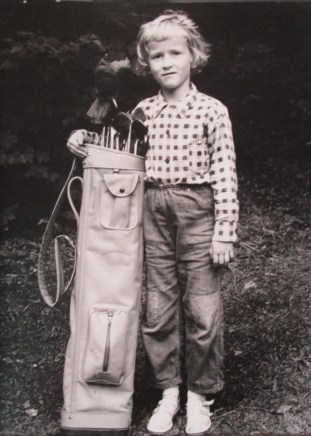
The Golfer 1959

My father always lamented that he didn’t have proper lessons as his father taught him so he made sure we all had lessons with the visiting pro. My mother often took the four children over to the club so she could play. The well-behaved children could hit balls while those misbehaving had to sit on a bench and wait for the hole to be completed.

IMG_4908
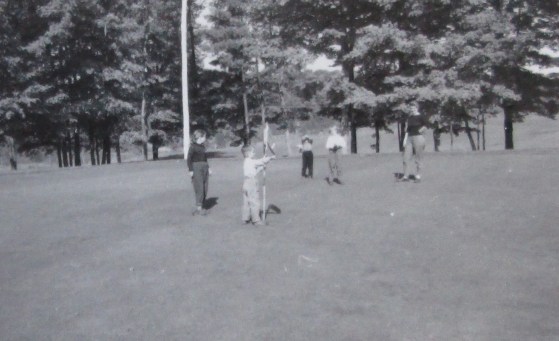
The Sutherlands on the 1st green 1960

Four members of the family have had holes-in-one at Dunany. William Sutherland aced a hole that is no longer in play. He stationed his brother on a hill with a view of the green so he wouldn’t lose his ball and after he hit, all Wilson said was, “It’s in.” Isn’t that the point of the game! My mother Dorothy’s ball went into the hole after my father said, “Your mother just doesn’t hit the ball like she used to.” Her ball landed at the side of the green, bounced on and rolled in. My brother Don and I have also each aced a hole.

There are many trophies played for at the club. The Sutherlands have won a number. The Parkes Culross trophy is one that many family members have won. It is a low net competition played for on Labour Day weekend. Eight family members have their names engraved on this trophy.

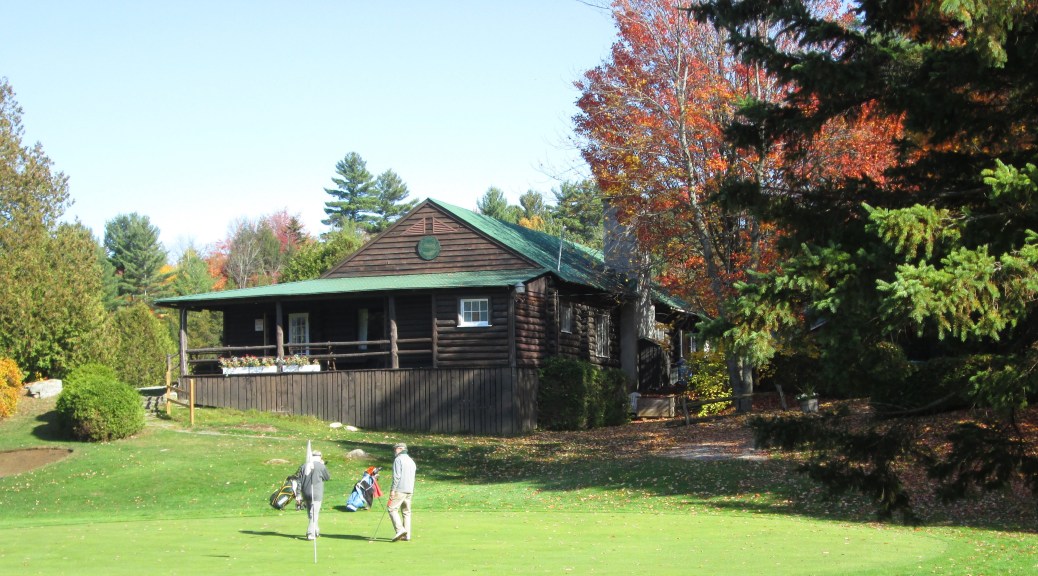
The club continues to be the centre of the community. There are now plans for the log clubhouse to be renovated. Those who don’t play golf still attend the many functions, from dinners and bridge to music fests and art shows, sports nights and other junior activities. Mine isn’t the only family who found love in Dunany and so most people are related to somebody. Children who grew up and moved away have now returned and bought their own cottages. When you meet someone new you ask, “Whose house do you live in?” They think it is theirs but the spirit of all the old Dunanyites lives on.

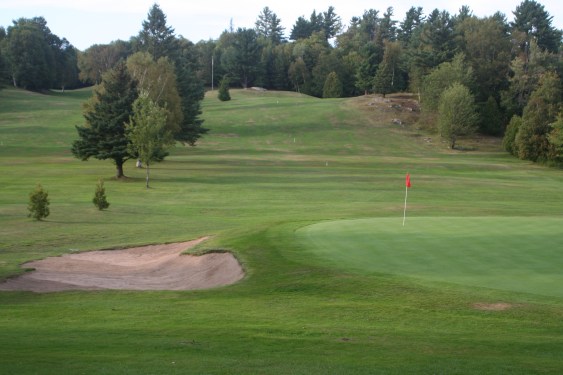
IMG_3365
9th Green Grass & Sandtrap 2011

Notes:

Hammond Eleanor Hamilton, A History of Dunany. Printed in Canada by Zippy Print, Brockville, Ontario. 1990.

Eric Dauber, The Story of the Dunany Country Club, 1967.

Beth Sutherland Van Loben Sels, As I Remember Dunany.

Family winners of the Parkes Culross are Rene Raguin, Dorothy A. Sutherland, Donald W. Sutherland, Mary Sutherland, Donald J. Sutherland, Dorothy I. Sutherland, Sharon Leslie and Scott Ritchie.

The Protestants of Anjou, Beauce, Bretagne, Maine, Normandie, Perche, Poitou, Touraine of the 16th and 17th centuries

 France Région du Grand-Ouest

During the 17th and 18th centuries, the north-western region of France contributed the greatest number of immigrants to New France, Acadia and the Great Lakes Region of Upper Canada.

Most of these immigrants were Catholic, however, some were Protestant.

The Protestant presence in the north-western region of France began in 1523-1527 in the cities of Angers, Le Mans, and Rennes. From 1553 to 1560, Protestant churches were organized in Anjou, Aunis, Bretagne, Poitou, Saintonge, and Touraine within this region of France.

The following research guide will help you navigate the morass of resources available to genealogists researching Protestant ancestors from Normandy, Poitou and beyond. It contains information in both English and French.

Click on this link to read the 116-page PDF research guide:

The Protestants of North-West France

This guide includes: France Huguenot Family Lineage Searches in various archives in France; French Protestant records on FamilySearch.org; a description of Protestant Church Registers at various regional archives in France; the region; the authors (books about Protestants in north-west France, including collectif, or various authors); Protestant historical societies (national); Protestant historical societies (regional); Online resources including theses; Archives (France); Archives départmentales; Libraries; Old Protestant newspapers; Publishers; Protestant genealogy (regional); links to other articles on Genealogy Ensemble.

 Protestant Church Registers at various regional archives in France

(Archives départementales & Archives communales de France)

Protestant pastoral church registers began around 1560 in many regions of France. At the regional archives of the Charente-Maritime, Protestant pastoral church registers began in 1561. At the Archives départementales du Calvados and at nearby Bibliothèque municipale de Caen, fonds contain Protestant baptisms and marriages from 1560 to 1572, in addition to an index of Protestant families and places of residence.

Documents which are normally found among the Collection communale et Collection départementale (archives originating from fonds) were researched and compiled by archivists at various Archives départementales (Regional Archives) and Archives communales (Municipal Archives.) These Protestant church registers can be found among the Parish registers (Registres paroissiaux) of an appreciable number of Archives départementales.

Protestant Church registers are described online at various archives as Actes pastoraux or Registres pastoraux. These are the acts of baptisms and marriages written by Protestant pastors (pasteurs Protestants) during the period described as Période du Désert, between the years of 1665 and 1787.

A second collection of church registers, addressing Protestant families and covering 1793 to 1820, is described as Actes de catholicité because Catholic Priests would baptize the children of Protestant parents. Also available online at most of the 95 Archives départementales de France are the civil registers described as Tables décennales, a regrouping of civil registers by 10-year periods from 1793 to 1912, or later at a number of départements (states).  Among these Tables décennales you will find Protestant families (from 1822 onward) later at most regional archives (Archives départementales) of France.

Many of the regional archives (Archives départementales) will feature online information from fonds referred to as Familles protestantes du 16e et 17e siècles (Protestant families of the 16th and 17th centuries). In most cases these fonds were obtained from regional Protestant museums, historical and archeological societies, municipal archives and genealogical societies.

A few regional archives have listings of Protestant families of their own regions from the Société de l’histoire du protestantisme français (SHPF). This society, organized in 1852 and based in Paris, features a growing online database, in partnership with the Bibliothèque nationale de France, addressing the Protestant families of many regions of France from the 16th century onward. See: https://www.//shpf.fr/collections

Common Terms

The following are French language expressions you may come across as you research the Protestants of France in the 16th and 17th centuries.

Archives des consistoires de France – Protestant archives at the Archives nationales (France) Pierrefitte-sur-Seine (Paris)

Assemblée de nouveaux convertis – A description of former protestant individuals who left the faith in order to join the Catholic Church – It does appear that in some rare cases, that the contrary to the above also addressed former catholics who joined the protestant faith.

Assemblée protestante – Protestant church or temple

Assemblée de religionnaires – Protestant church or temple

Chapelle protestante – Protestant chapel

Communauté protestante – Protestant community

Communauté réformée – Protestant community

Culte protestant – Protestant faith

Culte réformé – Protestant faith

Demi-fief de Haubert – A person of the nobility (Bourgeoisie) who was the owner of a Seigniory which dates back to the Knights (Chevaliers) time period of ancient France.

Église réformée – Protestant Church of France

Exercice du culte – Liberty of action in regard to a place or places of worship

Familles protestantes – Protestant families

Familles réformées – Protestant families

Lieu de prière – Place of worship

Lieux de prière -Places of worship

Lieu d’exercice – Faith place name

Lieux d’exercice – Faith place names

Nouveau converti – New convert (Male)

Nouveaux convertis – New converts

Nouvelle convertie – New convert (Female)

Nouvelles converties – New converts

Placet au Roi (roi) – Written directives issued by various kings of France which reflects the will (power) of the Crown of France

Réformé – Protestant individual

Relaps – A person who no longer attend regular church services

Religion réformée – Protestant faith

Religionnaire – Protestant individual

Religionnaires – Protestant individuals

Synode – Synod

Synodes – Synods

Temple protestant – Protestant temple

Temple réformé – Protestant temple

Temples protestants – Protestant temples

Temples réformés – Protestant temples


how i came to write miss lindsay’s tale

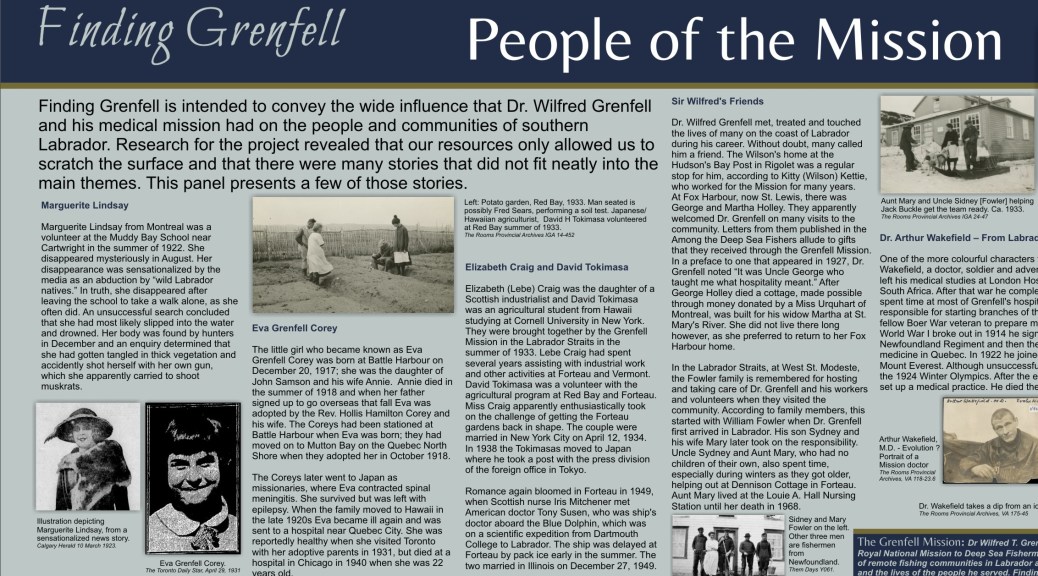
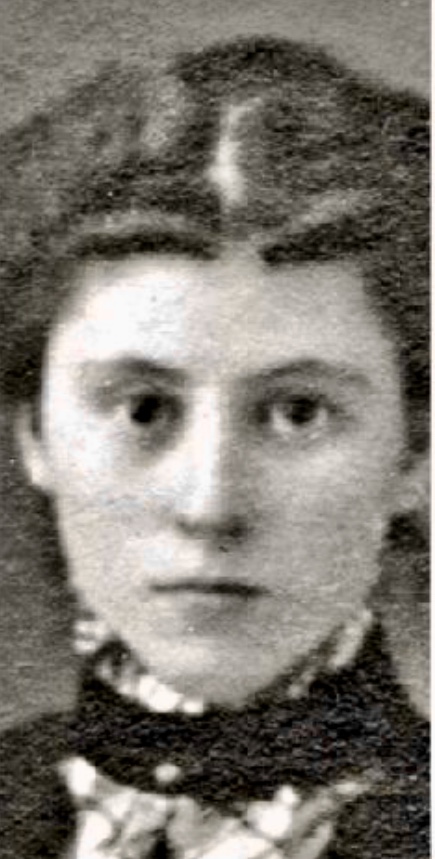
“Our ancestors want their stories told” said my third cousin and fellow genealogy writer. We are both related to my great aunt, Miss Marguerite Lindsay, and we were both told the same story growing up: Poor Marguerite Lindsay died tragically in Labrador, in 1922, at age 25. Period.

We never questioned the statement nor begged for gory details. Little did we know that she did indeed have a story to tell and she finally got her wish almost 100 years later.

I wrote a story about Marguerite’s mother, Mary Heloise Bagg Lindsay, and at the end of her story I listed the names of her six children, including her youngest daughter Marguerite.

Great Granny Bagg (Kittens on the Wedding Dress)

Shortly after the publication of her story on our website, I received an e-mail from a student at Memorial University in St John’s, Newfoundland. She wanted to know where Marguerite was buried. I found that to be a very strange question in response to a story about her mother. I replied hesitantly and asked why she wanted to know. What a delightful surprise to hear that not only had she researched Miss Lindsay’s story but also offered to send me copies of her findings and the 1922 newspaper clippings!

The media covered the tragic tale in great detail over an 18-month period including the final coroner’s report. The official report concluded that her accidental death occurred from a shot by her own pistol when she tripped and fell.

I devoured the newspaper clippings and finally knew the whole story that no one spoke of so long ago.

Research is not my forte but it seems everyone that I contacted had something to tell me. Several websites produced other glimpses into Cartwright, Labrador and Grenfell himself. What a thrill to discover a great deal of information about the International Grenfell Association preserved on microfilm at The Rooms Provincial Archives in St. John’s, Newfoundland.

That fateful summer in 1922, Marguerite worked as a volunteer school teacher with the Grenfell Mission in Cartwright, Labrador, under Reverend Henry Gordon. The local community named their school in Cartwright after him.

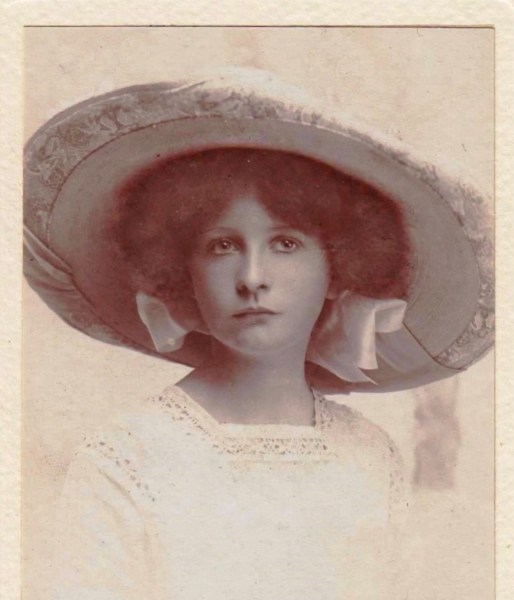
Miss Marguerite Lindsay Grenfell Mission Volunteer

When I contacted the assistant principal at Henry Gordon Academy, she seemed equally as excited as I to talk about Miss Lindsay. We decided to skip e-mails and speak directly over the phone instead.

Well, this is some of what she told me…They named the marsh where they found her body “Miss Lindsay’s Marsh”. An honorary plaque graces the local church and a memorial prayer said every Christmas. Some of the young students wrote her a poem and the new students are all told Miss Lindsay’s story. Miss Martin, a fellow teacher, recently retired from the Henry Gordon Academy and still has the sewing machine that her grandfather, John Martin, bought with his reward money for finding Miss Lindsay’s body that December back in 1922.

And just then…the music began to play over the phone, and I quietly listened to Harry Martin’s song “Somewhere Beyond the Hills” written for Marguerite.

“I can’t believe that I am talking to a descendant of Miss Lindsay!” said my new friend.

I could almost imagine Marguerite standing beside me soaking up all these loving tributes… her story finally told.

(Rumour has it that if I can make the 100th year anniversary of Miss Lindsay’s death in August 2022, there might be a potluck supper and memorial service at the church in her honour!)

Helen Frances Marguerite Lindsay 1896-1922

Edited by author 2020-07-13

Notes: Miss Lindsay’s three part story can be found below:

https://genealogyensemble.com/2019/10/30/miss-lindsay-part-1/

https://genealogyensemble.com/2019/12/18/miss-lindsay-part-2/

https://genealogyensemble.com/2019/12/25/miss-lindsay-part-3/

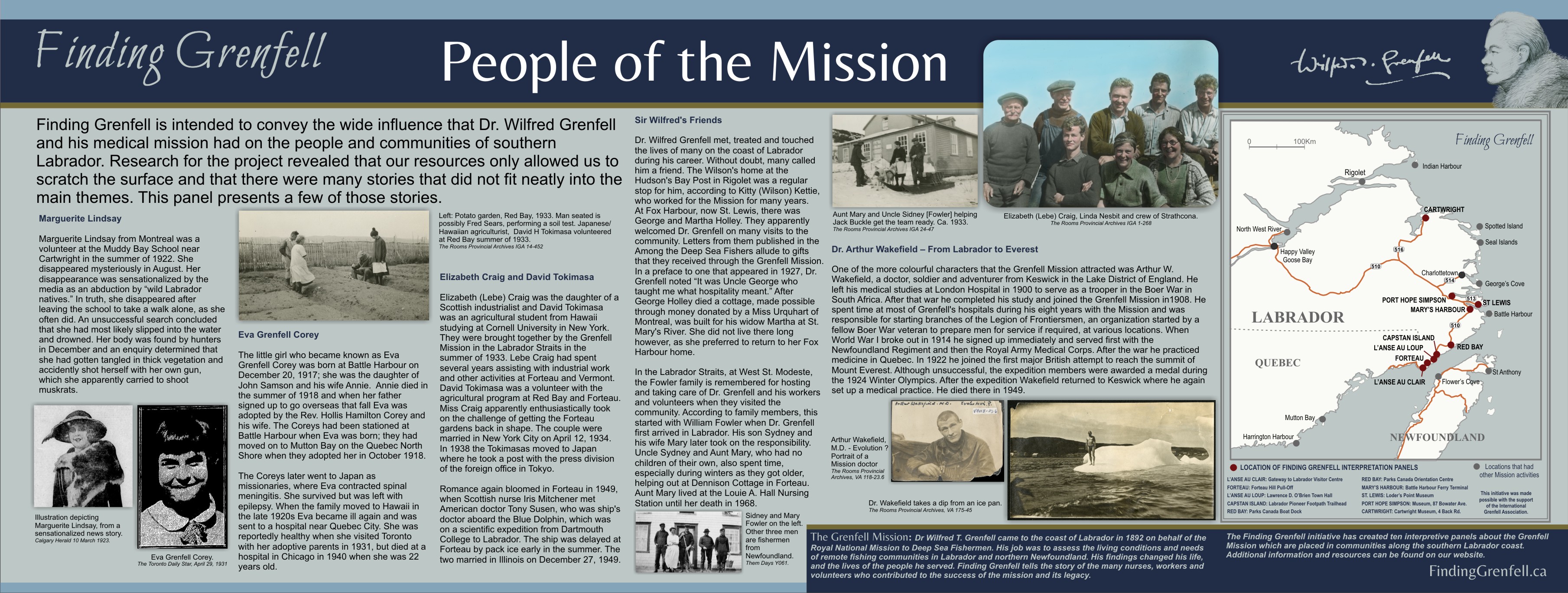
1. A summary of Miss Lindsay’s story can be found on the Finding Grenfell website under the People of the Mission section: (https://www.findinggrenfell.ca/home/files/pg/panel-people-v4-large.jpg).

Beautiful hooked rug by Grenfell Mission artisans – courtesy of Janice Hamilton

2. The famous Grenfell hooked rugs: http://www.grenfellhookedmats.com/and also, they continue to make and sell rugs, clothing, books and other items, or you can buy a membership in the historical society

Far from Home

The news from home gave John Hunter, my great-grandfather, a jolt. Usually letters from home to the troops during WWI were full of the joys of everyday life, encouraging the soldiers that the war would end soon and that the family back home awaited their return with anticipation.

For many months now, John Hunter had been getting bad news. John knew that his wife, Mary Hynd, had become seriously ill. Then John got the news that she was in the hospital, and then that she had died.

Luckily for John, he at least received news regularly from home in Scotland.  All mail going to France, where John was stationed, first had to reach Regent’s Park in England. From Scotland, this would have taken a bit of time. Nevertheless, the government consistently delivered letters to the troops as they felt that the letters helped with the troops’ morale. Nineteen thousand mailbags crossed the Channel every day and arrived at one of three stations in France: Le Havre, Boulogne, or Calais.1

John, a sapper with the 326th Company of the Royal Engineers, worked as a miner by trade back in Scotland. Sappers, sometimes called quarrymen or tunnelers, mined the quarries and built the tunnels essential to the Allies in their battles against the Germans.

The 326th Company was formed at Buxton, England and it landed at Le Havre on May 23, 1917, consisting of four officers, 264 men, and two horses.2 They moved to Marquise on May 27, 1917.  By this time, Mary, back home in Scotland, had been diagnosed with liver and intestinal cancer. Mary died on October 14, 1917 and her death certificate states that her husband, John, was out of the country in Rinxent, France. Rinxent is about 3 km from Marquise. The significant quarrying operations in Rinxent provided the stones for the laying and maintenance of roads by the Allies.3

It was in a document on October 27, 1918 that the request was made to the war office in London to release Sapper John Hunter, 326th Company, Royal Engineers from his war duties and to transfer him to the reserve. Permission was granted:

“…. Provided he can be spared, you will issue the necessary instructions for him to be despatched to the Scottish Command Discharge Centre, East London Street Schools, Edinburgh, with a view to him being transferred to the reserve and returned to his home.”

This permission was based on “compassionate grounds” and “due to his domestic situation.” Mary had left behind two children, my grandmother, Grace, 17, and Thomas, 12.

The Deputy Adjutant General signed off on the transfer of John Hunter to his home. He was transferred to Calais and then shipped to England, and then transferred to Scotland.4

By the time he actually arrived back home in Scotland, the Armistice had been signed, essentially bringing the war to an end. Nevertheless, as part of a quarrying company, he would have still needed permission to return home as the companies continued to mine in France until late 1919.


  1. BBC, “How did 12 million letters reach WWI soldiers each week,” http://www.bbc.co.uk/guides/zqtmyrd, accessed April 21, 2019.
  2. https://www.longlongtrail.co.uk/quarry-companies-of-the-royal-engineers/, The Long, Long Trail” or “The Long, Long Trail: the British Army in the Great War” or “Chris Baker’s site The Long, Long Trail” as title in addition to the URL, accessed April 21, 2019.
  3. https://www.longlongtrail.co.uk/battlefields/gazetteer-of-the-western-front/gazetteer-of-the-western-front-rinxent/, The Long, Long Trail” or “The Long, Long Trail: the British Army in the Great War” or “Chris Baker’s site The Long, Long Trail” as title in addition to the URL, accessed April 21, 2019.
  4. Document to the Commandant, Scottish Command Discharge Centre, Edinburgh, ref. Z1/B, signed December 13, 1918 by Lieutenant R.E. for Lieutenant Corporal, Troops Base Depot.

The Protestants of Alsace-Lorraine of the 16th and 17th centuries

From the birth of Protestantism, Calvinists, Lutherans, Anabaptists, Baptists and Mennonites were present with houses of prayer, chapels, temples and churches in the Alsace-Lorraine, otherwise known as the Grand-Est region of France, bordering both Germany and Switzerland.

It must have been confusing for the believers, since the Catholic Church also had a presence within this region, although with reduced power in comparaison to other regions of France.

At the British Conquest of 1759 at the Plains of Abraham, nearly 200 families of German ancestry resided in the St. Lawrence Valley. In the 2016 Canadian Census, 3,322,405 Canadians (nearly 10% of the population) reported German origin. A large proportion of these Canadians of Germanic anscestry lived in Ontario or Central Canada.

For people doing family lineage research in the modern-day départements of Bas-Rhin, Haut-Rhin, Meurthe-et-Moselle, Meuse, Moselle and Vosges, one is struck with the Germanic influence in this region of Grand-Est in France. Germanic family names and place names date from the early 16th century.

The choice of authors of books, essays, theses and papers for this research guide was  difficult. International online retailers such as Amazon.fr have not to this point in time secured the best authors, historians, academics and archivists within this north-east region of France. On the other hand, great institutions of learning, historical societies, and publishing houses at various universities and colleges have published interesting dossiers which address Protestantism in the Grand Est region of France, from the birth of Protestantism in Europe.

Link to the PDF research guide: The Protestants of Alsace-Lorraine of the 16th and 17th centuries

Contents of the research guide: The region; Links to Protestant resources in the National Archives of France; Links to Protestant resources on Familysearch.org; Authors (books about Protestants of Alsace-Lorraine in the 16th and 17th centuries); Historical societies (France); Historical societies (Alsace-Lorraine); Online resources, including theses; Libraries and archives; Publishers; Genealogy resources; Relevant links on Genealogy Ensemble

Little Emigrants

Up until recently, I had a vague awareness of the history of child emigration from Great Britain to Canada, Home Children as they were called, but took little interest. I am not descended from a home child so it had nothing to do with my family.

Until I learned that it did.

Shortly after I sent my DNA sample to Ancestry.com, I heard from Shirley Joyce of Toronto. We share the same great, great grandparents, John Angus and his wife, Rachel Martin, from Tulliallan in Scotland and through them there is a home child connection.

John (b. 1813) and Rachel had three children: David (b.1842), Ann (b.1844) William (b.1847). The 1841 census documented John as a labourer and his wife as a homemaker 1.

David, their first born, became a shoemaker in Partick near Glasgow and married Anne Rankine. They had nine children, including my grandfather James Rankine Angus, who emigrated to Canada as an adult in 1901 2.

William, the youngest, became a rope and sail maker. I know little of him.

Shirley Joyce told me more about Ann, the middle child, who became a domestic servant. She had six children between the years 1865 and 1886 fathered by three different men. She only married the father of her last two children, Hugh Stein, in 1881, at age 37. Ann’s daughter Rachel, one of the twins born in Largs in 1876 to Ann and an unknown father, became Shirley’s grandmother. 3

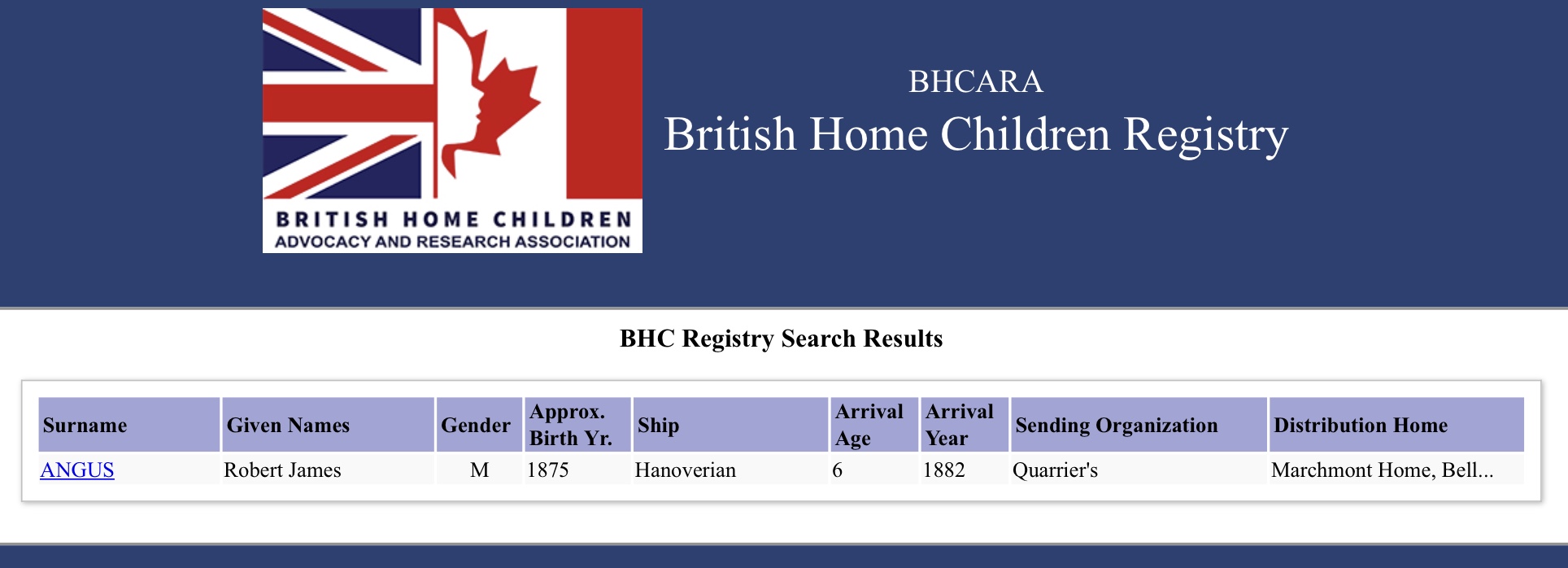
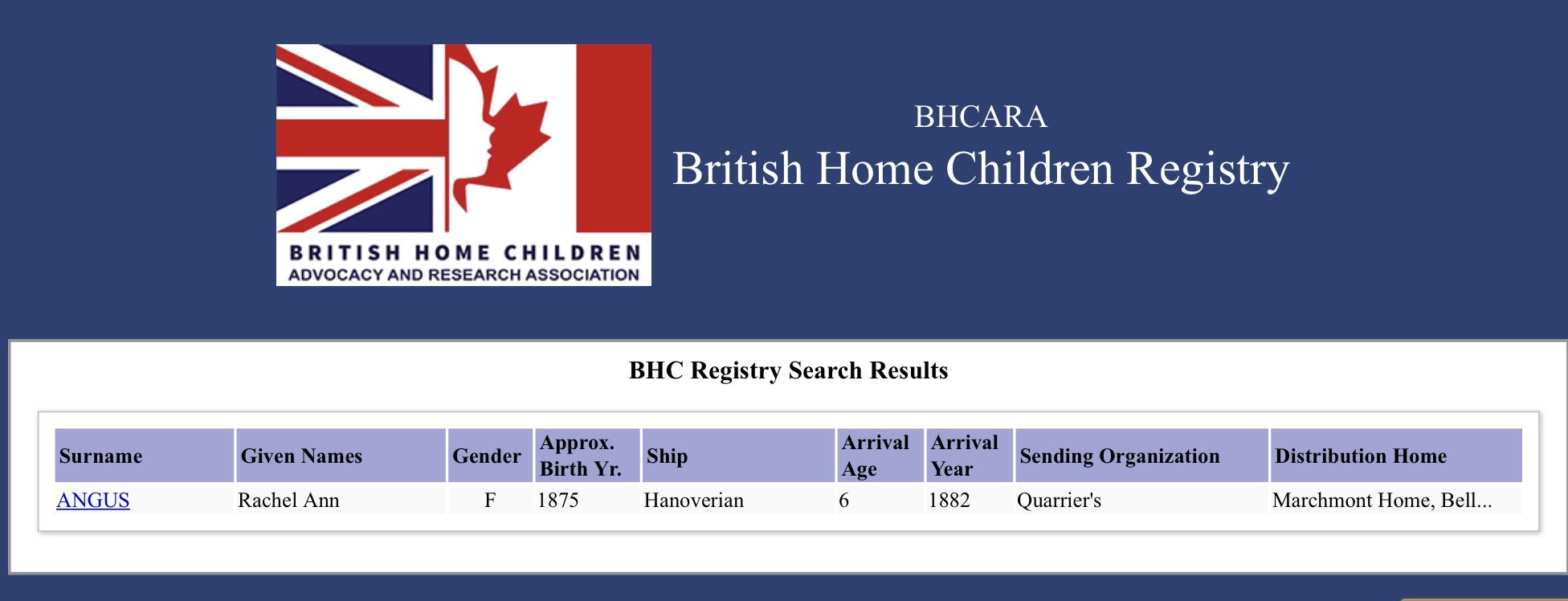
Ann’s mother, Rachel Martin Angus, great, great grandmother to both Shirley and me, cared for the children while Ann worked. Not an uncommon practice. However, Rachel at age 36, found herself widowed in 1880 4 . One can only imagine Rachel’s financial and emotional situation at that point as she tried to raise four grandchildren on her own with little or no income. According to Shirley, in 1882 Rachel gave up on the youngest, the six-year old twins Rachel and James, abandoning them to an orphanage in Glasgow, the Glasgow Union Workhouse.5  Two months later they were put on a ship and sailed to Canada, destined for a home child distribution centre, Marchmont Home, in Belleville, Ontario. 6. 

Why did Rachel feel she must abandon her grandchildren? Why did the orphanage accept them so readily? Did Rachel receive counselling on possible options? Did she know they could be sent to Canada if she left them? Did the orphanage contact the mother of twins about the situation and ask her to take responsibility? Shirley tells me that, according to her grandmother’s records from Quarriers,  Ann’s new partner knew nothing of her previous children.7.

Did no one in the extended family step up to help?

In the defence of my great grandfather, the shoemaker, the twins’ uncle and the father of nine children himself, how could he take on two more mouths to feed. Did he even know of his mother’s and sister’s predicament?

Glasgow (and Par-tick), rough and dirty at the time, suffered particularly poor air quality from industrial pollution and coal fires.  Hundreds of multi-story tenement buildings had been erected to house the workers flooding into the city to feed the rapid expansion of the ship building industry. Overcrowding and primitive plumbing contributed to rampant disease. Life expectancy was low 8. It is understandable that the various agencies responsible for abandoned children would see Canadian farms as a healthier alternative to life in the Glasgow environment.

Between the years 1869 to 1939, an estimated 100,000 children were sent to Canada to be used as indentured farm workers and domestic servants. Believed by Canadians to be orphans, only two percent truly were. Most simply came from destitute and desperate families such as that of twins Rachel and James.

Some of the Home Children were welcomed into their Canadian placement homes and even adopted. Consequently, they thrived. Most lived outside the family circle in sheds or barns and were treated simply as hired labour. If they did not satisfyIMG_3791 the owner, they were returned to the distribution home and sent out again to another placement.
The children were often poorly clothed, overworked and under fed. Few received the education for which they were entitled under their contracts. The agencies responsible for them, such as Quarriers for Rachel and James, provided little or no oversight.

Public opinion too often shunned these children. Canadians needed their labour but they were seen as diseased urchins, riff-raff, even thieves. They grew up marginalised, lonely and ashamed. As they grew older, they hid their home child background and rarely, if ever, spoke of it. Yet for all of that, most became hard working Canadian citizens as did their descendants.

Today I look at two names on the British Home Child Registry: Rachel Ann Angus and Robert James Angus, twins age 6, and I am appalled. Yes, childhood was not seen then as it is today. Children were viewed as little adults and expected to work. But they were also expected to remain with their families. How frightened these two small children must have been as the ship pulled away from the dock taking them far from anything they had ever known. They were not even kept together in Canada but placed on separate farms.

IMG_3794IMG_3793

Footnotes:

  1. Angus family tree. Owner Barbara Angus (Tarrant). Ancestry .ca
  2. Ibid
  3. E-mail correspondence with Shirley Joyce
  4. Angus family tree. Owner Barbara Angus (Tarrant). Ancestry .ca
  5. E-mail correspondence with Shirley Joyce
  6. British Home Child Registry. https://www.britishhomechildrenregistry.com/
  7. E-mail correspondence with Shirley Joyce
  8. http://en.wikipedia.org/wiki/History_of_Partick


Background Information:

https://www.britishhomechildren.com/

https://www.scotsman.com/lifestyle-2-15039/the-15-000-scots-children-shipped-to-canada-1-4616584

British Home Children: Their Stories. Global Heritage Press, 2010.

Joyce, Sandra. The Street Arab: the Story of a British Home Child. Welldone Pub., 2011

Pettit, Mary. Mary Janeway: the Legacy of a Home Child. Natural Heritage Books, 2009.


Working together to help genealogists discover their ancestors