RootsTech Happens Next Weekend

FamilySearch.org, the genealogy website hosted by the Church of Jesus Christ of Latter-day Saints and the Federation of Genealogical Societies (FGS) are teaming up to host RootsTech, a two-day educational extravaganza next weekend, from Thursday February 11 until Sunday, February 14.

I’m so disappointed not to be going to Salt Lake City, Utah to attend in person, but at least I’ll be able to attend virtually, via a multitude of seminars that will be live-streamed via the website.

According to the RootsTech Facebook page, the sessions that will be live streamed in Eastern Standard Time are:

Thursday

10:30 a.m. Keynote speakers
1:00 p.m. The Future of Genealogy – panel
3:45 p.m. Tell it Again – Kim Weitkamp
5:00 p.m. The Genealogists Gadget Bag – Jill Ball and panel
6:15 p.m. Finding the Obscure and Elusive…- James Tanner

Friday

10:30 a.m. Keynote speakers
11:45 a.m. Researching Ancestors Online – Laura Prescott
1:00 p.m. FamilySearch Family Tree – Ron Tanner
3:45 p.m. Google Search…and Beyond – Dave Barney
5:00 p.m. From Paper Piles to Digital Files – Valerie Elkins

Saturday

10:30 a.m. Keynote speakers
11:45 a.m. Using Technology to Solve Research… – Karen Clifford
1:000 p.m. Digital Storytelling: More than Bullet Points – Denise Olson

Family history fairs around the world will also stream some of the sessions. Check the website to see if there’s one near you.

After watching as many of these as I can, I’ll be trying to figure out how to attend next year’s RootsTech. It will take place February 3–6, 2016, again at the Salt Palace Convention Center in Salt Lake City, Utah.

Register of Abjurations

abjuration

Definition: When you’ve given up your old ideas about something, or retracted a statement you made earlier, you can call it abjuration.

Many people experience an abjuration of their religious beliefs, renouncing one faith for another or dropping religion from their lives altogether. When you abjure something, you give it up or renounce it. The Latin root is abiurare, “deny on oath.”


Acte d’abjuration de John Rottell. 26 septembre 1671. (Source : AAQ. Registre des abjurations d’hérésie, vol. A, p. 22, no. 50).

The above abjuration is taken from the blog of Guy Perron (posted November 9th, 2014) entitled Les abjurations a Quebec de 1662 a 1757.

The document: Register of Abjurations is a  guide to a microfilm available at Drouin that lists the numerous church records of abjurations.  This document may assist those who have traced their French Canadian ancestors to France and their research has led to the possible  conclusion that at some point in time members of their family or families in New France may have been Protestants in France.

Note: In New France in order for Protestants to marry French Canadian Catholic women, they had to become members of the Catholic Church.

Click on the following link: Register of Abjurations

Genealogy Collections in Genealogical and Historical Societies in Quebec

 1851 Census Canada East Isidore Jodouin

  • Original pioneer papers,
  • Original manuscripts,
  • Family papers,
  • Township papers,
  • Towns and villages papers,
  • Indexed church records of births, marriages, deaths,
  • Indexed cemetery listings,
  • Indexed land grants,
  • Local census records,
  • Forgotten villages
  • Old place names,
  • Church history,
  • History books, & Publications for sale which can be found at various societies across this province and surrounding regions

Click on the link below to open the file:

Genealogy and Historical Societies in Quebec – Genealogical Collections

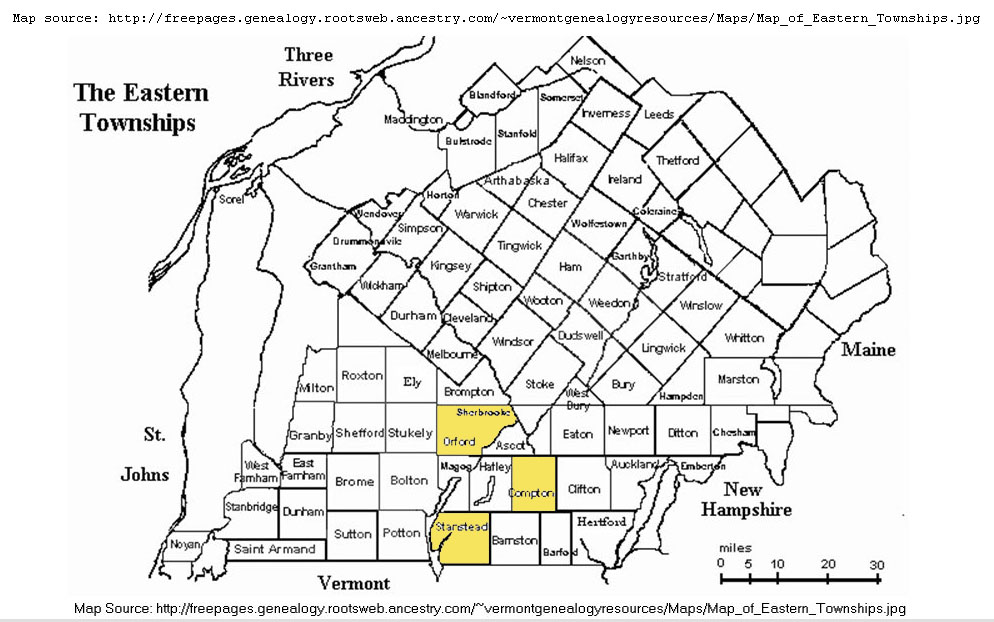
The Loyalists of Stanstead, Sherbrooke and West Compton 2014

images (1)

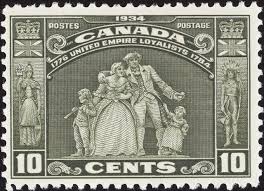
The American Revolution  was time of flux for many citizens who were loyal to the British. These Loyalists sought refuge in towns north of the border in an area known as the Eastern Townships. They settled and formed communities and built their churches

.uel2

In this database you will find the locations of  births, marriages and deaths of these early settlers.

Townships Map

Right Click the title below to open the database in a new window: 

The Loyalist Churches of Stanstead, Sherbrooke and West compton 2014

The French Canadians in the U.S.A 1840-1930

French Canadian Emigration to the U.S. 1840-1930

compiled by Jacques Gagné

“The Archives nationales du Québec in Montréal on Viger Avenue are the repository of a wonderful and unique collection of books of marriages, baptisms, deaths of French Canadian families who left the Province of Québec between 1840 to 1930 for destinations south of the border. For it is estimated that during that 90 year period, 900,000 French Canadians left the regions along the shores of the  St. Lawrence River, the Richelieu River, the Chaudière River for the U.S. ”

As part of this research guide, Jacques Gagné has also included the exodus of Acadians to the same New England States, New York State and other points within the United States of America including the Acadian families who were deported to Louisiana.


Click here to open the pdf file : French Canadians in the U.S.A. 2014

Christmas at Aunt Eva’s

images Christmas 2


One of my fondest memories of Christmas in Gaspé  are the Christmas Eve family gatherings at Aunt Eva’s .  Each Christmas Eve the Boyle Family members (Dorothy, Emily, Eva, Ernest, Eileen, Greta, Alice and Arthur)  who happened to be in Gaspé would   meet at Eva’s home for this  annual   Christmas Eve celebration .  It was truly a family gathering because those celebrating would extend beyond the immediate family.  All nephews, nieces, cousins, girl and boy friends would be welcome as well.

As long as I can  remember this tradition was guaranteed to take place each year, come blizzard or any other natural disaster.  The only break in the tradition was when Aunt Eva passed on.  Though I believe efforts took place to revive this tradition, things were not the same.   An important ingredient was missing.  This being Eva’s love of Christmas and love for her family.   The tradition hinged around Eva.  No one could think of it taking place any where else.

 As memories go, this is one to cherish as the years pass and I am sure it gives a warm feeling to those who remember these Gaspé Christmas’s.

imagesChristmas 3

 This story, Christmas at Aunt Eva’s was written and contributed by Jim Caputo

Many thanks Jim for allowing us to share in your fond memories of Christmas in the Gaspe. Perhaps this will encourage others to think about their favourite memories of past Holiday Seasons.

ch-hollybar

Loyalist Churches in Brome-Missisquoi – Upper Richelieu Valley – South Shefford

Missisquoi 2_edited-1

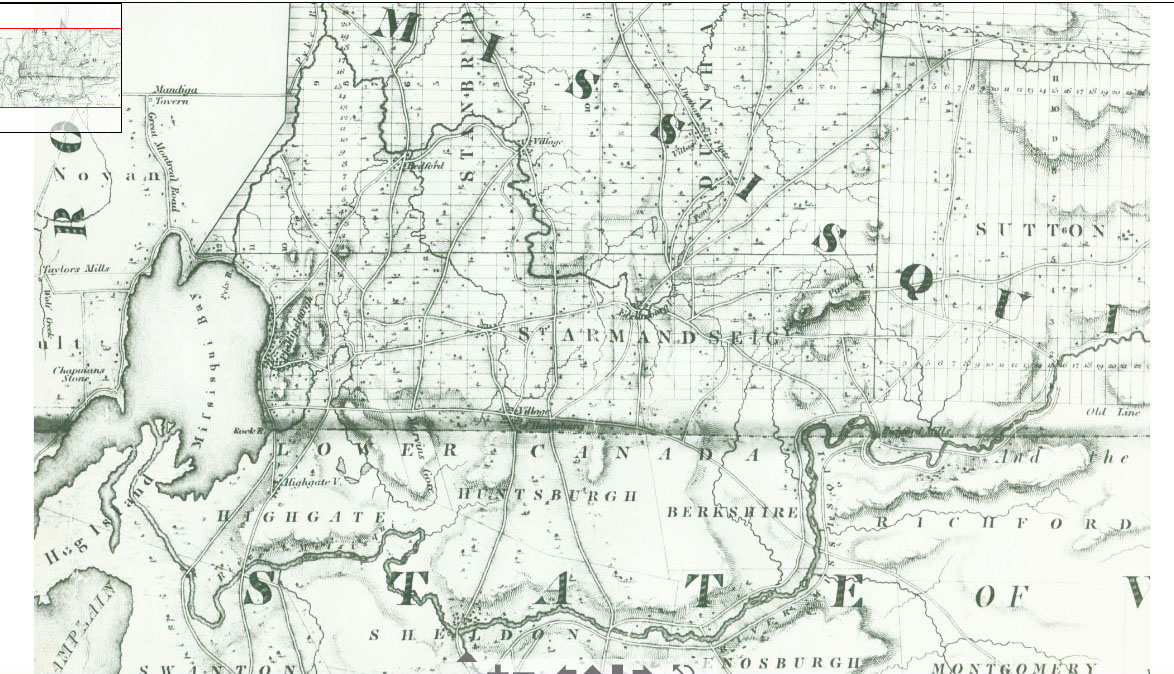
The American Revolution left  profound marks on the development of the areas of Brome-Missisquoi, the Upper Richelieu Valley and South Shefford. The Americans who wished to remain loyal to the British Crown fled the United States. These Loyalists  came from the northern states and settled very close to the border. Within a short period of time they began to develop many small communities, from Abercorn , near what is now the Vermont border to St. Armand near Missisquoi Bay..

This compilation describes the many towns and villages that emerged from the late 1780s to this day. Their churches contained documents of birth, marriages and deaths that have  been preserved and are available in various archives.

The contributions of these Loyalist can be found   throughout the area.  Many of the churches are still standing and are a tribute to their perseverance.

Click on the link: Loyalist Churches in Brome Missiquoi

Upper Richelieu Valley and South Shefford

images (1)

The Loyalist Churches of Sorel, Three Rivers, Saint Johns, Chambly and Surrounding Areas

images (1)


This compilation, prepared by Montreal genealogist Jacques Gagné, looks at the churches frequented by Loyalists who settled in three regions of Quebec in the late 18th century: Trois-Rivières (Three Rivers) and Sorel, east of Montreal on the St. Lawrence River, and Saint-Jean (St. Johns) and Chambly, south of Montreal on the Richelieu River. It outlines the histories of these churches and where to find surviving records.

Click on the link: Loyalists Churches Sorel – Three Rivers

The O’Hara Cemetery, Gaspé

clip_image002

Author: Jim Caputo

Photos: Courtesy of Jim Caputo

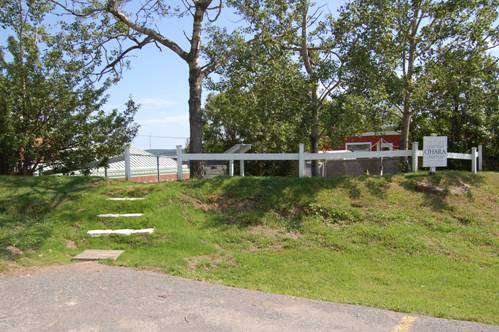
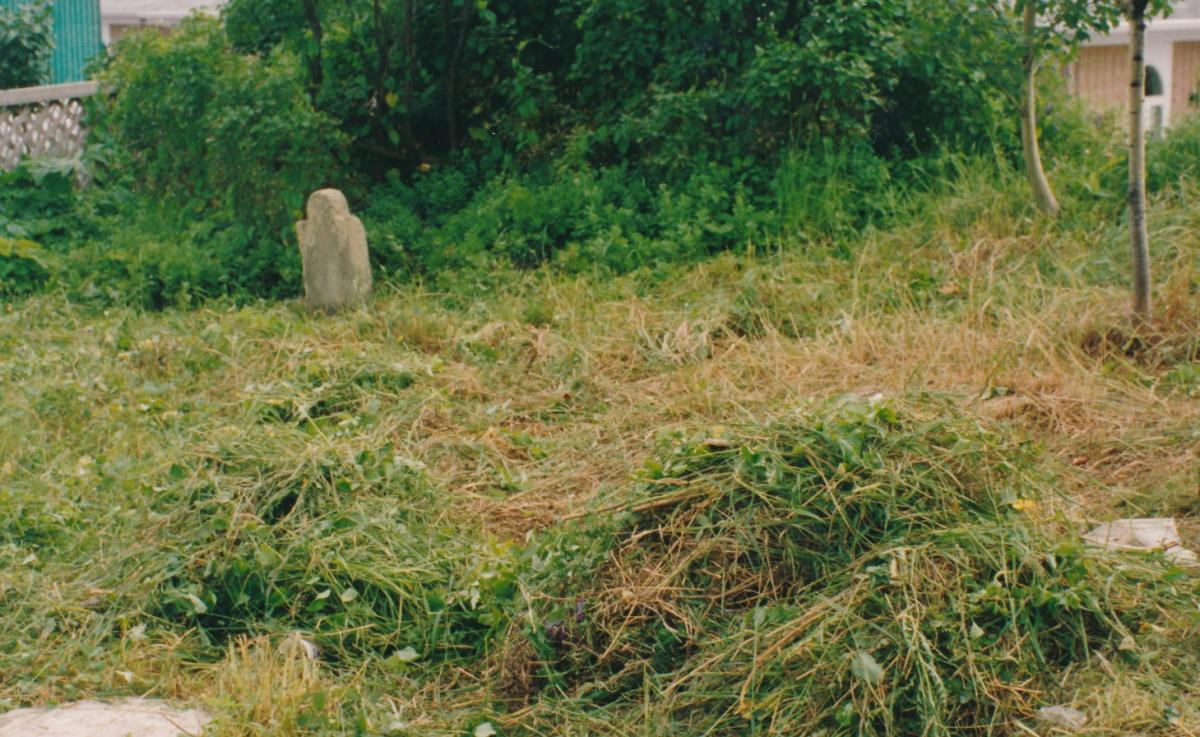
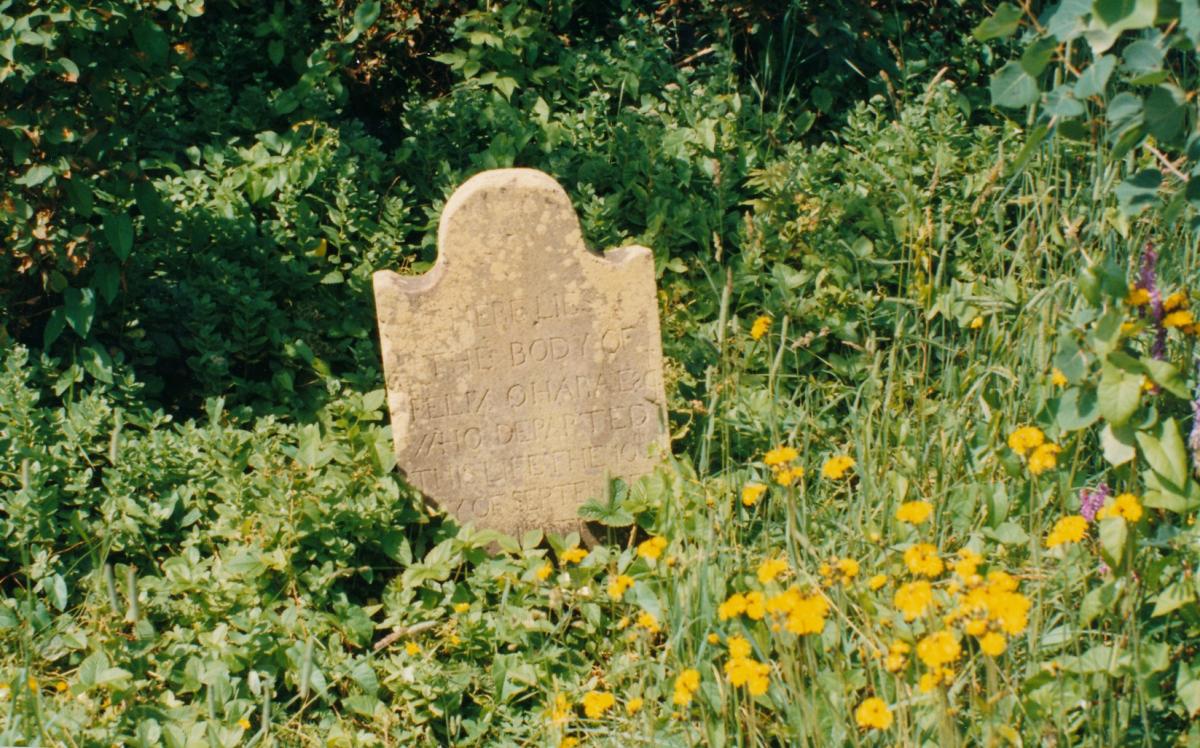
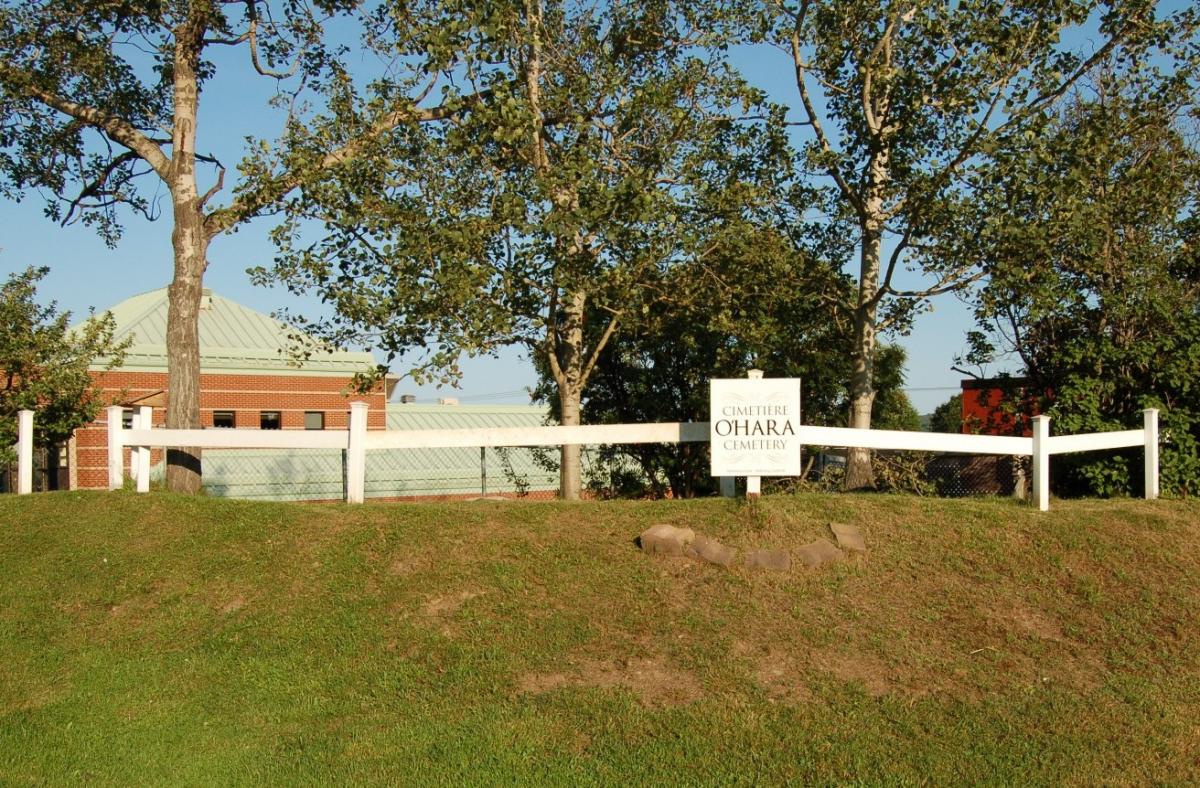
 Located in the very heart of the city of Gaspé lies an ancient burial ground — the O`Hara Cemetery. No one knows for certain how many souls were interred in this place. What is certain is that for many years the site was neglected, left to grow up in brush and weeds. Through the efforts of Heritage Gaspé/Héritage Gaspésie the area was cleaned of debris and brought to its present condition. Take the opportunity to visit the spot and view the graves of some of our early settlers and think back in time to Gaspé of yesteryear.

The O’Haras of Gaspe

The O’Hara’s, one of the earliest settlers of the Gaspé Basin area, arrived in Gaspé in 1765. Felix, his wife Martha and family settled on land long known as O’Hara’s Point. Their other holdings included lands that make up much of the centre of present day Gaspé Village. Felix, as well as being a prosperous land owner, played a prominent role in laying the foundations of the Gaspé communities, being made a Justice of the Peace, becoming the second Collector of Customs for the port of Gaspé, and being appointed Judge of the District of Gaspé in 1777. He also helped protect the coast from attacks during the American Revolution, and at the end of hostilities helped to survey and distribute lands to the United Empire Loyalists who came to Douglastown and New Carlisle.

As well as the efforts of Felix, other members of this family also played an important role in the development of early Gaspé. Of his sons Oliver, became Collector of Customs at Carleton; Edward represented Gaspé in the first legislature of Lower Canada (Quebec), served in the British army, and was appointed the Governor of the Island of St. Lucia in the Caribbean; Henry the youngest son, was Collector of Customs for many years and was also a Justice of the Peace and surveyor; Hugh, Collector of Customs in Gaspé, through his compassionate efforts in helping immigrants sick with fever, caught the fever himself and died as a result. The O’Hara’s also supported the development of education, the establishment of Churches, and served in local militias.

Of the original grave markers only those of Felix O’Hara (the patriarch of the O’Hara family), who died in 1805, Mary Stuart, wife of Henry O’Hara, who died in 1838, and Jane Chevalier, who died in 1848, exist today. It is believed that other members of the O’Hara family may have been buried at this site. It is also believed that others outside of the family were buried here as well.

ohara.2


ohara_0   

  ohara.3

                                                                           After the clean up.


Working together to help genealogists discover their ancestors