Tag Archives: Eastern Townships

Woodland’s Nymph

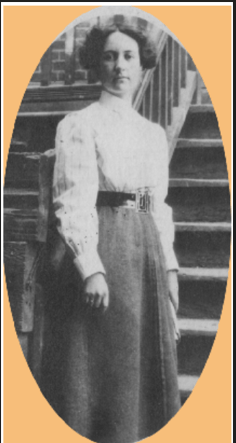
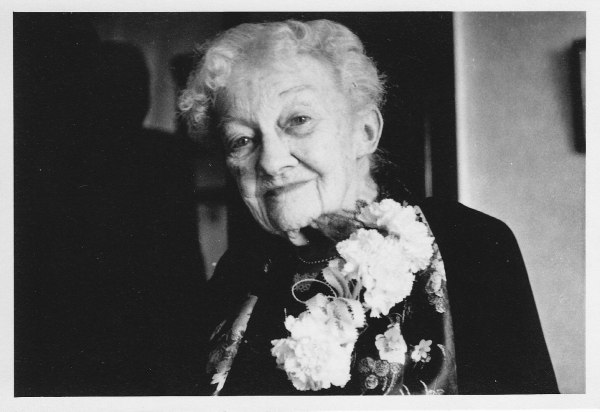
I recently discovered two photos of “Amy” in my dusty old boxes of family memorabilia. The first captured her elderly wrinkled face with a twinkle in her eye and a flower corsage adorning her left shoulder and the other portrayed a 29-year old Amy dressed in a formal gown complete with a silk fan also with a flower corsage on her left shoulder. Inscribed on the reverse side of this second photo, written in Amy’s scrawl, was “Bob with love Amy – Xmas 1894.”

It turns out that Amy C. Lindsay (1865-1960) was my great grandfather Robert Lindsay’s (1855-1931) half sister. His mother Henrietta Dyde died within months of losing her fourth child and, a couple of years later, his father Robert A. Lindsay (1826-1891) married a young Charlotte Vennor (1843-1912) who became stepmother to his three boys – Robert, Charles and Percival – all under the age of ten. Over time, Robert A. and Charlotte had five more children, with Amy being their first born and ten years junior to Robert.

Who the heck was “Bob”?

Amy never married, so “Bob” could not have been a lost love in WW1, as she was 50 years old at that time. The most plausible explanation could be a gift to her older half brother Robert – “Bob” – and that’s the reason why the photo ended up in with my family.

My guess is that she idolized her oldest half-brother and gifted him that special photo which somehow survived the test of time to be found by me in my dusty old boxes. Mystery solved!

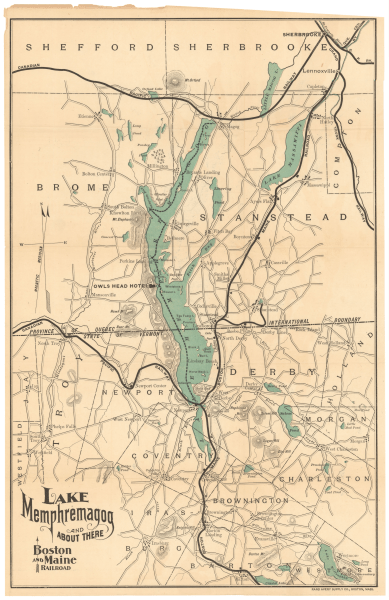
In 1873, when Amy turned eight, her parents bought a huge summer estate property called Woodland on Lake Memphremagog just south of Georgeville, Quebec. Lake Memphremagog1 is in the Eastern Townships just 72 miles east of Montreal, Quebec. It is 31 miles long, from north to south, spanning the international border between Quebec and Vermont but is predominately in Quebec.

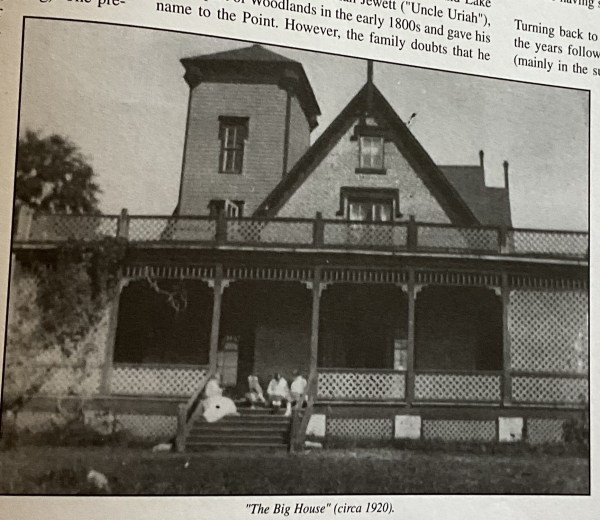
Amy’s father acquired “Woodland” from the original owner William Wood and it consisted of 280 acres of land bordering on the waterfront. William Wood had built a large red brick manor house that a neighbour described as a “barrack with a steeple.” Regardless of how it looked, it became home to several generations of the Lindsay family until the early 1960’s when it was replaced. They affectionately called it “The Big House.”

During this time, several other wealthy English speaking families acquired farm properties in the area and established their summer residences there as well. Woodland became a full functioning farm complete with livestock and crops all managed by hired hands. Over time, various third parties managed the farm until well into the 20th century, which left the family with plenty of free time on their hands.

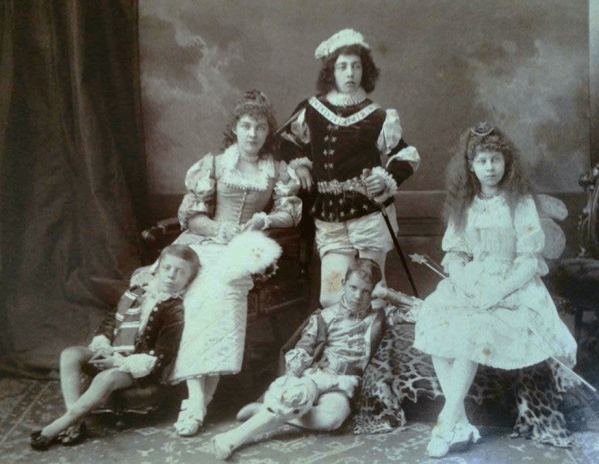
The Lindsay family took up residence in the Big House every summer. Amy’s father worked as an accountant for the Bank of Montreal and evidently could be spared for the long summer months to enjoy time with his family. “Apparently Robert Lindsay followed a daily routine of walking around the property with his entire family in tow according to size.” On another special occasion the whole family dressed up in fancy costume clothes for a party.

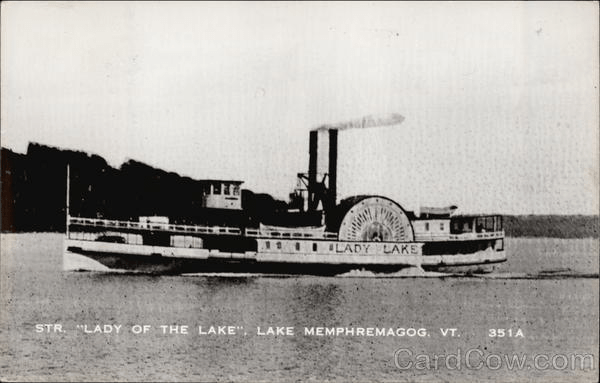
The grand “Lady of the Lake” steamer would sail twice daily on Lake Memphremagog stopping at private docks and thus providing the family with lake excursions right from the front doorstep of the “Big House.”

The Lindsay family (including mother-in-law Vennor who rescued Woodland financially in 1885) enjoyed the property until Robert’s death in 1891. Mrs. Vennor died four years after him and the property devolved to the four surviving grandchildren: Amy, Douglas, Cecil and Edith. (Their brother Sydenham died young while trying to save a drowning victim.)

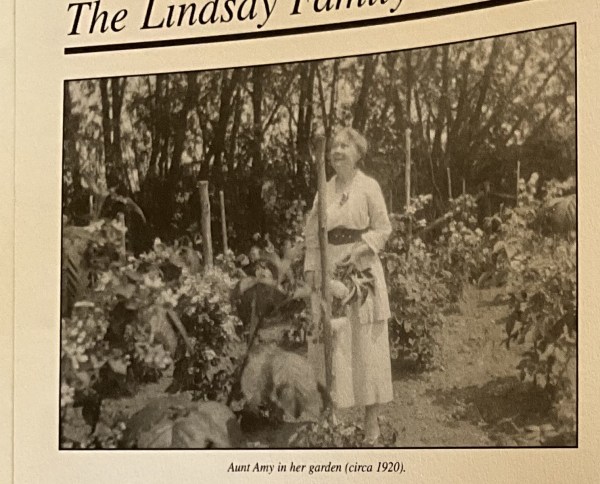
According to her family, “Amy was a small lady, well liked and well respected by most… She loved the lake and Georgeville and spent almost all her summers there… She lived in the Big House and had a beautiful English country garden nearby where she liked to spend many hours puttering about.”2

Although Amy never had children of her own, her many nieces and nephews doted on their “Aunt Amy.” After her mother died in 1913, her nephew took her to Paris and they stayed at the Hotel Pas de Calais, a four-star boutique hotel, right in the heart of tourist Paris. Nothing but the best for Aunt Amy!

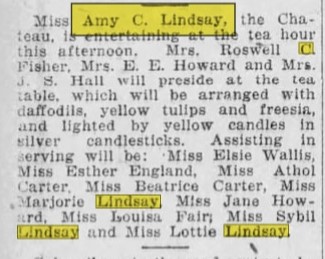
According to an article in the Montreal Star, when Amy hosted a social tea at The Chateau (across from the Ritz-Carlton Hotel), “the tea table was arranged with daffodils, yellow tulips and freesia and lighted by yellow candles in silver candlesticks.” What made it even more special were her five adult nieces assisting her in the serving of tea. She must have been very proud!

Woodland stayed in the Lindsay family until 2020 with several generations enjoying the spectacular property and family legacy. The road leading to their property was aptly named “Chemin Lindsay” and remains so today.

Although Amy spent extended summers with the multi-generational Lindsay family at Woodland, she lived the rest of the year in the downtown area in Montreal known as “The Golden Square Mile.”3 She seemed to move around quite a bit but always within the same area first staying with her mother until her death and then sometimes with her sister Edith (Carter) after that. Although in 1920 she enjoyed “wintering” at the Ritz-Carlton Hotel!

Amy eventually settled for her last 20 years in the Maxwelton Apartments on Sherbrooke Street near McTavish across from the McGill University campus while summering at Woodland until she died in 1960 at age 95.

According to the family, she obtained her first TV late in life and became an avid hockey fan! What a thrill it must have been to watch that first televised hockey game in 1952!

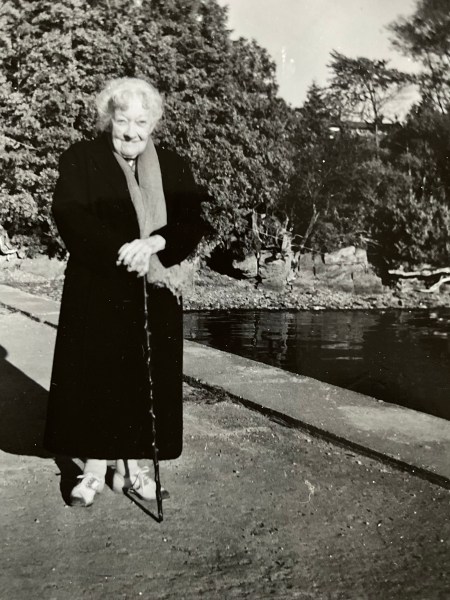
Amy on the Georgeville dock 1955 at age 90

In her last will and testament, written in 1896 when she inherited one quarter of Woodland, she bequeathed “Bob” her cherished set of Waverly books by Sir Walter Scott. He died long before her and, unfortunately, they were not to be found in my dusty old boxes!

1https://wiki2.org/en/Lake_Memphremagog – as referenced 2023-10-18

2The Lindsay Family and Woodlands – “Georgeville 200th”

1901 Lake Memphremagog map” by Rand Avery Supply Co. – Ward Maps. Licensed under Public Domain via Commons – https://wiki2.org/en/File:1901_Lake_Memphremagog_map.png#/media/File:1901_Lake_Memphremagog_map.png

3https://wiki2.org/en/Golden_Square_Mile?wprov=srpw1_0 – as referenced 2023-10-18

Notes:

A map of Grand Trunk Railway route Mtl to Portland, the train appears to have stopped in Sherbrooke:

https://digitalarchive.tpl.ca/objects/353690/map-of-grand-trunk-railway-system-and-connections

Archival photos of Georgeville:

https://www.townshipsarchives.ca/georgeville-quebec

Janice Hamilton’s story about the Baggs in Georgeville:

Summer in Georgeville

Romeo and Maid Marion: A Rom-com Romance

August 18, 1918

30 York Avenue, Westmount

My dearest sweetheart,

I cannot express in writing how pleased I was to hear your voice over the telephone a little while ago and was very sorry when I learned that due to the circumstances, you were not able to come home.

Dearest, I have never written you on this strain since I have known you and before I say what I have in mind, I beg of you to please try and understand it in the light that I mean it.

 For Marion, dear, I love you with all my heart and it is because of my affection for you that I try to pave the way a little. I honestly, would not intentionally hurt you Marion. 

Now sweetest, here it is: You know, Dear, that you have left me alone at different times for indefinite periods, but may I say that I have never yet found one month to be as long as this one. 

Really, it has seemed to me almost like years. I would a thousand times rather be left entirely alone than to be left again with the girls, as I cannot get them to  do anything which appears to me to be reasonable. I have come home on several occasions and the front and back doors were not locked. They will not close the windows and the house is almost like an oven. They forget to order food. The refrigerator is left open; the ice is melting as fast as you can put it in. Cawlice. Water is running all over the floor and things are lying about. I am sick and tired of the whole place.  

Take pity on me Darling before I go crazy and come home to me to look after and love me. *but under no circumstances take chances (with mother’s health).  Take it from me, God help the poor man that gets either one of them, if they don’t change. You can do more in five minutes than they can do together in a day.  You have forgotten more than they’ll ever know. God bless you Marion and may it be God’s will that he can spare you to me for many long happy years.

Lovingly,
Hughie

PS. Don’t fail to burn this when finished reading.

This rather amusing letter was sent under duress by my husband’s grandfather, Hugh Blair, to my husband’s grandmother, Marion Nicholson Blair in August 1918.

It seems Marion had taken her daughters, 12 month old Marion and three-year-old Margaret, from their home in Westmount, Quebec to visit her mother in Richmond, Quebec leaving her husband in the care of his sisters-in-law, Flora and Edith.

Hugh, clearly, is at his wit’s end. He is feeling neglected. Of course, his sisters-in-law have more important things to do. They have busy day jobs as teachers. WW1 is raging. Over and above their tiring day jobs, the women volunteer for the war effort. Many of their friends have lost brothers or sons at the Front. They can hardly feel sorry for Hugh.

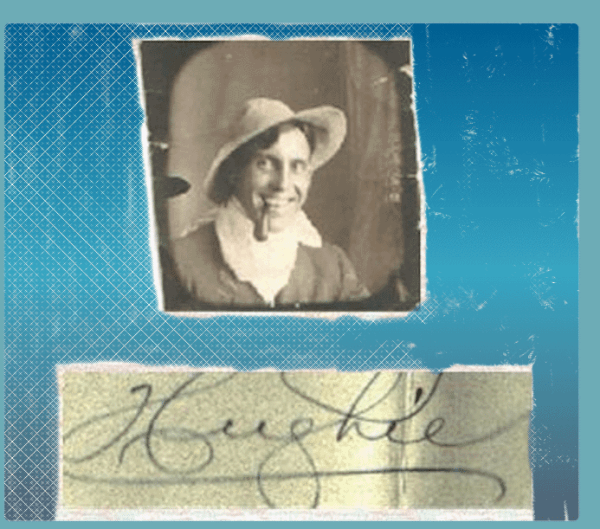
My husband’s grandfather, Hugh Christian Blair, born in Three Rivers Quebec in 1882, was a man of many faces. He could be a big baby, no question, but he was also a suave charmer, a savvy businessman, a talented carpenter and metalworker, a fine fiddler, a hockey player and curler and, ugh, judging from an album I have filled with photos of dead foxes and such, an ardent hunter.

Hughie the joker with the stylish signature

He was the son of a prosperous Three River lumber baron and he worked in the family business.

In 1912-13, Hugh was courting his future wife, Marion Nicholson, daughter of Norman Nicholson, a very respectable but down-on-his-luck businessman from Richmond, Quebec.

Letters I have reveal that their one year courtship, from May 1912 to October 1913, has all the earmarks of a modern rom-com movie with its many ups and downs and breakups and make-ups and misunderstandings.

Let me summarize the plot for you:)

In May 1912, in his mid thirties and with good prospects, Hugh Christian Blair is introduced by his landlady to Marion Nicholson, a teacher at Royal Arthur School in Little Burgundy. Hugh is instantly smitten by this attractive firebrand, but first he must give his current girlfriend, Jean, a Momma’s girl, the brush-off. “Of course, you must know that we were never engaged and as for any understanding it must have been entirely on your part as I myself was only thinking of you as a very kind friend.” 1

He pursues Marion with all of his energy, taking her out of her stuffy rooming house to church as well as to more exciting places like the Orpheum Vaudeville Theatre and Dominion Thrill Park.

Marion is secretive about her life but sisters Flora and Edith keep their mother Margaret up to date about the budding romance, cheekily referring to Hugh in their letters as “Romeo” or “Hugh Dear.”

At the end of the school year Marion organizes a party at her rooming house. She strategically invites Hugh as well as another male friend. Neither of them shows up. She is furious. So the romance stalls. Marion returns to Richmond for the summer months.

In August, 1912, Flora and Marion visit a kind doctor cousin, Henry Watters, in Boston who takes them to Norumbega Park and a Bosox game. Henry isn’t the marrying kind, but another Boston relative, a Mrs. Coy, is keen on having Marion marry her son, Chester. Hugh somehow senses this. He writes Marion two long-winded letters while she is in Boston.

“I notice by the advertisements that there will be quite a few nice plays out this fall in Montreal. So if I am here – and of course you also – and care to take them in, I will enjoy taking you along. Of course, I would not like to neglect our Old Standby at the Orpheum. But I suppose there is no use planning too far ahead as many changes can take place between now and then.” It looks like he’s hedging his bets, doesn’t it?

It’s September. School begins anew. Marion is totally fed up with her rooming house with its suffocating curfews, so she finds a large flat to live in with her sister Flora and two other teachers in Mile End.

This is quite the revolutionary feminist act. Mr. Blair is a frequent visitor, so says Flora in her letters. (How scandalous!) However, Chester, “A great Yankee” also comes to visit.

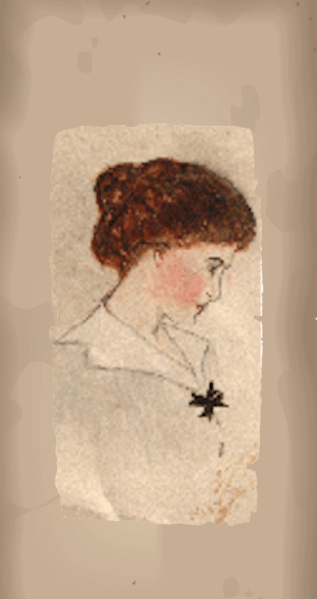
Marion drawn by a fellow teacher

In November, Marion writes her Mom: “Hugh is helping with the double windows. Sometimes I like him, sometimes I hate him, but I wouldn’t know what to do without him.” Now, doesn’t that sound promising!

But something happens at Christmas (likely a dispute with the dad, Norman) that once again pours cold water on the romance.

In a telling January 3, 1913 letter to Marion, Hugh acknowledges receipt of her Christmas gift of cuff links and in turn says that the teddy bear he sent her was probably lost in the mail or stolen. Hmmm.

In February, 1913, Edith tells her Mom she went out with Hugh and Marion and he was all suave charm, “not the Hugh you had at Christmas.” Things are definitely looking up.

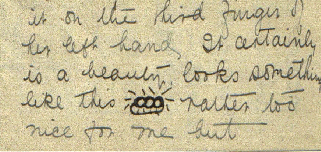
Sure enough in May 1913, Marion sends a letter to her mom with a drawing of her engagement ring.

A month later Hugh sends a very formal letter to Norman, her father, asking for Marion’s hand. Norman sends a letter to Marion saying “I can’t give my consent for I am dead broke.” 2. (Clearly giving consent is about money here.)

The men finally come to some arrangement but first Marion has to sign a miserly marriage contract that stipulates she gets nothing should the couple separate FOR ANY REASON. This is, likely, Hugh caving to his parents who do not approve of the marriage.

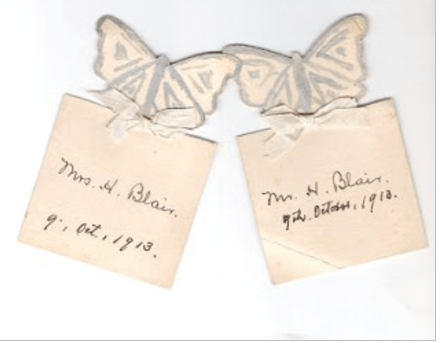
The couple weds in Richmond in October 1913. Hugh’s parents do not attend the wedding. Hugh leaves the family business to set off on his own.

Edith, Flora Hugh, Floss and Norman Nicholson, I suspect on the wedding day.

Wedding on the cheap.

But a Great War breaks out and Hugh soon reconciles with his parents and returns to the family business. (They need him: production is ramping up. Canadian lumber is key to the war effort apparently.) Hugh and Marion, with a newborn daughter, move from NDG to a cottage 4 on York avenue in Westmount near Hugh’s Aunt and Uncle.

Marion invites Flora to come live with them (with Hugh’s approval):

“It seems rather foolish to me to have you alone at Mrs. Ellis’s when there is room here. It is not that I need you especially for anything, but that I would like to have you with us.”

Marion tells how Hugh and his uncle work on their Victory Garden:

“Hugh and Willie are making a garden. What success they will have I do not know. One thing may be sure, the beds are straight and square. I would prefer to have more in them myself.”

Marion describes how much Hugh’s mother rails against Conscription:

“Everyone here, that is the Aunts and Grandma B are terribly worked up about conscription. All they say would fill a book and some of the sayings I do not find very deep. I would like to tell them that they are not the only ones who have sons who will be called, or they may think that theirs are more to them.”

Letter from the Front. Flo’s friend, Ross Tucker. He survived, his brother Percy did not. Percey was killed just before Armistace. A sister died of the Spanish Flu. “That family is not the same,” says Edith in a letter.

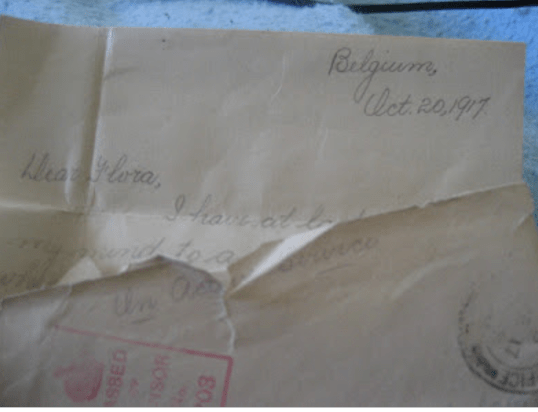
And in July, 1918, just a couple of months before another scourge, the Spanish Flu, hits Quebec, Marion takes her two young daughters on a prolonged visit to her parents’ in Richmond and Hugh, left behind to swelter in the kitchen, has a meltdown. He writes her a long, plaintive letter he hopes his wife will burn after reading. Alas, she doesn’t burn the letter. BIG mistake!

Denouement.

Post war life is good for the Blairs. They have two more children, a girl and a boy, and spend a great deal of money, according to Edith. Marion’s father dies in 1921. Marion continues to regularly visit Richmond, a place her children come to cherish.

However, in 1926, Hugh contracts a liver disorder and passes away a year later – but not before signing away Marion’s rights to his portion of the family business on his deathbed – “as a temporary measure to facilitate business.” Marion Nicholson Blair is left with nothing to live on so she goes back to work as a teacher, wheeling and dealing to find sponsors for her children’s McGill education.

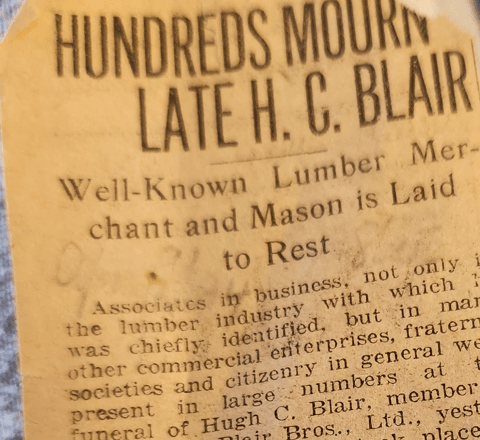
A last minute letter reveals that Hugh attempts to to purchase a burial plot in Melbourne Cemetery beside the Nicholson family plot. That doesn’t happen. Hugh Christian Blair is buried with his family on Mount Royal in Montreal. The funeral notice in the Gazette reveals it is packed with Masons but fails to mention Marion and her family as mourners.

Afterward:

So, here we have the plot for a classic rom-com romance, but a movie with no happily-ever-after. Iron-willed Marion just rolls up her sleeves and goes back to work, despite great pressure put on her to remarry for the sake of her children. Indeed, she once told her children that being a lone parent wasn’t so bad: “At least I can make all the decisions for my family myself.”

Marion becomes a master-teacher and rises up to lead the Provincial Association of Protestant Teachers, or PAPT, during WW2 where she fights for teachers’ pensions.

In 1947, Marion dies of a heart attack before she can earn her pension.3 She receives a front page obituary in the Montreal Gazette, a major newspaper. “With the loss of Marion Blair the province, indeed, the whole Dominion has suffered a serious loss.”

In the 1960’s, the PAPT is one of the highest achieving public boards in North America and no doubt Marion Nicholson Blair had a role in making that happen.

1. This was the usual language used in such situations. I believe there must be a legal component to it. Indeed, the last line of the letter asks her ‘reply and tell me you have forgiven me.’

2. Many people believe this traditional gesture is romantic but it was practical, all about money. In Britain at least adults have been able to marry without consent for many centuries. However, without a dowry, most men couldn’t marry.

3. Marion’s heart condition first flares up in the year Hugh is dying. Edith suggests Hugh is very demanding and Marion, with four children, is run ragged meeting his needs. Edith also says Hugh’s eyes are yellow as yolk. A tube between the liver and stomach fell apart. It is a condition easily fixed nowadays.

4. 30 York Avenue is still there, a two story cottage. It’s on Google Maps.

Irish Catholic Churches in the Eastern Townships of Quebec

Drummond, Richmond, Sherbrooke, Stanstead Counties

Introduction

From 1815 to 1824, an estimated 50,000 Irish immigrants arrived at the Port of Quebec, and 150,000 more arrived between 1829 and 1837. Many kept going, settling in the United States or Upper Canada, but some moved into the rolling hills of Quebec’s Eastern Townships. The region, which is often known by its French name, l’Estrie or Cantons de l’Est, includes Drummond, Richmond, Sherbrooke and Stanstead counties.

In order to determine where Irish Catholic immigrants settled in Quebec, I reviewed hundreds of books of marriages, baptisms and deaths in Catholic parishes of Quebec. These books are kept at the Bibliothèque Archives nationales du Québec in Montreal (BAnQ Vieux-Montréal). I also reviewed microfilms there. I did most of this work between 2006 and 2009, and carried out a further review in 2014.

Please note: When I identify a church as being an Irish Catholic Church in this research guide, I do not mean to imply that parishioners were mostly of Irish descent. Rather, I mean that, at one point in time, at least 10 percent of the acts of baptism, marriage and death within a particular parish addressed Irish immigrants or their descendants.

townships map

If you are exploring your family’s history in the Eastern Townships, you may find useful material at the Eastern Townships Resource Centre (ERTC) in Lennoxville, http://www.etrc.ca/ For over 30 years, the ETRC has been a center for the study of the Eastern Townships of Quebec. The ERTC preserves the documentary heritage of the Eastern Townships and serves as a resource for local heritage organizations.

The ETRC Archives preserves and gives access to collections that illustrate the development of the Eastern Townships’ English-speaking community. Thousands of documents, such as diaries, letters, minute books, photographs, postcards, maps, plans and audio-visual material, are made available to researchers. It also provides assistance to genealogists tracing their family roots. You can find out how to contact the ERTC at the end of this research guide.

The guide includes a brief description of the churches in Drummond, Richmond, Sherbrooke and Stanstead counties that the Irish settlers attended, a list of the cemeteries where many of them were buried, a list of authors, articles and books on the Irish communities of the region, a list of repositories and archives where the records relevant to these communities are kept, and websites that may be of use to family history researchers. I will cover other Eastern Townships region counties in separate posts on Genealogy Ensemble.

To explore the PDF covering the Irish Catholic Churches of Drummond, Richmond, Sherbrooke and Stanstead Counties, click on the link:

Irish Catholic Churches in Quebec’s Eastern Townships

Do You Believe in Ghosts?

margsword

I’m sitting on the fence, myself.

Over a decade ago, I discovered an old trunk of  paper memorabilia once belonging to Nicholson family of Richmond, Quebec, my husband’s mother’s ancestors. It contained 1000 letters, 300 from the pivotal 1908-1913 years.

From these missives, I learned a great deal about these  Canadian- born Scots, whose parents were  Hebridean Scots, cleared from the land in the 1800’s and forced to come to Canada. And, because of a rather weird series of coincidences I learned all about a certain Masonic sword.

One  evening back in 2004, about a  year after I first found the trunkload of letters, I received an email.It was from Matthew Farfan, editor of Townships Heritage WebMagazine.

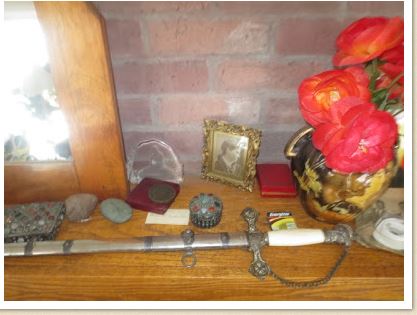
It seems that a  couple in the Okanagan Valley of BC, we’ll call them the C’s, wanted to get in touch with me.  They had Norman Nicholson’s sword!   Norman is my husband’s great grandfather.

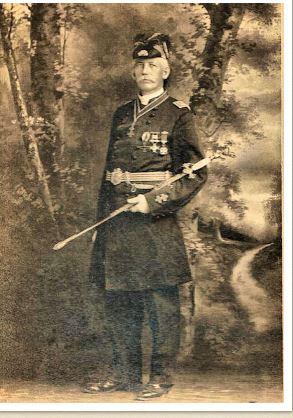
I had very recently posted an article about the Nicholsons on Matthew’s webmag with a big pic of Norman in Mason regalia front and center.  The family papers revealed that old Norman Nicholson was a member in good standing of the Sussex Preceptory No. 9, Knights Templar, Sherbrooke.

I immediately emailed this Mr. C. “How in Heaven do you know it is Norman’s sword?”

He explained.   In the early 60’s, his family had rented the Nicholson home, in Richmond, Quebec,  from  Edith Nicholson, Norman’s daughter.  Somehow,  Norman’s sword had been swept up in the bustle when the family moved out around 1965.

Mr. C had adored that house with its steep basement stairs and wondrous attic filled with fantastical (see : old fashioned) things. Mr C remembers  using the silver sword to ‘terrorize’ his sister.

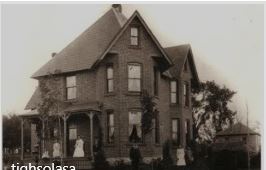
tighsolas

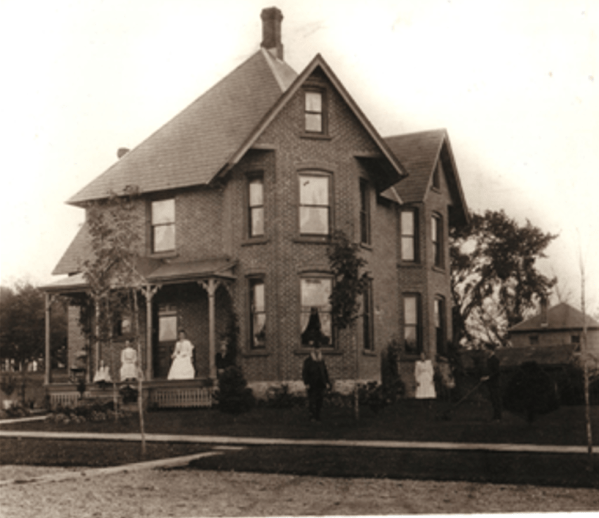
 Tighsolas, built by Norman  in 1896, the year Sir Wilfrid Laurier came to power for $2,700. 


« Phone my wife, » Mr.C  further instructed. « She’ll tell you all about the sword. »

So I did, on the jump, and what a story Mrs. C. related! The sword had been hanging on the BC couple’s wall since the death of her in-laws. Prior to that it had traveled all over North America, as far as California.

In 2004,  Mr. C’s sister visited them. She mentioned, out of the blue, that the silver sword on the wall had a name engraved on it. They checked : the name was ‘Norman Nicholson.

A few months passed. Mrs. C had a sudden impulse to return the heirloom to its rightful owners. (What impeccable timing on her part!)  Her husband’s childhood stampbook provided some clues. Apart from many stamps,  it contained a picture of an old man with handlebar moustache decked out in Masonic garb with said blade at his side, and one envelope addressed to Mrs. Margaret Nicholson, Richmond, Quebec.

Normanregalia

 Norman in full Masonic regalia. This photo was in the stamp book and returned with the sword in 2004.

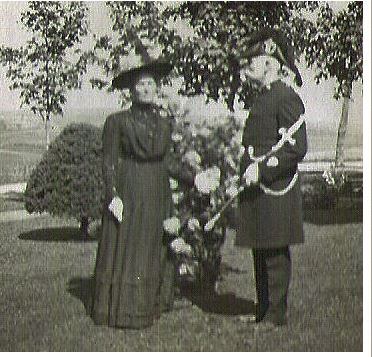
normanmargregalia

Margaret and Norman on Tighsolas lawn. A photo in the Nicholson photo album

Mrs. C googled ‘Norman Nicholson’, but no luck. There were too many people with that name .  She then he entered “Margaret Nicholson” into the search engine and, presto, she  fell upon the Eastern Townships Heritage website with my story and, plunk in the middle, she saw another picture of Norman in his Masonic regalia.

I can see it clearly in my mind’s eye. Over 50 years ago, in the age of Beatlemania and go go boots, an imaginative little boy living in Richmond, Quebec, plumbed the depths of that Nicholson treasure chest full of letters and memorabilia – the same one I discovered  in 2003 at my in-laws’ – and this little boy snitched some stamps and an envelope for his collection and glued it into a page beside an appealing photograph of a snowy-haired swashbuckler, who was really a down-on-his-luck Eastern Township hemlock bark dealer.

A little later,  he took the very sword the old man in the picture was posing with!

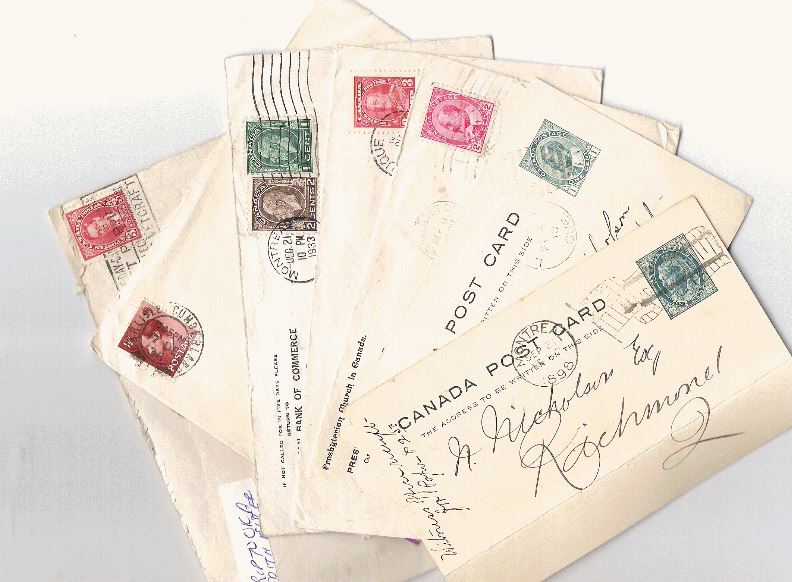
 stanps

(Some Nicholson letters. Many letters in the 1000 envelope stash  had the stamps carefully cut out. I now know where these stamps are!  )

There’s more.

Norman ’s sword arrived at my house  soon after. I showed it to my husband and my sons, Norman’s heirs, then placed it on the mantel.

That very night, as we all watched TV downstairs, we  heard a loud thump in the living room.

We went upstairs to find the Nicholson binder I had put on the coffee table had exploded open. Its cellophane pages were strewn on the floor. Atop the pile was Norman’s death certificate. I kid you not.

It was likely the dog nosing around that caused this to happen, right?  The binder had been filled to bulging with Nicholson documents. Still,  I took no chances. I placed a portrait of Margaret on the mantel beside the Masonic sword.

I like to think that is what Norman was looking for.


PS. Although perpetually cash-strapped due to the crash of the hemlock bark industry in the Eastern Townships around 1900, Norman always found the 3 dollars to pay his monthly fees to the Masons.  Norman’s records reveal he paid a hefty initiation fee, too, in 1888. Fifty dollars!

Clearly it was important to be a Mason in the ET. Apparently, the Presbyterian Church frowned up the society, saying Masons were encouraged to keep secrets from their wives. I know because the Nicholsons clipped a bit from a newspaper, likely the Montreal Witness, claiming as much!

In 1912, Margaret and their daughter, Edith, join the Order of the Eastern Star Chapter in Richmond. Edith became the Secretary. This OES was a female version of the Masons.


This is an updated version of a story published on the Eastern Townships Heritage Webmagazine in 2005.

Notary Peter Lukin Sr. and the Christie Seigneuries

Notary Peter Lukin Sr. helped the people of the Upper Richelieu River Valley and Eastern Townships of Quebec sort out land ownership issues between 1790 and 1814. Among his clients were Loyalists and other American-born settlers who had moved north of the border in search of farmland, as well as British, Scottish and Irish-born families.

Although New France was ceded to Britain in 1763 and became the Lower Canada colony, the old seigneurial land-ownership system of New France persisted until 1854. The seigneurial system began in the 1600s as a tool to control the settlement of New France. The king granted large areas of land to influential people including military officers and members of the aristocracy. The seigneurs then rented out farm lots to the habitants, or tenants. The habitants paid rent in cash or grain in exchange for land management assistance and various rights from the seigneurs. This system determined the way rural society in New France developed. When the British abolished the system in 1854, the colonial government had to introduce a means for the tenants to buy their farms.

One area in which the seigneurial system existed was in the Upper Richelieu Valley, an area with very fertile soil that attracted many settlers. The valley stretches next to the Richelieu River, which flows north out of Lake Champlain in northern Vermont and  empties into the St. Lawrence River near the town of Sorel. Lieutenant-Colonel Gabriel Christie acquired five seigneuries in this region following the fall of New France. The Christie Seigneuries remained in his family’s possession long after the seigneurial system was officially abolished.

In her book The Christie Seigneuries; Estate Management and Settlement in the Upper Richelieu Valley 1760-1854 (McGill-Queen’s University Press, 1992), historian Françoise Noël wrote that seigneurial property rights were used to control access to land, timber mills and other resources in the area for many years.

On May 8, 1790, Peter Lukin Sr., a notary and Justice of the Peace in the Judicial District of Montreal, was appointed as one of several notaries assigned to legalize the allotment of lands in the Eastern Townships and the Richelieu River Valley, including the Christie Seigneuries.

The seigneurial system was never implemented in the Eastern Townships, which was settled in the late 1700s and early 1800s.

The notarial acts of Peter Lukin Sr., 1790-1814, Cote # CN601, S269, can be found on microfilm at the Bibliothèque et Archives nationales du Québec (BAnQ) in Montreal. The BAnQ Montréal is located at 535 avenue Viger Est, Montréal, QC, H2L 2P3; Tel: 514-873-1100 plus option 4, plus option 1; Toll Free: 1-800-363-9028 plus option 4 plus 1; email: archives.montreal@banq.qc.ca

http://www.banq.qc.ca/archives/entrez_archives/centres_archives/

http://bibnum2.banq.qc.ca/bna/notaires/

A database of the Christie Seigneuries, “The Upper Richelieu Valley Database by Seigneury,” prepared by Françoise Noël can be found at http://faculty.nipissingu.ca/noel/files/2013/01/Christie_Seigneuries_by_Seigneury.pdf

Noël also identified three other early notaries who served in the region of the Christie Seigneuries within the Upper Richelieu River Valley:

Pierre de Mérut Panet – Notary, Judicial District of Montréal 1755-1778

Pierre Lanctot – Notary, Judicial District of Montréal 1809-1850

Pierre Besse – Notary – Judicial District of Richelieu 1811-1813

The Notarial Acts of Pierre de Mérut Panet likely address the British officers who were granted lands in the Upper Richelieu River Valley and perhaps also in the Lower Richelieu River Valley (the Sorel area) who fought with military leaders James Wolfe, Jeffery Amherst, James Murray, Charles Saunders, Thomas Gage, George Townshend and Robert Monckton at the Battle of the Plains of Abraham in 1759 and at the Conquest of Montreal in 1760.

Loyalist Settlers and their Notaries: Leon Lalanne

If you had ancestors who were early immigrants to Quebec’s Eastern Townships, the records of notary Leon Lalamme might help you learn details about their lives, but you will have to travel to Sherbrooke to consult them.

The first Europeans to settle in the Eastern Townships region (now known as Estrie) were farmers from Vermont, New York state and New Hampshire. They were looking for free land. After the American Revolution, Loyalists who had supported the British flooded across the border. Having supported the losing side in the war, they were promised new land in Canada. Most of them came from Massachusetts, Connecticut, New York, Rhode Island, Pennsylvania and Vermont.

The trouble was that, in this part of Lower Canada, other settlers were already living on the land. The colonial government passed an act to legalize the allotment of lands in the Eastern Townships, and several notaries were appointed to settle these issues.

Among the notaries appointed to this task were two from Montreal: Louis Chaboillez, who practiced from 1787 to 1813; and Peter Lukin, who practiced from 1790 to 1814. Pierre Gamelin, who practiced in Saint-Jean-sur-Richelieu from 1815 to 1855, was a third appointee.

Leon Lalanne.was another notary who served Loyalist & non-Loyalist American families in the Eastern Townships. He practiced between 1799 and 1845. He lived in the village of St. Armand (now known as Frelighsburg) until 1842, then moved to Brome County and served families there until his retirement.

As well as acting as a notary to former American families, he also served the needs of Dutch, Scottish, British, Irish and French Canadian residents. His records at the Archives nationales du Québec are mostly in the English language, and total 8.23 linear metres (28 feet). Notarial acts cover agreements such as land sales and rentals, marriage contracts, wills, apprenticeships and protests over unpaid loans.

The microfilms of Lalanne’s notarial acts (Cote # CN 502, S26) are stored at the Bibliothèque et Archives nationales du Québec (BAnQ) in Sherbrooke, They have not been digitized. The BAnQ Sherbrooke is located at 225 rue Frontenac #401, Sherbrooke QC J1H 1K1, tel: 819-820-3010, toll free: 1-800-363-9028; email: archives.sherbrooke@banq.qc.ca

On the web: www.banq.qc.ca/archives/entrez_archives/centres_archives/

Note that the Bedford Judicial District (District judiciaire de Bedford) was a group of villages, towns and townships within Missisquoi, Brome and Shefford counties. The St. Francis Judicial District (District judiciaire Saint-François (Sherbrooke)) included villages, towns and townships in Sherbrooke, Stanstead, Compton, Richmond and Wolfe counties.

Among the other notaries who practiced in the Eastern Townships and southwestern Quebec in the early 19th century were Edouard Faribault, Farnham,1826-1832; Richard Dickinson, Bedford, 1826-1877; Henry Bondy, Sweetsburg,1829 -1869; Samuel Gale, East Farnham, 1802-1819; Louis Barbeau, Laprairie, 1804-1864 (his files were burned, but some still exist in the Ellis Papers at the Archives); Pierre Besse,1809-1810, Trois-Rivières and 1811-1854, Richelieu.

Over the next few months, I intend to post more information on the notaries who served the residents of the Eastern Townships. Some, but not all, of these notaries are included on the website of the BAnQ; see http://bibnum2.banq.qc.ca/bna/notaires/

Finally, thanks to Pennie Redmile for help with this post. She has been a family lineage researcher for 35 years and is also an expert on Quebec notarial records. She has compiled information on hundreds of Loyalist and non-Loyalist families, plus British, Scottish, Irish families who settled in Missisquoi, Brome and Shefford Counties, as well as the Upper Richelieu Valley (Missisquoi Bay) from the 1780s onward. She is now retired.

Compiled by: Jacques Gagné  gagne.jacques@sympatico.ca    2016-10-10

Eastern Townships Resource Centre


Eastern Townships Resource Centre ETRC

http://www.etrc.ca

The Archives Department

Bishop’s University

2600 College Street, Sherbrooke QC J1M 1Z7

www.etrc.ca/archives-department/about-the-archives.html

Jody Robinson

Archivist

819-822-9600 – ext. 2261

etrc2@ubishops.ca

 If you had English-speaking ancestors in the Eastern Townships of Quebec (the south eastern region of the Province of Quebec, near the Vermont border,) do not overlook the Eastern Townships Resource Centre (ETRC). Many of the early residents of this region of forests and farmland came from the United States and from Scotland and were either Presbyterian or Methodist. You may find their birth, marriage and death records at their local Presbyterian, Methodist, or United churches in the archives of the ETRC.

 The Archives Department of the Eastern Townships Resource Centre is devoted to the preservation and promotion of the region’s rich heritage. Accredited by Bibliothèque et Archives nationales du Québec and by the ministère de la Culture, des Communications et de la Condition feminine du Québec, the Archives Department acquires, preserves and gives access to archival materials that illustrate the development of the Eastern Townships’ English-speaking community. A variety of documents such as diaries, letters, photographs, postcards, maps and audio-visual materials are made available to researchers. Assistance is also provided to genealogists tracing their family roots.

Here, you can explore close to 300 collections including historical information on Eastern Townships families, political figures and writers, societies and institutions, and newspapers. The United and Presbyterian churches together provide more than 100 fonds.

 Archival Collection

 www.etrc.ca/archives-department/online-resources/archival-collection.html

 Presbyterian & United Churches Archives

 Part One: Guide to the fonds in numerical sequence

 Part Two: Alphabetical sequence by towns


 Presbyterian Church Archives

PC 001 Scotstown (Compton County) – St. Pauls Presbyterian Church – Organized in 1925 – Registers of baptisms, marriages, burials (1926-1994) – St. Paul’s Presbyterian in Scotstown from 1925 onward grew, amalgamating surrounding Presbyterian congregations, among them, St. Andrew’s Presbyterian in Lake Megantic and Bethany Presbyterian Church in Milan in 1980 –

PC 002Marsboro (Frontenac County) – Marsboro Presbyterian – Organized in 1858 – From 1881 to 1890 it was apparently attached to the Lake Megantic Presbyterian Church, subsequently it became independent – Registers of baptisms, marriages, burials (1882-1984)

PC 003Lake Megantic (Frontenac County) – St. Andrews Presbyterian – Organized in 1874 as Knox Presbyterian > Registers of baptisms, marriages, burials (1927-1963, 1979)

PC 004 Winslow (Compton County) – St. Johns Presbyterian First organized in 1851- The fonds might also contain Civil registers from Saint Luke’s Presbyterian in Hampden – Whitton  – Registers of baptisms, marriages, burials (1864-1938) -.

 PC 005Hampden (Compton County) – St. Lukes Presbyterian – Organized in 1877 – Registers of baptisms, marriages, burials (1877-1936)

PC 006 Milan (Frontenac County) – Bethany Presbyterian -Organized in 1875 – Registers of baptisms, marriages, burials (1899-1980)

PC 007 Danville – Asbestos (Richmond County) – St. Andrews Presbyterian – Organized in 1872 – Registers of baptisms, marriages, deaths (1872-1981)

PC 008Sherbrooke (Sherbrooke County) – St. Andrews Presbyterian – Established in 1864 – Registers of baptisms, marriages, deaths (1865-1983)

PC 009Sawyerville (Compton County) – Quebec Presbytery – No Registers of baptisms, marriages, burials

PC 010Melbourne (Richmond County) – St. Pauls Presbyterian – Organized in 1968 – No Registers of baptisms, marriages, burials, only a fond described as Congregation (1968-1988)

PC 011Melbourne (Richmond County) – St. Andrews Presbyterian – Organized in 1925 – No Registers of baptisms, marriages, deaths – Only one fond described as Congregation (1962-1994)

PC 012Flodden (Richmond County) – Knox Presbyterian – Organized in 1893 – Initially established as the Free Church of Brompton-Gore – No Registers of baptisms, marriages, burials – Only one fond described as Communion rolls (1893-1909)

PC 013St. GeorgeKennebec Road Marlow (Beauce County) – Jersey Mills Presbyterian – Organized in 1878 – Registers of baptisms, marriages, deaths (1883-1948)

PC 014Richmond (Richmond County) – Chalmers Presbyterian St. Andrew’s Presbyterian – Organized in 1878 – No Registers of baptisms, marriages, burials – Fonds consist of annual reports and historical information.

PC 015Inverness (Megantic County) St. Andrews Presbyterian – Organized in 1838 – Registers of baptisms, marriages, burials (1848 only)

PC 016Gould (Compton County) – Chalmers Emmanuel Presbyterian – Organized in 1845 – Registers of baptisms, marriages, burials (1931-1946)

PC 017Lemesurier (Megantic County) – Reids Presbyterian – Organized in 1854 – The fonds might also contain Civil registers from Leeds Village Presbyterian & Candlish Presbyterian in Kinnear’s Mills – Registers of baptisms, marriages, burials (1855-1943)

PC 018St. Sylvester (Lotbinière County) – St. Sylvesters Presbyterian – Organized in 1844 – Registers of baptisms, marriages, burials (1844 & 1866-1882)

PC 019 Adderley Inverness Township (Mégantic County) – Adderley Presbyterian Church – Also known as St. Andrew’s or South Kirk werte first organized in 1856 – Church building was erected in 1873 – No Registers of baptisms, marriages deaths, only documents described as Congregation (1960-1983)

United Church Archives

UC 001Sherbrooke (Sherbrooke County) – Plymouth United Congregational Church – Organized in 1837 – Registers of baptisms, marriages, burials (1837-1965)

UC 002Sherbrooke (Sherbrooke County) – Trinity UnitedTrinity Methodist – Organized in 1846 – Registers of baptisms, marriages, burials (1848-1971)

UC 003Sherbrooke (Sherbrooke County) – Sangster Memorial United – Organized in 1946 – Registers of baptisms, marriages, burials (1947-1966)

UC 004Sherbrooke (Sherbrooke County) – Plymouth Trinity United > Congregational – Unitarian – Organized in 1897 – Registers of baptisms, marriages, burials (1965-1987)

UC 005Lennoxville (Sherbrooke County) – Lennoxville United > Methodist – Organized in 1838 – The fonds might also contain Civil registers from Johnville – Capelton – Minton – Registers of baptisms, marriages, burials (1838-1959)

UC 006Magog (Stanstead County) – St. Pauls United > Methodist – Organized in 1884 – Registers of baptisms, marriages, burials (1890-1906)

UC 007Beebe (Stanstead County) – Wesley United > Wesleyan Methodist – Organized in 1875 – Registers of baptisms, marriages, burials (1942-1966)

UC 008Granby (Shefford County) – Granby UnitedCongregational – First organized in 1830 – Granby United was formed in 1925 with the amalgamation of Trinity United and Drummond Street United – Registers of baptisms, marriages, burials (1879-1999)

UC 009Knowlton (Brome County) – Knowlton UnitedMethodist – Organized in 1855 – Registers of baptisms, marriages, burials (1860-1994)

UC 010Sawyerville (Compton County) – Sawyerville UnitedMethodist – Organized in 1850 – The fonds might include BMD’s from churches located in Maple Leaf – Randboro – Clifton – Registers of baptisms, marriages, burials (1860-1994)

UC 011Stanstead (Stanstead County) – Stanstead Centenary United > Wesleyan MethodistEpiscopalian – First organized in 1804 – In 1869 it was renamed Stanstead Wesleyan Methodist – The fonds might contain BMD’s from Hatley – Compton – Barnston – Registers of baptisms, marriages, burials (1831-1860)

UC 012Granby (Shefford County) – Drummond Street UnitedMethodist – First organized in 1850 as the Methodist Church of Granby – Registers of baptisms, marriages, burials (1857-1925)

UC 013North Hatley (Stanstead County) – North Hatley United – Organized in 1955 – No Civil registers – see Waterville, see Hatley

UC 014 Hatley (Stanstead County) – Hatley UnitedMethodist – Organized in 1836 – Registers of baptisms, marriages, burials (1861-1927)

UC 015 Scotstown (Compton County) – St. Andrews UnitedPresbyterian – First organized in 1876 as St. Andrew’s Presbyterian – Registers of baptisms, marriages, burials (1877-1981)

UC 016 Ayers Cliff (Stanstead County) – Beulah UnitedMethodist Adventist Anglican – First organized in 1879 as the Union Meeting House Church of Ayer’s Flat, the church was also used by the Adventist and Anglican Churches – No Civil registers, see Ayer’s Cliff, see Coaticook, see Way’s Mills

UC 017Birchton (Compton County) – Birchton UnitedMethodistBaptistCongregationalAnglican – Organized in 1879 as the Birchton Union Church Society with the participation of the Methodist, Baptist and Congregationalist Societies – The church was also used by the Anglican Church – No Civil registers at ETRC

UC 018Bury (Compton County) – Bury UnitedMethodist – Organized in 1863 – Registers of baptisms, marriages, burials (1868-1902 & 1930s to an undisclosed year)

UC 019 Coaticook (Stanstead County) – Sisco Memorial UnitedMethodist – Organized in 1853 – Registers of baptisms, marriages, burials (1860-1962)

UC 020 DanvilleAsbestos (Richmond County) – Trinity UnitedCongregational – Organized in 1832 as the first Congregationalist church in the Eastern Townships – In 1842 the church would unite with the Presbyterians in forming the Federated Church of Danville – In 1860, the church joined the Methodist Church – Registers of baptisms, marriages, burials (1834-after 1950)

UC 021 Waterloo (Shefford County) – St. Pauls UnitedWesleyan MethodistAnglican – Organized 1832 as a Methodist church – Starting in 1862, the church was shared with the Anglican congregation – Registers of baptisms, marriages, burials (1933-1978)

UC 022 Waterville (Compton County) – Waterville UnitedCongregational – Organized in 1862 – Registers of baptisms, marriages, burials (1862-1978)

UC 023 United ChurchYamaska Region – St. Francis Region (Richmond – Sherbrooke – Stanstead – Drummond) – Eastern Region (Compton – Megantic – Frontenac – Lotbiniere – Beauce) – Quebec & Sherbrooke Presbytery – Registers of baptisms, marriages, burials (1924-1984)

UC 024 Ayers CliffMagog (Stanstead County) Ayers Cliff Magog Pastoral Charge – Registers of baptisms, marriages, burials (1968-1979) of churches located in Ayer’s Cliff – Coaticook – Way’s Mills – Magog – Georgeville

UC 025 Eaton (Compton County) – Eaton UnitedCongregational – Registers of baptisms, marriages, burials (1838-1901)

UC 026 Bulwer (Compton County) – Bulwer UnitedMethodist – No Civil registers at ETRC – Fonds contains Church Boards (1866-1990)

UC 027 Birchton (Compton County) – Birchton Pastoral ChurchWesleyan Methodist – Organized in 1894 by the Wesleyan Methodist Congregation in Birchton – Bulwer – Eaton – No Civil registers at ETRC – Fonds contains Church Boards (1894-1967)

UC 028 East Angus (Compton County) – Emmanuel UnitedMethodist – Organized in 1901 – No Civil registers at ETRC – Church Boards (1901-1978)

UC 029 Abbotsford (Rouville County) – Abbotsford UnitedCongregational & Methodist – Organized in 1835 – Registers of baptisms, marriages, burials (1835-1836 & 1865-1879)

UC 030Cookshire (Compton County) – Trinity UnitedMethodist – Organized in 1863 – Registers of baptisms, marriages, burials (1871-1957)

UC 031 Cowansville (Missisquoi County) – Emmanuel UnitedCongregational & Methodist – Both organized in 1844 – Registers of baptisms, marriages, burials (1856-1960)

UC 032 Georgeville (Stanstead County) – Georgeville UnitedMethodist – Organized in 1859 – Registers of baptisms, marriages, burials (1859-1890)

UC 033 Dunham (Missisquoi County) – Dunham United Methodist – Organized in 1806 – Registers of baptisms, marriages, burials (1806-1950 & 1960s)

UC 034 Fitch Bay (Stanstead County) – Fitch Bay UnitedCongregational – Organized in 1854 as the North Stanstead Congregational Church – Registers of baptisms, marriages, burials  (1854-1888)

UC 035 Lake Megantic (Frontenac County) – Knox UnitedPresbyterian – Organized in 1890 as Knox Presbyterian – Registers of baptisms, marriages, burials (1900-1962)

UC 036 Foster (Shefford County) – Creek UnitedFree Will Baptist – Organized in 1878 – In 1885 the church became South Stukely Methodist – No Civil registers at ETRC – see South Stukely

UC 037 Austin (Brome County) – Austin United New Connexion MethodistOrganized in 1855– Also known as New Connexion Methodist of Bolton Centre – Registers of baptisms, marriages, burials (1855-1963)

UC 038 Island Brook (Compton County) – Island Brook United – Methodist – Organized in 1868 – Registers of baptisms, marriages, burials (1878-1916) & church memberships (1884-1969)

UC 039 Rock Island (Stanstead County) – Stanstead South United > Congregational – Organized in 1816 – Also known as Stanstead South Congregational – From 1817 to 1827, the Congregationalists worshipped with the Methodists, Episcopalians and the Baptists in the Union Meeting House in North Plain – No Civil registers at ETRC – see Stanstead

UC 040 Ulverton (Drummond County) – Ulverton United > Congregational & Wesleyan Methodist – Organized in 1837 as Ulverton Congregational and in 1842 as Durham Wesleyan Methodist, the two churches would later be amalgamated into one – Registers of baptisms, marriages, burials (1837-1925 & 1963)

UC 041 Sutton (Brome County) – Calvary UnitedMethodist – Organized in 1799 – Registers of baptisms, marriages, burials (1856-2001)

UC 042 Drummondville (Drummond County) – Trinity United – Organized in 1927 – Registers of baptisms, marriages, burials (1927-1996)

UC 043 Tomifobia (Stanstead County) – Tomifobia UnitedMethodist – Organized in 1890 – No Civil registers at ETRC – see Georgeville

UC 044 Leeds Village (Megantic County) – Leeds Wesleyan Methodist – Organized in 1830 as part of the New Ireland Circuit, which included churches in Lower Ireland – Upper Ireland – Inverness – St. Sylvester – Leeds – Kinnear’s Mills – Ireland – Registers of baptisms, marriages, burials (1834-1902), the latter might include registers from the above mentioned churches

UC 045 Kinnears Mills (Megantic County) – Candlish UnitedPresbyterian – Organized in 1854 with three preaching points: Leeds Village Presbyterian, Reid’s Presbyterian in Lemesurier, and Kinnear’s Mills’ Candlish Presbyterian – Registers of baptisms, marriages, burials (1854-1935) – This selection might include registers for the above churches

UC 046 Asbestos (Richmond County) – Asbestos UnitedMethodist – Organized in 1925 – No Civil registers at ETRC, fonds include Membership Registers (1927-1972)

UC 047 Ways Mills (Stanstead County) – Ways Mills Union ChurchBaptists Crises Adventists Herald Adventists – Methodists – Organized in 1881 by the Baptists, the Crises Adventists, the Herald Adventists, the Methodists. The Methodists of this Union Church were part of Barnston Methodist Circuit with missions in Hatley, Way’s Mills, Cassville, Ayer’s Cliff, Coaticook – No Civil registers at ETRC – see Barnston, the next item

UC 048 Barnston (Stanstead County) – Barnston Methodist – Organized in 1875 – Registers of baptisms, marriages, burials (1875-1915) – see also UC 047

UC 049 Compton (Compton County) – Compton UnitedMethodist – Organized in 1861 as part of the Compton Methodist Circuit which included Clifton – Martinville – Ives Hill > No Civil registers at ETRC but a Membership Register (1861-1954)

UC 050 Acton Vale (Bagot County) – Acton Vale CircuitMethodist – Organized in 1898 as a Circuit Ministry which included the preaching points of Acton Vale – Acton – Bethany – Registers of baptisms, marriages, burials (1915-1927)

UC 051 Leeds (Megantic County) – Leeds UnitedPresbyterian  – Organized in 1854 as part of the Leeds Presbyterian which included three preaching points: Leeds Village (Leeds Presbyterian), Lemesurier (Reid’s Presbyterian) and Kinnear’s Mills (Candlish Presbyterian) – Registers of baptisms, marriages, burials (1882-1914 & 1928-1942) – Church Memberships (1882-1944)

UC 052 East Clifton (Compton County) – East Clifton UnitedMethodist – Organized in 1860 – No Civil registers at ETRC – see Eaton

UC 053Mansonville (Brome County) – Mansonville UnitedMethodist – Organized in 1873 – Registers of baptisms, marriages, burials (1873-2002) Church Memberships (1874-1983)

UC 054 Inverness (Megantic County) – St. Andrews UnitedMethodist Presbyterian – Organized in 1832 as Inverness Methodist which was part of the Inverness Circuit, which included missions in Upper Ireland – Lower Ireland – Leeds – New Ireland – Kinnear’s Mills – Belcher Range – Walsh’s Hamilton Range – Adderly – Registers of baptisms, marriages, burials (1864-1899) Membership Registers (1850s-1893)

UC 055 Randboro (Compton County) – Randboro UnitedMethodist – Organized in 1887 – No Civil registers at ETRC – see Sawyerville

UC 056 Chester (Megantic) – Mission Unie de lÉglise Unie aux Saint Martyrs Canadiens Presbyterian – Organized in 1896 – Registers of baptisms, marriages, burials (1895-1975)

UC 057 Maple Leaf (Compton County) – Maple Leaf Methodist – Organized in the 1850s, this church was part of the Sawyerville Methothist Circuit – Maple Leaf Methodist closed its doors in 1929 – No Civil registers at ETRC, see Sawyerville

UC 058 Minton (Stanstead County) – Minton UnitedMethodist – Organized in 1894 as part of the Minton Methodist Circuit, which included Minton – Reeds – Belvidere – Albert Mines – Eustis – No Civil registers at ETRC – Membership Registers (1898-1936)

UC 059 Lingwick Gould (Compton County) – Chalmers UnitedPresbyterian – Organized in 1845 – Registers of baptisms, marriages, burials (1849-1890)

UC 060 Agnes Lake Megantic (Frontenac County) – Agnes Methodist – Organized in 1883 – Registers of baptisms, marriages, burials (1894-1909) Membership Registers (1894-1906)

UC 061 Farnham (Missisquoi County) – Grace United Methodist – Organized in 1856 – Registers of baptisms, marriages, burials (1856-1968) Membership Registers (1860-1975)

UC 062 Sherbrooke (Sherbrooke County) – Église Missionnaire Méthodiste FrançaiseMethodist – Organized in 1875 – No Civil registers at ETRC – Church Boards (1875-1888)

UC 063 Bishopton Bishops Crossing (Wolfe County) –Bishopton UnitedMethodist – Organized in 1860 as part of the Dudswell Methodist Ministry  Registers of baptisms, marriages, burials (1860-1924 & 1967) – Church Memberships (1919-1976)

UC 064 Farnham’s Corner (Missisquoi County) – Farnhams Corner UnitedMethodist – Organized in 1843 – No Civil registers at ETRC – Church Boards (1963-1968)

UC 065 West Brome (Brome County) – West Brome United > Methodist – Organized in 1856 – Registers of baptisms, marriages, burials (1888-1925) Membership Registers (1884-1921)

UC 066 Thetford Mines (Megantic County) – Thetford Mines UnitedMethodist – Organized in 1905 – Registers of baptisms, marriages, burials (1905-1946)

UC 067 Boyntown (Stanstead County) – Boynton UnitedCongregational – Organized in 1892 – No Civil registers at ETRC – Committees (1892-1907 & 1916-1932) – see Stanstead

UC 068Lawrenceville (Shefford County) – Lawrenceville Methodist – Organized in 1871 – No Civil registers at ETRC – Membership Registers (1871-1905)

UC 069 East Roxton (Shefford County) – Église Méthodiste Française de Roxton – Organized in 1856 – Registers of baptisms, marriages, burials (1877-1915)

UC 070 East Farnham (Missisquoi County) – East Farnham UnitedCongregationalist New Connexion Methodist Baptist Anglican – Organized in 1843 as East Farnham Union Church. It was used by Free Will Baptists – Wesleyan New Connexion Methodists – Anglicans – Baptists – Congregationalists – No Civil registers at ETRC – Church Boards (1889-1992 & 1897-1927 & 1955-1983)

UC 071 Erie (Wolfe County) – Erie UnitedMethodist – Organized 1890 as part of the Methodist Missions of Erie – Marbleton – Bishop’s Crossing (Bishopton) – No Civil registers at ETRC – Church Boards (1896-1959)

UC 072 Warden (Shefford County) – Warden UnitedMethodist – Organized in 1861 – No Civil registers at ETRC – Church Boards (1897-1971)

UC 073 Windsor (Richmond County) – St. Andrews UnitedPresbyterian & Methodist – Organized in 1859 as the Presbyterian Free Kirk in Lower Windsor – In 1867 the Presbyterian Church and Methodist Church were organized in Windsor Mills – In 1925, all became St. Andrew’s United – Registers of baptisms, marriages, burials (1876-1981) Membership Registers (1867-1942) Board Members (1867-1984)

UC 074 Richmond Melbourne (Richmond County) – Richmond & Melbourne UnitedPresbyterian – Methodist – Organized in 1836 and in 1939 with the amalgamation of Richmond Methodist – Melbourne Methodist – Chalmers Presbyterian of Melbourne the congregation became Richmond & Melbourne United – Registers of baptisms, marriages, burials (1836-1994) – Membership Registers (1942-1970) – Board Members (1887-1972 & 1901-2000)

UC 075 Melbourne Ridge (Bagot County) – Melbourne Ridge United – Organized in 1837 – No Civil registers at ETRC – Membership Registers (1880s-1957)

UC 076 Abercorn (Brome County) – Abercorn UnitedMethodist – Presbyterian – Congregationalist – Baptist – Organized in 1870, the Methodists belonged to the Union Church Society of Abercorn with the Methodists-New Connexion, the Congregationalists, the Presbyterians and the Baptists – No Civil registers at ETRC – Church Boards (1901-1955)

UC 077Danville (Richmond County) – Congregational Church of Danville – Organized in 1832, this fond contain the personal documents of Rev. Ammi J. Parker, the leader of the Congregationalist movement in the Eastern Townships in the early 1830’s. It deals with the various missions and churches established by Rev. Parker – No Civil registers at ETRC – Missionary Work (1820s-1870s)

UC 078 Heathton South Barnston (Stanstead County) Heathton UnitedMethodist – Established in 1898 – Registers of baptisms, marriages, burials (1898-1953 & 1971)

UC 079Brigham (Brome County) – Brigham UnitedCongregational – Organized in 1873 by Congregational ministers from Cowansville – Registers of baptisms, marriages, burials (1888-1983) – Church Boards (1867-1997)

UC 080Kingsbury (Richmond County) – St. Andrew’s UnitedPresbyterian – Organized in the 1850s – In 1885 it was part of the Melbourne Charge along with Knox Church in Brompton-Gore (also known as Flodden) – In 1879 St. Andrew’s Kingsbury and Knox Brompton-Gore were united into one charge – Registers of baptisms, marriages, burials (1880-1956) – Church Memberships (1930s-1970s)

UC 081Trenholm (Drummond County) – Trenholm United – Methodist – Organized in 1845 – No Civil Registers at ETRC – see Melbourne – Board Members (1845-1902 & 1898-1922)

UC 082Cowansville-Dunham (Missisquoi County) – Cowansville-Dunham Pastoral Charge – Organized in 1950 – No Civil Registers at ETRC – Church Boards (1956-1971)

UC 083Cowansville – (Missisquoi County) – Cowansville Area Pastoral Charge – Registers of baptisms, marriages, burials (1968-1993) – Membership Registers (1972-1978)

Guide to fonds in alphabetical sequence

 Abbotsford (Rouville County) – #UC-029 – Congregational – Methodist (United)

Abercorn (Brome County) – #UC-076 – Union Church – Methodist – Congregational – Presbyterian – Baptist

Acton (Bagot County) – #UC-050 – see Acton Vale Circuit Methodist

Acton Vale (Bagot County)- #UC-050 – Methodist Circuit Ministry with preaching point in Acton, Bethany

Adderley – Inverness Township(Megantic County) – #UC-054 – Inverness Methodist Circuit

Adderley – Inverness Township (Megantic County) – #PC-019 – Presbyterian Church

Agnes (Lake Megantic) – (Frontenac County) – #UC-060 – Methodist

Albert Mine (Stanstead County) – #UC-058 – Minton Methodist Circuit

Asbestos (Richmond County) – #UC-046 – Methodist (United)

Asbestos Danville (Richmond County) – #PC-007– Presbyterian

Asbestos Danville (Richmond County) – #UC-020 Congregational (Federated Church)

Austin (Brome County) – #UC-037 – Methodist (United)

Ayers Cliff (Stanstead County) – #UC-016 – Union Church – Methodist – Adventist – Anglican – United

Ayers Cliff (Stanstead County) – #UC-024 & #UC-047– Ayer’s Cliff & Magog Pastoral Charge (Churches located in Ayer’s Cliff – Coaticook – Way’s Mills – Magog – Georgeville)

Ayers Flat (Stanstead County) – #UC-016 – Union Church – United

Barnston (Stanstead County) – #UC-011 & #UC-047 & #UC-048 – Methodist – Episcopalian – United

Beauce County – #UC-023 – Quebec & Sherbrooke Presbytery -Eastern Region

Beebe (Stanstead County) – #UC-007 – Methodist

Belcher Range (Megantic County) – #UC-054 – Inverness Methodist Circuit

Belvidere (Belvedere) – Stanstead County – #UC-058 – Minton Methodist Circuit

Bethany (Bagot County) – #UC-050 – see Acton Vale Circuit Methodist

Birchton (Compton County) – #UC-017 & #UC-027 – Union Church – Methodist – Baptist – Congregational – Anglican – United

Bishopton (Bishops Crossing) (Wolfe County) – #UC-063 – Dudswell Methodist Circuit

Bolton Centre (Brome County) – #UC-037 – Methodist – United

Boynton (Stanstead County) – #UC-067 – Congregational

Bulwer (Compton County) – #UC-026 & #UC-027– Methodist

Bury (Compton County) – #UC-018 Methodist – United

Capelton (Sherbrooke County) – #UC-005 Methodist – United

Cassville (Stanstead County) – see Way’s Mills #UC-047

Chester (Megantic County) – #UC-056 – Presbyterian

Clifton (Compton County) – #UC-010 & #UC-049 – Methodist

Coaticook (Stanstead County) – #UC-019 & #UC-047 – Methodist – United

Coaticook (Stanstead County) – #UC-024 – Ayer’s Cliff & Magog Pastoral Charge (Churches located in Ayer’s Cliff – Coaticook – Way’s Mills – Magog – Georgeville)

Compton (Compton County) – #UC-011 & #UC-049– Methodist – Episcopalian (United) & Compton Methodist Circuit Ministry with preaching points in Clfton, Martinville, Ives Hill

Compton County – #UC-023 – Quebec & Sherbrooke Presbytery Eastern Region

Cookshire (Compton County) – #UC-030 – Methodist – United

Cowansville (Missisquoi County) – #UC-031 – Congregational – Methodist – United

Danville Asbestos (Richmond County) – #PC-007– Presbyterian

Danville Asbestos (Richmond County) – #UC-020 & #UC-077 Congregational – Federated Church

Drummond County – #UC-023 – Quebec & Sherbrooke Presbytery St. Francis District

Drummondville (Drummond County) – #UC-042 – United

Dudswell (Wolfe County) – #UC-063 – Methodist

Dunham (Missisquoi County) – #UC-033 – Methodist – United

Durham (Drummond County) – #UC-040 – Methodist – United

East Angus (Compton County) – #UC-028 – Methodist – United

East Clifton (Compton County) – #UC-052 Methodist

East Farnham (Missisquoi County) – #UC-070 – Union Church – Methodist – Free Will Baptist – Baptist – Anglican – Congregational

Eaton (Compton County) – #UC-025– Congregational

Eaton (Compton County) – #UC-027– Methodist

Erie (Wolfe County) – #UC-071 – Methodist

Eustis (Stanstead County) – #UC-058 – Minton Methodist Circuit

Farnham (Missisquoi County) – #UC-061 – Methodist

Farnhams Corner (Missisquoi County) – #UC-064 – Methodist

Fitch Bay (Stanstead County) – #UC-034 – Congregational – Methodist

Flodden (Richmond County) – #PC-012 – Presbyterian – Free Church

Foster (Shefford County) – #UC-036 – Baptist – United

Frontenac County – #UC-023 – Quebec & Sherbrooke Presbytery Eastern Region

Georgeville (Stanstead County) – #UC-024 – Ayer’s Cliff – Magog Pastoral Charge (Churches located in Ayer’s Cliff – Coaticook – Way’s Mills – Magog – Georgeville)

Georgeville (Stanstead County) – #UC-032 – Methodist – United

Gould (Compton County) – #PC-016 & #UC-059– Presbyterian

 Granby (Shefford County) – #UC-008 – Congregational – United

Granby (Shefford County) – #UC-012 – Methodist – United

Hampden (Compton County) – #PC-005 Presbyterian

Hatley (Stanstead County) – #UC-011 & #UC-014 & #UC-047 – Methodist – Episcopalian – United

Heathton (Stanstead County) – #UC-078- Methodist

Inverness (Megantic County) – #PC-015 – Presbyterian

Inverness (Megantic County) – #UC-044 & #UC-054 – Methodist & Inverness Methodist Circuit Ministry with preaching points in Upper Ireland – Lower Ireland – Leeds – New Ireland – Kinnear’s Mills – Belcher Range – Walsh’s Hamilton Range – Adderly.

Ireland (Megantic County) – #UC-044 – Methodist

Island Brook (Compton County) – #UC-038 – Methodist (United)

Ives Hill (Compton County) – #UC-049 – Compton Methodist Circuit Ministry

Jersey Mills (Beauce County) – #PC-013 – Presbyterian

Johnville (Sherbrooke County) – #UC-005 Methodist – United

Kennebec Road (Beauce County) – #PC-013 – Presbyterian

Kinnears Mills (Megantic County) – #PC-017 & #UC-045 & #UC-051 – Presbyterian & Leeds Presbyterian Circuit Ministry

Kinnears Mills (Megantic County) – #UC-044 & #UC-054 – Methodist & Inverness Methodist Circuit

Knowlton (Brome County) – #UC-009 – Methodist

Lake Megantic (Agnes) (Frontenac County) – #PC-003 & #UC-035 & #UC-060– Presbyterian – Methodist (United)

Lawrenceville (Shefford County) – #UC-068 – Methodist

Leeds Village (Megantic County) – #PC-017 & #UC-045 & #UC-051– Presbyterian & Leeds Presbyterian Circuit Ministry with preaching points in Leeds Village, Lemesurier, Kinnear’s Mills

Leeds Village (Megantic County) – #UC-044 & #UC-054– Methodist & Inverness Methodist Circuit

Lemesurier (Megantic County) – #PC-017 & #UC-045 & #UC-051 – Presbyterian & Leeds Presbyterian Circuit Ministry

Lennoxville (Sherbrooke County) – #UC-005 – Methodist – United

Lingwick (Compton County) – #UC-059 – Presbyterian

 Lotbinière County – #UC-023 – Quebec & Sherbrooke Presbytery Eastern Region

Lower Ireland (Megantic County) – #UC-044 & #UC-054 – Methodist & Inverness Methodist Circuit

Magog (Stanstead County) – #UC006 Methodist

Magog (Stanstead County) – #UC-024 Ayer’s Cliff – Magog Pastoral Charge (Churches located in Ayer’s Flatt – Coaticook – Way’s Mills – Magog – Georgeville)

Mansonville (Brome County) – #UC-053 – Methodist – United

Maple Leaf (Compton County) – #UC-010 & #UC-057 – Methodist & Sawyerville Methodist Circuit

Marlow (Beauce County) – #PC-013 – Presbyterian

Marsboro (Frontenac County) – #PC-002 Presbyterian

Martinville (Compton County) – #UC-049 – Compton Methodist Circuit Ministry

Melbourne (Richmond County) – #PC-010 & #PC-011 – Presbyterian

Megantic County – #UC-023 Quebec & Sherbrooke Presbytery Eastern Region

Melbourne (Richmond County) – #UC-074 – Presbyterian & Methodist

Melbourne Ridge (Bagot County) – #UC-075 – United

Milan (Frontenac County) – #PC-006 – Presbyterian

Minton (Stanstead County) – #UC-005 & #UC-058 – Methodist (United) & Minton Methodist Circuit with preaching points in Minton – Reeds – Belvidere (Belvedere) – Albert Mines – Eustis

New Ireland (Megantic County) – #UC-044 & #UC-054 – Methodist & Inverness Methodist Circuit

 North Hatley (Stanstead County) – #UC-013 – United

North Plain (Stanstead County) – #UC-039 – Union Church – Congregational – Methodist – Episcopalian – Baptist – United

North Stanstead (Stanstead County) – #UC-034 – Congregational – United

Plymouth (Sherbrooke County) – #UC-001 & #UC-004 Congregational

Plymouth (Sherbrooke County) – #UC-004 – Unitarian

Randboro (Compton County) – #UC-010 & #UC-055 – Methodist

Reeds (Stanstead County) – #UC-058 – Minton Methodist Circuit

Richmond (Richmond County) – #PC-014 & #UC-074 – Presbyterian & Methodist

Richmond County#UC-023 – Quebec & Sherbrooke Presbytery St. Francis District

Rock Island (Stanstead County) – #UC-039 – Congregational – United

Roxton (Shefford County) – #UC-069 – Methodist

Sawyerville (Compton County) – #PC-009 – Quebec Presbytery

Sawyerville (Compton County) – #UC-010 & #UC-057 – Methodist & Sawyerville Methodist Circuit

 Scotstown (Compton County) – #PC-001 & #UC-015- Presbyterian (United)

Sherbrooke (Sherbrooke County) – #PC-008 & #UC-062 – Presbyterian

Sherbrooke (Sherbrooke County) – #UC-001 & #UC-002 & UC-004– Congregational

Sherbrooke (Sherbrooke County) – #UC-003 – Sangster – United

Sherbrooke (Sherbrooke County) – #UC-004 Unitarian

Sherbrooke County – #UC-023 – Quebec & Sherbrooke Presbytery – St. Francis District

South Barnston (Stanstead County) – #UC-078 – Methodist

South Stukely (Shefford County) – #UC-036 – Methodist – United

Stanstead (Stanstead County) – #UC-011 – Methodist – Episcopalian – United

Stanstead County #UC-023 – Quebec & Sherbrooke Presbytery St. Francis District

Stanstead South (Stanstead County) – #UC-039 – Congregational – United

St. Francis District – #UC-023 – Quebec & Sherbrooke Presbytery for the Region of St. Francis – Saint-Francois

St. George (Beauce County) – #PC-013 – Presbyterian

St. Sylvestre (Sylvester) (Lotbinière County) – #PC-018 – Presbyterian

St. Sylvestre (Sylvester) (Lotbinière County) – #UC-044 – Methodist

Sutton (Brome County) – #UC-041 – Methodist – United

Thetford Mines (Megantic County) – #UC-066 – Methodist

Tomifobia (Stanstead County) – #UC-043 – Methodist – United

Ulverton (Drummond County) – #UC-040 – Congregational – Methodist – United

Upper Ireland (Megantic County) – #UC-044 & UC-054 – Methodist & Inverness Methodist Circuit

Walshs Hamilton Range (Megantic County) – #UC-054 Inverness Methodist Circuit Ministry

Warden (Shefford County) – #UC-072 – Methodist

Waterloo (Shefford County) – #UC-021– Methodist – Anglican – United

Waterville (Compton County) – #UC-022 – Congregational – United

Ways Mills (Stanstead County) – #UC-024 – Ayer’s Cliff – Magog Pastoral Charge (Churches located in Ayer’s Cliff – Coaticook – Way’s Mills – Magog – Georgeville)

Ways Mills (Stanstead County) – #UC-047 – Union Church – Baptist – Crises Adventist – Herald Adventist – Methodist (The Methodist churches were part of Barnston Methodist Circuit with preaching points in Hatley – Way’s Mills – Casscille – Ayer’s Cliff – Coaticook)

West Brome (Brome County) – #UC-065 – Methodist

Windsor (Richmond County) – #UC-073 Presbyterian

Windsor Mills (Richmond County) – #UC-073 – Presbyterian & Methodist

Winslow (Compton County) – #PC-004 – Presbyterian

Yamaska County#UC-023 – Quebec & Sherbrooke Presbytery Yamaska Region

Compiled by Jacques Gagné gagne.jacques@sympatico.ca   2016-03-10

 

The German Presence in the Eastern Townships, Central Quebec, the Richelieu River Valley and South-West Quebec

As in other parts of Quebec, German-speaking immigrants, including some Loyalists with German roots, integrated well into life in the Eastern Townships and surrounding regions. This compilation describes the towns and villages where some of these people have lived from the late 1700s to the 20th century. It names the churches they attended and the cemeteries where they were buried, and it helps the researcher locate these records.

The German Presence in the Eastern Townships Final Mar 6

Saddlebag Preachers of the Eastern Townships

Between 1798 and 1812, American circuit riders, or saddlebag preachers, travelled to Quebec’s Eastern Townships to serve the religious needs of the area’s settlers. Many of those settlers were Loyalists from New England, Pennsylvania and other states who had come to Canada following the American Revolution.

Most of the saddlebag preachers were Baptist, Wesleyan Methodist or Congregationalist ministers. During the summer months, they would criss-cross the villages and hamlets of Compton, Sherbrooke, Richmond, Shefford, Brome and Missisquoi counties, as well as the Upper Richelieu River Valley (St. John’s County, or St-Jean-sur-Richelieu) and the Chateauguay-Huntingdon region.

In September or October, they would go back to their own churches in Vermont, New Hampshire, New York and Massachusetts. There, they deposited the books in which they had record marriages and baptisms during their travels. Today, however, these books seem to have vanished.

In the following compilation, Montreal researcher Jacques Gagné has put together whatever information he could find about the circuit riders and their home churches. Claire Lindell has edited this compilation.

If you know anything about any of the missing records, please leave a comment or send an e-mail to genealogyensemble@gmail.com.

Saddlebag Preachers-2

The Loyalists of Stanstead, Sherbrooke and West Compton 2014

images (1)

The American Revolution  was time of flux for many citizens who were loyal to the British. These Loyalists sought refuge in towns north of the border in an area known as the Eastern Townships. They settled and formed communities and built their churches

.uel2

In this database you will find the locations of  births, marriages and deaths of these early settlers.

Townships Map

Right Click the title below to open the database in a new window: 

The Loyalist Churches of Stanstead, Sherbrooke and West compton 2014