It constantly amazes me how technology can influence where people live.
When I was examining the lives of my great great grandparents and their predecessors on my fathers’ side for instance, I noticed that their moves usually followed easier travelling circumstances.
In 1815, for example, a small settlement known as Bear Brook arose along the border of a small creek by the same name. The area is now in Russell County. Initially, settlers from Montreal used the waterway to get there. By 1820, a new road from Montreal replaced it to link then-Bytown (Ottawa) through Cumberland, Clarence Point, Plantagenet Mills, L’Orignal and Hawkesbury.
My great great great grandparents were among many French-Canadian families from Lower Canada who travelled along the new road to settle in the area in 1854 to farm.
There must have been some Irish among them too, because part of the community was renamed Sarsfield twenty years later to honour Irish hero Patrick Sarsfield.
By then, loggers used the old creek and to float timber to mills in Carlsbad Springs. They were still doing so when Gustave Hurtubise was born in Sarsfield in 1884. Gustave, the elder brother of my great great grandfather was the first child from our family born in the town. Two years later, our cousin Sévère D’Aoust built the Roman Catholic Church in the village where my great grandfather Jean-Baptist would be christened. That same year, the community lobbied for a local stop along J.R. Booth’s Railway line in 1886. They built a small building to entice Booth.
Jean-Baptist Hurtubise arrived in Sarsfield on February 16, 1889. His future wife, Marie-Berthe (known as Martha) Gourdine, was born in a neighbouring town, Clarence Creek, October 3 the same year.
The year the youngsters turned eight, the Old Montreal Road got paved and engineers constructed the Canadian Northern Railroad through Cumberland to Hawkesbury.
They were only 16 years old when the two got married in Clarence Creek on January 7, 1915
My grandmother, Anne Marguerite Hurtubise was born in the same town the following November. Her sister Donna came a year and a half later.
The family left Sarsfield and moved to Cluny, Bow River, Alberta, sometime between Donna’s birth in 1917 and the 1921 Canadian Census. By this time, the train was established across the country, so they and others took it to go west.
Somehow, the couple got land and a home. In 1921, the Census reported that 31-year-old Jean owned a farm with a three-bedroom wooden house on it.1 It was located in section 7, township 22, range 21, Meridian 4. His wife Martha and the two girls didn’t work.
Unfortunately, they arrived just in time for five successive droughts that we now know as the Prairie Dry Belt Disaster.
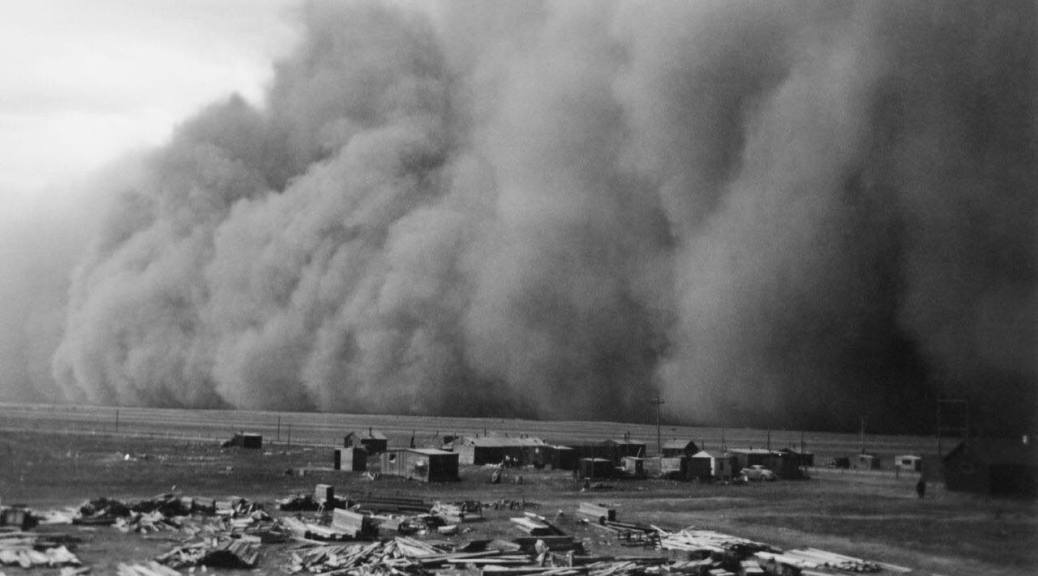
In 1931 and 1932 they suffered from the dustbowl, when top soil was so dry that it blew into homes.
Then the locusts came in 1933.
I grew up listening to stories about those times, but got a better understanding of what they faced when looking at the photos on a University of Saskatchewan website https://drc.usask.ca/projects/climate/.
My great great grandparents were among 750,000 farmers who had to abandon their farms between 1930 and 1935.
By 1938, the family had moved to Edmonton and my grandfather and his wife had to depend on the incomes from their daughters’ jobs, my grandmother as a nurse and her sister as a clerk, to survive.
1Data from the 1921 Census of Canada, Enumeration District 2, Bow River, Alberta, section 7, township 22, range 21, Meridian 4, page 6, line 28.
I used to hate Sundays. I had to go to Sunday school. I really didn’t understand why I had to attend because my parents just dropped me off. That’s right. They didn’t even go to church. And no one asked me if I wanted to go.
After they picked me up, things got worse. It was homework time until lunch. Of course, I could have done my homework on Friday night but Fridays were reserved for movies on the television and reading in bed with a flashlight until all hours.
And worst of all, some Sunday afternoons were for Visiting the Elderly Relatives. In my mind, my aunts and uncles were ancient. Plus my brother, being a boy and older than me, was apparently able to take care of himself, as he always seemed to be absent from these visits. So I would sit in the living rooms of my aunts and uncles, with no toys or any other amusements, and listen to the adults talk.
I now cherish the memories of these visits because they provided me with an appreciation of the social history of Montreal, as well as significant events such as the Depression and World War II.
The stories about the Depression are the ones that struck me the most. During the Depression, a quarter of Canada’s workforce was unemployed.1 My dad, Edward McHugh, was a young man out of work in Montreal and he joined his older brother and sister in Drummondville, to work for the Celanese. At the peak of the Depression, the Celanese employed 1,757 workers.2
None of the McHughs had cars in those days so they must have travelled back and forth to Drummondville by train. And Uncle Thomas McHugh married a local girl. I can just imagine the McHughs, from Verdun, arriving in Drummondville for the wedding. I doubt very many people spoke English in Drummondville at the time. The culture shock must have been intense.
My aunts and uncles, even into the 1960s, were thankful that they were able to have had some work during the Depression. Uncle Al Scott worked for the Northern Telecom for 40 years, although with reduced hours during the Depression. Luckily Uncle Frank McHugh worked for the Montreal Tramway Company so he was able to keep working during the Depression. He was a tram driver for tram number 24 that started in Montreal West and crossed the city on Sherbrooke Street. His job was safe.
Dad’s siblings loved to have a good time and the Depression did not stop them. My Aunt Elsie used to describe their card parties. There was only one bottle of scotch, some ginger ale, one can of salmon and one loaf of sliced white bread. My aunt was able to spread the salmon so thinly that she could make sandwiches out of the whole loaf of bread.
It was very clear to me that the Depression was a very frightening time in their lives. During this period, the future must have seemed bleak. Life was a struggle to make ends meet. But they made the most of it and persevered. Today I feel lucky to have listened and to remember their stories.
My family history includes, like most peoples’ history, twists and turns and coincidences that sometimes defy belief. In the 1970s, my family and I were living in Geneva, Switzerland, when we had a visit from the ‘Mormons’ doing their proselytizing door to door. Because we were in a non-English speaking environment and they were from the USA, we invited them in. Over the course of a few months, we became great friends and we decided to explore the church’s history with them.
One day, whilst talking to them, they mentioned Salt Lake City as the ‘Zion’ of the church, and how the early Pioneers had left their homes and families to trek across the US to get to Salt Lake City, Utah. That name Salt Lake City brought back a memory. When I was 11 years old, I lived with my Grandparents for a few years and my Grandfather used to ask me to go to the post office to post his letter to a Salt Lake City address. I remember it so well because in the 1950s Air Mail letters were treated differently from normal mail, and I had to have this important missive weighed and stamped before it could be posted, so it made quite an impression. I remember thinking ‘where was Salt Lake City, and why and who was my Grandfather writing to? Of course, by the time I arrived home again, the questions were forgotten.
Now, years later in the 1970’s the question arose again, so I called my Grandfather Percival Victor O’Bray (The English branch spells it with an apostrophe unlike the USA branch which spells it without) and asked him about the letters and to whom he had been writing.
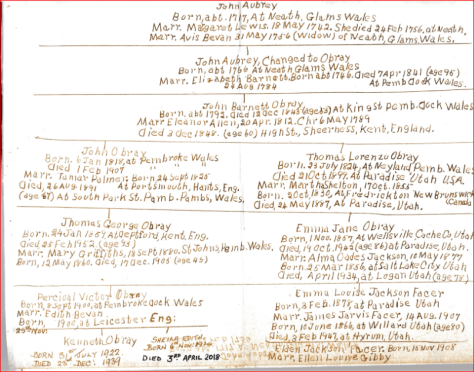
He replied ‘Well, you know the Americans, they are always doing their genealogy and one day, I received this letter from a lady, telling me I was related to her, I was a distant third cousin’ I questioned him further and he said they had corresponded for a number of years, and at one point, she had sent him a ‘Family Tree’ all handwritten then, of course, and started in 1717 to my grandfather’s day. I was very excited by this and asked him, if, when we next came home could I see the ‘Family Tree and read the letters. He replied that I could have the letters and the Family Tree, he had no further use for them, and he would post them to me.
The Family Tree was sent to my Gramps by his third cousin Ellen Louise Gibby Facer in Utah in the early 1950s.
Starting Family Genealogy
I think that started my interest in genealogy and research. The next time I went ‘home’ I questioned my grandparents and family at length, recorded their voices and wrote out the names and birth dates of the family. My Grandparents – who threw nothing out – gave me some marvellous 1800s photos of family members. On the back, I wrote who these people were, most important because shortly after that, we moved to Canada, and genealogy was put on the back burner in a box, for a number of years.
32 years later a renewed interest came when we met some UK friends again, and members of the Church of Latter Day Saints or Mormons. We talked about genealogy, but with young families and busy lives, that was all we did, talked about it, but, never really did any more research. About 8 years ago, we decided the time had come, and we met and researched together. Our friends invited us to their church’s “Centre of Family History” in LaSalle, Quebec, Canada to do some real research with them.
Finding Family Skeletons
I found the Family History Centre a wonderful place. Free to anyone at certain times it has most of the current genealogy websites online open for free. Books, microfiche and copies of records can be researched, with help from church members if needed. It was a quiet peaceful place and we got to spend some time with friends, have lunch and do some family history together. Our friends were a great help, as the Church recommends that its members do family history so they are very experienced. I recalled all the information I had amassed in the 1970s and had no idea how to put it all together. Now I had a chance to do that. I was pleased with how I had named all the photos as it was a wonderful tool to enable me to search online for family members.
I decided to start with the mysterious ‘Family Tree’ from the USA. It was so exciting to be able to put in full names, birth dates and areas to search. I was grateful to the previous Missionaries who advised us to label and date all information as we received it. A really great tip!
My Grandfather was born in Pembroke Dock, Wales and his Great-Grandfather had, as was usual, a large family. Two of those sons, my Grandfathers’ Uncles, Thomas and Samuel OBray became Mormons and left Wales for ‘Zion’ Salt Lake City in 1854.
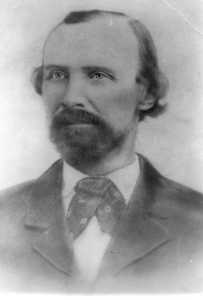
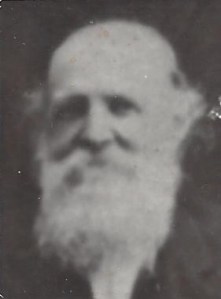
This photo, which appears all over FamilySearch.org, was included in letters to my Gramps from his third cousin in Utah.
Samuel William OBray
(Portrait found on Familysearch.org)
That was a surprise for me, considering the friends and interest I have had in the church over the years, a case of my Great Uncles having “been there, done that’ so I was able to trace their long and arduous journey across the plains to Utah through Mormon church records. Our friends were very excited for us, as this was a great honour in the history of the church, to have family that had made the arduous and terrible trip to reach their ‘Zion’.
Further Research
Through the Welsh Mormon History page, on FamilySearch.org I found that Thomas, was born in Wales in 1824 and he joined the Mormon church when he was 13 years old. Eight years later, he began to preach the gospel in England then Italy, France and Germany. Later, he went to Norway and Denmark. In Malta, he raised up a church branch. In 1854 Thomas emigrated to the US. The ship stopped in New Brunswick, Canada and picked up another family. Thomas joined that family and met Louisa. They continued the journey on their way to St. Louis Missouri to pick up supplies, wagons, food, and animals for the three-month journey across the plains of the United States.
In June at Fort Leavenworth, Kansas Thomas and Louisa were married. During that journey, with her brother Albert and her sister Martha, Louisa died of cholera and was buried en route to Salt Lake City on the plains, in an unmarked grave, a bride of three weeks. Thomas continued on with the family and arrived in Salt Lake City in September 1854.
A Few Surprises
In October 1854, Thomas married Louisa’s sister, Martha. Five children were born to Thomas and Martha. In 1857 Thomas married Carolyn and had 9 children with her. In 1864 Thomas married Ruth and they had 14 children together. The women and children, according to Censuses of the time, lived together in separate houses and were called ‘Housekeepers” Thomas lived with Martha and their children.
Altogether Thomas had 28 children and yes, my Great Grand Uncle had ‘plural marriages’! At that time, it was a tenet of the Church. Martha died in 1887 and a year after her death Thomas was sentenced to the Utah penitentiary for 11 months for ‘Unlawful cohabitation. He was sentenced a second time a year later and served from April to August 1890.
Following a revelation to the church Prophet, the practice of plural marriage was instituted among Church members in the early 1840s however; from the 1860s to the 1880s, the United States government passed laws to make this religious practice illegal. These laws were eventually upheld by the U.S. Supreme Court. At that time, the President of the church, Wilford Woodruff issued a Manifesto, which was accepted by the Church as authoritative and binding on October 6, 1890. This led to the end of the practice of plural marriage in the Church.
Decedents Of The Family
My Great Grand Uncle was asked by the church to explore further land outside of Salt Lake City and to build other settlements, and so he moved his families to ‘Cache’ (secret) County and founded a small place called “Paradise’ just outside of Salt Lake City. Thomas homesteaded the site where the church farm is now located.
In 2014, I visited this small town. It was full of my ancestors. Even the local cafe knew the name of my Grandfather and his Uncles. The Paradise Cemetery was a beautiful place, calm and serene and I found my Uncles and their families. It may sound strange, but I ‘introduced’ myself to them, and told them of their ancestor who wrote to my Grandfather, all those years ago, and how I now ended up here, in Paradise. I hope to go back again one day.
The cemetery contained all of the family who were ‘Pioneers’ and had crossed the plains to get to ‘Zion’ It was very moving to see my two Grand Uncles with special plates affixed to their memorial stones to indicate that they were original Pioneers. Great Grand Uncle Thomas died in Paradise, Utah on 21st October 1899 and Great Grand Uncle Samuel died in Paradise, Utah on 5th June 1910.
Meanwhile, I continue my research and find surprises every day. I would love to contact any members of Ellen Louise Gibby Facer’s family. She, who wrote to my Gramps, all those years ago! I still have her letters and Christmas cards.
It has been almost 200 years since my paternal ancestors came to Upper Canada from Scotland and took up farming here. It has been about 12 years since I started researching and writing about them. Now that I have pulled all their stories together into the pages of a book, it is time to celebrate.
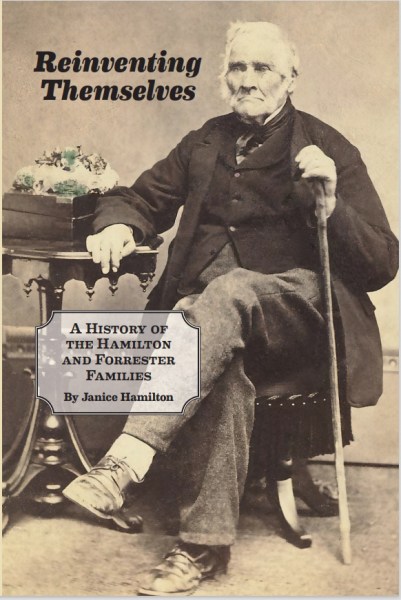
Earlier this week, relatives and friends helped me launch Reinventing Themselves: A History of the Hamilton and Forrester Families. We got together on Zoom, a solution that was perfect considering that the descendants of this family are spread from Montreal to Toronto, Winnipeg, Vancouver and across the United States.
This collection of short articles traces the descendants of weaver Robert Hamilton and carpenter David Forrester. The two Scottish immigrants and their families came to Upper Canada in the 1830s and became part of strong farming communities. Fifty years later, both families moved west. The Hamiltons were founding settlers of a temperance community that eventually became Saskatoon. The Forresters took up prairie farming in southern Manitoba.
The following generations continued to reinvent themselves, with several pursuing careers in Winnipeg, Manitoba. Among them were physician Thomas Glendenning Hamilton and his wife, nurse Lillian Forrester – my grandparents. After their young son died in the 1919 influenza pandemic, the couple began holding seances, and their research into psychical phenomena brought them international fame.
Many of the articles about the Hamilton family have previously appeared on my blog, Writing Up the Ancestors, but pulling them together into a cohesive thread makes the ancestors’ story easier to follow. Much of the material about my grandmother’s family, the Forresters, will be new to most readers.
The process of reinvention is continuing, as the book has inspired two videos. Tracey Arial interviewed me for her podcast Unapologetically Canadian (the link is coming) and Frank Opolko, a friend who recently retired from the CBC, also interviewed me. Here is the video he made, incorporating some my photos of Scotland and some of the photos that appear in the book:
I learned a great deal while doing this project, best of all I discovered several living cousins who were previously unknown to me. One new cousin instantly felt like an old friend, and the mystery person who is my closest match on Family Tree DNA has turned out to be a Forrester descendant from Michigan.
This project reminded me how challenging it is to write about genealogy. All I know about many distant ancestors is their dates and places of birth, marriage and death. While this is essential information, such lists can make for boring reading. The family stories are the good stuff, and they have been the focus of the articles on my blog. Of course, there are two types of family stories: anecdotes that may or may not be true, and well-documented facts.
I was also reminded how much discipline it takes to complete a project of this magnitude. I recently overheard my husband tell someone that he didn’t dare come near my office while I was working on the book because I would chase him away. There are so many distractions, especially on the Internet, that it really takes discipline to stay focused, and a project this size inevitably takes longer than expected.
Now it is time to take a break from family history, catch up on reading novels and enjoying summer before turning my attention to my mother’s family.
“Someday I’m going to write a book!” How often have you said that, or heard a friend or relative make a similar statement? You probably didn’t hold your breath until it appeared.
So it comes as a surprise to the nine members of Genealogy Ensemble, the family history writing group of which I am a member, that we are actually doing it. In November, we will launch Beads in a Necklace,a book of collected short stories based on our family research.
These real-life stories include a young Scot who immigrated to Canada and became a famous gospel singer, memories of queueing up for food rations in post-war England, and a young girl who was kidnapped from her home in southern Maine by the Abenaki Indians in 1692 and spent the rest of her life in Quebec.
Now that it’s about to be published, I thought it would be worthwhile to look back at some of the lessons we learned that might help potential authors.
Grow Organically
The genesis of Beads in a Necklace goes back to 2012 or so when we decided to write about our families and share our stories. Since then, we have met once a month to critique each other’s work, improve our story-telling skills and gain confidence.
After a while, our stories were so good, we wanted to share them more widely. We began taking turns posting them on our blog, Genealogy Ensemble. The book authors among us kept talking about the possibility of publishing something, but the idea always seemed far away.
Last year, we got serious about the idea. With 2017 being the 375th anniversary of the City of Montreal, where we all live, and Canada’s 150th birthday, we decided it was time to publish a collection our stories: a 250-page book, with a proper binding and a beautiful cover, that we will be able to give to friends and relatives for Christmas.
Start with Structure
We started discussing the project last September. The first step was to each choose our five favourite stories. Each article had to be about 500 words long and include endnotes citing the sources of our facts. Apart from that, there were no rules.
After considerable debate, we agreed on the title Beads in a Necklace, and we came up with a logical way of organizing the stories into sections.
Collaborate
We all pitched in to help at various stages of the process, depending on our areas of expertise. I did most of the editing, with help from Tracey. I had worked as a journalist, and Tracey and Dorothy are also professional writers. That helped a lot: we know how to tighten a longwinded sentence, spot a good first paragraph and structure a story so it flows smoothly. Several members of our group have natural writing talent that they never knew they had, but they are still learning the skills that come from writing on a daily basis. And sometimes writers have to let go of their egos and allow changes. Of course, everyone could say yes or no to editing suggestions, and we always managed to find compromise solutions.
Sandra, who has experience preparing annual reports in the corporate world, did most of the layout, with Claire’s assistance. Claire also knows her way around digital photography and she cleaned up the often scratched or faded photos we wanted to use.
Ask for Help
We even got friends involved: one friend who is a proof reader is making sure there are no typos or missing punctuation marks, while another friend who is a graphic designer has agreed to do the cover.
There have been many details to consider. The people responsible for the layout had to decide on the size of the book and the fonts to use and get quotes from a local printer. Someone has to look after making a digital version available, and we have to crank up our marketing strategy. Last but not least, we had to find a place that is big enough but not too expensive for our celebratory book launch. We found a church hall that is perfect!
Persevere through glitches
Most of the glitches we have encountered have been computer-related. For example, we tried both Google Drive and Dropbox so we could upload files that everyone could edit. Both did the job, but we found Google Drive to be a bit unstable, while for a reason I still don’t understand, I can’t see many of the changes that Sandra and Claire have made to the layout in Dropbox.
This has been a long process. We were editing in January and the book will be launched in November. But we are all thrilled about it. Furthermore, I hope to apply the lessons I have learned from this experience when I write a book about my own family’s history. Just don’t hold your breath until it appears.
This article is also posted on writinguptheancestors.blogspot.ca
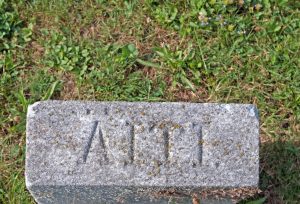
Amidst the many tombstones in a shady corner of Edgewood Cemetery in Ashtabula, Ohio is a very simple thick slab of granite, about the size of one of those washboards our mothers and grandmothers used to hand wash items before washing machines were invented. Inscribed on this granite in very large letters, as simple as the stone itself is the word “AITI”. which means mother in Finnish. It is the resting place of my great grandmother1, Susanna Karhu (Klemola) who had immigrated to the United States in 1896.
Susanna was born in Waara, Finland in 1854. In their home country in 1876 at the age of twenty-two Sanna married Johan Karhu. Over time they raised a family of eight children.
In 1893 Johan seized the opportunity to immigrate to the United States. He left his family in Finland and made his way to Ashtabula, Ohio, a port city on Lake Erie, where he worked on the docks and lived in the area of Ashtabula Harbor. At that time the port was thriving with constant activity. Large flat boats and barges loaded with coal and iron ore were sailing up and down the Great Lakes. These were prosperous times. New immigrants were eager to earn a decent wage.
Once settled, Johan sent for his family. In 1896 Susanna ( Sanna), at the age of forty-two along with her three youngest children, Ida, Jaako, and Lisa set sail by way of Hanko, Finland.2. They boarded the S.S. Cunard ship ‘Lucania’ in Liverpool, England en route to America. Ellis Island was their port of destination in America arriving there on the 30th of May 1896,and continuing on to Ohio.
Very little is known about Sanna. We do know that her two oldest children chose to remain in Finland. It must have been heart wrenching to know that she would be leaving behind these children and two of her babies’ graves.
She was a housewife and at the time of her death August 18th 1929. She was 75 years old and among the oldest of the Finnish residents of Ashtabula Harbor having lived there over 30 years. Johan died in 1948. Where he is buried is still a mystery?
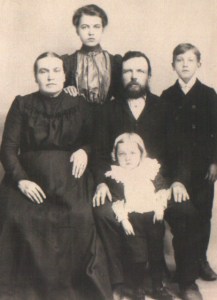
Sanna, Ida Susanna, Johan, Jaako and Lisa. Photograph taken several years
after arriving in the United States. Ida, my grandmother appears to be about fifteen or sixteen.
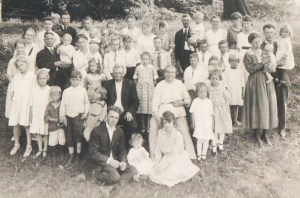
In a photograph taken during a family gathering in 1919 Sanna and Johan
are surrounded by their children, grandchildren and great-grand children.
Sources:
1. “Ohio Deaths, 1908-1953,” database with images,FamilySearch(https://familysearch.org/ark:/61903/1:1:X8PB-TC9 : 8 December 2014), Sanna Karhu, 18 Aug 1929; citing Ashtabula, Ashtabula, Ohio, reference fn 50528; FHL microfilm 1,991,908.
My Gran told me that her mother Lilian, did not like her very much and was not very nice to her, and consequentially for some peculiar reason Lilian did not like my mother or me, either.
I remember Lilian as a very stern presence so I steered clear of her. She did live with my Gran for a time, but by the time I was a teen, she had moved to another daughter’s house to live, so I never had much contact with her.
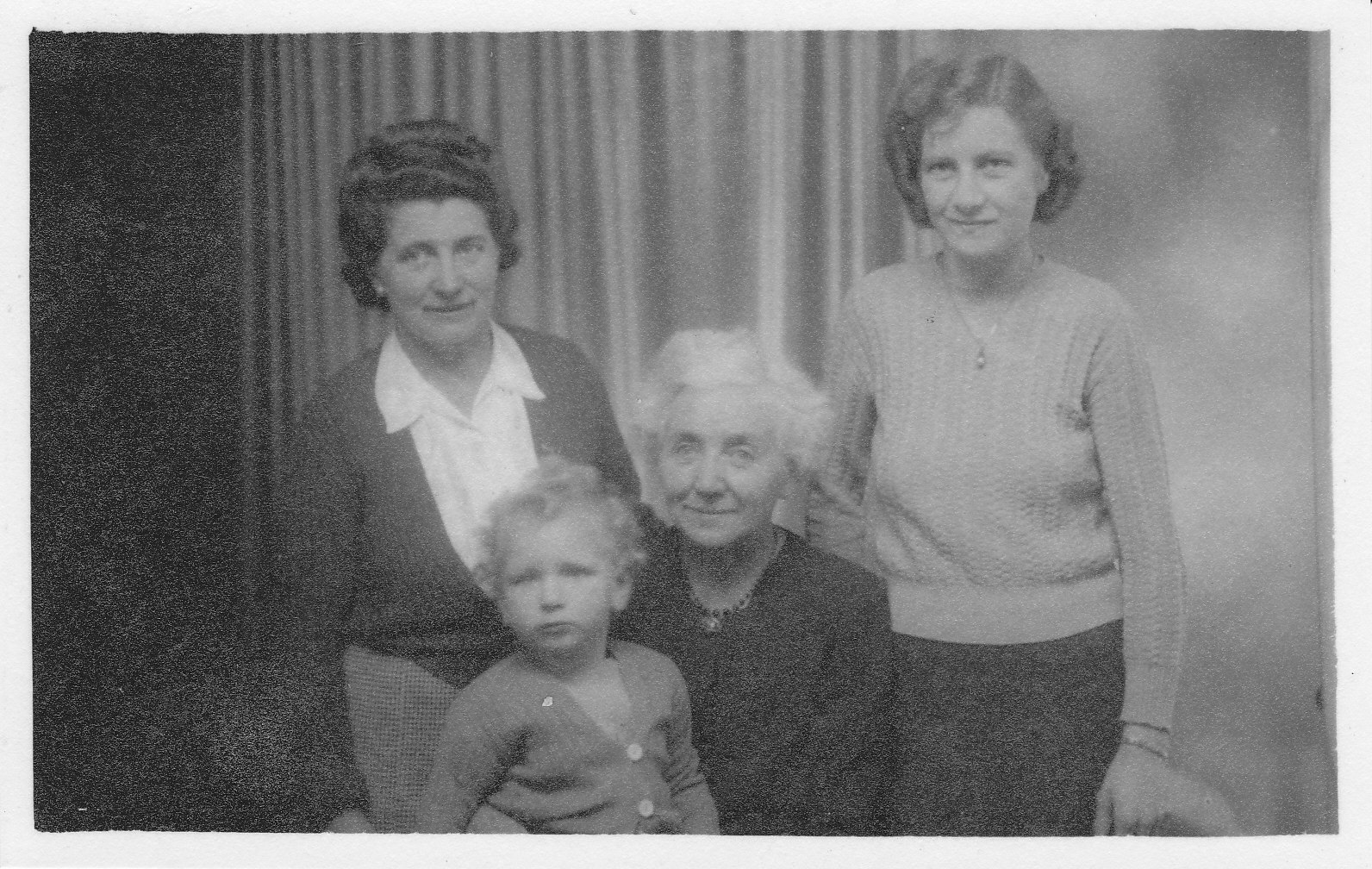
A photo below shows the four generations myself, Gran Mum and Lilian and I do not look very happy to be in this photo!
When my mother found out she was pregnant with me, 2 years after being married, she told me that Lilian said “Well, you made your bed now you have to sleep in it” Not a very nice thing to say about becoming a Great Grandmother! I never did understand why she did not like us and what she meant by that remark but years later, I was to find out.
For a while, I lived with my Grandparents from 11 years to 14 years. They were very strict but loving and Gran and I went everywhere together, to church the church fétes and shopping trips. Gran taught me to cook and bake.
One day, Gran wanted to go and see her mother who was living in Okehampton, Devon, a train ride away from us in Plymouth.
A train ride, what a treat! I was about 14 and we lived a very quiet life. Off we went, sandwiches and tea packed for the two-hour train journey to visit great-grandmother Lilian.
After my Gran’s meeting with her mother lunch with the cousins and visiting, it was time to go. We had the train carriage to ourselves.
‘That was a lovely day, wasn’t it Gran?’ In answer, Gran burst into tears I was astounded, my Gran crying? She never cried.
I put my arm around her and asked her ‘Gran! What is the matter are you sick?” she cried some more, blew her nose and then said “I am a bastard”
Well! You could have knocked me down with a feather. Gran NEVER swore let alone say THAT word.
Eventually, she calmed down and I asked her what she was talking about. She must have been very very upset to divulge her mother’s secret to her young grand-daughter.
Apparently, Gran wanted to be baptized in the Church of England, and needed her birth certificate and to eventually claim her Old Age Pension, she also needed this document. That was the purpose of our visit.
When Lilian heard that Gran wanted her Birth Certificate SHE burst into tears and said that she hoped she would be dead by the time her secret came out.
Then, she had to reveal the reasons why she was so upset. Lilian was by then in her late 80’s and told Gran that she had given birth to her in the Leicestershire work house, because she was an unmarried mother. When she received Gran’s birth certificate it had stamped across it, in very large letters the word ‘ILLEGITIMATE’ Lilian had ripped it up and threw it away.
Lilian had, like many before and since, become pregnant at 17. The father Thomas was a Royal Navy Cooper a master carpenter. They met and she became pregnant. My Gran told me years later, that Lilian told her that she ‘fell off the style (or kissing gate) and never got up’ When Thomas did eventually come home from sea, they married. Gran was then three years old so yes, she WAS illegitimate for a while, but the parents had married, just a little late!
This seemed to be the reason Lilian did not like my Gran very much and Lilian did show a great deal of resentment towards Gran, my mother and me.
The four generations
Standing, left Gran. Standing right my mother Front: Marian and Great Grandmother Lilian, 1948
This article is a continuation of a previous story, called “Illegitimate”
Portrait of a Scandal: the Abortion Trial of Robert Notman, by Elaine Kalman Naves, is many things: a non-fiction courtroom page-turner, a story about illicit love, a tale of Scottish immigrant families in mid-19th century Montreal, and an exploration of some of the social customs and beliefs of the times. The fact that the book describes abortion practices and life in Kingston Penitentiary makes it all the grittier, while the high-profile identity of the main individual — the younger brother of society photographer William Notman — makes the details all the juicier.
I wanted to learn more about life in 19th century Montreal, home to several of my ancestors. But this real-life story hooked me within a few pages, with the mysterious death of a young physician, Dr. Patton. I won’t be spoiling the book by revealing that Patton committed suicide because he mistakenly believed his patient, a student named Margaret Galbraith, had died as a result of the abortion he performed on her. Her lover, Robert Notman, was charged with procuring the abortion.
The book is full of strong individuals, from the young woman whose hopes of becoming a teacher were doomed the minute she fell for Robert, to the lawyers who argued the case with dramatic flourishes. Their story is in excellent hands. Author Elaine Kalman Naves is an award-winning author, having already written a memoir about her own family, a book about Montreal writers and numerous articles for The Gazette.
Many family historians would relate to Naves’ research process, from her frustration with the red tape she encountered at the McGill University archives to her pleasure following Margaret’s footsteps back to the shores of Loch Lomond in Scotland. Much of the material has been culled from sources familiar to genealogists, including newspaper articles, family papers and city directories. Naves has brought these 150-year-old sources together in a way that makes sense to modern readers. And despite only having fragments of information about Robert’s and Margaret’s lives, she has succeeded in bringing these people back to life.
The bibliographic essay at the end of the book is also worth a look. Two of Naves’ favourite sources, Call Back Yesterdays by Edgar Andrew Collard, and Montreal: Island City of the St. Lawrence by Kathleen Jenkins, are probably on many Montrealers’ bookshelves, while the Dictionary of Canadian Biography Online is only a Google search away.
Elaine Kalman Naves. Portrait of a Scandal: the Abortion Trial of Robert Notman. Montreal: Vehicule Press, 2013.
You may approach genealogical research like you would fishing — and just to bring it back to French-Canadians — ICE-fishing (OK I wrote the ICE word, but it’s going to warm up today!). Instead of fishing with one rod, you set up as many lines as you can. The limit is how many you can check at a time… and how many holes you can dig before you are so hot you strip down to your t-shirt.
This is just what a cousin did:
2001, Welland, Ontario: she sends on RootsWeb * a querry about my great-aunt Simone Viau-McDuff. And waits.
2011, Laval, Québec: I’m poking around the web, put in Simone’s name into Google and find her message. Wow! For sure it’s the same person, but… the message is 10 years old! No one keeps their e-mail address for that long. Too bad!
Still, I send my line to the water and reply. Next day, I get a reply.
Geraldine, daughter of my grandfather’s cousin, was jumping up and down in her living room when she got my message (just like I was when I got hers).
Like many Quebecers during the 20th century, her grandfather Philias Viau , had moved from Lachine to work in the Niagara region around 1904. He was my great-grandfather J. Francis Viau’s brother. They lost their French, but there are still some Wellanders that don’t speak English. The Welland canal was of great importance as a link between Lakes Erie and Ontario. Many industries flourished along the canal, like The Electro Metallurgical Company unit of Union Carbide where Philias worked.
I went to visit Geraldine by train, learned about the region, met some great people. Among them, Renée Tetrault, a founding member of the Welland Branch of the Franco Ontarien Society of History and Genealogy now known as the Réseau du patrimoine franco-ontarien. Renée has served for more than thirty years as the expert who assists researchers at their Centre for Research in the Welland Public Library. She will describe the extensive holdings of their library in and offer suggestions for researching in Quebec.
Which leads me to introduce this French-Canadian resource: there are six regional centers in Ontario. Three times a year they publish Le Chainon (paper or digital). They have quite a few online resources (Ontario and other provinces including Quebec, and even American parishes) available to members, among which transcribed notarial records, BMS, cemetaries, family histories, cities and towns, census, archive guides, and a lot more.
Two things to remember:
When part of a family moves away, news and pictures are exchanged to keep in touch. Geraldine had pictures of my Montreal family that I had never seen and letters writen by my direct ancestors. The jewel: a cash book kept when Philias’ father Onesime Viau died in Lachine, where all spendings (lots of prayers in church) and income (rents) were described along with after-death inventory and each child’s share of inheritance. The two of us were able to piece together family stories that individually we couldn’t figure out and dentify people on each other’s pictures. Finding cousins will help you go up your tree in surprising ways.
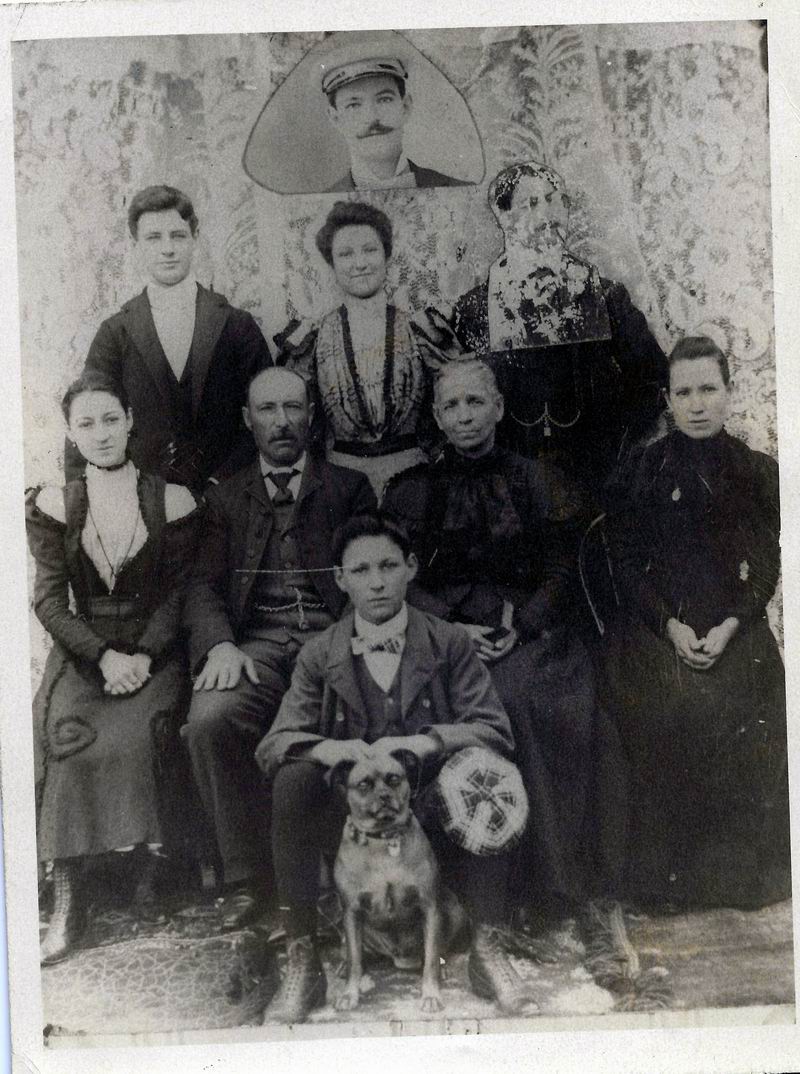
Onésime Viau and Antoinette Dorais with their children, Lachine, Québec
The other, send a lot of lines out, keep a log, follow up, but be patient. Be courteous, some will never bite, some are not interested. But dream big, don’t be stopped by logic and expect anything…fish come in many shapes and sizes, and even as messages in bottles.
* Rootsweb was one of the first online free cooperative genealogical resources. Ancestry has picked it up, but we can still go into archives or free.
A sense of dread enveloped me on hearing David’s words: “Paige is the first of our generation with Alzheimer’s.” David and Paige are my cousins, the sons of my mother’s eldest sister Madge. Alzheimer’s has long held a dark grip on my family.
Madge died young as did her brother Clark. The remaining five siblings lived to seventy and beyond and all died with Alzheimer’s. Family clusters like this are unusual, my doctor assures me, and likely linked to something in the environment. The Willetts were born and raised on a farm in the Gaspe. Perhaps the trigger was something like drinking unpasteurized milk, my doctor suggested. Good, I’m a city girl and have always consumed pasteurized milk. But wasn’t that also true of Paige?
I was witness to the slow progression of the disease in my two aunts and my mother. Violet was the first to be moved to a nursing home when her sister Kathleen could no longer care for her. Eventually she appeared to have forgotten everything, even how to eat. She died when a feeding tube perforated her throat.
Kathleen was next. Frequently she tried to escape her home. Once she was found wandering miles away in a seedy section of the city. Someone drove her to the address on a letter in her purse, her old apartment. The new tenant invited her in to wait while the police searched their missing people’s files. Evidently the two women had a lovely afternoon chatting about their world travels, the tenant seemingly unaware of my aunt’s dementia. Social skills are said to be the last to disappear. Kathleen died of pneumonia, “the old people’s friend” my mother called it. Years later it was difficult for me to give my consent for mum to have a pneumonia vaccine.
My mother’s Alzheimer’s accelerated rapidly following my father’s death. For a while she was aware of her confusion struggled to regain control. She railed against going to a home and accused me of kicking her out of her house. “Take me home” she would cry again and again. “That’s where my umbrella is. And my memory.” In the end, she forgot who I was and that she was ever angry with me. Time and memory became short circuited. She searched for her own mother in the rooms of the home asking constantly why she hadn’t come to visit her.
My mother died peacefully at the age of ninety-four. By that time she too would not eat or drink and her words made no sense. But Alzheimer’s treatment had advanced. There was no force feeding, just gentle care and comfort from family and staff in her own room and in her own bed with soft music in the background. We no longer prolong the dying of Alzheimer’s patients but travel with our loved ones on their final journal. I held my mother’s hand as she took her last breath.
A few years earlier my husband and I had emptied mum’s house and put it on the market. I’m still haunted by the image of the empty boxes we found stored in the basement: big boxes and small boxes, cardboard boxes and boxes covered in velvet, blue Birks boxes and boxes from the St. Hubert Barbeque. The boxes were the remainders of a lifetime of experiences. But the boxes were empty, a very powerful metaphor for the effects of Alzheimer’s. Today I am healthy and my memory boxes are full. So I write of memories, my own memories and the stories of my family that I have researched. If one day my memories are lost, my boxes will hold the record.

![Handcart Pioneers Postcard pg. 1 - 1939_thumb[1]](https://genealogyensemble.com/wp-content/uploads/2014/09/handcart-pioneers-postcard-pg-1-1939_thumb1.jpg)
![Handcart Pioneers Postcard pg. 2 - 1939_thumb[2]](https://genealogyensemble.com/wp-content/uploads/2014/09/handcart-pioneers-postcard-pg-2-1939_thumb2.jpg)
 Genealogy Ensemble