Tag Archives: genealogy

Woodland’s Nymph

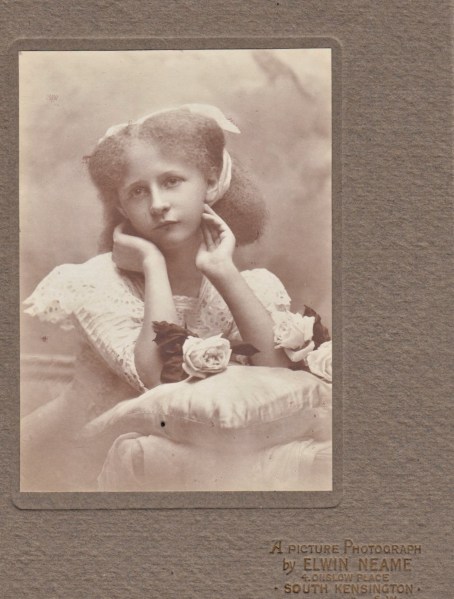
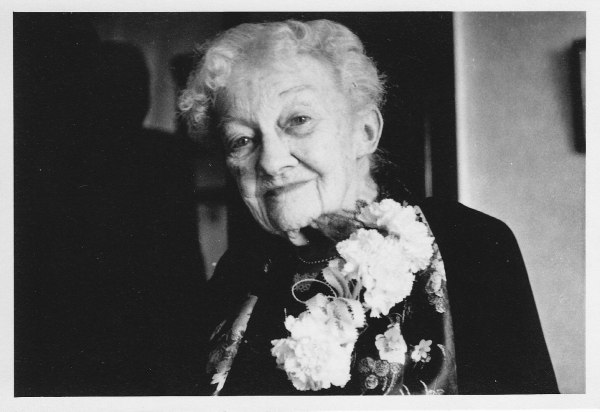
I recently discovered two photos of “Amy” in my dusty old boxes of family memorabilia. The first captured her elderly wrinkled face with a twinkle in her eye and a flower corsage adorning her left shoulder and the other portrayed a 29-year old Amy dressed in a formal gown complete with a silk fan also with a flower corsage on her left shoulder. Inscribed on the reverse side of this second photo, written in Amy’s scrawl, was “Bob with love Amy – Xmas 1894.”

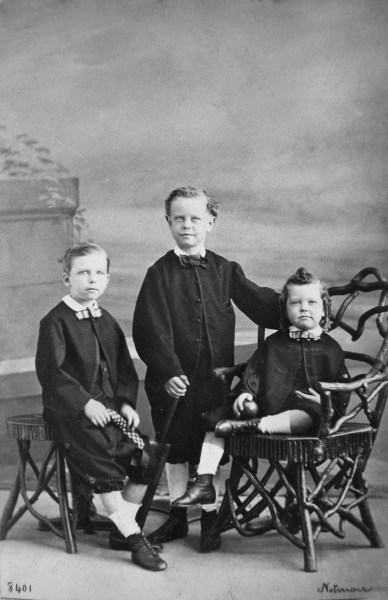
It turns out that Amy C. Lindsay (1865-1960) was my great grandfather Robert Lindsay’s (1855-1931) half sister. His mother Henrietta Dyde died within months of losing her fourth child and, a couple of years later, his father Robert A. Lindsay (1826-1891) married a young Charlotte Vennor (1843-1912) who became stepmother to his three boys – Robert, Charles and Percival – all under the age of ten. Over time, Robert A. and Charlotte had five more children, with Amy being their first born and ten years junior to Robert.
Who the heck was “Bob”?

Amy never married, so “Bob” could not have been a lost love in WW1, as she was 50 years old at that time. The most plausible explanation could be a gift to her older half brother Robert – “Bob” – and that’s the reason why the photo ended up in with my family.

My guess is that she idolized her oldest half-brother and gifted him that special photo which somehow survived the test of time to be found by me in my dusty old boxes. Mystery solved!

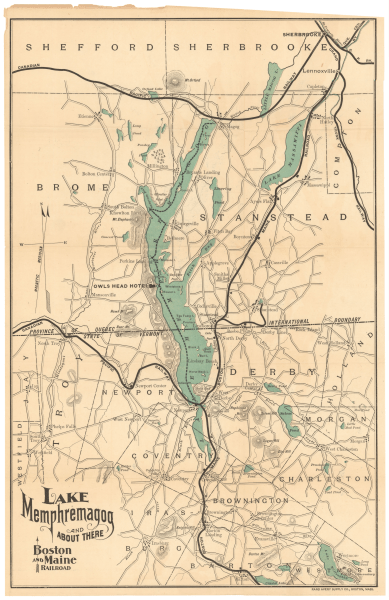
In 1873, when Amy turned eight, her parents bought a huge summer estate property called Woodland on Lake Memphremagog just south of Georgeville, Quebec. Lake Memphremagog1 is in the Eastern Townships just 72 miles east of Montreal, Quebec. It is 31 miles long, from north to south, spanning the international border between Quebec and Vermont but is predominately in Quebec.
Amy’s father acquired “Woodland” from the original owner William Wood and it consisted of 280 acres of land bordering on the waterfront. William Wood had built a large red brick manor house that a neighbour described as a “barrack with a steeple.” Regardless of how it looked, it became home to several generations of the Lindsay family until the early 1960’s when it was replaced. They affectionately called it “The Big House.”
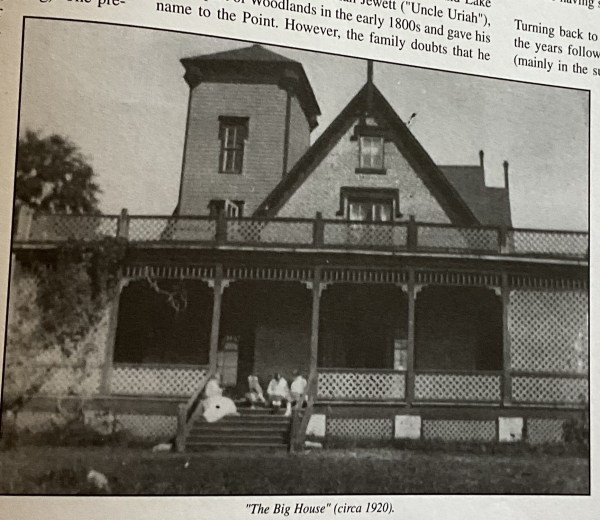
During this time, several other wealthy English speaking families acquired farm properties in the area and established their summer residences there as well. Woodland became a full functioning farm complete with livestock and crops all managed by hired hands. Over time, various third parties managed the farm until well into the 20th century, which left the family with plenty of free time on their hands.

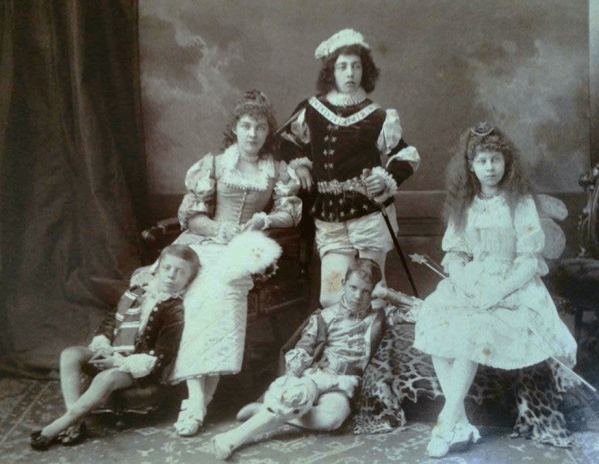
The Lindsay family took up residence in the Big House every summer. Amy’s father worked as an accountant for the Bank of Montreal and evidently could be spared for the long summer months to enjoy time with his family. “Apparently Robert Lindsay followed a daily routine of walking around the property with his entire family in tow according to size.” On another special occasion the whole family dressed up in fancy costume clothes for a party.
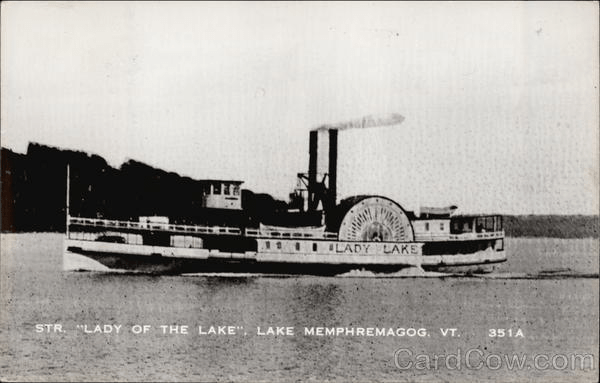
The grand “Lady of the Lake” steamer would sail twice daily on Lake Memphremagog stopping at private docks and thus providing the family with lake excursions right from the front doorstep of the “Big House.”
The Lindsay family (including mother-in-law Vennor who rescued Woodland financially in 1885) enjoyed the property until Robert’s death in 1891. Mrs. Vennor died four years after him and the property devolved to the four surviving grandchildren: Amy, Douglas, Cecil and Edith. (Their brother Sydenham died young while trying to save a drowning victim.)

According to her family, “Amy was a small lady, well liked and well respected by most… She loved the lake and Georgeville and spent almost all her summers there… She lived in the Big House and had a beautiful English country garden nearby where she liked to spend many hours puttering about.”2
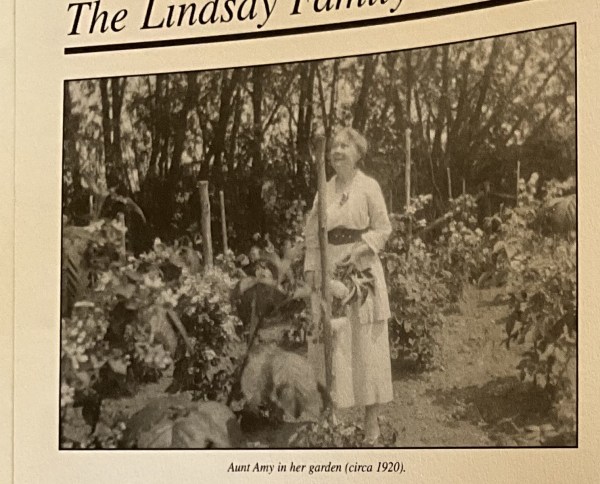
Although Amy never had children of her own, her many nieces and nephews doted on their “Aunt Amy.” After her mother died in 1913, her nephew took her to Paris and they stayed at the Hotel Pas de Calais, a four-star boutique hotel, right in the heart of tourist Paris. Nothing but the best for Aunt Amy!

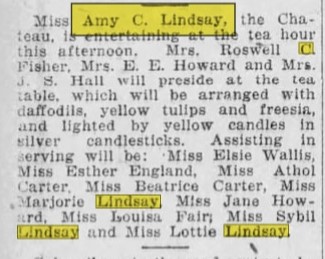
According to an article in the Montreal Star, when Amy hosted a social tea at The Chateau (across from the Ritz-Carlton Hotel), “the tea table was arranged with daffodils, yellow tulips and freesia and lighted by yellow candles in silver candlesticks.” What made it even more special were her five adult nieces assisting her in the serving of tea. She must have been very proud!
Woodland stayed in the Lindsay family until 2020 with several generations enjoying the spectacular property and family legacy. The road leading to their property was aptly named “Chemin Lindsay” and remains so today.

Although Amy spent extended summers with the multi-generational Lindsay family at Woodland, she lived the rest of the year in the downtown area in Montreal known as “The Golden Square Mile.”3 She seemed to move around quite a bit but always within the same area first staying with her mother until her death and then sometimes with her sister Edith (Carter) after that. Although in 1920 she enjoyed “wintering” at the Ritz-Carlton Hotel!

Amy eventually settled for her last 20 years in the Maxwelton Apartments on Sherbrooke Street near McTavish across from the McGill University campus while summering at Woodland until she died in 1960 at age 95.

According to the family, she obtained her first TV late in life and became an avid hockey fan! What a thrill it must have been to watch that first televised hockey game in 1952!
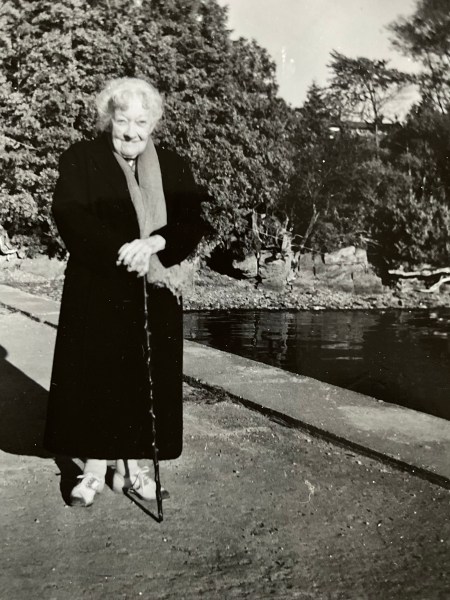
Amy on the Georgeville dock 1955 at age 90

In her last will and testament, written in 1896 when she inherited one quarter of Woodland, she bequeathed “Bob” her cherished set of Waverly books by Sir Walter Scott. He died long before her and, unfortunately, they were not to be found in my dusty old boxes!

1https://wiki2.org/en/Lake_Memphremagog – as referenced 2023-10-18

2The Lindsay Family and Woodlands – “Georgeville 200th”

1901 Lake Memphremagog map” by Rand Avery Supply Co. – Ward Maps. Licensed under Public Domain via Commons – https://wiki2.org/en/File:1901_Lake_Memphremagog_map.png#/media/File:1901_Lake_Memphremagog_map.png

3https://wiki2.org/en/Golden_Square_Mile?wprov=srpw1_0 – as referenced 2023-10-18

Notes:

A map of Grand Trunk Railway route Mtl to Portland, the train appears to have stopped in Sherbrooke:

https://digitalarchive.tpl.ca/objects/353690/map-of-grand-trunk-railway-system-and-connections

Archival photos of Georgeville:

https://www.townshipsarchives.ca/georgeville-quebec

Janice Hamilton’s story about the Baggs in Georgeville:

Summer in Georgeville
The Jungle Librarian
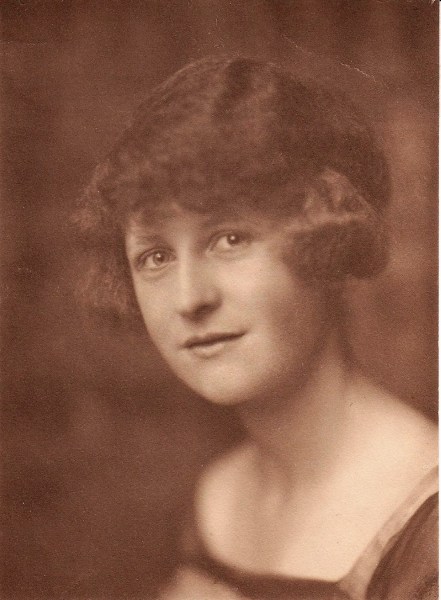
“Obviously a club does not change from a dump of second hand books to a pan-Malaysia institution without care and attention.” Malaya, 1966. British Malaysia Association. Tribute to Dorothy Nixon, former secretary of the Kuala Lumpur Book

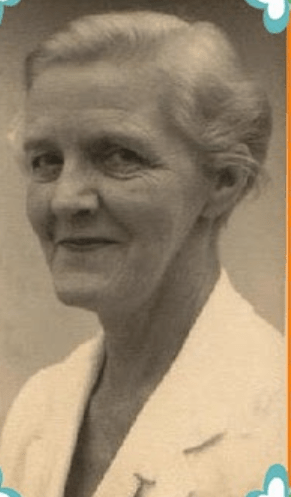
Dorothy Forster Nixon 1895-1971

One morning not long ago, I received an email from a young woman in Malaysia. She wanted to know about my grandmother, also Dorothy Nixon, who had been ‘secretary’ of the Kuala Lumpur Book Club back in the day. The woman was a librarian-in-training and she told me that “Granny” was a great inspiration to her.

I wasn’t at all surprised because about ten years earlier I had received a similar email from the former Director of the Malaysian National Library. This illustrious person was researching my grandmother’s life as a retirement project.

It seems that my County Durham born grandmother, Dorothy Forster, who moved to Malaya in 1921 to marry Yorkshireman Robert Nixon1, a rubber planter, is something of a legend in modern Malaysia, at least among librarians.

In 2003, sheer serendipity led me to start my own research into my colonial grandmother. I was a prolific freelance writer back then and it was my habit to enter my name “Dorothy Nixon” into Internet search engines to check out where my essays and articles may have landed.

On this occasion, I stumbled upon a mention of another Dorothy Nixon, my father’s mother. It was on Amazon.co.uk in a review of a book by historian Margaret Shennan about Colonial Malaya “Out in the Midday Sun”. In the book Shennan mentions my grandmother but only once and only in connection with an ugly incident at Changi internment camp during WWII. She gets her name wrong, too: Dorothy Dixon. The reviewer, a Mr. Smith, corrected this typo and described my grandmother as ‘the endlessly helpful secretary of the Kuala Lumpur Book Club.”

I had met Dorothy only once in 1967 at 12 years old when she came to visit us in Montreal. She was cranky and super-critical of all things Canadian – especially of my ‘shrill’ playmates skipping or biking out on our Snowdon area street – and we did not hit it off at all, so you can imagine how confused I was by this description of her.

So, I tracked down Mr. Smith, a former rubber planter. He told me all about the KL Book Club’s subscription arm where book-boxes were assembled and sent out to people holed up in the jungle in their far-away plantations, a service much appreciated during the 1950’s Communist Emergency.

He further described my grandmother as having a fine and nuanced understanding of literature. She always studied the members’ tastes, he said, in order to recommend books to them.

I eventually wrote a story about “Granny” that got published in the Globe and Mail. That’s how the Director knew to contact me. In return for my help this nice lady mailed me an article from the Malaysia Library Review 1952 co-written by my grandmother about history of the KLBC: “The Kuala Lumpur Book Club: A Pioneer.”

The article explains how the Book Club started out as an informal back-room book exchange for Brits and evolved over the decades into a full-fledged government funded community resource, housed in a two story air-conditioned art deco building near the famed Royal Selangor Club in Kuala Lumpur.

Between the wars there were four libraries in Malaya, including the KLBC and the Raffles Library in Singapore. Although these places were set up for Britishers, members were debating whether it was time to allow locals to join, if only government officials.

The newspaper record 2 reveals that my grandmother, who worked at the Book Club from 1937 to 1966, was instrumental in opening up the library to Asians, male and female, especially students. This is likely why she is so admired today in Malaysia.

In the 1930’s and 40’s, the KLBC had a reputation among some Colonials as a light-weight institution that provided low-brow literature to rubber planters’ wives, who were bored to death with servants to do everything and their school-age children away in England.3

Dorothy, who attended a co-educational Quaker school in England, did indeed have many Tamil and Chinese servants at her husband’s Selangor rubber estate, some of whom watched over my father until he was sent away to school in Cumberland at five years old.

She did, indeed, attend many drunken garden parties and polo matches in the 20’s and 30’s – but eventually during the Great Depression she found something more important to do. For a smidge under three decades she worked at the Book Club 7 days a week, 9 am to 7 pm. In the evening she strolled over to the Royal Selangor Club (in the company of her male friend, an eminent lawmaker) where she scored their cricket games!

Popular Australian author Di Morrissey includes a bit about my grandmother in her 2010 novel.

Today, if you google “Dorothy Nixon” and “Kuala Lumpur Book Club” many many MANY citations will come up from scholars and journalists thanking my grandmother for help researching their books.

These authors are especially grateful for access to her personal collection of Malaysiana. Apparently, my grandmother was an expert in all things Malayan, a real scholar herself who was always invited to Prime Minister Tunku Abdul Rahman’s birthday bashes, and who at mid-20th century repeatedly made the Malaysia Who’s Who.

So, not lazy at all

Video about Malaya in 1952 with images of my Grandmother scoring cricket at the end.

END

1) Men working in Malayan plantations were encouraged (forced) by their Companies to go home to find a British wife even if they were happy with other arrangements. My grandfather, Robert, found Dorothy Forster, the daughter of an itinerant Primitive Methodist Preacher who had circulated through his hometown of Helmsley, North Yorkshire in 1912-1914. When she arrived in Malaya, late 1921, Dorothy discovered Robert had an Asian ‘mistress’ as they said back then. Upon his marriage, he did not give her up,apparently. (Re: my Aunt Denise.) She got pregnant with my father immediately.

2. The Malaysia Straits Times is online with a database and many articles citing my grandmother, some with photos, most of them in connection with the Cricket. This link to an article, written in 1966, is a tribute to her work as KL Book Club Librarian and in Montreal in 1967 when she visited us she wasted no time in showing it to my mother. She was obviously in search of respect from us. Indeed, judging from her ‘diary’ searching for respect seems to have been her life’s goal.

https://eresources.nlb.gov.sg/newspapers/digitised/article/straitstimes19660514-1.2.105.12

3) British Colonial wives were much looked down up in rubber country, described as undeserving parvenus, women who would be sweeping out a three bedroom cottage back home in Somerset were they not in Malaya lazing in their airy bungalows, waited on hand-and-foot by servants. Yet, these Colonial Wives were given little to do and forbidden to meddle in local affairs in fear they would cause scandal or upset the entrenched hierarchy of the British, Malays, Chinese Tamils. The British believed it was necessary to send their children away to England as soon as possible for schooling and to avoid their contracting a tropical illness. By the time my father’s younger brother was born, he got to go to a British school in Malaya set up in the hills, considered a healthier milieu.

An earlier story on this blog about my grandmother and her internment and torture during WWI.

https://www.theglobeandmail.com/life/my-crotchety-grandmother-deciphered/article955859/

William Hanington comes to Canada in 1785

… and now his church celebrates its 200th Anniversary in 2023

(upcoming celebration details below)

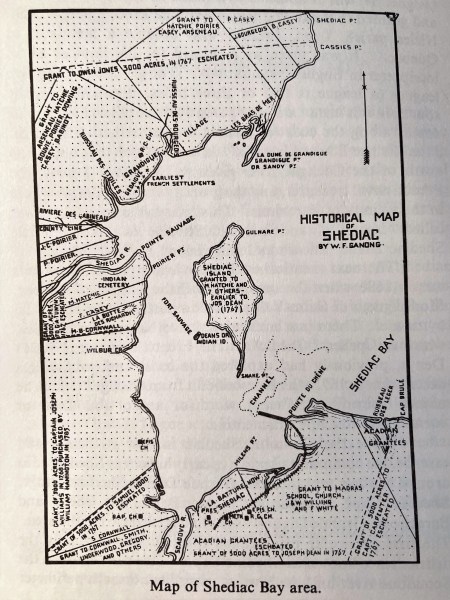
The deed described the property as “a commodious estate upon the outskirts of the thriving town of Halifax, in the Colony of Nova Scotia, Canada”. Imagine William’s surprise to arrive in Halifax in February to discover that “outskirts” meant a 200-mile hike through thick forest and deep snow!

My great-great-great grandfather, William Hanington, was born in London, England, in 1759. As the son of a fish dealer, he trained as an apprentice to the Fishmonger’s Company but became a freeman in 1782. Two years later, at the age of 25, this adventurous young man paid £500 sterling for 5,000 acres of land “near” Halifax, Nova Scotia, from Captain Joseph Williams.

After the initial shock upon their arrival, William and his companion found an Indian guide, loaded all their worldly belongings onto a hand sled, trudged through the snow, slept in the open and finally arrived in bitterly cold Shediac in March 1785. His discouraged companion quickly returned to Halifax and sailed back to England on the first available ship!

Large Lower left piece of land belonged to William Hanington 1785

William, however, was obviously made of sturdier stuff and delighted by what he found! A good size stream flowed into the bay and he had never seen such giant trees! He must have pictured the lucrative possibilities for trade in lumber, fish, furs and more.

Seven years after his arrival in Shediac, at the age of 33, he hired a couple of Indian guides to paddle a canoe over to Ile St. Jean (now known as Prince Edward Island) where there were other English settlers. The Darbys were Loyalist sympathizers who escaped from the rebels in New York. While riding along in an oxcart through St. Eleanor’s (now known as Summerside), he spotted a young lady (age 18) named Mary Darby, drawing water in her father’s yard. After a brief stay with her family, William and Mary married and paddled back to Shediac where they eventually raised a large family of 13 children.

After the first three years together, they persuaded Mary’s sister Elizabeth and her husband John Welling to come over from Ile St. Jean and settle on their land – becoming the second English family in Shediac.

And in the next five years, William boasted eight families on his property of about one hundred acres of cleared land. He opened a general store and dealt in fish, fur and lumber. The furs and timber were shipped to England and the fish to Halifax and the West Indies! He imported English goods from Halifax and West Indies products – mainly sugar, molasses and rum from St. Pierre. He also bartered with the friendly Indians for furs and helped them clear land.

Before long, a considerable village clustered about the Hanington Store – including a post office and a tavern. William remained the leading figure of the community and acted as the Collector of Customs of the Port, Supervisor of Roads and Magistrate enabling him to officiate over the marriages of many couples. To top it all off, in 1800, just 15 years after his arrival from England, this remarkable young man built a shipyard 10 miles north of Shediac in Cocagne.

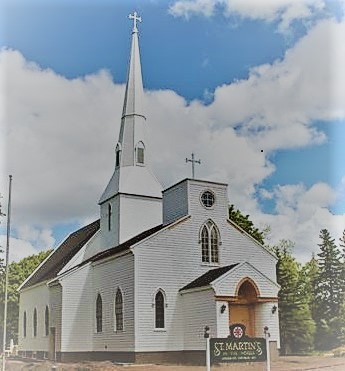
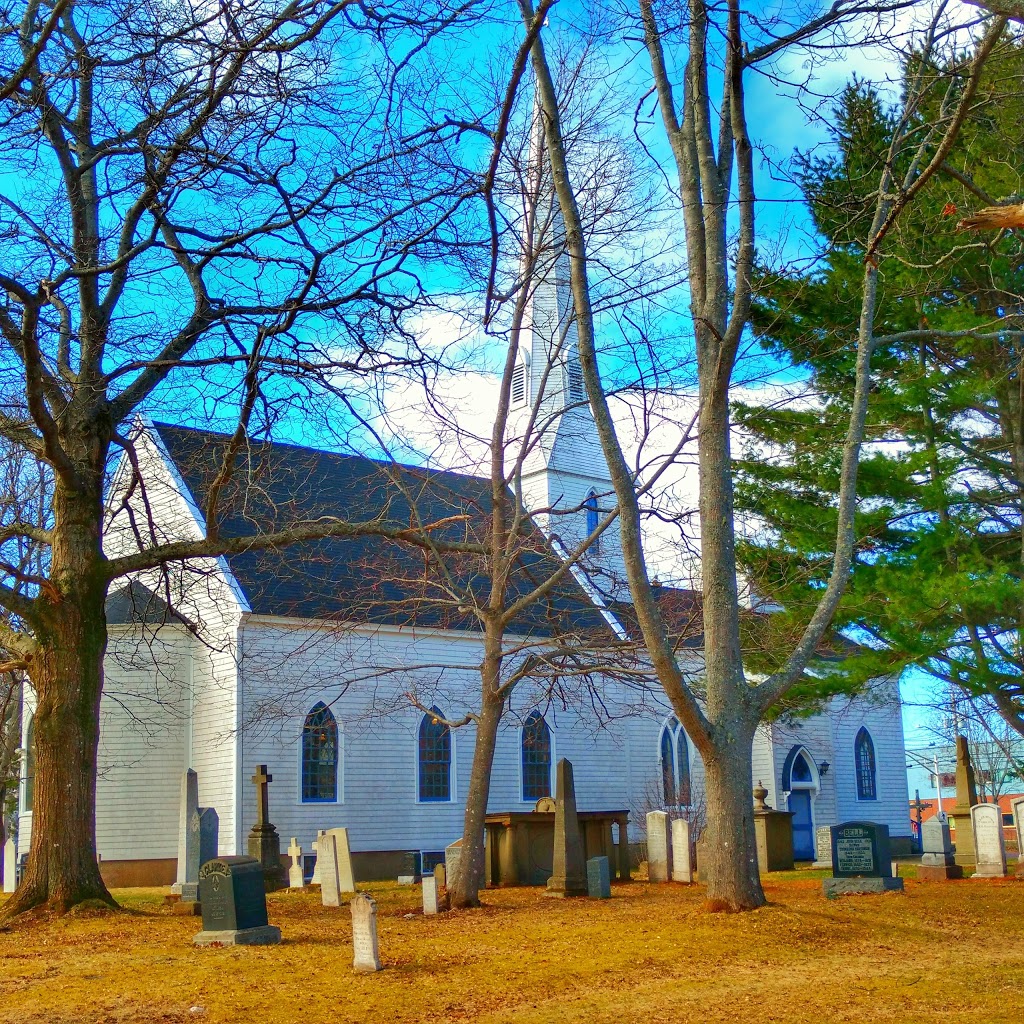
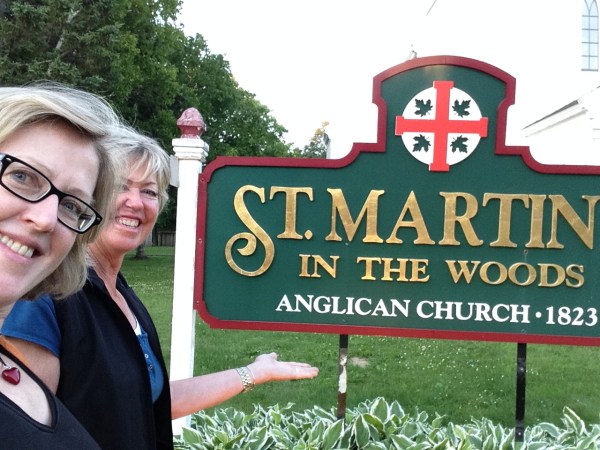
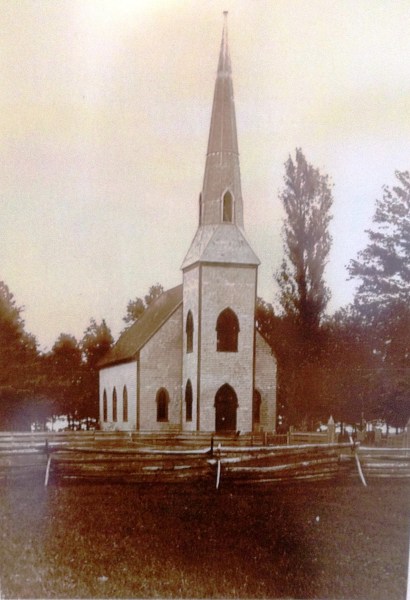
The only thing lacking in this delightful little community was a church. Until then, William being a religious man, conducted service in his home every Sunday and welcomed all to attend. Then in 1823, William donated the necessary land and lumber and oversaw the completion of St. Martin-in-the-Woods, the first Protestant church. He named it after his church in England; the famous St. Martin-in-the-Fields overlooking Trafalgar Square in London.

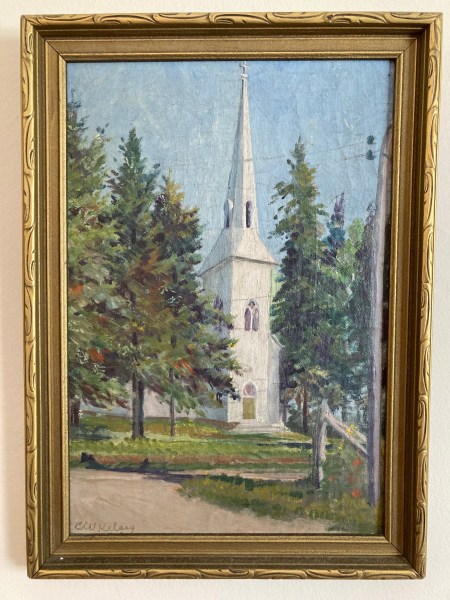
Painting of

St Martin-in-the-Woods Church

by Charles Kelsey

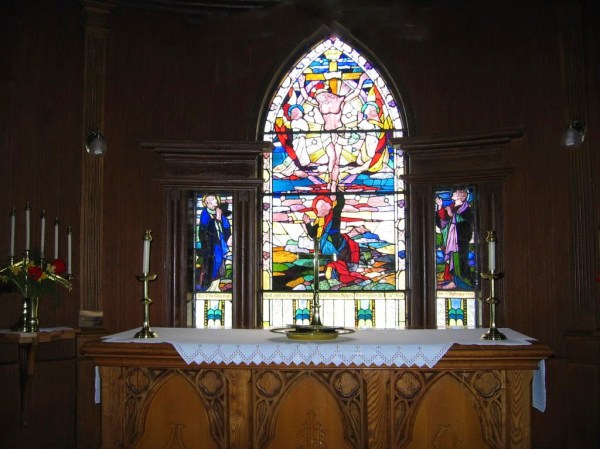
In 1934, my grandfather Canon Sydenham Lindsay (Shediac summer resident at Iona Cottage – She Owned A Cottage – with his wife Millicent Hanington and sometimes stand-in priest at the church) dedicated a large memorial stain glass window in the sanctuary to his father-in-law, Dr. James Peters Hanington (1846-1927) who was my great-grandfather and William’s grandson. The window was designed and installed by Charles W. Kelsey of Montreal and described as follows:

The centre light of the window represents the Crucifixion, with Mary Magdalene at the foot of the cross, while the two side windows represent the Blessed Virgin Mary and Saint John the Evangelist.(1934 – The Montreal Gazette)

Stain Glass Window in St Martin-in-the-Woods (photo credit Paul Almond)

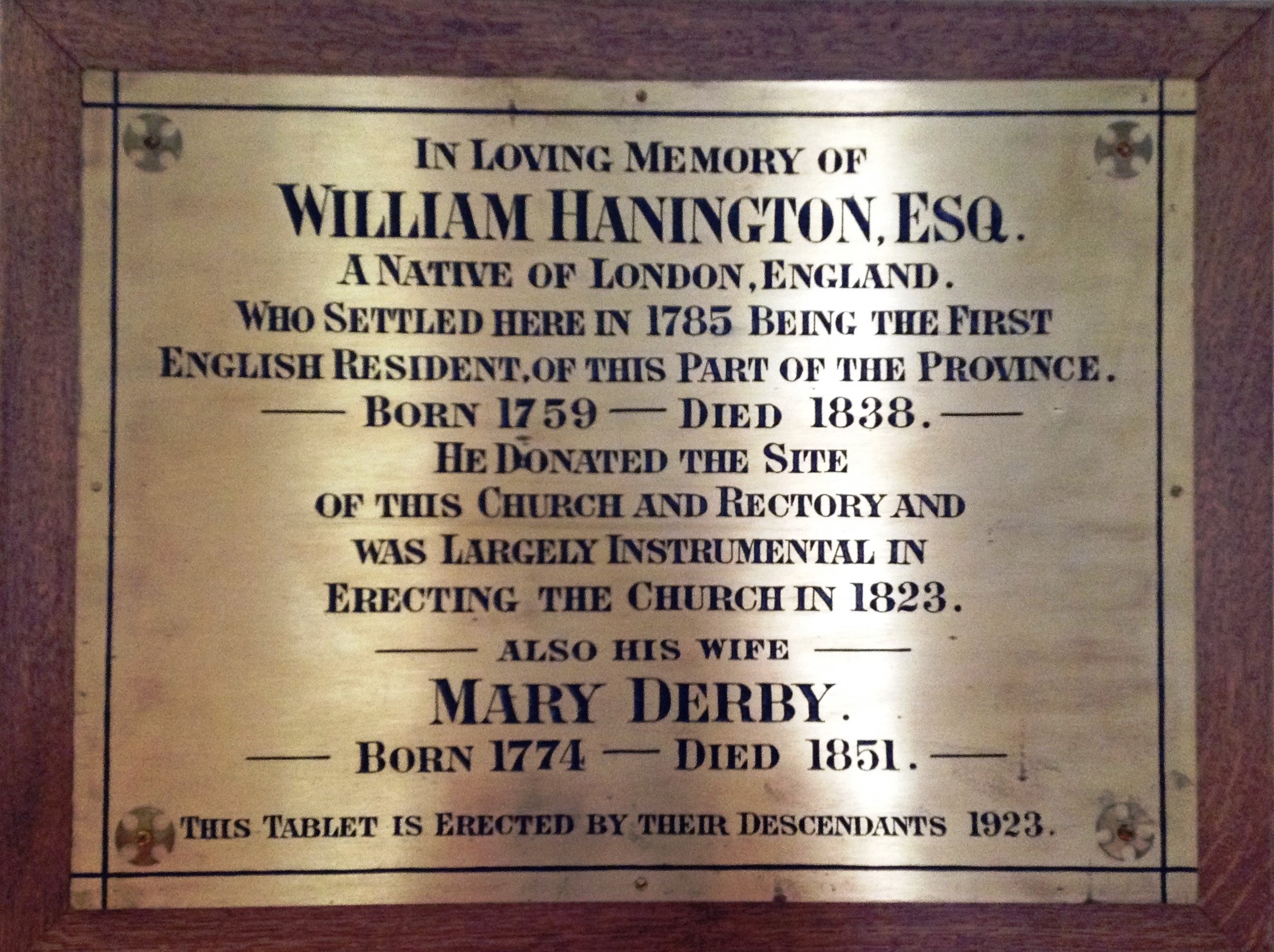
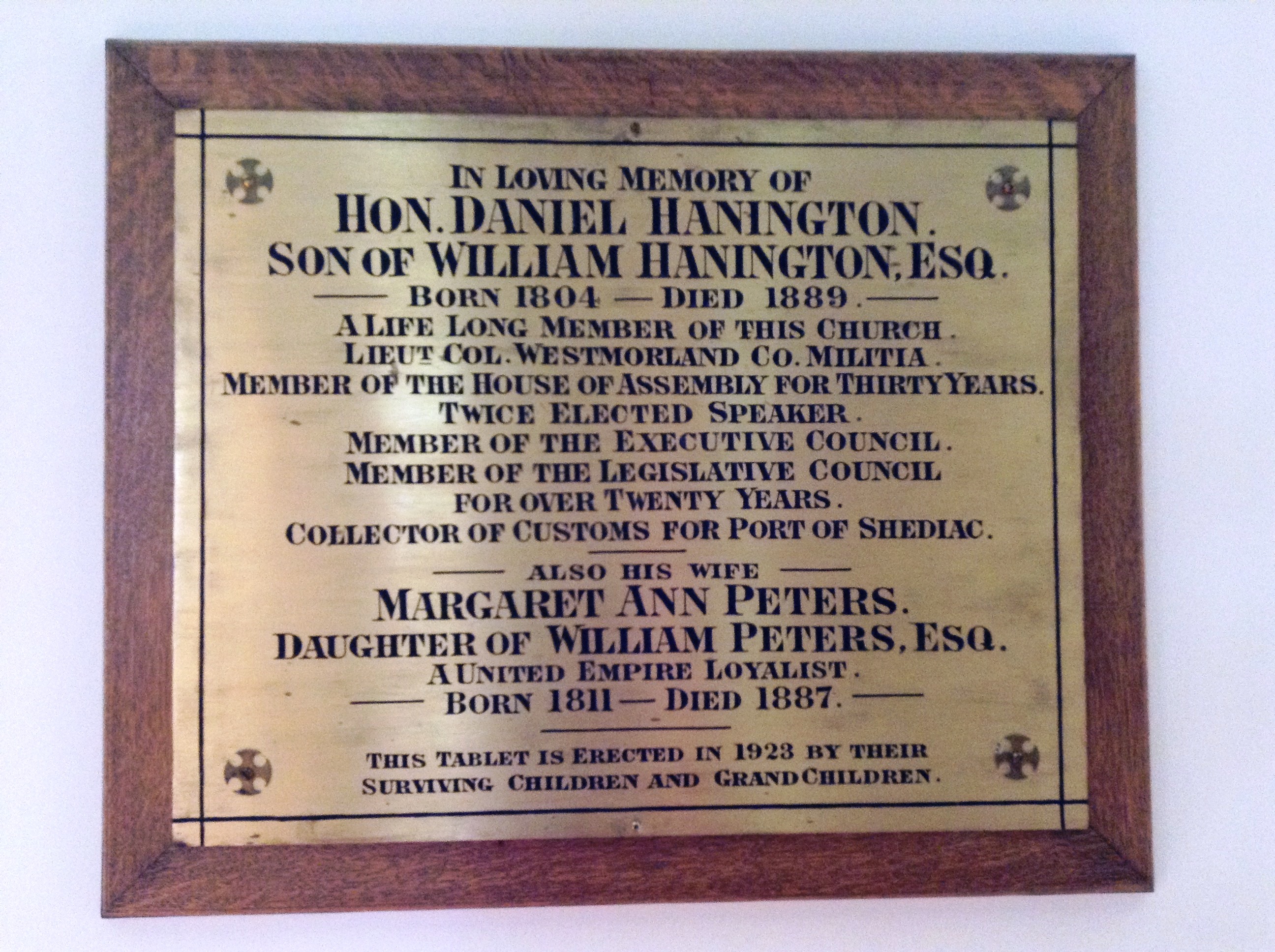
Also mounted inside on the church’s side walls are two honourary brass plaques. One in memory of William and his wife and one in memory of his son Hon. Daniel Hanington (1804-1889) and his wife Margaret Ann Peters – my great great grandparents.

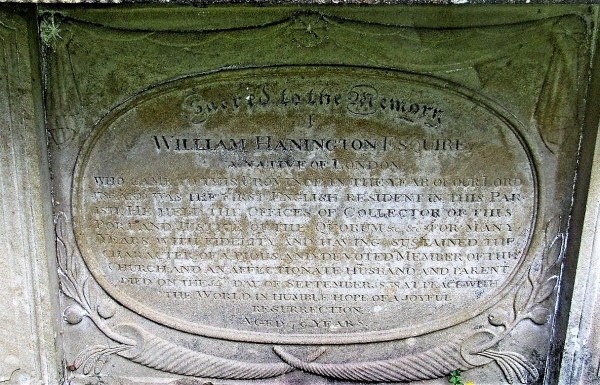
William died in 1838 at age 79. A huge memorial of native freestone marked his grave, in the cemetery beside his beloved church nestled in the community of Shediac, where he spent a lifetime building a “commodious estate” from a forest of giant trees.

Two hundred years later on this anniversary of the St. Martin-in-the-Woods church, William and Mary are lovingly encircled by the graves of several generations of their descendants.

*********************************************************************

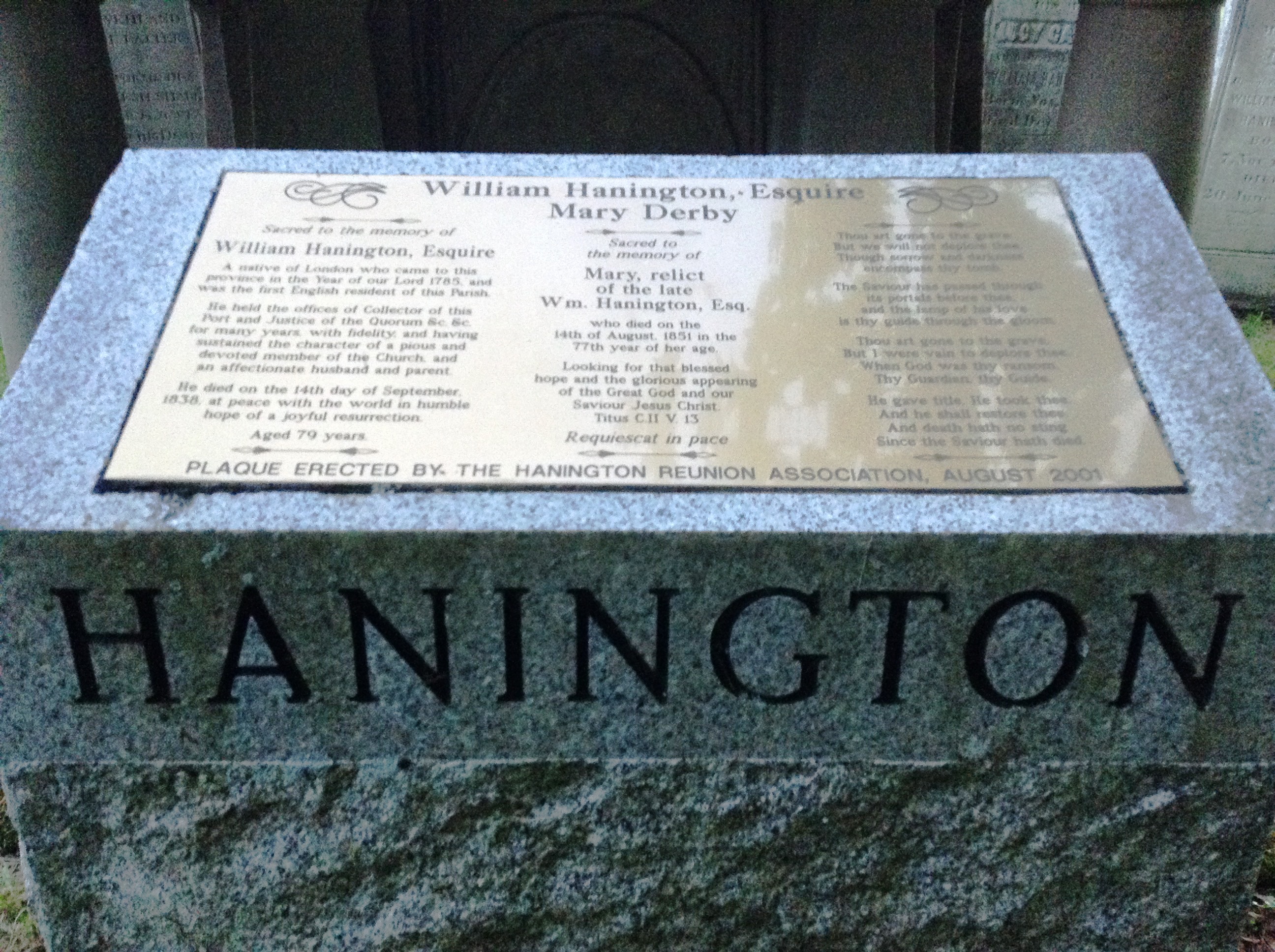
A memorial plaque to William and his wife Mary, was erected in 2001 by the Hanington Reunion Association. This year the Association will be adding a bench in the cemetery in celebration of the 200 years.

Close-up of the Headstone of William Hanington (1759-1838)

(L)Hanington Reunion Association Plaque (2001) honouring William Hanington and his wife Mary Darby and (R) photo by Scotty Horsman showing William’s large headstone at the side of the church.

In 2015, my sister and I visited the church and our ancestors in the graveyard and also enjoyed meeting some Hanington cousins as well!

Read our story here: Sister Pilgrimage

***********************************************************************

ANNIVERSARY CELEBRATION DETAILS FOR SEPT 16-17, 2023:

The main events for the 200th Anniversary will be Sept. 16th and 17th with a corn boil, hotdog/hamburger barbecue and cake on Saturday, Sept. 16th. There will also be games, a bonfire, fireworks and music at the church shore.

The Anglican Bishop, David Edwards, of Fredericton will be attending this celebration. He will also be at the 10:30 AM church service on Sunday, Sept. 17th. After the church service there will be a pot luck lunch and a skit in the hall. There will also be items on display in thechurch basement and in the hall. There will be items for sale – glasses, mugs and lapel pins, with the Hanington crest as well as lapel pins. ornaments and trivets with the church on them.

**************************************************************************

If anyone would like a PDF copy of Lilian Hamilton’s famous Hanington genealogy family tree book from 1988, please email me at anglinlucy@gmail.com

My cousin was kind enough to take the time to copy the book into PDF so that everyone can have a digital copy.

My Hanington number is 6-9-7-3-4 if anyone wants to know who I am!

The Making of a Canadian Artist

JULIUS GRIFFITH
RCA, OSA, CSPWC, CSGA
(1912-1997)

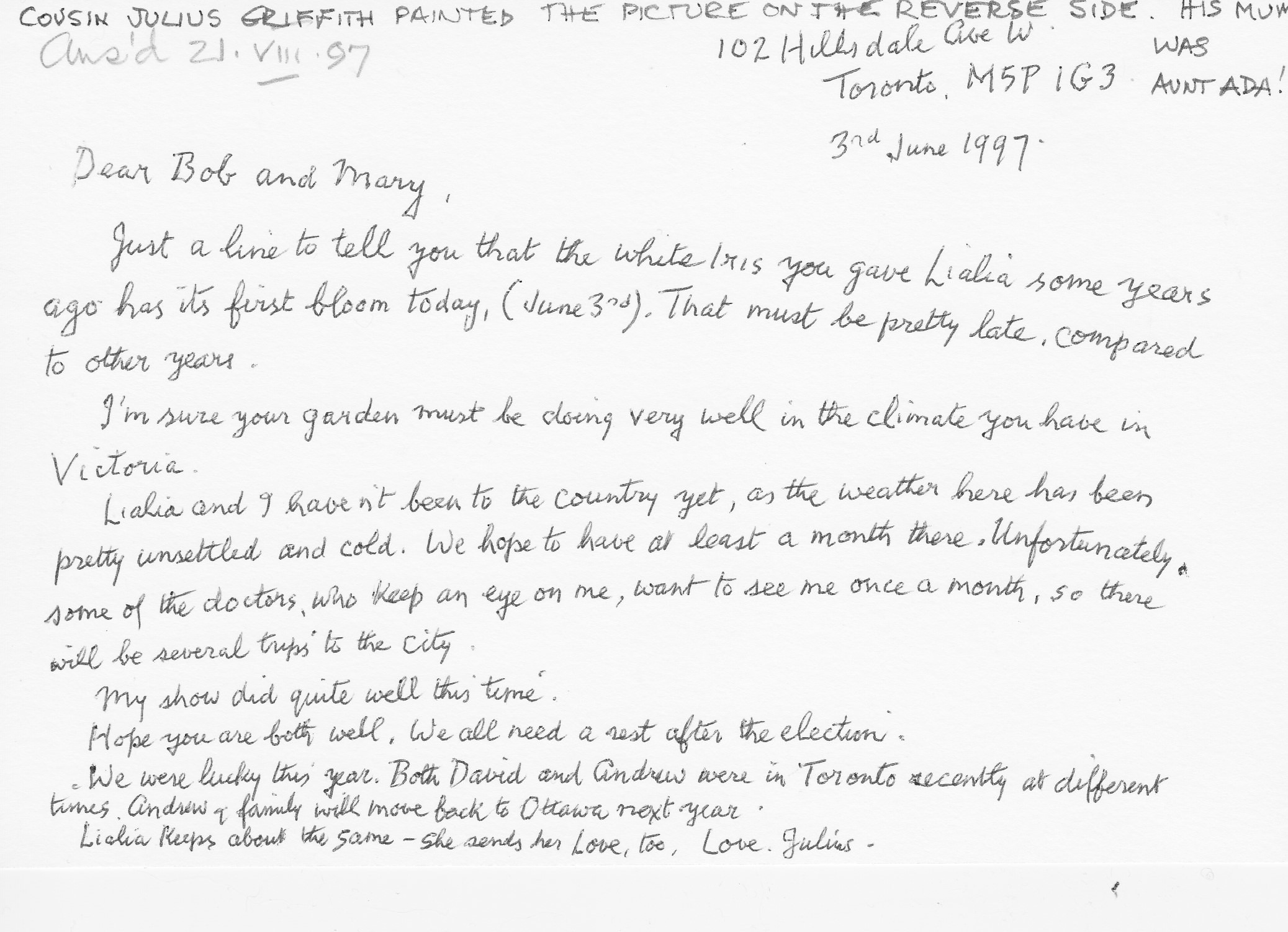
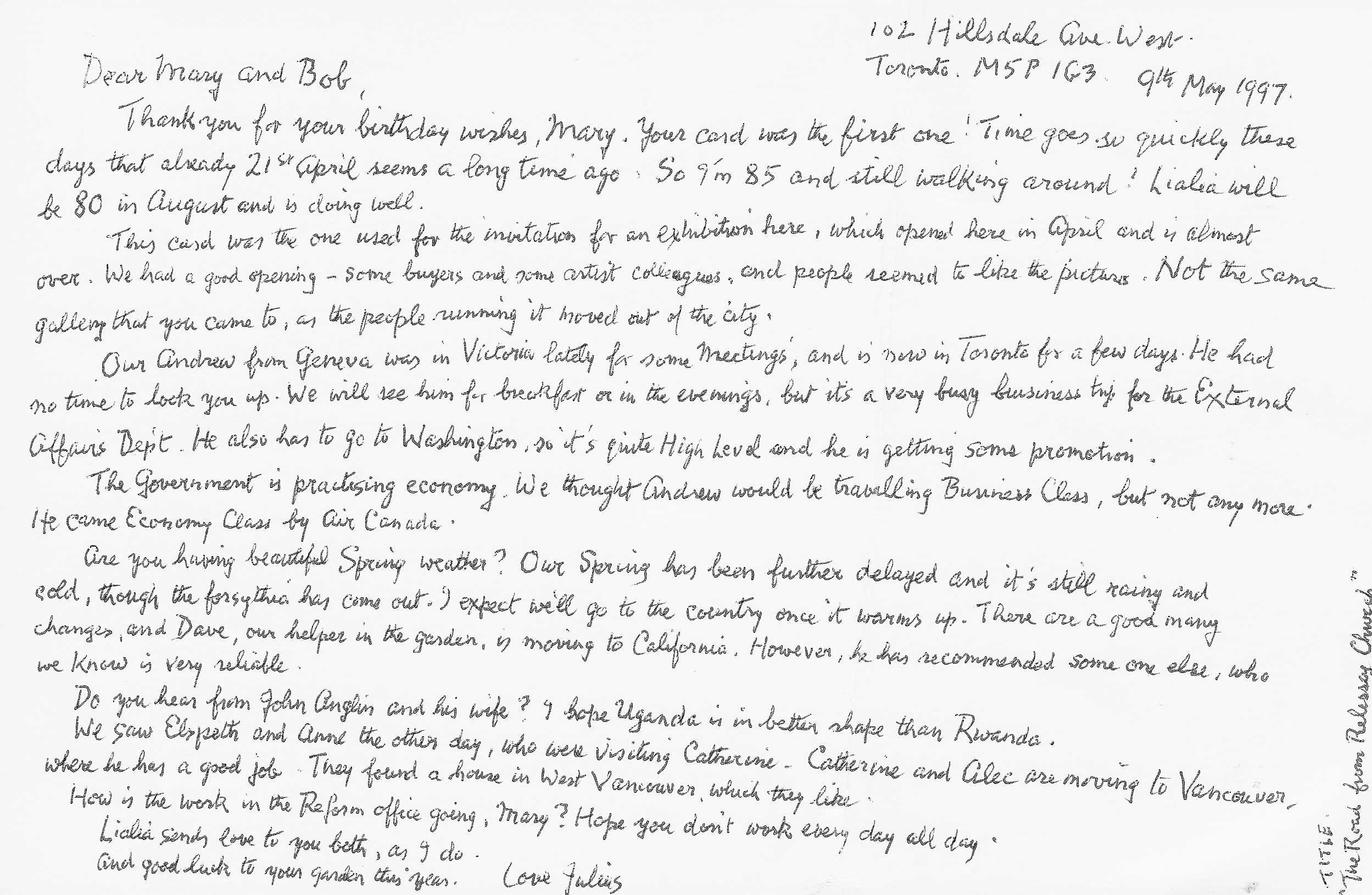
My collection of genealogy treasures includes two picture postcards sent to my Aunt Mary by her talented artist cousin, Julius Griffith, prior to his death in November 1997.

His meticulous handwriting described that day’s garden blooms, commented on the recent election, provided a short health update, news of a son moving back to Ottawa with his family and Lialia sending her love. At the very end, he writes “my show did quite well this time.”

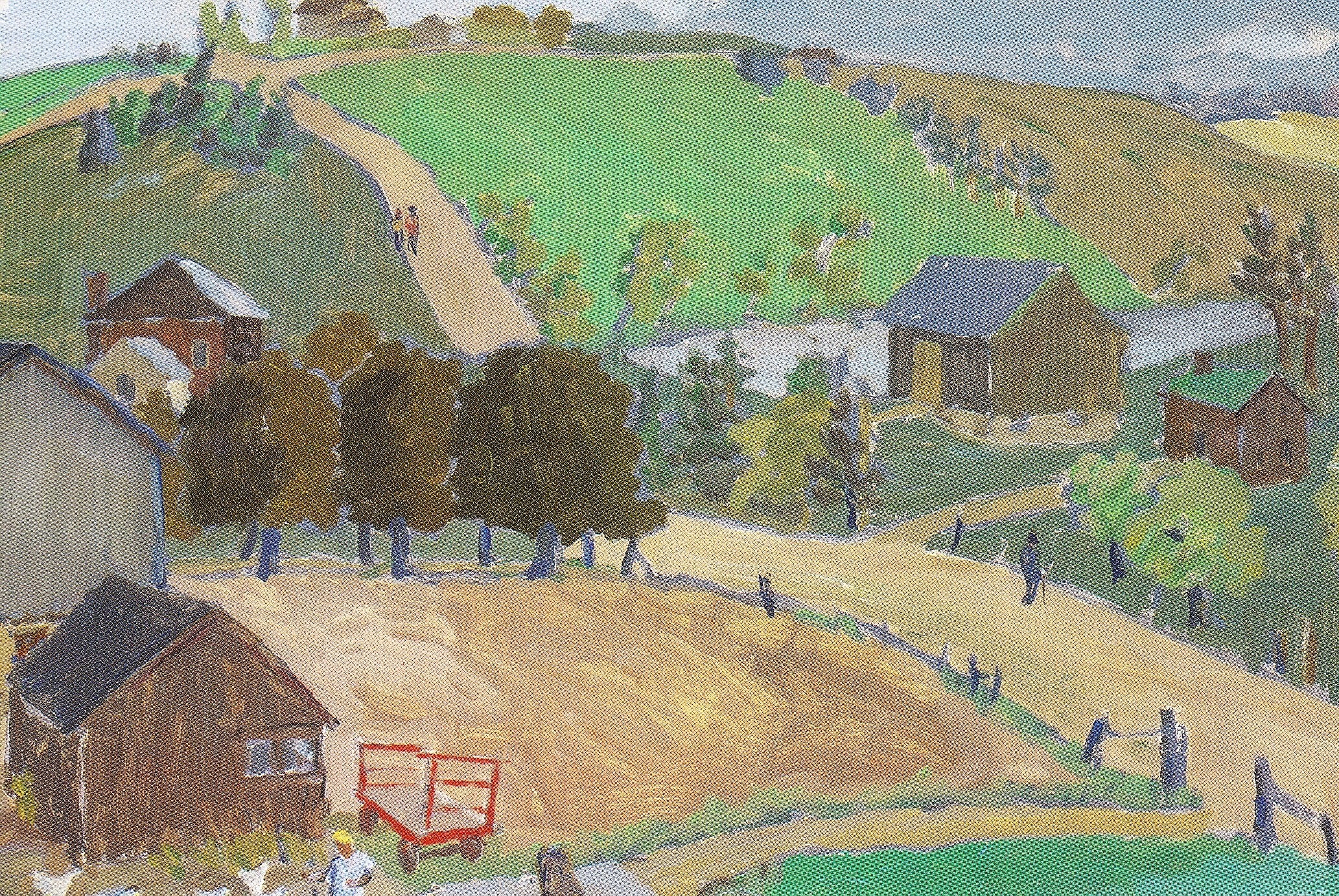
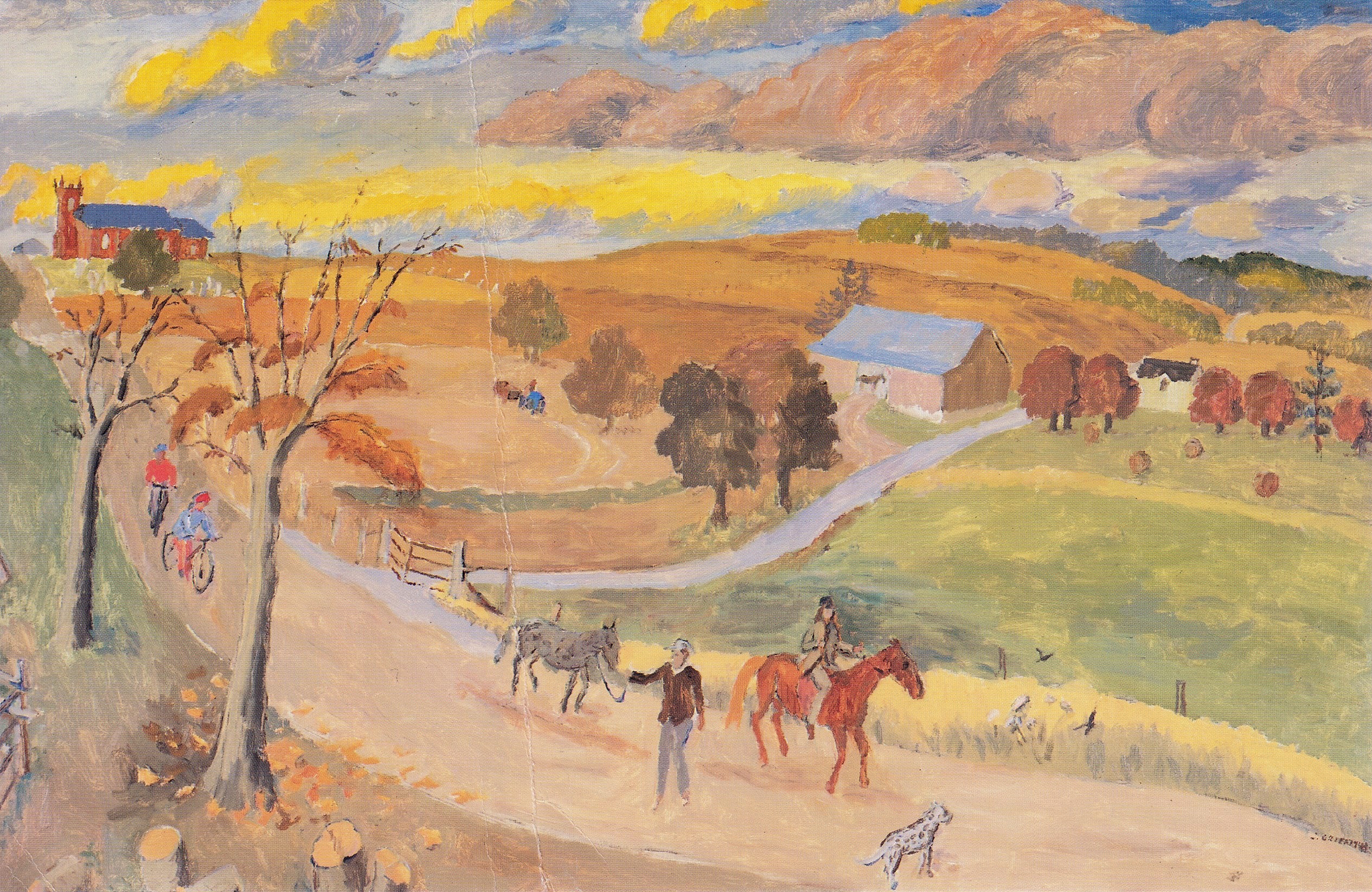
“The Road between Allen’s Farms”

And so it should have. Her cousin, Julius Edward Griffith (1912-1997) was a successful enough painter in watercolour that the members of the Canadian Society of Painters in Water Colours (CSPW), voted for him to be included as a member. Co-founded by a group of prestigious painters including Group of Seven artists A.J. Casson and Franklin Carmichael in 1925, the association continues to exist and has a storied history. For their Diamond Jubilee in 1985, they selected 60 paintings, including one from cousin Julius, and gave them to Her Majesty Queen Elizabeth II. The Queen formally exhibited the collection in Windsor Castle’s Drawing Gallery in 19861.

One of my two postcards could be a replica of his circa 1982 painting presented to the Queen, which was called “The Empty Farmhouse.” The official description describes it as a “watercolour view across fields of a square farmhouse with four windows, surrounded by trees.”

Julius Edward Griffith (1912-1997) was a successful painter in watercolour and oils, a graphic artist, an illustrator, a fine print maker and an art teacher.

As the only child of Katharine Ada Lindsay and Julius Henry Griffith, and born in Vancouver, British Columbia, Julius relished his grandfather Lindsay’s extensive art collection when he visited with him in Montreal, Quebec. Thus began his art education.

Julius Griffith – 1920

When Julius finished High School at 16, he was too young to attend the Royal Military College, as was his father’s family tradition. Instead, he studied at the Vancouver School of Art (Now Emily Carr University of Art + Design)under Charles H. Scott, F.H. Varley and J.W.G. MacDonald (two of which were Canada’s famous Group of Seven artists2). What a fantastic start to his artistic career! At the same time, he also learned block printing techniques from American artist Bruce Inverarity3 who lived in Vancouver at that time. Julius was immediately drawn to block printing because he enjoyed black and white contrast.

A few years later, he moved to England with his parents and studied at the Slade School of Art4 in London and continued his studies at the Central School of Arts & Crafts with Noel Rooke5 learning the technique of wood carving.

At age 21, Julius returned to Vancouver during the Depression hoping to get any kind of work as an artist. And he did! The owner of the Vancouver Sun newspaper commissioned him to paint two murals on the walls of his building and different groups of people were invited to watch his progress. Among these groups were his previous art teachers, Fred Varley and Jock Macdonald and their students at the time. He must have been so pleased at this role reversal!

In 1938, near the end of his fourth year back in England at the Royal College of Art6, he returned to Vancouver to see his father just before he died. After his father’s death, WWII interrupted Julius’ studies but he returned to England with his mother at that time as he wanted to serve.

During the war he worked with the “Air-raid Precautions” for a time and eventually joined the Red Cross. He worked in a country-house hospital in Sussex and, with so little to do, Julius taught art and learned to speak Russian.

What a serendipitous decision! He fell in love with his teacher – nurse Lialia Oralevs originally from Latvia – and they married quietly a couple of years later before the end of the war.

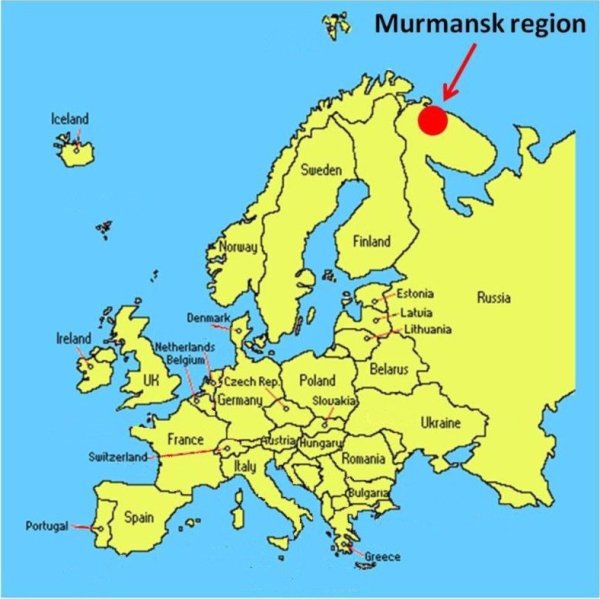
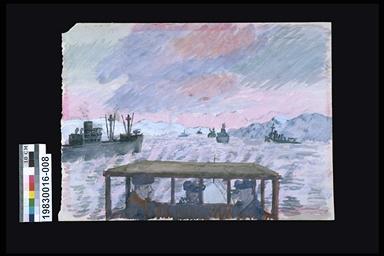
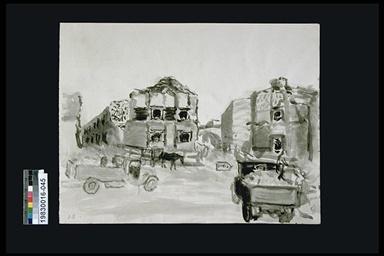
After learning to speak Russian, Julius presented himself in London to the Royal British Navy, passed an oral Russian test and worked as an interpreter under the rank of Sub-Lieutenant stationed in Murmansk7 and Archangel until the end of the war.

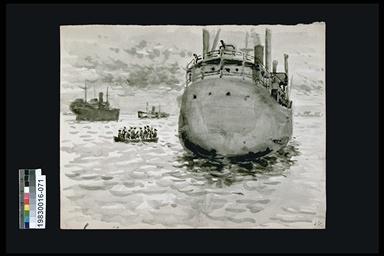
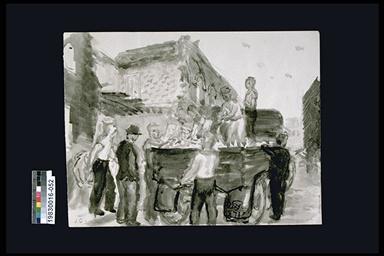
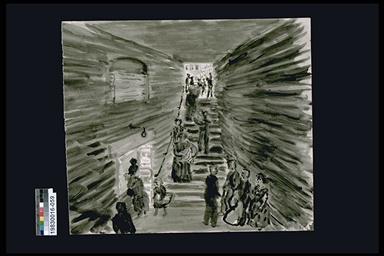
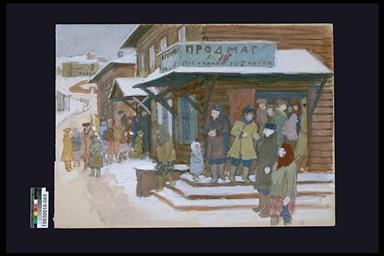
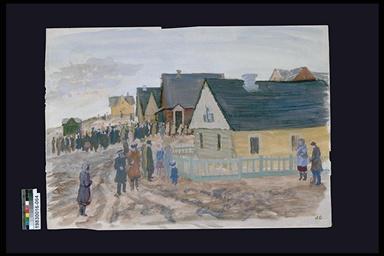
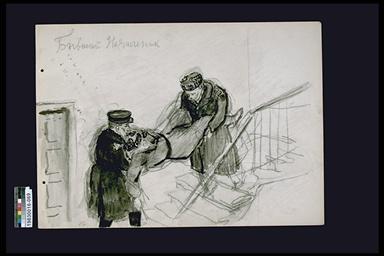
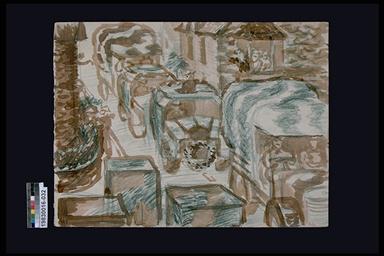
While in Russia, Julius would sketch scenes from memory in the privacy of his room at night and only after his 30-year oath of secrecy expired did he show them to the Canadian War Museum8. They purchased 90 of these drawings and The British War Artists Collection acquired several as well.

After the war, Julius and Lialia returned permanently to Canada. Julius quickly earned a degree at age 34 which enabled him to teach art and support his wife and four sons while continuing to pursue his passion as a graphic artist and wood engraver. Julius taught art in many of the top schools in Toronto – the Western Technical School, Artists’ Workshop, Ryerson Polytechnic Institute, Ontario College of Art, and at Central Technical School.

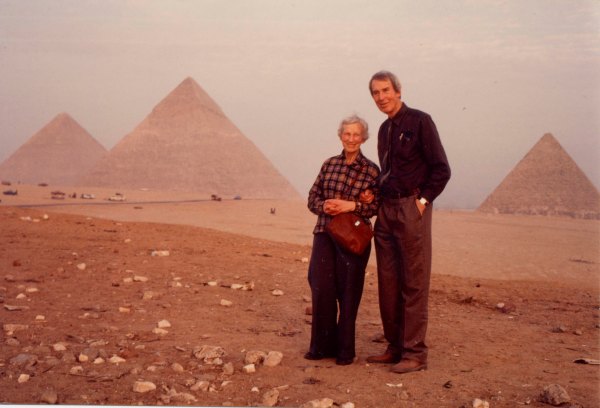
Although I never met Julius, I understand that they made quite the impressive pair with Julius at 6 feet 4 inches towering over five foot Lialia. Not surprisingly, “Julius seemed to develop a slight lilt to the left in later years, probably because he would put is left hand on Lialia’s shoulder and lean to hear or speak to her.” This 1985 photo taken during a trip to Egypt illustrates this charming pose.

Julius and Lialia – 1985 (courtesy of Lorne Griffith)

On the other postcard that he sent to my Aunt Mary in 1997, he wrote “This card was the one used for the invitation for an exhibition here, which opened in April and is almost over. We had a good opening – some buyers and some artist colleagues, and other people seemed to like the pictures.”

” The Road from Relessey Church”

Although I don’t have any of Julius’ original paintings, his two picture postcards with his personal handwritten messages are real treasures to me.

NOTE:

Julius’ work is displayed in the collections of the National Gallery of Canada, Canadian War Museum, Imperial War Museum (London), Art Gallery of Ontario, Toronto City Archives, Toronto Public Library, Art Gallery of Hamilton, McMaster University (Hamilton), Carleton University (Ottawa), Glenbow Museum (Calgary), Art Gallery of Greater Victoria (British Columbia), and numerous corporate and private collections.

1https://www.rct.uk/collection/926180/the-empty-farmhouse (as referenced 2023-06-02)

2https://wiki2.org/en/Group_of_Seven_(artists) (as referenced 2023-06-02)

3https://www.fecklesscollection.ca/robert-inverarity/ (as referenced 2023-06-02)

4https://wiki2.org/en/Slade_School_of_Fine_Art (as referenced 2023-06-02)

5https://wiki2.org/en/Noel_Rooke (as referenced 2023-06-02)

6https://wiki2.org/en/Royal_College_of_Art (as referenced 2023-06-02)

7https://wiki2.org/en/Arctic_convoys_of_World_War_II (as referenced 2023-06-02)

8https://www.warmuseum.ca/collections/?type=all&q1=all%3A%3A_contains%3A%3Ajulius%20griffith%20art&sort=title&order=asc&view=grid&size=24&page=1 (Julius Griffith’s 24 paintings

– as referenced 2023-06-02)

Ypres Gas Attack Survivor Returns Home

Part Two of Two

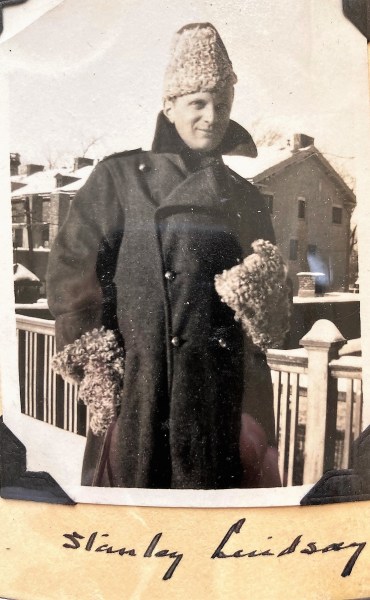
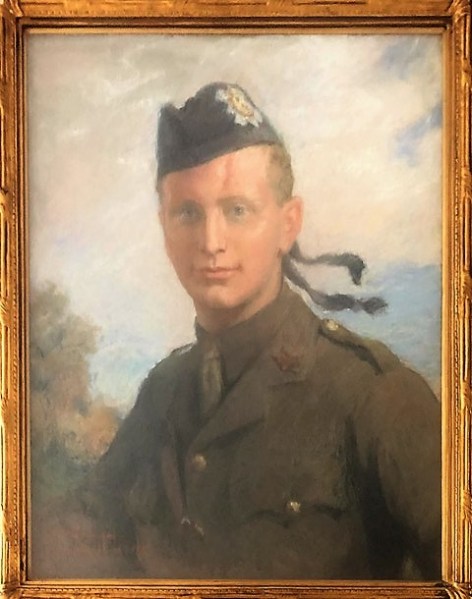
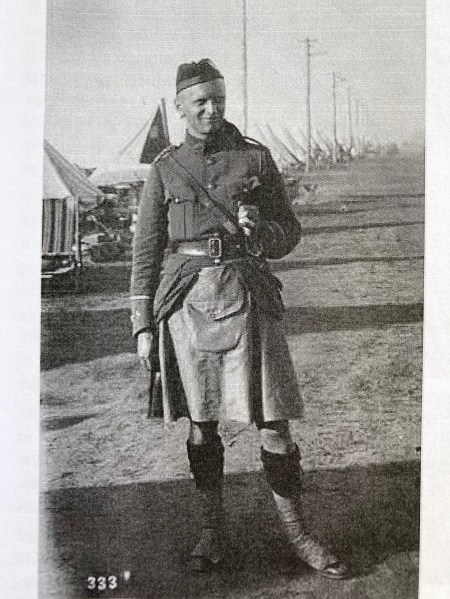
Six months after surviving the battle at St. Julien, Belgium, and the German gas attack in 1915, something entirely different brought Captain Stanley Bagg Lindsay (1889-1965) to his knees. He slipped and fell in the trenches while on active duty, and needed surgery on a hernia on his left side. He was officially declared unfit for duty and was granted sick leave to recover back home in Montreal, Quebec, for the winter.

Stanley Lindsay – winter 1916

Within months of his return to England, the hernia recurred on his right side needing immediate surgery and his health never fully recovered after that. Several bouts of influenza also plagued him throughout the war, before and after his hernias, and weakened him for the rest of his life.

He was 29 when the war ended. He returned to Montreal, but did not resume his studies at McGill University, choosing instead to follow in his father’s footsteps and become a stockbroker. His salary as a Captain had brought in an average of $142 per month during his four years of service. This translates into $3900 per month in today’s dollars. He quite possibly returned to civilian life with a decent nest egg with which to begin his new career.

Stanley’s health issues did not appear to hinder his long career as a stockbroker and eventually he became a partner at Crutchlow, Deare & Co. According to family lore, he purposefully sold off the family’s portfolio of stock investments just before the Great Crash of 1929.1 Perhaps his war experience left him with some kind of sixth sense.

Although Stanley never married, he remained close to his two brothers (and their families) and his three sisters.

Two of his sisters, Marjorie and Marguerite, had been nurses during the war with the Information Bureau,2 a Canadian Red Cross organization in London which cared for Canadian soldiers. Marguerite died young in Cartwright, Labrador, in 1926 while volunteering with the Grenfell Mission.3

Stanley lived with Marjorie and their parents at 455 Sherbrooke Street West (previously known as The Prince of Wales Terrace) until their father’s death in 1931. Then they moved with their mother into an apartment at 1009 Sherbrooke Street West until her death in 1938 and remained there until their own deaths: Marjorie in 1961 and Stanley in 1965. His eldest sister Ada lived in Vancouver with her husband Julius Griffith and their only son, Julius, who became a well known Canadian artist.4

Stanley’s two brothers – my grandfather Sydenham5 (an Anglican priest) and Lionel (a pediatrician) – provided him with ten nieces and nephews to spoil. He absolutely adored my mother Ann and showered her with his love and gifts. He must have been devastated when she died of Hodgkin’s Disease at the age of 36 in November, 1961, having lost his sister Marjorie earlier that year.

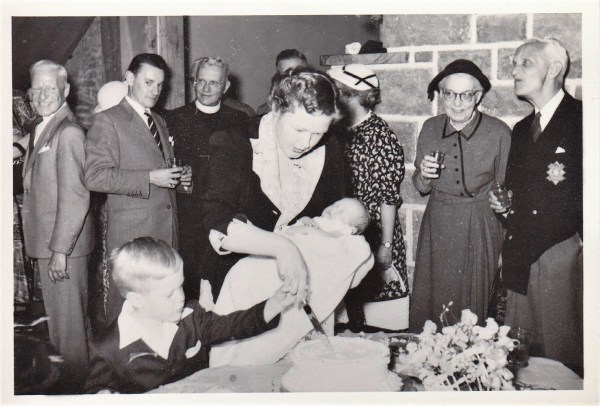
Stanley Lindsay (far right) at Ann’s baby’s christening party 1953

Luckily for me, he devoted his free time to the family history. I have pages upon pages of his beautifully (legible!) handwritten notes about that side of our family. All the usual dates and facts were recorded, but in a clear, more descriptive fashion.

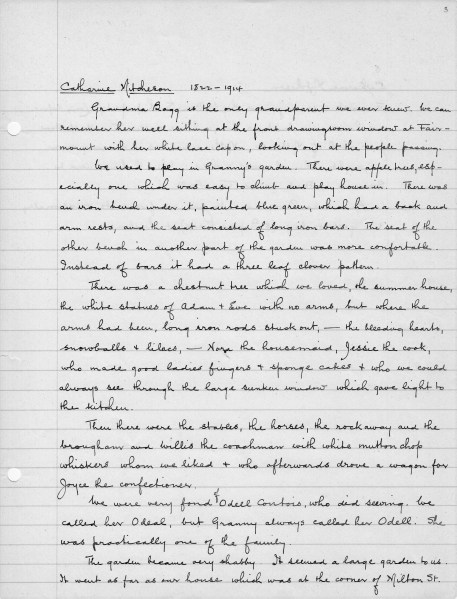
One of his pages about his grandmother, Catherine Mitcheson Bagg, recalled a visit to her home as a boy:

We can remember her well sitting at the front drawing room window at Fairmount with her white lace cap on, looking out at the people passing.

We used to play in Granny’s garden. There were apple trees, especially one which was easy to climb and play house in. There was an iron bench under it, painted blue green…. There was a chestnut tree which we loved, the summer house, the white statutes of Adam and Eve with no arms, … the bleeding hearts, snowballs and lilacs … Nora the housemaid and Jessie the cook, who made good ladies fingers and sponge cakes and who we could always see through large sunken window which gave light to the kitchen.

There were the stables, the horses, the rockaway and the brougham and Willis the coachman with white mutton chop whiskers whom we liked and who afterwards drove a wagon for Joyce the confectioner. We were very fond of Odell Comtois who did sewing…. She was practically one of the family.

The garden became very shabby. It seemed a large garden to us. It went as far as our house which was at the corner of Milton Street. The west side adjoined the Wilson-Smith property. Long before our house was built, a large house called Tara Hall stood just north of Milton Street. Mother [Mary Heloise (Bagg) Lindsay] remembers it burning down one night when she was a child. Where the house used to stand is a street called Tara Hall.”

As well as being everyone’s favourite uncle, an excellent family historian and a successful stockbroker, Stanley belonged to several local clubs including the Canadian Club, the University Club and the Royal Montreal Golf Club.6

After almost dying at Ypres during the Great War, Stanley lived another fifty years.

1https://wiki2.org/en/The_Crash_of_1929 – as referenced 2023-02-23

2https://genealogyensemble.com/?s=the+mothering+bureau

3https://genealogyensemble.com/2022/07/27/miss-lindsay-the-early-years/

4https://www.gallery.ca/collection/artist/julius-griffith – as referenced 2023-02-23

5https://genealogyensemble.com/2016/04/05/the-priest/

6Obituary – The Gazette, 1965-03-03

Miss Lindsay – The Early Years

Miss Marguerite Lindsay embraced her short life fully for 26 years before she volunteered with the Grenfell Mission and died tragically in Labrador.

Marguerite was the youngest of the Lindsay’s six children. Her father was a stockbroker who later took an active interest in philanthropy – especially the Montreal arts. Her mother actively took part in Church of St. John the Evangelist in Montreal while raising her family. They were one of the prominent English Montreal families at the time and considered to be upper middle class.

At one point the family maintained two homes – their life long home in Montreal at 455 Sherbrooke Street West* and also one in London, at 8 Radnor Place in Hyde Park, acquired at the beginning of the war in 1914.

Marguerite Lindsay – London- 1909

She grew up privileged and loved.

The 14-year span between her and her eldest sibling meant she had the advantage of being doted on by the whole family. Her three brothers were gentlemen and “gentle men” who loved their baby sister dearly. Her eldest sister Ada married and moved to Vancouver and her other sister Marjorie remained single having missed out on her one true love when her parents denied her move to South Africa. Perhaps this enabled Marguerite to pursue her life and interests more freely as Marjorie remained at home with their parents.

The Montreal newspapers, at the time, covered social events that interested the general public. Luckily young Marguerite and her family actively took part in many of these events and her name popped up several times in my research.

Here is an example of the activities during her teenage years:

  • 1910 – Volunteered at the Victorian Order of Nurses (VON) benefit.
  • 1911 – Enjoyed a New Year’s visit to Kingston with brother and mother to visit the Bishop and his family.
Marguerite Lindsay – 1912 – Sweet Sixteen

1915 – Assisted with flower pergola for military tattoo

1916 – Assisted in the sale of candy and small painted programs with Alison Aird at Her Majesty’s Theatre

1916 – Assisted at fundraiser tea for Grenfell (!)

1916 – Volunteered with the Christ Church Guild in charge of fancy (needle) work.

1917 – Assisted with the Red Cross tea and art gallery with special exhibit on war trophies.

1918 – Bridesmaid at friend’s wedding.

1918 – Holiday time at Laurel House NJ with her brother and mother.

1918 – Went to Kingston to visit Bishop Mills and family again.

Marguerite and brother Sydenham (my grandfather) – 455 Sherbrooke Street West – 1917

When Marguerite returned home after her nursing career during The Great War, not surprisingly, there were more women than men. The women’s rights movement had already made progress for women’s suffrage, education and entry into the workplace so there were many opportunities for young women other than marriage.

Now an experienced and mature single lady in her early twenties, she enjoyed the whirlwind of society and, once again, the local newspapers covered it all!

In October 1919, she attended the Prince of Wales Ball and Dinner as one of the 1100 guests. A few months later, her mother hosted a ball for her and her older sister, Marjorie (age 30), at the Ritz Carlton Hotel … probably for them to meet young men and increase their marriage prospects! Later that same year, she enjoyed an afternoon reception held by Commander Ponteves and his officers onboard a French frigate sent to Montreal for the St. Jean Baptiste festivities and yet another dance at the Ritz Carlton … this time for Mrs. Godfrey’s daughters (probably also looking for husbands).

The last year before her death (August 1922) was a busy one. Early in 1921, Marguerite travelled to Lake Manitou in Ontario with her brother Stanley for a weekend of skiing and skating with her friends, the Airds. She then joined the Aird family for “some weeks” in Italy during April and May.

Back she sailed to Montreal in June in time for her oldest brother Lionel’s wedding – and then onto Vancouver for an extended visit with her sister Ada and her family. Whew!

Vancouver society happily welcomed the Montrealer and this was some of her itinerary during her four month visit!

July 7 – Attended a tea to honour the Dame Nellie Melba, an Australian Opera Singer, along with her sister Ada and her aunt Mrs. Herbert Drummond.

Aug 5 – Attended a tea hosted by Mrs. McCrae of Hycroft Manor in honour of the visiting naval officers on the U.S. Battleship Tennessee.

Oct 14 – Assisted at a tea given at the Jericho Club in honour of Mrs. Cornelius Vanderbilt.

Oct 17 – Attended a luncheon with the Kumtuks Group who gave an interesting presentation entitled “A glimpse at the timber resources of British Columbia”.

Oct 22 – Attended a dinner party and informal dance at the Jericho Club again.

Oct 28 – Attended the annual Halloween fancy dress and masquerade at Glencoe Lodge.

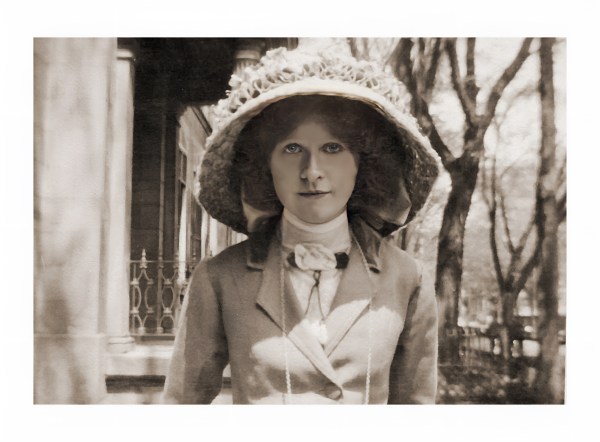
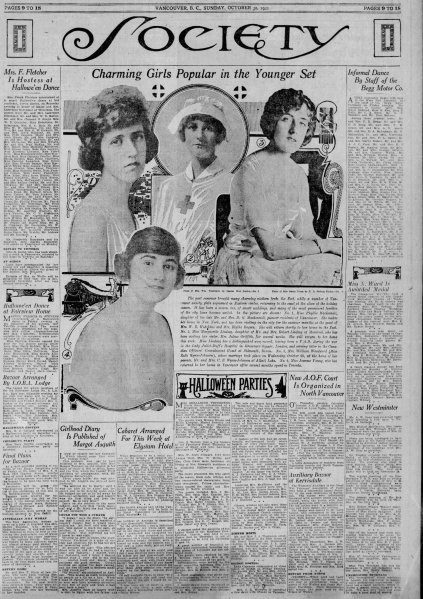
Oct 30 – “Miss Marguerite Lindsay, daughter of Mr. And Mrs. Robert Lindsay of Montreal, who has been visiting her sister, Mrs. Ada Griffith, for several weeks will return to her home this week. Miss Lindsay has a distinguished war record, having been a V.A.D. during the war in Lady Juliet Duff’s Hospital in Grosvenor Square, London, and serving later in the Canadian Officer’s Convalescent Home at Sidmouth, Devon.”

Marguerite Lindsay – October 29 1921 – Vancouver

And at the end of her four month visit, the following glowing tribute was published in a Vancouver newspaper:

“It is always sad when people go, and no one will be more missed than Miss Marguerite Lindsay, who also leaves today. She has been spending the summer with her sister, Mrs. Julius Griffith. She is just full of life, and keen on everything, dancing, tennis, bridge and golf, so has been in great request everywhere.” (Vancouver Daily World, Society Page, 29 October 1921)

Here are all the links to Miss Lindsay’s story:

Miss Lindsay’s Last Letter

how i came to write miss lindsay’s tale

Miss Lindsay – Part 1

Miss Lindsay – Part 2

Miss Lindsay – Part 3

* previously 6 Prince of Wales Terrace and then finally changed to 1009 Sherbrooke Street West

She Owned A Cottage

Seventy years ago in 1951, my grandmother Millicent (1895-1982) Granny-Lin finally got the cottage she had always wanted. My grandfather Sydenham (1887-1975)The Priest had it built for her on the waterfront of Shediac Bay in New Brunswick.

Truly a dream come true, she aptly named it “Iona Cottage” for “I own a cottage”!

Iona Cottage 1955

The person who designed their simple cottage somehow knew exactly what they wanted. A small eating nook off the kitchen led into the living room with a fireplace and the three small bedrooms branched off from there. A simple door leading to the patio enticed family and guests outside to enjoy the view of the Bay.

Just around the corner from Iona Cottage stands St. Martin’s-in-the-Woods Anglican Church built almost 200 years ago by Millicent’s great grandfather, and the founder of Shediac, William Hanington. There is a huge monument beside the church where he and some of his family are buried. On Sunday mornings during their summers, Millicent and Sydenham would stroll down the lane to church. Sydenham was an Anglican priest and would sometimes hold the summer church services thereby giving the local priest a break.

St Martin’s-in-the-Woods Anglican Church est.1822

Millicent grew up in Montreal as the youngest of six girls. Her pharmacist father moved the family from Shediac to Montreal in 1890 to study medicine at McGill…at the age of 45! During the summer breaks, the family returned “home” to Shediac. After completing his degree in 1894, Dr. Hanington Pharmacist then Doctor and family remained in Montreal where he set up a practice… but they always spent their summer holidays in Shediac.

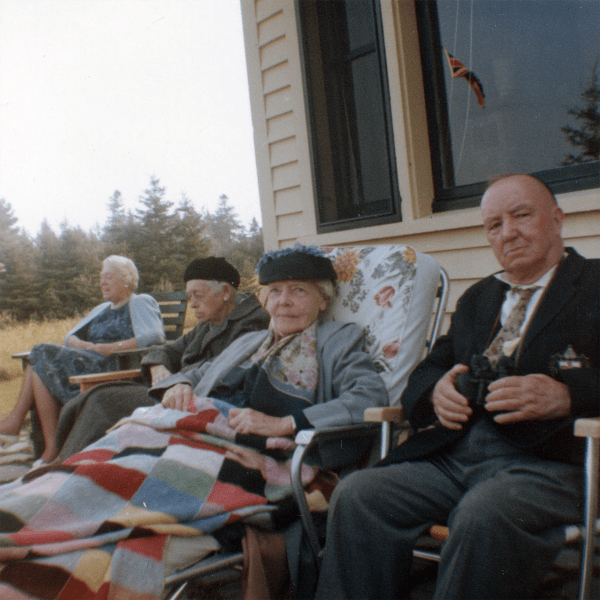
Millicent and Sydenham hosted many summer family gatherings at their Shediac cottage over the years. There are numerous photos taken on the patio in front of the impressive red brick chimney. An endless assortment of Millicent’s sisters (and sometimes their husbands) would line up along the side of the house enjoying the sun and cool breeze off the water. A few photos have captured some of the bravest taking an icy cold dip in the bay.

Millicent’s sisters and brother-in-law circa 1965

In July 2015, my sister and I took a “sister pilgrimage” trip to the New Brunswick area, and finding Iona Cottage was the top priority. We recognized it immediately even although the light yellow cottage from our memories had been painted a lovely country blue. The surrounding grounds looked immaculate and a quick peek in the window assured us that it was well loved inside and out. What a terrible disappointment when no one answered our knock at the door. We snapped a few photos of house and garden (and us!) for our travel album and to share with the rest of the family.

Iona Cottage – July 2015

Upon my return home, I wrote a short story about our “sister pilgrimage” and published it on the Genealogy Ensemble website Sister Pilgrimage. A year ago, the current owners of Iona Cottage read my story and contacted me by email. They are the fourth owners (since 2018) and are thrilled to share my scanned copies of the old photos of their cottage.

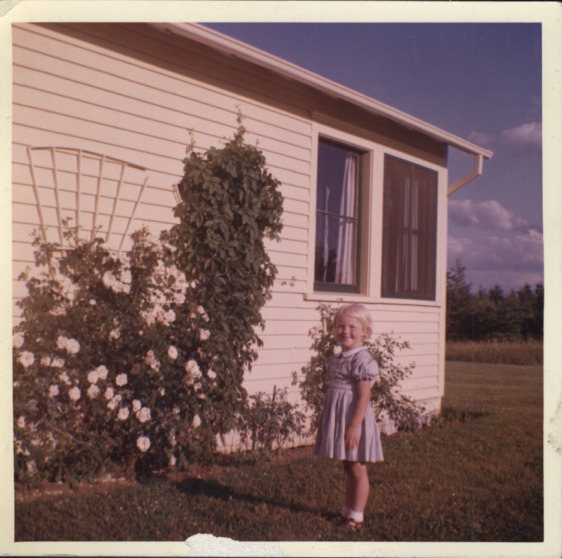
How surprising to learn that they already had a copy of my favourite photo… a gift from their neighbour. It captured four-year old me in front of Iona Cottage during the summer of 1961 when I visited with my mother shortly before she died of cancer that November.

Here I am at Iona Cottage – Summer 1961

My only other stay at Iona Cottage was some twenty years later when my cousin and I flew into Moncton to spend a long weekend with our grandmother. In an era before highways, two lane roads between Quebec and New Brunswick made the drive impossibly long, which might explain the lack of visits over the years

Notes for Blueprints for Iona Cottage – Feb 1951 – by Tom Anglin

Recently my cousin unearthed a real treasure in his inherited boxes of memorabilia – an envelope marked: “Blueprints – Iona Cottage”. I took a quick look before sending them off to the current owners and to my utter amazement I saw that MY FATHER had drawn up the plans for his in-law’s cottage! I had no idea. What a joy for me to see his handwritten notes in the lower right-hand corner…and no wonder the cottage was so perfect for Millicent and Sydenham.

Happy 70th Anniversary Iona Cottage!

L to R – Neighbour, Sydenham and Millicent (Iona cottage at the right)

The Courtship of Ann and Tommy – Part 1

The Courtship of Ann and Tommy – Part 2

The Courtship of Ann and Tommy – Part 3

My American Cousin

By

Marian Bulford

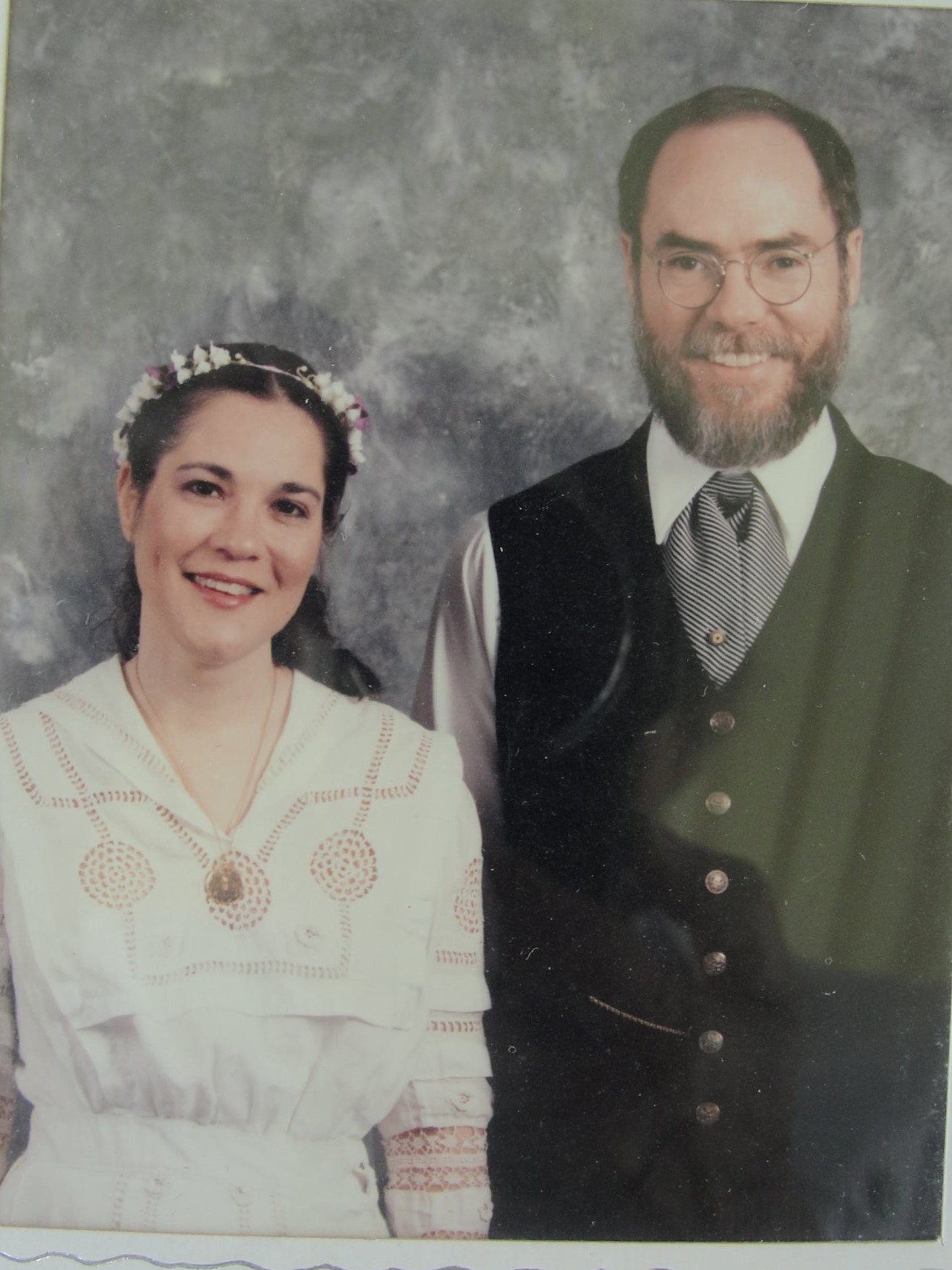
Barb and John Mulcahy on their Wedding Day

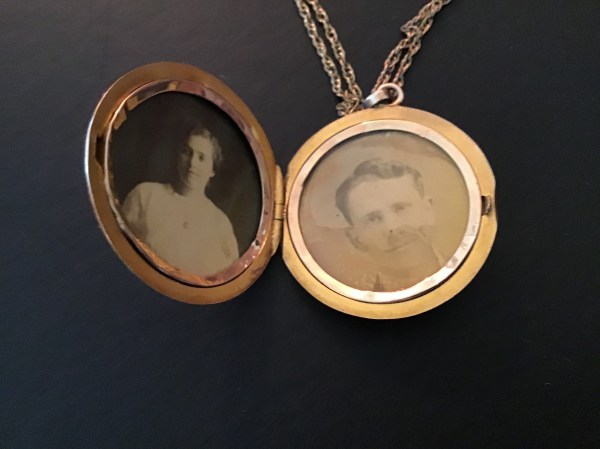
In a drawer, safely tucked away, is Barb’s locket, shown here in her wedding day photo with John. Much to my regret, I never met my American cousin Barbara Jane Mulcahy in person.

However, we first got together in 2016 via Ancestry where I saw a family tree with three names including my surname, Bulford in it and in brackets (Adopted) I was intrigued enough to email the tree owner and ask how we were related.

Barb emailed me back almost immediately, like me very excited to meet a relative from across the pond, and me to meet an American relative. She sent me an invite to her family tree, and I sent one to her, so we could collaborate on our history. I asked her about the word ‘adopted’ after the names.

Barb told me, that her adopted mother was Elizabeth (Bulford) Smith and Elizabeth and her husband, Ira, adopted Barb soon after Barb’s birth in 1953. Barb’s families, both her adoptive family and her birth family, were very important to her and she told me later, of her excitement when, shortly after our meeting she located some birth cousins too.

She had a George Bulford born 16th of March 1889 in Mevagissy, Cornwall. We were related!

George Bulford was my Great Uncle, born to my paternal great-grandparents and he was Barb’s much-loved grandfather We emailed each other with information and worked out that I was a cousin – one time removed – of her mother Elizabeth, still alive at 96 years old, which made Barb, my second cousin – good enough for us!

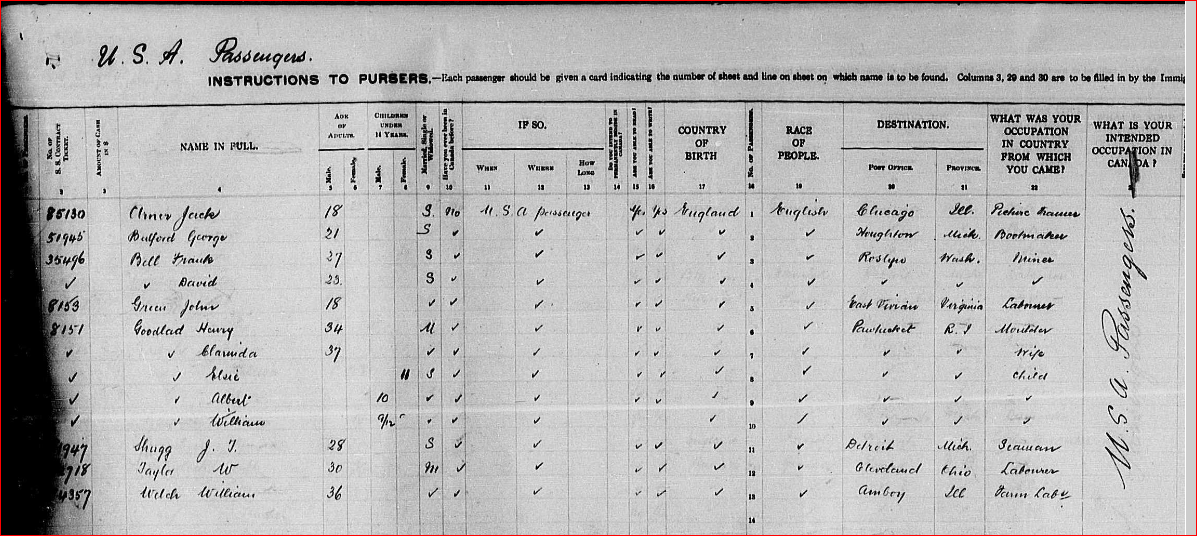
George, at the age of 21 on the 7th May 1910, sailed on the SS Canada from Liverpool, emigrating to the USA. He landed in Quebec, on 16th May 1910 and from there, his final destination was Houghton, Michigan. First, he was a miner and later worked for the Ford Motor Company for 5$ a day.

She thought he may have also had some experience in shoemaking, as he had all the tools in his house, and frequently repaired hers and the family shoes. She was right! Uncle George had his occupation on the passenger list as ‘Boot maker’

Passenger List George Bulford, second from the top left

Barb and her husband, John Mulcahy lived on a farm in Britton, Michigan a village in Lenawee County. The population was 586 at the 2010 census. [1] From the photos, it looks like a beautiful spot.

In no time at all, Barb and I were emailing and telling each other about our lives. We both had dogs and sent each other a ‘Bark Box’ for our dogs, full of treats and toys. Barb was a dedicated vegetarian and loved animals and the outdoor life. We exchanged photos and Christmas cards and I told Barb all about my life here and introduced her to Genealogyensemble.com so she could read all about our family and other stories. She loved it!

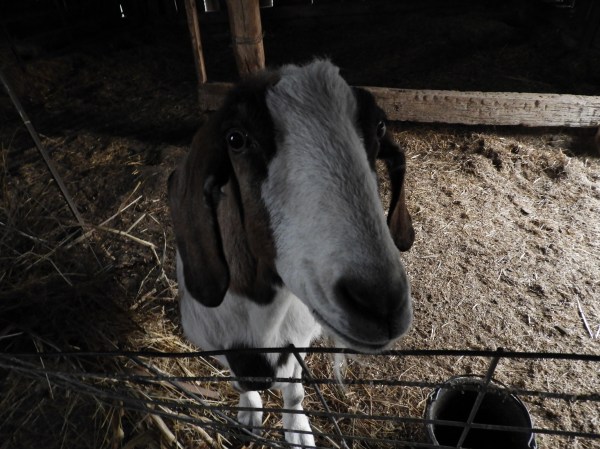
She told me about the farm she lived on and her dog Missy, a goat named Leo, and two barn cats. They had fruit bushes, trees, and plenty of vegetables.

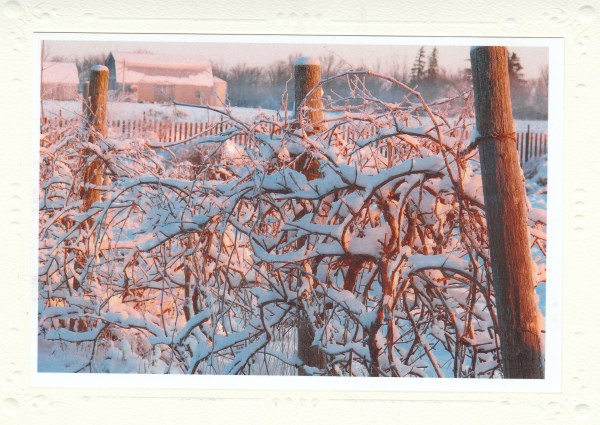
Barb was also an avid photographer, and at Christmas, I would receive a lovely Christmas card with a photo of hers on the front, like this one:

Winter in Britton, Michigan

Her husband John told me that her hobbies included dancing, wheat weaving, historical reenactment and she had an interest in architecture too. She was a talented lady. John wrote and told me:

When we moved to Tecumseh, in 1991, the first thing that Barb signed up for was a class in agriculture at the local school. She learned how to drive a tractor and saw some things that displeased her, such as a chicken butchering business. One of the projects of the class was to plant pine trees in long rows at the sides of the fields as windbreaks, they are useful around here because it is so flat and open. One day, I came home from work and found Barb lying on the couch. Apparently, her muscles, were all sore from hours of stoop labour, planting the pine seedlings. [2]

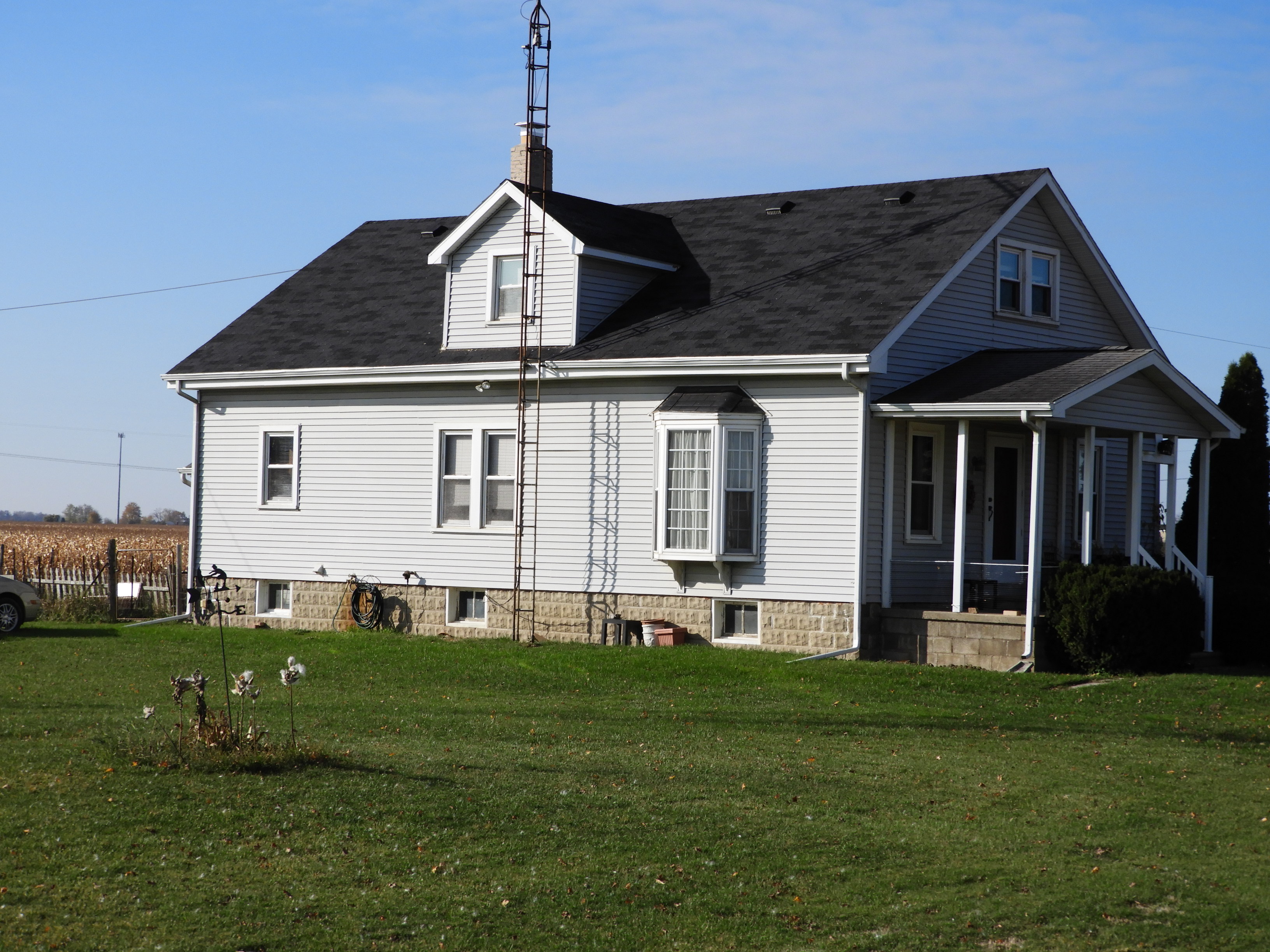
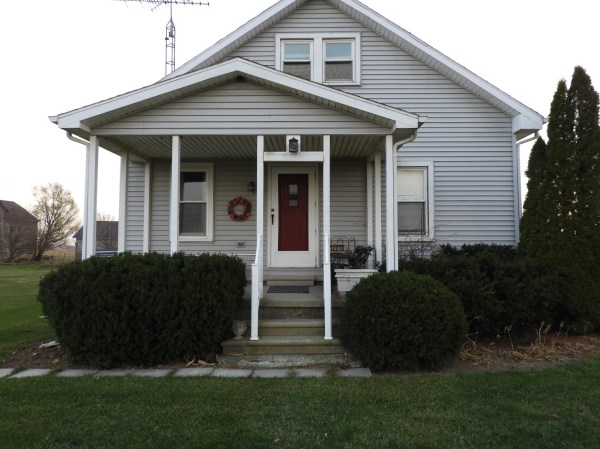
John continues: “The house looks nice, and that is Barb’s doing. She insisted on the new siding in 2001, and she designed the bay window you see on the side of the house. The red door was also her idea, a nice punctuation point with the grey siding. Barb was gifted as an architect, though she had no degree. She also came up with the name Macon River Farm when we began selling at the farmers market in Tecumseh.” [2]

Barb and John’s home with the bay window.

The Red Door

Leo The Goat

Via email, I ‘introduced’ her to my cousin Diane – Di – in the UK, and so, the three of us started to email including each other, and we learned more about our ancestors, exchanging information and photos we three had. Cousin Di and I were enchanted with these photos and Di commented for both of us when she wrote:

“John, your home is absolutely lovely, exactly what we Brits imagine a rural American farmhouse should look like, in a beautiful setting. The red door is inspirational, very Barb. It must be both a comfort and refuge for you, but also a constant reminder of your Barb, who put so much of herself into it. We are a crowded island, and you have so much space” [3]

Soon, Barb and I started to Skype too and shared even more of our ancestors’ lives and ours. We had a very good relationship going and we seemed to hit it off from our first emails to each other.

We all felt we got to know each other really well and enjoyed our relationship.

At the end of January, 2020 I noticed that I had not had a reply to a few emails which was not like Barb at all, so I wrote and asked if all was well. It was not.

She apologised for not answering sooner and told me she was making end of life arrangements.

I immediately emailed and asked her for whom she was making arrangements and said that I volunteered at the local Hospice and if I could be of any help, please let me know. Barb responded that she was making end of life arrangements for herself!

The shock to her husband John, her family, friends, and me and cousin Di in the UK, was profound. Even in the midst of all this turmoil, Barb took the time to email me, saying she wanted me to have her gold locket, that Barb is wearing in her wedding day photo.

She told me, that it belonged to her grandparents, and contains photos of her grandfather, George – my great Uncle – and his wife, Elizabeth Jane Curnow. It was a wedding day gift to Elizabeth from George, and she wore it on her wedding day, as did Barb.

Barb wrote that she wanted to keep it in the Bulford family. I was so very touched. After all, our friendship had lasted for only four years, even though it seemed much longer. I reassured Barb that it would be kept in our family, and eventually, I was going to give it to my Granddaughter Molly Marguerite.

Later, John sent her beautiful locket to me. To be honest, I had forgotten about it, so when I received it in the mail, I was very weepy and thrilled, all at the same time. I will treasure it.

Elizabeth Curnow and George Bulford were married on the 20th November, 1915

Our dear cousin, Barbara Jane Mulcahy died on the 15th of May 2020 at 3.40am. She is missed very much by us all, but especially by her dear husband John, who Di and I frequently email, just to keep in touch and for us all to be able to keep Barb in our memories. John very generously shares his memories of Barb with us, and we are grateful.

Rest in Peace, cuz, we love you and will never forget you.

SOURCES:

[1] https://en.wikipedia.org/wiki/Britton,_Michigan

[2] Email quotes and personal photos used with permission of John Mulcahy, with grateful thanks

[3] Email quotes used with permission of my cousin Diane.

The Huguenot of England Part One

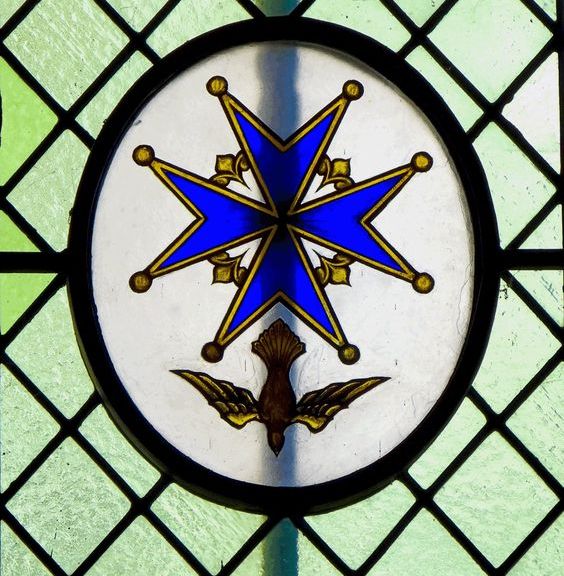
The Huguenot Cross.

A window at Canterbury Cathedral England where Huguenot descendants still worship every Sunday, in French.

‘Huguenot’ What does that mean to you? For me, living in Quebec, Canada it is a part of Quebec and France’s history but did you know that England also has a vast amount of history about Huguenot? I was amazed to learn that!

After I recently read a short article about English Huguenot, it made me want to find out how and why they ended up in England.

The Edict of Nantes (french: édit de Nantes), signed in April 1598 by King Henry IV of France, granted the Calvinist Protestants of France (also known as Huguenots) substantial rights in the nation, which was still considered essentially Catholic at the time.

The Huguenot were Protestants in a largely Catholic populated country and after Louis XIV cancelled their civil rights granted to them by the ‘Edict of Nantes’ in 1685, about 50,000 fled France across the English Channel.¹

Once in England, they spread out not only to London but to 20 towns from Canterbury to Norwich, Plymouth to Rochester. As time went on, many of them drifted towards the Church of England and names became anglicized. Ferret became Ferry and Fouache became Fash most often due to mistakes made by English clerks!

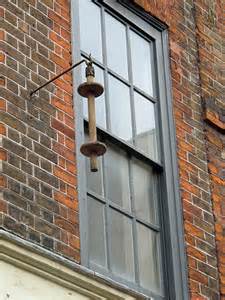
In the 1600’s, Huguenot in England was called Journeymen journéee – ‘day’ in French – because they were, yes! paid daily. Journeyman is a word still in use in England today. Huguenot homes included a feature that marked a journeyman weaver home or a ‘sign’ such as the one below.

This Spindle is the Sign of A Silk Weaver On A Huguenot House in Spitalfields, London England

They set about settling in and transformed their homes to suit the valuable silk trade. They enlarged the windows in the attic to let in the maximum light for the weavers and designed a staircase positioned right by the front door to allow access to the upper floors without entering the workshop. This protected the expensive silks from dirt and soot from the streets. As the silk trade in the East End took off, they formed a community of working-class tradespeople that transformed Spitalfields into “Weaver Town”.

These talented artists brought to England many high-skilled trades. In addition to being famous for their silk weaving and beautiful fabrics, they brought to England paper-making, hat makers cabinet makers watchmakers gunsmiths goldsmiths jewellers and many more skilled trades.

By 1710, at least 5 percent of the population of London – then around 500,000 – were French Protestants. In the French enclaves of Spitalfields and Soho, that proportion was much higher.  London soon had 23 French Protestant churches. Within a few years, a society totally unacquainted with mass migration had given a home to the equivalent – in terms of today’s population – of 650, 000 new arrivals.

According to one estimate, one in every six Britons has some Huguenot ancestry. Some famous Huguenot names in England include Simon Le Bon, from the pop group Duran Duran actor Sir Laurence Olivier, author Daphne Du Maurier and Samuel Courtauld (1793 – 1881) an English industrialist who developed his family firm Courtaulds to become one of the leading names in the textile business in Britain.²

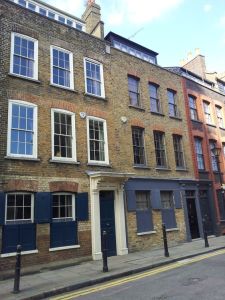
Today, in the lively East End area of London, there is an area known as Spitalfields. Home to artists, creative fashions and food, Spitalfields is well known for its history of silk weavers. Fournier Street – built in the 1720’s – with its grand old Georgian terraced houses of the master weavers attracts visitors each year.³

There is a thriving Huguenot Society of Great Britain and Ireland formed in 1885.

In Fournier Street, at number 18 the elegant home belongs to the Artist Denis Severs. He bought a dilapidated 10 room property in 1979 and used it to re-create a Huguenot home for his own pleasure. Word got around and it has now been open to the public for 35 years.

https://www.dennissevershouse.co.uk/

Huguenot Silk Weavers Houses on Fournier Street

Sources:

¹https://en.wikipedia.org/wiki/Edict_of_Nantes

²http://www.independent.co.uk/news/uk/home-news/refugee-week-the-huguenots-count-among-the-most-successful-of-britains-immigrants-10330066.html

³https://oldspitalfieldsmarket.com/

https://www.huguenotsociety.org.uk/

NOTE:

This link is to the ‘Huguenots – Index of Names’ within Quebec.

Posted by Genealogy Ensemble author, Jacques Gagné.

Huguenots – Index of Names

According to our author, Jacques Gagné, it would appear that the National Archives, Kew, Richmond TW9 4DU England, own, in comparison to the Bibliothèque nationale de France in Paris, more information about Huguenot families! Here is the link:

Isn’t The Internet Wonderful?

For quite a few years, I have been doing genealogy, and although I have found many many family names, I had never actually met any family members associated with my research.

However,  a few years ago I was contacted via ‘Friend Reunited’ a now defunct website, by a second cousin on my Dad’s side. Samantha was my cousin Cheryl’s daughter, and she was looking for members of the Bulford family for her parent’s anniversary genealogy gift. Through Sam, I was united with Cheryl, her mother and my first cousin and from there, more first cousins I had never met.

My parents divorced when I was seven, and after that, I never had further contact with my paternal side of the family. This was SO exciting! There was Diane, my Aunt Sylvia’s daughter, Cheryl, Aunt  Florence’s daughter and Joanna, Uncle Roy’s daughter. All familiar names but people I had never met or even thought I would ever meet. We all contacted each other via the internet in great excitement, and exchanged the information we had all collected, and they sent me photos I had never seen, of my Dad’s family.

After numerous emails, we all decided to meet in the UK when I went over for my annual holiday. As this was the paternal side of my family, we met in Cornwall where my father and my cousins’ mothers and fathers were all born. I met, once again after 68 years my Uncle Roy, the last surviving member of the 11 children born to my father’ family.

We all met at the apartment Uncle Roy lived in with his wife, Aunt Evelyn. They had made us all Cornish Pasties, a local treat. Uncle Roy was 94 then, and Auntie Evelyn was 90 (both still alive today!) and my Uncle looked so much like my father, I became quite emotional. Uncle Roy’s sons David and Jonathan were there too with their sister Joanna and suddenly, just like that, I had five cousins! I had brought photos and they had some too, which we all pored over. I learned so much about the family in that short visit, to add to my family tree.

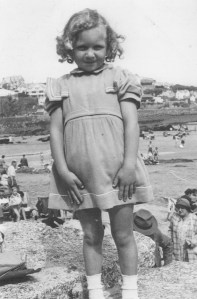
I showed David and Jonathan a photo of me, aged three that was taken on a beach in Newquay, one of the last visits to my Dad’s family before the divorce, and wondered aloud where it could have been taken. David took me by the hand to the balcony of the apartment opened the door and pointed. David said ‘This is Towan Beach where your photo was taken’ and there before me as in my photo, was the beach and the houses on the cliff behind me, still prominent today. Then I did cry.

The next day, we all had a family reunion Sunday lunch with wives and children, in the local pub. We reminisced we took photos and promised to keep in touch, which we have done so every year for the last 6 years. Every year I visit the UK we have our Bulford reunion usually in the West Country at a local pub, and each year I find out more about my Dad’s family. Photos, war records, marriages, deaths, some researched information I had, that my cousins did not know about were all shared via the internet. PLUS a recently found USA Bulford branch too, which is to be the basis for another story.

The internet, isn’t it just amazing and wonderful?


Marian circa 1948

Towan Beach Newquay, Cornwall UK

Save

Save

Save

Save

Save

Save

Save

Save

Save

Save

Save