Tag Archives: Montreal

Fat Sandwiches and Cathedral Gongs

Turning the tables on genealogy writing.

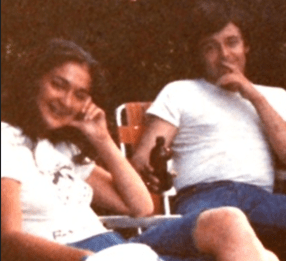
My talented high school friend Gary and me circa 1980. He recommended me for the job at the radio station.


( A long time ago, I was asked by someone who knew I dabbled in genealogy why I didn’t write stories about myself for future generations so they wouldn’t have to ‘guess’. Back then, I didn’t see the point – but now I have grandchildren. )


It was sometime back in 1983 – imagine. Every Breath You Take by The Police was blaring over the airwaves and the beautiful FM secretary sprinted out of her stuffy office cubicle and ran down the hall pumping her skinny arms over her head in a victory dance. She was simply over the moon: The stodgy radio station she worked for was entering the modern age!

I was employed as an advertising copywriter for the same easy-listening FM station as well as for its affiliate, a once-proud but struggling sports talk station on the AM dial.

The FM station was by far the more successful of the two stations, keeping the owners afloat with its middle-of-the-road Paul Mauriat instrumentals aimed at an older audience.

But their faithful clientele were retiring and moving away to live near their children in Ontario or just plain passing away. (Ironically, a retirement community just over the Quebec border in Ontario was a major advertiser.) Hence the jarring format change.

That day, I overheard a staffer callously joke about how the station’s geriatric listeners were now frantically stumbling out of their easy chairs to turn the radio dial back to ‘their’ station.

Back then I didn’t pay much attention to demographics or ratings but I did have a singular role in this FM station’s public profile.

Hourly ID’s in portfolio, typed on my Selectric.

I wrote dozens and dozens of their ‘lyrical’ hourly ID’s.

Originally penned by a veteran on-air personality, these ID’s were nothing but extra work for me and they came with no extra pay either, but I didn’t work in radio copy for the money (minimum wage) or for the praise (we got none). I worked for a chance to make a living, however meagre, as a writer and for the camaraderie among creatives and, yes, for the adrenaline rush.

(In those days, it seemed as if every advertising contract the salespeople brought into the copy office had to be conceived, written and produced “yesterday.” English Montreal radio salespeople were fighting over an ever-diminishing slice of the advertising pie – and in recessionary times. The clients were getting smaller and smaller – and pickier and pickier. These hourly ID’s allowed me to be creative (and corny) on my own terms – at my own rhythm.)

In the early 1980’s, our English FM Station was the “MUZAK” station of choice in Montreal, airing continuously in elevators all over town.

So, every lunch hour, when thousands of office workers spilled out of their own stuffy cubicles to score a coffee and sandwich and maybe a little city sunshine down below, they could not escape hearing one of my midday ID’s voiced in a warm creamy tone by one of our talented station announcers.

I kept these three “midday” ID’s for my portfolio.

Number 1: Midday in Montreal is when the babies come out. Winter newborns, bundled in their mother’s arms, rosy-cheeked cherubs, bright eyes wide in wonder. They are seeing the world for the very first time. The mystery of a budding flower, the majesty of a skyscraper, a lot for little eyes to take in. Midday in Montreal with the beautiful music of CICK. (I changed the name of the station, but you might know which one it is.)

Ok. I was 28, and although I strongly denied it back then, I was clearly wanting a family. But, if you consider I had held an infant in my arms only twice in all of my young life, both times while babysitting, I think I got it right. I know I got it right. I have a four month old granddaughter and she’s just as described.

Number 2: Midday in Montreal. School children straggle home from lunch in groups of two or three. Never taking the shortest route, they stop to pet a stray or to kick a stone around, forgetting as children often do, about time. Wandering home in zigs and zags,they finally arrive to steaming bowls of soup and fat sandwiches. Midday in Montreal. With the beautiful music of CICK.

This was a bit of a nostalgia, for sure. I, myself, in the 1960’s, had been a latchkey kid and I often had to make my own lunch, sometimes grilling POM bread over the blue flame of the gas stove. Yummy! By the 1980’s, I suspect even fewer kids went home for lunch. Still, judging from the meandering path my five year old granddaughter likes to take on our walks together, I think I nailed the dilly-dallying part.

Number 3: Midday in Montreal. The circular days are cut in half by the sound of a thousand clocks: ornate cuckoos in residential parlours, church bells and cathedral gongs, those quiet, creeping clocks in offices. As the sun reaches its highest point in the sky, a million pairs of eyes turn to the clock, acknowledging midday in Montreal, with the beautiful music of CICK.

I still like this one, although a smart-alek booth operator questioned whether cathedrals gonged at all. I directed him to Byzantium, my favourite Yeats poem. I had borrowed the phrase, you see.

The unpurged images of day recede;

The Emperor’s drunken soldiery are abed;

Night resonance recedes, night-walkers’ song

After great cathedral gong;

A starlit or a moonlit dome disdains

All that man is,

All mere complexities,

The fury and the mire of human veins.

Midnight, with the beautiful music of CICK 😉


Do you think Yeats would have been a better radio copywriter than me? Would the insomniac crowd have been seriously disturbed by Midnight ID’s in the style of his poem?

Anyway, after a year of dutifully tapping out these hourly ID’s on my trusty IBM Selectric typewriter (the one with the snazzy white “Correcto-type” band that enabled me to churn out my 30 and 60 second commercial scripts apace) I asked to be relieved of the task.

Like so many of my colleagues, I quit my copy job to try my luck in Toronto. Somehow, I ended up back in Montreal with a family – just as the economy was improving. What bad timing! For the next decade, I mostly worked remotely as a freelance writer -for rather good pay- for sundry commercial magazines producing quote-anecdote-statistic style articles on non-controversial topics that didn’t scare off the advertisers.

Occasionally, I got creative and punched out a timely satirical piece like Beat the Biological Clock for Salon Magazine. That number was written, yikes, over 20 years ago. Time sure does fly!

I guess I should get busy writing more of my ‘ancient histories’ for the girls.

End

Horses, Snowshoes and Social Life

Horses were a common part of daily life in turn-of-the-century Montreal. Tradesmen delivered milk and other items by horse and cart, fire engines were horse-drawn, and many people got around the city in horse-drawn carriages in summer and sleighs in winter. For those who could afford it, horseback riding, horse racing and horse shows were also popular.

My great-grandfather Robert Stanley Bagg (1848-1912) was a skilled rider and every spring in the early 1900s, he and his wife, Clara, attended the Montreal horse show, held in suburban Westmount. Hunters, jumpers, harness horses and ponies competed for honours, but the show seems to have been more of a social activity than a sporting one, and proceeds from a tea served during the afternoon’s events were donated to the Society for Prevention of Cruelty to Animals.

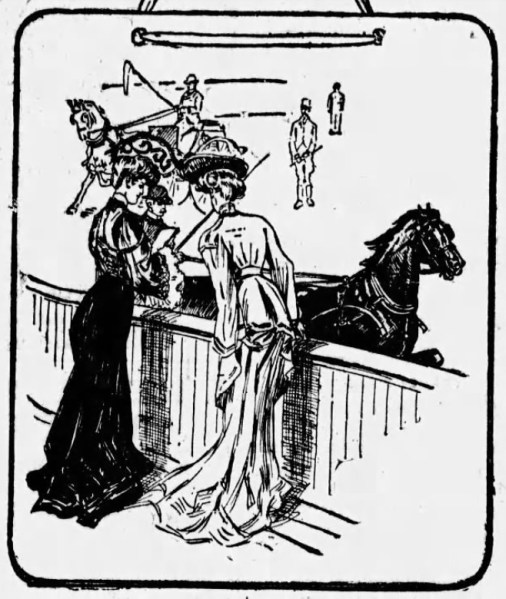
Illustration of ladies enjoying the Horse Show, 1904. Source: The Montreal Star, May 7, 1904, p. 20

The Montreal Star published columns of names of attendees, and in 1904, the paper noted that R. Stanley Bagg had a private viewing box. Perhaps, like other boxholders, he and Clara entertained guests at dinner prior to the evening events.

Two years later, the Star reported that Clara, dressed in green tweed with a black hat trimmed with white, attended the show with her sister-in-law Amelia Norton, in a purple dress and a white hat, and her daughter Evelyn, in a grey homespun dress and a pale blue hat, trimmed with white.1

Stanley was still riding at age 59 when was injured in an accident on Mount Royal, the mountain that rises behind the city center. The Star reported that he was riding on rough ground near the park ranger’s house when his horse stumbled on a rock, fell and rolled over on one side, pinning Mr. Bagg beneath him. Two men who happened to be nearby helped him get up and encouraged him to rest for a few minutes before riding home. Stanley had sprained his shoulder, hit his head and his face was badly scraped, however, he soon recovered.2

Snowshoeing was also a popular sport in Montreal, and one of Stanley’s favourite winter activities. Between the end of November and the beginning of March, the city’s rival snowshoeing clubs competed in races, held weekly “tramps” over the mountain and organized longer excursions to other locations on the Island of Montreal. Club social activities usually included an annual dinner, charity fundraisers and lots of singing. Stanley was a member of the St. George Snowshoe Club, and it had its own club song with a chorus that began, “Hurrah! Hurrah! It’s jolly on the snow. Hurrah! Hurrah! The stiffest storm may blow.…”3

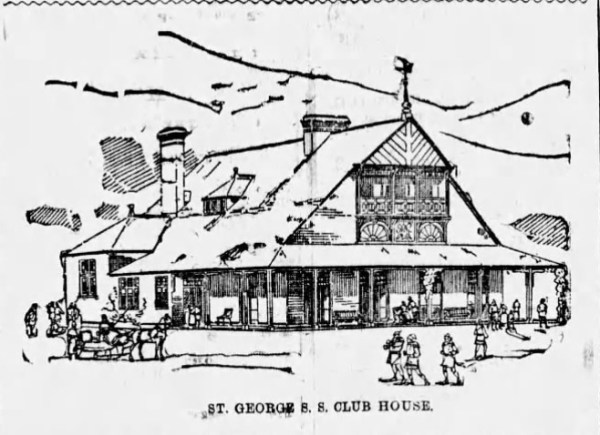
Stanley was on his club’s building and furnishing committee, overseeing the construction of a new clubhouse at Côte St. Antoine. The building was constructed in the early English stye of architecture, with spacious verandas on all sides, a high-pitched roof with dormers and a square entrance hall that gave way to an assembly room with a huge fireplace and large windows overlooking the veranda. When the club house held its grand opening on the evening of December 21, 1887, Stanley was among those who led the way from the Windsor Hotel downtown to the new building.4

The St. George Snowshoe Club’s new clubhouse. Source: The Montreal Star, Feb. 12, 1887, p. 6

When he wasn’t enjoying sports, Stanley, a lawyer, worked in the Bagg family real estate business.  Family life was also important, especially when they were travelling together or on summer holida

Stanley was married to Clara Smithers (1860-1946). One of eleven children, she was the daughter of Charles Francis Smithers, president of the Bank of Montreal, and his wife, Irish-born Martha Bagnall Shearman. When he started pursuing Clara in 1880, Stanley was age 32 and living at home at Fairmount Villa with his mother and sisters. (His father had died in 1873.) Stanley and Clara were married on June 8, 1882 at St. Martin’s Anglican Church in the presence of guests who included “the elite of our inner social circles.”5

The couple’s eldest child, Evelyn St. Clare Stanley Bagg, was born in 1883, and another daughter – my future grandmother – Gwendolyn Stanley Bagg was born in 1887. Their third child, Harold Fortesque Stanley Bagg, arrived in 1895.

Having started a family, Stanley and Clara must have realized it was time to own a house of their own, so Stanley hired architect William McLea Walbank to build a house at 436 Saint-Urbain, near his mother’s home. It was completed in 1884. 

According to a newspaper report, it was a handsome, well-finished brick villa of the Early English style of architecture, on Upper St. Urbain Street. The house contained all the modern conveniences of the time and was heated by Spence’s patent hot water furnace throughout. It claimed to be rat-proof. The bricks were all of Montreal manufacture and compared favorably with imported pressed bricks.

The family did not stay there long, however. In 1890, Lovell’s city directory listed Stanley as living in Georgeville, Quebec, while his sister Mary, the wife of stock broker Robert Lindsay, was living in the house on St. Urbain. Stanley had purchased a large house in Georgeville, on Lake Memphremagog, although it was probably a summer residence. Montreal was a very dirty and unhealthy city, especially in the heat, so many Montrealers left town during the summer months.

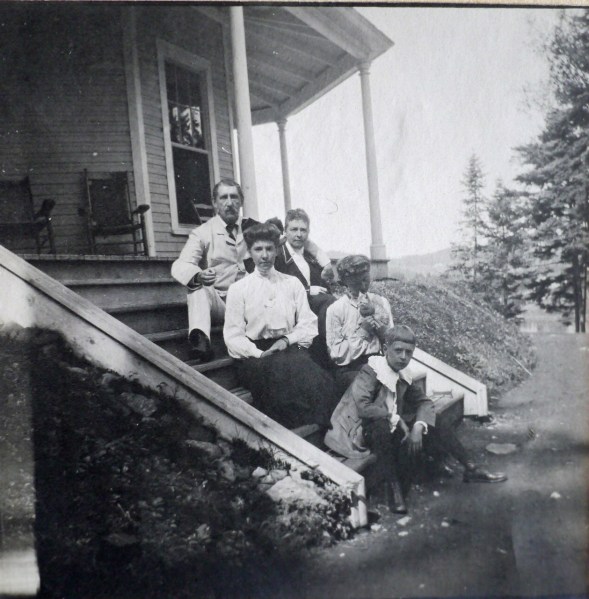
The Bagg family on summer holiday. Source: Gwendolyn Catherine Stanley Bagg, Portrait of the Family, Cacouna, 1903, McCord-Stewart Museum, M2013.591.134

It does not appear that the Baggs owned the Georgeville house for many years. My grandmother acquired a camera around 1901 and her snapshots showed family summer vacations at Cacouna on the lower St. Lawrence River, at a rented a house on a lake near Ste. Agathe in the Laurentian Mountains, and at a summer hotel at Kennebunk Beach, Maine.

As for their city home, perhaps Stanley and Clara realized that their house on St. Urbain was not in the city’s most desirable neighbourhood. The place to live in Montreal was on the southwest slope of Mount Royal, an area known as the Golden Square Mile. Montreal was the financial and industrial capital of Canada, and businessmen were making fortunes and building mansions in that part of the city.

Stanley purchased a lot at the western edge of the Golden Square Mile, the corner of Sherbrooke Street and Côte des Neiges Road, and architect Walbank designed a new red sandstone house for him. Construction started in 1891, and the Baggs were living there by 1892. It was Stanley’s home until his death from cancer in 1912.6 Clara then divided the house into two apartments and remained there until she died in 1946.

Sources:

  1. “Horse Makes Farewell Bow Tonight,” The Montreal Star (Montreal, Quebec), May 12, 1906, p. 12, digital image, https://www.newspapers.com/image/738949773; accessed Aug. 4, 2024.
  • “Snowshoeing; The Red Cross Knights; St. George’s Snowshoe Club Inaugurated Last Night,” The Gazette, (Montreal, Quebec), Dec. 21, 1887, p. 8, digital image, https://www.newspapers.com/image/419349867; accessed Aug. 3, 2024.
  • “Marriage Chimes: Fashionable Wedding at St. Martin’s Church Yesterday,” The Gazette, (Montreal, Quebec), June 9, 1882, p. 3.

Sundays and the Great Depression

I used to hate Sundays. I had to go to Sunday school. I really didn’t understand why I had to attend because my parents just dropped me off. That’s right. They didn’t even go to church. And no one asked me if I wanted to go.

After they picked me up, things got worse. It was homework time until lunch. Of course, I could have done my homework on Friday night but Fridays were reserved for movies on the television and reading in bed with a flashlight until all hours.

And worst of all, some Sunday afternoons were for Visiting the Elderly Relatives. In my mind, my aunts and uncles were ancient. Plus my brother, being a boy and older than me, was apparently able to take care of himself, as he always seemed to be absent from these visits. So I would sit in the living rooms of my aunts and uncles, with no toys or any other amusements, and listen to the adults talk.

I now cherish the memories of these visits because they provided me with an appreciation of the social history of Montreal, as well as significant events such as the Depression and World War II.

The stories about the Depression are the ones that struck me the most. During the Depression, a quarter of Canada’s workforce was unemployed.1  My dad, Edward McHugh, was a young man out of work in Montreal and he joined his older brother and sister in Drummondville, to work for the Celanese. At the peak of the Depression, the Celanese employed 1,757 workers.2

None of the McHughs had cars in those days so they must have travelled back and forth to Drummondville by train. And Uncle Thomas McHugh married a local girl. I can just imagine the McHughs, from Verdun, arriving in Drummondville for the wedding. I doubt very many people spoke English in Drummondville at the time. The culture shock must have been intense.

My aunts and uncles, even into the 1960s, were thankful that they were able to have had some work during the Depression. Uncle Al Scott worked for the Northern Telecom for 40 years, although with reduced hours during the Depression. Luckily Uncle Frank McHugh worked for the Montreal Tramway Company so he was able to keep working during the Depression. He was a tram driver for tram number 24 that started in Montreal West and crossed the city on Sherbrooke Street. His job was safe.

Dad’s siblings loved to have a good time and the Depression did not stop them. My Aunt Elsie used to describe their card parties. There was only one bottle of scotch, some ginger ale, one can of salmon and one loaf of sliced white bread. My aunt was able to spread the salmon so thinly that she could make sandwiches out of the whole loaf of bread.

It was very clear to me that the Depression was a very frightening time in their lives. During this period, the future must have seemed bleak. Life was a struggle to make ends meet. But they made the most of it and persevered. Today I feel lucky to have listened and to remember their stories.

1 https://en.wikipedia.org/wiki/Great_Depression_in_Canada

2 http://www.patrimoine-culturel.gouv.qc.ca/rpcq/detail.do?methode=consulter&id=14311&type=pge#.WSNY7Gg1-Uk

Selene Joseph Bruneau – Romantic Disease

Selene Bruneau in Fall River MA

“Selene J. Bruneau brother of A.B. Bruneau who has been visiting at his mother’s, in St. Constant, near Montreal, Canada, for the past six weeks returned home this morning. His many friends will be glad to hear his health is much improved.” as reported in the Fall River Evening Daily News 1880. Unfortunately, two years later Selene died at only 31 years of age.

Selene (1850-1882) was the first of Barnabé Bruneau and Sophie Marie Prudhomme’s 13 children to die. According to his obituary, he died of consumption, at his mother’s in St-Constatnt. What used to be called consumption is tuberculosis or TB. It became known as the wasting disease as those afflicted seemed consumed by their disease as bacteria grew in their lungs and digestive tract. They lost energy, coughed up blood and slowly died. “The slow progress of the disease allowed for a “good death” as those affected could arrange their affairs.”

Most typical 19th-century victims of TB lived in tenements and or worked in factories, places where the disease spread quickly because of close contact and poor hygiene. Even when TB was known to be a contagious disease, people ignored public health campaigns to quarantine the sick and continued to spit on the streets. Selene, not a typical victim, lived in Fall River Massachusetts in a house with his brother Amie’s family. Although some of his older brothers had come to the US earlier and worked in factories, Selene worked in Aime’s jewellery store as a watchmaker.

He seemed content living in the United States as he had the support of some family, friends and a good job although he never married. Selene petitioned for naturalization and took his oath allegiance in 1879 with Aime and his wife Mary as witnesses.

Selene Bruneau in Montreal QC

It appears Selene went home to his mother’s to try and recuperate from his illness. This was before there were any sanitoriums for TB patients. The first one in the US opened in Saranac Lake, New York in 1884 and the first one in Canada, Muskoka Cottage Sanitorium, Ontario in 1897. These sanitoriums isolated infected patients and provided nutritious food, plenty of rest and fresh air. Selene undoubtedly was given this treatment by his mother but at this time 80% of those who developed active TB died from it

The BCG vaccine against TB (Bacille Calmette-Guérin) was first used in humans in 1922. In Canada, only Quebec and Newfoundland had mass vaccinations of school children from the 1950s to the 1970s. In 1944 streptomysin was isolated, the first antibiotic effective against tuberculosis. Medical professional’s hopes that the disease could be eliminated were dashed in the 1980s with the rise of drug-resistant strains. Surgery was also used where infected portions of the lungs were cut out which produced some cures, relieved pain and various anatomic obstructions. Still today, worldwide, there are over ten million new cases of TB a year. 

Selene’s burial place is in the St Blaise Sur Richelieu Cemetery, the Baptist Cemetery in Grande Ligne associated with the Feller Institute, alongside his parents and some of his siblings. His mother outlived him by ten years.

Selene wasn’t a lucky name. His brother Ismael called one of his sons, Selene Fernand and this child died early, in his first year of life. My grandmother told us it was his strange name that killed him although he was called Fernand and not Selene. This from a family with girls called Helvetia, Hermanie and Edmee. Little did she know it was the Selene that was the problem!

Notes:

Fall River Daily Evening News; Publication Date:11/ Aug/ 1880; Publication Place:Fall River, Massachusetts, USA; URL:https://www.newspapers.com/image/589977928/?article=01a0ff3e-4f23-11ed-b80e-4af2d760f135&xid=4635 &terms=Selene_J_Braneau

Fall River Daily Evening News 14 August, 1882 Monday Page 2. Selene J Bruneau Obituary.

United States, New England Petitions for Naturalization Index, 1791-1906″, , FamilySearch(https://www.familysearch.org/ark:/61903/1:1:VXRD-LZ2 : Tue Nov 14 02:51:28 UTC 2023), Entry for Selene J Bruneau.Oath of Alliengence to the US Oct 11, 1879 Bristol County Superior Court, Taunton, Massacheuttes.

Find a Grave, database and images https://www.findagrave.com/memorial/243595198/selene-joseph-bruneau: accessed 23 January 2024. 

https://www.who.int/teams/global-tuberculosis-programme/tb-reports/global-tuberculosis-report-2023

The promotion of Christmas Seals began in Denmark in 1904 as a way to raise money for tuberculosis programs. It expanded to the United States and Canada in 1907–1908 to help the National Tuberculosis Association (later called the American Lung Association).

https://en.wikipedia.org/wiki/History_of_tuberculosis#:~:text=In%20the%2018th%20and%2019th,like%20London%2C%20Stockholm%20and%20Hamburg.

In Canada, vaccinations of all children 10-14 continued until 2005 when it was decided the TB rates in the general population had fallen to such a low level that universal BCG vaccination was nolonger needed.

M. tuberculosis infection is spread almost exclusively by the airborne route. The droplets may remain suspended in the air and are inhaled by a susceptible host. The duration of exposure required for infection to occur is generally prolonged (commonly weeks, months or even years). The risk of infection with M. tuberculosis varies with the duration and intensity of exposure, the infectiousness of the source case, the susceptibility of the exposed person, and environmental factors. Although treatment courses are prolonged, effective treatment of the individual with active TB disease can reduce the infectiousness after two weeks.

Napoleon Bruneau – A Tragic End

Napoleon Bruneau

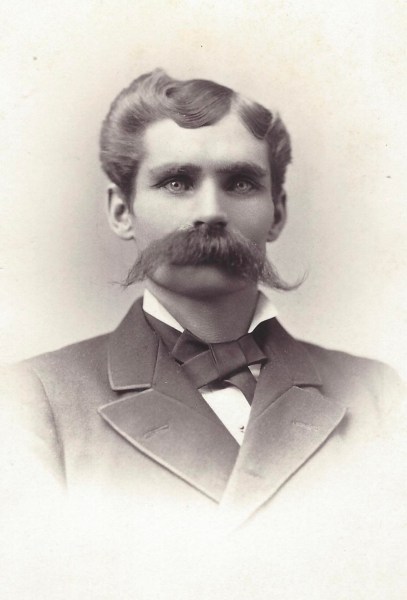
Napoleon Bruneau died tragically on a Sunday night in 1916. The La Presse newspaper reported the train accident at Delson Junction on the CPR line but no details were given. This was not far from his home in St-Constant, Quebec. Was he coming home or going to Montreal? What happened? Did he fall on the tracks? He was almost 72 years old so he should have known better than to get in front of a train!

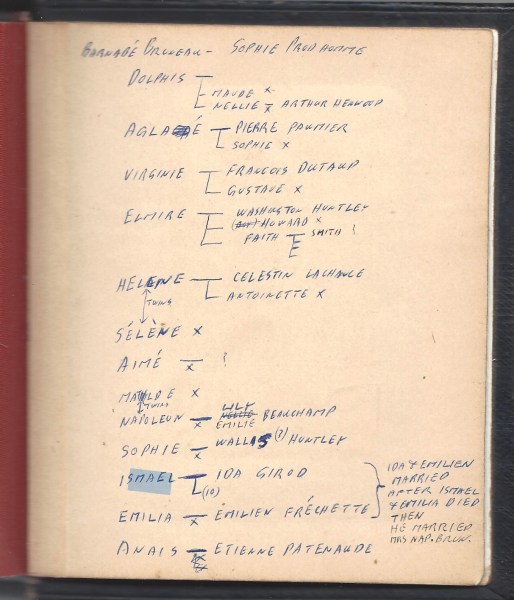
He and his twin sister Mathilde were the 5th and 6th children of Barnabe Bruneau and Sophie Marie Prudhomme. He lived his whole life in St-Constant, south of Montreal. It seems he inherited the family farm after his parent’s deaths. 

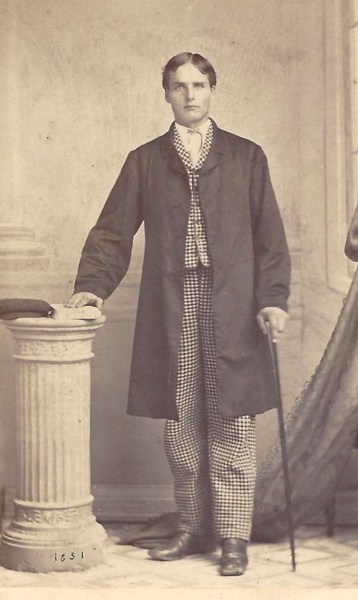
Napoleon and his sister Sophie Bruneau

Descriptions of Napoleon included being a farmer, a Free Will Baptist, a veterinarian and a justice of the peace. He was appointed a justice of the peace in 1902 for the district of Montreal which included St-Constant. It is possible he studied to be a veterinarian and didn’t just learn as an apprentice. A school for veterinarians was established in Quebec in 1866 with one of his cousins, Orphyr Bruneau as one of the lecturers. In 1876 courses were also offered in French when the school was under the McGill University Department of Agriculture. The Veterinary school, later associated with The University of Montreal, moved to Oka in 1928 and to its present location in Saint-Hyacinthe in 1947.

One would think that a tall handsome man with many interests and a farm would easily find a wife, so I found it strange that he didn’t marry until he was 66. His brother, Reverand Ismael Bruneau performed the ceremony at his Protestant Church, L’Eglise St Jean Baptiste de Montreal. Napoleon’s wife Emilie Beauchamp was 42 at the time, so it isn’t surprising that they didn’t have children. Emilie was born in Grenville, Quebec, on the Ottawa River. She probably met Napoleon in Montreal where she lived with her parents and sister Lily. Emilie had an uncle who was a French Protestant minister so it is quite possible that they met through the church.

My great-grandfather, Ismael Bruneau was upset with Emilie after Napoleon died as he wrote in a letter to his son Sydney.

You know your Uncle Napoleon made me the heir of all his estate except for $500, which I must give after the death of his widow as follows; $300 to my sister Helene, $100 to my sister Virginie and $100 to my sister Elmire. But his widow has everything during her lifetime. As she is a great deal younger than I, it is almost probable that I shall never enjoy this myself. They say she is already neglecting the house which is going to ruin and according to the law she must maintain it in good condition as it was at the time of the death of her late husband.”

Unfortunately, Ismael didn’t enjoy any of his inheritance as he died two years after Napoleon. Emilie only died in 1951. I don’t know what happened to the property as she married Emilien Frechette in 1929 and he had his own house and farm. Emilien had been married to two other Bruneau women, Emilina Bruneau, Ismael’s sister and and Ida Girod Bruneau Ismael’s wife.

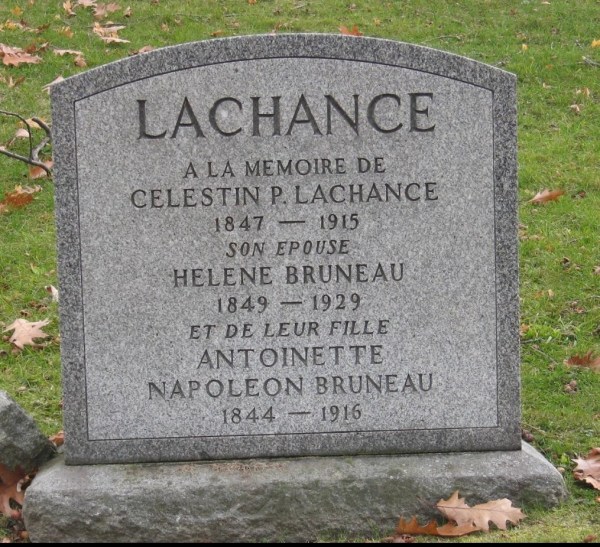
Napoleon was buried in Mount Royal Cemetery with his sister Helene, her husband Celestin Lachance and their daughter Antoinette and not with his twin Mathilde in the Baptist cemetery in Grand Ligne. Emilie isn’t buried with Napoleon or even with Emilien Frechette and his first two wives, rather her final resting place is with her parents in the Beauchamp Cemetery in Marelan in the Laurentians near Grenville.

I haven’t yet found answers to questions about his tragic end.

Notes:

Napoleon Bruneau Obituary: LaPresse January 16, 1916.

Napoleon Bruneau’s death determined to be accidental. The Montreal Gazette, Tuesday, January 25, 1916. Page 7.

when searching for information on the train accident I found another Napoleon Bruneau who was also killed by a train. This accident happened in Huntington, Pennsylvania in 1908. He was decapitated and horribly mangled.

Appointed Justice of the Peace: Montreal Star Monday, June 23, 1902. page 10. Accessed Newspapers.com March 20, 2023.

Letter from Ismael Bruneau to his son Sydney Bruneau. Quebec, February 21, 1917. A copy in the hands of the author.

Emilie Beauchamp burial https://www.findagrave.com/memorial/167478027/emily-esther-beauchamp

accessed November 25, 2023.

Orphyr Bruneau one of Napoleon’s first cousins the son of his father Barnabe’s brother Medard.

There are notarial documents, Quittances which are receipts where Napoleon gave most of his siblings 300 piastres each, beginning two years after his mother died. These dispersals occurred from 1894 to 1904. Some received less and I haven’t found the documents for his sisters Aglae and Sophie. His brother Selene had already died and had no heirs. I am unsure if these were money paid to his siblings because he received the farm.

Three hundred piastres were 300 dollars. This would be the equivalent of over $10,000 today. Quebec used the word piastres on official documents into the 20th century. Even later it was used as a slang equivalent to the English word buck.

Montreal and the Ville Marie Fire of 1734

Update: January 24, 2024

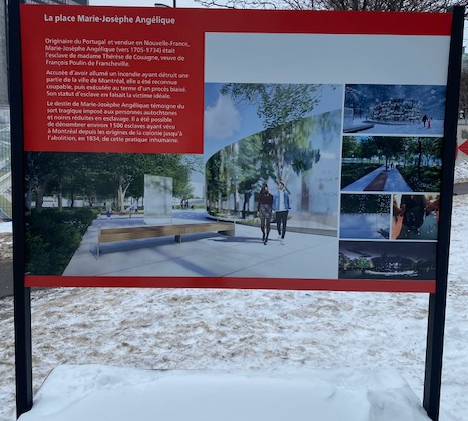
Since this story was originally published, the City of Montreal has added a poster next to Metro Champs de Mars to make it clear that Marie-Josèphe Angélique’s park will be within the Place de Montrealais!

Thanks to Annie for letting me know, and thanks for everyone who made sure that her story is not forgotten!

Original Story

For an hour on the first cold day of the year last month, I wandered around City Hall looking for the memorial park named after an enslaved woman whose torture led to her conviction for arson in 1734. She was then ridiculed, hanged, and her body was burned to ashes and thrown to the wind.

I couldn’t find it.

I’m not sure what happened from the time the park was created in 2012 to today, thirteen-and-a-half years later, but the one-time park still appears on Google Maps. In person, I couldn’t find anything to indicate where it might be.

According to various articles on the web, a green space just west of Champs de Mars métro station honours Marie-Josèphe Angélique’s memory. The official inauguration of the park took place on Aug. 23, International Day for the Remembrance of the Slave Trade and its Abolition, 2012.

As I walked through the area last month, the one-time park seemed to be encompassed in a massive construction site underway for Place des Montréalais, a new public space being created next to the Champ des Mars metro on Viger Street. The posters on site explaining the current project included nothing about Marie-Josèphe Angélique.

Despite being honoured with an award-winning film, a bronze plaque, lilies and a presentation by Governor General Michaelle Jean in 2006, and a public park created by the city of Montreal in 2012, she’s disappeared again.

Before this experience, I was already struggling to see Angélique as the symbol of freedom and resistance she serves for many, but I don’t want her to be forgotten. Did she set the fire or was she a convenient scapegoat? If she didn’t, who did? As I began exploring her story last month as part of a project for NANOWRIMO (the National Novel Writing Month), she served as a reminder of the kind of unnecessary suffering a biased political, policing and justice system can create. Despite the fact that she was a victim of slavery, hatred, spite, racism, class bullying and the worst that a mob could throw at her, her spirit remained strong and unrelenting.

Angélique proclaimed her innocence until the day she was tortured, throughout the court case, and through questioning. Despite that, three weeks after the fire, she was hanged, ridiculed publicly, then burned with her ashes tossed into the wind. Clearly, the authorities at the time wanted her punishment to be seen and remembered.

I read the details about Marie-Josèphe Angélique’s case on Torture and the Truth, a fabulous website set up in 2006 by multiple people, including one of my genealogical mentors, Denyse Beaugrand-Champagne and one of my historian mentors, Dorothy W. Williams. Both of these women have researched, written, spoken and taught many people about the history of Montreal and why studying it is so important.1

The site is one of thirteen different “historical cold cases” established for classrooms across Canada. It was created through the work of six writers, a photographer, an artist, and two translators collaborating with six funding agencies, seven production partners, and 15 archive and museum partners.

It is one of the best historical websites I’ve ever read. If you do nothing other than read through this site, you will get a good overview of the community, the victim arsonist, and life in early Montreal.

As I read about Angélique’s story, she sounded like just the kind of person anyone would like to get rid of. She was a woman who told people she would burn them alive in their homes. She said so to her owner for refusing to grant her freedom, to other slaves for making her work harder than she wanted and to others too. To anyone who slighted her, she threatened the worst thing she could think of. She would burn their homes down.

When 45 houses in her small community did in fact burn down, people blamed her. In retrospect, it may have been an accidental kitchen fire that caused the flames, but her words came back to haunt them all.

The fire began at 7 p.m. on a Saturday evening in spring, April 10, 1734. In only three hours, it destroyed 45 homes and businesses on Rue Saint Paul. Even the Hôtel-Dieu hospital and convent, where people initially took shelter, burned to the ground. Hundreds of people were left in the cold; supplies from many merchants burned, never to be seen again.

Plus, who knows how many caches of fur got wiped out. At that time, Montreal was the centre of the fur trade, more than half of which was illegal trading with the Dutch and English communities in Albany, Boston and other communities to the south. According to a 1942 thesis by Alice Jean Elizabeth Lunn, furs were stored in the backs of shops and even buried just beyond the Montreal wall, which was still under construction at that time, in order to be shipped without being seen by New France authorities. A lot of money went up in smoke that day.2

Everyone in Montreal knew about the fire, given that all the church bells throughout the city began ringing when it started and continued until it was over and people were safe again. Although stone buildings existed at the time, most of the buildings were made of wood; fire could destroy them all.

I had ancestors who lived in Montreal then, the Hurtubise clan on my father’s mothers side. One of them, Jean Hurtubise, the grandson of Étiennette Alton and Marin Hurtubese, was thirty-nine years old, ten years older than Angélique when the fire took place. He and his wife Marie-Jeanne (Marie-Anne ou Marianne) Tessereau had been married for seven years in 1734.

Jean was born in Ville Marie and lived in Montreal for his entire lifetime, so he and his family would have experienced the fire, at least from a distance. They certainly would have seen the ordinance compelling witnesses to appear, given that “it was posted and cried out everywhere in the city and its suburbs.”

Jean and his family farmed a 3×20 arpent property they bought three years earlier from Raphael Beauvais and Elisabeth Turpin on Rue Côte Saint-Antoine.”3 The property was in a part of Montreal that was considered the countryside at that time. Their home was then one of four wood houses on Côte Saint-Antoine in 1731.4

Given that the area was still very rural, and on a major hill, I can’t help but wonder. Did they see the smoke rising into the sky as the hospitals and 45 other buildings in Ville Marie were destroyed?

They certainly had strong links to Ville Marie, particularly the hospital. His grandmother, Etionnette Alton, had died there in her 84th year twelve years earlier. They couldn’t have helped wondering what would happen to others like her, being treated in the hospital that the fire destroyed. Were they among the crowd clamouring for revenge? Did they go to Ville Marie to see Angelique hanged? Did they watch her corpse burning? Did they see her ashes spread into the wind? Did they care at all?

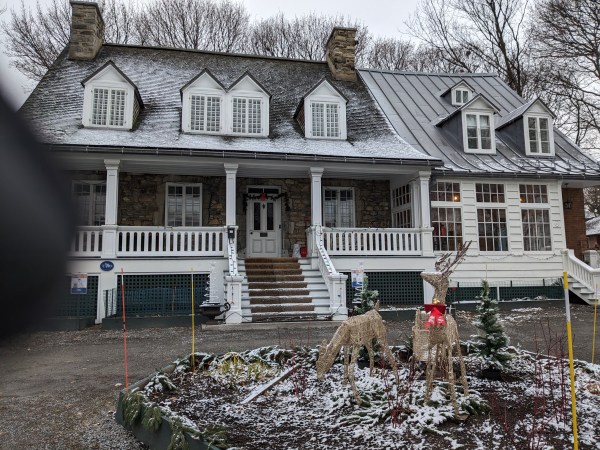
I can’t help but imagine that the controversial hanging effected all 2000 people who lived on the island that year. Five years after Angélique’s death, Jean built Hurtubise House, a storey-and-a-half fieldstone structure on land originally rented by his father in 1699 on Mount Royal. The family built the gabled home out of stone to protect themselves from fire, as required by a law passed the summer after Angelique’s death. You can still visit the home today.5

Sources

1 Beaugrand-Champagne, Denyse, Léon Robichaud, Dorothy W. Williams, Marquise Lepage, and Monique Dauphin, “Torture and Truth: Angélique and the Burning of Montreal,” the Great Unsolved Mysteries in Canadian History Project, 2006, https://www.canadianmysteries.ca/sites/angelique/accueil/indexen.html.

2 Lunn, A. J. E. Economic Development in New France, 1713-1760. McGill University, 1942, https://books.google.ca/books?id=rtcxvwEACAAJ.

3 Roy, Pierre-Georges,, Inventaire des greffes des notaires du Régime français, Québec, R. Lefebvre, Éditeur officiel du Québec, 1942, 28 vol. ; 25-27 cm, Collections de BAnQ.

4 MacKinnon, J. S. The Settlement and Rural Domestic Architecture of Côte Saint-Antoine, 1675-1874. Université de Montréal, 2004. https://books.google.ca/books?id=IEJ4zQEACAAJ.

5 https://hcq-chq.org/the-hurtubise-house/

Woodland’s Nymph

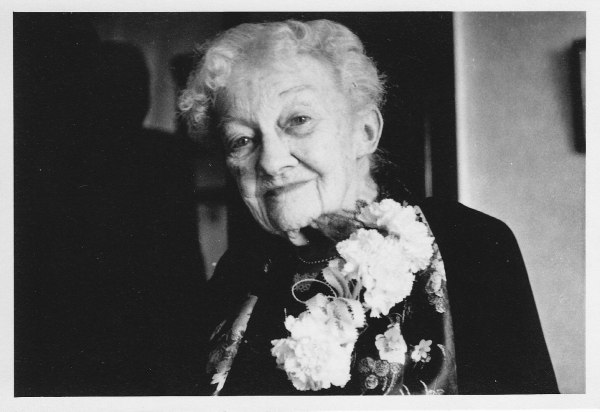
I recently discovered two photos of “Amy” in my dusty old boxes of family memorabilia. The first captured her elderly wrinkled face with a twinkle in her eye and a flower corsage adorning her left shoulder and the other portrayed a 29-year old Amy dressed in a formal gown complete with a silk fan also with a flower corsage on her left shoulder. Inscribed on the reverse side of this second photo, written in Amy’s scrawl, was “Bob with love Amy – Xmas 1894.”

It turns out that Amy C. Lindsay (1865-1960) was my great grandfather Robert Lindsay’s (1855-1931) half sister. His mother Henrietta Dyde died within months of losing her fourth child and, a couple of years later, his father Robert A. Lindsay (1826-1891) married a young Charlotte Vennor (1843-1912) who became stepmother to his three boys – Robert, Charles and Percival – all under the age of ten. Over time, Robert A. and Charlotte had five more children, with Amy being their first born and ten years junior to Robert.

Who the heck was “Bob”?

Amy never married, so “Bob” could not have been a lost love in WW1, as she was 50 years old at that time. The most plausible explanation could be a gift to her older half brother Robert – “Bob” – and that’s the reason why the photo ended up in with my family.

My guess is that she idolized her oldest half-brother and gifted him that special photo which somehow survived the test of time to be found by me in my dusty old boxes. Mystery solved!

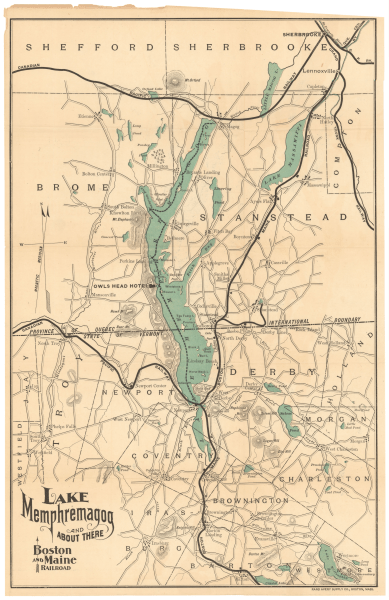
In 1873, when Amy turned eight, her parents bought a huge summer estate property called Woodland on Lake Memphremagog just south of Georgeville, Quebec. Lake Memphremagog1 is in the Eastern Townships just 72 miles east of Montreal, Quebec. It is 31 miles long, from north to south, spanning the international border between Quebec and Vermont but is predominately in Quebec.

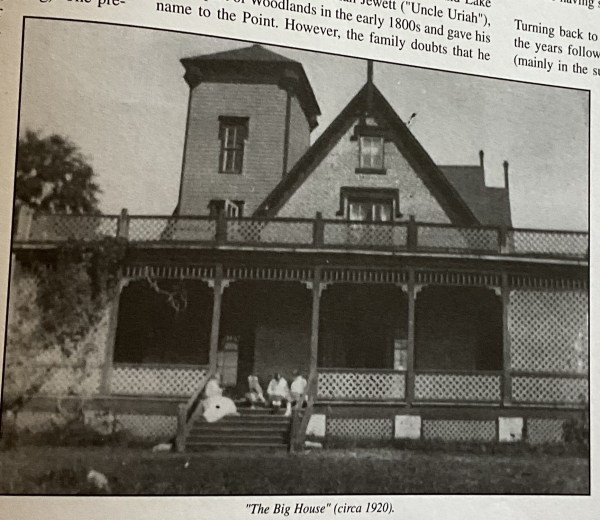
Amy’s father acquired “Woodland” from the original owner William Wood and it consisted of 280 acres of land bordering on the waterfront. William Wood had built a large red brick manor house that a neighbour described as a “barrack with a steeple.” Regardless of how it looked, it became home to several generations of the Lindsay family until the early 1960’s when it was replaced. They affectionately called it “The Big House.”

During this time, several other wealthy English speaking families acquired farm properties in the area and established their summer residences there as well. Woodland became a full functioning farm complete with livestock and crops all managed by hired hands. Over time, various third parties managed the farm until well into the 20th century, which left the family with plenty of free time on their hands.

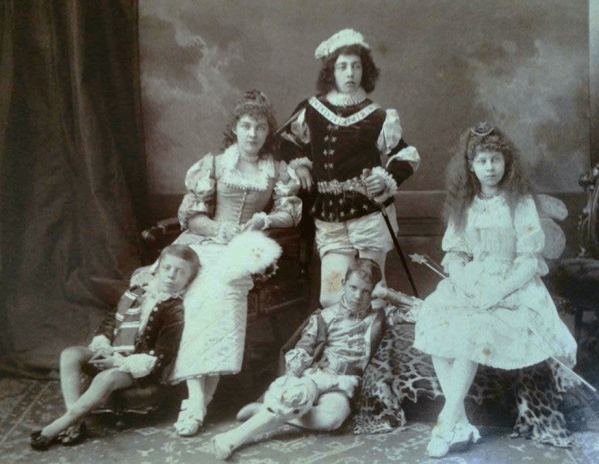
The Lindsay family took up residence in the Big House every summer. Amy’s father worked as an accountant for the Bank of Montreal and evidently could be spared for the long summer months to enjoy time with his family. “Apparently Robert Lindsay followed a daily routine of walking around the property with his entire family in tow according to size.” On another special occasion the whole family dressed up in fancy costume clothes for a party.

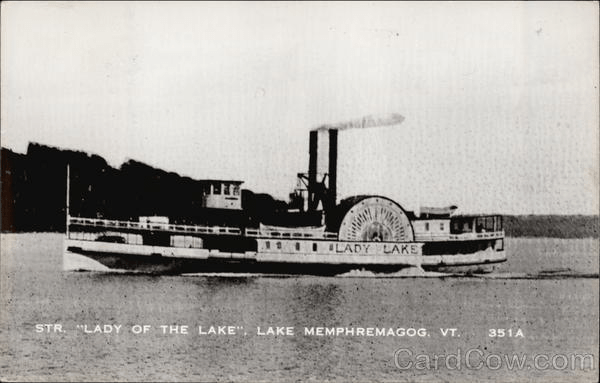
The grand “Lady of the Lake” steamer would sail twice daily on Lake Memphremagog stopping at private docks and thus providing the family with lake excursions right from the front doorstep of the “Big House.”

The Lindsay family (including mother-in-law Vennor who rescued Woodland financially in 1885) enjoyed the property until Robert’s death in 1891. Mrs. Vennor died four years after him and the property devolved to the four surviving grandchildren: Amy, Douglas, Cecil and Edith. (Their brother Sydenham died young while trying to save a drowning victim.)

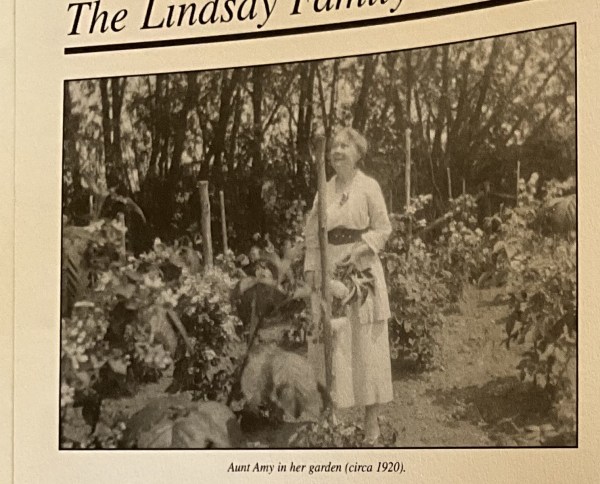
According to her family, “Amy was a small lady, well liked and well respected by most… She loved the lake and Georgeville and spent almost all her summers there… She lived in the Big House and had a beautiful English country garden nearby where she liked to spend many hours puttering about.”2

Although Amy never had children of her own, her many nieces and nephews doted on their “Aunt Amy.” After her mother died in 1913, her nephew took her to Paris and they stayed at the Hotel Pas de Calais, a four-star boutique hotel, right in the heart of tourist Paris. Nothing but the best for Aunt Amy!

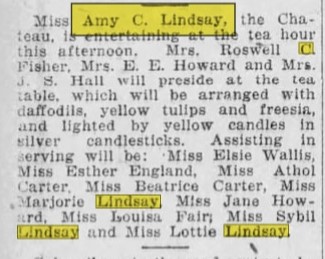
According to an article in the Montreal Star, when Amy hosted a social tea at The Chateau (across from the Ritz-Carlton Hotel), “the tea table was arranged with daffodils, yellow tulips and freesia and lighted by yellow candles in silver candlesticks.” What made it even more special were her five adult nieces assisting her in the serving of tea. She must have been very proud!

Woodland stayed in the Lindsay family until 2020 with several generations enjoying the spectacular property and family legacy. The road leading to their property was aptly named “Chemin Lindsay” and remains so today.

Although Amy spent extended summers with the multi-generational Lindsay family at Woodland, she lived the rest of the year in the downtown area in Montreal known as “The Golden Square Mile.”3 She seemed to move around quite a bit but always within the same area first staying with her mother until her death and then sometimes with her sister Edith (Carter) after that. Although in 1920 she enjoyed “wintering” at the Ritz-Carlton Hotel!

Amy eventually settled for her last 20 years in the Maxwelton Apartments on Sherbrooke Street near McTavish across from the McGill University campus while summering at Woodland until she died in 1960 at age 95.

According to the family, she obtained her first TV late in life and became an avid hockey fan! What a thrill it must have been to watch that first televised hockey game in 1952!

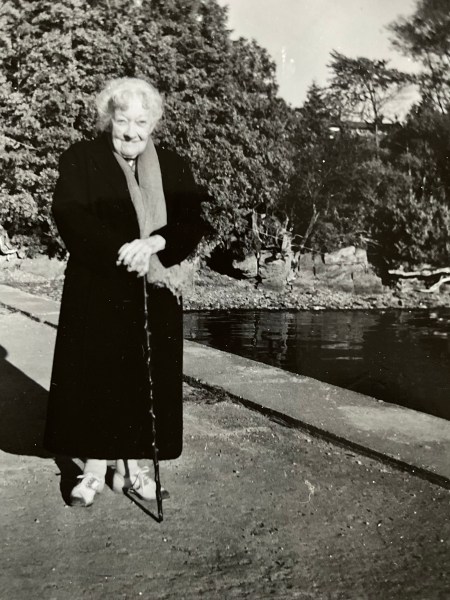
Amy on the Georgeville dock 1955 at age 90

In her last will and testament, written in 1896 when she inherited one quarter of Woodland, she bequeathed “Bob” her cherished set of Waverly books by Sir Walter Scott. He died long before her and, unfortunately, they were not to be found in my dusty old boxes!

1https://wiki2.org/en/Lake_Memphremagog – as referenced 2023-10-18

2The Lindsay Family and Woodlands – “Georgeville 200th”

1901 Lake Memphremagog map” by Rand Avery Supply Co. – Ward Maps. Licensed under Public Domain via Commons – https://wiki2.org/en/File:1901_Lake_Memphremagog_map.png#/media/File:1901_Lake_Memphremagog_map.png

3https://wiki2.org/en/Golden_Square_Mile?wprov=srpw1_0 – as referenced 2023-10-18

Notes:

A map of Grand Trunk Railway route Mtl to Portland, the train appears to have stopped in Sherbrooke:

https://digitalarchive.tpl.ca/objects/353690/map-of-grand-trunk-railway-system-and-connections

Archival photos of Georgeville:

https://www.townshipsarchives.ca/georgeville-quebec

Janice Hamilton’s story about the Baggs in Georgeville:

Summer in Georgeville

Bon Soir et Dors Bien – Good Night Sleep Well

Rene Raguin & Beatrice Bruneau Wedding 1912

“Bonsoir et dors bien”, is how my mother ended her nightly phone calls with her parents. These were some of the few French words I ever heard her speak, which was strange as French was both her parent’s mother tongue. Why did we only speak English?

René Raguin my grandfather, was from Fleurier, Switzerland and came to Canada to teach at the French Protestant school in Pointe aux Trembles, Quebec. He later taught in Trois Rivieres and finished his career at Baron Byng, a school of the English Protestant School Board of Greater Montreal. He also taught teachers how to teach French at McGill University’s summer school.

Beatrice Bruneau met René Raguin when they were both teaching at the Pointes aux Trembles school. This was the one French Protestant school in the Montreal area. Grannie as we called her, descended from French Canadian stock, although born in Green Bay Wisconsin. Her father Ismael Bruneau was a French Presbyterian minister. Her mother Ida Girod was a French speaker from Switzerland and also a Protestant.

René spoke English fluently but with a heavy accent. He always used English when talking with us, his grandchildren and we called him Grandfather. I always wondered why he never communicated with us in French as a French teacher. One much older cousin Don Allchurch, always referred to him as Grandpère as he did speak to him in French.

Beatrice’s father Ismael Bruneau, was “pure laine”, French Canadian through and through. His early ancestors arrived in Quebec from France in the 1630s. His family of Catholics converted to Protestantism in the 1850s and that is where the English crept in. Ismael wasn’t thrilled to speak English as he wrote to his youngest sister Anais, “I write to you in English, dear sister, not to show you I can write a few words in that barbarous language, but for your good as well as mine, for practice makes perfect.” Many of Ismael’s siblings moved to the United States, spoke English and married English speaking spouses.

French was spoken in his home but Ismael’s children all went to English Protestant schools as the French schools were all Catholic and they didn’t even allow Protestants to attend. In the family, religion trumped language. Most of his children also married English-speaking people. His two sons continued to speak to each other in French.

Beatrice Bruneau Raguin

My mother grew up in Dixie on the border of what is now Lachine and Dorval. It was then an English community. Because her father Rene Raguin taught for the English board they didn’t have to pay school fees and so attended English Protestant schools. The children didn’t want to speak that other language. Some evenings her father would say that only French would be spoken at the dinner table. The children wouldn’t say a word and only eat what they could reach.

Rene Raguin

The Scots and Irish immigrants who were my father’s family settled in Toronto and spoke only English. I don’t remember him speaking French to anyone. He always regretted that he couldn’t speak French. He too went to English Protestant schools.

Dorothy, Beatrice, Rene & Mary

We were schooled before French Immersion and though there was some talk about sending us to French Schools, they were still all Catholic and not a choice, so we also attended English Protestant schools.

So in a generation, the French family became English. We didn’t call my mother every night but as we left after a visit she had a new English saying, “Safe home.”

Notes:

A Short History of the Bruneau-Girod Families: Ida Bruneau Ste. Agathe des Monts, Quebec May 1993. Forbes Publications Ltd. Calgary, Canada.

My sister remembers the phrase as “Bonsoir et dors bien Maman” but I said sometimes she was talking to her father.

Ypres Gas Attack Survivor Returns Home

Part Two of Two

Six months after surviving the battle at St. Julien, Belgium, and the German gas attack in 1915, something entirely different brought Captain Stanley Bagg Lindsay (1889-1965) to his knees. He slipped and fell in the trenches while on active duty, and needed surgery on a hernia on his left side. He was officially declared unfit for duty and was granted sick leave to recover back home in Montreal, Quebec, for the winter.

Stanley Lindsay – winter 1916

Within months of his return to England, the hernia recurred on his right side needing immediate surgery and his health never fully recovered after that. Several bouts of influenza also plagued him throughout the war, before and after his hernias, and weakened him for the rest of his life.

He was 29 when the war ended. He returned to Montreal, but did not resume his studies at McGill University, choosing instead to follow in his father’s footsteps and become a stockbroker. His salary as a Captain had brought in an average of $142 per month during his four years of service. This translates into $3900 per month in today’s dollars. He quite possibly returned to civilian life with a decent nest egg with which to begin his new career.

Stanley’s health issues did not appear to hinder his long career as a stockbroker and eventually he became a partner at Crutchlow, Deare & Co. According to family lore, he purposefully sold off the family’s portfolio of stock investments just before the Great Crash of 1929.1 Perhaps his war experience left him with some kind of sixth sense.

Although Stanley never married, he remained close to his two brothers (and their families) and his three sisters.

Two of his sisters, Marjorie and Marguerite, had been nurses during the war with the Information Bureau,2 a Canadian Red Cross organization in London which cared for Canadian soldiers. Marguerite died young in Cartwright, Labrador, in 1926 while volunteering with the Grenfell Mission.3

Stanley lived with Marjorie and their parents at 455 Sherbrooke Street West (previously known as The Prince of Wales Terrace) until their father’s death in 1931. Then they moved with their mother into an apartment at 1009 Sherbrooke Street West until her death in 1938 and remained there until their own deaths: Marjorie in 1961 and Stanley in 1965. His eldest sister Ada lived in Vancouver with her husband Julius Griffith and their only son, Julius, who became a well known Canadian artist.4

Stanley’s two brothers – my grandfather Sydenham5 (an Anglican priest) and Lionel (a pediatrician) – provided him with ten nieces and nephews to spoil. He absolutely adored my mother Ann and showered her with his love and gifts. He must have been devastated when she died of Hodgkin’s Disease at the age of 36 in November, 1961, having lost his sister Marjorie earlier that year.

Stanley Lindsay (far right) at Ann’s baby’s christening party 1953

Luckily for me, he devoted his free time to the family history. I have pages upon pages of his beautifully (legible!) handwritten notes about that side of our family. All the usual dates and facts were recorded, but in a clear, more descriptive fashion.

One of his pages about his grandmother, Catherine Mitcheson Bagg, recalled a visit to her home as a boy:

We can remember her well sitting at the front drawing room window at Fairmount with her white lace cap on, looking out at the people passing.

We used to play in Granny’s garden. There were apple trees, especially one which was easy to climb and play house in. There was an iron bench under it, painted blue green…. There was a chestnut tree which we loved, the summer house, the white statutes of Adam and Eve with no arms, … the bleeding hearts, snowballs and lilacs … Nora the housemaid and Jessie the cook, who made good ladies fingers and sponge cakes and who we could always see through large sunken window which gave light to the kitchen.

There were the stables, the horses, the rockaway and the brougham and Willis the coachman with white mutton chop whiskers whom we liked and who afterwards drove a wagon for Joyce the confectioner. We were very fond of Odell Comtois who did sewing…. She was practically one of the family.

The garden became very shabby. It seemed a large garden to us. It went as far as our house which was at the corner of Milton Street. The west side adjoined the Wilson-Smith property. Long before our house was built, a large house called Tara Hall stood just north of Milton Street. Mother [Mary Heloise (Bagg) Lindsay] remembers it burning down one night when she was a child. Where the house used to stand is a street called Tara Hall.”

As well as being everyone’s favourite uncle, an excellent family historian and a successful stockbroker, Stanley belonged to several local clubs including the Canadian Club, the University Club and the Royal Montreal Golf Club.6

After almost dying at Ypres during the Great War, Stanley lived another fifty years.

1https://wiki2.org/en/The_Crash_of_1929 – as referenced 2023-02-23

2https://genealogyensemble.com/?s=the+mothering+bureau

3https://genealogyensemble.com/2022/07/27/miss-lindsay-the-early-years/

4https://www.gallery.ca/collection/artist/julius-griffith – as referenced 2023-02-23

5https://genealogyensemble.com/2016/04/05/the-priest/

6Obituary – The Gazette, 1965-03-03

Tribute to Joan Benoit

With great sadness, we recently learned of the death of Joan Benoit of Pointe Claire, Quebec in late 2022. Joan was a devoted genealogist and volunteered and helped run the Quebec Family History Society (QFHS) for over thirty years. Ever patient, she helped both the experienced and novice genealogist in their research. She was the “go to” person when anyone had a question. In the words of Claire Lindell:

“It was spring of 2012 when I walked in to the QFHS. Joan greeted me with a smile and made me feel welcome. She offered to help me with my quest for ancestors. She took Rene Jetté’s big blue dictionnaire from the shelf and asked me the names of those I was searching. Within minutes I found my mother’s ancestral family … Claude Jodouin who arrived in Ville Marie in the mid 1600s. I was off to the races and have never looked back, thanks to Joan.”

Ruth Dougherty (left) and Joan Benoit (right) chat in front of Earl John Chapman who is seated at the table speaking with Oskar Keller during Military Roots Day, 2012, at the QFHS.

Joan’s extensive knowledge, accompanied by a warm smile, has helped numerous researchers over the years. Many of her fellow genealogists became her friends. As well as being an avid researcher, she also had a vision of what was needed to promote genealogical research and always accepted the challenge to do what was needed. For approximately twenty years Joan was a well-known visitor to the Archives nationales du Québec on Mullins Street in Pointe-Saint-Charles and later the Archives nationales on Viger Square in Old Montreal. She researched hundreds of family lineages.

Jacques Gagné and Joan Benoit enjoyed a friendship of many years, which Jacques says can best be described in Proverbs 27:17, “As iron sharpens iron, so one person sharpens another.” In other words, good friends bring out the best in one another and enhance each other’s strengths.

Joan’s quiet presence, always supportive, will be sorely missed.