After my great grandfather retired from a successful 40-year career in the wholesale food business, he took an active interest in the stock market and managed his own investments during the time of the Great Stock Market Crash of 1929. Would he lose his life savings like so many unfortunate others at the time?
In a letter to his eldest daughter Josephine, my grandmother, dated June 2, 1932, he wrote:
“…if we could get rid of a lot of these Rotten Banks and Stock Market thieves the world would come around all right in no time. A person has no show with that New York Stock Exchange. Just a lot of crooks and I don’t think these common stocks have any value at all, not worth the paper they are written on, most of them, but all this will come (out) all right but people have got to lose a lot of money and that’s that.”
William Thomson Sherron (1863-1932) was born in Salem, New Jersey, the son of Albert Wood Sherron and Eveline Stokes Gaunt Githens. His wife, Gertrude Gill, (1869-1940), born in Philadelphia, was the daughter of Thomas Reeves Gill and Josephine Love.
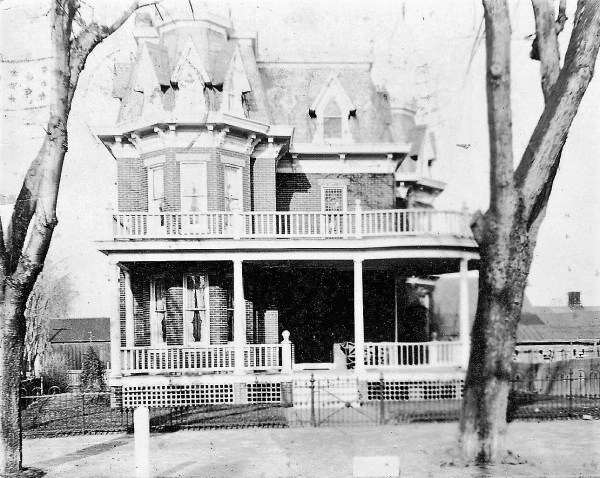
In November 1891, William and his bride settled in their new family home at 100 W. Broadway, Salem, New Jersey, where they stayed for the next twenty years. This beautifully refurbished Queen Anne style Victorian house still proudly stands today.
(Their first home -100 W. Broadway, Salem, New Jersey)
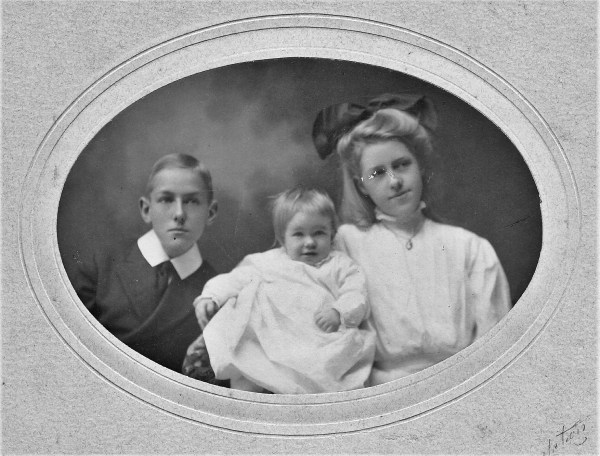
The couple had three children – Josephine (1893-1964) Social Media – Then and Now, Roger (1895-1963) Sherron and his Texas Betty and Alberta (1906-1992) Elopement … or not?. Josephine, my grandmother, her stockbroker husband and their two sons eventually settled in Montreal, Quebec. Their son Roger had mental health issues and lived with them until their deaths. Alberta married very young, had a son nine months later and remarried happily a while after that and had three more children.
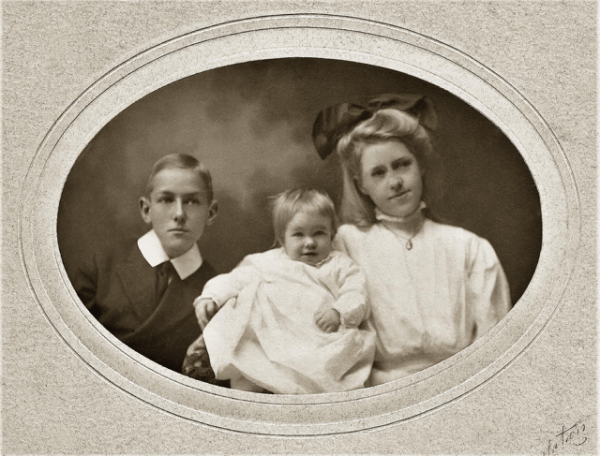
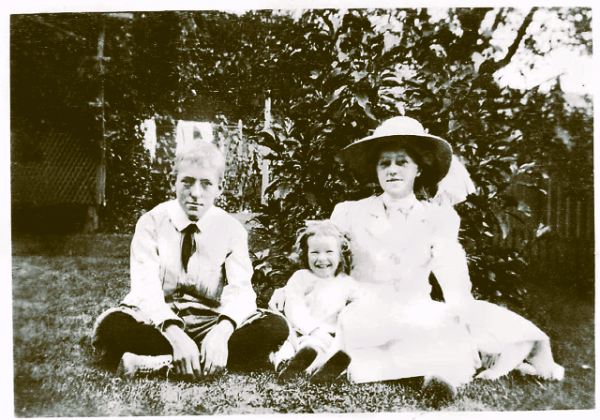
(Roger, Alberta and Josephine Sherron – 1906)
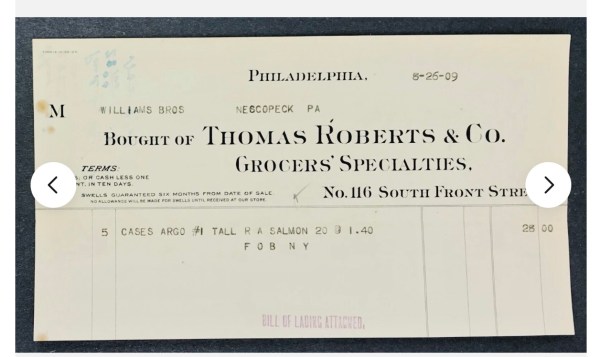
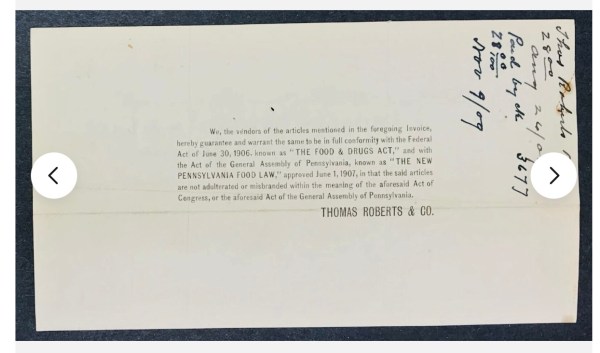
William first worked for Thomas Roberts & Co. in the wholesale grocery business for 25 years in Philadelphia before going into the same business for himself in 1905 at the age of 42. He opened his own office at no. 37 South Front Street, Philadelphia, about a half mile from their new home at 261 W. Harvey where they lived for the another twenty years.
ScreenshotScreenshot
(Invoice – front and back from the grocery wholesale business)
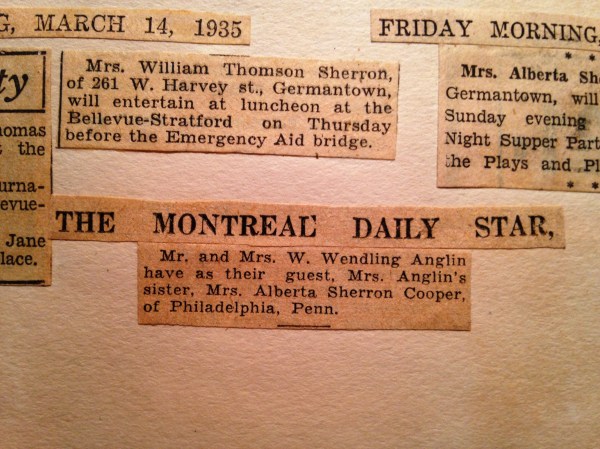
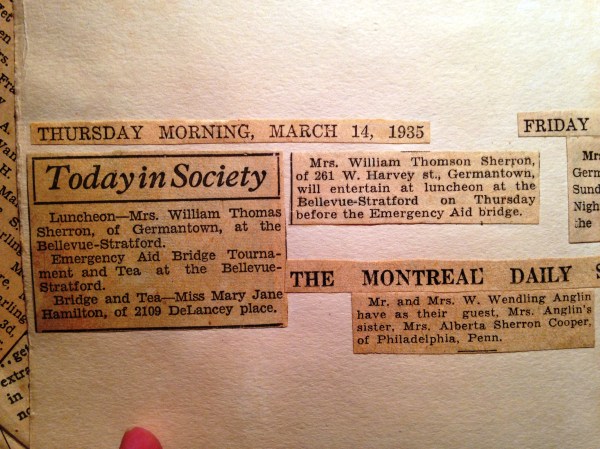
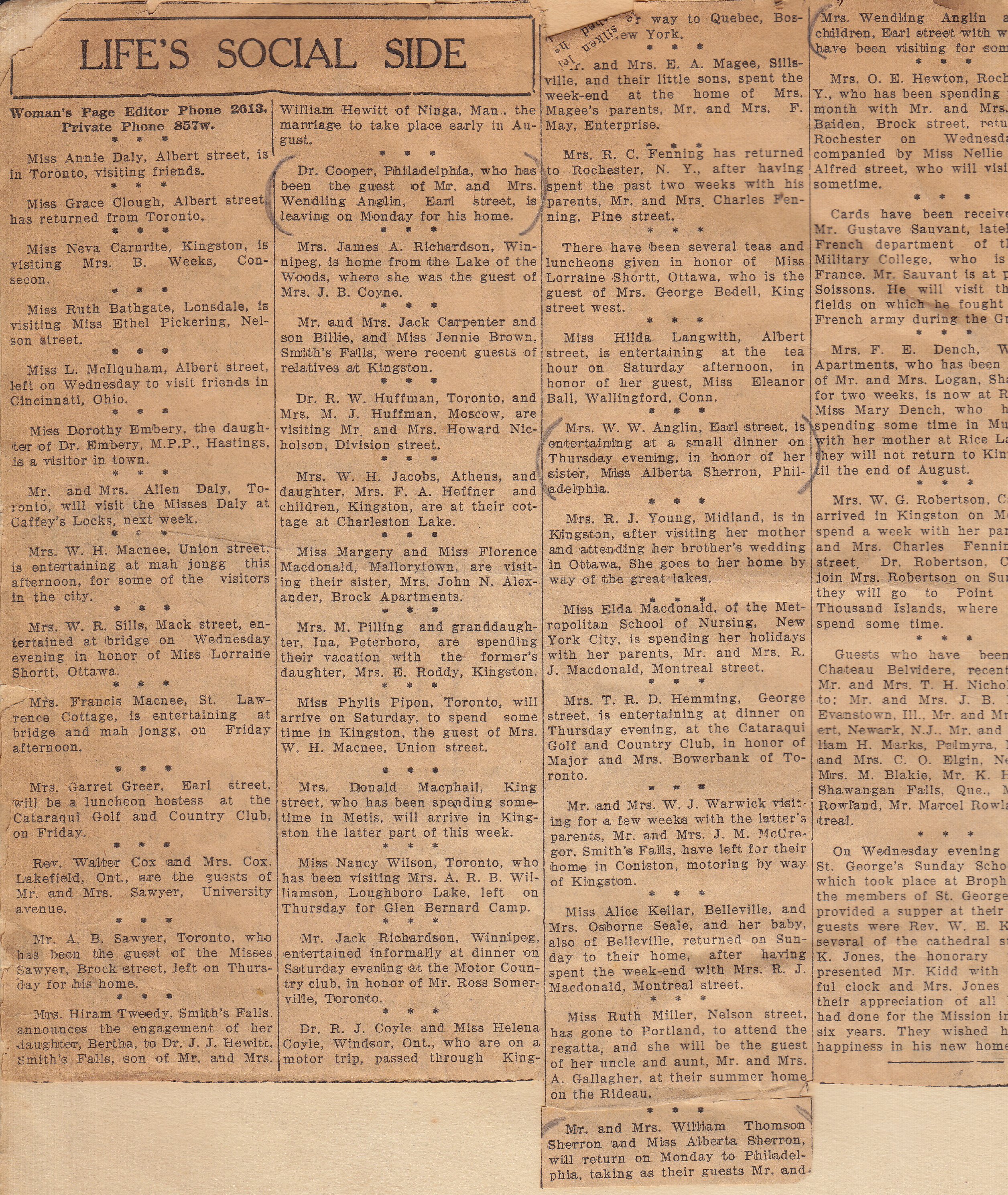
His wife and daughters took an active role the local Germantown social scene. Their endless teas, luncheons, bridge parties and charity fundraisers were regularly featured in the social pages of the local newspaper.
(Gertrude Sherron and her daughters in the Society Pages)
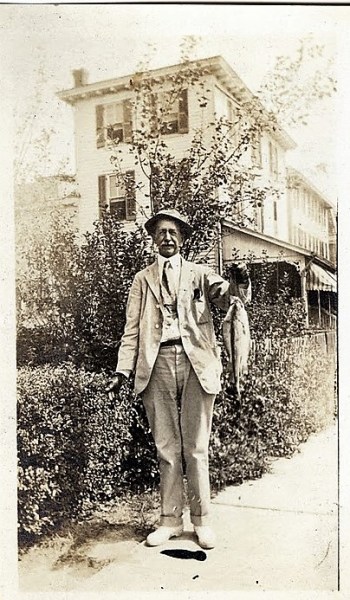
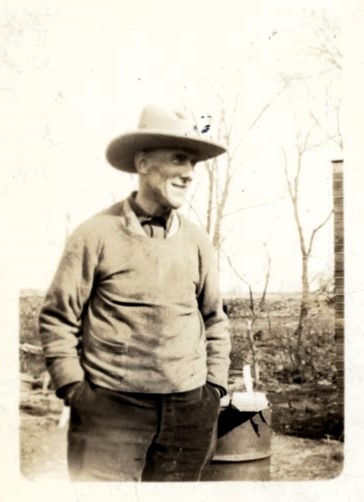
Along with the usual collection of family posed photographs in my dusty old boxes, I found a delightful photo of 55-year old William. He is holding up a string of sizable fish, possibly bass, outside “the Windsor Avenue cottage” (which looks more like an old country inn). He is wearing a light coloured baggy jacket and matching pants with a proper shirt and tie, white shoes and a floppy “fishing” hat. The smile on his face reflects pure joy for the day’s “catch”.
(William and his catch of the day!)
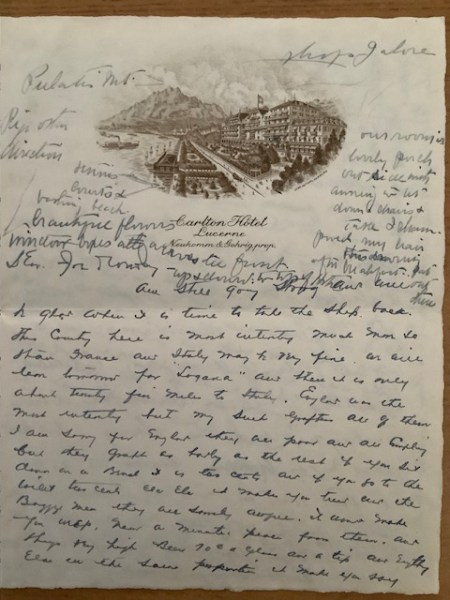
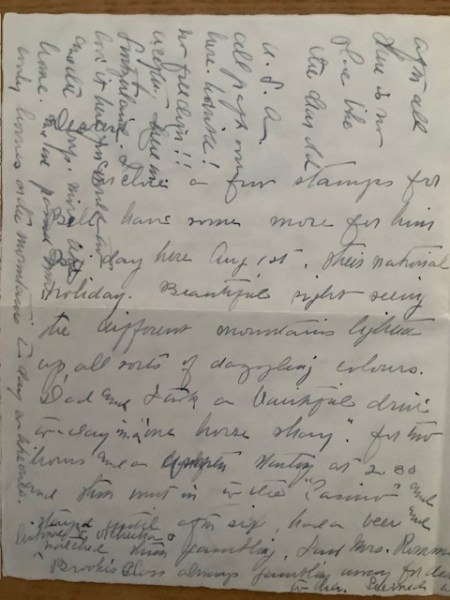
In 1930, just a couple of years before William’s death, the couple enjoyed an extended trip to Europe. They stayed at the famous luxurious Carlton Hotel in Lucerne while visiting Switzerland and I have the note sent to their daughter Josephine. William began the correspondence writing at a slant that became a little more difficult to maintain as he ran out of room on the notepaper. Then Gertrude took over filling every remaining inch of the note – to the bottom, up the sides and finishing up at the top of the page! Nevertheless, I could just barely make out from their undecipherable scrawls that they “adored Switzerland”, the hotel was “a dream” and “Interlaken was perfect”. As for Paris, Gertrude didn’t mince words when she exclaimed “Paris is a horribly dirty city.” However, she “loved London” and thought the people dressed “heaps better than in Paris.” At one point in the note, William generously invited their daughter to join them and wrote “I will pay the fare.”
(Excerpt of their note to their daughter Josephine)
So, it seems that William didn’t lose his money in the stock market after all, and had plenty to splurge on a once-in-a-lifetime trip to Europe with his wife.
Philadelphia lawyer McGregor J. Mitcheson (1829–1886) had a reputation as a passionate and eloquent defender of his clients’ interests in the courtroom, so it comes as no surprise that he was also a persuasive fundraiser. In 1864, he was one of many volunteers who helped to raise money to improve sanitary conditions, food and medical care for government soldiers during the American Civil War.
When the Civil War broke out in April 1861, thousands of men signed up to fight for the Union army. Soon, however, the filth and poor diets in the camps where the soldiers were housed led to outbreaks of disease. People realized that the government was not equipped to shelter and feed so many soldiers.
Civilians in the northern states responded by founding the United States Sanitary Commission (USSC) in the summer of 1861, as well as other charitable relief organizations. These groups raised money for the Union cause and distributed supplies, including food, clothing and bandages, to military camps and hospitals. A branch of the USSC was set up in Philadelphia by some of the city’s leading male citizens, while the women set up their own organization to receive donations from church groups and other small, local aid societies2.
The Great Central Fair in Logan Square, Philadelphia, 1864.
These organizations held a variety of fundraising events, including concerts, plays and floral fairs, but the biggest and most successful event In Philadelphia was the Great Central Fair. It was held for 21 days in June, 1864 at downtown Logan Square. Volunteers built a vast central hall featuring Gothic arches, outbuildings, interconnecting corridors and a 216-foot flagpole. A range of donated goods were for sale including fine arts, lingerie, umbrellas and canes, arms and trophies and children’s clothing, while available services included a horse shoe machine and a button-riveter.
A number of northern cities hosted sanitary fairs between 1863 and 1865, but the only one that raised more money than Philadelphia was New York City. In total, the Philadelphia Great Central Fair raised more than a million dollars – $20 million in today’s money.
This huge endeavor required many hours of organization by hundreds of volunteers. An executive committee oversaw dozens of smaller departments and committees that were in charge of soliciting contributions of goods, money and services from members of every trade, profession and business in the city.
My three-times great-uncle McGregor J. Mitcheson dedicated many hours to the cause as secretary of the fair’s Department of Labor, Income and Revenue. Involvement in that department was something of a family affair: at one time, McGregor’s brother Duncan M. Mitcheson was assistant treasurer, and his sister Mary F. Mitcheson was a member of the women’s committee. McGregor was also chairman of a hard-working sub-committee, the Committee on Organization.
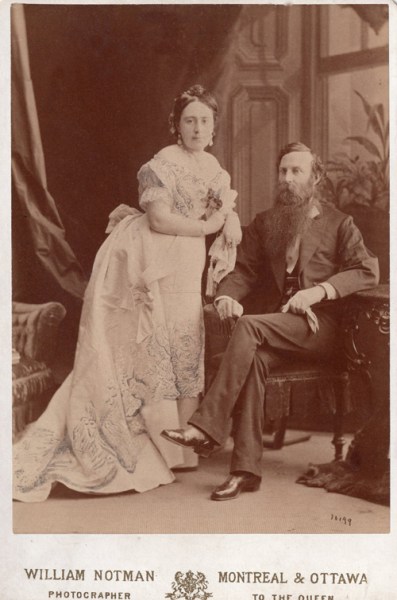
McGregor J. Mitcheson and his wife Ellen Brander Alexander, probably taken when they were visiting his sister Catharine Mitcheson Bagg in Montreal.
The Department of Labor, Income and Revenue was one of the busiest of the Sanitary Fair organization, and it succeeded in raising nearly a quarter of a million dollars, or one-fourth of the fair’s proceeds. Its goal was to raise donations equivalent to the wages of one day’s labor from working people in every branch of industry, one day’s income from their employers, and one day’s revenue from all corporations. Railways and coal mining companies proved to be the most generous donors. This committee also had a large table at the fair where a variety of goods were sold, bringing in $7228.
Committee members personally visited company worksites such as iron works and large mills. Owners would tell their employees to stop work and call them together to hear a speech about the need to help the soldiers. Most employees were so inspired that they agreed to donate a full day’s wages, and their employers also gave generously. Official fair historian Charles J. Stille credited this success with the fact that the organizing committee had nothing to do with partisan politics, and had no specific religious affiliations. Everyone was free to give or not to give.
The committee raised funds in Philadelphia, in smaller Pennsylvania cities such as Bethlehem, Harrisburg and Reading, in rural parts of the state and in neighbouring New Jersey. Members of this committee were so hard-working that it acquired the nickname the laborious committee.
Stille singled out McGregor J. Mitcheson for his hard work. “Through spirited explanatory addresses by Mr. Mitcheson, at the invitation of the proprietors of the leading establishments, six eight, and even twelve manufacturers have been thus visited by the officers and committee; the works stopped, the people collected and addressed, as we have stated, within one day.”3
McGregor also played a memorable role in the fair’s closing ceremony. A large crowd turned out on the evening of June 28 to watch as members of the fair’s executive committee marched onto a platform in the square. The bishop offered a prayer of thanksgiving, then McGregor J. Mitcheson led the singing of the Doxology,4 a hymn of praise. After that, McGregor invited the crowd to sing the Star-Spangled Banner, and finally the crowd broke into an enthusiastic rendition of Yankee Doodle.
Photo Sources:
Queen, J. F. (1864) Buildings of the Great Central Fair, in Aid of the U.S. Sanitary Commission, Logan Square, Philadelphia, June. United States of America Philadelphia Pennsylvania, 1864. Philadelphia: P.S. Duval & Son Lithography, -07. [Photograph] Retrieved from the Library of Congress, https://www.loc.gov/item/2021670451/
Cabinet card photo by William Notman, Montreal. #70199. Bagg family collection.
Notes and Sources
McGregor J. Mitcheson (born Joseph McGregor Mitcheson) was the youngest son of English-born merchant Robert Mitcheson and his Scottish-born wife Mary Frances McGregor. His older sister, Catharine Mitcheson Bagg, was my direct ancestor. McGregor grew up in Philadelphia and practised law there for many years. He married Ellen Brander Alexander Bond, a widow, in 1869, and they had three children.
The Doxology is a four-line hymn often sung during church services The version sung at the fair’s closing ceremony: Praise God, from whom all blessings flow; Praise him, all creatures here below; Praise him above, ye heavenly host; Praise Father, Son, and Holy Ghost. Amen.
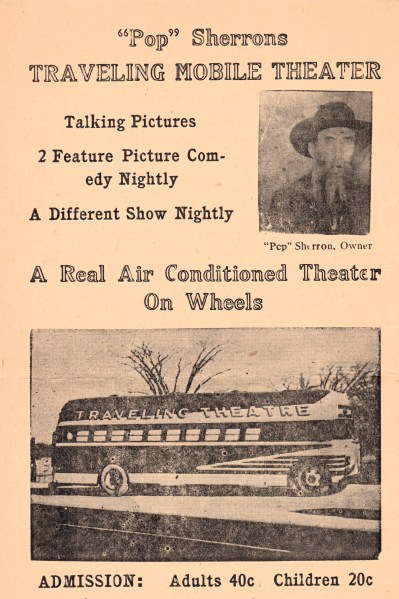
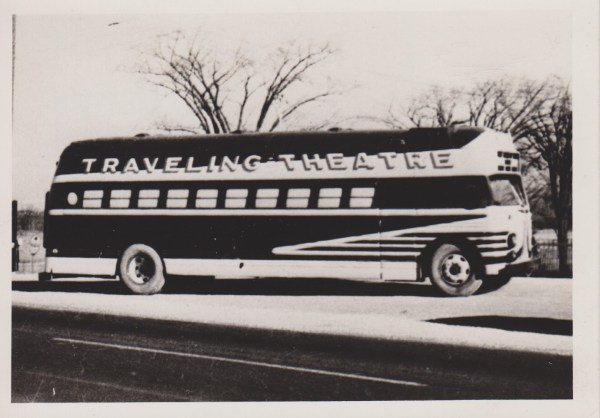
“Pop” Sherron and “Texas Betty” (his air-conditioned travelling mobile theatre bus) must have been a welcome sight whenever they pulled into small towns in and around Phoenix, Arizona, in the 1940’s.
Sherron, my great-uncle, charged admissions of 40 cents per adult and 20 cents per child to enjoy “two feature picture comedies nightly” and “a different show nightly” on his travelling mobile theatre bus.
Sherron’s Advertisement Flyer
Roger Sherron (1895-1963) was a somewhat “reclusive” man or what one might consider a “hermit” and, according to a phone conversation with his nephew, his own family labelled him as “odd.” These opinions were supported on his WW1 registration (and rejection) in 1917 (age 22) with “arrested development mentally” entered by hand in the exemption section by officials.
Fortunately, we have come to better identify and understand mental conditions nowadays.
The Sherron family belonged to Philadelphia’s high society. Roger’s father owned and operated a wholesale grocery business while his mother and two sisters were frequently featured in the society pages of the local newspapers with their luncheons, tea parties, bridge games, fundraisers and such. This was not Roger’s “cup of tea” so to speak.
Roger, Alberta and Josephine Sherron (my grandmother) – 1906
Young Roger briefly attended the Wenonah Military Academy in New Jersey, a private secondary school “where a diploma entitled the graduate admission to West Point, Annapolis, or one of the best colleges or universities in the country, usually without qualifying tests.” He left school before he finished his studies but luckily could read and write by then even if his handwriting remained somewhat childish.
According to the censuses, Roger sometimes worked at odd jobs (in 1920 – grocery sales at age 25 and in 1930 – game warden for the State Government at age 35) but otherwise he was listed as “unemployed.”
Roger and his sisters Alberta and Josephine circa 1910
He never married, living with his parents in Philadelphia until 1940 when his mother died. His father passed away in 1932. His younger sister Alberta also remained nearby with her family but his older sister Josephine (my grandmother) moved to Montreal, Quebec, with her stockbroker husband, Wendling Anglin, and her two sons (my father, Tom, and his brother Bill).
Roger was 44 years old when his mother died, alone in the world for the first time and without a place to live.
Roger and his nephew Donnie – 1932 – visiting his sister Alberta after his father died
Sometime, after the death of his mother, he moved west to a very different world and a warmer climate.
Once in Arizona in 1942, at 47 years old, and possibly homeless and jobless, he tried yet again to enlist with the WWII Draft. According to the registration form, he stood at 5’7” tall and 125 lbs with tattoos on his left arm. Unsurprisingly, Uncle Sam didn’t accept him this time either.
He must have inherited some money from his parents’ estate because this is where he acquired a retrofitted theatre bus he named “Texas Betty” which enabled him to start a rather unique business and support himself. At some point, it appears he might have attempted to expand his business as I have a piece of printed letterhead stating:
POP SHERRON’S FAMILY
Travelling Amusement Center and Big Free Circus
In Route – Pop Roger Sherron
Texas Betty Sherron
Owners
Texas Betty
Again, according to my phone conversation with his nephew, Roger’s home in Phoenix was just “a shack.” He lived in the Hispanic part of town and it is likely the entire neighbourhood consisted of similar housing.
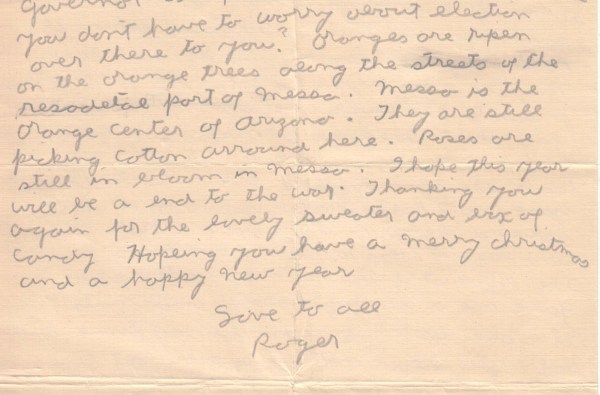
At the age of 50, some six years after he left Philadelphia, he wrote a Christmas letter to his older sister Josephine from Tempe, Arizona, which is half way between Phoenix and Mesa. He settled in this new community (and dare I say new family) who it seems wholeheartedly accepted him.
“I spent Christmas eve with some Spanish friends five houses down the road. They had tamales and Spanish food. They are nice people.”
“I got a lot of Christmas presents. The people next door gave me a fine shirt. The people three houses down gave me some handkerchiefs, a Coke, a comb, pen and ink and envelopes…the Spanish fellow who owns the store gave me a big bag of candy and nuts.”
“The television has come here now. The people next door have a fine set. It don’t hurt your eyes or nothing. Down at the bus station at Mesa, they have a set but it hurts your eyes.”
His neighbours might have struggled but they were rich in love and support for one another.
The letter continued with what might seem like “odd ball” concerns about the ongoing war, the atomic bomb and politics:
“I think the country will go Republican next election. I hope so. People are getting tired of this New Deal bussiness (sp). The Republicans will jump right in and fight Rushea (sp) and China. Lots of Chinese arround (sp) here in Phoenix and Mesa. They are aloude (sp) to run loose. They ought to put them in camps till after the war.”
Paranoia? No, just a typical American way of thinking at the time.
Roger, revealing his good prep school manners and poetic side, continued with a lovely description of his immediate surroundings: “Oranges ripen on the orange trees along the streets of the resodental (sp) part of Mesa. Mesa is the orange center of Arizona. They are still picking cotton arround (sp) here. Roses are still in bloom in Mesa.”
His letter ended with hope the war would end soon, another thank you for the gifts of a sweater and box of candy, and finally Roger wished his sister well and sent his “love to all.”
Roger died of a heart condition in 1963 at the age of 68. So he spent the last 20 years of his life in the Arizona desert with his one-of-a-kind air-conditioned cinema bus Texas Betty and his kind-hearted friends, no longer considered a hermit, reclusive or even odd.
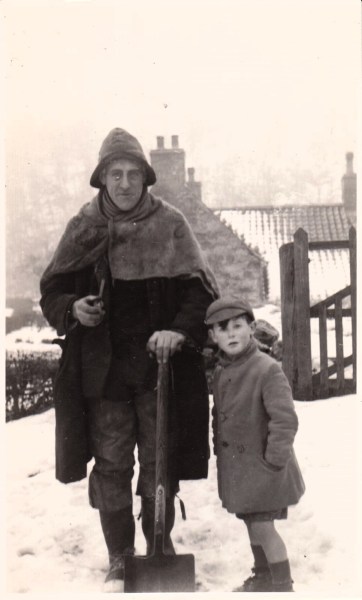
Sherron in the Pocono Mountains, Pennsylvania in 1939
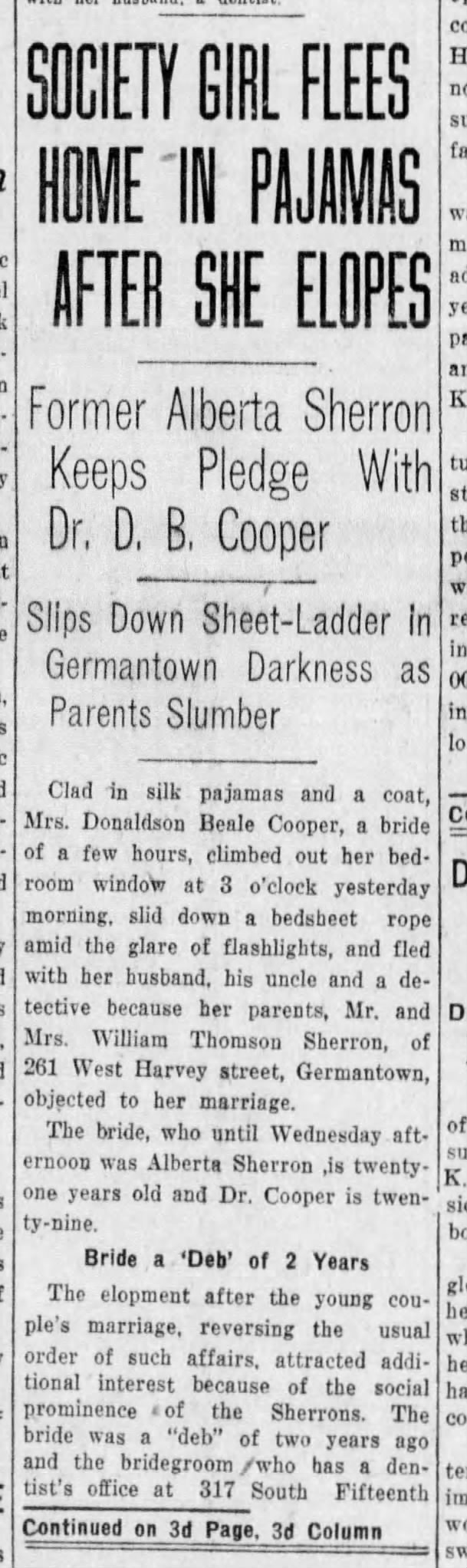
– “Society Woman flees home in pyjamas after she elopes”
– “Former Alberta Sherron keeps pledge with Dr. D.B. Cooper”
– “Slips down sheet ladder in Germantown darkness as parents slumber”
The Philadelphia Inquirer dated November 18, 1927, covered my great-aunt’s private life in great gossipy detail for its hungry readers. Alberta Sherron (1906-1992), my grandmother’s younger sister by 13 years, was just a girl in love at 21. Her 29-year old dentist boyfriend must have been equally enamoured as they couldn’t wait for the expected high society wedding that their well established families would have insisted upon.
Alberta graduated from Miss Irwin’s School1 and made her debut at the Acorn Club2 two seasons before her wedding. On her paternal side, she descended directly from Sir John of Gaunt, Duke of Lancaster, and on her maternal side, she descended from Sir Anthony Loupe, who was knighted under Mary, Queen of Scots3, in the mid-sixteenth century.
Donald Cooper’s grandfather was the late Senator Thomas V. Cooper of Media. On his paternal side, the groom descended from Andrew Griscom, who came to the USA with William Penn in 1682, and maternally from Richard Sanger, the Puritan, who settled in Massachussetts in 1632.
Unbeknownst to the both sets of parents, the wedding took place at the Church of the Holy Trinity4 on the Wednesday afternoon of November 16, 1927, with Reverend Dr. Floyd W. Tomkins5 officiating. It was a simple ceremony with only a few friends invited.
According to the Philadelphia Inquirer – “The bride was a “debutante” two years ago and the bridegroom who has a dentist’s office at 317 South 15th Street, is a graduate of the Germantown Friend’s School6 and the University of Pennsylvania – where he was president of the senior class – and is a former instructor in bacteriology at the Evans Institute of the University of Pennsylvania.”
After the wedding, Alberta returned home to her family as usual and prepared for her “elopement” that evening.
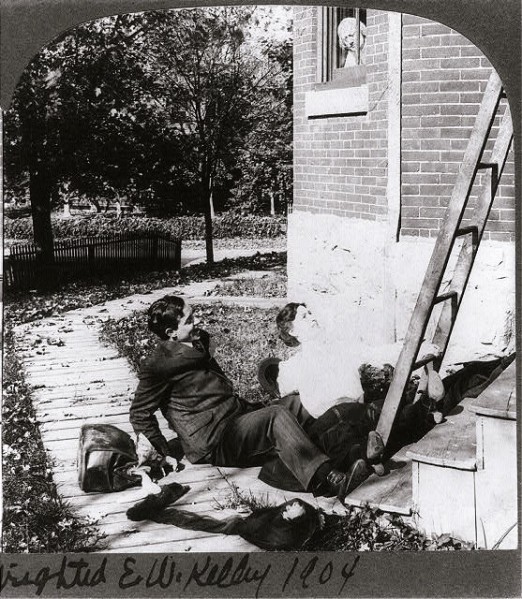
I don’t think the tabloids could resist using the word “elopement” in their sensational coverage of the events that took place that evening (given that the marriage had already taken place) and how did they even know the details? What a great “tip-off”! The couple went the extra mile (an added bonus for the paper) when she climbed out her window and descended using a knotted sheet instead of the traditional ladder.
(“Elopement-A Hasty Descent” by E.W. Kelley)
According to the newspaper, the couple left a note for her parents to find in the mailbox the next morning after “she eloped with her new husband.” Her parents, when interviewed, flatly denied ever locking their daughter in her room nor did they object to her marrying Dr. Cooper. That stopped any rumour that they had some young millionaire in mind for their daughter to marry. They finished their comment saying that they think the couple will be very happy and “Dr. Cooper is a fine young man.”
Thankfully, the destination of their month long honeymoon remained a mystery to all. And, nine months later, Donalson Beale Cooper, Jr. was born!
Alberta Sherron Cooper (24) and her son Donald (2-1/2) – 1931
Unfortunately, the marriage didn’t last and Donald remarried nine years later in 1936 and then so did Alberta in 1938.
By the time Alberta married her second husband, Bruce Lewis (1903-1971) in 1938, her son Donald was already 10 years old. Alberta and Bruce had three more children together – two daughters and a son. The last one born in 1950 when Alberta was 44 years old! Donald and his younger brother were 22 years apart.
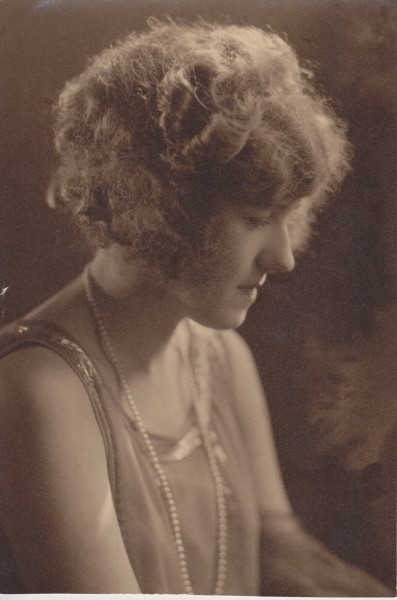
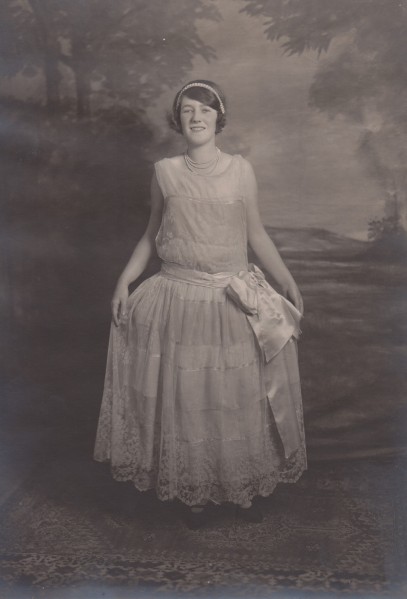
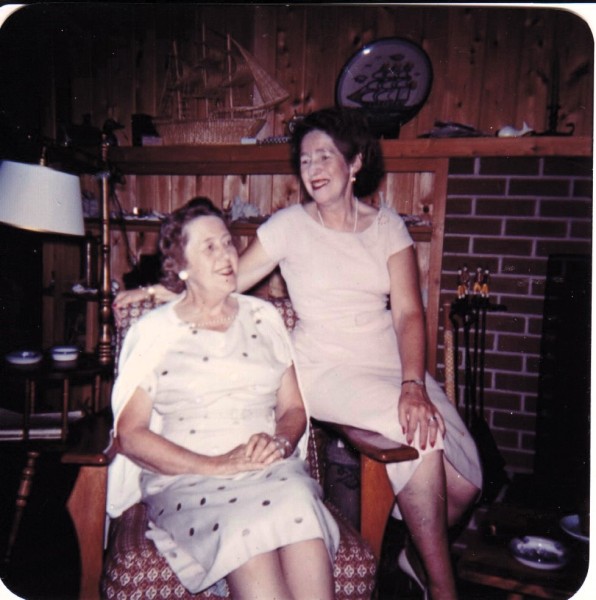
My grandmother Josephine (left) and her younger sister Alberta.
with research from the Riverside Historical Society
updated Nov. 11, 2024
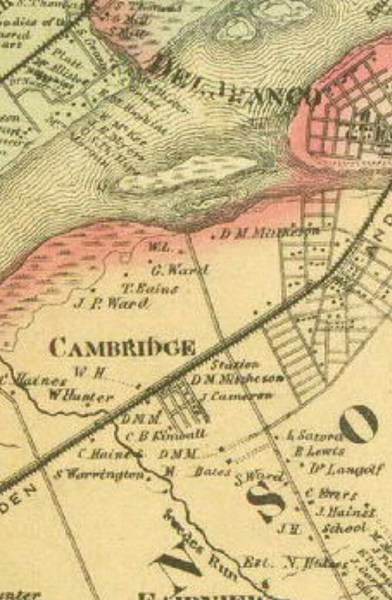
The New Map of the Consolidated City of Philadelphia, published in 1855 by R.L. Barnes. In 1854, various small, incorporated towns located outside the original old City of Philadelphia became incorporated into the City of Philadelphia. Now Philadelphia was not only a city but also known as the County of Philadelphia. Image courtesy RHS (see note below)
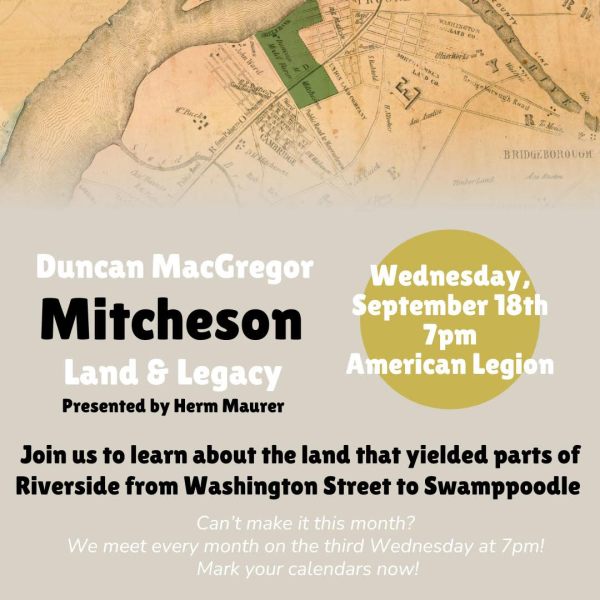
Occasionally someone who knows more about one of my ancestors than I do finds my family history blog and gets in touch. That is what happened this summer when Herman Maurer, a member of the Riverside Historical Society in New Jersey, reached out to tell me that my ancestor had founded his town.
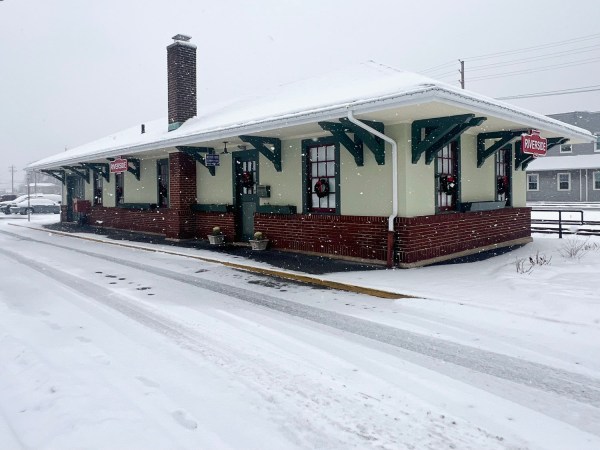
Three years ago, Herman wrote a book called Progress to Riverside: A Story of Our Town’s Past to mark Riverside Township’s 125th anniversary. In the course of his research, he ran across 19th century Philadelphia real estate agent Duncan M. Mitcheson.1
Riverside, New Jersey is a suburban township located across the Delaware River from Philadelphia. In the early 1850s, Duncan and his brother McGregor J. Mitcheson purchased property next to Riverside and subdivided it into cottage lots. This area became the village of Cambridge. Duncan planned the street layout, including today’s busy Chester Avenue, Front Street, Brown, Main and Arch Streets still carry the names that Duncan chose 170 years ago.
Numerous Cambridge deed transfers recorded in the local county clerk’s office between the 1850s and mid-1880s, with the signatures of both Mitcheson brothers on them, convinced Herman that Duncan and his brother McGregor were the primary developers of the village of Cambridge.
This was a surprise to me since I knew very little about Duncan. Now it became clear that he was a successful businessman who embraced modern ideas at a time of rapid changes in society.
Duncan McGregor Mitcheson (1827-1904) was the middle child of Robert Mitcheson and Mary Frances McGregor. Born in northern England and in Scotland, they were married in Philadelphia around 1818. Duncan’s older sister, Catharine Mitcheson Bagg, was my two-times great-grandmother.
The Mitcheson family lived in Spring Garden, in the northern part of Philadelphia. The family’s home was large and, after their parents died around 1860, Duncan’s older brother, Reverend Robert M. Mitcheson, and his wife and children lived there. Duncan lived with them until Robert died in 1877. In the 1880 census, when he was age 53, Duncan appears to have been staying in a rooming house. Later Philadelphia city directories show that he lived on Spruce Street, near the old part of the city, and had an office nearby on Walnut Street. He never married. Like his two brothers, Duncan attended the University of Pennsylvania, but unlike them, he did not graduate.3 He dropped out in 1842, at the end of his second year. University attendance was rare then: there were only 26 students, all male, in Duncan’s freshman class.
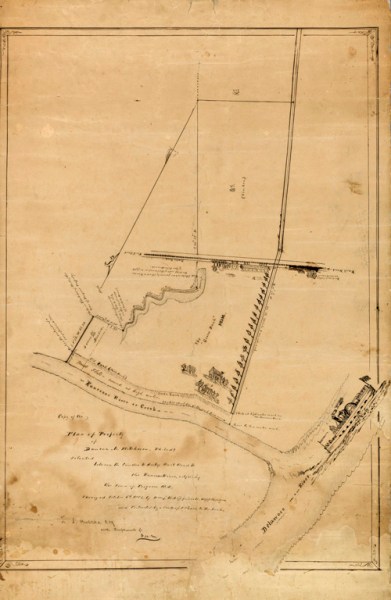
Map, dated Oct. 6, 1853, showing Duncan’s Green Bank Farm overlooking Roncocas Creek and the Delaware River. Duncan sent this map to another Philadelphia real estate developer, Samuel Bechtold Jr., as a complimentary copy. Bechtold was the developer of Progress (now known as Riverside). This map has recently been conserved.
Duncan began his career as a merchant, but an 1861 Pennsylvania business directory identified him as a conveyancer: someone who draws up deeds and leases for property transfers. He was listed as a real estate agent for most of his career.
The Riverside Historical Society’s research revealed that Duncan invested $5000 in land in New Jersey, with an initial purchase of 80 acres, in 1853. He and his brother then formed a real estate partnership to develop the village of Cambridge. An advertisement for these building lots appeared in the Philadelphia newspaper Public Ledger on March 24, 1853. The lots were “located on the Camden and Amboy Railroad, about one mile below Rancocas Creek and the Town of Progress and within a quarter of a mile of the River Delaware, upon a very healthy, dry and level site that will require no filling up, nor grading and can be reached in about half an hour from the Walnut Street Wharf.”
The lots were advertised at the “remarkably low rates” of $25 and $30 each. The $30 lots were 20 feet by 100 feet, while the $25 lots were slightly smaller. A few larger lots were available at $60 and $100 each.
On November 4, 1854, another ad in the Public Ledger noted that the Cambridge lots were near the water, opposite the splendid riverside mansions of Philadelphia’s 23rd Ward. Duncan also reassured potential buyers that the lots were a safe investment. “From the continued increase of the population of Philadelphia, and the consequent increased demand for Houses and Lots, and as well as from the fact that thousands now living in this city could not only have more room, enjoy better health, but live less expensively at Cambridge.”
Duncan also owned farmland on three sides of Cambridge, and he was one of the larger landowners in the town of Progress in the 1850s. In January, 1854 he purchased 180 acres of vacant land for $15,000. That property, located between Rancocas Creek, the railroad, Chester Avenue and Tar Kiln Run, was known as Green Bank Farm, or Duncan M. Mitcheson’s Model Farm.
This was a period of technological and scientific innovation. The Great Exhibition, held in London, England in 1851, had showcased developments in many fields, including agriculture. These advances were badly needed: food production had to become more efficient to feed growing urban populations. Duncan’s model farm may have featured agricultural innovations such as a McCormick reaper that could rapidly harvest large quantities of crops. And perhaps Duncan was a member of the Model Farm Association, formed in 1860 to establish a model farm, botanic garden and agricultural school in Pennsylvania.
In the spring of 1854, Duncan purchased another 80 acres of vacant land for $6000, extending Green Bank Farm past the railroad tracks. In addition, he, or possibly his brother, owned a nearby property named Rob Roy Farm, after the famous Scottish outlaw and folk hero Rob Roy McGregor.
How the Mitcheson brothers acquired the funds to buy so much land is not known, but their father owned properties in England and in Philadelphia. Robert Mitcheson senior died in 1859 and in his will, he forgave an $8000 mortgage he held on Duncan’s farm.
Riverside Train Station. photo by Herman Maurer
In 1859, the Drake Well, the first commercial oil well in the U.S., was drilled in north-western Pennsylvania. That well sparked the first petroleum boom in the United States, creating a wave of investment in drilling, refining and marketing. Duncan saw an opportunity to make money. In February, 1865 he placed the following ad in the Philadelphia Inquirer: “OIL LANDS FOR SALE—located in Venango and Clarion Counties (Pennsylvania). Companies are about to be formed, secure choice lands by addressing or writing to: Duncan M. Mitcheson, real estate office at the northeast corner of Fourth and Walnut Streets, Philadelphia. Also 1,000, 20,000 and 50,000 acres in West Virginia.”
He placed another ad a month later: “CHOICE Oil Tract…Eighty Acres. For sale in fee simple lots situated on the Bennyhoff Creek, Venango County, of which the greater part is boring grounds. This eighty-acre tract will be divided to suit and sold fee simple, with unquestionable titles…”
In July, 1866 Duncan advertised another speculative deal in the Philadelphia Inquirer: 1250 interests, valued at $100 each, in The Virginia Gold Mining Company of Colorado. The company’s property was located near Central City, Colorado, founded in 1859 during the Pike’s Peak Gold Rush.
In 1893, when he was 70 years old, Duncan sold almost 1000 vacant building lots in Cambridge for the sum of one dollar to his deceased brother McGregor’s two grown children, Joseph McGregor Mitcheson and Mary Frances Mitcheson. During the first two decades of the 20th century, they sold many of the Cambridge properties to families who had recently emigrated from Poland.
Joseph, a bachelor, was a Philadelphia lawyer and a commander in the U.S. naval reserve. Mary Frances married accountant Arthur L. Nunns in 1904. The couple were childless and when she died in 1959, at age 84, she gave a million dollars to the Protestant Episcopal Diocese of Pennsylvania. It was the largest bequest it had ever received.4 During my 2013 visit to Philadelphia, the head of St. James School, a tuition-free, private Episcopalian middle school, told me that gift Is still benefiting the community.
As for Duncan, the 1900 census showed that he had retired. He died in 1904 and was buried, along with his parents and other family members, at St. James the Less Episcopal Church Cemetery in Philadelphia.
Note: The images of both maps were provided by the Riverside Historical Society. The Green Bank Farm map was recently conserved through a 2023 grant funded by the Burlington County Board of Commissioners.
Herman Maurer, Progress to Riverside: A Story of Our Town’s Past, Riverside Historical Society Inc. 2020, p. 13.
Philadelphia, Pennsylvania, City Directory 1889, entry for Mitcheson, Duncan M., Ancestry.com, citing U.S. City Directories, 1822-1995 (online database), accessed Oct. 1, 2024.
University of Pennsylvania, 1894. entry for Duncan MacGregor Mitcheson. Ancestry.com, citing US. College Student Lists, 1763-1924 (online database), accessed Oct. 1, 2024.
When my English-born three-times great-grandfather Robert Mitcheson arrived in Philadelphia from the West Indies in 1817, he was a 38-year-old unattached merchant. Within two years he was married and had started a family, established a new career and was on the way to becoming an American citizen.
Robert (1779-1859) grew up in County Durham, England, where his father was a farmer and small-scale landowner. Robert became an iron manufacturer as a young man, then spent some time in the West Indies. Family stories say he was largely occupied in the West Indies trade. In 1817 he sailed from Antigua to Philadelphia with the intention of settling in the United States. He applied for naturalization – a first step towards citizenship — in July, 18201 and took an oath of citizenship on Sept. 12, 1825.
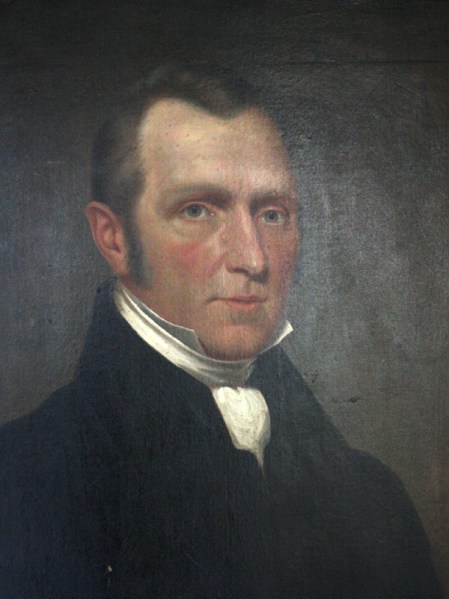
Robert Mitcheson, portrait probably painted in Philadelphia in the 1830s. Artist unknown. Bagg family collection.
Perhaps he had met his future wife, Scottish-born Mary Frances (Fanny) MacGregor, on a previous trip to the city. I have not found a record of their marriage, but it probably took place in Philadelphia. The couple’s first child, Robert McGregor Mitcheson, was born on August 15, 1818 and baptized at St. John’s Episcopal Church in north-end Philadelphia.2
In 1819 Robert was listed in a city directory as a distiller, and the following year’s directory clarified that he made brandy and cordials. The business was located at 275 North Third Street, in the Northern Liberties area of the city. The distillery continued to appear in each annual directory until 1835, when Robert was simply listed as “gentleman”, with his home address on Coates Street.
The family appeared in the U.S. census for the first time in 1830,3 living in Spring Garden, then a largely rural part of Philadelphia. Robert owned a large lot bounded by Coates (later renamed Fairmount Street) and Olive Streets, between Eleventh and Twelfth Streets. There, he and Fanny raised their five children: Robert McGregor (1818-1877), Catharine (my two-times great-grandmother, 1822-1914), Duncan (1827-1904), Joseph McGregor (1828-1886) and Mary Frances (1833-1919). Two other children, Sarah and Virginia, died as babies. Two of their sons graduated from the University of Pennsylvania. Robert M. became an Episcopal minister, and Joseph, who went by the name MacGregor J. Mitcheson, was a lawyer.
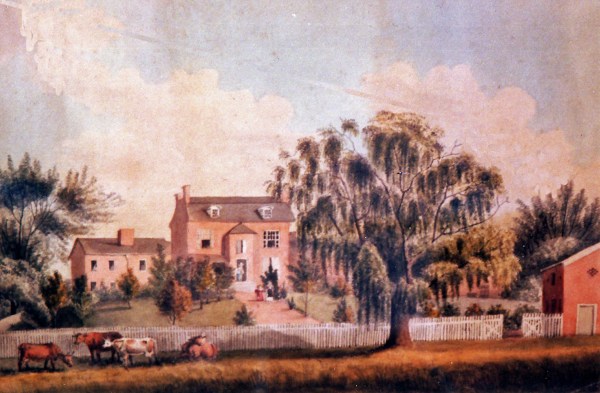
This painting of Monteith House, the family home in Spring Garden, was painted by daughter Catharine Mitcheson. Bagg family collection.
Robert never became part of city’s elite, despite his financial success. For one thing, he was a newcomer living in an old city. Founded in 1682, Philadelphia was the birthplace of the United States and many of its citizens were known as the descendants of colonial and revolutionary families. Also, Robert appears to have been a low-key person. A search for his name in local newspapers brought up only one article that named a long list of people involved in establishing a refuge for boys.
The only obituary I was able to find appeared in a Montreal newspaper, where daughter Catharine Mitcheson Bagg and her husband, Stanley Clark Bagg, lived.4 It said: “As a citizen of Philadelphia for more than 40 years, he has done much, in a quiet and unostentatious manner, for the advancement of her interests and the relief of the distressed. He enjoyed a well-earned reputation for unwavering integrity in all the transactions of his long life – prolonged almost to his 80th birthday — and his remarkable urbanity of manner which the firm, yet elastic step of his manly person, were but slightly impaired up to the period of his dissolution. He was universally respected and died serenely, with a Christian’s hope and faith.”5
Robert appears to have travelled back to England at least once, probably to visit family members and take care of some business, as he had inherited property in Durham when his father died in 1821. A land transfer document dated September 16, 1835 described him as “Robert Mitcheson, iron manufacturer, late of Swalwell, now of Philadelphia”.6 Several weeks later Robert Mitcheson, gentleman, appeared as a passenger on the Pocahontas, sailing from Liverpool to Philadelphia.7
Perhaps he also visited his brother William, an anchor maker and ship owner in London. A short biography of his son published by the St. Andrews Society in Philadelphia described Robert as a “retired merchant and shipowner,”8 however, I cannot confirm whether Robert owned any ships or perhaps invested in his brother’s business.
After Robert left the distillery business he reinvented himself again, this time as a landlord. The city was rapidly expanding and there was a need for housing. Many people lived in boarding houses and Robert saw rents from boarders as a way to generate income for his grown children after he died. In his will, he left 14 “dwelling houses” located near his house, as well as several nearby other buildings, in trust to sons Robert M. and MacGregor J..9 They were to collect the income and pay certain sums every year to their other three siblings, and to look after repairs to the buildings.
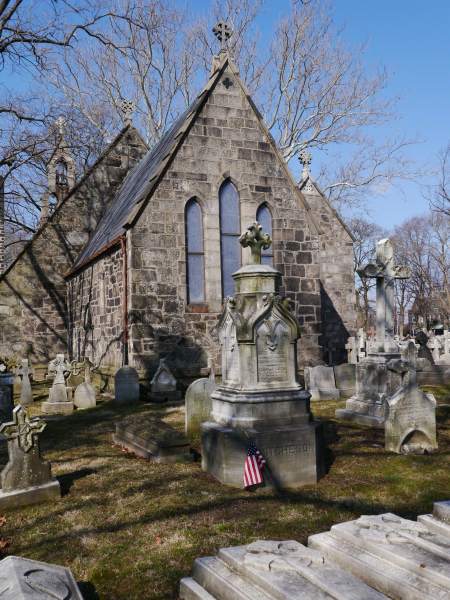
This large monument in the cemetery of St. James the Less Episcopal Church is in memory of Robert Mitcheson, his wife and several other family members. JH photo, 2013.
Robert died at age 79 and was buried in the cemetery at St. James the Less, a small, Gothic-style Episcopal church built around 1846 as a chapel of ease for wealthy families in the area. Robert is said to have helped found that church.
His story doesn’t end there, however. Sadly, his estate was the focus of a court battle that took almost 30 years to resolve, by which time both executors had also died. In addition to a dispute between the brothers, the case focused on a legal error in the way the trust was set up10 and who was to inherit the final balance of income.11
1. Ancestry.com. Pennsylvania, U.S., Federal Naturalization Records, 1795-1931 [database on-line]. Original data: Naturalization Records. National Archives at Philadelphia, Philadelphia, Pennsylvania. Accessed Feb. 15, 2023.
2. I found records from St. John’s Church at the Historical Society of Pennsylvania, Philadelphia in 2013.
3. “United States Census, 1830,” database with images, FamilySearch (https://familysearch.org/ark:/61903/1:1:XH5W-MC3, accessed Feb. 16, 2023), Robt Mitchinson, Spring Garden, Philadelphia, Pennsylvania, United States; citing 323, NARA microfilm publication M19, (Washington D.C.: National Archives and Records Administration, n.d.), roll 158; FHL microfilm 20,632.
4. Stanley Clark Bagg (SCB) was Robert’s son-in-law and also his nephew: Robert’s older sister, Mary Mitcheson Clark, was SCB’s maternal grandmother.
7. “Pennsylvania, Philadelphia Passenger Lists Index, 1800-1906,” database with images, FamilySearch (https://familysearch.org/ark:/61903/1:1:QV9Y-VXJ9, accessed Feb. 17, 2023), Robert Mitcheson, 1835; citing ship Pocahontas, NARA microfilm publication M360 (Washington, D.C.: National Archives and Records Administration, n.d.); FHL microfilm 419,525.
8. Biography of MacGregor Joseph Mitcheson in An Historical Catalogue of the St. Andrews Society of Philadelphia with Biographical Sketches of Deceased Members, 1749-1907, printed for the Society 1907; p. 287, Google Books, accessed July 19, 2013.
10. Mitcheson’s Estate, Orphan’s Court. Weekly Notes of Cases Argued and Determined in the Supreme Court of Pennsylvania, the County Courts of Philadelphia, and the United States District and Circuit Courts for the Eastern District of Pennsylvania by Members of the Bar. Volume XI, December 1881 to August 1882; p. 240. Philadelphia: Kay and Brother, 1882. Google Books, accessed Feb. 17, 2023.
11. Mitcheson’s Estate, Pennsylvania Court Reports, containing cases decided in the courts of the several counties of the Commonwealth of Pennsylvania, Vol. V, p. 99. Philadelphia, T. & J.W. Johnson & Co., 1888. Google Books, accessed Feb. 17, 2023.
The old notebook has a scuffed brown cover, but its pages are full of poetry, transcribed in neat handwriting. Clearly, this notebook once belonged to a woman who admired Lord Byron and other early 19th century English poets. Her name was Frances – or Fanny – McGregor, and she may have been my ancestor.
I came across it while searching for the name McGregor in the online catalogue of the Historical Society of Pennsylvania. The first result to pop up was “Frances McGregor autograph book, 1825.” In response to my query, the society forwarded a digitized copy of the entire notebook.
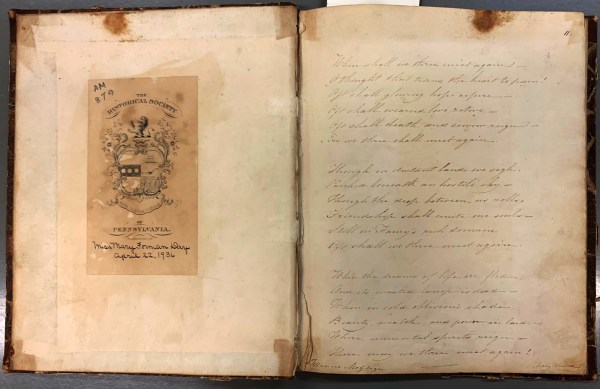
There’s a note clipped to the front, “Frances McGregor? selections from English poets,” which is a more accurate description of it. The label inside the cover indicates it was given to the historical society by “Miss Mary Forman Day, April 22, 1936,” more than 100 years after the last entry was made in 1829.
the donation plate and first page (page 11) of the notebook
Who was Mary Forman Day? She could have been a friend of one of Fanny’s grandchildren.1 Born in Philadelphia in 1860, and died in 1950 in Washington, D.C., she was probably the person who gave many documents pertaining to her Forman ancestors — early Maryland settlers — to area historical societies.2
As for my three-times great-grandmother Mary Frances McGregor, she was born near Port of Menteith, Perthshire, Scotland around 1792. She usually went by her nickname, Fanny. According to family lore, she finished her education in Edinburgh and then came to America. She married English-born Philadelphia merchant Robert Mitcheson, and the census shows they lived in the Spring Garden district, on the outskirts of Philadelpia. I am descended from her eldest daughter, Catharine, who was born in 1822.
I tried to eliminate the possibility that another Frances McGregor owned this notebook, but that proved difficult. Only the head of the household was named in census records and city directories at that time, making women especially hard to find.
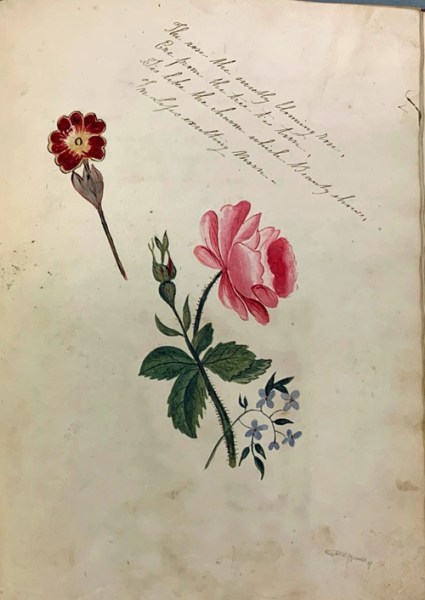
If a title page ever existed, someone tore it out long ago, and the notebook begins on page 11. Nevertheless, Frances’s name appears three times: she signed “Fanny” on a small botanical painting on the last page, and she wrote “Frances” on the inside back cover.
Her name also appears on page 11, at the bottom of a poem that begins, “When shall we three meet again?” Those words were spoken by the three witches in Shakespeare’s Macbeth, but this is a different poem, expressing the sadness of friends about to be parted. Perhaps Fanny included this poem because she knew she would be leaving her life in Scotland for a new one in the United States.
Many of the poems Frances included in the notebook were written by Lord Byron. She also included a passage from Milton’s Paradise Lost, a short excerpt from an opera and “A Canadian Boat Song, written on the River St. Lawrence”, written by Irish poet Thomas Moore and first published in 1805. The notebook ends with several poems about England’s Princess Charlotte. In 1817, her baby was stillborn and the princess also died. These tragic events inspired much public sympathy at the time.
Frances seems to have written at least one of the notebook’s entries herself. “A Poem – On Home, written by a Young lady at School in the Year 1814” described memories of a loving mother and a happy childhood, but complained of loneliness and disillusionment as the young author moved toward adulthood.
Besides poetry, Frances included several “puzzles” such as, “Why are your eyes like coach horses?” and “Why is a washerwoman like a church bell?” and “How is a lady of loquacity like a lady of veracity?” She did not include the answers.
One of the botanical sketches in the notebook.
My other favourite entries are the botanical paintings: simple but colourful images of wild geraniums, wild violets and roses.
Whoever created this notebook, it is clear that she was well educated, probably from the upper middle class, and had a quirky sense of humour. The more I think about it, the more strongly I suspect it belonged to my Frances McGregor, but I can’t prove it.
Photo credits: “Frances McGregor autograph book, 1825,” courtesy the Historical Society of Pennsylvania
Notes
1. Grandchildren of Fanny McGregor Mitcheson who could have known Mary Forman: Joseph McGregor Mitcheson (1870-1926) WW1 navy officer and Philadelphia lawyer; Mary Frances (Mitcheson) Nunns (1874-1959); Robert S. J. Mitcheson (1862-1931) Philadelphia physician and art collector; Helen Patience Mitcheson (1854-1885); Fanny Mary (Mitcheson) Smith (1851-1937) wife of Philadelphia lawyer and collector of historical documents Uselma Clarke Smith. Fanny had five other grandchildren in Canada through daughter Catharine Mitcheson Bagg.
My hitherto unknown relative pulled open an old book of Tennyson poems from the bookshelf and out fluttered a newspaper clipping that had been there almost 100 years.
The clipping was a photo of two small boys posed in their Sunday best from a Philadelphia newspaper published in 1921[1]. The names of my father, Thomas Anglin, and his brother Bill were printed at the bottom.
Jenn Garro, who found the clipping, Googled the names and my recent story about Uncle Bill Dear Uncle Bill on the Genealogy Ensemble website was the first hit. She located me on Facebook and sent me a message:
Was I the daughter or niece of one of these boys? My answer – Yes!
The boys’ mother, my grandmother, Josephine Eveline Sherron, married William Wendling Anglin The Stock Broker, of Kingston, Ontario in 1915 in Philadelphia.
Not only do I have a copy of this newspaper clipping, I also have the original photo. My grandmother relished the world of the newspaper social pages and this early photo of her boys was their introduction into that world.
Another photo, taken six years later, captured the boys lovingly looking over their mother’s shoulder while she read to them. It was first published in the Philadelphia Inquirer in December, 1927[2], and then again in the June 1930 issue of Mayfair Magazine.[3]
Josephine began modeling from an early age. She modeled hairdos, hats and fashions of the day, and the photos were widely distributed. One such photo, published in the December 11, 1915 issue of the Philadelphia Evening Ledger[4], featured her wearing a black lamb’s wool hat and muff with matching coat. The caption announced that her marriage had taken place that day.
Like many other people at that time, her mother and sister contributed regularly to the newspaper’s social pages, with announcements of teas, luncheons and bridge parties. Special events, such as the 1924 June Ball at the Royal Military College near Kingston, provided eager readers with short descriptions of the ball gowns that the “distinguished guests at the social event of the season” were wearing: “Mrs. Wendling Anglin, rose georgette beaded.”[5]
Most surprising, however, were detailed announcements of the comings and goings of the family.
“Mr. and Mrs. W.W. Anglin, Westmount, Montreal, Canada, will be the guests over this week-end of Mrs. Anglin’s mother, Mrs. William Thomson Sherron, in Germantown. Mr. and Mrs. Anglin will leave by motor on Sunday for a several weeks’ trip to Florida.”[6]
Then, a short while later:
“Mrs. Sherron has as her guests over the week-end her son-in-law and daughter, Mr. and Mrs. W. W. Anglin, of Montreal, Canada, who arrived in this city Friday from Florida, after spending several weeks in the South.”
One visit from her sister was followed so thoroughly that it was announced on four separate occasions!
To begin with, it was announced twice in her local Germantown paper:
”Alberta Cooper Lewis will leave next Wednesday for a visit of several weeks with her brother-in-law and sister, Mr. and Mrs. W.W. Anglin, of Westmount, Montreal, Canada.”
And then,
“Alberta Cooper Lewis has left for Montreal, Canada, where she will remain for several weeks as the guest of her sister…”[7]
Again, on the receiving end of the visit, in the Montreal Daily Star:
“Mr. and Mrs. W.W. Anglin have as their guest, Mrs. Anglin’s sister Alberta Cooper Lewis of Philadelphia, Penn.”
And finally, home again:
“Alberta Cooper Lewis who has been spending a month with her brother-in-law and sister, Mr. and Mrs. W.W. Anglin, in Montreal, Canada, taking part in the winter sports, recently returned to this city.”[8]
Any decent burglar could have seized these well publicized opportunities to plan the perfect theft!
These newspaper articles from 80 years ago are very similar to posts that enthusiastic friends might share on today’s social media networks. Nowadays, anyone can share family activities and photos with the whole world in a similar fashion. Nevertheless, I wonder whether any family photos will flutter into a distant relative’s inbox 100 years from now.
Meanwhile, my newly discovered relative Jenn lives in Bolivia, and we are keeping in touch by messaging on social media.
Note:
On the inside cover of Tennyson’s Poems is written the name “Lizzie Gould”. Lizzie (Elizabeth) Gould was the sister of Harriet Gould (Josephine’s mother-in-law and my great grandmother, Mrs. W.G. Anglin Surgeon and Mentalist). Their brother Harry (Henry) Gould was the father of Pearl, who was Jenn Garro’s great-grandmother. It appears Lizzie kept the clipping of her sister Harriet’s grandchildren in the book of poems. Jenn inherited the book and the clipping.
[1]Public Ledger – Philadelphia, Sunday Morning, July 3, 1921
This 1875 map from the HSP.org website shows the Mitcheson property in Spring Garden.
I’ve been researching the Mitchesons, my 19th century Philadelphia ancestors, on and off for a couple of years. One of the things that most intrigues me is to find out where they lived. Was it rural, or in the heart of the old town? At the top of a hill, or in an unhealthy swampy area? And how did the area change over time?
The best way to find out is to look at old maps. The modern ones help you to get your bearings, but studying historical maps of the areas where our ancestors lived and worked is crucial. They show transportation corridors and distances and indicate population density and land use.
My three-times great-grandfather Robert Mitcheson bought a large piece of property facing Coates Street (later renamed Fairmount), between 11th and 12th, in the Spring Garden district, north of the city. Looking at it on this 1831 survey plan, it is clear that this was a rural area and that new roads were being laid out: http://www.philageohistory.org/rdic-images/view-image.cfm/083-1_HP
Zoom in on Spring Garden (the long, narrow pink section) on the1843 survey map at http://www.philageohistory.org/rdic-images/view-image.cfm/ellet and you’ll find the street grid is in place and the State Penitentiary is located nearby, as is the city’s famous Fairmount waterworks. The Mitchesons were becoming urban residents, and Robert took advantage of it. He built boarding houses on his property that he hoped would provide an ongoing source of income for his children.
The Historical Society of Pennsylvania (http://hsp.org.) is another good source for maps. Its digital project PhilaPlace (http://www.philaplace.org) invites users to write about the histories of their favorite spots in the city. (As I write this, the site seems to be having technical problems.)
To read about Robert Mitcheson’s wife, Fanny MacGregor, see my blog post, writinguptheancestors.blogspot.ca/2014/03/fanny-in-philly.html






 Genealogy Ensemble