That was the first question that ran through my mind as I began to try to verify what seems to be indicated by a wedding photo of Jean-Baptiste Hurtubise and Marie-Berthe Charette from my grandmother.
My grandmother’s handwriting below the picture indicates: “Mom & Dad Hurtubise, January 7, 1915.”
Census records from 1901 indicate that they were both 25 years old at the time,[1] another fact I wonder about.
Why would a young man of that age be free to marry and settle down when World War I was in full force? Perhaps this is an indicator of how remote the war seemed to Francophone families in Canada prior to the conscription crisis of 1917.
By that time my great-grandfather would have two children and wouldn’t be required to serve. My grandmother, their first child, was born twelve months after they married.
In addition to her parents’ wedding photo, my grandmother kept only two other pictures. One is a photo of a church, presumably where the wedding took place. The other shows four large church bells. Why are they important?
Turns out that the church in the photo still exists, and it still serves a Franco-Ontarian population! I found it by referring to the census showing Marie-Berthe, called Martha, living in Clarence Creek in 1911.
According to Kim Kujawski, Clarence Creek, which is near Ottawa in Ontario, was founded in 1853 by French Canadian farmers from St. Augusine Quebec.
At the time of Jean and Martha’s marriage, it had two steeples, but now the smaller steeple on the right side is missing. I know the church is the same one, however, because a duplicate of my grandmother’s photo appears on the history page of the parish website. [2]
I’m extrapolating from the facts, but it seems as though Martha’s family were among 170 that remained within the parish after 80 others left in 1908. The bells were part of a renewal show of strength two years later. The families expanded their church, bought the bells and hired famed Montreal decorator Toussaint-Xénophon Renaud[3] to renew the interior. His work can still be seen today.
Sources:
[1] Data from the 1911 Census of Canada: her birthdate appears on Enumeration District 21, Cumberland Township, Russell, Ontario, Sarsfield Village, Léonard Village, Bear Brook Village, page 7, line 48; his on Enumeration District 112, Cumberland Township, Russell, Ontario, Sarsfield Village, Léonard Village, Bear Brook Village, page 3, line 25
One spring day in 1819, a young man named Benjamin Workman stood on the dock at Belfast, Ireland, trying to decide where he should immigrate to in North America. He had relatives in the United States, but before he booked his passage, he wanted to check on the safety of the vessels that were scheduled to leave soon.
He noted that the captain of the New Orleans-bound ship appeared to be drunk, the mate of the ship going to New York swore profusely, and the crew of vessel going to Philadelphia ignored his questions, but the captain of the Sally, bound for Quebec, impressed him favourably, so that’s the ship he chose. He later noted that this had been a lucky choice since yellow fever was widespread in American port cities that year.1
Benjamin left Ireland on April 27 and arrived in Montreal a few weeks later. He was 25 years old and had 25 guineas (a coin worth one pound, one shilling) in his pocket.
This photo of Dr. Ben Workman appears in Christine Johnston’s book The Father of Canadian Psychiatry, Joseph Workman.
His choice of Canada turned out to be a good decision: within 10 years, all of his eight younger siblings and both of their parents had followed him. The Workmans were all hard-working, ambitious and smart, and they took advantage of the opportunities available to them in their new homeland. Four of Ben’s brothers (Alexander, Joseph, William and Thomas) became prominent in business, medicine and politics. His only sister, Ann (1809-1882), married Irish-born Montreal hardware merchant Henry Mulholland and was my great-great-grandmother.
Benjamin’s parents were Joseph Workman (1759-1848) and Catherine Gowdey (1769-1872). Ben was born on Nov. 4, 17942 in the village of Ballymacash, County Antrim, near Lisburn, where the family lived in a small house near the top of a hill.
Joesph was a teacher in Ballymacash, but he left teaching for a job as a manager for a local landowner, and as a deputy clerk of the peace for the area. Without its only teacher, the local school had to close, so young Ben started studying on his own, reading the Bible and geography books while his father helped him with arithmetic. When Ben was 11, Joseph apprenticed him to a linen weaver, but it soon became clear that Ben had no talent in that field. What he really wanted to do was study. Eventually, Ben went back to school, where he excelled in grammar and the classics. After he graduated, he found a teaching job in Belfast, then another position near Lisburn.
Ben’s decision to leave Ireland was influenced by an event that took place in 1817. As he was eating his evening meal at his parents’ home, a dozen beggars came in the gate and asked for food and money. Perhaps realizing how widespread poverty was in Ireland, he began to think about going to North America.3
Montreal suited Ben well: other Irish and Scottish immigrants arrived there around the same time, and there were work opportunities for all. He immediately found a teaching job, but after that school’s owner disappeared with its funds, several parents who had noticed what a good teacher Ben was started a new school, with Ben as headmaster.
The Union School, as it was called, was unique. For one thing, girls were admitted, although they were taught separately by a female teacher. It was also successful. By the spring of 1820, it had 120 pupils, and it remained the largest English school in Canada for 20 years.4 Several of its graduates went on to have distinguished careers in business and politics. In 1824, Ben became the sole owner of the school, but he eventually turned over the responsibility of running it to his brother Alexander, who had come to Montreal in 1820.
In 1829, Benjamin switched careers and became a newspaper editor, partnering with a friend to purchase a weekly Montreal newspaper, the Canadian Courant. It had been founded in 1807 as the Canadian Courant and Montreal Advertiser. Ben published the newspaper until 1834, using it to promote his liberal religious views, social welfare issues, and the temperance movement. When the paper ceased publication, Ben blamed distillers, saying that their advertising had dried up because of his support for temperance.
Meanwhile, Ben experienced several tragedies in his personal life, as he was married twice and became a widower twice. He married Margaret Manson, a teacher at the Union School, in 1823. The couple had no children and Margaret died seven years later. He married Mary Ann Mills on October 14, 1838, in Franklin, Michigan, and the couple had three children: Mary Matilda, born in July 1840; a son, Joseph, who was born in November 1841 and died at age 10 months; and Annie, born in July 1843. Mary Ann died two months after Annie’s birth, and Ben’s mother, Catherine, looked after his two daughters.
Soon after that, Ben took up his third career — as a druggist. For several years in the 1840s, Lovell’s city directory of Montreal listed “B. Workman & Co., chemists and druggists”, located at 172 St. Paul Street, corner Customs House Square.5 Meanwhile, he studied medicine at McGill University, graduating in 1853, at age 59. He was henceforth known as Benjamin Workman M.D., which helps differentiate him from several other Benjamins in the family.
During these years as a pharmacist and doctor, Ben demonstrated compassion and generosity, often providing care to people who were too poor to pay. Then, in 1856, he reinvented himself again and moved to Toronto, where he assisted his brother Joseph run the Provincial Lunatic Asylum, the largest and most progressive psychiatric hospital in Canada at the time.
Benjamin is buried in Montreal’s Mount Royal Cemetery, near the Workman family plot. JH photo.
Benjamin Workman is probably best remembered as the founder of the Unitarian Congregation in Montreal. In Ireland, the Workman family had attended the Non-Subscribing Presbyterian Church of Ireland in Dunmurry. Its members strongly believed in freedom of thought in religion.6
When Ben first arrived in Montreal, there were not enough Unitarians to organize a congregation, so he attended the St. Gabriel Street Presbyterian Church. When the city’s Unitarian congregation was permanently established in 1842, he played a key role.7
In 1855, Ben got into a disagreement with the congregation’s minister, Rev. John Cordner, a man he himself had recruited for the job. Benjamin argued that Cordner had excessive authority, and when the rest of the congregation sided with their minister, Ben withdrew from the church. Soon after, he moved to Toronto, joining the Unitarian congregation his brother Joseph had helped to found there. He got along well with the Toronto congregation’s members and their minister, and he ran the Sunday School there for many years.
Ben lived with his daughter Anne in Uxbridge Ontario at the end of his life, dying there on Sept. 26, 1878, several weeks short of his 84th birthday. He was buried a few days later next to the large Workman family plot at Montreal’s Mount Royal Cemetery.
The children of Joseph and Catherine Workman were: Benjamin (1794-1878), Alexander (1798-1891), John (1803-1829), Joseph (1805-1894), William (1807-1878). Ann (1809-1882), Samuel (1811-1869), Thomas (1813-1889), Matthew Francis (1815-1839).
Benjamin kept a journal in which he recorded his memories of growing up in Ballymacash, and an account of the Workman family’s 200-year history in Ireland.A large online database called A Family Orchard: Leaves from the Workman Tree, https://freepages.rootsweb.com/~database/misc/WORKMAN.htm, includes a family history going back to the 1600s, that was part of Ben’s journal. The late Calgary researcher Frederick Hunter prepared this site and database.
Catherine Gowdey’s name has been spelled in various ways, including Gowdie and Gowdy.
Thank you to Christine Johnston, former archivist and historian of the First Unitarian Congregation of Toronto, and author of a biography of Ben’s brother Joseph.
Sources:
1. Christine I. M. Johnston, The Father of Canadian Psychiatry: Joseph Workman, Victoria: The Ogden Press, 2000, p. 16.
6. Christine Johnston, The Father of Canadian Psychiatry: Joseph Workman, p. 15.
7. Christine Johnston. “The Irish Connection: Benjamin and Joseph and Their Brothers and Their Coats of Many Colours,” CUUHS Meeting, May 1982, Paper #4, p. 2.
There are many William Sutherlands in my family. My great-great-grandfather William Sutherland ( 1816-1887) son of William Sutherland (1749-1840) came to Canada in 1845 with his wife Elizabeth Mowat. They followed the Scottish naming pattern of calling the first son after the husband’s father so his eldest son was William and then his eldest son was also William.
My grandfather, son of Donald was also named William. He thought the family had way too many Williams, Willies, Wills and even a Bill so he took the second name, Harkness, after his mother. There was just one mention of his first cousins, William Sutherland and his sister Annie in my grandfather’s diary. “Went to Rose Ave, Annie was there from N.Y. but Willie away in Florida.” That’s all I knew.
Luckily, cousin William also seemed to have added a middle name maybe Everard or Ewart. So instead of the thousands of William Sutherlands, he can be found as William Everard or William E Sutherland.
William first crossed the border into the United States in 1889 when he was just 16. He probably went for a job or maybe an adventure. He was born in Mildmay, Bruce County, Ontario. His grandfather and then his father owned the family farm which his father sold and moved the family to Toronto when he was a child.
William is then found in New York City, where his sister Annie later joins him.
William married Ida Priscilla Sterne in New York in 1913. Priscilla was also a Canadian from Carrick, Bruce County. She and William must have known each other growing up. Priscilla immigrated to the US by herself in 1899. She was a milliner and had her own business making hats. After her father’s death in 1905, her mother came to the US, along with a sister and a brother.
The couple didn’t have any children, having married later in life. William was 39 and Priscilla 35.
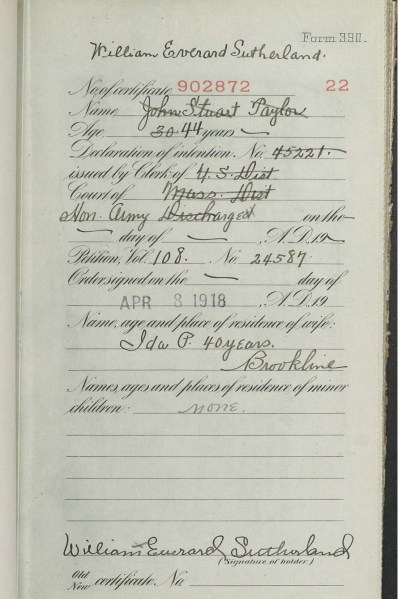
William became a naturalized American in April 1918 through the Alien Soldier’s Naturalization Act. He joined the US Army in 1899 during the Spanish-American war. Any alien who enlists in the US armed forces and is honourably discharged could apply for citizenship without a previous declaration of intention and with only one year of residence. His proof of service and discharge is the strangest document I have ever seen. It had a name crossed out and William Everard Sutherland written above. Other information was also crossed out. This document was accepted as there is a copy of his Naturalization certificate. I don’t know why he never made a declaration of intention as he had been in the US for almost 40 years. Priscilla also became an American.
This was the proof that he was honorably discharged from the US Army which allowed him to become a Naturalized US citizen under the Alien Soldiers Naturalization Act; Section 2166.
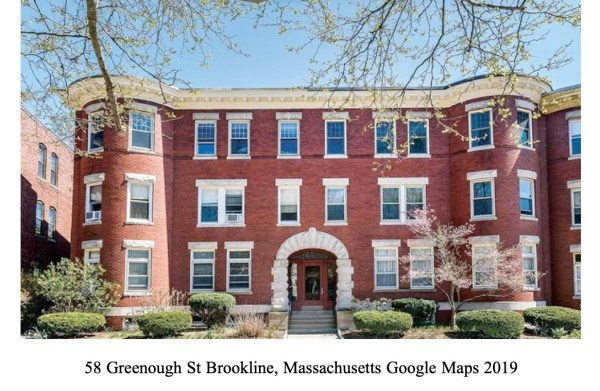
Around 1917, he and Priscilla moved to Brookline Massachusetts, They lived at 58 Greenough Street. A three story apartment (now condo) building is at that address according to Google maps. It is a very nice red brick building with bay windows. The condos now sell for a million dollars. The couple had done well as Priscilla was no longer working and William was the boss working in construction as an electrician. They even had room for Priscilla’s mother to spend time with them.
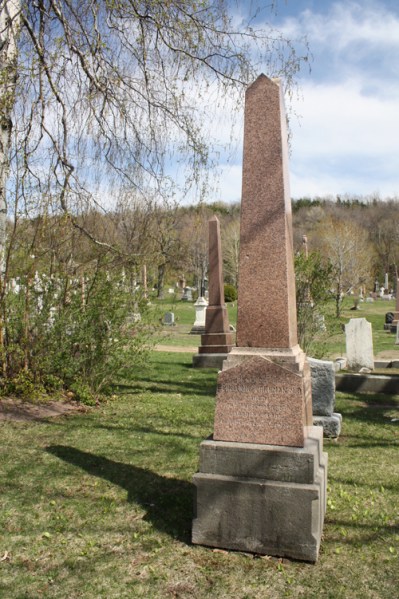
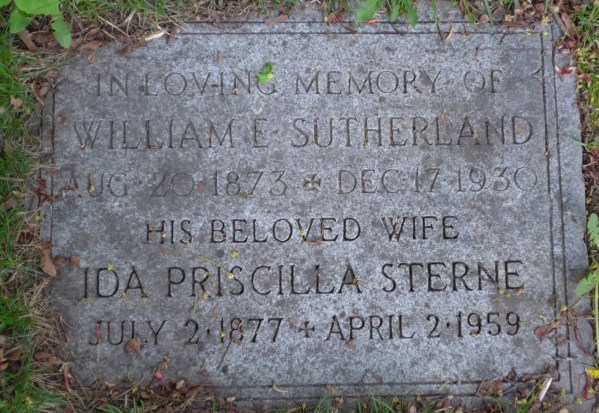
They finally ended up in Florida, around Miami and Palm Beach. William was president of a building company so they were not early retirees. He later had health problems, stopped working and applied for an invalid’s pension from the US Army. When William died of heart disease in 1930 his body was sent back to Canada for burial. Priscilla applied for a widow’s pension and continued to live in Palm Beach until her death 29 years later. Her body was also returned to Canada and is buried with her husband in Toronto’s Mount Pleasant Cemetery.
Now I have to find his sister Annie.
Notes:
William’s parents William Sutherland and Jessie Johnson lived at 21 Rose Ave in Toronto. His siblings, Agnes, Isabel, Jessie and Davison were all living at home in the 1920s.
William H. Sutherland’s diary 1920-1924 in the hands of the author.
William registered for the draft during the First World War even though he was 45 years old. I don’t think he served again, as the war ended less than three months later.
My grandfather William Harkness Sutherland called his only son Donald after his father but added William as a second name!
Year: 1910; Census Place: Boston Ward 24, Suffolk, Massachusetts; Roll: T624_625; Page: 13a; Enumeration District: 1634; FHL microfilm: 1374638Ancestry.com. 1910 United States Federal Census [database on-line]. Lehi, UT, USA: Ancestry.com Operations Inc, 2006. Mar 20, 2020.
Year: 1920; Census Place: Brookline, Norfolk, Massachusetts; Roll: T625_721; Page: 4A; Enumeration District: 172 Ancestry.com. 1920 United States Federal Census [database on-line]. Provo, UT, USA: Ancestry.com Operations, Inc., 2010. Images reproduced by FamilySearch.
Ancestry.com. U.S., City Directories, 1822-1995 [database on-line]. New York City 1922. Lehi, UT, USA: Ancestry.com Operations, Inc., 2011.
National Archives and Records Administration (NARA); Washington, D.C.; Index to Naturalization Petitions and Records of the U.S. District Court, 1906-1966, and the U.S. Circuit Court, 1906-1911, for the District of Massachusetts; Microfilm Serial: M1545; Microfilm Roll: 24Ancestry.com. U.S. Naturalization Records Indexes, 1794-1995 [database on-line]. Provo, UT, USA: Ancestry.com Operations, Inc., 2007. Accessed March 20, 2020.
National Archives and Records Administration (NARA); Washington D.C.; NAI Number: M1368Ancestry.com. Massachusetts, State and Federal Naturalization Records, 1798-1950 [database on-line]. Provo, UT, USA: Ancestry.com Operations, Inc., 2011. accessed March 20, 2020.
New England Historic Genealogical Society; Boston, Massachusetts; Massachusetts Vital Records, Marriage Record 1911–1915; Volume: 621 accessed on Ancestry March 20, 2020.
My grandfather was 26 years old when Canadian Prime Minister William Lyon Mackenzie King recommended the country declare war on Germany in a radio speech on Sunday, September 3, 1939. Seven days later, Canada officially declared war on Germany and created the Royal Canadian Air Force (RCAF) Special Reserve, which was placed on active service.
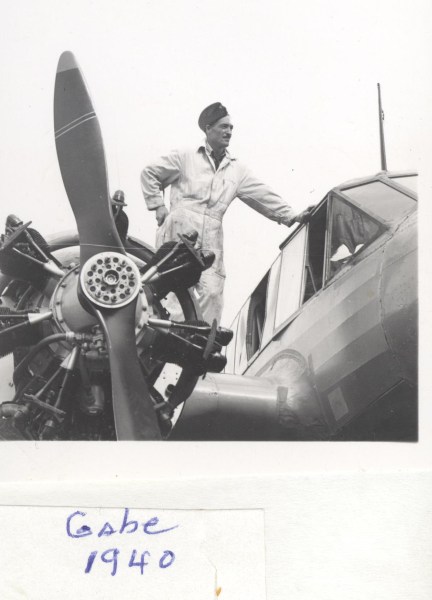
I’m not sure what Grandpa Joseph Isidore Alfred Gabriel Arial was doing that year, but he probably lived in Edmonton after his last known job as a radio inspector ended in February 1936. He may have built and renovated houses with his cousins.
Eventually, he would contribute to what would become the world’s largest flight training program, although like many military volunteers, he never considered his contribution worthwhile. I remember standing in his garage as a 12-year old hearing him tell me how he regretted not doing his part during World War II. It never occurred to me that he had actively served in the RCAF until decades later when I found his release papers. It turns out that he honourably served for from February 20, 1941 to September 5, 1945.
It turns out that he’s among a great many men who volunteered to go to Europe to fight and ended up staying in Canada to keep the British Commonwealth Air Training Plan (BCATP) operational.
Britain, Canada, Australia and New Zealand officially created the British Commonwealth Air Training Plan on December 17, 1939, King’s 65th birthday but efforts to get it going began even earlier than that.
According to Dunmore, the British Commonwealth Air Training Plan began just after Adolf Hitler became chancellor of Germany in January 1933. “The Air Ministry suggested a scheme whereby Canadian, South African, and New Zealand air force cadets could be granted short-service commissions, serve five years in the RAF, then return home for reserve services.”1
Shortly thereafter, in 1936, Vincent Massey, the Canadian High Commissioner to Britain presented British Air Minister Lord Swinton’s suggestion that some airmen be trained in Canada prior to joining the RAF.
Later in 1936, Scottish pilot RAF Group Captain Robert Leckie described a plan to create “a Flying Training School formed in Canada” in a memo to Air Commodore Arthur W. Tedder. In this memo, he pointed out that more than a third of the RAF officers in WWI had been Canadian. The idea was proposed, but the Canadian Cabinet rejected the plan in favour of a Canadian-run training school instead.2
In 1937, 15 Canadians were trained under the plan.
When Germany annexed Austria to the Third Reich in 1938, the Canadian government increased the number of Canadians able to join the RAF to 120 per year and later it went up to 138. That plan attracted a total of 400 Canadian pilots to the RAF.
It took from May 1938 until April 1939 to convince the Canadian Government to train up to 50 British pilots and 75 Canadian pilots. Eight flying clubs, in Calgary, Hamilton, Montreal, Regina, Toronto, Vancouver and Winnipeg were recruited to do the training. In August 1939, five RAF officers (Ken McDonald, Dick Waterhouse, Jackie Mellor, Desmond McGlinn and Leslie Smallman) crossed the Atlantic by ship from Southhampton, England to Montreal and then to Trenton to help set up navigation training in Canada.
By April 29, 1940 the first 168 RCAF recruits entered No. 1 Initial Training School in Toronto getting the BCATP air training plan fully underway. Just in time too. By June that year, France fell to the Nazis.
Over the next four years, Canada built more than 100 pilot training facilities in every province and territory.
“Looking back it is difficult to grasp the BCATP in all its dimensions,” wrote J.F. Hatch, in his 1983 book describing the project. “In themselves, the statistics are impressive: 131,553 [plus 5,296 RAF and Fleet Air Arm personnel trained prior to July 1, 1942] aircrew trained for battle, through a ground structure embracing 105 flying training schools of various kinds, 184 support units and a staff numbering 104,000. When war was declared the RCAF had less than two hundred aircraft suitable for training, many of them obsolete. In December 1943 there were 11,000 aircraft on strength of the BCATP.”3
I suspect that my grandfather kept many of those planes flying as an air mechanic in Fort William. Clearly this work contributed greatly to the allied war effort, but most of the stats about its importance talked about front-line combatants, not the 6,000 behind-the-scenes people who made the project operational.
The Canadian Government post about the project, for example says: “Of the Canadians trained in the BCATP, 25,747 would become pilots: 12,855 navigators; 6,659 air bombers; 12,744 wireless operators; 12,917 air gunners, and 1,913 flight engineers.”4
Also, several of the daily diaries for this period include the arrival of billiard tables, the building of skating rinks, sports tournaments and multiple leisure activities,5 so perhaps it’s no wonder that volunteer soldiers who served on these bases felt like they sat out the war.
1 Dunmore, Spencer. Wings for Victory: The Remarkable Story of the British Commonwealth Air Training Plan in Canada. Toronto, Ont.: McClelland & Stewart, 1994, p10.
2 Dunmore, Spencer. Wings for Victory: The Remarkable Story of the British Commonwealth Air Training Plan in Canada. Toronto, Ont.: McClelland & Stewart, 1994, pp24,25,26.
3 Hatch, F. J. The Aerodrome of Democracy: Canada and the British Commonwealth Air Training Plan, 1939-1945. Ottawa: Directorate of History, Dept. of National Defence, 1983, 222 pages.
Can I learn anything about my great great great grandmother’s life, despite having only a name, a birthplace and a rough idea of where she lived as she raised her children?
That challenge led me to a fascinating thesis about the Irish Protestant Identity in Ontario written in 2010 by Brenda Hooper-Goranson. Hooper-Goranson’s research describes how many Irish women of Mary’s time ensured a lasting Irish identity in Canada that differed from that in the homeland.
Thanks to Ms. Hooper-Goranson, I have been able to imagine the life of women like my ancestor in general terms even if her actual life and personality remain obscure.
An Irish Protestant identity was transferred to Canada as solidly intact as any Irish Catholic identity was and it can even be argued that the former outlasted the latter with regard to late nineteenth-early twentieth century Canadianizing influences,” wrote Hopper-Goranson in the introduction of her thesis. “That distinctive presence was changed or softened in only one regard. In time, with the space and distance that Canada afforded, abrading homeland identities might be abridged, and Irish Protestant and Irish Catholic on new soil found opportunities to simply be ‘Irish’.1
People like Mary maintained connections to family in Ireland, helped foster relationships with neighbours, brought recipes, seeds, textiles and furniture from their home country to their new communities and fostered religious practices and apprenticeships in their children.
Whether Mary herself did such things isn’t certain. We do know that she was born in Ireland, thanks to the 1932 death certificate of her daughter.2 That same document mentions her husband’s Scottish roots, the family religion of Brethren, their daughter’s 1856 birth in Orangeville, Canada West and her death in Weston, Ontario.
Those facts allowed me to make several assumptions about my great great grandmother’s life that enabled me to read Hooper-Goranson’s thesis with an eye to imagining more. We know for sure that Mary Willard travelled from Ireland to Canada West at some point, and the decision probably wasn’t hers. A father, a husband—in those days, women didn’t often get to set their own destinies.
Where she lived in Ireland, whether she lived in other places too, whether she married her Scottish husband in Europe or elsewhere, whether they met on a specific journey or after separately travelling to North America isn’t clear. All I know for sure is that Mary Willard identified as Irish; her faith was Protestant; and she and her husband lived in Canada West when her daughter was born. Given that her daughter died in the Grand River region not far from her birth, it’s likely that her parents lived in the same region for most of their lives.
We do know that in the 1800’s, Canada attracted more migrants from Ireland than any other country in the world. When possible, these migrants tended to settle together with others of the same religion, many in Canada West, which became Ontario.
Irish hostilities between Protestants and Catholics became prevalent late in that century. Fenians raided Canada West from Irish communities in the northern states beginning in 1866. Riots broke out in Toronto in 1875, during the Jubilee March and in 1878, when O’Donavon Rossa visited the city to give a speech.
In most Canada West communities, however, Hooper-Goranson argues that the challenges of felling forests, building homes, subsistence farming and mourning the losses from fevers and disease blurred the lines between groups. Often, a general homesickness for Ireland linked Catholic and Protestant settlers together into a common identity.
Class structures brought to the New World from Europe when Mary Willard lived fell apart in a matter of months, primarily to the amount of work required just to stay alive. Women of all stations did everything required to run a household, including helping grow crops for food, making candles, producing soap, grinding sugar, baking bread, milking cows, knitting or spinning clothes and preparing flour or wool. People offering domestic assistance had so many possible positions, they could be choosy.
…the observations of lrish Protestant immigrant James Reford show that he too, took note of a change in the social climate in America when he complained that even Irish Catholic servants “from the bogs of Connoght” expected certain comforts and conveniences far different from Home. “If you want a girl to do housework the first question is have you got hot and cold water in the house, stationary wash tubs, wringer? Is my bedroom carpeted [with] bureau table wash stand and chairs … and what privileges and the wages? … The writer makes the charge that such girls are too ambitious, and deceitful about their previously humble origins.3
Despite the amount of hard work, Irish women in Upper Canada worked hard to match the fashion trends back in Ireland.
After joining her husband in Canada in 1836, Margaret Carrothers wrote several years later from London, Upper Canada, encouraging her mother to make the journey herself with the remittance pay she sent home. Part of her enticement was the reassurance that her mother could look the part of the Irish lady even on the frontier. Although Margaret requested her mother bring the latest patterns of capes, sleeves, cloaks, and bonnets she delighted that ” … Dress of every kind is worn the same here as with you only much richer and gayer …… this has become a very fashionable place you would see more silks worn here in one day than you would see in Maguires bridge in your lifetime and could not tell the difference between the Lady and the Servant Girl as it is not uncommon for her to wear a Silk Cloak and Boa and Muff on her hands and her Bonnet ornamented with artificial flowers and vail.4
Whether hostilities arose or not often depended on whether communities included nationalities beyond Catholic and Protestant Irish. In those cases, rather than differentiating between themselves, Irish settlers saw themselves as a common group against the others.
There were many occasions where Irish Protestants and Irish Catholics found cause with one another enough to march together in support or defiance of Tenants Leagues, Famine Relief, Confederation, Fenianism, Irish politics and personages, and of course, St. Patrick’s Day was held sacred to both.5
Generations of women built up and maintained national communities as religious differences diminished. They married Irish men, stayed in contact with family members in Ireland, collected Irish recipes, crafted Irish patterns onto clothing and household items, learned Irish Dancing and celebrated holidays with neighbours.
Traditionally, Irish families make their plum pudding on the last Sunday in November before the beginning of Advent. Everyone in the household is supposed to stir the mixture, which contains 13 ingredients to represent Christ and his Disciples.
My great granny Charlotte used to make one every year. I remember it being blacker than fruit cake and with a yummy rum topping.
Sadly, her recipe either was never written down or, if it was, it has since been lost. I’ve been trying to duplicate the flavour ever since.
Haven’t managed to get it right yet, but here’s my closest guess so far.
Christmas Plum Pudding
Ingredients
1 cup (250g) brown sugar
Grated zest and juice of 2 oranges
1 cup (250g) dried currants
2 cups (500g) raisins, ideally different colours
1/2 cup (125g) candied cherries
1 can (350ml) stout (I use Buckwheat beer because I can’t eat gluten)
2 cups (250g) all-purpose flour
2 tsp. ground cinnamon
2 tsps nutmeg
ground cloves
1 cup (250g) butter, softened
4 eggs, lightly beaten
1 small apple, peeled, cored, and shredded
Directions
Grease and line three pudding bowls or the cooking vessels of your choice.
Mix everything together except for the eggs and the stout.
Beat the eggs and slowly add them to the mixture.
Pour the stout in slowly, mixing the whole time. This is a good time to get the family involved.
Cover with a clean tea towel and leave overnight.
The next day, preheat the oven to 350 degrees F (130C).
Pour the mixture into the pudding bowls.
Place deeper pans full of water in the oven. Put the bowls into the water so that they are about 2/3rds covered.
Steam for 6 hours.
Set aside in a cool dark place to dry.
On Christmas day, steam the puddings for about 3 hours or until cooked through.
Cut and serve with rum topping.
Rum Topping
Ingredients
1/ cup softened butter
1 cup sugar
2 eggs, beaten
3/4 cup rum, brandy or sherry
1/4 tsp nutmeg
Directions
Combine the sugar and butter with a hand mixer until fluffy and light.
Beat in eggs.
Add rum, brandy or sherry and nutmeg.
Cook over boil water for 5 minutes or so, stirring constantly past the curdling point until the sauce looks smooth.
Pour over the Christmas pudding.
Sources
1Hooper-Goranson, Brenda C. 2012. “No Earthly Distinctions : Irishness and Identity in Nineteenth Century Ontario, 1823-1900.” Dissertation, Library and Archives Canada = Bibliothèque et Archives Canada. McMaster University.
2 “Ontario Deaths, 1869-1937 and Overseas Deaths, 1939-1947,” database with images, FamilySearch (Ontario Deaths, 1869-1937), Deaths > 1932 > no 3918-5556 > image 1593 of 1748; citing Registrar General. Archives of Ontario, Toronto.
4Linen Hall Library, Belfast, Edward N. Carrothers, “Irish Emigrants Letters From Canada, 1839-1870”, (Belfast Northern Ireland, 1951), pp.4-5. Margaret Carrothers, London, U.C. to Mrs. Kirk [Patrick?] Maguiresbridge, Ireland, December 25, 1839.
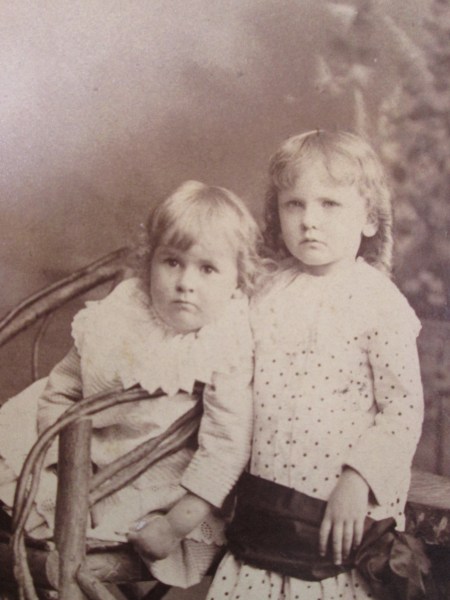
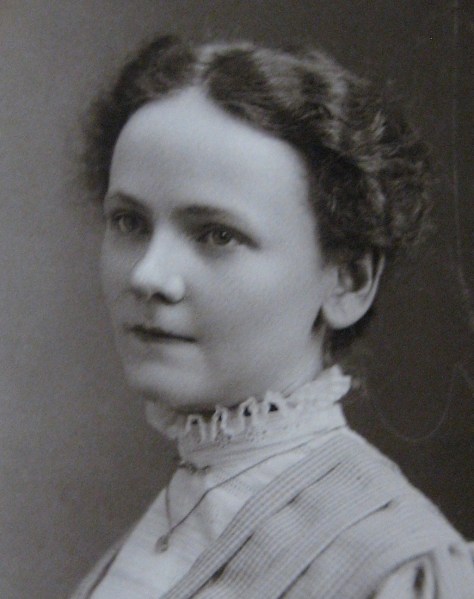
Amy Eagle, my grandmother Minnie’s sister never married and lived at 69 Seaton Street, Toronto for most of her life. During one visit to Montreal in the 1950s, to celebrate birthdays, her house was robbed. She blamed her sister, accused her of orchestrating it and never traveled again.
Amy was the introvert to Minnie’s extrovert. They were close in age, with Amy born in March 1882 and Minnie in November 1883. They did most things together with Amy following Minnie’s lead. Both worked for Ryrie Brothers Jewellers. Minnie worked on jewelry repair and construction with their Uncle, Jim Bailey, while Amy worked in bookkeeping. They often went out with friends but they were mostly Minnie’s friends.
Amy Eagle
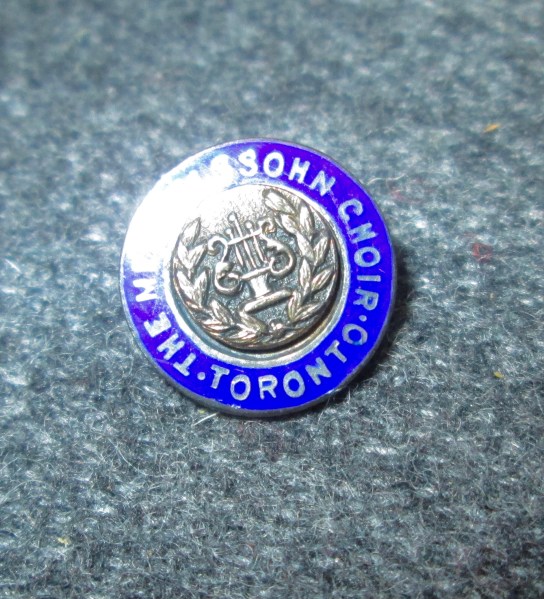
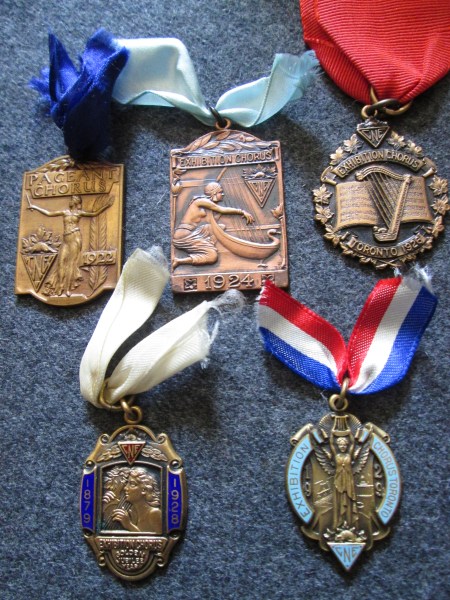
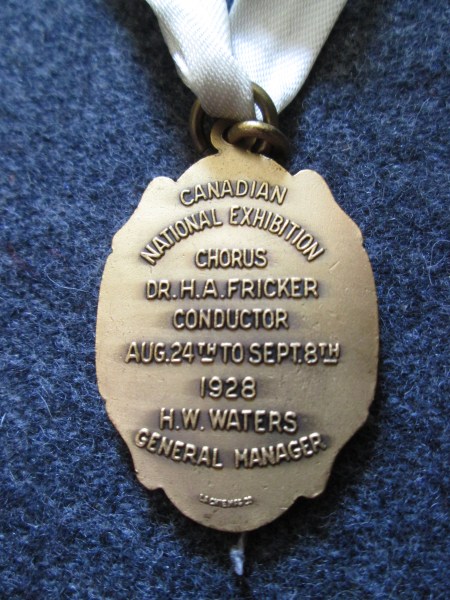
Singing was the love of Amy’s life. She sang in the Toronto Mendelssohn Choir and the Canadian National Exhibition Chorus under Dr H. A. Fricker. She must of had a good voice as the Mendelssohn Choir had yearly auditions, even for current choir members. The choir often toured the northern US with trips to Chicago, Philadelphia, Cincinnati and New York. This was one thing Amy did alone as Minnie couldn’t sing. She enjoyed these trips and sent many postcards. She saved her collection of choir medals and pins. When the Exhibition Chorus ended in 1934 it seemed she stopped her singing.
Mendelssohn Choir PinCNE Choir PinsA.H. Fricker Conductor
Their mother worried when Minnie got married that Amy would become more of a recluse.
Amy didn’t approve of William Sutherland and they had to tiptoe around her before their marriage. She came around when the children arrived. She was called Auntie. She loved her nieces and nephew and enjoyed visiting them in Montreal and their visits to Toronto.
“We enjoyed the girls visit so much and it did Amy so much good, going out so much. About this winter my principal reason for staying at home is the Mendelssohn Choir business, and it is really the only thing she belongs too to take her out regularly. The only exercise she gets for walking and she loves it so much and if she ever staid out a season she would not go again.”
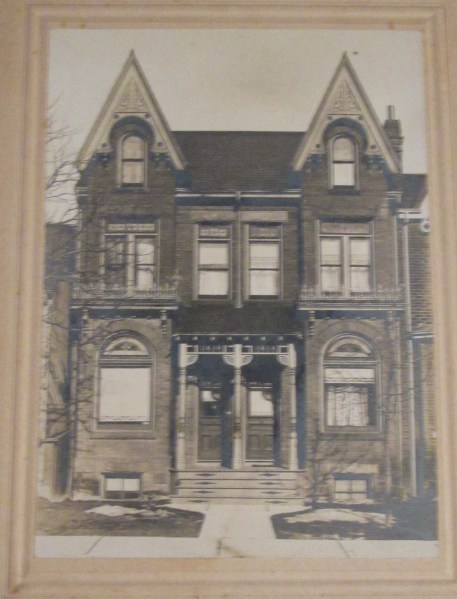
When her Mother Eliza Jane Eagle died in 1931, Amy continued to live alone in the house on Seaton Street. It was a narrow three-storied semi -detached with little rooms, lots of stairs, and the toilet tank on the wall had a long pull chain.
69 Seaton Street, Toronto, Ontario
She didn’t work after Minnie got married but she continued her bookkeeper’s ways. She kept records of everything she bought all recorded in a fine hand. She even had a box of lace with the date and price of purchase of each little piece. She recorded who was buried where in the cemetery plots. She promised to tell my Aunt Bet the stories of the family coming to Canada from Ireland but unfortunately never got around to it.
In her early eighties she suffered from lung cancer but wouldn’t go to the hospital because her mother went in and never came out. She still lived alone and had become feeble, unable to shop, cook or clean. My mother and grandmother went up to see her. They didn’t have a key. They rang the bell and could see Auntie in the hall trying to crawl to the door. My mother broke a small window and unlocked the door. Although Auntie was relieved to see them she was mad that her window was broken. She remained in her home until the end, with visits from the doctor and the VON. Auntie died March 16, 1965.
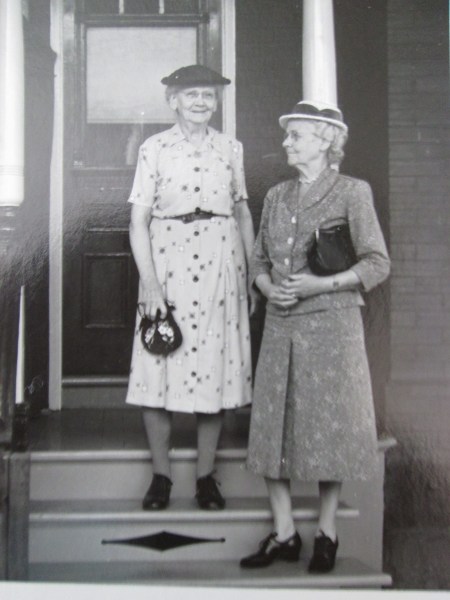
Amy and Minnie 69 Seaton Street 1963
My parents went up later to clear the house and put it up for sale. According to Auntie’s account book, she had recently taken out one thousand dollars. She had paid the newspaper boy and had given Mom money for a taxi, but that was all the money that was accounted for. They looked everywhere for it; in dressers, cupboards and desks and in all the little boxes they contained. Finally in the arm of an old kitchen chair, known as the “mouse chair”, wrapped in a rag was the money. They actually found $1151 in her house.
My parents laid in bed on garbage day and listened to the truck door open and close again and again and wondered what family treasures they might have thrown away.
Bibliography:
Letters and postcards written to family members over the years and in the possession of Mary Sutherland.
Eagle, Eliza Jane. Letter to Minnie Sutherland. 24 Sept. 1925. MS. Toronto, Ontario.
Personal recollections of Bet Van Loben Sels, Elizabeth Sutherland Somers and Mary Sutherland.
Of interest: Dr J.N. Humphrey’s account was $19 and the VON $54, not much money to stay in your own home. From Mills and Mills Barristers, Solicitors, ETC. Toronto 2, Canada. Estate of Amy Eagle – disbursements June 3, 1965.
When I was a child, October meant a weekend of gathering in my grandparents’ garage with lots of other family members to make a massive batch of sauerkraut and coleslaw.
I remember the smell of boiling cabbage, although I’m not sure why, since you can make sauerkraut without boiling anything. Perhaps they used boiled cabbage in their recipe. Or perhaps the family made other dishes that day as well, like stuffed cabbage rolls. I can’t really remember. My family skipped the annual weekend in later years.
We still got a jar or two of yummy sauerkraut for Christmas during those years.
I’m not sure when that autumn tradition began, but it probably ended when my grandparents started wintering in Florida. Dividing a life between two homes was difficult enough without adding a big weekend chore to the year. By then, making it through the winter no longer meant relying on tons of jars of sauerkraut.
I’m sad that our family has lost this historic tradition and I’m not even sure which side of the family it comes from. Joseph Gabriel Arial and Marguerite Ann Hurtubese Arial both came from families that had been farming in Canada for generations. They lived through the dust bowl, the depression and World War II.
Perhaps sauerkraut got both families through many winters when food was scarce.
The word “sauerkraut” makes one think that my family’s recipe began in Germany, but even if the modern name came from that country, the recipe itself probably didn’t. Eventually, most cultures figured out that salt transforms cabbage into something that would last through the winter.
Canadian experiments storing the vegetable over winter began in 1541, when Jacques Cartier planted seeds from France along the shores of the Saint Lawrence River.
By the time that writer, botanist and surgeon Sieur de Diéreville visited Acadia 150 years later, local Mi’kmaq had learned to prepare cabbages in ways unlike recipes from the original mother country.
 l’exception des Artichaux & des Asperges, ils ont en abondance toutes sortes de légumes, & tous excellens. Ils ont des champs couverts de Choux pommez ,-& de Navets qu’ils conservent toute l’année. Ils mettent les Navets à la cave, ils font moëlleux & sucrez, & beaucoup meilleurs qu’en France; aussi les mangent-ils comme des Marons cuits dans les cendres. Ils laissent les Choux dans le champs après les avoir arrachez, la tête en bas etla jambe en haut; la neige qui vient les couvrir de cinq ou six pieds d’épais les conserve aussi & on n’en tire qu’à melure qu’on abesoin; on ne laisse pas d’en mettre aussi à la cave. Ces deux légumes ne vont jamais dans le pot l’un sans l’autre, et on en fait de plantureuses soupes avec de grosses pièces de lard. Il faut fur tout avoir beaucoup de Choux, que lesGens n’en mangent que le pignon, & les Cochons etle reste pendant tout l’hyver, c’est leur unique nourriture, & ces goulus animaux dont ils ont beaucoup, ne se contient pas de peu. Il y a de certaines iles le long de la Rivière Saint Jean, où il ne coûte rien à les nourir pendant l’Eté, &: une partie de l’Automne, les Chênes & les Hêtres y étant communs. Dés le Printemps on y jette sept ou huit Truyes pleines, elles y mettent bas leurs petits s’engraissent des fruits des arbres que j’ay marquez; lorsque l’hyver commence elles les ramènent à l’habitation , & on n’a que la peine de les tuer pour les mettre au saloir : Ces petits Cochons sont excellens en petit sale& il faut aller là pour en manger de lait tant ils sont délicats ; c’eft un plaisir d’en voir les bandes dans la saison : il sont plus courts etplus petits que les nôtres.
[With the exception of Artichokes & Asparagus, they have all kinds of vegetables in abundance, and all excellent. They have fields covered with Cabbage & Turnips which they keep all year round. They put the Turnips in the cellar, they are soft & sweet, & much better than in France; so they eat them like Marons cooked in ashes. They leave the Cabbages in the field after having pulled them up and placed them upside down; the snow which covers them with five or six feet thick also preserves them, and we only take out the meals that we need; we do not stop putting it in the cellar as well. These two vegetables never go into the pot without each other, and we make thick soups with large pieces of bacon. You have to have a lot of Cabbages all over the place, so that the People only eat the pine nuts, & the Pigs and the rest throughout the winter, it is their only food, and these greedy animals of which they have a lot, contain little skin. There are some islands along the Rivière Saint Jean, where it costs nothing to feed them during the Summer, &: part of the Autumn, Oaks & Beeches being common there. From Spring we throw in seven or eight full Truyes, they give birth to their young, grated with the fruits of the trees that I mention before; when the winter begins they bring them back to the house, and we only have to kill them to put them in the salting tub: These little Pigs are excellent in a little salt& you have to go there to eat them with milk as they are delicate; It’s a pleasure to see the bands in the season: they’re shorter and smaller than ours.]1
1Diéreville, N. de. Relation du voyage du Port Royal de l’Acadie, ou de la Nouvelle France : dans laquelle on voit un détail des divers mouvemens de la mer dans une traversée de long cours : la description du païs, les occupations des François qui y sont établis, les maniéres des differentes nations sauvages, leurs superstitions, & leurs chasses : avec une dissertation exacte sur le castor. A Amsterdam : Chez Pierre Humbert, 1710. http://archive.org/details/relationduvoyage00dire, based on travels to Acadia and New France from from October 1699 to October 1700.
More than 330 years since that description, cabbage and pork remained popular throughout Canada. As a child, our family enjoyed cottage roll dinners every Sunday night. A cottage roll is a very fatty salted roast of pork and it was always served with lots of cabbage, potatoes and onions. I still drool thinking about it. It was my mother’s recipe and I suspect that it came from my great great great grandmother Mary Willard, who came from Ireland. It doesn’t seem far off from the “Jigs” dinners they still serve in Newfoundland, although those include split peas as well as salty pork, cabbage and potatoes.
Many immigrants to Canada brought favourite cabbage recipes with them. Food historian Dorothy Duncan has written about Pennsylvania Germans bringing sauerkraut to Canada and Scottish settlers pickling cabbage in barrels and combining it with cheese and potatoes in a dish called “rumbledethumps.”
There’s a neighbourhood in Toronto named “Cabbagetown” to this day because Irish immigrants escaping the famine used to fill their front yards with the vegetable in the 1840s.
It’s said that Polish immigrants brought us cabbage rolls, but our family enjoyed those often when I was a kid too and as far as I know, we have no Polish in our blood. I love cabbage rolls and still make them to this day. My mom used to boil the cabbage in huge pots and then rolled hot cabbage around a mixture of beef and rice; coating the whole thing with a can of tomatoes and tomato juice. My recipe is a bit easier and vegetarian to boot. I just put the cabbage in the freezer for a day until it wilts enough to wrap around a mix of rice and lentils. I have to add twice as much tomato juice as she did so that there’s enough liquid in the tray to cook my cabbage rolls for at least an hour and half, but other than that, my cabbage rolls taste close to hers.
It’s nice to continue traditions. Perhaps I’ll make some sauerkraut this weekend in memory of my grandparents.
It was a joy to speak with journalist and genealogist Janice Hamilton about her ancestors, her recent book « Reinventing Themselves, » and surprises she’s discovered while researching and writing her family history.
Listen to the episode on Mixcloud, SounderFM or any other podcast player you use.
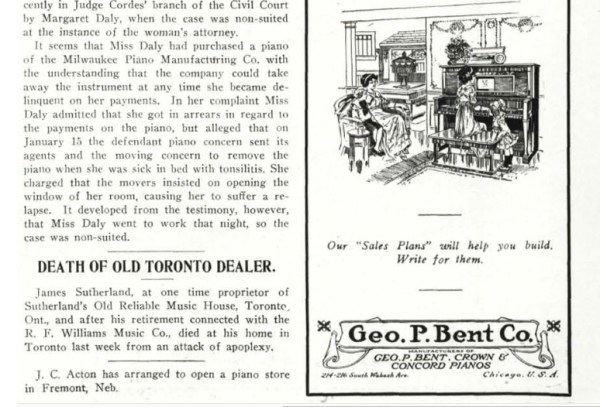
James Sutherland’s death from apoplexy (cerebral hemorrhage) was noted in The Music Trade Review published in New York in 1915. The Sutherlands were not known for their musical abilities so discovering that James had been the well known proprietor of Sutherland’s Old Reliable Music House in Toronto, was a surprise.
Music Trade Review 1915
James was born in Toronto in 1850. He moved with his parents, William Sutherland and Elizabeth Mowat to West Gwilliambury and then to Carrick, Ontario where his father had obtained crown land. He worked on the family farm and attended school until 1867, when he returned to Toronto. He was seventeen and lived by himself in a boarding house.
His brothers William and Donald, soon followed him to Toronto. All the Sutherlands, it seems, preferred being merchants to farmers. He and Donald were first book sellers. There was no mention of a music store until 1884. The store was then situated at 292 Yonge Street and perhaps a complement to Donald and William’s book store, Sutherland’s Dominion Book Store at number 286. In the late 1800s, music stores sold mostly sheet music rather than instruments. They sold some pianos but they were not an everyday purchase. In the early 1900s, gramophones became popular and so stores also sold the wax coated cylinders and vinyl discs.
James married Elizabeth Bridge in 1882. He was 32 and she only 17. She wasn’t a Toronto girl but from back home, born and raised in the Carrick, Ontario area. They had four children; sons James Russell, Alexander Uziel, Neill Clarence and a daughter Verney. James, according to his obituary, was an upstanding citizen and business man as his memberships show. He was a member of Knox Presbyterian Church, the Yonge St Mission and the Order of the Canadian Home Circles.
He died in 1915 at 65 years of age and his wife Elizabeth not long after, in 1921. They were buried in Mount Pleasant Cemetery but not in the same plot. They are both lying in adult single graves.
With three sons, I was hoping to find a living relative with the Sutherland name. The eldest son, James Russel married Laura Bansley in 1914. He died of influenza in 1918. They had no children.
Alexander married Florence Petherbridge in 1915. He was an electrician and signed up for military service during WWI. He survived the war but like his brother died of influenza, in 1919. Florence then went back to live with her parents, Charles and Elizabeth Petherbridge taking baby Douglas with her. Twenty years later Douglas visited a friend in the US. His border crossing is the only further mention of him.
Neill Sutherland married Mabel Ashby July 9, 1926. His marriage certificate listed him as a 22 year old chauffeur and she was a 16 year old spinster. John their son, born in September 1926 unfortunately died in July 1927. I have not found any other children.
Daughter Verney born in 1891 leaves even less of a trail. She only appears in two census and her father’s 1915 obituary. Her name is spelled many different ways on the documents. While I would like to find out more about her she would not leave Sutherland named descendants.
I still find the Music Store a strange occupation for James. His brother Donald left a Presbyterian church when they were considering buying an organ as he felt the human voice was all that was needed to praise God. I wonder what he thought about his brother selling gramophones? At least he didn’t sell on Sunday.
Notes:
The Music Trade Review Vol LX No. 15 April 10, New York 1915
Toronto City Directories 1879 – 1915.
Toronto Daily Star: Obituary Mr James Sutherland. Page 11. Friday March 25, 1915.
Ancestry.com. 1871-1921 Census of Canada [database on-line]. Provo, UT, USA: Ancestry.com Operations Inc, 2013.
Ontario, Toronto Trust Cemeteries, 1826-1989,” database with images, FamilySearch (https://familiarization/ark:/61903/1:1:2763-347 : accessed 18 May 2016), James Sutherland, 30 Apr 1915; citing Toronto, Ontario, Canada, section and lot Adult Single Grave 8 4954, line 33082, volume Volume 03, 1908-1919, Toronto Trust Cemeteries, Toronto; FHL microfilm 1,617,217.
Ontario, Toronto Trust Cemeteries, 1826-1989,” database with images, FamilySearch (https://familysearch.org/ark:/61903/1:1:2763-8FM : accessed 18 May 2016), James Russell Sutherland, 14 Dec 1918; citing Toronto, Ontario, Canada, section and lot Adult Single Grave 8 4954, line 38164, volume Volume 03, 1908-1919, Toronto Trust Cemeteries, Toronto; FHL microfilm 1,617,217.
Ontario, Toronto Trust Cemeteries, 1826-1989,” database with images, FamilySearch (https://familysearch.org/ark:/61903/1:1:2763-683 : accessed 18 May 2016), Alexander U Sutherland, 19 May 1919; citing Toronto, Ontario, Canada, section and lot Adult Single Grave 8 5404, line 38405, volume Volume 03, 1908-1919, Toronto Trust Cemeteries, Toronto; FHL microfilm 1,617,217.
Ontario, Toronto Trust Cemeteries, 1826-1989,” index and images, FamilySearch (https://familysearch.org/pal:/MM9.1.1/2763-JZH : accessed 05 Dec 2014), Elizabeth Sutherland, 23 Feb 1921; citing Toronto, Ontario, Canada, section and lot Adult Single Grave 8 5404, line 41137, volume Volume 04, 1920-1931, Toronto Trust Cemeteries, Toronto; FHL microfilm 001617217.
Single graves aren’t necessarily single, as James and James Russel were buried in the same adult single grave and Alexander and his mother Elizabeth were also buried in another adult single grave.
Douglas Sutherland gave his Aunt Kate Petherbridge as his Canadian contact when he crossed the US border in 1938. Kate had visited her sister Florence Hatler, who I assume had remarried, in Detroit Michigan in 1928.
Circumstances beyond his control* compelled the third William Lindsay to abandon a brilliant career as a lawyer. In 1841, at the age of 17, he entered the public service as an Extra Clerk in the Legislative Assembly of Canada while also studying law.
I wonder what those circumstances may have been?
The third William Lindsay (1824-1872), my three times great-uncle, exhibited great potential in his law studies as well as becoming an accomplished scholar. He spoke French as fluently as English – a must as the Clerk – but could also speak Latin and Greek as well.
William studied law with such an impressive ability that even before his admission to the Bar many of his teachers predicted a very successful career ahead of him.
But why did he never practise law in the end ?
Perhaps the established family tradition influenced his decision. Like his father and grandfather before him, he became the third William Lindsay to progress to the senior positon of Clerk for the Legislative Assembly. It’s certainly the most plausible explanation. But who knows, maybe there were lucrative perks that came with the “clerkship” that enticed him.* It seems we will never know for sure.
All that to say he certainly had big shoes to fill! There must have been high expectations placed on him not only as the son of the most recent Clerk of the Legislative Assembly but also as the grandson of William Robert Lindsay who held the same office for twenty years in the early 1800’s during the time Lower Canada possessed a separate government and legislature. A multitude of historical changes in the structure of today’s Canada have all been recorded by the “Lindsay” hand.
William was born in Quebec City. He had six brothers and five sisters. One of his brothers, Robert A. Lindsay (1826-1891), was my two times great grandfather who followed their father’s other profession and enjoyed a life long banking career with the Bank of Montreal.
In November 1845, at the age of 21 and just after completing his law studies and passing his Bar exams, William married Marie Henriette Bourret in Quebec City. Eventually, they had 13 children, although four of them died in infancy.
William’s career as a clerk progressed quickly. He was promoted from Extra Clerk to Assistant Law Clerk and Translator to the Legislative Assembly of the then Province of Canada. The progression continued until he ultimately became the Clerk of the Legislative Assembly.
In 1867, The House of Commons came into existence, when the British Parliament passed the British North America Act, uniting the Province of Canada (which was divided into Quebec and Ontario), Nova Scotia and New Brunswick into a single federation called the Dominion of Canada.
William was appointed the first Clerk to this newly established House of Commons1.
William Burns Lindsay 1824-1872
The multiple steps taken toward Canadian independence in the past, during the clerkship of William’s father and grandfather, had finally come to fruition.
William’s main duty as the Clerk of the House began with the reading of petitions and bills, and later progressed to recording the House’s proceedings. Those notes on the proceedings were kept in journals which tracked the decisions and other important transactions of the House.
In September 1872 at age 48, just five years after becoming Clerk to the House of Commons, William’s career ended abruptly. He died in Ottawa during the smallpox pandemic2. He left a family of several children and a widow who then died two months later. His mother-in-law also succumbed to the disease at the same time. The youngest of their orphaned children was only five years old at the time.
Nine years later, according to the 1881 Census, William’s eldest daughter Maria Louisa (then aged 30) was still looking after her three teenage siblings and living in Quebec City. Her older brothers Crawford (and his family) and Lionel (a priest) also lived nearby and perhaps offered support of some kind.
William was the third and last of the Three William Lindsays. His eldest son “Crawford William” went by the name Crawford and did not become a clerk, however, he did inherit his father’s talent with languages and became a translator.
Limestone Sculpture of William Burns Lindsay by Christopher Fairbrother 1979
Notes:
1.As the family genealogist, I research my ancestors and write their stories. Recently, I found three generations of ancestors with the same name and the same role in an evolving Canada.
Their birth and death dates were vital as the first step to sorting them out. I noticed, however, that previous genealogists also struggled to sort them, as two of the three were sometimes labelled “Senior” and “Junior” (and sometimes in reverse order) and then “The Elder” and “The Younger” were assigned to another two. To keep things simple in my story, I will label them first, second and third – in the order of their births.
2.* Handwritten notes – Stanley Bagg Lindsay – dated March 1939
3. My cousin Ian Lindsay recently shared the following in an email 2021-05:
Somewhere I saw the report of the parliamentary committee that looked into the work of the Clerk’s office. By that time, while it was never going to be a sinecure, it was an opportunity to make friends, at the very least with stationers. (An old friend explained the best job was Minister of Supply and Services, where one could feather all your friends’ nests, and bide your time.) In any case, the Committee asked about the qualifications for the job were, and WBLII explained that the clerk had to be fluently bilingual and versed in all the relevant technical terms of both languages. Here, I point out that his son was fluently bilingual and versed in technical terms. The Committee next asked the same question of the Assistant Clerk, who explained that, when needed, he just asked one of the French guys for help. I think a grave injustice was done.










 Genealogy Ensemble
