The property was described as “a commodious estate upon the outskirts of the thriving town of Halifax, in the Colony of Nova Scotia”. Imagine William’s surprise to arrive in Halifax to discover that “outskirts” meant a 200-mile hike through thick forest and deep snow!
My great-great-great grandfather, William Hanington, was born in London, England, in 1759. He was the son of a fish dealer, trained as an apprentice to the Fishmonger’s Company and became a freeman in 1782. In 1784, this adventurous young man purchased land in Nova Scotia from an army officer, Joseph Williams, who had been given a 5,000 acre grant as a reward for services.
After the initial shock upon arrival, he and his friend, Mr. Roberts, found an Indian guide, loaded all their worldly belongings onto a hand sled, trudged through the snow, slept in the open and finally arrived in bitterly cold Shediac in March 1785. Mr. Roberts was so discouraged that he immediately returned to Halifax and sailed back to England on the first available ship!
William, however, was made of sturdier stuff and was delighted with it all. There was a good size stream flowing into the bay and he had never seen such giant trees! He was astute enough to see the lucrative possibilities for trade in lumber, fish, and furs.
Seven years after his arrival, at the age of 33, he hired a couple of Indian guides to paddle a canoe over to Ile St. Jean (now known as Prince Edward Island) where he heard there were other English settlers. While riding along in an oxcart through St. Eleanor’s (now known as Summerside), he spotted a young lady (age 18) named Mary Darby, feeding chickens in her father’s yard. It was love at first sight, he proposed to her on the spot and she accepted. They married and paddled back to Shediac where they raised a large family of 13 children. Three years later, missing the companionship of another woman, she persuaded her sister Elizabeth and husband John Welling to come over from Ile St. Jean and settle on their land – becoming the second English family in Shediac.
Within the next five years, William had eight families on his property of about one hundred acres of cleared land. He opened a general store and dealt in fish, fur and lumber. The furs and timber he shipped to England and the fish to Halifax and the West Indies. He imported English goods from Halifax and West Indies products, mainly sugar, molasses and rum from St. Pierre. He also bartered with the friendly Indians for furs and helped them clear land. Before long, a considerable village clustered about the Hanington Store – including a post office and a tavern. William remained the leading light of the community and acted as the Collector of Customs of the port, supervisor of roads and as Justice of the Quorum (magistrate) in which capacity he married many couples. To top it all off, in 1800, just fifteen years after his arrival from England, this remarkable young man opened a shipyard at Cocagne and built several vessels there.
Until 1823, there was no church, and William being a religious man, conducted service in his home every Sunday. So William donated land and lumber, and oversaw the completion of St Martin-in-the-Wood, the first Protestant church. In 1838, age 79, it only seemed fitting that William was buried in the cemetery there in the shadow of the church he founded. A huge memorial of native freestone, complete with a secret compartment, still stands.
When Stanley Bagg and his business partners began excavating a canal around the Lachine Rapids near Montreal in 1821, they had to deal with more rock and water than they had bargained for.
The Lachine Rapids are a short stretch of white water and submerged rocks in the St. Lawrence River that impede shipping between the port of Montreal and the Great Lakes. According to the legislation that authorized the project, the 14.5-kilometre canal was to be five feet (1.5 metres) deep. On the surface, it was to be forty feet (12 metres) wide so that the long, narrow Durham boats that transported goods and passengers on the river could pass each other. There was to be a towpath beside the water so horses could pull the boats, since it would be impractical to use sails.
The locks were the most impressive part of the project. There was a regulating lock near the canal’s entrance at Lake St. Louis (a broad stretch of the river upstream from the rapids) to allow water into the canal. The other six locks between Lachine and the port raised and lowered boats a total of 13.7 metres. This was nothing compared with the 560-kilometre long Erie Canal, or the Welland Canal with its 90-metre drop over 42 kilometres, but what set the Lachine Canal apart was the fact that all the locks were built of stone, rather than wood, 1.8 metres thick and sealed to prevent leaks. “Nowhere else in North America, or even Britain (with one exception) had locks as large and as solidly built as those on the Lachine ever been constructed,”1 historian Gerald Tulchinksy wrote.
The main contractors, Thomas Phillips, Andrew White, Oliver Wait and Stanley Bagg, were responsible for excavating the canal. Their contract included building the locks and constructing two impressive stone bridges and numerous wooden footbridges so the farmers whose land was crossed by the canal could reach their fields. They had a separate contract to build fences which were supposed to keep grazing cows from damaging the canal banks and workers from scavenging firewood in the nearby farmers’ orchards.
The contractors subcontracted some of the work. For the rest, they hired masons, carpenters, foremen and hundreds of day labourers equipped with picks and shovels, the majority of whom were recent immigrants from Ireland. Horses helped with the heavy hauling.
As treasurer, Stanley Bagg recorded the employees’ pay and kept the account books that listed purchases such as timber and tools.
The canal was designed by Thomas Burnett, a British engineer who had canal building experience in England, but who died before this project was finished. The ten commissioners who had been named by the government to oversee the project visited the work site frequently and met with project leader Phillips whenever problems arose.
Spring flooding was the first major problem the contractors encountered, and it delayed the start of the construction season year after year. The water came mainly from the St. Lawrence River. (This is not an issue today because a dam near Cornwall, Ontario regulates the water level.) In addition, runoff from snow on the Island of Montreal collected in the low, swampy area near the canal’s route. This meant work usually could not start until July, and generally wrapped up around October. Although some work went on in winter, progress was difficult once the ground was frozen.
Soon after they started digging, the contractors discovered a huge area of hard, igneous rock that had to be blasted to make way for the canal, but the men the contractors had engaged to supply gunpowder (one of whom was Stanley Bagg’s brother, Abner,) had difficulty getting hold of it. On October 24, 1822, Abner wrote, “I have just had a most terrible letter from them [the contractors] on the subject, in which they say that no less than 400 men must stop working this day for want of gunpowder….”2
the last lock of the Lachine Canal, 1826
The delays worried the commissioners. On May 19, 1823, they formally notified the contractors “of the heavy responsibility to which they will be liable if the construction of the aforesaid [masonry] works be delayed by their default, and therefore that their utmost exertion is required to effect the rock excavation to its full depth along the middle of the canal ….”3
Another problem arose when they reached the St. Pierre River, also known as the Little River. Normally it was nothing more than a small stream, but it turned into a torrent in the spring of 1824, washing away part of the newly built canal embankment. To prevent further damage, the contractors dug a basin to accumulate some of the spring runoff. They built a tunnel for the river beneath the canal.
All these difficulties were unexpected, and costs skyrocketed. The initial estimate was 78,000 pounds; the final cost came to 107,000 pounds. When the money ran low in 1823 and the government balked at spending more, commission chairman John Richardson arranged a loan from the Bank of Montreal. Eventually, the government funding came through, but the uncertainty must have been of special concern to Bagg, the man who paid the bills.
Stanley Bagg
Part way through the project, the commissioners persuaded the government to approve a shorter and less expensive route. The commissioners decided that the bid from Bagg and his partners for the new section of the canal and a wharf was too high, so someone else did that work.
By August 1824, 11 kilometres of the canal were finished and the waterway opened to commercial navigation as far as the fourth lock. Other builders continued working on the project into 1826, but as far as Bagg and his partners were concerned, the contract was essentially complete in 1825.
This must have been an intense period of Bagg’s life, with dawn to dusk activity during the construction season and year-round worries. He lived near Lachine in the summers since his own house was on Saint Lawrence Street, far from the work site. Furthermore, his task as treasurer must have been challenging: this was the first time such a large civilian project, with so many employees, had been undertaken in Canada.
Meanwhile, ever the entrepreneur looking for additional ways to make money, Bagg also owned a store in Lachine where employees could buy beer, rum and a few groceries. He and several partners also owned a bakery that provided bread to the workers. In addition, the contractors provided bunkhouse accommodations in Lachine for some of the day labourers.
the Island of Montreal showing the canal, 1834
In the end, this massive undertaking was a success. “The competence of the engineer, foremen, labourers and skilled hands in building a substantial canal is attested by the fact that it lasted more than twenty years,” observed Tulchinsky. “No major repairs or alterations were necessary and the Lachine Canal proved adequate for handling the growing volume of traffic to and from the Great Lakes region.”4 It carried thousands of new immigrants toward the interior of the continent, and commodities such as grain, flour, salted pork, ash and timber. In the summer, proud Montrealers took cruises on the canal and strolled along its banks.
Eventually, in the 1840s, a larger canal was built alongside the old one to handle the increased traffic; then the cows and orchards disappeared, and industries grew up along its banks
Stanley Bagg and his colleagues could be proud of their accomplishment, but Bagg never took on another project of this scope, working primarily as a timber merchant for the rest of his life.
“Abner Bagg Letterbook, Oct 1821-Sept 1825” P070/A5,1, Bagg Family Fonds, McCord Museum, Montreal.
“Lachine Canal Commission,1821-1842”, Library and Archives Canada, Ottawa.
ibid. p. 109.
Photo credits: Janice Hamilton; John Hugh Ross, ROM 980.104.6 Royal Ontario Museum; private collection; Carte de l’île de Montréal… Iris # 0000083791, Bibliothèque et Archives nationales du Québec.
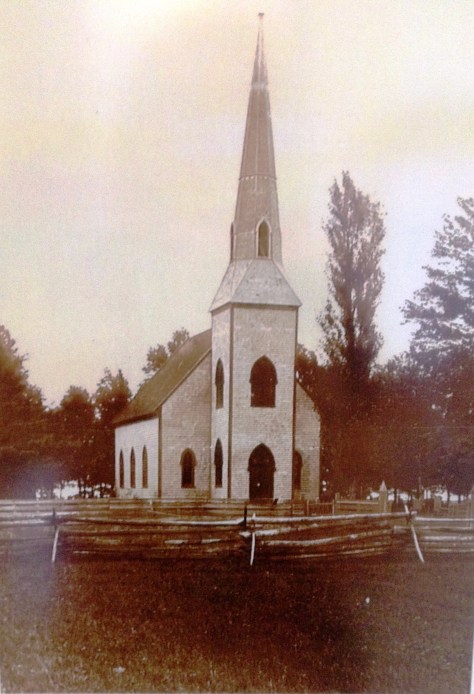
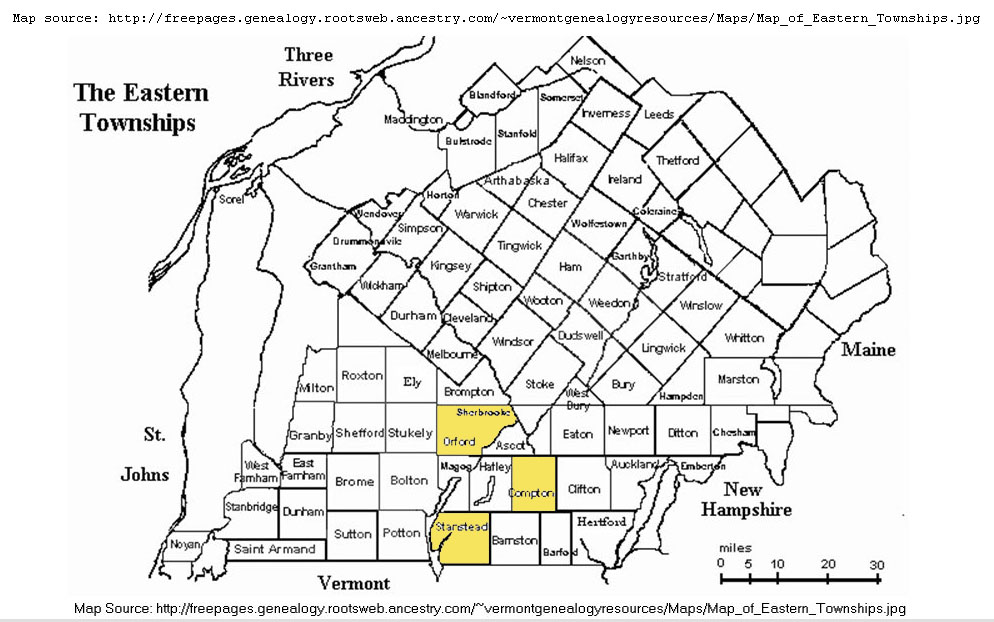
The American Revolution was time of flux for many citizens who were loyal to the British. These Loyalists sought refuge in towns north of the border in an area known as the Eastern Townships. They settled and formed communities and built their churches
.
In this database you will find the locations of births, marriages and deaths of these early settlers.
Right Click the title below to open the database in a new window:
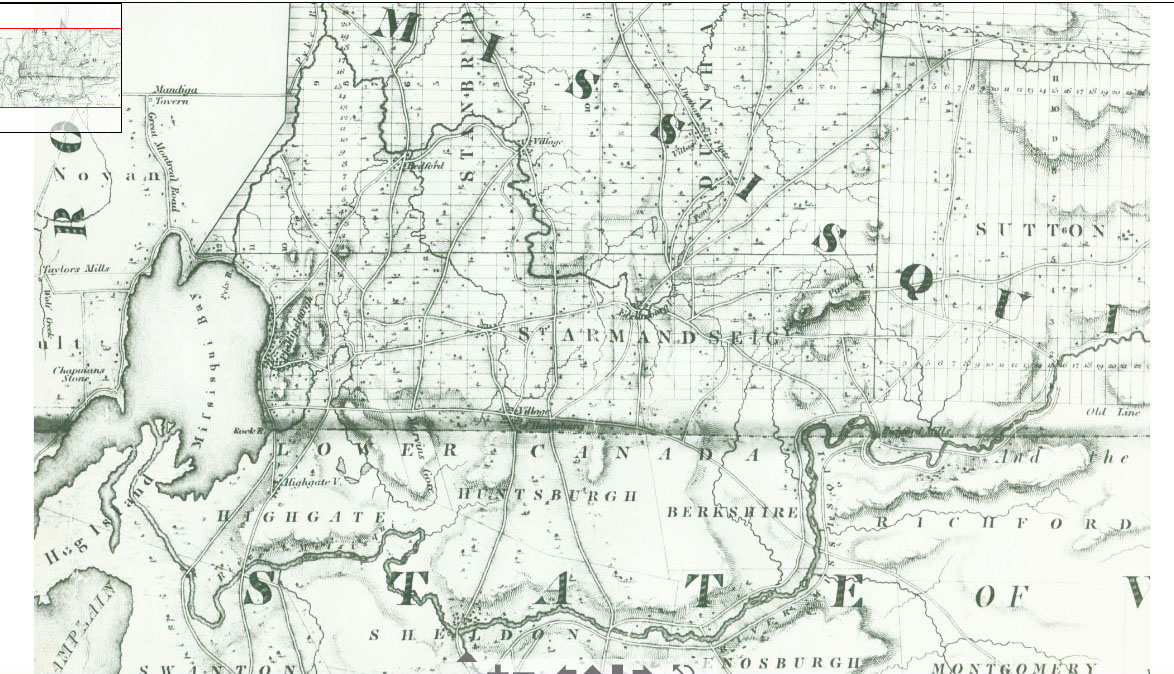
The American Revolution left profound marks on the development of the areas of Brome-Missisquoi, the Upper Richelieu Valley and South Shefford. The Americans who wished to remain loyal to the British Crown fled the United States. These Loyalists came from the northern states and settled very close to the border. Within a short period of time they began to develop many small communities, from Abercorn , near what is now the Vermont border to St. Armand near Missisquoi Bay..
This compilation describes the many towns and villages that emerged from the late 1780s to this day. Their churches contained documents of birth, marriages and deaths that have been preserved and are available in various archives.
The contributions of these Loyalist can be found throughout the area. Many of the churches are still standing and are a tribute to their perseverance.
This compilation, prepared by Montreal genealogist Jacques Gagné, looks at the churches frequented by Loyalists who settled in three regions of Quebec in the late 18th century: Trois-Rivières (Three Rivers) and Sorel, east of Montreal on the St. Lawrence River, and Saint-Jean (St. Johns) and Chambly, south of Montreal on the Richelieu River. It outlines the histories of these churches and where to find surviving records.
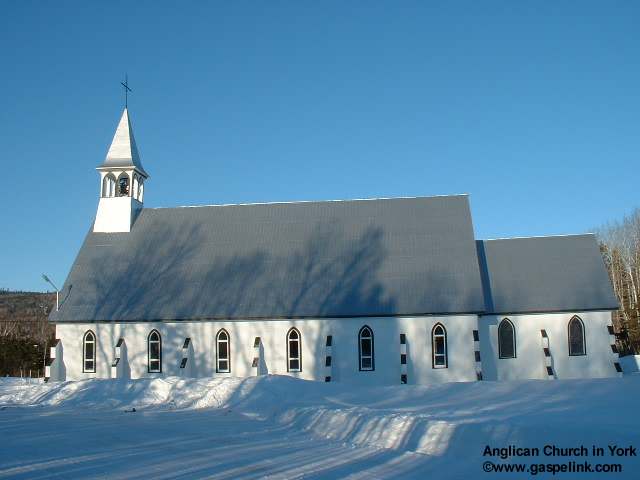
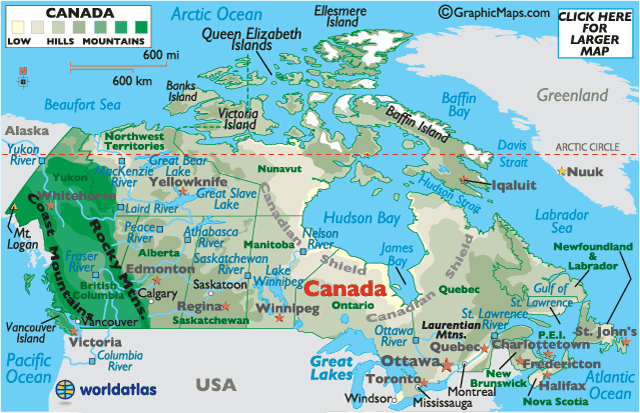
Following the War of the American Revolution, those who had remained loyal to the British felt compelled to leave the newly independent United States. While most settled in what is now Ontario, Nova Scotia and Quebec’s Eastern Townships, some moved to the Gaspé Peninsula of eastern Quebec. This is a region of interior forests and mountains and of fishing villages along the Gulf of St. Lawrence.
The newcomers settled in towns and villages such as Matapédia, Bonaventure, Percé, Gaspé and New Carlisle. Their neighbours were of French Canadian, Acadian and Micmac ancestry, and most were Roman Catholic. The newly arrived English-speaking, Protestant Loyalists needed their own places to worship and to record their births, marriages and burials.
At first, these needs were met by Anglican, Presbyterian and Methodist missionaries, but eventually the newcomers built churches of their own. This compilation lists the churches they founded and the ministers who served the English-speaking community. It guides the genealogist to the various places where their records are kept, including government and church archives, and the library of the Quebec Family History Society.
The compilation also mentions the records of the Gaspé residents who came from Jersey and Guernsey, in the Channel Isles, and the early settlers from Scotland. The introduction pays tribute to two individuals who researched and documented the lives of the English-speaking residents of the Gaspé, Kenneth Annett and David J. McDougall, and tells researchers where to find their work.
Churches of the Scandinavian, Baltic States, Germanic, Icelandic people in Montréal, Québec City, Lower St. Lawrence, Western Québec, Eastern Townships, Richelieu River Valley – The churches of immigrants from Sweden, Norway, Denmark, Finland, Estonia, Latvia. Lithuania, Iceland, Germany, the Netherlands, Belgium, Switzerland, Austria plus those from Eastern European countries – Churches which were organized in Québec from 1621 to 2005. Also included within this document you will find a number of book titles relating to the subject.
The Archives nationales du Québec in Montréal on Viger Avenue are the repository of a wonderful and unique collection of books of marriages, baptisms, deaths of French Canadian families who left the Province of Québec between 1840 and 1930 for destinations in Western Canada, especially in Alberta and Manitoba.
Monsieur Daniel Olivier, former archivist at the Bibliothèque de la Ville de Montréal on Sherbrooke Street East, the latter no longer in operation, referred to for years as Salle Gagnon was responsible with the assistance of his associates for the acquisition of many of the books of marriages, baptisms, deaths, and burials outlined in this research guide.
Madame Estelle Brisson, former archivist at the Archives nationales du Québec on Viger Avenue East in Montréal with the assistance of her associates was also responsible for the acquisition of many of the books of marriages, baptisms, deaths, and burials outlined in this research guide compiled by Jacques Gagné.
Family lore says that my ancestor Joseph Arial had many meetings with Louis Riel in the basement of a hotel he owned. The story might be about a hotel in St. Boniface that may have served as a hide-away for the Métis hero and later burned to the ground or it may be referring to a hotel owned by his son Joseph Gabriel, who ran his own hotel in Gleichan* (near Cluny), Alberta.
How does a genealogist go about proving such a story? The family legend might refer only to my great great great grandfather or his son, or it may combine the exploits of both.
My first challenge was figuring out the timing. Louis Riel was born in the Red River Valley in 1844 and was hanged for treason on November 16, 1885.[1]
Then I began searching through the names and dates of my ancestors’ lives.[2]
Joseph Arial was the first of my ancestors who left Quebec. He was born in 1812 in St. Roch and died on November 4, 1880 in St. Boniface, Manitoba, where he is buried. His wife was Julie Belleau dit LaRose who was born the year before he was. The two were married in St. Roch on September 4, 1832. St. Boniface is on the south side of the Red River, so the location is correct, although he would have been much older than Riel.
His son, Joseph Gabriel was married to Marie Sophie Bernard in St. Boniface, Manitoba on August 8, 1887. Their hotel would be too late to have anything to do with Riel. Joseph’s wife is important to my story, however, because her mother was born in 1838 in St. Anne-des-Chênes (Oak Point), just down the river from where Riel would be born six years later. Her mother, Sophie Henault Canada was also born in the Red River Valley, so there were roots that went back years. The possibility that Sophie’s parents, Charles-Henault-Canada and Marie Gris, knew Louis Riel’s parents, Julie Lagimodières and Jean-Louis Riel, who were married in the chapel of St. Boniface Cathedral on January 21, 1844 were high.
That isn’t proof though.
My next step will be to verify the guests at the marriages of Joseph Gabriel and Marie Sophie and the marriage of Julie Lagimodières and Jean-Louis Riel, but in the meantime, perhaps what happened after Riel’s death will tell us more.
So far, the only information I have comes from Fred Jones in his story called “Blackfoot Reserve. ” He speaks about Gabriel Arial running a hotel. He writes:
My first impression of Gleichen was when we arrived by way of Calgary from the Blood Reserve. We stayed in the Palace Hotel, owned by a French Canadian named Mr. Gabriel Arial, and I think he built it. Some of the Old Timers seem to think it was originally build of logs, but I had seen parts of it torn down and repaired here and there with no logs under the sheeting, but the rough boards were hand-sawn with the old, long ripsaw, and iron nails were used. The style was what you might call early Western, and no luxuries were provided. The rooms contained a bed, chair, washstand and plain dresser, a big jug full of cold water and a smaller jug, for drinking. If you needed more water you took your jug downstairs and outside, to the well. A kerosene lamp provided light.
The Arials welcomed us, and were very hospitable. So were the cockroaches and bed bugs, but that was the usual thing in any dwelling in those days. There were no insect repellents, except kerosene and pyrethrum powder and these failed to attain victory. A a standoff was the best to be hoped for, as the walls were hollow and the plaster cracked so the enemy could retreat and fight another night.
I went to school later with the Arial boys and girls. The hotel was later sold to Brosseau Brothers, and the Arials moved to Edmonton.
I think we arrived in Gleichen about 1896 or 1897, as the C.P.R. roundhouse was still there and I think it was moved to Calgary in 1898. (As I recount these many events, please consider that they happened over seventy years ago. They may be kind of sketchy and not follow in proper sequence and some that made an impression then, may not have been as important as others that might have been forgotten.)[3]
Is this Gabriel my grandfather? I don’t know for sure yet, but I think so. My grandfather was called Gabe after his father and he grew up in Edmonton. My grandmother also moved to Cluny as a child and that’s where they met. This Gabriel Arial may also have been a cousin though, so I still have much more verification to do.
[1] All the facts about Louis Riel and his life in this story come from Maggie Siggins’ book “Riel A Life of Revolution” Harper Collins, Toronto, 1994.
[2] For this part, I relied on the handwritten notes of Mary Alice Kite and my grandmother, Ann Marguerite Arial. My grandmother learned how to do genealogy from Mary Alice and she knew my great grandparents personally. She would have confirmed their parents’ and grandparents’ names with them. She also collected photos of the family, which I now have. Few of the people can be easily identified now.
[3] The Prairie Hub, by John Julius Martin, Rosebud, Alberta, The Strathmore Standard, 1967, p. 160.
*An earlier version of this story spelled Gleichen incorrectly.
Who was my third grandmother? Which one of these women married Moyse Hypolite Fortin? Were they cousins? Were there mistakes in the information I was finding? I needed answers.
Genealogy requires exact details and facts in order to get the story right. As a new genealogist I learned this very quickly.
In the case of my third great grandmother there were conflicting reports. One day I would find Henriette Bertrand in Ile Perrot and then later find an Henriette Bertrand in Vaudreuil. The dates varied by only two years and they fit in with the time frame of my third great grandfather.
The two communities are very close to one another, a matter of only a few kilometers.
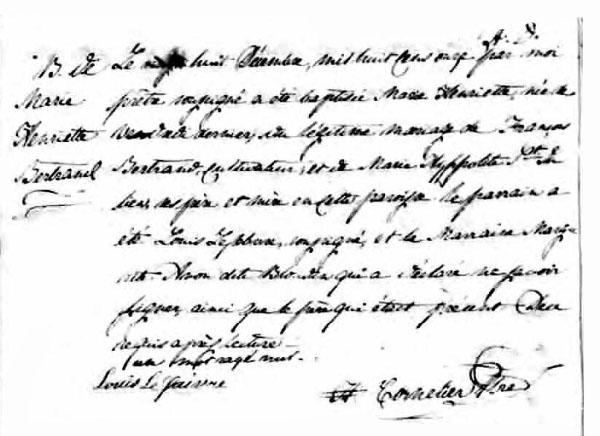
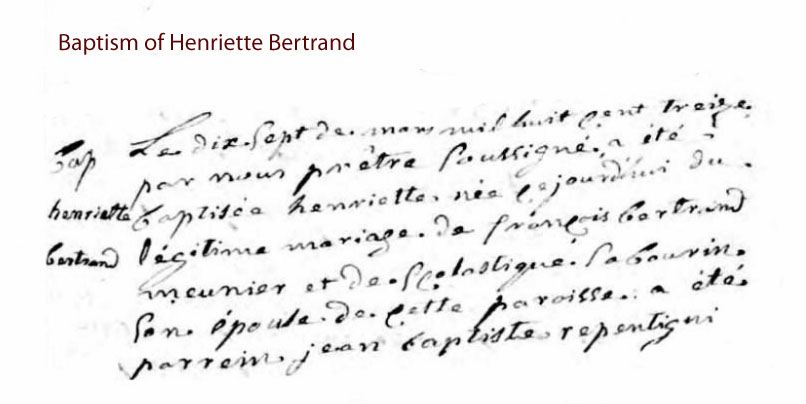
It soon became apparent that there were in fact two Henriettes. I found the baptismal document on line for Henriette 2. The discovery made me realize that perhaps I had been researching the wrong person.
At this point I needed clarification. I made a visit to Centre d’histoire La Presqu’íle in Vaudreuiland was able with the help of the archivist learn for certain which of the Henriettes was the correct one. Now I had what appeared to be a monumental task ahead. Research had been done for Henriette 1 thinking she was the right person. Now, this lineage was of little value as she was not one of my ancestors. This meant starting over with Henriette 2 and tracing her line.
The archivist was very helpful finding documentation and pointing out the right direction to proceed.
This was indeed a valuable lesson and I am grateful having learned it early on in my research. It has constantly been a reminder that before making the next move, make certain you have as many exact verified facts as possible about the particular person you are researching. That way you can avoid mistakes.
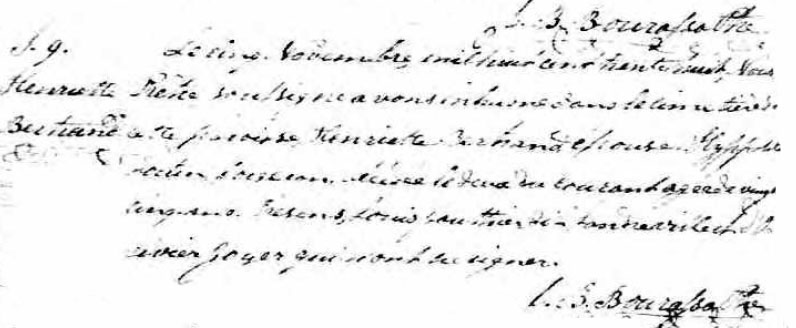
The following two documents were found on Ancestry-Drouin Collection
Registres paroissiaux et Actes d’état civil du Québec (Collection Drouin), 1621 à 1967
Name:
Henriette Bertrand
Event:
Enterrement (Burial)
Burial Year:
1815-1900
Burial Location:
Montebello, Québec (Quebec)
Source Information:
Ancestry.com. Quebec, Vital and Church Records (Drouin Collection), 1621-1967 [database on-line]. Provo, UT, USA: Ancestry.com Operations
Inc, 2008.
Original data: Gabriel Drouin, comp. Drouin Collection. Montreal, Quebec, Canada: Institut Généalogique Drouin.
Comparison of data for the two Henriettes
Henriette Bertrand 1 Henriette Bertrand 2
Born: December 28, 1811 in Vaudreuil Born March 7, 1813 in Ile Perrot
————————————— Died November 5, 1838
Mother: Apoline St. Julien Mother: Scholastique Sabourin
Born: Nov 6. 1783 in Vaudreuil Born: 1789 in Rigaud
Died: Aug 2, 1834 in Vaudreuil Died: July 28 1821 in Rigaud
————————————— Married: September 12 1831 in Montebello
Father: Francois Vital Bertrand Father: Francois Joseph Bertrand
Born: Jan 4, 1780 in Vaudreuil Born 1784
Died: July 11, 1859 in St. Joeph du lac Died: 1832 in Ste Justine de Newton
In 1832 Henriette 2 married Moyse Hypolite Fortin, my third great grandfather. She died November 5, 1838 at the age of twenty-five in Montebello, having given him a daughter, Leocadie Fortin, my great-grandmother and a son, Louis.






 Genealogy Ensemble