Category Archives: Canadian Province

Facebook to connect on and on and on.

Yes, we are all connected with our trees, and the web makes it so you can get lost as one page connects to the next and to the next…  We genealogists are so curious, we can lose entire days brousing.  But sometimes at the end of a treck, you hit what you didn’t know you were looking for but needed anyways.

Fumbling around Facebook today, I found lots I wasn’t looking for. On the French-Canadian Heritage Society of Michigan Facebook Page, I discovered Katherine R Willson’s social media genealogy page  as I was following a lead historical and genealogical Facebook pages.  YES!  Browse throught the list and you may mingle with the right crowd gen-buffs on Facebook: the ones that can help you, the ones where cousins may be hiding, and the ones to keep on getting lost through genealogical maze on the web.  You may download the Facebook list but please keep the credits on each page.

Want to know more about genealogy, art and military family support?  Those are KATHERINE R. WILLSON’s favorite topics and she is writing a book about the use of Facebook as a genealogical research tool.  Member of many historical and genealogical societies, she is also a mixed media artist.  To know more about talks she gives, go to her social media genealogy page .

The French-Canadian Heritage Society of Michigan page helps us take walls (brick or other) down between Canada and USA to help our searches, and yes, there is a brickwall Facebook page

Facebook nous permet de rejoindre bien des gens, mais Katherine R. Willson nous aide a trouver ceux qu’on cherche: ceux qui peuvent nous aider ou des cousin.  Vous pouvez rencontrer cette conférencière sur sa page social media genealogy page .  La généalogie, le support de familles militaires et les arts sont ses sujets préférés.

Pour rendre Facebook encore plus utile, elle a compilé une liste de sites Facebook historique et généalogique que vous pouvez télécharger.  Elle nous prie de garder les crédits sur chaque page si nous diffusons cette liste.

C’est justement en me promenant sur Facebook, sur la page French-Canadian Heritage Society of Michigan que j’ai été référée a sa page.  Un autre lien Canada-Usa qui fait tomber des murs, de brique ou autres, page de Brickwall Facebook

Message in a web bottle

You may approach genealogical research like you would fishing — and just to bring it back to French-Canadians — ICE-fishing (OK I wrote the ICE word, but it’s going to warm up today!).  Instead of fishing with one rod, you set up as many lines as you can. The limit is how many you can check at a time… and how many holes you can dig before you are so hot you strip down to your t-shirt.

This is just what  a cousin did:

2001, Welland, Ontario: she sends on RootsWeb * a querry about my great-aunt Simone Viau-McDuff.  And waits.

2011, Laval, Québec: I’m poking around the web, put in Simone’s name into Google and find her message. Wow! For sure it’s the same person, but… the message is 10 years old!  No one keeps their e-mail address for that long. Too bad!

Still, I send my line to the water and reply. Next day, I get a reply.

Geraldine, daughter of my grandfather’s cousin, was jumping up and down in her living room when she got my message (just like I was when I got hers).

Like many Quebecers during the 20th century, her grandfather Philias Viau , had moved from Lachine to work in the Niagara region around 1904. He was my great-grandfather J. Francis Viau’s brother. They lost their French, but there are still some Wellanders that don’t speak English. The Welland canal was of great importance as a link between Lakes  Erie and Ontario. Many industries flourished along the canal, like The Electro Metallurgical Company unit of Union Carbide where Philias worked.

I went to visit Geraldine by train, learned about the region, met some great people. Among them, Renée Tetrault, a founding member of the Welland Branch of the Franco Ontarien Society of History and Genealogy now known as the Réseau du patrimoine franco-ontarien. Renée has served for more than thirty years as the expert who assists researchers at their Centre for Research in the Welland Public Library. She will describe the extensive holdings of their library in and offer suggestions for researching in Quebec.

Which leads me to introduce this French-Canadian resource: there are six regional centers in Ontario.  Three times a year they publish Le Chainon (paper or digital).  They have quite a few online resources (Ontario and other provinces including Quebec, and even American parishes) available to members, among which transcribed notarial records, BMS, cemetaries, family histories, cities and towns, census, archive guides, and a lot more.

Two things to remember:

When part of a family moves away, news and pictures are exchanged to keep in touch. Geraldine had pictures of my Montreal family that I had never seen and letters writen by my direct ancestors. The jewel: a cash book kept when Philias’ father Onesime Viau died in Lachine, where all spendings (lots of prayers in church) and income (rents) were described along with after-death inventory  and each child’s share of inheritance. The two of us were able to piece together family stories that individually we couldn’t figure out and dentify people on each other’s pictures.  Finding cousins will help you go up your tree in surprising ways.

Viau p
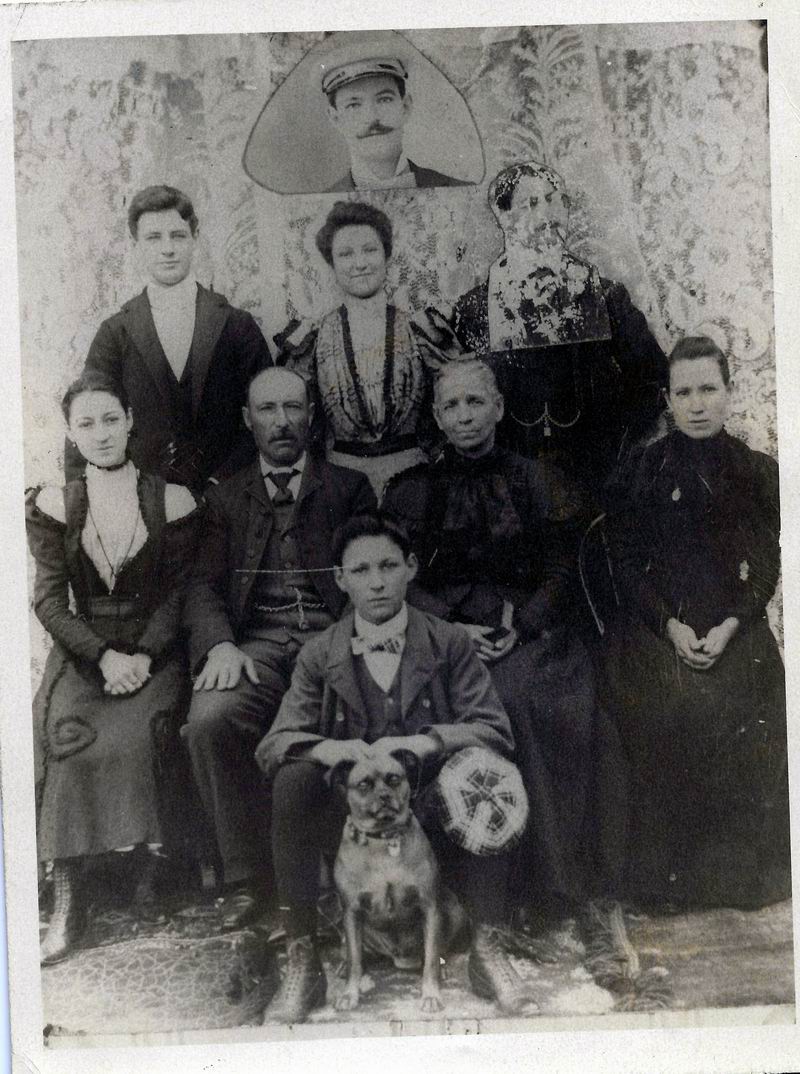
Onésime Viau and Antoinette Dorais with their children, Lachine, Québec

The other, send a lot of lines out, keep a log, follow up, but be patient. Be courteous, some will never bite, some are not interested. But dream big, don’t be stopped by logic and expect anything…fish come in many shapes and sizes, and even as messages in bottles.

* Rootsweb was one of the first online free cooperative genealogical resources. Ancestry has picked it up, but we can still go into archives or free.

Hiding to read that kind of newspaper?

Readers always loved those stories, but…they would rather not admit it.

Shocking News

Vicky Lapointe, graduate historian from Sherbrooke University, signs a special newspaper blog.  She combs through Quebec old newspapers to present us with crimes and catastrophies, francophones from outside Quebec and some pictures, medicine, history and patrimonial buildings.

It is suprising to see what kind of news would make the paper a century or two ago, how people responded, and yes…what strange crimes were being commited.  I also enjoy reading about events that are now part of history, as they happened.

Read Patrimoine, Histoire et Multimédia


To grow a life-size tree, you grow a family

My good friend Joel Bergeron’s grand-father moved to Temiscamingue early in the 20th century.

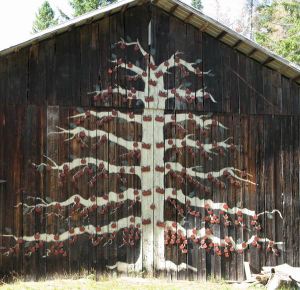
Their descendants still meet annually at their cousin’s farm.  The most beautiful tree grows on this farm.

It’s painted on the side of the barn; its trunk has their grand-parents’ names at the base.

arbreP

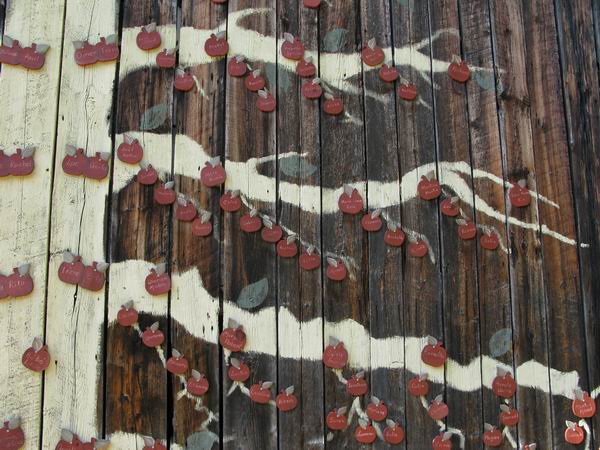
Wooden apples sit at the base of the main branches:  each pair of apples represents a couple and another branch on the tree.  Along each branch sits an apple for each child and his or her spouse. From each of these grows a smaller stem that in turn holds apples for each of their kids.

arbrdetp

Every year, the entire family comes to the farm from Ontario, Quebec, where-ever they live… to feed that tree with joy.

Un arbre généalogique pleine grandeur!  C’est celui des Bergeron qu’on retrouve sur la grange d’un cousin.  Les grand-parents se sont installés au Témiscamingue au début du 20e siècle.  Leurs noms sont à la base du tronc.  A chaque embranchement, deux pomme pour un de leurs enfants avec son conjoint.  La branche qui y pousse, contient les pommes des enfants de ceux-ci, et les petites branches, de leurs petits enfants.  Et toute cette famille se réuni chez ce cousin, quelques jours, chaque année, parce que la famille, ça se cultive!

GenWebCanada updates Quebec cemetery listings

Every morning, I read Elizabeth Lapointe’s Genealogy Canada blog, and she never disappoints. Today, she announced that GenWebCanada has updated several cemeteries in Quebec, Nova Scotia, and Prince Edward Island. Read the entire blog post here.

The cemeteries in Quebec are:

Huntingdon County

Hillside Cemetery
Labelle County
Chut-St-Philippe Cemetery
Kiamika Cemetery
Lac Saguay Cemetery
Lac St-Paul
Lac Saguay Cemetery
Lac St-Paul Cemetery
Ste-Anne-du-Lac Cemetery
Val Barrette Cemetery
Gatineau County
East Templeton Cemetery
St Raphael Cemetery
Papineau County
Notre-Dame-de-la-Salette Cemetery

Friday factoid

Between 1840 and 1930, about 900,000 French Canadians emigrated to the United States.

A paper written in 1999 by professors at the Université de Montréal and Marianapolis College explains why so many French Canadians left Canada and it shows where they settled in New England in 1880 and 1930. “According to the 1980 American census, 13.6 million Americans claimed to have French ancestors. While a certain number of these people may be of French, Belgian, Swiss, Cajun or Huguenot ancestry, it is certain that a large proportion would have ancestors who emigrated from French Canada or Acadia during the 19th and 20th centuries.” To learn more, read French Canadian Emigration to the United States 1840-1930 by Damien-Claude Bélanger and Claude Bélanger.

Kitchener library seeks virtual volunteers for WWI project

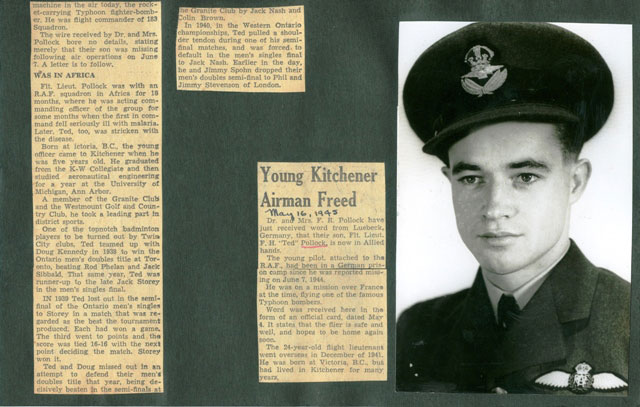
The Kitchener Public Library in Ontario is looking for your help. In honour of the upcoming 100th anniversary of the beginning of the First World War, the library’s staff has created soldier information cards about the many courageous men and women of the province’s Waterloo County who served Canada in the First and Second World Wars. These cards were created during and shortly after each war and were compiled using newspaper and magazine clippings, photographs, and information contributed by soldiers and their families.

Kitchener Public Library02

The library needs virtual volunteers to transcribe the content of the soldier card sets, making them searchable on the library’s online photograph site. The transcription process will involve copying the information on the soldier card into a text (.txt) file and sending the finished transcription back to staff for upload. If you are interested in volunteering for this project, contact the library at volunteer@kpl.org or telephone 519-743-0271, ext. 275. Read more about the project on the library’s website.

Perhaps genealogy societies should approach their local library to find out if they hold treasures that need to be digitized and posted online. This would be an excellent opportunity to support a library, create a new collaboration, and uncover genealogy gems.