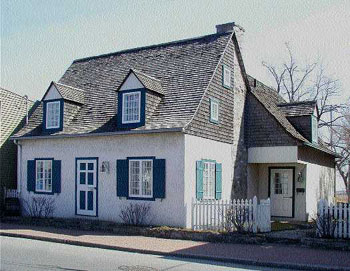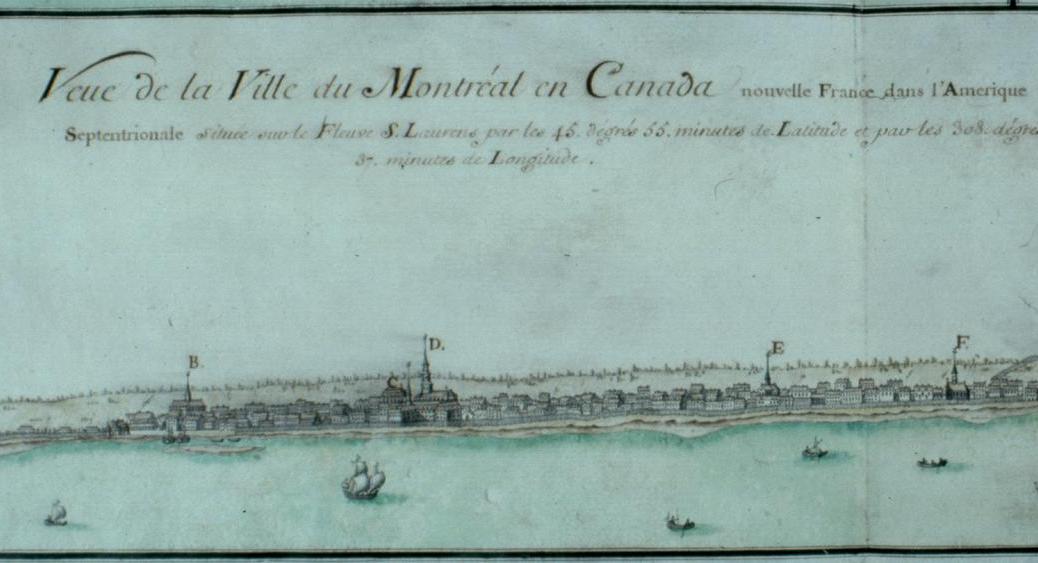
Category Archives: New France

Enslaved by Poverty

Recently, I’ve been wondering about the white slave who successfully escaped after allegedly burning down New France’s third Hotel-Dieu hospital and 45 homes in what is now Old Montreal in 1735.

I can’t help feel sorry for the man who was brought to Canada as an indentured slave (engagé or trente-six mois due to the thirty-six month duration of his contract) primarily because he was young, healthy, strong enough to serve as a labourer and poor. In return for his work, he got room and board, clothing and a salary, but he had no rights beyond that. His employers could send him anywhere to do just about anything; and according to New France law he had little recourse.

A brief summary of his life appears online in the Canadian Mysteries series dedicated to the fire.

Originally from Butenne in Franche-Comté, Claude Thibault was found guilty of salt trafficking [illegal sale of salt]. Condemned to end his days in the king’s galleys, his sentence was commuted to a life in exile in Canada. He arrived in Québec with a dozen other salt traffickers, including Jacques Jalleteau, in September 1732.

On the night of April 10, he was seen at the site of the fire, but disappeared when Angélique was arrested the following day. Despite warrants issued for a wanted person throughout the colony, Thibault was never again seen.1

I imagine he used his acumen to create a new life under a new name, perhaps in the fur-trading industry. After all, as a faux-saunier (salt smuggler), he had to develop a lot of entrepreneurial skills. As someone who purchased salt in low-tax regions and sold it on the black market in high tax regions, he had to be skilled at finding clients and creating a distribution hub without being caught by the King’s agents.

The King’s decision to set up an unfair tax regime began in 1680, when he decided to pass a law varying the taxes (gabelle) on salt per region. Salt was an important commodity at the time, and controlling it was an important economic lever. In addition to using it to spice and cure food, people in France also needed enough salt to tan animal skins. In some regions, such as Brittany, people could buy one “minot” (about 37 litres) of salt for as little as 1 livre, while citizens of Main, Anjou and other “high gabelle” regions had to pay as much as 61 livres per minot. The law even forced them to buy a minimum quantity of salt every year, whether they needed it or not.

Smugglers thrived in the seeming injustice, but if they were caught, punishment was severe. They faced fines beginning at 300 livres and leading to jail time of anywhere from 10 days to three months. At first, only the most serious convicts were exiled to New France, but in 1730, Jean Frédéric Phélypeaux, the Comte de Maurepas, began insisting that convicted faux-sauniers should be sorted, with the most healthy or those with useful skills be sent overseas as enslaved labourers on three-year contracts. Eventually, the scheme ended in when King Louis XV of France removed Maurepas from his job in 1749.

Unfortunately, Thibault was caught when Maurepas’ scheme was fully underway, and he had few other ressources to avoid exile.

Alain Racineau, who has studied salt traffickers like Thibault at length, describes most of them as poor rural people, primarily day labourers and small merchants struggling to survive.

They were recruited from the poorest levels of society: casual agricultural labourers, petty artisans and traders, unemployed vagabonds. They frequently affirmed that they had taken up smuggling “pour gagner leurs vies.”2

Thibault’s life didn’t get any easier once he arrived in New France. His contract was purchased by fur-trader and merchant Francois Poulin de Francheville and his wife Thérèse de Couagne, who owned several slaves. After M. Francheville died in late 1733, the widow decided to sell Thibault’s girlfriend to a friend in Quebec City. Plans were established for her to be sent away in the spring of 1734, after the ice melted from the Saint Lawrence River.

On February 22, 1734, Thibault and his lover decided to run away, setting fire to her bed as a distraction. They had hoped to reach the English colonies, but bad weather stopped them. They got stuck in Châteauguay and were eventually captured by three militia captains.

Thibault was thrown into jail on March 5 for breaking his contract. He was released on April 9, just one day before the large fire that began in the Francheville home on St. Paul Street.

Thibault disappeared just before his girlfriend got arrested, was convicted and executed. On April 19, authorities set up a manhunt

…given that we are in no State at present to forward the description of the said Thibault with the present order, the Said Captains will take care to arrest and Interrogate all Young men who are unknown vagabonds coming from the direction of Montréal toward Québec and passing through their area, to ask of Them their names and surnames, who they are, where they come from, and where They are going; and upon failure by the said passers-by to provide adequate Information on their persons, And for the slightest doubt or suspicion regarding their responses, And in consideration of public safety, We expressly ordain that the said Captains have them arrested Immediately, and taken under sound and due guard to the gaols of This city;3

They never found him.

Two years later, authorities officially took him off the most wanted list.

1Beaugrand-Champagne, Denyse, Léon Robichaud, Dorothy W. Williams, Marquise Lepage, and Monique Dauphin. “Torture and Truth: Angélique and the Burning of Montreal,” Great Unsolved Mysteries in Canadian History Project, 2006, https://canadianmysteries.ca/sites/angelique/contexte/references/personnages/2229en.html

2Racineaux, Alain, ‘Du faux-saunage à la chouannerie, au sud-est de la Bretagne’, Mémoires de la Société d’histoire et d’archéologie de Bretagne, 1989.

3Archives nationales du Québec, Centre de Québec, Fonds des Ordonnances des intendants de la Nouvelle-France, E1, S1 P2622, Hocquart, Gilles, Ordinance given to the captains of the militia for the arrest of Claude Thibault, April 19, 1734, https://canadianmysteries.ca/sites/angelique/proces/rumeurcircule/1889en.html .
Montreal and the Ville Marie Fire of 1734

Update: January 24, 2024

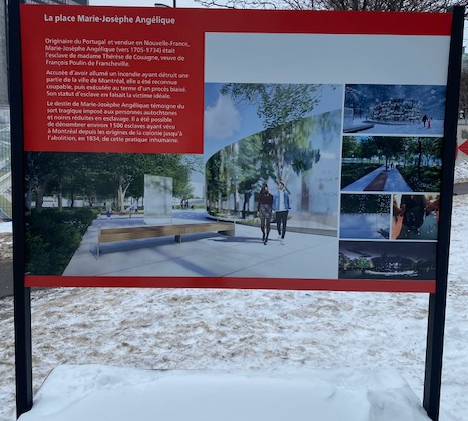
Since this story was originally published, the City of Montreal has added a poster next to Metro Champs de Mars to make it clear that Marie-Josèphe Angélique’s park will be within the Place de Montrealais!

Thanks to Annie for letting me know, and thanks for everyone who made sure that her story is not forgotten!

Original Story

For an hour on the first cold day of the year last month, I wandered around City Hall looking for the memorial park named after an enslaved woman whose torture led to her conviction for arson in 1734. She was then ridiculed, hanged, and her body was burned to ashes and thrown to the wind.

I couldn’t find it.

I’m not sure what happened from the time the park was created in 2012 to today, thirteen-and-a-half years later, but the one-time park still appears on Google Maps. In person, I couldn’t find anything to indicate where it might be.

According to various articles on the web, a green space just west of Champs de Mars métro station honours Marie-Josèphe Angélique’s memory. The official inauguration of the park took place on Aug. 23, International Day for the Remembrance of the Slave Trade and its Abolition, 2012.

As I walked through the area last month, the one-time park seemed to be encompassed in a massive construction site underway for Place des Montréalais, a new public space being created next to the Champ des Mars metro on Viger Street. The posters on site explaining the current project included nothing about Marie-Josèphe Angélique.

Despite being honoured with an award-winning film, a bronze plaque, lilies and a presentation by Governor General Michaelle Jean in 2006, and a public park created by the city of Montreal in 2012, she’s disappeared again.

Before this experience, I was already struggling to see Angélique as the symbol of freedom and resistance she serves for many, but I don’t want her to be forgotten. Did she set the fire or was she a convenient scapegoat? If she didn’t, who did? As I began exploring her story last month as part of a project for NANOWRIMO (the National Novel Writing Month), she served as a reminder of the kind of unnecessary suffering a biased political, policing and justice system can create. Despite the fact that she was a victim of slavery, hatred, spite, racism, class bullying and the worst that a mob could throw at her, her spirit remained strong and unrelenting.

Angélique proclaimed her innocence until the day she was tortured, throughout the court case, and through questioning. Despite that, three weeks after the fire, she was hanged, ridiculed publicly, then burned with her ashes tossed into the wind. Clearly, the authorities at the time wanted her punishment to be seen and remembered.

I read the details about Marie-Josèphe Angélique’s case on Torture and the Truth, a fabulous website set up in 2006 by multiple people, including one of my genealogical mentors, Denyse Beaugrand-Champagne and one of my historian mentors, Dorothy W. Williams. Both of these women have researched, written, spoken and taught many people about the history of Montreal and why studying it is so important.1

The site is one of thirteen different “historical cold cases” established for classrooms across Canada. It was created through the work of six writers, a photographer, an artist, and two translators collaborating with six funding agencies, seven production partners, and 15 archive and museum partners.

It is one of the best historical websites I’ve ever read. If you do nothing other than read through this site, you will get a good overview of the community, the victim arsonist, and life in early Montreal.

As I read about Angélique’s story, she sounded like just the kind of person anyone would like to get rid of. She was a woman who told people she would burn them alive in their homes. She said so to her owner for refusing to grant her freedom, to other slaves for making her work harder than she wanted and to others too. To anyone who slighted her, she threatened the worst thing she could think of. She would burn their homes down.

When 45 houses in her small community did in fact burn down, people blamed her. In retrospect, it may have been an accidental kitchen fire that caused the flames, but her words came back to haunt them all.

The fire began at 7 p.m. on a Saturday evening in spring, April 10, 1734. In only three hours, it destroyed 45 homes and businesses on Rue Saint Paul. Even the Hôtel-Dieu hospital and convent, where people initially took shelter, burned to the ground. Hundreds of people were left in the cold; supplies from many merchants burned, never to be seen again.

Plus, who knows how many caches of fur got wiped out. At that time, Montreal was the centre of the fur trade, more than half of which was illegal trading with the Dutch and English communities in Albany, Boston and other communities to the south. According to a 1942 thesis by Alice Jean Elizabeth Lunn, furs were stored in the backs of shops and even buried just beyond the Montreal wall, which was still under construction at that time, in order to be shipped without being seen by New France authorities. A lot of money went up in smoke that day.2

Everyone in Montreal knew about the fire, given that all the church bells throughout the city began ringing when it started and continued until it was over and people were safe again. Although stone buildings existed at the time, most of the buildings were made of wood; fire could destroy them all.

I had ancestors who lived in Montreal then, the Hurtubise clan on my father’s mothers side. One of them, Jean Hurtubise, the grandson of Étiennette Alton and Marin Hurtubese, was thirty-nine years old, ten years older than Angélique when the fire took place. He and his wife Marie-Jeanne (Marie-Anne ou Marianne) Tessereau had been married for seven years in 1734.

Jean was born in Ville Marie and lived in Montreal for his entire lifetime, so he and his family would have experienced the fire, at least from a distance. They certainly would have seen the ordinance compelling witnesses to appear, given that “it was posted and cried out everywhere in the city and its suburbs.”

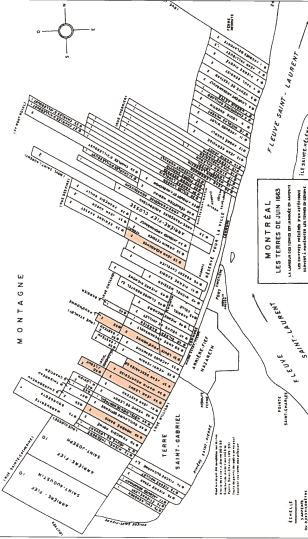
Jean and his family farmed a 3×20 arpent property they bought three years earlier from Raphael Beauvais and Elisabeth Turpin on Rue Côte Saint-Antoine.”3 The property was in a part of Montreal that was considered the countryside at that time. Their home was then one of four wood houses on Côte Saint-Antoine in 1731.4

Given that the area was still very rural, and on a major hill, I can’t help but wonder. Did they see the smoke rising into the sky as the hospitals and 45 other buildings in Ville Marie were destroyed?

They certainly had strong links to Ville Marie, particularly the hospital. His grandmother, Etionnette Alton, had died there in her 84th year twelve years earlier. They couldn’t have helped wondering what would happen to others like her, being treated in the hospital that the fire destroyed. Were they among the crowd clamouring for revenge? Did they go to Ville Marie to see Angelique hanged? Did they watch her corpse burning? Did they see her ashes spread into the wind? Did they care at all?

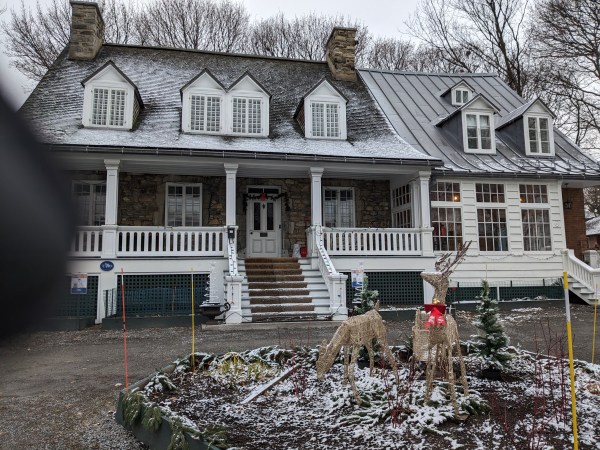
I can’t help but imagine that the controversial hanging effected all 2000 people who lived on the island that year. Five years after Angélique’s death, Jean built Hurtubise House, a storey-and-a-half fieldstone structure on land originally rented by his father in 1699 on Mount Royal. The family built the gabled home out of stone to protect themselves from fire, as required by a law passed the summer after Angelique’s death. You can still visit the home today.5

Sources

1 Beaugrand-Champagne, Denyse, Léon Robichaud, Dorothy W. Williams, Marquise Lepage, and Monique Dauphin, “Torture and Truth: Angélique and the Burning of Montreal,” the Great Unsolved Mysteries in Canadian History Project, 2006, https://www.canadianmysteries.ca/sites/angelique/accueil/indexen.html.

2 Lunn, A. J. E. Economic Development in New France, 1713-1760. McGill University, 1942, https://books.google.ca/books?id=rtcxvwEACAAJ.

3 Roy, Pierre-Georges,, Inventaire des greffes des notaires du Régime français, Québec, R. Lefebvre, Éditeur officiel du Québec, 1942, 28 vol. ; 25-27 cm, Collections de BAnQ.

4 MacKinnon, J. S. The Settlement and Rural Domestic Architecture of Côte Saint-Antoine, 1675-1874. Université de Montréal, 2004. https://books.google.ca/books?id=IEJ4zQEACAAJ.

5 https://hcq-chq.org/the-hurtubise-house/

The Great Volunteer Soldier Recruitment of 1653

Next month marks 370 years since my six times great grandfather and his brother volunteered to join a militia to protect the city of Montreal. Their voyage from France to our city would last five months and require two departures. They faced captivity, an epidemic and enough starvation and illness to cause the death of eight of their colleagues, but they survived.

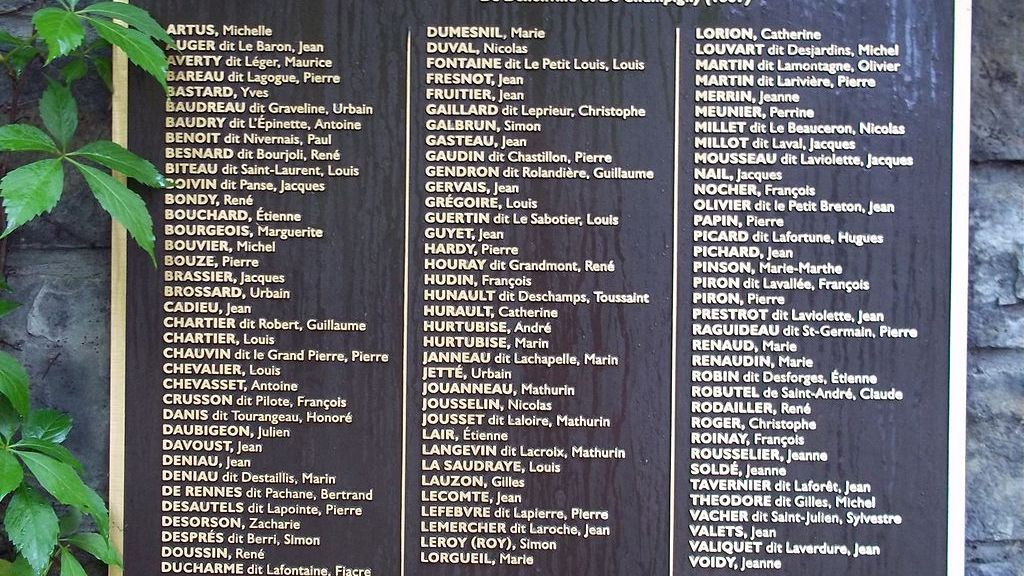
Marin Hurtubise and his brother André were among 154 men recruited by New France Governor Paul Chomedey de Maisonneuve to help protect the Fort Ville-Marie from Iroquois attacks. They signed five-year contracts with the Société de Notre Dame de Montréal to clear uncultivated land in New France for farming at a price of 100 livres per year1. Their employer, also known as the “Company of Montreal,” was originally founded in France in 1639 to establish a colony in Canada.

According to notes left behind by my grandmother, the Hurtubise brothers came from a town known as Sillé-le-Guillaume in Rouesse-Vasse, southwest of Paris in the Sarthe Departement in the Pays de la Loire region.

They travelled to St. Nazaire to join 120 other men and 14 women who set sail for New France on June 20, 1653. Among their ship mates was Marguerite Bourgeoys, a women with a desire to create schools in New France. She also founded the Notre Dame parish and set up housing for the filles du roi. In 1982, Pope Pius XII canonized her as Canada’s first female saint.

The trip in Captain Pierre le Besson’s ‘Saint-Nicolas-de-Nantes’ vessel2 did not go well.

Ships in that era were not the large luxury vessels we cruise on today. According to an unauthored essay that used to appear on the Maison Saint Gabriel website, they measured roughly 25-45 meters long and 8 meters wide. Passengers bunked in a single room at the back of the ship in unsanitary conditions in which everyone slept in their clothes. Buckets collected waste and vomit from those who couldn’t handle seasickness. Meals often consisted of dry biscuits, salt pork and fish.

In this case, the ship also leaked. The ‘Saint-Nicolas-de-Nantes’ took on so much water that after sailing 350 leagues (1600km), the crew had to return to Nantes. Passengers were left on an island off the coast of France to wait for another month until a replacement ship could be found. According to Marguerite Bourgeoys’ diary, some of the recruits deserted their posts and swam back to France.

“Sieur de Maisonneuve and all of his soldiers stopped on an island from which there was no escape. Otherwise, not a single one would have stayed. Some even set about swimming to save themselves since they were furious and believed they had been taken to perdition.”3

On July 20th, after a St. Marguerite’s day mass, the replacement ship set sail for the New World with the Hurtubise brothers and Marguerite Bourgeoys on board. This voyage, which featured many storms, an outbreak of the plague and eight deaths (Jacques Audru, Olivier Beaudoin, René Cadet, Jean Chaudronnier, Louis Doguet, Michel Lecomte, Joachim Lepallier and Pierre Moulières), doesn’t sound any better than the first, save for the sea-worthy vessel.

After 64 days, the ship landed at Cap-Diamant, on September 22, 1653. At that point, it seems that the ship was set on fire in the middle of the river. Bourgeoys’ writings imply that it got stuck so that high tide couldn’t even free it.

For the next two months, New France Governor Jean de Lauzon tried to keep the voluntary soldiers and marriageable women in Quebec to defend that city, in part by refusing to provide the barges needed to sail the Saint Lawrence River to Ville-Marie.

Eventually, de Maisonneuve prevailed. The group arrived at Ville-Marie on November 16th.4 They were all given land grants next to the Saint Laurence River. Later, Marin and five neighbours settled in Côte St. Antoine.5

André Hurtubise died six years after the brothers arrived in Montreal. Marin lasted 19 years, successfully marrying and having six children during that time. He died in Montreal on May 12, 1672.6

Sources

1Aubry, Louis, Famille Hurtubise Gendron, https://www.mes-racines.ca/fichiers/Lign%E9es/H/Hurtubise-Gendron/Hurtubise-Gendron.pdf, accessed May 2, 2023.

2“Ancestors on the World Stage,” https://www.apointinhistory.net/granderecrue.php, accessed May 2, 2023.

3Les Écrits de Mère Bourgeoys, p. 46

4“La Grande Recrue de 1653.” http://louisianalineage.com/recrue1653.htm, accessed May 2, 2023.

5MacKinnon, Janet S. The Settiement and Rural Domestic Architecture of Côte Saint-Antoine, 1675—1874, thesis 2004

6Find a Grave, database and images (https://www.findagrave.com/memorial/144617536/marin-hurtubise: accessed 02 May 2023), memorial page for Marin Hurtubise (26 Oct 1631–12 May 1672), Find a Grave Memorial ID 144617536, citing Ancien cimetière Notre-Dame (1672-1830), Montreal, Montreal Region, Quebec, Canada; Maintained by AW (contributor 47829810).

Photo of commemorative plaque courtesy of Jean Gagnon, CC BY-SA 3.0 https://creativecommons.org/licenses/by-sa/3.0, via Wikimedia Commons.

When History and Genealogy Come Together

Genealogy is usually of little interest to children probably because their parents already seem from the Dark Ages and their grandparents from the times when Tyrannosaurus Rex tramped the planet.

It was the same thing for me way back in the 1960’s – except for the one day when I was about twelve years old. My mother came home all excited with some important news passed on to her by a cousin who had researched the Crepeau family tree.

My mom’s father, Jules Crepeau of Montreal, was descended from one Abraham Martin dit L’Ecossais, a pioneering (boat) pilot and land-owner in New France. My French Canadian mom found this fact highly entertaining. “I am descended from a Scotsman,” she told me, laughing. “What a joke.”

I remember this episode only because of another part of the story. Apparently, this Abraham Martin fellow owned the Plains of Abraham. THOSE Plains of Abraham. Now that I could sink my tweenage incisors into.

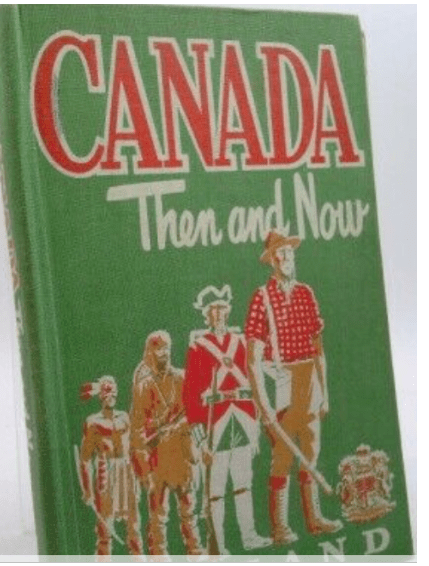
You see, I was learning about Canadian history in school. Our text was Canada Then and Now, a bright green text with a very iconographic cover pic.

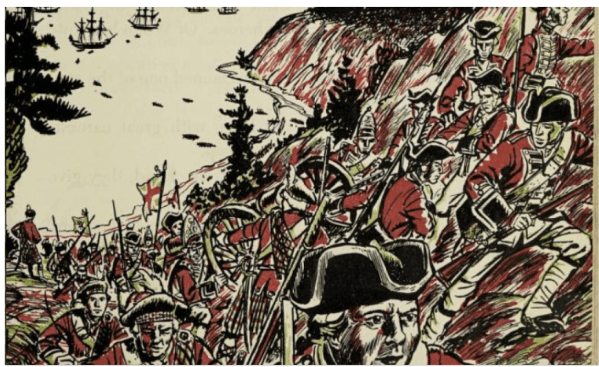
From this textbook, I was learning for the first time how the French and British were always at war with each other, way back then, in Europe and in North America. In North America, the fought over control of the lucrative fur trade and, apparently, it all came to a head one morning on the 1th of September, 1759 when a British general named Samuel Wolfe, after being rebuffed a few times by the superior French forces, led a cagey attack on the French General named Louis Joseph Marquis de Montcalm on the cliffs of Quebec City, cutting off his supplies and defeating his superior forces. This was all part of something called The Seven Years War.

All night long kept quietly landing the men on Wolfe’s cove. By morning, 5000 British soldiers were drawn up ready on the Plains of Abraham. The French had avoided battle, believing they were safe because they had more men than the British and plenty of supplies. They knew the British wold have to withdraw before freeze up. But now tht the British had landed above the town and cut off supplies from Quebec. The time had come for battle.

The textbook instructed us Canadian children, in subtle terms, to take no especial pride in this seminal event:

Wolfe and Montcalm were great generals and gallant men. Today, on the Plains outside of Quebec, a monument stands to honor them both. Wolfe’s name is on one side, Montcalm’s on the other. There is a Latin inscription that says, “Valour gave them a common death. History a common fame and posterity a common memorial.”

Illustration from Canada Then and Now. Storming the Plains of Abraham

Today, I am much older and predictably I am into genealogy. I have written many many family stories from both sides of my tree.

My mother’s French Canadian side was easy-peasy to patch together thanks to all those fabulous Catholic church records on Drouin available. And yes, if the Mons Origins website information is correct, my mom was indeed descended from this Abraham Martin.

Should I write about this pioneer ancestor? I have long wondered.

Truth be told, I would very much like to puzzle out the story of my earlier French Canadian ancestors, as Tracey Arial and Claire Lindle have done so brilliantly on this blog. I’d like to discover exciting new tidbits of information about my ancestors to add to the historical record (perhaps using some of the stellar resources catalogued on Genealogy Ensemble by Jacques Gagne) but it all seems so difficult, so labour intensive and so hard on the eyes.

In the past, I have explored the lives of Les Filles de Roi – because I am particularly interested in the lives of women ancestors – only to find there doesn’t exist much detailed information about these pioneering females from Normandy and Ile de Paris. It seems no one bothered to document the day-to-day lives or unique personal stories of these ‘mothers of millions’ back then– either in Europe or New France.

When it comes to this Abraham Martin dit L’Ecossais character, it would be a real waste of time to try to find a new angle or to write something fresh about him. There are already reams and reams (or pixels and pixels) of information written about him. It appears that Abraham Martin dit L’Ecossais is one of the most famous French Canadian pioneers and a father to millions of North Americans, including Madonna and Justin Bieber – and, ah, little ole me.

Long story short: He married Marguerite Langlois. Had 14 children. I am descended through Vitaline Forget-Despatie, my mother’s father’s mother.

The kicker to this non-story of mine: Abraham wasn’t necessarily Scottish. He could have invented the epithet to avoid criminal prosecution or he was a war deserter. His name might have generated from the fact that he had visited Scotland many times in his youth.*1

Now, lately I have dug out one very interesting fact about my mom’s French Canadian ancestors on her dad’s side, one she didn’t know about. My mother always told me that the name Crepeau meant “curly haired one.” She had very very curly hair herself, as did her father. I have no idea how long she had known this fact or who originally informed her.

If that same cousin, back in 1967, had provided her with a paper genealogy, my mother would have noticed that the original Crepeaus, going back six to eight generations, were Crespeaus, from Poitou Charent. I have recently learned that the name Crespeau almost certainly came from Crespo, a very Spanish name – and not only that a Sephardic Jewish name.

I found this tidbit on sephardim.com:

“The name Crespo has been identified by the Holy Office of the Church of Spain as a Sephardic Jewish surname.”

How fascinating.

So, it seems, even genealogically-timid I can dig out an interesting fact or two about a distant French Canadian ancestor. Maybe I should keep trying.

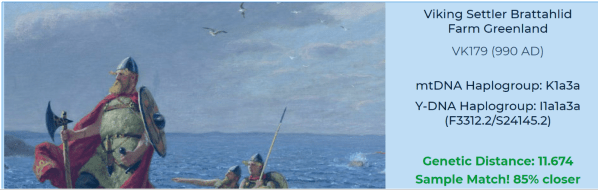
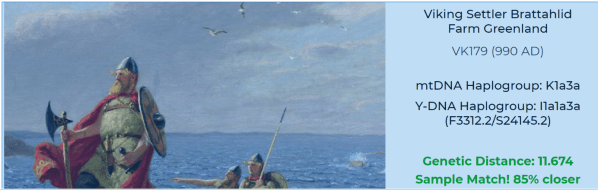
1. Even if Abraham Martin wasn’t born to the Tartan, he likely had English, Scottish and even Viking dna. Normandy, Normans, North men, Norsemen. Ancestry gives most of my many many French Canadian cousins a little bit of Norwegian ethnicity. I have a very vague 0-8 percent.

Wouldn’t it be funny if my mom were related to Eric the Red, chronicled in the second chapter of Canadian Then and Now, after the first chapter on “Indians” and “Eskimos.”

If you believe mytrueancestry.com, my husband, whose Mom comes from Isle of Lewis Scots, apparently is connected genetically to Eric’s clan. How very romantic! If I didn’t love him before, I’d have to love him now!

2. I checked the Y dna lists online at Family Tree and someone is trying to see if French Canadians have Semitic genes. There are very few members. On a regular French from France Y dna site I can see that some French Canadians have J M172, an Anatolian line, often thought of as the Greek Diaspora. Cote and Leger are the names that crop up. There are no Crespos, Crespeau’s or Crepeaus.

The tribulations of New France colonist Marie Michel

If my sisters and I have strength, persistence and a refusal to be victimized, we get it from our ancestor Marie-Madelaine Michel Gasnier DeRainville.

Over her 72-year lifetime, Marie left her family and friends three times, married twice, bore nine children, and raised eight of them to adulthood, marriage and their own children. She also lost her first husband to the Beaver Wars that lasted throughout her lifetime.

Jacques and Claire from Genealogy Ensemble also share Marie as an ancestor. If you have roots in North America, chances are, she’s one of your ancestors too.

Like many women, most of the records in which Marie appears focus on the men she accompanied. Many contain estimates about her data. The circumstances they show, however, hint at both suffering and forbearance. She never learned to write, but the strong ‘x’ she used as a signature indicates a woman who knew her worth.

My favourite resource for Marie’s life is a website created by Reverend John F. Gasnier in 2012.1 Gasnier excels at research. His detailed work provided me Marie’s parents’ names, the birth of her children and many of the dates in their lives.

I have begun to collect the original sources he used to compile this data, but so far, his work seems accurate except possibly her birth date. He estimates her birth date at 1620; another good site estimates 1619. Fichier Origine puts her birth at 1615, the date I’m using. Two of the three sites indicate that her birth took place in the village of St-Martin du Vieux Bellême, which Jacques tells me now sits within the modern-day Département de l’Orne. Both her birth town and Igé, the birthplace of her husband Louis, still exist in the now township of Bellême.

From the rest of the data, Marie’s life looks so sad. How did she live through so much suffering?

Her trauma began with the death of her first child sometime between his birth in 1639 and the family voyage from Igé, France to New France in 1644.

Two years before they left, the couple’s daughter Louise was born. By that time, Marie had reached her 27th year; her husband Louis his 30th. Perhaps her birth was the family’s chance for a new life.

It’s not clear why Marie and her husband decided to leave France, but emigration from the region started 10 years earlier, due to the recruitment by apothecary Robert Giffard and the Company of New France.

Giffard recruited many Percherons to New France until his death in 1669, except during the years when the Kirk Brothers occupied Quebec on behalf of England (1629-1631). By then, the colony of New France had 3,000 settlers, including Marie, her husband and their daughter.

In about forty years, 194 adults who had various jobs, often related to construction (mason, carpenter, brick-maker, etc), undertook the great voyage. Some returned to live and work in their native country but the great majority, despite the Iroquois threat, chose to settle on the banks of the Saint Lawrence River in order to clear and thrive the new territories. Their descendants are estimated today at 1.500.000 people in Canada and much more if we include the United States.2

When they undertook the voyage with their two-year-old daughter in July 1644, Marie was pregnant with their second daughter. Her namesake Marie became their first child born in the colony the following September.

Life couldn’t have been easy for the couple once they arrived in New France. It took them more than two years to lease a farm for their fast-growing family from the Saint-Joachim Seminary.

At that period of time, colonists to New France integrated into one of many manors set up under the seigneurial land management system brought to New France in 1627. New France then extended from the Arctic to Florida.

Under the manor system, the Compagnie de Cent Associés (Company of 100 associates) granted important people and groups, including religious ones like the Seminaire de St. Joachim, one by three league (5 by 15 km) land masses along major rivers, including the Saint Lawrence. The land was divided into 3 x 30 arpent sections perpendicular to the river so that everyone had access to boat transportation. (Note that each arpent measured 190 feet (58m).

Marie and her family rented La Ferme Saint-Charles in Cap Tourmente near the town of Saint Joachim for four years. They had two sons—Pierre and Olivier—during this period.

The family then moved back to Quebec while Marie’s husband built a new house in what is now St. Anne de Beaupré. While they waited, Marie had two more children, Louis and Anne.

Just after Anne’s birth, the family moved into a new house on a lot in the Seignerie de Beaupré (Beaupré Manor).

Part of the Beaupré Manor still exists today. Now run jointly by the l’organisme de bassins versants charlevoix-montmorency (obv-cm) and the séminaire de québec – seigneurie de beaupré, the territory covers a 20 by 95 km band north of the Saint Lawrence River. The territory spans 1,600 square kilometres west of Stoneham and east of St-Urbain in Charlevoix. Hunting, fishing and outdoors clubs share the space with loggers, Boralex and Gaz Métro/Valener.3

Back when my ancestors moved in, however, most of the action took place right next to the St. Lawrence River, where the village of Sainte Anne de Beaupré now stands. Marie’s husband Louis built a solid 22 by 20-foot home with 2-foot-thick walls on a cliff overlooking the river. There’s still a house built on the original foundations at 432 Cote Ste. Anne.

Things were good that year. Marie’s oldest daughter Louise got married and she and her husband established their home three lots away. Louis’s older brother Pierre arrived in New France from France with his pregnant wife and three sons. By 1655, he had established a property and house six lots away from his brother.

A year later, Marie gave birth to my six times great grandfather Ignace. The records indicate that Marie worried he wouldn’t live long. Jesuit Father Ragueneau rushed to the house on March 12, 1656 to baptize him. That could have been the first of three major tragedies, but he survived and married. (See my story What legacy stems from our Quebec pioneers?)

In May that same year, the second tragedy occurred. Louis’ older brother Pierre died of recurring fever.

The next three years went quickly, with all three families living in a small neighbourhood along the river. Marie’s namesake child married Andre Berthelot on January 26, 1659. Marie had her last child, son Joachim, a year later.

It would be the family’s last happy year.

In June the following year, 1660, the third tragedy occurred. Louis and seven other neighbourhood men got caught up in the politics of the era. They ended up being scapegoats in the Beaver War.

The Beaver War took place because the fur trade encouraged by British, French and Dutch colonialism pitted Algonquian and Wendat, who sided with the French, against the Haudenosaunee (called the Iroquois in Jesuit papers), who sided with the British and Dutch. Things became even worse after the British and Dutch decided to arm their First Nations allies with rifles. The French refused to supply weapons to theirs.

The weapons imbalance combined with over-hunting led to Haudenosaunee raids of the colonies. Marie’s husband became one of the victims. He probably died in Auriesville.

“Louis disappeared from the records, and it’s believed he was among a group of 8 people who were captured in a raid by some Iroquois on the morning of June 18, 1661. The settlers were forcibly taken to the tribe’s village near Lake Champlain in what is now New York. There the victims were tortured, then killed; one of them was known to have been beaten with “clubs and iron rods” before being scalped....4

Marie didn’t know for sure that her husband was dead until a notary arrived at her home a month later. At the time, she had two dairy cows, two heifers, an ox, two veal calves, nine pigs, a plow, a boat, two rifles, a pistol, an axe and household goods that included only three beds for Marie and six children.

Her son in law Claude guaranteed that she would take care of these goods for her children, her now dead husband’s heirs.

Yet still, Marie stayed strong. Five years after the tragic death of her husband, she remarried Paul DeRainville at 51 years old. Together, they raised my direct ancestor Ignace and his brothers, all of whom married and had Marie’s grandchildren.

By the time Marie died on November 12, 1687, peace still hadn’t arrived in New France. That wouldn’t occur until the Great Peace of Montreal in 1701.

Sources

1Website accessed on February 21, http://www.gagnier.org/p0000353.htm, originally published by Reverend John F. Gasnier on February 8, 2012.

2Website accessed on February 23, https://www.perche-quebec.com/, originally published by Jean-François Loiseau, a board member of the Association Perche-Canada in Paris, France in May, 2019.

3Séminaire du Québec, http://www.seigneuriedebeaupre.ca/, https://charlevoixmontmorency.ca/portraits-seminaire-de-quebec/, accessed October 21, 2020.

4 Website accessed on February 22, 2021: http://ancestorbios.blogspot.com/2018/05/probably-killed-by-iroquois-louis.html originally published by Laura M., Portland, Oregon, May, 2018.

The Three William Lindsays

As the family genealogist, I research my ancestors and write their stories. Recently, I found three generations of ancestors with the same name and the same role in an evolving Canada.

Their birth and death dates were vital as the first step to sorting them out. I noticed, however, that previous genealogists also struggled to sort them, as two of the three were sometimes labelled “Senior” and “Junior” (and sometimes in reverse order) and then “The Elder” and “The Younger” were assigned to another two. To keep things simple in my story, I will label them first, second and third – in the order of their births.

How the First William (Robert) Lindsay Founded a Public Service Dynasty

Like many first generation Canadians, my 4x great grandfather established an impressive personal and professional life in his adopted homeland. I can’t help but wonder, however, if he paid too heavy a price for his success.

In November 1828, a doctor confined him to his room writing that he needed more “rest, mentally and physically, than he has had up till now.”1

How could such a thing happen?

The First William Lindsay (1761-1834) came to Quebec, Canada from England in 1773 as a 12-year old boy to live with his uncle. Ten years later, at the age of 22, he opened a dry goods business with a partner near the St. Lawrence River harbour in Quebec City.2 At the age of 29 years in 1790, he married Marianne Melvin and they had nine children in 14 years.

While still operating his retail business, William also served as Justice of the Peace for the district of Quebec. Then he entered the public service in 1792 as clerk assistant of the new Lower Canadian House of Assembly, after the Constitutional Act of 1791 divided the British colony called the Province of Quebec,3 into Upper and Lower Canada.

William Lindsay’s Signature

In 1805, he assumed the role of registrar for the newly founded Quebec Trinity House which oversaw the safety management of the burgeoning port facilities and navigation in the harbour of Quebec.4 Also during this time, he held a position of Grand Officer with the Free Masons in Quebec, eventually becoming their Grand Secretary by 1807.5

And then life got really busy.

This first William was known above all for his role in the assembly. At the age of 48, and having gained sixteen years experience as clerk assistant since 1792, he was commissioned as clerk in 1808 and was the second person to hold that office in Lower Canada.

Initially, he received the oaths of allegiance of the members of the Legislative Council and the House of Assembly, revised and printed the rules and regulations as instructed and produced numerous reports.

Before long, his duties included purchasing needed items, hiring workmen and overseeing their work, collecting debts, and paying accounts. By 1812 the clerk’s job had become more administrative than secretarial. This new job description, however, did not include an increase in his salary.

By the time William finally received his requested wage hike three years later, he also had the added responsibility of overseeing a staff of extra workers needed to complete the required duties.

Ten years later, in 1824, when William’s obligations were already overwhelming, the salaries of all officials and writers were cut by 25 per cent and he had to enforce the work schedules as well as prevent his employees from attending to personal matters during working hours. A few years after that, William also became responsible for “filling the empty positions in the house.” However, the assembly members reserved the right to approve or reject appointments!6

Although William always managed to satisfy the members of the House of Assembly, there was a heavy price to pay. The stress from his job wreaked havoc on 67-year old William’s health. In 1828, his doctor ordered immediate bed rest, and delivered a medical certificate to the speaker.

Nowadays, we call it “burnout.”

The prestige of the job must have outweighed the ill effects on his health because, around this time, the first William recommended his son, William (Burns) Lindsay, to the assembly for the deputy clerk position. In September 1829, the second William Lindsay officially succeeded his father who then died five years later at the age of 73.

The first William Lindsay not only faithfully served the assembly for half his life but left a dynasty of loyal hard working clerks for, first his son and then his grandson, succeeded him in that very same public office.

Next: Why the second William Lindsay changed careers (to be published May 5, 2021)

1Yvon Thériault, “LINDSAY, WILLIAM,” in Dictionary of Canadian Biography, vol. 6, University of Toronto/Université Laval, 2003–, accessed February 23, 2021

 http://www.biographi.ca/en/bio/lindsay_william_6E.html.

2Yvon Thériault, “LINDSAY, WILLIAM,” in Dictionary of Canadian Biography, vol. 6, University of Toronto/Université Laval, 2003–, accessed February 23, 2021

 http://www.biographi.ca/en/bio/lindsay_william_6E.html.

3https://wiki2.org/en/Province_of_Quebec_- accessed 2021-03-04

The Province of Quebecwas a colony in North America created by Great Britain in 1763 after the Seven Years’ War. During the war, Great Britain’s forces conquered French Canada. As part of terms of the Treaty of Paris peace settlement, France gave up its claim to Canada and negotiated to keep the small but rich sugar island of Guadeloupe instead. By Britain’s Royal Proclamation of 1763, Canada (part of New France) was renamed the Province of Quebec. The new British province extended from the coast of Labrador on the Atlantic Ocean, southwest through the Saint Lawrence River Valley to the and beyond to the confluence of the Ohio and Mississippi Rivers. Portions of its southwest (south of the Great Lakes) were later ceded to the United States in the Treaty of Paris (1783) at the conclusion of the American Revolution although the British maintained a military presence there until 1796. In 1791, the territory north of the Great Lakes was divided into Lower Canada and Upper Canada.

4Ancestry, Canada – Quebec Past and Present: A History of Quebec, 1608-1876, in two parts, by J.M. Le Moine, (Augustin Cote & Co., 1876), 241.

5Ancestry, Canada – Outlines of the history of freemasonry in the Province of Quebec, Chapter V, “Ancient Freemansonry in Lower Canada”, by John H. Graham, (John Lovell and Son, 1892), 75.

6 Yvon Thériault, “LINDSAY, WILLIAM,” in Dictionary of Canadian Biography, vol. 6, University of Toronto/Université Laval, 2003–, accessed February 23, 2021  http://www.biographi.ca/en/bio/lindsay_william_6E.html.

Slavery in New France in the 17th & 18th Centuries

August 1, 2020, Emancipation Day in Canada

In 1734, a huge fire destroyed part of Montreal. Marie-Joseph Angélique, a black slave, was accused on setting the fire deliberately as she tried to escape from her owner. She was arrested and found guilty, then she was tortured and hanged and her body was burned.

Angélique was one of many slaves, some black, others Indigenous, in New France.  Slavery was legal in Canada for more than 200 years. The Slavery Abolition Act brought an end to chattel slavery throughout the British Empire, coming into effect on August 1, 1834 in Britain, Canada, and several other colonies.

The attached PDF  Slavery in New France   is a 23-page research guide to the topic of slavery in New France in the 17th and 18th centuries. It contains the following contents:

Page 2     A link to a complete online copy of the book L’Esclavage au Canada français – 17e et 18e siècles” (in French) Author: Marcel Trudel – 474 pages Publisher- Les Presses Universitaires Laval, Quebec, Canada 1960

Pages 3-17    A List of authors who have written about slavery in Canada

Page 17- 20       Repositories in Quebec

Pages 21-22     Various online sites

Pages 22-23     Publishers


My Prudhommes

How do you get to be you? First you must have your parents, then your grandparents and as you trace back through your family trees you find all the coincidences needed for people to come together at a time and place for you to be who you are.

When Louis Prudhomme arrived in New France around 1640 I am sure that he never thought his seven times great-granddaughter would live there almost four hundred years later. He was an early settler in Ville-Marie (Montreal), a brewer, churchwarden and a member of the Montreal Militia. I descend from Louis and his wife Roberte Gadois. This marriage almost didn’t take place. Roberte came to New France as a child with her parents Pierre Gadois and Louise Mauger. Then when just 15, a marriage contract was drawn up between Roberte and Cesar Leger with the ceremony happening four days later. After six years, the marriage was annulled, most likely because there were no children. The survival of the colony depended on couples having children. On the same day her first marriage was annulled, Roberte married Louis Prudhomme. This wasn’t a quick decision as their marriage contract had been drawn up a year earlier. Roberte proved her fertility by soon giving birth. Their first child, son Francois-Xavier Prudhomme (1651 – 1741) is my ancestor.

Finally, well into his thirties, Francois Xavier married Cecile Gervais, only 13 at the time. This marriage too might not have taken place. Cecile’s parents were Jean Gervais and Anne Archambault. Her mother Anne had previously been married to Michel Chauvin. Michel had owned the property next to Louis Prudhomme. Louis, on a trip back to France, learned that Michel had a wife and children still living there. On his return to New France, he accused Michel of bigamy and reported him to the Governor Paul Chomedey de Maisonneuve. Michel, expelled from the colony, went back to France leaving Anne free to marry again and give birth to Cecile. Francois Xavier Prudhomme and Cecile eventually had nine children.

Their first child Francois Prudhomme (1685 – 1748) married Marie-Anne Courault. This couple appeared to have lead uneventful lives except for having eight children.

One of their children, Nicolas Prudhomme (1722 – 1810 ) married Francine Roy. This couple had at least five children before Francine died at age 34. Their youngest child Eustache was just two at the time so not surprisingly Nicholas soon married again.

It was the marriage with his second wife Helene Simone Delorme that produced Jeramie Marie Prudhomme (1766 – 1846) my three times great grandfather. Seven years had past before this child entered the world. Helene must have been busy raising her step children. In 1818 Jeramie is listed by the Sulpicians as one of the twenty family heads living and farming in Côte Saint-Luc, west of the original settlement but still on the Island of Montreal. He married Marie Louise Décarie (1769-1855), from another important farming family. Jérémie and Marie Louise had seven children. Their last child Sophie Marie Louise married Barnabé Bruneau. The Prudhommes had lived on the island of Montreal since the 1640s. Sophie left her ancestral home and moved south across the St Lawrence River to St. Constant.

It is with Sophie Marie Prudhomme that my direct Prudhomme line ended. Other branches of the Prudhomme family continued to flourish. My Great Grandfather Ismael Bruneau chose the middle name Prudhomme in honour of his mother.

Notes:

7th Great Grandfather Louis Prudhomme (1611- 1671) married Roberte Gadois (1628- 1716)

6th Great grandfather Francois Xavier Prudhomme (1651-1741) married Cecile Gervais (1671-1760)

5th Great Grandfather Francois Prudhomme (1685-1748) married Marie Anne Courault (1689-

4th Great grandfather Nicolas Prudhomme (1722-1810) married Helene Simone Delorme (1730-

3rd Great Grandfather Jeramie Marie Prudhomme (1766-1846) married Marie Louise Decarie (1769- 1855)

Two times Great Grandmother Sophie Marie Prudhomme married Barnabé Bruneau

Jean-Jacques Lefebvre http://www.biographi.ca/en/bio/prud_homme_louis_1E.html accessed May 13, 2020.

https://www.geni.com/people/Fran%C3%A7ois-Xavier-Prud-homme/6000000002352538874 accessed May 13, 2020.

Making Lime: http://www.minervaconservation.com/articles/abriefhistoryoflime.html accessed May 24, 2020.

https://csllibrary.org/the-prudhomme-family/ accesses May 12, 2020.

How to Find Protestant Abjurations in Quebec

Over the past several years, I have posted several articles about the Huguenots, or French Protestants, who came to New France. Once here, many of them signed abjurations, or declarations in which they renounced their faith, and they became Catholic.

The act of ‘’abjuration’’ was the first step to be taken by a Protestant individual. The second step was an act of ‘’confirmation,’’ conducted by a Catholic priest at a local or regional parish or at a regional convent. Guy Perron in his superb blog refers to this subject as Confirmations.

Recently, the Bibliothèque et Archives nationales du Québec (BAnQ) has replaced its online research tool Pistard with a much better search engine, Advitam, https://advitam.banq.qc.ca/ and this has made the task of finding these abjurations and confirmations much easier. The first six entries in the attached research guide were obtained by using Advitam.  See https://genealogyensemble.com/2020/04/19/banq-advitam/

Through BAnQ Advitam, BAnQ Numérique or BAnQ Ask a Question/BAnQ Poser une question, you can obtain an online download for free within days simply by searching for the ‘’cote #’’ (Shelf # at BAnQ) and an approximate date of an event.

The nine-page research guide attached here   Abjurations in New France   includes links to registers of abjuration, to the bulletin of the historical society of French-speaking Protestants of Quebec, to Guy Perron’s excellent blog, and to a list of books and articles on the subject.

Over the last few years, Genealogy Ensemble has posted three listings of Huguenot Family Names of New France and Quebec. The links to these lists are at the end of the PDF.

  • Huguenot family names listed by the Huguenot Trails periodical of the Huguenot Society of Canada prior to 2002.
  • Huguenot family names issued by Michel Barbeau, a retired genealogist. (Michel Barbeau’s work is highly precise but is a short list in comparison to other sources.)
  • Huguenot family names compiled by myself from books, essays, papers issued over four centuries by leading historians, academics, archivists, authors, librarians in Canada and in France.

This last list was compiled from books stored at the Collection nationale within the Grande Bibliothèque de Montréal, books and dossiers at BAnQ Vieux-Montréal and books which can be researched online at BAnQ Numérique and through various online sociétés savantes (literary societies) and finally from the online pages of Fichier Origine (www.fichierorigine.com.)

Over the past few years, I have posted a series of research guides to finding Protestants in France. Here are links to my articles about the Protestants who came to Quebec:

Huguenot Refugees, April 2, 2014, https://genealogyensemble.com/2014/04/02/huguenot-refugees/

The Trail of the Huguenots in Europe, the U.S.A. and Canada, April 4, 2014, https://genealogyensemble.com/2014/04/04/the-trail-of-the-huguenots-in-europe-the-u-s-a-and-canada/

Register of Abjurations, Feb, 3, 2015, https://genealogyensemble.com/2015/02/03/register-of-abjurations/

Huguenots – Index of Names, March 6, 2015, https://genealogyensemble.com/2015/03/06/848/

The Protestant Churches of Quebec City, 1629-1759, Feb. 3, 2019,   https://genealogyensemble.com/2019/02/03/the-protestant-churches-of-quebec-city-1629-1759/

The merchants and Fur Traders of New France, part 2, H-Z, May 10, 2019, https://genealogyensemble.com/2019/05/10/the-merchants-and-fur-traders-of-new-france-part-2-h-to-z/

Protestants in Quebec, Dec. 22, 2019, https://genealogyensemble.com/2019/12/22/protestants-in-quebec/

Also of interest: Marian Bulford’s articles about the Huguenots who immigrated to England. After the British Conquest of 1759 at the Plains of Abraham, British Governors James Murray, Guy Carleton, Frederick Haldimand, Lord Dorchester (Carlton) appointed chief justices, judges and a few lieutenant-governors and senior military officers who were at ease in the French language and all of the above were descendants of Huguenot families who had settled in the London region and also in Northern Ireland. These Huguenot administrators and military officers under Murray, Carleton, Haldimand, Dorchester attended the same churches mentioned by Marian.

Marian Bulford, Huguenot of England, Part 1, April 25, 2018, https://genealogyensemble.com/2018/04/25/the-huguenot-of-england-part-1/

Marian Bulford, Huguenot of England, Part 2, June 15, 2018, https://genealogyensemble.com/2018/06/15/the-huguenot-of-england-part-2/

For help finding Protestant families s in France in the 16th and 17th centuries, see my series of regional research guides, posted on Genealogy Ensemble in 2019-2020, as well as:

How to Search for Huguenot Ancestors in France, May 20, 2018, https://genealogyensemble.com/2018/05/20/how-to-search-for-huguenot-ancestors-in-france/

Huguenot Family Lineage Searches, June 3, 2018, https://genealogyensemble.com/2018/06/03/huguenot-family-lineage-searches/

Researching Your French Ancestors Online, May 13, 2018, (the attached updated PDF describes how to research in the Archives départementales de France, the country’s 95 regional archives)  https://genealogyensemble.com/2018/05/13/researching-your-french-ancestors-online/


The Antoine Pilon Home

In the mid 1600’s New France welcomed many of my ancestors from France. Among them, Genevieve Gamache a ‘marriageable young woman’, contracted to marry. She is, a sixth great grandmother, who was privately sponsored. She settled in the Quebec City area.

At the request of Louis XIV who offered incentives for people to settle in a new country  Anne Thomas, also a sixth great grandmother, in 1665 along with 90 other ‘filles du roi’ (young women) boarded the ‘St. Jean Baptiste’ and sailed from Dieppe to Montreal.1.

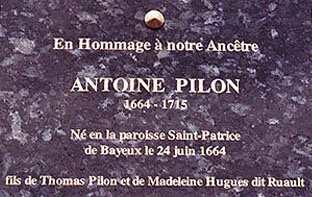
At about the same time, in the town of Bayeux, Normandy, France, where the famous tapestry depicts the Norman Conquest of 1066, there was a young man seeking adventure. Antoine was born on the Feast of St. John the Baptist in 1664 (June 24th).2. His father Thomas Pilon, a butcher and his wife Madeleine Hugues dit  Rouault had 5 children.

At the age of twenty-four Antoine left his homeland to cross the Atlantic seeking a new life in what was then a fledgling country where he became a farmer and later a landowner.

hommage


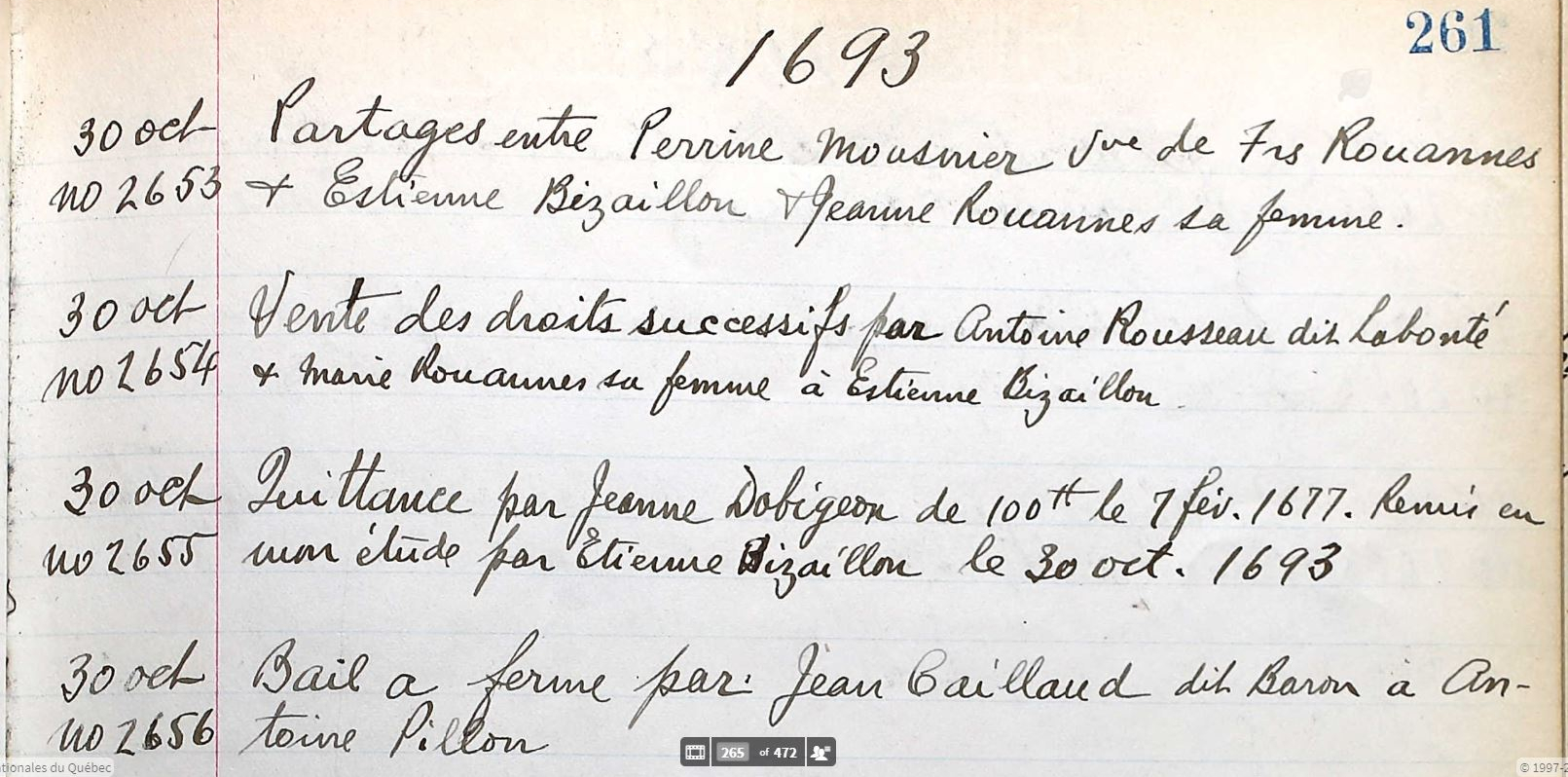
Capture.JPG Pilon lease on a farm 1693

30 oct   no.2656   Notarial Record – Lease on a farm 3.

Shortly after his arrival in Ville Marie Antoine, my 7th greatgrandfather chose his bride to be, Anne Brunet. Michel Mathieu Brunet dit L’Etang and Marie Madeleine Blanchard brought Anne into the world on January 1, 1672.4. Michel was a farmer and a prosperous fur trader. At the time of Anne’s birth, the family was living near Trois Rivieres. The family moved to Lachine at a later date.

Antoine and Anne were married in Notre Dame parish church in Montreal on January 29, 1689. Their first child, Jeanne was born in Montreal, December 9th of that same year. Over a period of 24 years the couple had 14 children.6. The first 3 children were born in Montreal, two, in Laprairie and the others in Lachine and Pointe-Claire. In those days not all children survived, and they lost three infants. However, several of their children lived well into their 80`s.

Capture.JPG Marriage Church Record Notre Dame

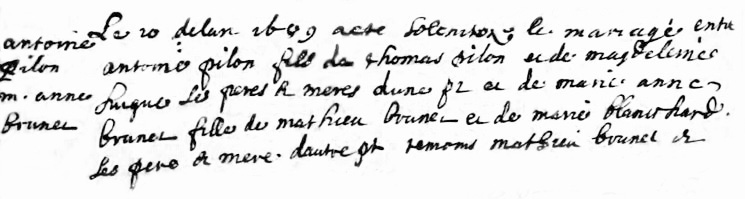
Church record of the marriage of Antoine and Anne 5.

Translation:

On the 20 of January 1689  a solemn marriage between Antoine Pilon, son of Thomas Pilon and Madeleine Hugues, the father and mother on one hand and Marieanne (Anne) Brunet daughter of Michel Mathieu Brunet and Marie Blanchard, the father and mother on the other. Mathieu Brunet was a witness.

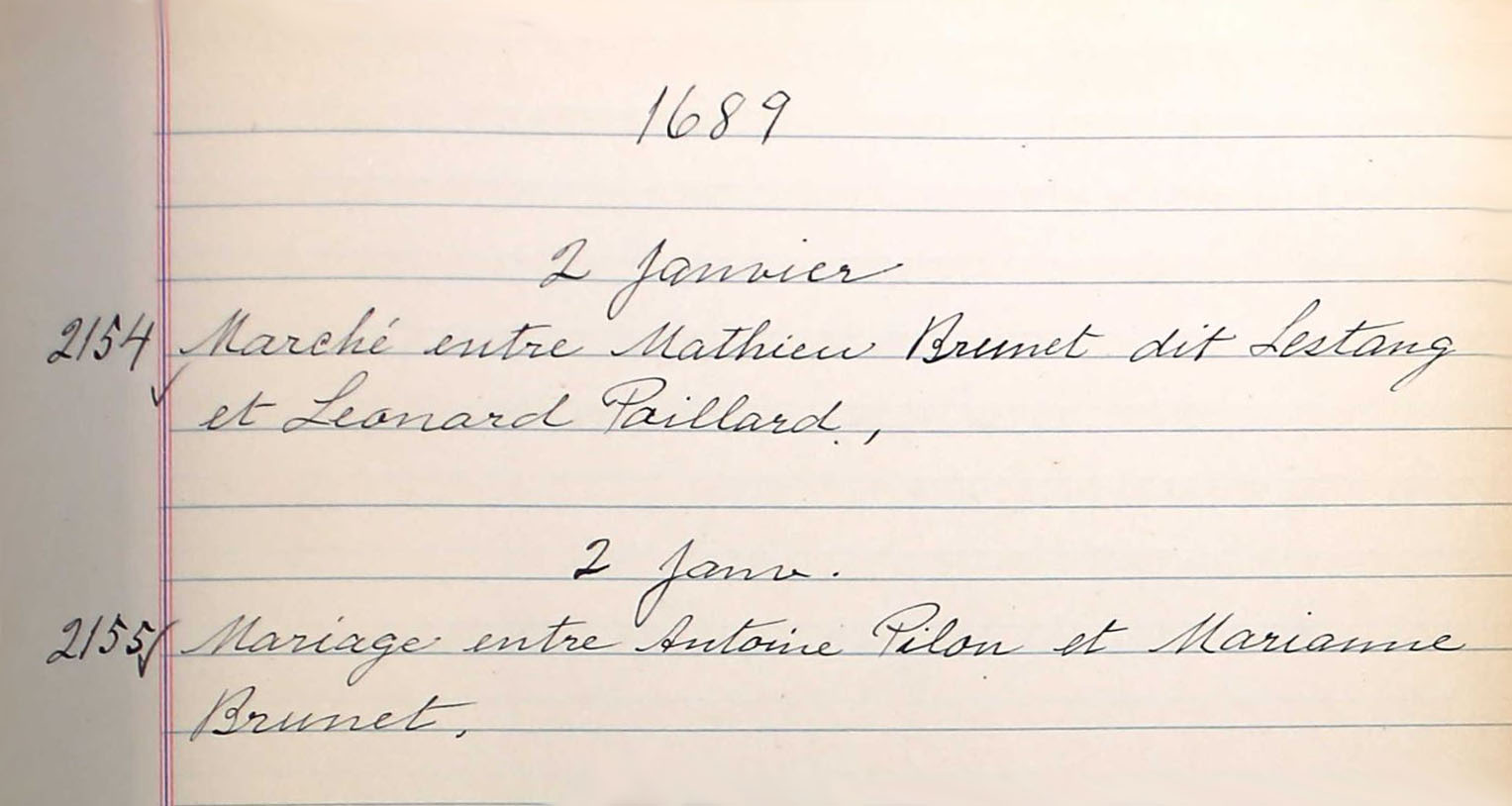
Capture.JPG Notarial act marriage Antoine Pilon and Marieanne BRUNET copy

1689   2 janvier    21551    Notarial record of marriage 5.

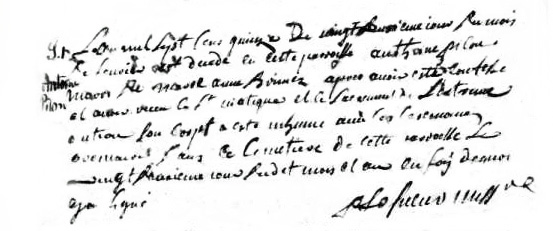
Antoine was not as fortunate as his children. He died at the age of 50 on February 24th, 1715.7. He is buried in St. Joachim Ancient Cemetery beside the church in the village of Pointe-Claire not far from the home he built.

Antoine Burial

Church Record of Antoine Pilon’s burial

During those early years Ville Marie, as Montreal was called at that time, experienced numerous Indian raids. One of them being the devastating Lachine Massacre in August 1689. Many lives were lost. During the next few years efforts were made to find a peaceful resolution.

The Great Peace of Montreal (FrenchLa Grande paix de Montréal) was a peace treaty between New France and 39 First Nations of North America. It was signed on August 4, 1701, by Louis-Hector de Callière, governor of New France, ….and provided 16 years of peaceful relations and trade before war started again.”.8.

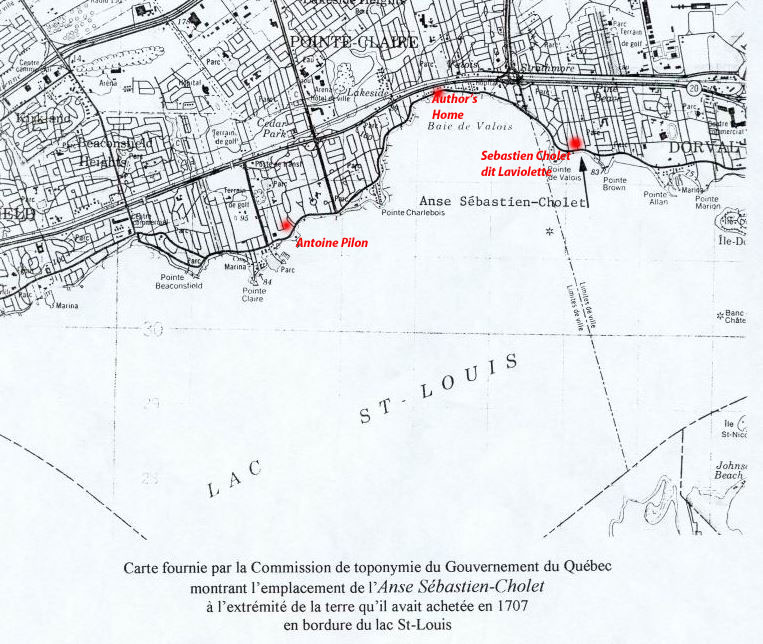
After the signing of the peace treaty, the Sulpicians, administrators, and seigneurs of the land began conceding properties. Several of my ancestors were among those who benefited from this opportunity. They chose to move westward to what we now refer to as the West Island. The first, Sebastien Cholet dit Laviolette,  my 6th great-grandfather, a weaver started the trend along with his wife Anne Thomas, the ‘fille du roi’. He and his family settled in the community of present day Dorval. Their home lay  on the eastern tip of Valois Bay in a small cove that bears his name, overlooking Lake St. Louis.

Antoine Pilon my 7th great-grandfather also chose to settle west of Ville Marie, following in Sebastien’s footsteps, He also purchased land in Pointe-Claire with frontage on the shores of Lake St. Louis. 9.

map of Cholet cove copy

All the land transactions, from the original owner Pierre Sauvé to Antoine Pilon are all documented to the current date.10.

The Antoine Pilon House lies on lot 88 of the present survey, forming a part of lot number 154 in the original land registry of the Island of Montreal. Lot 154-D was conceded by the Sulpicians to Pierre Sauvé dit Laplante on November 24th,1698. Then, the size of the property was 3 acres of frontage and 60 acres deep, on the shore of Lac Saint-Louis.

Pierre Sauvé and his wife Marie-Michel sold this land to Jean du Tartre dit Desrosiers on October 27th, 1700. Two transactions took place on the same day, September 19,1706. DuTartre gave a concession to Madeleine LeMoyne, already in possession of the adjoining lot. She immediately sold lot 154-D to Antoine Pilon, having already purchased from her the adjoining lot 155-D.

Anne Brunet, Antoine’s widow, inherited the lot after Antoine`s death and she gave the land to her son Mathieu on January 22nd, 1729. The deed (acte de donation) indicates land of 5 acres of frontage to 20 acres deep, consisting of lots 154-D and 155-D. In this deed we learned that the lot contained a house, and a small barn, possibly built during the summer of 1707.

The house Antoine built remained in the Pilon family, passed on from his wife, Anne to their son Mathieu and then from father to son for 120 years.11. Remarkably it is still standing today. One can see the home when driving along 258 Lakeshore Road-Bord-du-lac near the entrance to Pointe-Claire village.

maison_antoine_pilon

Antoine Pilon House

      Footnotes:

  1. http://www.migrations.fr/ACTESFILLESDUROY/actesfillesduroy_index.htm
  2. http://www.piloninternational.ca/international/genealogies/bayeuxplus.htm
  3. Bibliothèque et Archives nationales du Québec; Montréal, Quebec, Canada; Collection: Fonds Cour Supérieure. District judiciaire de Montréal. Cote CN601. Greffes de notaires, 1648-1967.; District: Montréal; Title: Saint Martin, Antoine Adhemar dit (1668-1699)com. Quebec, Canada, Notarial Records, 1637-1935 [database on-line]. Lehi, UT, USA: Ancestry.com Operations, Inc., 2016. Repertoire de notaires (Notarial catalogs), Montreal. Maugue, Claude (1677-1696)
  4. http://www.francogene.com/genealogie-quebec-genealogy/000/000796.php
  5. Ancestry.com. Quebec, Canada, Vital and Church Records (Drouin Collection), 1621- 1968[database on-line]. Provo, UT, USA: Ancestry.com Operations, Inc., 2008.Quebec, Canada, Vital and Church Records (Drouin Collection), 1621-1968
  6. http://www.francogene.com/genealogie-quebec-genealogy/005/005837.php7
  7. .Ancestry.com. Quebec, Genealogical Dictionary of Canadian Families (Tanguay Collection), 1608-1890[database on-line]. Provo, UT, USA: Ancestry.com Operations, Inc., 2011. [database on-line]. Provo, UT, USA: Ancestry.com Operations, Inc., 2011.Original data: Tanguay, Cyprien. Dictionnaire généalogique des familles canadiennes depuis la fondation de la colonie jusqu’à nos jours. Québec, Canada: Eusèbe Senécal, 1871-1890. Library and Archives Canada, Ottawa, Canada
  8. https://en.wikipedia.org/wiki/Peace_treaty
  9. http://www.genealogie.org/famille/cholette/eindex.html
  10. https://www.wikitree.com/photo/jpg/Pilon-239
  11. https://grandquebec.com/montreal-touristique/maison-antoine-pilon/