Every country has a foundation myth and so, too, have some families.
My mother’s family foundation myth was that her mother, Maria Gagnon Roy, was the daughter of a ‘master butcher’ and that she brought an enormous dowry of 40,000 dollars to her 1901 marriage to Jules Crepeau, a hardworking and ambitious 27 year old clerk at Montreal City Hall.
“Jules started out sweeping the floors at City Hall at eight years old,” my mom often said with a tear in her eye but according to his file there his first official post was in 1888 at 15 years old as messenger boy in the Health Department.*
My mother put so much store in this family myth that she even attributed her 5 foot 8 and a half inch height (tall for a French Canadian) to the fact she came from butchers. All that good steak they ate!
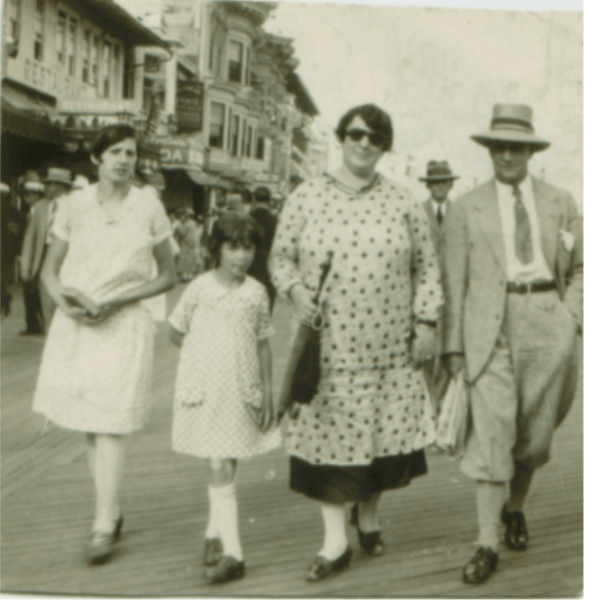
Left to right, Aunt Flo, my mom Marthe, Maria and Jules 1927ish.
The Father-in-Law: Maria’s Dad
My great-grandfather, Louis Roy, (circa 1843 to 1900) was the son of Pierre Isaac Roy and Natalie Jobin of Montreal and he worked as a butcher from 1860 to 1900. He came from a long line of butchers. In 1865 Louis Roy married Melina Gagnon, whose mother, Eleanore Ethier dit Lamalice,1 came from butchers as well.
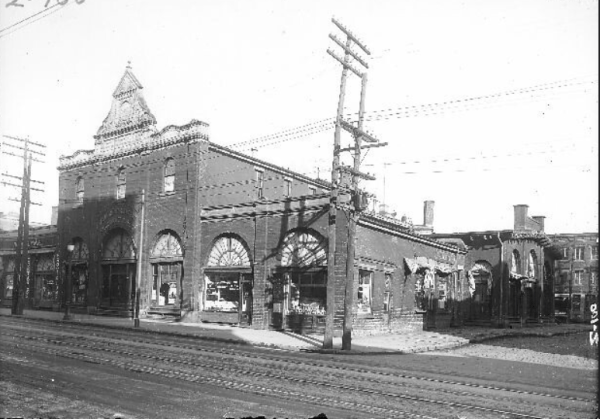
At first Louis worked alone at St. Laurent Market and then from 1881 to 1896 he partnered with a J. Lamalice, likely his cousin. Roy et Lamalice had two stalls, 16 and 17, at that market in the south central part of the city near what is now Chinatown. Their partnership was dissolved in 1896 when Louis’s son, also Louis, entered the profession.
Louis Gagnon was a mason, all other men on Maria’s side were butchers.
L. Roy and J. Lamalice paid a good sum of money, perhaps 200 dollars a year a piece,2 to have these two stalls at St. Laurent Market.
According to a University of Laval thesis,4 butchers in Montreal were politically influential. Public markets were designed around their needs, in large part because of the slew of health regulations around the slaughter and sale of meat. Retail butchers also profited greatly at these public markets, more so than their private counterparts, sometimes only having to work 2 or 3 days a week to pay the bills.
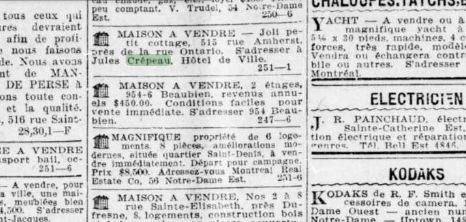
Louis Roy and his ‘small’ French Canadian family, wife Melina, son Louis and daughters Eugenie and Maria, lived at various addresses early on, then moved to 357 Amherst around 1880 and then in 1890 to 515 Amherst, a brand new ‘small cottage.’
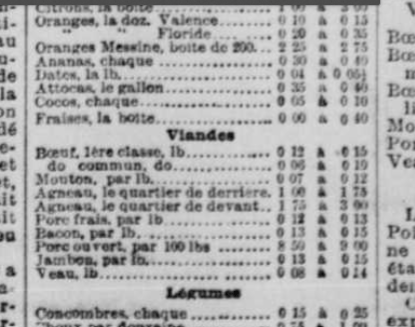
Price of meat Bonsecours Market, 1893
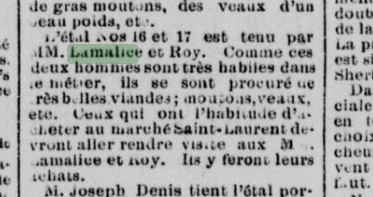
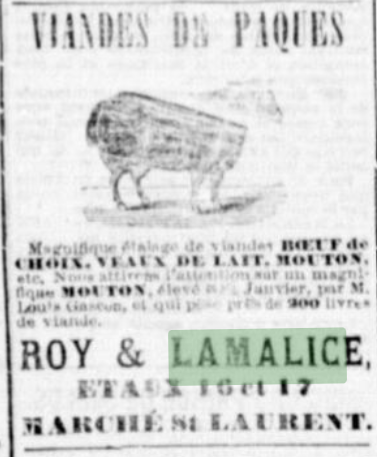
L. Roy et J Lamalice advertised regularly in all the Montreal papers, usually a little blurb like this.
Roy and Lamalice are very capable with very nice mutton, veal etc. Other ads focused on how beautifully the stall was decorated. (Clearly ladies did the shopping.)
They sometimes put in bigger ads
Choice beef, milk fed veal and mutton for Easter.
And they gave to charity, as well, Notre Dame Hospital and the Public Welfare are two examples I discovered.
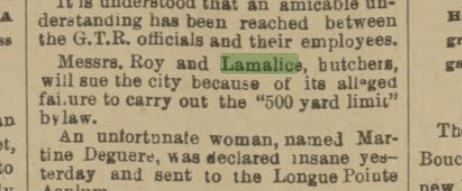
It may be significant that in 1891 Roy et Lamalice brought the City of Montreal to court. They complained that the City wasn’t doing enough to keep private butchers the mandated 500 yards away from the public markets.
They pay a license fee for a stall of 200 dollars, say Roy and Lamalice, as reported in Le Minerve.
I have to wonder if this is where Louis Roy, master butcher, first met – or maybe locked horns with – the City Hall up-and-comer Jules Crepeau, messenger boy in the Health Department – but a boy gifted with a superb memory for regulations and by-laws.3
In 1896, Jules Crepeau, Second Assistant City Clerk, was assigned the post of Secretary of Public Markets, a suitable promotion considering his Health Department roots.
In 1900, a year before his marriage to Maria Roy, he would be involved in his first scandal at City Hall, one that involved butchers. Men in that trade claimed that aldermen were illegally charging them 50 dollars to have their stalls moved at the prestigious Bonsecours Market. Jules testified in Court and denied knowing anything about it.
In 1900/1901, the newly widowed Melina Roy rented out her Amherst house (yes, to a butcher) and moved to Notre Dame street to live with her married daughter, Eugenie, her husband Jacques (James) Deslauriers (son of a butcher who was deceased). She brought her young adult children Maria and Louis along. The Census man came around while she was there.
The 1901 census has my grandmother Maria and her brother Louis erroneously listed under Deslauriers. Laura Lacombe is an orphaned cousin. She would live with Maria and Jules until her death in 1921, just a few months before my Mom’s birth.
The Marriage of Jules and Maria
After my grandparents Maria and Jules got married on July 1, 1901, widow Melina and her grown up son Louis moved back into 515 Amherst with the newlyweds.
In late 1901, Jules applied for a permit to build a three story brick building worth 3,000 dollars at 513 Amherst next door and the next year he would rent it out to three different families.
Maria would very soon give birth to my Uncle Louis. (Louis was baptized exactly nine months after the wedding.) My Aunt Alice would arrive a year after that and in 1905 the Crepeau family would move to St. Hubert Street near Marie-Anne.
Melina Roy and her son Louis, Melina’s orphaned niece Laura, and possibly the Deslauriers would stay at 515 Amherst for a year until Melina’s death in 1906 upon which time Jules would sell the ‘small cottage.’
The Dowry
A notarial record reveal there was, indeed, a 1901 marriage contract for Jules and Maria from June 27, a few days before the marriage, but of course there are no details so no proof of a 40,000 dollar dowry.
It does look like Jules came into some money early in his marriage. He builds that brick triplex and then moves in 1905 to what is still a very tony area with tall elegant stone townhouses.
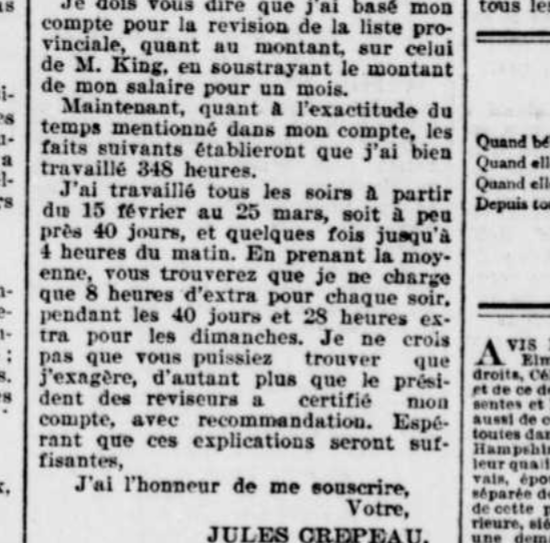
Before his marriage, Jules was making around 700 dollars a year at City Hall, a middling/good salary for a family man although at one point he asked for 248 dollars in overtime because “over a forty day period I worked 348 hours until four in the morning and on Sundays.”*
Still, a 40,000 dollar diary for Maria’s marriage seems highly unlikely. (That’s 1,500,000 in today’s money.)
I am doubly skeptical about the big dowry because I did not find any contract listing for the 1897 marriage of Maria’s older sister, Eugenie, to Jacques (James) Deslauriers, merchant. This suggests Eugenie received no formal dowry.
Why the second daughter and not the first?
Also, If Louis Roy, successful master butcher, left behind a large estate why did Melina Roy rent out her modest Amherst home after he died and move in with her daughter Eugenie and the husband. To help with the grandchildren?
A modest street in 1900, Amherst today is called Attikan. The only remnant of an early era is this little ‘French Canadian” cottage on the corner where everyone lived in 1901.
Lovell’s Directory to the Rescue.
When I first looked for Jules and Maria on the 1901 automated census I found neither one. Maria was erroneously listed under Deslauriers and Jules wasn’t there.
So, it took me years, but eventually I consulted Lovell’s to discover that prior to his marriage Jules was living on Mentana Street in the Le Plateau Mont Royale with his widowed mother, Vitaline Forget Despaties Crepeau, and his three brothers, the older Isadore and the younger Roderick and Paul.
Isadore in that era is already working in insurance – as he would for the rest of his life. In 1898 Roderick is listed as a plumber, then a year later as a butcher. His brother Paul makes the Lovell’s listing in 1899 and is listed as a butcher working at “R. Crepeau and Freres.”
It’s all very suspicious because the highly regulated butcher trade wasn’t something you could jump in and out of. I suspect older brother Jules, son of a mere house painter, pulled some strings to get his younger brothers a short cut into that lucrative trade. (Neither man would remain a butcher for long.) If my grandmother’s family tree proves anything, it’s that the butchers of Montreal liked to keep it in the family!
So, I still have no concrete proof but it would not surprise me if my grandmother Maria’s dowry, whatever the true amount, was provided by a group of butchers (perhaps all members of her extended family) in return for Jules’ support at Montreal City Hall.
Prior to his marriage to my grandmother, Maria Roy, as I said, Jules had had plenty of chance to interact with these ‘politically influential’ tradesmen.
Anyway, that was simply business as usual in those days.
Eleanore Ethier dit Lamalice was also a distant relation of Jules Crepeau through the Ethier line of Lachenai Seigneury. See my Why My Grandfather had a lot of Gaul on this site.
This is the sum that Louis Roy cites in his 1896 complaint as reported in the French papers. It’s called a license of 200 dollars to have a stall at St Laurent Market. In the 1920’s the sum is just 50 dollars a stall, I discovered in another online item but by then the butchers are paying hefty income taxes, so they mention how high this income tax is in their complaints.
Le Devoir says Jules’ mind was like a bank vault holding within all the city by-laws. This was in his 1938 obituary.
YVES BERGERON:LES ANCIENNES HALLES ET PLACES DE MARCHÉ AU QUÉBEC :ÉTUDE D’ETHNOLOGIE APPLIQUÉE. University of Laval Thesis Canadian Thesis portal
5. Newsy items courtesy of BANQ newspaper archive.
My father, Edward McHugh, didn’t really talk about his family’s trip of a lifetime. After all, Dad wasn’t even born yet. But it must have been discussed by everyone when he was a boy. In 1911, the first member of the family, Mary Ann McHugh, moved from Dundee, Scotland to Montreal.
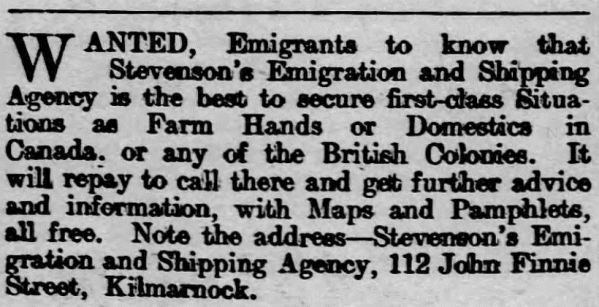
At the time, booking agents in the United Kingdom advertised and recruited potential immigrants to Canada. There was an acute need of domestic help and agricultural workers. Between 1890 and 1920, Canada experienced its third wave of immigration and its peak was between 1911 and 1913, just before World War I.1 The following type of advertisement was common in the newspapers.2
Booking agent advertisement
Maybe one of these advertisements gave the McHugh family the idea to emigrate to Canada. Or maybe Mary was ready for an adventure. She was just 21 when she disembarked from the SS Grampian that had left Glasgow on June 24, 1911 and arrived in Quebec City on July 9, 1911. She would have had a medical exam when she arrived to ensure that she was in good health and did not have an infectious disease. Conditions for immigration to the colonies were well known in the United Kingdom. The February 11, 1911 edition of the Hamilton Observer, in its article, Canadian Notes, People Prohibited, details the reason some potential immigrants could expect to be refused by Canada. The article explains the booking agent’s liability for the immigrants that arrived in Canada for a period of three years following their arrival:
“The following classes of people are prohibited from landing … feeble minded, idiotic, insane, or who have been insane within five years, afflicted with any loathsome, contagious, or infectious disease; anyone who is a pauper, who is destitute, who is a professional beggar or vagrant.”3
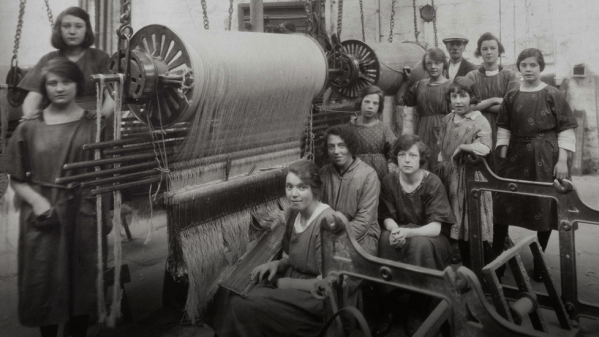
All of the members of the McHugh family worked in the jute mills in Dundee. The 1911 census indicates Mary was a jute weaver, which probably meant that she operated a jute weaving machine.4 She lived with her mother, Sarah Jane McLaughlin, and her brothers, Edward and Francis. They lived at 1 Tait Lane, Dundee. Her other brother, Thomas, my grandfather, lived with his wife and seven children at 9 Tait Lane.
The picture below shows the jute weaving machine.5
Mary must have been satisfied with her new life in Montreal, Quebec. Within a year, her mother and her two brothers, along with my grandfather, had followed her to Canada. Six months later, my grandmother, Elsie Orrock, and her seven children joined her husband, Thomas, in Montreal.
The McHughs lived close together in Dundee and they also lived close together in Verdun, Quebec. While I will never know for sure why they decided to emigrate, I can guess that they wanted a life that was not as hard as the one working in the jute mills. There are a few clues that this was not a spur of a moment decision but a planned family decision.
Mary left first and, if it did not suit her to live in Canada, she would have been able to easily return to Dundee. Her mother and brothers were still there. By the time her mother emigrated, along with her three sons, they arrived with $150 CAD, about $4,750 in today’s dollars. Browsing through the passenger lists, I can see that they had a lot more money than many of their fellow passengers. 6 They were not a rich family, so this amount of money would have taken some time to save up.
Coincidentally my grandfather joined the Freemasons in 1910 and achieved a Master Mason diploma and a Mark Mason diploma.7 By that time, he already had six children. He worked long hours in the jute mill, including Saturdays. Why would he join the masons when he was already a very busy man providing for his family, plus taking care of his widowed mother, and his siblings who still lived at home? There is no evidence that he ever joined the masons when he arrived in Canada. I believe that it is possible that he joined the masons to in case he needed the contacts to find employment. As he quickly found work, his busy family life prevented him from pursuing his membership in the masons.
Only one of my grandfather’s siblings stayed in Scotland, Sarah Jane McHugh. She was not living with the other McHughs at the time of the 1911 census. But she remained close to the family. Surprisingly, she travelled to Montreal to be a witness at her brother’s wedding at the Notre Dame Basilica in Montreal on May 8, 1913.8 That would have been quite a trip for Sarah Jane to make.
If a British novel penned in the first part of the 20th century contains a Canadian character (for exampleBrideshead Revisited, or Bridge on the River Kwai) that character is inevitably English and from Montreal. Most UK readers of the era would have been unfamiliar with any other Canadian city, including Toronto.
Founded in 1642 as a fur-trading fort, Montreal’s port is strategically located on the St. Lawrence River. By 1900 the city was the financial and industrial capital of Canada– and only increasing in wealth and influence as the rest of the country became more and more industrialized.
The city (majority English in the early going) expanded greatly around that time, gobbling up the mostly French suburbs and flipping the balance of power at City Hall. This expansion also put a strain on city services, especially the housing, water works and transportation systems. Businessmen of all stripes scrummed for the right to improve these services – and make a bundle in the process. The question of the day: were water and power and transportation monopolies good or bad for the average citizen.
The city saw unprecedented immigration in the 1910 era, the numbers peaking in 1912. This influx of mostly poorer people from both Northern and Southern Europe further strained the already inadequate city infrastructure, generating some scary, well-publicized urban problems (including typhoid and ‘the social evil’ of prostitution) and giving rise to a prominent social reform movement. This reform movement was led by McGill professors, clergymen and the elite wives of successful businessmen whose good intentions, often handicapped by an intransigent value system5, inevitably got entangled with the dirty politics and deep dark prejudices of the day.1
The Beck Detectaphone Affair: Tawdry Tabloids and Tasty Tortieres
Jules Crepeau’s first scandal of record at Montreal City Hall was small potatoes. In 1900, as Secretary in charge of Bonsecours Market (the main farmer’s market in the city) he was called to testify on behalf of one Germain Tessier, Clerk-in-Chief, who apparently forced vendors to pay ‘bonuses’ to him for the rental of stalls. It was all on the up and up, said my grandfather. Mr. Tessier was honest and these costs arise naturally and are not, as some butchers were claiming, ‘a surcharge to pay for the next municipal elections.’
My grandfather’s second scandal was much more substantial, a meaty pulp fiction style fiasco involving all levels of government that almost put an early end to his brilliant City Hall career.
Indeed, as the Toronto World tabloid loudly reported in a March, 1914 headline: “Most highly-seasoned stew that has ever been uncovered in Canada. Beats all other scandals put together.”
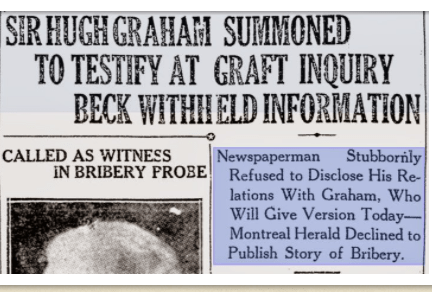
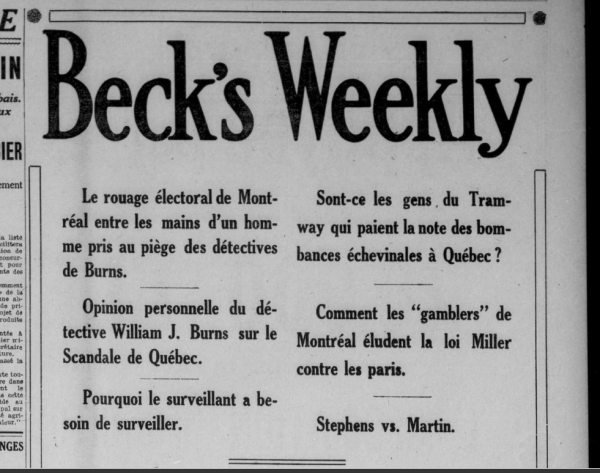
Jules, along with a handful of members of the provincial legislature, allegedly got caught accepting bribes in a sting set up by journalist Edward Beck, former Editor-in-Chief of the Montreal Herald who had recently started his own tabloid Beck’s Weekly with the help of former Herald publisher Lorne McGibbon,2 just so he could write about it.
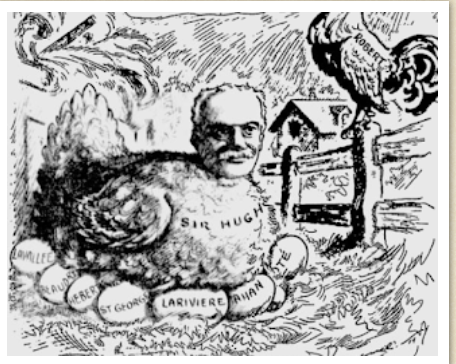
McGibbon was livid over a proposed 40 year tramways deal that would greatly benefit his arch-rival, Montreal Star publisher, Hugh Graham. McGibbon and Beck hired Burns detectives from the US armed with ‘detectaphones’ in the hope of proving that the tramways people were bribing members of the legislative assembly.
That didn’t work out. Instead, the American detectives posed as members of the Montreal Fair Association, a group hoping to get a private bill passed at Quebec so that they could start up a horse-racing and liquor business. They allegedly got my grandfather to accept 3,500 dollars a year in return for insider help, effectively doubling his salary as second assistant city clerk – were the charges true.
Sir Hugh Graham nuturing his aldermen from La Patrie 1914.
This all came down a month before the 1914 municipal election where it looked like the municipal Reform party, that had been elected in 1910 with help from Montreal suffragists, would be thrown out paving the way for the much despised tramways deal.
Now, it helps to have a background in the complicated Montreal/Quebec politics of that era -and thanks to a 1972 Masters thesis, my own decade-long research as well as BANQ fonds, I do.3
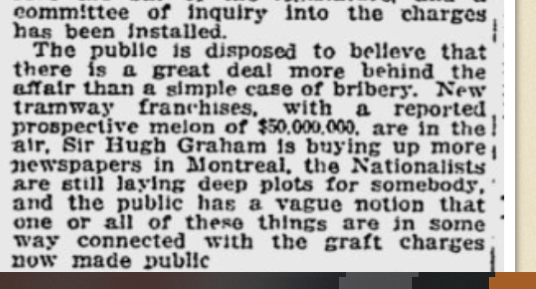
But let this excerpt from the Toronto World summarize the bribery situation (and its myriad mysteries) for you.
Yes, my grandfather got caught up in something much bigger than himself:a series of feuds between the municipal reformers, mostly ‘benign’ English businessmen who wanted to clean up what they saw as a corrupt political system and the ‘machine,’ an informal alliance of aldermen arranged in a hierarchy, who made sure their poorer wards got all the infrastructure improvements while they allegedly pocketed pork, as well as much bitterness between two English publishing titans, Hugh Graham and Lorne McGibbon, who had once been partners in a scheme to control Montreal’s newspapers.4
My small potatoes second assistant city clerk of a grandfather was held up to the voting public5 by Beck as an example of a corrupt (see “impure”)4 French City Hall when the real flash point was a transportation mega deal that would pour millions into the coffers of various Square Mile multi-millionaires, most of them Anglos.5
My grandfather’s name was dragged through the mud in many English and French tabloids, all of whom quoted Beck’s Weekly.
By the look of Beck’s purple prose, he really had it in for my grandfather. It seems personal.
“The City Hall is a sweet-scented sink hole of pollution if men like Crepeau speak the truth. Their greedy official hands take toll of contracts, levy tribute on ordinances, and prey upon the poor city labourers. Graft, graft, graft is written over the doorways, the lintels and on the doorposts.” 6
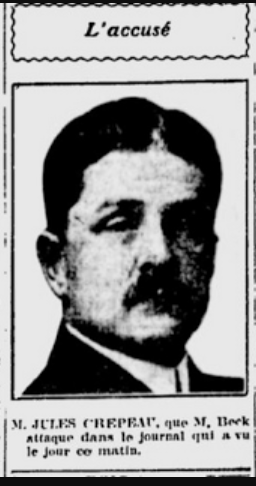
According to the newspaper Le Devoir, my grandfather’s mustachioed face filled up the entire front page of Beck’s first edition. Ouch! La Patrie tabloid put a smaller pic cropped from grandpapa’s official City Hall picture in their newspaper the next day. (It’s probably the same pic.)
The Beck’s Weekly account also made my grandfather look very stupid. “The endurance of the operators (of the detectaphone) were sorely tried by the gabbiness of the Handy Man of City Hall.”
Now, Jules Crepeau was anything but stupid. He was an energetic man – with complete recall – who hustled and muscled his way up the municipal ladder over a 32 year period. “Affable, intelligent, ambitious and active, with pride of purpose,” were words used to describe him*7, as were “a model of courteousness and a living encyclopedia of municipal affairs.” Upon his forced retirement in 1930 the Montreal Star said he had ‘ready tact, a suave manner and a keen intellect” that allowed him ‘to get to the root of the problem, saving time and money at City Hall. ” Apparently, he didn’t join the civil service for “security and repose.”8 He also had powerful people in the Liberal Party of Canada on his side.10
In 1888, Jules was a message boy in short pants in the Health Department (my mother like to say he started out ‘sweeping the floors’) and by 1921 he was Director of Services in a dark power suit, his office overseeing basically everything that came down in the city.
Back in 1914, my ‘handyman’ grandfather had clearly earned a reputation for being useful, but I think he was merely a willing (?) pawn of ‘the machine’ and of some very powerful politicians and industrialists – on both sides of the English and French divide and at all levels of government.
If he were greedy, as Beck so salaciously writes, he didn’t seem to prosper above his salary grade. *9. Even at the height of his career in the 1920’s, my grandmother Maria Roy was no ermine-draped socialite. She herself swept the floors in their three storey grey stone at 72 Sherbrooke West (right beside the Liberal Reform Club of Canada, a watering hole for political bigwigs); she herself rolled out the dough on her fabulously fatty tourtieres; and she gave away to Catholic charities most items from the roomful of ‘gifts’ Jules received at Christmas – keeping only the cigars and certain beautiful pieces of Chinoiserie.
In April 1914, my grandfather sued Beck and McGibbon (and Tarte of La Patrie) for libel and won. He was awarded 100 dollars in reparations and two thousand in legal costs by the Court. He donated the 100 dollars to a children’s hospital, as reported in the Liberal l’Autorite newspaper. (See bottom)
It is no coincidence that Jules was defended by R.L Perron11, distinguished Montreal lawyer, Quebec Liberal MLA, lawyer for the Tramways people and President of the Reform Club (Liberal) of Canada. Thanks to Perron, the detectives’ evidence was deemed inadmissable in court. Of course, it had already been printed word-for-word in numerous newspapers.
Beck’s Weekly ceased publication in 1915 during WWI. It is said that Hugh Graham made sure Beck couldn’t get the newsprint.
In 1916 Beck went West to work for a Winnipeg newspaper12 (where he was sentenced to prison for contempt of court – but won an appeal) and then he left journalism and moved into public relations, working for the pulp and paper industry headquartered in Ste Anne de Bellevue, Quebec. He stayed there until his death in 1930, occasionally planting stories in the Toronto Press about corrupt Montreal politics.
My grandfather kept his job as second assistant city clerk, soon rising to first assistant city clerk, occasionally earning some strategically-placed praise in the left-liberal newspapers l’Autorite and Le Canada until in 1921 he was unanimously appointed Director of City Services. This was a new post created with a new city charter – and after broad public consultations. This lofty post was specifically created to ensure that the city services were distributed evenly between the wards. Ha ha.
But this politically sticky post (being at the centre of all municipal activity; the designated liaison between top elected officials and the seven city department heads, including the Chief of Police) put my dear grandpapa in the way of other ugly scandals.
I will write about those in parts 2, 3 of this series: My Grandfather’s Brilliant City Hall Career in Four Scandals.
For more information: Montreal, City of Tomorrow (in French) by Honorable Nantel, 1910. Internet Archive. I found this book entering my grandfather’s name. The author is describing the city in 1910 and how its recent vast expansion has created opportunities and problems. He wants to pattern Montreal after Paris. He thanks my grandfather, among others, for providing him with information.
2. Lorne McGibbon was a prominent Conservative Party organizer who had brought the bribery scheme idea to a certain Thomas Chase Casgrain, Postmaster General in Borden’s Conservative party, who claimed it was ‘criminal’ – so he went it alone. During WW1 McGibbon spoke at Win the War rallies in support of Premier Borden and conscription. Indeed, he claimed in a speech, that any man who didn’t serve in the war shouldn’t be given work at home.
3.. The Municipal Reform Movement in Montreal: 1886-1914, University of Ottawa Master’s Thesis by Michel Gauvin. 1972.
4. The terms ‘benign’ and ‘machine’ from the Gauvin Thesis. ‘Machine’ refers to an earlier administration, but I think it still applies here. “Benign” is used in the sense that these businessmen believed their motives to be pure and beneficial to both their pocketbooks and the citizenry.
5. Montreal had universal male suffrage with exceptions. It could be said that many (most?) male British citizens could vote in municipal elections: they had to live in a house above a certain rental price, pay off their water tax. There were other stipulations. Widows and unmarried women with property could also vote.
In 1910, inspired by a 1909 visit from Britain’s Ethel Snowden, a moderate ‘maternal’ suffragist, the Montreal Council of Women mounted an effort to get the female vote out and ‘purify’ City hall. Their words. Widows and unmarried women of property could vote in the municipal elections. Council of Women volunteers went door-to-door and sure enough, their Reform candidates and Mayor, John James Guerin, was elected. The women were elated, assuming they had won the battle for their key interests, child welfare, temperance, etc. Guerin gave up the post within two years, claiming that as Mayor he was powerless do to anything.
In 1914, populist Mayor, Mederic Martin, a cigar manufacturer, won the election. He would remain Mayor for many years.
It was these women reformers who liked to refer to City Hall as ‘impure.’ Martin, irked by a letter they sent to him about the Tramways Affair, dared call them out in the press as women of leisure, “idlers” but he had to publicly retract his statement. These women were anything but lazy. He got them back: at the public consultations into the Tramways Affair the Council of Women was asked only silly questions: “Why can’t women get the ticket from their purses before getting on the tram instead of holding up the line.” Why can’t women shoppers shop outside of rush hour?” OUCH.
When the Montreal Council of Women helped get the Reform ticket elected in the 1910 municipal elections, Carrie Derick, President of the Council and Montreal’s No. 1 suffragist, wrote an ecstatic piece in The White Ribbon (the magazine of Christian Temperance Union) about how they had cleansed City Hall of impurities. Purity was a loaded concept in 1910, an era of tainted water and milk and of heavy immigration from Southern Europe. Here’s a bit from her article:
“Self-seeking and dishonour, which would have been scorned in private life, long characterized the Municipal Government of Montreal.
The Citizens appeared to be indifferent or helpless, allowing corrupt officials to display open disregard of all right principles. Associations and leagues to purify the administration of Municipal affairs sprang into being and died.
The result of our united efforts and public-spiritedness paid off (in the election of 1912). An unusually heavy vote was registered. Practically the whole of the reform candidates were elected.
Men united with women in urging women electors to do their duty by voting in order that civic reform might be secured, reform which alone would diminish the unceasing supply of sick, poor, the weak and depraved...”
Derick’s ideas were inspired by the eugenics theory. She was a gold-medal McGill geneticist, educated in Europe, and she gave many lectures, some of them mixing her areas of expertise, social reform, suffrage and social engineering. Her stature lent these ideas weight. The movement would accelerate after WWI and culminate in 1924 in the Coderre Inquiry into Police Malfeasance which would again ensnare my grandfather Jules, by this time the Director of City Services. I will write about that in Part 3 of this series.
5.The group included McConnell and Sir Rodolphe Forget who supported Mayor Martin in in 1914. (My grandfather was kin to the Forget’s, supposedly, but he was a Conservative Senator and my grandfather was aligned with the Liberals, so…)
6. Beck’s Weekly was quickly founded when Sir Hugh Graham bought the Herald from under McGibbon after Beck, as Editor in Chief, complained about the Tramways Deal in the Herald in March 1913, with a full page rant in huge 20 point enboldened type. “The Tramways Company’s Brazen Demands: It is well-known that the Tramways Company has City Hall under its thumb and works its sweet will with the people working there. It is known to have an alliance with a sector of the newspaper industry, stifling public opinion. The President of the Tramway and his henchmen occupy seats in the legislature and vote away people’s rights.”
Beck also invited the Montreal Suffrage Association to create a multi-page insert in return for their support of his point of view. That group passed a resolution against the deal (not in their usual purview) soon thereafter. The suffrage insert was published, with a front page letter from Christobel Pankhurst hiding out in Paris. The Montreal Suffrage Association and Beck then had an argument over the profits.
7. From his obituary in Le Devoir, 1938. It was here where it is said that grandpapa had complete and utter knowledge of every detail, however minuscule, of municipal government “like a bank vault.” (This sentiment was widely held.) He was the go-to-guy even at the Quebec legislature, the most influential man when it came to private bills, said the obit.
Another newspaper article said, “Jules Crepeau went grey teaching aldermen their jobs.” In those days, the federal Liberals were aligned with the provincial Liberals who were aligned (claimed the Editor of Le Devoir in 1930 upon the force ‘resignation’ of my grandfather) with Mederic Martin’s regime. Of course, my grandfather, as a civil servant, was supposed to be neutral in his allegiances, but the very nature of his job as defined by the City Charter made this next to impossible.
8. From an article in L’Autorite newspaper upon his installation as Director of City Services in 1921.
9. I met someone online whose grandfather, a corrupt cop-on-the-beat of the era, had managed to buy four homes, at a time when few working class men in Montreal owned their own homes. It is possible that my father needed money to buy his way up the ladder, but it also seems unnecessary, considering his connections and his boundless energy and sharp mind.
My grandfather’s home at 72 Sherbrooke West was right beside the Liberal Reform Club of Canada, where Canada’s Liberal Party power brokers socialized over the decades. No coincidence, I suspect.
I can see that Mme Guerin-Lajoie also lived a few doors down. She’s the famous Quebec suffragist. I wonder if my grandmaman knew her. I assume my grandpapa did.
10. https://numerique.banq.qc.ca/patrimoine/details/52327/3584769?docsearchtext=Jules%20Crepeau%20BeckL’Autorite newspaper’s explanation of the Beck affair, March 1914. It’s all bait and switch tramways business, apparently. The story is put on a back page with the headline being “A tissue of lies,” my grandfather’s quote. This liberal anti-clerical newspaper was started in 1913 by one Tancrede Marcil, who was a disciple of Sir Wilfrid Laurier. BANQ’s blurb claims Laurier was the real ‘chef’ of this newspaper. Marcil also worked on the start up of Le Devoir newspaper.
The elite newspaper praised and promoted and acted as cheerleader for my grandfather throughout his late City Hall career. I’m not surprised that the Liberal Party of Canada was on my grandfather’s side. I just wish I knew more. It looks as if my grandfather was part of Sir Wilfrid Laurier’s plan to rebuild the Liberal Party of Canada and get re-elected. The party had been turfed out in 1911. That was working for Laurier at the beginning, but then WWI happened and the infamous Conscription Crisis killed his chances. He died, anyway, in 1919. WWI broke out a few months after the Beck business, in August.
The article at bottom appeared in l’Autorite in1915, when it seemed that the Chief City Clerk, Patrician lawyer/journalist/scholar L 0 David, my grandfather’s boss, might win a seat in Parliament. (He didn’t). (I got it off BANQ). They are rehabilitating Jules’ reputation after the Beck scandal. LO David, a Senator, made some unsuccessful attempts at winning political seats federally and provincially. It is said that this cultured, learned man preferred writing his histories over the day-to-day minutia of his important day job as Chief City Clerk. That allowed my grandfather, a self-made, humbly-educated ‘detail’ man, son of a mere house painter, to punch above his weight at work.
In a front page editorial in March 1914, Publisher Marsil derided those people who said his newspaper was started up by Pro-Tramways people, much as Beck’s Weekly was started up by anti-tramways people. Nonsense, his newspaper was independent, Marcil said.
Louis Dupire Editor of Le Devoir wrote in 1930, upon Jules’ forced resignation from his position at City Hall that attacks such as Beck’s only served to increase his prestige.
11. RL Perron would benefit, it seems, in 1927 from the Montreal Water and Power Deal, my grandfather’s next scandal.
12. This was during the Galt Inquiry into some Conservative Government impropriety involving legislative building contracts. Beck refused to testify claiming the inquiry was illegal. He died in 1930, after an appendicitis operation, but he lived to see my grandfather turfed out of City Hall by Camillien Houde, so he likely died happy. He got a short obit in the New York Times, where where the bribery scandal was mentioned as his crowning achievement.
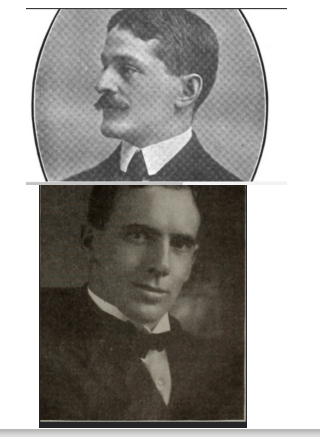
Below: Young Grandpapa and Edward Beck. Archive.org. Bitter adversaries or politics as usual? I suspect Beck hated my grandpapa because they were equal in social standing, pretty much earning the same salary.
My grandfather “The Handyman of City Hall.” According to Beck, my second-assistant city clerk of a grandfather ran the show. This is from Beck’s Weekly as republished in the Quebec Chronicle. BANQ
My unique story of the 1910 suffrage movement in Montreal.
My Story about Montreal during Prohibition, using two families, mine and my husband’s.
Miss Marguerite Lindsay, working as a summer volunteer teacher, went missing from the Grenfell Mission in Cartwright, Labrador, in August 1922. Her body was finally discovered four months later, in December 1922.
The nearby authorities in Battle Harbour were notified immediately, as was her family in Montreal. When her body was gently pried loose from its frozen grave, they were stunned to discover a bullet wound in Miss Lindsay’s chest.
John Martin, the young trapper who found her body, was unable to provide any more information upon further questioning. When interviewed over 50 years later, he recalled his sad discovery that day by remarking: “Twas a remarkable place where she was found. There was a pool (Salt Water Pond) with two big junipers beside it. It was only about 15 minutes walk from the (Muddy Bay) boarding school.”1
Journalists suddenly had ample new fodder for their newspapers, and the story of Miss Lindsay dramatically bounced back into the headlines. Murder? Suicide? Accidental death?
In no time at all, a bullet wound in her chest evolved into riveting stories of “foul play,” a “love affair gone wrong,” or “shot through the heart” and other sensational headlines that sell newspapers. However, the possibility of a tragic and fatal accident was barely mentioned, as that version wouldn’t satisfy scandal hungry readers.
After three inconclusive investigations, Detective Head Constable Byrne was dispatched to Cartwright nine months later, in September 1923. Twenty-two local Cartwright people were interviewed in an effort to gather more information and rule out the rumours of foul play and murder.
Fifty years later, in 1976, Ida Sheppard recalled that time in another interview “I was workin’ at the Muddy Bay School when Miss Lindsay got lost. We were all cryin’ for her ‘cause we fair loved her, she was such a nice person.” This poignant statement seems to echo the sentiment of the people of Cartwright even to this day.2
Eventually Detective Byrne concluded the following in his statements to the press:
“The presumption is that Miss Lindsay on her way to take a bath in Salt Water Pond into which the brook flows, stopped to shoot some muskrat which abound in the river, and that she fell on the firearm which she was known to have carried.”3
“The postmortem examination held at Cartwright showed that a bullet had entered the left side, passed through the heart and out on the other side of the body. From this it is concluded that Miss Lindsay must have fallen on the weapon as it was almost impossible to turn it on herself in the direction.”4
In her coat pocket were a dozen bullets that would fit her Browning pistol, also supporting the accidental death theory.5
Detective Byrne terminated his investigation with the statement: “The postmortem disclosed nothing which would tend to indicate deliberate suicide.”6
Once the sea ice had melted in June 1923, permitting navigaton once again, Miss Lindsay’s body (preserved in salt) was transported to St. John’s, Newfoundland. There a funeral was held for Miss Lindsay before her body was taken by train back to her family in Montreal.
“As the cortege wound its way to the railway station, citizens stood with uncovered heads evidencing their respect for the departed heroine and sympathy for the sorrowing relatives at home. Marguerite Lindsay will rank with the great women of the world who have given their lives for others”. 7
She was finally laid to rest in the family plot in the Mount Royal cemetery in Montreal where, as it happens, I went to visit her recently.
So whether someone today strolls by “Miss Lindsay’s Marsh,” fingers her name on the local church’s plaque8, listens to a song written in her honour9 or reads a poem written by school children… the Cartwright community continues to honour Marguerite’s memory almost 100 years after her death.
Now that’s a legacy!
The grave of Helen Frances Marguerite Lindsay
1“I found Miss Lindsay,” John Martin, 1976, Cartwright, Labrador. Researcher Doris Saunders.
2“We Fair Loved Her,” Ida Sheppard, 1976, Happy Valley, Labrador. Researcher Doris Saunders.
3Evening Telegram, “Miss Lindsay’s Death Accidental,” September 24,1923.
4Evening Telegram, “Miss Lindsay’s Death Accidental,” September 24,1923.
5Evening Telegram, “Miss Lindsay’s Death Accidental,” September 24,1923.
6Evening Telegram, “Miss Lindsay’s Death Accidental,” September 24,1923.
7Evening Telegram, “Miss Lindsay’s Death Accidental,” September 24,1923.
9“Somewhere Beyond the Hills,” words and music by Harry Martin
Notes:
Miss Marguerite Lindsay
By: Adam Dyson and Brandon Cabot (Grade 4 – Henry Gordon Academy, Cartwright, Labrador)
Once on a summer day in 1922,
A fine young lady died and only a few know.
What happened to her is a mystery,
And will every be part of Cartwright’s history.
Harry Martin wrote a song, we really thank him.
They know that the chance she was alive was very slim.
The newspaper says a mystery was found,
The dogs found her body in a snowy mound.
She went for a walk 15 minutes away,
From a land she loved called Muddy Bay.
She never came back, not even the next day,
She was supposed to catch a boat heading far far away.
She was found by the edge of a big marsh,
The winters were violent an her death was harsh.
Miss Lindsay and her life at Muddy Bay,
Is a mystery that is unsolved today.
Somewhere Beyond the Hills
Words and Music – Harry Martin of Cartwright, Labrador
Have you ever wondered, as you listened to the wind, What secrets does she carry, what sad things had she seen? Well, I’ve listened to her stories a thousand times before, But still, I have to question her once more.
What happened on that summer’s day in 1922? Has been talked about by many but the truth is known by few; And those who knew the answer have been silenced by the years, But suspicion on the wind have reached my ears.
Someone said somebody knew but when he spoke he lied, Others said they saw them talking on the day she died; When the darkness found her she was silent, cold and still, And her body lay somewhere beyond the hill.
Somewhere in some city a grey-haired mother prays, Please, God, protect my angel in that land so far away; But tonight her youngest daughter lies asleep beneath the snow, In a winter land so far away from home.
Then one cold December day a mystery was unveiled; They found the poor young maiden there beside a trapper’s trail; Her body, cold and lifeless, had a bullet through the breast, Now, the reason why won’t let this poor soul rest.
I have often wondered, as I listened to the wind, What secrets did she carry, what sad things had she seen?
But those who knew the answers are no silent, cold and still,
In June 1922, Miss Marguerite Lindsay arrived as a summer volunteer with the Grenfell Mission in Cartwright, Labrador. Two months later she went missing.
When Miss Lindsay didn’t return from her afternoon walk that fateful day, an extensive search took place immediately. All of Cartwright took part and did their utmost to find her.
Indeed, Marguerite was held in such great affection by the local children and their families that a thorough search of the area was made by her boy pupils, who combed the shoreline and nearby woods inch-by-inch.
Reverend Gordon, with several others, took a motorboat and cruised along the Cartwright shore without luck. They concluded that she must have drowned, perhaps by hitting her head while swimming or falling down some cliff into the fast tidal currents, which then carried her away.
It wasn’t long before the news got out. On August 15, 1922, The Evening Telegram in St. John’s, Newfoundland, published the first of many articles about the fate of Miss Marguerite Lindsay with the headline: “Tragedy at Cartwright – Volunteer Teacher Supposed Drowned.” This was the type of sensational story that sold newspapers and, for the next year, the media worldwide went wild with it.
In one extreme case of yellow journalism, several American tabloids published an article which originated in Britain, devoting an entire page to an appalling story with this ridiculous headline:
“Kidnapped by Savage Eskimos – Beautiful Canadian Girl Suffers As Tragic a Fate As Ever Befell a White Woman; Carried Off by the Dreaded “Fish Fang” Tribe Into the Trackless Wastes of Labrador.” 1
The article described, in horrific fictional detail, Miss Lindsay’s new life as the captive wife of one of the imaginary savages. One can only hope that her family didn’t read these newspapers.
A month after her disappearance, in September 1922, my great uncle Stanley Lindsay, another of Marguerite’s brothers, arrived in Cartwright by ship. Unfortunately, nothing was accomplished by his northern trip except the melancholy satisfaction of learning firsthand that no effort was spared to trace his sister. He simply thanked the good people of Cartwright for all they had done.
Imagine their relief at his kind words.
Upon Stanley’s return, the Lindsay family held a memorial service in Montreal at the Church of St John the Evangelist in October 1922. Reverend and Mrs. Gordon attended the “impressive ceremony” on behalf of The Grenfell Mission and the people of Cartwright.
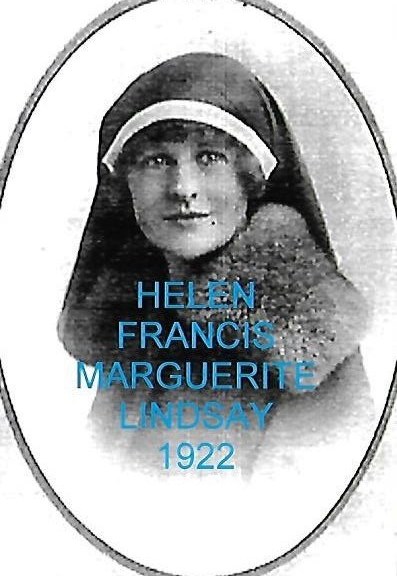
Helen Frances Marguerite Lindsay 1896-1922
On December 13, 1922, four months after her disappearance, Marguerite’s body was discovered by John Martin, one of two trappers whose dogs dug deep into the snow by the shoreline. The frost had heaved her body upward out of the bog.
Sadly, Miss Lindsay’s boy pupils had been searching within ten yards of her body but the Indian Tea bushes native to the area had hidden her.2
She was fully clothed, her exposed frozen face was disfigured and… she had a bullet hole in her chest.
In June 1922, young Marguerite Lindsay travelled from Montreal, Quebec to Cartwright, Labrador, for a summer of volunteer work. Two months later she went for an afternoon walk and disappeared.
Marguerite, aged 25, had volunteered as a teacher with The Grenfell Mission in Cartwright. The International Grenfell Mission is a non-profit organization that was formed in 1892 by British medical missionary Sir Wilfred T. Grenfell to provide healthcare, education, religious services, rehabilitation and other social services to the fisherman and coastal communities of northern Newfoundland and Labrador.1
She taught the older girls sports such as swimming and cricket and ran the recreation program at the Labrador Public School at Muddy Bay, 10 km from Cartwright. Miss Annette Stiles, an American and the other summer volunteer, worked as the school’s nutritionist and cook.
Marguerite was my grandfather’s baby sister. The youngest of six children born to Mary Heloise Bagg and Robert Lindsay, she grew up privileged in a prominent English Montreal family. Her brother, my grandfather, was an Anglican priest in Montreal.The Priest
Marguerite Lindsay and her brother Sydenham – photo taken in Montreal, Quebec – circa 1917
An article in The Montreal Standard newspaper described Marguerite as being “popular in Boston, London and Montreal Society.” She attended a girls’ school near Boston and, in 1918, actively took part in The Sewing Circle (making quilts for charity) and The Vincent Club (supporting women’s health issues). Later she volunteered with the Canadian Red Cross in England during WW1. Her fine education and choice of social circles and volunteer work were evidence of not only her elite upbringing but her ingrained kindness towards others.
In June 1921, a year before her departure for Labrador, Marguerite returned home by ship after a three month visit to England. She was only 24 years old at that time and most likely already considered a spinster!
Her marriage prospects were not good, since after The Great War, there was an excess of females over males of about 5,500 in English Montreal alone. 2 The women’s rights movement had already made progress for women’s suffrage, education and entry into the workplace. Might these changes in society have encouraged Marguerite’s decision to pursue her teaching? Perhaps she learned about The Grenfell Mission itself during her last trip to England. But how on earth did she convince her protective parents to allow such an adventure? Did her brother (the priest) approve of the idea, support her calling and aid in her plea?
The Grenfell Mission photo of volunteer Miss Helen Frances Marguerite Lindsay
The two young volunteers, Marguerite and Annette, were under the direction of the Reverend Henry Gordon. He and his wife ran the school in Muddy Bay. Annette, perhaps a little homesick, described the area as “a bay surrounded by spruce-clad hills, resembling Lake George (New York), warmly sheltered from the Arctic winds.”3
Annette wrote an article depicting some of her experiences with Marguerite and the local people. It was published in an issue of the journal Among the Deep Sea Fishers. She described food demonstrations held for the adults and nature outings with the children in their collective care noting that “the children’s enthusiasm was very contagious – a great contrast to the boredom of some in more civilized places.” And then she continued:
Miss Lindsay was a very good swimmer and the older children loved her teaching them this as well as loving to work with her in the mornings … even on cold days they would beg to go in (the water) and the little ones would join in the chorus: “O! Miss, take I in swimmin’ too!”
It was a hot day on August 4, 1922, when Marguerite left her fellow teacher and friend in Cartwright possibly to go for a swim somewhere along the Sandwich Bay shores. She often took walks alone and was known to be a young lady very capable of taking care of herself. However, that evening when she hadn’t returned in time for the evening meal, a search party was organized immediately.
Miss Lindsay was missing!
(Updated by author – 2021-07-18)
1FindingGrenfell.ca – accessed October 19, 2019
2Westley, Margaret W. Remembrance of Grandeur–The Anglo-Protestant Elite of Montreal 1900-1950, p. 126
3 Stiles, Annette – “The Cartwright Expert Cook” – Among the Deep Sea Fishers, January 1923
My hitherto unknown relative pulled open an old book of Tennyson poems from the bookshelf and out fluttered a newspaper clipping that had been there almost 100 years.
The clipping was a photo of two small boys posed in their Sunday best from a Philadelphia newspaper published in 1921[1]. The names of my father, Thomas Anglin, and his brother Bill were printed at the bottom.
Jenn Garro, who found the clipping, Googled the names and my recent story about Uncle Bill Dear Uncle Bill on the Genealogy Ensemble website was the first hit. She located me on Facebook and sent me a message:
Was I the daughter or niece of one of these boys? My answer – Yes!
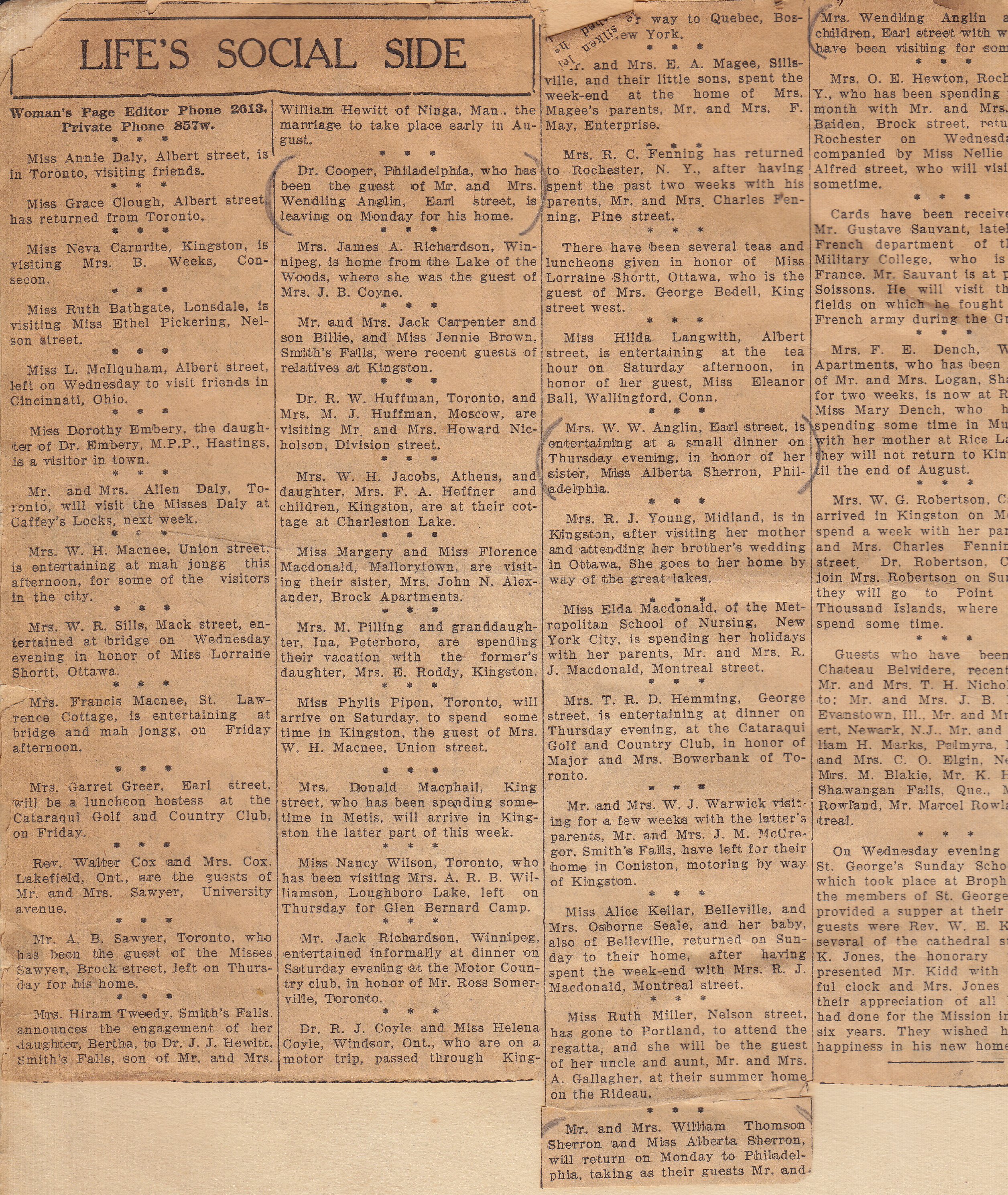
The boys’ mother, my grandmother, Josephine Eveline Sherron, married William Wendling Anglin The Stock Broker, of Kingston, Ontario in 1915 in Philadelphia.
Not only do I have a copy of this newspaper clipping, I also have the original photo. My grandmother relished the world of the newspaper social pages and this early photo of her boys was their introduction into that world.
Another photo, taken six years later, captured the boys lovingly looking over their mother’s shoulder while she read to them. It was first published in the Philadelphia Inquirer in December, 1927[2], and then again in the June 1930 issue of Mayfair Magazine.[3]
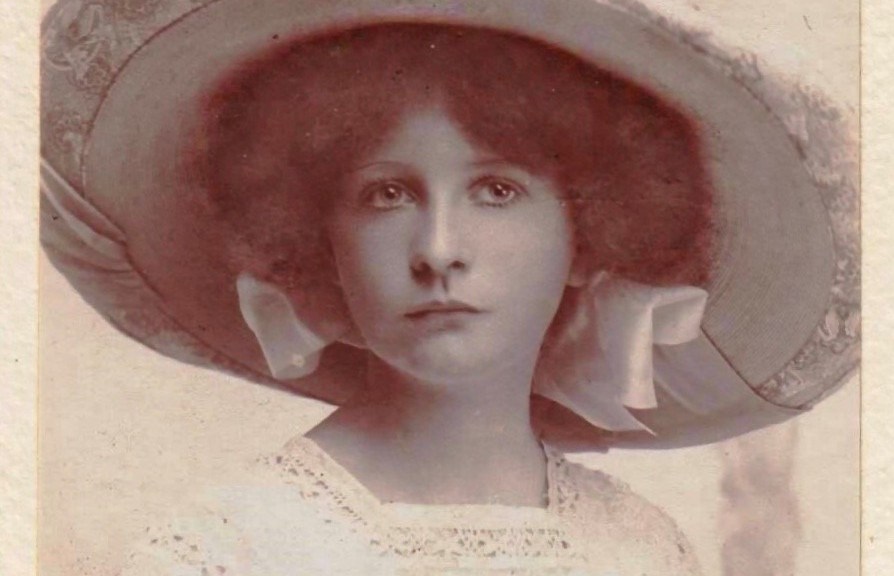
Josephine began modeling from an early age. She modeled hairdos, hats and fashions of the day, and the photos were widely distributed. One such photo, published in the December 11, 1915 issue of the Philadelphia Evening Ledger[4], featured her wearing a black lamb’s wool hat and muff with matching coat. The caption announced that her marriage had taken place that day.
Like many other people at that time, her mother and sister contributed regularly to the newspaper’s social pages, with announcements of teas, luncheons and bridge parties. Special events, such as the 1924 June Ball at the Royal Military College near Kingston, provided eager readers with short descriptions of the ball gowns that the “distinguished guests at the social event of the season” were wearing: “Mrs. Wendling Anglin, rose georgette beaded.”[5]
Most surprising, however, were detailed announcements of the comings and goings of the family.
“Mr. and Mrs. W.W. Anglin, Westmount, Montreal, Canada, will be the guests over this week-end of Mrs. Anglin’s mother, Mrs. William Thomson Sherron, in Germantown. Mr. and Mrs. Anglin will leave by motor on Sunday for a several weeks’ trip to Florida.”[6]
Then, a short while later:
“Mrs. Sherron has as her guests over the week-end her son-in-law and daughter, Mr. and Mrs. W. W. Anglin, of Montreal, Canada, who arrived in this city Friday from Florida, after spending several weeks in the South.”
One visit from her sister was followed so thoroughly that it was announced on four separate occasions!
To begin with, it was announced twice in her local Germantown paper:
”Alberta Cooper Lewis will leave next Wednesday for a visit of several weeks with her brother-in-law and sister, Mr. and Mrs. W.W. Anglin, of Westmount, Montreal, Canada.”
And then,
“Alberta Cooper Lewis has left for Montreal, Canada, where she will remain for several weeks as the guest of her sister…”[7]
Again, on the receiving end of the visit, in the Montreal Daily Star:
“Mr. and Mrs. W.W. Anglin have as their guest, Mrs. Anglin’s sister Alberta Cooper Lewis of Philadelphia, Penn.”
And finally, home again:
“Alberta Cooper Lewis who has been spending a month with her brother-in-law and sister, Mr. and Mrs. W.W. Anglin, in Montreal, Canada, taking part in the winter sports, recently returned to this city.”[8]
Any decent burglar could have seized these well publicized opportunities to plan the perfect theft!
These newspaper articles from 80 years ago are very similar to posts that enthusiastic friends might share on today’s social media networks. Nowadays, anyone can share family activities and photos with the whole world in a similar fashion. Nevertheless, I wonder whether any family photos will flutter into a distant relative’s inbox 100 years from now.
Meanwhile, my newly discovered relative Jenn lives in Bolivia, and we are keeping in touch by messaging on social media.
Note:
On the inside cover of Tennyson’s Poems is written the name “Lizzie Gould”. Lizzie (Elizabeth) Gould was the sister of Harriet Gould (Josephine’s mother-in-law and my great grandmother, Mrs. W.G. Anglin Surgeon and Mentalist). Their brother Harry (Henry) Gould was the father of Pearl, who was Jenn Garro’s great-grandmother. It appears Lizzie kept the clipping of her sister Harriet’s grandchildren in the book of poems. Jenn inherited the book and the clipping.
[1]Public Ledger – Philadelphia, Sunday Morning, July 3, 1921
Fun historic information on free Metro paper. Click at bottom to read on.
Faits historique amusant dans le journal gratuit Metro. Cliquez au bas pour lire la suite.
Readers always loved those stories, but…they would rather not admit it.
Vicky Lapointe, graduate historian from Sherbrooke University, signs a special newspaper blog. She combs through Quebec old newspapers to present us with crimes and catastrophies, francophones from outside Quebec and some pictures, medicine, history and patrimonial buildings.
It is suprising to see what kind of news would make the paper a century or two ago, how people responded, and yes…what strange crimes were being commited. I also enjoy reading about events that are now part of history, as they happened.
At the Quebec Family History Society’s (QFHS) Brick Wall Solutions special interest group meeting last night, member Geneviève Rosseel led the meeting and made a terrific presentation about how to use newspapers to search for ancestors. Geneviève’s presentation included a handout she had put together that listed webinars, books, magazines, preservation techniques, Society resources, and 12 pages of newspaper websites.
The Brick Wall Solutions group, also known as the Brickers, is one of four special interest groups that QFHS members have formed where like-minded people get together to share ideas and solutions. The Brickers group is the largest and an excellent example of how genealogists work together to learn from each other. Each month, a member volunteers to lead a meeting and talk on one topic. Topics range from creating a research log to genealogical proof standards to mind mapping.
The Society’s other special interest groups are Family History Writing, the French Connection, and Newfoundland and Labrador Research Interest. More information is available on the Society’s website.
Here are some of Geneviève’s favourite websites:
1. Bibliothèque et Archives nationales du Québec for Quebec newspapers –











 Genealogy Ensemble