Montreal Archives Collection Our collection of thematic files (VM166) is now available online. Well known to our regular researchers, who formerly had to come and consult it on microfilm at our offices, this collection is extremely rich in information relating to municipal administration and
The database below consists of property assessments available at the repository of Montreal Archives.
The subject matter of property assessments is often overlooked by family lineage researchers and some are not aware of the existence of Archives Montreal.
Previously, I wrote about the ancient Plymouth Gin Distillery located in Plymouth 1 in that story, I mentioned that Plymouth had been attacked, raided and ruled by many others many times.
Here is an account of only a fraction of some of the various raids, uprisings, invaders and wars that is the tumultuous history of Plymouth.
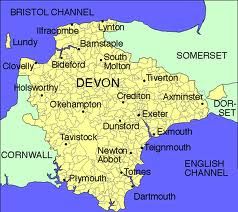
Plymouth is located in the South West Peninsula of England and consists of the counties of Cornwall, Devon, Dorset and Somerset. It is the furthest South and West of all of mainland England.
Map of The South West Peninsula
In 1866 a cave was discovered containing the bones of animals that no longer live on these islands. The bones included the lion, hyena cave bear, rhinoceros, and human remains. So man lived in this district as far back as the early stone age.
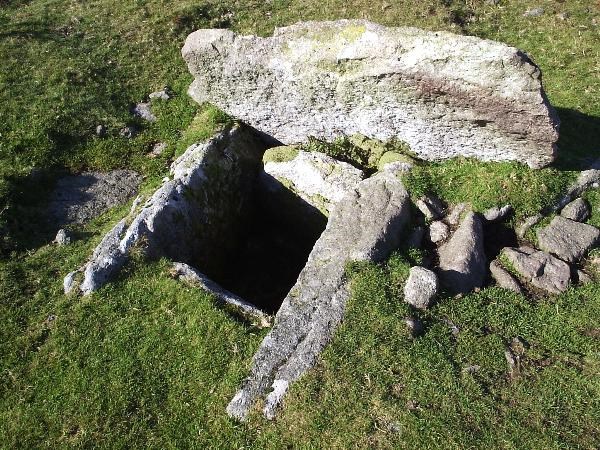
Most local finds in and around various areas of Plymouth have been of the Bronze Age, such as mirrors, daggers spearheads and coins up to 150 BC. In an area of Plymouth called Stonehouse, a burial chamber known as a kistvaen or kist was found. The name means a ‘stone chest’ 2
This is known as the Drizzlecombe Kistvaen Dartmoor, Devon
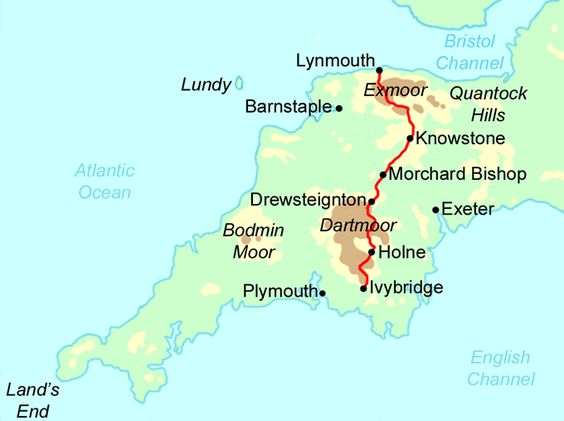
There are many kistvaens in the large area of the Dartmoor National Park just outside of Plymouth. However, the majority of the known Dartmoor kistvaens were opened at some time in the past, and whatever they used to hold is missing. The idea that ancient tombs might contain valuable items is a very old one; one of the first mentions of searching kistvaens in Devon dates back to 1324.
Location of Dartmoor National Park
We can tell that Saxons settled in the Plymouth area because of the names of places ending in ‘Ham, Ton, Leigh, Worthey and Stock. In fact by 926 AD Saxons ruled the whole of Devon. There is an unusual place name are in Plymouth that was once a Saxon lane. In the Doomsday Book of 1086, it was called Heche Bockland and the Saxons had a church there. By 1385 it was known as Ekebokland which over the centuries has evolved into ‘Eggbuckland’ which, as a child, often produced a smirk…
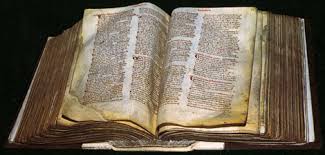
After the Normans conquered England William the 1st gave the Saxon Manors to his Norman Knights and in 1085 had a list made of all the estates in the country and this was called ‘The Domesday Survey’ – the Middle English spelling of “Doomsday Book”.
The Great Domesday Book Held at Kew Gardens, England.
By 1376 we first hear of a Mayor whose name was Maurice Bard. in 1377 the population of Plymouth was 7,000 and by this time, Plymouth was playing an important part in Naval affairs supplying ships for the fleet and was a busy port.
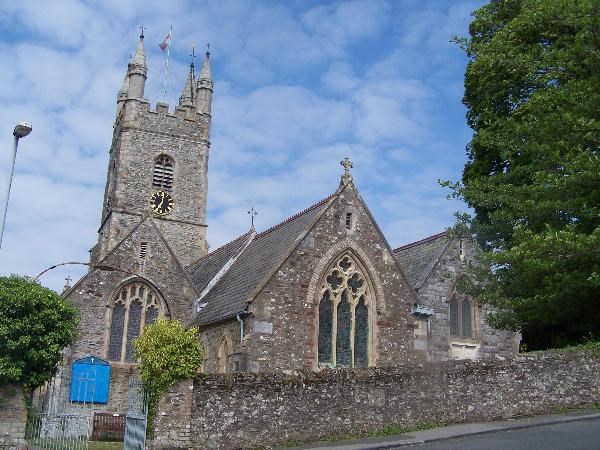
When King Henry VIII dissolved the monasteries in 1539 the priories had to surrender the tithes of Eggbuckland to the king. The present church is a stone building that dates from around 1420/30 called St. Edward. Its Parish registers date from 1653.
The Anglican church of St Edwards Church Road, Eggbuckland Plymouth Devon 3 Photography by Chris Downer
During the 14th Century, the South coast was attacked on several occasions by French pirates with many attacks on Plymouth, which caused a decline in trade and prosperity. Again, raids and attacks took place in 1377, 1400, and 1403. The most famous of all was the 1403 attack from the Bretons. They sent 30 ships and 1200 men at arms who came and anchored as the townsmen of Plymouth fired cannons at them but they landed and burnt 600 houses and plundered.
Later in the same year, an English fleet crossed to Brittany landed 4,000 men and laid waste to a large area. We seem to have had an uneasy relationship with the French ever since!
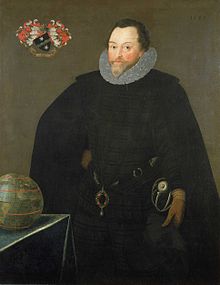
The famous seaman, Sir Francis Drake was born in 1541 near Tavistock, just outside Plymouth and was the eldest of 12 children. In 1581 Elizabeth I knighted him and the same year he was appointed Mayor of Plymouth. He was second-in-command as a Vice Admiral of the English fleet, in the victorious battle against the Spanish Armada, in 1588.
Sir Francis Drake Portrait by Marcus Gheeraerts the Younger 1591
Early in July 1620 two vessels ‘The Mayflower’ and ‘The Speedwell’ set sail from Delfshaven in Holland. They were refugees who thought it would be safer in America. Both vessels reached Southhampton, but after leaving the Speedwell sprang a leak and they had to put into Dartmouth for repairs. Again, they set to sea but once more the Speedwell started to leak and so they put into Plymouth. On the 6th of September, 1620 the Mayflower left Plymouth with 102 pilgrims aboard and reached Cape Cod on the 9th of November 1620. The rest, as they say, is history.
In 1642 the civil war started in Plymouth. Most of the counties were Royalists whilst the towns were Parliamentarians. Plymouth, which was surrounded by Royalist country was the key to the West.
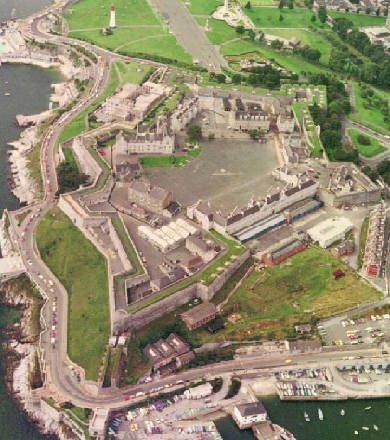
It had a harbour it was strongly walled and there was a fort on the Hoe. The word “Hoe” is derived from old English and appropriately means High Ground.
(This year, Facebook banned the word ‘Hoe” assuming it meant something else!) 4
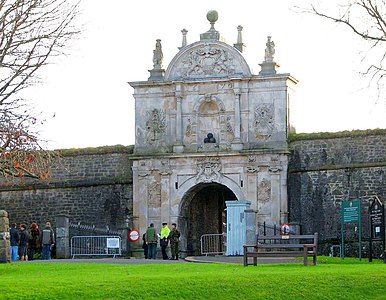
The Royal Citadel on Plymouth Hoe
The Royalists asked the whole town to surrender but they refused, and so, on Sunday, December the 3rd, there took place ‘The Sabbath Day Fight’ The townsfolk rallied from all the neighbouring strongpoints and drove the enemy down a steep hill and into a creek. The rear guard of the Royalist Cavalry was thrown into confusion and the creek was full of drowning men and horses. This was the primary battle but not the end of the siege.
At one time, the King himself came down to Plymouth with 15,000 men but still the town held out. in 1646, the siege was eventually raised. During it, 8,000 people died in Plymouth from various cases a number greater than the normal population.
The Baroque main gate of the Royal Citadel. Note the date 1670 above the arch
Today, the following notable units are based at the Royal Citadel.
The Royal Artillery, Number 3 Commando Brigade and the 29th Commando Regiment 5
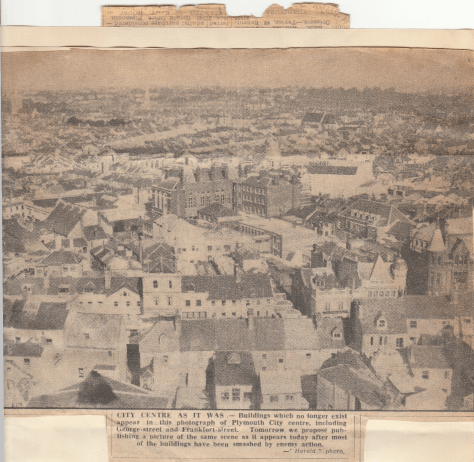
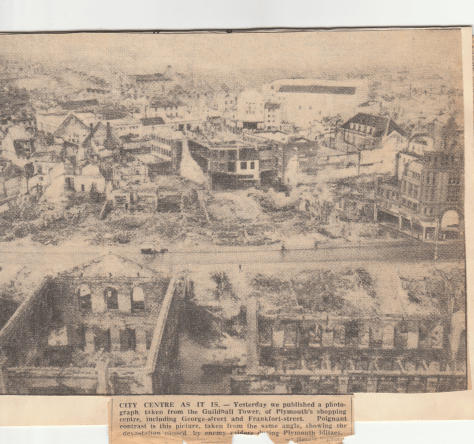
Centuries later, World War Two came to Plymouth. My grandfather saved the newspaper cuttings below. They are not too clear but give an idea of before and after a bombing raid on the city.
In the beginning, there were many small daylight raids. As the nights lengthened, these took place at night and in 1940, there were fairly heavy raids on December 29th and January 13th, 1941.
The caption reads: “The city centre as it was. Tomorrow, we propose publishing a photo of the same scene as it appears after most of the buildings have been smashed by enemy action”
The caption reads: “The City Centre as it is. Yesterday, we published a photograph taken from the Guildhall Tower of Plymouth’s shopping centre. Poignant contrast is this picture, taken from the same angle showing the destruction caused by enemy raiders during the Plymouth blitzes”
The worst raids took place in March and April 1941 and on the second of these raids in April, 106 high explosive bombs were dropped, 26 people were killed, 60 houses were completely destroyed, 400 were badly damaged and 2,000 were slightly damaged.
During those raids, the city centre was methodically destroyed in seven continuous nights of bombing. Plymouth lost all of its chief public buildings including the Guildhall, and the council chamber was wiped out.
In the last three years of the war, numerous raids were made. Plymouth lost its large stores and shops, 39 churches including its ‘Mother Church’ St. Andrews in the city centre, 20 schools, a theatre, eight cinemas, six hotels and nearly 30,000 homes completely uninhabitable and although many more raids took place, none were as bad as in 1941.
Although it took decades to rebuild today Plymouth is a vibrant holiday destination and describes itself as “Britain’s Ocean City” It has many holidaymakers visit and there is plenty to see and do. Plymouth boasts some spectacular scenery, a bustling town centre and some delicious dining options.
There is The National Marine Aquarium, The University of Plymouth, the Marine Biological Association, and the Blue Marine Foundation plus the City Centre and the Drake Mall. In addition, for any adrenaline junkie or marine life enthusiast, there are plenty of adventures to be had!
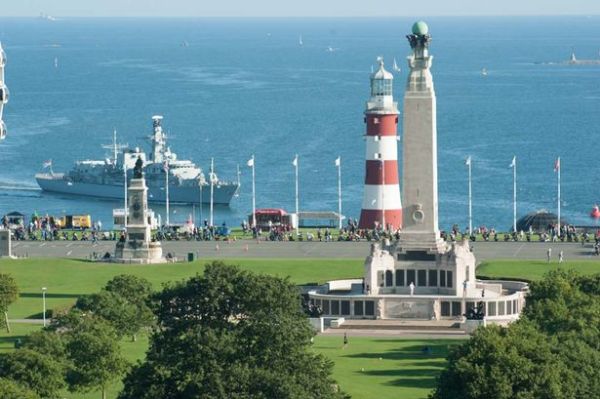
Plymouth Hoe view. with Smeaton’s Tower.
Smeaton’s Tower in this photo was built by an engineer named John Smeaton, constructed of Cornish granite and cleverly dove-tailed together. It has been a Grade 1-listed building since 1954.
It is open to visitors who can climb the 93 steps, including steep ladders, to the lantern room and observe Plymouth Sound – pictured – and the city. 6
Plymouth is now a modern city shaped by its past and steeped in history.
Settlement of New France during the 17th century / Peuplement de la Nouvelle-France au 17e siècle
This dossier addresses the origin of French Canadians, Acadians, and Franco Americans, and those who recruited them to settle in New France.
Websites:
BnF Gallica (Bibliothèque nationale de France) in Paris (Online dossiers (free))
BnF Catalogue général (Bibliothèque nationale de France- two main libraries in Paris
BAnQ Catalogue –12 repositories across the province.
BAnQ Numérique (Online dossiers (free)
BAnQ Collections (Online dossiers (collections) addressing New France & Québec – the people who made a difference.
MemHOuest – Université de Rennes – Master Theses – various universities of France who researched the origin in North West France of immigrants bound for the North American French Colonies from 1598 onward.
Revue d’histoire – Outre-Mers – Essays, dissertations, papers by college and university professors of France who published texts addressing the immigrants from mostly North West France destined to the French Colonies of North America including Nouvelle-France, Acadie, Louisiane of the 17th and 18th centuries.
Les Cahiers des Dix –the best and most influential historians and authors of the French language in Québec province – 1920s onward..
Les Sept aux Archives nationales du Canada in Ottawa. The most prominent French language historians associated with Library Archives Canada and Université d’Ottawa for the past 60+ years.
University History professors – Cambridge University, Université de Paris à La Sorbonne, McGill University, University of Toronto, University of Ottawa, Université de Montréal, Université Laval, University of Moncton who wrote about New France and Acadia.
Société royale du Canada (Royal Society of Canada) based in part in Ottawa- historians who also addressed New France, Acadia, Louisiana and France.
Marguerite, a young teenager along with her three siblings boarded the ship. She could only fathom in her wildest imagination what lay ahead. Her head and heart were filled with sorrow and sadness leaving behind everything she had ever known. The one thing that brought her solace and comfort: knowing she would soon become a marriageable young woman and had signed a contract to marry Jean Veron de Grandmesnil when she arrived in New France.
Excerpt: definition of filles a marier – marriageable young women
“Filles a Marier (1634 to 1662) One of the first organizations formed to settle New France was a group called the Company of 100 Associates. They recruited young single men to come to Quebec under a three-year contract. This organization soon realized it was in their best interest to encourage these men to stay at the end of their indenture period, but they needed women in New France to encourage these men to stay. Thus, they began recruiting “marriageable young girls” who would sign a contract in France and then given a dowry to become the wife of a settlor in Quebec. Some were sponsored by their church; a company associate or merchant. Others were of minor noble families, cousins, or sisters of men already in the colony. ….. Later, critics of the plan tried to say that all the girls were prostitutes taken off the streets of Paris, but this was rarely, if ever, the case. Most settled down, raised families, and formed the roots of many French-Canadian families.”1.
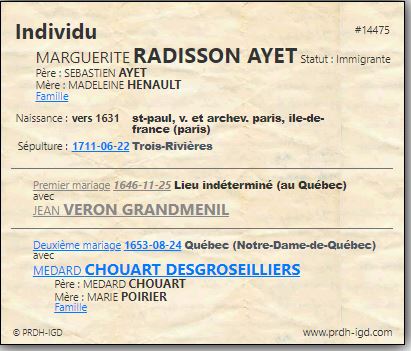
Sebastien Hayet,3. Marguerite’s father had married her mother, Madeleine Henault around 1628 and she was born around 1630. Some historians note that her birth took place in Paris, Saint Paul, Ile de France, while others place her birth in St. Malo. Perhaps, St. Malo would most likely be correct. Both Sebastien and Madeleine were from there. Not long into their marriage Sebastien died leaving Madeleine, a young widow and young Marguerite.
Sebastien Hayet and Madeleine Henault”s marriage, Marguerite’s parente,
Madeleine, Marguerites’ mother was now a widow. At the age of 25 she married a second time in Paris in 1635 to Pierre Esprit Radisson, 44 years old.4. They had three children, Francoise, Elisabeth, and Pierre Esprit, the famous explorer. Their father, a merchant in Paris and owned a prosperous clothing store. The marriage lasted only several years. Pierre died in 1641.
Pierre Esprit Radisson and Madeleine Henault”s marriage
On the 16th of September 1641 Court records in the Chatelet de Paris indicate that Madeleine requested an inventory of Pierre’s possessions.5 A six-page inventory was prepared which she signed. Now a widow for the second time and mother of four young children, no doubt she must have been overwhelmed. She wondered about her future. Life had taken another abrupt turn. How would she cope with another changing event?
Little is known about Madeleine’s life with her children after Pierre’s death. Within five years she too died leaving behind four children. Perhaps that is when the three girls, despite their young ages signed contracts with promises of marriage once they arrived in New France.
After a long and arduous journey crossing the Atlantic Ocean, the Radisson siblings arrived most probably in Quebec City during the summer of 1646. There is no doubt Marguerite was living in the home of Jean Godfrey de Linctot in service to his family and it seems possible that the three siblings were also living there. In the meantime, her future husband, Jean Veron, a soldier, had arrived in Three Rivers several years earlier in 1644.
Jean Veron de Grandmesnil and Marguerite Hayet were married November 25th, 1646. Marguerite received a wedding gift of 50 acres of land from Jean Godefroy on the Lintot concession. 6.
Jean Godefroy’s wedding gift of 50 acres parcel of land to Marguerite.
In 1649 Jean Veron was one of fourteen soldiers to receive a concession at Cap de la Madeleine. The couple settled into their home, and it is speculated that the Radisson siblings lived with the young couple.
Marguerite gave birth to a daughter named Marguerite, followed by a son, Etienne, followed by another son, Guillaume.7.
Jean Veron and Marguerite”s children
It was a rough and dangerous period filled with tensions in New France between the settlers and the Iroquois. In less than a year after giving birth to Guillaume, Jean Veron was killed by the Iroquois in a skirmish on August 19,1652 and was buried the same day.8. This was a shocking blow for the young mother now responsible for three very young children. Once more her courage and resilience were being tested.
Less than a year after Jean’s untimely death Marguerite married widow Medard Chouart DesGroseilliers 9. whose wife, Hélène Martin, the daughter of Abraham Martin had died while giving birth. Marguerite and Medard were joined in Holy Matrimony on August 24th, 1653 in Quebec City and settled in Three Rivers. 10. Their first son was born in 1654, a daughter in 1657, another daughter in 1659 and a third daughter in 1661. Marguerite now had seven young children under her care, the eldest being an eleven-year-old.
Marguerite”s marriages
Medard Chouart Des Groseillers was an explorer who partnered with Pierre Esprit Radisson, Marguerite’s half-brother. They were often on very long journeys. She often wondered if, and when they would return home safely. While Medard was away for extended periods of time she assumed all the responsibilities of caring for the children, managing their several business ventures and those of Pierre. Over the years she became a very astute businesswoman. Many notarial records indicate a plethora of transactions made in her name. However, there came a time in her life when all the family assets and property were seized while Medard was on one of his lengthy journeys.
“On January 27, 1663, Arnaud Perré had her assets and property seized. He then asks for the auction of these. Marguerite opposes this on February 7, stating that she had to protect the rights of her children. On March 6, Perré demanded that the seizure of the property and assets be carried out, or that she pays him 1952 “livres” in the name of her husband. Also, he demanded that she make an inventory of her property. Marguerite tried to negotiate and even offers her share of an inheritance. On April 6, the property was seized.” 11.
Marguerite overcame these hurdles; just as she had done throughout her life.
Many of Marguerite’s children’s lives were cut short. In 1664 Marie Anne Chouart died at the age of seven. On the census of 1666 the names of Marguerite Veron and Marguerite Chouart do not appear, having died prior to 1666. The following year Guillaume also succumbed and in 1678 Jean-Baptiste died. Five of the seven children died in the span of a dozen years. These were trying times for Marguerite often finding herself alone to cope while Medard on an expedition. There were times of joy when the two surviving children, Etienne and Marie Antoinette were both married in 1677.
Médard returned from all his explorations in 1684 and settled in Québec City highly indebted. In 1698 Medard Chouart Des Groseilliers passed away in Sorel.
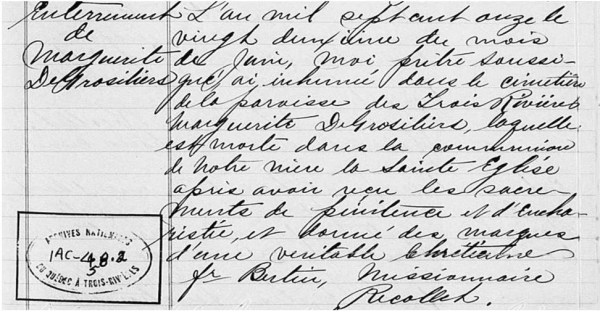
Marguerite return to Three Rivers where she lived a remarkable life for another 27 years. During that time on May 19, 1701, she contracted an obligation to her son Étienne Véron and died on the 22 of June 1711 at the age of 81 leaving behind her two surviving children and her sister Élisabeth Radisson, wife of Jutras, who died in 1722. 12.
Marguerite’s burial record.
Marguerite Hayet-Radisson-Veron-Chouart became an orphan in her teens, married twice, had seven children, buried five of them during her lifetime. She took care of business while Medard explored the Great Lakes and along with his partner founders of the Hudson Bay Company.
The young “fille à marier” lived a life filled with adventures, hardships, and deep sorrows, along with sprinkles of joy along the way. My seventh great aunt proved to be a resilient woman throughout her life, one who possessed an overabundance of courage.
The following database consists of biographical sketches of surgeons, doctors, nurses, and pharmacists who made a difference in the early years of Quebec. Information is gleaned from these books:
Medicale au vieux Trois Rivières
Visages du vieux Trois Rivières,
Medicine in the Province of Quebec,
Hotel-Dieu de Montreal
Registre_journalier_des_malades_de_
l’Hotel-Dieu_de_Quebec,
along with many biographical sketches, theses, and memoirs.
The database includes numerous authors who wrote about the history of medicine, the doctors involved in military operations in Quebec, the hospitals, and the diseases of the time.
An extensive list of repositories from Canada and France was used in this database.
The Fall River Daily Evening News reported in Our Folks and Other Folks Column, “ He sustained an accident and narrowly escaped serious injury in Brookline on Saturday, by jumping from an electric without signalling for a stop. A sliver in the platform step caught in his shoe heel and threw him, as he jumped, and he was dragged some distance. He sustained severe bruises, his clothes were badly torn and his shoe, one of a new pair, was ripped from his foot.” This is one of the more interesting things written about my two times great uncle, Aimé B. Bruneau.
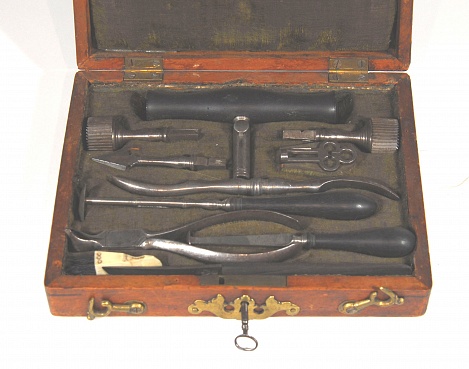
Aimé was a jeweller and studying to be an optometrist in 1897 when the accident happened. He must have been attending the Klein School of Optics in Boston’s South End. The school, founded three years earlier by ophthalmologist Dr. August Klein, was one of America’s first formal training programs in optics and refraction. After one year of study, Aimé could make glasses as well as jewellery.
He had travelled far from his roots. Aimé Benjamin Bruneau was born in Saint Constant, Quebec to Barnabé Bruneau and Sophie Marie Prud’Homme. He grew up on the family farm but as the seventh of 13 children, he had to find employment elsewhere. He left home as a teenager and went with his brother Dolphis to Adams, South Berkshire, Massachusetts where they were probably attracted by jobs in a mill.
I am not sure where he met Mary Floretta Mann. She lived in Rutland Vermont. Her husband, Steven Mann had died in 1869 and the widow was living with her three children. Four other children had died in early childhood. Mary couldn’t have been looking for financial support as she had real estate worth $16,000 and a personal estate of $5,000. When they married in 1871 Aimé was 26 and Mary 43.
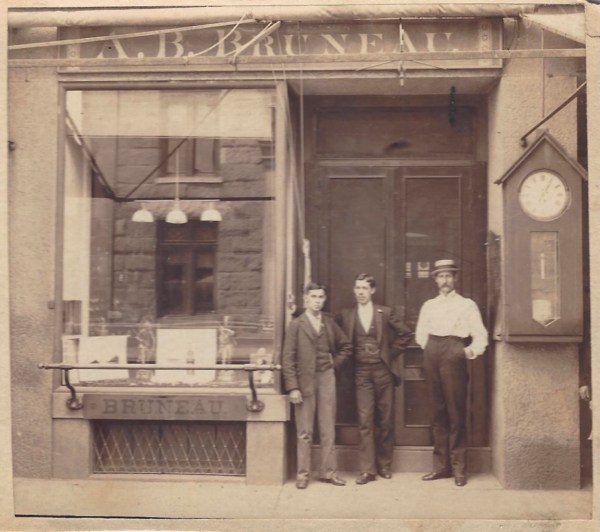
The couple soon moved to Fall River, Massachusetts, which after the Civil War was the leading textile city in America. Aimé didn’t work in a mill but as a clerk in Fred Macomber’s jewellery store and eventually bought him out. It was a prosperous business in the Granite Block, a block-long commercial building in downtown Fall River and one of the leading jewellery stores in the area for almost twenty years.
Aime Bruneau on right in front of his jewellery store, Fall River MA.
“Mr. Bruneau was of a very social nature and made many friends here (Fall River). He greatly lived out of door life and was noted as a walker, covering all the country about this city in his tramps. A walk to Newport or Providence, (almost 20 miles away) on a pleasant Sunday was an ordinary thing with him.”
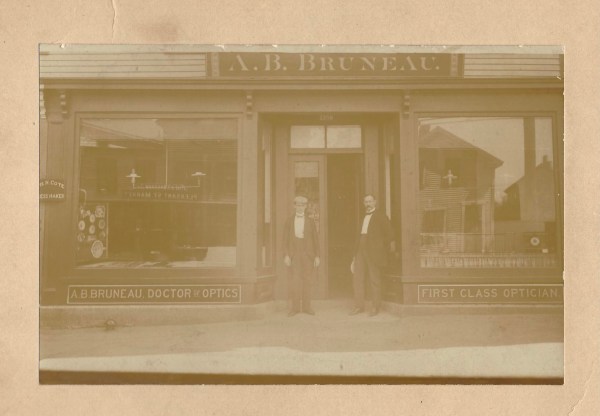
Then in 1897, his business fell off, he closed his store, sold his stock at auction and studied to be an optometrist. A year later he re-established in a smaller way as an oculist. In the next few years, he can be found in Leominster, Massachusetts, Dover New Hampshire and finally in Auburn, Maine with Aime’s occupation listed as a jeweller but also as an Insurance Agent working for the Manhattan Company Federal Street, Boston. During this time Mary appeared to be living in Fall River.
Aimé died unexpectedly of an internal hemorrhage in January 1910. He was 65 and still living in Auburn, Maine. His wife continued to live in Fall River, Massachusetts with her daughter Ida. Mary died there, just six months later at the age of 82. I can speculate about why he wasn’t living with his wife but the long and painful illness noted in her obituary might be the story.
Notes:
Aime B. Bruneau Obituary, The Evening Herald, Fall River Massachusetts. Tuesday 18 January 1910 pg 4. Newspapers.com December 25, 2021. The only Bruneau family member mentioned in his obituary was his brother Ismael as a Congregationalist minister in Montreal.
Our Folks and Other Folks column. Fall River Daily Evening News, Fall River Massachusetts. Tuesday, August 24, 1897. Page 1. Newspapers.com Dec 23, 2021.
Death of Mrs. Mary F. Bruneau: Fall River Daily Evening News, Fall River Massachusetts. Tuesday Aug 23, 1910. Page 8. Newspapers.com Dec 23, 2021.
The New England College of Optometry, NECO was founded as the Klein School of Optics by Dr. August Klein in 1894. Located at 2 Rutland Street in Boston’s South End, the Klein School offered a one-year program that centred on optics, anatomy, and refraction. As optometry quickly became a more established profession, the school’s name changed in 1901 to the Massachusetts School of Optometry. The school began offering a two-year program in 1909, and that same year the National Board of State Examiners in Optometry was established as other new optometry schools sprang up around the country.
The Mass School of Optometry also began requiring incoming students to have completed four years of high school and to possess “good moral character.”
Education in Quebec dates back to the mid-17th century with primary schools run by religious orders in major cities of New France, including Quebec City, Montréal and Trois-Rivières. Secondary education also began during the 17th century with the establishment of the Séminaire de Québec (Seminary of Quebec) in 1635. After 1680 the Séminaire offered more advanced courses, notably in law, mathematics and surveying
The ‘’teachers’’ in the following database below are those that are featured in the following archives or web pages :
BAnQ – Bibliothèque et Archives nationales du Québec
Biographi.ca (University of Toronto / Université Laval)
Fichier Origine
Mes Aieux
Archives de la Congrégation de Notre-Dame
Archives du Monastère des Augustines
Archives des Ursulines du Québec
Archives des Jésuites du Québec
Archives des Récollets du Québec
Archives des Sulpiciens du Québec
Archiv-Histo – Parchemin
Archives Ville de Montréal
Presses de l’Université Laval
Presses de l’Université de Montréal
Érudit
Septentrion
Éditions du Boréal
The authors, historians, professors selected in the following database have published books, essays, dissertations, treatises, papers, studies, discourses, biographies addressing ‘’teachers in New France’
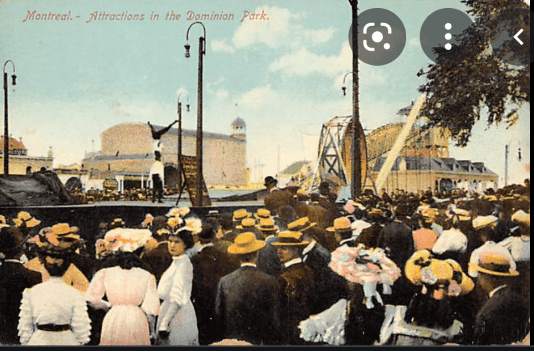
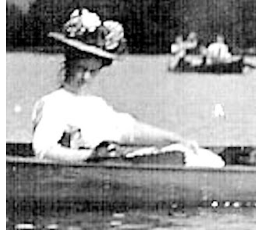
Dominion Park postcard circa 1912 (era of the big hat). Is that my husband’s grandmother looking at the camera?
Everyone has heard of Coney Island, the legendary thrill park in New York, but have you ever heard of Dominion Park, Montreal’s Coney Island?
Not likely. The Montreal Amusement Park ran from 1906 to 1938 and is all but forgotten.
Map of Dominion Park in Montreal’s East End
However, colourized photos like the one at top are widely available on the Internet thanks to Valentine and Sons.
Judging from the newspaper record, the ‘official’ opening of Dominion Park was in 1908, but I have hard evidence of a 1906 opening. In 1906, Herbert Nicholson, 21, my husband’s great uncle, working in Montreal, wrote a letter to his younger sister, Flora, 17, a student in Richmond, Quebec.
June 3, 1906
Dear Flora,
I suppose you have to be careful how you speak now that you are living with a model school teacher. I have not much news to give. I was down at Dominion Park last night. This is the new one that you may have heard so much about, or at least read so much about. Well, there is everything that you have ever heard of in your life. They take you way up on a slide and then slide you down in a boat into a little lake made just for the purpose. And then they have a railroad that goes down and up hill and around curves and through all kinds of places so fast that you loose your breath. Then there are other places where the stairs move and the wind blows and the floor jumps and I couldn’t tell you what all things do happen. There is a place where you lose yourself and then places where the looking glasses show you every way but the way they should. There are lots of other things, too, that I saw and many more I did not see.
I will tell you more about it when I see you,
Love, Herb.
Herb appears to have been thrilled with his visit.
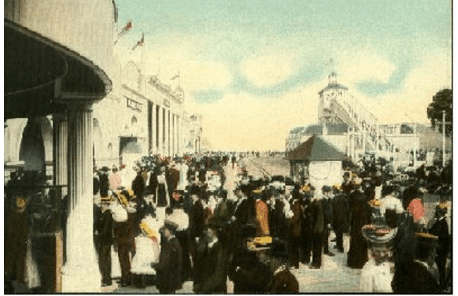
The newspaper record notes the attractions featured at Dominion Park. Some of them, like the roller-coaster, water slide and Fun House or “House of Nonsense” are familiar to Boomers.
There was also the Bump the Bumps, (bumper cars?) the trained wild animal show, the ‘Frisco Earthquake (just one year after the real thing happened) as well as a merry-go-round.
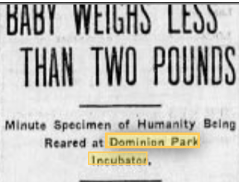
Some exhibits were frankly bizarre: the booth where young men could break crockery for a price (and get back at their mothers and wives, I imagine) as well as the Infant Incubator Exhibit where preemies were cared for by competent nurses in full view of the festive crowd.(Shades of the Dionne Quintuplets fiasco to come.)
There were travelling side shows, of course, many of which were colourfully ‘ethnic’ that would be considered in poor taste -even racist – today.
There were also vaudeville acts and circus acrobats as well as fancy sit-down concerts, stealing the mojo of another, more refined, Montreal entertainment venue, Sohmer Park.
Dominion Park, like Coney Island, was a place where all entertainment options came together.
Judging from those Valentine and Sons postcards, Dominion Park was a place young men brought their ladies, whether courting or married, all of these men wearing their epoque signature straw boater hats (the kind we see in Renoir paintings) the women, in the 1910 era, in their puffy white dresses.
Herbert, a ladies man, discretely does not mention with whom he went. I doubt his sisters, young unmarried Edith, Marion and Flo, could go without an escort of some kind.
But in 1912, Marion Nicholson had someone to escort her to Dominion Park: her new beau Hugh Blair.
Her sister Edith writes her mother who is visiting Marion in Mile End: “Don’t let the villains, Marion and “Romeo” (Hugh) take you to Dominion Park.”
It’s true that Edith enjoyed ‘high-brow’ activities more than her younger sister Marion, but she liked to have fun as much as anyone, so I assume she is joking.
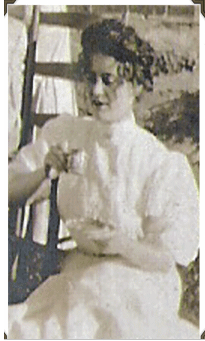
When I first saw the picture at top, I thought the woman looking into the camera might be Marion. She is wearing exactly the same white dress Marion wears in many pictures.
Here’s a blow up of Marion taking tea on the lawn of her home in Richmond, Quebec 1912.
Marion Nicholson Blair, my husband’s grandmother taking tea in around 1912.
Marion certainly had a similar hat to the one in the Valentine and Son postcard pic at top. 1912 was the year of the big big hat. But trendsetters like Colette in Paris were already wearing the cloche – as a bold countermove to this increasingly ludicrous hat fashion.
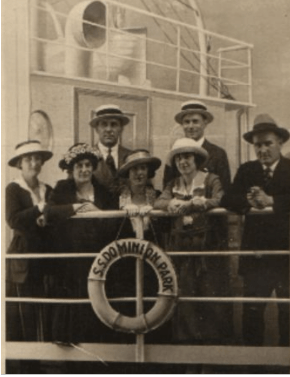
I have positive proof that Marion Nicholson visited Dominion Park around 1920 with Hugh Blair, now her husband, and both her sisters, Edith and Flora, as well as her brother Herb who was making a rare visit home from out West. It comes in the form of a novelty postcard.
Novelty postcard, circa 1920 Dominion Park. Hugh Blair and unknown man hovering over Edith, Marion and Flo Nicholson and unknown woman, probably cousin May Watters. Man at right is brother Herb Nicholson making perhaps his only visit back home to Montreal after leaving for out west in 1914.
From news reports I can glean that Dominion Park struggled through the Depression and closed without fanfare after the season in 1938.
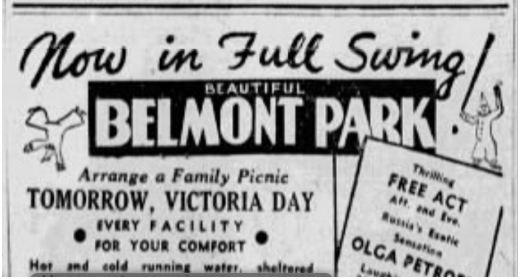
Here’s likely the reason why: 1938 was the first year of BELMONT PARK located in Cartierville. Belmont Park was a rickety place when I went there as a kid in the early 1960’s and was, in its turn, usurped by La Ronde at Expo 67, a bigger, brighter and more expensive amusement park.
When it comes to entertainment, new is best.
1.In 1906, entertainment in the big cities ranged from vaudeville and circuses to high-end theatre with 100’s of small venues, especially along Ste Catherine East, showing “flickers” on the wall during the day, and featuring live acts at night. In Montreal, there was only one large venue devoted entirely to motion pictures, the 500 seat Ouimetoscope. By 1910 there were scores of small entertainment venues lining Ste Catherine, most places offering a mixed bag of live shows and flickers and sometimes ice cream. A May 26, 1906 Gazette newspaper reveals entertainment options: A Kipling play with a well known actor at his Majesty’s Theatre; the Georgia Minstrels at the Academy of Music; The Holy City, a religious drama at Le Francais; The London Gaeity Girls at the Royal; ‘improved’ music and lotsa vaudeville at Sohmer Park: Miller’s elephants and other midway attractions at Riverside Park (a small amusement park also on Notre Dame Steet that would close in 1906.) Also Dominion Park opening June 2 with the Duss Band. Something for everyone – especially for the young people from rural areas flocking to the city to find work.Most of these wonderful entertainment options (excluding theatre plays) were considered out-of-bounds for respectable middle class women, especially if unattended.
Herbert’s sister, Marion, was also living in the city, having just graduated from McGill Normal (teaching) School and taken a job at Royal Arthur Elementary School in Little Burgundy. The year previous, she had boarded at the YWCA on Dorchester, a cold, leaky place with “too many rules.” Her words.
The city elite, including the Refords, the Birks’, and Julia Parker Drummonds, were planning a woman’s hotel where ‘respectable’ women from out of town would stay – and where bible readings would be their main nighttime recreation.
Still, Marion went to many a theatre play with her sisters and to Vaudeville shows with her beaus. After 1914, movies became more respectable for the middle class because that is where you could get your war news.
One movie house, the Royal, advertised itself as a safe venue for women.
2. There were two fires at Dominion, 1913 and a fatal one in 1919. Journalist Edgar Andrew Collard, known for his Montreal history column in the Gazette newspaper, was saved from the conflagration by his father, according to a very personal story he wrote in 1977.
When the fire broke out, They were riding the Mystic Rill, a ‘water-maze’ boat ride through a tunnel lined with flammable material designed to look like rock. His father saw a high window and managed to push his son through it.
”Only magnificent strength could have accomplished what he did: he not only had to keep a grip on the window but he had with his legs and feet to keep the boat from being carried away by the current.”.
Even way back in 1977, the Park was all but forgotten: “Only a few older people remember Dominion Park,” wrote Collard in this same article.
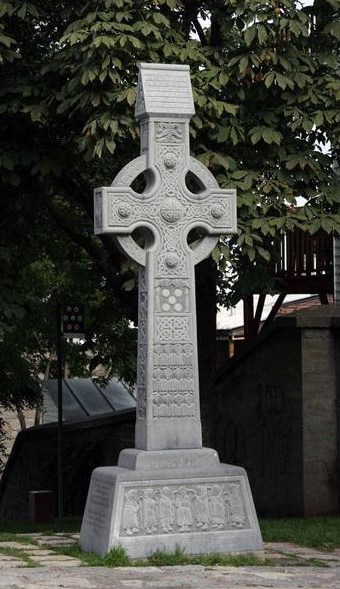
The Celtic cross that stands in Artillery Park on McMahon Street in Quebec City is the property of Irish Heritage Quebec. The cross is a gift from Ireland to the people of Quebec in memory of their generosity and compassion during the period of the Great Migration of the 19th century.
The Cross was donated by the Irish philanthropist James Callery, founder of the Strokestown Park and Famine Museum in County Roscommon, Ireland. A recognized sign of Irish identity, the Celtic cross stands near what was the site of the first Irish parish in Canada. The monument is part of a larger plan to recognize and develop Irish heritage in Old Quebec.
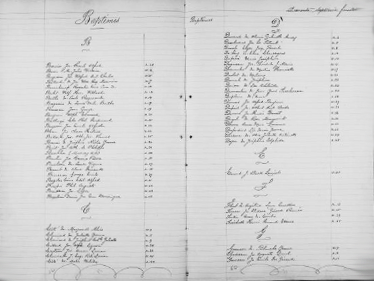
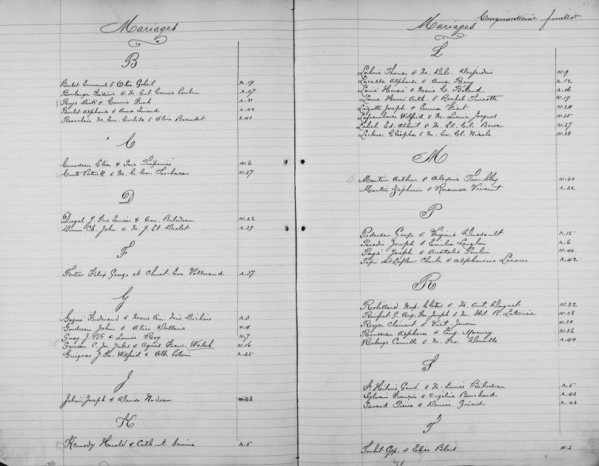
The following database contains a wealth of information that may be found in the numerous Contents of Catholic Church documents 1877-1918
Miss Marguerite Lindsay embraced her short life fully for 26 years before she volunteered with the Grenfell Mission and died tragically in Labrador.
Marguerite was the youngest of the Lindsay’s six children. Her father was a stockbroker who later took an active interest in philanthropy – especially the Montreal arts. Her mother actively took part in Church of St. John the Evangelist in Montreal while raising her family. They were one of the prominent English Montreal families at the time and considered to be upper middle class.
At one point the family maintained two homes – their life long home in Montreal at 455 Sherbrooke Street West* and also one in London, at 8 Radnor Place in Hyde Park, acquired at the beginning of the war in 1914.
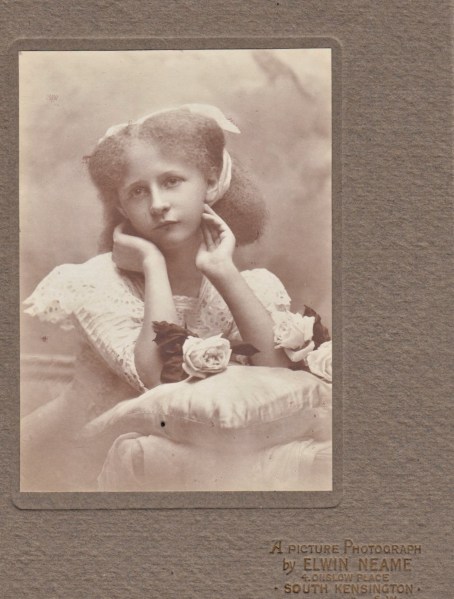
Marguerite Lindsay – London- 1909
She grew up privileged and loved.
The 14-year span between her and her eldest sibling meant she had the advantage of being doted on by the whole family. Her three brothers were gentlemen and “gentle men” who loved their baby sister dearly. Her eldest sister Ada married and moved to Vancouver and her other sister Marjorie remained single having missed out on her one true love when her parents denied her move to South Africa. Perhaps this enabled Marguerite to pursue her life and interests more freely as Marjorie remained at home with their parents.
The Montreal newspapers, at the time, covered social events that interested the general public. Luckily young Marguerite and her family actively took part in many of these events and her name popped up several times in my research.
Here is an example of the activities during her teenage years:
1910 – Volunteered at the Victorian Order of Nurses (VON) benefit.
1911 – Enjoyed a New Year’s visit to Kingston with brother and mother to visit the Bishop and his family.
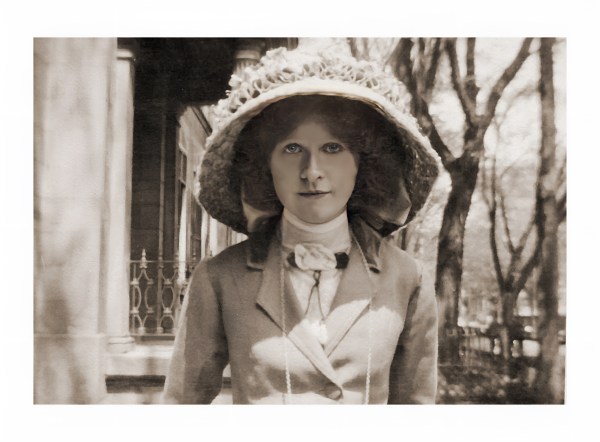
Marguerite Lindsay – 1912 – Sweet Sixteen
1915 – Assisted with flower pergola for military tattoo
1916 – Assisted in the sale of candy and small painted programs with Alison Aird at Her Majesty’s Theatre
1916 – Assisted at fundraiser tea for Grenfell (!)
1916 – Volunteered with the Christ Church Guild in charge of fancy (needle) work.
1917 – Assisted with the Red Cross tea and art gallery with special exhibit on war trophies.
1918 – Bridesmaid at friend’s wedding.
1918 – Holiday time at Laurel House NJ with her brother and mother.
1918 – Went to Kingston to visit Bishop Mills and family again.
Marguerite and brother Sydenham (my grandfather) – 455 Sherbrooke Street West – 1917
When Marguerite returned home after her nursing career during The Great War, not surprisingly, there were more women than men. The women’s rights movement had already made progress for women’s suffrage, education and entry into the workplace so there were many opportunities for young women other than marriage.
Now an experienced and mature single lady in her early twenties, she enjoyed the whirlwind of society and, once again, the local newspapers covered it all!
In October 1919, she attended the Prince of Wales Ball and Dinner as one of the 1100 guests. A few months later, her mother hosted a ball for her and her older sister, Marjorie (age 30), at the Ritz Carlton Hotel … probably for them to meet young men and increase their marriage prospects! Later that same year, she enjoyed an afternoon reception held by Commander Ponteves and his officers onboard a French frigate sent to Montreal for the St. Jean Baptiste festivities and yet another dance at the Ritz Carlton … this time for Mrs. Godfrey’s daughters (probably also looking for husbands).
The last year before her death (August 1922) was a busy one. Early in 1921, Marguerite travelled to Lake Manitou in Ontario with her brother Stanley for a weekend of skiing and skating with her friends, the Airds. She then joined the Aird family for “some weeks” in Italy during April and May.
Back she sailed to Montreal in June in time for her oldest brother Lionel’s wedding – and then onto Vancouver for an extended visit with her sister Ada and her family. Whew!
Vancouver society happily welcomed the Montrealer and this was some of her itinerary during her four month visit!
July 7 – Attended a tea to honour the Dame Nellie Melba, an Australian Opera Singer, along with her sister Ada and her aunt Mrs. Herbert Drummond.
Aug 5 – Attended a tea hosted by Mrs. McCrae of Hycroft Manor in honour of the visiting naval officers on the U.S. Battleship Tennessee.
Oct 14 – Assisted at a tea given at the Jericho Club in honour of Mrs. Cornelius Vanderbilt.
Oct 17 – Attended a luncheon with the Kumtuks Group who gave an interesting presentation entitled “A glimpse at the timber resources of British Columbia”.
Oct 22 – Attended a dinner party and informal dance at the Jericho Club again.
Oct 28 – Attended the annual Halloween fancy dress and masquerade at Glencoe Lodge.
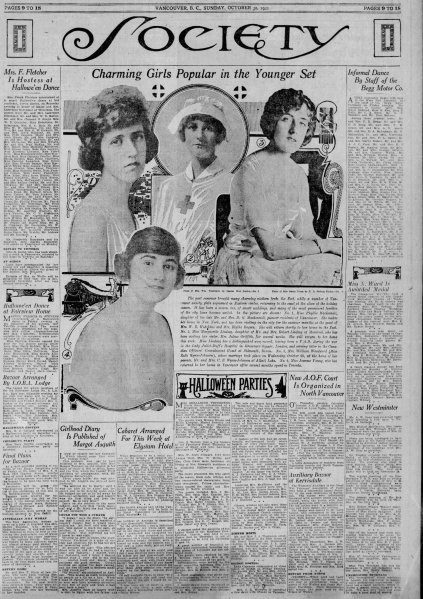
Oct 30 – “Miss Marguerite Lindsay, daughter of Mr. And Mrs. Robert Lindsay of Montreal, who has been visiting her sister, Mrs. Ada Griffith, for several weeks will return to her home this week. Miss Lindsay has a distinguished war record, having been a V.A.D. during the war in Lady Juliet Duff’s Hospital in Grosvenor Square, London, and serving later in the Canadian Officer’s Convalescent Home at Sidmouth, Devon.”
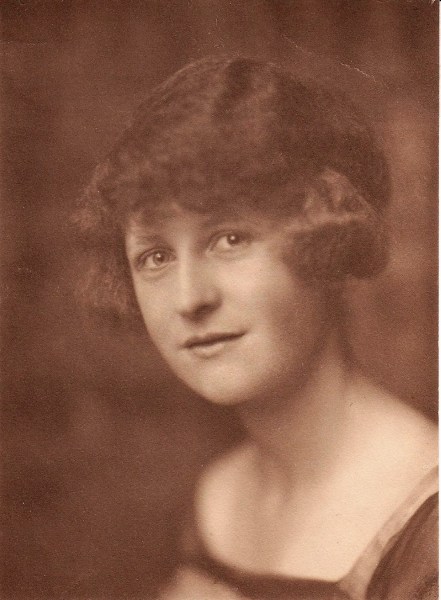
Marguerite Lindsay – October 29 1921 – Vancouver
And at the end of her four month visit, the following glowing tribute was published in a Vancouver newspaper:
“It is always sad when people go, and no one will be more missed than Miss Marguerite Lindsay, who also leaves today. She has been spending the summer with her sister, Mrs. Julius Griffith. She is just full of life, and keen on everything, dancing, tennis, bridge and golf, so has been in great request everywhere.” (Vancouver Daily World, Society Page, 29 October 1921)








 Genealogy Ensemble

