Insurrection REVISITED

January 6, 2021.

I sat glued to the television watching hundreds of people, armed and angry, storm the Capital Building in Washington. They had been incited by Donald Trump to overthrow the recent presidential election results, the election that Trump claimed had been stolen from him by Biden and the Democrats. This violence could not possibly be happening in America. This was Third World stuff.

I no sooner said the words then my mind was yanked back sixty-four years to a Third World insurrection I had witnessed as a teenager.

In seventh grade, at the age of twelve, my father accepted a job overseas with an engineering company, part of an international consortium contracted by the Pakistani Development Corporation to build a paper mill on the Ganges Delta. Khulna, the town selected for the mill, was situated in East Pakistan known today as Bangladesh. The logs were to be hauled by boat upriver in huge booms from the mangrove forests of the Sundarbans (home of the Bengal tiger) to be made into the pulp necessary to produce various paper products.

The salary for a four-year contract was considerable, deposited in a Canadian bank account and not taxed by either country. A house was provided, a school, leisure facilities, servants, and first-class transportation there and back. On the way out we sailed to England on the Empress of Britain, flew to Dacca, the capital of East Pakistan, and finally driven by car to the site. We returned home with stops in Hong Kong, Tokyo and Honolulu, truly an “Around the World Adventure”.  

Dad saw this contract as the opportunity to give his three children the university education he never received following the bankruptcy of his father’s bookstore during the Depression and the necessity for he and his brothers to support the family.  My parents were certainly adventurous to take their children to live half way around the world but, in hindsight, very naïve about international contracts, particularly in southern Asia.  

We arrived at the site in 1957 during the construction phase of the mill. India had only acquired Independence from Britain ten years earlier becoming India and Pakistan (East and West sections) in 1947. East Pakistan then began a drawn-out process of separation from West Pakistan, largely for religious and linguistic reasons, to eventually become Bangladesh in 1972. The years in between were full of political unrest and civil disobedience. East Pakistan was placed under marshal law in 1958 shortly after our arrival. Uprisings continued, growing ever-more dangerous.   

The attack I witnessed was against the construction of the mill. I was much too young to understand the whys of what was happening. All I saw was the huge mob of rioters trying to access the compound. As they attempted to break down the gates and climb the protective walls, they were beaten off by soldiers, local police and compound guards. The mob grew larger and larger and those who fell under the blows were trampled.  The noise of the crowd was unforgettable – continuous chants I didn’t understand, sounds of batons pounding flesh and cement, screams of pain and barking dogs, all under the heat and humidity and the everyday smells of south Asia.

For a short while the company families huddled on the upper deck of the Newsprint Club overlooking the scene until company employees escorted us to safety. My heart pounded – surely it would pound right out of my chest. By the time the time the fighting was finally over, the streets outside the walls were littered with dead and bloodied bodies.

Although we continued to see evidence of uprisings in and near the village until we left the country in 1960, never did the violence come as close again. The company purchased a river boat to keep onsite should an emergency evacuation be required. Thankfully, it was there when my four-year old sister had to be evacuated to a hospital in Dacca to save her life from amebic dysentery. It was the only time it had to used.
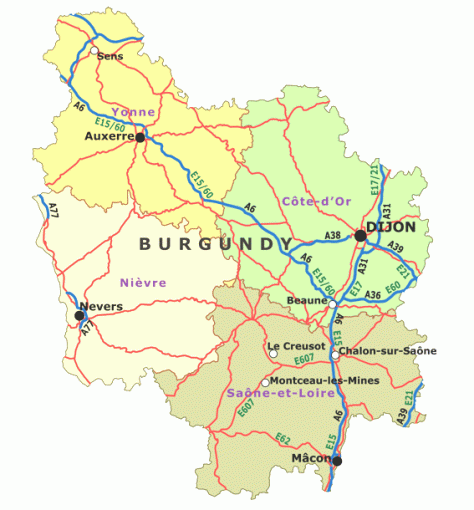
Catholic Parish Registers in Berry – Bourbonnais – Bourgogne – Bresse – Franche-Comté – Lyonnais – Nivernais of the 17th & 18th centuries

What to expect while researching online at about 92 Archives départementales de France.

Free Online Searches with free downloads of original Church Registers or original Civil Registers or original Notarial acts through the web or smart phones. No membership is required with the exception of one archive Filae.com and at the latter, the online research process is also free, once you have completed a one-page online request and the link to the Homepage   where the information is noted , however to access it, a membership is required.

Example:

Click on the link below to bring you to the Homepage

Filae.com : Genealogy : Civil status, make your family tree quickly online, departmental archives, heraldic science, last name


https://genealogyensemble.com/wp-content/uploads/2021/02/catholic-parish-registers-in-berry-bourbonnais-bourgogne-in-the-17th-and-18th-centuries.pdf

Talking to Marian about Discovering Family Secrets

I published my interview with Marian this week on my Unapologetically Canadian podcast. Marian describes what it’s like to discover family secrets as she researches and writes stories about her ancestors.

If you want to join Marian in indexing records from around the world, you can do so at the Indexing Page on the Family History website. You can also choose a Canadian project if you prefer.

Some of Marian’s stories that we discuss included:

I’ve also interviewed some of the other Genealogy Ensemble writers. Listen to them here:

Catholic Parish Registers in Alsace – Artois – Champagne – Flandre – Lorraine – Picardie of the 17th & 18th centuries

Map of Alsace Pinirest
Map of France Pintrest

Catholic Parish Registers in Alsace – Artois – Champagne – Flandre – Lorraine – Picardie of the 17th & 18th centuries

What to expect while researching online at about 92 Archives départementales de France – Free Online searches with free downloads of original Church Registers or original Civil Registers or original Notarial acts through the web or smart phones. No memberships are required.  There is an exception of one website where  the online research process is also free, once you have completed a one-page online request.

The contents of this database :

  • List of  Archives Repositories
  • Municipal Archives
  • Genealogy Solution Providers
  • History websites

In the opening pages, please refer to

Yves Landry – Les Français passés au Canada avant 1760

Cole Harris – The French Background of Immigrants to Canada before 1700

All Links referring to www.filae.com such as those with strikethrough

Example: https://www.filae.com/archives-haute-marne/etat-civil-genealogie-haute-marne-08.html and this link brings you to a home page.

https://documentcloud.adobe.com/link/review?uri=urn:aaid:scds:US:9332c32b-b49f-49d4-ab4c-68a2c93b3505

The unwed moms of the North Yorkshire Moors

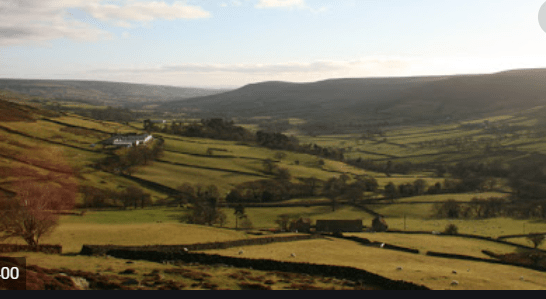
Ye Olde Homestead: Farndale, Yorkshire moors. Farndale-holidays.co.uk
To see other notable landmarks, including Castle Howard visit https://farndalecottages.co.uk/out-and-about/heritage/

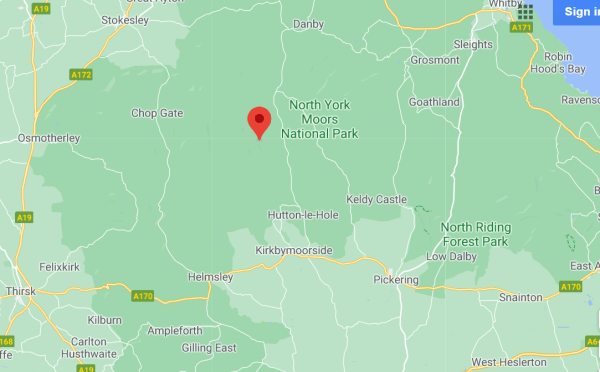
While cobbling together my fathers’s family tree 1, I discovered that his paternal Nixon line2dies out in 1834, when Robert Nixon is born in Marton, North Yorkshire, taking his surname from his mother, Hannah Nixon of nearby Kirkdale. Their reputation is redeemed five years later in 1840 when Hannah marries Christopher Neesam of Osmotherly shortly after she gives birth to a second child, a girl.

There’s no record of Robert’s birth or who Robert’s real father is – and, thanks to further research, I think I know the reason why.

Judging from my father’s family tree,unwed motherhood was not unusual among these Yorkshire farmers.

Church records from rural Yorkshire in medieval times and beyond back up my observation. They reveal that unwed mothers were, indeed, commonplace even way-back-when and the number of unwed mothers in that place only increased over the next few centuries, most notably in the northern ridings.3

As it happens, Yorkshireman Robert Nixon, Hannah Nixon’s illegitimate child, gets married in 1857 to a kindred spirit, Martha Featherstone. Martha, too, had been born out of wedlock in 1835.

Martha’s mom, Mary Featherstone of Pickering, like her mother-in-law Hannah Nixon Neesam before her, gets married a few years later, in 1840, to one Joseph Shaw. 6

Oddly, the DNA cousin matches/tree matches suggest my father is related to both Joseph Shaw and Mary Featherstone,* so this could be a case of a very delayed marriage, for whatever reason.

Maybe that is Hannah Nixon’s case, too. However, I’ve yet to find any Neesam DNA connection to my father’s tree.

In the small town of Rudby (7 miles from Marton, just north of the moors) as much as ten percent of women had children out of wedlock in the early 1800’s. These unwed mothers were stigmatized not only for religious reasons but because they were costly to the town. Sadly, the ‘bastardy wages’ paid to these mothers didn’t do much to end their woes or improve their children’s prospects. An illegitimate child was twice as likely to die in infancy as a child with legal parentage.

Local authorities in Rudby believed that most unwed mothers were the result of ‘courting couples’ where the young man involved was simply marriage-averse, sometimes preferring jail time to tying the knot. It didn’t help the situation, they said, that many unmarried tenant farmers were content with their ‘live-in’ servants (sic).

Modern scholars examining these same records acknowledge that adultery and incest (and, let’s face it, rape) inflated the number of unwed mothers in England but, they think, not to any great degree.4

Grim history, indeed, but my research findings do get brighter.

According to another source5, unwed mothers in the country did have it better than their counterparts in more urbanized areas. A more stable population likely made for a better support system for these women.

In fact, unwed mothers in 18th and 19th century rural Yorkshire weren’t even expected to name a father. A gal in the family way just told her own mom who gathered up her hat and shawl and headed out to find an eligible young man to take the bio-father’s place. (Practical people, those Yorkshire farmers.)

Unwed mothers were also protected by the old Norse superstitions still adhered to by many. One of these superstitions maintained that pregnant women had magical powers, so they were not to be crossed.

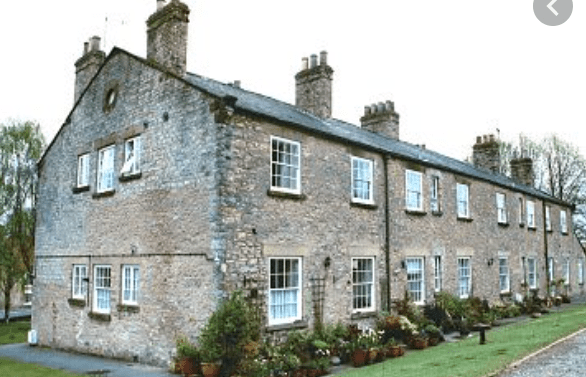
The workhouse in Helmsley, hometown of the Nixon clan from the 1800’s onward. Unmarried mothers might end up here to pay off their ‘bastardy’ support, where they were allowed to nurse their child but twice a day. 3

.

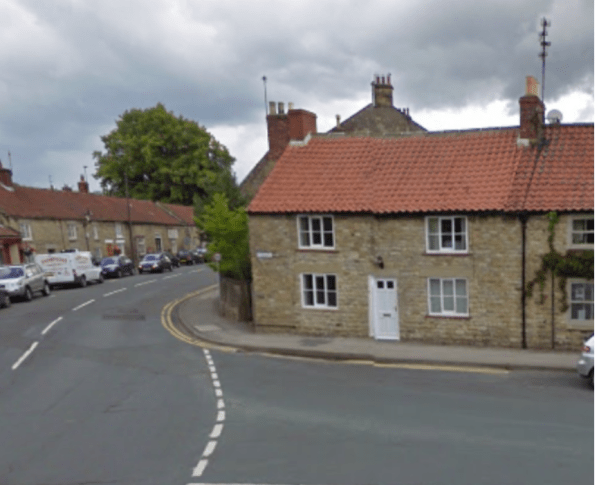
The street in Helmsley where the Nixons lived in 1911. My grandfather, Robert Nixon, was born here in 1890. In 1911, he was a footman at Duncombe Park. Supposedly he got a girl pregnant right about then so he was sent out to Malaya in 1912 to be a planter. Family myth says this woman was either a fellow servant or the Earl’s daughter. Considering the high cost of going to Malaya in the day and that posts in Malaya were given out to sons of richer men, I suspect the woman was from an important family. This would have made a great sub-plot on Downton Abbey, a fictional story that unfolds in the same area.

1. I admit that I mostly used other people’s research to compile my tree. My father, a child of the Raj, told me little about his British roots. The only information I had to go on was that his mother’s father was a Methodist minister and that some of his ancestors were hanged for sheep stealing. See Border Reiving Ruffians. Also see Dissenters and Poets.

But after I compiled his tree with ancestors from places like Helmsley, Farndale and Appleton-le-Moors, I discovered, through DNA, that the ‘cousin trail’ matches on Ancestry supports the tree, 100 percent, at least for the first few generations. My father has matches both in centimorgans (dna) and tree with people on all branches of the tree.

Let me give you one example: When I discovered, using a stranger’s tree, that my father had a great grandmother, Anne Nesfield from Sleights, this explained his rather silly middle name to me. My father signed his name P N F Nixon, as in Peter Nesfield Forster Nixon.

The Nesfield clan of Ugglebarnby etc. Yorkshire is a well established. My father is a close genetic match with someone else with this Anne Nesfield in his tree. These genes make great rugby players as both sides have world-class players.

2. In genetics, the male Y chromosome haplogroup (or set of common alleles passed from father to son) is a much valued tool used by historians and ethno-anthropologists to track historical population movements back to the bronze age and even farther. All haplogroups are assigned letter and number signatures. My Yorkshire father Peter Nixon’s Y dna haplogroup is I1 Z63. I1 is the most common haplogroup in Northern Europe.

Apparently, my father’s Z63 subgroup dominated Northern Germany before the arrival of Charlemagne (who infamously lopped off the heads of thousands of male Saxons) and has has deep origins in Jutland (Denmark). Yorkshire is the most Anglo Saxon region in all England.

3. Hastings, R. P. Poverty and the Poor Law in the North Riding of Yorkshire: 1780-1837. Unwed mothers often had to repay their bastardy wages by employment in the Workhouse. In Victorian Times in Helmsley, as recommended by the authorities, mothers in workhouses were permitted to nurse their children only twice daily. The infants’ diet was supplemented with ONE meal of cow’s milk sweetened with sugar.

4. ibid ( That seems odd to me as I know that Emmeline Pankhurst turned to woman suffrage advocacy when she saw so many young teen patients in her husband’s Manchester clinic who were pregnant by incest.)

5. Gillis, J.R. For Better For Worse: British Marriages from 1600 to Present.

6. There is no birth record for either Robert Nixon or Martha Featherstone. Census records are what the genealogies go by.


My father’s ancient heritage on mytrueancestry.com.

I found this on Youtube, an interview with Tamara Hoggarth, born 1860 in Marton. (The poster says “She’s speaking English, I promise.” According to his blurb, she also had an illegitimate child before marrying

Here it is

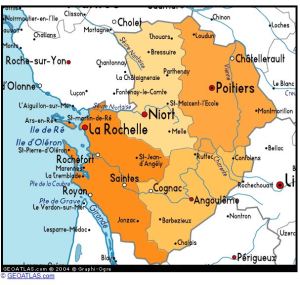
Catholic Parish Registers in Angoumois – Aunis – Limousin – Marche – Périgord – Saintonge of the 17th & 18th Centuries

The Catholic Parish Registers in Angoumois – Aunis – Limousin – Marche – Périgord – Saintonge of the 17th & 18th Centuries

What to expect while researching online at about 92 Archives départementales de France – Free Online searches with free downloads of original Church Registers or original Civil Registers or original Notarial acts through the web or smart phones. No memberships required with the exception of one archive and at the latter, the online research process is also free, once you have completed a one-page online request.

The contents of this database :

  • List of Archives Repositories
  • Genealogy Socieities
  • History of the regions

Click the link here :

Sugarplum Tree

As Christmas fast approaches it stirs memories of my childhood holidays. The pungent smell of the balsam fir ready to be decorated, Christmas carols playing in the background, especially Joan Baez, the bright paper and ribbons waiting to wrap presents and the kitchen noises as my mother prepared all the holiday foods, including our favourites, the sweets. My mother baked all year round so we always had dessert but Christmas meant special treats.

November found my mother chopping dried fruits and nuts and mixing them in a big enameled wash pan, also used to bathe babies and soak feet. The fruit cake had to be started early so that after baking it could be wrapped in cheesecloth and regularly doused it in brandy. We liked fruit cake but we liked other things more.

Next came the shortbread cookies. I am not sure how much she enlarged the recipe because we seemed to have a mountain of cookies. While I make a log and cut slices or balls that I roll and flatten with a fork, my mother would roll out the dough and cut Christmas shapes. Stars, bells, candy canes and holly leaves all decorated with red and green cherries and silver balls would appear. Layers of cookies, laid between sheets of wax paper, filled a large canning pot put on the top shelf of the pantry to keep the cookies away from little hands. Luckily, with a step stool and a good reach, cookies could be extracted and enjoyed in ones own little space. Of course, many still remained for Christmas.

Cherry Bonbons made by my brother

We loved the Cherry Bonbons, a candied cherry covered in cookie dough, rolled into a ball and coated with pink icing. Then the Gumdrop Squares, a chewy and spicy cake fill with chopped gumdrops and nuts topped with white icing and more gumdrops filled another tin. Another favourite, Cornflakes Meringue cookies with chocolate chips and a cherry on top quickly disappeared. Lastly, the Christmas pudding, steamed on the stove ready to be served with hard sauce. Never my favourite!

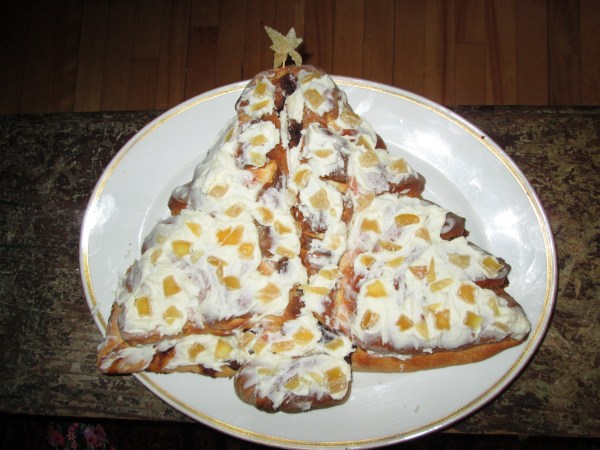
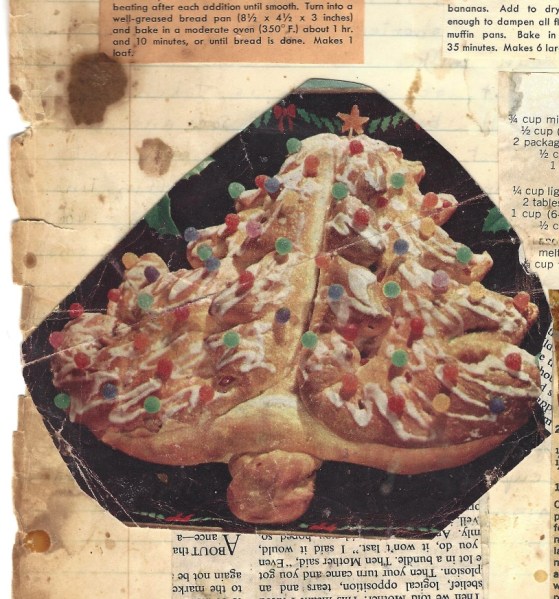
The day before Christmas was the time to make the Sugarplum Tree. I am not sure when my mother started making this treat. She rarely baked with yeast. The recipe had been cut out of a magazine and stuck into her book, spotted with years of flour and greasy fingers. The dough, filled with raisins and citron raised in a warm corner, rolled into a rectangle, spread with sugar and cinnamon, the corners folded in and cuts made on the sides to form branches magically appeared. She iced it, added more gumdrops for decorations including one flattened yellow gumdrop cut to form a star. All done ready for Christmas.

Mom’s Recipe Book

In our house, when we woke up Christmas morning, we didn’t hurry downstairs in our pajamas. We had to brush our teeth, get dressed, make our beds and then sit on the stairs waiting until everyone was ready. My father would go down and light the tree and then we rushed to see if Santa had come. We could play with our Santa Claus present while my mother made breakfast. Along with the Sugarplum bun we had half grapefruits with crushed pineapple, red and green cherries in the center and Santa mugs for our milk. Some people would even eat cereal!

My sisters continued the tradition of making sugarplum trees. My older sister had Christmases at her home after she married so she has made many buns. My younger sister began her own tradition after my mother stopped visiting her and making the bun at Christmas.

I never made the treat until the Christmas after my mother died. I had her recipe book with the original magazine recipe, so in her memory, I made the bun. Not quite like hers, as I used ginger, no gumdrops and a cream cheese icing. Still, the delicious sweetness evoked fond memories and so I will make it again this year. I did and a few pieces are still in the freezer!

Catholic Parish REgisters of Paris and Ile de France

Map of Paris and Ile de France

Below are excerpts from the attached database:

“Catholic baptism records began in many regions of France in 1539, some regions a few years later. Marriage documents five years later. Death about ten years after marriage dossiers. In a few Catholic parishes, acts of baptisms have survived dating back to1334 and 1357 within the region of Saône-et-Loire.”

“Subsequently, both Parish Registers from about 1539 to 1793 (Registres paroissiaux) and Civil Registers from 1793 onward (Registres de l’état civil) were the responsibility of the newly created départements. In 2020, 95 such départements. A département is a mini state or mini province.”

Click her to access the database:

Catholic Parish Registers of Paris and Ile de France

Val-des-Sources

logo

In 1945 our family moved to Asbestos, Quebec. Dad, a mining engineer was hired to design and oversee the construction of a shaft. The company was planning to mine underground.

My older sister, Ruth had to learn French and the same for brothers John and Karl. For them it was a difficult transition. My younger brother, Paul and I, were young enough that we learned the language easily and took it in stride.

As children we used to play Tic-Tac-Toe on the cars parked near the Main Office which was not far from our home. In those days, all the cars were black! It was like having our own little blackboards.

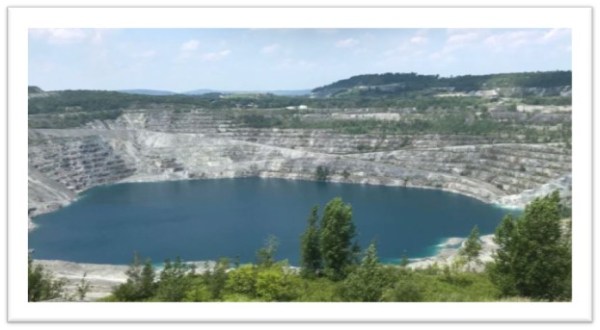
Our home was also extremely close, perhaps 500 yards from the open pit. Our house would shake when they blasted several times daily. Sirens could be heard all over town at blasting time. It did not take us long to get accustomed to them. When the Second World War ended it seemed like the sirens were never going to stop. That is one of my first memories of living in Asbestos.

Jeffrey Mine Open Pit ceased operations in 2012 Photograph by Claire Lindell

During the past year I have written and published these stories about my hometown, Asbestos.

A Turning Point in Quebec History

A Time of Prosperity

https://genealogyensemble.com/2020/01/15/the-future-of-asbestos/

Recently the town of Asbestos entered a new era. Over the years there has been a constant demand to change the name of the town. “Asbestos’ is a known carcinogen that causes various lung diseases. Businesses, particularly English companies, did not wish to be associated with name ‘asbestos’, while in the French language the product asbestos fibre is referred to as ‘amiante’ and does not create a similar problem. However, the citizens of the town were aiming at creating a new direction for their community.

Several names were suggested: “to vote in a ranked-choice referendum among six options: L’Azur-des-Cantons, Jeffrey-sur-le-Lac, Larochelle, Phénix, Trois-Lacs and Val-des-Sources. Val-des-Sources won 51.5 per cent on the vote”.1. in recognition of the Nicolet River and Three Lakes nearby that had already been incorporated with the town.

One of the choices was Jeffrey which would have been my choice. The open pit was named Jeffrey Mine. It helped make Canada one the world’s leaders in asbestos exports. The Jeffrey mine, once Canada’s largest, closed in 2012.2’

The Provincial Government, Toponyme committee and the Municipal Affairs and Housing accepted the new name in December 2020.

Having spent so many years living there, in my heart of hearts, it will always be Asbestos. Most of the places I frequented while growing up are no longer there. The church where I was confirmed, the elementary school, the commercial district, our house, all have disappeared.

Much of the town as I knew it has been absorbed by the pit. However, the golf course is far enough away and there will not be anymore changes to the pit except for those who will be able to enjoy slacklining.

This image has an empty alt attribute; its file name is picture2.jpg
Slacklining over Jeffrey Mine

Note:

Slacklining refers to the act of walking, running or balancing along a suspended length of flat webbing that is tensioned between two anchors. Slacklining is similar to slack rope walking and tightrope walking. Slacklines differ from tightwires and tightropes in the type of material used and the amount of tension applied during use. Slacklines are tensioned significantly less than tightropes or tightwires in order to create a dynamic line which will stretch and bounce like a long and narrow trampoline. Wikipedia.

Sources:

1. https://montrealgazette.com/news/quebec/town-of-asbestos-chooses-new-name-val-des-sources

2. https://www.nationalobserver.com/2020/10/20/news/quebec-town-abestos-changes-name-val-des-sources-after-vote

https://montreal.ctvnews.ca/town-of-asbestos-officially-renamed-to-val-des-sources-1.5235546

https://en.wikipedia.org/wiki/Val-des-Sources

Catholic Parish Registers in Normandy (France) of the 17th &18th Centuries

Catholic Parish Registers in Normandy, France of the 17th and 18th centuries.

For genealogists researching Catholic ancestors in Normandy, France, it is useful to understand some French history, pre and post Revolution, in order to navigate modern French bureaucracy.

Whether you do or do not speak the French language, here is Jacques Gagne’s list -in English- of the best free online research tools with some helpful historical – and technical – background. The Filae.com files are accessible only through a membership to their website.

Click below to access the database:

Working together to help genealogists discover their ancestors