Finding Emerie

By

Claire Lindell

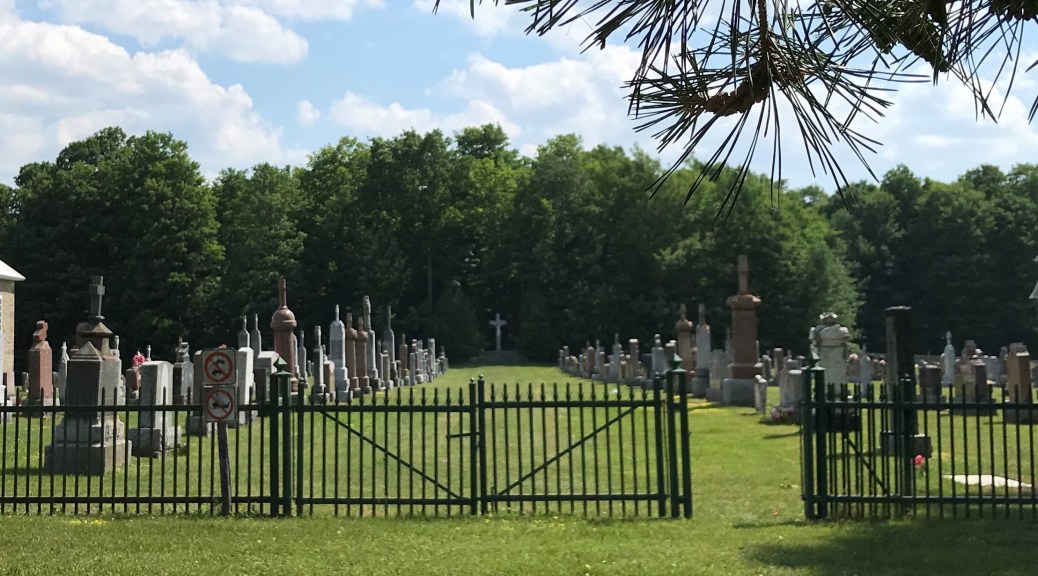
Several years ago, on a pleasant drive home from Ottawa, the thought of stopping in Rigaud to visit the cemetery seemed like a good idea with the hopes of finding Emerie Chevrier, one of my ancestors.

There were so many Chevriers in the cemetery it seemed impossible that one would find Emerie! Every second or third headstone was a Chevrier. It became apparent that more specific information would be required to find the father of my great-grandmother, Marie Philomene Adele Chevrier, one of Emerie’s twenty-one children.

Nos origins 1
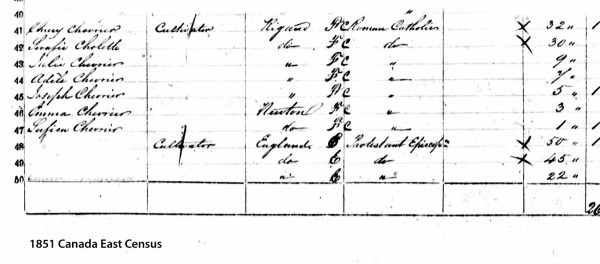
Census 2.

At the age of almost twenty, on the 20th of August 1839, he married young eighteen-year-old, Seraphie Cholet. Together they had fourteen children. One every year! In August of 1852, tragedy stuck and at the age of thirty-one she died, leaving him with a heavy heart, hands full, and a home filled with young children.

Upon Seraphie’s passing, Emerie realized he had a major problem that required immediate attention.  How could he tend to his farm and a home with fourteen children and no mother to care for them? One can surmise that the community came forward with a helping hand and introduced him to a new partner. It did not take very long before he was able to find a young woman willing to tackle the overwhelming task of helping him raise his family. She was one Mary McCarragher, almost twenty years old, of Irish descent. She and Emerie, still a young man of thirty-three, were married in the nearby village of Ste Marthe on January 11. 1853, less than six months after the death of his first wife.

Over the years Mary and Emerie had seven more children and he continued to farm the land. The family moved to Ste Justine de Newton, a small village near the Quebec-Ontario border not far from Rigaud.

After numerous searches to find information about Emerie’s death. 3 I was able to find his “sepulture”, the French church record of his death indicating where he is buried, a small burial ground, a fraction of the size of the Rigaud cemetery. This was the key to finding Emery. The headstone is situated beside the Catholic Church in Ste-Justine-de-Newton.

 Using Google Earth helped to determine the exact location of the cemetery. Armed with the details, with camera battery charged and ready for action, it was time to take a drive to the quaint village sixty kilometres from home.

Arriving in the small community, I parked near the church and walked to the graveyard, opened the gate and began the search. Much to my surprise, the headstone was about six paces to the left, inside the gate!

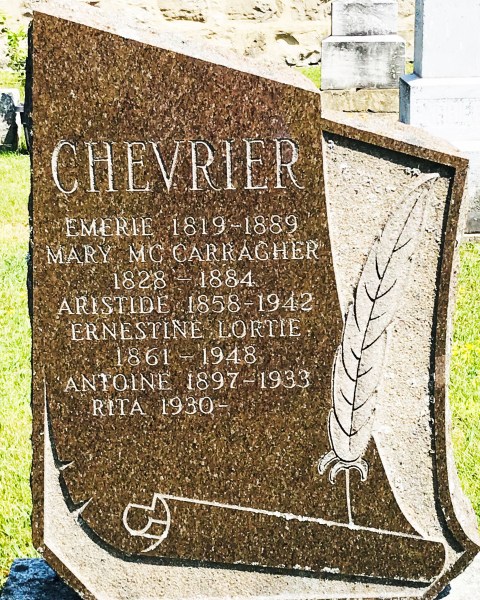
Although Emerie had passed away in 1889 and his wife Mary in 1884 their headstone was certainly not one that had endured the weather over one hundred years, but rather, it was a beautiful new headstone.4.Indeed, a fine tribute!

Footnotes:

1. https://www.nosorigines.qc.ca/genealogie.aspx

2. Ancestry.com, 1851 Census of Canada East, Canada West, New Brunswick, and Nova Scotia (Ancestry.com Operations Inc), Ancestry.com, http://www.Ancestry.com, Year: 1851; Census Place: Rigaud, Vaudreuil County, Canada East (Quebec); Ancestry.com

3. Ancestry.com, Quebec, Canada, Vital and Church Records (Drouin Collection), 1621-1968 (Provo, UT, USA, Ancestry.com Operations, Inc., 2008), Ancestry.com, http://www.Ancestry.com, Institut Généalogique Drouin; Montreal, Quebec, Canada; Author: Gabriel Drouin, comp

4. Photograph of Emery Chevrier’s headstone taken by the author.

A Montreal Stockbroker…and much more

Montreal, Quebec, was booming early in the 20th century just before World War I (1914-1919).

During this time, immigration surged setting new records and the population of Montreal grew to half a million people. Skilled workers from England found employment in the city’s factories and European immigrants, especially Jews fleeing persecution, made up the biggest group. Local people were also migrating from rural areas attracted by the city’s remarkable economic growth and the available opportunities.

Montreal offered all these people hope of a better life.

Canada’s first stock exchange, The Montreal Stock Exchange founded in 1832, grew to prestigious levels during this time of great expansion. In 1910, the total number of trades was more than double that of The Toronto Stock Exchange. This growth led to the merger of several small companies creating larger corporations which in turn traded their shares1 on the Exchange.

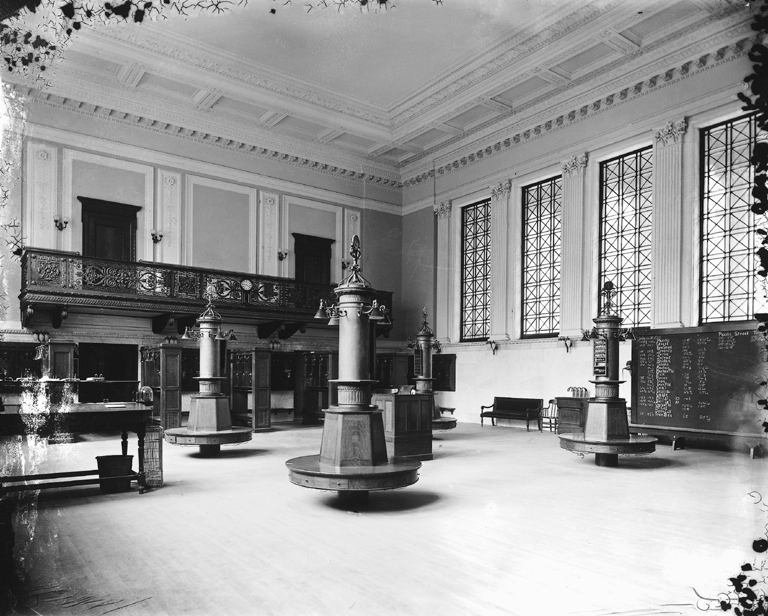
Montreal_Stock_Exchange_1903
The Montreal Stock Exchange 1903

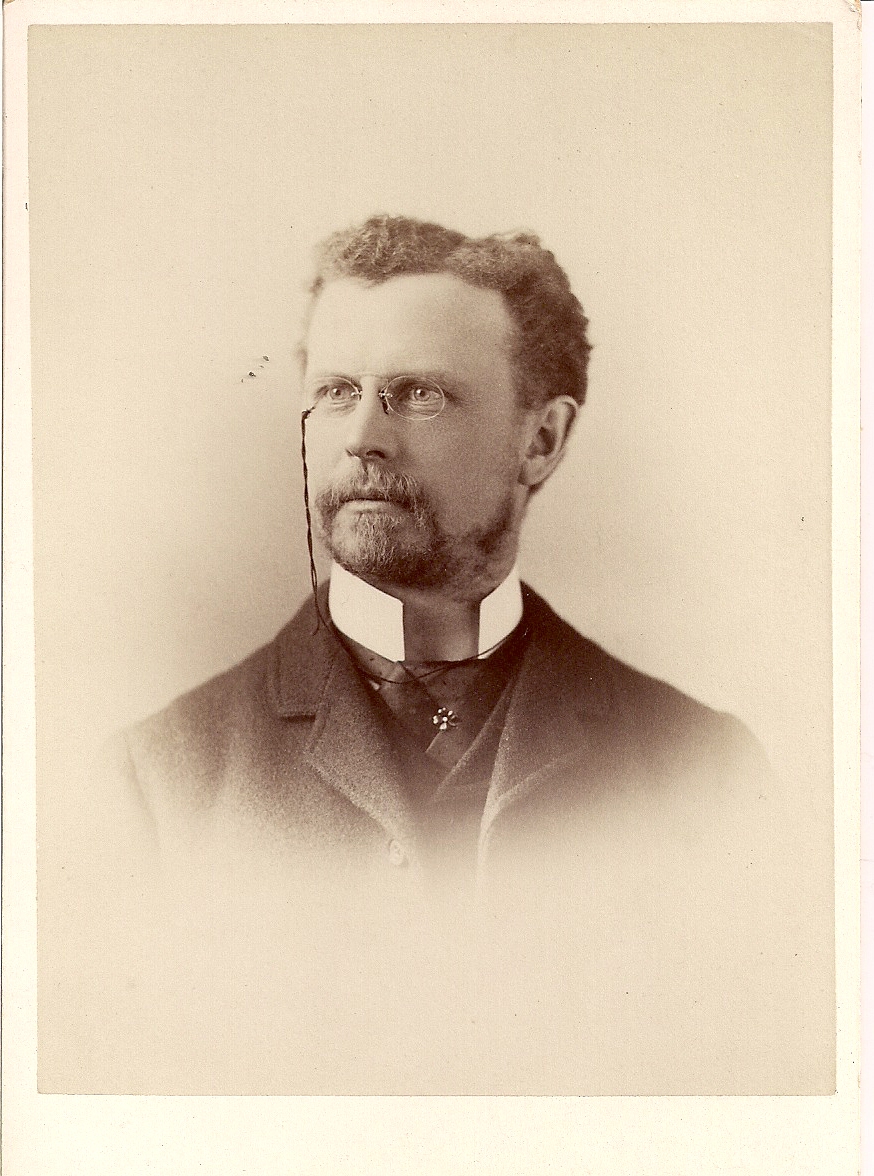
My great grandfather, Robert Lindsay (1855-1931), was a stockbroker during this exciting and prosperous period of Montreal history. Robert was the son of the successful banker, Robert A. Lindsay (Bank of Montreal), as well as the nephew of the prominent politician, William Burns Lindsay. Wisely, he left banking and politics to his elders and forged his own career in finance.

Robert Lindsay
Robert Lindsay – Montreal Stock Broker 1881

Robert was born in Montreal in 1855, the oldest of four children, three boys plus a girl who died in infancy. His mother, Henrietta Dyde, passed away in 1864, ten weeks after her baby daughter died. Robert was only nine years old at the time. His father remarried two years later and he and his new wife, Charlotte Anne Vennor, had six more children.

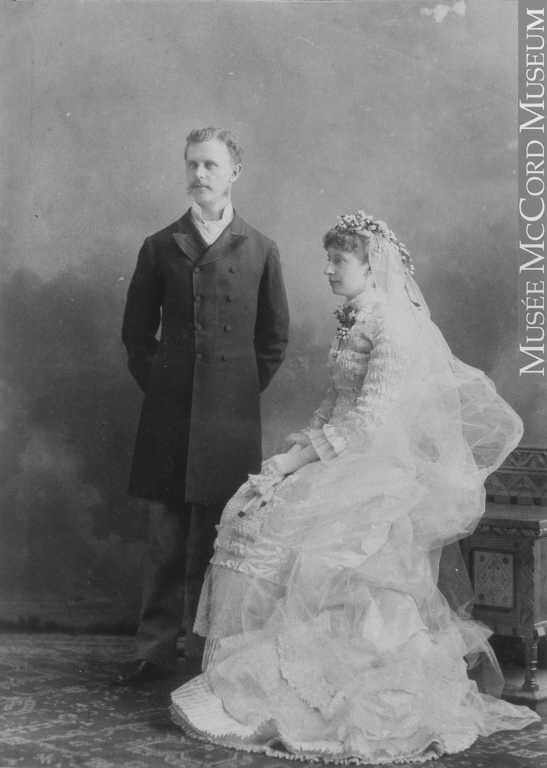
Mary Heloise Bagg, one of the daughters of Stanley Clark Bagg and Catherine Mitcheson, became his bride in 1881. The Baggs, a prominent Montreal family with real estate interests, welcomed their first stockbroker into the family.

Robert and Mary Heloise Wedding day
Mr and Mrs Robert Lindsay -1881

Robert retired in 1906 from his long and successful career as a stockbroker at the age of 51. In 1914, during one of his periodic trips to England, he arrived just days before the outbreak of WW1. His son, Stanley (1889-1963), had enlisted as a lieutenant2 with the Royal Highlanders of Canada so Robert decided to take up residence with the rest of his family.

He joined forces with Canadian philanthropist Lady Drummond and Lady Perley as founders of the first of The King George and Queen Mary Maple Leaf Clubs3. Several sizeable London homes were donated and refurbished to provide for the welfare of Canadian Expeditionary Force (CEF) soldiers on leave from the front. The safe well organized environment provided lodgings, meals, recreational activities, up-to-date military information and even savings accounts for the soldiers thus preventing drinking, idleness and any opportunity to pursue “morally questionable activities”. London became their “home away from home” where they could recover from trench life, boost their morale and heal physically and mentally before returning to the front.

Three years later, in 1917, Robert’s ill health led to his withdrawal as the Treasurer-Secretary and his return home to Montreal. “The committee and workers of “The Maple Leaf Clubs” greatly regretted his departure… As a souvenir of his services, they presented him with a massive silver cigar box…”4

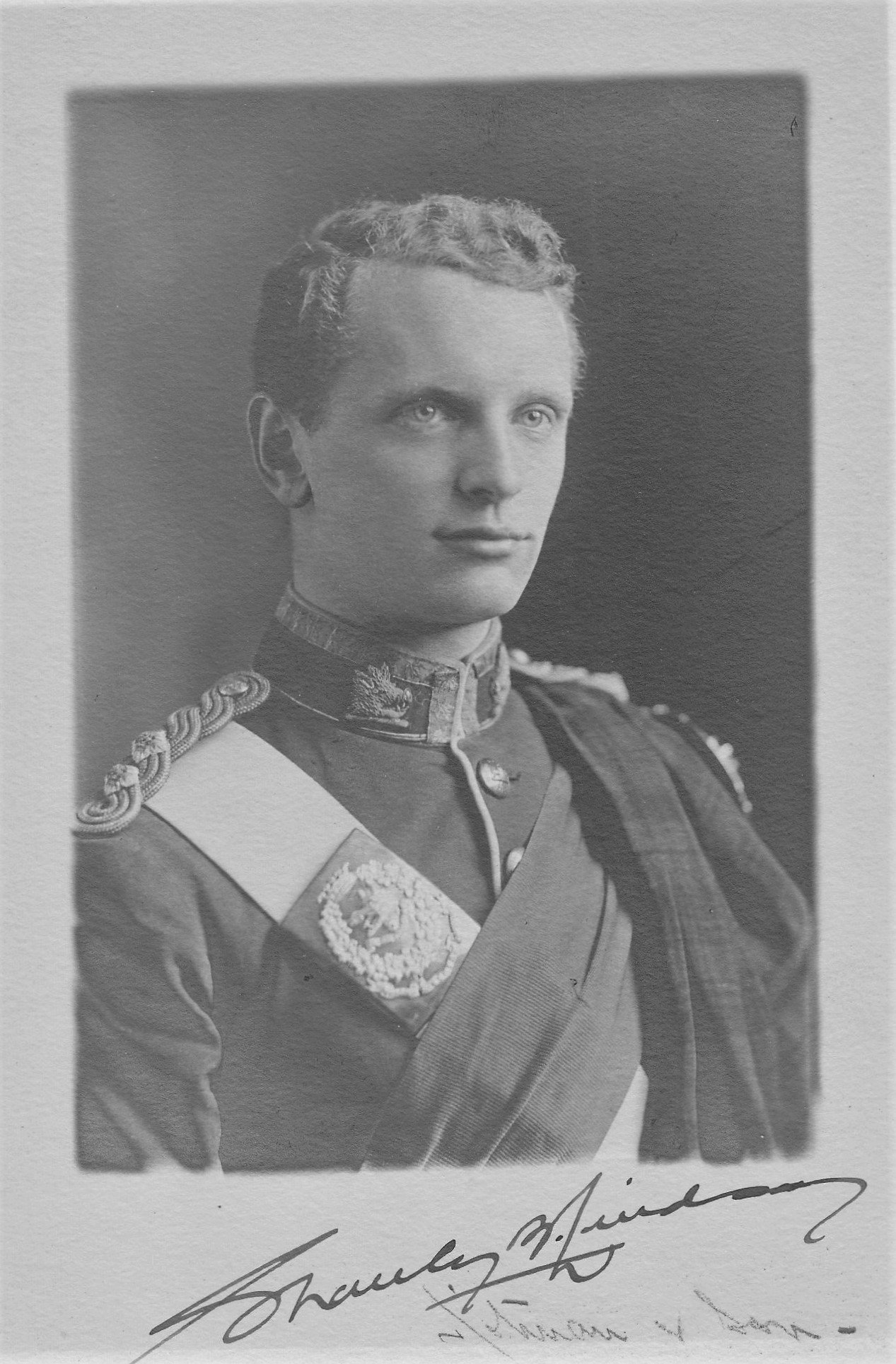
Robert’s son became “Captain” Stanley Lindsay and survived the Second Battle of Ypres (and the first German gas attack). Eventually he recovered his health and also returned home to Montreal in 1919.

Stanley Bagg Lindsay
Captain Stanley Lindsay 13th Battalion Royal Highlanders of Canada

Once home again, Robert and his wife committed their lives to helping others. He was a member of the Anglican Church, a life governor on the board of three main hospitals as well as the Church Home (for the elderly) and a member of The Mount Royal Club.

One such commitment catered to his great interest in art. Robert had been active in the Art Association of Montreal (now the Montreal Museum of Fine Arts) since his retirement from the financial world. He was honorary president at the time of his death and had previously held executive positions for many years.

His obituary remembered him as “a kindly man of retiring nature… a supporter of many charity campaigns, and who preferred to remain anonymous in all his undertakings”5.

Edited by author 2020-07-13

1“Shares are units of ownership interest in a corporation or financial asset that provide equal distribution in any profits, if any are declared, in the form of a dividend”. Www.Investopedia.com as seen 2020-07-13

2Stanley B. Lindsay worked his way up to Captain with the 13th Battalion of the Royal Highlanders of Canada

4Maple Leaf Clubs Lose Treasurer, Mr. Robt Lindsay Back From England After Four Years’ Absence – Friend of Soldiers – Newspaper article -August 7, 1917.

5Robert Lindsay is claimed by death in his 77th year, Newspaper Obituary, June 5, 1931.

A Moody Chef

My Uncle was born second to the eldest daughter in a family of 11 in Cornwall, England.

My Dad never spoke of him, and I had no idea of his existence until I started to research the family tree, adding the family and my unknown Uncle.

Who was he? All I had was the fact he was born in 1909.

My parents divorced when I was seven years old, and I had no contact with Dad’s side of the family after that event. However, my cousins, whom I met about eight years ago, were none the wiser although cousin Diane did speak of a family argument and the eldest son leaving the family home never to return or to be heard of again. EVER!

It was still a shocking event in the family.

What that argument was about I will never know. Many of the other children were not even born when he left. Nobody seems to have any photographs of him, either.

After researching a few sites, I found out he was married at 21.  I cannot find any children yet, but Uncle  died on the 13th of June, 1940 at age 30.

I was shocked to find he had died so young. Immediately, because it was the beginning of WW2 in England, I assumed he died in the Blitz, as so many in that area of London had, and his death certificate states he died in Pimlico which I knew was, like many other areas of London, badly bombed.

When I retired, I took the time to find out the reason he died so young. I decided to purchase his death certificate. When it arrived, it stated he had died of coal gas poisoning.

Thinking again of the war my first thought was he had died of gas poisoning. How awful! Then common sense prevailed. Of course not! Gas poisoning only happened in WWI, so I took a few deep breaths, and re-read the death verdict.

‘Coal Gas Poisoning; Did kill himself while of unsound mind’  Certificate received from WB Purchase Coroner for the County of London. Inquest held 17th June 1940.

Ah, so he had actually gassed himself poor Uncle! What on earth made him do it?

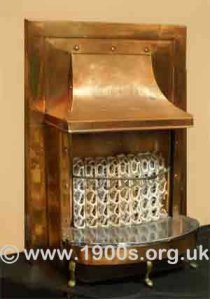
Gas was and still is, a common source of heat in England. Most homes including ours had gas fires. The gas then was coal gas, a very dangerous substance. You turned the tap on let the gas flow, and then lit it whereupon there was a loud POP! My Mum was always nervous about lighting it.

You had to be very careful that the fire, when the gas ran out, was turned off before you ‘fed’ the gas meter with shillings to re-establish the gas flow. Otherwise, you had odourless colourless gas flowing into your home and not realising it. Once a month the ‘gas man’ would arrive open and empty the meter and count the coins at the kitchen table. Depending on the amount of gas used, we would usually get a rebate of coins which were then fed back into the gas meter.

Photo Credit: Pat Cryer, with permission and thanks.

Committing suicide with a gas fire was easy, you just turned it on and did not light it. People accidentally died after forgetting to turn the tap of the gas flow off and feeding the meter, thus gassing themselves. Later in the 1950s a safety tap was added.

Because Uncle’s death was unusual a post mortem had to be conducted.

I reasoned that if he committed suicide, then there was a coroner’s report, which would be reported in a local newspaper. After hours of researching the newspapers of the area, I found what I was looking for.

Because this site is a subscription site, I only had access to this page and the text, so I had to re-write the copy [1]

A MOODY CHEF

A Pimlico Tragedy

The Westminster coroner (Mr. Purchase) held an inquiry at the Horseferry Road.

Coroner’s Court Monday into the death of […..]  (30) a chef, 79 Cambridge-street, Pimlico, who was found gassed there.

On Thursday morning. William McColl, 8 Rugby-street said he was a friend of the deceased. “He was in good health,” said witness. ‘and was in work. He was very moody.

Whenever I asked him what was the matter he would say’ Don’t take any take notice of me. I am a funny guy’

He had never said that would take his life and did not look the sort who might. He was in no trouble of any kind.

Faustina Alvarez. 79 Cambridge-street Pimlico said deceased had lodged there for three months.

On Wednesday night last week, he put threepence in the gas. The next morning witness’s wife got worried about him and witness went upstairs and knocked at the deceased’s door. There was no answer.

On opening the door witness saw deceased lying the floor by the gas ring.

PC. Elliott, 4138. who was called, said he saw the deceased lying on the floor with his head resting on a gas ring. He was dead.

The gas tap was turned on, but the supply had been exhausted. Dr. M. Hains, who made a postmortem examination, said the death was due to asphyxiation from coal gas poisoning.

Herbert Rehm. chairman of Rhem Brothers.Ltd., said the firm had eight licensed restaurants in London, […]  was employed at a branch at Buckingham Palace-road.

He was a very efficient employee, but very moody. The coroner said it seemed that in one of his moods, the deceased took his life. He recorded a verdict that the deceased took his life whilst of unsound mind.

When I was told by my cousin Diane, that the family never heard from him again after the death certificate arrived, I let them know of the circumstances of his death and we realised the reason nobody in the family had ever heard from him again. We cousins were sad for him.

‘Depression’ was not a word used in those days but obviously, that is what he suffered from.

One day, I hope to find if there were any children and so, like any genealogist who hits a brick wall, I keep searching.

Sources:

[1] Whether you are a researcher, historian or you simply want to know more about Britain’s history, take this opportunity to search The British Newspaper Archive – a vast treasure trove of historical newspapers from your own home.

Source: A Moody Chef | Chelsea News and General Advertiser | Friday 21 June 1940 | British Newspaper Archive

(2) Gas Meter Photographed in Blaise Castle Museum  https://www.1900s.org.uk/1940s50s-heating-gas.htm

With many thanks to Pat Cryer, whose website https://www.1900s.org.uk is a valuable source of information on the social life of wartime Britain. Pat allowed her photo of an old gas fire, similar to the one in the story, to be used. Thank you, Pat.


The Fur Trade: A Wealth of Resources

Over the last few weeks, Genealogy Ensemble has posted a series of research guides on the merchants, ship owners and others who were involved in the lucrative fur trade based in New France. This week, I have put together a list of archives, web site addresses and other resources that you may want to consult as you dig deeper into your research on these merchants.

The first repositories on this list are Quebec’s provincial archives, la Bibliothèque et Archives nationales du Québec. The links I have included will not only help you find the main archives in Montreal and Quebec City and other regional branches, but show you how to e-mail a question to an archivist.

Other archives with collections related to these merchants include Library and Archives Canada and various archives in France. I have written guides to several French archives in the past. See https://genealogyensemble.com/2018/10/21/researching-the-new-france-archives/ https://genealogyensemble.com/2019/01/27/the-national-archives-of-france/ https://genealogyensemble.com/2018/12/16/bnf-gallica/ and https://genealogyensemble.com/2018/05/13/researching-your-french-ancestors-online/.

To better understand the Canadian-based resources, see my posts https://genealogyensemble.com/2018/11/18/patrimoine-quebec-a-genealogical-library/ and https://genealogyensemble.com/2018/10/21/researching-the-new-france-archives/

Other resources on the list include university libraries and museums. I have also included links to various genealogy and history societies in North America and Europe. Several of these, such as the French-Canadian Heritage Society of Michigan, provide a great deal of background information on the fur trade era. Don’t forget that the merchants of New France were scattered from Acadia (in Canada’s eastern provinces) to Louisiana. Finally, I have included the names of several publishers and booksellers that could prove of interest.

Click here to see the list of repositories and publishers: Repositories of Documents Booksellers Publishers

This is the last post in the series. Previous articles in this series on the merchants, ship owners and fur traders of New France can be found at:

https://genealogyensemble.com/2019/05/05/the-merchants-ship-owners-and-fur-traders-of-new-france-part-1-a-g/

https://genealogyensemble.com/2019/05/10/the-merchants-and-fur-traders-of-new-france-part-2-h-to-z/

https://genealogyensemble.com/2019/05/26/the-trading-companies-of-new-france/

https://genealogyensemble.com/2019/06/02/french-seaports-and-new-france/

https://genealogyensemble.com/2019/06/09/books-and-articles-about-the-merchants-ship-owners-and-fur-traders-of-new-france/


Lifting Up

“My father will be lifted up soon,” my husband, Georges, said to our dinner guests. I could see the puzzlement and consternation on their faces as his father had been dead over three years. Our guests were obviously wondering what exactly this meant and how to react.

I hurriedly intervened by saying, “Georges, in Canada, we leave corpses in the ground forever.” Now our guests were really confused.

Georges then explained the funeral rites in his native village of Skalados, on the island of Tinos, Greece.

Skalados is a small village with a population of under a hundred permanent residents. In the summer, the population can more than double as the families who have left the village to live elsewhere, mainly Athens, come back to enjoy their summer break on the island of Tinos.

Skalados is a Roman Catholic village and the cemetery is Catholic. When one of the villagers die, bells ring from the Catholic Church of Saint John to announce the death. The funeral service is held fairly quickly, usually within twenty-four hours, as is the custom in many hot countries. Embalming is not usual in Greece.

While the person is placed in a coffin, the person is not buried with the coffin.  The deceased is wrapped in a shroud and carefully placed in vault that has a dirt bottom, cement sides and a marble covering. There are eight places or vaults in Skalados. This means that, at some point, the person must be exhumed to make way for others.

I remember my mother-in-law explaining that when her father had been ‘lifted up’ (σήκωσε), she was the one who lovingly washed his bones with wine and prepared them to be transferred to a small chapel that is part of the cemetery. The bones are placed in a vault, identified with the person’s name and often the birth and death dates, along with a picture.

Today, though, it is not necessarily a relative who will wash and prepare the bones. One can hire someone to do this.

The Eastern Orthodox Church is considered the prevailing religion of Greece, as 90% of the population belongs to this church. Roman Catholics represent less than 1%. 1 It is no surprise that the Catholics in Tinos hold memorial masses for their loved ones as the Eastern Orthodox Church requires.  A memorial mass is held on the third, ninth and fortieth day after death, as well as three months and six months following the death, and on the first anniversary of the death and sometimes three years after the death.2

After the funeral and the memorial mass, coffee, liqueur, alcohol, and other refreshments are served. These refreshments are provided by the bereaving family and are quite elaborate. My mother-in-law explained that when she was young, relatives and friends came from far, often on donkeys, and would need a meal before the long journey home. This tradition still continues today.

Also, in the village of Skalados, the family gives a loaf of bread to each household. The family in each home will then say a prayer for the deceased’s soul during their evening meal.

The Greek Orthodox Church prohibits cremation, therefore it is not common for the Roman Catholics in Greece to have their loved ones cremated.3 For the moment, the closest crematorium is in Bulgaria, although the Greek government has approved plans for a crematorium in Athens, despite the opposition of the Greek Orthodox Church. There is overcrowding in the cemeteries and people are exhumed after three years to make room for others.4

It is the custom for bereaving women in the Orthodox Church to wear black for at least two years following the deaths of their loved ones. The Catholics of Tinos also follow this tradition.


  1. Wikipedia, Religion in Greece, accessed May 20, 2019
  2. Wikipedia, Memorial Service in the Eastern Orthodox Church, accessed May 19, 2019
  3. Everplans web site, Eastern Orthodox Funeral Traditions, accessed May 20, 2019
  4. The Guardian, March 12, 2019, Greece defies church with step towards first crematorium, accessed May 20, 2019

Books and Articles about the Merchants, Ship Owners and Fur Traders of New France

Many books and articles have been written about the history of New France and the merchants who were involved in the fur trade there. If you discover one of your ancestors worked for a trading company, was a coureur de bois or owned ships that transported furs and goods across the Atlantic, these publications could be of interest to you.

To see the research guide to these publications, click here: The Authors

This is one of a series of posts on Genealogy Ensemble about the merchants, fur traders and ship owners of New France, the trading companies they were associated with and their ports of departure in France.

Lead Crystal

My grandmother was seventy-one, barely five feet, less than ninety pounds, and very frail. She lay propped up with pillows as family hovered around her hospital bed. Her eyes were rimmed with purple with the bruise spreading down across her cheeks. Her arm was in a cast and her smashed glasses had not yet been replaced. At nine years old, I could only stand and stare in horror.

I’m sure the mugger had thought Jean was an easy mark – a quick shove, grab the purse and run. But the mugger didn’t know my grandmother. She had fought for years to keep food on the table and she was not going to relinquish her grocery money without a fight.

My grandmother was born Jean Jamison Brodie (1884-1971 , the daughter of wealthy Quebec City flour merchant. She was sickly as a child and, strangely, given into the care of her mother’s spinster sister. In 1902, Jean trained as a teacher at MacDonald College in Montreal. Controlling students bigger than she was proved to be too strenuous and she gave up teaching after only a year.

In 1911 Jean married James Rankin Angus (1878-1964) from Glasgow, a naval carpenter who immigrated to Canada. James opened The Angus Bookstore within the walls of the old city. The couple had two boys a year apart, Colin (1912-1943) and Oswald (1913- 1977), and a third son, Ian (1918-2003), five years later.

Their home was a spacious flat on Fraser Street. Jean’s aunt moved in with them, the boys grew, and the book store prospered. All was comfortable until the stock-market crash of 1929, the year the two oldest boys graduated from high school. James struggled to keep the bookstore afloat, adding a branch store in a more affluent part of town to attract new customers. He downsized his family’s living quarters. Colin and Oswald found jobs and contributed to the household finances. Jean learned to be very frugal. She walked miles to save five cents on a bunch of carrots. My father Ian claimed his mother could create a dinner with five chicken wings and make it look like a feast.

In 1935, the inevitable occurred. Both bookstores were lost. My grandfather joined the ranks of the unemployed.  But not my grandmother!  One would think, given her frailty, she would simply collapse from the weight of the stress. Instead, the desperate situation seemed tgrandparentso galvanize her strength.  She collected the books from the bankrupt stores and set about running a lending library from her home.

It was not easy for Jean to deal with the public – she was a  private person and the family’s financial downfall was very humiliating. How difficult it must have been for her to collect dues, particularly late payments, and suffer petty complaints from  customers who, once her equal, now looked down on her as merely a sales clerk. But she had a family to feed and so she persevered.

Twenty years later, in 1955, Jean was mugged on the way to the grocery store. By then, my grandfather had found employment, the children were grown and had children of their own. Jean no longer had to worry about money for the next meal. Still she refused to give up her purse. Never would she allow herself to become a victim.


Notes:

  • Birth certificate of Jane Jamieson Brodie – on file with author
  • Certificate issued to Jean Jamieson from the McGill Normal School – on file with author
  • Wedding Announcement, Quebec Chronicle Telegraph June 1911 – on file with author ; Quebec Vital and Church Records (Drouin Collection) 1621 – 1967
  • Death to the Ashes. A self-published memoir  by Elizabeth Craig Angus, daughter-in-law to Jean Brodie Angus, in which she reminisces  on various incidents in the life of the Angus family.

French Seaports and New France

During the 16th, 17th and 18th centuries, the French competed with the British and Dutch for control of the fur trade in North America.

British merchants traded in Massachusetts and coastal New England from the 17th century until the American Revolution. The British also carried on trade in the Hudson River valley, and they controlled much of the trade out of Hudson’s Bay in the north.

Early on, Dutch merchants were in business in what is now the New York City area. Between about 1830 and 1842, the American Fur Company of New York City, owned by John Jacob Astor, monopolized the fur trade in the United States.

From the late 16th century until New France fell to the British in 1759, merchants from France, New France and Acadia (in today’s Maritime provinces) dominated the fur trade throughout a vast area. They were the leading fur trading merchants in the St. Lawrence River Valley, the Great Lakes region (Michigan, Illinois, Wisconsin), the Missouri River Delta, the Mississippi River Delta and the Great West regions in present-day Canada and the American States bordering Canada. French merchants were also present in the Hudson Bay and James Bay regions of northern Quebec in the 17th century and early 18th century.

The French also exploited other resources, such as fish, in North American waters, and they supplied household goods to the farmers who settled in New France as well as goods to trade with the First Nations people.

The merchants who carried on this busy trade had operations at the ports of Quebec City, Montreal, Trois-Rivières, and Louisbourg in North America, and they were associated with fellow merchants at various port cities of France.

La Rochelle was one of the most important French ports for trade with New France, along with Bordeaux, Rouen and Caen. Saint-Malo was the home port of explorer Jacques Cartier, while Samuel de Champlain, recognized as the father of New France, was based at the port of Honfleur in Northern France. Other French port cities with connections to the new world included Brest, Calais, Cherbourg, Dieppe, Dunkerque, Fécamp, Le Havre, Lorient, Rochefort, Royan and Vannes, while a few ships sailed from Marseille in southern France.

The research guide attached below provides more information about these French ports. Some of the articles are in French, so if you have trouble following them, use an online translation tool such as Google Translate.

To access this research guide, click here: Ports of Departure

This is the fourth in a series of weekly posts about the merchants, fur traders and ship owners who did business with New France, from the time Jacques Cartier planted a French flag on the shores of the Gaspé in 1534 until the Treaty of Paris was signed in 1763 and New France became a British colony.

The series includes a pair of research guides focused on the individual fur traders, ship owners and private bankers involved in trade between France and New France. See https://genealogyensemble.com/2019/05/05/the-merchants-ship-owners-and-fur-traders-of-new-france-part-1-a-g/ and https://genealogyensemble.com/2019/05/10/the-merchants-and-fur-traders-of-new-france-part-2-h-to-z/

A research guide to the trading companies these merchants were associated with can be found at https://genealogyensemble.com/2019/05/26/the-trading-companies-of-new-france/

Next week I will post a list of authors and researchers who have written about this period, including links to some of their publications.

Charlotte and Arthur’s War-Time Wedding

I never asked my great granny Charlotte about her wedding, but the records I’ve found hint at lots of intrigue.

Did they plan a summer wedding and then rush things to avoid conscription? Had they initially hoped to marry in the church next to her home but lost the opportunity due to community infighting?

Probably, but not yet proven.

What I do know is that my great grandparents—then 23-year-old groom Arthur Johnson and his 22-year-old bride Charlotte Charbonneau—chose to marry on Friday, February 9, 1917 in an unfinished church basement blocks away from her home instead of in the church right next door.

The direct information I have about that day appears in an affidavit filled out by Arthur on January 22, signed by the witnesses and solemniser, and turned in to the Registrar on February 17.[1]

When looking at it, I couldn’t help wondering two things: why then and why there?

Why February?

She wasn’t pregnant—their first son wouldn’t be born for another two years.

Money would be tight later, but at that point both had jobs. Arthur worked as a machinist and Charlotte served as a fore-lady, probably supervising women at a factory producing something for the war.

Did the impetus to marry early in 2017 have something to do with federal government musings about conscription at that time? Prime Minister Robert Borden promised publicly that he’d send 500,000 Canadian soldiers to Europe by the end of 1916. Only 300,000 men volunteered by December 2016, and numbers dwindled as horrific details about the Battle of the Somme reached Canada.

Borden passed conscription in August the summer after Arthur and Charlotte wed. Had they married after July 6, 2017, Arthur might have been conscripted. I might not exist.

I’m not sure why Arthur didn’t serve. He certainly had close ties with Europe having immigrated to Canada from Lancashire England ten years earlier. He came to Canada with his brother Albert and his parents, Mary Young and William Johnson.

Neither Arthur nor Albert volunteered for the Armed Forces and the family remained close. Albert and his wife Amie served as witnesses at Arthur and Charlotte’s wedding.

I also wonder how they selected the location of their marriage.

Both families worshipped in the Presbyterian faith. At the time, Charlotte still lived with her parents on Cross Street in Weston, right next to a Presbyterian Church called the Old Kirk at 11 Cross Street.

Why didn’t the couple get married in the Old Kirk?

Turns out that the building couldn’t offer a legally-sanctioned marriage between March 2013 and June 2017, despite more than 200 of the 247 congregation members working hard to keep the place open.

The problem began in March 2013, when fewer than 38 people voted to close the facilities and sell the Cross Street building. Given that the snow kept 209 people at home that day, I suspect that the meeting in question took place in the Main Street building purchased for Sunday School services a year earlier.

The sordid affair appears in a wonderful history of the Church in Weston called “From Then to Now.”

At a congregational meeting in March 1913, bad weather kept attendance to 38 out of 245 members. A majority of the 38 voted to hold all future services at the new facility and to sell the Cross Street site. Westminster Presbyterian Church was then fully established on the new site and the Cross Street site was sold.

The church on Cross Street was then re-purchased by some of the old members and services resumed on January 18th, 1914. Presbytery refused to recognize this congregation though, so it operated as an independent Presbyterian Church known as The Old Kirk The group continued to worship steadfastly and endured three failed petitions to Toronto Presbytery asking to be recognized as a second Presbyterian congregation in Weston (one petition was signed by 259 members). They appealed to the General Assembly, held in Montreal in June 1917, and the appeal was sustained. The church was then named The Old Presbyterian Church. From June 1917 to 1925 there were two official Presbyterian Churches in Weston.

In 1925 Westminster Presbyterian voted for church union and The Old Presbyterian Church opted to remain Presbyterian. It was then named Weston Presbyterian Church and Westminster became Westminster United Church. [2]

I haven’t yet found definitive proof that Charlotte and her family took part in the purchase or petitions of the Cross Street building. Given that Arthur and Charlotte married within a completely different congregation, however, it’s likely that they did.

Perhaps the couple hoped to be the first marriage in the renewed building, but then chose to wed rapidly so Arthur could avoid conscription. They needed a legally-sanctioned marriage.

They Chose St. David’s Church in Toronto

Arthur’s affidavit provides the address. It indicates that Reverend Charles A. Mustard presided over Charlotte and Arthur’s wedding ceremony at 38 Harvie Avenue, a building at the corner of St. Clair Avenue.

Information contained within a Presbyterian Museum article[3] about the Church after it was torn down in 1999 gives context. The St. David’s Church congregation purchasing the Harvie site in 1911. They began operations by moving an original frame church from the south side of St. Clair Avenue opposite McRoberts to the new site. That building opened in 1912.

The community grew rapidly. By 1914, they hired Toronto architect Herbert George Paul to incorporate their original wood frame structure into a new larger building. He finished constructing only the basement, however, when the bank pulled the Church loan due to World War I.

A speech by John Barron in June 1918 describes what happened.

In the year 1911 the present site was secured. Seventy-two feet of the frontage being presented by Westminster Church, to which the Church building was moved and alterations made. This building was opened on Nov. 12, 1912.

The congregation outgrew this accommodation, and in the year 1914 plans were prepared and the present building was commenced, but owing to conditions brought about by the war, the basement only was finished and used for services to the present time.

So, instead of getting married in a perfectly good building on Charlotte’s street, community infighting and a war forced the couple to wed in an unfinished basement in St. David’s Presbyterian Church.

[1] Johnson, Arthur. Affadavid, 022461, loose paper, Office of the Registar General Ontario. Rec. Date: Jan 22, 2019. Ontario Canada Select Marriages. Archives of Ontario. Toronto. MS932, Reel 440, Ancestry.com and Genealogical Research Library (Brampton, Ontario, Canada). Ontario, Canada, Marriages, 1801-1928 [database on-line]. Provo, UT, USA: Ancestry.com Operations, Inc., 2010. Ancestry. http://www.ancestry.ca : 2010.

[2] From Then to Now, 1847 to 2007, a history by the Weston Presbyterian Congregation, http://westonpresbyterian.ca/wp-content/uploads/2016/04/WestonPCHistory.pdf

[3] http://presbyterianmuseum.ca/files/2014/09/PCC-National-Presbyterian-Museum-Museum-Musings-St-Davids-cornerstone_revised.pdf

Working together to help genealogists discover their ancestors