Tag Archives: Quebec

My grandfather’s brilliant city hall career in four scandals – part 3

The Coderre Police Corruption Inquiry/Laurier Palace Fire Scandal

The Crepeaus in Atlantic City probably 1927. Working vacation?Link to Furies Cross the Mersey at the National Library, my novelette about Montreal politics in 1910. https://recherche-collection-search.bac-lac.gc.ca/eng/Home/Preservica?IdNumber=1586881464&pId=6e933a87-07e9-4cee-ac89-3b2ca1877b42&app=laccat&resource=folderlist

If you are a Quebecker of a certain age, it is possible that as a child you never went to the movies. Everyone under sixteen years of age in this Canadian province was banned from attending the motion pictures even in the company of an adult from 1927 until 1962 *1

This is because of the tragic Laurier Palace movie house fire in January 1927 where seventy eight children perished in a crush at the downstairs doors, doors that only opened inwardly.

These 78 children were among a larger group of working class kids crowded into the upper balcony of the ramshackle Laurier Palace watching a Western on a Sunday afternoon.

A slew of high-profile inquests and hearings followed the tragedy. My grandfather, Jules Crepeau, Director of City Services, was the first to testify at both the initial coroner’s inquest and subsequent hearings. It is unclear what exactly happened in the balcony as only children came forward to testify. All seven or so adults seated there seemed to disappear into the ether. There was talk of two men purposely closing the doors on the desperate kids. At least one older boy had time to go up and down the stairs a few times before the smoke got dangerous. The origin of the fire was never discovered. *2

Most parents, afraid of legal reprisals, testified that they thought their children were at church that afternoon. But parents of the era could hardly be blamed for allowing their children to attend the movies by themselves– against the by-laws. Many of their male children were already out in the workforce earning their own discretionary income and many of their young daughters were already ‘little mothers’ in charge of even younger siblings. With the traffic chaos on the streets in 1927, the movie house probably seemed like a relatively safe place for their children.*3
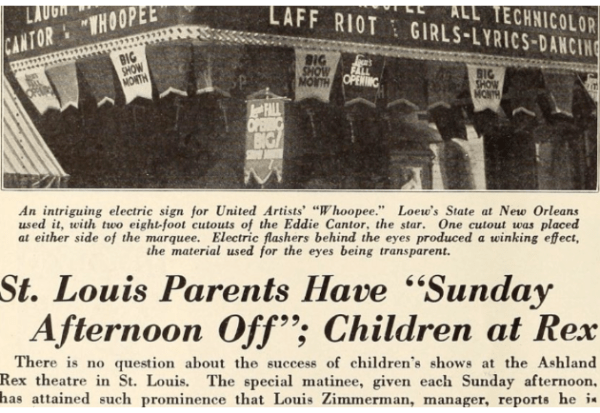
Just as special ‘kiddie matinees’ were taking off in the US (late 20’s early 30’s) Quebec banned all children from going to the cinema – for 4 decades. Crazy!

On January 10, 1927, the day after the Laurier Palace Fire, the front page of Le Devoir newspaper ran two related stories side-by-side. One was a dry report where my grandfather Jules Crepeau, Director of City Services, admitted that the Laurier Palace Theatre had been operating without a license.

“This will all be explained at the Coroner’s Inquest,” he said.

The second story was a shocking side-bar rehashing testimony from a two year old inquiry into police corruption, testimony that also mentioned my grandfather.

“Our readers will no doubt be interested in re-reading these extracts from testimony at the 1924 Coderre Inquiry into Police Malfeasance and Corruption, 4 that bear on motion picture theatre attendance.”

The side-bar included bits and pieces of testimony given in December, 1924 at this hearing by a certain Constable C.T. in the ‘special services’ division of the Montreal Police Department. The cop railed against City Hall. He was angry because members of the Executive Committee, he said, as well as my grandfather, repeatedly forced the police to cancel citations against motion picture houses that allowed children into the shows, unattended.

Constable CT gave specifics, naming each of the movies houses (the Ouimetoscope!) and the dates when citations were cancelled. He said, “One of these moments there’s going to be a catastrophe that will wake up the authorities.” Le Devoir put that quote in all caps.*5

Despite this sensational after-the-fact finger-pointing at a sensitive time by an otherwise respectable publication, no one took the bait. My grandfather Jules was once again called to testify at the Coroner’s Inquest as well as the other inquiries into the fatal fire but was never asked about Constable CT’s earlier accusations.

Indeed, a while later, when the Taschereau Government was deliberating whether to ban all Sunday showings in Quebec, my grandfather testified once again. He even brought in Ernest Cousins, Vice President of United Amusements, Montreal’s largest movie chain, to talk about the importance of Sunday showings to the movie distribution industry.*6

Isadore Crepeau, my grandfather’s brother, who just happened to be another Vice-President of United Amusements, was also called in to testify at this time, although I’m not sure anyone knew of the family connection.*7

So, why wasn’t my grandfather pilloried back in 1927, when passions over the tragedy were at a high boil, for these two year old allegations of interference with the policemen who patrolled motion picture houses (and who, btw, regularly accepted free tickets for their kids.)

Well, the truth is, Constable CT’s testimony was hardly gold-standard. Under cross-examination a day later, the cop admitted rather glibly to having lent the Chief of Police large sums of money at different times, for reasons he refused to elaborate on. He also admitted to depositing more than five thousand dollars into his five bank accounts over a short period of time. “Rents and winnings on horses” he said.

Constable CT was just another corrupt cop, put on the stand specifically to threaten my grandfather by bringing up, out-of-the-blue, the fairly benign subject of children and the motion pictures, when the Coderre Inquiry was mounted to deal with much more dire and dark issues: police involvement in prostitution of women and girls, drug rings and organized crime and illegal booze smuggling in the era of American prohibition.

Taken in that light, Constable CT’s statement “One day there’s going to be a catastrophe” uttered in December 1924, a full two years before the Laurier Palace fire, could be construed as a threat.

My grandfather, at the time, certainly felt threatened. He had Constable CT fired the very next day.

“Who is this Jules Crepeau who can tell the Chief of Police what to do?” asked Juge Coderre in his summary report in March 1925. As if he didn’t know.8

Three years later, in September, 1930, as explained in Part Two of this series, Mayor Camillien Houde was speechifying at the City Hall meeting where the aldermen debated whether or not to accept my grandfather’s coerced letter of resignation.

“The people want revenge,” Houde said. “They want revenge for the Montreal Water and Power Purchase (the purported reason for wanting my grandfather out) and for the Laurier Palace Fire.”

This was a sneak attack of some sort because never before had the Laurier Palace Fire been brought up as a reason to oust my grandfather from his lofty post at City Hall, at least not in any news clipping I have read.

With all the Houdist’s voting against him, my grandfather was, indeed, forced to resign his post of Director of City Services in September, 1930.

At the time, Grandpapa Jules negotiated a huge life pension that would make him the second highest paid employee at City Hall, without working. Seven years later, during the Great Depression, his huge pension would be rescinded by the City.

Two weeks after that, Jules was hit by a car near his home in Notre Dame de Grace, a car driven by an off-duty police officer. I guess my grandpapa threatened someone with a long reach.

He would die a year later of complications.

As it happens, Le Devoir was the only Montreal newspaper to give Jules a lengthy front page obituary. They even called out the other Montreal papers on this point.

The other day a noted public servant was put in the ground. The newspapers only published laconic biographical notes about him that don’t give a just idea of the role he played in municipal politics.”

The obituary didn’t mention the suspicious nature of my grandfather’s death, but it did allude, rather kindly, to the many scandals in his career:

He was too passionate not to occasionally take sides between two rivals, often creating his own enemies. Indeed, he received some knocks, some devastating knocks, but we must say upon his memory, that none of these accusations stuck.

Read the entire obit here.

I have added this on February, 14, 2022. The Montreal Star came online and I was able to read their point of view. They liked him, that’s for sure. Upon his forced retirement they wrote:

“His rise to the position he just vacated was accomplished by merit. A thorough knowledge of the whole involved process of civic administration, of civic problems and the various services, combined with a ready tact, a suave manner, and a keen intellect, which enabled him to penetrate to the root of any problem without delay and which made it very difficult for anyone to mislead him.”

Also, I reread the testimony of Constable CT during the Coderre hearing. Of course, different newspapers covered these political stories differently. I was surprised to see that in his testimony Constable CT claimed that Jules cancelled citations against movie houses owned by United Amusements. It was stated at the hearing that ‘no civic employee had any connection to the company.” LOL. My grandfather’s brother was VP.

Notes:

  1. The city by-laws forbade children to attend movies unless in the company of an adult, not because of a fear of fire-traps but for a fear of the morality of pre-code Hollywood. Indeed, exceptions could be made for films vetted by the Censor. A year later, a similar fire happened in a motion picture house in Scotland – also caused by a crush at doors that opened inwards. The only change that came of that was a law forbidding such doors in motion picture houses. But, in Quebec, everything becomes political. A parade of Montreal citizenry testified in the sad affair: the theatre owners (who were eventually exonerated) and employees and the firemen and the victims’ parents; then followed moguls in the theatre business, small independent theatre owners, union activists, more parents and more firemen, also educators and church officials and representatives of various community groups – anyone with a stake and an opinion – showed up to testify . Fire safety became a mere side issue: it was all about the morality of the motion pictures. The government ended up banning children from all showings, in return for allowing the controversial Sundays showings for adults. (Children could not vote, but their parents could.) I personally think the new “Talkies” coming in right then in 1927 had something to do with the decision. They were English talkies after all. Despite all this, Quebec children over the decades often evaded the rules by dressing up and acting like adults. There were also special children’s showings at various theatres over the years.

2. “It must have been a cigarette.” Most movie house fires of the time started in the projection booth. This wasn’t the case here, so they took a wild guess. A fire station was across the street, but firefighters could do nothing upon arrival to save the children.
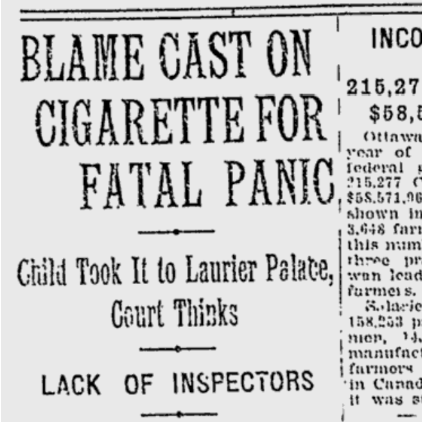
3. 1927 was a pivotal year in traffic safety in North America. The horse and wagon era was literally colliding with the era of the automobile – and their were no road rules yet. The same edition of the Montreal Gazette that covers the Laurier Palace Fire has a story of a toddler being run over in front of her house. This was a daily occurrence in North American cities at the time.

4. The Coderre Inquiry into Police Corruption and Malfeasance was launched after a record-breaking Brinks robbery in the Hochelaga district where it discovered that policemen were involved, but it had long roots back to WWI and prostitution around the Montreal Barracks. A Committee of Sixteen mostly Protestant groups organized an all-court press on Montreal City Hall in 1921, to protect the sad girls working in prostitution in the city after a prominent doctor gave a speech to the elite members of Canadian Club. They focused on the Baghdad Cafe, a sleazy dive serving US tourists located across the street from the ritzy Mount Royal Hotel, Tony Frank, Montreal’s leading mobster and top drug dealer was also implicated in the Brinks robbery. He thought he had the perfect alibi, but he and his henchmen were quickly hanged on circumstantial evidence. Judge Coderre, a religious conservative, used the Inquiry as his bully-pulpit. “Vice spreads its tentacles into every aspect of Montreal life, ” he wrote in his final report. He made many recommendations, all of which were ignored.
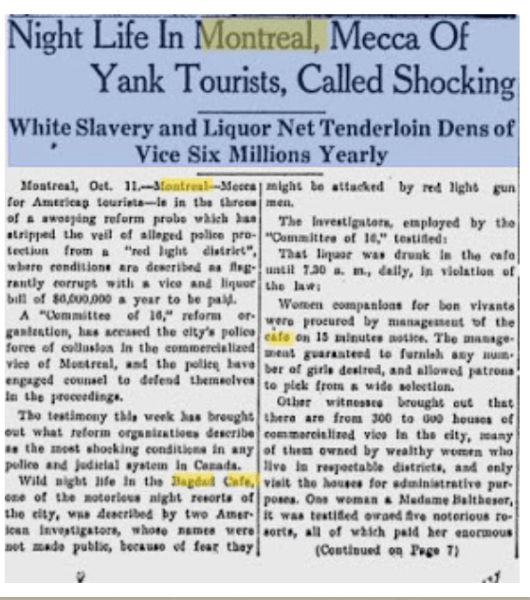
New York Times article: “300 to 600 houses of vice in Montreal, many owned by respectable women who live in good districts and seldom visit the brothels except to do administration.”

5. The Montreal Gazette’s quote at the time was “One day there’s going to be a catastrophe and if a fire breaks out one of these days no one will be able to get out.” These may or may not be the same quote. Unfortunately, the newspapers used creative license when transcribing the testimony and no full 10,000 page transcript of the Coderre Inquiry still exists, although Montreal City Hall has some original documents. https://www.archivesquebec.com/montrealp045.html . I visited there a few years ago and was shown a transcript on pdf that had been prepared for JAA Brodeur and the Executive Committee. It was edited down and did not include Constable CT’s ‘prescient’ quote. From what I read, it appears that Constable CT brought up the incriminating evidence against my grandfather without even being asked. He changed the subject himself in mid interview. This transcript did contain a vivid account of a visit to a house of prostitution made by an undercover American. All he had to do was to ask the cabby and he was guided to this brothel (that was said to be under the protection of the police) where a dozen of drug-addled girls wearing ‘handkerchiefs’ were displayed before him.

6. The UA chain did not have children as customers, said Cousins, but Sunday was the company’s biggest day at the box office for adults. If Sunday showings were cancelled, United Amusements would have to close down their entire operation…. United Amusements was a movie distribution chain founded by Greek immigrant George Ganetakos during the WWI years.. He started out small, showing ‘flickers’ on the wall o f his uncle’s ice cream shop, then took on Ernest Cousins (an ice cream man) and my great uncle Isadore Crepeau when he expanded. Eventually his company became part of Famous Players. United Amusements built many of the gorgeous Montreal movie palaces of the day. Greeks were big in the movie biz as they were entrepreneurial by nature and this new movie revolution presented a big opportunity for them. In his testimony, as reported in the Montreal Gazette, Constable CT accused Greeks of corralling children into the movies. The Laurier Palace was owned by Canadians of Syrian origin, a group often back then conflated with Greeks. On the morning after the fire, as reported in Le Devoir, George Ganetakos, using the name George Nicholas, set up an emergency fund for the victims.

7. My Mom’s Uncle Isadore was a glass manufacturer/insurance agent whose elegant stained-glass window graced the Rialto Theatre on Park Avenue for many years. It’s still there – in what is now an entertainment venue. In 1933, Isadore ‘fell’ out of his office window, seven floors up, and met his death. The police deemed it an accident relating a ridiculous story and citing unnamed witnesses. Isadore was very likely hired by Ganetakos because of his connection to my grandfather. A survey of movie industry magazines, like Box Office, reveals that my grandfather’s name came up much more often than Isadore’s.

8. Juge Coderre and his wife often attended City Hall events like the soiree for the Royal Princes held in August 1927.

In November 2022 I found a bit in an online archive from 1940. A man described the Director of City Services as the Manager of the City. Period. BUT he said when the post was created they didn’t allow for enough autonomy for the Director who was subject to blackmail and political interference. By 1940 only two men, my grandfather and Honore Parent had held the post.
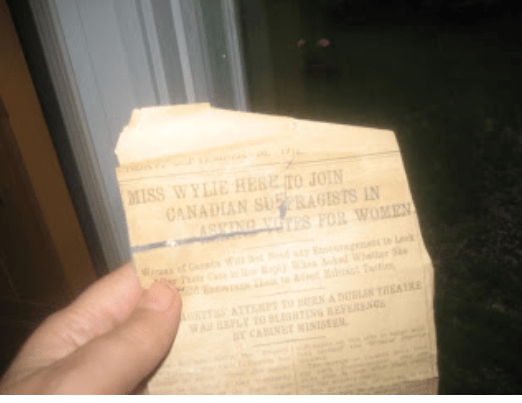
Margaret votes

Clipping 1912. Nixon Collection. Link to Furies Cross the Mersey, my novelette at the NationalArchives.
https://recherche-collection-search.bac-lac.gc.ca/eng/Home/Preservica?IdNumber=1586881464&pId=6e933a87-07e9-4cee-ac89-3b2ca1877b42&app=laccat&resource=folderlist

Suffragist: A person who advocates for votes for women.

Suffragette: Someone who advocates militant methods to win the vote for women.

If you come from Protestant Canadians, especially Presbyterians or Methodists, it is likely you have a female ancestor or two from 100 years ago who believed that women should have the vote.

It’s safe to say, however, that none of these ancestors ever marched in a suffrage parade, as did some American women. They likely didn’t throw hatchets at store windows, either, as did some British suffragettes. Nor did they ransack golf courses or go on hunger strikes in jail like the most militant suffragettes in England.

The Canadian Woman Suffrage Movement was much more tame (dull and boring) than in the UK or even in the US. In 1913, in Canada, the movement was controlled by a group of elite matrons, most with wealthy husbands, who were highly invested in the status quo. They did not want working class women or even ‘excitable’ young women of their own class to enlist in their suffrage associations. Most of them weren’t ‘equal rights’ suffragists.

Some of these ladies wanted the vote solely to cleanse society of its undesirable elements – to impose their values on others. Some wanted to clean up or “purify” what they saw as a corrupt City Hall, that allowed prostitution (the social evil) and alcohol consumption to flourish. Others wanted the vote to improve the lives of children of all classes because they believed men only cared about money. These were maternal suffragists and probably in the majority.

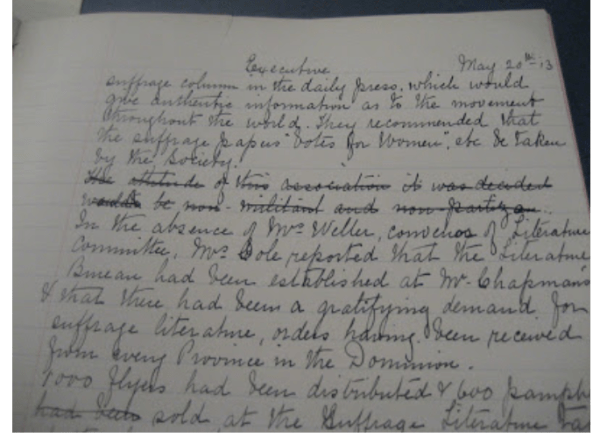
Page from minute book of Montreal Suffrage Association at BANQ.. Hmm. Someone has crossed out a line claiming the association is non-militant. Ha ha. They also want to subscribe to Pankhurst’s Votes for Women magazine.

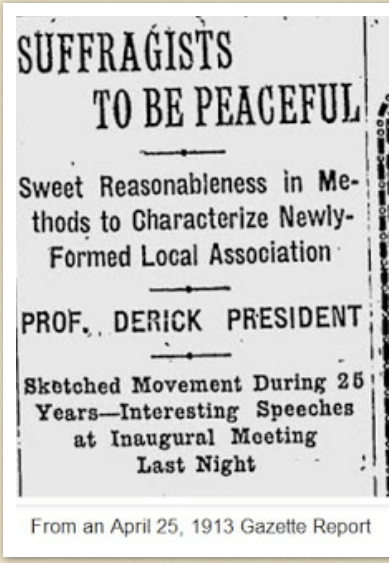
The Montreal Suffrage Association was launched in March 1913 at the height of the Canadian movement. The MSA was led by Miss Carrie Derick, McGill Botany Professor and the former President of the Montreal Local Council of Women. Two other McGill profs were on the Board of the MSA, they were male, of course, along with two church ministers (one of whom was a real Pankhurst hater) and socialite and philanthropist Julia Parker Drummond.

At their inaugural meeting, the MSA promised to conduct a ‘ sweet and reasonable education of the people.”

My husband’s great grandmother, Margaret Nicholson of Richmond, Quebec and her three daughters, Edith, Marion and Flora, were not invited to join the MSA, even if the girls lived and worked in Montreal. Even though they attended suffrage evenings sponsored by the MSA.

Still, they were avid supporters of woman suffrage. They left behind (for my own education) many newspaper clippings like the one at top covering all aspects of the topic.

I also have a 1908 letter from Margaret to her husband, Norman, recounting a huge argument she had about the vote with an anti-suffrage preacher relative. ‘I told him we don’t live in St Paul’s time and I don’t milk cows out in the field. ” St Paul was often invoked to prove women’s place is in the home.

Edith writes this in a 1913 letter from Montreal. “We are going to hear Mrs. Snowden (moderate suffragist from England) speak at St James Methodist Church, but she is not militant and for this I am very sad.”

So, she was all for the militant suffragettes, who were at their naughtiest and noisiest in 1913, employing incendiary and sensational tactics “deeds not words” to get their point across and making all the North American news feeds.

Canadian women finally won the vote, in May 1, 1918. A select few, those women with men active at the war front, had been allowed to vote in the infamous – and very undemocratic – conscription election of 1917.

Margaret Nicholson did not have a close relative in the war. She voted for the first time in December, 1921.

I have that letter too. Here is what she wrote:

December 7, 1921, Richmond, Quebec.

Mr. Fraser and I went down to vote at around 11:30. I did not want anyone calling of me and asking to drive me to the poll. I wanted to go independently. Mr. Duboyce called at about 3:30 and asked me if I had voted. I said, “ Do you suppose I would wait until this late hour to vote?” He was going to take me down in the car. He then came up and asked if my neighbour, I mean Ethel, would go to vote. Well, she would not. Later, I was invited over to Ethel’s. She said Tobin did not need her vote, but if she was going to vote, she would vote for him. Mrs. Farquarson did vote, but seemed ashamed. I have not seen her since. Mrs. Montgomery came last night, but too late to vote.

Of, I am so delighted with this country!

It did not feel degrading in any way.

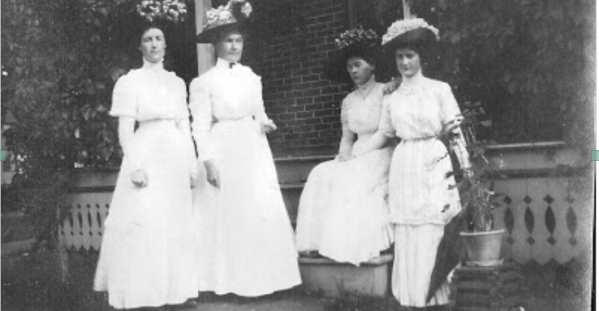
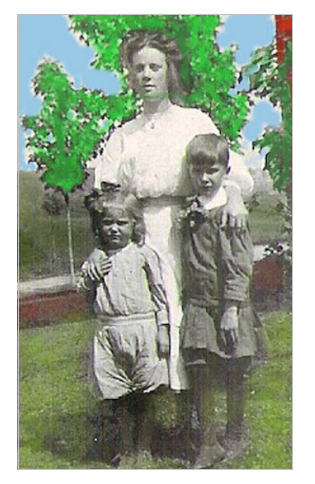
Margaret Nicholson and her daughters, circa 1910 in their fancy white dresses.
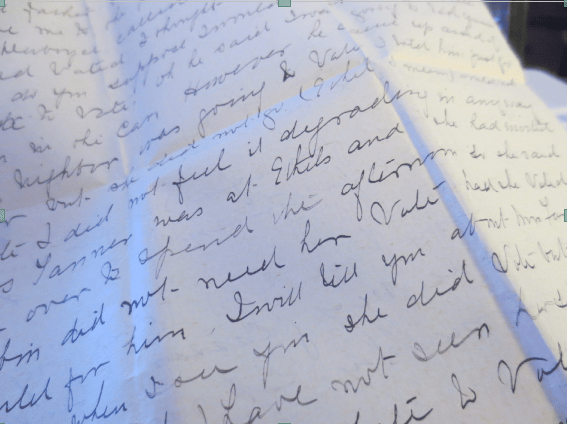
Margaret’s 1921 letter to her husband. “How I love this country..”

If you would like to read more on the weird Montreal Suffrage Movement in 1913, you can find Furies Cross the Mersey on Amazon.ca.

I mix the story of the Nicholsons with the story of Carrie Derick and the Kenney sisters, Sarah and Caroline, who moved from England to Montreal and tried to start a militant movement. They were the sisters of Annie Kenney, Mrs. Pankhurst’s famous first lieutenant. I believe I was the first person to figure this out..thanks to Google News Archives.

If you want to read more about the Canadian suffragists and their involvement in the Conscription election, read my Service and DIsservice, also on Amazon.ca KINDLE.

The Family Genealogist


letterpic

The truth is, family genealogists haven’t changed that much over the years. They are still the one in the family with time on their hands and the fierce determination to stick with it through all the brick walls and misinformation and family myth muddles. They still wonder, when all is said and done, if anyone in the future will value their hard work.

Well, I think future generations will care and something happened to me lately to prove it:

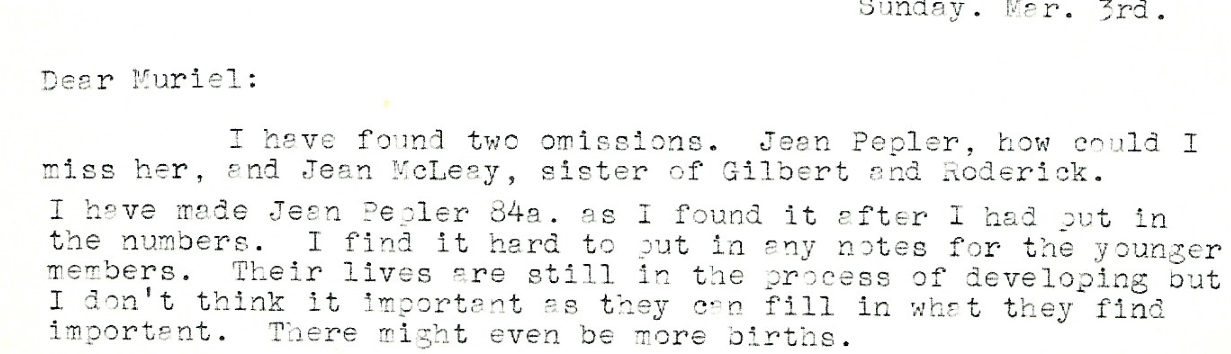
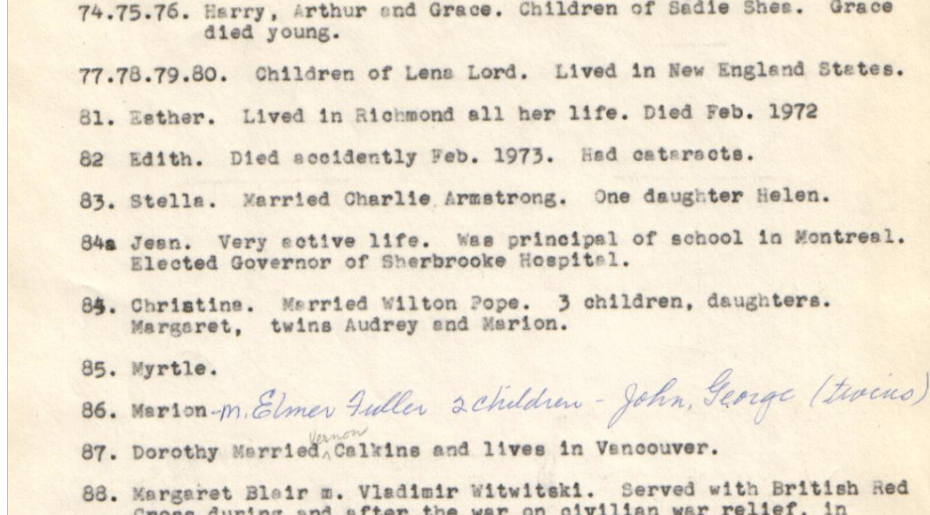
The evidence comes in the form of a letter dated only March 3rd, but I know it must be from the 1970’s. It is from a certain Isabel to a Muriel. The type-written missive appears to be the last in a series on the subject of creating a family tree– and, without ceremony, after the “Dear Muriel” salutation, the letter gets right to the point.

“I have found two omissions, Jean Pepler, how could I miss her? and Jean McLeah. I have made Jean Pepler 84a as I found it after I had put in the numbers.”

Jean Pepler is my husband’s great grandmother’s niece. I know this from a family tree I once had on hand, the McLeod Family Tree, and more particularly from about 300 family letters from the 1908-1913 period, letters I long ago transcribed and published in an online book, A FAMILY IN CRISIS.

But, until recently, when I received this 50 year old note, I did not know anything about Isabel or Muriel

Isabel, the genealogist of the letter, discovers another error. “I just found another error in these family notes. The Millers have two daughters. I forgot Annie…I’ll have to correct it before I send it.”

Yes, like all genealogists, past and present, Isabel has poured a lot of energy into her family project and after she’s typed out the family tree, just when she thinks she’s finished, she finds some errors!

Not wanting to retype the whole tree chart, Isabel merely creates an in-between number for Jean Pepler, an esteemed Quebec educator, to use on the summary list at the of her document.

This wonderful letter was sent to me by my husband’s cousin, Debbi who still lives in Quebec. We didn’t know about Debbi either, not before then.

You see, when my husband got his DNA done a few years ago on Ancestry, he immediately discovered two first cousins (whom he knew very well) and a third cousin, Jean, he didn’t know at all.

He assumed this person was a third cousin because he shared 60 centimorgans of DNA with her, the average amount for third cousins. I contacted the woman to confirm the exact relationship.

My husband and Jean were second cousins once removed, related through my husband’s two times great grandparents John McLeod and Sara Maclean of Uig Carnish, Isle of Lewis Scotland. My husband’s great grandmother, Margaret Nicholson and Jean’s grandmother, Isabella Hill, were sisters living around the corner from each other in Richmond, Quebec in early 1900.

mcleod

John McLeod of Uig Carnish Isle of Lewis, Scotland (Crayon Drawing) and his wife Sarah McLean McLeod, tintype.

These days, due to the Coronavirus, Jean is hunkering down with her daughter, Debbi, and they are passing the time exploring genealogy. Debbi saw my years old note on Ancestry.

“ I’m the one who is most interested in family,” Debbi wrote me. “Can you tell me more?”

So, I sent Debbi my compilation of Nicholson Family Letters that contain numerous mentions of Clayton and Isabella Hill. Clayton was a prosperous stone mason in Richmond who lived in a big house on ritzy College Street. Their son, Stanley, is Jean’s father. Their daughter Isabel (Hill Knott) is Jean’s aunt and Muriel (the letter’s recipient) is Jean’s mother, Stanley’s wife.

Isabel and Muriel were sisters-in-law.

Floraa

Flora Nicholson (1895-1978) my husband’s great aunt, with Stanley Hill and future family genealogist Isabel Hill Knott circa 1906

“Were there any other siblings in the McLeod Richmond family?” Debbi enquired of me. “ I’ve heard of Dan and Flora. Maybe a Mary-Jane, too?”

“I think I remember Mary-Jane from the letters, “ I replied. “ There was also a Christie in Illinois and a Sarah in Sarnia. But, I can’t remember any other siblings.”

I then explained to her that I once in my possession a McLeod family genealogy, neatly tied with shoelaces in a sturdy flip-board cover, but I’ve since misplaced it. Sad!

But, only a few days later, checking out some stored data on some random memory sticks, I stumbled upon some gifs of that same McLeod genealogy. (And, yes, we had missed some siblings!)

I emailed the gifs off to Debbi and that’s when she emailed me back a scan of her Great Aunt Isabel’s March 3rd letter from the 1970’s.

“As you can see, it’s the same genealogy. Jean Pepler is there at 84a!” Debbi wrote in the email.

What a serendipitous string of events had to unfold to marry these two documents, once again, almost half a century later!


peppler

Isabel’s Pepler page with new info added by a relation.

Today, with electronic communications, genealogists have so many tools at their disposal it is simply dizzying. Isabel’s letter reminds us that in the good old days it could take years and years of correspondence by mail or telephone to build a family tree – and typing it out before the age of White Out and word processors was an especially arduous task.

Isabel did, indeed, take a long, long time researching the tree:

“You should see my desk in the kitchen. At least now I can clean it up, getting rid of all the bits of notes I have gathered over the years.”

Isabel says that she spent three weeks at her kitchen table to type out the seven page genealogy.

“As this is all I have done for the past three weeks, I have no news….This has been hard work and has taken a lot of time but that is something I have plenty of.”

Isabel wasn’t sure, in the end, if she had done a good enough job:

“I find it hard to put in any notes for the younger members. There lives are still in the process of developing, but they can fill in what they find important. There might be even more births.”

And like many genealogists, then and now, she wondered if it was all worth the effort.

“What a job! Probably nobody will be interested because we have to accept that the world has changed.”

Well, it was worth the time and effort, Isabel, I can tell you that. Fifty years later many of us still do care. So, thank you for all the hard work you put into piecing together your (well, our) family tree.


Biology and Ambition

marioncanoing

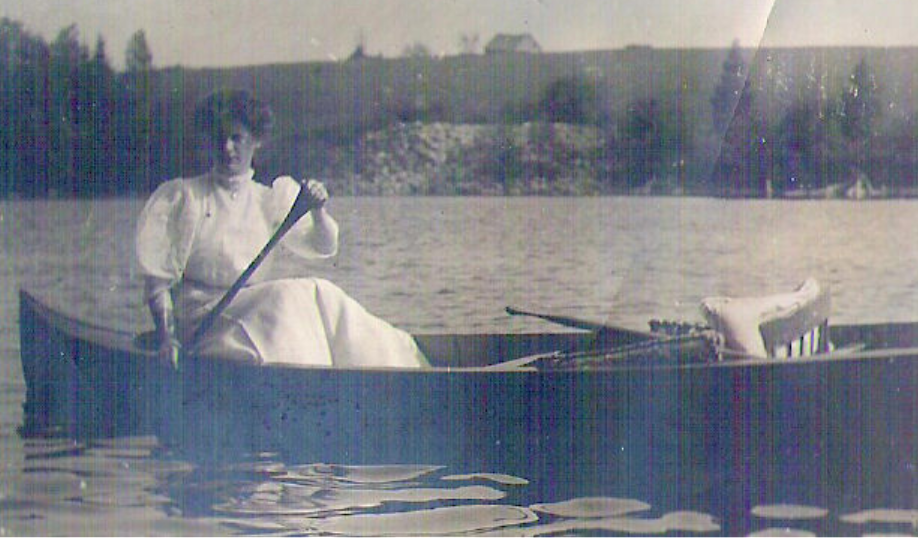
Marion canoeing circa 1907

Marion Nicholson, first year teacher at Sherbrooke High School in 1906-07, is serious about having a career. She is not focused, like so many of her colleagues, on finding a husband or ‘a pupil of one’ as soon possible. Or so she says in her letters home to her mom.

However, Marion’s “strictly private’ pocket diary  from 1907 suggests something else: that the young Richmond-born woman is very much torn between her biology and her ambition. In this little brown journal, eighteen year old Marion often comes off like a flighty Scarlett O’Hara type.

January 12: “Went to a card party and dance at Mrs. Griggs’. Had a grand time. Played cards with Mr. Watson, danced with Mr. Avery, had supper with Mr. Davidson and Mr. Sampson came home with me.” Marion even reflects on this coquettish behavior in a February 19th entry: “I believe I think too much of boys and am a flirt.”

Marion’s busy social life centers around skating parties at a Sherbrooke rink where she obliges many potential suitors – and turns down some others.

That Edwardian winter there are two young men fighting over the ultimate privilege to take Marion home from the ice rink, or the snow shoe club or the local youth hangout: Monty and Gordon.  It does get complicated.

Here’s the entry for January 28: “I slighted Monty by taking off my skates before his turn. He was quite huffy. I guess I will have to go skating with him tomorrow instead of driving with Gordon.”

For Feb 3: “Went to the theatre with Monty. I did not tell Gordon. Gordon was there by himself. He did not look our way the whole time.”

Eventually, this juggling act becomes too much for Marion. “I have decided who I like best and G is the one. I am tired of having two.”

In the spring of 1907, Gordon takes Marion canoeing.  The couple gets caught in a storm on the river and has to take shelter on shore. How romantic!  How promising!

By the time June rolls around,  Marion is getting anxious for the school year to end. It isn’t her work. She is exhausted from all the late nights and ‘dissipation’, as she refers to it in her diary. She returns to Richmond, 30 miles away, to spend the summer with her Mom and sisters.  Here, her social activities center on family friends: the Pepplars, the Clevelands, the McCoys, the Sutherlands and the Crombies.  In 1907, Richmond is a town without any eligible young men. They have all moved away to find jobs.

Marion helps support the family, so she isn’t expected to do work around the house. Most days she is bored silly.  She often sleeps in until noon. She sometimes spends afternoons taking ‘crazy’ photos with her Kodak.

Marion gets down on herself for this: “I think I am about the laziest person alive. All I have the gumption to do is sit and dream of what I would do if I tried. I have wasted two weeks of my vacation doing nothing, when I could have been practicing music or sewing. I hope I improve.”

In Richmond, Marion can go to church, twice a day if she wants. There are frequent afternoon teas hosted by society matrons, daily walks downtown to the mail to see if Gordon has written her, ice cream socials, croquet, tennis, strawberrying and country drives to places like Windsor and Kingsbury by horse drawn carriage.

Town tycoon Mr. Wales is the only Richmond citizen who has an automobile, but that will soon change.

Yes, it is the summer of 1907 (a year on the cusp of some game-changing technological changes)  and the living is far too easy for Miss Marion Annie Nicholson, an energetic young woman who, one day, will lead the PAPT teachers union while supporting four children as a single mom.

According to Marion’s 1907 diary, the most interesting thing to happen to her that summer is when some kittens get into the barn.­­

Oh, and there’s this entry for July 13th :“Lily Lyper nearly murdered. Great excitement.”

Even sleepy Richmond, Quebec had its share of scandals 100 plus years ago.

Mariaon1906sherbrooke

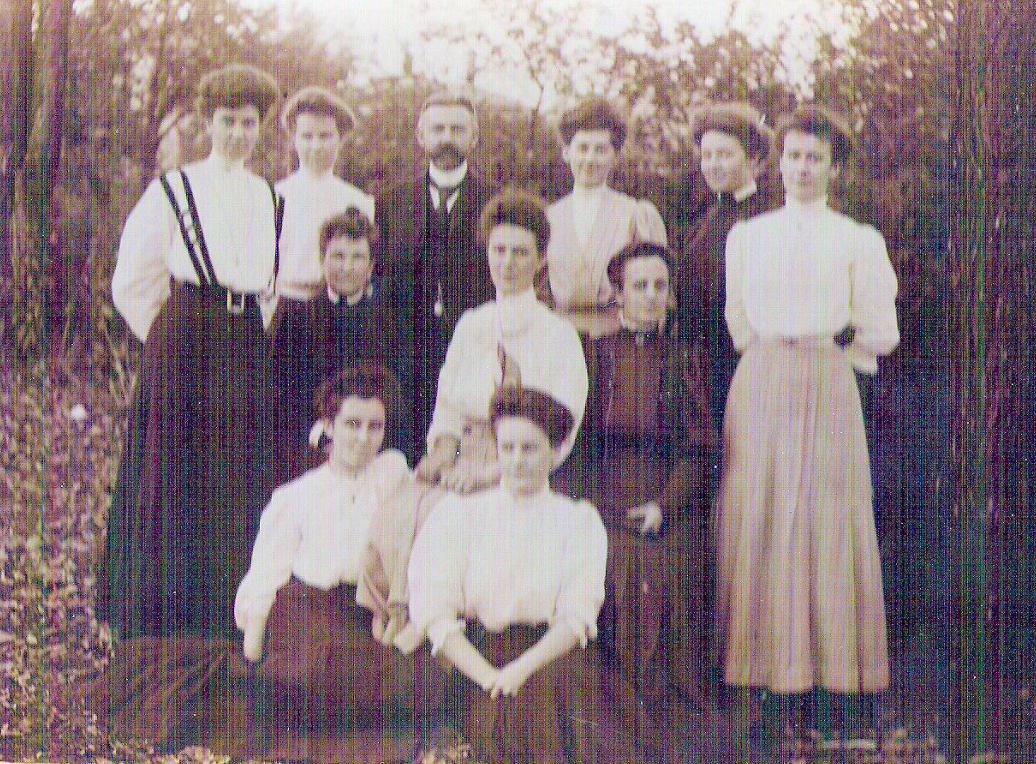
Marion, seated bottom and other Sherbrooke High Teachers 1906

tighsolas

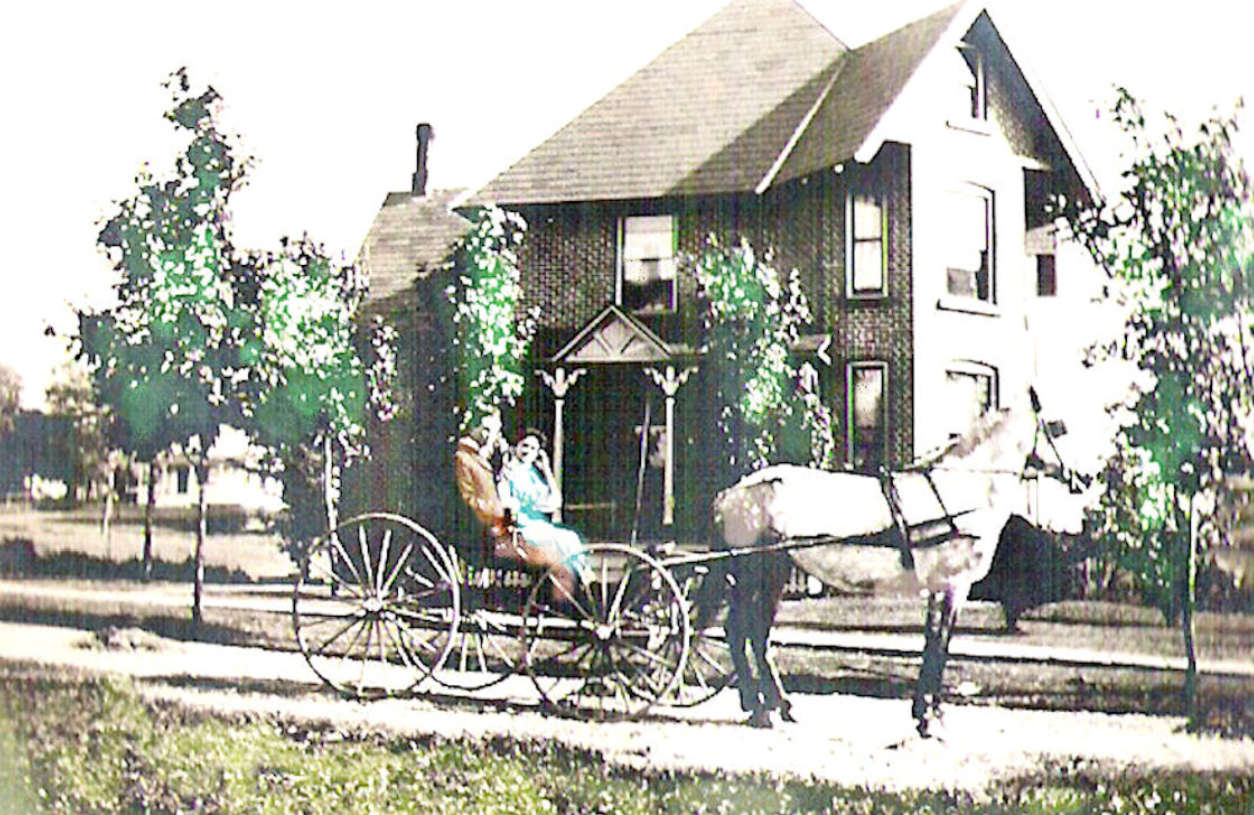
Marion and beau in front of Tighsolas, their house in Richmond, Quebec

Afterward: (added March 14)

Marion did not see much more of Gordon, the son of a wealthy Sherbrooke merchant who would  be making a very good salary, 3,000 a year, in 1911 at the age of 26, this according to the Census.

Gordon married a friend of Marion’s, it seems.  In 1913, Marion married Hugh Blair, the son of a prosperous Three Rivers lumber merchant,  although his parents did not favour the marriage because by that time the Nicholsons were broke.

Marion’s in-laws did not attend the October wedding at the Nicholson residence on Dufferin in Richmond. Marion’s marriage contract was a nasty piece of work  saying she got nothing but the furniture should the marriage break up FOR ANY REASON.

As it happens, Hugh died in 1927. Marion was left high and dry cut out of the Blair family business, so she rolled up her sleeves and went back to work becoming a Master Teacher and WWII era President of the Provincial Association of Protestant teachers in Quebec.

She never re-married, despite having many suitors, such was her sex appeal even in old age. She died of a heart attack in 1948, a few months after representing the Canadian Teachers Association at an UNICEF education conference in Sevres, France. The Editor of the Montreal Gazette (another admirer apparently) wrote her an editorial page eulogy: “With the death of Marian A N Blair, education in Quebec, indeed the entire nation, has suffered  a serious loss. ”

In the end, Marion did have it all, love, work and family. It just came with some major trials and tribulations. Apparently, she never complained.

Keeping Up with the Montgomerys

autoshow

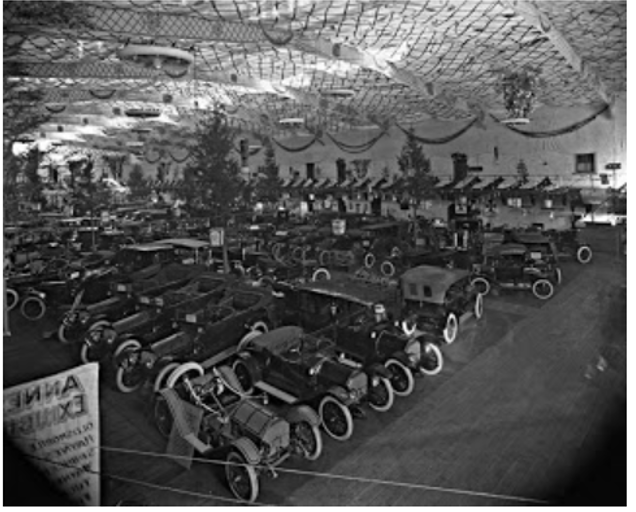
Montreal Auto Show. 1914. McCord Museum photograph

Roads trips. They have been a staple of life in North America for over one hundred years and it all began around 1910 in American and Canadian towns.

In big cities like New York or Montreal there was little need for an automobile, what with the streetcars and subways. As silent film footage from the era shows, the city roads were preposterously chaotic.

But, in the  towns during the warmer months, anyway, an auto was both useful to get around and quite the status symbol for the well-off professional man.

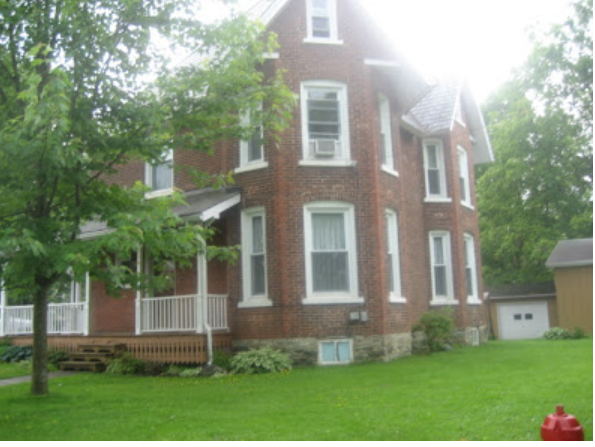
Case in point: Dufferin Street in Richmond, Quebec, a leafy stretch lined with red-brick homes in the Queen Anne Revival style.(1)

In 1910, the Skinners, the Nicholsons and the Montgomerys are neighbours on the north side of Dufferin.

Floyd  Skinner, a dentist, buys his first auto in 1909. So does Nathan Montgomery, a man in his forties who is already retired. (2)

Margaret Nicholson, my husband’s great grandmother, living in the pretty house called “Tighsolas” between them, doesn’t think much of these extravagant testosterone-fueled impulse purchases. She writes this in a letter to her husband, Norman, who is away in Northern Ontario working on the railroad:

“Mr. Montgomery is going to buy an automobile. He is getting rid of his horse. Don’t you think he’s foolish?  I would not want one. They are too dangerous.” (3)

TheNicholsos

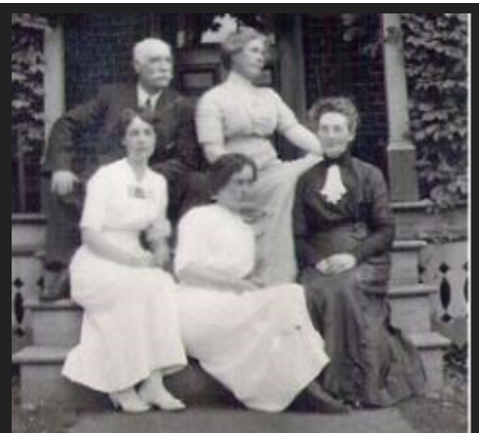
Norman and Margaret Nicholson, daughters Edith and Marion and Aunt Christine Watters.

 The Nicholsons, you see, never, ever, get to own an automobile. In 1910, they are house-rich but cash poor. They cannot begin to afford a ‘motor’ because in 1910  autos can cost as much as a fine house, in the 2,000 to 4,000 dollar range. (4)

If Margaret Nicholson is very wary of the newfangled horseless carriage, her daughter, Marion, my husband’s grandmother, is not. In fact, she accompanies the Montgomerys on their 1909  auto-buying excursion in Montreal.  Marion, a teacher in the city, tells her mother about it in a letter but wrapped in a little white  lie. “I bumped into the Montgomerys on the street. He is buying an auto and she is in for a shirtwaist suit.”

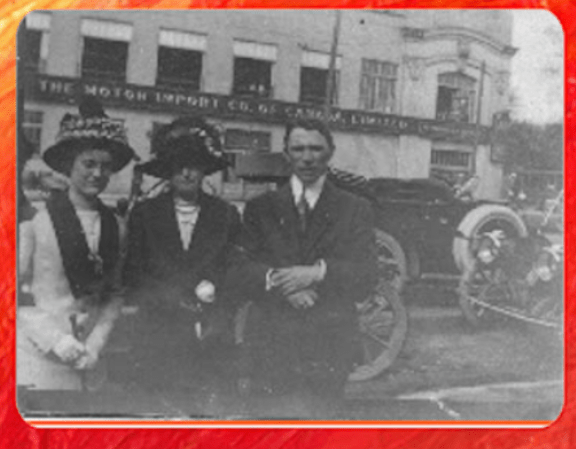
I suspect this is a lie because in the Nicholson family album there is a photograph of Marion and Mr. and Mrs. Montgomery posing in front of the Motor Import Company of Canada on Atwater and St. Catherine. Marion likely had planned to meet the Montgomerys all along.

MarionMON.PNG

Marion, left, caught in the act of accompanying her neighbours on an auto-buying excursion.

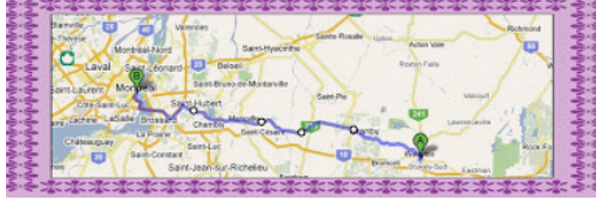
If Margaret felt autos were dangerous, her eldest daughter, Edith, also a teacher, clearly did not.  In the summer of 1911, Edith traveled all the way to Montreal by motor with the Skinners.  Here’s how Edith described her trip in a letter to her dad:

“As you will see by the address, I am in Montreal. I came in with Dr. and Mrs. Skinner in the motor Friday. Left home at 10 am and got to Waterloo at 12.30 had dinner. Saw all we could of the town and left at 2 for Montreal, got here at quarter past six. Without one break down. It was a beautiful day and we enjoyed every minute of it.

I will name the places we passed through so you will know the country we passed through. Melbourne, Flodden, Racine, Sawyerville, Warden, Waterloo, Granby, Abbotsford, St Caesar, Rougemont, Marieville, Chambly, Longueil, St. Lambert, Pointe St Charles.

Don’t you think I was a very fortunate girl to have such a trip?


Itineray

1911 itinerary.  6 ½ hours for 93 miles.  The speed limit in the city was 8 miles an hour and 15 miles an hour in the country.

 The Eastern Townships is a very hilly place so this pleasure trip must have been quite the  roller-coaster ride for Edith and possibly a bit hard on the, ahem, lower body, especially if Edith was wearing a tight corset under her ‘duster coat.’ (5)

In 1910, autos were considered toys. Motoring was considered a fad, a pastime. The preface to the special insert promoting the 1910 Westmount Horse Show in the Montreal Gazette claims, “The automobile will never replace the horse in Man’s affection.” (6)

So wrong.

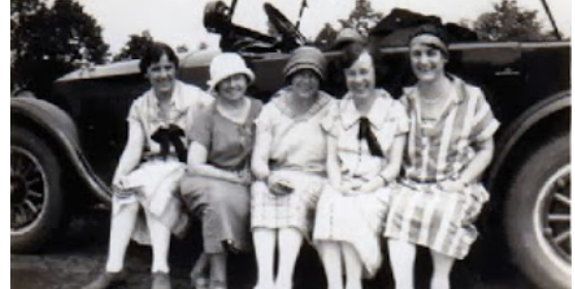
Although it was wealthy males who kick-started the automobile revolution, it was women and teenagers who had the most to gain from it.  They were free at last to travel far and wide on their own.

freeatlast.PNG

Free at Last! Margaret’s youngest daughter Flora and friends on an automobile ride in the country circa 1920.

So, here we have three houses on Dufferin Street in Richmond, Quebec – and already two automobiles.

Still, if you pay attention to her actions and not her words, it  is clear that Margaret Nicholson doesn’t really hate autos. Margaret often allows Mr. Skinner or Mr. Montgomery to take her to the mail to post letters to her husband.

 What she says to Norman in her letters is to soothe his prickly pride, that’s all.

To make things worse, just around the corner on posh College Street live Isabella and Clayton Hill, Margaret’s sister and brother-in-law. Clayton is a prosperous stone-mason and, much to Margaret’s chagrin, he owns an especially fine automobile.

Clayton'sauto

Magical Mystery Tour Car. Clayton’s Auto. A Pierce Arrow, perhaps. Very expensive at about 5,000 dollars.

Margaret is always feuding with Clayton and her sister mostly over the care of her elderly mother.

She remains bitter about her relations’ good fortune. In another letter to her husband she writes: “Clayton’s auto has broken down again. Isabel says the repairs are costing a fortune. Aren’t we lucky not to have one.”

Then, again, she accepts rides from her brother-in-law on occasion.

In 1910, there was no resisting the lure of the motorcar. The swanky male ‘toy’  was already proving to be indispensable even to its most vocal female critics.

Nichsolsonhomeafewdaysago

Tighsolas as it looks today.

  1. Richmond was a railway town, on the decline, between Portland, Maine and Montreal, Quebec. Queen Anne Revival style homes had irregular roofs, turrets, and lots of gingerbread moulding.
  2. On the 1911 Canada Census
  3. Nicholson Family Letters. Author’s collection.
  4. This was all changing with the Model-T Ford, and mass assembly. In 1910 Ford claimed his factory was putting out 1,000 autos a day. And he paid his people good salaries so they too could buy an auto. Soon, average middle class families could own a motorcar at around 400 to 600 dollars.
  5. Duster coats were long affairs meant to keep women’s clothes clean. Cars with an internal combustion engine were notoriously dirty.  Steam driven cars were dangerous and noisy. Electric cars, clean but slower-moving, were aimed at women in advertising, and, maybe, just for that reason, they did not catch on, at least until 100 years later.
  6. Magazine articles of the era were already pointing out that ‘the Billion Dollar Toy’ was creating significant waves in the economy, a sign that the auto wasn’t merely a toy but here to stay. By mid-century automobiles and automobile parts were the driver of the US economy.


Seigneuries in the Western Laurentians near the Ottawa River

Introduction

The PDF link at the end of this introduction is attached to a compilation that describes the seigneuries and townships in the Western Laurentians region, along the banks of the Ottawa River between Montreal and Ottawa.

The compilation describes the counties that existed in the region in 1791: Effingham, Leinster, Ottawa and York. The seigneuries are described in chronological order, from the Seigneurie de la Petite Nation, created in 1674, to the Seigneurie Papineau, granted in 1817. It includes a list of the major seigneurs (landowners) in the region and links to some information about each of these individuals and their properties.

The townships and some of their best known residents are described in chronological sequence, including St. Andrews Township, formed in 1800, Grenville Township, Gore Township established in 1825 by Scottish and Irish settlers, and Lochaber Township, established in 1855. It also describes the city of Lachute, founded in 1796.

The compilation includes links to lists of local cemeteries.

There is also a list of notaries who lived in the region, including the years and places they practiced, and the branch of the Quebec archives (BAnQ) where their records are kept. The legal documents they created can be very helpful to family historians looking for land transfers, business agreements, apprenticeships, wills, inventories, marriage contracts and other records. The records of some notaries mentioned here are kept in Montreal, but others are available in Gatineau, near Ottawa. I have included the locations and contact information for these archives.

Some of these notarial records, or the indexes to them, have been digitized and are online through the BAnQ online, Ancestry.com (two different databases of notarial records), FamilySearch.org or Genealogy Quebec (Drouin Institute Online).

Seigneuries and Townships

Seigneuries were created by the kings of France, based on a land ownership model that was used in France prior to the creation of New France in 1604. Seigneuries were also created in Québec after 1759 under British rule. In 1854, the seigneurial system was abolished.

For example, after Quebec became a British colony, Governor James Murray was granted the seigneury of Argenteuil in Argenteuil County. It had been granted in 1680, under French rule, to Charles-Joseph d’Ailleboust des Musseaux, an officer of a French regiment stationed in New France. In 1697, d’Ailleboust des Musseaux granted the concession of the Seigneurie d’Argenteuil to his son. Neither the father and nor the son resided there. After 1700, surveyors mapped out the region along the banks of the Outaouais, or Ottawa River.

Because the Argenteuil seigneury had not been settled or seen economic development under its previous owners, the British colonial government granted ownership of it to James Murray. Under British rule, a seigneur appointed by the British authorities was expected to reside on his seigneury for at least a few months every year, and to take an active part in its management, with the legal help of a notary. A large number of notaries began their careers this way.

In contrast, land grants were usually offered in remote rural areas in which the seigneurial system had not been implemented. They were granted by both administrators of New France, and in Quebec prior to Confederation. In the majority of cases, rural land grants were recorded by the local notary. Land grants still exist today in far-flung regions of Quebec within the mining and lumber industries.

Cantons, or townships, were mainly instituted by the British in regions that had not previously been occupied by seigneuries. The Eastern Townships, Argenteuil, Gatineau, Hull and Pontiac counties were some of the regions in which the early settlers embraced the concept of townships.

Seigneuries along the Ottawa River


The Huguenot of England Part One

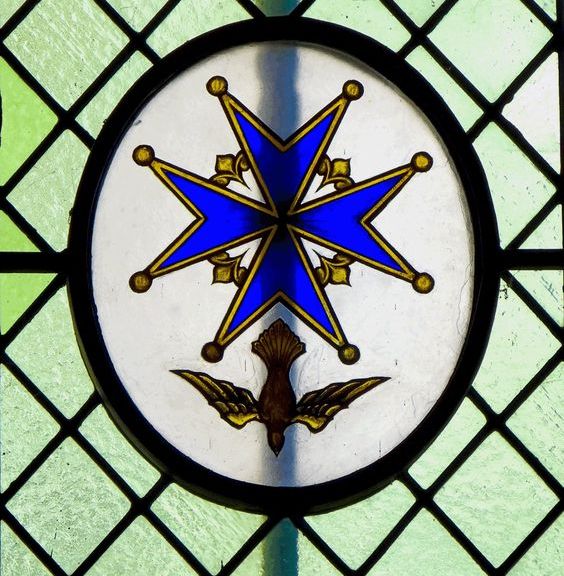
The Huguenot Cross.

A window at Canterbury Cathedral England where Huguenot descendants still worship every Sunday, in French.

‘Huguenot’ What does that mean to you? For me, living in Quebec, Canada it is a part of Quebec and France’s history but did you know that England also has a vast amount of history about Huguenot? I was amazed to learn that!

After I recently read a short article about English Huguenot, it made me want to find out how and why they ended up in England.

The Edict of Nantes (french: édit de Nantes), signed in April 1598 by King Henry IV of France, granted the Calvinist Protestants of France (also known as Huguenots) substantial rights in the nation, which was still considered essentially Catholic at the time.

The Huguenot were Protestants in a largely Catholic populated country and after Louis XIV cancelled their civil rights granted to them by the ‘Edict of Nantes’ in 1685, about 50,000 fled France across the English Channel.¹

Once in England, they spread out not only to London but to 20 towns from Canterbury to Norwich, Plymouth to Rochester. As time went on, many of them drifted towards the Church of England and names became anglicized. Ferret became Ferry and Fouache became Fash most often due to mistakes made by English clerks!

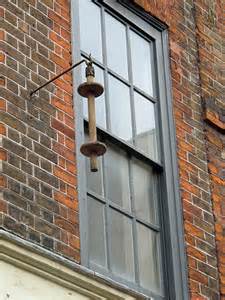
In the 1600’s, Huguenot in England was called Journeymen journéee – ‘day’ in French – because they were, yes! paid daily. Journeyman is a word still in use in England today. Huguenot homes included a feature that marked a journeyman weaver home or a ‘sign’ such as the one below.

This Spindle is the Sign of A Silk Weaver On A Huguenot House in Spitalfields, London England

They set about settling in and transformed their homes to suit the valuable silk trade. They enlarged the windows in the attic to let in the maximum light for the weavers and designed a staircase positioned right by the front door to allow access to the upper floors without entering the workshop. This protected the expensive silks from dirt and soot from the streets. As the silk trade in the East End took off, they formed a community of working-class tradespeople that transformed Spitalfields into “Weaver Town”.

These talented artists brought to England many high-skilled trades. In addition to being famous for their silk weaving and beautiful fabrics, they brought to England paper-making, hat makers cabinet makers watchmakers gunsmiths goldsmiths jewellers and many more skilled trades.

By 1710, at least 5 percent of the population of London – then around 500,000 – were French Protestants. In the French enclaves of Spitalfields and Soho, that proportion was much higher.  London soon had 23 French Protestant churches. Within a few years, a society totally unacquainted with mass migration had given a home to the equivalent – in terms of today’s population – of 650, 000 new arrivals.

According to one estimate, one in every six Britons has some Huguenot ancestry. Some famous Huguenot names in England include Simon Le Bon, from the pop group Duran Duran actor Sir Laurence Olivier, author Daphne Du Maurier and Samuel Courtauld (1793 – 1881) an English industrialist who developed his family firm Courtaulds to become one of the leading names in the textile business in Britain.²

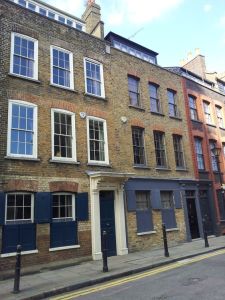
Today, in the lively East End area of London, there is an area known as Spitalfields. Home to artists, creative fashions and food, Spitalfields is well known for its history of silk weavers. Fournier Street – built in the 1720’s – with its grand old Georgian terraced houses of the master weavers attracts visitors each year.³

There is a thriving Huguenot Society of Great Britain and Ireland formed in 1885.

In Fournier Street, at number 18 the elegant home belongs to the Artist Denis Severs. He bought a dilapidated 10 room property in 1979 and used it to re-create a Huguenot home for his own pleasure. Word got around and it has now been open to the public for 35 years.

https://www.dennissevershouse.co.uk/

Huguenot Silk Weavers Houses on Fournier Street

Sources:

¹https://en.wikipedia.org/wiki/Edict_of_Nantes

²http://www.independent.co.uk/news/uk/home-news/refugee-week-the-huguenots-count-among-the-most-successful-of-britains-immigrants-10330066.html

³https://oldspitalfieldsmarket.com/

https://www.huguenotsociety.org.uk/

NOTE:

This link is to the ‘Huguenots – Index of Names’ within Quebec.

Posted by Genealogy Ensemble author, Jacques Gagné.

Huguenots – Index of Names

According to our author, Jacques Gagné, it would appear that the National Archives, Kew, Richmond TW9 4DU England, own, in comparison to the Bibliothèque nationale de France in Paris, more information about Huguenot families! Here is the link:

A Contrast in Character

DrHenry

Dr. Henry Portrait.

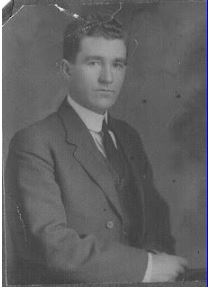
He looks like one of the clan in the snapshot, with a trim athletic body, a handsome, rugged face, full-lips, sturdy chin, prominent brow over deep set eyes. He is confident in his posture as well as a snappy dresser.

He is Dr. Henry Watters of Kingsbury, Quebec and Newton, Massachusetts, first cousin to my husband’s grandmother, Marion Nicholson, the son of her Aunt Christina on her father, Norman’s, side.

That also makes him first cousin to Herbert Nicholson, Marion’s older brother.  And although the two young men resembled each other in build and facial features, they could not have been less alike!

Dr. Henry , by all accounts, was a near-perfect man, a  high-achiever, a man who rose to the top of his profession at the Newton Hospital near Boston, but who remained devoted to family (and that includes his cousins) throughout his life.

Despite his busy vocation, he corresponded with all of his extended family, regularly, with letters than demonstrated uncommon empathy. When writing his youngest cousin, Flora, who apparently had complained of boy troubles in her letter, “I don’t have much experience in these matters, but I can only say, if he doesn’t want you, he isn’t worthy of you.”

Herb, well, what can I say?  As the only son of Norman and Margaret Nicholson of Richmond, Quebec, great things were expected of him. A whopping FIVE dollars was put aside at his birth in 1885 to start a bank account for his future medical career. But, upon graduation from St Francis College in 1905, he went to work as a clerk at the Eastern Townships Bank.

A ladies man and/or a gambler, Herbert immediately got into debt, borrowing money off all of his relations, until, in 1910,  he got into such a desperate situation that he filched 60 dollars from the till at work.

Herbert didn’t go to jail: The Nicholsons were too well connected for that, but even Norman’s patron, E.W. Tobin, the Liberal MP for Richmond, Wolfe, couldn’t help Herbert’s cause.

  Herbert was forced to skulk out West. His already cash-strapped dad had to come up with the huge sum of 500 dollars to help pay his sons debts and travel expenses.

Herbert was a teeny bit ashamed. “Don’t tell anyone where I am,” he wrote to his parents from Saskatchewan, where he was staying with Norman’s former partner in the hemlock bark business.

Out West, Herbert worked in a series of jobs in, yes, banking, then insurance, and then with a the farm equipment company, Massey-Harris.

At one point he devised a scheme to dupe immigrant farmers out of their hard-earned cash.

“I also made a 100 dollars yesterday in the shape of a man’s note due in a year’s time. I sold a threshing outfit that I repossessed from a party that could not pay for it.  For 3300 and as there was only 3000 against the rig to the company; I am 300 dollars to the good.  In doing this I had to divide up with two others who assisted me and knew what I was doing so we get 100 each.  Have to keep these things quiet, of course.”


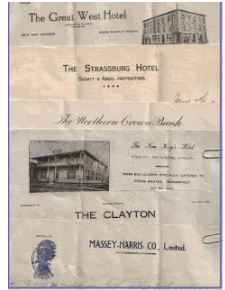
Herbletterhead

Herb’s letterhead from 1911-12 illustrating his roving ways

His other letters home were full of complaints about his workload, the freezing cold weather, etc. – and no shortage of insights into how capitalism works. “You have to already be rich to get rich out here,” he said.

Later, Herbert settled down in ‘real estate’ in Vancouver, got married twice to wealthy women, and then moved on to California.  He died in 1967, childless.

Beside his name in the Nicholson family genealogy it says “Successful Banker.” sic.

Dr. Henry ,whose dad, Alexander Watters,  was a Kingsbury, Quebec farmer, never married.  Henry employed his younger sisters, Christina then Anna, as his housekeeper in his comfortable clapboard Colonial in Newton, Massachusetts.

Henry may not have been a ladies man in the usual sense of the word, but he certainly had a way with the young ladies in his family. In the 1910 period, he indulged the Nicholson women no end with trips to Wellesley College in his flashy Stanley Steamer, with sea-bathing at Nantucket, box seats at Red Sox games, theatre plays, and dinners at the posh Windsor Hotel in Montreal, when at home visiting.

His younger sister, May, got new shirtwaist suits and fancy hats from him as gifts on a regular basis. Henry once used his  vacation time to drive his Aunt Margaret up and down the E.T to visit old friends.

And much to his Uncle Norman’s admiration, he paid his own father, Alexander, a trip “home” to the Old Country in 1911. “Not many sons would do that,” wrote an envious Norman to his wife.

Unlike Herbert, who found nothing good to say about any of his employers, the banks, the railway or insurance,  Dr. Henry never complained about work as a doctor and surgeon in his letters to family, even when suffering from a fatal disease at a relatively young age.

From his obituary in the New England Journal of Medicine: “When stricken with what he knew meant the shortening of his days and the limiting of his activities, he carried on cheerfully and uncomplainingly. He was the friend as well as the associate of those  with whom he worked, the friend and the physician of his patients.

Dr. Henry died 1937 and is buried at home, of course, in the clan cemetery in Melbourne, Quebec.  Herbert died in 1967 and is buried somewhere in a Long Beach cemetery. His last visit home to Richmond was in the 1920’s.

Herbnicholson1910

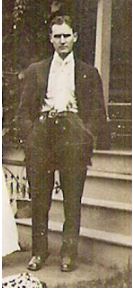
 Herbert Nicholson 1910ish

The information comes from the Nicholson Family letters of the 1910 period. The Watters clan of Kingsbury, Quebec is written down as Waters on the 1911 Canadian Census. Henry had a younger brother, William, who died in 1910. A photo on Ancestry claims this 21 year old William is an MD too. He must have been a recently graduated one, or still a student.

I have a short obit cut out left by the Nicholsons. It says the family is shocked at William’s death in Montreal, but nothing  else. A man could catch a cold and die in a day in those days, but this very short obit suggests something else more nefarious.

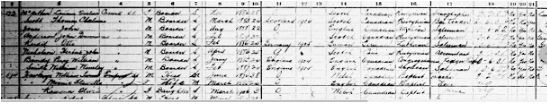
Below: 1911 census showing Herbert Nicholson living in a boarding house in Qu’Appelle Saskatchewan, with two recent immigrants, one from Germany, one of Scotland (a bartender, no less) and a female (!!!) stenographer. His temperance-minded parents would have passed out, had they known. 


quappelle

*This post was originally published on Writing Montreal, my blog.

Heatwaves and Victory Gardens


socialnotespotato

On Sunday, October 1, 2017, some members of Genealogy Ensemble will be participating in the Culture Days event at the Verdun Farmer’s Market, in promotion of Beads in a Necklace, our  book of family stories to be published in November.   My talk will focus on WWI Victory Gardens and the rising cost of living during that period.

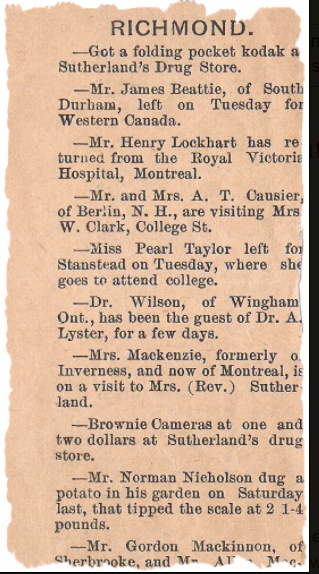
The newspaper clipping, above, is from the social notes column of the Richmond-Times Guardian, (Richmond, Quebec) circa 1905. The very silly item about a big potato is probably my husband’s great-grandfather’s way of poking fun at small town pretensions.  Or is it?

The Nicholson family’s vast vegetable garden behind their charming red-brick house in the Eastern Townships of Quebec was no joke to them, not even in an era when pre-prepared foods like Heinz Beans, Jello, and Quaker Oats, were fast becoming house-hold names.*(1)

In 1911, with their four children were grown up, the large backyard garden that produced corn, beets, sweet peas, etc., was critical to the diet of this frugal Scottish Canadian family.

The potato patch was a particular concern:

“I put the Paris Green on the potatoes twice. Mrs. Montgomery came over to tell me that the bugs were eating up my potatoes. I was waiting to get someone to do it for me, as that was one thing I never attempted.

“But when she interfered thought we would try it. So one dark night, Flora (daughter) got the lantern and we went out when the bugs were asleep and gave them their dose. We dressed ourselves in the shed. You ought to have seen us. When we got through left our clothes there. Went to bed and dreamed all night that the bugs were crawling over us.”

So writes Margaret Mcleod Nicholson, in a July, 9, 1911 to husband Norman, who was away in Northern Ontario working as a railway inspector.

You have to admire Margaret’s style. Although her letters were often penned in haste and full of household concerns, ‘the local news’  as in gossip, and much high anxiety over finances, she certainly could paint a word picture when she wanted to.*(2)

In the spring of 1911, it was 57 year old Margaret’s job to care for the garden because her two older girls, Edith and Marion, were away teaching in Montreal, and her youngest, Flora, was very busy studying for final exams. Margaret and Flora were living alone for most of the year.

Although her daughters returned to Richmond for the summer, they came and went as they pleased, often in motorcars owned by wealthier neighbours. *(3)

Norman, in his letters home,  warned his wife not to work too hard out in the backyard, especially in hot weather, and the summer  of 1911, as it happens, was very, very hot.*(4)

tighsnapcorn

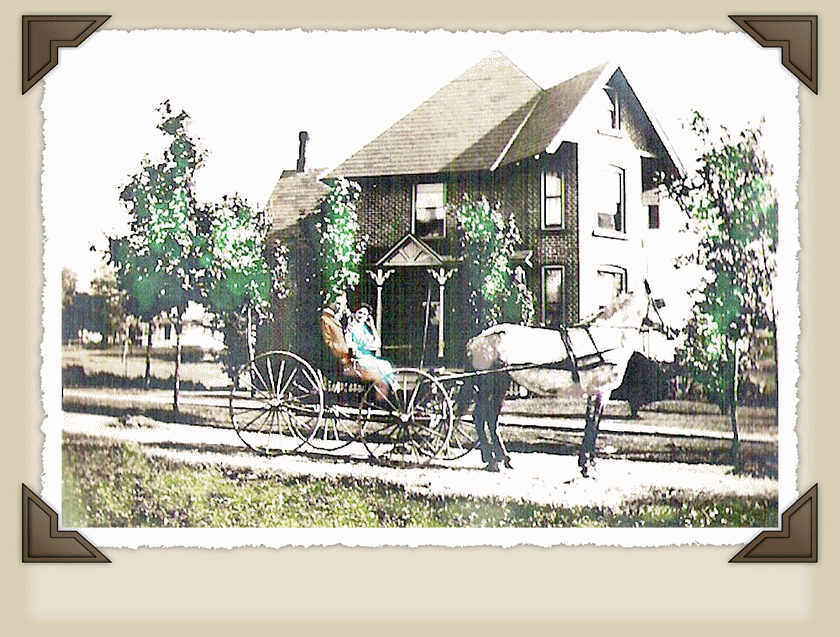
An ‘old-fashioned’ carriage in front of Tighsolas, the Nicholson home, circa 1910. A hire. The Nicholsons couldn’t afford to keep a carriage, let alone buy an automobile, like so many of their neighbours.

The same  letter continues:

“We have had dreadful hot weather. Just fancy, one night we slept out on the veranda. Took our mattresses down. The Skinners (other neighbours) were sleeping in theirs so that we were not afraid and we had Flossie (the dalmatian) with us but yesterday afternoon it rained so last night was cool.

We all had a good sleep and today is fine. We feel like working. I hope you did not have this extreme heat. We had quite a cold wave about the 24th but no frost.”

This sounds like typical Quebec  weather, doesn’t it?  So up and down.  It’s not easy cultivating a garden in this province. It takes perseverance.

Six years later, in the spring of 1917, most everyone in the west end of the city of Montreal was out on the street digging their wartime Victory Gardens.*(5)

Marion Nicholson, now a mother and homemaker living on York Street in lower Westmount, describes the scene in a letter home to Mom:

“Every vacant lot around the city has been utilized for gardens and I think it is more common to see people out digging and planting in these gardens than in a small town like Richmond. Some I think are making their first attempt.”

Her small family is no exception.  “Hugh (husband) and Willie (cousin) are making a garden. What success they will have I do not know. One thing for sure, the beds are straight (her underline) and square. I myself would prefer more in them.”

Marion (who is six months pregnant) then describes how she has hardly slept all week while tending her very sick toddler. She begs her mom to send as many crates of eggs as she can on the next train.

It certainly was an era of high-anxiety about food, nutrition  – and so many other things.

butterbill1917

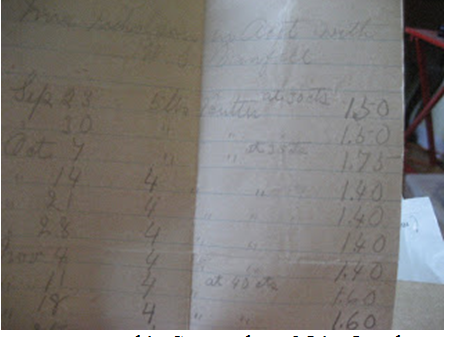
Margaret’s 1917 butter bill. Inflation. The price of butter goes up from 30 to 40 cents from September to October.* (6)

Still, Marion closes her letter to her Mom by praising her comfort food:  “So, now to get a taste of your home-made bread. When I eat it, I close my eyes and I feel as if I were home. Thank you for all the good things you sent.”

orchard[1]

Edith, young Margaret, and Marion, far right, in summer of 1918 in an orchard in Richmond, possibly behind the Nicholson home as they had apple trees. (The newborn is in other pics.) This was the year of the Spanish Flu. It was safer in the countryside. Marion stayed an entire month in Richmond, until her husband, Hugh, begged her to come home in a letter. “The ice in the icebox has melted all over the floor, there’s no food in the house, the windows are kept open and it’s hot as Hades in here. Please come home and take care of me!” He was in the care of his sisters-in-law, who had better things to do in wartime Montreal  than to baby their brother-in-law. Edith, a Sun Life employee, volunteered in Soldiers’ Aid for the YMCA and for the Navy League.

  • 1. Most of the famous food brands of the 20th century got their start in 1900-1910 by advertising in magazines like the Ladies’ Home Journal with happy-family lifestyle ads with bigger graphics and fewer printed promises. “Pure” was the adjective of the day.

It was understood, even back then, that the home was evolving from a center of production to a center of consumption. Margaret, born in 1853, made everything from scratch, on a woodstove, with recipes she kept firmly locked in her head; Marion Nicholson, born 1886, would cook on a gas stove relying on her Fanny Farmer Cookbook; her daughter, also Marion, born 1917,  living in middle class comfort in 1950’s suburbia, would feed her brood nothing but canned vegetables, even canned potatoes, which she warmed on an electric stove.

  • 2. Norman was tickled by an anecdote from a November, 1909 letter, where Margaret vividly describes a back-and-forth argument she has had with a male relation over woman suffrage. The relation invokes St. Paul as was the custom. She replies “St. Paul has been dead for a long time. I don’t live in those days, milking cows and making fires.” Norman, who is active in local politics, replies in support of his wife: “Too absurd to think that a woman cannot exercise her franchise with as much intelligence as some of the male sex. And when you have to drag some of these supposedly intelligent men to the polls as you would cattle.”
  • 3. Margaret disliked motor cars. From 1909. “Mr. Montgomery is selling his horse and buying a car. Don’t you think he is foolish?” But, she was happy to go on drives when invited.
  • 5.  http://www.thecanadianencyclopedia.ca/en/article/victory-gardens. Apparently, Victory Gardens weren’t only a way to add to the food supply; they were about improving morale on the home-front by making people feel useful.


  • 6. A Chicago Agency sent a very fancy direct mail advertisement out to Richmond homemakers in 1916 on behalf of a new product called Crisco Shortening asking, “Do you like the taste of fresh buns in the morning? Try Crisco.” A coupon was attached.


The Driving Lesson

I pace the floor nervously. Where IS he? How much longer do I have to wait? He is already 30 minutes late!

It is 23 January 1979 and I have been in Quebec, Canada for all of three months and today is my first driving lesson – EVER. I have never even sat behind the driving wheel of a car. In England, I walked everywhere pushing the children in my Silver Cross upright pram and later, we caught a bus. In Geneva where we had been living previously, we had a small VW Beetle and my husband drove it. Here, we have what to me is a huge car, and I am supposed to learn how to drive it? I am a nervous wreck. My son Owen, aged 5 has to come with me, as I do not know anyone to care for him, and the thought of Owen in the back seat with ME and my first driving lesson has me really worried.  My appointment was for 10 am. At 10:30 I call the school to ask where he is. They tell me he should be there, and to make alternative arrangements when he arrives.

WHAT? All that worry and a sleepless night to make alternative arrangements?! My fear makes me angry. The driving instructor eventually arrives 40 minutes late, claiming to have been ‘ringing the bell’ and I was not answering. I tell him he is very late and I called the school to ask where he was. Then, HE gets annoyed and informs me he has to go or the other client will be ‘tearing his hair out’ plus, I cannot expect him exactly on time in ‘these conditions’ These conditions being heavy snow, wind and ice which is not ideal  for a first ever driving lesson, but what do I know?

I tell him to leave and I am going to cancel future lessons with this school. I shut the door and cry and cry I feel like a failure. I’ll never learn to drive. Eventually, I mop up and call the school and demand a refund. The director was very kind and said the instructor was wrong trying to justify his lateness.  He would make another appointment. ‘Not with HIM’ I rage. No, another person he soothes. I put the phone down, have another cry. I feel so frustrated, angry nervous and very alone. I wept for most of the day. Two days later, after 2 and half hours of snow clearing another strange ritual, I have my first driving lesson.

The instructor this time is a Welsh man and he is very patient telling me to relax. Ha! relax? No way! The sweat is actually running down my back and I can’t stop trembling. How do I work the window wipers in this snow? Put the heater on? Which side of the road am I supposed to be on? Why is there a ‘Stop’ sign at every corner? I manage to get to the next street and it is covered in thick ice. A water main has burst, and the street is like an ice rink or what I would imagine an ice rink to be, having never seen one. Oh! the anxieties and fears of being a newcomer.

Eventually, I do get my driving license, and today I love to drive but those few fraught months of learning is something I will never forget but the bonus is, that driving in snowy icy weather here in Quebec is a breeze for me now! I have no fear.