Tag Archives: Rievaulx

Happiness in Marriage

A piece of speculative genealogy fiction
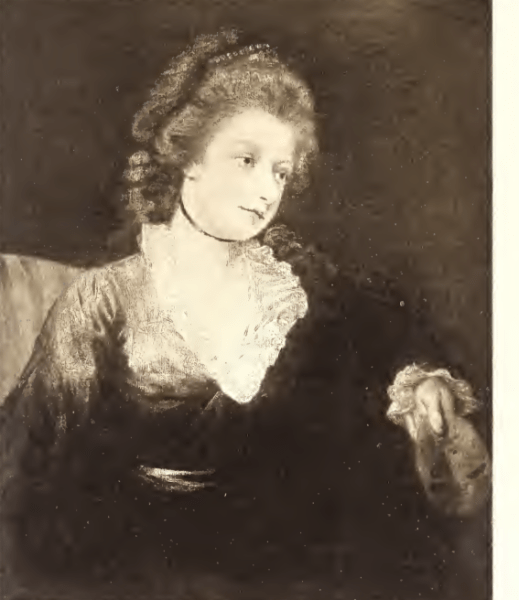
Antonia Willoughby, ancestor of Mr. Lumley Hodgson on his mom’s side.1


As is typical, I know little about the life of my great great grandmother, Ann Nesfield, a cook from North Yorkshire, UK except the basics: birth (1838), death (1912) marriage (1861) and children (10) but thanks to the Internet I know a great deal about her employer, Nathaniel Thomas Lumley Hodgson, a member of the landed gentry. So, just for fun, I have strung together this little fiction about my great great grandmother from some intriguing facts about Mr. Lumley Hodgson found online.

August 23, 1861. “Happiness in marriage in entirely a matter of chance.” I read that in a book by Miss Austen.

As it happens, I am getting married in less than a week to a tailor from the tiny village of Rievaulx, a man I hardly know, a Mr. Thomas Richardson. He visits my place of employ twice a year in the spring to make up my Master’s riding clothes.

Although most of my Master’s clothing is bought in London, he prefers Mr. Richardson, who lives only 12 miles away, for his country apparel.

My name is Ann Nesfield. For many years now, I have been engaged as a cook at Mr. Nathaniel Thomas Lumley Hodgsons’ farm estate, Highthorne, near Husthwaite. It is a leisurely employment. I feed his small family, the household staff and the three farmhands. It is rare that important visitors come to stay, and if they do they come on business and sup at the local inn where they can haggle in manly fashion.

You see, Mr. Lumley Hodgson is a breeder of fine horses, of field hunters and of race horses. He trades mostly in the strong reliable Cleveland Bay, a local breed of which he is reet fond.

The Cleveland Bay, he informs everyone, was originally bred centuries ago by the local Cisterian Monks as a pack horse. Later, after the dissolution, the Cleveland was bred with some fleet and graceful Turkman stallions.

Today the Cleveland Bay is used in the field, both to hunt and to plow.

Mr. Hodgson seldom fails to tell his customers how 30 years ago he rode his own Cleveland Bay the one hundred and seventy five miles to and from Cambridge where he attended university.

If that doesn’t impress, he then relates the story of how another local man rode his Cleveland mare 70 miles a day for a week for jury duty in Leeds. Or how another man once burdened his beast with 700 pounds and rode 45 miles to Ilkley and back.

“The breed is being ruined,” Mr. L.H. likes to say, “by the London fashion for flashy carriage horses of 16.5 or 17 hands. Leggy useless brutes they are. All action and no go.”
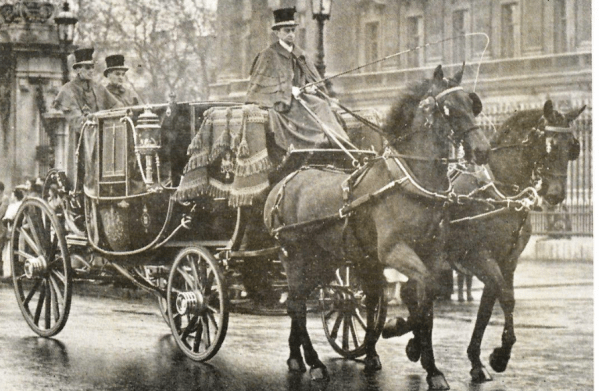
Leggy Cleveland Bay Carriage Horses.

Mr. L.H. calls himself a farmer but he is a gentleman-farmer with a pedigree as impressive as his osses’. At Cambridge he shared lodgings with the great scientist Charles Darwin. This is also summat he usually tells a prospective client, for Mr. L.H. is a canny businessman and this association can only help him, considering his occupation.
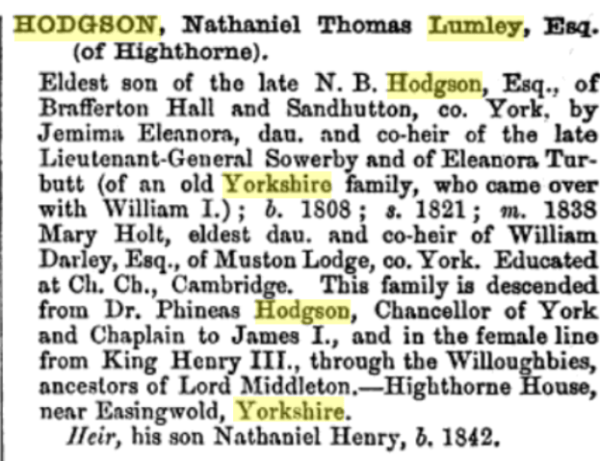
There are rows and rows of stables on his 107 acre farm near Husthwaite that sits on one of the seven hills in the area. The main house, they say, was given as a reward many years ago to one of William the Conqueror’s faithful knights.

As I said, my Master’s household is small, made up of his wife Mary Darley (whose family owns many yackers of land in Yorkshire) two daughters, Julia, 22 and Emma, 8, as well as a nurse, a housemaid and a cook, yours truly.

At 23, I have been summat of a sister to Julia, who is sharp-witted but shy in company. She is destined never to marry. At least, there is never any talk of it, not since 1857 and the bachelor’s ball at the Yorkshire Union Hunt Club. So, on fine evenings, I am the one to accompany Julia out riding. We take two bay mares who she says are descended from the Darley Arabian, the daddy of all Thoroughbreds.

I am told I have a better seat than she does, but only by the groom, a Mr. Jack Bell. At breakfast time he likes to call out to me “Mornin’ Milady, grand day i’n’it”- a bit of a jape – and then he laughs showing a great gap where his front teeth should be.

A signed copy of the Voyage of the Beagle lies in a place of honour in Mr. Lumley Hodgson’s private library and has for decades. You can be sure I have never read it, but Julia has and told me all about it. She is the one who had me read Pride and Prejudice. She likes to lend me her favourite novels so she can explain them to me.

Over the years, I have heard (mostly overheard) so much about this Beagle book I feel as if I have read it and even been on the great sea voyage myself to the GA-LA-PA- GOS Islands and seen with my own eyes the strange and colourful creatures there.

Mr. Darwin has lately published another book called, I think, the Origin of Species. A copy arrived by messenger to Highthorne late last year.

This new book of Mr. Darwin’s has caused quite a stir locally. At a Methodist church service a month ago the minister bellowed that Darwin’s theory of evolution is blasphemous. Flippin’ ‘eck! The theory says we all come from monkeys! Mr. Lumley Hodgson – not in attendance – later told the minister that the theories in the book apply only to animals not to humans, but the minister was not satisfied. He said the question of the origin of all species was decided long ago and by an infallible source. He meant the Bible, of course. “God made the animals of the earth after their species as explained by Noah’s Ark.”

So, my Master, who can’t escape this connection with Mr. Darwin now, has decided to quit the farm for a while.

A few days ago he assembled the staff in the south hall and told us he is selling off his best hunters and other stock (including Emma’s comely Cobb pony and his prize Nag stallion) and moving his family to town for the winter. His excuse is that some of his horses have the equine flu (two have already been put down) and he thinks it might be catchin’ to humans.

No matter what the real reason for his takin’ his family to town, the result is that I am left in the lurch with no employment and no place to stay.

But just yesterday, Mrs. L. H. called me into her sitting room, the one with all the paintings of Julia’s frightsome-lookin’ ancestors, and pronounced, “Ann, you must marry Mr. Richardson, the tailor from Rievaulx. He is a respectable man who needs a wife. His sister, who has been housekeeping for him, has suddenly left for abroad. He says he is comfortably settled now in his own cottage and ready to marry and raise a family.”
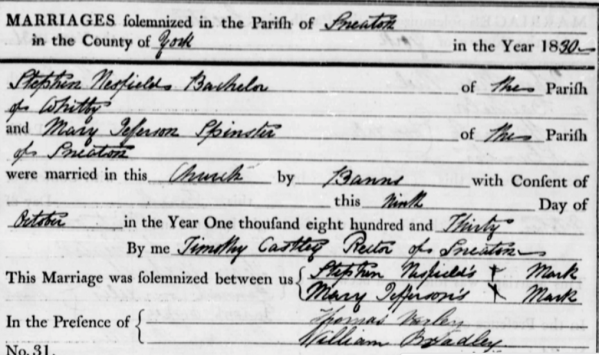
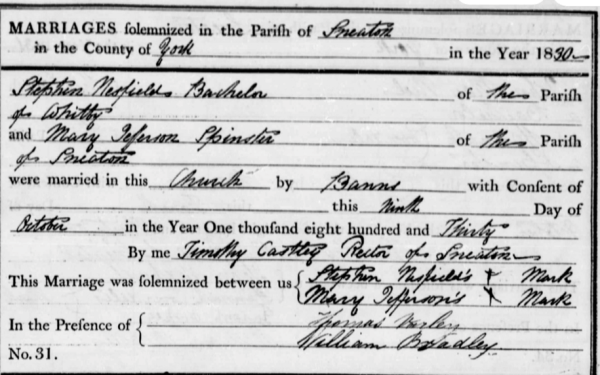
X marks the spot where my illiterate ancestors Mary Jeferson (Jefferson)of Sneaton and Stephen Nesfield of Whitby, Ann Nesfield’s parents, signed their marriage certificate in 1830.)

I must have looked very confused because she continued: “You remember Mr. Richardson from the spring? He waxed ecstatic over your Lamb’s Tail Pie and Tipsy Trifle.” (I did. Seems to me he had eyes for Julia back then.) “He says he needs a wife schooled in numbers to help him keep the accounts. And as Rievaulx is an isolated place, he requires a strong healthy girl who can walk the trails back and forth to Helmsley herself on market day. He is often on the road, so you will not have the use of his carriage as you do here to go to market in Easingwold. Yes, you must marry Mr. Richardson and very soon, too. We can have the ceremony right here in Husthwaite. But first you must visit him in Rievaulx. You can stay at our cousins the Lumleys who have a big farm there.”

So, it is set. My days of making simple Yorkshire meals for a small, ‘appy family in a reet bonnie setting near Husthwaite- and cantering over the dales at darkening with my almost sister Julia – are over.
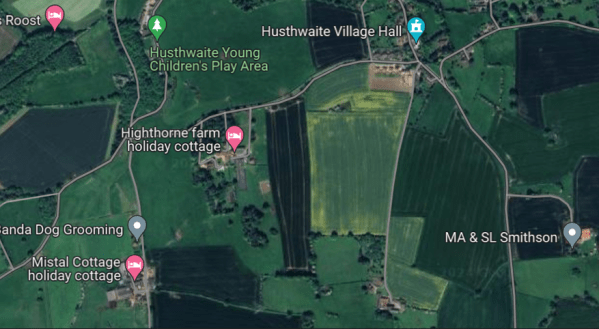
Highthorne Farm is now a holiday destination, as is Birdsall rectory Manor, near Malton, North Yorkshire where Emma and Julia Hodgson, both unmarried, spent their old age with their brother, Captain Lumley Hodgson, according to 1911 UK Census. Lumley Hodgson’s mother’s relations, the Middletons (Willoughby) owned that place. On that census, Ann Nesfield Richardson was a widow living with her youngest daughter at New Cottage, Rievaulx, running a grocery. She died a year later.

I am off to Rievaulx to marry and make childer with a stranger. Otherwise, all that is left for me is to flit home to Whitby and that I cannot do. My mother is long dead and my father is in line to finish off his days at the workhouse should none of my half-siblings take him in.

Mr. Lumley Hodgson, his ‘ead filled with other worries, has no objections and no opinions on the subject either, although he jokes, “It’s either Mr. Richardson or Mr. Bell for you, I fear.”

But, I ‘ave watched Mr. Bell as he slips the belly-band around the more skittish horses in his care with a firm but gentle hand, keepin’ his voice soft and melodious all the while and I ‘ave noticed how his muscular shoulders glisten after an honest day’s work and I do not think the joke to be as funny as that.

But Jack is a lowly farmhand and Mr. Richardson is a country tailor with a ready clientele and a sweet sunny cottage of his own, Abbot’s Well, with a fine prospect of the Rievaulx Monastery ruins. As I trot along on foot to Helmsley, my poke brimmin’ with dragonwort balm, tansy oil and other home-made potions to sell at market, I can watch from a distance as the Earl of Feversham’s family and friends go a-huntin’ o’er the heathery moors outfitted in all their finery on their own spirited Cleveland Bay/Thoroughbred crosses.
That is the selling point, according to Mrs. Hodgson: The cottage (complete with a little garden for growing my special herbs) and the mannerly profession.

But as Mrs. L. H. was quick to explain, this alliance is a major step up for me. I am but the daughter of a day labourer.

So, I hope Miss Austen is right, that it is ‘best to know as little as possible about the defects of your marriage partner,’ because I know almost nowt about this Mr. Thomas Richardson, except that he enjoys my tipsy trifle. (The trick is to use a lot of high quality whiskey). Still, that is as good a start as any, I reckon.

END

childer: children

Summat: something

Poke: bag

darkening: dusk

reet: very

nowt: nothing

Almost all of the entries for the Lumley-Hodgson’s in the press, mostly Yorkshire press, were related to Mr. L. H.’s businesses, horse and cattle breeding. By the 1870’s he was considered an expert ‘from the old school’ so his curmudgeonly opinions on the ‘horse question’ were much in demand and have left a long paper trail.

Yes, a notice in the paper in August 1861 said Mr. Lumley Hodgson was leaving Highthorne for ‘the health of his daughters.” (The girls were likely not frail, since Julia lived to a ripe old age and Emma was playing competitive doubles tennis in her thirties, I think.) And, yes, a week later, my great great grandmother, Ann Nesfield got married at Husthwaite.

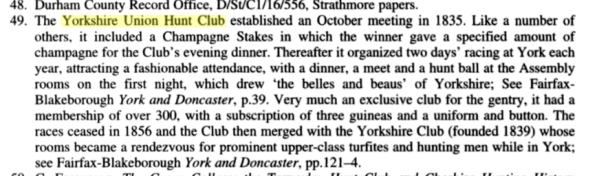
There aren’t many entries in the ‘social notes’ for the ladies of the family despite their good breeding; In 1857, Julia Lumley-Hodgson attended the last? hunt and supper at the Yorkshire Union Hunt Club, (a horse-racing club) where the fashionable young could mingle.
A hunt ball was given in 1867 at Highthorne. And in 1875, Mrs. Lumley Hodgson and Miss Hodgson (likely the much younger Emma) attended a bachelor’s ball in York.

Mr. Lumley-H died in 1886. A notice to creditors was put in the paper, his farm stock, ‘valuable hunters’, and effects put up for auction and his farm “in excellent condition” advertised for let… perfect “for a gentleman fond of rural pursuits.” In 1891 his wife (and girls?) were at Birdsall Manor near Malton (owned by Lord Middleton, a L.H. relation) and Mrs. L.H. was seeking a groom of good character, who must be single to work there. In 1911, her son Captain Hodgson, a widower, was at Birdsall Manor with Julia and Emma, both still single ladies with “private income’ listed where occupation should be.

  1. A few reports suggest Mrs. Lumley Hodgson dealt in fine art. The portait above was owned by her, found on Archive.org in A History of the Works of Sir Joshua Reynolds, Getty Museum publication. The weirdest entry about Lumley-Hodgson was that as an infant he sued his mother, Jemima, for land. Another online entry about Highthorne says he leased it in 1815. He would have been seven!

The Darley Arabian was brought to England from the East by the Alton, Yorkshire branch of Darley’s. Mary was from the Muston Lodge branch. They come from the same family originally.

Hard Life, Beautiful View

The path my 2 times great grandmother Anne Nesfield took to work and marry in 1860 era. People in Sleights tended to stay put until the opening of the railroad in 1840.

My father, Peter, born Kuala Lumpur, Malaya in 1922 of hardscrabble North of England stock, always signed his name Peter N.F. Nixon Esq., something I found a wee bit pretentious. He was just a chartered accountant, after all. The F stood for Forster, the N for Nesfield.

I knew Forster was his mother’s surname. I didn’t know until very recently upon doing his genealogy that Nesfield was his father’s paternal grandmother’s name.

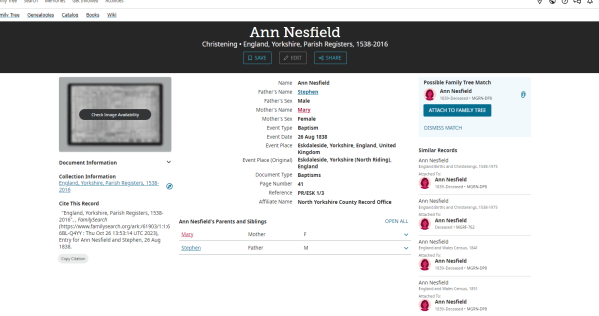
Ann Nesfield, my 2x GG was born in 1838A in Sleights near the lovely coastal town of Whitby at the North East corner of the North Yorkshire Moors to Stephen Nesfield of that place and Mary Jeferson of nearby Sneaton.

Stephen was a labourer. He and Mary were both illiterate as they signed their 1830 marriage certificate with an X.

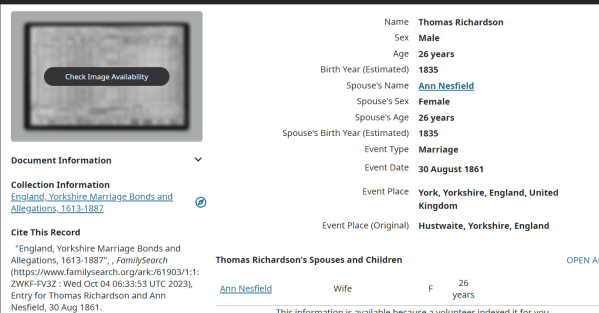
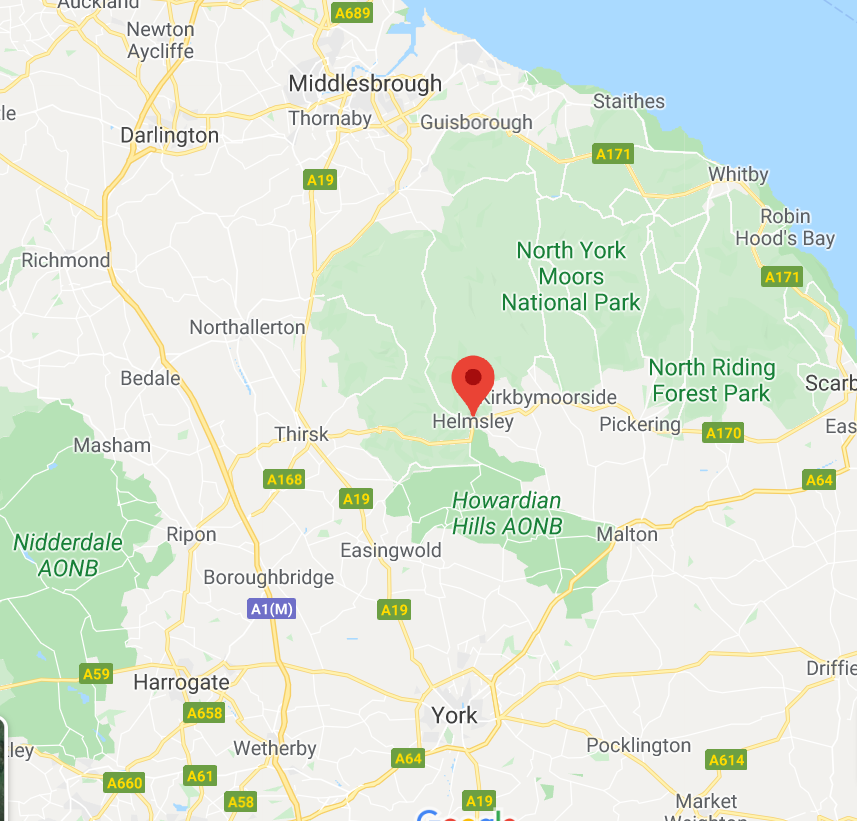
The August 30, 1861B marriage record for Thomas Richardson and Ann Nesfield has them wed in Husthwaite, 40 miles to the south west but still on the Moors. Thomas was from nearby Rievaulx, a small town of 229 people (10 farms and 26 cottages, one school house and no pub) famous then as now for its monastery ruins.

According to the 1861 UK Census, Ann had been working in Husthwaite as a cook at an estate/farm, Highthorne, belonging to one Nathaniel Thomas Lumley Hodgson, Esquire (sic) gentleman horse-breeder who had been a crony of Charles Darwin’s at Cambridge! 3Thomas according to the same Census is living in Rievaulx with an older sister.

Ann and Thomas Richardson go on to have ten children over twenty years with my father’s grandmother Mary-Ellen, 2nd born in 1862, destined to marry one Robert Nixon, a quarryman from the adjacent market town of Helmsley.1

Now, I imagine Ann Nesfield’s existence in rural England post-Industrial Revolution wasn’t that easy despite her initial skilled position as a cook for a small family at a Yorkshire Dales farm/estate. And who can know about her 1861 marriage to Thomas Richardson. Tailors and drapers, especially in small towns, were still solidly working class.

It is also possible Ann married right then out of necessity. It was announced in the 24th of August 1861 Yorkshire Gazette (just one week before Ann’s marriage) that Lumley-Hodgson Esq. was selling off some fine animals and leaving his farm for the winter ‘due to the health of his daughters.’

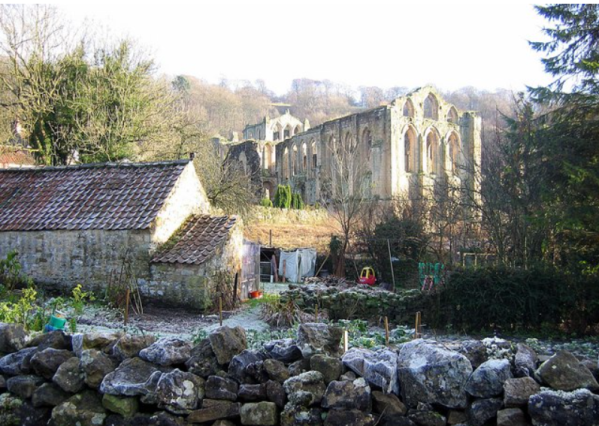
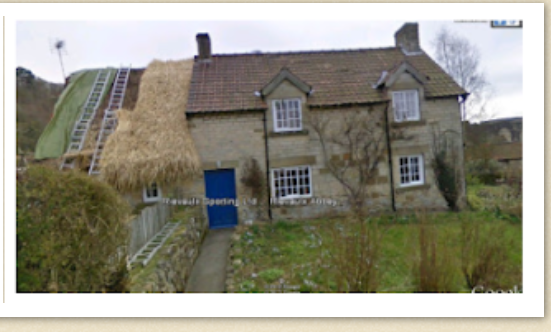
Abbot’s Well cottage on Google Earth with ruins behind. The oldest standing non-monastery building in Rievaulx, designated by the National Trust as Medieval, a period that ended in 1450.
The view from the garden. Roger Smith. Geograph Project Creative Commons

In the beginning, Thomas and Ann Richardson lived at the Richardson family abode, Abbot’s Well, a cozy-looking medieval cottage in Rievaulx, a town that started out as the inner court of one of the richest Cistercian Monasteries in England founded in 1132. The Monastery was destroyed by Henry VIII in 1532 at the very beginning of the infamous dissolution. New homes were then built with stone from the monastery, homes that were used to house various workers from the nearby Duncombe Park Estate of Lord Feversham.

The view from the little garden of Ann’s heritage house, by all accounts, was simply stupendous.

I discovered a 1830’s travelogue online that already describes the town of Rievaulx as ‘quaint’ and ‘picturesque’ and ‘historic,’ claiming the view from the ridge of the vale and ruins “offers a combination of beauties that must be seen to be enjoyed and once seen can never be forgotten.”2

A century later, in the 1930’s, a nephew of the 1st Lord Feversham of Duncombe Park in Helmsley was living at Abbot’s Well House (built 1906 and 30 meters away from the cottage) and Lady Beckett, the widow of the 2nd Lord Feversham, was offering tours of the cottage in benefit of local nurses “with the small garden providing an excellent prospect overlooking the monastery ruins.” Her tours continued well into the 1950’s.

And in May, 1984, the London Times remarked upon a recent sale of the modern Abbot’s Well House. “That a view is worth something is proved by the recent million pound plus sale of the modern Abbot’s Well with a two acre garden that has a view of the 12th century abbey and the Rye Valley beyond.”

I have to wonder, in the 1860’s, did Ann’s heart sing out every time she went out to hang the laundry with my great-grandmother, Mary-Ellen, at her feet? Or did she lament the leaky roof, drafty windows or the lack of bedrooms for her growing family? Was living beside these majestic monastery ruins a comfort to her or merely a haunting reminder of how things can fall apart?

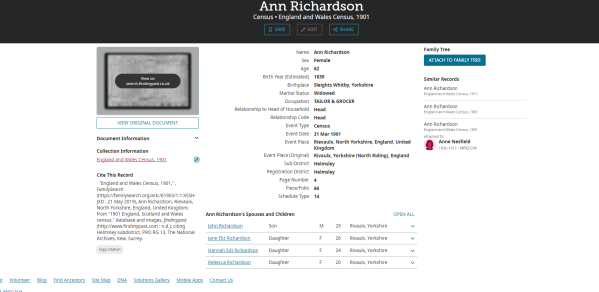
As it happens, the Richardsons did move out of Abbot’s Well sometimes after 1881 and before 1891, but they did stay in town. The 1891 UK Census has the family living at New Cottage in Rievaulx, with Thomas still a tailor and draper but also, now, a grocer. The 1901 CensusC has Ann a widow with four grown children still at home, one son working as a general labourer but three girls in their twenties performing “home duties.” Ann is now the tailor/grocer in the family. In 1911, one year before her death at 74, Ann is still at New Cottage, working as a grocer and living with her youngest daughter who is 30 and married.

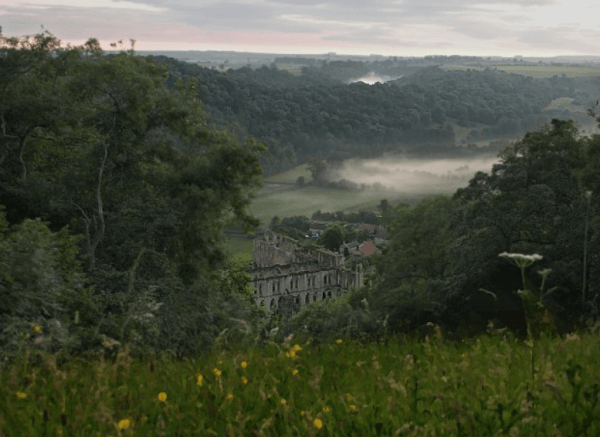
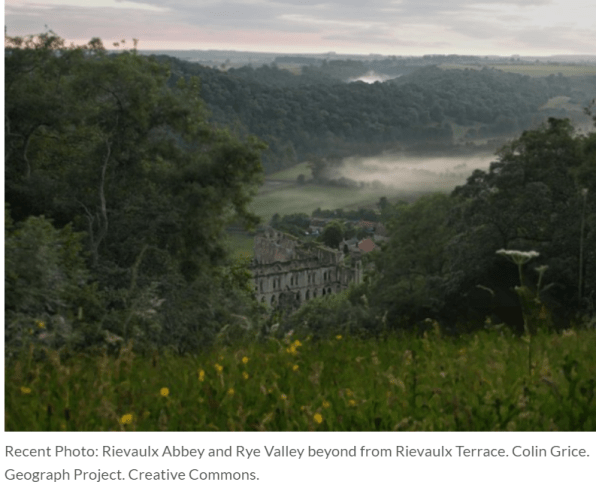
Recent Photo: Rievaulx Abbey and Rye Valley beyond from Rievaulx Terrace. Colin Grice. Geograph Project. Creative Commons.
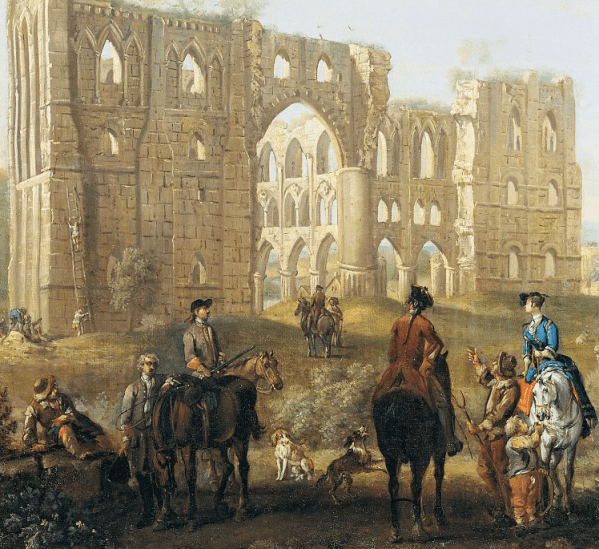
Duncombe Hunting Party. 1728. John Wooten. Yale Collection of British Art. Creative Commons . My ancestors would be the labourers in the background or the scruffy attendants:)

My father’s working-class ancestors lived in picturesque towns all along the route from Whitby to Helmsley; pretty places with colourful names like Goathland, Kirbymoorside and Ugglebarnby. Whitby, where Ann Nesfield lived her early years, is also a North of England beauty spot from what I see on YouTube with surrounding coastal villages as lovely as anything in Italy’s Cinque Terre.

So, although little of consequence about Ann Nesfield’s life can be gleaned from the genealogical record, one thing about the woman cannot be denied. She spent her entire existence surrounded by the breath-taking beauty of the North Yorkshire Moors. That, I think, has to have taken the edge off her own hard-scrabble existence.

Notes:

Thank you to the Ryedale Family History Group for all their kind and expert help and especially to Valerie Slater for helping me sort out the many Ann Nesfields in the Whitby area born circa 1838.

(Apparently, there’s a lot of mix up over these Anns in online family trees. I have to redo part of my tree, now! And it doesn’t help birth dates on the UK Census are only guesstimates 🙂

A walk around Rievaulx Terrace National Trust: https://www.bing.com/videos/riverview/relatedvideo?q=youtube+a+walk+around+rievaulx+terrace&mid=7CB260977EE2F240F3D27CB260977EE2F240F3D2&FORM=VIRE

  1. Robert Nixon Sr, my great grandfather, 1863-1937, who married Nesfield’s daughter, Mary Ellen Richardson, was a delver in the quarry in 1911 according to the UK Census, but he had other occupations. I know because I found his short obit from 1937 from the Yorkshire Post on the British Newspaper Archive database:

“Mr. Nixon was for man years foreman timber leader with messrs William Frank and Sons and with Mr Bentham King. Later worked for the Duncombe Park Estate, and during the war was put in charge of the felling of timber at Waterloo. He was a Sunday school superintendent and a local preacher in the Methodist circuit for over half a century.”

The 1921 census says Robert is working as head quarryman at Duncombe for the Trustees of the Earl of Feversham who was under age. The former Earl had died in 1915 in the war.*I wonder if the Nixons had an IN with the Earl? A Nixon and a Richardson were pallbearers at the Dowager Feversham’s 1889 funeral.

2. Ross, Stephanie. The Picturesque, an eighteenth century debate. Journal of Aesthetics and Art Criticism. 1967

Esquire: Modern British. Polite term as appendix to a surname of someone without any other title implying genteel birth. Earlier, for English gentry rank below a Knight.

3. Both Darwin and Lumley Hodgson were ‘admitted pensioners under Mr. Shaw 1827. at Christ’s College a Divinity School.” Apparently, nature studies and divinity studies were considered compatible back then, as in ‘all God’s creatures.” Both graduated in 1832, although Darwin completed his exams in 1831. The Darwin Archives of Cambridge contains a January 1831 letter where a friend is asking Darwin if Lumley Hodgson has passed. “I don’t see his name anywhere, I am almost afraid to ask.”

Nesfield Rugby genes. My father’s nephew 1973, Rugby for Cambridge and England. My father, co-captain, 1939 Rugby for St Bees School Cumberland. My grandfather, 1912 Rugby for Duncombe Park where he was a footman. Through DNA I discovered other Ann Nesfield descendants played rugby for Scotland.

CITATIONS

A: Ann Nesfield Baptism 1838 Family Search
2. Ann’s marriage to Thomas Richardson 1861 Family Search
C: 1901 Census. Ann at Home running the family business with her girls.

Can We Ever REALLY Know our Ancestors?

Moor Guide.

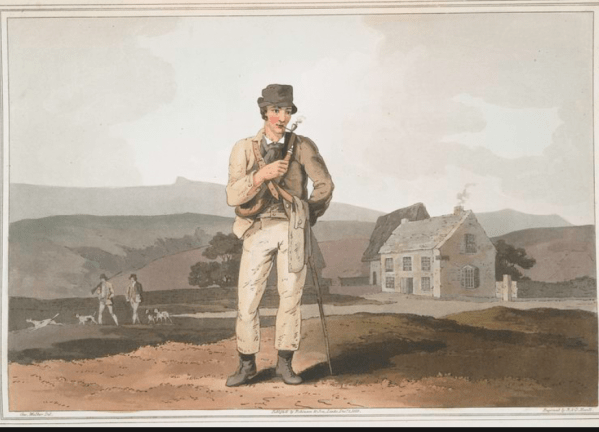
The Costumes of Yorkshire: George Walker, 1813. New York Public Library Online, Public Domain photo

“The past is a foreign country. They do things differently there,” writes L.P. Hartley at the very beginning of The Go-Between, a novel I read and loved in my 20’s.

As a woman who now likes to pen stories based on her family tree, this famous first line has new meaning for me. It makes me ask the question: Despite our best efforts, can we ever really know our more distant ancestors?

Sure, we can absorb with attention the family myths. We can dig out the dates of births, marriages and deaths. We can check out the newspaper record. We can look up legal documents and even research with scholarly precision the historical context of their -often- difficult lives.

But is that REALLY knowing them?

Or is the best way to know our ancestors through our own parents and grandparents, through their inherited behaviours and beliefs that we witnessed first-hand. I have three other ideas.

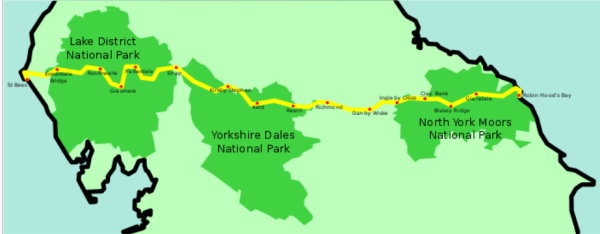
The Coast-to-Coast Walk (WIkipedia Share alike Pic John Carter

1. Visiting the ‘homeland’ can give you a feel for who your ancestors were.

There’s a well-known 182 mile coast-to-coast hike that goes from the soaring sandstone cliffs of St. Bee’s Head on the west coast of Cumbria to the charming storied fishing village of Robin Hood’s Bay on the east coast in Yorkshire. Patching together my father’s Nixon/Forster family tree, I discovered he had ancestors; farmers, lead miners, grocers, servants; living just north and south of – and even directly on – this picturesque route.

This 182 mile ‘footpath’ traverses three national parks: The Lake District, Yorkshire Dales and North York Moors National Parks. It’s a walk that offers up isolated pebbled beaches and quaint historic villages; rugged wildernesses with hilltop cairns; flat easy patches with long sweeping vistas; medieval castles and ancient stone circles; serene valleys dotted with sheep; sturdy Roman roads and magical heather moorlands.

As it happens, I can take this hike anytime (on YouTube) and see with my own eyes pretty much what many of my ancestors saw with their own eyes.

My ancestors had good eyes, I bet, for long distance gazing. Strong legs, too. And leathery skin beaten up by the cold wet winds of the moors. They probably were skinny and didn’t worry about cholesterol as they downed their breakfasts of heavy black rye bread and fatty bacon. Come to think of it, that description fits my ­father pretty well. His exceptional long distance eye-sight and strong legs made him a top athlete in the 1930’s at this boarding school in St. Bees. He was still participating in cross-country ski marathons in Quebec in the 1980s.1

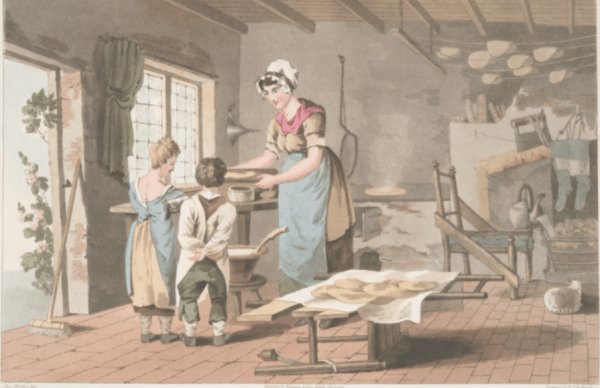
Woman making oatcakes on a Yorkshire farm

2. You can always look to old family recipes to teach yourself something essential about your antecedents.

In my 1960’s Montreal home, on Saturdays when we ate roast beef, I was in charge of making the Yorkshire pudding, and I do believe that it was my father who showed me how to make the batter and take fat drippings from the roast and spoon it into the bottom of the muffin tins.

Still, it was my French Canadian mother who was in charge of the kitchen and her roast was ‘blue’ -practically mooing on the plate a la francaise. My father ate only the outside over-cooked part.

Apart from frying our POM (Pride of Montreal) white bread slices in bacon fat (ICK!) and threatening to feed us smoked herring (double ICK) my British pater (who was born in Malaya, after all) didn’t seem to know much about his native Yorkshire foods. He never mentioned the oatcakes that were a staple of the poor; or the cheese pies eaten on various festive occasions or the special mutton pie made with candied fruit in a rich crust served with fresh fried trout and curd cheesecakes, washed down with ‘home-made’ whisky served as a reward at the end of sheep-shearing season.

As a child of the Raj, my father more often spoke with fond nostalgia of the Mulligatawny soup (curried chicken with apples) he ate on his father’s Selangor Rubber Estate.

Still, somehow, more through his dislikes rather than his preferences, I learned that (generally-speaking) eating plain hearty food was in his North of England blood.

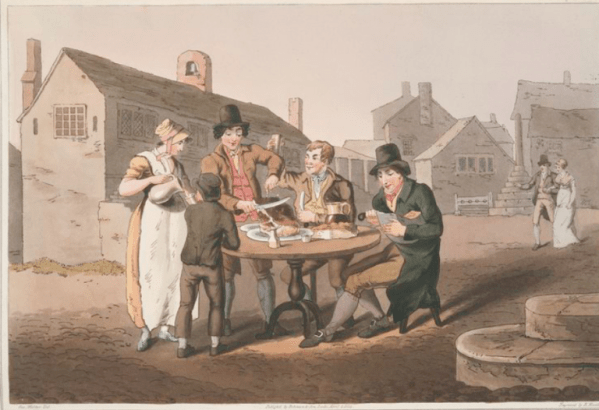
Midsummer Eve in Yorkshire – a time when witches and fairies come out to play with the humans.

3. Consulting out-of-print genealogy books can give you an insider’s knowledge about the people who came before.

I stumbled upon a terrific little volume online: Rambles Through the North Yorkshire Dales. Published 1913 on archive.org. The book even has a chapter on the Yorkshire character. Bingo!

The Yorkshireman, says the author, a native, is notorious for being tight-fisted. “He loves to get the best of a bargain not only for business purposes but as sport.” He is suspicious of strangers, especially of the patronizing upper-crust kind. He is “reticent and hard on the outside with a queer sense of independence and a real and natural sense of humour.”

So right! My father would drive ten miles to save ten cents on gasoline. He could deconstruct a person’s character, a television show, a work of art with one well-chosen (often withering) word. He didn’t follow the current fashion – and mocked us when we wanted to. He was amused by the minutia of everyday life, although I seldom got his subtle jokes.

Yorkshiremen says the book are filled with ‘a fierce romanticism, a strong religious fervour.’ Still, people from the North of England were once very superstitious. These people believed or half-believed in dragons and water sprites, fairies and ‘boggles’ or imps who were often the ghosts of nasty feudal landlords long dead.

Many of the local traditions around holy wells and sacred fires, etc. stem back to pre-Christian times. and are still carried out in various and sundry small towns.

Does this fit my father? No, not at all. My father, educated in mathematics at Oxford, was a pragmatist. Still, he seemed to actually take delight in reading fairy tales to me.

Peter Nixon and Marie Marthe Crepeau

And last but not least, my North of England ancestors spoke funny. Real funny. According to my mother, my father lost his English accent the day he arrived in Canada.

I learned about the Yorkshire dialect by watching the original All Creatures Great and Small television series based on the life of Alf Wight or James Herriot, a veterinarian, in Thirsk, North Yorkshire. In that show, locals were used to play the farmers and I often needed subtitles to understand them!

No, my Yorkshire father never said things like, “Ere, wot’s f’r us tea Mutha” as in “Mother, what are we having for dinner?”

M’of t’sop, d’yawanowt?

I’m going to the shop? Do you want me to get anything?

Put t’wood int ‘ole. Close the door. (Put the wood in the hole)

Sit this sen Darn as in Sit down.3

but I suspect his grandfather, Robert Nixon, who was working as a delver in the local Rievaulx quarry in 1911 certainly did.

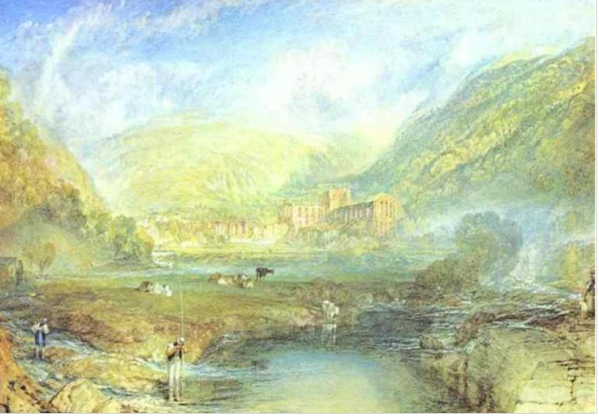
Rievaulx Castle by Turner: There is no shortage of paintings of the North of England, from Victorian Era and beyond, but these paintings seldom depict working people. The few I could find online were not Creative Commons. Indeed, Her Majesty the Queen has a nice one of poor fisher folk in her collection.
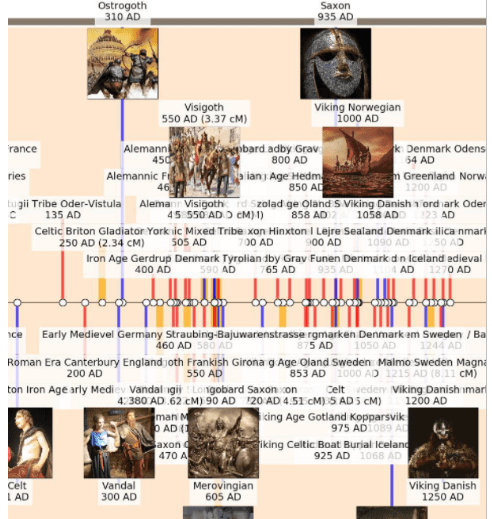
My father’s ancient genes according to mytrueancestry.com. Yes, Danish and Norwegian Viking, Saxon, Visigoth, Merovingian. The history of Yorkshire indicates this is all pretty on spot. He has lot of Celt too. And some deep Illyrian (Croatia). Maybe this has something to do with Hadrian’s Wall and the Roman Legions (mercenaries) who manned the outpost. Apparently, Northern English is riddled with Viking words.
  1. Even better, his younger brother, Michael Nixon, living in Keswick right on the hiking path, was awarded the MBE for performing mountain top search and rescue in the mountains of the Lake Country well into his 80s! https://keswickmrt.org.uk/mike-nixon-mbe-1928-2018/)
  2. I never met Michael. I don’t think my father knew him at all, either.
  3. My father very very often made fun of the Canadian ‘aboot’ for ‘about.’ From what I can see, this ‘aboot’ is right outta Yorkshire so I have to wonder if there was something subconscious going on here: if years before at prep school he had had the ‘aboot’ shamed out of him. My grandmother spoke in the Queen’s English. She was from County Durham but educated at a Quaker School. I know because I have a tape of her speaking about British Malaya from Cambridge University archives. It is not in the public domain so I can’t link it here. https://imfromyorkshire.uk.com/yorkshire-sayings. Here’s a link to BBC Sounds discussion of English spoken in Helmsley North Yorkshire, the home of the Nixons. https://sounds.bl.uk/Accents-and-dialects/BBC-Voices/021M-C1190X0035XX-0301V0

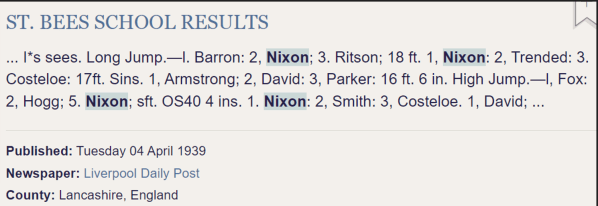
My father was the top athlete at his school in 1939. This he had told me. He always wondered how good he might have been if he hadn’t been a chain smoker. Even better, in 1939, the newspaper record shows, he was the only one in his school to make the Northern England Cricket Team (for schools). This was a big deal, because a famous England coach was to be there! Years ago, I contacted the St Bees Historian who sent me a short record belonging to my father. The historian was impressed by the fact my father had captained all the school teams. I was impressed that he had been in the Shakespeare Club. That’s because my father used to always say “Out out damned Spot” to our dog, named Spotty. LOL. My father also told me a sadder story about how another student had once approached him saying, “I wish I were you.” My father, who basically had been orphaned at five by his Colonial parents, thought “No you don’t.” I put this is another story here on this blog..To the Lighthouse.

My Grandfather, North Yorkshire and Discobulus

VenusandAdonis

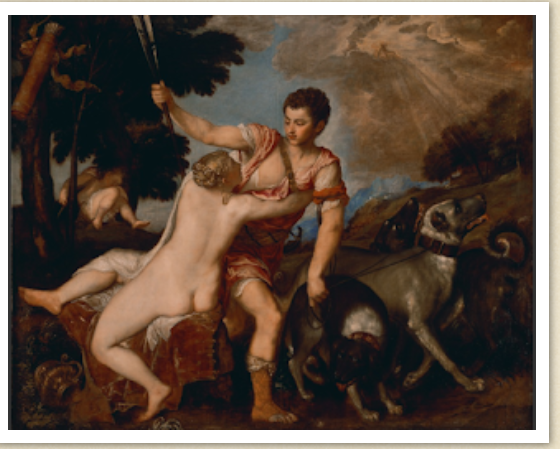
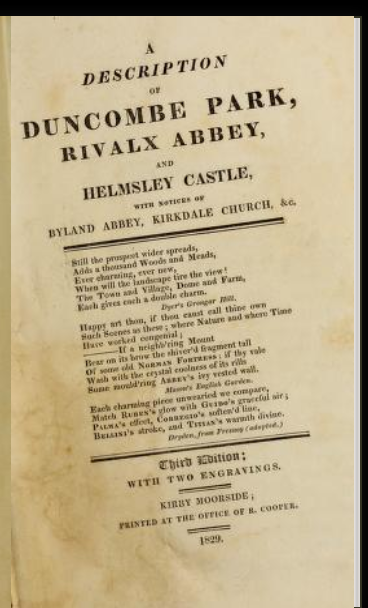
Venus and Adonis by Titian. This Renaissance painting is now at the Getty Museum in Los Angeles but it once graced the Hall of Duncombe Park in Helmsley, North Yorkshire. I know this because of a precious little volume from 1829 I found on archive.org, A Description of Duncombe Park, Rivalx Abbey and Helmsley Castle.

As it happens, my father’s  paternal ancestors are from Helmsley, today a picturesque market and tourist town on the River Pye in the Ryedale District.

helmsley

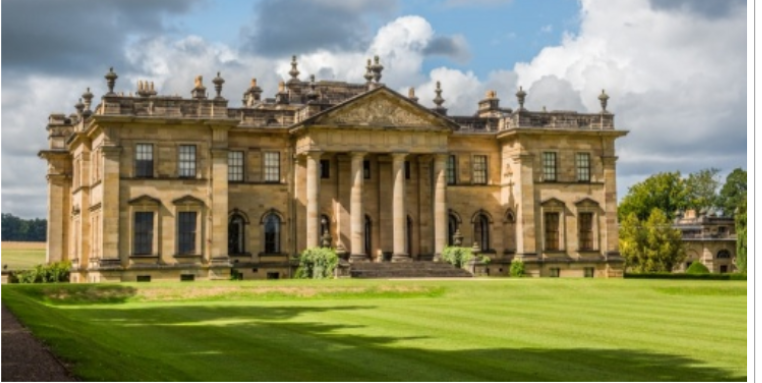
Duncombe Park  was once an imposing structure in the Doric style built in 1718 overlooking Helmsley Castle not far from Thirsk where the vet who inspired All Creatures Great and Small worked. It was the seat of the Earls of Feversham.

My grandfather, Robert Nixon (1890-1967), was born to Robert Nixon Sr. and Mary-Ellen Richardson.

helmsleynixonhouse

This stretch of very unimposing row houses is where the Nixons lived in 1911, according to the UK Census.

abbott'swellcottge

Mary-Ellen was from nearby Rievaulx, a village famous for its cathedral ruins. She was born in this quaint cottage, Abbot’s Well. Her dad was a tailor.

RobertCENSUS

According to this census, Robert Nixon Sr. was a delver in a quarry in Rievaulx in 1911.

The same census page says my grandfather, Robert Jr.  21,  was a footman, likely at Duncombe Park. Robert was a strapping 6 foot 4 inches tall. The gentry liked their footmen to be fine physical specimens, but this was not always a good thing if Nixon family lore can be counted upon.

According to an English ‘auntie’ of my  father’s, the daughter of ‘the local earl’ went ga-ga for young Robert back in the day, so the love-struck girl’s powerful father sent him away, far away to Malaya.

I have no picture of Robert, but I recall seeing one decades ago and he looked like my dad, Peter.  So here’s a picture of Peter in 1958 holding our new puppy, Spotty, a coonhound. My father was also 6 foot four inches tall.

father

This might be true: posts in Malaya were for the children of well-off families, not delver’s sons. However, a Nixon cousin told me his mother told him Robert got another servant pregnant. Nothing earth-shattering in that, though, is there?

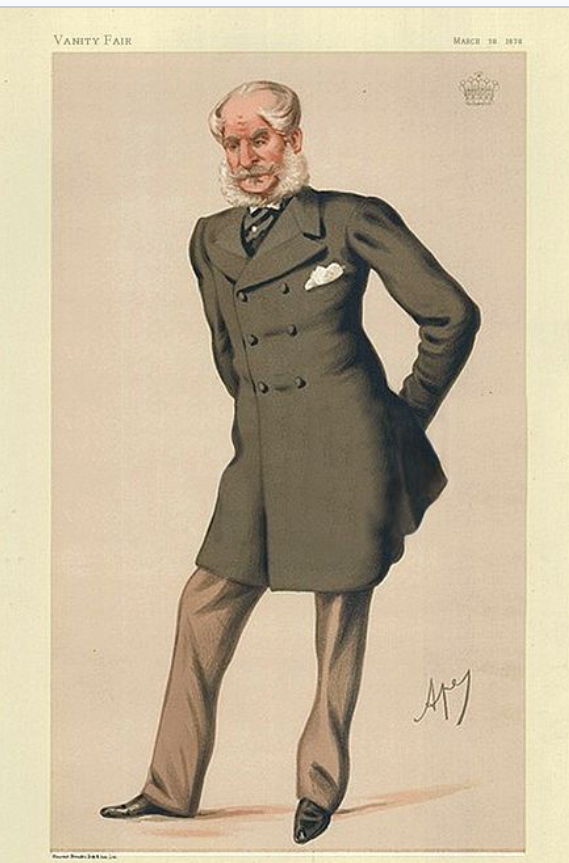
I see that the sitting Earl of Feversham had only very young children. he would die in the war and Robert Nixon Sr. would work for the trustees of the under-age Earl. This is a Vanity Fair pic of the first Earl of Feversham from Wikipedia.

Lord Feversham 1829-1915

According to travel records, my grandfather, Robert,  took a boat to Malaya (willingly or unwillingly) in 1912 to work at a rubber estate in Klang, Selangor.

He returned to England after WWI to marry my grandmother, Dorothy Forster, from County Durham, whose father was an itinerant Primitive Methodist preacher posted in Helmsley between 1912 and 1914.

MRsDOROTHYNIXON

Dorothy followed him to Malaya in December, 1921 and my dad was born ten months later on October 24.  Robert later became Manager of the rubber estate.   Both my grandfather and grandmother were interned at Changi Prison during WWII.

According to the 1829 book, Duncombe Park was  home to a treasure trove of classical paintings, among them the Titian shown at top, but also a Da Vinci, a Reubens, a Rembrandt  as well as Discobulus, described as ‘the finest statue in England.’

My grandfather never did get to see these great works of art in person because most were burned in a fire in 1879.  Back then, some of these paintings were worth five thousand pounds.

The Discobulus and the DaVinci work were lost in the fire but Titian’s Venus and Adonis was saved to eventually find its way to California and the Getty Museum.

Duncombe was rebuilt in the Baroque Italianate style and used as a backdrop to the 2012 British mini-series Parade’s End, with Benedict Cumberbatch.  I love that mini-series, so it is all very appropriate.

Duncombe

Dunscombepark1

Dissenters and Poets


john

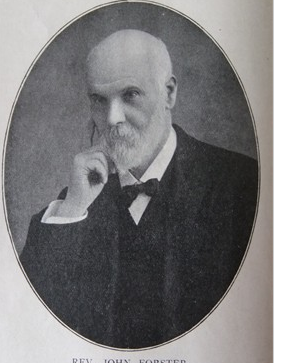
Reverend John Forster. Published with the permission of the Primitive Methodist Ancestor Website.

Late in his life, Somebody Forster, my great-grandfather, awakened from his night’s sleep to ask his wife of many decades, ‘Woman, what are you doing in my bed?”  It was dementia.

Until lately, this serio-comic anecdote was the only thing I knew about my father’s mother’s father, other than that he was a Methodist Minister from the North of England. But, just last month, I accessed the 1901 UK Census, (for free, yea) and it took me about thirty minutes to find out all I could want about my great-grandfather Somebody.

First, I looked up my grandmother, Dorothy Forster, who I knew was born in 1895 in Middleton-on -Teesdale, County Durham, UK,  to see that her father was a Reverend John from Knockburn, Northumberland; her mother Emma, a former Cowen from Crook,  and, more importantly, that John was a Primitive Methodist Minister. (I checked. PM’s were dissenters; socialists and pacifists, apparently.) *1

Then, googling the keywords “John Forster” and “Primitive Methodist,”  I  landed on a webpage from a genealogy site, myprimitivemethodistancestors.org , with a short biography of Great-granddad John, with  grainy photos of him and wife Emma taken in 1914.

Apparently, John Forster, a bookish, self-educated son of a farmer, was an accomplished essayist who penned over fifty articles for the Connexions Magazine of the Primitive Methodists on sundry weighty topics including “Heredity in Relation to Morals” and “Primitive Methodism and the Labour Question.”(He also served as a Temperance Committee; amusing, as his daughter, my Grandma Dorothy*, could really slug back the gin!)

I was most intrigued, though, to see that John had published a book of poetry, in 1923, shortly after my father, his grandson, was born at the European Hospital near Kuala Lumpur, Malaya. The author claims that Reverend John’s poems ‘contain lyrics of extraordinary charm and grace.’

(Well, I know the Wasteland was published in 1922, ushering in modernity, it is claimed, but no one said anything as nice about T.S. Eliot’s poem 😉

Curious, of course, about these verses, I contacted the Primitive Methodism Website’s administrator, asking for help. She immediately emailed me back a longer biographical article about John Forster, but no examples of his poems.  The volume in question, Pictures of Life in Verse seems to have gone missing from the church/museum library.

Quelle Bummer!

There’s good news, though. This longer article lists Reverend John’s assignments or ‘circuits’ in chronological order.  The Forster family moved often, it seems, around the area:  Thornley, Crook, Middleham, Bradford, Middleton-in-Teesdale, (a very pretty sheepy village) about six other towns, then, it said, “his present one (1912) being Helmsley.”

Bingo!  I know from the 1911 UK Census, that Helmsley is the hometown of my grandfather, Robert Nixon.  Clearly, alliances were made in that era that resulted  in the marriage of John and Emma’s second daughter, Dorothy, to Robert Nixon, son of a delver in the local Rievaulx quarry, although a Great War would delay official matrimony.

Dorothy would have been 17 in 1912 and fresh out of her co-ed Quaker boarding school and Robert Nixon just 22, and working in service as a footman.3

Perhaps Robert’s prospects weren’t good enough for the righteous Reverend John. In 1913, according to online records,4 Robert, travelled to Malaya to work as a labourer in a rubber plantation. During WWI, Dorothy worked as a land girl, leading enormous Clydesdales through the woods, a comical sight as she was only 5 foot tall.*5

The same records also reveal that Robert returned to England in 1916, now the plantation’s Assistant Manager. This trip home was very likely to secure a wife for real as rubber company officials insisted their employees return to the UK to find respectable British (see: white) wives.

Whatever transpired back in Helmsley, North Yorkshire in 1916,  on December, 1921, *6 Reverend John Forster, perhaps taking time off from penning one of his charming verses, sent his second daughter, Dorothy  off to  Selangor, Malaya. She’d become pregnant almost immediately upon arrival. I know because my father, Peter, was born on October 23, 1922.7


  1. Checking into Emma Cowan’s parentage, I see that her ancestors belonged to this same church, Redwing Chapel, that has an online presence! United Congregation of Red Wing Chapel, Garrigill, and Low Chapel, Alston, Cumberland; http://www.fivenine.co.uk/family_history_notebook/source_extracts/parish_registers/cumberland/redwing_registers.htm
  2. Website: Myprimitivemethodistancestors.org
  3. UK Census 1911
  4. UK Immigration and Transportation Records http://www.familysearch.org
  5. Family Lore
  6. UK Immigration and Transportation Records. After WWI, there were many, many more unmarried women than men in England, so perhaps this had something to do with Dorothy’s decision to go to Malaya to marry Robert Nixon. They did not get married in the UK, or at least I can’t find any record of a marriage.
  7. Family lore, (my Aunt Denise, who died last month) said that Robert kept his Asian mistress after marriage. Dorothy eventually got her own boyfriend, a colonial lawyer who remained faithful to her until her death in 1971. Both Dorothy and Robert were interned at Changi Prison in Singapore during WWI. Dorothy was Women’s Camp Commandant for a term. I only met my grandmother once in 1967, when she came to visit. Robert  died while she was at our house in Montreal’s Snowdon district.  He fell off a ladder at his daughter’s, Denise, in Farnborough, Hants, UK.  I recall the telegram. I recall, also, that my grandmother managed to wipe a tear or two from her eyes. I’ve written about my Colonial Grandmother in a play Looking for Mrs. Peel, which makes it all the more amusing that my great-grandparents were named John and Emma.