Category Archives: Ontario

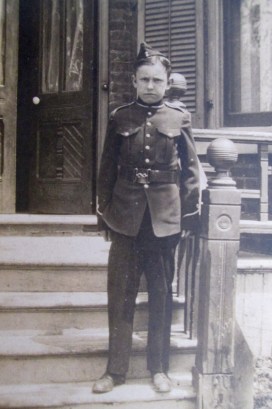
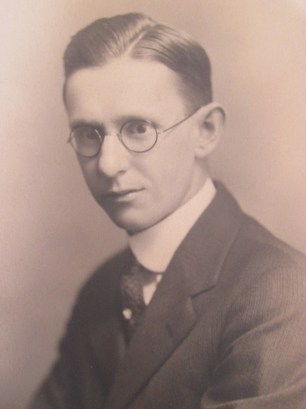
The Anglin Brothers

When Robert left Ireland for Canada in 1829, young William Anglin (my great-great-grandfather) missed his older brother terribly. For the next 14 years, he wrote letters frequently as the only way to keep him close to his heart. Upon hearing of the rebellions in 1838 in Upper Canada and near Kingston, Ontario, where Robert had settled with his family, William wrote a worried letter:

Another reason why I have not written is the very disturbed state of your country – you cannot think the feelings of my mind on account of you my dear brothers and family for fear you should suffer loss of property, or life. I pray that you may receive this and that it will find you all well. I was afraid that a letter may not pass from here to you, and was kept in awful suspense to know how it would terminate – and anxiously waiting for every account – and you cannot imagine what joy it gave me to hear that the Rebels are in a great measure defeated.      ..…     I was glad to know from the papers that they did not get up to Kingston, and I hope that you in that city do still enjoy peace. We were glad to hear the stand the Protestants have made with the Army against them. Things may be worse than we know with you but do hope our next account will bring us satisfactory news. A good deal of the Army sailed from England and Ireland for America and do hope they have safely arrived before this date. I forbear to say any more on this, to me, painful subject, and know that you are better acquainted with it than I can be. I only mention what I have said to let you know what I have heard about the agitated state of your country. Under such circumstances as these I hope you will write as soon as you receive this, for I long to hear from you or to see you. 

 – Excerpt from a letter from William to his brother Robert in Kingston – Feb 23, 1838                                         

In 1843, William at age 28, arrived in Kingston, Ontario, where he finally joined two of his older brothers, Robert and Samuel, in business.  William, the youngest of four brothers and one sister, was born in 1815 in Bandon, County Cork, Ireland. He hadn’t seen his brother Robert in 14 years.

Before long William branched out into business for himself, partnering with an iron-gray pony named ‘Fanny’.  He travelled along the Rideau Canal as far north as Big Rideau Lake, and also along Lake Ontario to Hay Bay near Adolphustown, purchasing cordwood as fuel for the mail boats operating between Toronto and Montreal – steamers named ‘Passport’, ‘Spartan’, ‘Corsican’, ‘Corinthian’, and ‘Algerian’[1].

Later he purchased his own powerful tug, named ‘Grenville’, as well as two barges and continued to manage the cordwood contract with his young son’s help.  The cordwood was then freighted up on scows and barges, and piled on the Long Wharf in Kingston, later known as Swift’s Wharf.[2]

In 1847, four years after his arrival in Kingston, William married Mary Gardiner who had been born in County Durham, England, in 1817, and had also immigrated to the Kingston area with her family.

William and his wife first had two daughters, Mary Frances, who died shortly after her birth in 1850, and Annabella ‘Annie’ Jane.

Annie was born in 1853. Sadly, on July 1, 1878, while watching a fireworks display in the Cricket Field from the roof of a neighbors’ house, she took ill and developed pulmonary tuberculosis.  She was only 26 years old when she died on April 18, 1879.[3]

Then came two sons, William Gardiner Anglin (my great-grandfather), in 1856, and James Vickers Anglin, in 1860. They grew up in the house at 56 Earl Street where they moved as young boys with their parents in 1865.

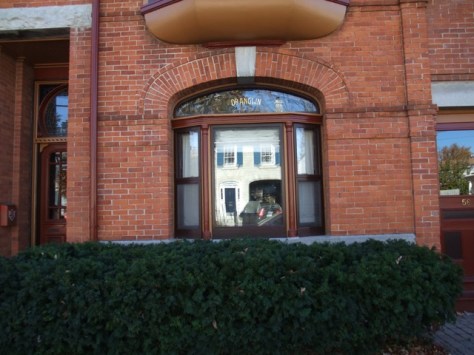
Both sons eventually studied medicine at Queen’s University and became well respected surgeons in Kingston. William, however, also built an extension on his father’s house at 56 Earl Street which served both as his own home and medical office.  To this day, the name “Dr. W.G. Anglin” is still etched on the window at 56 Earl Street.[4]

When William’s mother died in Ireland, in 1863, twenty years after William’s arrival in Kingston, his eldest brother, John, was finally able to move to Upper Canada to join the rest of the family.

The Anglin brothers were re-united once again.

[1] http://www.Images.maritimehistoryofthegreatlakes.ca

[2] The Anglin Family Story – Part 2 – www.billanglin.com

[3] The Anglin Family Story – Part 2 – www.billanglin.com

[4] Helen Finlay, owner-operator of  52 Earl Street Cottages, Kingston, Ontario

What Could It Possibly Be?

by Claire Lindell.

In today’s world we can walk in to a grocery store and buy fruits, vegetables and all kinds of fresh produce from every country imaginable.  Grapes from Chile, shrimp from Thailand and raspberries from Mexico, to name a few. There was a time not too long ago when our choices were limited to what was available locally and in season.

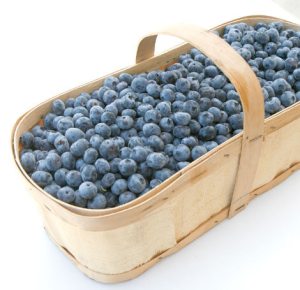
In the summer of 1948 my Mom received a phone call from the Station Master in Danville telling her that a package had arrived  and would someone be available to pick it up.  Off we went on a four mile drive to the railway station. We were presented with  a large wooden handled basket with newspaper on the top to protect whatever was inside.

What could it possibly be? We were wondering and trying guess who it came from. What was inside this huge basket? It was heavy and the newspapers had protected the contents.

It didn’t take us very long to figure out what it was, once we knew where it came from and who had sent it. You see, it was blueberry season in northern Ontario and  Granny and Aunt Ted knew how much our family enjoyed blueberries. They also knew how much we missed the opportunity to pick them. They had picked a huge basket  full of this delicious little fruit and sent them by train from Sudbury, Ontario to our home in Asbestos, Quebec. We picked up the basket at the nearest railway station.

Can you imagine how this basket of blueberries must have been treated by the employees on the train? They must have known that there were folks eager to receive the package and they handled it with great care. The basket arrived safe and sound after such a long journey and several transfers from one train to another. There would have been a transfer in Montreal, then again in Sherbrooke and the last one in Richmond. We received it in perfect condition, almost as fresh as they day they were picked.

We drove home with visions of fresh blueberries and cream and of course, Mom’s famous blueberry pie dancing though our heads. Once home, Mom began baking pies. She was allergic to flour and often wore a mask, and when she didn’t wear her mask she would sneeze incessantly for  at least a dozen times. For her, that was a small inconvenience when it came to baking pies, especially blueberry pies.

scan0020

The basket contained enough fruit for at least ten pies.  Some of the pies were placed in our huge Amana freezer, while we enjoyed several of those  freshly baked. At that time we were a family of seven, one pie really wasn’t enough, especially since they were right out of the oven!

In today’s world there are many different kinds of blueberries. There are the cultivated blueberries which are quite large that  can be purchased all year round. Wild blueberries from Lac St-Jean are very tiny and are available seasonally. Their tastes differ substantially from one to  another, however, being originally from northern Ontario you can guess  what my choice is when it comes to real blueberries with great flavour.


new_basket

Christina Sutherland Jaywalker

On a November morning in 1920, Christina Sutherland was hit by a car. She was hurrying along King Street in Toronto and stepped out from between two wagons into the path of the vehicle. The driver, Joseph Stern, couldn’t stop in time and knocked her down. Extremely upset, he picked up her unconscious body, placed her in his car and rushed her to the Toronto General Hospital.

Christina died the next day of a fractured skull and brain concussion. The circumstance of Christina’s death, written up in the Toronto Star was the most noteworthy event in her life.

Mr Stern reported the accident to the Court Street police station. He wasn’t detained after he explained what had happened. Christina’s death was the third one in six days caused by a motor car.

As late as 1910 pedestrians still had the right of the road. The streets were busy with automobiles and horse drawn wagons but people crossed where ever they pleased, with hardly a look. Toronto police began directing traffic in 1918 as yielding the right of way at intersections didn’t work any more. By 1920 Toronto had a population of 500,000 and cars were becoming more and more popular. Police now claimed that most accidents were the fault of the pedestrians and jaywalking became a word.

Little else is known about Christina. The only mention of her is in her nephew William Harkness Sutherland’s diary and that too is about her death. “ Received a special delivery letter from Wilson this morning just as we were starting out to church giving news of Aunt Christina’s death.” There weren’t any photographs of her, she isn’t mentioned in any surviving family letters and the record of her birth hasn’t been found.

She was born in Ontario around 1854, the fourth child of William Sutherland and Elizabeth Mowat. They followed the Scottish naming pattern and so she was named for William’s mother. William purchased crown land in 1855 in Carrick, Bruce County, Ontario. The land had to be cleared, a house built and crops planted, so there was always a lot of work to be done as Christina grew up. All the Sutherland children went to S.S. #9 Carrick. The school, built of hand-hewn logs by the original settlers was opened in 1859. Parents had to supply half a cord of wood for each child attending. Christina continued to live at home at least until she was seventeen.

In 1881 she was living in Toronto and working as a domestic for William Johnston, his wife Mary and their two children. He was her aunt Jessie Sutherland’s brother. Some of Christina’s brothers had also moved to Toronto at this time, but she wasn’t living with any of them.

She wasn’t found on another census until 1911 when she was a lodger at 381 King St West. This appeared to be a boarding house owned by an Alice Dawson, who lived there with her daughter and grandchildren. There were ten lodgers on the census; four women and six men. Christina was listed as an operator at a factory, working 48 hours a week with a two week holiday and all for three hundred dollars a year. She must have had an independent streak as she worked to support herself and still wasn’t living with any family members.

She never married and was reported to be 66 at the time of her death. She was still living on King Street, although at number 391. There was contact with her family as it was her brother George Sutherland who was the informant of her death and her funeral was from her sister Isabella’s house.

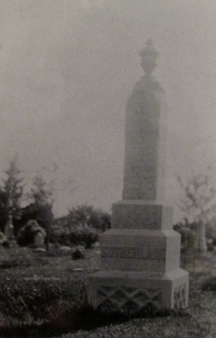
Christina was buried in Mount Pleasant cemetery in a plot with her parents, two young nephews and a niece. Even there she didn’t leave a mark, as her name is not on the tombstone.

img_8707
Sutherland Tombstone Mount Pleasant Cemetery, Toronto

Bibliography:

“Hit By Motor.” Toronto Star 4 Nov. 1920: n. Pg. 2 Print.

Toronto Star 6 Nov. 1920 Print.

Ontario Census, 1861,” database, FamilySearch (https://familysearch.org/ark:/61903/1:1:MQQ6-V4G : 8 November 2014), Cristenik Sutherland, Carrick, Bruce, Ontario, Canada; citing p. 4, line 18; Library and Archives Canada film number C-1010-1011, Public Archives, Toronto; FHL microfilm 349,251.

“Canada Census, 1871,” index, FamilySearch (https://familysearch.org/pal:/MM9.1.1/M4QW-JX5 : accessed 30 Mar 2014), Christena Sutherland in household of Isabella Sutherland, Carrick, South Bruce, Ontario, Canada; citing p. 28, line 8; Library and Archives Canada film number C-9935, Public Archives, Ottawa, Ontario; FHL microfilm 4396334.

“Canada Census, 1881,” index, FamilySearch (https://familysearch.org/pal:/MM9.1.1/MVFS-GNB : accessed 30 Mar 2014), Christina Sutherland in household of William Johnston, St-John’s Ward, Toronto (City), Ontario, Canada; citing p. 51; Library and Archives Canada film number C-13246, Public Archives, Ottawa, Ontario; FHL microfilm 1375882.

Canada Census 1911 Ontario, Toronto South, 38, Ward 4, page 16 Archives Canada.

Ontario Deaths, 1869-1937 and Overseas Deaths, 1939-1947, database with images, FamilySearch (https://familysearch.org/ark:/61903/1:1:JDT9-6H8 : 11 December 2014), Christina Sutherland, 05 Nov 1920; citing Toronto, York, Ontario, yr 1920 cn 8083, Archives of Ontario, Toronto; FHL microfilm 1,863,282.

Historical Walks through Carrick and Mildmay. Owen Sound, Ont.: Mildmay-Carrick Historical Society, 1989. 48-51. Print.

Plummer, Kevin. “Historicist: Those Vicious Devilish Machines.” N.p., 17 Jan. 2009. Web. 28 Feb. 2016.

Sutherland, William Harkness. Diary from January 1920 to December 1924. In possession of the author.

The story of Christina’s mother Elizabeth Mowat can be found at https://wordpress.com/post/genealogyensemble.com/3293

For Their Health

Donald and Isabella had not been well over the winter and of all the things they could do to improve their health, they felt an ocean voyage would be the cure. Hopefully, the salt air and a good long rest would improve their appetites.

In 1900, Donald Sutherland, my great-grandfather, his sister Isabella Sutherland Rae and sister-in-law Jessie Johnston Sutherland traveled to New York from Toronto and sailed from there to Scotland aboard the Laurentian, a steamship of the Allen Line.

Food was not available twenty-four hours a day, as on a cruise ship today, but was plentiful and varied. Breakfast was porridge with fresh milk or maple syrup, Loch Fyne herring, or beefsteak and onions. Lunch, the main meal was roast veal with lemon sauce or roast goose with applesauce along with potatoes, parsnips and sweets for dessert. Supper was lighter, with cold meats, preserved salmon, finnan haddie, not our family favourite, breads, cheese and jam.1 Donald wrote, “We had a fine sail for about four days and the rest of the voyage was not very fine but for the pitching and rolling and heaving we had yet none of us three were sea sick long enough to miss our meals.”2  I love this quote as it captures some of the essence of his character. I can just see them struggling up the stairs, not wanting to miss a meal they had paid for and hoped would improve their health.

Donald and Isabella were born in Canada to William Sutherland and Elizabeth Mowat. Jessie Johnston was born in Scotland and came to Canada as a child. She was married to William, Donald and Isabella’s older brother. They arrived in Glasgow and then went on to Edinburgh, where Jessie was born. They had a wonderful time touring the area and Jessie remembered many landmarks from her childhood, including of course the castle.

img_0417
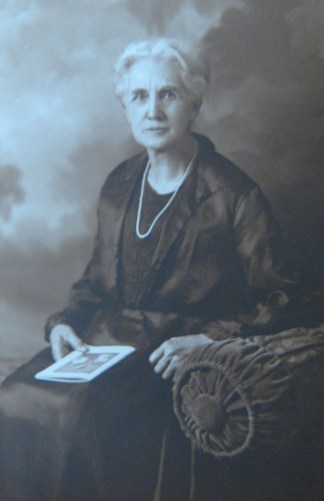
Isabella Sutherland Rae about 1920

The Sutherland’s father, William, was from Tongue, in the very north of Scotland. He had left for Canada in 1845 and never went back. Isabella’s mother-in-law, Hughina Sutherland Rae, who was also her father William’s sister, was still living in Tongue at the time, but they didn’t visit. I always thought this strange because as far as I know, they had never even met. Here they were so close in distance, but when they had the choice of a trip north to Tongue or down to London, London won out! They couldn’t do both without more expense and time than they had available.

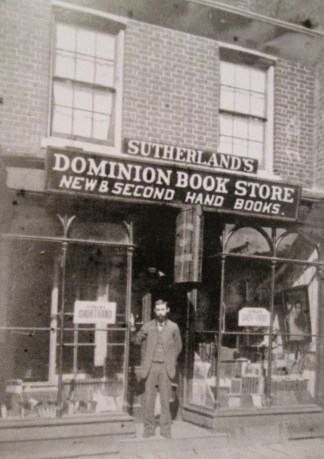
Donald had a bookstore in Toronto, Sutherland’s Dominion Book Store and was very interested in visiting the London booksellers. He wanted to spend time among the books. That city impressed them all and they would have loved to stay longer to see more.

img_8647
Donald Sutherland about 1895

On arriving back in Canada, they figured the trip was a great success as they were all in good health and had gained weight. “However, I got the benefit of the trip as I expected and I feel a great deal better now than I have been for a long time. I have gained over 9 lbs. after I got home and am still gaining.”3

They had great tales to tell of their trip and the funniest thing that happened in Dublin, but unfortunately, these stories were to be told in person and were not put to paper.

1Allen Line Daily Menu Card second class June 9, 1906. www.gjenvick.com/vintage menus

2Letter from Donald Sutherland to his McIntosh Cousins. Dec 17, 1900. Original donated by Carol McIntosh Small to the Bruce County Historical Society.

3Same Letter

Great Grandmother’s Quilt: Eliza Jane Eagle

I have a sampler made by Susan Dodds Bailey, my two times great-grandmother, but much more has survived made by her daughter Eliza Jane. My favourite item is a wool quilt.

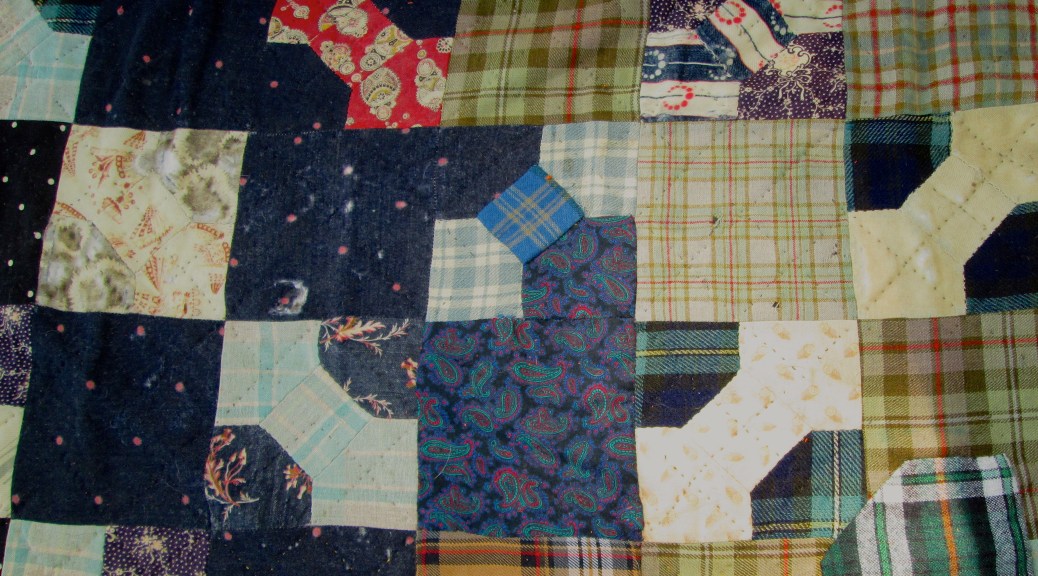
The quilt is a traditional bow tie pattern, made from scraps of suiting and other old clothes. Reds, blues and greens in plains, plaids and a few polka dots march across the front. It was all hand stitched. For many years, it was put away in a closet but now summer has it spread out on the day bed, on the verandah of our country cottage. Many an afternoon nap has been taken on it. The quilt had begun to show wear, especially the disintegration of the black dyed fabric but it was being used and loved. Last fall, before Thanksgiving, the quilt was left on the bed. Mice climbed under the tarpaulin protecting it, decided wool would make a great nest and chewed the fabric. It needed to be repaired. Great grandmother would not be happy.

Eliza Jane wasn’t just a quilter, she also knit and made a finely worked afghan. This was a work of love made from off white wool purchased especially for the project. It was given to her daughter Minnie. Elisa Jane was very upset to see that her daughter used it folded up under a mattress, to raise the head of a bed. It was the only time her granddaughter Beth remembered seeing her grandmother cry. The afghan then went to Beth and later her great-granddaughter Dorothy, who proudly displayed it on her guest bed. Great grandmother would be happy.

Eliza Jane also did a lot of fancy needlework. Needlepoint book marks, crocheted towels and lace, crossed stitched sayings on paper and tatted edging have all been preserved. She loved listening to the radio,“Wilson came over on Wed evening and looked over our machine it needs a new long battery but I heard a fine concert in Masonic Hall last night the best yet after the shaking up he gave the old battery.” I can picture her sitting listening in the evening, her hands never idle.

Eliza married William Eagle in 1881, when they were both considered “older”. He had been looking after his mother and didn’t want his wife to become a nurse. They did marry before Martha McClelland Eagle died, as they couldn’t wait forever. Eliza’s wedding dress was a burgundy silk because she thought cream or white wasn’t suitable for a woman then 36 years of age. I don’t know if she made the dress but it was kept for many years and worn for dress up by her daughters and granddaughters.

Neither her daughters nor her granddaughters were much for sewing or handiwork. My grandmother, Minnie could do some mending and darn her stockings but she was never into fine sewing. She had a dressmaker come to her house twice a year to make her clothes. Her sister Amy tried to do some sewing but for her it was a task, not something she enjoyed. So, I think Eliza Jane would be pleased to know that some of her great granddaughters do a lot of needle work and appreciate her craft.

With some old fabric saved from my mother’s hall closet, I repaired the major holes in the wool quilt. This summer it was back on the day bed. I think Great Grandmother would be happy.

Bibliography:

Personal communication with Beth Sutherland Van Loben Sels in 2000.

Notes written by Minnie Eagle Sutherland,“Mother made these fancy articles” and Amy Eagle.

Letters from Eliza Jane Eagle to Minnie Eagle Sutherland -1920’s.

Letter Feb 8 1924 from Eliza Jane to Minnie. Wilson was her daughter Minnie’s brother -in-law.

Articles in the possession of the author

Surgeon and Mentalist

Shortly before graduation from medical school at Queens University in Kingston, Ontario in 1883, William G. Anglin (my great grandfather) and a few fellow medical students attended the performance of a “thought-reader”, English mentalist Stuart Cumberland[1]. So impressed with what they had seen, they went back to their place and tried one of the simpler experiments.

 The operator was blindfolded, and the Medium, placing the back of the fingers of one hand on the operator’s forehead was to think intently as to what was required to be done. For instance – pick up an article from some position and place it in another position – the operator having previously gone out of the room while the experiment was being agreed upon. Everyone singly failed, and I was the last one to try. Immediately I went across the room and picked up a small object from the mantelpiece – crossed the room and placed it on the middle of a chair. Tore off the handkerchief from my eyes and said: “That’s what you wanted done”. “By George, you’re right, Anglin, we will try you again”, and I did correctly five or six other experiments – each a little more difficult than the last. Could not account for the success, but in every experiment I was conscious that I was doing the right thing. When my fingers touched the desired object, I closed on it with a feeling of certainty.[2]

The next week William left for Halifax to sail for Liverpool to continue his medical studies in England. He met a fellow doctor and, eventually the conversation turned to “thought-reading”.

It proved to be a very entertaining voyage for the passengers, as he successfully performed time and time again. A passenger would say – “Well, Doctor, I hid a pin somewhere on the ship – an hour ago” and blindfolded, William would take the passenger’s right hand and, holding the fingers to his forehead, he would say, “Think where it is”, and they would start upstairs and downstairs, and along corridors to the spot, and he would pick up the pin from a curtain or a chair wherever it had been placed.[3]

Later in life, his son Douglas, referring to his father’s diary, lamented “End of Diary – too bad – I wish we could have heard about my father’s time studying in London and Edinburgh, where he was entertained at many high society places on account of his thought-reading.”[4]

Following his medical degree from Queen’s in 1883, William spent eighteen months as the house surgeon at the Royal Infirmary, the Sick Children’s Hospital, and the Royal Maternity Hospital in England. Then he successfully completed the M.R.C.S. exam (Member of the Royal College of Surgeons) in England.

When he returned to Kingston, in the fall of 1885, he lectured for a session in surgery at the Women’s Medical College. A year later, he became Professor of Pathology and finally head of the department of Clinical Surgery.

Around that time, William built an addition to his parents’ home at 52 Earl Street in Kingston, which provided him with both office and home. 3

This is where he brought his childhood sweetheart and bride, Harriet (Hattie) Eva Gould, in 1886. The name ‘Dr. Anglin’ remains embossed in the upper portion of the glass of the front window to this day.[5]

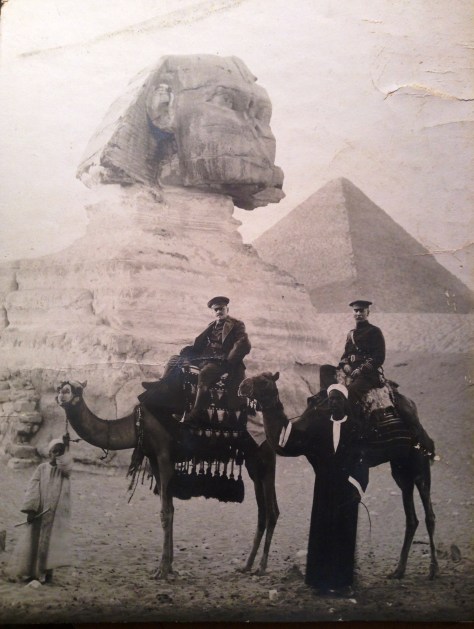
He remained a member of the Medical Staff at Queen’s until May 1915 when he departed with the Queen’s Stationary Hospital for Cairo, at age 59. Cairo, Egypt - Dec 7, 1915 - Lt Col AnglinHe served as a civil-surgeon with the rank of Lieutenant Colonel until 1916 when he became ill with Malta fever and phlebitis. He was given a medical discharge and sent back home.

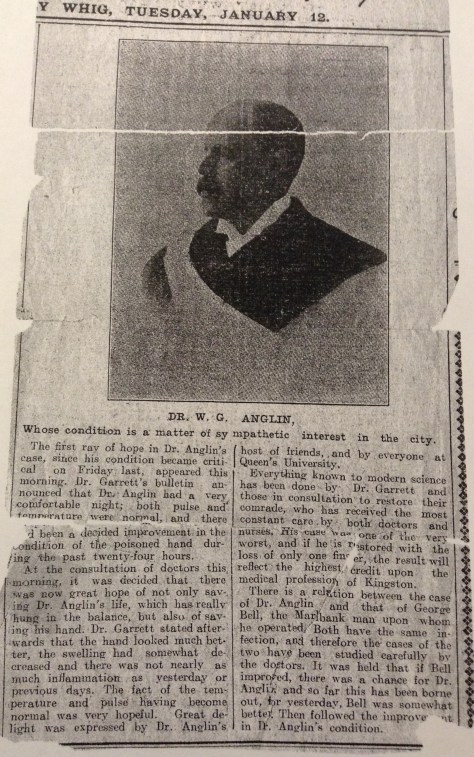
William’s attestation papers, dated May 1st 1915, declared that he was fit for duty but noted a missing middle finger on his right hand.  In 1904, it was reported that Dr. William G. Anglin was severely ill, and lost a finger due to this illness. There was much relief when it was announced that he would live.[6] Middle Finger The story told was that by using his “thought-reading” skills, he was able to physically draw down the infection in his right arm to his middle finger. The amputation of that one finger removed all traces of infection from his body probably saving his life… and enabling him to continue his work as a surgeon.[7]


[1] Wikipedia-Stuart Cumberland (1857–1922) English mentalist known for his demonstrations of “thought reading”.

[2] Personal recollections – W.G. Anglin, 52 Earl Street, Kindston, Ontario – November 14, 1927

[3] Personal recollections – W. G.Anglin, 52 Earl Street, Kingston, Ontario – November 14, 1927

[4] Written note from Douglas Anglin at the end of Personal recollections – W.G. Anglin, 52 Earl Street, Kingson, Ontario – November 14, 1927.

[5] Helen Finlay, owner-operator of  52 Earl Street Cottages, Kingston, Ontario
[6] The Kingston Whig, January 12, 1904,

Queen’s archives, Biographical History – Anglin, William Gardiner (1856-1934)

[7] As told to Lucy Anglin from Thomas Gill Anglin, grandson of W.G. Anglin, who read his grandfather’s diary


Susan Dodds’ Sampler


IMG_6245 - Version 2

A precious item hung in our hall while I was growing up, made by my great, great grandmother. I often wondered about the woman who made it. Finding out about her was one of my first genealogical searches.

The sampler was made of rough woven linen with cross stitches of bright coloured wool. There were red strawberries, green and yellow borders and rows of letters and numbers. What was very clear on the sampler were the words in black, “Susan Dodds and Tattinclave” and the date “Aprile 12 -19, 1840.” I knew the family came from Ireland and finally discovered that Tattinclave is a townland in County Monaghan, Northern Ireland, just north-east of Castleblaney and Oram near the Armagh border. That was the where, then there was the who?

Many samplers have a saying or a motto embroidered on the bottom but unfortunately here, there is much wear making Susan’s difficult to read. What can be read is “lord our spirits” showing that Susan was a religious person.

This was confirmed in a letter, Susan and her husband Alexander Bailey carried to Canada from Rev. Samuel Dunlop, a Presbyterian minister. It stated, ” I have known the bearer Shusana Dodds since she was a child. She is not only of an unexceptionable but an examplary moral character. She is the daughter of very pious parents and prior to her leaving this country in full communion in our church. She was married previous to her going to America to one Alexander Bailey by the Rev. W. Momson. They are both a sober industrious young couple and persons in whom I believe confidence might be placed. April 13, 1843.”

In a box with family letters and photographs was a little hand sewn booklet. It was sent to Susan by her sister Eliza Dodds in 1871.There is a letter in the front where Eliza explains that Susan should use it to record events in her life and though they may never see each other again there is comfort in knowing God is looking after them both. In it were recorded all the births and as life would have it, some of the deaths of her children. There are few clues to other parts of her life with only “Dada was made a church elder 1839 and I joined the church 1840.”

IMG_3067
Oct 16, 1871 Susan D Bailey Register Book

After they arrived in Toronto, Alexander worked as a carpenter while Susan began raising children. Their first child Eliza Jane was born in 1844, but died the next year. They had seven more children, another Eliza Jane, Mary, Robert, William, Isabella, James, and Joseph who would have kept Susan busy. It was the last, little Joseph, who appeared to have had the greatest effect on their lives. He died at seven years of age in August of 1871, falling from a pile of lumber. Perhaps his father was supposed to be watching him as at this point the family seemed to break apart.

Even while mourning her son, Susan appeared to be a strong woman. She was recorded as the head of the household while her husband seemed to have disappeared. She held the family together as some of her children, Isabella and James continued to live with her until her death in 1896. Her son Robert pictured with her here, died of tuberculosis in 1882.

IMG_3815_2
Robert Bailey and mother Susan Dodds Bailey

When my mother began down sizing, she offered us an item from the house every birthday. The sampler was my first choice. It now hangs on my wall.

Notes:

Dodds, Eliza. Register Book. Letter to Susan Bailey. October 16, 1871. Ireland. The booklet was sent after Joseph died.

Dunlop, Samuel, Rev. Letter to To Whom It May Concern. 13 Apr. 1843. Ireland. In author’s possession.

“Canada Census, 1881,” index, FamilySearch (https://familysearch.org/pal:/MM9.1.1/MVF7-172 : accessed 19 Nov 2014), Susan Bailey, Yorkville, York East, Ontario, Canada; citing p. 126; Library and Archives Canada film number C-13248, Library and Archives Canada, Ottawa, Ontario; FHL microfilm 1375884.

With the help of Google I found the whole quote on the sampler.

“Swiftly thus our fleeting days, Bear us down life’s rapid stream. Upward lord our spirits raise. All below is but a dream.”    This is the second verse of a hymn “While with Ceaseless Course the Sun” by John Newton who also wrote Amazing Grace. It was in a book, Olney Hymns London: W Oliver 1779. Book II Hymn I.                                                                                                                                                                   

The place-name is also spelled Tatinclieve or Tattintlieve. It is 219 acres, in the county of Monaghan, the Barony of Cremorne, the parish of Muckno, Poor Law Union in 1857 in Castleblaney and in the Town land census of 1851 Part I, Vol III page 262.

It is assumed Susan’s parents were James Dodds and Jane McKee. There is a James Dodds renting 44 acres ( the most land in Tattinclave) in 1861. There is also a record that James Dodds was an elder in Garmony’s Grove Presbyterian Church in 1840.

Rev Samuel Dunlop was the minister in Garmony’s Grove Presbyterian Church from 1822 until his death in 1848. Garmony’s Grove was originally set up in connection with the Presbytry in Market Hill. The baptismal records only begin in 1844. Some of the people who attended this church may have been buried in Clarkesbridge or Newtownhamilton which is in Armagh. These three churches were united for a time. With the record of the marriage of Susan and Alexander being in Armagh, they might have been married in Newtownhamilton. This information was from Paula McGeough, personal communication.

Poor Little Children

IMG_0424

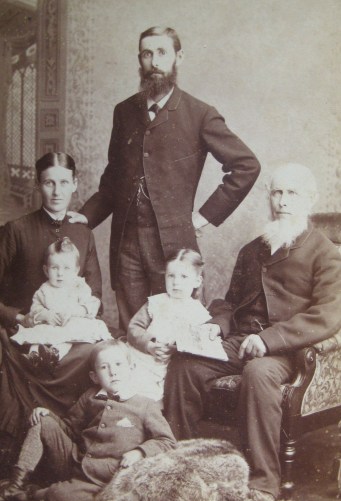
I always thought that my grandfather, William Sutherland was one of three children. He and his brother Wilson died before I was born and his sister Mary when I was a baby, so I never heard any information first hand. There is a picture of the family with three children, parents and grandfather. I always assumed the baby sitting on Alice Dickson Sutherland’s lap was Wilson, until one day I realized the eyes were light coloured. Wilson the youngest son definitely had brown eyes confirmed in many other pictures.

Thinking this was a child who had died, I searched through the Ontario Birth, Marriage and Death indexes. I found a James Dickson Sutherland who died at fourteen months, in January 1886, of bronchial pneumonia and thought he was a possible match. This was confirmed in a letter from Alice to a cousin Jessie McIntosh, where she mentioned little James Dickson. “Baby is growing he is pretty plump but not so big and fat as Willie was when he was his age. We call him James Dickson, he has dark hair, blue eyes and a deep dimple in his chin.”

It was certainly not unusual for young children to die before the discovery of antibiotics and vaccines. In my search I had noticed a Mowat Sutherland, who had died of diphtheria in 1891. Unfortunately, Ontario death certificates don’t give the parents names. No one else in the family had been called Mowat, but that was my great great grandmother’s maiden name. Then a “Knowat” Sutherland age two, was found in the 1891 census living with my great grandfather’s brother William and his wife Jessie Sutherland.

There was also an Elizabeth Mowat Sutherland, who died in 1890. I thought she was probably Mowat’s sister but hadn’t found any birth record. Then, in the LDS database I found both Mowat, Elizabeth Mowat and James Dickson buried in Mount Pleasant cemetery, plot M5120 owned by my great great grandfather William Sutherland.

I kept looking through the records. I searched through the birth records putting in different parents names and then just Sutherland, as I knew the death date and age, 9 months. I finally found a record of the birth of an Elizabeth Maud Sutherland whose parents weren’t William and Jessie Sutherland but rather Donald Sutherland and Alice Dixon (Dickson). This little girl was my great great aunt. She was born July 26, 1888 and died of bronchial pneumonia, April 22, 1889.

Imagine, three babies buried in plot M 5120 with their grandparents, but then there were four. Recently a Dickson baby boy was found to be buried in this plot. He was still born and probably the son of Alice’s brother James Dickson.

Donald and Alice lost two children before the youngest, Wilson was born. As the baby of the family he was spoiled according to all sources. His mother babied him and the explanation was undoubtedly the two children she lost. It was said he never had to learn the value of money and would buy a newspaper every day!

There was one more baby who was never mentioned. My grandmother Minnie Eagle Sutherland and her sister Amy had another younger sister. Elizabeth Martha Eagle, known as Bessie was born October 1, 1886 and died July 18, 1887 of cholera . Her mother Eliza Jane Eagle said, “God knew she could only cope with two children and took Bessie to heaven.”

Are there other little children to find so they too will be remembered?

IMG_3854
Robert Wilson Sutherland          Abt 1905
IMG_3866
Robert Wilson Sutherland                  Abt. 1920

Bibliography:

Ancestry.com. James Dickson Sutherland – Archives of Ontario. Registrations of Deaths, 1869-1938. MS 935, reels 1-615. Series: MS935; Reel: 45

 Year: 1891; Census Place: St Johns Ward, Toronto City, Ontario; Roll: T-6371; Family No: 3.

Archives of Ontario. Registrations of Births and Stillbirths – 1869-1913. MS 929, reels 1-245. Toronto, Ontario, Canada: Archives of Ontario.

“Ontario, Toronto Trust Cemeteries, 1826-1989,” index and images, FamilySearch (https://familysearch.org/pal:/MM9.1.1/KH6C-BDS : accessed 07 Mar 2014), Elizabeth Mowat Sutherland, 1889.

“Ontario, Toronto Trust Cemeteries, 1826-1989,” index and images, FamilySearch (https://familysearch.org/pal:/MM9.1.1/KH6C-FP9 : accessed 07 Mar 2014), Mowat Sutherland, 1891.

“Ontario, Toronto Trust Cemeteries, 1826-1989,” index and images, FamilySearch (https://familysearch.org/pal:/MM9.1.1/KH6H-378 : accessed 05 Apr 2014), Eliza M Eagle, 18 Jul 1887; citing Toronto, Ontario, Canada, section and lot T 94, line 11917, volume Volume 07, 1883-1891, Superintendent of Administrative Services; FHL microfilm 1617041.

Ontario, Toronto Trust Cemeteries, 1826-1989,” index and images, FamilySearch (https://familysearch.org/pal:/MM9.1.1/24MZ-7G5 : accessed 19 May 2014), Wm Sutherland in entry for Dickson, 05 Oct 1888; citing Toronto, Ontario, Canada, section and lot M 51 20, line 5000, volume Volume 01, 1876-1896, Superintendent of Administrative Services; FHL microfilm 1617049.

Personal communication with Elizabeth Sutherland Van Loben Sels. 2000.

Family letters from Carol MacIntosh Small. All the original letters were donated by Carol to the Bruce County Archives in Southampton, Ontario.

Letter from Alice Sutherland to Jessie McIntosh March 18, 1885.

Difficult holiday for two families

The plane crashed just after one in the afternoon Eastern Time on December 22, 1944. He probably died right then, or soon after.

Devittphoto2

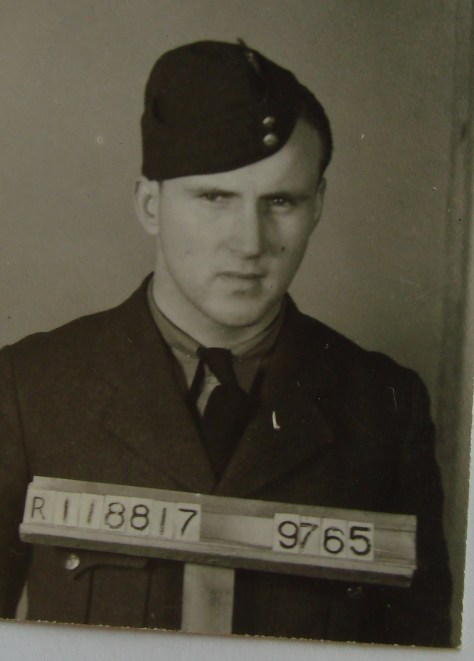
James Frederick (Fredrick or Federic) Devitt left at least two families mourning for him, one in the United Kingdom and his own in Ontario.

His service file shows that the man was 22 years old when he died. His birth had been a Valentine’s Day gift for his parents. Prior to joining the Air Force, he worked for the Canada Bread Company in Peterborough as a driver and route manager. He played hockey and softball and owned a motor boat.[1]

His last trip as a flight engineer/pilot officer left from Gransden Lodge just prior to 4 p.m. in the afternoon, December 22, 1944, exactly 71 years ago yesterday.

His Lancaster and 13 others were on a Pathfinder mission to mark a small railway freight yard in Germany’s Rhine Valley. He was in Lancaster 405/D, which was seen crashing about three hours later by four pathfinders at 50:02 N. 06:25 E., southwest of Leimbach.

Blind Sky Marker failed to return from this operation and nothing has been heard from any member of the crew since time of take-off. This was F/O Tite’s 35th operation.” [2]

His mother’s notes to the Air Force show how difficult these situations were for families.

The telegram and letter reporting him going missing within a month of the crash was the only official news, but she still had hope that he had lived in May.

Can nothing be done to locate my son Fred? I have waited for days thinking some message would come through. I had word from two of the fathers from two of his crew saying their sons were prisoners of war. This was some time ago. Try and help a heart-broken mother please.”

Henrietta was 65 when her Devitt died, but she had already known great loss. His father Robert Campbell Devitt had already died of complications following a stomach ulcer operation when he was three years old, his older brothers were  five, 15 and 21 and his five sisters were eight, 11, 14, 17 and 19.

When she got news about her youngest son going missing, she was already dealing with the death of his elder brother Alexander, who had died the previous January in the Battle of Ortano, Italy.[3]

She wrote the Royal Air Force a second note three months later:

I have not heard any further word about my son Jas Fredric Devitt except what the three members of his crew who came back told me by letter. They said the plane burst into flames. One bailed out and two were blown out and what happened the rest is not known. Surely some identification marks were found. If he was killed and buried like my other son I wouldn’t take it so hard.

Two of the boys were taken as prisoners and the other wounded and put in a German hospital. All any one says is missing.”

A month later she wrote again.

Surely you can tell me something of my son Pilot Officer Jas Fud shot down over Germany December 22…If I know he was died and his body found my mind would be at rest—as it is I’m afraid of results.”

Another woman who loved him also worried. Eight months after his plane went down, a Mrs. S. Hitchings wrote the Royal Air Force from 111 Connaught Road, Roath Park, Cardiff. She too had heard that two airmen from his plane were taken prisoner and she hoped that perhaps they provided the Red Cross with information about Devitt.

I feel sure that if he was alive we would have heard from him, since he became part of our family whilst he was stationed in this country.”[4]

It would take another three years to be sure about what happened to the Lancaster, but Devitt’s service record indicates that:

This 4 engined aircraft fell 60 or 70 yards behind the fam of MARTIN STOMMES in WIERSDORF (L.0357). It was shot down by a German night fighter and was burning in the air, it hit the ground, turned on its back and burned for 3 hours. One engine and the tail unit fell off before it crashed.”

Three bodies and the remains of a fourth were buried in an unmarked grave.[5]

Devitt’s remains have since been moved to Rheinberg War Cemetery in Germany. For more information, refer to his Veterans Affairs Canada memorial page.

Sources:

[1] Devitt, James Frederick; Library and Archives Canada, RG-24, volume 25203, General Information.

[2] No. 405 R.C.A.F. Squadron (P.E.F.) Operations Record Book, Gransden Lodge, photocopies of secret book, December 22, 1944, Appendix 212.

[3] Devitt, James Frederick; Library and Archives Canada, RG-24, volume 25203, National Estates Branch, form C92768FD269, October 29, 1945.

[4] Devitt, James Frederick; Library and Archives Canada, RG-24, volume 25203, report from Officer Commanding No 2, MR&E Unit RAF, dated January 17, 1947.

[5] Devitt, James Frederick; Library and Archives Canada, RG-24, volume 25203, letter from S. Hitchings, received August 25, 1945.

Note: This article was also published on http://www.Arialview.ca today.

Remembering Ed Johnson, the visionary behind the North Wall

Ed Johnson and Ric Gidner, July 2005

As I watch the memorial service today, I’ll be thinking of my friend Ed Johnson, the visionary behind the North Wall.

Ed and I met first late in 1995, six months or so after the North Wall (officially known as the Canadian Vietnam Vet Memorial) was erected in Windsor, Ontario. We met again the following July and then again ten years later during the tenth anniversary of the monument.RicEdWindsorWall

In our first meeting, Ed told me how a chance meeting with a woman at the Wall in Washington in 1986 led him on a long journey to create the North Wall. The Canadian woman told Ed that she served as a nurse in Vietnam. Later he found out she lied about that, but her comments made him curious about all Vietnam veterans from Canada. He remembered serving with a Canadian in 1969/70 with the 2/47 Mechanized Infantry.

“During that time, it just never registered,” he said. “I didn’t know what that would mean or where it was. I mean, how many American lives did they save? I’m forever grateful for what they did.”

Johnson began looking for information about Canadian Vietnam Veterans. He found out that some associations existed in Canada, but that most veterans in our country were still isolated and on their own. He learned that many had to cross the border multiple times a year to get health treatment for injuries received during the Vietnam War.

“So I organized a committee here in the Detroit area and called it the Canadian Vietnam Veterans’ Welcome Home Committee. We began working to organize a Welcome Home event for them. The event took two years in the planning and I personally went out and signed a contract with the Michigan State Fair Grounds for $48,000.”

The Welcome Home party took place on July 4, 1989, but internal fighting between veteran’s organizations meant that two other similar events took place in Michigan the same weekend. The pressure also caused fighting at home. By Sunday night that weekend, Johnson had lost $12,000, his house, his credit rating and his wife.

Despite the turmoil, Johnson continued his efforts to bring the Canadians home. He, his buddy Ric Gidner and his brother-in-law Chris Reynolds began building a mini-version of the Washington monument for the Canadians. With the help of the associations in Canada, they researched 100 names to inscribe on the granite.

In March 1993, Johnson and Gidner started a non-profit association called the Michigan Association of Concerned Veterans to offer their monument to the Canadians.

Both the National Capital Commission and the City of Ottawa refused the offer, as did the ministries of Veteran’s Affairs and Public Works.

That led the Americans to split with the Ottawa and Toronto groups that wanted an Ottawa site and look for an alternate site instead.

In the end, the City of Windsor offered land in Assumption Park, right next to the Ambassador Bridge. The monument was dedicated on July 2, 1995 and continues to be dedicated annually every year.

Ed attended all of those dedications until he died from cancer on August 24, 2010. He was only 61 years old. There’s a neat memorial postcard in his memory.

I tried to find an official death notice for my friend, and found one for Edward George Johnson IV, who also lived in Farmington Hills and was born and died on the same dates as the Ed I knew. The picture looks like Ed to me. If this is indeed Ed, it’s nice to see that he built a strong relationship with family before dying despite his commitment to leaving a legacy for Canadian Vietnam Veterans.