Court of appeal in civil and criminal matters where cases arise from lower courts of justice, its judgments are revocable only by the King’s Council.
Sovereign Council
In 1663, the Compagnie des Cent Associés surrendered its rights to NOUVELLE-FRANCE . Louis XIV then established a royal government. He thus endowed New France with a complete administrative apparatus, on the model of those who manage the provinces of France. The Sovereign Council, which became the Superior Council in 1717, compared itself to the parliaments of these provinces. The Council is initially made up of the GOVERNOR , the bishop, the STEWARD and five councilors. In 1703, this number was increased to 12, to which were added in 1742, four assessors. Its members are generally recruited from the French gentry and are appointed initially by the governor and bishop, then by the king.
Court of appeal in civil and criminal matters where cases arise from lower courts of justice, its judgments are revocable only by the King’s Council. It crowns a judicial structure established in each government of the colony: the provost of Quebec (1663), the royal jurisdiction of Trois-Rivières (1665), that of Montreal (1693) and the Admiralty (1703)
The Coderre Police Corruption Inquiry/Laurier Palace Fire Scandal
The Crepeaus in Atlantic City probably 1927. Working vacation?
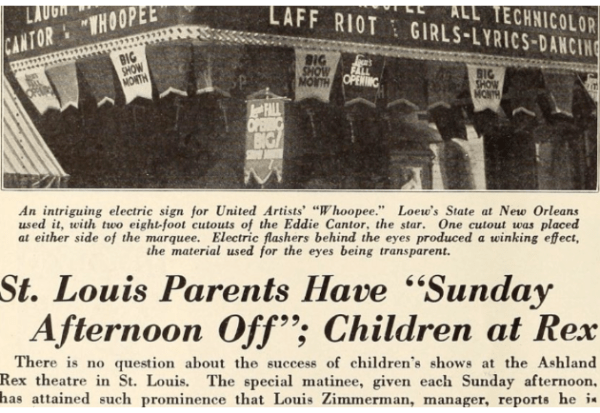
If you are a Quebecker of a certain age, it is possible that as a child you never went to the movies. Everyone under sixteen years of age in this Canadian province was banned from attending the motion pictures even in the company of an adult from 1927 until 1962 *1
This is because of the tragic Laurier Palace movie house fire in January 1927 where seventy eight children perished in a crush at the downstairs doors, doors that only opened inwardly.
These 78 children were among a larger group of working class kids crowded into the upper balcony of the ramshackle Laurier Palace watching a Western on a Sunday afternoon.
A slew of high-profile inquests and hearings followed the tragedy. My grandfather, Jules Crepeau, Director of City Services, was the first to testify at both the initial coroner’s inquest and subsequent hearings. It is unclear what exactly happened in the balcony as only children came forward to testify. All seven or so adults seated there seemed to disappear into the ether. There was talk of two men purposely closing the doors on the desperate kids. At least one older boy had time to go up and down the stairs a few times before the smoke got dangerous. The origin of the fire was never discovered. *2
Most parents, afraid of legal reprisals, testified that they thought their children were at church that afternoon. But parents of the era could hardly be blamed for allowing their children to attend the movies by themselves– against the by-laws. Many of their male children were already out in the workforce earning their own discretionary income and many of their young daughters were already ‘little mothers’ in charge of even younger siblings. With the traffic chaos on the streets in 1927, the movie house probably seemed like a relatively safe place for their children.*3
Just as special ‘kiddie matinees’ were taking off in the US (late 20’s early 30’s) Quebec banned all children from going to the cinema – for 4 decades. Crazy!
On January 10, 1927, the day after the Laurier Palace Fire, the front page of Le Devoir newspaper ran two related stories side-by-side. One was a dry report where my grandfather Jules Crepeau, Director of City Services, admitted that the Laurier Palace Theatre had been operating without a license.
“This will all be explained at the Coroner’s Inquest,” he said.
The second story was a shocking side-bar rehashing testimony from a two year old inquiry into police corruption, testimony that also mentioned my grandfather.
“Our readers will no doubt be interested in re-reading these extracts from testimony at the 1924 Coderre Inquiry into Police Malfeasance and Corruption, 4 that bear on motion picture theatre attendance.”
The side-bar included bits and pieces of testimony given in December, 1924 at this hearing by a certain Constable C.T. in the ‘special services’ division of the Montreal Police Department. The cop railed against City Hall. He was angry because members of the Executive Committee, he said, as well as my grandfather, repeatedly forced the police to cancel citations against motion picture houses that allowed children into the shows, unattended.
Constable CT gave specifics, naming each of the movies houses (the Ouimetoscope!) and the dates when citations were cancelled. He said, “One of these moments there’s going to be a catastrophe that will wake up the authorities.” LeDevoir put that quote in all caps.*5
Despite this sensational after-the-fact finger-pointing at a sensitive time by an otherwise respectable publication, no one took the bait. My grandfather Jules was once again called to testify at the Coroner’s Inquest as well as the other inquiries into the fatal fire but was never asked about Constable CT’s earlier accusations.
Indeed, a while later, when the Taschereau Government was deliberating whether to ban all Sunday showings in Quebec, my grandfather testified once again. He even brought in Ernest Cousins, Vice President of United Amusements, Montreal’s largest movie chain, to talk about the importance of Sunday showings to the movie distribution industry.*6
Isadore Crepeau, my grandfather’s brother, who just happened to be another Vice-President of United Amusements, was also called in to testify at this time, although I’m not sure anyone knew of the family connection.*7
So, why wasn’t my grandfather pilloried back in 1927, when passions over the tragedy were at a high boil, for these two year old allegations of interference with the policemen who patrolled motion picture houses (and who, btw, regularly accepted free tickets for their kids.)
Well, the truth is, Constable CT’s testimony was hardly gold-standard. Under cross-examination a day later, the cop admitted rather glibly to having lent the Chief of Police large sums of money at different times, for reasons he refused to elaborate on. He also admitted to depositing more than five thousand dollars into his five bank accounts over a short period of time. “Rents and winnings on horses” he said.
Constable CT was just another corrupt cop, put on the stand specifically to threaten my grandfather by bringing up, out-of-the-blue, the fairly benign subject of children and the motion pictures, when the Coderre Inquiry was mounted to deal with much more dire and dark issues: police involvement in prostitution of women and girls, drug rings and organized crime and illegal booze smuggling in the era of American prohibition.
Taken in that light, Constable CT’s statement “One day there’s going to be a catastrophe” uttered in December 1924, a full two years before the Laurier Palace fire, could be construed as a threat.
My grandfather, at the time, certainly felt threatened. He had Constable CT fired the very next day.
“Who is this Jules Crepeau who can tell the Chief of Police what to do?” asked Juge Coderre in his summary report in March 1925. As if he didn’t know.8
Three years later, in September, 1930, as explained in Part Two of this series, Mayor Camillien Houde was speechifying at the City Hall meeting where the aldermen debated whether or not to accept my grandfather’s coerced letter of resignation.
“The people want revenge,” Houde said. “They want revenge for the Montreal Water and Power Purchase (the purported reason for wanting my grandfather out) and for the Laurier Palace Fire.”
This was a sneak attack of some sort because never before had the Laurier Palace Fire been brought up as a reason to oust my grandfather from his lofty post at City Hall, at least not in any news clipping I have read.
With all the Houdist’s voting against him, my grandfather was, indeed, forced to resign his post of Director of City Services in September, 1930.
At the time, Grandpapa Jules negotiated a huge life pension that would make him the second highest paid employee at City Hall, without working. Seven years later, during the Great Depression, his huge pension would be rescinded by the City.
Two weeks after that, Jules was hit by a car near his home in Notre Dame de Grace, a car driven by an off-duty police officer. I guess my grandpapa threatened someone with a long reach.
He would die a year later of complications.
As it happens, Le Devoir was the only Montreal newspaper to give Jules a lengthy front page obituary. They even called out the other Montreal papers on this point.
“The other day a noted public servant was put in the ground. The newspapers only published laconic biographical notes about him that don’t give a just idea of the role he played in municipal politics.”
The obituary didn’t mention the suspicious nature of my grandfather’s death, but it did allude, rather kindly, to the many scandals in his career:
“He was too passionate not to occasionally take sides between two rivals, often creating his own enemies. Indeed, he received some knocks, some devastating knocks, but we must say upon his memory, that none of these accusations stuck.”
I have added this on February, 14, 2022. The Montreal Star came online and I was able to read their point of view. They liked him, that’s for sure. Upon his forced retirement they wrote:
“His rise to the position he just vacated was accomplished by merit. A thorough knowledge of the whole involved process of civic administration, of civic problems and the various services, combined with a ready tact, a suave manner, and a keen intellect, which enabled him to penetrate to the root of any problem without delay and which made it very difficult for anyone to mislead him.”
Also, I reread the testimony of Constable CT during the Coderre hearing. Of course, different newspapers covered these political stories differently. I was surprised to see that in his testimony Constable CT claimed that Jules cancelled citations against movie houses owned by United Amusements. It was stated at the hearing that ‘no civic employee had any connection to the company.” LOL. My grandfather’s brother was VP.
Notes:
The city by-laws forbade children to attend movies unless in the company of an adult, not because of a fear of fire-traps but for a fear of the morality of pre-code Hollywood. Indeed, exceptions could be made for films vetted by the Censor. A year later, a similar fire happened in a motion picture house in Scotland – also caused by a crush at doors that opened inwards. The only change that came of that was a law forbidding such doors in motion picture houses. But, in Quebec, everything becomes political. A parade of Montreal citizenry testified in the sad affair: the theatre owners (who were eventually exonerated) and employees and the firemen and the victims’ parents; then followed moguls in the theatre business, small independent theatre owners, union activists, more parents and more firemen, also educators and church officials and representatives of various community groups – anyone with a stake and an opinion – showed up to testify . Fire safety became a mere side issue: it was all about the morality of the motion pictures. The government ended up banning children from all showings, in return for allowing the controversial Sundays showings for adults. (Children could not vote, but their parents could.) I personally think the new “Talkies” coming in right then in 1927 had something to do with the decision. They were English talkies after all. Despite all this, Quebec children over the decades often evaded the rules by dressing up and acting like adults. There were also special children’s showings at various theatres over the years.
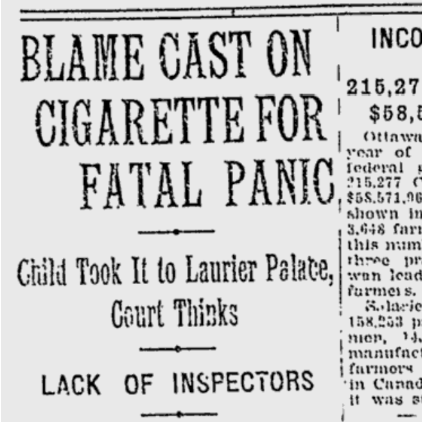
2. “It must have been a cigarette.” Most movie house fires of the time started in the projection booth. This wasn’t the case here, so they took a wild guess. A fire station was across the street, but firefighters could do nothing upon arrival to save the children.
3. 1927 was a pivotal year in traffic safety in North America. The horse and wagon era was literally colliding with the era of the automobile – and their were no road rules yet. The same edition of the Montreal Gazette that covers the Laurier Palace Fire has a story of a toddler being run over in front of her house. This was a daily occurrence in North American cities at the time.
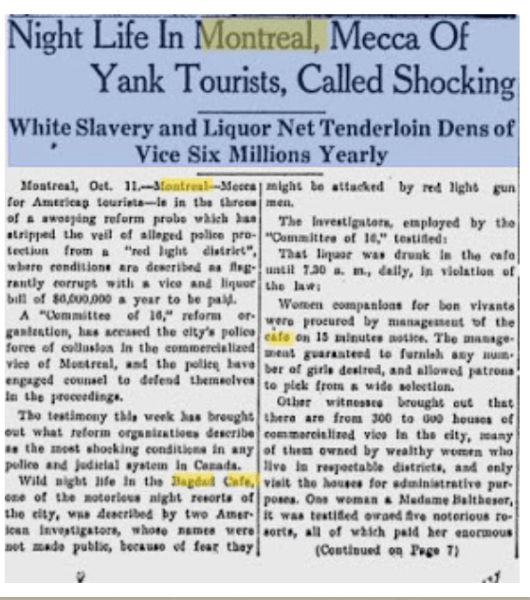
4. The Coderre Inquiry into Police Corruption and Malfeasance was launched after a record-breaking Brinks robbery in the Hochelaga district where it discovered that policemen were involved, but it had long roots back to WWI and prostitution around the Montreal Barracks. A Committee of Sixteen mostly Protestant groups organized an all-court press on Montreal City Hall in 1921, to protect the sad girls working in prostitution in the city after a prominent doctor gave a speech to the elite members of Canadian Club. They focused on the Baghdad Cafe, a sleazy dive serving US tourists located across the street from the ritzy Mount Royal Hotel, Tony Frank, Montreal’s leading mobster and top drug dealer was also implicated in the Brinks robbery. He thought he had the perfect alibi, but he and his henchmen were quickly hanged on circumstantial evidence. Judge Coderre, a religious conservative, used the Inquiry as his bully-pulpit. “Vice spreads its tentacles into every aspect of Montreal life, ” he wrote in his final report. He made many recommendations, all of which were ignored.
New York Times article: “300 to 600 houses of vice in Montreal, many owned by respectable women who live in good districts and seldom visit the brothels except to do administration.”
5. The Montreal Gazette’s quote at the time was “One day there’s going to be a catastrophe and if a fire breaks out one of these days no one will be able to get out.” These may or may not be the same quote. Unfortunately, the newspapers used creative license when transcribing the testimony and no full 10,000 page transcript of the Coderre Inquiry still exists, although Montreal City Hall has some original documents. https://www.archivesquebec.com/montrealp045.html . I visited there a few years ago and was shown a transcript on pdf that had been prepared for JAA Brodeur and the Executive Committee. It was edited down and did not include Constable CT’s ‘prescient’ quote. From what I read, it appears that Constable CT brought up the incriminating evidence against my grandfather without even being asked. He changed the subject himself in mid interview. This transcript did contain a vivid account of a visit to a house of prostitution made by an undercover American. All he had to do was to ask the cabby and he was guided to this brothel (that was said to be under the protection of the police) where a dozen of drug-addled girls wearing ‘handkerchiefs’ were displayed before him.
6. The UA chain did not have children as customers, said Cousins, but Sunday was the company’s biggest day at the box office for adults. If Sunday showings were cancelled, United Amusements would have to close down their entire operation…. United Amusements was a movie distribution chain founded by Greek immigrant George Ganetakos during the WWI years.. He started out small, showing ‘flickers’ on the wall o f his uncle’s ice cream shop, then took on Ernest Cousins (an ice cream man) and my great uncle Isadore Crepeau when he expanded. Eventually his company became part of Famous Players. United Amusements built many of the gorgeous Montreal movie palaces of the day. Greeks were big in the movie biz as they were entrepreneurial by nature and this new movie revolution presented a big opportunity for them. In his testimony, as reported in the Montreal Gazette, Constable CT accused Greeks of corralling children into the movies. The Laurier Palace was owned by Canadians of Syrian origin, a group often back then conflated with Greeks. On the morning after the fire, as reported in Le Devoir, George Ganetakos, using the name George Nicholas, set up an emergency fund for the victims.
7. My Mom’s Uncle Isadore was a glass manufacturer/insurance agent whose elegant stained-glass window graced the Rialto Theatre on Park Avenue for many years. It’s still there – in what is now an entertainment venue. In 1933, Isadore ‘fell’ out of his office window, seven floors up, and met his death. The police deemed it an accident relating a ridiculous story and citing unnamed witnesses. Isadore was very likely hired by Ganetakos because of his connection to my grandfather. A survey of movie industry magazines, like Box Office, reveals that my grandfather’s name came up much more often than Isadore’s.
8. Juge Coderre and his wife often attended City Hall events like the soiree for the Royal Princes held in August 1927.
In November 2022 I found a bit in an online archive from 1940. A man described the Director of City Services as the Manager of the City. Period. BUT he said when the post was created they didn’t allow for enough autonomy for the Director who was subject to blackmail and political interference. By 1940 only two men, my grandfather and Honore Parent had held the post.
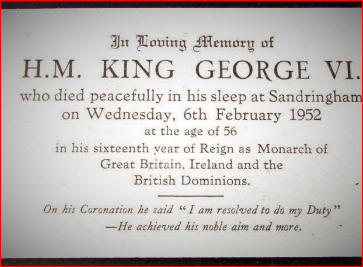
As a child in Britain in the early 1950’s I remember the death of our Monarch King George VI on 6th February 1952. I was 6 and a half.
When his death was announced on the radio, my family and grandparents immediately drew all the blinds in their houses and covered all the mirrors and clocks. Neighbours did the same. A black funeral wreath was placed on the front door, and black bands were purchased for the men, these to be worn on arms when outdoors. The family spoke in hushed tones. I clearly remember answering the door to a visitor and whispering to them “The King has died’
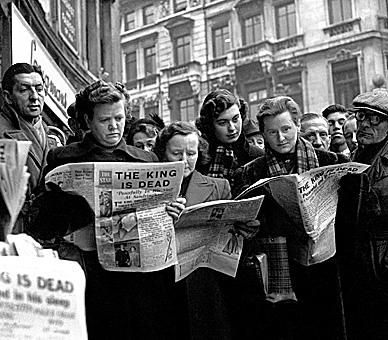
Everyone wore black and some openly cried. On the day of the funeral, everything ceased. Transportation stopped, shops closed, the streets were empty. Schools, theatres, movies were all cancelled. The radio was surrounded by family members listening avidly. Newspapers the next day, provided photos.
Citizens reading of the death of the King
During this time of the World wide COVID-19 Pandemic, death has been a constant. There have always been many visual symbols of grief in the World especially during the Middle Ages, when black attire was popular with the wealthy and symbolic of spiritual darkness. Velvet especially was very expensive.
The wealthy classes would show their status in life, through paper products. cabinet cards, calling cards and they were the status symbols for many years. The Industrial Revolution caused a rise in commercial processes, but they were still very expensive in the 1800s
King George VI Death Card
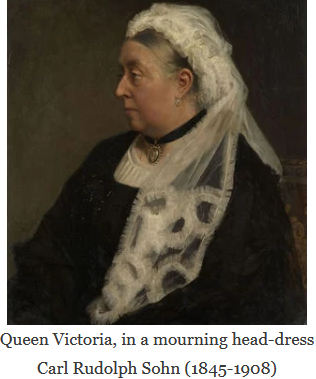
Victorian society was obsessed with death and Queen Victoria and her subjects followed the rules she set. Perhaps the most significant turning point in Queen Victoria’s life was the death of Prince Albert in December 1861. His death sent Victoria into a deep depression, and she stayed in seclusion for many years, rarely appearing in public. She mourned him by wearing black for the remaining forty years of her life. [1]
Death was a frequent visitor in Victorian Britain and planning to die well, started whilst young. Conversations about death were open and ongoing. People knew what their kin wanted for a funeral, and women made their own shrouds and some even included a funeral shroud in their wedding dowries!
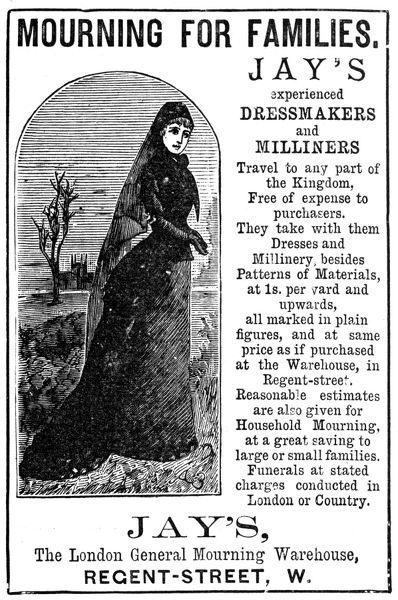
Kate Strasdin, a British fashion historian and curator said it was during this period that codes for mourning dress took hold. The modern department store was born of the brand spanking new funeral industry where, in one stop, you could acquire everything for a funeral from stationary and clothing, to mourning jewellery. [2]
An advertisement for mourning clothes for all the family from Jay’s London General Mourning Warehouse. Date: 1888
The following advert in The Illustrated London News, August 31, 1844 shows how people were tutored on how to dress;
“MOURNING—Court, Family, and Complimentary.—The Proprietors of the London General Mourning Warehouse, Nos. 247 and 249 Regent-street, beg respectfully to remind families whose bereavements compel them to adopt mourning attire, that every article (of the very best description) requisite for a complete outfit of mourning may be had at their establishment at a moment’s notice.
Widows’ and Family Mourning is always kept made up; and a note descriptive of the mourning required will ensure everything necessary for the occasion, being sent (in town or country) immediately Ladies requiring Silks—either Satins. Satin Turcs, Watered or Plain Ducapes,and Widows’ Silks, are particularly invited to a trial of the new Corpeau Silks introduced at this house, as they will be found not only more durable, but the colour will stand the test of the strongest acid,or even seawater. Black and Grey, and Fancy Mourning Silks of every description.
The Show Rooms are replete with every novelty that modern taste has introduced in mourning millinery, flowers, collars, head-dresses, bugle berthes, trimmings. &c. &c.—The London General Mourning Warehouse, Nos. 247 and 249, Regent-street, near Oxford street.—W. C. JAY, and Co.“
Over the years we have again become more open about death, and to tell our families what we want and how we want to be dispatched. The Victorians would have been shocked at how much less formal we are today with our funerals planned as a ‘celebration of life’ or focusing on protecting the environment.
Many of our customs today would certainly be shocking to someone from the Victorian era, as we are generally much less formal. The Victorians would have been aghast at a funeral that was a celebration of life. A green funeral where the focus of the burial is on protecting the environment would have been an outrage. Although we still wear mourning jewellery today it is more likely to contain the ashes of the deceased. (1)
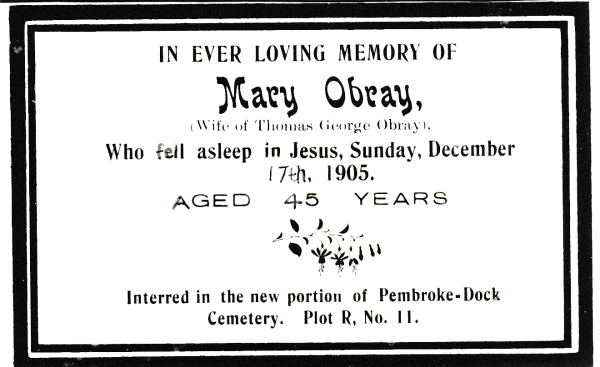
in my family, my Maternal Grandfather Percival Victor O’Bray allowed me to copy some of his families’ mourning cards. I always wanted to know the reason behind these cards why we wear black and how our mourning rituals came to be.
The research has been interesting.
My Great-Grandmother (Front View)
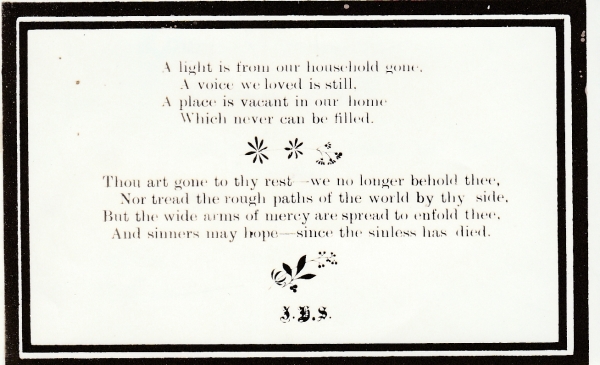
Back View of the Mourning Card
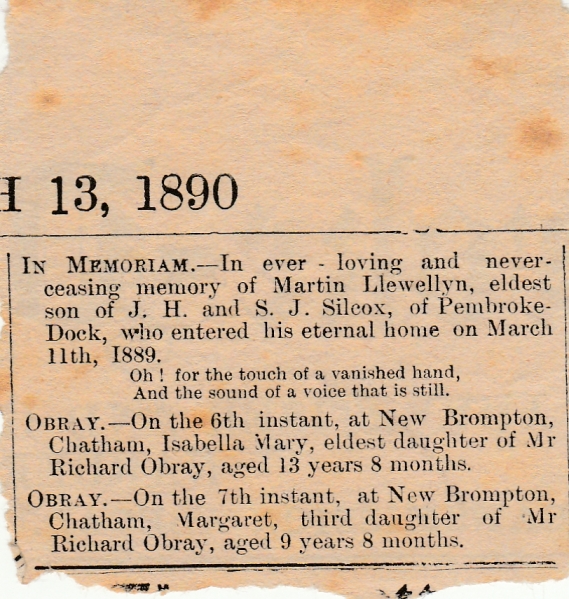
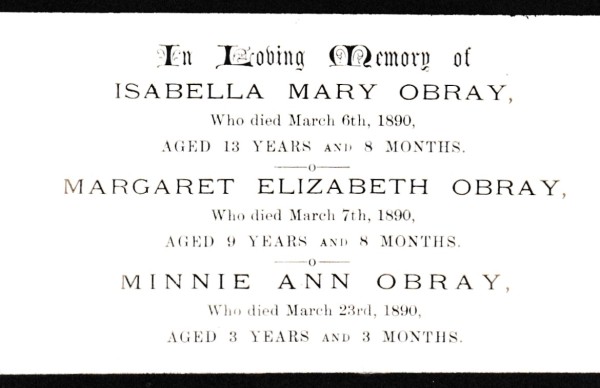
This next family history mourning card is the most heart-breaking in my collection. By the time this death notice was posted in the newspaper, 16 days later my Great-Grand Uncle’s third and youngest daughter had died too.
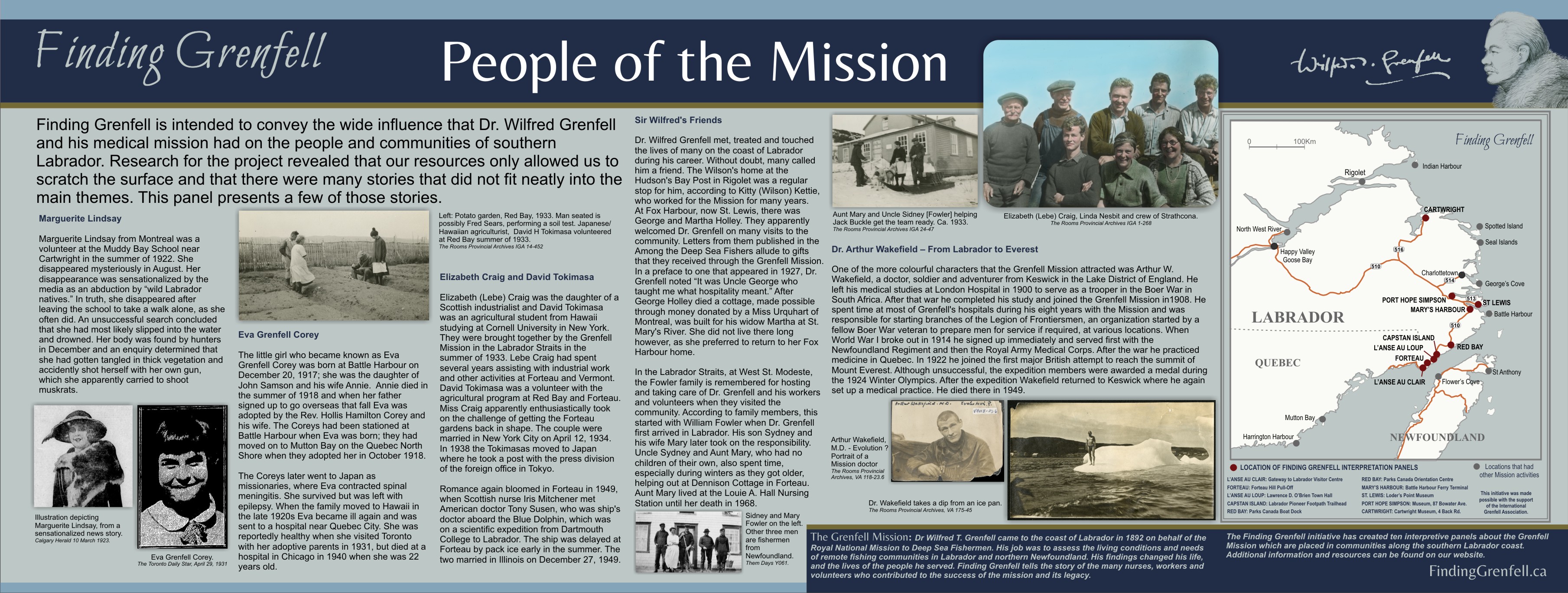
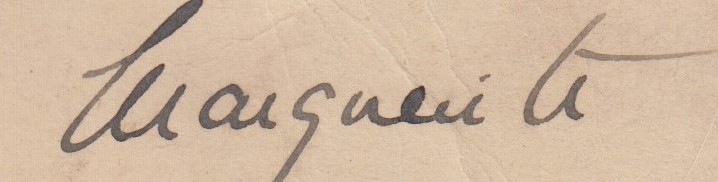
Marguerite Lindsay wrote a letter from Cartwright, Labrador, to her brother in Montreal, Quebec. The letter was postmarked July 29, 1922. Six days later she was dead.
Marguerite, 26, volunteered as a summer teacher in 1922 with the Grenfell Mission1 at Rev. Henry Gordon’s orphanage school in Muddy Bay six miles from Cartwright. She ran the recreation program for Rev. Gordon and taught the older girls sports such as swimming and introduced the game of french cricket which the boys played as well.
In her long newsy letter to her brother, she mentioned the gunfire from the previous night which announced the arrival of the “Bayeskimo2” in Cartwright. It had taken the ship just a week to come from a very hot Montreal. She wrote: “It is really cold here and foggy quite often, but very bracing, and I like it much better than heat; also when it is cold, there are no flies, and that means a great deal.” Then she described the local bug problem with a delightful sense of humour:
“We bathe in citronella. About 50 of them were getting free transportation on different portions of my anatomy … and there is a species of black fly, and their teamwork with the mosquito is extraordinary. They don’t bother to pierce your epidermis for themselves but follow exactly in the footsteps of the mosquitoes, and they hurt. I could hardly turn my head for a day, the back of my neck was so bitten.”
Perhaps that explains the white hat with a neck flap she wore in the photo of the children and staff sitting on the steps of the school. In another effort to protect herself at night, she cleverly tacked up strips of cotton gauze in the screen-less windows.
1922 – Rev. Henry Gordon’s Orphage School in Cartwright, Labrador (top row L to R: Rev. & Mrs. Gordon, three others, Annette and Marguerite)
Annette Stiles, the other summer volunteer and nutritionist for the school, became close friends with Marguerite. In her letter, Marguerite wrote: “We were bewailing our inadequacies about things we had to tackle; but Annette very truly remarked, that anything we could do was an improvement.” Between them, they cared for about 28 orphaned children3 and gratefully “the children’s enthusiasm was very contagious – a great contrast to the boredom of some in more civilized places.”4
These unfortunate children had multiple health issues as well – many of them suffering from tuberculosis and/or scurvy and berri-berri5 – mostly due to their poor diet. It appeared that the boys were much brighter than the girls and the adult ratio in the community was four men to every woman.
She continued her letter with a brief description of her daily routine: “We are teaching the children to swim; the water is not as cold as you might think…and you would be amused to see me giving the children drill, and getting them to breathe through their noses.”
The friendly duo happily shared their combined duties. “We really have been working awfully hard, but Annette is amusing to work with. We are cooking for some 30 odd people… and some of the experiments would turn your hair grey!”
Overall she adapted to the local food: “The salmon is in now, and we get over 100 a day in the net just off the point. It is very good; am also getting used to condensed milk.” She lamented the lack of ice, but mentioned that any attempts to capture young icebergs were foiled, as it proved too difficult to tow them home behind a boat without them breaking free.
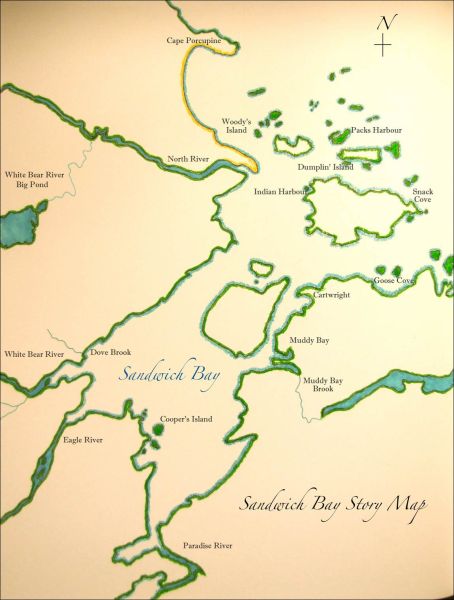
As a reward for all their hard work, Rev. Gordon gave the two volunteers the day off, to accompany a fisherman and some boys on an expedition for firewood across Sandwich Bay. It took three hours to cover the 18 treacherous miles across the stormy waters. The “fisherfolk” at the point of White Bear River welcomed them warmly upon arrival and kindly provided food and a place to stay.
White Bear River (west coast) 18 miles across Sandwich Bay to Muddy Bay (east coast)
“We had expected to sleep on the floor, so had brought rugs; but Annette and I were given a bunk in a room about the size of a dugout, which was really comfortable after we had skilfully removed a pane of glass with a knife, the window being purely for ornament. They provided us a feather bed in the bunk, warm and dry rugs, and fed us with smoked salmon and cariboo meat. It was loads of fun.”
The next morning, they walked up White Bear River for a few hours…”as pretty a place as you could find” before safely returning to Muddy Bay later the same night with ”a perfect run right into the sunset”.
A few days before Marguerite mailed her letter, she met Dr. Grenfell himself (the head of the Mission) when the year’s supplies arrived by steamer. He made such an impression on her that she wrote – “he certainly has a great personality and has accomplished more than would seem possible.” Although Rev. Gordon and the men were away Marguerite told Dr. Grenfell: “Oh we can work just as well as men. You must treat us as such.” and the two girls insisted on rolling barrels and carrying boxes with the rest of the crew.
Soon after Marguerite’s death, Dr. Grenfell wrote a letter of condolence to her mother and spoke of “…the pleasure of meeting and knowing the joyous spirit of your daughter and the full measure of energy she was so gladly giving to help others.”
On August 4, 1922, six days after mailing her last letter home, Marguerite died accidentally while on a walk in the nearby woods.
In 18th century England, schoolmasters and tutors had to belong to the Church of England. The 1662 Act of Uniformity required all clergy, dons, schoolmasters, and tutors to subscribe to a declaration of conformity to the Articles of the Church of England.1
Samuel Everell,* my four times great-grandfather was the schoolmaster in the village of Longnor, Shropshire, England. He was probably a schoolmaster all his life as I can find him in the records as schoolmaster from the time he registered the birth of his son, Charles, in 18132 until he was 57, in the 1841 census.3 All of the records indicate that Samuel and his immediate family belonged to the Church of England. While there was a community of Quakers in the village of Longnor, Samuel could not have been one of their members. Nonconformists were banned from teaching.4
Samuel, while not necessarily well educated, would have certainly been able to read and write. He was born in 1784 in the village of Condover, about four miles away from Longnor. His father, Benjamin Everall was a blacksmith.5 At that time, one had to be a member of the nobility to attend one of the two universities in England: Cambridge or Oxford. Graduates of these universities sometimes became private tutors for the children of the gentry. These tutors would live with the family and even dine with them.
Samuel probably taught in a charity school. The gentry generally believed that education should not be extended to the poor as it might upset the social order.6 They did, however, believe that the poor should read the Bible. Education for the working classes was haphazard. Sunday schools taught reading so that children could read the scriptures. They also sometimes taught writing and arithmetic. In 1800, when Samuel was 16, there were 2,000 Sunday schools in England with an enrolment of 10% of the population between 5 and 18.7 Maybe this is where he learned to read and write. It was not unusual for one of the better students to become the schoolmaster. The salary of the schoolmaster was either covered by the parents or sometimes the gentry would contribute to the cost of the running of the school, including the schoolmaster’s salary.
It is possible that Samuel’s salary was paid by the estate of Sir Richard Corbet, the 4th Baronet of Longnor. The 1831 Parliamentary Report on Charities states the following:
Sir Richard Corbet, of Longnor, in his will dated November 19, 1764, declared that the trustees of his estate ensure that the poor children of Longnor, Leebotwood, Cardington, and Fodesley and poor children of the tenants and that the trustees shall appoint and pay the master to teach the children to read and write English. There were about 14 children who were instructed in a private home by the schoolmaster. The schoolmaster was paid quarterly between 14l and 15l and included 50s for teaching Sunday School. 7
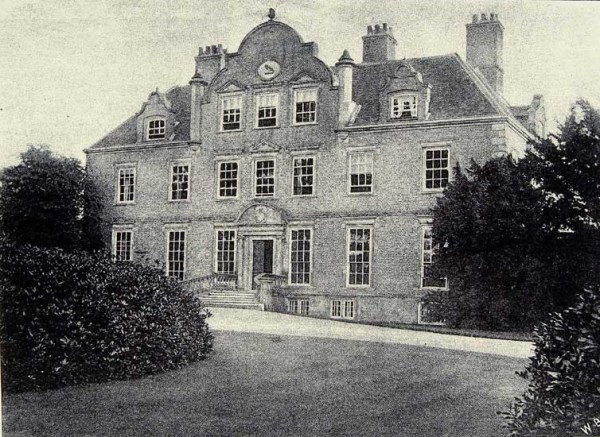
Manor of Sir Richard Corbet (1696-1774), 4th Baronet of Longnor.8
In the beginning of the 19th century, the Church of England continued to sponsor education. Samuel probably died around 1849, so he would not have seen any sweeping changes during the time he was a schoolmaster. However, the government did start to become involved in the education of the poor, voting sums of money for the construction of schools for the poor. Despite the Elementary Education Act of 1870, 2 million children out of 4.3 million children had no access to schooling at all. England saw compulsory and free primary education in the 1870s and 1880s. It wasn’t until 1918 that the Education Act (Fisher Act) made secondary education compulsory until age 14.9
*Everell can be found in the records as Everell, Everel, Everelle, Everil, Everill, and Heverell.
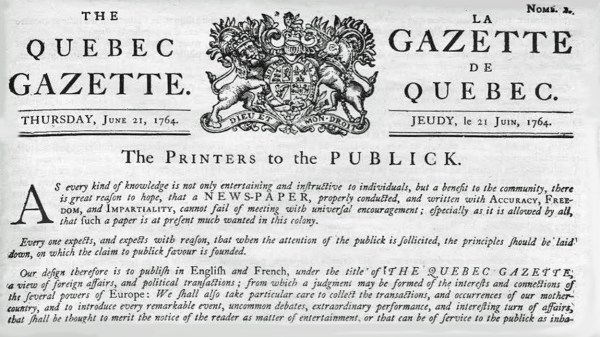
Pages 5-36 Authors who have contributed to newspapers from 1764 onward
Pages 36-40 Lists of Quebec Newspapers and BanQ Numerique
Pages 40-48 History of Newspapers
Pages 48-52 Repositories
“But along came the likes of Fleury Mesplet, Pierre du Calvet, John Neilson, James Brown, William Brown, Jocelyn Weller, Daniel Tracey, Henry-Antoine Mézière, Samuel Neilson, Ludger Duvernay, François-Xavier Garneau and many others who were the prime movers, the instigators who educated the people and also they were the ones who through their printed pages influenced the people and politicians of Lower Canada and Québec during the formative years of Confederation.”
When my great-great Aunt Helen and her husband travelled to Korea in 1899, the country was almost unknown to tourists. Helen was an intrepid traveller, but in the end, the scarcity of clean accommodations got the better of her.
At the time, Helen Frances Bagg (1861-1935) and her first husband, Albert Edward Lewis (1861-1908), were living in Shanghai, where there was a large European community and they enjoyed a busy social life. However, Shanghai was very hot in the summer and Helen read that Korea was cooler, so that June, the couple left for Korea aboard an uncomfortable Russian mail ship.
In a neatly hand-written journal penned 25 years later, Helen noted that the day after they arrived in Chemulpo (now known as Incheon), Prince Henry of Prussia also landed there. A delegation of Korean nobles had been waiting for six hours for him near the landing area, dressed in gowns of spotless white, surmounted by sleeveless blue garments and small crowned hats fastened under the chin with ribbons and strings of amber beads. The prince took no notice of this welcoming committee, but immediately mounted a pony and left for the consulate.
Helen noted that the white garments so many Koreans wore were a curse to the women of the country. Poor people only owned only one such robe, and to ensure that their clothing was clean, women often stayed up all night to do the laundry, beating the garments with wooden clubs until they were dry and glossy while their husbands slept soundly.
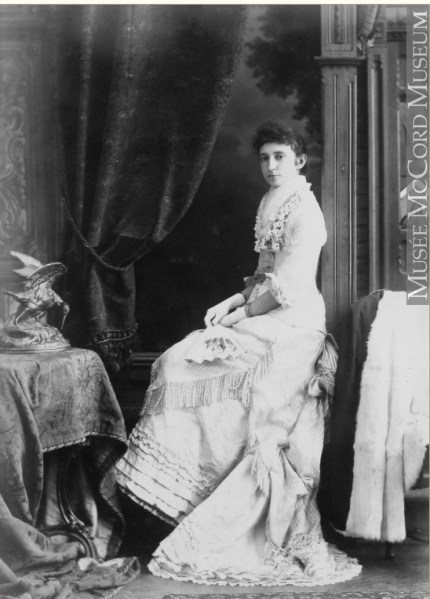
Helen Frances Bagg, Montreal, 1882
After a week in Chemulpo, Helen and Edward travelled by boat to Seoul, the capital city, along with several other foreign passengers and their interpreters. They expected to stay at the British Consulate, but the consul was away so they had to find other accommodations. By the time they settled into the house of an English missionary, it was evening, so they went straight to bed by the light of a single candle. Later, Helen awakened “with the feeling that I was being devoured alive!” In the morning, they discovered insects hiding behind the numerous Bible pictures hanging on the walls, so they went out and bought soap, scrubbing brushes and several packages of Keatings Insect Powder, guaranteed to get rid of fleas, cockroaches and flies.
Despite the discomfort of their accommodations and the unstable political situation (the empress of Korea had been assassinated four years earlier and the emperor apparently feared a similar fate), Helen and Edward found Seoul to be interesting, and they met a historian who related many local legends and took them to see the city’s palaces and other landmarks. They both took many photos with their Kodak cameras, and later sold some of their images to newspapers and magazines.
After several weeks, Helen and Edward moved to a seaside town where they hoped to find some cool breezes. They rented a Japanese bungalow near the water, but it included only what Helen described as “the barest necessities of life.” They tried sleeping on the floor, but that was so uncomfortable, they ordered bedding from Shanghai and hired a carpenter to build a bedstead.
“Our only cooking was done on a tiny Japanese hibachi, which was, however, quite sufficient for our purposes,” Helen remarked. Meat and decent vegetables were scarce, so they usually ate canned food. They hired a servant recommended by another missionary acquaintance to do the housework.
The highlight of their stay was a three-day trip to a mountain Buddhist monastery, organized by a Scottish missionary named McRae. They set out on a suffocatingly hot day with three ponies, a stout ox, two palanquins (sedan chairs) borne by six men, a Korean guide and Mr. McCrae. At the entrance of the picturesque old monastery, a group of monks in white attire greeted them, and “their 90-year-old abbot stood at the top of a long flight of steps to greet us with offerings of cake and wild honey.”
Exhausted by the long trip, the visitors were escorted to a dimly lit corner of one of the temples, and they immediately fell asleep on the smooth clay floor. Helen awoke in the middle of the night, parched and drenched in sweat. They discovered that, in an effort to be hospitable, the abbot had ordered that an extra-hot fire be lit under the clay floor! Helen, Edward and Mr. McCrae gathered their belongings and tiptoed to a cooler temple. In the dark, they thought they spotted sleeping figures on some nearby tables, but when the sun began to rise, they realized these figures were not sleeping monks but dead ones, laid out on funeral biers! Soon, a bell began to ring and a group of chanting monks carried the corpses off to their funeral.
Hot and tired, Helen and Edward got another shock when they finally arrived home at their seaside villa: the servant’s wife and two dirty children were lying on their precious bed. Helen chased them down the road, the children shrieking at the tops of their voices, and the couple burned the mattress and pillows.
They spent the following week with an unpleasant European family while they waited for a ship bound for Vladivostok. “It was without an atom of regret that we watched the shores of the ‘island of the interrupted shadow’ fade out of our sight into the distance beyond,” she wrote.
Photo credit: Notman & Sandham 11-4197.1 copyright McCord Museum
Note: The widow of a distant cousin recently found this journal among many photo albums and other family documents stashed in a locker in her condo building. She did not know what it was or who wrote it, but I did! See Janice Hamilton, “Helen Frances Bagg; A Happy Exile”, Writing Up the Ancestors, Jan. 6, 2016, http://writinguptheancestors.blogspot.com/2016/01/helen-frances-bagg-happy-exile.html
If my sisters and I have strength, persistence and a refusal to be victimized, we get it from our ancestor Marie-Madelaine Michel Gasnier DeRainville.
Over her 72-year lifetime, Marie left her family and friends three times, married twice, bore nine children, and raised eight of them to adulthood, marriage and their own children. She also lost her first husband to the Beaver Wars that lasted throughout her lifetime.
Jacques and Claire from Genealogy Ensemble also share Marie as an ancestor. If you have roots in North America, chances are, she’s one of your ancestors too.
Like many women, most of the records in which Marie appears focus on the men she accompanied. Many contain estimates about her data. The circumstances they show, however, hint at both suffering and forbearance. She never learned to write, but the strong ‘x’ she used as a signature indicates a woman who knew her worth.
My favourite resource for Marie’s life is a website created by Reverend John F. Gasnier in 2012.1 Gasnier excels at research. His detailed work provided me Marie’s parents’ names, the birth of her children and many of the dates in their lives.
I have begun to collect the original sources he used to compile this data, but so far, his work seems accurate except possibly her birth date. He estimates her birth date at 1620; another good site estimates 1619. Fichier Origine puts her birth at 1615, the date I’m using. Two of the three sites indicate that her birth took place in the village of St-Martin du Vieux Bellême, which Jacques tells me now sits within the modern-day Département de l’Orne. Both her birth town and Igé, the birthplace of her husband Louis, still exist in the now township of Bellême.
From the rest of the data, Marie’s life looks so sad. How did she live through so much suffering?
Her trauma began with the death of her first child sometime between his birth in 1639 and the family voyage from Igé, France to New France in 1644.
Two years before they left, the couple’s daughter Louise was born. By that time, Marie had reached her 27th year; her husband Louis his 30th. Perhaps her birth was the family’s chance for a new life.
It’s not clear why Marie and her husband decided to leave France, but emigration from the region started 10 years earlier, due to the recruitment by apothecary Robert Giffard and the Company of New France.
Giffard recruited many Percherons to New France until his death in 1669, except during the years when the Kirk Brothers occupied Quebec on behalf of England (1629-1631). By then, the colony of New France had 3,000 settlers, including Marie, her husband and their daughter.
In about forty years, 194 adults who had various jobs, often related to construction (mason, carpenter, brick-maker, etc), undertook the great voyage. Some returned to live and work in their native country but the great majority, despite the Iroquois threat, chose to settle on the banks of the Saint Lawrence River in order to clear and thrive the new territories. Their descendants are estimated today at 1.500.000 people in Canada and much more if we include the United States.2
When they undertook the voyage with their two-year-old daughter in July 1644, Marie was pregnant with their second daughter. Her namesake Marie became their first child born in the colony the following September.
Life couldn’t have been easy for the couple once they arrived in New France. It took them more than two years to lease a farm for their fast-growing family from the Saint-Joachim Seminary.
At that period of time, colonists to New France integrated into one of many manors set up under the seigneurial land management system brought to New France in 1627. New France then extended from the Arctic to Florida.
Under the manor system, the Compagnie de Cent Associés (Company of 100 associates) granted important people and groups, including religious ones like the Seminaire de St. Joachim, one by three league (5 by 15 km) land masses along major rivers, including the Saint Lawrence. The land was divided into 3 x 30 arpent sections perpendicular to the river so that everyone had access to boat transportation. (Note that each arpent measured 190 feet (58m).
Marie and her family rented La Ferme Saint-Charles in Cap Tourmente near the town of Saint Joachim for four years. They had two sons—Pierre and Olivier—during this period.
The family then moved back to Quebec while Marie’s husband built a new house in what is now St. Anne de Beaupré. While they waited, Marie had two more children, Louis and Anne.
Just after Anne’s birth, the family moved into a new house on a lot in the Seignerie de Beaupré (Beaupré Manor).
Part of the Beaupré Manor still exists today. Now run jointly by the l’organisme de bassins versants charlevoix-montmorency (obv-cm) and the séminaire de québec – seigneurie de beaupré, the territory covers a 20 by 95 km band north of the Saint Lawrence River. The territory spans 1,600 square kilometres west of Stoneham and east of St-Urbain in Charlevoix. Hunting, fishing and outdoors clubs share the space with loggers, Boralex and Gaz Métro/Valener.3
Back when my ancestors moved in, however, most of the action took place right next to the St. Lawrence River, where the village of Sainte Anne de Beaupré now stands. Marie’s husband Louis built a solid 22 by 20-foot home with 2-foot-thick walls on a cliff overlooking the river. There’s still a house built on the original foundations at 432 Cote Ste. Anne.
Things were good that year. Marie’s oldest daughter Louise got married and she and her husband established their home three lots away. Louis’s older brother Pierre arrived in New France from France with his pregnant wife and three sons. By 1655, he had established a property and house six lots away from his brother.
A year later, Marie gave birth to my six times great grandfather Ignace. The records indicate that Marie worried he wouldn’t live long. Jesuit Father Ragueneau rushed to the house on March 12, 1656 to baptize him. That could have been the first of three major tragedies, but he survived and married. (See my story What legacy stems from our Quebec pioneers?)
In May that same year, the second tragedy occurred. Louis’ older brother Pierre died of recurring fever.
The next three years went quickly, with all three families living in a small neighbourhood along the river. Marie’s namesake child married Andre Berthelot on January 26, 1659. Marie had her last child, son Joachim, a year later.
It would be the family’s last happy year.
In June the following year, 1660, the third tragedy occurred. Louis and seven other neighbourhood men got caught up in the politics of the era. They ended up being scapegoats in the Beaver War.
The Beaver War took place because the fur trade encouraged by British, French and Dutch colonialism pitted Algonquian and Wendat, who sided with the French, against the Haudenosaunee (called the Iroquois in Jesuit papers), who sided with the British and Dutch. Things became even worse after the British and Dutch decided to arm their First Nations allies with rifles. The French refused to supply weapons to theirs.
The weapons imbalance combined with over-hunting led to Haudenosaunee raids of the colonies. Marie’s husband became one of the victims. He probably died in Auriesville.
“Louis disappeared from the records, and it’s believed he was among a group of 8 people who were captured in a raid by some Iroquois on the morning of June 18, 1661. The settlers were forcibly taken to the tribe’s village near Lake Champlain in what is now New York. There the victims were tortured, then killed; one of them was known to have been beaten with “clubs and iron rods” before being scalped....4
Marie didn’t know for sure that her husband was dead until a notary arrived at her home a month later. At the time, she had two dairy cows, two heifers, an ox, two veal calves, nine pigs, a plow, a boat, two rifles, a pistol, an axe and household goods that included only three beds for Marie and six children.
Her son in law Claude guaranteed that she would take care of these goods for her children, her now dead husband’s heirs.
Yet still, Marie stayed strong. Five years after the tragic death of her husband, she remarried Paul DeRainville at 51 years old. Together, they raised my direct ancestor Ignace and his brothers, all of whom married and had Marie’s grandchildren.
By the time Marie died on November 12, 1687, peace still hadn’t arrived in New France. That wouldn’t occur until the Great Peace of Montreal in 1701.







 Genealogy Ensemble