Regular and Irregular Marriages in Scotland

My dad always said that my grandmother, Elspeth Orrock McHugh, was warm and generous and ready to do anything for the family. I was not surprised to find out that she hosted her sister’s wedding in her home in Dundee, Scotland on November 1, 1901.1 They would have just moved into this home2 and it would have been quite an event in her already busy life.

Elspeth had three young daughters, Anne and Elsie, aged three and two, 3 and Sarah Jane who was just 3 months old.4 Imagine hosting a wedding with three children under the age of three. Then again, the extended family would have been there to help.

Elspeth’s sister, Jemima Kinnear Orrock and Duncan McMillan Bissett had a regular marriage even though it took place in a private home. The certificate of marriage states that it was performed in accordance with the rites of the Church of Scotland and after banns were read,5 sometimes referred to as “crying the banns” or “crying the siller.”6 Banns or proclamations of marriage were read in the church three weeks in a row in case there was an impediment to the marriage.7 It is clear from the information on the marriage registration that this marriage was religious and therefore regular. This is just one of the ways that couples could legally marry in nineteenth century Scotland. In England, marriage was a religious sacrament whereas in Scotland it was a legal contract.8

Scotland’s distinctive marriage laws were based on mutual consent, rather than religious ceremony.9   Even so, the most common type of marriage took place in accordance with the rites of the Church of Scotland. The Marriage Act of 1836 also allowed priests and ministers of other churches and religious groups to perform marriage ceremonies.10 Marriages in accordance with the rites of other religions were also considered regular marriages.

Unlike England, Scotland did not allow civil marriages until an Act of Parliament in 1939.11

Interesting enough, Scotland also allowed other distinctive marriage arrangements, termed irregular marriages, that were considered legally binding and, as noted above, based on mutual consent.

A couple could simply pronounce themselves married in front of witnesses. They could also just pronounce themselves married, but it was more common to have witnesses in case they needed to prove it at some point.12

A promise of marriage, followed by a sexual relationship was also considered a binding legal marriage. Although this had to be backed up by some sort of proof, often by a written promise of marriage.13

And there was also the marriage by ‘habit and repute’ whereby the couple simply presented themselves in public as man and wife. 14

Even though the Church of Scotland frowned upon irregular marriages, it was preferable to ‘living in sin.’ Therefore these irregular marriages were tolerated. Their children were considered legitimate and were entitled to inherit property.15

Any irregular marriage could be registered if the couple presented themselves before the sheriff or magistrate. They usually had to pay a fine. Even though Scotland was tolerant of irregular marriages, they were not common in the 19th century. Most citizens preferred to be married either in church or in accordance with the rites of the church in a private home.16


  1. Scotland’s People web site, Statutory registers Marriages, marriage registration of Jemima Kinnear Orrock and Duncan McMillan Bisett, November 1, 1901, accessed July 31, 2018.
  2. The 1901 census, taken on the night of March 31/April 1, 1901 gives the family’s address as Milbank Road. The registration of Sarah Jane McHugh to Elpeth and Thomas McHugh on August 10, 1901 gives the Fleuchar Street address, the same as the address at which Jemima and Duncan were married. Therefore they would have had to have moved between March and August 1901. See references 3 and 4 below.
  3. Scotland’s People web site, 1901 Census, National Records of Scotland, entry for Thomas McHugh, accessed April 6, 2018.
  4. Scotland’s People web site, Statutory registers Births, birth of Sarah Jane McHugh, August 10, 1901, accessed December 1, 2017.
  5. Scotland’s People web site, Statutory registers Marriages, marriage registration of Jemima Kinnear Orrock and Duncan McMillan Bisett, November 1, 1901, accessed July 31, 2018.
  6. Rampant Scotland web site, Did you know? – Marriage customs in Scotland, http://www.rampantscotland.com/know/blknow_marriage.htm, accessed August 19, 2018.
  7. National Records of Scotland web site, Old Parish Registers – Marriages and Proclamation of Banns, https://www.nrscotland.gov.uk/research/guides/birth-death-and-marriage-records/old-parish-registers/marriages-and-proclamation-of-banns, accessed August 22, 2018.
  8. University of Glasgow web site, School of Social and Political Sciences, Scottish Ways of Birth and Death, Marriages, https://www.gla.ac.uk/schools/socialpolitical/research/economicsocialhistory/historymedicine/scottishwayofbirthanddeath/marriage, accessed August 20, 2018.
  9. Ibid.
  10. Ibid.
  11. Ibid.
  12. Ibid.
  13. Ibid.
  14. Ibid.
  15. Ibid.
  16. Ibid.

Uncle Paul to All

(Updated – “Be Kind” is my new motto and Uncle Paul was one of the kindest people ever!)

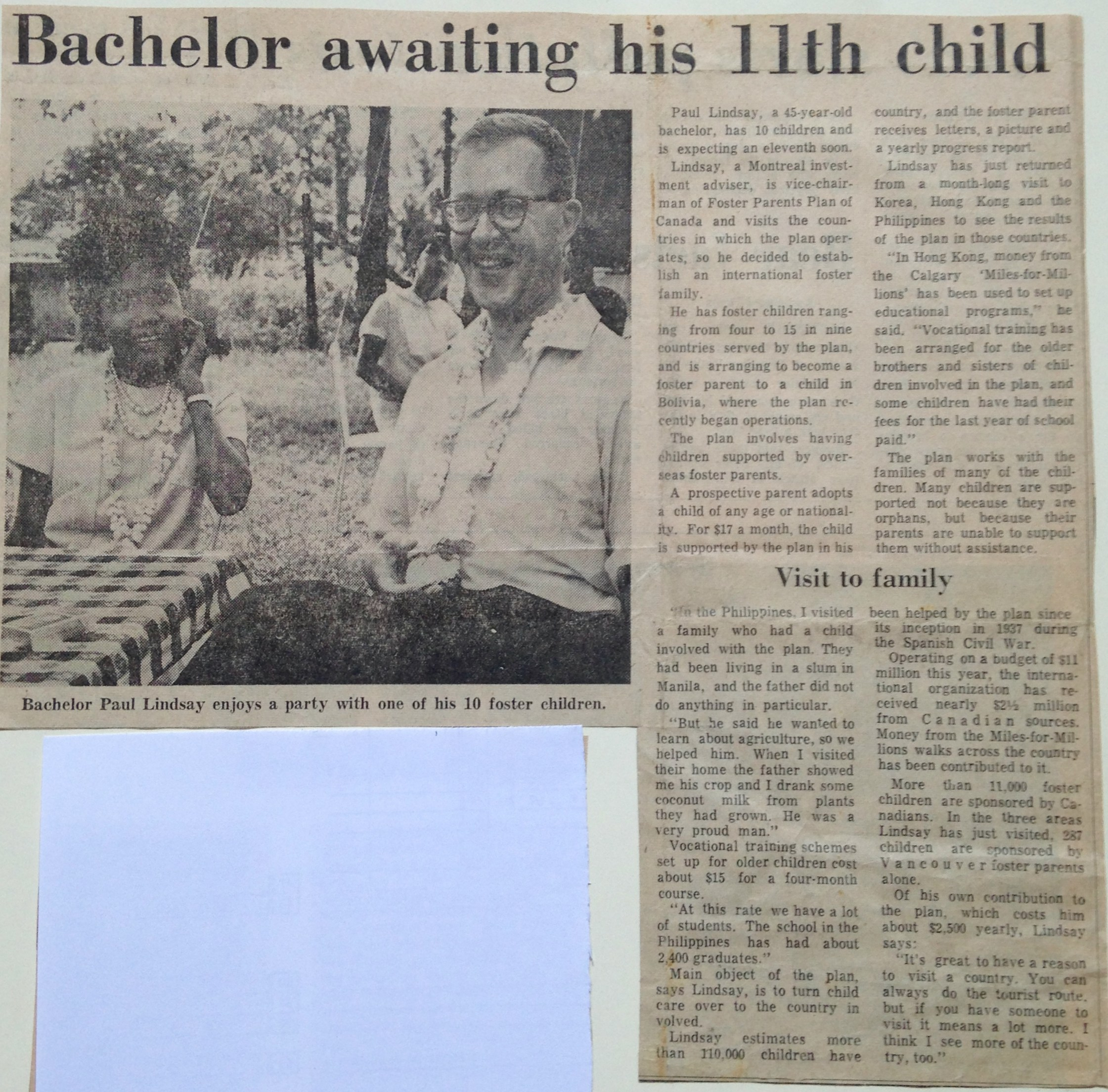
The headline read: “Bachelor awaiting his 11th child”. The 1969 newspaper article covered my Uncle Paul’s month-long trip to Korea, Hong Kong and the Philippines to visit “all his children”[1]. He sponsored his first foster child in 1961 and, eight years later, he had 11 foster children.

IMG_3028
1969 – Uncle Paul travels internationally to visit his foster children.

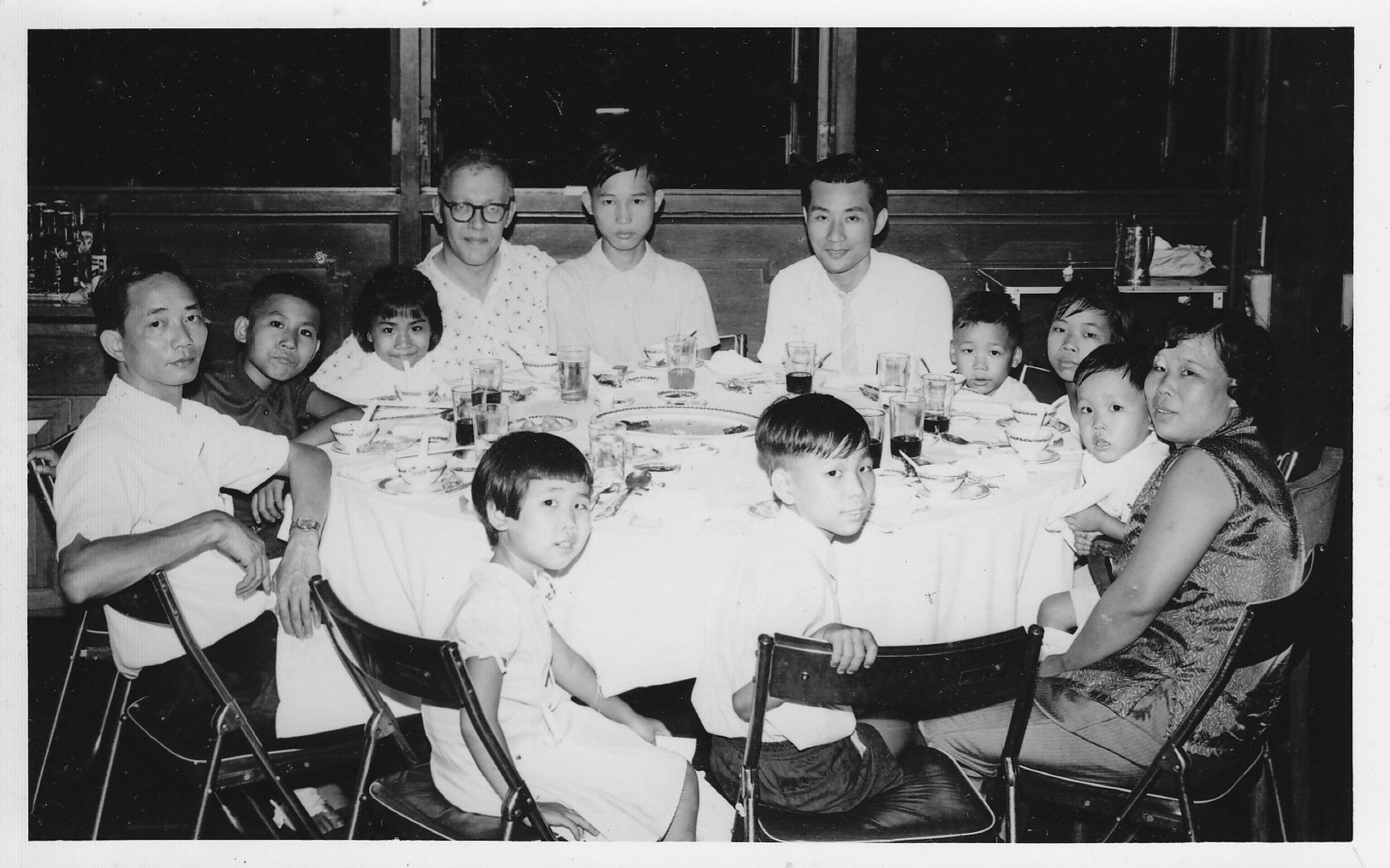
My uncle, Paul Lindsay (1923-1987), was my mother’s only brother. He was interested in how the money raised by the Foster Parents Plan[2] was spent helping children and their families in developing countries. So, in 1969, he booked the first of several trips at his own expense and visited all his foster children in person. He was greeted like a hero everywhere – sometimes with a banner across the main street reading “Welcome Uncle Paul”.

Foster Kids 1969
Uncle Paul with some of his foster children and their family.

He served for 20 years as a director of both the Canadian and international organizations of Foster Parents Plan (now known as Plan International).  His ultimate dream was to have two children, a boy and a girl, in each of the areas served by the organization.

Uncle Paul worked as a stockbroker with the Montreal brokerage firm MacDougall, MacDougall, MacTier.  Every weekday afternoon, he left work early and volunteered two hours of his time at The Montreal Children’s Hospital, playing with the kids in the orthopaedic ward. He was much appreciated and recognized as one of their principal volunteers during that time. Years later, I wrote and dedicated a children’s book to him called Bonnie – The Car with a Heart.[3] All proceeds from the sale of the book were donated to the Montreal Children’s Hospital in his memory. But not even “Bonnie” had a heart as big as Uncle Paul!

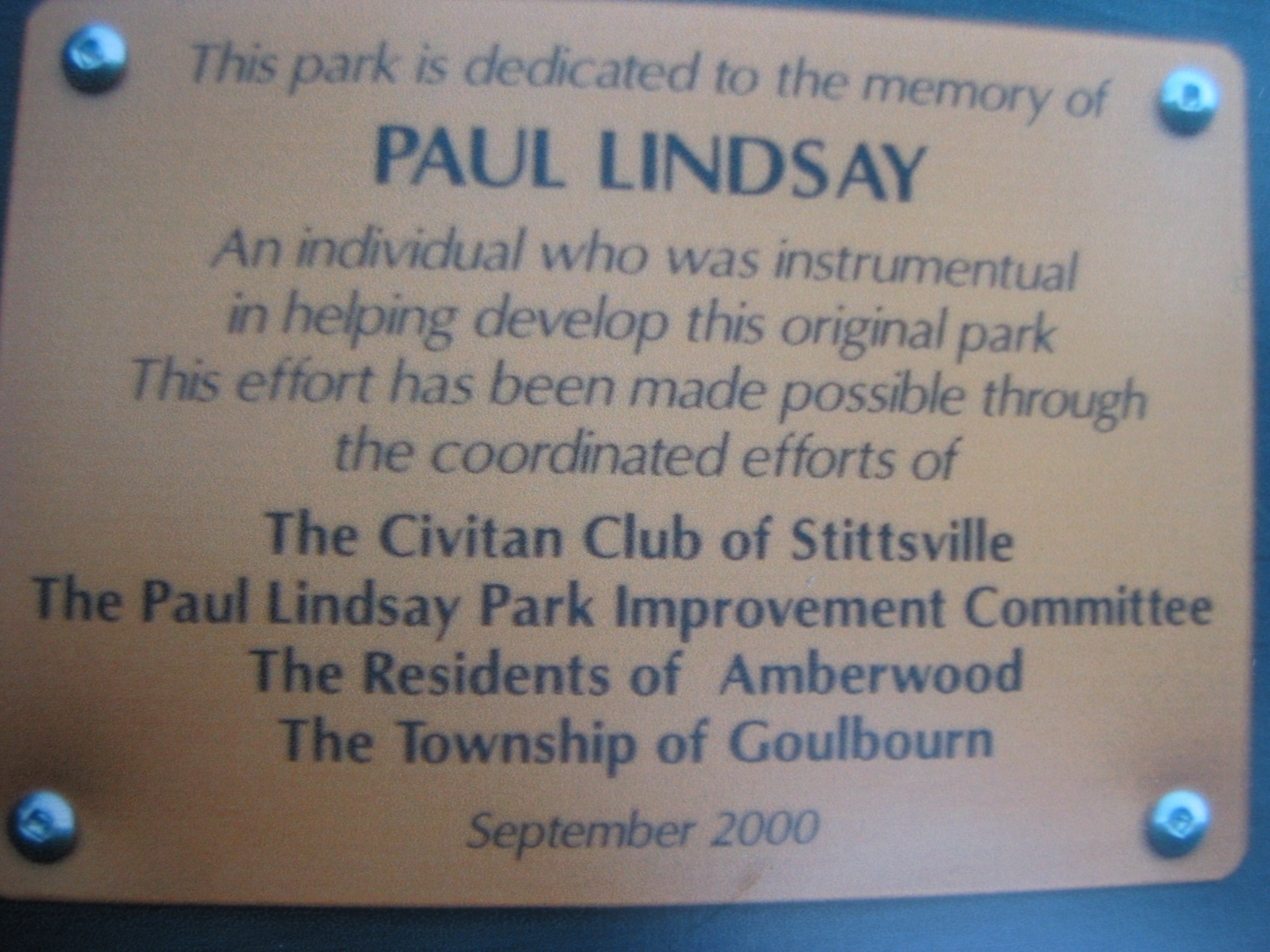
After his retirement in 1983, he moved from Montreal to Amberwood, a small community in Stittsville  just west of Ottawa. He quickly became a well-known member of his new community. One of his proudest moments was being approved as a “block parent” with their official sign posted in his window. In the year 2000, shortly after his death, the local park he helped develop for the neighborhood children was named after him.

Paul Lindsay memorial
Paul Lindsay Park Dedication
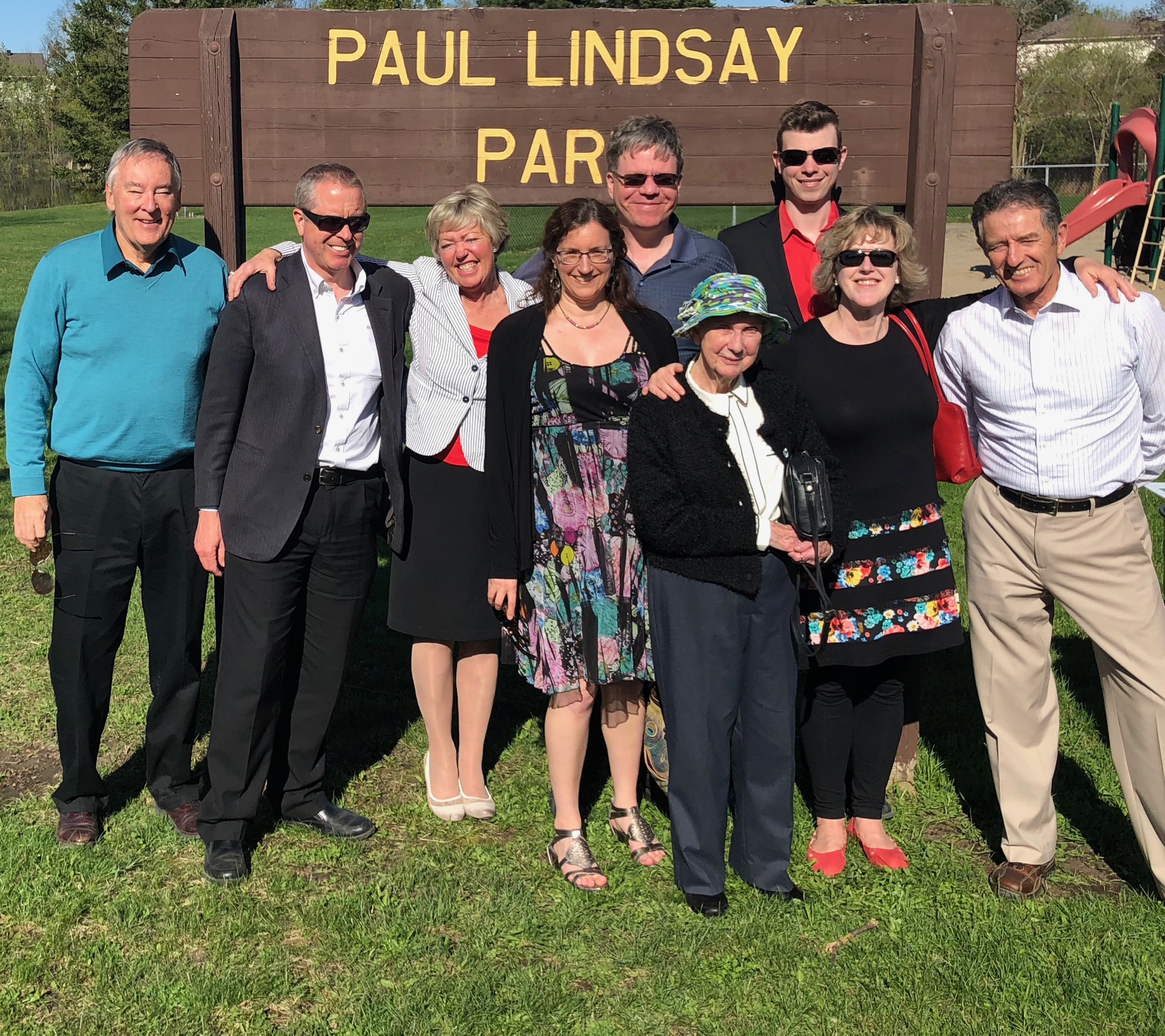
IMG_0839
Uncle Paul’s Nieces, Nephews and Family – May 2018

Another of his passions in life was music, listening to his high-end audio system as well as singing with the Montreal Elgar Choir for 30 Years[4]. When I was very little, he would cup my ear and say my pet name, “Little Lou”, in his deep baritone voice. The vibration tickled and made me shiver with delight.

Uncle Paul loved games! Perhaps it was the child in him. All kinds of games: golf, bowling, cards, Scrabble … and betting games at racetracks and casinos! He had a holiday apartment in the French Riviera (possibly purchased with his casino winnings? Who knows!) When in town, the French children would gather at the local café waiting for “Oncle Paul,” eager for the promised coin or two. I stayed there with him one night in 1974 while backpacking around Europe with a friend. The next day, he bid us “au revoir” both of us with our own bottle of French perfume as a gift.

My cousins and siblings all have fond memories of our Uncle Paul.  We never minded sharing him though; after all, he was Uncle Paul to all!

[1] The Province, Vancouver, BC – August 12, 1969

[2] https://wiki2.org/en/Plan_Canada – as referenced August 12, 2018

[3] Bonnie – The Car with a Heart, written and published by Lucy H. Anglin – September 2010

[4] https://www.thecanadianencyclopedia.ca/en/article/montreal-elgar-choirchorale-elgar-de-montreal-emc/ – as referenced August 12, 2018

Hattie’s Story


IMG_9139
Hattie, Admiral, Hollis, Norman and Jack Bailey abt. 1904.

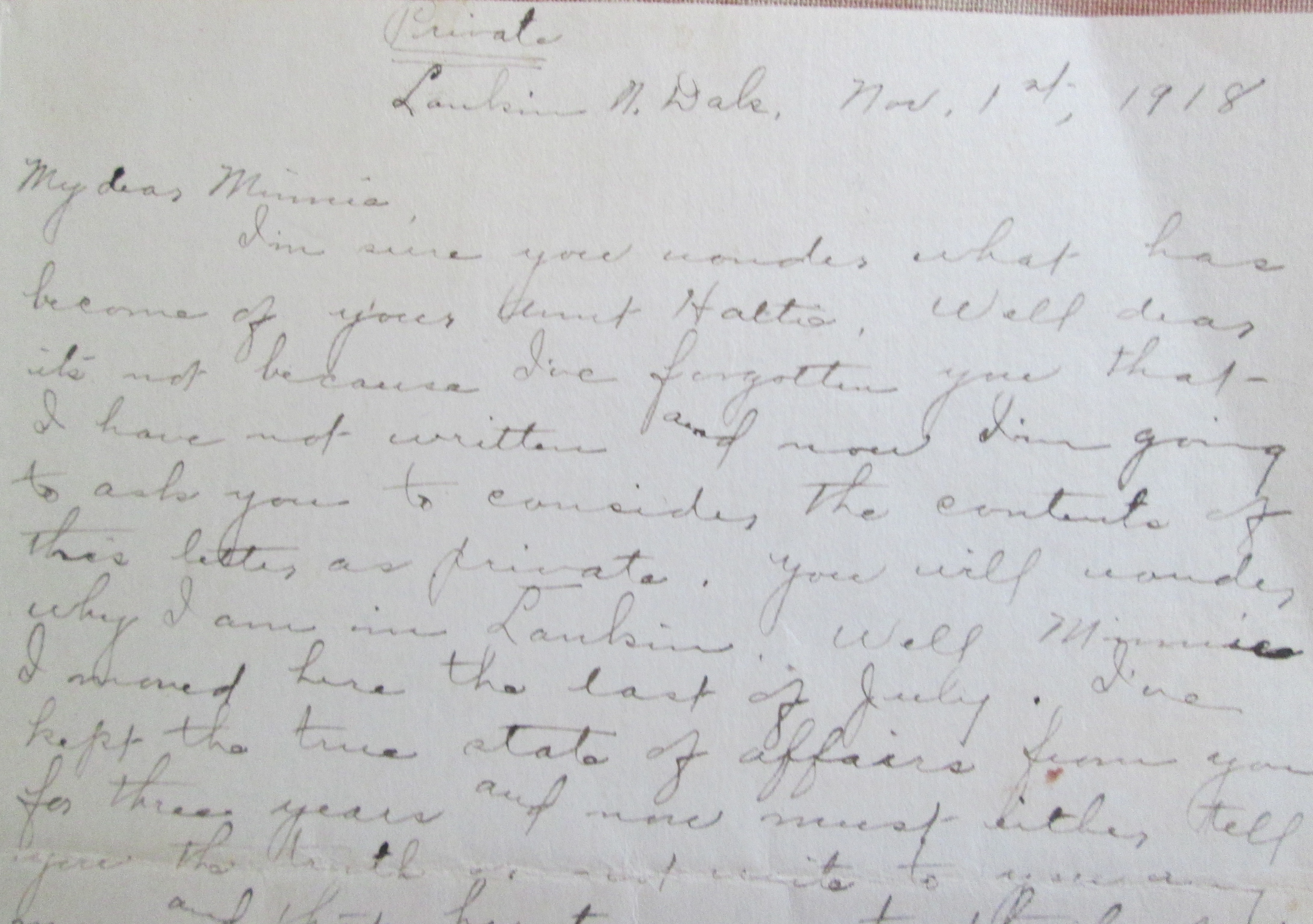
In 1918 Hattie Bailey wrote a letter to her niece, Minnie Eagle Sutherland and marked it “private”. What would you do if you found such a letter? I read it!

My dear Minnie, I am sure you wondered what has become of your Aunt Hattie. Well dear it is not because I have forgotten you that I have not written.”

I had never heard of Hattie until I found her letters. Harriet Anne Stuart was born in Canada in 1876. A few years later her family immigrated to North Dakota. There, Hattie met and married William John Bailey. Jack as he was known, was my great grandmother’s brother. He was born in Toronto and also immigrated to the United States where he began his career in the lumber industry.

IMG_9493
Hattie’s “Private” letter

Jack was a successful man. He started with a carpentry business, then operated a small sash and door factory and later opened a lumber yard in Inkster, North Dakota. He was an Inkster councilman on the 1st council and a pioneer retail lumberman in the upper Mississippi Valley. He was much older than Hattie. They had three sons, Norman, Admiral and Hollis. Jack’s business did well, they had a nice house and life was good or was it?

Jack’s sister Isabella “Bella” Bailey came for a visit. While in Inkster she was ill and bedridden for a number of weeks. The minister, Mr Richmond would often come to the house as his visits really cheered up Bella. Hattie also enjoyed the visits as he was a good listener. “Well the sad thing happened that comes into many lives, we became very fond of each other.” She and Jack had already gone through some rough times, mostly to do with Jack’s drinking. Then one day, Jack came home and overheard the minister comforting his wife. He was “wild with jealousy”. He made Hattie write down everything they had said to each other. Although she thought that was to be the end of it, he then forced the minister to leave the church without even saying goodbye to the congregation. Hattie thought she was forgiven but, “The fire of jealousy burned day and night”. “He fancied that I was immoral and accused me of dreadful things. Never during the friendliness with Mr Richmond was there ever a thought of wrongdoing”.

They continued to live together for a couple of years. Jack never gave her even a dollar and she was forced to earn money by sewing, baking and doing fancy work. Finally, her sons encouraged her to leave Jack as everyone was unhappy. “The boys said I must have the home and their father must live elsewhere.”

Then Jack became sick, he moved back home and she nursed him back to health. During that time he was “his dear old self again”, but as soon as he was well and back to his drink and old associates, life for Hattie became unbearable once more.

 It was hard to avoid Jack in a small place like Inkster so Hattie moved away to Larkin, North Dakota, near her sister Cora. In Larkin, she had a number of boarders to help make ends meet. When she left the family house her youngest son was still in school so he stayed with his father. The two older boys were away, serving in the Army and Airforce during WWI and both parents continued to have close relationships with their sons.

Through all the years Hattie continued to love Jack, they just couldn’t live together. He was on route to spend Thanksgiving with his son Norman when he had a heart attack. He was taken off the train and died in hospital. Hattie was devastated as now they would never get back together. She dreamed about them sitting on the porch in their rocking chairs. “As long as he was living I hoped that someday we would sit side by side and forget all our mistakes of the past.”

Notes:

Letter from Hattie Bailey to Minnie Sutherland from Larkin, North Dakota, November 1, 1918. In possession of the author.

Letter from Hattie Bailey to Minnie Sutherland from Walker, Minnesota December 17, 1930. In possession of the author.

Letter from Norman Bailey to Eliza Jane Bailey Eagle, Amy Eagle and Jim Bailey, Duluth, Minnesota, November 23, 1930. In possession of the author.

Harriet Anne Stuart 1874 -1947.

William John Bailey 1854 – 1930.

Stanley Anthony Savaryn, Staff Sergeant USAF

In the fall of 1945 World War II had drawn to a close. The troops were coming home, rationing was over. It was hoped that the war  was behind us. Nations from around the world gathered together to form the United Nations, their goal, to establish peace in the world, yet there was still unrest on the horizon. Before long, there was another war. This time it was in the Korean Peninsula, which even today, 70 years later has not been resolved. Treaties have not been signed by the North Koreans, the South Koreans and the United States of America, although discussions are still ongoing.
mige

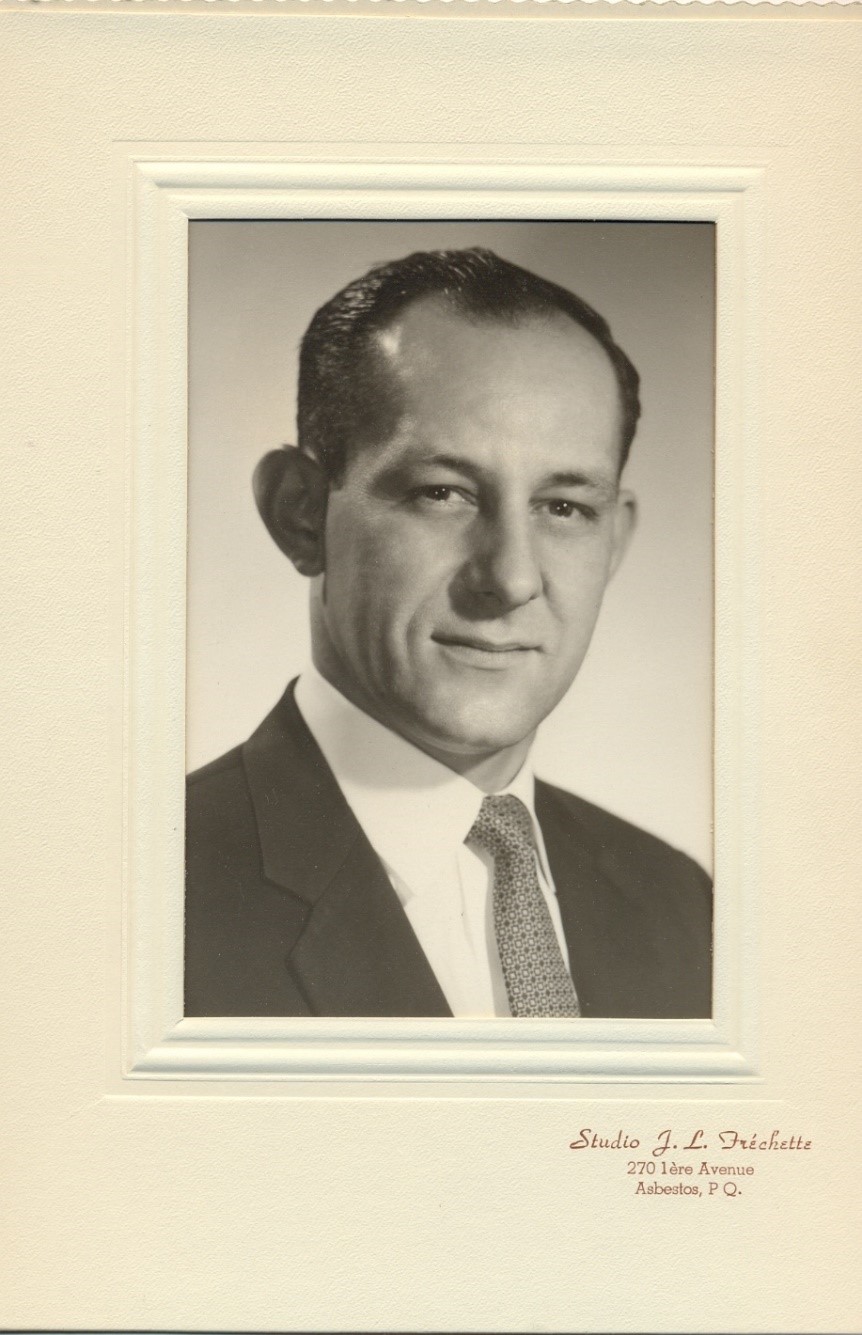
Stanley Anthony Savaryn

Stanley Anthony Savaryn was born on the 16th of August 1931 in South Bound Brook, New Jersey, the son of Stanley Savaryn Sr., a cabinet maker and Rose Luta. Shortly after completing High School, Mige, as he was known by his friends and family joined the United States Air Force. He became a mechanic and served his country for four years. (1950-1954). During this time he was an in-flight refueling operator.

The Americans had a base in Kevlafik, Iceland and most of the refueling of aircrafts was done over Greenland during the Korean War.

planes                                                   In Flight Refueling Operator

“In Flight Refueling Operator – Operates air refueling systems aboard aircraft tanker to refuel airborne aircraft: Confers with receiver aircraft pilot to direct aircraft into air refueling position, using radio. Presses buttons and switches on control panel to extend in-flight boom and connect tanker and receiver aircraft. Presses button to start refueling process. Monitors control panel light to detect equipment malfunctions. Contacts receiver aircraft pilot, using radio to inform pilot of progress being made during refueling, to advise pilot of action necessary to maintain safe refueling position, and inform pilot of steps to be taken during equipment malfunction or emergencies. Calculates in-flight weight and balance status of aircraft and notifies tanker pilot of necessary flight correction..”

 After his tour of duty in the Air Force, Mige returned home and worked as a mechanic. In the summer of 1957 he married my sister, Ruth and they settled in Martinsville, New Jersey and had two sons, Peter and Joey. Mige was a handy man. In his spare time he could be found in his workshop or in fine weather tending to his huge vegetable garden. One of Ruth’s loves was their in-ground pool. Mige kept it pristine.

Mige began working as a purchasing agent for a chemical company and although it was a long daily commute, it still gave him more time to work on projects. He always had a project on the go and if he didn’t, you can be sure Ruth would find one.

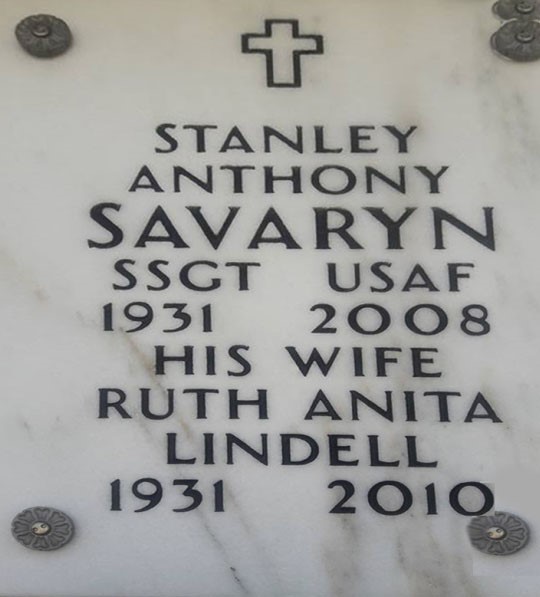
Years went by and Mige never talked about his time in the service and it was only in his later years that he would often think about his buddies who didn’t come home. He informed his sons that he wished to be buried in Arlington National Cemetery outside of Washington, DC. and that my sister, Ruth was to be buried with him.
arl cem

Arlington National Cemetery Photograph by Paul Lindell

Mige passed away in November of 2008 and Ruth followed him in February 2010. It took quite some time to plan the burial ceremony. November 1, 2012, a bright sunny autumn day, we gathered in Arlington National Cemetery to witness an emotional ceremony. There was a twenty-one gun salute, the playing of taps in the distance and the traditional folding and presentation of the flag to the oldest family member of the immediate family. In this case it was my nephew Peter, their oldest son. We then made our way to the columbarium section and placed several items within. I asked nephew Joe to place a Canadian dime with the ‘Bluenose’ in the columbarium for the couple to sail away to Paradise and in honour of Mige’s service, a Canadian Quarter with the bright red poppy in the centre was also placed beside the dime.

 colum

Photograph by Claire Lindell

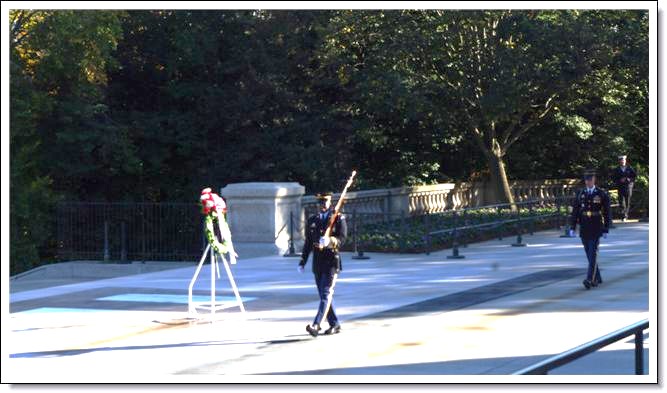
Our day was not over. We made our way to the Tomb of the Unknown Soldier and the Changing of the Guard. There, while witnessing the changing of the guard we experienced tearful moments watching, with many others, as the soldiers honoured their fallen comrades. It was a very moving tribute that is repeated continuously day in day, day out.

 unknown

Tomb of the Unknown Soldier  –  Changing of the Guard

Photograph by Claire Lindell

 Sources:

https://higginsfuneralhome.com/tribute/details/1844/Stanley-Savaryn/obituary.html 

https://www.bing.com/search?q=public+photos+of+aircraft+refueling&form=EDGSPH&mkt=en-ca&httpsmsn=1&refig=12e67f9c30554fce80eaddba38630a75&sp=-1&ghc=1&pq=undefined&sc=0-19&qs=n&sk=&cvid=12e67f9c30554fce80eaddba38630a75 

https://arlingtoncemetery.mil/Explore/Changing-of-the-Guard

https://arlingtoncemetery.mil/Portals/0/Web%20Final%20PDF%20of%20Brochure%20March%202015.pdf

The Gray Child

Undocumented. Today that word screams illegal immigrant and deportation. Yet in 1975 my five year old Montreal-born son was classified as undocumented in his birth-province and not entitled to an education in his mother-tongue.

The 1959 death of Premier Maurice Duplessis ushered in a turbulent period of political and cultural change in Quebec that ultimately led to violence and threats to secede from Canada.1 The new Liberal government of Jean Lasage promised to improve the economic and social standards of the province and to win greater respect and recognition for French Canadians.

The rights to develop many of Quebec’s natural resources – water, forests, and minerals – had been sold off by Duplessis to foreign and out-of-province companies. Management jobs in most industries were largely held by Anglophones leaving French Canadians to feel they were the “water haulers” of the province and not the masters.

In 1974 the Official Language Act, or Bill 22, 2 was passed. It made French the language of civic administration and services, and of the workplace. Only children who could demonstrate sufficient knowledge of English were exempted from receiving instruction in French. No longer could French Canadians and immigrants send their children to English schools to ensure they would eventually find good jobs.

“Testers” were sent out across the province.

In 1975 my family was living in Fermont, a small town in northern Quebec built to service the huge US Steel-owned iron ore mining enterprise at Mount Wright accessible only by rail and air. Anglophones were a minority but they did have an elementary school. Kindergarten was shared with the French school board and provided in French. High school students were bused to English schools in Labrador City 20 kilometers away.

My son Stephen was in kindergarten in 1975 and thus was required to be tested before entering English grade one. His father and I were not concerned. English was his first language. He had spoken early and by age five had a well-developed vocabulary. He was an outgoing, curious, and very chatty child and, although we were not allowed to be with him during the testing, we were confident he would be comfortable with what we were assured would simply be part of his regular school day. He expressed no concerns following the test saying only that he knew the answers to the questions.

Some months later we received the results. Our English son had failed the English test and would not be permitted to attend English school! Imagine our disbelief. What could possibility have happened? When we dug deeper with Stephen, he said he was only asked questions in French and he could answer them. What was the politics behind the French questions? And how was a five year old to know the consequences of using his newly acquired fluency in French?

We made inquiries and petitions everywhere – the Ministry of Education, the schoolboards, a legal firm. The best advice was to stay calm – the testing process was proving to be costly and unmanageable. A new system for determining eligibility for English schooling was being developed.

Meanwhile the English school board accepted Stephen as a “Gray Child”. Their term. They would receive no government funding for him and consequently he would receive no documentation from them. That would ultimately mean no high school leaving certificate, the pre-requisite for any post-secondary education. Still we took the chance. English education was our minority right and we would fight for it.

For three years Stephen was classified as a “Gray Child” saved only by the 1977 passing into Law of Bill 101, The Charter of the French Language.3 According to this new law, one parent had to have been educated in an English elementary school in Quebec. Both Stephen’s parents had.  The English school board reclassified Stephen as being legal and he and his descendants became eligible for an English education. The precious blue eligibility certificate remains in a safety deposit box to this day.


  1. http://www.thecanadianencyclopedia.ca/en/article/quiet-revolution/


  1. http://www.thecanadianencyclopedia.ca/en/article/bill-22/


  1. https://en.wikipedia.org/wiki/Charter_of_the_French_Language

Montreal Movie Mysteries

rialto

The Rialto ceiling today from Google Earth.

When I was a little girl in the 1960’s, whenever my family crossed the Cartierville Bridge in Montreal’s Ahunsic area to go to Laval, my mother would claim, “That is Uncle Louis’s bridge.”

Her much older brother, Louis, who died of a heart attack in 1965, had been a civil engineer and it is likely he worked for Dominion Bridge, the company that made that structure in the 1930’s.

The Cartierville Bridge wasn’t much to look at, so I wasn’t at all impressed.

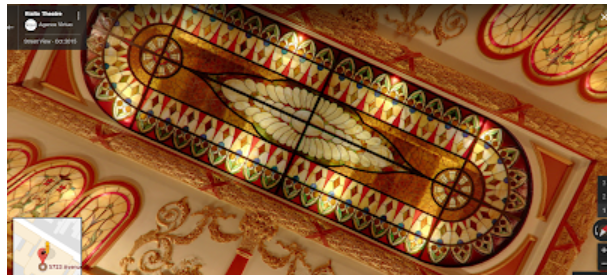
I recently learned that back in the day my mother had a much lovelier family creation to brag about. Her Uncle Isadore’s glass company, Ceramo, had manufactured the beautiful stained-glass panels on the ceiling of the Rialto Theatre, the opulent 1924 movie theatre on Park Avenue decorated to look like the Paris Opera House.1

According to reporter Dane Lanken, who wrote the definitive book on Montreal’s old cinemas, this ceiling is rare, if not unique, among the grand movie houses of the day.*2

My mother’s Mon Oncle Isadore, an Outremont-based insurance broker, was also the VP of the United Amusements Corporation, a company that distributed films for Famous Players and that built the Rialto and dozens of other lavish Montreal movie houses, so it was all very convenient.3

Mummy rarely spoke about her Uncle Isadore during her life-time and she never talked about his many interlocked businesses.

She clearly didn’t know anything about the Rialto Cinema ceiling.  She never mentioned how Isadore had welcomed the audience at the opening of the magnificent Monkland Theatre in 1930, not in-person but from up on the screen in a talkie film.*4

(How cool that must have seemed just a few years after sound technology was introduced.)

In 1930, my mother would have been only nine years old and not entitled to enter movie houses.  Children under 16 had been banned from cinemas in Quebec 2 years before, in 1927, after the infamous fatal Laurier Palace fire.5

And my mom was only 11, in December 31, 1932, when her Uncle Isadore fell to his death from his 7th floor office window at 414 Saint James Street West.

She never ever mentioned that shocking event, either: I suspect no one told her about how her Uncle Isadore died.

Isadore414StJacques

From La Patrie, online.


Lanken mentions Mon Oncle Isadore more than a few times in his beautiful book. He doesn’t discuss the manner of Isadore’s death.

However, Louis Pelletier, a Concordia scholar, does mention Isadore’s demise in his PhD thesis about the movie distribution industry in Montreal – with a sly aside.  Was it a suicide? Who knows. *6

Pelletier also says that Isodore was likely brought on as VP of United Amusements in 1921 as a ‘token’ francophone.

The 2012 thesis is brilliant, but here Pelletier (like Lanken) fails to make one key connection. Isadore’s brother was Jules Crepeau, my grandfather, Director of City Services in the 1920’s. Isadore’s appointment wasn’t token: It was tactical.

If you conduct a search of the Digital Media Database which contains many era Hollywood Trade Magazines, Jules’ name comes up more than Isadore’s.*7

Jules also died relatively young, in 1938, about a year after he had been hit by a car driven by a plain clothes policeman on Royal Avenue in NDG.*8

He had retired from his lofty post at City Hall in 1930.*9

Back in 2008, when I asked my mother if the 1937 car ‘accident’ had been a ‘hit’ *10 she replied an emphatic “No.” The policeman in question had been very upset about it, she told me. She died in 2009.

Ten years later, knowing what I now know about Isadore Crepeau and my Grandpapa Crepeau’s controversial and scandal-ridden career at Montreal City Hall,*11 I imagine that my mom’s recollection of this very contrite cop was a second-hand memory planted there, perhaps, by her older brother Louis.

Uncle Louis. Now, he’s the one I should have been able to talk to.  Had he lived, what twisting tales he might have told me.

  1.  Lanken, Dane. Montreal Movie Palaces. Great Theatres of the Golden Era 1884 – 1938.  Penumbra Press. 1993. This feature is likely why the Rialto has been deemed a National Historic Monument, and why it still stands today. Most other Montreal movie houses were destroyed or left to languish.
  2. Ibid. These United Amusement theatres included the Belmont on St.Laurent, and the Monkland on Monkland Avenue and the fabulous Art Deco Snowdon Theatre where I saw The Sound of Music in 1965 – at 11 years old. We lived on the adjacent street.
  3. Ibid.
  4. Ibid
  5. It’s a ban that stayed in place until 1962. Over 70 children were crushed to death escaping from the balcony of a Sunday showing after a small fire.
  6. Pelletier, Louis. The Fellows Who Dress the Pictures: Montreal Film Exhibitors in the Days of Vertical Integration (1912-1952). Concordia PhD Thesis, Communications Department. 2012. The Montreal Gazette, December 31, 1932. The official story is Isadore fell trying to build a device to hang a flag to signal his chauffeur. This happened after his secretary had left his office. After dark. In the depth of winter. Supposedly, Isadore’s unfinished cigar was found on the sill. The police cited unnamed sources for this report, not the secretary, not the chauffeur, not the wife.
  7. www.digitalmediahistory.org. In 1921, Jules was interviewed by Variety about the controversy over Sunday showings. In 1924, he was interviewed about risqué movie posters. In 1926, during the Coderre Commission into Police Impropriety and Malfeasance, his name is brought up in connection with the police. It is said he forced police on the beat to look the other way when movie houses broke the bylaws by letting children in unattended. The New York Times rehashed this bit in 1926 in a two-page story covering testimony during American Senate hearings into Prohibition. In 1927, Jules is mentioned in relation to the Laurier Palace Fire. Jules was the first to testify at both the initial inquest and the later Royal Commission.
  8. Family lore says his death was due to bone cancer from the X-Rays he received from a broken leg from the accident. Upon his death the Montreal Gazette reported that Jules spent 2 months in hospital for this broken leg. Seems a long time, especially for a man with a comfy home and wife and 3 grown daughters to look after him.
  9. Jules had been forced to retire by new Mayor Camillien Houde. Jules negotiated a huge pension of 8,000 dollars a year that was rescinded in 1937 with an emergency measure due to the Depression, just two weeks before he was knocked down by that policeman on Royal Avenue, a block from the United Amusement Offices on Monkland.
  10. In 2008, I asked my mother to tell me all she remembered about her childhood and my grandfather. She didn’t know much about the political intrigue but she did know that her father and brother received numerous death threats and that on occasion big shots like the Mayor or the Chief of Police visited their home on Sherbrooke Street West in secret meetings.
  11. According his obit in Le Devoir, he had a mind like a bank vault and each drawer was filled by a City Hall by-law or other fact. A Gazette article about Mayor Mederic Martin in 1937 claimed “Jules Crepeau’s hair went gray teaching aldermen their jobs.”
  12. Jules and Isadore were the sons, two of four, of Joseph Crepeau and Vitaline Forget-Depatie who, according to Jules’ marriage certificate on Drouin (1901 – Maria Roy) were from St.Louis de France, which would be Trois Rivieres. Montreal City Hall records (his file) claim Jules was born in Laval and that Joseph was a house-painter. Joseph’s paternal line can be traced back to Maurice Crespeau (curly-haired ones) of Poitou-Charentes, born 1637. Vitaline’s Forget line goes back to Abraham Martin, owner of the Plaines of Abraham, known as “L’Ecossais.” https://www.geni.com/people/Abraham-Martin-dit-l-Écossais/6000000000397138666  Jules and my mother did have very curly hair and this is perhaps due to deep Sephardic Jew and Algerian roots. My mother has some Sephardic DNA, to the tune of 4 percent. Crespeau (Crespin) is understood to be one of the Sephardic French Canadian names. https://www.jewishgen.org/Sephardic/nameorig.HTM  Jules’ wife’s Maria Roy’s MT DNA has traces of Sephardic as well and can be traced back to a Lily Rodrigue in Normandy. Rodrigue (Rodriguez).


Family Jewels

No one in our family ever had any pieces of magnificent jewellery but even the most ordinary piece has its story.

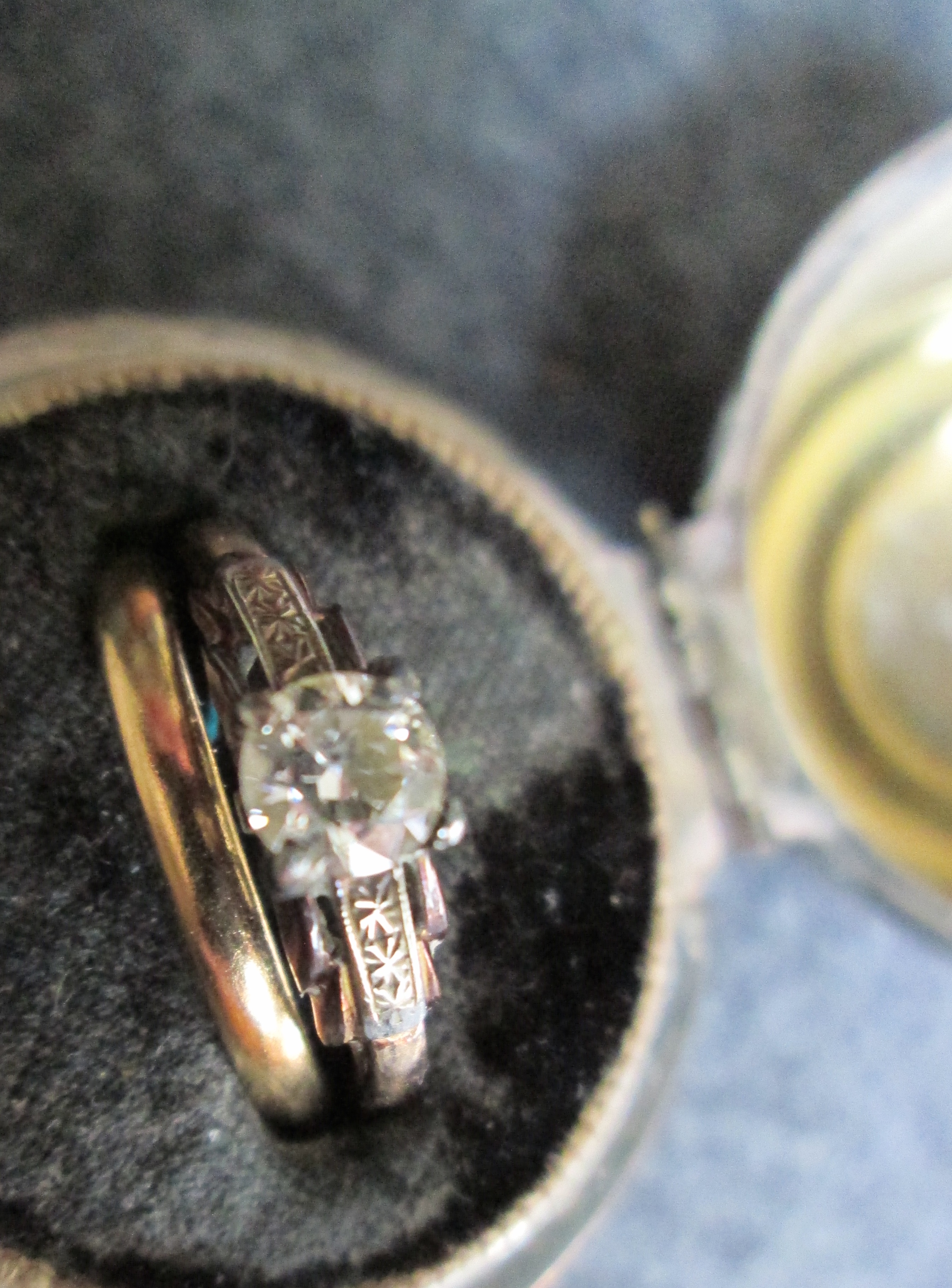
My mother always wore her wedding band and engagement ring. The diamond in the ring wasn’t big and the band was plain but they were what my father could afford in 1947. As she got older and her fingers were thinner, she kept losing them, one or other or both. Luckily, the staff at her residence kept finding them. Eventually, they encouraged me to keep them.

IMG_9380

After, when I would visit my mother, she would look at her hands and the freshly done nails and say, “You have my rings and I want them!” She thought her hands were naked without them and nobody would know she was married.

“I really want them!” she would say.” She would tell others that Mary had her rings in a Birk’s box in her bureau drawer.

I bought her costume jewellery replacements. She had stories for those too. One, a ‘diamond ring’, she said a policeman found on the street and gave it to her. That one disappeared. Another set she said was her grandmother’s and she was sad when they were thought to be lost. Even a couple of days before she died she still said to me, “I want my rings!”

When we divided up her jewellery there was a large blue glass pin in the shape of a flower. None of us remembered her wearing it or even seeing it before. I gave it to my cousin Sharon. When her brother died recently I looked for pictures of him. There was one when he was a new baby being held by his Grannie, Beatrice Raguin and she was wearing that pin. So now Sharon has something that belonged to her Grannie.

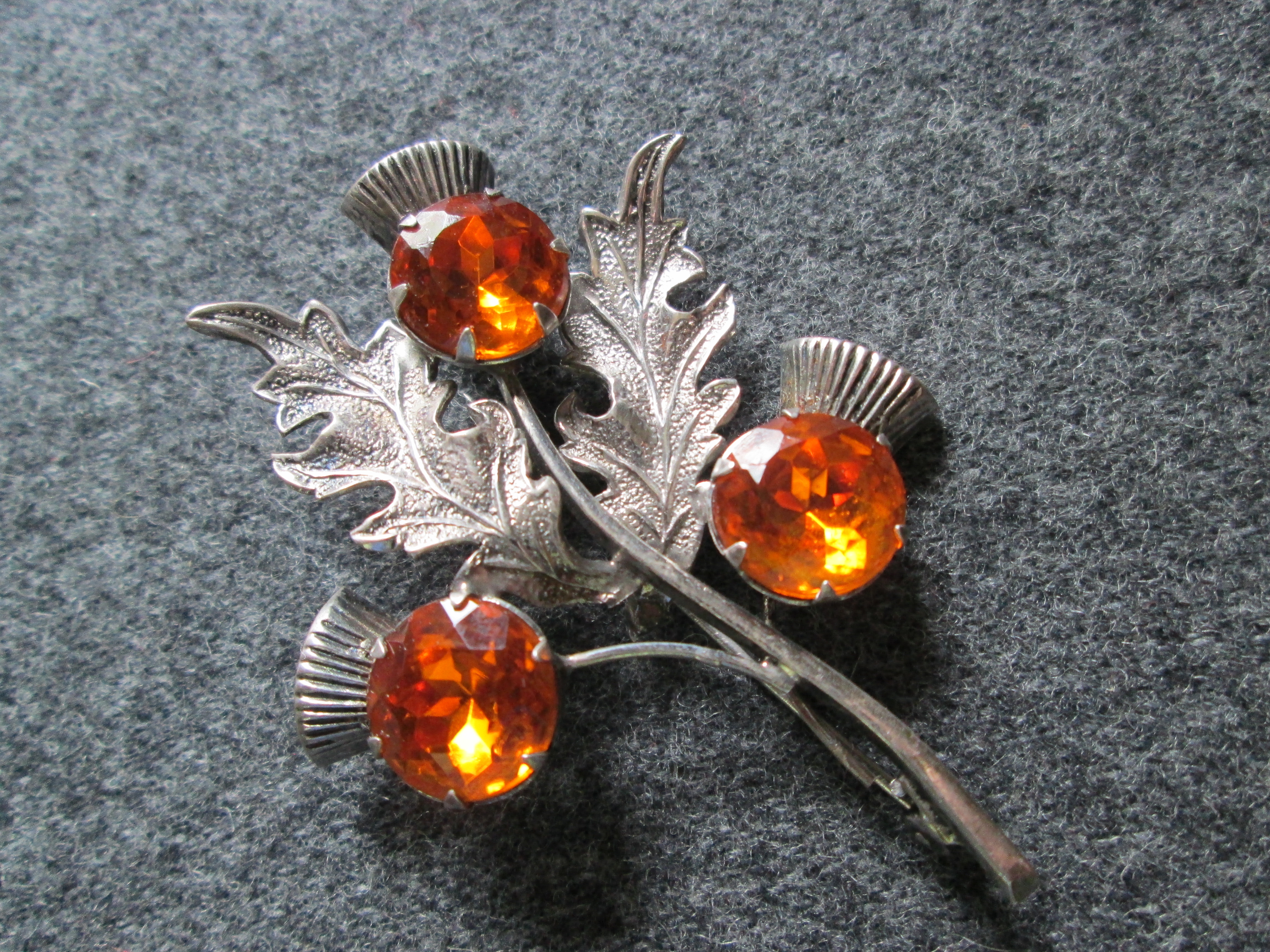
Beatrice Raguin also had a thistle pin, silver with topaz coloured stones. She belonged to a sewing group where all the other ladies were from Scotland. She was French Canadian although born in Greenbay, Wisconsin. So as to fit in, she bought the pin and told everybody she was from Aberdeen. My mother gave me that pin.

IMG_9367

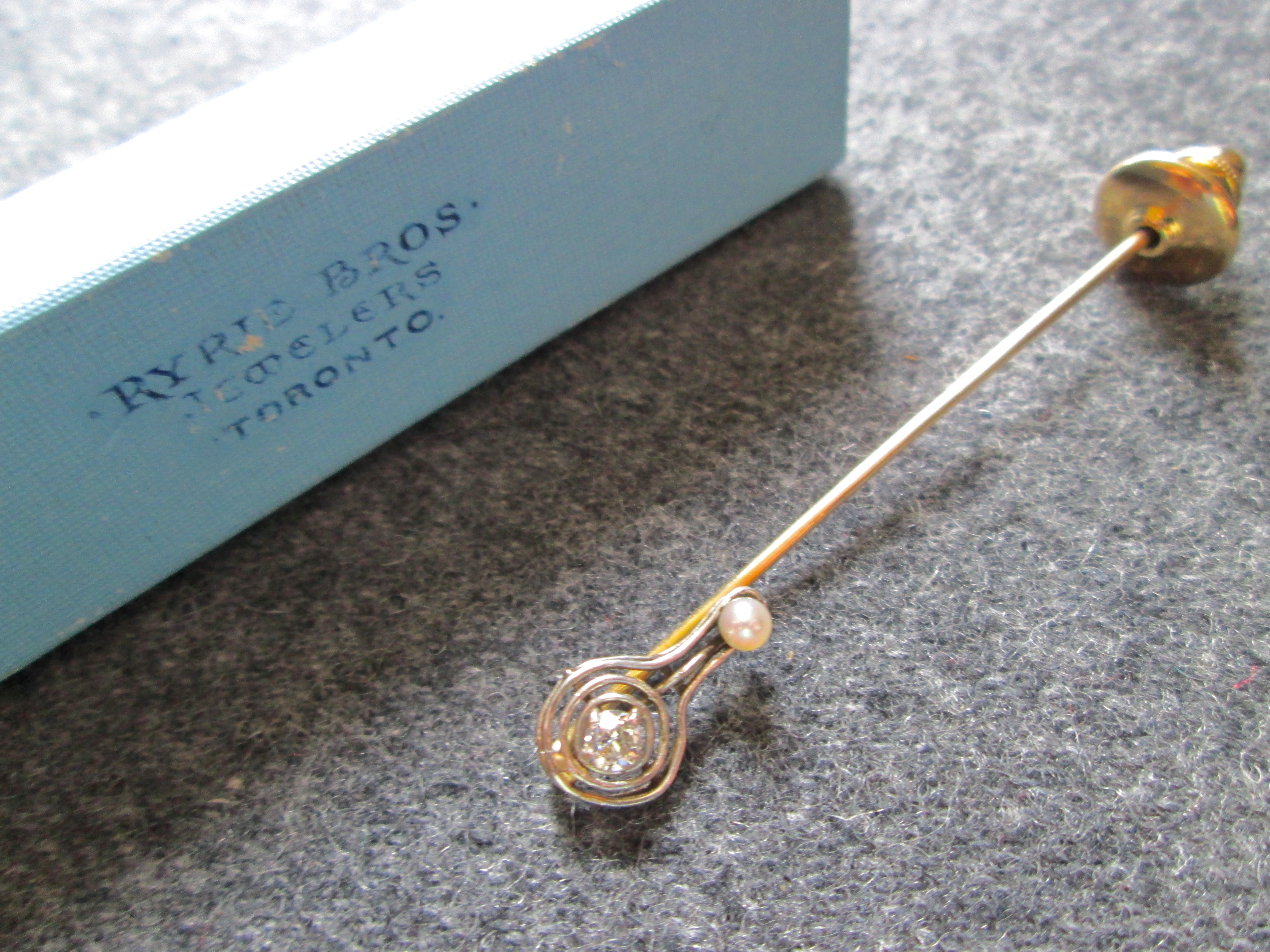
Minnie Eagle Sutherland, my other grandmother worked for Ryrie Brothers in Toronto as a jeweller. I have a stick pin that I think she made. It has a spiral of gold on the top with a tiny diamond and a pearl and now rests in a tiny rectangular box. It might have been a wedding present for her husband as she didn’t work after they were married. There is also a picture of a Union Jack made out of stones and on the back it says made by Minnie Eagle. Unfortunately, we don’t have that piece of jewellery!

IMG_9371

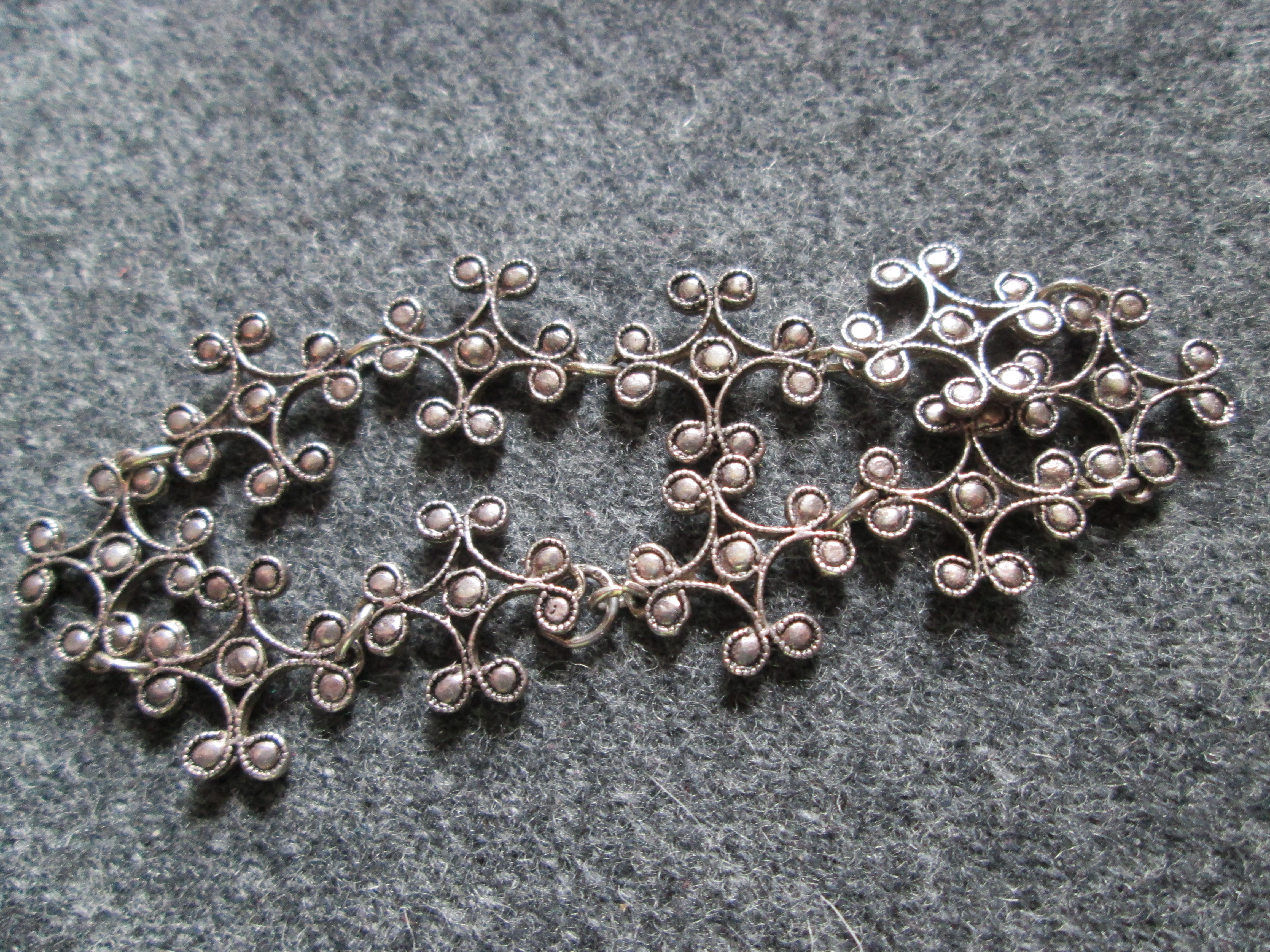
Dad did give my mother a few other pieces of jewellery. He once bought her a silver bracelet at the Tower of London on a business trip to Britain. He said the intricate metalwork reminded him of her tatting. She gave it to me because I could also tat.

IMG_9375

Mom was right. Her rings are in a Birk’s box in my bureau drawer. We haven’t yet decided how their story will continue.

The Black Out

On September 15, 1943 Police Inspector James Scales stopped my father, Edward McHugh, on the road between Easingwold and Tholthorpe. It was the middle of WWII and my father was probably in a hurry to get back to the RCAF base in Tholthorpe, Yorkshire, England. As he was part of the maintenance ground crew of RCAF Iroquois Sqaudron 431, he may have had to get up early to prepare the aircraft for an early morning sortie.

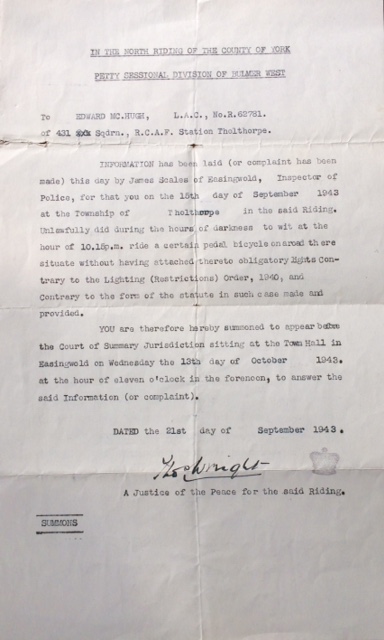
Officer Scales stopped my dad while he was riding a bicycle in the dark. He had left Easingwold, a small village about a half hour bicycle ride from the base. More specifically, it was 10:15 p.m.  I have the Summons that he received to report to the Court of Summary Jurisdiction in Easingwold.1

McHugh, Edward Summons.jpg

Dad was riding a “certain pedal bicycle” during the hours of darkness. He had unlawfully failed to attach the “obligatory lights” in conformance with the Lighting (Restrictions) Order, 1940.2

Great Britain, together with France, declared war on Nazi Germany on September 3, 1939.3 By January 1940, the Lighting (Restrictions) Order established a country-wide blackout during the hours of darkness.4 This restricted and forbade public lighting in towns. It required that street lamps be dimmed and that business and private residences black out their windows with blackout curtains so that light could not seep out. It also provided specifications for dimming the lights of motor vehicles and bicycles.5

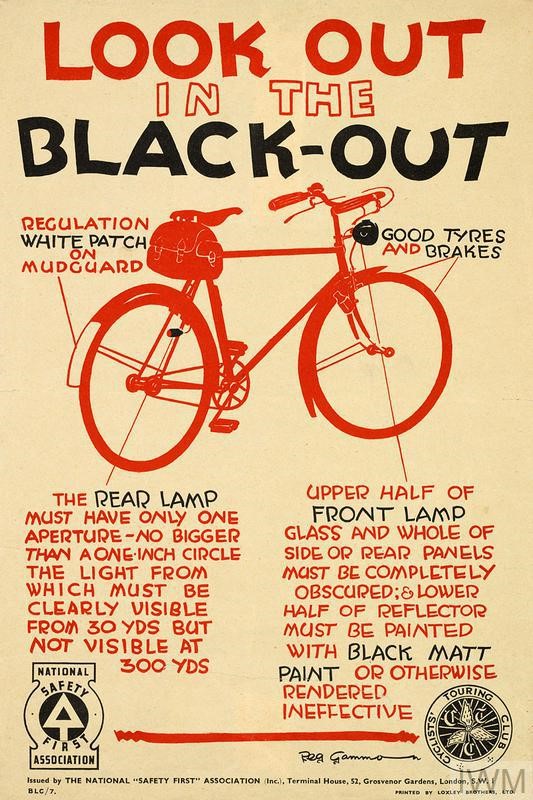
Here is a poster that gives instructions on how to outfit a bicycle so that the lights are dimmed and facing the ground.6

Look out Black Out.jpg

My father would have known that the blackout was important and all his life he scrupulously followed the law. So he was not stopped because he didn’t care about the blackout. He was stopped because he didn’t have any lights at all.7

Once Britain imposed a country wide blackout through the Lighting (Restrictions) Order, car accidents increased and pedestrian fatalities doubled.8 Citizens were discouraged from nights out at the pub and were told to carry a newspaper or a white handkerchief so that they could be seen.9 Police Inspector Scales had decided to impose the letter of the law.10

I like to imagine that my dad had cycled into Easingwold for an evening out at the pub for a pint and a game of darts. He learned to play darts during the war and he continued to enjoy the game his whole life.  Bicycles were used on the base, so I assume that he borrowed one of them.11

In any event, while he must have been frustrated at being summoned to court for failing to have a light on the bicycle, it does seem a little dangerous to be travelling on a country road with no lights during a total blackout. But surely a smaller risk than fighting in a war that lasted five years.


  1. Summons to Edward McHugh, LAC, No. R. 6278 of 431 Squadron, RCAF Station Tholthorpe dated September 21, 1943, in author’s possession.
  2. Ibid.
  3. Wikipedia web site, “Declarations of war during World War II,” https://en.wikipedia.org/wiki/Declarations_of_war_during_World_War_II, accessed April 22, 2018.
  4. Wiggam, Marc Patrick, The Blackout in Britain and Germany in World War II, Doctoral thesis, University of Exeter, March 2011, page 107.
  5. The Guardian, online edition, “Life during the blackout,” November 1, 2009, https://www.theguardian.com/lifeandstyle/2009/nov/01/blackout-britain-wartime, accessed April 22, 2018.
  6. Used with the kind permission of the Royal Society for the Prevention of Accidents. rospa.com.
  7. Summons to Edward McHugh, LAC, No. R. 6278 of 431 Squadron, RCAF Station Tholthorpe dated September 21, 1943, in author’s possession.
  8. Spartacus Educational web site, Blackout World War 2, http://spartacus-educational.com/2WWblackout.htm, accessed April 22, 2018.
  9. The Guardian, online edition, “Life during the blackout,” November 1, 2009, https://www.theguardian.com/lifeandstyle/2009/nov/01/blackout-britain-wartime, accessed April 22, 2018.
  10. Summons to Edward McHugh, LAC, No. R. 6278 of 431 Squadron, RCAF Station Tholthorpe dated September 21, 1943, in author’s possession.
  11. Joost, Mathias (Major), The unsung heroes of the Battle of Britain: The ground crew of No. 1 (RCAF) Squadron, September 11, 2017, Royal Canadian Air Force web site, http://www.rcaf-arc.forces.gc.ca/en/article-template-standard.page?doc=the-unsung-heroes-of-the-battle-of-britain-the-groundcrew-of-no-1-rcaf-squadron/idw3fd9t, accessed April 22, 2018.


The Seigneuries and Townships of Beauce, Bellechasse, Dorchester and Lotbinière

(Note, this is my last post until September. I have many more compilations ready to post then. Meanwhile, happy summer! Jacques)

The region south of the St. Lawrence River between Quebec City and the U.S. border is a tranquil area of forests and farmland. The main highway hugs the shore of the broad St. Lawrence, crossing tributaries such as the Chaudière River, and the land rises gently to the south into the Appalachian Mountains. Today, this area is known as the Chaudière-Appalaches region of Quebec.

The region has a long history of human habitation. Before the 1600s, the people of the Abenaki First Nation lived here. The French founded Quebec City in 1608 and started to grant large tracts of land called seigneuries to aristocrats and military officers. Each seigneury was long and narrow so it could border the St. Lawrence River, the only transportation corridor. Most of the early Europeans were men, including soldiers and fur traders, and the population remained small. In 1663, women arrived in the colony, chose husbands and started families. The population of New France grew quickly.

In 1759, the British defeated the French at the Battle of the Plains of Abraham, and a new era of British rule began. Chaudière-Appalaches saw many new settlers arrive from England, Scotland and Ireland, and for the most part they got along well with their French-speaking neighbours. Today, the area remains primariiy French-speaking.

This 59-page guide in PDF format is designed to help you find the records of people who lived in this region. Click on this link to access the PDF:

The_Seigneuries of Beauce Lotbiniere Dorchester and Bellechasse

Contents:

  1. 1 Information on the seigneurs who owned much of the land, including the Lotbinière and Taschereau families.
  2. 5 Descriptions and histories of the region’s seigneuries.
  3. 20 Descriptions of the area’s townships, which were established by the British and date from the 1790s and 1800s. This guide includes links to the churches and cemeteries in these townships.
  4. 27 Descriptions and history of the counties in the region, including when they were created and how they were named and settled.
  5. 30 Towns that changed names over the last 240 years. If the town where your ancestor lived had different names over the years, this will help you identify it.
  6. 44 A list of regional cemeteries in each county or municipality.
  7. 45 Notaries prepared a variety of legal documents for their clients, including land transfers, wills and business agreements. The list of notaries shows where each one worked, the years he practiced and the location of his records at the archives today.
  8. 59 Contact information for the Bibliothèque et Archives nationales du Québec in Quebec City.

My Formidable Tante Marie

I trail closely behind my petite 97-year old aunt as she pushes her walker towards the residence dining room. Her recently repaired hip doesn’t appear to bother her as she purposefully maneuvers herself to the front of the line.

Ironically, she was born with a curvature to her spine and the doctors pronounced baby Mary “delicate” informing her parents that she would not have a long life.

“Ha!” she has been known to utter on many an occasion.

Another favourite saying has become “I shall never surrender!”[1] It is stated with such passionate theatrical flair leaving no doubt that she means what she says.

Her parents, Millicent and Sydenham Lindsay, provided their first born child with numerous quiet diversions such as books, art supplies and writing materials during her childhood. She was not to tax herself physically much to the dismay of her brother and two sisters. Consequently, her artistic talents and imagination flourished and by the time she completed high school, she was ready to perform!

Mary was a talented actress and enjoyed memberships in several different theatre groups in and around Montreal during the 40’s and 50’s. She also occasionally designed store windows in connection with the theatre that drew the attention of the local paper.

“A departmental store window display, depicting characters in a scene from Kings in Nomania has aroused considerable interest and admiration to the gratification of Mary Lindsay, talented young display artist who designed the window.”[2]

In 1950, Trinity Players and The Montreal Repertoire Theatre produced the play “Jupiter in Retreat” and 30-year old Mary won the best actress award for the Western Quebec Region in the Dominion Drama Festival for her leading role. The Herald raved about her:

“Mary Lindsay Kerr, actress playing a leading role, gave a performance of confidence, sincerity and absolute conviction. This artist didn’t put a foot wrong. She played right from the beginning with ease, and she had the power of making lines appear spontaneous.” [3]

The prize was a beautiful handcrafted painted wooden bowl that she later passed on to me. It currently hangs on my kitchen wall as a proud memento from my much-loved aunt.

Mary was blessed with a true soulmate when she married Robert Black-Byrne Kerr in 1946.  Not only did he continue to look after her but he shared her love of the theatre! They were known to host house parties with themes like “Ye Gods” where guests dressed in togas as Roman Gods and probably ate and drank excessively!

Lively games of charades were played at every family gathering. Halloween was a fabulous excuse for a little play-acting! Mary would dress up as a witch and stir a giant pot of steaming “witch’s brew” in the large front window while Bob handed out treats to anyone who dared to come close enough!

In the 50’s, they moved to Vancouver for Bob’s job and Mary was welcomed enthusiastically as “a prize winning actress” into the Vancouver Theatre Guild. She also developed a reputation for radio work (Trans-Canada Matinee on CBC) and several TV and screen appearances (she was the voice of Clarence the Caterpillar on the children’s “Peppermint Prince” program).

As they didn’t have children of their own, Mary and Bob took great pleasure in doting on their nieces and nephews. When they moved back to Montreal in the late 60’s, Mary taught me how to bake a “four egg sponge cake” folding in the stiffly beaten egg whites just so. Weekly tea parties featuring just the two of us were a real treat. Sometimes she would serve “backwards dinner” starting with dessert first!

Over the years, we were often treated to hand painted watercolour cards sent to us for every special occasion. Her joie de vivre was obvious throughout her notes by the abundant use of exclamation marks. They were always lovingly signed: “Big Hugs, Tante Marie!”

(Tante Marie is presently residing in Ottawa, Ontario, where she is now doted on by her nieces and nephews.)

[1] Based on Sir Winston Churchill’s famous WWII speech.

[2] Newspaper clipping, personal collection – “Novel Store Window illustrates C.A.T. Play (Canadian Art Theatre), December, 1944.

[3] The Herald, Montreal , Friday, March 10, 1950.

Working together to help genealogists discover their ancestors