This Place We Now Call Home

The Air Canada plane starts its descent and I look down out of the window. It is a dark November afternoon and I can see nothing except a few pinpricks of light on the ground. After regularly flying around densely populated Europe, this is a shock. Where are the towns? The people? What have we come to?

It is November 17, 1978 and here we are with our two boys, seven and five, landing at Mirabel Airport near Montréal, Quebec, where my husband, John, will start a new job.

We stand in a long line and wait. First there is an interview with a customs official who tells us that we can collect our boxes of “chattels and household effects” in a few days. Then on to the Immigration Officer who asks us about Geneva, where we had been living, and England, where we were born, and then examines our papers. We then talk to a pleasant lady who gives us information on schools and local businesses, and a telephone number to apply for our SIN cards (our what?). Finally, we can collect our luggage and leave. We have been admitted to Canada!

John sets off to find our car hire and when he returns driving a huge Plymouth Volare, the kids are thrilled. Cars of this size are not often seen in Europe. As we start to drive, it seems very dark; there are few lights on the motorway – or highway – as we soon learn to call it.

Our youngest child, Owen, awake since we left Geneva, finally falls asleep in the back seat as we head downtown to our temporary home, an efficiency apartment in a downtown hotel.

The next morning when we switch on the TV, we are confronted with the horrifying story of the Jonestown Massacre¹ a religious cult leader has killed all his followers with poisoned punch. The story is revealed in great detail, and we find the television coverage quite different from the French, Italian and German media we were used to (and could hardly understand) in Switzerland. We feel quite naive.

Finally, we venture outside for breakfast, choosing Ben’s, right across the street from the hotel. The boys are thrilled to see two policeman at the counter, their backs to us, wearing guns.

In that high, carrying voice of the very young, Owen pipes up, ‘Are they real guns Mummy?’ He has never seen a policeman with a gun before. The policemen smile and wave at the children, but we feel nervous after the shocking TV news, and now policemen wearing guns?

Breakfast was, how shall I say it? Different. Bacon with pancakes and maple syrup? We give it a try. It’s not bad, but it’s a strange taste for us. Coffee is served without asking if we want it; we prefer tea. And the food portions are enormous. We stagger out, well fed.

Soon it starts to snow and the children are delighted, but by late afternoon, when it is still snowing, we are staggered. When does it stop? (FYI, in late April the following year.) We tell the hotel concierge we are going to take a walk. He eyes us and says, ‘You will need boots and winter coats. Try Eaton’s, just a block down there.’ We venture out and cannot believe how deep the snow is. I tiptoe down the street in my high heels, feet freezing.

In England, we have just one heavy coat, shoes and one pair of boots for all the seasons. In Switzerland, we only use boots for skiing, so all this new clothing is strange. We buy hats, scarves and warm gloves too, and we soon appreciate how important it is to be warmly dressed in winter!

Eventually, we move into our house and the time comes to register the boys for school. We decide to send them to a French school since they studied in French in Geneva. The elementary school principal is amazed, as we are obviously English, but in our fractured French, we insist.

Owen, who will be six years old in February of the coming year, is outraged that he is deemed ‘too young’ to start school full time. He can only attend half a day until the following September. He has been in school since he was three!

I had never learned to drive, and now I had to learn quickly if I wanted to go anywhere. So, in February, 1979, I took my first driving lesson on the frozen streets of the West Island. Slipping and sliding down the streets I go, with the sweat running down my back! I am very, very nervous. I do not even know how to work the wipers, plus, my youngest son is in the back seat – no safety belts then – since I don’t know anyone who could babysit while I have my lesson. Stress after stress for the first few years. Typical of most immigrants, I should think.

The politics too were a bit of a surprise, as it seemed everyone was fleeing down the 401 to Toronto. A few days of reading the newspapers told us why. Apparently a law called “Bill 101”² had been passed the previous August and the ‘Anglos,’ as we soon learned to call ourselves, were leaving Quebec. It appeared we had arrived in a province in turmoil.

The noises in our house were also unfamiliar. At first when we heard the furnace starting up in the basement, we were all startled, but we quickly got used to it. Another puzzler was having to buy a brush for the car and a shovel for the driveway. Why? We soon found out that if we did not copy our neighbours and clean the car of snow and shovel the drive, we simply couldn’t get out!

One night, we heard the city snow blower and trucks clearing the snow very late at night, and we all leapt out of bed to check what the noise was. It was scary; all small things, but so different from living in England and Europe.

We experienced many ups and downs as we got used to life here. Perhaps the hardest thing was to adapt to the extreme cold winter weather, and then to the hot, humid summers (yet again, we needed to buy more appropriate clothing), but despite all that, we like it here. Almost 40 years later, our sons are fully bilingual and attended college and university. I have to say that Quebec has been very good to our family as we continue to build our own little dynasty, in this place we now call ‘home.’

Notes

¹ http://history1900s.about.com/od/1970s/p/jonestown.htm

² https://en.wikipedia.org/wiki/Charter_of_the_French_LanguageThe Charter of the French Language (French: La charte de la langue française), also known as Bill 101 (Law 101 or French: Loi 101), is a law in the province of Quebec in Canada defining French, the language of the majority of the population, as the official language of Quebec.

Finding Quebec’s Early Notarial Records

Many people living across North America today had ancestors in the colony of New France or in the British colony of Quebec prior to 1800. The legal documentation of their business transactions, property transfers, wills and marriage contracts were prepared by notaries.

Notarial acts written after 1800, plus a few from the late 18th century, are available on microfilm at the Bibliothèque et Archives nationales du Québec (BAnQ) and are in the process of being digitized. You can search the BAnQ website (http://bibnum2.banq.qc.ca/bna/notaries/), while a growing number of notarial documents can be viewed on familysearch.org (https://familysearch.org/wiki/en/Quebec_Notarial_Records) and on Ancestry.ca (http://search.ancestry.ca/search/db.aspx?dbid=61062&geo_a=r&o_iid=41015&o_lid41015&_sch=Web+Property).

But most acts of notaries prior to 1800 are only available through a database called Parchemin, and you will have to visit a branch of the BAnQ or go to Library and Archives Canada (LAC) in Ottawa to consult this database.

Parchemin is a collection of hundreds of thousands of records prepared by the notaries of early Quebec, from the first French settlement of North America until December 31, 1799. During this two-century period, more than 275 notaries practised in New France and in Quebec following the British conquest. The collection of original documents takes up hundreds of meters of shelf space, and is mainly preserved at the BAnQ.

The Parchemin database was built with software designed specifically for notarial documents. It displays like a computer directory, providing access to personal data, as well as to other information regarding the nature of the transaction.

The Parchemin database was developed by Archiv-Histo with the financial support of the Chambre des notaires du Québec, the Social Sciences and Humanities Research Council of Canada, the Ministère de la Culture et des Communications du Québec, and other government programs.

You can search the Parchemin database at the LAC archives in Ottawa, Ontario, and at various BAnQ locations across Quebec (see list below). Parchemin is also available at some municipal and university libraries in Quebec which are not listed here because they are accessible to residents and students only.

Future posts will identify many of these early notaries and describe the work they did.

https://archiv-histo.com/assets/publications/2015-Notaires-liste-Chrono-Tablo.pdf

Where to access Parchemin by Archiv-Histo

Ontario

  • Bibliothèque et Archives Canada – Library Archives Canada

395, Wellington Street. Ottawa (Ontario) K1A ON4 – email:
BAC.CCG-CGC.LAC@canada.ca

Québec

Gaspé

  • BAnQ – Archives nationales du Québec

80, boulevard de Gaspé, Gaspé (Québec) G4X 1A9
1-800-363-9028 poste 6573 – emaill : archives.gaspe@banq.qc.ca

Gatineau

  • BAnQ – Archives nationales du Québec

855, boulevard de la Gappe, Gatineau (Québec) J8T 8H9
(819) 568-8798 – email : archives.gatineau@banq.qc.ca

Montréal

  • BAnQ – Archives nationales du Québec

Édifice Gilles-Hocquart
535, avenue Viger, Est, Montréal (Qc) H2L 2P3
(514) 873-1100 – email : archives.montreal@banq.qc.ca

  • Société généalogique canadienne-française

3440, Davidson, Montréal (Qc), H1W 2Z5
(514) 527-1010 – email : info@sgcf.com

Québec

  • BAnQ – Archives nationales du Québec – Pavillon Louis-Jacques-Casault – Campus de l’Université Laval – 1055, avenue du Séminaire, Québec (Québec) G1V 4N1
    (418) 643-8904 – email : archives.quebec@banq.qc.ca

Rimouski

  • BAnQ – Archives nationales du Québec

337, rue Moreault, Rimouski (Québec) G5L 1P4
(418) 727-3500 – email : archives.rimouski@banq.qc.ca

  • Société de généalogie et d’archives de Rimouski

110, rue de l’Évêché est, Rimouski (Québec) G5L 1X9
(418) 724-3242 – sghr.ca/fr/contact

Rouyn-Noranda

  • BAnQ – Archives nationales du Québec

27, rue du Terminus Ouest, Rouyn-Noranda (Québec) J9X 2P3
(819) 763-3484 – email : archives.rouyn@banq.qc.ca

Saguenay :

  • BAnQ – Archives nationales du Québec

930, rue Jacques-Cartier Est, bureau C-103, Saguenay (Québec) G7H 7K9 – (418) 698-3516 – email. archives.saguenay@banq.qc.ca

Saint-Hyacinthe :

  • Le Centre d’histoire de St-Hyacinthe

650, rue Girouard Est, St-Hyacinthe (Québec) J2S 2Y2
(450) 774-0203 – infos@chsth.com

Salaberry-de-Valleyfield

  • Société d’histoire et de généalogie de Salaberry

16, rue Saint-Lambert, Salaberry-de-Valleyfield (Québec)  J6T 1S6
(450) 763-2398 – email : shgs2011@hotmail.fr

Sept-Îles

  • BAnQ – Archives nationales du Québec

700, boulevard Laure, bureau 190, Sept-Îles (Québec) G4R 1Y1
(418) 964-8434 – email : archives.sept-iles@banq.qc.ca

Sherbrooke

  • BAnQ – Archives nationales du Québec

225, rue Frontenac, bureau 401, Sherbrooke (Québec) J1H 1K1
(819) 820-3010 – email : archives.sherbrooke@banq.qc.ca

  • Société généalogique des Cantons de l’Est

275, rue Dufferin, Sherbrooke (Québec) J1H 4M5
(819) 821-5414 – email: sgce@abacom.com

Trois-Rivières

  • BAnQ – Archives nationales du Québec

225, rue des Forges, bureau 208, Trois-Rivières (Québec) G9A 2G7
(819) 371-6015 – email : archives.trois-rivieres@banq.qc.ca


The Stobos of Lanarkshire

(This story is slightly complicated because of the similar names: generation one was Robert Stobo and his wife Elizabeth Hamilton; generation two was Elizabeth Stobo and her husband Robert Hamilton.)

p1040119
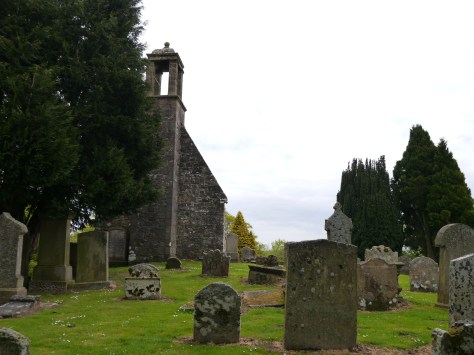
Avondale Parish Church, Strathaven, Lanarkshire. jh photo

The story of my two-times great-grandgrandparents’ move from Scotland to Canada is legendary in my branch of the Hamilton family. Robert Hamilton (1789-1875), a weaver from Lesmahagow, Lanarkshire, moved to Glasgow with his wife, Elizabeth Stobo (1790-1853), and children to earn money for the move to North America. They boarded a ship bound for New York in the spring of 1830, and reinvented themselves as farmers in Scarborough Township, Upper Canada.

In 2012, my husband and I visited Lesmahagow, about 20 miles south of Glasgow. We looked for my Hamilton ancestor’s grave in Lesmahagow parish cemetery, gazed at the sheep grazing on the rolling hillsides and breathed in the cool Scottish air. From Lesmahagow, we drove to Avondale Parish Church in nearby Strathaven, where Elizabeth Stobo was baptized in 1790, “lawful daughter of Robert in Braehead.” We also visited Stonehouse parish, where Elizabeth and Robert were married in 1816.

All I knew about Elizabeth’s background was her place of birth and her parents’ names, Robert Stobo and Elizabeth Hamilton. Recently, I delved into the Stobo family tree and came up with a few surprises, notably that Elizabeth’s father led the way to Canada when he was 60 years old, and that several of her siblings also immigrated.

Robert Stobo was probably born in Avondale parish on July 16, 1764, the son of James Stobo in Braehead. When he married Elizabeth Hamilton in 1789, the marriage proclamations were read at both Avondale Parish Church and at Dalserf Parish Church, the bride’s parish.

Robert and Elizabeth moved several times during their child-rearing years, although they did not leave a relatively small area in southern Lanarkshire. Their children’s baptismal records show they lived in Braehead in Avondale parish, Dalserf parish, and Auchren in Lesmahagow parish. According to a reference letter from their minister that they brought with them to Canada, they also lived in Stonehouse parish for about nine years before leaving Scotland.

The minister who baptized Robert’s daughter Janet in 1792 usually noted each father’s occupation in the parish register. On the page where Janet was listed were a labourer, a shoemaker, a servant and a weaver. Unfortunately, the minister did not mention Janet’s father’s occupation. Robert may have been a tenant farmer, or he may have worked in the lime kilns around Braehead. Lime was quarried in the region and burned in kilns before it could be used to improve soil for agriculture, or in mortar for building.

p1040113
Old St. Ninian’s Kirkyard, Stonehouse. jh photo

Meanwhile, the early years of the 19th century were difficult ones. The Scottish economy was experiencing a recession, the weather was poor and, if Robert was a farm labourer, wages were low.  Many families in lowlands Scotland, especially in Lanarkshire and Renfrewshire, were dependent on charity for survival. The government began offering assistance with travel costs to people who wanted to relocate to Canada. Perhaps Robert decided to take them up on the offer. The Stobo family left Lanarkshire in the spring of 1824.

The Stobos were one of the first families from Lanarkshire to arrive in Scarborough Township, settling on a piece of land near the Scarborough Bluffs overlooking Lake Ontario. Daughter Elizabeth and her family followed them to Scarborough six years later.

Robert Stobo was 60 when he started his new life in Canada, and his wife was 61. Several of their children were already adults, so some family members remained in Scotland while others left. According to “The Stobo Family: Scarborough, 1824 –“  (see note below) their children were:

Elizabeth, b. 25 June 1790; m. Robt Hamilton 15 April 1816, Stonehouse; d. 15 April, 1853, Scarborough. They had six children, the youngest of whom, James Hamilton, was my great-grandfather.

Janet b. 3 March, 1792, m. Coppy, d. 30 April 1816.  Her birth in Braehead, Avondale parish, is included on Scotland’s People, but I have not confirmed her marriage or her death.

Barbara, christened 14 March 1794, Dalserf parish; m. Borwick. The marriage information comes from The Stobo Family manuscript. Two genealogy entries on Familysearch.org say Barbara married Thomas Borwick, 22 October 1832, Scarborough Township.

James, b. 7 Feb. 1896, m. Jean Muir, Scotland. His date of birth is confirmed in Lesmahagow parish on Scotland’s People. Ancestry.ca lists James Stobo m. Jean Muir, June 1827, Culter, Lanark.

Robert, b. 3 Feb 1798, according to The Stobo Family manuscript, however, I have not found a church record of his baptism. According to The Stobo Family manuscript and a letter from William McCowan in Lesmahagow to his nephew Robert McCowan in Scarborough, dated 9 March, 1836, Robert Stobo jr. was probably lost at sea.

Helen, b. 6 February 1800, m. 1. James Stobo of Bog, m. 2. Neil McNeil. Her baptism in Lesmahagow is listed on Scotland’s People. Her marriage, 6 April 1823, to James Stobo, Stonehouse, and her marriage to Neil McNeil, 1 Sept. 1839, Stonehouse, are listed on Ancestry.ca. According to The Stobo Family, she had four sons, three whom remained in Scotland.

Margaret, b. 10 May 1805; m. Adam Carmichael. While her birth is recorded in the old parish records of Lesmahagow, I did not find a marriage record. The Stobo Family manuscript says she and Adam had several children. More research is needed.

Jean (Jane) b. 10 July 1807, Lesmahagow; m. 25 April 1834 Archibald Glendinning, Scarborough; d. 2 Sept, 1893, Scarborough. Archibald was a well-known farmer and merchant in Scarborough, and they had a large family.

John, b. 18 May 1811, Lesmahagow; m. 12 July 1836, Scarborough, Frances Chester; d. 16 May 1889, Scarborough. John was a farmer and had a large family.

See also:

From Lesmahagow to Scarborough, http://writinguptheancestors.blogspot.ca/2013/12/from-lesmahagow-to-scarborough.html, posted Dec. 13, 2013, revised Dec. 27, 2016

The Glendinnings of Westerkirk, http://writinguptheancestors.blogspot.ca/2016/12/the-glendinnings-of-westerkirk.html, posted Dec.3, 2016

The Missing Gravestone of Robert Hamilton and Janet Renwick, http://writinguptheancestors.blogspot.ca/2015/10/the-missing-gravestone-of-robert.htmlposted Oct. 28, 2015, revised Dec. 27, 2016

Notes and sources

“The Stobo Family: Scarborough, 1824 –“  is a typed family tree manuscript by Stobo descendant Margaret Oke. It can be found in the Ontario Genealogical Society collection housed at the Toronto Reference Library. Mrs. Oke said the references used were family recollections, family bibles and census records in the National Archives (now Library and Archives Canada.) This document was originally prepared by Miss Ethel Glendenning (1880-1976), who was a United Church missionary in India for many years. Miss Glendenning gave it to Miss Marjorie Paterson (1901-1980), and Mrs. Oke transcribed it in 1986. I have used this tree as a starting point, checking the names and dates it gives with other sources including the Scotland’s People website, Ancestry.ca, and Familysearch.org.

The Stobo Family says Robert senior’s date of birth was 16 July 1764. Scotland’s People lists two Robert Stobos born in Avondale in 1764: one is the above individual, son of James, and the other was born 5 October 1764, son of Robert, but both index listings lead to the same image: son of James, born in July. The Stobo Family manuscript has proved accurate in all the dates I was able to verify, so the July date is probably correct.

I have not been able to find any information on Robert’s wife Elizabeth. The name Hamilton was very common in Lanarkshire.

This article is also posted on writinguptheancestors.blogspot.ca


What Could It Possibly Be?

by Claire Lindell.

In today’s world we can walk in to a grocery store and buy fruits, vegetables and all kinds of fresh produce from every country imaginable.  Grapes from Chile, shrimp from Thailand and raspberries from Mexico, to name a few. There was a time not too long ago when our choices were limited to what was available locally and in season.

In the summer of 1948 my Mom received a phone call from the Station Master in Danville telling her that a package had arrived  and would someone be available to pick it up.  Off we went on a four mile drive to the railway station. We were presented with  a large wooden handled basket with newspaper on the top to protect whatever was inside.

What could it possibly be? We were wondering and trying guess who it came from. What was inside this huge basket? It was heavy and the newspapers had protected the contents.

It didn’t take us very long to figure out what it was, once we knew where it came from and who had sent it. You see, it was blueberry season in northern Ontario and  Granny and Aunt Ted knew how much our family enjoyed blueberries. They also knew how much we missed the opportunity to pick them. They had picked a huge basket  full of this delicious little fruit and sent them by train from Sudbury, Ontario to our home in Asbestos, Quebec. We picked up the basket at the nearest railway station.

Can you imagine how this basket of blueberries must have been treated by the employees on the train? They must have known that there were folks eager to receive the package and they handled it with great care. The basket arrived safe and sound after such a long journey and several transfers from one train to another. There would have been a transfer in Montreal, then again in Sherbrooke and the last one in Richmond. We received it in perfect condition, almost as fresh as they day they were picked.

We drove home with visions of fresh blueberries and cream and of course, Mom’s famous blueberry pie dancing though our heads. Once home, Mom began baking pies. She was allergic to flour and often wore a mask, and when she didn’t wear her mask she would sneeze incessantly for  at least a dozen times. For her, that was a small inconvenience when it came to baking pies, especially blueberry pies.

scan0020

The basket contained enough fruit for at least ten pies.  Some of the pies were placed in our huge Amana freezer, while we enjoyed several of those  freshly baked. At that time we were a family of seven, one pie really wasn’t enough, especially since they were right out of the oven!

In today’s world there are many different kinds of blueberries. There are the cultivated blueberries which are quite large that  can be purchased all year round. Wild blueberries from Lac St-Jean are very tiny and are available seasonally. Their tastes differ substantially from one to  another, however, being originally from northern Ontario you can guess  what my choice is when it comes to real blueberries with great flavour.


new_basket

Dusty Old Boxes

The latest de-cluttering guru tells us to keep only things that give you “joy”[1].  All other items should be thanked for their purpose or usefulness or memory and then given away.  At the end of this exercise all that should remain is an environment of pure joy!

We are told to start with clothes, then books, kitchen cupboards and desktops.  Then, after all that practise discerning the feeling of joy over an object, we should be ready to tackle photos and personal memorabilia.

On the top shelf of my largest storage cupboard are three dusty old boxes that have been there for years.  They were to be the last step of my de-cluttering exercise.

I slowly opened the lid of the first box and found masses of old photographs, mostly black and white, some labelled and others not.  The first handful of photos was of loving couples and families enjoying reunions at the dinner table.  Others showed groups of people standing proudly on the front step of a house. The next scoopful was of children at play sometimes happily holding pets in their arms or on their laps.  Another handful produced proud young adults in various uniforms – ready for war or to start a new career. The next bunch showed lazy days on sandy beaches, birthday parties and yearly Christmas gatherings.  Frozen moments in time captured forever, I quietly and gently put them back in their box.

The next box was filled to the brim with letters and cards. Some still neatly tucked into their envelopes, others held together with yellowing scotch tape and looking well fingered.  Most of them had handwritten messages in big loopy writing that was difficult to read.  The stamps alone told another story postmarked from places and dates from long ago.  Amongst the letters were children’s drawings, thank you notes, lists of party guests, menus and lots of much loved recipes.  But my very favourite find in this box was the love letters, written with such passion and folded lovingly into perfect little rectangles decorated with doodled hearts.

The last box contains loads of newspaper clippings mostly of all the family’s birth, death and wedding announcements from over the years.  Underneath all the newspaper, I found grandmother’s lace handkerchief and what looks like a tiny baby’s christening dress and a lock of hair.  I picked up a lone slim book and several dried flowers fall to the floor.  There are numerous small diaries, every page filled with the writing which continued up the sides of the page. Carefully folded in some tissue paper was an old dated sampler proudly stitched by a young girl two hundred years ago.  Treasure after treasure had been lovingly stored in this last box.

I quietly closed their lids and stacked the three boxes on top of each other.

Just then, it dawned on me that someone had already sorted the family memorabilia into those three separate boxes, leaving me to find three dusty old boxes of pure joy.

[1] Spark Joy by Marie Kondo


Notary Pierre Panet

Pierre Panet de Méru was an important notary in Montreal between 1754 and 1778, a period that included the years immediately after New France was conquered and transitioned into a British colony. If your ancestors lived in Montreal during this period, Panet may have drawn up wills for them, or helped them purchase property or make business agreements.

The son of Jean-Nicolas Panet and Madeleine Françoise Foucher, he was born in Paris in 1731. He moved to New France in 1746 and settled in the capital city of Quebec, where his brother Jean-Claude Panet served as a notary from 1744 to 1775. Panet married Marie-Anne Trefflé-Rottot in Quebec City on October 2, 1754, and he was appointed a notary in the jurisdiction of Montreal two months later.

Following the British victory in 1759 at the Battle of the Plains of Abraham in Quebec City and the surrender of Montreal to the British in 1760, many notaries, court clerks and other notables left New France and returned to Europe. Panet was not one of them. From the beginning of the British regime, he learned to live and work with the new authorities.

He was one of the first notaries in Montreal to work closely with the English-speaking merchants, civil servants, military officers and soldiers who now resided in the region, assisting them with marriage contracts, wills (testaments), after-death inventories, guardianships, property transactions and business agreements.

In addition to being a notary, Panet served as a judge and a justice of the peace. He died June 15, 1804. For more details of his life, see http://www.biographi.ca/en/bio/panet_pierre_5F.html

As of December, 2016, the fonds (collections) of notarial acts of Pierre Panet de Méru are not available in any online databases, nor are they on microfilm at the Bibliothèque et Archives nationales du Québec (BAnQ). These notarial acts are only available from Parchemin, a database of notarial acts of Québec owned by Archiv-Histo, a division of the Chambre des notaires du Québec.

The notarial acts acts written by Pierre Panet can be found in the Parchemin collection under Cote # 06010308 or under Saphir # 6009308 (1755-1778). See https://www.archiv-histo.com/EN/.

You can consult the Parchemin database at the BAnQ in Montreal and several other locations in Quebec, and at some public libraries elsewhere.

BAnQ Montréal – Bibliothèque et Archives nationales du Québec  535, avenue Viger Est, Montréal, QC H2L 2P3   – Tel : 514-873-1100 #4 or 1-800-363-9028 –   email : archives.montreal@banq.qc.ca

For more information on notarial records see the following links:

http://books.openedition.org/pur/4596?lang=en

http://www.fichierorigine.com/recherche?numero=243137

https://www.archiv-histo.com/assets/publications/1989-Parchemin-Methode_SITE.pdf

https://archiv-histo.com/assets/publications/2015-Notaires-liste-Chrono-Tablo.pdf

http://bibnum2.banq.qc.ca/bna/notaires/fichiers/portail/html/liste.html


Christina Sutherland Jaywalker

On a November morning in 1920, Christina Sutherland was hit by a car. She was hurrying along King Street in Toronto and stepped out from between two wagons into the path of the vehicle. The driver, Joseph Stern, couldn’t stop in time and knocked her down. Extremely upset, he picked up her unconscious body, placed her in his car and rushed her to the Toronto General Hospital.

Christina died the next day of a fractured skull and brain concussion. The circumstance of Christina’s death, written up in the Toronto Star was the most noteworthy event in her life.

Mr Stern reported the accident to the Court Street police station. He wasn’t detained after he explained what had happened. Christina’s death was the third one in six days caused by a motor car.

As late as 1910 pedestrians still had the right of the road. The streets were busy with automobiles and horse drawn wagons but people crossed where ever they pleased, with hardly a look. Toronto police began directing traffic in 1918 as yielding the right of way at intersections didn’t work any more. By 1920 Toronto had a population of 500,000 and cars were becoming more and more popular. Police now claimed that most accidents were the fault of the pedestrians and jaywalking became a word.

Little else is known about Christina. The only mention of her is in her nephew William Harkness Sutherland’s diary and that too is about her death. “ Received a special delivery letter from Wilson this morning just as we were starting out to church giving news of Aunt Christina’s death.” There weren’t any photographs of her, she isn’t mentioned in any surviving family letters and the record of her birth hasn’t been found.

She was born in Ontario around 1854, the fourth child of William Sutherland and Elizabeth Mowat. They followed the Scottish naming pattern and so she was named for William’s mother. William purchased crown land in 1855 in Carrick, Bruce County, Ontario. The land had to be cleared, a house built and crops planted, so there was always a lot of work to be done as Christina grew up. All the Sutherland children went to S.S. #9 Carrick. The school, built of hand-hewn logs by the original settlers was opened in 1859. Parents had to supply half a cord of wood for each child attending. Christina continued to live at home at least until she was seventeen.

In 1881 she was living in Toronto and working as a domestic for William Johnston, his wife Mary and their two children. He was her aunt Jessie Sutherland’s brother. Some of Christina’s brothers had also moved to Toronto at this time, but she wasn’t living with any of them.

She wasn’t found on another census until 1911 when she was a lodger at 381 King St West. This appeared to be a boarding house owned by an Alice Dawson, who lived there with her daughter and grandchildren. There were ten lodgers on the census; four women and six men. Christina was listed as an operator at a factory, working 48 hours a week with a two week holiday and all for three hundred dollars a year. She must have had an independent streak as she worked to support herself and still wasn’t living with any family members.

She never married and was reported to be 66 at the time of her death. She was still living on King Street, although at number 391. There was contact with her family as it was her brother George Sutherland who was the informant of her death and her funeral was from her sister Isabella’s house.

Christina was buried in Mount Pleasant cemetery in a plot with her parents, two young nephews and a niece. Even there she didn’t leave a mark, as her name is not on the tombstone.

img_8707
Sutherland Tombstone Mount Pleasant Cemetery, Toronto

Bibliography:

“Hit By Motor.” Toronto Star 4 Nov. 1920: n. Pg. 2 Print.

Toronto Star 6 Nov. 1920 Print.

Ontario Census, 1861,” database, FamilySearch (https://familysearch.org/ark:/61903/1:1:MQQ6-V4G : 8 November 2014), Cristenik Sutherland, Carrick, Bruce, Ontario, Canada; citing p. 4, line 18; Library and Archives Canada film number C-1010-1011, Public Archives, Toronto; FHL microfilm 349,251.

“Canada Census, 1871,” index, FamilySearch (https://familysearch.org/pal:/MM9.1.1/M4QW-JX5 : accessed 30 Mar 2014), Christena Sutherland in household of Isabella Sutherland, Carrick, South Bruce, Ontario, Canada; citing p. 28, line 8; Library and Archives Canada film number C-9935, Public Archives, Ottawa, Ontario; FHL microfilm 4396334.

“Canada Census, 1881,” index, FamilySearch (https://familysearch.org/pal:/MM9.1.1/MVFS-GNB : accessed 30 Mar 2014), Christina Sutherland in household of William Johnston, St-John’s Ward, Toronto (City), Ontario, Canada; citing p. 51; Library and Archives Canada film number C-13246, Public Archives, Ottawa, Ontario; FHL microfilm 1375882.

Canada Census 1911 Ontario, Toronto South, 38, Ward 4, page 16 Archives Canada.

Ontario Deaths, 1869-1937 and Overseas Deaths, 1939-1947, database with images, FamilySearch (https://familysearch.org/ark:/61903/1:1:JDT9-6H8 : 11 December 2014), Christina Sutherland, 05 Nov 1920; citing Toronto, York, Ontario, yr 1920 cn 8083, Archives of Ontario, Toronto; FHL microfilm 1,863,282.

Historical Walks through Carrick and Mildmay. Owen Sound, Ont.: Mildmay-Carrick Historical Society, 1989. 48-51. Print.

Plummer, Kevin. “Historicist: Those Vicious Devilish Machines.” N.p., 17 Jan. 2009. Web. 28 Feb. 2016.

Sutherland, William Harkness. Diary from January 1920 to December 1924. In possession of the author.

The story of Christina’s mother Elizabeth Mowat can be found at https://wordpress.com/post/genealogyensemble.com/3293

Finding British Regiments in Quebec, 1759-1760

The 1759 Battle of the Plains of Abraham, in which General Wolfe’s British invasion force defeated General Montcalm’s defending army, is the most famous battle in Canadian history. After the British also conquered Montreal the following year, New France became history and a new British colony in Canada was born.

Thousands of people took part in these events. British historians say that the fleet that sailed up the St. Lawrence River in the spring of 1759 carried between 10,000 and 12,500 British sailors and soldiers, while the book Combattre pour la France en Amérique lists 7,450 French soldiers.

Finding out whether your ancestor fought in this campaign is not easy, but the PDF attached below, Finding British Regiments in Quebec, 1759-1760, may help you make a start. This compilation lists the British regiments that fought at Quebec City and Montreal, and it identifies the places British regiments were posted during the 1759-1760 campaign.

The Canadian government website of The National Battlefields Commission www.ccbn-nbc.gc.ca/en/ describes the historical context of the Seven Years War (also known as the French and Indian War), while the searchable page www.ccbn-nbc.gc.ca/en/history-heritage/battles-1759-1760/soldiers/ lists the names of 7,279 British soldiers and 4,079 French soldiers who took part.

Marcel Fournier and a staff of about 30 researchers in Montreal and France identified 7,450 soldiers and officers who fought for France in New France, plus the names of another 1374 soldiers. These findings were published in Combattre pour la France en Amérique by La Société généalogique canadienne-française, Montreal, 2009 (in French only).

If you are interested in the soldiers who fought in British regiments, you should consult the two-volume In Search of the “Forlorn Hope”: a Comprehensive Guide to Locating British Regiments & Their Records (1640-WWI) by John M. Kitzmiller II, published in Salt Lake City by Manuscript Publishing Foundation, 1988. You will probably find it in a large library. This book is the source of the information complied here.

These two volumes, plus a supplement, tell you which regiment was posted where from 1640 to 1914. The book does this in reverse: you need to look up the name of a place or campaign and the book identifies the regiments stationed there. The supplement can also help you with genealogical research you might want to conduct in British War Office Records. Once you find your ancestor’s name, you may need to visit the Public Record Office, Kew, near London.

Another book, My Ancestor was in the British Army, by Michael Watts and Christopher Watts, published by the Society of Genealogists in the U.K. in 2009, lists dozens of other archives in England, Wales and Scotland in which military records are kept, including the soldiers and mariners who fought during the Seven Years War in North America. You can also try searching military records on the subscription website Find My Past, www.findmypast.com.

finding-british-regiments-in-quebec-1759-1760


An Ingenue, a Diary and the Goddess of Love

.elizabethfair

Young Elizabeth Hardy Fair of Virginia. Daughter of Elizabeth Hardy, who was  sister to Mary ‘Pinky’ Hardy, United States General Douglas MacArthur’s mother.

As a schoolgirl back in the 1960’s before Expo 67 opened in Montreal, the only works of art I would have recognized were the Mona Lisa and the Venus de Milo.  I would have seen them, you see, on TV caricatured in advertisements for toothpaste or gloves, or on sophisticated Saturday morning cartoons like the Bugs Bunny Show.

Today, when I think of the Venus de Milo, I think of my husband’s Great Aunt  Elizabeth.

In 1910 Elizabeth Hardy Fair,a single society girl from Warrenton, Virginia, USA, was visiting the Continent for the first time. She was in her mid twenties.

The aging ingénue kept a written record in diary form and I have  it.  This European diary reveals that she started her trip in London (hated it, too gloomy) and then went on to Paris,  (loved it, so pretty).

Sorry to say, that’s about as deep as she gets.

Still, Elizabeth penned this one rather intriguing phrase from a visit to the Louvre:  “Saw Gaylord Clarke coming out of the Venus de Milo Room. Second time we have met since abroad.”

Now, if this were a scene from an E.M. Forster novel, and Miss Elizabeth Fair were a luminous young woman of head-strong character, this  ‘chance meeting’ at the Louvre would have been, no doubt, a significant turning point in the trajectory of  Miss Elizabeth’s life.

Just think of it.  In 1910, women such as Elizabeth covered themselves, neck to toes,  in starchy shirtwaists and princess skirts.

Now  contemplate  the Venus de Milo with her sumptuous drapery dipping below the upper curve of her perfect buttocks, and  then figure what it must have felt to be  a young man coming out of the Venus de Milo room  in that era–before the age of California beach volleyball. And then imagine what an opportune moment it was for the very eligible Miss Elizabeth Hardy Fair of Warrenton, Virginia.

As it is, this Mr. Clarke left for England the next day. End of their story.

Elizabeth soon returned to Warrenton, still very much single. Soon she would travel to Montreal (to visit cousins of her father) and find a husband in the form of one Fred Tofield,  banker.

She would live out her life in the posh Linton apartments on Sherbrooke Street West in ‘uptown’ Montreal, impressing her great nephews and nieces at every Sunday dinner with the button on­­­ the floor under the dining room table that she used to summon the staff with her foot.

Now, as someone who likes to write about ancestors, I like to think that everyone who ever lived is worthy of at least one book, or at least a good short story, but my husband’s Great Aunt Elizabeth may be an exception.

Elizabeth and Frank had no children and all she left behind  to her nephew is a tattered scrapbook with a few yellowed clippings like this one from a 1904 St. Louis Social Notes page: .

Miss Elizabeth Fair of Warrenton VA is the guest of Dr. and Mrs. John O’Fallon and is a beautiful girl who has been a great deal feted and admired around St. Louis. The 1904 World’s Fair!

The year before, in  1903, she attended her soon-to-be famous first cousin, Douglas MacArthur’s, West Point graduation.  She glued the dance card into her scrapbook. Mae had the first dance, a waltz; she had the third, a gavotte.

And then there’s this diary, this pedestrian record of her 1910 European experience visiting  all the usual landmarks, Hyde Park, Les Champs Elysees  and Le Bon Marche where she bought handkerchiefs and gloves. It is a diary exposing no wicked sense of humour, sharing no penetrating insights, and including not even one memorable phrase like, say,   “I shall return.”

Well, she did mention seeing suffragettes on the march in London.

Oh, she does pencil in this candid opinion on Da Vinci’s most famous work.

Went to the Louvre in the morning. Pictures most interesting. Mona Lisa was carefully inspected but it does not appeal to me in the least. After lunch, shopped and then drove through Parc Mont Claire. This park is lovely, abloom with flowers, statuary and strollers galore. Great place for lovers and babies… So, no surprise, in 1910, Elizabeth, had love and babies on the mind.

I wonder what was wrong, then, with this mysterious Mr. Clarke?  If things had gone well, it might have been a very good thing for one Frank Tofield. Family legend has it the well-to-do couple argued incessantly over the decades over her spendthrift ways.

(I found Frank’s signed Bible and it was filled with dozens of brittle, faded four leaf clovers.)

So, no book about Great Aunt Elizabeth Hardy Fair, by all definitions a most ordinary Southern Belle and first cousin to a genuine history-book legend. No short story either.

Just this short blog post.

The End.

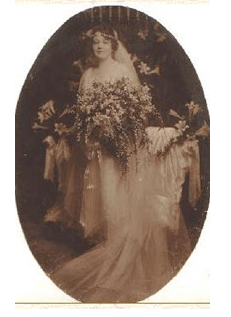
Below: Elizabeth at her wedding: lavish tastes

elizabethfairmarriage

John Hunter, the Sapper

By Sandra McHugh

As we all know, genealogical research is never-ending.  Facts need to be checked and re-checked.  Leads must be followed. New research beckons. Research on-line can also quickly add up to quite a lot of money.  So whenever a site offers free access, I try to take advantage of it as much as possible.

Last year, I found out that my great-grandfather, John Hunter, enlisted in World War I In November 1914 when he was in his late forties. I was actually looking for him as potentially serving in the Boer War because I could not find him in the 1901 census of Scotland. So it was quite a surprise to learn that he had enlisted in World War I.  I also learned that he was honourably discharged in March 1915 as he was then unfit for service. It would appear that he was injured.1 This year, when Find My Past offered free access to military records during the Remembrance Day weekend, another surprise was in store.  John Hunter reappeared in the military records in 1917. He had another service number, but it was cross-referenced to his old number.

This is a long introduction to explain why I find my great-grandfather’s service record so interesting.  It is because he was a Sapper. He came from a long line of miners in Scotland that can be traced back to the 1600s.  In World War I, he was part of the Royal Engineers. Their military history is long and honourable. Royal Engineers can claim over 900 years of service to the Crown, dating back to the era of William the Conqueror.2 As a Sapper in the Royal Engineers, his duties would have included “bridge-building, laying or clearing minefields, demolitions, field defences and general construction, as well as road and airfield construction and repair.”3 In civilian life, he was a coal miner, so it is a safe assumption that he was a tunneller. “Royal Engineer tunnelling companies were specialist units of the Corps of Royal Engineers within the British Army, formed to dig attacking tunnels under enemy lines during the First World War.”4 Mining and tunnelling were so important to the British offensive positions that they enlisted experienced coal miners, even those who would not normally have been recruited.  “The desperate need for skilled men saw notices requesting volunteer tunnellers posted in collieries, mineral mines and quarries across … Scotland.”5 This policy explains why John Hunter, working in a coal mine in Scotland, and already in his late forties, would have volunteered.

When John Hunter returned to active service in 1917, he was part of the newly formed 326th Quarrying Company.6 As part of this Quarrying Company, he would have received his training at Buxton and then sent to France, to work in the quarries around Marquise, near Calais.7


Sources:

1 John Hunter: Enlistment, Medal Card, Attestation for Short Service, Dependents, Territorial Force for Pension

2 https://en.wikipedia.org/wiki/Royal_Engineers

3 https://en.wikipedia.org/wiki/Sapper

4 https://en.wikipedia.org/wiki/Tunnelling_companies_of_the_Royal_Engineers#Request_and_proposal

5 Idem.

6 John Hunter: British Army Service Records 1914-1920 Transcription

7 http://mountsorrelarchive.org/wp-content/uploads/2014/12/Mountsorrel-Quarrymen-and-Qu arry-Companies-RE.pdf


Working together to help genealogists discover their ancestors