Socialists and Auctioneers

grandmmdmdmmdm

Emma Forster. Reprinted courtesy of the genealogy website myprimitivemethodists.org

Yippee!

For a while there I thought I had an illustrious ancestor, Joseph Cowen, the radical Liberal MP from Newcastle-on-Tyne. Here was someone I could be proud of and  someone my ‘socialist’ brother, living in Europe, could be proud of, too. Or, so I thought.

Upon looking up my great-grandmother Emma Cowen’s father, John, on familysearch.org ,  I discovered that the man was born in Blaydon Manor, Durham, which would make him the brother of this famous Joseph Cowen.

There was no other John Cowen born in Durham in 1832, his birth year, so it had to be him. Right?

I texted my brother in socialist Denmark along with a capture of a statue of Joseph in the town of  Newcastle. “Look, who we’re related to. We’re NOT the descendants of lowly coal-miners. He’s got Daddy’s eyebrows, doesn’t he?)

My brother, probably washing down his grass-fed beef with an artisanal beer, immediately texted me back:  “That doesn’t sound right to me.”

So, I double checked to find I had been foiled by a census typo.

My real ancestor John, great great grandfather, was misspelled in the 1841 UK Census under John Cowin. This John Cowin was born 1932 in South Bedburn, Durham. Another later Census entry for the family confirms Emma Cowan’s dad was born in Bedburn.

Emma is my great-grandmother from Durham, who married John Forster, Primitive Methodist Minister, from Cumberland, who produced Dorothy in 1895, who married a Malayan planter, Robert Nixon (from Helmsley) in 1921 and whom I only met once in my life, 1967, the year of Expo67.  Dorothy is subject of my play Looking for Mrs. Peel.

So, it seems, I am not the descendent of a radical liberal politician, friend to Anglo-Jewry, but a descendant of one John Cowen, a Victorian Age auctioneer.

(And that is correct, because Emma Cowen was born on Eliot Street, in Crook and Billy Row, Durham, and his auction house was located there, I discovered on yet another online document.)

Because I had to know, I checked to see that the profession of auctioneer was a pretty lucrative one at the time, although one that was despised because it preyed on human misery.  Thackery, apparently, simply hated auctioneers.

Bankruptcy was often used in Victorian era novels to make a point about human greed and to propel the plot. George Eliot’s Mill on the Floss, which I just listened to online, includes a sad, plate-by-plate  description of a family bankruptcy.

Going backwards in time over the UK Censuses, I discovered John was the son of a grocer, Joseph, Crook and Billy Row, Durham, who was the son of another grocer, Joseph  from Auckland Bishop, who was the son of someone who worked in the lead smelters at Alston, Cumberland. (If I got things right.)

Lead smeltering. Now, there’s the hideous job I was looking for! If your ancestry  can’t be illustrious, it might as well be pitiful.

It didn’t take me long to find out all about the lead mining industry in Alston, Cumberland, where most of my Cowens lived. (The place is still crawling with Cowens.)

There are lots of books out there on the subject. I downloaded one off Archive.org  about Alston and ‘its pastoral and mining people.’

For a time, apparently, lead mining was the only industry in the area, so my ancestor had no choice.

He had about 8 kids so the work didn’t dampen his mojo.

Lead was in everything back in the Victorian era, even in food, up until 1900 or so. (Lead actually smells and tastes nice, as any girl from the 1960’s who skipped on the sidewalks of our polluted  city streets knows very well.)

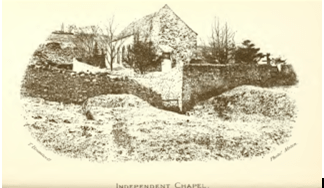
These Durham Cowen’s were all religious, described  as dissenters. Their births and marriages were registered at Redwing Chapel, Garrigle, Cumberland.

Here’s a drawing of the same chapel in the book about Alston and its people.

redwingchapelpic

Société de généalogie de Québec

The indexes of people and places found on commercial online genealogy search engines are not always complete or precise. In some cases, indexes compiled by local genealogy societies can fill in these gaps.

This post is the first in a series that will tell you about the indexes of marriages, baptisms, deaths and burials of English-language families in Lower Canada and Quebec. They refer to both Protestant and Catholic church records. You can purchase these indexes as spiral binders, hard-cover books, CDs or, in some cases, as online downloads, from genealogy societies across Quebec.

Volunteer researchers (usually genealogists or historians) have compiled these indexes from two sources. Some come from records held at the 10 branches of the Archives nationales du Québec. In other cases, the researchers actually visited the vaults of Protestant and Catholic churches – something that can no longer be done since most of these records are now held in centralized archives.

Today, most residents of Quebec City are French-speaking, but at one time there was a large English-speaking population in the provincial capital. If you had ancestors in Quebec City, the Société de généalogie de Québec may be able to help you. If you have trouble understanding the French text on the society’s website, cut and paste the text into Google Translate.

The burial records of Mount Hermon Cemetery may be particularly useful for 19th-century ancestors. In the spring of 1847, a group of Protestant businessmen, shipbuilders, merchants and clergy called a public meeting to discuss the possibility of buying land for a rural cemetery. The old Protestant cemetery located near St. Matthew’s on rue Saint-Jean was full and the authorities requested that a new cemetery be established outside the city limits. With the help of lumber merchant John Gilmour, a member of the first municipal council of Sillery and the founder of the cemetery, The Quebec Protestant Cemetery Association was created on February 11th 1848. The cemetery is located in the Sainte-Foy-Sillery borough of Quebec City and overlooks the Saint-Lawrence River.

Société de généalogie de Québec

Postal Box : C.P. 9066 Succ. Sainte-Foy

Québec QC G1V 4A8

Library : 1055 Avenue du Séminaire, local 3112 –

Pavillon Louis-Jacques-Cassault – Cité universitaire Laval, Québec

Contact us: http://www.sgq.qc.ca/nous-joindre

418-651-9127

General emails: sgq@uniserve.com

www.sgq.qc.ca

Boutique (Book Store) http://www.sgq.qc.ca/boutique-genealogie-repertoires-dvd-histoire

Click on: Répertoire paroissiaux

Item # 112 – Mount Hermon Cemetery – Cimetière de Mont-Hermon – Mount Hermon Cemetery burial register from 1848 to 1904 – English-language book of 380 pages in total, 60 pages of indexes of people – Between 1848 and 1863, 6,164 entries; half of the deceased were members of the Anglican Church (2,991), Presbyterian Church (1,117), Methodist Church (583)

Cost of book: $50. CDN + $20. CDN shipping – Purchase form:  http://www.sgq.qc.ca/images/_SGQ/Publication/formCommande2015.pdf

418-527-3513

Brian J. Treggett, Superintendent,

1802 Chemin Saint-Louis, Québec, QC,

G1S 1H6

mounthermon@qc.aibn.com

http://www.mounthermoncemetery.com/en/

Compiled by: Jacques Gagné

gagne.jacques@sympatico.ca

2016-03-13

Susan Dodds’ Sampler


IMG_6245 - Version 2

A precious item hung in our hall while I was growing up, made by my great, great grandmother. I often wondered about the woman who made it. Finding out about her was one of my first genealogical searches.

The sampler was made of rough woven linen with cross stitches of bright coloured wool. There were red strawberries, green and yellow borders and rows of letters and numbers. What was very clear on the sampler were the words in black, “Susan Dodds and Tattinclave” and the date “Aprile 12 -19, 1840.” I knew the family came from Ireland and finally discovered that Tattinclave is a townland in County Monaghan, Northern Ireland, just north-east of Castleblaney and Oram near the Armagh border. That was the where, then there was the who?

Many samplers have a saying or a motto embroidered on the bottom but unfortunately here, there is much wear making Susan’s difficult to read. What can be read is “lord our spirits” showing that Susan was a religious person.

This was confirmed in a letter, Susan and her husband Alexander Bailey carried to Canada from Rev. Samuel Dunlop, a Presbyterian minister. It stated, ” I have known the bearer Shusana Dodds since she was a child. She is not only of an unexceptionable but an examplary moral character. She is the daughter of very pious parents and prior to her leaving this country in full communion in our church. She was married previous to her going to America to one Alexander Bailey by the Rev. W. Momson. They are both a sober industrious young couple and persons in whom I believe confidence might be placed. April 13, 1843.”

In a box with family letters and photographs was a little hand sewn booklet. It was sent to Susan by her sister Eliza Dodds in 1871.There is a letter in the front where Eliza explains that Susan should use it to record events in her life and though they may never see each other again there is comfort in knowing God is looking after them both. In it were recorded all the births and as life would have it, some of the deaths of her children. There are few clues to other parts of her life with only “Dada was made a church elder 1839 and I joined the church 1840.”

IMG_3067
Oct 16, 1871 Susan D Bailey Register Book

After they arrived in Toronto, Alexander worked as a carpenter while Susan began raising children. Their first child Eliza Jane was born in 1844, but died the next year. They had seven more children, another Eliza Jane, Mary, Robert, William, Isabella, James, and Joseph who would have kept Susan busy. It was the last, little Joseph, who appeared to have had the greatest effect on their lives. He died at seven years of age in August of 1871, falling from a pile of lumber. Perhaps his father was supposed to be watching him as at this point the family seemed to break apart.

Even while mourning her son, Susan appeared to be a strong woman. She was recorded as the head of the household while her husband seemed to have disappeared. She held the family together as some of her children, Isabella and James continued to live with her until her death in 1896. Her son Robert pictured with her here, died of tuberculosis in 1882.

IMG_3815_2
Robert Bailey and mother Susan Dodds Bailey

When my mother began down sizing, she offered us an item from the house every birthday. The sampler was my first choice. It now hangs on my wall.

Notes:

Dodds, Eliza. Register Book. Letter to Susan Bailey. October 16, 1871. Ireland. The booklet was sent after Joseph died.

Dunlop, Samuel, Rev. Letter to To Whom It May Concern. 13 Apr. 1843. Ireland. In author’s possession.

“Canada Census, 1881,” index, FamilySearch (https://familysearch.org/pal:/MM9.1.1/MVF7-172 : accessed 19 Nov 2014), Susan Bailey, Yorkville, York East, Ontario, Canada; citing p. 126; Library and Archives Canada film number C-13248, Library and Archives Canada, Ottawa, Ontario; FHL microfilm 1375884.

With the help of Google I found the whole quote on the sampler.

“Swiftly thus our fleeting days, Bear us down life’s rapid stream. Upward lord our spirits raise. All below is but a dream.”    This is the second verse of a hymn “While with Ceaseless Course the Sun” by John Newton who also wrote Amazing Grace. It was in a book, Olney Hymns London: W Oliver 1779. Book II Hymn I.                                                                                                                                                                   

The place-name is also spelled Tatinclieve or Tattintlieve. It is 219 acres, in the county of Monaghan, the Barony of Cremorne, the parish of Muckno, Poor Law Union in 1857 in Castleblaney and in the Town land census of 1851 Part I, Vol III page 262.

It is assumed Susan’s parents were James Dodds and Jane McKee. There is a James Dodds renting 44 acres ( the most land in Tattinclave) in 1861. There is also a record that James Dodds was an elder in Garmony’s Grove Presbyterian Church in 1840.

Rev Samuel Dunlop was the minister in Garmony’s Grove Presbyterian Church from 1822 until his death in 1848. Garmony’s Grove was originally set up in connection with the Presbytry in Market Hill. The baptismal records only begin in 1844. Some of the people who attended this church may have been buried in Clarkesbridge or Newtownhamilton which is in Armagh. These three churches were united for a time. With the record of the marriage of Susan and Alexander being in Armagh, they might have been married in Newtownhamilton. This information was from Paula McGeough, personal communication.

Lusitania Legacy

The crowd of 600 invited guests and thousands of spectators cheered as the great ship slid into the waters of the Clyde on June 7th, 1906. She had been commissioned by Cunard, built at the John Brown and Company shipyards, and christened the Lusitania. For a brief time she was the largest ship on the seas. 1.


One man in the crowd may not have been cheering: my grandfather James Rankin Angus. He knew the employment he had so recently secured as a joiner would soon be over. On September 7th, 1907, her outfitting completed, the Lusitania would make her maiden voyage to New York. 2.


In November of the same year, my grandfather set sail on the Sicilian for Quebec City.3. What led him to immigrate? It is unlikely that he could not have found work at John Brown or any other shipyard. Ship-building on the Clyde was at its height and no doubt James had acquired significant skills working on the luxurious Lusitania. Had his time in the Royal Marines developed a wander-lust? Two of his eight years in the navy were spent in “service afloat”. 4. Or was it the example of his older brothers, one who immigrated to Australia and another to Malaysia? 5.


James was born on October 17th, 1878 in Patrick where the Kelvin River enters the Clyde .He was one of ten children born to David Angus, a shoemaker, and his wife Anne Rankin.6.  Originally the village had been a milling centre but the growth of the Clyde-side ship building industry in the 1800’s led to Patrick’s rapid expansion. Hundreds of multi-story tenement buildings were erected to house the flood of workers. When my grandfather left Patrick it was rough, dirty and crowded, far from the trendy area of Glasgow it is today. 7. He would miss only his family.


There is no record of James’ early years in Quebec City. He came to Canada a Presbyterian and a Freemason 8.  so one can only assume he found employment contacts and a social life through his church and his Masonic Lodge. In 1912 he opened the Angus Book and Stationary Store 9. , a business that thrived until 1935 when the Depression led to its demise. 10. James ended his career working for the provincial government. He never owned a car but walked to and from work with his head held high and his back ram-rod straight. A proud man. 11.


James married Jean Jamison Brodie, the daughter of a wealthy Quebec City flour merchant, in 1911 12.  and fathered three sons. All three enlisted when World War II broke out and served their country overseas. His first born died in the skies over Germany in 1943. 13. The remaining two returned to marry and give him the grandchildren he so dearly loved.


For eight years the Lusitania sailed the Atlantic until she was sunk by a German U-Boat on May 7th, 1915 off the coast of Ireland with the loss of more than a thousand lives.14. James gave his wife a tin box of sweets with a commemorative photo of the ship on the lid, the ship that had ultimately led him to her and a life in Canada. The cherished tin remained on her desk for as long as they lived in their home.15. My grandparents’ marriage spanned fifty-three years.16. Today their descendants number thirty-four, an enduring legacy.


  1. http://en.wikipedia.org/wiki/Lusitania
  2. http://en.wikipedia.org/wiki/Lusitania
  3. com, UK, Outward Passenger Lists, 1890-1960
  4. Certificate of the Service of James Rankin Angus (#9151), Royal Marines, 1906 – on file with writer
  5. Family letters – on file with writer
  6. Birth certificate James Rankin Angus; census records 1871, 1881, 1891 – on file with writer
  7. http://en.wikipedia.org/wiki/History_of_Partick
  8. Masonic Records – on file with writer
  9. City Directory, Quebec City 1912 – first listing of bookstore
  10. City Directory, Quebec City, 1935 – final listing of bookstore
  11. Personal memory and observation
  12. Quebec Chronicle Telegraph clipping June, 1911 – on file with writer
  13. RCAF Service Records of Colin Brodie Angus and Bomber Command Service Bar (awarded 2013) – on file with writer
  14. http://en.wikipedia.org/wiki/Lusitania
  15. Personal memory and observation
  16. Death certificate James Rankin Angus – on file with writer

The German Presence in the Lower St. Lawrence and Gaspé Peninsula

This compilation on the German Presence in the Lower St. Lawrence and Gaspé Peninsula is the last of a series on German-speaking immigrants to Quebec. Families that settled along the shores of the St. Lawrence River north-east of Quebec City and in the Gaspé region integrated well into their communities and attended a variety of local Catholic and Protestant churches.

In this compilation, you will find the historic names of the Quebec counties in this area, from their beginnings in the French regime, through the period when Lower Canada was a British colony and into the modern era of the province of Quebec. This document lists the churches these German-speaking families might have attended, and where to find their birth, marriage and death records.

German Presence Lower St. Lawrence & Gaspesia Adj


The Priest

Sydenham Bagg Lindsay (1887-1975)

The recent McGill graduate and qualified Associate of the American Guild of Organists in New York City cautiously approached his father, in 1908, with his dream to enter the priesthood.  His father, a stockbroker, answered simply: “Not much money in it!”  But there was no doubt Sydenham Bagg Lindsay had a vocation.

He studied theology at the Montreal Diocesan Theological College and then at Lichfield Theological College in England.  In 1910, he was ordained Deacon in Montreal and then an Anglican Priest in 1911.

He served in various parishes in the Montreal area including St. John the Evangelist where he met his wife, Millicent Thorpe Hanington, daughter of Dr. James Peters Hanington.  They were married in 1918 at the height of the flu epidemic when only thirty guests were allowed in the church!

Soon after that, he became Assistant Priest at St. Matthews, Quebec City, then Trinity Church in Beauharnois.  Two years later he was given his first parish – St. Mark’s in Valleyfield.  He continued with his ministry all over the Diocese of Montreal and some of his parishes included St. Aidan’s in Ville Emard and St. Simon’s in St. Henri. Finally in 1940, he became the rector of the Church of the Advent on Wood Avenue, in Westmount.

During the depression, when he was at St. Simon’s in the slums of Montreal, not only did  it take real ingenuity to produce the Christmas pageant without any money but the confirmation veils were stolen just a few minutes before the Bishop arrived![1]

World War II brought an end to the depression, but also, alas, an end to the lives of some of his parishioners.  His daughter, Mary Kerr, recalled that “many a bereaved parent, spouse or friend told us what a help my father was in their time of sorrow.”[2]

As rector of the Church of the Advent, he built up the parish and the boys’ choir which became quite famous and drew a large congregation.  It was a great thrill for him.

In his “spare” time, Sydenham was a classics scholar and church historian and kept up a correspondence with people all around the world, including missionaries and the fellowship in Western Canada.  He also regularly contributed to the “Letters to the Editor” column in the newspaper writing “no more than three or four sentences but always to the point, saying all that need be said in a few words”[3].

He also wrote and published the following four books:  A Historical Sketch of St. Columba’s Parish, Montreal, The Church of England and the Reformation (A Lecture Delivered in the Diocesan College, Montreal, on the 10th March 1954), Bishops of the Lindsay Clan (1957) and The Three Hours’ Vigil (1965).

In 1950, he was made an honorary Canon of Christ Church Cathedral   His health began to fail in 1953 and he retired as Rector of the Church of the Advent.  He stayed on as assistant priest, happily and humbly helping his successor. There may not have been “much money” in his calling but his “golden” jubilee in the ministry was celebrated in style in 1960. I was only three years old at the time.

I, however, remember him fondly as my Grampa-Lin, quietly joining in the family get-togethers.  He loved his grandchildren and amused us in his special way.  When pouring out drinks at family dinners, he would ask us: “Would you like ginger ale or Adam’s ale?” – Adam’s ale being water, of course!

 Church of the Advent


[1] Personal recollection of his eldest daughter, Mary Thorpe Lindsay Kerr, 1993.

[2] Personal recollection of his eldest daughter, Mary Thorpe Lindsay Kerr, 1993.

[3] The Gazette article “Canon Lindsay’s 50 years of Service.” Oct 14, 1961

Lucie Bagg: Her Story

Lucie Bagg, half-sister to my three-times great grandfather Stanley Bagg, has represented a brick wall for me ever since I started genealogy five years ago. I had never heard of her, or of her two half-sisters, before I started to research the Bagg family. I found a record of her baptism in La Prairie, Lower Canada (now Quebec),1 but that was it.

Gradually, clues emerged. Lucie was mentioned as a beneficiary in the will that her half-sister Sophia Bagg, veuve (widow) Gabriel Roy, wrote in 18562, so I realized she must have lived to adulthood. Then I ran across an 1816 marriage record for Lucy Baggs and William Kaene in Buffalo and Vicinity, Erie County, New York.3 It was easy to imagine that she had moved to Buffalo since her family was originally from the United States. I found the Kaene family on several public members’ trees on Ancestry, but I wanted evidence that the Lucy I had found was the Lucie I was looking for. Finally, I found it: the 1860 U.S. Federal Census listed Lucy Kaene, born Lower Canada.4

Now I can tell her story:

Lucie Bagg was born on 11 Jan. 1789 in La Prairie, Lower Canada to American-born, Protestant parents, but since there was no Protestant church in the town, she was baptized in the local Catholic church. The priest who recorded her baptism was French-speaking and he used the French spelling of Lucy in the register. Lucie lived much of her life in the United States and appears in census records as Lucy, but to her family in Canada, she remained Lucie.

Lucie’s father, innkeeper Phineas Bagg (c. 1750-1823), had moved to La Prairie, on the banks of the St. Lawrence River near Montreal, from Pittsfield, Massachusetts with his four children by his now- deceased first wife and with Lucie’s mother, who was probably Ruth Langworthy.5 He had fallen into debt in Pittsfield and lost his farm to repay his creditors, so he had come to Canada to start a new life.6 La Prairie was then a prosperous town on the route between Montreal and New England, and a number of Americans lived there.

By 1810, Lucie’s half-siblings were beginning to launch their careers and marry. Phineas and son Stanley moved onto the island of Montreal and opened the Mile End Tavern at a crossroads about a mile north of the city.7 The Mile End property was a farm as well as a tavern, and perhaps Lucie helped feed the animals or serve the tavern guests.

In 1816, when she was 18, she married William Kaene, a 19-year-old Pennsylvania-born farmer, somewhere in or near Buffalo. At that time, Buffalo was a village on the eastern shore of Lake Erie. Several years earlier, during the War of 1812, British troops had burned it.

opening the Erie Canal crop

In 1825, the Erie Canal linking Lake Erie with Albany and the Hudson River was completed. Perhaps Lucie attended the canal’s opening ceremonies in Buffalo, the waterway’s western terminus.8  The canal gave a big boost to Buffalo’s economy as the town became a transfer point for both passengers and goods.

In an 1832 city directory, William was listed as “grocer, main Street, dwelling public square”.9 A directory published in 1836 indicated the couple lived a short distance northwest of the town, at the corner of Pennsylvania and Tenth streets, and identified William as a farmer.10

Lucie and William had at least three children: Louise Sophia (1817-1911), Julia Elizabeth (1829-1910) and Ella (1836- ).11 There are big gaps between the girls’ ages, so Lucie may have had other children who died young.12

Julia married John Alexander Brewster in 1858, moved to California and had three children.13 Louise married Harrison Otis Cowing in 1839 and had nine children, two of whom may have died young. 14

Cowing ad 1850-51 directory cropHarrison Cowing was a grocer and merchant in Buffalo and became the official head of the household. In 1850, the Cowing family, Lucie and William and their unmarried daughters were living in the brick family home at Pennsylvania and Tenth.15, 16 At that time, William’s occupation was land dealer. He died two years later.17

Lucie was still living with the Cowing family at the time of the 1860 federal census and of the 1865 state census.18 After the Civil War, several of the Cowing children moved to the Midwest, and it appears Lucie joined them. She died in Lafayette, Indiana on February 2, 1874.19

Photo credit:

“Opening of the Erie Canal” engraving of a print by Howard Pyle (1853-1911), from The Evolution of New York: by Thomas A. Janvier. www.eriecanal.org, accessed Feb. 28, 2016.

Commercial Advertiser Directory for the City of Buffalo, embellished with a new and correct map. Jewett, Thomas & Co., publishers, 1850. p. 5. babel.hathitrust.org/cgi/pt?id=mdp.39015049262119;view=1up;seq=29

This article is also posted on Writinguptheancestors.blogspot.ca

Notes and footnotes

  1. “Quebec, Canada, Vital and Church Records (Drouin Collection), 1621-1968” [database on-line]. Ancestry.com, (www.ancestry.ca, accessed 27 Feb. 2016), Gabriel Drouin, comp. Drouin Collection. Montreal, Quebec, Canada: Institut Généalogique Drouin.
  2. Labadie, Joseph-Augustin, # 14278, 18 Mai 1856. Bibliothèque et Archives nationales du Québec.
  3. “Early Settlers of New York State, Their Ancestors and Descendants”, extracts from Vol. 2, No. 12 (June 1936) Akron, NY: Thomas Foley. Genealogical Research Library, comp. New York City, Marriages, 1600s-1800s [database on-line] (www.Ancestry.ca, accessed Feb. 27, 2016).

4. 1860, Buffalo Ward 10, Erie, New York; Roll: M653_748; Page: 729; Image: 157; Family History Library Film: 803748. Ancestry.com. 1860 United States Federal Census [database on-line]. Provo, UT, USA: Ancestry.com Operations, Inc., 2009. Images reproduced by FamilySearch.

There are two errors in Ancestry.com’s transcription of this census entry: Lucy’s last name was transcribed Kene instead of Kaene, and her age was copied as 68 rather than 62 as the census taker had written it. The original census entry reads, Lucy Kaene, age 62, born Lower Canada.

  1. It is not clear whether Lucie’s mother’s name was Ruth or Lucy. I will write about her soon in another post on writinguptheancestors.blogspot.ca.
  2. Janice Hamilton, An Economic Emigrant, Writing Up the Ancestors, Oct. 16, 2013, http://writinguptheancestors.blogspot.ca/2013/10/an-economic-emigrant.html
  3. Janice Hamilton, The Mile End Tavern, Writing Up the Ancestors, Oct. 21, 2013, http://writinguptheancestors.blogspot.ca/2013/10/the-mile-end-tavern.html
  4. The History of Buffalo, New York, Index, http://www.buffaloah.com/h/histindex.html links to a variety of articles and images about individuals, businesses, politicians, the arts, the military and the Erie Canal. Buffalo Research.com, http://www.buffaloresearch.com/onlinedirectories.html, links to online city directories from 1828 to 1941. See also the virtual exhibit focusing on Buffalo in the year 1832: Buffalo and Erie County Historical Society. 175 Years Celebrating the Incorporation of the City of Buffalo. http://www.buffalohistory.org/Explore/Exhibits/virtual_exhibits/buffalo_anniversary/175th/index.htm
  5. 9. A Directory for the City of Buffalo containing the names and residence of heads of families and householders of the said city on the first of July, 1832. Buffalo: L.P. Chary. p. 84. http://nyheritage.nnyln.net/cdm/pageflip/collection/VHB011/id/5034/type/compoundobject/show/4911/cpdtype/document/pftype/image#page/1/mode/2up
  6. 1836-1837 Crary’s Buffalo City Directory, p. 94. http://nyheritage.nnyln.net/cdm/pageflip/collection/VHB011/id/8820/type/compoundobject/show/8679/cpdtype/document/pftype/image#page/74/mode/2up
  7. Ella was born Nov 19, 1836 according to her 1865 christening record: “New York Births and Christenings, 1640-1962,” [database] FamilySearch (https://familysearch.org/ark:/61903/1:1:FDLB-NYM (accessed 27 February 2016), Ella La Fontaine, 19 Nov 1836; citing reference 2:112NCB1; FHL microfilm 1,378,628.

Ella was 29 years old in 1865 when she was christened at Grace Episcopal Church, Buffalo. Ella was not listed on the 1850 U.S. Federal Census, but she did appear with the rest of the family on the 1860 U.S. Federal Census and the 1865 State Census. Perhaps she was adopted.

  1. The 1850 census mentioned a daughter Johanna but I have not found any other mention of her. Also, the transcription of the 1850 census on Ancestry.ca incorrectly lists two other family members, Catherine and Fred. The census gatherer did not write down last names for these people, so they can be mistaken for family, however, Fred was identified as a labourer born in Ireland, while Catherine was born in Germany and may have been a domestic servant.
  2. “Public Member Trees,” [database] http://www.Ancestry.ca, Adams Family Tree, Stuart Lauters compiler (accessed 28 Feb. 2016), http://person.ancestry.ca/tree/16093254/person/341207597/facts. This is a well-sourced public member tree on Ancestry.ca for Lucie Bagg and her family.
  3. “John Cowing Revolutionary War Soldier” provided by Joe W. Cowing, 2002, submitted by Dolores Davidson, www.rootsweb.ancestry.com/~nychauta/Families/Jcowing.htm (accessed 1 March, 2016). Harrison Otis Cowing (1814-1839) is part of generation 7 in this family tree. His son Stanley Bagge Cowing, born 1844, may have been named after Lucie’s brother Stanley Bagg.
  4. Commercial Advertiser Directory for the City of Buffalo, embellished with a new and correct map. Jewett, Thomas & Co., publishers, 1850, p. 118. http://babel.hathitrust.org/cgi/pt?id=mdp.39015049262119;view=1up;seq=174

16. 1850, Buffalo Ward 5, Erie, New York; Roll: M432_502; p. 491B; Image: 486. Entry for William Kaene; digital image. Ancestry.com (www.ancestry.ca; accessed 28 Feb. 2016), 1850 United States Federal Census [database on-line]. Images reproduced by FamilySearch.

There is a transcription error on Ancestry: the family is indexed as Rane, rather than Kaene.

  1. “Public Member Trees,” [database] http://www.Ancestry.ca, Adams Family Tree, Stuart Lauters compiler (accessed 28 Feb. 2016), http://person.ancestry.ca/tree/16093254/person/762097336/facts.

18 New York, State Census, 1865 [database on-line]. Ancestry.com (www.ancestry.ca, accessed 28 Feb. 2016), Census of the state of New York, for 1865. Microfilm. New York State Archives, Albany, New York.

Note the census-taker erroneously spelled the family name Kane.

19 “Public Member Trees,” [database] http://www.Ancestry.ca, Adams Family Tree, Stuart Lauters compiler (accessed 28 Feb. 2016), http://person.ancestry.ca/tree/16093254/person/1077026843/facts.

The Thunderbird

by Claire Lindell

Every year, even after all these years when the Feast of the Annunciation draws near, my memory is flooded with the events that transpired more than fifty years ago. Decisions that would change my life seem to come to the forefront of my mind.  I think back to that weekend.

Early on the bright spring Thursday morning of March 25th, 1965  the chauffeur driven car pulled up beside the convent. My father walked up to the front door and welcomed me with opened  arms. He had come to bring me home.

For almost six years Joan of Arc House had been my convent home. Taking the Holy Habit, becoming a bride of Christ,  two years in the Novitiate, studying theology, teaching Kindergarten, daily prayers and community living were the  way of life. Leaving  all this behind was not an easy decision.

We set out on the  long drive from Ottawa to Asbestos. We had much to talk about, but to this day I can not for the life of me remember any of our conversation. Heading in to the unknown can be rather daunting. There was a great deal to ponder.

Mom was waiting for us at home. The following day, Friday morning, she took me to the hairdresser to have my hair cut and permed. It was in dire need of something. I had worn a veil while a nun and “one’s crowning glory” was not a priority under a veil! I came away from there somewhat transformed and ready to face the challenges that lay ahead. That afternoon we  drove to Richmond where I signed a contract to begin teaching Grade One beginning the following Monday morning. Arrangements had been made earlier when a friend knew I was leaving the convent and they needed a teacher at her school.

The weekend flew by as I tried to come to grips with my new surroundings, not to say anything about a new look! Life was so different. No bells. No prayers. No meals in silence. No community time.

Monday morning arrived and my Dad suggested I use his  car to drive the fifteen miles to Richmond until I could buy my own. His  car was a 1962  white Ford Thunderbird convertible with bright red leather interior! It was a very snazzy sports car for an ex-nun to be driving. It was a perfect way to get back in to “the real world” and forge ahead on to the next chapter.

T-Bird

That Monday morning I could only chuckle to myself wondering what my new colleagues were thinking when they saw this “to die for car” pull in to  the parking lot and out I came, the new teacher, an ex-nun  who was the driver of the Thunderbird convertible! Can you imagine?

Since that day in 1965 life has been good and there have never been any regrets about the decisions made. Within two weeks I had my own car and I can assure you, it was nothing like that 1962 white Ford Thunderbird with the beautiful red leather interior!

Me and my Mom   on Holy Habit Day

April 30th, 1960

The German Presence in the Lower Laurentians

This compilation looks at the towns and villages in the Lower Laurentian area, north of Montreal, where German-speaking immigrants settled, and lists the churches these people may have frequented. It also lists several books and articles that discuss these people and their communities. There is a list of repositories and addresses at the end of the compilation that will help you find records of births, marriages and deaths.

German Presence – Lower Laurentian Region of Quebecl Mar 19-1

Everyone is Irish on St. Patrick’s Day

Everyone is Irish on St. Patrick’s Day.  We all love to be Irish for a day on March 17.  In my case, I treasure my Irish roots.  Today, I will raise a pint of Guinness and toast my ancestors.

Although my grandparents were Scottish, my great-great-grandparents, John McHugh and Mary Garret, were Irish.  They were both born around 1820 in Ireland.  They would have been young adults when the Great Famine, also known as the Great Hunger and the Irish Potato Famine happened between 1845 and 1852, when potato blight ravaged potato crops throughout Europe.  Ireland was significantly affected and, as a result, one million Irish immigrated to other countries. We commonly hear about the Irish that moved to North America and Australia but a significant number of them immigrated to Scotland.1 John and Mary McHugh were among those who decided to go to Scotland.

At the beginning of the 19th century, it was already common for Irish agricultural workers to move to Scotland temporarily to work during the harvesting season.  By the 1840s, the number of these workers had increased from a few thousand per year to 25,000.  By 1851, the Irish-born population in Scotland had risen to 7.2% of the total population.2

The economic difficulties in Ireland, combined with the industrialization of Scotland that included the expansion of coal and iron ore mining, and the building of shipyards and railways, as well as the significant expansion of the textile industry in Scotland, made Scotland an attractive destination for the Irish.3

The Irish were ideally qualified to work in Scotland’s textile industry as many of them already had knowledge and experience in the textile and jute industry.  Linen and yarn production was already established in Ireland.4The economic conditions in the 1840s in both Ireland and Scotland provided John and Mary McHugh with the impetus to move to Scotland to work in the textile factories in Dundee. Not only John, but Mary also, would have been assured of a regular wage, as many of the textile workers were women. 5

While Scotland would have been a choice destination for John and Mary, it would have been a difficult adjustment.  Sadly, this is because of their religion.  They left communities in which everyone was Roman Catholic to go and live in Protestant Scotland. The Irish Roman Catholics did not have an easy time of it in Scotland. “Anti-Catholic Scots were active in the Scottish Reformation Society and sometimes caused riots.”6 These anti-Catholic sentiments probably encouraged the Irish Catholics to remain in their distinct communities and delayed their integration into Scottish communities.

The following quote illustrates that the Irish were victims of discrimination.

“As late as 1923, the Church of Scotland could still publish a pamphlet entitled ‘The Menace of the Irish Race to our Scottish Nationality’. The Irish were seen as drunken, idle, uncivilised and undermining the moral fibre of Scottish society. They were also seen as carriers of disease. Typhus, for example, was known as ‘Irish fever’.”8

Unlike the above quote, we know the Irish to be hard working, disciplined and adaptable.  I am proud to have Irish roots.

So, despite what would have been great adversity, John and Mary settled in Scotland, lived in a Roman Catholic community and had children and grandchildren who worked in the textile industry. The generations of McHughs working in the textile industry in Dundee came to an end when their grandson, my grandfather, Thomas McHugh, could no longer find regular work in the textile industry in Dundee and decided in 1912 to move to Canada.

A toast to the Irish!  I wish you all a very happy St. Patrick’s Day.


1 https://en.wikipedia.org/wiki/Great_Famine_(Ireland)

2 http://www.irish-genealogy-toolkit.com/Irish-immigration-to-Scotland.html

3 https://en.wikipedia.org/wiki/Industrial_Revolution_in_Scotland

4 http://www.irish-genealogy-toolkit.com/Irish-immigration-to-Scotland.html

5 https://en.wikipedia.org/wiki/History_of_Dundee

6 http://www.irish-genealogy-toolkit.com/Irish-immigration-to-Scotland.html

7 Idem.

8http://www.educationscotland.gov.uk/higherscottishhistory/migrationandempire/experienceofimmigrants/irish.asp

Working together to help genealogists discover their ancestors