All posts by Lucy H. Anglin

I am an artist and a writer.

Surgeon and Mentalist

Shortly before graduation from medical school at Queens University in Kingston, Ontario in 1883, William G. Anglin (my great grandfather) and a few fellow medical students attended the performance of a “thought-reader”, English mentalist Stuart Cumberland[1]. So impressed with what they had seen, they went back to their place and tried one of the simpler experiments.

 The operator was blindfolded, and the Medium, placing the back of the fingers of one hand on the operator’s forehead was to think intently as to what was required to be done. For instance – pick up an article from some position and place it in another position – the operator having previously gone out of the room while the experiment was being agreed upon. Everyone singly failed, and I was the last one to try. Immediately I went across the room and picked up a small object from the mantelpiece – crossed the room and placed it on the middle of a chair. Tore off the handkerchief from my eyes and said: “That’s what you wanted done”. “By George, you’re right, Anglin, we will try you again”, and I did correctly five or six other experiments – each a little more difficult than the last. Could not account for the success, but in every experiment I was conscious that I was doing the right thing. When my fingers touched the desired object, I closed on it with a feeling of certainty.[2]

The next week William left for Halifax to sail for Liverpool to continue his medical studies in England. He met a fellow doctor and, eventually the conversation turned to “thought-reading”.

It proved to be a very entertaining voyage for the passengers, as he successfully performed time and time again. A passenger would say – “Well, Doctor, I hid a pin somewhere on the ship – an hour ago” and blindfolded, William would take the passenger’s right hand and, holding the fingers to his forehead, he would say, “Think where it is”, and they would start upstairs and downstairs, and along corridors to the spot, and he would pick up the pin from a curtain or a chair wherever it had been placed.[3]

Later in life, his son Douglas, referring to his father’s diary, lamented “End of Diary – too bad – I wish we could have heard about my father’s time studying in London and Edinburgh, where he was entertained at many high society places on account of his thought-reading.”[4]

Following his medical degree from Queen’s in 1883, William spent eighteen months as the house surgeon at the Royal Infirmary, the Sick Children’s Hospital, and the Royal Maternity Hospital in England. Then he successfully completed the M.R.C.S. exam (Member of the Royal College of Surgeons) in England.

When he returned to Kingston, in the fall of 1885, he lectured for a session in surgery at the Women’s Medical College. A year later, he became Professor of Pathology and finally head of the department of Clinical Surgery.

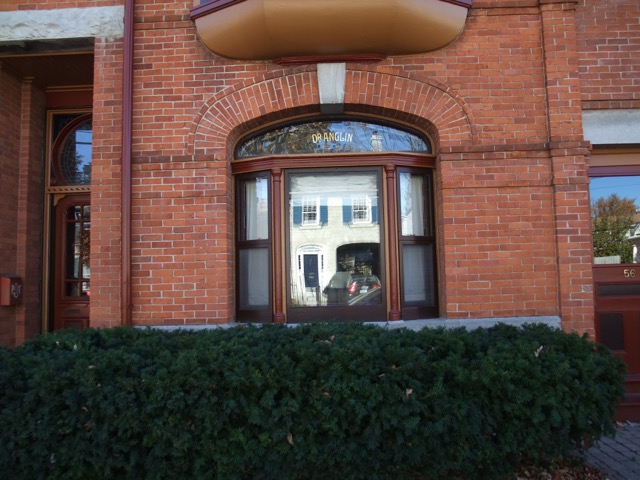
Around that time, William built an addition to his parents’ home at 52 Earl Street in Kingston, which provided him with both office and home. 3

This is where he brought his childhood sweetheart and bride, Harriet (Hattie) Eva Gould, in 1886. The name ‘Dr. Anglin’ remains embossed in the upper portion of the glass of the front window to this day.[5]

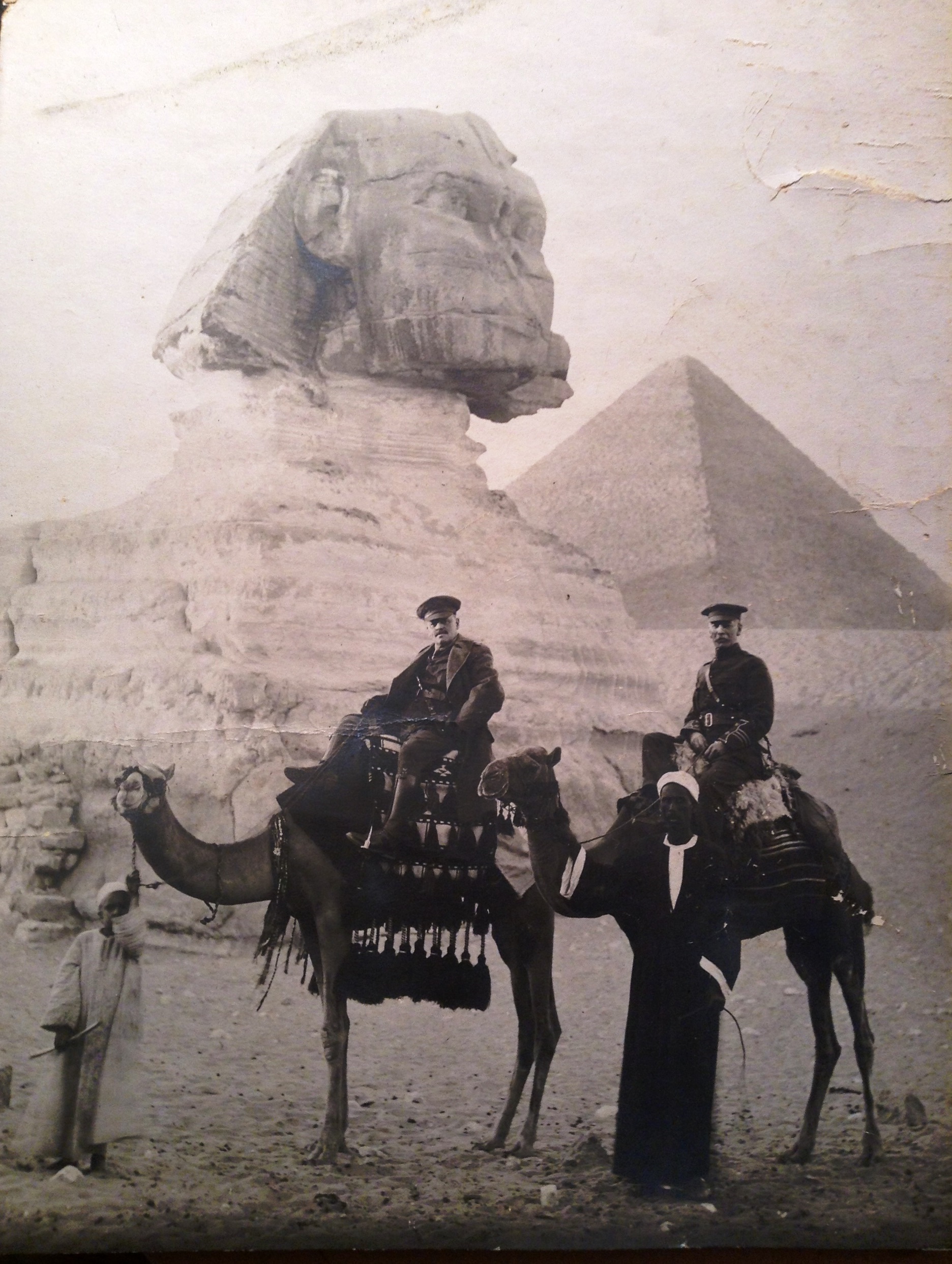
He remained a member of the Medical Staff at Queen’s until May 1915 when he departed with the Queen’s Stationary Hospital for Cairo, at age 59. Cairo, Egypt - Dec 7, 1915 - Lt Col AnglinHe served as a civil-surgeon with the rank of Lieutenant Colonel until 1916 when he became ill with Malta fever and phlebitis. He was given a medical discharge and sent back home.
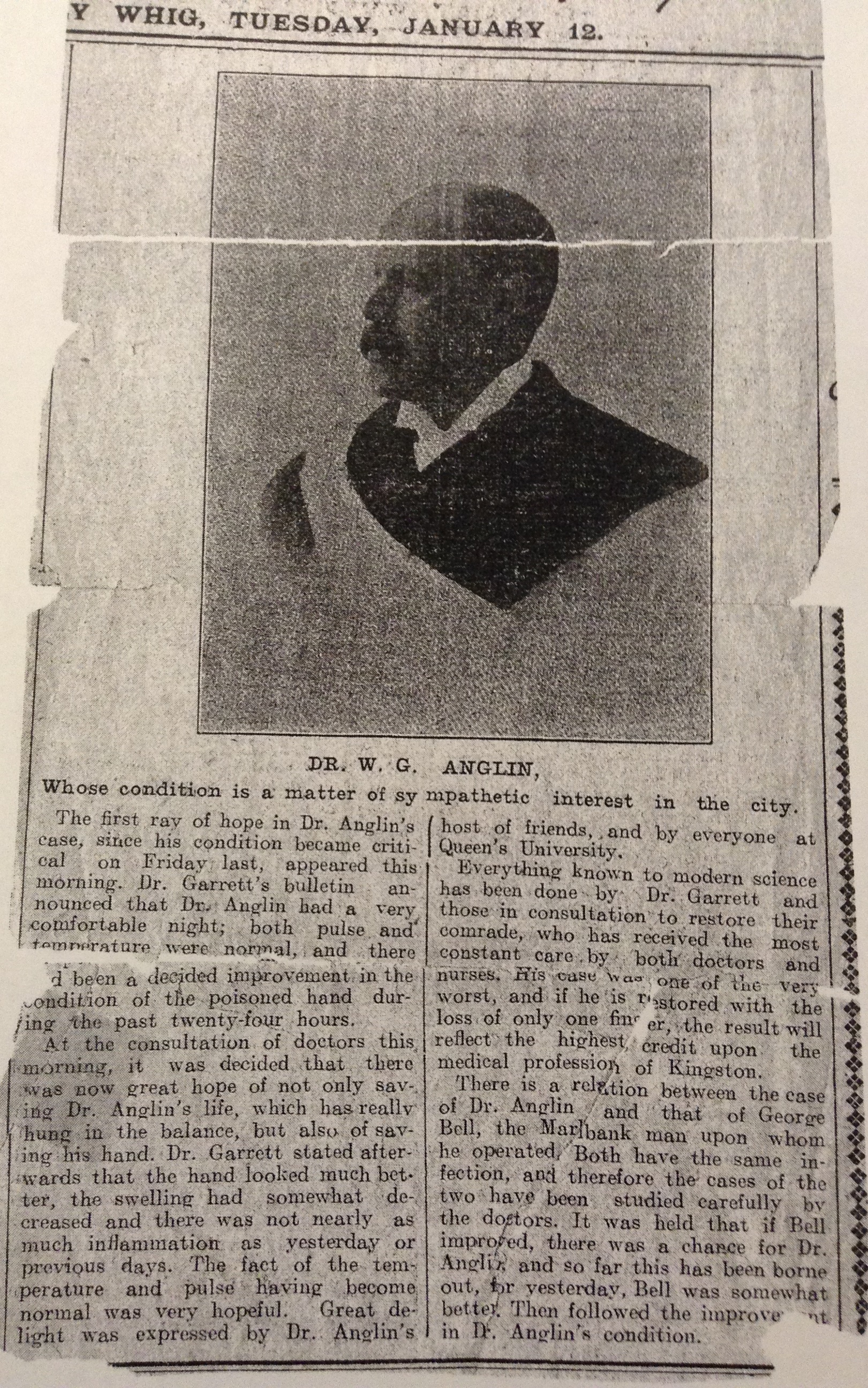
William’s attestation papers, dated May 1st 1915, declared that he was fit for duty but noted a missing middle finger on his right hand.  In 1904, it was reported that Dr. William G. Anglin was severely ill, and lost a finger due to this illness. There was much relief when it was announced that he would live.[6] Middle Finger The story told was that by using his “thought-reading” skills, he was able to physically draw down the infection in his right arm to his middle finger. The amputation of that one finger removed all traces of infection from his body probably saving his life… and enabling him to continue his work as a surgeon.[7]


[1] Wikipedia-Stuart Cumberland (1857–1922) English mentalist known for his demonstrations of “thought reading”.

[2] Personal recollections – W.G. Anglin, 52 Earl Street, Kindston, Ontario – November 14, 1927

[3] Personal recollections – W. G.Anglin, 52 Earl Street, Kingston, Ontario – November 14, 1927

[4] Written note from Douglas Anglin at the end of Personal recollections – W.G. Anglin, 52 Earl Street, Kingson, Ontario – November 14, 1927.

[5] Helen Finlay, owner-operator of  52 Earl Street Cottages, Kingston, Ontario

[6] The Kingston Whig, January 12, 1904,

Queen’s archives, Biographical History – Anglin, William Gardiner (1856-1934)

[7] As told to Lucy Anglin from Thomas Gill Anglin, grandson of W.G. Anglin, who read his grandfather’s diary


Like Father, Like Son

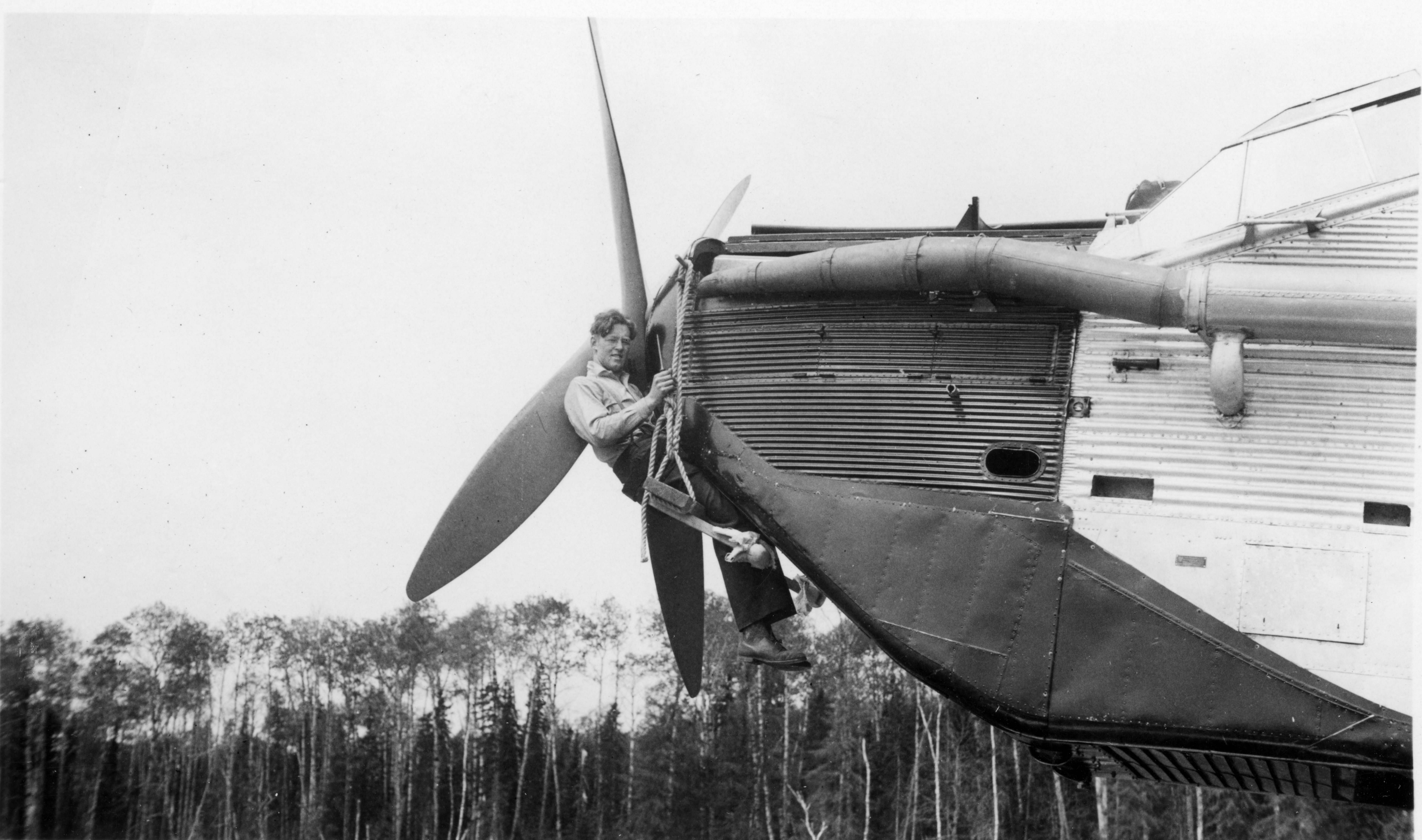
My husband was mesmerized by the photo of a young man hanging in a sling close to the giant propeller of the airplane he was repairing.  He had never seen it before.  It was a photo of his father, Allan, in his early twenties.  This photo, shown to us by the helpful volunteers at the Western Canada Aviation Museum in Winnipeg, was the highlight of this very special trip.Allan R Hunt005

My husband, Jim, had taken me “home” to Winnipeg to share a trip down memory lane for his 70th birthday.  A peaceful visit to two local cemeteries to find both sets of grandparents was followed by a tour of his childhood neighbourhoods in different parts of town. So many of the locations featured memories of his father that it almost felt as though there were three of us on this trip.

Along the way to find the three different houses where Jim grew up, I heard precious stories of friends and bicycles, playing in the lanes behind the houses, walking down the street to the corner soda fountain and waiting on the school wall for his older sister to finish her day. The last house he showed me was the one his father had built.

Amazingly we even managed to find the two summer lakefront cottages just an hour or so out of Winnipeg where Jim had spent his summers as a boy. It felt like Allan was guiding us from place to place.

My favourite story featured Jim and his friends crawling under the fence at the military airbase down the street from where his father worked to lie in the tall grass staring at the parked fighter jets.  They would be “shoo-ed” away gently and run home in fits of giggles. Allan’s aircraft maintenance career began at remote air bases in Ontario and Manitoba. He first worked on cargo float planes and then switched to commercial passenger planes when Trans Canada Airlines was formed in 1937. He was employee number 25 of the company which eventually became Air Canada. Later, it grew to 40,000 employees. The family moved to Montreal in 1958 to continue his career.

Jim followed his father’s footsteps into a 30-year career with Air Canada and enjoyed the thrill of travel as a privilege that comes with it.  They had travelled many times together as a family over the years and he continues to do so now with his own family. I learned a bit about how early Jim’s passion for the airline industry began, however, when  we visited Jim’s primary school in Winnipeg.  We walked into the principal’s office and spoke with the secretary.  I was so surprised to watch my six foot two husband shrink into a little boy as he shook the principal’s hand telling her he was from the class of ’52-’58.  She walked us to his old classroom where he remembered having to stand in the cloakroom as a punishment.  His crime? Making a paper airplane and flying it across the room!

By the end of our trip, I felt as if I got to know both Jim and Allan a little better.  Years ago when we married, I often lamented the fact that I never had the chance to meet Jim’s father.  When I said as much to his sister one day, she answered: “Well, you sort of have met him!”

I guess it’s true. Not only does Jim look very much like his father, especially as he grows older, but he tells me that he has many of the same mannerisms.  For example, chatting easily to strangers, quoting his father’s old sayings and efficiently scraping out the peanut butter jar!


The Priest

Sydenham Bagg Lindsay (1887-1975)

The recent McGill graduate and qualified Associate of the American Guild of Organists in New York City cautiously approached his father, in 1908, with his dream to enter the priesthood.  His father, a stockbroker, answered simply: “Not much money in it!”  But there was no doubt Sydenham Bagg Lindsay had a vocation.

He studied theology at the Montreal Diocesan Theological College and then at Lichfield Theological College in England.  In 1910, he was ordained Deacon in Montreal and then an Anglican Priest in 1911.

He served in various parishes in the Montreal area including St. John the Evangelist where he met his wife, Millicent Thorpe Hanington, daughter of Dr. James Peters Hanington.  They were married in 1918 at the height of the flu epidemic when only thirty guests were allowed in the church!

Soon after that, he became Assistant Priest at St. Matthews, Quebec City, then Trinity Church in Beauharnois.  Two years later he was given his first parish – St. Mark’s in Valleyfield.  He continued with his ministry all over the Diocese of Montreal and some of his parishes included St. Aidan’s in Ville Emard and St. Simon’s in St. Henri. Finally in 1940, he became the rector of the Church of the Advent on Wood Avenue, in Westmount.

During the depression, when he was at St. Simon’s in the slums of Montreal, not only did  it take real ingenuity to produce the Christmas pageant without any money but the confirmation veils were stolen just a few minutes before the Bishop arrived![1]

World War II brought an end to the depression, but also, alas, an end to the lives of some of his parishioners.  His daughter, Mary Kerr, recalled that “many a bereaved parent, spouse or friend told us what a help my father was in their time of sorrow.”[2]

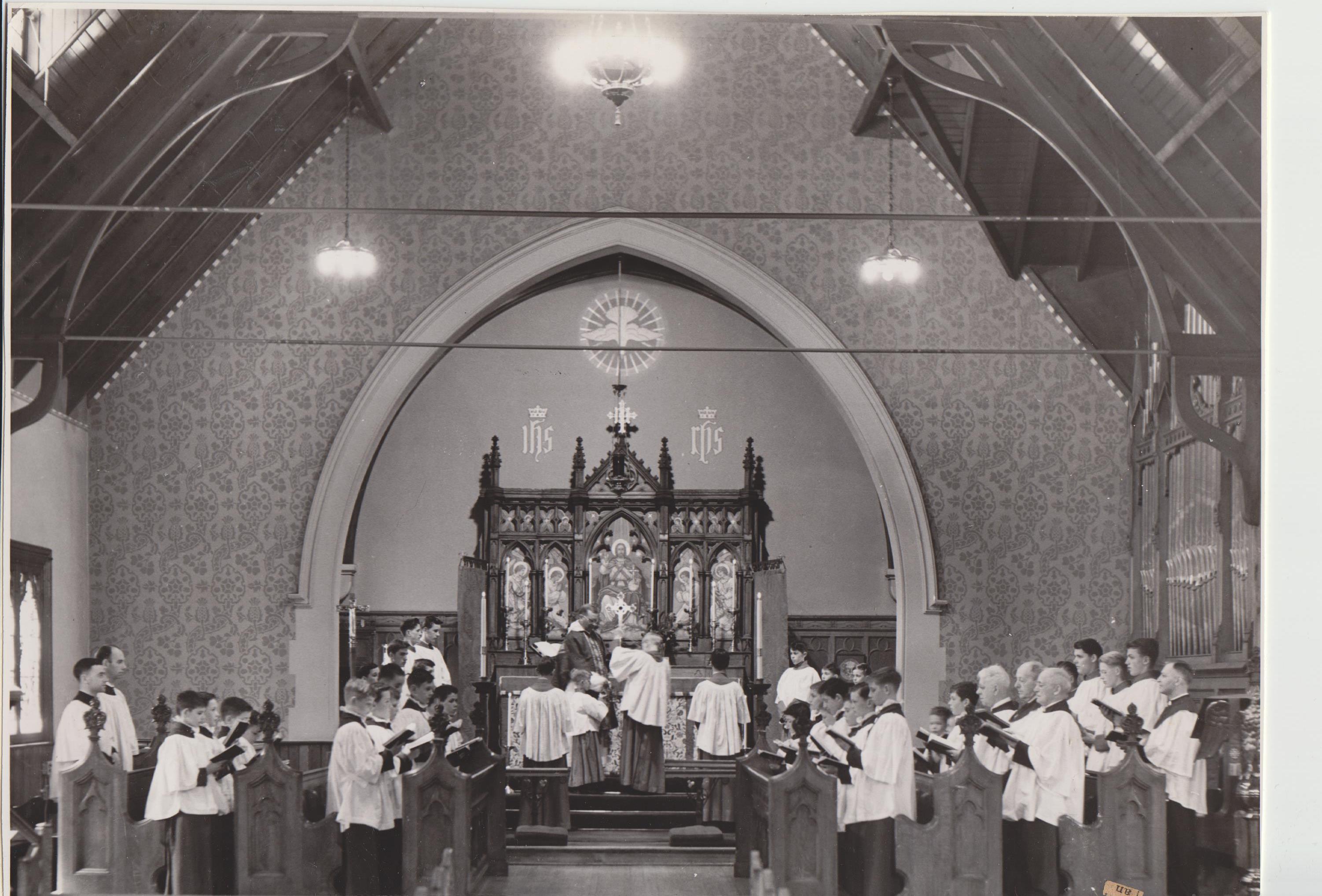
As rector of the Church of the Advent, he built up the parish and the boys’ choir which became quite famous and drew a large congregation.  It was a great thrill for him.

In his “spare” time, Sydenham was a classics scholar and church historian and kept up a correspondence with people all around the world, including missionaries and the fellowship in Western Canada.  He also regularly contributed to the “Letters to the Editor” column in the newspaper writing “no more than three or four sentences but always to the point, saying all that need be said in a few words”[3].

He also wrote and published the following four books:  A Historical Sketch of St. Columba’s Parish, Montreal, The Church of England and the Reformation (A Lecture Delivered in the Diocesan College, Montreal, on the 10th March 1954), Bishops of the Lindsay Clan (1957) and The Three Hours’ Vigil (1965).

In 1950, he was made an honorary Canon of Christ Church Cathedral   His health began to fail in 1953 and he retired as Rector of the Church of the Advent.  He stayed on as assistant priest, happily and humbly helping his successor. There may not have been “much money” in his calling but his “golden” jubilee in the ministry was celebrated in style in 1960. I was only three years old at the time.

I, however, remember him fondly as my Grampa-Lin, quietly joining in the family get-togethers.  He loved his grandchildren and amused us in his special way.  When pouring out drinks at family dinners, he would ask us: “Would you like ginger ale or Adam’s ale?” – Adam’s ale being water, of course!

 Church of the Advent


[1] Personal recollection of his eldest daughter, Mary Thorpe Lindsay Kerr, 1993.

[2] Personal recollection of his eldest daughter, Mary Thorpe Lindsay Kerr, 1993.

[3] The Gazette article “Canon Lindsay’s 50 years of Service.” Oct 14, 1961

Great Granny Bagg (Kittens on the Wedding Dress)

Mary Heloise Bagg Lindsay (1854-1938)

The Anglican Church and her philanthropy were most likely what grounded Mary Lindsay and enabled her to properly cope with her family. It is my belief that as the educated daughter of a wealthy Montreal family, the wife of a successful Montreal stockbroker and a busy mother – she appreciated the solitude of her Sunday morning church service and the rewarding challenges of her chosen charities. Her obituary, in 1938, summarized Mary Heloise Bagg Lindsay’s life as having “been a life member of the Women’s Auxiliary of the Church of England, Governor of the Royal Victoria Montreal Maternity Hospital and Children’s Memorial Hospital and greatly involved in a great many charities. She also regularly attended services at The Church of St. John the Evangelist1.

My great grandmother, Mary, was one of four surviving daughters of Stanley Clark Bagg and Catherine Mitcheson. Born in 1854 at the Fairmount Villa, in the Golden Square Mile of Montreal, she grew up to marry Robert Lindsay in 1881. Her only brother, Robert Stanley Bagg, was heir to the family fortune, her two older sisters married men in the clergy and her younger sister married a scandalous real estate tycoon who mysteriously disappeared when his debts caught up with him.

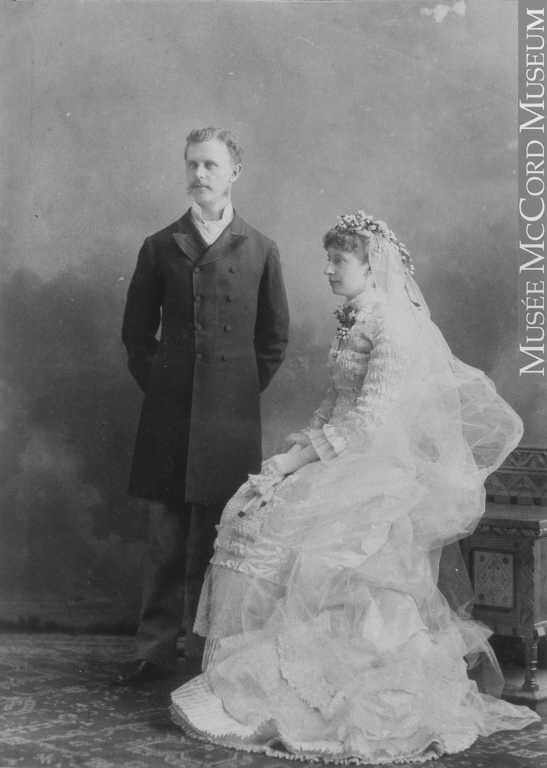
Robert and Mary Heloise Wedding day
Mr and Mrs Robert Lindsay -1881

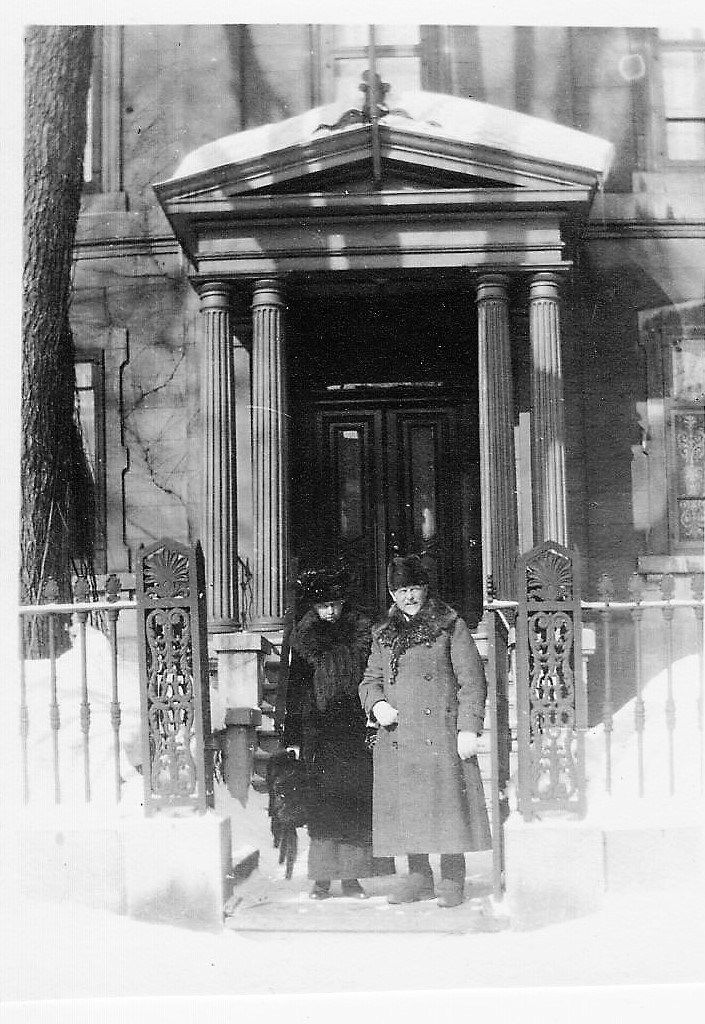
Her first matrimonial home, in 1881, was located at 436 St-Urbain2, which was a subdivision of a very large villa lot stretching down to Sherbrooke, near the Fairmount Villa where her mother still lived. Eventually she and Robert moved to 6 Prince of Wales Terrace3, at 455 Sherbrooke Street West (the address later became 1009 Sherbrooke Street West) where she raised her family and lived there until she died in 1938 at age 84.

Mr & Mrs R Lindsay - 6 Prince of Wales Terr -1917
Mr & Mrs R Lindsay – 6 Prince of Wales Terrace – 1917

Although Mary was petite in size and considered “frail” she and Robert had six healthy children.

Ada was her firstborn child. On her wedding day, it was discovered that the family cat had had her litter of kittens on the wedding dress that had been laid out on the bed!4 Somehow they were able to acquire another dress.  

This still remains one of my favourite family tales.

Ada - wedding - 1911
Ada Lindsay Griffith – 1911

Lionel, her eldest son, studied medicine all over Europe and became a well-loved family doctor in Montreal after he retired from the Canadian Army Medical Corps in 1915. Her second son, Sydenham, (my grandfather) The Priest became a well known Anglican Priest in the Montreal area, despite the warning from his stockbroker father that there was “Not much money in it!”

Her last three children did not marry.

1891-Children of RobertLindsay&MaryHBagg
Ada, Marjorie, Lionel, Stanley and Sydenham – 1891 (Marguerite was born in 1896)

Stanley served as a captain in WWI and survived the Battle at Ypres in 1915. Afterward he returned home to follow in his father’s footsteps and became another successful Montreal stockbroker. He remained the bachelor uncle who enjoyed doting on his nieces (especially my mother) and nephews. Beautiful Marjorie, however, remained a spinster when permission to marry her one true love across the Atlantic was denied for her own safety5. And sadly, Mary’s youngest child, Marguerite, died at age 26 as a summer volunteer with the Grenfell Mission in Labrador.Miss Lindsay – Part 1

Mary must have drawn great strength and comfort from her faith to support her adventurous children in their respective challenging worlds.

Updated and edited – 2023-03-27 by author

1 The Montreal Gazette, August 15, 1938.

2 Lovell’s 1890 – 1906.

3Commissioned 1860 to honour the Prince of Wales, Prince of Wales Terrace consisted of a row of nine houses which presented a unified, Montreal limestone facade in the Classical Greek style.

4 As told to me by my aunt, Katharin Lindsay Welch, telephone conversation – June 2013

5 As told to me by my aunt, Katharin Lindsay Welch, telephone conversation – June 2013

Granny-Lin

Millicent Thorpe Hanington (1895-1982)

Millicent’s one indulgence in later life was watching “Hockey Night in Canada” on television.  She was a committed fan and watched every game without fail.  One night during the game, Sydenham, her husband, felt light headed and fainted.  She gave him a gentle slap to wake him up, got him to swallow a couple of aspirins and warned him with:  “Don’t you dare die during my hockey game!”[1]

The birth of this sixth daughter, Millicent, in 1895, could have been in celebration of James Peters Hanington ’s graduation from McGill Medical School a year earlier, at the ripe old age of 49.  Millicent (my grandmother) was the baby of this family of girls, and eventually looked after all her sisters in their old age.

The Hanington family had strong roots in Shediac, New Brunswick, given that William Hanington (Millicent’s great grandfather) founded the town in 1784.  Millicent grew up spending the summers at her father’s cottage in Shediac Cape and soon after she married, she bought her own summer cottage there and named it “Iona Cottage”.  The family story told was that she was so thrilled, that the name was really code for “I own a cottage”!

Sydenham Bagg Lindsay, an Anglican priest in Montreal, actively pursued Millicent with marriage proposals until she finally accepted him ….on the condition that he look after all her sisters as well.[2]  Poor guy got six women for the price of one! Two of her sisters, however, were married and only three were spinsters.

Married in 1918, Millicent was a young bride of 23 years and Sydenham, a frail young man of 29.  She led a demanding life as a full time minister’s wife in addition to having four children of her own.  Their first child was born in 1920, a frail little girl called Mary Thorpe who strengthened as she grew and was talented in art and theatre.  In 1923, their son, Paul, was born, a jolly little fellow who was to be their life long tower of strength.  In 1926, their daughter Ann (my mother) appeared, a sweet tranquil baby, who was to become a marvellous mother.  Finally, in 1930, came Katharin, a whirlwind if there ever was one. [3]

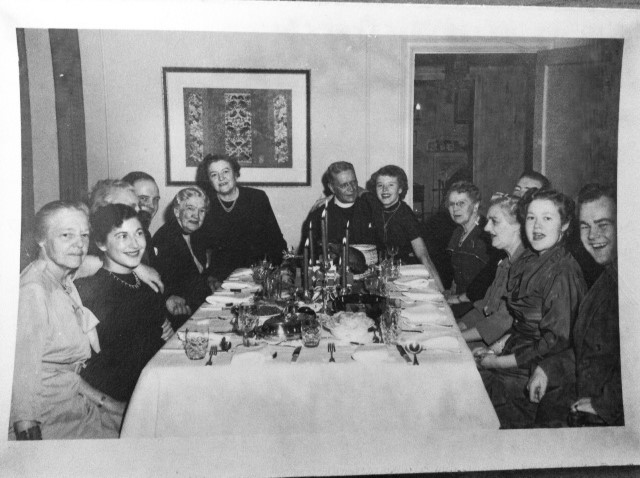
Millicent’s lively spirit and sense of humour carried her through many a trial. As they moved from parish to parish, her fame preceded her.  Her superb cooking kept the whole family well and strong, including their parents and all her sisters!  There are photos galore of a dozen or so family members around her Sunday table. When Sunday lunch after church became too much for her to manage, the family began a new tradition of eating Sunday lunch regularly at Murray’s Restaurant, which she thought was the closest thing to her own cooking.Dodo, Mary, Bob, Mrs JP Hanington, Granny, Grampa, Kay, guest, Tom, Tootie, Ann, friend Bobby

She kept an eye on her mother and her sisters as they aged and needed attention.  In 1950, her mother died in her 99th year and Millicent missed her terribly the rest of her life.

With the strain of WWII, parish duties and his family, Sydenham’s health suffered.  As his strength waned so did that of his daughter, Ann, who had developed Hodgkin’s disease.  Both parents suffered through her illness and death and the problems that beset her grieving husband and their four children.

Seven years after Sydenham died in 1975, Millicent felt ill and didn’t know why.  She had leukemia.  Six weeks later she died, still the gallant lively Spirit she’d always been.

[1] Personal recollections in a telephone interview October 2013 – with Katharin Lindsay Welch. (her youngest daughter)

[2]Personal recollections in a telephone interview October 2013 – with Katharin Lindsay Welch. (her youngest daughter)

[3] Personal recollections by Mary Thorpe Kerr – Victoria, BC – 1993

Sister Pilgrimage

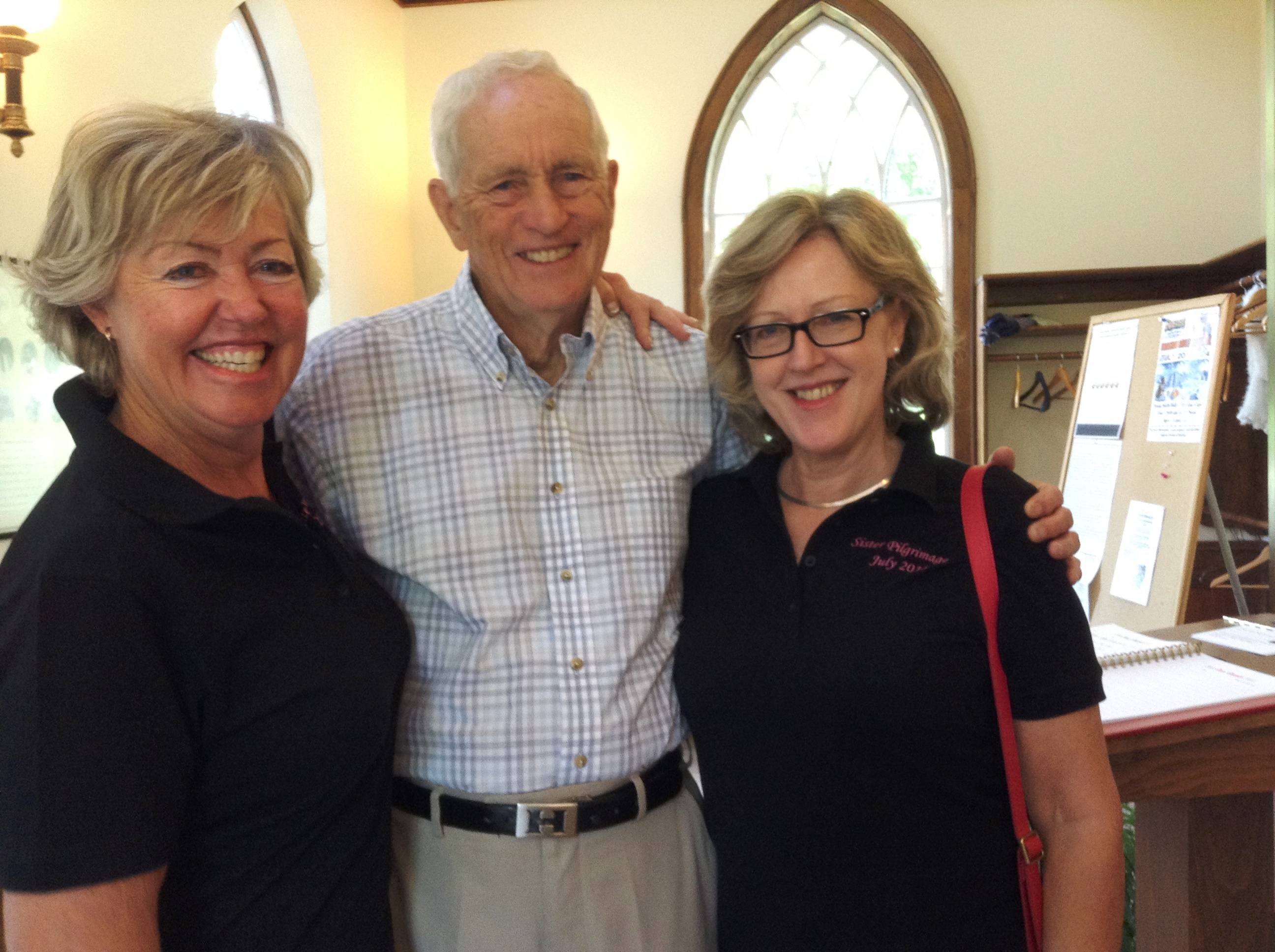
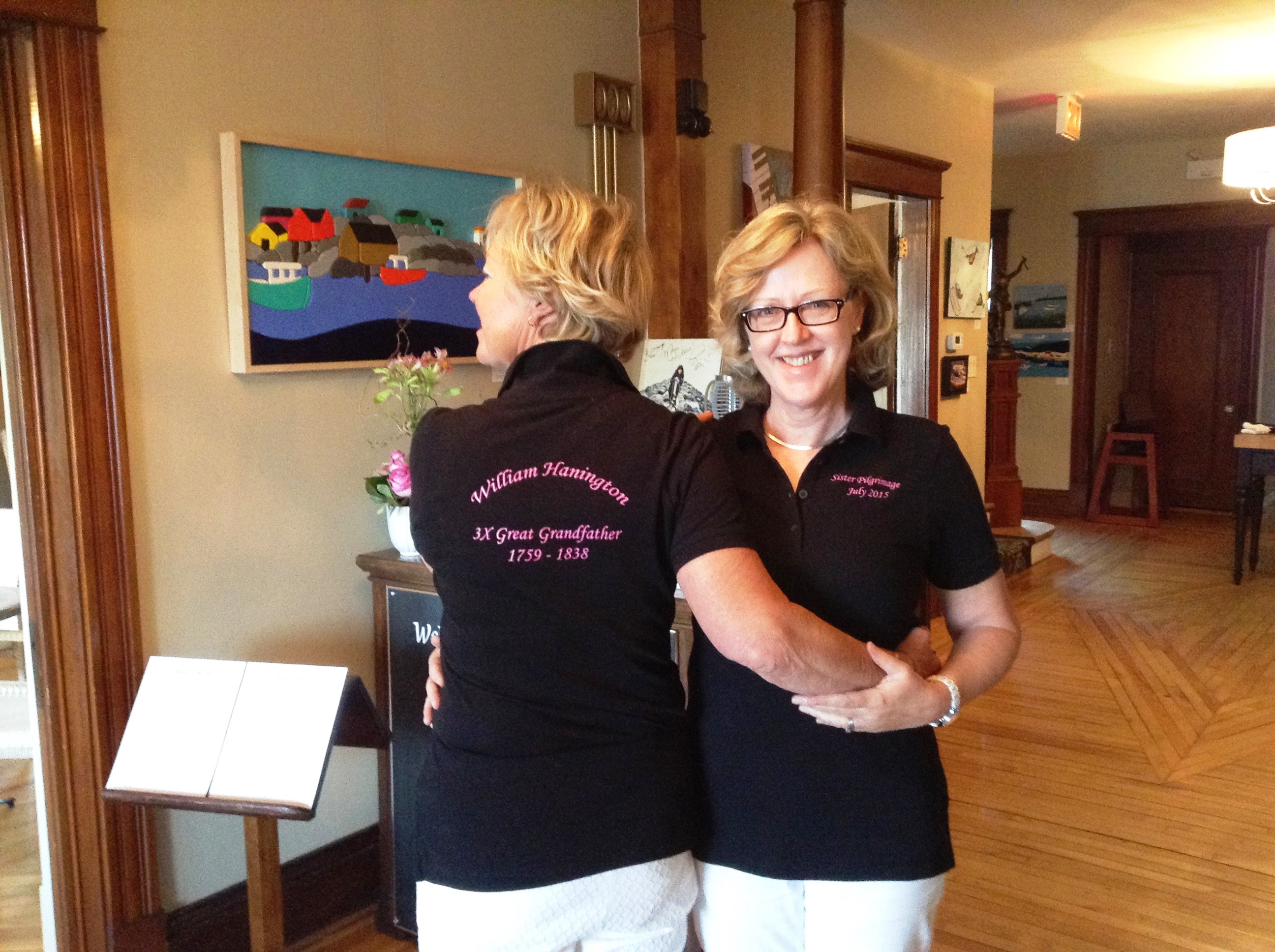
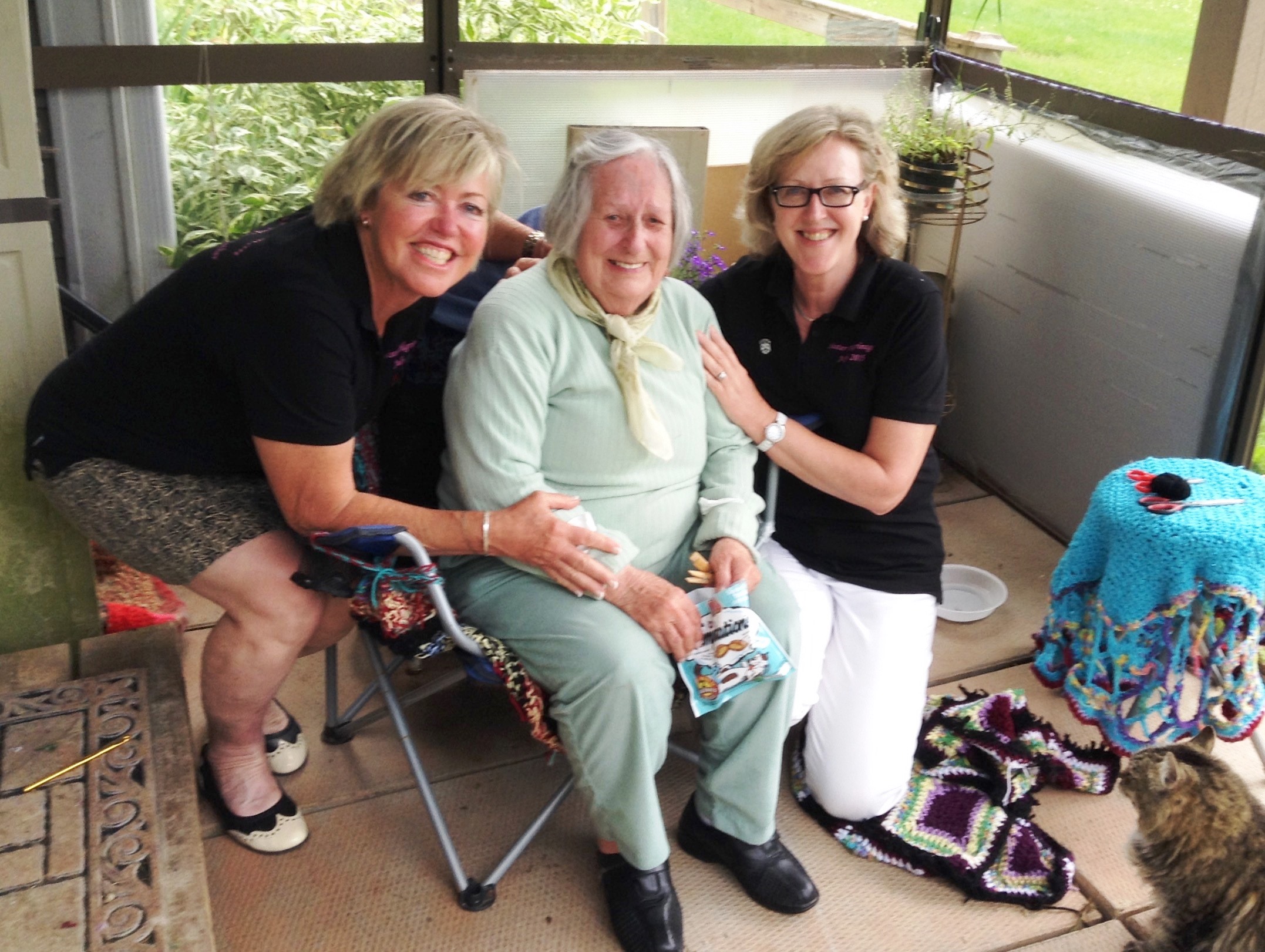
Early Sunday morning, dressed in our special t-shirts, we left in plenty of time for the morning church service at St Martin’s-in-the-Woods.  The greeter welcomed us warmly, and we asked if there might be any Haningtons at church that day.  She beckoned down the aisle to her husband who then introduced himself as Allen Hanington. 4-1StMartin-Haningtons (9) Overjoyed, we threw our arms around our surprised distant cousin and snapped a commemorative photo.  And so our journey began.

4-1StMartin-Haningtons (8)

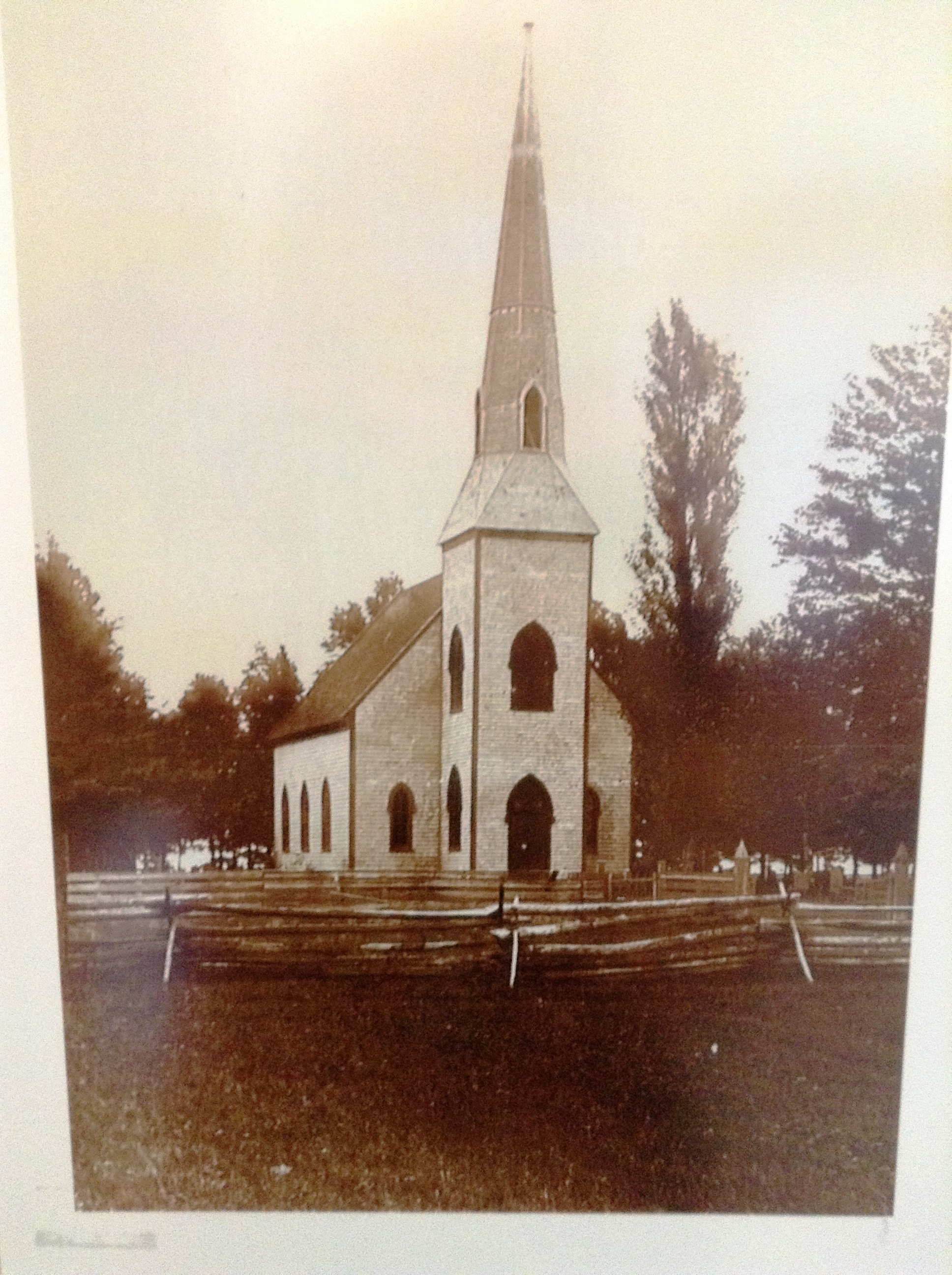
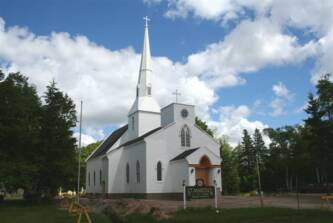
My 3x great grandfather, William Hanington, was the first English settler in Shediac, New Brunswick, in 1785.  He was an amazing fellow who emigrated from England at the age of twenty-six, built a whole community, set up lumber exports, built ships, married a PEI girl and had a family of thirteen.   Later in life, in 1823, he donated a piece of land and built St Martin’s-in-the-Woods Anglican Church, where he was buried in 1838.St Martin's in the Woods

4Shediac (23)
Front: Sister Pilgrimage July 2015 Back: William Hanington – 3x Great Grandfather 1759-1838

This past July, my sister and I decided to go on a one week “sister pilgrimage” to explore our family history in Shediac from 230 years ago.  We ordered our specialized t-shirts and planned our family-and-friends-fun-filled trip to the Maritimes. A very special trip for us both.  We hadn’t travelled together before and my sister, recently widowed, was embracing a “carpe diem” attitude.

Peggy’s Cove was our first  tourist attraction and we enjoyed a stroll around the lighthouse and its spectacular rocks overlooking the ocean. The quaint little shops were charming and the local afternoon tea was delicious.

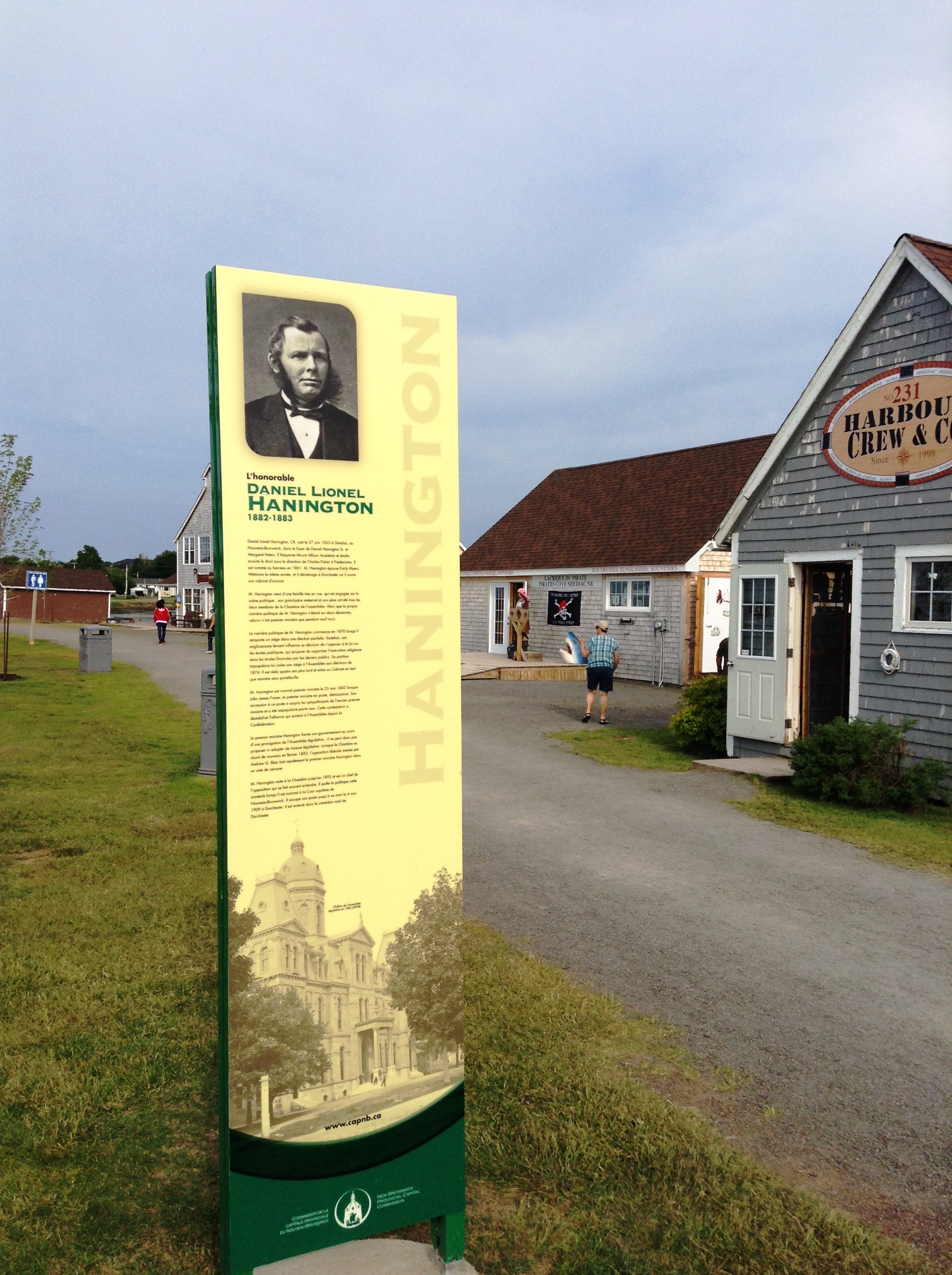
On our way to Shediac, NB, we visited my sister’s friend Helen who was new to the area and provided us with a hearty lunch.  We checked into our B&B in Shediac, and set off to explore the delightful little town.  On the waterfront, we climbed onto the famous giant lobster to pose for the ultimate tourist photo.  4Shediac (17)Afterwards, while strolling along the boardwalk, we came upon a historical monument dedicated to our 2x great grandfather Daniel Hanington, a famous politician in his time. What a terrific surprise!

6AppleBlossomCafe (4)
The Anglin Sisters meet the Wallace Sisters.

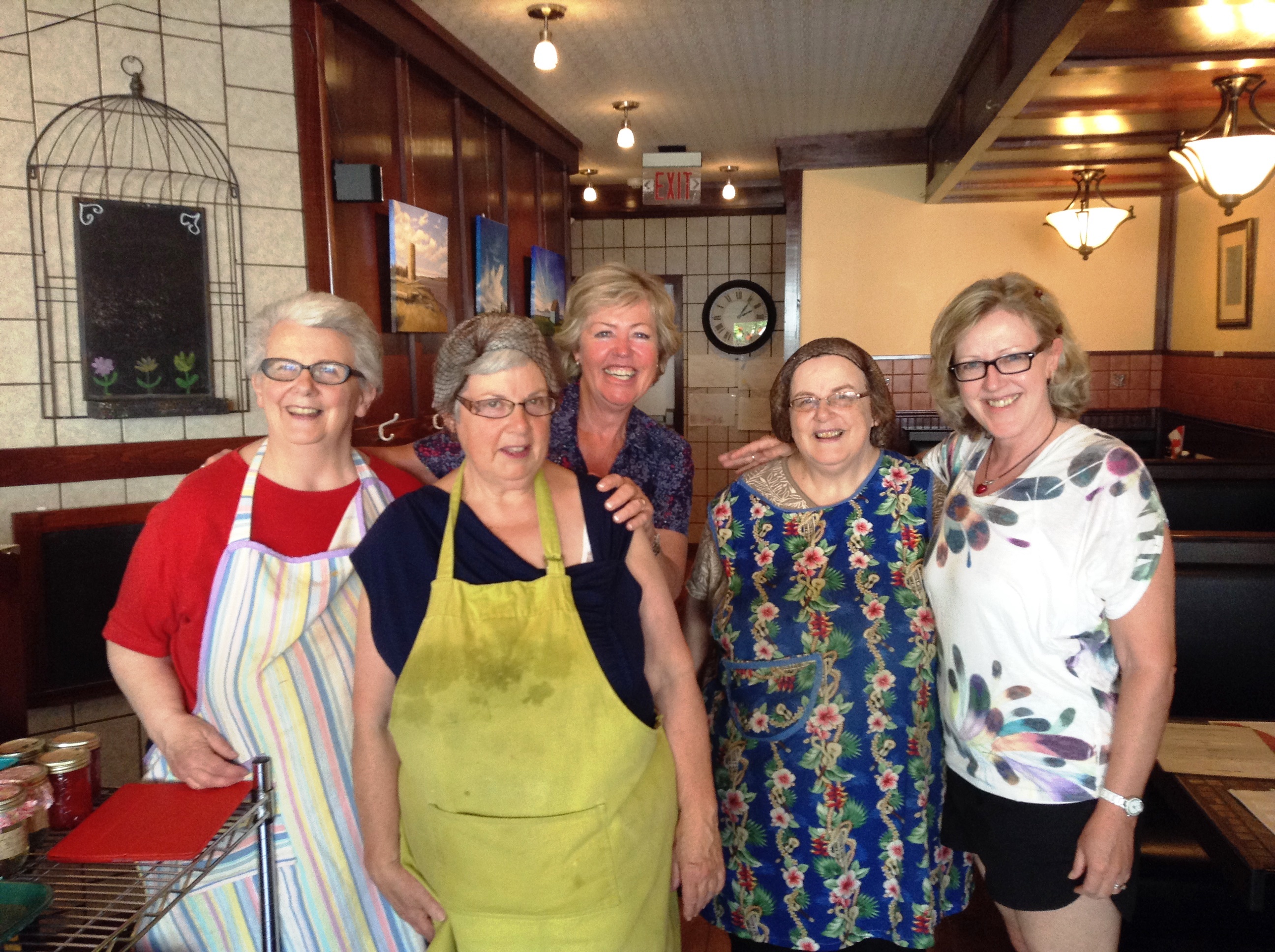
Hopewell Rocks was our second tourist attraction with its incredible change in tides.  That morning, we walked along the “beach”.  Then we lunched nearby at the Apple Blossom Café, run by three retired schoolteacher spinster sisters.  What a hoot they were!  After lunch, we returned to find high tide had completely transformed the whole bay.  Amazing!

The next morning, our GPS helped us find our way to tiny Clairville, NB, to visit my friends Carol and Bruce.  Their cozy place was beautifully perched up on a hill overlooking a vast field.  After a tour of their house and garden, we had a delicious lunch and then set out for Charlottetown, PEI.

While driving across the spectacular Confederation Bridge, it was difficult to imagine how William and his Indian guides paddled across the Northumberland Strait in 1792 to claim his bride in Summerside, PEI (then known as Ile-St.Jean).

We checked into our B&B in Charlottetown and headed off to meet Anne of Green Gables, our third tourist attraction.  Luckily for us, there weren’t many visitors that day and she was able to personally fill us in on all the latest town gossip.

On our last day, we visited our mother’s best childhood friend. who is living with her son and family just outside Charlottetown.  Our mother passed away when we were very young, and AuntJean“Auntie Jean” has been a precious source of their childhood tales. It was such a thrill to see her again.

Later on that Sunday after the morning service at St Martin’s-in-the-Woods, we visited with Allen’s charming sister Lillian, the family historian who knew our exact location in the Hanington family tree!

And just down the lane from the church, off  Hanington Street, was our grandmother’s summer cottage.  Our grandfather, Canon Lindsay, would fill in as their pastor from time to time over the summers and several people at church that morning remembered him fondly.

Finally, as we drove down the driveway to visit with Allen and his wife Willa, there they were sitting on the porch swing waiting to welcome us into their home. 4-1StMartin-Haningtons (18)The afternoon flew by with lemonade and homemade treats and eventually we bid farewell to our cousins with heartfelt promises to keep in touch.

PS  The August 2015 family newsletter, the Hanington Herald, just arrived by mail! Included in the comments from the President’s Desk (that would be our cousin Allen!), it says: “We just experienced a lovely visit from the Anglin sisters; Lucy (Montreal) and Margaret (Ottawa) who were visiting in the area and attended morning service at St Martin’s-in-the-Woods Anglican Church on Sunday, July 5th 2015.  We had a very nice visit on Sunday afternoon.  They are descendents of Daniel Hanington.”

The Matriarch (A Remarkable Memory)

Gertrude Thorpe Davidson (Mrs. James P. Hanington) – 1852-1950

The local newspaper in Saint John, New Brunswick, hit the jackpot when they interviewed 96-year old Mrs. James Peter Hanington in July 1948.  “”I always said I would not be old till I was 90’ said the charming silver-haired lady, with the sparkling dark eyes who was recalling her girlhood days in Saint John”[1].  From a remarkable retentive memory, Mrs. Hanington described events of many decades ago as though they were only yesterday, but was fully aware of and concerned about today’s issues.

One of her fondest memories included waltzing on skates to a live band with a gong sounding every half hour signaling the skaters to reverse direction.  She also recalled attending not-so-very interesting lectures at the Mechanics’ Institute with her girlfriends enabling them to meet the boys at those gatherings.

Entertaining was done in the home and was a simple matter due to the availability of affordable domestic help.  A cook’s wages were only $6 a month! The great expanse of her memories included a small playmate telling her of Lincoln’s death, the street lamplighter with his ladder going from lamp to lamp and the thrill of her first ride on a passenger train from Moncton to Saint John.[2]

Gertrude Davidson (my great grandmother), born in Saint John, NB, in April 1852, was the daughter of William and Mary Anne (Cook) Davidson.  Her father was a prominent lumber merchant and the grandson of the first settler on the Miramichi, who came out from Scotland at the age of 20. Gertrude’s earliest memories of her native city of Saint John were centered about the Davidson home at 98 Germain Street, the fine brick building her father erected for his family and to which she moved at the age of five.

Her father had been confident when the Great Fire of 1877 was at its height that the slate roof and brick walls of his home would be ample protection. He was wrong.

When forced to leave, her father had locked the door to keep out the thieves.  But fire proved a more thorough villain and all treasures were lost.

Gertrude saw the spire of Trinity Church fall that terrible day and was very anxious about the safety of the people.  However, blessed with a wonderful sense of humour, Gertrude commented on the strange attire of the people who attended a church service in the Victoria rink after the fire.  They had obviously escaped without their Sunday best![3]

As much as she loved Saint John, she moved her family to Montreal in 1890, when her husband, a successful local pharmacist, decided to go to McGill University Medical School at the age of 44.  Her seventh daughter (my grandmother) was born in Montreal in 1895, when Gertrude was already 42 years old.  While in Montreal, she raised her family, supported her husband’s new medical career, entertained frequently in her home and was an active member of St. John the Evangelist Church. She was very well respected in the community and enjoyed a large circle of friends.

During her long life, Gertrude had had her full share of illnesses and ailments but her knitting needles were always busy…and without the need of eyeglasses!  Perhaps being married to a Pharmacist turned Doctor had its fringe benefits!

[1] The Evening Times-Globe, Saint John, New Brunswick – July 7, 1948.

[2] The Evening Times-Globe, Saint John, New Brunswick – July 7, 1948.

[3] The Evening Times-Globe, Saint John, New Brunswick – July 7, 1948

Gertrude Thorpe DavidsonMrs. J P Hanington (Gertrude Davidson)Mrs JP Hanington

Pharmacist then Doctor

Dr. James P. Hanington (1846-1927)

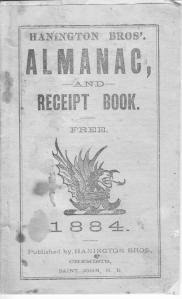
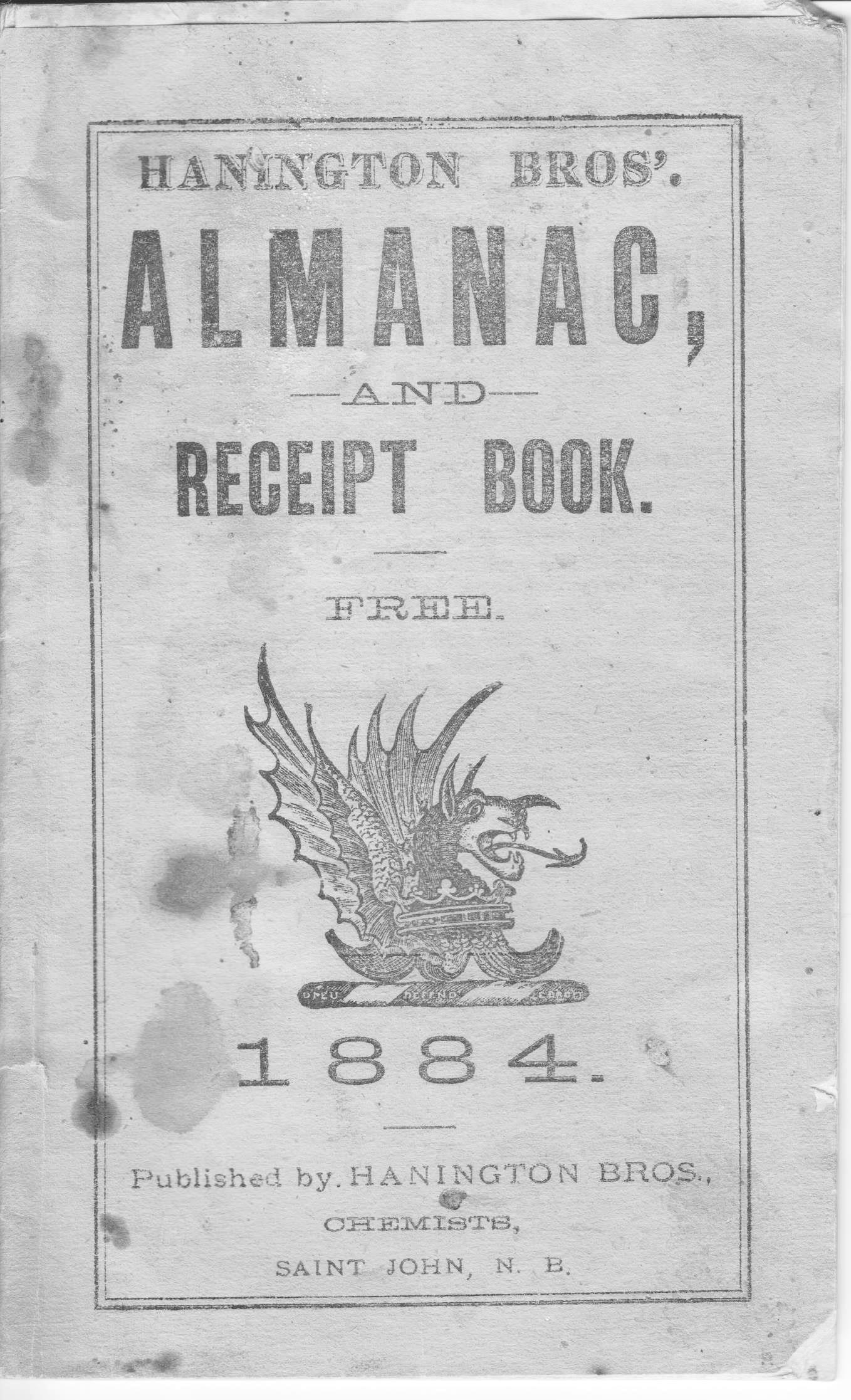
James Peters Hanington (my great-grandfather), and his older brother, Thomas, could make emulsions, ointments, pills or potions for just about anything that ailed you.  They were partners in “Hanington Bros., Chemists” in Saint John, New Brunswick.  Today, they would be better known as pharmacists. According to several testimonials in the 1884 Almanac and Receipt (recipes) Book[1], they were extremely helpful in alleviating all kinds of their customers’ health problems.  Here’s an example:

Dear Sirs,                                                   Gondola Point, Clifton, Kings Co. 1878

Having been troubled for years with pains in my side and severe cough, I was tempted to try a bottle of your “JPH Cough Mixture”, and also a bottle of your “Penetrating Liniment”.  I found immediate relief.  I have used two more bottles since, and am now perfectly well.  Returning you my sincere thanks for your cheap and valuable medicine. 

Yours truly, 

Florence D. McCarthy

In 1890, the partnership was dissolved. Thomas became the local Postmaster and James moved his pregnant wife and four daughters[2] to Montreal, Quebec, where he was enrolled in Medical School at McGill University.  He was one of few of his eleven siblings to leave the province, where his grandfather was known as the first English speaking settler and founder of Shediac, New Brunswick.

The first family home in Montreal, Quebec, was at 278 St. Urbain Street[3].  The family grew to include two more daughters, one born in 1891, shortly after their arrival in Montreal and another born four years later in 1895.  Six girls!  The last one born, when her mother was 43 years old, was my grandmother, Millicent.  Could she have been the result of a special celebration once James had finally completed medical school at the ripe old age of 49?

James graduated from McGill Medical School in 1894, having completed his four year degree, which included First Class Honours in Medical Jurisprudence in his third year[4].

A few years later, he moved his family to 699 Sherbrooke Street, corner of Park Avenue[5], which was a larger home to accommodate his growing family as well as his Physician and Surgeon’s[6] office.  His office hours “8 to 10 a.m., 3 to 4 p.m., 7 to 8 p.m.” were even listed in the directory!  He was a prominent doctor in Montreal for several years.

Although he settled in Montreal, he did, however, keep a lovely old home in Shediac, New Brunswick, called “Burn Thorpe”  where his family would gather in the summers and meet up with their cousins.

JohnYoung Wawa Millicent Mrs JP Hanington DodoTootie Jenjen Dr JamesPHaningtonBurn Thorpe -2

[1] Hanington Bros’. ALMANAC and RECEIPT BOOK, 1884, Published by Hanington Bros., Chemists, Saint John, NB

[2] 1891 Canadian Census

[3] 1891 Lovell’s Street Guide

[4] McGill Medicine 1893–p.81

[5]1897-1898 Lovell’s Street Guide [6]1897-1898 Lovell’s Street Guide  Hanington Bros Almanac 1884James P HaningtonDr James P Hanington

“Roaring Dan”

Roaring Dan

aka Daniel Hanington (1804-1889)

by Lucy Hanington Anglin

“Just open the window, Dan, and they’ll hear you clear to Fredericton!”[1]  Daniel Hanington was nicknamed “Roaring Dan” by his fellow politicians in Moncton, because he had such a deep, booming voice. Although he thought of himself as a farmer, Daniel’s greatest interest was really politics.

Daniel was elected to the Legislative Assembly as Member for Westmoreland County (south eastern part of New Brunswick) in 1834. He served in either the Lower or Upper House until he died 55 years later, spanning the terms of 12 Lieutenant Governors. [2] According to the Saint John DAILY SUN, he “was a courteous, genial gentleman of the old school, respected by all who knew him… His election to the presidency of the Legislative Council in February, 1883, was a fitting crown to a long and successful political career, and he brought to the performance of the duties of this office an amount of political experience and a familiarity with public affairs in which he was absolutely without a rival among provincial public men.” [3]

Daniel was born to William Hanington and Mary Darby (the first English settlers in Shediac, New Brunswick) in 1804, and was educated at the Sackville Grammar School.  He actually was a farmer as well as comptroller of customs at the port of Shediac, New Brunswick, for more than forty years.  He retired from that post in 1880, at the age of 76.

His wife, Margaret Ann Peters (1811-1887), was the daughter of William Peters and Charlotte Haines, both having arrived in Saint John, New Brunswick, as youngsters with their families along with several other Empire Loyalists in 1783.  Charlotte came with an aunt and uncle and never saw her parents again.  She lost her little handmade slipper in the mud when she disembarked and the remaining slipper is in the Museum in Saint John.

When their children were growing up, Daniel refused two departmental offers, because the duties of the office would compel him to be away from home much of the time.  He preferred the country life, and to oversee the education and training of his children. Indeed, they raised a truly remarkable family.  All nine sons were first-class businessmen, including another successful politician like himself,  a lumber merchant, a broker, a rector, a barrister, a chemist and druggist (my great great grandfather – James Peters Hanington), a civil engineer, a chief surgeon and a comptroller of customs.   It was also noted that the three daughters had also “done well”, which I am guessing in those days meant they married men with family money and lucrative careers!

In 1881, Daniel and Margaret Ann celebrated their fiftieth wedding anniversary, with nine of their twelve children (one son died as an infant).  At that time, the grand total of their children and their immediate families came to 73 people and over half of them were at the party!

Daniel Hanington and Margaret Ann PetersDaniel Hanington and his wife, Margaret Ann Peters

[1] as told by Mary Thorpe Lindsay Kerr (his great grand-daughter).

[2] The Canadian Biographical Dictionary 1881. Lieut-Col. Hon. Daniel Hanington, M.L.C., Shediac, NB

[3] DAILY SUN, Saint John, New Brunswick – newspaper

Shediac’s First English Woman Settler

Shediac’s First English Woman Settler

By Lucy Hanington Anglin

Mary Darby was feeding the chickens in her father’s yard, when along came an oxcart carrying a handsome gentleman.  To her amazement, he stopped the cart, dismounted, raised his hat in greeting and approached her for a chat.  The story told is that young William Hanington (age 33 years) proposed to her on the spot and she (age 18 years) accepted just as quickly.  After their marriage, she was taken across the Northumberland Strait from her father’s home in St. Eleanor’s, Isle St. Jean (now Summerside, PEI), in a canoe paddled by a couple of Indians, to her new home in Shediac, New Brunswick, where her English husband had settled seven years earlier in 1785.

Mary Darby was the daughter of Benjamin Darby, a Loyalist of Newbury,  New York.  Born in England in 1744, he emigrated to America in and settled in Newburg, 50 miles from New York City.  He was imprisoned at one time for his Loyalist sympathies and suffered great hardships at the hands of the rebels.  In 1783, hearing that Washington’s troups were marching on the town, he snatched his ailing wife from her sickbed and fled to New York with their five children.  They embarked for Isle St. Jean at Long Island.  Poor Mrs. Darby died on the voyage and was buried at sea. Mary Darby was only nine years old.  Her father re-married and had another family.

Mary’s first home was the log house her husband William had built in 1787, just two years after his arrival from England.   Although her first child died at birth, the next five of her twelve children were born in that log house.  In 1804, he built a three-storey frame house for his wife and family.  The house was all hand-wrought, the boards and beams were hewn by hand, the shingles were hand split, the trimming hand carved, split boards served as laths and the nails were all hand- made.  Water was obtained from a deep well by means of a bucket attached to a long well-sweep or pole.  Their son Daniel (my great great grandfather), born in 1804, was the first of the next seven children born in that frame house.

It’s hard to imagine but Mary was without female companionship for the first three years of her life in Shediac.  It must have been such a relief when her sister Elizabeth and husband, John Welling, also came over from PEI in 1795 to settle in Shediac.  John bought 200 acres of land from William for 20 pounds sterling (about $20 then). Once settled, Elizabeth and John also raised a large family of 12 children.

William died at the age of 79, in 1838, and Mary lived another 13 years without him.  Her life must have been one of hardship and suffering and yet she lived to the age of 77 years.  Amazing!