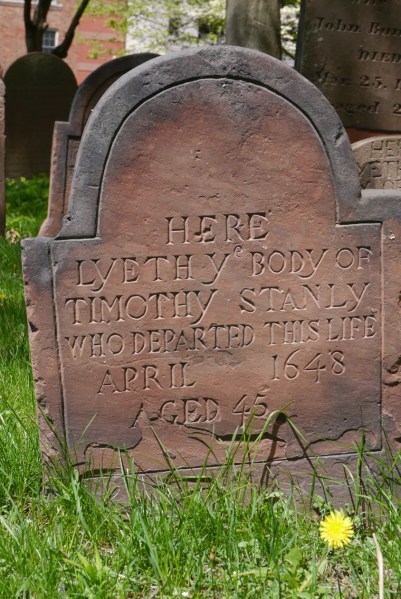
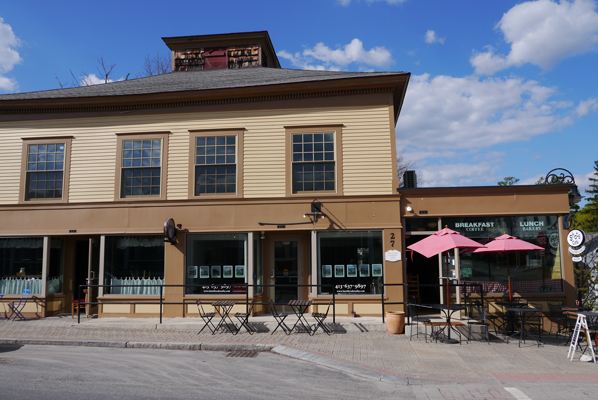
A few years ago, my husband and I travelled to Pittsfield, in western Massachusetts, where Phineas Bagg (c. 1751-1823), my four-times great-grandfather, lived. As we wandered around the nearby town of Lenox, we spotted a sign indicating that a small office building had once been the Berkshire County Courthouse. Simply by chance, we were standing in front of the building where my family’s history had taken a dramatic turn. In 1794 and 1795, my ancestor appeared in that courthouse because he owed money he couldn’t pay to several local merchants. After he lost most of his land to pay off these debts, he left Massachusetts and came to Canada.
Phineas was most likely born in Westfield, MA around 1751. Although there is no record of his baptism, he was probably the youngest of eight children of farmer David Bagg and his wife Elizabeth Moseley.1 Elizabeth died when Phineas was about eight years old. His father remarried, but that second wife also died. In the mid-1760s, the family moved to Pittsfield, a new town on the western frontier of Massachusetts, and David married a third time. Meanwhile, the family cleared the forest so they could plant crops, and they likely built their own log house. Later, as a young single man in 1777, Phineas purchased a farm of his own of about 100 acres.
Although Pittsfield was remote, the political events of the time were of great interest to its residents, and opposition to Great Britain was strong. When the American Revolution (1775-1783) broke out, Phineas, his father and several of his brothers served as soldiers. On three occasions, Phineas marched in a local militia unit, and he served in the Continental Army for about a month.2
By the time the war ended, Phineas had his own family. In 1780, when he was about 29, he married 20-year-old Pamela Stanley.3 There are no records of their children’s births or deaths, but Phineas and Pamela had four children who survived to adulthood: Polly, Stanley, Abner and Sophia.4
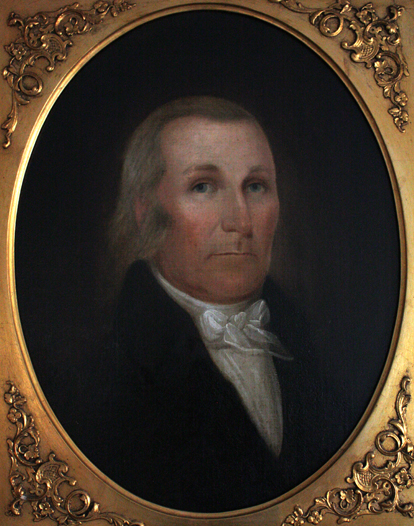
When his household was counted in the 1790 United States census, it included six people: one white male age 16 and older, two white males under 16 and three white females.5 Phineas Bagg’s name also appeared in other Berkshire County records: his household was included in a 1786 local census, his name appeared in the ledger of a local merchant between 1791 and 1794, and he paid $49.11 in real estate tax in 1795.6 What was not recorded was his wife’s death. Pamela probably died between 1792 and 1794, a period when there were many deaths in the community. This would have been a hard blow to the family, not only emotionally, but also because women not only raised the children, they also helped bring in extra income to the farm.
Farmers Under Pressure
Many New England farmers had faced financial difficulties ever since the end of the revolution. In 1886 and 1887, many of them joined in what became known as Shays’ Rebellion.7 I do not know whether Phineas joined the rebels, but he shared a similar financial situation.
Phineas was a yeoman: a farmer who owned his own land. Land ownership gave yeomen a great deal of pride and independence. Before the revolution, the farmers in the interior regions of Massachusetts were subsistence farmers: they grew enough crops to feed their families (mostly Indian corn, apples and vegetables) and bartered the small surplus of goods they produced with local merchants to obtain products such as nails and sugar.
After the revolution, new economic forces squeezed the merchants, and they in turn pushed their customers for cash. If the farmers did not have cash, the merchants took them to court. Many yeomen lost their land, others were sent to jail.
This was what happened to Phineas. In 1793, he mortgaged his farm to the Union Bank for $500. The following year, three creditors took him to the Berkshire County Courthouse for debts totaling about 44 pounds. If he did not repay the money within six months, the court commanded the sheriff to “take the body of said Bagg and him commit into our gaol” until his creditors were satisfied.8 In post-revolutionary New England, being sent to debtor’s jail was often equivalent to a death sentence. Phineas had no choice: several weeks later, he gave each of his creditors several acres of the farm as payment.
In 1795, he took out another mortgage on his property. Then ten additional creditors to whom he owed a total of $650, including substantial court costs, assessors’ fees and inflated travel expenses, won judgments against him. To repay them, Phineas lost another 62 acres of farmland, the barn and half his house.
A final court case, heard in 1797, involved money he owed a tailor. Once again, the court ordered that Phineas should be jailed if he did not pay. Phineas did not pay and he did not appear in court. In fact, by that time, he was in Canada. Several weeks later, that tailor acquired title to a piece of land from Phineas’ farm.
Perhaps these events had convinced Phineas that he could not raise his children in Pittsfield. Perhaps he was so distraught, he did not want to try. I do not know whether anyone attempted to convince him to stay in Massachusetts, but at some point, he and the children headed north along the Indian trails and military roads toward Lake Champlain and Lower Canada (now Quebec). Meanwhile, it appears he had found a companion who wanted to accompany him to this new life – or perhaps she persuaded him to go. Her name was Ruth Langworthy.9
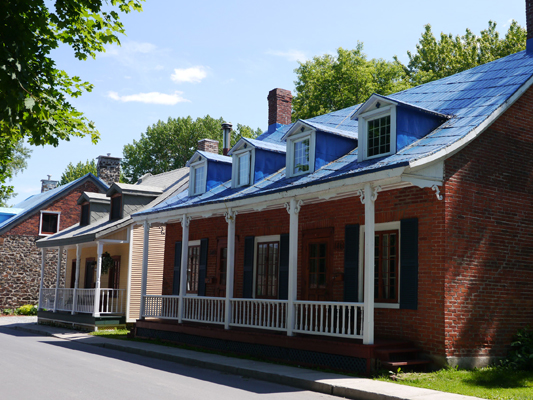
Phineas received a licence to run a tavern in La Prairie, Lower Canada, on March 15, 1797 and he became an innkeeper. La Prairie is a small town located on the south shore of the broad St. Lawrence River, opposite Montreal. The Indigenous people were early inhabitants of the area, and Jesuit missionaries established a mission there in 1667. Later, a small walled fort was built to protect the residents, and La Prairie remained strategically important for the defence of the area until after the War of 1812. When Phineas resided there, La Prairie had become a commercial hub. It was relatively close to the Richelieu River, which connected to Lake Champlain and the U.S. border, and it was a transit center for goods being transported to and from Montreal. A number of English-speaking merchants lived in the town at the time.
Phineas and Ruth eventually had two children. Daughter Lucie Bagg was baptized in the Catholic parish church in La Prairie on January 11, 1798 by a French-speaking priest and with French Canadian godparents. Lucie was referred to as Phineas’ “natural daughter,” another way of saying her parents were not married. When she grew up and married, she lived in Buffalo, New York. Phineas and Ruth also had a son, Louis, who died shortly after birth in 1800. I do not know what happened to Ruth.
Montreal Tavern Keeper
La Prairie notary Ignace-Gamelin Bourassa handled six acts for Phineas between September, 1796 and March, 1801, including a lease, an agreement for transportation and a loan guarantee, while notary Edme Henry handled two leases from Joseph Nolin to Phineas Bagg in 1800 and 1803. Other notarial records show Phineas purchased land in the La Prairie area in 1805 and sold it in 1813.
By 1809, Phineas had moved across the St. Lawrence and was living on the Island of Montreal. In October of that year, he was appointed overseer of highways for the Ste-Catherine district, an annual unpaid appointment that rotated among parish householders. Phineas may have been a member of the Scotch Presbyterian Church in Montreal.10 A number of Americans attended that church.
As an exciting new opportunity arose, he formed a business partnership, P. & S. Bagg, with his oldest son, Stanley, to run another tavern. On October 17, 1810, the pair visited the office of Montreal notary J.A. Gray to co-sign a lease for the Mile End Tavern with landlord John Clark.11 Although it was not a mile from anywhere significant, the Mile End Tavern was in an excellent location for a drinking establishment, at the corner of St. Lawrence Street, the road leading north from the city to the Rivière des Prairies, and Ste. Catherine Road, which crossed the northern flank of Mount Royal. The tavern must have been a popular spot for travellers, and especially busy on days when there was horse racing at the nearby track.
The Mile End property was also a farm, and the lease stipulated that the tenants had to manure the pastures, protect the maple grove, and allow their cows and those belonging to the neighbouring nuns to graze together. Having been both a farmer and an innkeeper, Phineas was well suited for this undertaking.
Phineas and Stanley renewed the tavern lease in 1815, but by 1818, Stanley was busy with other opportunities as a merchant and contractor, while Phineas was in his 60s. They closed the tavern business, placing an ad in the newspaper asking anyone with an outstanding account to settle it. A year later, son Stanley Bagg and land owner John Clark signed another notarized agreement: a marriage contract between Stanley Bagg and Mary Ann Clark, John Clark’s only daughter.
When Phineas died in 1823, his funeral service was held at Montreal’s Anglican Christ Church. Phineas Bagg Esquire was probably buried in the old cemetery downtown and his remains later moved to the imposing Bagg family crypt in Mount Royal Cemetery. Once a debtor threatened with imprisonment, Phineas had become part of a well-respected family.
This story originally appeared on my personal family history blog Writing Up the Ancestors and I have edited it with some additional material.
Notes and footnotes
1. The best evidence for his date of birth comes from the record of his burial at Montreal’s Anglican Christ Church. Dated Nov. 3, 1823, it says, “Phineas Bagg esq of Montreal, merchant, died on the 31 day of November [sic] 1823, aged 72 years, and was buried on the 3rd day of November following by me. John Bethune, rector.” (The minister made a mistake on the date of death: it was actually 31 October.)
In 2014, I researched the question of Phineas’ parents and posted my conclusions on my personal family history blog, Writing Up the Ancestors (https://www.writinguptheancestors.ca/2014/10/who-was-phineas-bagg.html). While unable to state categorically that David and Elizabeth were his parents, I wrote, “there is considerable evidence to suggest that Phineas Bagg was born in 1751 in Westfield, the son of David Bagg and Elizabeth Moseley, however, most of this evidence is indirect, from derivative sources and secondary information, so it is inconclusive. I found no evidence that conflicts with this hypothesis.”
In 1980, Debretts, the genealogy company that researched the Bagg family for my mother, came to the same conclusion, writing that, “although we have no conclusive proof, it seems reasonably certain that David was Phineas’ father.” The report also noted that David purchased land in Pittsfield from Abel Caldwell on January 1, 1763, and that same land was subsequently owned by Phineas.
2. A summary of his service record reads as follows: “Bagg, Phineas, Pittsfield.Capt. William Francis’s co.; list of men who marched to Albany Jan. 14, 1776, by order of Gen. Schuyler, and were dismissed Jan. 19, 1776; service, 5 days; also, Lieut. William Barber’s co., Col. Simonds’s regt.; list of men who marched to New York Sept. 30, 1776, and were dismissed Nov. 17, 1776; service, 7 weeks; also, Private, Capt. William Francis’s co., Maj. Caleb Hyde’s regt.; list of men who marched to Fort Edward July 8, 1777, and were dismissed Aug. 26, 1777; service, 7 weeks; also, list of men who enlisted Oct. 26, 1779, to reinforce Continental Army, and were dismissed Nov. 30, 1779.” Ancestry.com. Massachusetts Soldiers and Sailors in the War of the Revolution [database on-line]. Provo, UT, USA: Ancestry.com Operations Inc, 1998. Original data: Secretary of the Commonwealth. Massachusetts Soldiers and Sailors in the War of the Revolution. Vol. I-XVII. Boston, MA, USA: Wright and Potter Printing Co., 1896. (accessed Jan. 12, 2013)
3. Early Vital Records of Berkshire, Franklin, Hampden & Hampshire Counties, Mass. to about 1850 (electronic resource) Wheat Ridge, CO: Search and Research Publ Corp. c2000, p. 22 of sheet 99, F94/p6/M37.
4. According to date of birth calculated from age as listed on her tombstone, Polly Bagg Bush was born April 22, 1785 and died Jan 9, 1856. (https://www.findagrave.com/memorial/65952231/polly-bush).
Stanley Bagg and his brother Abner were both baptized as adults in Christ Church (Anglican) Montreal in 1831. At that time Stanley gave his date of birth as June 27, 1788 and Abner said he was born August 5, 1790, however, Abner’s date does not make sense in light of his sister Sopha’s calculated birthdate. “Quebec, Canada, Vital and Church Records (Drouin Collection), 1621-1968” [database on-line]. Ancestry.com, (www.ancestry.ca, accessed 2 Oct. 2016), entry for Stanley Bagg, 2 April, 1831; citing Gabriel Drouin, comp. Drouin Collection. Montreal, Quebec, Canada: Institut Généalogique Drouin.
Sophia was probably the youngest of the Bagg children. When Dame Sophia Bagg, veuve (widow) Gabriel Roy died Nov. 12, 1860, she was said to have been 69 years, eight months of age. Calculating her date of birth, she would have been born around February 20, 1791. (“Quebec, Canada, Vital and Church Records (Drouin Collection), 1621-1968” [database on-line]. Ancestry.com.)
5. United States Census, 1790 Pittsfield, Berkshire, Massachusetts, familysearch.org, results for Phinehas Bagg. “United States Census, 1790,” database with images, FamilySearch (https://familysearch.org/ark:/61903/1:1:XHKL-1HW : accessed 29 September 2018), Phinehas Bagg, Pittsfield, Berkshire, Massachusetts, United States; citing p. 483, NARA microfilm publication M637, (Washington D.C.: National Archives and Records Administration, n.d.), roll 4; FHL microfilm 568,144.
6. The people of Pittsfield were not great record keepers during this period, however, the Berkshire Family History Association (www.berkshirefamilyhistory.org/) has done a good job of transcribing the records that do exist.
7. David P. Szatmary, Shay’s Rebellion: The Making of an Agrarian Insurrection, Amherst: University of Massachusetts Press, 1980.
8. These legal documents have been digitized by Familysearch.org and can be browsed under Massachusetts Land Records 1620-1986, Berkshire, Deeds, 1792-1813, vol 31-32, images images 424-428 and 435-443.
9. William Franklin Langworthy, compiler, The Langworthy Family. Some descendants of Andrew and Rachel (Hubbard) Langworthy, who were married at Newport, Rhode Island November 3, 1658. Published by William F. and Orthello S. Langworthy, Charles St. Hamilton, N.Y.
See Janice Hamilton. “Lucie Bagg’s Mother, Ruth Langworthy”, Writing Up the Ancestors, April 15, 2016, https://www.writinguptheancestors.ca/2016/04/lucie-baggs-mother-ruth-langworthy.html
See Janice Hamilton, “Lucie Bagg: Her Story,” Writing Up the Ancestors, March 31, 2016, https://www.writinguptheancestors.ca/2016/03/lucie-bagg-her-story.html
10. Rev. Robert Campbell, A History of the Scotch Presbyterian Church, St. Gabriel Street, Montreal, Montreal: W. Drysdale & Co. 1887, P. 252. https://archive.org/details/cihm_00397/page/n1. This book notes the large number of New Englanders living in Montreal at the beginning of the 1800s. The author mentions Phineas but incorrectly describes him as Abner Bagg’s brother, rather than his father, so he may have confused Phineas with Stanley.
11. Notary J.A. Gray, act #2874, BAnQ