Category Archives: Canadian Province

For Their Health

Donald and Isabella had not been well over the winter and of all the things they could do to improve their health, they felt an ocean voyage would be the cure. Hopefully, the salt air and a good long rest would improve their appetites.

In 1900, Donald Sutherland, my great-grandfather, his sister Isabella Sutherland Rae and sister-in-law Jessie Johnston Sutherland traveled to New York from Toronto and sailed from there to Scotland aboard the Laurentian, a steamship of the Allen Line.

Food was not available twenty-four hours a day, as on a cruise ship today, but was plentiful and varied. Breakfast was porridge with fresh milk or maple syrup, Loch Fyne herring, or beefsteak and onions. Lunch, the main meal was roast veal with lemon sauce or roast goose with applesauce along with potatoes, parsnips and sweets for dessert. Supper was lighter, with cold meats, preserved salmon, finnan haddie, not our family favourite, breads, cheese and jam.1 Donald wrote, “We had a fine sail for about four days and the rest of the voyage was not very fine but for the pitching and rolling and heaving we had yet none of us three were sea sick long enough to miss our meals.”2  I love this quote as it captures some of the essence of his character. I can just see them struggling up the stairs, not wanting to miss a meal they had paid for and hoped would improve their health.

Donald and Isabella were born in Canada to William Sutherland and Elizabeth Mowat. Jessie Johnston was born in Scotland and came to Canada as a child. She was married to William, Donald and Isabella’s older brother. They arrived in Glasgow and then went on to Edinburgh, where Jessie was born. They had a wonderful time touring the area and Jessie remembered many landmarks from her childhood, including of course the castle.

img_0417
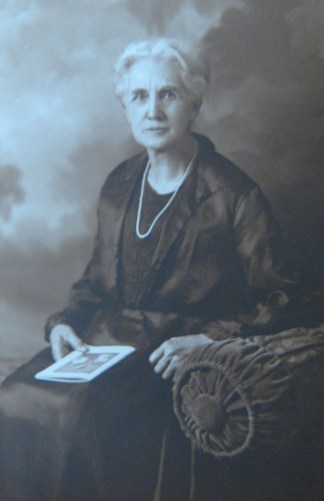
Isabella Sutherland Rae about 1920

The Sutherland’s father, William, was from Tongue, in the very north of Scotland. He had left for Canada in 1845 and never went back. Isabella’s mother-in-law, Hughina Sutherland Rae, who was also her father William’s sister, was still living in Tongue at the time, but they didn’t visit. I always thought this strange because as far as I know, they had never even met. Here they were so close in distance, but when they had the choice of a trip north to Tongue or down to London, London won out! They couldn’t do both without more expense and time than they had available.

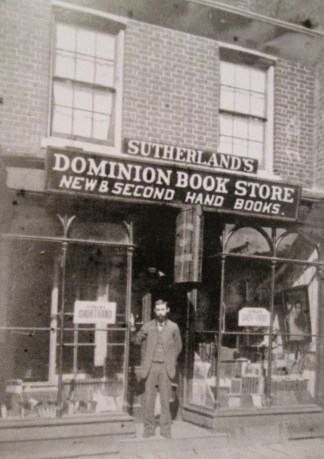
Donald had a bookstore in Toronto, Sutherland’s Dominion Book Store and was very interested in visiting the London booksellers. He wanted to spend time among the books. That city impressed them all and they would have loved to stay longer to see more.

img_8647
Donald Sutherland about 1895

On arriving back in Canada, they figured the trip was a great success as they were all in good health and had gained weight. “However, I got the benefit of the trip as I expected and I feel a great deal better now than I have been for a long time. I have gained over 9 lbs. after I got home and am still gaining.”3

They had great tales to tell of their trip and the funniest thing that happened in Dublin, but unfortunately, these stories were to be told in person and were not put to paper.

1Allen Line Daily Menu Card second class June 9, 1906. www.gjenvick.com/vintage menus

2Letter from Donald Sutherland to his McIntosh Cousins. Dec 17, 1900. Original donated by Carol McIntosh Small to the Bruce County Historical Society.

3Same Letter

A Beautiful (Terrible) Life

royal-selangor-club

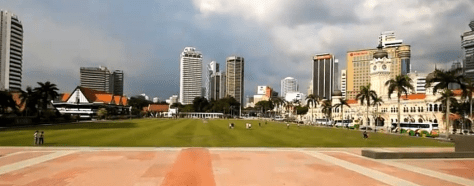
The Royal Selangor Club and padang today in Kuala Lumpur.  

It is a truth universal for genealogists: If at first you don’t succeed – finding info on an ancestor on the Internet – try and try again.

About ten years ago, surfing the Library of Congress online archive, I discovered that there existed a 1953 March of Time video about the Malayan Communist Emergency.  Even better, the blurb on said website claimed said this particular episode of the iconic newsreel contained a bit about my grandmother and namesake, Dorothy Nixon.

I soon found out that the video was long out of production. I couldn’t even find an old copy on eBay. Then, about two or three years later, a former Malayan colonial posted the video in its entirety on YouTube, Playing Cricket whilst Fighting Goes On. It’s still up there. 

Today, all I have to do is point and click and there she is: my small snowy-haired grandmother, about  55 years old, seated beside a man in a tall turban while scoring a cricket match at the much-storied Royal Selangor Club, on the pedang, or green, in Kuala Lumpur.

My grandmother’s segment is at the end of the piece describing  the decade long jungle conflict, at about the 6 minute mark.  “Mrs. Nixon,” says the announcer, “is a fixture at the Royal Selangor Club” which has just opened up to non-Europeans. It isn’t mentioned, but I know for a fact that, at the time, Dorothy was the only woman who had ever been allowed into the men’s section of the club.*

Before WWII, the green or padang was surrounded by government buildings.  That is why, on Boxing Day, 1941, two weeks after Pearl Harbour, the green was bombed by the Japanese.  My grandmother was at the Kuala Lumpur Book Club, a library nearby, when the bombs hit. According to her family memoir, she hid under a desk until the barrage ended and then got up to help dig out dead bodies from the rubble.

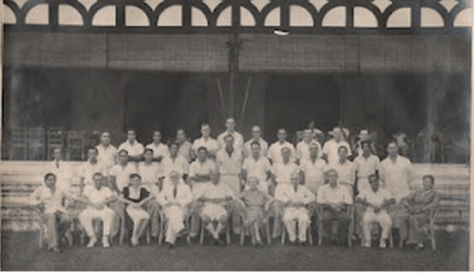
Here’s a post-war picture of Dorothy with the Selangor Cricket team from the 1947 sent to me by a former Colonial.

dorothy-club-big

The picture suggests my grandmother enjoyed being one of a few women among a large group of men. And, it’s true, almost everything I have learned about her seems to underscore this point.

A few days after the bombing, when Kuala Lumpur was overrun from the North by Japanese soldiers riding on bicycles, all rubber planters’ wives were told by telephone  to leave the city.  My grandmother removed herself only reluctantly, taking a dark and noisy night train to “safety” in Singapore.  When, a few days after that, and much to everyone’s surprise, Singapore fell, Dorothy simply refused to get on a boat to Batavia like most other British women, so she was interned at Changi Prison.

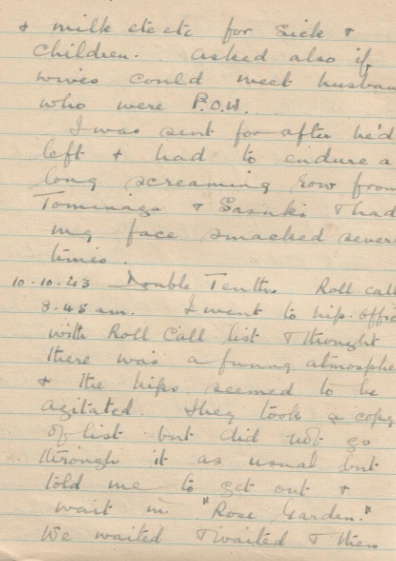
For a 6 month period in 1943, Granny, as we kids called her, was elected Women’s Commandant, where she had repeated run-ins with the mostly hands-off Japanese Commandant. Soon after she relinquished her leadership post, she was arrested by the Japanese Kempetai for allegedly spying (and colluding with the Men’s Camp) in an infamous ‘radio’ incident called the Double Tenth.  

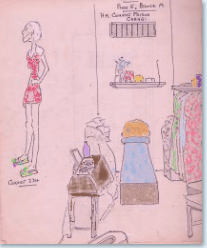
dorothycell

Dorothy: Self-portrait. The relative luxury of her Changi cell. At first, the Japanese Commandant was hands-off and even helpful, but that changed over time with a new man put in the position.  The women’s camp population grew large, to over 300, over the span of the war and soon there were three women to a cell. 

Dorothy spent a month in a tiny windowless room in the bug-infested basement of the Singapore YMCA with 17 desperate male suspects who were taken out nightly to be tortured. Their screams and a bright light kept her from sleeping.  Then she was put in solitary confinement for five long months and starved to an inch of her life on two cans of condensed milk a day.  Apparently, she much preferred the buggy room.*

double-tenth-diary

(A page from her ‘memoir’..Double Tenth is 10th of October)

My father, a classic “Child of the Raj” hardly knew his own  British ‘mater’, so much of what I knew about my grandmother before my recent Internet forays was mere family myth.

Using Ancestry.co.uk, I recently discovered that my Granny travelled by boat from Yorkshire (well, Liverpool) to Malaya in December, 1921 to meet up with her new husband, Robert, also from the North of England, who was working on a rubber plantation near the beautiful Batu Caves.

(She had been a Land Girl in WWI, in forestry, leading the giant Clydesdales that pulled the logs through the woods.)

She gave birth to my father, Peter, but ten  months later, and this despite the fact my grandfather refused to give up his Asian girlfriend. Anglo rubber companies forced their employees to marry British wives, which provoked a lot of resentment against these interloping women, who were considered too high maintenance and parvenus of a sort.

Still, colonial life wasn’t all terrible. In the twenties, Dorothy attended polo matches with sultans and hosted formal dinners for British dignitaries, some of these men living legends, at her airy bungalow on her husband’s rubber estate.

“We had fun in those days,’ she told a journalist in the 1970’s, who put it in a book about Colonial Malaya. The journalist described my grandmother, in her dotage, as very weak and ‘somewhat vague.’

It was later, in the 1930s that Dorothy became Head Librarian at the Kuala Lumpur Book Club, a turn-of-the-century institution that also provided a mail-order book box service for Brits isolated in the remote jungle.  I don’t know if she took on this job out of sheer boredom (since her children had been sent to England early on, and she had the usual quota of servants) or because the Depression forced her to.

Then came WWII and her near-death experience at the hands of the Japanese.  Eventually, in the fifties and sixties, she was anointed the “Grand Dame of Cricket” in Malaya.  For a while they were giving out a Dorothy Nixon Trophy.

My grandmother died in 1972 at age 77, shortly after that interview, in her rooms at the Majestic Hotel in KL surrounded by her precious personal collection of books which were later donated to the Malaysian National Library, but not before meeting her name-sake granddaughter.

Upon her retirement from the KL Book Club, in the summer of 1967, she flew in to visit us for six months in the Snowdon area of Montreal.

Dorothy Senior was not impressed, I can tell you, with our bilingual island city, our ‘exotic’ World’s Fair, or her pimply, pubescent string-bean of a granddaughter.

And all I saw in her was a bad-tempered old crone, always pacing the narrow halls of our cramped upper duplex apartment with a Rothman’s cigarette in one hand a tall tumbler of gin in the other, criticizing almost everything, including my mother’s decadent pound-of-butter, six egg French Chocolate Pie.

So closely confined and besieged by a band of unruly Canadian grandkids, she must have felt as if she were back at Changi!

grannylll

Granny, in picture, visited us for Expo67.

She did, indeed, tell my mother about her WWII experience and my mother did mention it to me. “Try to be nice to your grandmother,” I recall Mummy saying. “ During the war she had to sit cross-legged for days in a room with many men.”  But, that plea made no impression on me.

My grandmother and I hardly spoke,that sweet Expo summer, even though I gave her breakfast in bed every morning, one hard-boiled egg and a tiny container of a strange food called ‘yogurt’, and we both preferred it that way.

After all, the  very first week of her visit she had told me I could never visit her in Malaysia, as she would ‘lose face’ in front of her Chinese friends.

Oh, well. I’m making it up to her now.

===========================================

*The Royal Selangor Club, founded in 1884 by British colonials, has a long history reaching back to Victorian times. The story goes the club was knick-named the Spotted Dog because, from the beginning, people of all races were allowed to join, although this March of Time piece suggests that happened only in the 50’s. Still, no question, Malaya  in the 1920’s and 30’s was a bustling multi-cultural society – but with a distinct pecking order.

*Luckily, she wasn’t horribly tortured like the men or a  certain young Chinese  woman, who suffered all kinds of indignities including electric shock and, yes, even, waterboarding.*(IF you have seen the brilliant BBC series Tenko, you’ll know all about her Changi experience. That fictional mini-series was bang on from what I can see. )

The Irish of Frampton, Quebec

Irish immigrants to the province of Quebec arrived at the port of Quebec City from the earliest days of the 19th century. From there, the British authorities began the process of allocating lands to these mostly poor Irish settlers. Some went to Montreal, where many of the men were hired to work on big construction projects such as the Lachine Canal in the early 1820s. Others settled in small hamlets in Portneuf, Lotbinière, Drummond, Gaspé, Huntingdon, Chateauguay, Joliette, Maskinongé, Montcalm, Napierville, Richmond and Deux Montagnes counties, as well as in the Ottawa Valley region. Many Irish Protestants moved further west, to Upper Canada.

Marianna O’Gallagher (1929-2010) wrote numerous books about the Irish of Quebec, and one of her texts inspired Rev. John A. Gallagher to write St. Patrick’s ParishQuebec. This article recalls the communal life of the Irish Catholic families of Quebec City before their final departures to various communities across the province. You can find this article online at http://www.umanitoba.ca/colleges/st_pauls/ccha/Back%20Issues/CCHA1947-48/Gallagher.pdf

The region of Frampton, in Dorchester County, was the site of one of the earliest rural settlements of Irish Catholic families in Quebec. Today, Frampton is in a beautiful area known as the Beauce, south of Quebec City, and the community is almost completely French-speaking, but 150 years ago things were very different. You will find a 62-page text entitled Irish Life in Rural Quebec: a history of Frampton, by Patrick M. Redmond, online at http://www.framptonirish.com/frampton/content/Irish_Life.pdf It includes the names of many individuals, as well as statistics, extensive footnotes and a bibliography.

The Frampton Irish Website, http://www.framptonirish.com/frampton/Whats_New.cfm, written by Dennis McLane, includes a database of more than 12,000 names. This database has also been posted to the public member trees section of Ancestry.com. Irish Needles, McLane’s three-volume history of the Frampton Irish, is available from http://www.Amazon.com. These three books are:

Volume I – Irish Needles: The History of the Frampton Irish – 245 pages – 3,600 families – 13,200 people > $20 US

Volume II – Genealogy Compendium of the Frampton Irish, A-K – 405 pages > $25 US

Volume III – Genealogy Compendium of the Frampton Irish. L-Z – 389 pages > $25 US

The Beautiful Montreal Metro System

By Sandra McHugh

Genealogy is much more than filling in names and dates on a family tree.  It is also about the social history and context in which our ancestors lived.  It is about technological, economic, and social advances and how they affected our ancestors and changed their lives. This is why I love local historical societies and what they bring to local and personal histories.

The Montreal metro system changed everything about Montreal.  It improved the public transportation system and allowed people to go back and forth from work comfortably and quickly.  It also enhanced neighbourhoods and created synergies between different areas of Montreal.

The metro system was inaugurated on October 14, 1966 during the tenure of Montreal mayor Jean Drapeau.1 Montreal City council voted to build the metro system in 1961, and a year later, in 1962, Montreal’s bid for the world fair was granted and therefore the push was on to have the system completed in time for Expo 67.2 Expo 67, a celebration of Canada’s centennial, was held from April 1967 to October 1967.3

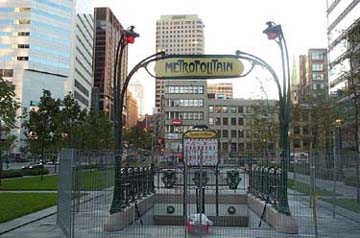
Montreal’s metro system is renowned for its architecture and public art.  Each station is unique.  Today, more than fifty stations are decorated with over one hundred works of art. Some of the more noteworthy pieces of art include the stained glass window at the Champs de Mars Station by Quebec artist Marcelle Ferron and the Guimard entrance to the Square Victoria Station. This is the only authentic Guimard entrance outside of Paris, although there are other subway systems around the world that have reproductions of Guimard entrances. 4

Guimard entrance

Guimard entrance to Square Victoria Station

In celebration of Montreal metro’s system and its fifty years, Heritage Montreal is offering architectural walking tours of the Montreal metro system that include information on how the metro stations transformed the surrounding neighbourhoods.  These tours are open to all for a modest fee and will run every weekend until September 25.  Heritage Montreal is a non-profit organization that “promotes and protects the architectural, historic, natural and cultural heritage of Greater Montreal.”5 You can find information on these walking tours here:

http://www.heritagemontreal.org/en/activite/architectours/

In 2017, Montreal will be celebrating its 375th anniversary.  Over the centuries, the building of bridges, roads, the railroad, trams, and bus and metro systems have shaped and transformed the economic, social, and cultural aspects of Montreal.  The Montreal metro system is a beautiful and integral part of Montreal’s heritage.  Let’s appreciate it.


1 https://en.wikipedia.org/wiki/Montreal_Metro

2 https://en.wikipedia.org/wiki/Yellow_Line_(Montreal_Metro)

3 https://en.wikipedia.org/wiki/Expo_67

4 https://en.wikipedia.org/wiki/Montreal_Metro

5 http://www.heritagemontreal.org/en/about-us/our-mission/


The Channel Islanders of Eastern Quebec

Société de généalogie et d’histoire de Rimouski

http://www.sghr.ca/en/publications

418-724-3242

sghr@globetrotter.net

The shores of Quebec’s Gaspé Peninsula, the Magdalen Islands, the North Shore of the Saint Lawrence River and an area of New Brunswick were settled by newcomers from the Channel Islands as early as the 1700s. The Channel Islands include Jersey and Guernsey and lie between Normandy in France and the southern coast of England. The immigrants to Canada were mainly men who came to work in the cod fishery and in shipbuilding enterprises run by entrepreneurs such as Jersey-born Charles Robin and the Janvrin brothers. They married local girls and started families.

Between 1998 and 2005, genealogist Marcel R. Garnier studied these families extensively and published a series of articles about them in the periodical l’Estuaire Généalogique, published by the Société de généalogie et d’histoire de Rimouski.

Garnier died in 2006 and his sister, Claudette Garnier (www.gogaspe.com/gcis/board.html) is the administrator of her late brother’s research material.

The Gaspé Jersey Guernsey Association (http://www.gogaspe.com/gcis/index.html) will conduct family lineage searches for a fee. Contact Suzanne Mauger, president, 418-752-6110. Copies of these magazines are also kept in the library of the Quebec Family History Society in Pointe Claire, Quebec, a suburb of Montreal, http://www.qfhs.ca/index.php.

Here are Jersey and Guernsey family names mentioned in Garnier’s articles:

Item # Estuaire 64 – 1997Les Jersiais et les Guernesiais de Gaspésie et des Iles-de-la-MadeleineChannel Islanders from Jersey & Guernsey who settled in the regions of Gaspé & the Magdalen Islands – Pages 82 to 88 – Author : Marcel R. GarnierFamilies : Ahier, Alexandre, Ascah, Bailey, Bannier, Bartlert, Bechervaise, Becquet, Bichard, Binet, Bisson, Blackler, Bourgaize, Brehault, Briard, Brien, Brideaux,, Brouard, Cabot, Carrell, Cawley, Clough, Collas, Corbet, Coutanches, Delisle, Dennys, Dolbel, Domaille, Dorey, Du Haume, Dumaresq, Dupreuil, Eden, Ellis, Esnouf, Fairchild, Falle, Fruing, Galliard, Gallichan, Garris (de), Gaudin, Gavey, Godfrey, Gruchy (de), Guignon, Hamon, Handy, Horner, Hotton, Hounsell, Hué, Ingrouville, Janvrin, Jean, Jersey (de), La Marre (de), Langlois, La Perelle (de), Le Four, Le Huray, Le Mesurier, Le Montais Gruchy, Sainte-Croix (de) – Spouses : Alexander, Annett, Ascah, Baker, Baldwin, Bartlett, Bechervaise, Bichard, Blackhall, Boulay, Bray, Carcaud, Clarke, Côté, Coutanches, Couvert, de Gruchy, de Moulpied, Denis, Dion, Eden, Ellis, Flocchart, Fournier, Gasnier, Gaumont, Gavey, Giffard, Gruchy, Haley, Hamilton, Hennessy, Henry-Blampied, Jacques, Janvrin, Jouan, Lacques, Langlois, Le Cornu, Le Four, Lemesurier, Lenfesty. Le Feuvre, Le Grand, Le Huguet, Le Huquet, Le Huray, Le Mesurier, Lemesurier, Lerhe, Létourneau, Le Touzel, Luce, Marion, McCall, McGrath, Morin, Nixon, Ouellet, Pelletier, Priaux, Price, Pruing, Ramsden, Rideout, Roberts, Rose, Salter, Sarre, Savidant, Suddard-Davis, Tapp, Todvin (Tostevin), Tourgis, Touzel, Weary, West, White – 88 male immigrants from Jersey & Guernsey in addition to 92 spouses

Item # Estuaire 65 – 1998Les Jersiais et les Guernesiais de Gaspésie et des Iles-de-la-Madeleine Channel Islanders from Jersey & Guernsey who settled in the regions of Gaspé & the Magdalen Islands – Pages 4 to 9 – Author : Marcel R. GarnierFamilies : Journeau, Laffoley, Lamprière-Marett, Langford, Langlois, Le Bail, Le Bas, Leboutillier, Lebrun, Lechasseur, Lecornu, LeDain, LeDuc, Lee, Le Four, Le Garignon, Leggo, Legros, Le Guédard, Le Houillier, Le Huquet, Le Huray, Le Lacheur, Lelièvre, Le Maistre, Le Marquand, Le Masurier, Le Messurier, Le Mesurier, Le Mottée, Lenfesty, Le Prévost, Le Sauteur, Le Seeleur (Lescelleur), Le Templier, Le Touzel, Luce, Machon, Marett, Mauger, Minchinton, Mollet, Moulin (Mullin), Noel, Ozanne, Perchard, Pike, Pinel, Pipon, Piton, Priaux, Price, Queripel, Rabey, Robert, Roberts, Ropert, Rose, Roy, Salmon (Salomon), Salter, Sauvage (Savage), Savidant, Shaw, Simon, Slous, Skroeder, Snowman, Thelland, Tourgis, Tupper, Vautier, Vibert, Vigot, Wilson – Spouses : Arthur, Ascah, Averty, Bartlett, Beattie, Bellerive (Couture), Bichard, Bisson, Boone, Bourgaize, Bower, Boyle, Brouard, Burt, Cabot, Caron, Carter, Chevalier, Chiasson, Clark, Coffin, Collas, Coulombe, Couture (Bellerive) Cramahé, de Gaspé, de Gruchy, de La Perelle, Des Garris, Driscoll, Esnouf, Fitzpatrick, Fougère, Gallichan, Gauvreau, Gibbins, Glover, Halley, Hamon, Handy, Henley, Hoyles, Hyman, Kennedy, Killam, Laffoley, Lambert, Le Boutiller, Le Four, Le François, Legros, Le Lacheur, Leggo, Lemarquand, Le Mesurier, Lenfesty, Lepelly, Leruez, Le Touzel, Lockhard, Locket, Machon, Mauger, Mc Callum, Mc Kenzie, Minchinton, Nesbitt, Nicolle, Ozanne, Pendergast, Perry, Pirouet, Poingdestre, Poirier, Priaux, Rabey, Rail, Robert, Roberts, Robin, Rose, Russell, Salter, Simon de Gaspé, Stanley, Stuart, Sweeney, Synnott, Syvret, Taylor, Thompson, Tourgis, Trudel, Vincent, White, Williamson – 111 male immigrants from Jersey & Guernsey in addition to 112 spouses.


Item # Estuaire 70 – 1999Les Anglo-Normands de la région de La Malbaie en Gaspésie The Channel Islanders from Jersey & Guernsey who settled in the region of Malbaie in Gaspé County – Pages 41 to 46 – Author : Marcel R. GarnierFamilies : Agnes, Alexander, Alexandre, Amy, Barette, Becquet, Binet, Bertram, Boucher, Bower, Briard, Burman, Cabot, Cadoret, Carrel, Collas, Coombs, Couls, Creighton, Dallain, de Carteret, de Garris, de La Haye, de La Perelle, de Mouilpied, Devouges, Dorviss (Gossett), Dufeu, Esnouf, Fauvel, Gasnier, Girard, (Gérard), Gossett (Dorviss), Guillaume, Hacquoil, Hammon, Hamon, Hocquard, Hotton, Hubert, Ingrouville, Johnston, Kinsella, Langlais, Laurens, Le Bail, Leblancq, Le Boutillier, Lebrun, Le Coq, Le Couteur, Le Dain, Le Gresley, Le Gros, Lehre, Le Lacheur, Lelièvre, Lemaistre, Le Marquand, Le Masurier dit Mellon, Le Mesurier, LeMontais, Le Mottée, Lepage, Le Patourel, Lequesne, Le Roy, Letouzel, Levesconte, Mabille (Mabe), Machon, Marion, Mauger, Misson, Morrisson, Nicolle, Olivier, Pabasse, Parrée, Payne, Piton, Prével, Powell, Price, Raddley-Walters, Rebindaine, Richardson, Robin, Savage, Ste-Croix, Syborn, Syvret, Touzel, Tupper, Vardon, Vautier, Vibert, Wales, Walters – Spouses : Alexandre, Athot-Forsyth, Beck, Bond, Boyle, Briand, Bunton-Cass, Cabot, Carter, Cassivi, Chicoine, Clark, Cunning, Cyr, David, De Moulpied, Donahue, Doody, Doucet, Dumaresq, Element, Etesse, Francis, Gauthier, Girard, Hamon-Dumaresq, Hardy, Hayden, Hayden-Vardon, Hazelton, Henley, Hotton, Howell, Ingrouville, Johnston, Kennedy, Laffoley, Lamb, Lamy, Lebel, Le Boutillier, Lebrun, Le Cocq, Le Couvet, Legrand, Le Gresley, Le Maistre, Le Marquand, Le Mottée, Lenfesty, Le Page, Lucas, Mc Leay, Mc Carthy, Mc Kenzie, Mc Pherson-Buckley, Miller, Misson, Nicolle, Ogier, Packwood, Perrée, Poingdestre, Priaux, Pruing, Radley-Walters, Rail, Sainte-Croix, Samson, Simard, Suddard, Tapp, Tapp-Lucas, Touzel, Trudel, Vardon, Vautier, Vicaire, Withers, Wright – 131 male immigrants from Jersey & Guernsey in addition to 122 spouses


Item # Estuaire 72 – 1999Les Anglo-Normands en Gaspésie dans la région de PercéThe Channel Islanders from Jersey & Guernsey who settled in the region of Percé in Gaspé County – Pages 103 to 110 & 115 to 116 – Author : Marcel R. GarnierFamilies : Agnes, Ahier, Alexandre, Amy, Annet, Arnold, Aubert, Aubin, Baker, Balleine, Baptiste, Bauche, Baudains, Becquet, Bennett, Bertram, Biard, Bisson, Bossy, Bourgaize, Bower, Brideaux, Brochet, Le Brun, Bunton, Burman, Butlin, Cabot, Camiot, Carcaud, Caudey (Cody), Couilliard, Robin-Dane, De Caen, De Carteret, De Gruchy, De La Cour, De La Perelle, De Moulpied, De Quetteville, Des Reaux, De Veuille, Dufeu, Dumaresq, Duval, Fainton, Fauvel, Filleul (Fyall), Fiott, Fowler, Fruing, Fyott, Gale, Gallichan, Gaudin, Gibaut, Giffard, Godfrey, Gossett, Grindin, Gregory, Gruchy, Gunhall, Hamon, Hardeley, Hacquoil, Henry, Héraux, Hubert, Hué, Huelin, Hughes, Janvrin, Jean, Journeau, Laffoley, Langlois, Laurens, L’Aventure, Le Bas, Leblancq, Lebouthillier, Le Breton, Le Brocq, Le Brun, Le Cocq, Le Cornu, Le Couteur, Le Crinnier, Le Dain, Le Feuvre, Leggo, Le Grand, Le Gresley, Le Gros, Le Gruiek, Le Huray, Lelièvre (Lever), Lenfesty, Le Rossignol, Le Roux, Le Ruez, Le Sueur, Lever, Luce, Manning, Martel, Matthew, Mauger, Mercier, Mourant, Newberry, Nicolle, Noel, Olivier, Ollivier, Orange, Parrée (Perry), Payne, Perrée, Picot, Pinel (Picknell), Powell, Ramier, Remon, Renouf, Richardson, Robin, Robin-Daine, Romeril, Savage, Skelton, De Gruchy-Sutton, Sutton, Tardif, Tostevin, Trachy, Valpy, Vautier, Viel, Vibert, Weary, Wilson – Spouses : Arbour, Baker, Balleine, Barnes, Beaker, Beck, Bélanger, Biard, Bisson, Blackhall, Blake, Bond, Bourget, Boutin, Bower, Bree, Bunton, Butlin, Cass, Chouinard, Clark, Cloutier, Collin, Collins, Cooke, Cronier, de Carteret, de La Perelle, Desreaux, Dobson, Donahue, Dove, Driscoll, Dumaresq, Duthie, Duval, Enricht, Fauvel, Flowers, Flynn, Forsyth, Gallie, Gatain, Gaulin, Gibault, Giffard, Grenier, Hamon, Henley, Henry, Higginson, Horan, Hoyles, Hubert, Jacques, Janvrin, Jeune, Jewell, Kempfer, Laflamme, Laflamme-Chrétien, Lamb, Lambert, Langlois, Lawrence, Le Bailly, Le Bas, Leboutiller, Lebreton, Le Brocq, Le Cocq, Le Couvet, Leduc, Lee, Le Grand, Le Gresley, Lehmann, Le Huquet, Lemprière, Lenfesty, Le Touzel, Lindsay, Loisel, Lord, Lucas, Luce, Mahan, Mailloux, Mallett, Maloney, Maloney-Girard, Marett, Mauger, Mauger-Dobson, Mc Call, Mc Ginnis, Mc Neil, Mercier, Miller, Molloy, Morissey, Nicolle, Ogier, Ouellet, Packwood, Pallot, Phillippe, Pirouet, Piton, Remon, Richard, Robin, Sampson, Savage, Sheenan, Studdard, Sweeney, Ternett, Tostevin, Touzel, Travers, Trudel, Tuzo, Vardon, Vibert-Tuzo, Vickery, Williams – 216 male immigrants from Jersey & Guernsey in addition to 163 spouses.


Item # Estuaire 75 – 2000 Des Jersiais et des Guernesiais de la Baie-des-Chaleurs The Channel Islanders from Jersey & Guernsey who settled in Chaleur Bay in the Gaspé Peninsula –  Pages 84 to 93 Author : Marcel R. Garnier Families : Agnès, Ahier, Alexandre, Amy, Anez, Arnold, Arthur, Aubin, Aubin (Hoben), Baker, Balleine, Baptiste, Barette, Bauche, Baudains, Bean, Beaucamp, Bechervaise, Becquet, Bertram, Biard, Bisson, Blackmore, Blampied, Boizard, Bossy, Bott, Bouillon, Bourgaise, Bower, Bréhaut, Briard, Brideaux, Brochet, Brun (Le), Bunton, Cabot, Camiot, Carcaud, Carey, Carrel, Champion, Chantes, Chedore, Clark, Clarke, Clement, Caudey (Le) (Cody), Collas, Conway, Corbet, Corbin, Couillard, Coutanges, Dallain, Davey, De Caen, De Caux, De Faye, De Forest, Desgarris (Degarie), De Gruchy, De La Cour, De la Haye, De La Mare, De La Perelle, De Ste-Croix, Deslandes, De Veuille, Dolbel, Dubois, Du Feu, Du Haume, Dumaresq, Duval, Egré (Grey), Ennis, Esnouf, Fainton, Falle, Fallu, Fauvel, Filleul, (Fyall), Fiott (Fyott), Flannegon, Fleury, Fowler, Fruing, Gale, Gallichan, Gallie, Garnier, Gaudin, Gavey, Gibaut, Giffard, Godfrey, Gosset, Grandin, Gregory, Grenier (Garnier), Gruchy, Hacquoil – Spouses : Ahier, Alexandre, Almond, Annett, Aston, Athot, Aubin, Baker, Beaudin, Bean, Beebe, Bergeron-d’Amboise, Bertrand, Bisson, Blackhall, Boudreau, Bray, Brotherton, Butlin, Cass, Chedore, Collin, Collins, Cormier, Cyr, Day, Decaen, Deck, de Larosbil, Duguay, Duthie, Forest, Gallichan, Gallie, Gasnier, Gaudin, Gauthier, Gibeaut, Giffard, Guillot, Henley, Hocquard, Holmes, Horan, Janvrin, Journeau, Kempffer, Lambert, Landry, Laurent, Lebel, Leblanc, Leboutillier, Le Breton, Le Brocq, Le Gallais, Legrand, Le Gresley, Lemprière, Lenfesty, Le Touzel, Loisel, Lucas, Main, Mallett, Maloney, Malzard, Mauviel, Mc Grath, Mc Intyre, Mc Kenzie, Michel, Morissey, Munroe, Painchaud, Pallot, Paquette, Philippe, Picot, Poirier, Poulin, Priaux, Remon, Rochon, Rouet, Russell, Scott, Sheehan, Smith, Ste-Croix, Tostevin, Touzel, Trachy, Travers, Turnbull, Tuzo, Watt, Whittorn – 170 male immigrants from Jersey & Guernsey in addition to 126 spouses


Item – Estuaire 76 – 2000Des Jersiais et des Guernesiais de la Baie-des-ChaleursThe Channel Islanders from Jersey & Guernsey who settled in Chaleur Bay in the Gaspé Peninsula – Pages 100 to 110 & 115 to 116 – Author : Marcel R. GarnierFamilies : Hacquoi (Acou), Hacquoi (Acou & Harquail), Hamon, Hardeley, Hardy, Henry, Héraut, Hewittson, Hocquard, Holms (Holmes), Hotton, Hubert, Hué, Huelin, Jandron, Jarnet, Jean, Jenne, Jeune, Journeaux, Labey, Lamy, Langlois (Langlais), L’Arbelestier, Laurens, Laurent, L’Aventure, Lebas, Le Bas, Le Bellier, Leblancq, Le Bœuf, Le Boutillier, Le Breton, Le Brocq, Lebrun (Brown), Lebrun, Le Caux, Le Cocq, Le Cornu, Le Couillard, Le Couteur, Lecras, Le Dain, Le Feuvre, Lefevre, Le Floch, Le Galet, Le Gallais, Le Geyt, Le Grand, Le Gresley, Legros, Le Lièvre, Le Maistre, Le Marquand, Le Martree, Le Masurier, Le Moignan, Le Moignard, Le Mottee, Le Poidvin, Lequesne, Le Rossignol, Lesbirel (Lesbril), Lesbirel (Sperrell), Le Seeleur, Le Sueur, Le Templier, Le Vesconte, Lloyd, Lucas, Luce, Mallet, Malzard, Manning, Mansell, Marett, Martel, Martin, Mauger, Merry, Michel, Morin, Mourant, Mourant (Sutton), Neel, Nicolle, Normand, Norman, Olivier, Orange, Pallot, Park, Paten, Perchard, Picot, Pipon, Pirouet, Piton, Poingdestre, Powell, Prévost, Querrée, Rabasse, Rebindaine, Rimmeur (Ramier), Remon, Renault, Renouf, Riou, Rive, Robin, Romeril, Ropert, Roussel (Roussell), Roy, Sansans (Sauson), Savage, Seale, Sheppard, Skelton, Sious, Sohier, Spratt, Strong, Sutton, Syvret, Syvret (Sivrais), Tardif, Touzel, Trachy, Valpy, Vardon, Vautier, Venemont, Vibert, Vicq, Viel, Vincent, Wales, Weary, Westbrook, Wetherall, Wheaton – Spouses : Acteson, Adams, Allen, Ames, Anglehart, Arbour, Assels, Baker, Balfour, Balleine, Basset, Batson, Beaudin, Bechervaise, Beebe, Bellett, Bisson, Blais, Blampied, Blondel, Bouillon, Bossy, Boucher, Bourget, Boutin, Boyle, Caldwell, Carrel, Carter, Castilloux, Chambers, Chedore, Chiasson, Christie, Clement-Watt, Cocke, Collin, Cooke, Cormier, Couture (Bellerive), Cronier, Cyr, Day, De La Cour, de La Perelle, Doodridge, Dorey, Douglass, Dove, Dufeu, Duguay, Dumaresq, Dupuis, Duval, Element, English, Fiott, Fitzpatrick, Flowers, Foley, Forest, Gallie, Garrett, Gatain, Gaudin, Gaudreau, Gauthier, Girard, Glennan, Glover, Grenier, Hamon, Hellyer, Higginson, Hocquard, Holmes, Holms, Horth, Hotton, Huard, Huntingdon, Jenne, Jewell, Johnson, Kruze, La Brecque, Landry, Larocque, Laurent, LeBailly, Lebas, Lebrun, Le Cornu, Le Couteur, Le Gallais, Legallais, Le Grand, Lehmann, Le Huquet, Le Marchand, Le Marquand, Lemesurier, Lemoignan, Leriche, Le Touzel, Lindsay, Loisel, Mahan, Maher, Mann, Mauger, Mc Ginnis, Mc Rea, Meagher, Michel, Miller, Montgomery, Morissey, Morrissette, Munroe, Nelson, Newman, Payne, Pirouet, Piton, Pluma, Querrée, Rabasse, Robichaud. Robin, Roussy, Scott, Scott-Lindsay, Simon, Smith, Starnes, Ste-Croix, Sullivan, Sweeney, Tostevin, Tourgis, Travers, Tremblay, Trépanier, Tuzo, Valpy, Vardon, Vautier, Vicaire, Vicq, Vigneault, Ward, Weary, Whitton, Williston, Young – 296 male immigrants from Jersey & Guernsey and 195 spouses


Item # Estuaire 85 – 2003 – Des Jersiais et des Guernesiais sur la Côte-Nord du fleuve Saint-Laurent – Channel Islanders from Jersey & Guernsey who settled the North Shore of the St. Lawrence River – Pages 4 to 12 – Author : Marcel R. Garnier – Families : Agnès, Ahier, Ayerst, Bailhache, Barette, Bartram, Bechelet, Becquet, Binet, Bisson, Blampied, Bodman, Bray, Briard, Brown, Cabot, Camiot, Carcaud, Carrel (Carroll), Chevalier, Clarke, Clement, Cody (Caudy), Collas, Corbet, Corbey, Coutanches, Darby, de Caen, Degruchy, de La Haye, de la Perelle, de Quetteville, Des Champs, Devouges, Dimmick, Dorey, Duguay, Duhaume, Dumaresq, Durant, Durell, Falle, Fauvel, Fequet, Filleul, Fruing, Gallichan (Gallichon), Gallienne, Garnier, Gaudier, Gaudin, Gauthier, Girard, Godfrey, Grenier (Garnier), Grandin, Hamon (Homan), Hacquoil, Hawco, Hawkins, Hockey (Le Huquet), Hogan, Hounsell, Ingrouville, Jandron, Jarnet, Jennis, Labey, Le Blancq, Leboutillier, Le Brocq, Lebrun, Le Cocq, Le Cornu, Le Couteur, Le Dain, Lefeuvre, Lefloch, Le Gallais, Legeyt, Legrand, Legresley, Legros, Le Huquet, Le Maistre, Lemarquand, Le Marquand, Lemoignan, Lemonnier, Lemottée, Lenfesty, Lehre, Le Rossignol, Leroux, Leruez, Le Sauteur, Le Templier, Letemplier, Luce, Manning, Mansel, Martel, Mauger, Mauger (Monger), Mauger (Munger), Michel, Misson, Morel, Mourant, Newberry, Nicolle (Nichol), Noel, Olivier, Patriarche, Payne, Perrée, Perrée (Perry), Perchard, Perry, Petherick (Patriarche), Picot, Poingdestre, Pope, Prévost, Ramier, Renouf, Robert, Robin, Romeril, Salmon, Salomon, Savage, Skelton, Sutton (de Gruchy), Syvret, Syvret (Sivrais), Touzel, Trachy, Vardon, Vatcher, Vautier, Viel, Vibert, Vincent, Wheaton (Whitton) – Spouses : Anglehart, Athot, Baker, Ballam, Beaudin, Beaudoin, Beck, Beebe, Bernier, Bisson, Blais, Blampied, Bonenfant, Boulet, Boyle, Bréhaut, Buffet, Cabeldu, Cahill, Chambers, Chevalier, Chinic, Coffin, Collin, Cook, Cormier, Couture-Lamonde, Craib, Cummings, Cunning, de La Perelle, Doody, Doucet, Douglass, Duguay, Dulong, Dumaresq, Durvay, Duthie, Element, Fafard, Fixott, Flowers, Foley, Foreman, Gallichan, Gallienne, Gaudin, Gaudion, Gaumont, Gauthier, Gauvreau, Gibaut, Girard, Glenn, Gooseney, Grant, Guillemette, Hallahan, Hamilton, Hayward, Henley, Hocquard, Holms, Horan, Huard, Janvrin, Jean, Jones, Journeau, Keates, Kennedy, Landry, Langlish, Langlois, Larocque, Laurent, Lebouthillier, Leboutillier, Lebreton, Le Breton, Lebrun, Le Gallais, Legrand, Le Gresley, Lemarquand, Lemottée, Lenfesty, Letto, Levallée, Levasseur, Lilly, Loftus, Loisel, Lucas, Mailloux, Major, Mc Sweeney, Menicoll, Mercier, Michaud, Miller, Montgomery, Morency, Morrissette, Mullins, Nérée, Nickerson, Noel, O’Brien, O’Dell, Ouellet, Pagé, Paradis, Parent, Pelletier, Phillips, Piersay, Pike, Poirier, Rail, Robin, Roussy, Samson, Scott, Selesse, Sergent, Simard, Suddard-Davis, Tapp, Taylor, Thelland, Thériault, Touzel, Vallée, Vardon, Vignault, Vinacott, Walker, Whealan, Whittom, Wright – 178 male immigrants from Jersey and Guernsey and 162 spouses


Item # Estuaire 942005 – Des Jersiais et des Guernesiais au Nouveau-BrunswickChannel Islanders from Jersy & Guernsey who settled in New Brunswick – Pages 50 to 56 & 60 to 61 – Author : Marcel R. Garnier Families : Ahier, Alexandre, Amy, Amiraux, Blackler, Bosdet, Brien, Brouard, Butler (Le Bouthillier), Cabot, Chedore, Coutanges, Dayne, Desgarris (Degarie), de Gruchy, De Gruchy (De Gruchie), de La Garde, de La Perelle, de Quetteville, de Ste-Croix, Diney, Dolbel, du Fleur, Dufour, Duhamel, Dumaresq, Duval, Egré (Grey), Edwards, Ereault (Hereault), Falle, Foudrup, Fruing, Gibaut, Godfrey, Gravey, Hamon, Hamon (Hammond), Hacquail, Hacquoil, Harquail (Macquoil), Henry, Hocquard, Hubert, Huelin, Hughes, Knight, Laffoley, Laffoly, Le Bas, Le Bouthillier (Lebouthillier), Le Boutillier, Lebrocq, Le Caux, Le Couteur, Lecouteur, Lefloch, Le Furgey, Lefurgey, Le Gallais (Du Galet). Le Grand, Legresley, Legros, Le Lacheur, Le Maistre, Lemarquind, Le Marquand, Le Mesurier, Le Poidvin, Leriche, Lesueur, Letemplier, Leventure, Lie, Lloyd, Locke, Luce, Mahy, Mauger (Majer), Michel, Monet, Morel, Morris, Mourant, Nichols, Oliver, Orange, Painter, Pallot, Picot, Pirouet, Piton, Powell, Quennault (Canot), Querrée (Kerry – Carey – Querry), Rabasse, Ramier (Rimeur), Renouf, Rive, Robert, Robin, Sarre, Sheppard, Sommany, Stavidant,, Strong, Studely, Syvret (Sivret), Tardif, Thomas, Tourgis, Vaudin, Vautier, Veal (Viel), Vibert, Vicq, Vigot, Vincent, Warne, Weary, Williams, Young – Spouses : Ahier, Albert, Alexandre, Arsenault, Beebe, Bisson, Ballam, Blackhall, Blondel, Borey, Boudreau, Boutin, Boyle, Brien, Brotherton, Brown, Carter, Charleston, Chedore, Chiasson, Christie, Comeau-Baldwin), Daiguillot (Guilot), Day, de La Parelle, Duclos, Duguay, Dumaresq, Duval, Edwards, Fauvel, Fitzpatrick, Forest, Gallie, Gaudreau, Giraud, Glover, Godin, Guillot, Haché, Hains, Hamilton, Hayden, Hellyer, Higginson, Hollands, Holms, Hotton, Hubert, Huelin, Jennie, Johnson, Kruse, Landry, Langlois, Lateigne, Lawlor-Dwyer, Leblanc, Lebreton, Lebrocq, Le Gallais, Maillet, Mailloux, Mallet, Mann, Many, Mc Carthy, Mc Kay-Hubon, Mc Kenzie, Mousse, Mowatt, Newman, Newton, Nixon, O’Connor, Poulin, Prévost, Quennault (Canot), Querrée, Radley (Walters), Robichaud, Stewart, Sutherland, Thériault, Thomas, Tourgis, Vautier, Vibert (Tuzo), Vincent, Walker, Ward, Warnes, Williston, Winterflood,, Yvonne – 168 male immigrants from Jersey and Guernsey and 120 spouses 


The above research guide was researched and compiled by Jacques Gagné

gagne.jacques@sympatico.ca

2016-03-05

 

Société d’histoire et de généalogie de Rivière-du-Loup

http://www.shgrdl.org/

418-867-6604

info@shgrdl.org

The small city of Rivière-du-Loup, located on the south shore of the St. Lawrence River, dates back to 1673, when the region was given to prosperous merchant Lord Charles-Aubert de la Chesnaye. The town began to expand in the early 19th century and the population increased with the arrival of the Grand Trunk railway in 1859.

Between 1850 and 1919, the town was called Fraserville. Malcolm Fraser had been an officer in the British army that defeated the French troops at the Battle of the Plains of Abraham in Quebec City in 1759. Fraser stayed in Quebec following the conquest and he was put in charge of the seigneury at Rivière-du-Loup in recognition of his service on the battlefield. (See http://www.manoirfraser.com/page/historique.php for a brief history of the Fraser family and their home.) In 1919, the town changed its name to Rivière-du-Loup.

Rivière-du-Loup’s economic base has always been agriculture and forestry, but many area residents have also worked in the transportation industry on the St. Lawrence River. The river is salty and tidal at Rivière-du-Loup and it is 24 kilometers (15 miles) wide. The city also serves as a service centre for the surrounding area. Rivière-du-Loup is in a beautiful location and its summers are cool, so it has attracted summer residents to nearby towns such as Cacouna since the mid-19th century.

The local history and genealogy society (www.shgrdl.org) has produced a number of French-language brochures and books, including family histories and several publications about the railway. See http://www.shgrdl.org/shgrdla.htm#items.

Three publications, researched and prepared by society members, provide genealogical information that may not be available elsewhere. They are:

 Des Écossais à la Rivière-du-Loup et leurs descendants – The Scots of Rivière-du-Loup and their descendants (1763-2004) – Marriages, baptisms, deaths – A book of 594 pages in the French language addressing more than 400 different family names among the churches of Rivière-du-Loup, the South Shore of the St. Lawrence River, Charlevoix, Saguenay, Lac-St-Jean Counties north of the St. Lawrence River plus the Gaspé Peninsula. The genealogist who researched this book transcribed records from the area’s Catholic, Anglican, Presbyterian, Methodist and Congregationalists churches. $50 + $10 shipping.

St-Patrice de Rivière-du-LoupSt. Patrick CatholicBaptisms(1813-1992)  $50 + $12 shipping.

St-Patrice de Rivière-du-LoupSt. Patrick CatholicDeaths (1813-1992) $40 + $10 shipping.

Today, the people of Rivière-du-Loup are primarily French-speaking, but many English-speaking families lived in the area in the past.Following is a list of Scottish, British and Irish families that lived in the Lower St. Lawrence region after 1763, including the present-day districts of Bellechasse, Charlevoix, Dorchester, Kamouraska, L’Islet, Matane, Montmagny, Rimouski, Rivière-du-Loup and Témiscouata:

Scottish, British, Irish Families of the region from 1763 onward

Adams, Achison, Alexander, Allan, Allen, Allison, Amsden, Anderson, Arbour, Archibald, Armstrong, Arthur, Atkinson, Austin, Ayton, Bagley, Bagnall, Baikie, Balfour, Ballantyne, Barr, Baron, Barron, Barry, Bartholomew, Bartley, Baxter, Beatty, Beck, Bell, Bennet (t), Berger, Bett, Birrell, Bissett, Black, Blackadder, Blackburn, Blain, Blair, Bolton, Bond, Booth, Boswell, Bower, Boyd, Boyle, Bradley, Briggs, Brogan, Brown, Bryson, Buchanan, Buck, Buist, Burgess, Burns Butchart, Butler, Caddel, Cahill, Caissy, Calway, Cameron, Campbell, Canady, Carmichael, Carr, Carroll, Carson, Carter, Cassels, Cassidy, Cavanagh, Clark, Clarke, Clement, Clerk, Clouston, Coleman, Collin, Collins, Colman, Connell, Cook, Cooke, Cooper, Cowan, Cowen, Cowie, Craib, Craig, Crawford, Critchton, Crockett, Croft, Crook, Cullen, Cummings, Dalton, Davidson, Davis, Davison, Dawson, Day, Dewar, Dick, Dickie, Dickner, Dickson, Dillon, Dobson, Dodbridge, Doherty, Donaldson, Dougherty, Douglass, Downes, Downing, Doyle, Drisdell, Drummond, Duncan, Dunn, Easton, Edgar, Ellement, Elliott, Ellis(s), Ewen, Ferguson, Fergusson, Findlay, Ficher, Fisher, Fitzsimmons, Flack, Fletcher, Flowers, Floyd, Foote, Forbes, Forest, Forrest, Forsyth, Foster, Fox, Francis, Fraser, French, Furlong, Gallagher, Gardner, Garvie, Gathwaite (Garwiitts), Gibson, Gifford, Gilchrist, Giles, Gilklet, Gillies, Gleeson, Glenny, Godcharles, Gold, Gordon, Grant, Gray, Green, Greer, Gregory, Geig, Grey, Griffin, Hackett, Hall, Halle, Hally, Hamilton, Hammond, Handfield, Hannay, Harbour, Harcourt, Harding, Hardy, Haresson, Harkness, Harper, Harrison, Harrower, Hart, Harton, Harvey, Harvie, Haslett, Hay, Hayward, Healey, Heaslet, Henderson, Henley, Henry, Heppel, Heppell, Herdman, Hibbard, Hill, Hins, Hodgson, Hogg, Holdron, Hoff, Holt, Holmes, Hope, Horner, Hould, Hovington, Howden, Howe, Hudson, Hume, Hunter, Hurley, Hutchison, Irvine, Irving, Jackson, Jacob, Jamieson, Jarvis, Jeffery, Jenkins, Jennis, Johnson, Johnston, Jones, Jopsing, Kack, Keighan, Kelly, Kennedy, Kenney, Kerr, Kidd, King, Kirby, Knox, Krieber, Lamb, Lane, Lang, Langis, Laurenson, Law, Lawrence, Lawson, Leach, Lee, Leggatt, Leitch, Leith, Lemesurier, Lever, Lewis, Lindsay, Lister, Litch, Lock, Lockhead, Long, Loof, Lord, Lucas, MacAllum, McBean, MacCarron, McCleary, McClintock, MacClure, McClure, MacConnell, McConnell, MacCourt, McCourt, McCraw, MacCutcheon, McCutcheon, MacDermott, McDermott, MacDonald, McDonald, MacDonell, McDonell, MacDougall, McDougall, MacEwen, McEwen, McEwing, MacFadden, McFadden, MacFarlane, MacFarquhar, MacGee, McGee, MacGowan, McGowan, MacGrath, McGrath, MacGregor, McGregor, MacGuire, McGuire, MacHenry, McHenry, MacHugh, McHugh, MacIntosh, McIntosh, MacIntyre, McIntyre, MacKay, McKay, MacKel, MacKelly, McKelly, MacKenna, McKenna, MacKenney, McKenney, MacKenzie, McKenzie, MacKey, McKey, MacKillop, McKillop, MacKim, McKim, MacKinley, McKinley, MacKinnon, McKinnon, MacLaren, McLaren, MacLaughlin, McLaughlin, MacLean, McLean, MacLellan, McLellan, MacLeod, McLeod, McLure, MacMahon, McMahon, MacMillan, McMillan, McMullen, MacNab, McNab, McNeely, MacNeill, McNeill, MacNess, McNess, MacNichol, McNichol, McNicoll, McNider, McNie, McSwanny, MacVey, McVey, MacWhinnie, McWhinnie, MacWhirter, McWhirter, MacWilliams, McWilliams, Malloy, Mann, Mansfield, Marshall, Marugg, Mason, Mathers, Matheson, Mathews, Mathieson, Matthews, Maxwell, May, Meaney, Meehan, Mellis, Mercer, Middlemist, Milburn, Miles, Miller, Mills, Milne, Mitchell, Moffat, Moffett, Molloy, Montgomery, Moore, Moran, Morgan, Morrin, Morris, Morrissey, Morrisson, Morrow, Mudge, Muir, Murdoch, Murphy, Murray, Nawling, Neil, Nelson, Nepton, Newberry, Nicholson, Nichols, Nicol, Nickols, Nixon, O’Conner, O’Connor, O’Connors, Orkney, Ogilvie, Otis, Page, Pard, Parker, Parkes, Paterson, Patterson, Patton, Peacock, Pearson, Pentiga, Perry, Peters, Pettigrew, Phillips, Pickford, Pollock, Pope, Porter, Power, Pratt, Preston, Price, Prior, Purcell, Quimper, Quinn, Rae, Ramming, Ramsay, Ramsey, Randall, Rankin, Rattray, Reader, Reed, Reid, Richard, Richardson, Riopel, Ritchie, Robbins, Roberts, Robertson, Robin, Robinson, Rodger, Rodgers, Roger, Rose, Ross, Rudiack, Rutherford, Ruthven, Ryan, Sample, Samson, Sargeant, Scherrer, Scott, Seaton, Seton, Shannon, Sharp, Sharpe, Shaw, Sheehy, Shields, Short, Simson, Sinclair, Skelling, Skene, Sladek, Slater, Smith, Smyth, Speers, Speirs, Standford, Stanley, Stein, Stephenson, Stevens, Stevenson, Stewart, Storrie, Stuart, Suck, Sutherland, Swan, Swinford, Synnett, Synnoth, Synnott, Tapp, Taylor, Temple, Thom, Thoms, Thomas, Thompson, Tolerton, Towers, Townsley, Trickey, Turner, Urquhart, Veitch, Vivian, Walker, Wallace, Wallis, Walsh, Walter, Walton, Ward, Wardrop, Ware, Warren, Watson, Watt, Watters, Wayne, Webster, Wells, Welsh, Whellan, White, Whyte, Wickens, Wilkens, Williams, Willis, Wilson, Winichuk, Winters, Wintle, Wiseman, Wood, Woods, Woodland, Wren, Wright, Yates, Young

Sources of the above listing of family names: Jeannine Ouellet, Dennis McLane, Université Laval, La Corporation culturelle de Frampton, Société de généalogie de Rimouski.

An Ill-fated Social Experiment

Royal Arthur School

80 Canning Street

September 30, 1912

Dear Mother,

I am writing this in school to tell at last taken that long talked of flat and while I think (of it) will tell you the address; it is 2401 Hutchison St. and is almost next door to the McCoy’s which makes it fine for us. We moved in on Sat last (Sept 28) and they have been in cooking and doing all sorts of things for us. Mr. McCoy gave us a basket of peaches to start on.

The flat is completely furnished and is lighted by electricity and we do all our cooking by gas. There are four girls in the scheme, Flora, May, Lena Bullock who is a school teacher, too, and yours truly. We are planning to pay 20 dollars each per month and hope to be able to make ends meet but if we cannot then we will get another girl to come in with us.

The flat itself costs us $40.00 then we will have the rest for running expenses. When you come take an Amherst car up Bleury and get off at St. Viateur. And we will let you see what sort of housekeepers we are.

This is the first part of a missive written by Marion Nicholson, school teacher at Royal Arthur School in the Little Burgundy district of Montreal, to her mother, Margaret, back home in Richmond, Quebec.

By today’s standards, the letter contains nothing earth-shattering: a young working woman has taken an apartment with three other girls and is anxious to tell Mom all about it.

But, it is,indeed, an extraordinary letter.  In 1912, when the correspondence was penned, it was unacceptable, borderline illegal even, for women in the big cities of Canada to move in together to share expenses.

First, there was the problem of prostitution, so any such arrangement was highly suspect.  And then there was the problem of, well, personhood, that is no one would rent to a woman, even a woman with a steady salary, because these women couldn’t sign a lease.

Most women didn’t have a bank account, and those wealthy women who did couldn’t keep more than $2,000. in it.

Marion cashed her paycheque of 60 dollars a month at Renouf’s, a store that sold textbooks to the Montreal Board.

Official records reveal that between September 1912 and May 1913, 2401 Hutchison, in the Mile End district of Montreal, was occupied by another family that had been living there for years.  So, Marion and her friends did not sign any official lease.

Their unusual sublet was no doubt enabled by the McCoys mentioned in the letter.  The McCoys were family friends from a pioneering  Richmond  family.

marion margaret

Margaret Nicholson and daughter Marion in Richmond in 1912. Letters reveal that her family was afraid for Marion, she had become so thin.

The earlier letters in ‘the Nicholson collection’ explain why Marion was so excited about getting her own apartment. For a few years, she had boarded at a rooming house on Tower, in Westmount, run by a widow named Mrs. Ellis.  As was likely the custom, this Mrs. Ellis “lorded it over” her female charges, (Marion’s words) making sure they towed the line, especially when it came to male visitors and curfews.

In 1910, in the big bad city, even a well-connected 27 year old women like Marion Nicholson was considered in need of protection.  Besides, no respectable widow wanted to be accused of running a bawdy house.

In late 1911, Marion began seeing a certain Mr. Blair, a very eligible lumber merchant, which made her especially hate her curfew.  In 1912, already bone-tired from managing her class of 50 “very bad” second graders, she ran herself ragged in her spare time looking for a flat to live in.

Then, in late September she found that flat. And it even had electricity, a luxury her lovely family home in the fancy section of Richmond, Quebec wouldn’t have until the next year.

Family letters reveal that Mr. Blair or “Romeo” was a regular visitor at 2401 Hutchison during the fall and winter of 1912/13, not that Marion talked about his visits in her letters home. Flora, her younger sister, was the one who spilled the beans.

Oh, my!

Still, in the end, this bold feminist experiment didn’t work out, but not because of any sex scandal.

Running a home back then was just too labour intensive for women who worked during the day, even a home with a newfangled gas stove.

That’s why, during the winter of 1913, Marion and her flat mates relied on a series of older female relations, including mother Margaret, to keep house for them on a rotating basis.

In May 1913, the girls abandoned their flat on Hutchison and moved into a hotel room downtown at the Mansions on Guy Street.  Supposedly, they left behind a big fat mess.

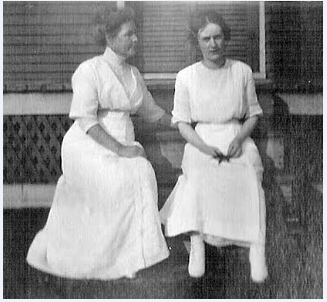
Flora Mae Watters.PNG

Flora (front) and Mae Watters, around 1908 in Richmond, Quebec. Mae would get married in 1914 but Flora only much later, when in her forties.

Marion Nicholson soon became engaged to Mr. Blair.  She was disillusioned at work because a “mere boy out of school” had been hired over her head and given the much coveted  7th form, a position second only to the (male) principal, is how she described it to her father.

Sister Flora and Mae, a first cousin, returned to Mrs. Ellis’ much despised rooming house on Tower because they simply had no other place to go.

In the 1910 era, there was a dire shortage of accommodation for working women in Montreal.  In fact, Montreal’s leading citizens, including Mssrs. Birks and Reford, Mrs. Molson, Reverend Symonds of Christ Church Cathedral and Miss Carrie Derick of  the Montreal Local Council of Women, were holding public meetings to organize a hotel downtown just for women,  ‘respectable’ women (sic) where the girls could spend their evenings engaged in wholesome activities and presumably not cavorting around town at Vaudeville theatres, motion picture palaces, or at Dominion Park, the enormous thrill park on Notre Dame East.*1

Marion, who enjoyed all of the above activities, didn’t write anything in her letters about this critical community project, but I can guess what she thought about it.

In 1906, while attending McGill Normal School near what is now Place Bonaventure, she roomed at  the YWCA on Dorchester and simply hated it. “Too many rules,” she wrote home to Mom.2

  1. Montreal Gazette. Definite Start to Women’s Hotel. November 18, 1910.
  2. Marion Nicholson would marry, have four children and be widowed in 1927. She would go back to teaching and rise to be President of the Montreal Protestant Teacher’s Union during the WWII years. She fought for higher salaries and pensions for teachers, but died before she could earn one herself.  She was honored with an editorial in the February 16, 1947 Montreal Gazette that began: With the death of Marion A.N. Blair the teaching profession in the province, indeed, the whole Dominion, has suffered a serious loss.

Great Grandmother’s Quilt: Eliza Jane Eagle

I have a sampler made by Susan Dodds Bailey, my two times great-grandmother, but much more has survived made by her daughter Eliza Jane. My favourite item is a wool quilt.

The quilt is a traditional bow tie pattern, made from scraps of suiting and other old clothes. Reds, blues and greens in plains, plaids and a few polka dots march across the front. It was all hand stitched. For many years, it was put away in a closet but now summer has it spread out on the day bed, on the verandah of our country cottage. Many an afternoon nap has been taken on it. The quilt had begun to show wear, especially the disintegration of the black dyed fabric but it was being used and loved. Last fall, before Thanksgiving, the quilt was left on the bed. Mice climbed under the tarpaulin protecting it, decided wool would make a great nest and chewed the fabric. It needed to be repaired. Great grandmother would not be happy.

Eliza Jane wasn’t just a quilter, she also knit and made a finely worked afghan. This was a work of love made from off white wool purchased especially for the project. It was given to her daughter Minnie. Elisa Jane was very upset to see that her daughter used it folded up under a mattress, to raise the head of a bed. It was the only time her granddaughter Beth remembered seeing her grandmother cry. The afghan then went to Beth and later her great-granddaughter Dorothy, who proudly displayed it on her guest bed. Great grandmother would be happy.

Eliza Jane also did a lot of fancy needlework. Needlepoint book marks, crocheted towels and lace, crossed stitched sayings on paper and tatted edging have all been preserved. She loved listening to the radio,“Wilson came over on Wed evening and looked over our machine it needs a new long battery but I heard a fine concert in Masonic Hall last night the best yet after the shaking up he gave the old battery.” I can picture her sitting listening in the evening, her hands never idle.

Eliza married William Eagle in 1881, when they were both considered “older”. He had been looking after his mother and didn’t want his wife to become a nurse. They did marry before Martha McClelland Eagle died, as they couldn’t wait forever. Eliza’s wedding dress was a burgundy silk because she thought cream or white wasn’t suitable for a woman then 36 years of age. I don’t know if she made the dress but it was kept for many years and worn for dress up by her daughters and granddaughters.

Neither her daughters nor her granddaughters were much for sewing or handiwork. My grandmother, Minnie could do some mending and darn her stockings but she was never into fine sewing. She had a dressmaker come to her house twice a year to make her clothes. Her sister Amy tried to do some sewing but for her it was a task, not something she enjoyed. So, I think Eliza Jane would be pleased to know that some of her great granddaughters do a lot of needle work and appreciate her craft.

With some old fabric saved from my mother’s hall closet, I repaired the major holes in the wool quilt. This summer it was back on the day bed. I think Great Grandmother would be happy.

Bibliography:

Personal communication with Beth Sutherland Van Loben Sels in 2000.

Notes written by Minnie Eagle Sutherland,“Mother made these fancy articles” and Amy Eagle.

Letters from Eliza Jane Eagle to Minnie Eagle Sutherland -1920’s.

Letter Feb 8 1924 from Eliza Jane to Minnie. Wilson was her daughter Minnie’s brother -in-law.

Articles in the possession of the author

Researching French Canadian Ancestors through the Drouin Institute

Institut Généalogique Drouin

 http://www.institutdrouin.com

450-448-1251

Institut.drouin@gmail.com

 If you are researching French Canadian ancestors, the best place to look is the Drouin Institute, www.drouininstitute.com. The institute can help you find a great deal of information about your ancestors, but only some pages are in English and you may become confused because there are several different ways to access the site’s information.

In addition to the subscription database at https://www.genealogiequebec.com/en/, the institute has a vast selection of publications for sale through its bookstore.

You will find the link to subscribe to the institute’s online database, Quebec Records, at the top of the page www.genealogiequebec.com/en/ or, if you are on the French-language page, click on abonnement.

The Quebec Records collection, updated as of February 2016, includes more than 42 million files and images. Take a look at the About Us page (https://www.genealogiequebec.com/en/about) to get an idea of the scope of information available. It includes the Lafrance Collection of Catholic baptisms, marriages and deaths starting from 1621, and some Protestant marriages, 1760-1849. The online Drouin Collection includes a variety of genealogical records from Quebec, Ontario and New Brunswick. Scroll down the About page to see the listing of additional databases, including notarized documents and obituaries.

The Quebec Records page has a link to the PRDH project, or Research Program in Historical Demography, http://www.genealogie.umontreal.ca/en/home. This huge undertaking by the University of Montreal put together all Catholic baptisms, marriages and burials, as well as Protestant marriages, in Quebec from 1621 to 1849.

According to the project’s website (http://www.genealogie.umontreal.ca/en/LePrdh) the result is “a computerized population register, composed of biographical files on all individuals of European ancestry who lived in the St. Lawrence Valley. The file for each individual gives the date and place of birth, marriage(s), and death, as well as family and conjugal ties with other individuals. This basic information is complemented by various socio-demographic characteristics drawn from documents: socio-professional status and occupation, ability to sign his or her name, place of residence, and, for immigrants, place of origin.” The PRDH site includes an extensive bibliography. Subscription rates depend on whether you live in Quebec, the rest of Canada or elsewhere.

The Drouin Institute sells a number of products through its online boutique. For example, you can buy family histories on CD through https://institut-drouin.myshopify.com/collections/patrimoine-familial (search for your family’s name in the naviguer box on the right), or you can purchase published family history books at https://institut-drouin.myshopify.com/collections/patrimoine-familial. Almost all of these products are in French.

The page http://www.drouininstitute.com/index.html links to the online boutique. On that page (https://institut-drouin.myshopify.com/search) you can put your family name into the search box and it will tell you what products, including CDs, books, spiral binders and PDFs, can be ordered.

Another way to search this resource is to go to www.institutdrouin.com/neufs. This page will lead you to a long list of product numbers. Click on each selection to see what titles are available.

Here are some of the spiral binders you can buy from the institute containing records that Montreal genealogist Jacques Gagné says are not available through commercial databases:

Item # N-0076 –RawdonSt. Patrick Catholic Parish – Montcalm County – Marriages, baptisms, deaths (1837-1987) – Parish later renamed Marie-Reine-du-Monde de Rawdon > Spiral binders $55. + taxes-shipping

Item # N-0278 – Iberville County – Protestant & Catholic Marriages (1823-1979) – Towns of: Henryville – Iberville – Mont-St-Grégoire – St-Alexandre – St-Athanase – Ste-Anne-de-Sabravois – Ste-Brigite-d’Iberville – St-Grégoire-le-Grand – St-Sébastien – Ste-Angèle-de-Monnoir – 802 pages – 2 volumes > Spiral binders $75. + taxes-shipping

Item # N-0327 – Trois-RivièresSt. Patrick Irish Catholic ParishMarriages (1955-1981) > Spiral binders $10. + taxes-shipping

Item # N-0504 – Terrebonne Judicial District Civil Marriages – (1969-1991) – 8,900 marriages – 684 pages > Spiral binders $69. + taxes-shipping

Item # N-0578 – St. Lawrence River’s Mid North ShoreMoyenne Côte-Nord du St-Laurent Judicial District of Sept-IlesMarriages (1846-1987) – 10,342 marriages – Towns of : Sept-Iles – Port-Cartier – Clarke City – Godbout – Gallix – Baie-Trinité – Rivière-Brochu – Franquelin – Moisie – Rivière-Pentecôte – Pointe-aux-Anglais – 607 pages > Spiral binders $43. + taxes-shipping

Item # N-0579 – St. Lawrence River’s Lower North Shore &  Southern LabradorBasse Côte-Nord du St-Laurent et du Sud du LabradorProtestant & Catholic marriages, baptisms, deaths (1847-2006) – 6,470 marriagesRegion of Minganie – Aguanish – Baie Johan Beetz – Hâvre-St-Pierre – Anticosti Island – Longue Pointe de Mingan – Mingan – Natashquan – Pointe-Parent – Rivière-au-Tonnerre – Rivière-St-Jean – Region of Lower North-Shore – Aylmer Sound – Blanc Sablon – Chevery – Harrington Harbour – Kegaska – La Romaine – La Tabatière – Lourdes de Blanc Sablon – Musquaro – Mutton Bay – Pakua-Shipi – Rivière St-Paul – St-Augustin (St. Augustine) – Tête a la Baleine – Region of Southern Labrador – Capstan Island – Clear Bay (L’Anse-au-Clair) – East St. Modest (e) – Flower’s Cove – Forteau – L’Anse-au-Loup (Woolf Cove) – L’Anse-Amour – Pinware – Red Bay – Sheldrake – West St. Modest (e) – Catholic Parishes (17) – Anglican Church (4) – United Church (2) – Methodist Church (1) – Congregationalist Church (1) – Plymouth Brethern (Gospel Hall) (3) – Pentecostal (1) – The church records of the Presbyterian Church in Harrington Harbour were destroyed by fire in 1973 – 330 pages > Spiral binders $28. + taxes-shipping

Item # N-0585 – St. Lawrence’s River Upper North Shore –  Haute-Côte-Nord du St-LaurentMarriages (1668-1992) – 17,689 marriages – Towns of: Baie-Comeau – Forestville – Les Escoumins – Tadoussac – Chutes-aux-Ouardes – Ragueneau – Pointe-Lebel – Betsiamites – Bersimis – Les Bergeronnes – Les Ilets Jéramie – 576 pages > $40. + taxes-shipping

Item # N-0613 – Gardenville Presbyterian Church & United Church of LongueilGreenfield ParkLongueilMarriages, baptisms, deaths (1905-1925 & 1926-1941) – 77 pages > $35. + taxes-shipping

Researched and compiled by Jacques Gagné gagne.jacques@sympatico.ca

The Cook at the McGill University Faculty Club

by Sandra McHugh

I particularly like the series Downton Abbey.  It portrays the upstairs and downstairs of the upper classes during the beginning of the twentieth century. I like to imagine what it would have been like to work as part of the domestic staff.  In 1922, my grandmother, Grace Graham Hunter, worked as a domestic, probably a cook, in Edinburgh for Dr. W. Kelman MacDonald, an osteopath.1 She was young and unmarried and looking for adventure.

Her experience as a cook in one of the homes of the upper class of Edinburgh surely stood her in good stead when she became head cook at the McGill University Faculty Club in Montreal.  When my grandmother was looking for adventure, Canada badly needed domestic workers.  The Canadian government favoured immigrants from Great Britain to ensure the predominance of British values.  The British Parliament passed the Empire Settlement Act, which entitled my grandmother to free third-class passage from Scotland to Canada.2

Given that the need for domestic workers was acute, government hostels, partially financed by both the Canadian government and the provinces, welcomed these immigrants to the major urban centres of Canada and referred them to Employment Services of Canada who then found them employment.3

The McGill University Faculty Club was established in 1923. I assume that my grandmother was one of the first employees as this is the year she met my grandfather and she used to tell me stories of letting him come in the back door to eat a dessert or two.

My grandmother also used to tell me many stories of the people who were members of the Faculty Club and their guests and of the pressure of preparing the food just right. I used to wonder about the famous people who dined there, who they shared their meals with, and what they discussed.

The Faculty Club was originally located on University Street.  It was only in 1935 that it was moved to its current location in the Baumgarten House on McTavish Street, the former resident of Sir Arthur Currie. 4 It was only when it moved that the Faculty Club allowed women members.  Notably, Maude Abbott became the first woman member of the Faculty Club.  She was a remarkable Montreal citizen.  She started practising medicine in 1894.  In 1910, McGill University awarded her an honorary degree and a lectureship in the Department of Pathology.5 In 1924, she founded the Federation of Medical Women of Canada. 6 Somehow, it seems fitting that such an extraordinary woman should be the first woman member of the McGill University Faculty Club.


1 This is derived from my grandmother’s address on the passenger list of the S.S. Montclare that sailed from Greenock, Scotland to Saint-John, New Brunswick on February 16, 1922.  Her address was listed as 41 Drumshegh Gardens, Edinburgh.  Dr. W. Kelman MacDonald, Osteopath, is listed as the owner linked to architectural drawings of work that was done in 1922. As my grandmother’s job was a domestic, I assume that she worked for Dr. MacDonald.

2Immigration Form 30-A of Grace Graham Hunter.

3 Crawford, Ruth, 1924, “Canada’s Program for Assimilation”, The Rotarian, May 1924, p. 16

4https://www.mcgill.ca/facultyclub/history

5https://www.mcgill.ca/about/history/features/mcgill-women

6https://en.wikipedia.org/wiki/Maude_Abbott