Seigneuries in the Western Laurentians near the Ottawa River

Introduction

The PDF link at the end of this introduction is attached to a compilation that describes the seigneuries and townships in the Western Laurentians region, along the banks of the Ottawa River between Montreal and Ottawa.

The compilation describes the counties that existed in the region in 1791: Effingham, Leinster, Ottawa and York. The seigneuries are described in chronological order, from the Seigneurie de la Petite Nation, created in 1674, to the Seigneurie Papineau, granted in 1817. It includes a list of the major seigneurs (landowners) in the region and links to some information about each of these individuals and their properties.

The townships and some of their best known residents are described in chronological sequence, including St. Andrews Township, formed in 1800, Grenville Township, Gore Township established in 1825 by Scottish and Irish settlers, and Lochaber Township, established in 1855. It also describes the city of Lachute, founded in 1796.

The compilation includes links to lists of local cemeteries.

There is also a list of notaries who lived in the region, including the years and places they practiced, and the branch of the Quebec archives (BAnQ) where their records are kept. The legal documents they created can be very helpful to family historians looking for land transfers, business agreements, apprenticeships, wills, inventories, marriage contracts and other records. The records of some notaries mentioned here are kept in Montreal, but others are available in Gatineau, near Ottawa. I have included the locations and contact information for these archives.

Some of these notarial records, or the indexes to them, have been digitized and are online through the BAnQ online, Ancestry.com (two different databases of notarial records), FamilySearch.org or Genealogy Quebec (Drouin Institute Online).

Seigneuries and Townships

Seigneuries were created by the kings of France, based on a land ownership model that was used in France prior to the creation of New France in 1604. Seigneuries were also created in Québec after 1759 under British rule. In 1854, the seigneurial system was abolished.

For example, after Quebec became a British colony, Governor James Murray was granted the seigneury of Argenteuil in Argenteuil County. It had been granted in 1680, under French rule, to Charles-Joseph d’Ailleboust des Musseaux, an officer of a French regiment stationed in New France. In 1697, d’Ailleboust des Musseaux granted the concession of the Seigneurie d’Argenteuil to his son. Neither the father and nor the son resided there. After 1700, surveyors mapped out the region along the banks of the Outaouais, or Ottawa River.

Because the Argenteuil seigneury had not been settled or seen economic development under its previous owners, the British colonial government granted ownership of it to James Murray. Under British rule, a seigneur appointed by the British authorities was expected to reside on his seigneury for at least a few months every year, and to take an active part in its management, with the legal help of a notary. A large number of notaries began their careers this way.

In contrast, land grants were usually offered in remote rural areas in which the seigneurial system had not been implemented. They were granted by both administrators of New France, and in Quebec prior to Confederation. In the majority of cases, rural land grants were recorded by the local notary. Land grants still exist today in far-flung regions of Quebec within the mining and lumber industries.

Cantons, or townships, were mainly instituted by the British in regions that had not previously been occupied by seigneuries. The Eastern Townships, Argenteuil, Gatineau, Hull and Pontiac counties were some of the regions in which the early settlers embraced the concept of townships.

Seigneuries along the Ottawa River


Love Letters

scan
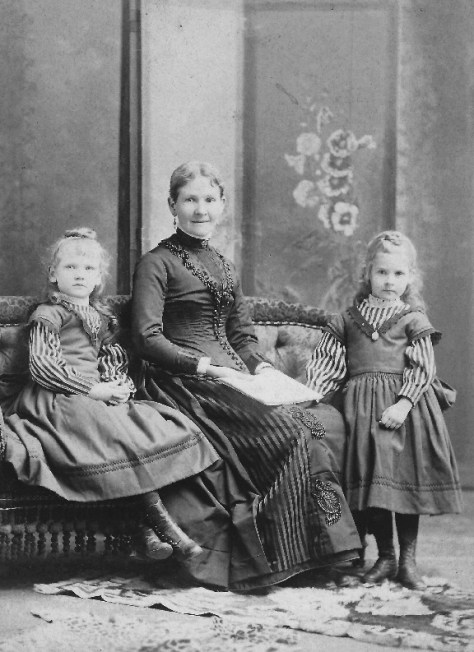
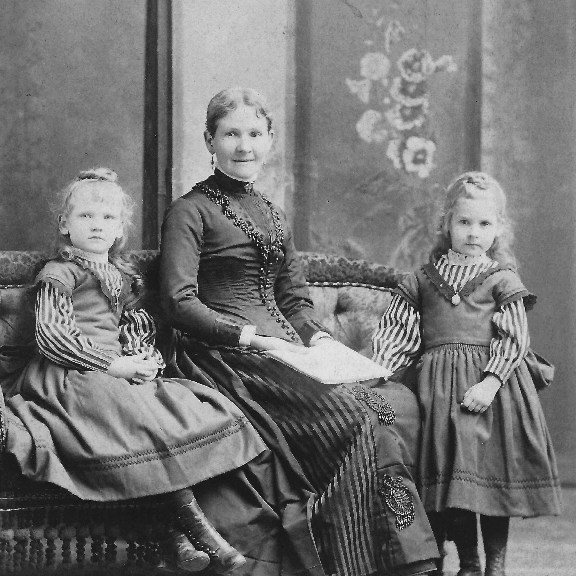
Amy Eagle, Eliza Jane Eagle and Minnie Eagle

A collection of letters that William Sutherland wrote to Minnie Eagle before their marriage has survived. They carried on a long-distance relationship. She was living in Toronto with her mother and sister while William had moved to Montreal for an engineering job with Montreal Water and Power. I do wonder what happened to Minnie’s letters to William. He kept them initially and reread them, “five and six times,” as he often referred to her previous letters. Did Minnie not want her private thoughts around after they were married?

IMG_9237
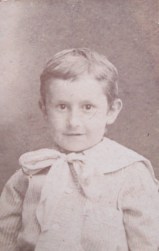
Little Willie

They are very sweet letters showing the developing love between two people and the preparations for a life together. William and Minnie met at Cooke’s Presbyterian Church in Toronto in the early 1900’s. This was the church both their families attended.

William was immediately smitten but Minnie took coaxing. He was thrilled when Minnie finally agreed to marry him. “There was one line in your letter, Minnie that did me more good than all the rest put together and that is saying a good deal. It was “I don’t think I want to wait so long.” These little phrases dropped now and again are the strongest assurances that you are now looking forward to being with me as I have been so long to being with you.”

IMG_9226
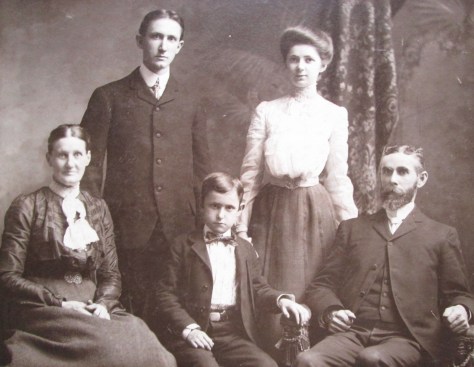
William, his sister Mary, mother Alice Dickson, brother Wilson and father Donald Sutherland

How often did he ask? His parents thought highly of her. His father, a man of few words said, “ You should marry that girl right away.” His mother was his confidant.

Their September 1907 wedding was almost immediately called off, as Will went out to a tavern with his work colleagues. Minnie was part of the temperance movement and totally against alcohol. “I am rather astonished that you felt so deeply about that little question about going into the bars. But you need have no worry on that score. My position is so well known among the boys here, that not one of them ever think of asking me to have a real drink.”

Will was full of plans for their life. He and a friend Mr Schwartz owned a couple of lots in Outremont and were designing semi-detached houses they hoped to build. He sent his drawings to Minnie asking for her opinion. “One objection to this plan was the big kitchen. Some people think that it makes more work but Mrs Schwartz says, the bigger the better.” The houses were never built. “Our house building plans may fall through as there is very persistent talk of the company selling to the city and if they do I don’t know whether I would stay in Montreal or not.” The Montreal Water and Power company was later sold to the city but William did stay. He and Clare Dryden started a plumbing company.

There was some talk about how soon they should be married. He wondered if she thought she should learn to cook and keep a house first or should they learn together. “The greatest pleasure we get in this life is planning and arranging and looking forward and this I think we ought to do together. We are in the formative period of our lives now and I think we should be together. We have much to learn from each other and much to unlearn if we are to live smoothly and happily in each others company.” I don’t think she ever learned to cook well.

Their wedding was postponed from the fall to the summer and then to the next year. Minnie was in hospital April of 1908. He didn’t immediately know she was ill. “Your consideration of me is so characteristic of your own dear self and I love you for it. I should have been terribly anxious if I had known.” He didn’t rush off to Toronto to see her but her mother kept him informed about her progress. He even waited to send flowers as she already had 12 bouquets!

Further wedding plans didn’t go smoothly as there was a problem with her sister Amy. Exactly what, was never stated but Amy was upset that Minnie was to be married and move away. They both worked at Ryrie Bros. Jewellers but neither worked after the wedding. Will sometimes stayed away while they tried to bring Amy around. “I understand the situation all right little girl; a visit to Toronto would be rather a failure under present circumstances and I am more than tickled to think that you look at it that way also.”

The wedding finally took place June 02, 1909. They had a honeymoon trip up the Saguenay River and then moved into an upper duplex on Chomedy Street in Montreal. A friend of Will’s was going to have a border to save expenses but that was not what he wanted. “If it took half my salary for rent I would have you all to myself and nobody else around, for the first year anyway. Yours as ever with best love, Billy”


IMG_9239
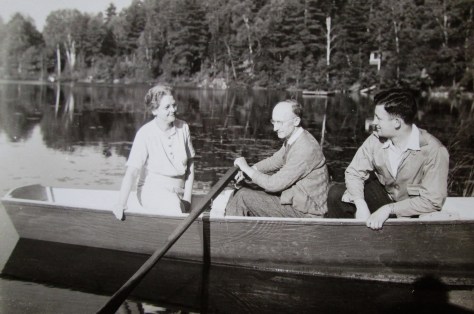
Minnie, William and son Donald rowing on Boyd Lake abt. 1940.

Notes:

Letters from William Sutherland to Minnie Eagle, 69 Seaton Street, Toronto, Ontario. From September 10, 1907, to February 16, 1909. In the possession of the author.

William Harkness Sutherland (1879 – 1942)

Minnie Eagle (1883 – 1967)

Children:

Amy Elizabeth Sutherland van Loben Sels (1911 – 2005)

Dorothy Alice Sutherland (1914 – 1955)

Donald William Sutherland (1917 – 1996)


Notaries of Lower Canada 1760-1848

If your ancestors lived in Quebec in the 17th, 18th and 19th centuries, you can discover a great deal about them from the records of their land transactions, wills, marriage contracts, apprenticeships and other documents that were prepared by notaries.

The key to researching these documents is to find the notary your ancestor hired — not an easy task since so many notaries practiced in Quebec over these three centuries. But if your ancestor’s first language was English or a language other than French, the search might be easier. Many notaries practiced in French only.

The PDF link at the bottom of this introduction will take you to a relatively short list of notaries who practiced between 1760 and 1848, roughly the period when Quebec was known as Lower Canada and was under British rule. These notaries prepared documents for residents who were of British, Scottish, Irish and American origin (both Loyalists and non-Loyalists), as well as people with Germanic, Dutch or Scandinavian roots. In addition, they served Huguenots who had lived in England before coming to Canada.

Notarial records are stored in the archives of the Bibliothèque et Archives nationales du Québec (BAnQ), and you can find them either online or on microfilm at the various branches of the archives.

The BAnQ has 10 repositories across the province, the largest being in Montreal and Quebec City. The others locations are in Sherbrooke, Trois Rivières and other smaller cities. The larger a BAnQ repository is, the smaller the online content of notarial acts because members of the public can more easily visit the big city archives in person. That means that, if your ancestor used the services of a notary in Gaspé, for example, his records are more likely to be online than if the notary was based in Quebec City.

At least 70% of the documents written and recorded by notaries in Quebec are available online. The main online repositories are:

http://www.banq.qc.ca/accueil/index.html?language_id=1  BAnQ online

Ancestry.com – Drouin Collection of notarial acts

Ancestry.com – BAnQ Collection of notarial acts

FamilySearch.org – BAnQ Collection of notarial acts (different years than the BAnQ online database of notarial acts)

http://www.genealogiequebec.com/en – Quebec Genealogy (Drouin Institute online)

There is a list of notaries on the BAnQ website at http://bibnum2.banq.qc.ca/bna/notaires/index.html?a=v_z

You can search for a notary by place and browse his indexes by year. Starting with these indexes might be a good strategy, especially if the notary did not have a very busy practice, or if you know approximately what year your ancestor married, died or made a business agreement.

The URL http://bibnum2.banq.qc.ca/bna/notaires/fichiers/portail/html/liste.html takes you to another list. If a notary on this list has an asterisk, clicking on the name will allow you to view his documents on the BAnQ website.

PDF:  Notaries of Quebec and Lower Canada 1760-1848

The Huguenot of England Part One

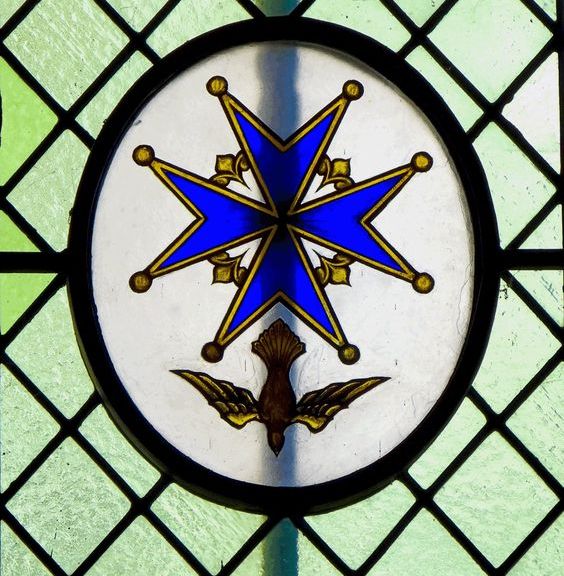
The Huguenot Cross.

A window at Canterbury Cathedral England where Huguenot descendants still worship every Sunday, in French.

‘Huguenot’ What does that mean to you? For me, living in Quebec, Canada it is a part of Quebec and France’s history but did you know that England also has a vast amount of history about Huguenot? I was amazed to learn that!

After I recently read a short article about English Huguenot, it made me want to find out how and why they ended up in England.

The Edict of Nantes (french: édit de Nantes), signed in April 1598 by King Henry IV of France, granted the Calvinist Protestants of France (also known as Huguenots) substantial rights in the nation, which was still considered essentially Catholic at the time.

The Huguenot were Protestants in a largely Catholic populated country and after Louis XIV cancelled their civil rights granted to them by the ‘Edict of Nantes’ in 1685, about 50,000 fled France across the English Channel.¹

Once in England, they spread out not only to London but to 20 towns from Canterbury to Norwich, Plymouth to Rochester. As time went on, many of them drifted towards the Church of England and names became anglicized. Ferret became Ferry and Fouache became Fash most often due to mistakes made by English clerks!

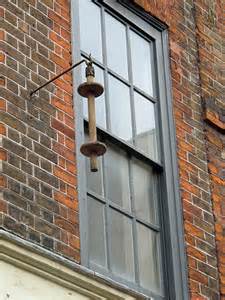
In the 1600’s, Huguenot in England was called Journeymen journéee – ‘day’ in French – because they were, yes! paid daily. Journeyman is a word still in use in England today. Huguenot homes included a feature that marked a journeyman weaver home or a ‘sign’ such as the one below.

This Spindle is the Sign of A Silk Weaver On A Huguenot House in Spitalfields, London England

They set about settling in and transformed their homes to suit the valuable silk trade. They enlarged the windows in the attic to let in the maximum light for the weavers and designed a staircase positioned right by the front door to allow access to the upper floors without entering the workshop. This protected the expensive silks from dirt and soot from the streets. As the silk trade in the East End took off, they formed a community of working-class tradespeople that transformed Spitalfields into “Weaver Town”.

These talented artists brought to England many high-skilled trades. In addition to being famous for their silk weaving and beautiful fabrics, they brought to England paper-making, hat makers cabinet makers watchmakers gunsmiths goldsmiths jewellers and many more skilled trades.

By 1710, at least 5 percent of the population of London – then around 500,000 – were French Protestants. In the French enclaves of Spitalfields and Soho, that proportion was much higher.  London soon had 23 French Protestant churches. Within a few years, a society totally unacquainted with mass migration had given a home to the equivalent – in terms of today’s population – of 650, 000 new arrivals.

According to one estimate, one in every six Britons has some Huguenot ancestry. Some famous Huguenot names in England include Simon Le Bon, from the pop group Duran Duran actor Sir Laurence Olivier, author Daphne Du Maurier and Samuel Courtauld (1793 – 1881) an English industrialist who developed his family firm Courtaulds to become one of the leading names in the textile business in Britain.²

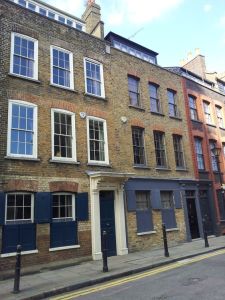
Today, in the lively East End area of London, there is an area known as Spitalfields. Home to artists, creative fashions and food, Spitalfields is well known for its history of silk weavers. Fournier Street – built in the 1720’s – with its grand old Georgian terraced houses of the master weavers attracts visitors each year.³

There is a thriving Huguenot Society of Great Britain and Ireland formed in 1885.

In Fournier Street, at number 18 the elegant home belongs to the Artist Denis Severs. He bought a dilapidated 10 room property in 1979 and used it to re-create a Huguenot home for his own pleasure. Word got around and it has now been open to the public for 35 years.

https://www.dennissevershouse.co.uk/

Huguenot Silk Weavers Houses on Fournier Street

Sources:

¹https://en.wikipedia.org/wiki/Edict_of_Nantes

²http://www.independent.co.uk/news/uk/home-news/refugee-week-the-huguenots-count-among-the-most-successful-of-britains-immigrants-10330066.html

³https://oldspitalfieldsmarket.com/

https://www.huguenotsociety.org.uk/

NOTE:

This link is to the ‘Huguenots – Index of Names’ within Quebec.

Posted by Genealogy Ensemble author, Jacques Gagné.

Huguenots – Index of Names

According to our author, Jacques Gagné, it would appear that the National Archives, Kew, Richmond TW9 4DU England, own, in comparison to the Bibliothèque nationale de France in Paris, more information about Huguenot families! Here is the link:

Quebec City area notaries, 1760-1899

If your ancestors lived in Quebec in the 17th, 18th or 19th centuries, you can discover a great deal about them from the records of their land transactions, wills, marriage contracts, apprenticeships and other documents that were prepared by notaries. Notarial records are stored in the archives of the Bibliothèque et Archives nationales du Québec (BAnQ), and you can find them either online or on microfilm at the various branches of the archives.

The BAnQ has 10 repositories across the province, the largest being in Montreal and Quebec City. The others locations are in Sherbrooke, Trois Rivieres and other smaller cities. The larger a BAnQ repository is, the smaller the online content of notarial acts because members of the public can more easily visit the big city archives in person. That means that, if your ancestor used the services of a notary in Gaspé, for example, his records are more likely to be online than if the notary was based in Quebec City.

At least 70% of the documents written and recorded by notaries in Quebec are available online. The main online repositories are:

BAnQ online

Ancestry.com – Drouin Collection of notarial acts

Ancestry.com – BAnQ Collection of notarial acts

FamilySearch.org – BAnQ Collection of notarial acts (different years than the BAnQ online database of notarial acts)

Quebec Genealogy (Drouin Institute online)

For each notary whose work can be accessed online, I always reproduce the URL link for notarial acts that can be viewed or downloaded.

There is a list of notaries on the BAnQ website at http://bibnum2.banq.qc.ca/bna/notaires/index.html?a=v_z

You can search for a notary by place and browse his indexes by year.

The URL http://bibnum2.banq.qc.ca/bna/notaires/fichiers/portail/html/liste.html takes you to another list. If a notary on this list has an asterisk, clicking on the name will allow you to view his documents online.

On Ancestry.com, you will sometimes find links to two distinct databases for the same notary. If a notary began his career within, for example, the Judicial District of St. Francis (Sherbrooke) and moved his practice to the Judicial District of Richelieu (Sorel), these notarial acts written and recorded by same notary will be found on two distinct databases on Ancestry.com

The Drouin Collection of notarial acts is the same as the Ancestry.com/Drouin collection of notarial acts, however, the online search options differ.

The compilation in the PDF link below concerns notaries who worked in Quebec City and the surrounding region from the time New France became a British colony until the seigneurial system of land ownership was abolished in 1854 and through to the end of the 19th century.

The links on this compilation include:

Background information of the notary and his practice from Library and Archives Canada

A table of notaries including the judicial district in which he practiced, the years he worked and the branch of the Quebec archives where his records are kept.

A database on Quebec City notaries that can be viewed by members of the Quebec genealogy society.

A description of the BAnQ’s collection of a notary’s records

The BAnQ page that leads you to an index of that notary’s records you can browse.

Notaries in the Quebec City region, 1759 to 1899


Social Media – Then and Now

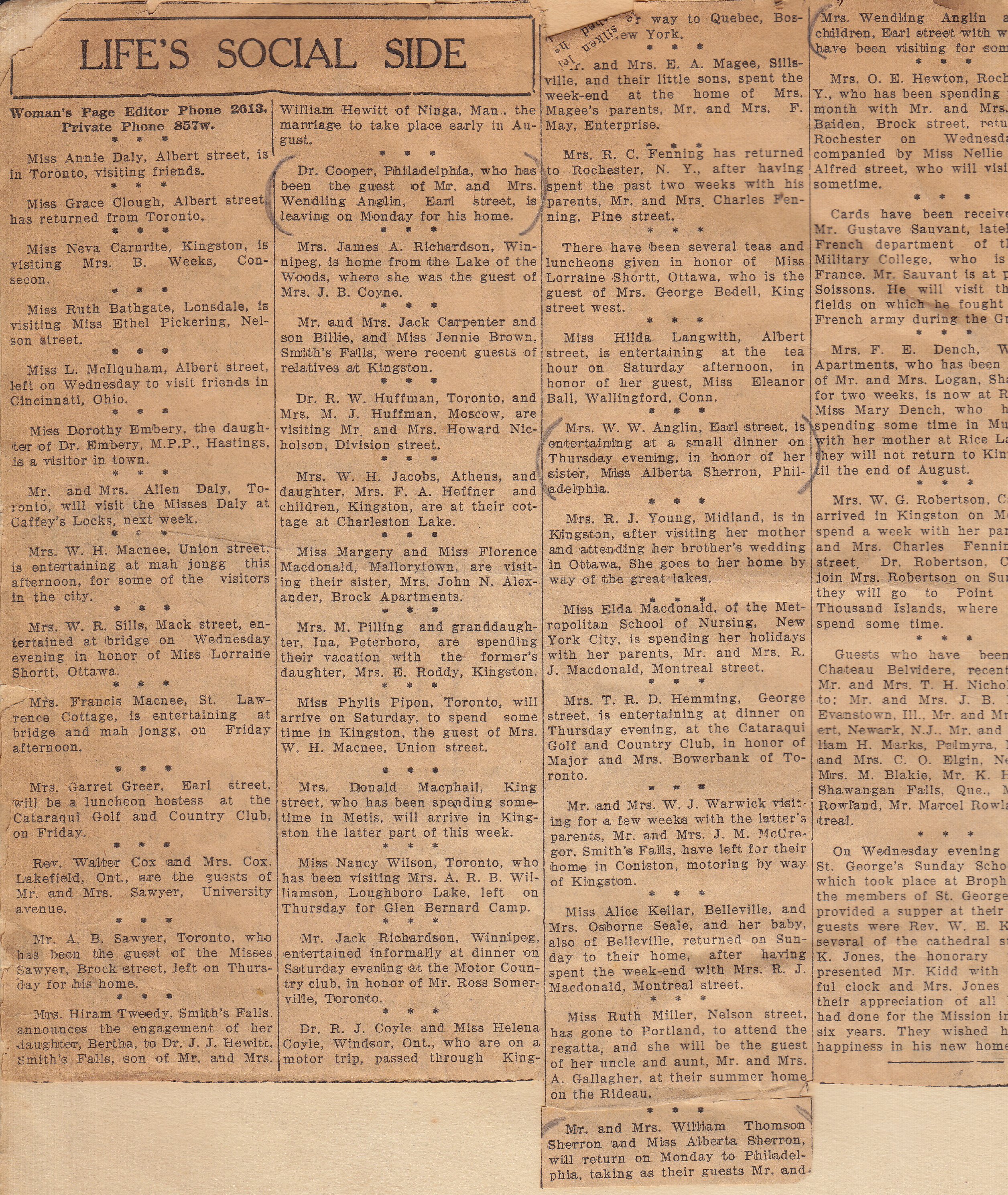
My hitherto unknown relative pulled open an old book of Tennyson poems from the bookshelf and out fluttered a newspaper clipping that had been there almost 100 years.

The clipping was a photo of two small boys posed in their Sunday best from a Philadelphia newspaper published in 1921[1]. The names of my father, Thomas Anglin, and his brother Bill were printed at the bottom.

Jenn Garro, who found the clipping, Googled the names and my recent story about Uncle Bill Dear Uncle Bill on the Genealogy Ensemble website was the first hit. She located me on Facebook and sent me a message:

Was I the daughter or niece of one of these boys? My answer – Yes!

The boys’ mother, my grandmother, Josephine Eveline Sherron, married William Wendling Anglin The Stock Broker, of Kingston, Ontario in 1915 in Philadelphia.

Not only do I have a copy of this newspaper clipping, I also have the original photo. My grandmother relished the world of the newspaper social pages and this early photo of her boys was their introduction into that world.

Another photo, taken six years later, captured the boys lovingly looking over their mother’s shoulder while she read to them. It was first published in the Philadelphia Inquirer in December, 1927[2], and then again in the June 1930 issue of Mayfair Magazine.[3]

Josephine began modeling from an early age. She modeled hairdos, hats and fashions of the day, and the photos were widely distributed. One such photo, published in the December 11, 1915 issue of the Philadelphia Evening Ledger[4], featured her wearing a black lamb’s wool hat and muff with matching coat. The caption announced that her marriage had taken place that day.

Like many other people at that time, her mother and sister contributed regularly to the newspaper’s social pages, with announcements of teas, luncheons and bridge parties. Special events, such as the 1924 June Ball at the Royal Military College near Kingston, provided eager readers with short descriptions of the ball gowns that the “distinguished guests at the social event of the season” were wearing: “Mrs. Wendling Anglin, rose georgette beaded.”[5]

Most surprising, however, were detailed announcements of the comings and goings of the family.

“Mr. and Mrs. W.W. Anglin, Westmount, Montreal, Canada, will be the guests over this week-end of Mrs. Anglin’s mother, Mrs. William Thomson Sherron, in Germantown.  Mr. and Mrs. Anglin will leave by motor on Sunday for a several weeks’ trip to Florida.”[6]

Then, a short while later:

“Mrs. Sherron has as her guests over the week-end her son-in-law and daughter, Mr. and Mrs. W. W. Anglin, of Montreal, Canada, who arrived in this city Friday from Florida, after spending several weeks in the South.”

IMG_0006

One visit from her sister was followed so thoroughly that it was announced on four separate occasions!

To begin with, it was announced twice in her local Germantown paper:

”Alberta Cooper Lewis will leave next Wednesday for a visit of several weeks with her brother-in-law and sister, Mr. and Mrs. W.W. Anglin, of Westmount, Montreal, Canada.”

And then,

“Alberta Cooper Lewis has left for Montreal, Canada, where she will remain for several weeks as the guest of her sister…”[7]

Again, on the receiving end of the visit, in the Montreal Daily Star:

“Mr. and Mrs. W.W. Anglin have as their guest, Mrs. Anglin’s sister Alberta Cooper Lewis of Philadelphia, Penn.”

And finally, home again:

“Alberta Cooper Lewis who has been spending a month with her brother-in-law and sister, Mr. and Mrs. W.W. Anglin, in Montreal, Canada, taking part in the winter sports, recently returned to this city.”[8]

Any decent burglar could have seized these well publicized opportunities to plan the perfect theft!

These newspaper articles from 80 years ago are very similar to posts that enthusiastic friends might share on today’s social media networks. Nowadays, anyone can share family activities and photos with the whole world in a similar fashion. Nevertheless, I wonder whether any family photos will flutter into a distant relative’s inbox 100 years from now.

Meanwhile, my newly discovered relative Jenn lives in Bolivia, and we are keeping in touch by messaging on social media.

Note: 

On the inside cover of Tennyson’s Poems is written the name “Lizzie Gould”. Lizzie (Elizabeth) Gould was the sister of Harriet Gould (Josephine’s mother-in-law and my great grandmother, Mrs. W.G. Anglin Surgeon and Mentalist). Their brother Harry (Henry) Gould was the father of Pearl, who was Jenn Garro’s great-grandmother.  It appears Lizzie kept the clipping of her sister Harriet’s grandchildren in the book of poems. Jenn inherited the book and the clipping.

[1] Public Ledger – Philadelphia, Sunday Morning, July 3, 1921

[2] The Philadelphia Inquirer – December 19, 1927

[3] The Mayfair Magazine – June 1930

[4] Evening Ledger- Philadelphia, Saturday, December 11, 1915

5  The Kingston Standard – June 17, 1924 

[6] Local newspaper, January 28, 1938

[7] Germantown local newspaper, January 4, 1935

[8] Germantown local newspaper, about February 4, 1935

Seigneuries in the Quebec City Region

This research guide explores the seigneuries of New France from about 1626 to 1759 in the Quebec City region, including Lévis, Lauzon, Côte-de-Beaupré, Île-d’Orléans, Charlesbourg, Portneuf, Sainte-Foy, Sillery and other locations within a 50-mile radius of the city.

The PDF below links to a variety of resources describing historical individuals and seigneurs (landlords) in the area, the histories of the seigneuries themselves and a list of the Catholic churches and cemeteries in the towns.

The compilation includes the names of the notaries who worked in this region. Notaries prepared land transfers, leases, business agreements and protests following disagreements, apprenticeships, marriage contracts, wills and even travel arrangements. These documents are kept in the provincial archives and can be read on microfilm. At the end of the compilation you will find contact information for the Bibliothèque et Archives nationales du Québec in Quebec City and the Société de généalogie de Québec.

If your ancestors were living in rural Quebec before 1854, chances are they lived on a seigneury. The seigneur granted the land to tenants, who were usually called habitants or censitaires. The seigneurs and the habitants owed certain obligations to each other. The system, based on a feudal one, dates back to the mid-1600s when the government of France was trying to ensure its colony of New France would be settled in a systematic manner.

Seigneurs were usually people of noble backgrounds, military leaders or civil administrators, or they were religious institutions. The seigneurial system was abolished in 1854 and the tenants were allowed to acquire the land they farmed.

The seigneuries had a lasting impact on Quebec society and geography and the names of many seigneuries and seigneurs live on in the names of towns and streets, while the agricultural fields along the shores of the St. Lawrence River are still divided into the long, narrow strips that were created for the habitants.

Many of the links in this compilation are in French. If you can’t understand them, copy and paste the text into a translation app such as Google Translate. In some cases, you may have to search (rechercher) further. Que cherchez vous? means, what are you looking for? So put in the name of the seigneurie or the arrondissement (borough).

Seigneuries of Quebec City and Region


A Life Well-Lived

Recently a much-loved member of our family passed away. She decided that she didn’t want a traditional funeral, but preferred to have friends and family gather in her home to celebrate a life well-lived.

Family and friends came from near and far to pay tribute.

Usually at a funeral someone gives a eulogy to honour the deceased. In this case, there was no funeral, so perhaps it would be appropriate to write a eulogy.

Pierrette Laurence Valiquette was born in the small town of La Minerve, Quebec, in the northern Laurentian Mountains, on October 20th, 1932, when the leaves were probably ablaze with dazzling autumn colours. She was one of six children of Laurence Bruneau and Philippe Valiquette.

The family moved to Outremont and Pierrette began working as a pattern maker. Her employer soon realized she had artistic talent. He sent her to New York City where she gathered information about the latest fashions. Her work was awarded first place in one of the local fashion design competitions.

Her marriage to my brother, John, took place in the Sacred Heart Chapel of Notre-Dame Basilica in Montreal on January 30th, 1960. It is interesting to note that most marriages took place in the chapel because the long walk down the aisle in the Basilica made young brides too nervous.

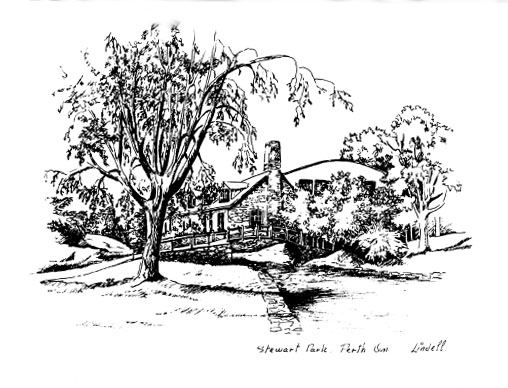
The couple started a family while John studied to be a chartered accountant. His career took the family away from Montreal, but it didn’t matter whether they were in Toronto, Calgary or Edmonton, Pierrette always adapted to her environment. She continued to sketch and paint. When Pierrette and John returned east the family was delighted. They settled in Perth, Ontario, a heritage town just beyond Ottawa, much closer to the rest of the family.

Adjusted Stewarat Park.jpg


Pierrette learned to play golf, something she continued to enjoy all of her adult life. She also was a member of the Raging Grannies, a golden-age protest group. She was determined to stop smoking. She attended Smoke Enders and later became a spokesperson for the cause.

At Christmas one year she joined a group of bell-ringers.

Pierrette was a member of several art associations in and around Perth. She participated in countless local exhibitions.

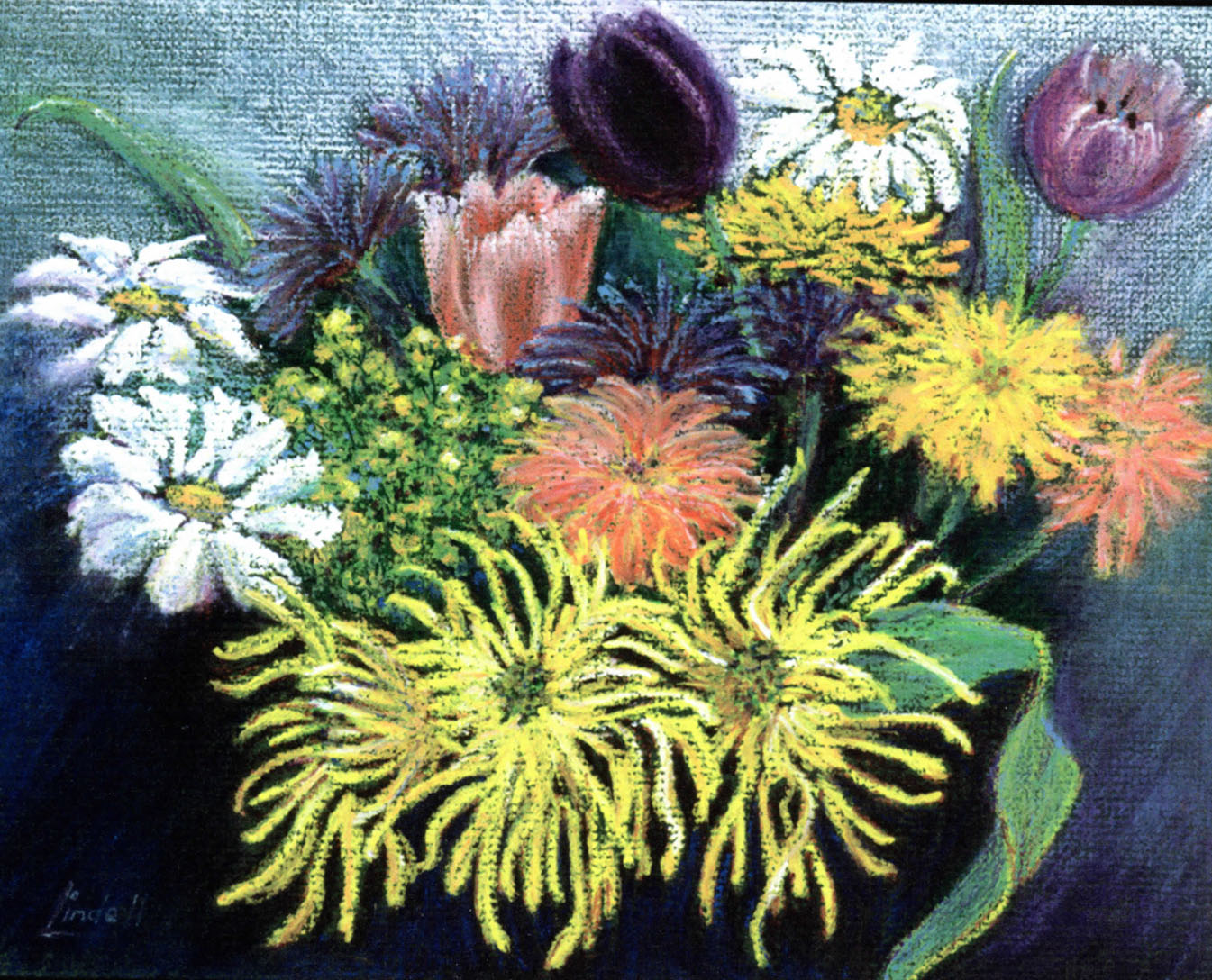
Bouquet-1

 Bouquet in acrylic by Pierrette

Although her family came first, she nurtured her passion in art in its many forms. She would sketch people, create pen and ink drawings of local scenes. Acrylics were most likely her favourite medium. “Pitou” as John called her, painted beautiful scenes of the rolling hills of the Charlevoix area beyond Quebec City on the north shore of the St. Lawrence River.

When my sister-in-law was widowed at the age of 67, she decided to travel and pursue her art. One summer she went to Giverny, France, home to the Impressionist Monet, to study. Another year, it was a trip to Florence, Italy to study the Masters.

Other summers, she and some of her artist friends stayed closer to home. They went to Baie St. Paul, a beautiful part of Quebec. There she would truly be in her element.

In her home, the studio and kitchen were her favourite places. She was a good cook and she often had her father-in-law over for a meal. She would hand him his plate and say “Leave what you like” and he who loved to play on words would respond, “Eat what I don’t like?” There was never anything left on his plate at the end of the meal. He liked to tease her. She would give him a big smile.

We will miss Pierrette: her laughter, her smile, her talents, her compassion and kindness. She was a good wife, mother, friend and sister-in-law. We are all better off for having had her in our lives.

Rest in peace, my friend.

Notes: During the celebration in her home, family and friends were treated to an exhibition of many of her works.


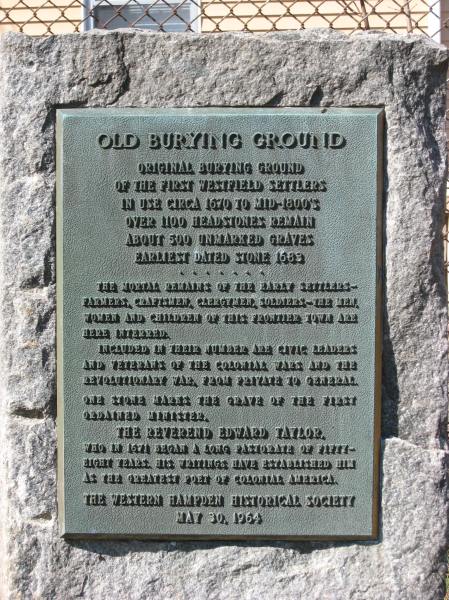
A Visit to the Old Burying Ground of Westfield, MA

I have always been fascinated by the carved images found on early American gravestones. Imagine how thrilling it was to discover that this kind of tombstone marked the final resting place of one of my colonial New England ancestors in Westfield, Massachusetts. I found it when I visited Westfield’s Old Burying Ground a few years ago, en route to the New England Regional Genealogical Conference which was being held in nearby Springfield.

Westfield was founded in 1669. The oldest known gravestone in the burying ground is that of Abigail Noble, who died in 1683. Childbirth, consumption, dysentery, smallpox and accidents were common causes of death, but a surprisingly large number of those interred here lived to more than 80 years of age.

IMG_8808Among the more than 1100 gravestones and several hundred more unmarked graves in this cemetery, I was looking for the resting places of three of my direct ancestors: my six-times great-grandfather Daniel Bagg, his father-in-law, Isaac Phelps, and his son’s father-in-law, Consider Moseley. I found them in the southeast section of the cemetery where many of the oldest plots are located.1
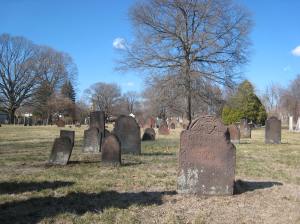
My first stop was the Athenaeum (the public library) to pick up the key to the cemetery. From there, it was a short walk to what is known as the Mechanic Street Cemetery. Set back from street between two houses, the wrought iron gate was a bit hard to find, but once I entered the cemetery, I was amazed at how large it is, and how well cared for. This old burying ground, which is included in the U.S. National List of Historic Places, was carefully weeded and mowed, protected by a fence and shaded by mature trees. The historic tombstones have been cleaned over the years, and local citizens are trying to find the funds to better preserve them..2

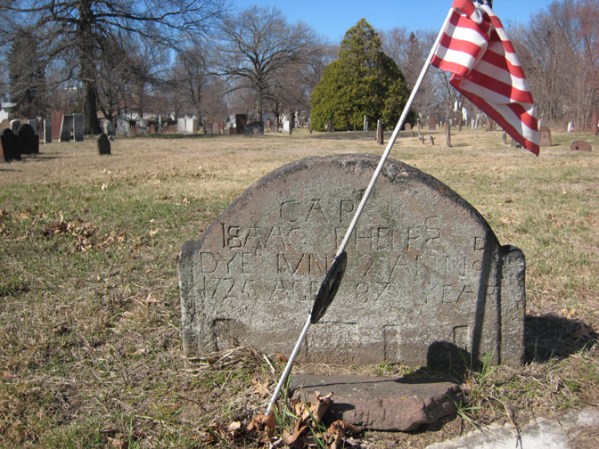
capt Isaac Phelps d 1725 age 87

The grave of Captain Isaac Phelps (1638-1725) was easiest to find because there was a small American flag next to it. Carved in capital letters on his gravestone are, the words, “Capt. Isaac Phelps Anno 1725  age 87 year.” Westfield lay at the western edge of the Massachusetts Bay Colony and the tiny settlement was vulnerable to attack from American Indians, so Isaac probably played a role in protecting the community, and a military title to acknowledge that contribution.

Born in Windsor, Connecticut to George Phelps and Philura Randall, Isaac Phelps married Ann Gaylord around 1663 and moved his family to Westfield around 1670. Isaac carried out many civic duties in Westfield over the years: he was town clerk, assessor, surveyor, town treasurer and schoolmaster.3

Isaac and Ann had 11 children, four of whom died young.4 He and Ann were my seven-times times great-grandparents through daughter Hannah, who married Daniel Bagg (1668-1738).

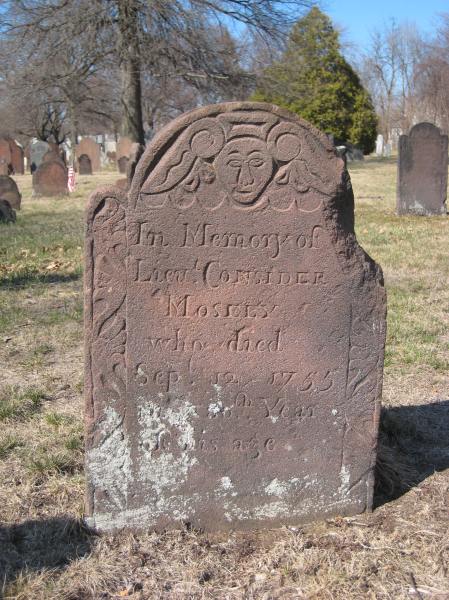
Consider MoseleyLieut. Consider Moseley’s red sandstone tombstone, with a carved face, crown and wings symbolizing everlasting life, was close to Isaac’s.5 Consider (1675-1755) was the fifth of 10 children of John Maudsley (the name was spelled various ways) and Mary Newberry. The Maudsley/Moseley family moved from Windsor to Westfield around the time of Consider’s birth. In 1709, when Consider was 34 years old, he married Elizabeth Bancroft. They had eight children, including twins Elizabeth and Daniel, born in 1714. After his first wife died, Consider married widow Rebecca Dewey. His daughter Elizabeth married David Bagg, the son of Daniel Bagg and Hannah Phelps, in 1739.
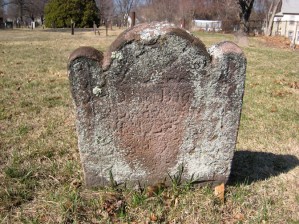
According to a history of Westfield, Lieut. Consider Moseley was “one of the wealthiest and most influential men of the town,” however, I have found few details of his life.6 He died on Sept. 12, 1755, age 80.

possibly Daniel Bagg

The grave of Daniel Bagg was more difficult to identify. The stone that I suspect marks his grave is almost illegible. The other problem is that there are three individuals named Daniel Bagg buried in this cemetery. The Daniel Bagg I was seeking was the son of John Bagg and Hannah Burt of Springfield. Many of Springfield’s younger residents moved to Westfield. Daniel became a farmer in the Little River area of Westfield. He and his wife Hannah Phelps had 10 children, and their son David and his wife Elizabeth Moseley were my direct ancestors.

Consider Moseley 3

Ann Gaylord, Elizabeth Bancroft, Hannah Phelps and Elizabeth Moseley are also likely buried in the Old Burying Ground, but their graves are not marked.

All photos by Janice Hamilton

This article is also posted on https://writinguptheancestors.blogspot.ca

Sources:

  1. Old Burying Ground Mechanic Street Cemetery. http://www.cityofwestfield.org/DocumentCenter/View/419a, accessed March 11, 2018. (The name Bagg is misspelled Back in this 1995 inventory.)
  2. Dan Warner. “After 350 Years, Old Burying Ground in need to a fix-up in Westfield.” Masslive.com, June 27, 2014, http://www.masslive.com/news/index.ssf/2014/06/after_350_years_old_burying_gr.html, accessed March 11, 2018.
  3. Oliver Seymour Phelps and Andrew T. Servin, compilers. The Phelps Family of America and their English Ancestors, with copies of wills, deeds, letters and other interesting papers, coats of arms and valuable records. Vol. II, Pittsfield, MA: Eagle Publishing Company, 1899, p. 1269.
  4. Henry R. Stiles. The History of Ancient Windsor, Vol. II, a facsimile of the 1892 edition, Somersworth: New Hampshire Publishing Co., 1976. p. 509.
  5. Bob Clark, Stories Carved in Stone: Westfield, Massachusetts, West Springfield, Dog Pond Press, 2008.
  6. Rev. John H. Lockwood. Westfield and its Historic Influences, 1669-1919: the life of an early town. Springfield, MA, printed and sold by the author, 1922, p. 384. https://archive.org/stream/westfieldandits00lockgoog#page/n413/mode/2up, accessed March 23, 2018.

The Paternity Suit

Illegitimate. This word describes my grandmother. Elspeth Mill Bowie Orrock was born on January 3, 1875. My great-grandmother, Ann Linn Orrock was unmarried and she registered the birth of her daughter and signed the register with her mark.

When my father passed away, I found an extract of the Register of Corrected Entries for the District of Arbroath in the County of Forfar, Scotland among his documents. 1 This was the 1990s and I was astounded that my father never mentioned that his grandmother was unmarried at the time of his mother’s birth and that she remained unmarried.

I remember discussing it at the supper table and my two school-age children shrugged their shoulders and said, “Who cares if they weren’t married.” Exactly. Who cares? One hundred and fifty years later, no one in the family cares whether Elspeth’s parents were married or not. But in 1875, it would have been a serious offense.

The Presbyterian Church of Scotland (Kirk) formed parish councils that held Kirk Sessions, addressing matters of everyday life, such as “church non-attendance, sexual matters, bastardy and illegitimacy.”2 The Church elders dealt with the moral behaviour of their parishioners and “adulterers, fornicators, drunkards, slanderers and Sabbath breakers were all brought before the Kirk Session to answer for their behaviour and to do penance for their crimes. In the case of an illegitimate birth, the father’s name might be recorded along with the penance committed by both parents.”3

In the case of my grandmother, her mother registered the birth and gave her the father’s name as a middle name. Even though the name is recorded as Bowie, I assume that it is a mistake given that her mother could not read or write and did not know that the registrar had written Bowie instead of Boggie.4

The register of birth was corrected six years later when my great-grandmother decided to sue the father of her child in a paternity suit. On February 17, 1881, the Sheriff Court of Forfarshire found that Elspeth Orrock was the “illegitimate child of the said Ann Orrock and Henry Boggie.”5

The year of the court case, 1881, was also a census year. Ann was still living at the same address that she lived at when she gave birth to Elspeth six years earlier. She was also still living with her mother and her three siblings. Also present were both of Ann’s daughters, Elspeth and her sister, Jemima, eight months old.6  Jemima’s birth registration states that she was also illegitimate.7

The paternity suit that Ann instituted against Henry Boggie would have been a civil court action heard by the Sheriff Court under “Actions of Affiliation and Aliment.”8 I will probably never know why Ann took Henry to court but it is safe to assume that she was looking for an alimentary pension for her child. Was Henry a deadbeat father for six years? Maybe. Then again, maybe he stopped paying once Jemima was born. Or Ann simply needed more money, now that she had two children to care for by herself. It is impossible to know.

About fifteen years ago, I wrote to the Sheriff Court and asked them if they had a transcript of the court proceedings. Unfortunately, they had destroyed all transcripts after 1860 if there were nothing remarkable in the proceedings.


  1. Extract from the register of Corrected Entries for the District of Arbroath in the County of Forfar, dated July 29, 1947, in the writer’s possession.
  2. GenGuide web site, “Kirk/Church Sessions Scotland,” https://www.genguide.co.uk/source/kirkchurch-sessions-scotland/116/, accessed March 25, 2018.
  3. Scotland’s People web site, “Register of Corrected Entries,” https://www.scotlandspeople.gov.uk/guides/registering-illegitimate-births, accessed March 25, 2018.
  4. This is a deduction because on other official documentation, my grandmother’s name is Elspeth Mill Boggie Orrock and Boggie was her father’s name.
  5. Extract from the register of Corrected Entries for the District of Arbroath in the County of Forfar, dated July 29, 1947, in the writer’s possession.
  6. National Records of Scotland, “1881 Census,” Scotland’s People web site, Civil Parish of St. Vigeans, District of Arbroath, entry for Elspeth Orrock, accessed January 12, 2018.
  7. National Records of Scotland, “Statutory Registers Births,” Scotland’s People web site, entry for Jemima Kinnear Orrock, born July 25, 1880, District of Arbroath, County of Forfar, accessed January 12, 2018.
  8. Scottish Indexes web site, “Finding Paternity Cases in Sheriff Court Records,” http://www.scottishindexes.co.uk/learningcourt.aspx, accessed March 25, 2018.

Working together to help genealogists discover their ancestors