Category Archives: Canadian Province

Part of the Bagg Family Fonds Now Online

Many people have old family treasures such as letters and albums in the attic. In my family, a collection of 200-year-old business records made their way from the attic to a Montreal museum, and now some them have been digitized and placed online for everyone to explore. Part of the Bagg Family Fonds housed at the McCord Museum, these newly digitized images include records from the store where the workmen who built the Lachine Canal in the early 1820s bought their bread and rum.

The project to digitize these and other documents was financed by Library and Archives Canada to mark the 150th anniversary of Canadian Confederation and Montreal’s 375th anniversary. The McCord Museum in Montreal is posting some 75 000 images from its collection of textual archives to its website (http://collections.musee-mccord.qc.ca/en/keys/collections/).

The website provides an introduction to the Bagg family and to the scope of the Bagg Family Fonds (P70): http://collections.musee-mccord.qc.ca/scripts/explore.php?Lang=1&tableid=18&tablename=fond&elementid=31__true.  At the bottom of this page are links to four sets of digitized documents: the Laprairie Brewery (1821-1832), the workmen’s store in Lachine (1822-1823), a child’s scrapbook and a young woman’s autograph book that probably dates from around the turn of the century.

My three-times great-grandfather Stanley Bagg was one of the four main contractors in charge of building the Lachine Canal in Montreal in the 1820s. He also ran the store that supplied the workers with bread, tea, sugar, pork and occasionally fish, eggs and butter, although rum and beer seem to have been the most popular items. Some pages list the names of the customers, the items they purchased and the prices they were charged.

Other images record cash payments related to the canal construction, including planks, nails, wheelbarrows, hay (probably for the horses), blasting powder and wages for day labourers.

Another set of records is related to the brewery owned by Stanley’s brother, Abner Bagg. The LaPrairie Brewery account books list expenses such as barley, charcoal, transportation costs and wages. Both the store and the brewery records contain many names of suppliers and customers.

Both of these collections provide a window into life in Montreal some 200 years ago. For example, Quebec historian Donald Fyson used these records as a basis for his thesis, “Eating in the city [electronic resource]: diet and provisioning in early nineteenth-century Montreal” Montréal: McGill University, 1989. http://www.collectionscanada.ca/obj/thesescanada/vol1/QMM/TC-QMM-55597.pdf

No one really knows who had the foresight to save these records, or how they ended up at the McCord. According to one of my cousins, these account books were found in the basement of the Redpath Museum at McGill University, but no one knows who put them there in the first place. Clare Fellowes, daughter of Evelyn (Bagg) Davis, gave an additional gift of textual documents to the museum in 2002 and 2003.

Documents in the Bagg Family Fonds that have not been digitized includes copies of letters that Stanley and Abner wrote to each other and to business colleagues, and a ledger belonging to butcher John Clark, Stanley Bagg’s father-in-law. Documents related to another generation of the family date from the final decades of the 19th century when the Baggs were property owners and real estate developers. This includes a ledger showing property sales, and letters between the Bagg siblings as they discussed and sometimes disagreed about business decisions. There are also personal documents such as a list of wedding presents, recipes and several albums of family photos, taken in the early 1900s by my grandmother, Gwendolyn Bagg. More recently, the late Joan Shackell, a descendant of Abner Bagg, donated a number of items related to her line of the family.

Members of the public can visit the archives at the McCord Museum to consult the Bagg Family Fonds and other collections, but they must make an appointment weeks in advance. It is encouraging to see that some of these documents are now available online.

(This article is also posted on http://writinguptheancestors.blogspot.ca)

See also

Janice Hamilton, “Abner Bagg, Black Sheep of the Family?” Writing Up the Ancestors, April 9, 2015, http://writinguptheancestors.blogspot.ca/2015/04/abner-bagg-black-sheep-of-family.html

Janice Hamilton, “Stanley Bagg and the Lachine Canal, Part 2: Rocks and Water,” Writing Up the Ancestors, March 13, 2015, http://writinguptheancestors.blogspot.ca/2015/03/stanley-bagg-and-lachine-canal-part-2.html

Church Registers: A Wonderful Resource for Researching Quebec Ancestors

APR 2

Posted by Jacques Gagné

Quebec’s Church Registers are a happy fact for anyone researching ancestors in that Canadian province.

From the early days of New France in the 17th century, a record was kept in a register for every Catholic birth, marriage and death. Priests kept a religious copy of the register at the parish and filed another state copy with the tribunal serving the relevant territory.

After the British Conquest in 1760, the right to keep registers of civil status was gradually extended – over the next century – to non-Catholics. At present, BAnQ’s Church Register collection contains the digitized records of births, marriages and deaths for Catholic, Anglican, Presbyterian, Methodist, Baptist, Evangelical, Jewish and Lutheran churches.

Today, these records can be accessed from the Drouin Institute on Ancestry.com, as well as through the BAnQ (the National Library and Archives of Quebec) http://bibnum2.banq.qc.ca/bna/ecivil/as

and familysearch.org: https://familysearch.org/search/collection/1321742

The BAnQ website is available in French, but the above link will take you directly the Church Registry page. Records can be accessed in three ways: by the place where the act was established (parish, congregation, synagogue, etc); by the judicial district, according to the list established by the Territorial Division Act (L.R.Q., chapter D-11); or by region.

To consult the registers, select one of the headings on the left side of the screen. To display the pages in large format (PDF format, image mode) click on the headings for the desired pages.

What will you find at the BANQ Online Church Registers 1768-1912?

Protestant churches – English – 686 churches

Jewish Synagogues – 20 synagogues

Protestant churches – French – 28 churches

Catholic parishes – French & English – 1,027 churches

Catholic parishes – Italian & others – 15 churches

Catholic missions – French & English – 8 missions

Catholic Religious Communities – 18 convents

Hospitals (French & English) – 12 medical centers

Hospices – (French & English) – 5 institutions

Psychiatric hospitals (Asylums) –3 institutions

BAnQ and Family Search

Civil Registers (Parish Registers)

Catholic & Protestant Churches

Civil Registers (Parish Registers)

1621 to 1916

Births (baptisms), marriages, deaths: http://bibnum2.banq.qc.ca/bna/ecivil/

 BAnQ Catholic & Protestant Church Registers & Jewish Synagogue Registers: http://bibnum2.banq.qc.ca/bna/ecivil/

Consult the following PDF document to see a list of all the churches (Catholic and Protestant) and synagogues in the BAnQ online collection.

BAnQ Online Collection of Church and Synagogue Registers

Arthur’s Baby Book

hambabybookarthur-10

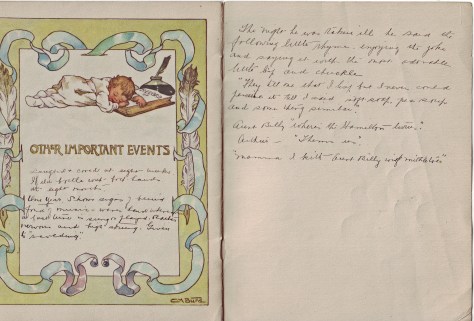
The night before three-year-old Arthur Hamilton became ill, he was reciting a rhyme and joking about lisps and kisses and mistletoe with a family friend who was helping put the children to bed. Someone – his mother or the friend – recorded those words in his baby book.

The following day, Arthur came down influenza. In fact, everyone in the house – his parents, his twin brother and his two older siblings – got sick. The others recovered, but Arthur did not.

When the influenza pandemic reached the Hamiltons’ Winnipeg home in January 1919, it was at its deadly peak. Arthur was among more than 1,200 Winnipeg residents and 50,000 Canadians killed by the pandemic, which was brought to Canada by troops returning from the trenches of World War I.1   Some 21 million people died from the virus worldwide.

Today, Arthur’s baby book, and that of his twin (my father) is in the University of Manitoba Archives as part of the Hamilton Family collection. These cheerfully illustrated booklets include important milestones, such as the twins’ first steps. Arthur’s book is especially moving because of the entry about the jokes he made just before he became ill.2

Archivist Shelley Sweeney has used Arthur’s baby book in the classroom many times. For example, she took it to a religious studies class that was exploring how people react to death by expressing regret and memorializing the person who has passed.

“It strikes people as so unbearably sad,” she says. “There are always sympathetic expressions and murmurs when I talk about it.”3

The death of a young child like Arthur seems especially sad, but the influenza pandemic traumatized whole communities. Some people lost family members to the flu after having already lost sons and brothers in the war. Many of those who died were between 20 and 40 years old, in the prime of their lives. Children were left without parents, families without income earners, businesses without customers, and manufacturers without workers. Poor neighbourhoods had the highest death rates.

Some people compared the pandemic to the Black Death of medieval times. The government banned large public gatherings to try to control the spread of the virus. Hospitals and physicians were overwhelmed.

My grandfather was a physician and my grandmother had trained as a nurse, but they couldn’t save their son. They tried everything they knew, but there were no effective treatments in 1919.

Their older son, Glen, a future a physician himself, later recalled being taken in to see Arthur’s body. He said, “I can remember on the floor beside his crib there was an enamel basin with boiling water in it – Friars Balsam [eucalyptus oil] – that aromatic stuff you put into body rub, and a little tank of oxygen. And those were the weapons to fight the flu. That was all!”4

My grandfather, Thomas Glendenning (T.G.) Hamilton, was devastated by his son’s death. Not only had he failed as a physician, but, as Glen Hamilton suggested in an interview, T.G. may have felt that he had been too attached to Arthur. “Dad was a very strict Calvinist Presbyterian and he felt that in some way, because he was so fond Arthur …. that he was being punished by the Lord ….”5

hamtwins1918winnipeg-01

Arthur’s death was a pivotal event for the Hamiltons in a way that seems surprising today, but was typical for the time. Many people were deeply religious and believed in personal survival after death. Grieving families wanted to communicate with loved ones who had passed, so they turned to mediums and séances. Between the two world wars, a strong spiritualist movement developed in Canada and elsewhere.6 Glen suggested that Arthur’s death stimulated his parents’ interest in the psychic field.

What made the Hamiltons unusual was the effort they put into exploring psychic phenomena. For more than 10 years, until T.G.’s death in 1935, they held almost weekly séances with a small group of regular participants.7 T.G. became known across Canada, the United States and England for his psychic research, while Lillian played a key organizing role in the background. T.G. emphasized the “scientific” nature of his enquiry, but his grief must have coloured these experiences.

Around 1980, Margaret (Hamilton) Bach donated her parents’ research notes, speeches and photographs to the University of Manitoba Archives, and a few years ago I added a few items, including the twins’ baby books. Today, many people consult the Hamilton Family fonds. Some are interested in psychics, several have used the collection as inspiration for plays and visual art, and other researchers are using the collection to explore how people cope with trauma.

Although many people, including myself, are skeptical about the authenticity of their experiments, it is wonderful to see that T.G.’s and Lillian’s passion is still contagious in so many different ways.

(This article is also posted on http://writinguptheancestors.blogspot.ca.)

Notes and Sources

T.G. Hamilton and Lillian (Forrrester) Hamilton had four children: Margaret Lillian (1909-1986), Glen Forrester (1911-1988), and twins James Drummond (1915-1980) – my father — and Arthur Lamont (1915-1919).

To read more about the Hamilton Family fonds, see http://umanitoba.ca/libraries/units/archives/digital/hamilton/index.html

1 Janice Dickin, Patricia G. Bailey, “Influenza”, The Canadian Encyclopedia, Historica Canada, http://www.thecanadianencyclopedia.ca/en/article/influenza/ (accessed March 20, 2017)

2. Baby book of Arthur Lamont Hamilton. University of Manitoba Archives and Special Collections (UMASC), Hamilton Family fond, A10-01, Winnipeg.

3. Personal email communication with Shelley Sweeney, March 23, 2017.

4. James B. Nickels. “Psychic Research in a Winnipeg Family: Reminiscences of Dr. Glen F. Hamilton”, Manitoba History, June 2007, p. 5.

5. Ibid.

6. Esyllt Jones, “Spectral Influenza: Winnipeg’s Hamilton Family, Interwar Spiritualism and Pandemic Disease,” in Magda Fahrni and Esyllt W. Jones, editors, Epidemic Encounters: Influenza, Society and Culture in Canada, 1918-20, Vancouver: UBC Press, 2012, p. 195.

7. Janice Hamilton “Bring on Your Ghosts!” Paranormal Review, winter 2016, p. 6. This edition of the magazine, published by The Society for Psychical Research in England, is entirely devoted to the psychic research carried out by the Hamiltons.


Finding Great Great Grandmother: Elizabeth Mowat Sutherland

img_4691

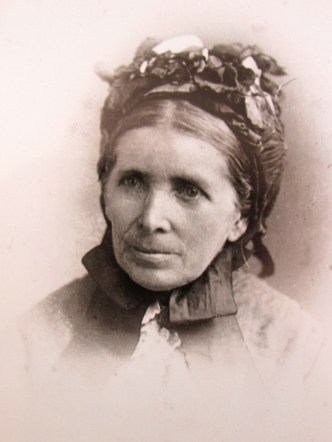
Elizabeth Mowat is my great great grandmother. I didn’t even know her name before I began my genealogy quest. I still don’t know much about her but I now have a photograph, a portrait of her in her “go to church clothes” with the requisite black bonnet.

There were no pictures of her in the box that started my family history search, although there was a family photograph of her husband William, her son Donald, his wife Alice and three of their children, William, Mary and James Dickson. I originally thought Elizabeth was alive at the time, so why on such an occasion was she not with them at the photographers? It later turned out she died in 1883 and not the assumed 1888.

It was through the internet and RootsWeb that I finally saw her face. Robert Harkness, from her daughter-in-law Alice’s line, said his family had lost all their old photos and information in a house fire but his uncle might know some family history. I wrote to his uncle, Bruce Harkness but did not hear anything. Then a couple of months later I received a letter from a George Dickson with photos and stories. He was also a relative of Alice’s and lived in the same apartment building as Bruce, in Belmore, Ontario. Bruce had shared my letter and it was George who responded. In the package was a picture of Elizabeth.

She was born in 1829 in Pulteneytown, Caithness, Scotland. Her parents were James Mowat and Isabelle Houston. It doesn’t appear that she had any siblings or at least any that survived to the 1841 census.

She married William Sutherland a shoemaker and 13 years her senior, May 1845, in Pulteneytown and they set out for Canada soon after. They sailed with two of William’s nephews and their wives so he had some family with him, but Elizabeth left her family and her life, never to see them again. There are Sutherland letters that have survived which reported on all the neighbours and friends so I assume the Mowats also heard about their daughter’s new life and family.

Elizabeth and William had seven children, William, James, Donald, Christina, Isabella, George, and John. They moved from Toronto to West Gwillimbury and finally to their own land in Carrick, Bruce County Ontario. After clearing the land and farming for a number of years they gave up the hard work and moved back to Toronto.

Elizabeth died in 1883 and William died in 1887. My sister Jeannie and I visited Mount Pleasant Cemetery and found their tombstone. The names were readable but not the inscription. As Jeannie went to the car to get some paper to try a rubbing, the sun came out and it’s angle made the inscription jump out,“The dead in Christ shall rise first”.

Notes:

Ancestry.com. Scotland, Select Births and Baptisms, 1564-1950 [database on-line]. Provo, UT, USA: Ancestry.com Operations, Inc., 2014.Original data: Scotland, Births and Baptisms, 1564-1950. Salt Lake City, Utah: FamilySearch, 2013

Extracts of entries in an Old Parochial Register. Proclamations of Banns and marriages Parish of Wick, County of Caithnes general register Office, New Register House Edinburch on 26 September 2000.

Archives of Ontario; Toronto, Ontario, Canada; Series: MS935; Reel: 36 Source InformationAncestry.com. Ontario, Canada, Deaths, 1869-1938, 1943-1944, and Deaths Overseas, 1939-1947 Provo, UT, USA: Ancestry.com Operations, Inc., 2010.Cert.

“The dead in Christ shall rise first.” 1 Thessalonians 4:16

The story of Elizabeth’s daughter Christina can be found at:   https://wordpress.com/post/genealogyensemble.com/2743

Happy St. Patrick’s Day

Montrealers really enjoy a parade and this year marks the 194th Saint Patricks Day Parade organized by the Irish Society of Montreal. On Sunday, March 19th people will line St Catherine’s Street, mostly on the sunny side, to cheer the floats, dance to the bands and even have a “little something” to help them stay warm.

This is a great time to start researching your ancestors. You never know what stories you will uncover. Some of you may find Irish roots even if your name is Tremblay or Gagnon. Many Irish came to Canada in the mid-1800’s, before and after the potato famine. Sandra McHugh’s great-grandparents left Ireland at this time but moved to Scotland rather than  North America. Read about their journey in Everyone is Irish on St Patricks Day. https://genealogyensemble.com/2016/03/16/everyone-is-irish-on-st-patricks-day/

Most of the Irish immigrants to Canada arrived in Quebec City and then traveled on to Montreal. Some of the Irish Catholics did settle in towns and villages all around Quebec while most of the Protestants moved on to Upper Canada. Jacques Gagne’s The Irish of Frampton Quebec https://genealogyensemble.com/2016/09/11/the-irish-of-frampton-quebec/ and The Irish Catholic Churches of Quebec https://genealogyensemble.com/2014/05/20/irish-catholic-churches-of-quebec/ are great sources of information on the lives of these people who populated Quebec.   

Janice Hamilton shows that persistence pays off in genealogy research in her Breaking Through My Sherman Brick Wall about the Irish origins of her great great grandmother Martha Bagnall Shearman. https://genealogyensemble.com/2016/07/06/breaking-through-my-shearman-brick-wall/ Census, birth, marriage and death records are harder to find in Ireland as a fire destroyed the Public Records Office in1922 but information can still be found. Janice found that aside from Canada the family has spread to the United States and New Zealand. There are Irish everywhere.

My Irish ancestors were all Protestants and more apt to celebrate the glorious twelfth than Saint Patricks Day. The Orangemen would march on July 12th to celebrate the battle of the Boyne when the protestant king, William of Orange defeated catholic James II. Susan Dodds and Alexander Bailey came from County Monaghan in Northern Ireland and their story is told in The Sampler. https://genealogyensemble.com/2016/04/20/susan-dodds-sampler/

So whether you have the ancestors or just want to pretend, have corn-beef and cabbage, drink a green beer and celebrate being Irish!

Montreal Cemeteries

Genealogists tend to visit a lot of cemeteries, so if those are beautiful places, the experience can be a pleasure. Anyone with Montreal ancestors in either Notre-Dame-des-Neiges (Catholic) Cemetery or in the non-denominational Mount Royal Cemetery can consider themselves lucky: both cemeteries are located on the slopes of Mount Royal, both are filled with trees and wildlife, and both have services to assist genealogists find their relatives.

These cemeteries were opened in the middle of the 19th century after the city’s population expanded, putting earlier burial grounds too close to residential areas. Hygienic concerns became particularly important when cholera epidemics swept the continent.

In fact, because of epidemics, poor sanitation and a lack of clean drinking water, many of the city’s dead were children.

P1130029
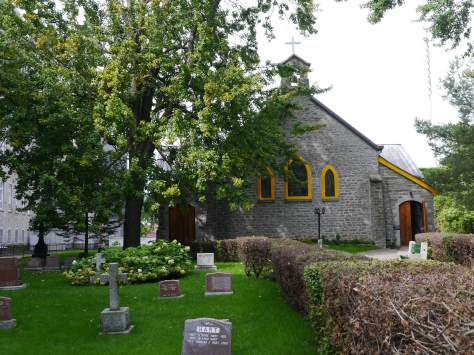
The cemetery at St. Stephen’s Anglican Church, Lachine.     jh photo

Since Mount Royal Cemetery opened in 1852, more than 300,000 people have been buried there. To check the location of a grave in Mount Royal Cemetery, go to  https://mountroyalcem.com/index.php/en/our-services/genealogy-menu.html. The Quebec Family History Society (QFHS) sells a book of 4600 monument inscriptions from Hawthorn-Dale, Montreal’s second-largest Protestant Cemetery and an affiliate of Mount Royal Cemetery. See http://www.qfhs.ca/forsale.php.

Notre-Dame-des-Neiges Cemetery, the largest graveyard in Canada, has been in operation since 1874. To find a grave there go to http://www.notredamedesneigescemetery.ca/en/research/locate.htm and click on locate deceased.

When the older cemeteries were closed, people were told they could move the remains of their relatives, but that did not always happen. Every now and then, human remains turn up when repairs are done to Dorchester Square, a former cemetery that is now a park in the heart of downtown. And in addition to proper cemeteries, there are some unusual burial places in the city. Priests and nuns were buried in the crypts of Catholic churches and other religious buildings. Some 6000 Irish immigrants who died of ship fever in 1847 are buried in a mass grave, marked with a commemorative stone, near the Victoria Bridge.

Because so many of the city’s old cemeteries were closed and eventually built upon or used for other purposes, anyone who comes to the city looking to find the grave of an ancestor who died before the mid-1800s will probably be disappointed.

For a list of 110 Montreal cemeteries, current and closed, including crypts and military cemeteries, see http://www.leslabelle.com/Cimetieres/ListerCims.asp?MP=E3&TY=M&SS=52

To find out about Jewish burials, see the following article posted on the Jewish Genealogy Society of Montreal website: http://jgs-montreal.org/burials.html

The QFHS has a number of publications related to cemetery histories and monument inscriptions in its library. Go to http://www.qfhs.ca/libraryRecords.php and put cemetery in the keyword space.

Following is a list of old cemeteries primarily used by the city’s English-speaking community. Most of them no longer exist. The links will tell you their locations and other information.

Montreal General Old Cemetery   http://www.leslabelle.com/Cimetieres/AfficherCim.asp?MP=E3&CID=2148

 Montreal Old Negro Cemetery – St-Jacques Street at St-Pierre Street in Old Montreal http://www.leslabelle.com/Cimetieres/AfficherCim.asp?MP=E3&CID=826

Dufferin Square Cemetery – Dorchester Boulevard at St. Laurent Boulevard http://www.leslabelle.com/Cimetieres/AfficherCim.asp?MP=E3&CID=828

Montreal Old Military Cemetery – Papineau Street at Lafontaine Street in Southeast Montreal  http://www.leslabelle.com/Cimetieres/AfficherCim.asp?MP=E3&CID=831

St. Mary’s Anglican Burial Ground – Malo Street and Bordeaux Street in Southeast Montreal  http://www.leslabelle.com/Cimetieres/AfficherCim.asp?MP=E3&CID=837

St-Hélène Island Old Military Cemetery http://www.leslabelle.com/Cimetieres/AfficherCim.asp?MP=E3&CID=846

St. Stephen’s Old Anglican Cemetery Lachine  http://www.leslabelle.com/Cimetieres/AfficherCim.asp?MP=E3&CID=2081

Goose Village Ancient Irish Cemetery   http://www.leslabelle.com/Cimetieres/AfficherCim.asp?MP=E3&CID=2717

Field of Honor Military Cemetery Pointe Claire   http://www.leslabelle.com/Cimetieres/AfficherCim.asp?MP=E3&CID=858

Lakeview Memorial Gardens Pointe Claire  http://www.leslabelle.com/Cimetieres/AfficherCim.asp?MP=E3&CID=861

Research: Jacques Gagné

Additional writing: Janice Hamilton


The Dowry

72 sherbrooke.JPG

Maria Roy Crepeau and three daughters and a granddaughter in front of 72 Sherbrooke West in 1926 or so.

In the Edwardian Age, an ambitious young man, however resourceful, usually needed a solid financial foundation to kick-start his career.  If he didn’t have family money, he had to marry well. Take my grandfather, Jules Crépeau, (1873-1938). The son of a mere house painter, he rose up in 30 years from Messenger Boy in the Health Department to Director of City Services, the top civil servant at Montreal City Hall.

Jules didn’t have the advantage of a superior education; indeed, he completed his regular studies at night. He did have a workaholic nature, an affable disposition, a memory like a steel trap,*1 as well as a connection to the powerful French Canadian industrialists, the Forgets.

New information I found on the Internet reveals that the make-or-break-point for young Jules was in 1901, the year of his marriage. Back then, Jules was making only $600 a year, not a terrible salary for a single man, but certainly not enough to get married on.*2 So, Jules, like so many others, had to choose his wife very carefully.

My grandmother, Maria Roy, the daughter of a master butcher, brought a huge $40,000 dowry to their 1901 marriage, so I’m told. The next year, Jules had a house built for them on Amherst, near Ontario Street, and by a noted architect, at that.*3 Maria’s money!

Lovell’s Directory shows that in 1905 the Crépeau family moved to a tony stretch of St. Hubert Street.  Jules is listed as Head Clerk.  City Hall.   In 1918, they moved to St. Denis Street, just a few doors down from J. A. Brodeur, “Montreal’s Napoleon,” and Head of the Executive Committee. My grandfather was, by then, Second Assistant City Clerk, with a salary of $2,500 -$3,500.


julesfamily1.PNG

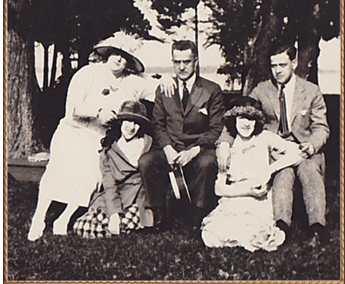
Crépeaus around 1918. My mother wasn’t born yet. Doesn’t Jules, center, look stressed?

In 1921, Jules was promoted to the newly-minted post of Director of City Services*4, almost tripling his salary to $8,000, and soon thereafter, to $10,000. In 1922, his family moved to a three storey greystone at 72 Sherbrooke West.

It’s during this period, the Roarin’ Twenties, that my grandmother, Maria, finally started earning dividends on her dowry, taking  shopping trips to New York City to stock up on bourgeois bric-a-brac like marble urns, porcelain statuary, and art nouveau lamps; a complement to the whole roomful of ‘gifts’ the family received from various community groups, especially at Christmas. Jules and Maria needed a good supply of breakables. Family legend has it that the crockery flew over the stairs throughout their tumultuous 37 year marriage.

mtflo.PNG

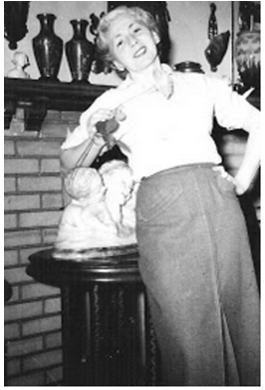
Aunt Flo posing in front of some Crépeau bric-a-brac on Harvard in the late 1940’s. The marble bust of three children actually ended up in my mother’s possession, gracing our upper duplex apartment in the 1960’s, but rather out of place among the melamine furnishings and artwork from Woolworth’s. Today, I own the orange art nouveau-deco Le Verre Francais “Amourettes” vase at top right.

In 1931, Jules Crépeau was forced to resign by the new populist Mayor Camillien Houde, but not before negotiating a huge life pension of $8,000 a year. But, soon,  my grandfather, who had no hands-on business experience, lost all of his savings with bad investments.*5  In 1937, Jules also lost his pension when Montreal City Hall passed an emergency bill to abolish it as a cost-saving measure. *6

Just two weeks later, Grandpapa was hit by a car driven by a plain clothes city policeman. He died the next year from complications. Jules probably threatened someone with a long reach.

Living out her life in the final family home on Harvard in Notre Dame de Grace, Jules’ wife, Maria Roy Crépeau (1879-1951) never complained about her situation as an impoverished widow, and this despite the fact her fat dowry financed the first years of the choppy Crépeau-Roy merger. Still, I suspect her story wasn’t at all unique, especially in the Depression Era.

Jules Crepeaurue.PNG

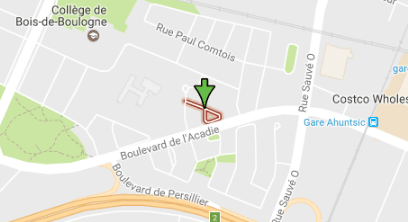
Rue Jules Crépeau, Ahunsic, Montreal. Designated in the 1980’s. Funny story. In the late 80’s, when my husband and I were buying our first computer, the ONLY place in Montreal we knew that sold them was in  Ahunsic, where we seldom ventured. We got lost and stumbled upon this road and park. I had to find a phone booth to phone my mother to tell her that a street had been named after her father. Serendipity or what? Jules’ nemesis, Camillien Houde, has the huge road winding through the mountain named after him.

park.PNG

  1. Le Devoir was the only Montreal newspaper to publish a long obit of my grandfather, in 1938, saying that Jules was the go-to guy for any information about how City Hall ran. Affable is their term.
  2. The 1911 census shows that a $600 a year salary was average/above average for a family. Many era workers were ‘day workers’ with unsteady employment, but, even that $600 salary was not enough for the big families of the era to live on. Terry Copp, the sociologist who wrote An Anatomy of Poverty,claims that $1500. was the minimum salary for a family to live in dignity in Montreal in 1910.  In the Edwardian Era, in England and elsewhere, a working class couple might start out in good shape, with a decent salary for a small family, but as more and more kids came, the family fell into poverty.  Such might have been Jules’ fate, save for this huge dowry.
  3. Louis Zephirin Gauthier specialized in churches. His partner was a Monsieur Roy, so maybe he was a relation. Back then few Montrealers owned their own home, in the 20 percent range. Since 1899, male renters could vote in the municipal elections; women had to be single and own their home to vote. Montreal has long been known as a city of renters, but, just lately, this appears to be changing.
  4. The post of Director of City Services was created in 1921 after much deliberation and input from citizens to ensure an equitable distribution of money among the city districts. The post was a liaison between the seven city departments and the Executive Committee. Newspaper accounts of the time reveal that my Grandfather’s office did everything from organizing events for the visiting Royal Princes to being on the City Clean-Up Committee, to testifying in Quebec with respect to Private Bills. When someone had a beef at City Hall, they wrote to his office. My grandfather was the first to testify at the inquiry in to the fatal Laurier Palace Fire, in January 1927, which was ironic, as I suspect  the fire may have been started by organized crime to get at him. (Just my theory, though.)
  5. Jules’ brother, Isadore, Insurance broker and VP Of United Theatre Amusements, the company that erected many of the famous 1920 era movie houses in Montreal, ‘fell’ out of his 7th floor office while waving for his chauffeur in 1933.
  6. Kristian Gravenor, journalist at Coolopolis.blogspot.ca http://coolopolis.blogspot.ca/2017/01/ndg-coincidence-undercover-cop-slams.html wrote a bit about Jules and dug out the info about the cancellation of his pension.

The Acadians of Quebec


Between the early 1600s and 1755, a community of French-speaking farmers known as the Acadians thrived in Nova Scotia.

In 1755, war between France and Britain spilled into North America. When the Acadians refused to swear an oath of allegiance to the king of England, the colony’s British governor ordered the Acadian people deported. By the fall of that year, some 1,100 Acadians had been forced to board ships and were being transported to the American colonies including Massachusetts, Connecticut and New York. By 1758, most of the Acadians who lived on Île St. Jean (now Prince Edward Island) had also been deported. Some of the Acadians who escaped deportation died of starvation or disease.

Over the following years, the Acadians scattered. Some ended up in Louisiana and the Caribbean. Others sought refuge in New France, settling mainly in the Quebec City region, including Île d’Orléans and along the shores of the St. Lawrence River. Today, some of their descendants are still living in the province of Quebec while others have scattered across North America and around the world.

You can read an overview of the Acadian deportation, including a list of suggested books in English and French at http://www.thecanadianencyclopedia.ca/en/article/the-deportation-of-the-acadians-feature/

The best place to research the Acadians who settled in Quebec is at the Bibliothèque et Archives nationales du Québec (BAnQ). You can make telephone or email inquiries in English to the BAnQ in Montreal and to regional branches. For contact information about the Montreal branch and other regional branches, see: http://www.banq.qc.ca/archives/entrez_archives/centres_archives/

You should get a reply in English within a week to 10 days. These are free services available to anyone anywhere, in Canada or elsewhere. Similarly, you can email or telephone your question in English to the Grande Bibliothèque de Montréal (the main branch of Montreal’s public library) or to the Collection nationale within the Grande Bibliothèque de Montréal.

Here are two lists of books available on the subject, mostly in French, some in print, others digital:

http://iris.banq.qc.ca/alswww2.dll/APS_CAT_IDENTIFY?Method=CatalogueExplore&IsTagged=0&DB=BookServer&ExploreType=Subject&Stem=Acadiens–Qu%C3%A9bec%20(Province)%20&Style=Portal3&SubStyle=&Lang=FRE&ResponseEncoding=utf-8&Parent=Obj_459801367596814

http://iris.banq.qc.ca/alswww2.dll/APS_CAT_IDENTIFY?Method=CatalogueExplore&IsTagged=0&DB=BookServer&ExploreType=Subject&Stem=Acadiens–Qu%C3%A9bec%20(Province)–G%C3%A9n%C3%A9alogies%20&Style=Portal3&SubStyle=&Lang=FRE&ResponseEncoding=utf-8&Parent=Obj_37851487839769

Here are some other resources available at the BAnQ:

http://pistard.banq.qc.ca/unite_chercheurs/description_fonds?p_anqsid=201602210002324708&P_classe=CA&P_fonds=301&P_centre=03Q&P_numunide=925880

http://iris.banq.qc.ca/alswww2.dll/APS_ZONES?fn=ViewNotice&q=441513

http://iris.banq.qc.ca/alswww2.dll/APS_ZONES?fn=ViewNotice&q=134450

Here are some other links to information about the Acadians:

http://www.federationacadienneduquebec.com/accueil.php

http://acadiens.radio-canada.ca/les-grandes-familles-acadiennes/

http://museeacadien.org/lapetitesouvenance/?p=1093

http://www.acadiensduquebec.org/acadieduquebec.shtml

http://www.acadienouvelle.com/arts-et-spectacles/2016/04/18/second-livre-andre-carl-vachon/

http://www.renaud-bray.com/Livres_Produit.aspx?id=1550163&def=D%C3%A9portations+des+Acadiens+et+leur+arriv%C3%A9e+au+Qu%C3%A9bec(Les)%2CVACHON%2C+ANDR%C3%89-CARL%2C9782349723147

http://www.acadienouvelle.com/arts-et-spectacles/2015/06/16/prix-acadie-quebec-andre-carl-vachon-emu-davoir-ete-choisi-avec-edith-butler/

http://www.acadiensduquebec.org/acadieduquebec.shtml

For each of the towns and villages of Quebec in which Acadians settled between 1755 and 1775, you will find posted below the web address of the regional repository of BAnQ, the address of the local Catholic parish and a listing of local cemeteries.

The regional repositories of BAnQ contain documents about the Acadian families who settled nearby. Some of the content of files stored at various branches of BAnQ across the province are listed within the Pistard search engine at www.banq.qc.ca however, most family lineage researchers are intimidated by the complex research process involved.

>> Bastiscan – Champlain

http://www.leseglisesdemonquartier.com/1702.html

http://www.leslabelle.com/Cimetieres/ListerCims.asp?MP=F3&TY=V&SS=Batiscan

http://www.banq.qc.ca/archives/entrez_archives/centres_archives/ca_mauricie.html

>> Bécancour – Nicolet

http://www.leseglisesdemonquartier.com/832.html

http://www.leslabelle.com/Cimetieres/ListerCims.asp?MP=F3&TY=V&SS=B%E9cancour

http://www.banq.qc.ca/archives/entrez_archives/centres_archives/ca_mauricie.html

>> Becquets (Saint-Pierre les-Becquets) – Nicolet

http://www.leseglisesdemonquartier.com/812.html

http://www.leslabelle.com/Cimetieres/ListerCims.asp?MP=F3&TY=V&SS=St-Pierre-les-Becquets

http://www.banq.qc.ca/archives/entrez_archives/centres_archives/ca_mauricie.html

>> Berthier – Lanaudière

http://www.leseglisesdemonquartier.com/351.html

http://www.leslabelle.com/Cimetieres/ListerCims.asp?MP=F3&TY=V&SS=Berthierville

http://www.banq.qc.ca/archives/entrez_archives/centres_archives/ca_montreal.html

>> Cacouna – Lower St. Lawrence

http://www.leseglisesdemonquartier.com/1093.html

http://www.leslabelle.com/Cimetieres/ListerCims.asp?MP=F3&TY=V&SS=Cacouna

http://www.banq.qc.ca/archives/entrez_archives/centres_archives/ca_gaspesie_iles.html

>> Champlain – Champlain

http://www.leseglisesdemonquartier.com/1710.html

http://www.leslabelle.com/Cimetieres/ListerCims.asp?MP=F3&TY=V&SS=Champlain

http://www.banq.qc.ca/archives/entrez_archives/centres_archives/ca_mauricie.html

>> Gentilly – Nicolet

http://www.leseglisesdemonquartier.com/1739.html

http://www.leslabelle.com/Cimetieres/ListerCims.asp?MP=F3&TY=V&SS=Gentilly

http://www.banq.qc.ca/archives/entrez_archives/centres_archives/ca_mauricie.html

>> Îles-de-la-Madelaine – Gaspé

https://www.google.ca/webhp?sourceid=chrome-instant&ion=1&espv=2&ie=UTF-8 – q=Iles-de-la-Madelaine+%C3%A9glises

http://www.leslabelle.com/Cimetieres/ListerCims.asp?MP=F3&TY=M&SS=99

http://www.banq.qc.ca/archives/entrez_archives/centres_archives/banq_gaspe.html

>> Joliette – Lanaudière

http://www.leseglisesdemonquartier.com/357.html

http://www.leslabelle.com/Cimetieres/ListerCims.asp?MP=F3&TY=V&SS=Joliette

http://www.banq.qc.ca/archives/entrez_archives/centres_archives/ca_montreal.html

>> Kamouraska – Lower St. Lawrence

http://www.leseglisesdemonquartier.com/1250.html

http://www.leslabelle.com/Cimetieres/ListerCims.asp?MP=F3&TY=V&SS=Kamouraska

http://www.banq.qc.ca/archives/entrez_archives/centres_archives/ca_gaspesie_iles.html

>> L’Acadie – Upper Richelieu

http://www.leseglisesdemonquartier.com/1434.html

http://www.leslabelle.com/Cimetieres/ListerCims.asp?MP=F3&TY=V&SS=St-Jean-sur-Richelieu/L%27Acadie

http://www.banq.qc.ca/archives/entrez_archives/centres_archives/ca_montreal.html

>> L’Assomption – Lanaudière

http://www.leseglisesdemonquartier.com/485.html

http://www.leslabelle.com/Cimetieres/ListerCims.asp?MP=F3&TY=V&SS=L%27Assomption

http://www.banq.qc.ca/archives/entrez_archives/centres_archives/ca_montreal.html

>> Louiseville – Maskinongé

http://www.leseglisesdemonquartier.com/1728.html

http://www.leslabelle.com/Cimetieres/ListerCims.asp?MP=F3&TY=V&SS=Louiseville

http://www.banq.qc.ca/archives/entrez_archives/centres_archives/ca_mauricie.html

>> Maskinongé – Maskinongé

http://www.leseglisesdemonquartier.com/1729.html

http://www.leslabelle.com/Cimetieres/ListerCims.asp?MP=F3&TY=V&SS=Maskinong%E9

http://www.banq.qc.ca/archives/entrez_archives/centres_archives/ca_mauricie.html

>> Montcalm – Lanaudière

http://www.leseglisesdemonquartier.com/392.html

http://www.leslabelle.com/Cimetieres/ListerCims.asp?MP=F3&TY=M&SS=50

http://www.leslabelle.com/Cimetieres/AfficherCim.asp?MP=F3&CID=1543

http://www.banq.qc.ca/archives/entrez_archives/centres_archives/ca_montreal.html

>> Nicolet – Nicolet

http://www.leseglisesdemonquartier.com/775.html

http://www.leslabelle.com/Cimetieres/ListerCims.asp?MP=F3&TY=V&SS=Nicolet

http://www.banq.qc.ca/archives/entrez_archives/centres_archives/ca_mauricie.html

>> Pointe-du-Lac – St-Maurice

http://www.leseglisesdemonquartier.com/1732.html

http://www.leslabelle.com/Cimetieres/ListerCims.asp?MP=F3&TY=V&SS=Trois-Rivi%E8res/Pointe-du-Lac

http://www.banq.qc.ca/archives/entrez_archives/centres_archives/ca_mauricie.html

>> Rivière-du-Loup-en-haut (Louiseville) – Maskinongé

http://www.leseglisesdemonquartier.com/1728.html

http://www.leslabelle.com/Cimetieres/ListerCims.asp?MP=F3&TY=V&SS=Louiseville

http://www.banq.qc.ca/archives/entrez_archives/centres_archives/ca_mauricie.html

>> Saint-Denis-sur-Richelieu – Lower Richelieu

http://www.leseglisesdemonquartier.com/1360.html

http://www.leslabelle.com/Cimetieres/ListerCims.asp?MP=F3&TY=V&SS=St-Denis-sur-Richelieu

http://www.banq.qc.ca/archives/entrez_archives/centres_archives/ca_montreal.html

>> Saint-Esprit – Lanaudière

http://www.leseglisesdemonquartier.com/388.html

http://www.leslabelle.com/Cimetieres/ListerCims.asp?MP=F3&TY=V&SS=St-Esprit

http://www.banq.qc.ca/archives/entrez_archives/centres_archives/ca_montreal.html

>> Saint-Jacques-de-Montcalm – Lanaudière

http://www.leseglisesdemonquartier.com/392.html

http://www.leslabelle.com/Cimetieres/AfficherCim.asp?MP=F3&CID=1543

http://www.banq.qc.ca/archives/entrez_archives/centres_archives/ca_montreal.html

>> Saint-Ours – Lower Richelieu

http://www.leseglisesdemonquartier.com/1386.html

http://www.leslabelle.com/Cimetieres/ListerCims.asp?MP=F3&TY=V&SS=St-Ours

http://www.banq.qc.ca/archives/entrez_archives/centres_archives/ca_montreal.html

>> Saint-Sulpice – Lanaudière

http://www.leseglisesdemonquartier.com/725.html

http://www.leslabelle.com/Cimetieres/ListerCims.asp?MP=F3&TY=V&SS=St-Sulpice

http://www.banq.qc.ca/archives/entrez_archives/centres_archives/ca_montreal.html

>> Trois-Rivières – Trois-Rivières

http://www.leseglisesdemonquartier.com/1778.html

http://www.leslabelle.com/Cimetieres/ListerCims.asp?MP=F3&TY=V&SS=Trois-Rivi%E8res

http://www.banq.qc.ca/archives/entrez_archives/centres_archives/ca_mauricie.html

>> Yamachiche – Maskinongé

http://www.leseglisesdemonquartier.com/1794.html

http://www.leslabelle.com/Cimetieres/ListerCims.asp?MP=F3&TY=V&SS=Yamachiche

http://www.banq.qc.ca/archives/entrez_archives/centres_archives/ca_mauricie.html


Early Catholic Marriages in Montreal

Etiennette Alton, the ancestor of Genealogy Ensemble contributor Tracey Arial, was married to Marin Hurtubise in Montreal on January 7, 1660. Their union is among the earliest Catholic marriages in Montreal that are detailed on the French-language website Fichier origine (www.fichierorigine.com).  Established under an international partnership between the Quebec-based Fédération québécoise des sociétés de généalogie and the European-based Fédération française de généalogie, it has been available for free on-line since 1998.

The list of 900 people who married in the early days of Montreal is available at http://www.fichierorigine.com/recherche?nom=&commune=&pays=&mariagerech=Montr%C3%A9al

You can find a wealth of information about each person within the couple, including the name of the conjoint (the husband or wife). Fichier origine tells us Etiennette’s date of baptism in 1635, her place of origin in France before she came to Canada, the names of her parents and siblings, and her date and place of death (Montreal, 1722) (http://www.fichierorigine.com/recherche?numero=240043). The information about her husband is equally revealing.

To read more about this particular couple, refer to Arial’s story at: https://genealogyensemble.com/2014/10/03/etiennette-alton-a-marriageable-woman/.

Fichier origine includes the very first marriage celebrated in Montreal: that of Mathurin Meunier and Françoise Fafard on March 11, 1647. (http://www.fichierorigine.com/recherche?numero=242904). It also has information on more than 5000 other people who immigrated to Quebec from France, from the founding of New France until 1865.

In those times, marriage was probably more of a partnership and an agreement to start a family than it was about romantic love. Nevertheless, on Valentine’s Day, it is interesting to recognize these weddings. These couples are the ancestors of thousands of people spread today across Quebec, Canada, the United States and the world. Perhaps your ancestors are among them.

The Cipher

By Sandra McHugh

When I say that my grandfather, Thomas McHugh, worked as a cipher, Bletchley Park, MI5, and Russian spies immediately come to mind. He was neither a Russian spy nor did he work as a cipher during the war. His employer was the Bank of Montreal and it was his first job when he came to Canada in 1912.

The decision to immigrate to Canada was not easy for Thomas. He was in his mid-30s and already had seven children, between the ages of one and fifteen. For over 40 years, the jute manufacturers of Dundee, Scotland had been providing employment for his parents, aunts, uncles, siblings, wife, and for him. However, by the early 1900s, he was facing a precarious future for his children.

By the early 1900s, Dundee had suffered a serious decline in the textile industry and more significantly, the jute industry.  Jute was imported from India, however, the mill owners realized that it would significantly lower the cost of production to open mills in India to prepare the jute and import the finished product to Scotland. Once mills were established in India, the jute production in the mills in Dundee decreased substantially.1

So when Thomas arrived in Canada, a little ahead of his wife and his children, he was eager and prepared to do any job so that he could. The Bank of Montreal had its headquarters in Montreal, Quebec. In the early 1900s, the bank had significant dealings with Great Britain and there were correspondence and banking instructions back and forth between Canada and Great Britain daily. These instructions were mainly sent by telegraph overnight. There were two reasons for this. Some of these instructions were confidential and it was preferred that they remain so. Overnight instructions reduced the number of people who would have access to them. Another reason was the time difference between Montreal and the United Kingdom. The banks in London and Edinburgh were open for business while Montreal was still asleep.

Even in those days, the banks were concerned about security, privacy, and confidentiality. The banking instructions and transactions were submitted by telegraph and were encrypted. It was the job of the cipher clerk to decipher them so that the bank staff could then ensure that the instructions were carried out as required.

To be a cipher clerk, one had to be reliable, meticulous, and honest, and ensure the confidentiality of the bank’s business. The cipher clerk used a cipher handbook to decipher the information. Also, the cipher clerk worked overnight, so it was a difficult job for a man with a family.

So while my grandfather, the cipher, did not work in espionage, I still think that his first job in Canada was rather interesting.2

1 https://en.wikipedia.org/wiki/History_of_Dundee

2 As related by my father, Edward McHugh